A fireplace can bring a collected room together through color, pattern and the objects around it. Boho details work best when they complement the surround and leave the room comfortable to use.
These examples include older mantels, colorful tiles and simpler surrounds with personal art. Treat the photographs as decorating inspiration, and follow the requirements of your own fireplace or stove when choosing nearby materials and objects.
PART 01
Collected art and older mantels
IDEA 01 / 20
Frame an older mantel with colorful books
 SaveSupport Non AI Creator
Source: Future PLC/Brent Darby.
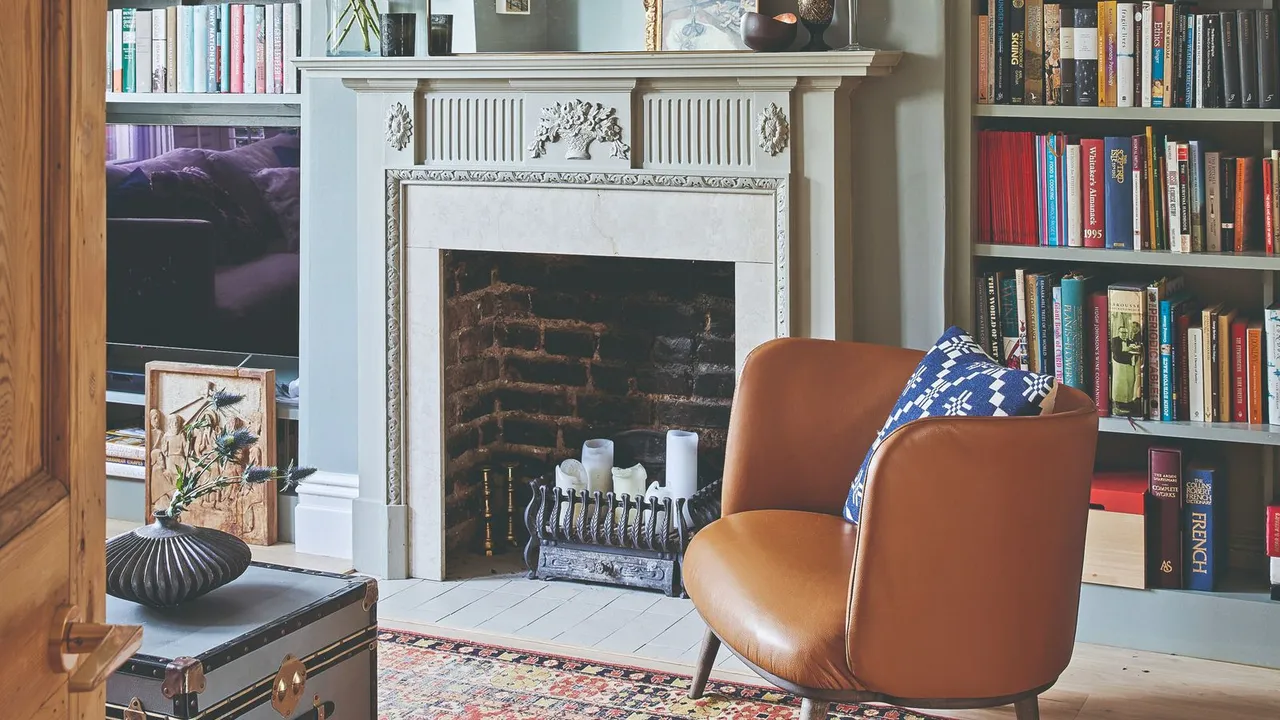
An ornate pale mantel sits between book-filled shelves beside a warm leather chair. The varied book spines bring collected color around the traditional fireplace. The pale surround gives the book-filled walls a quieter center, while the warm leather chair adds a larger solid area of color. A blue patterned cushion connects the seating with smaller tones among the shelves.
Keep the mantel display smaller than the surrounding shelves and preserve the hearth's required clearances, letting the existing books supply much of the personality. Choose a lamp and side surface that make the chair comfortable for reading without crowding the hearth. If the fireplace is decorative, confirm its status before using the opening for objects; an unused appearance alone does not establish this.
IDEA 02 / 20
Pair an ornate fireplace with vivid upholstery
 SaveSupport Non AI Creator
Source: idealhome.co.uk.
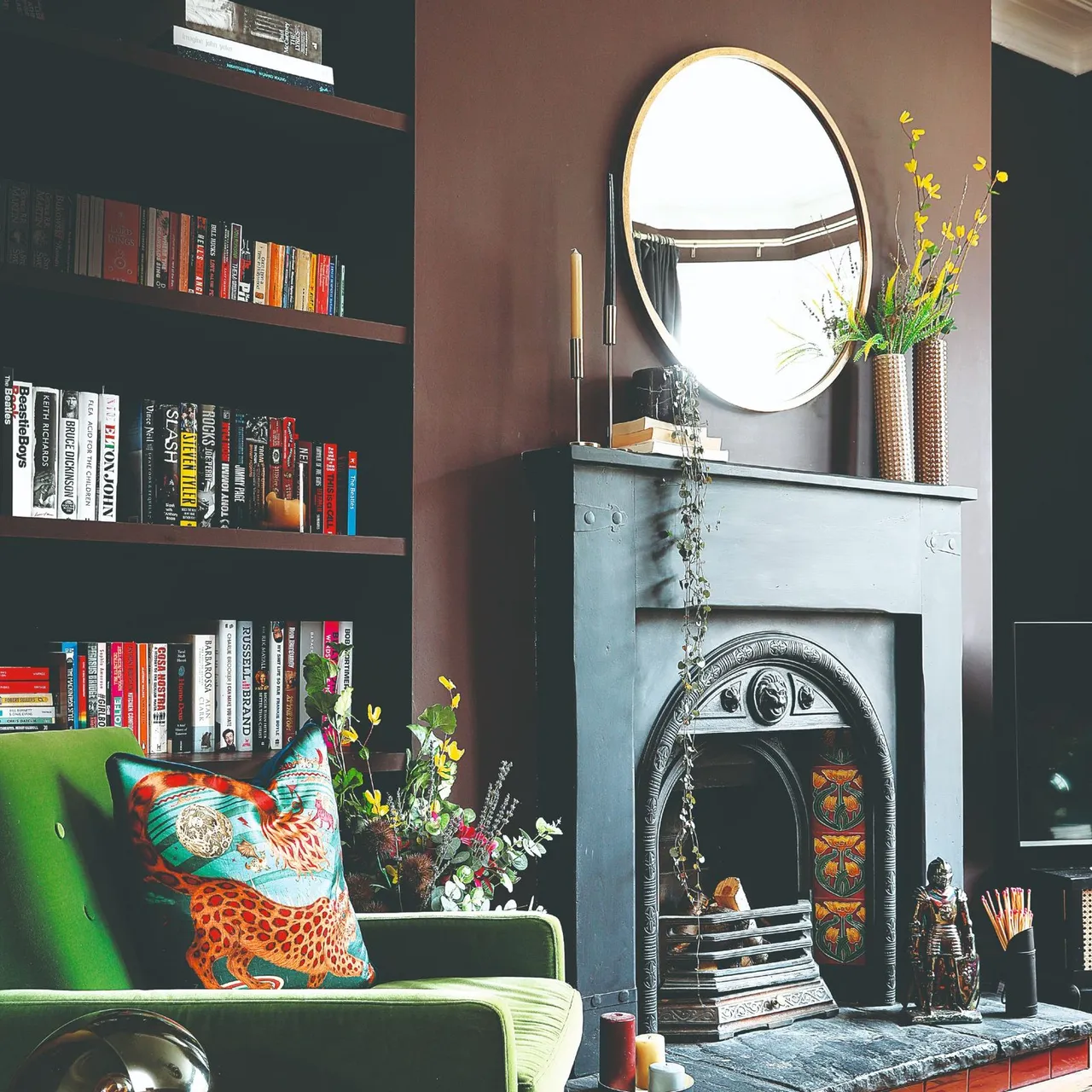
A dark ornate fireplace sits below an oval mirror beside a vivid green chair and book shelving. Warm wall color softens the room's contrasting pieces. The green chair picks up small colors in its illustrated cushion, contrasting with the warm brown chimney wall. A pale oval mirror lightens the upper half above the dark surround and its decorative tile strips.
Repeat one chair color in a smaller textile and secure the mirror appropriately, keeping nearby furniture clear of the fireplace's specified operating space. Keep trailing foliage and loose textile edges well away from a working fire. A strong chair color is easy to soften with a neutral throw, while the mantel itself can remain mostly visible between a few grouped objects.
IDEA 03 / 20
Use art to soften a traditional dining mantel
 SaveSupport Non AI Creator
Source: idealhome.co.uk.
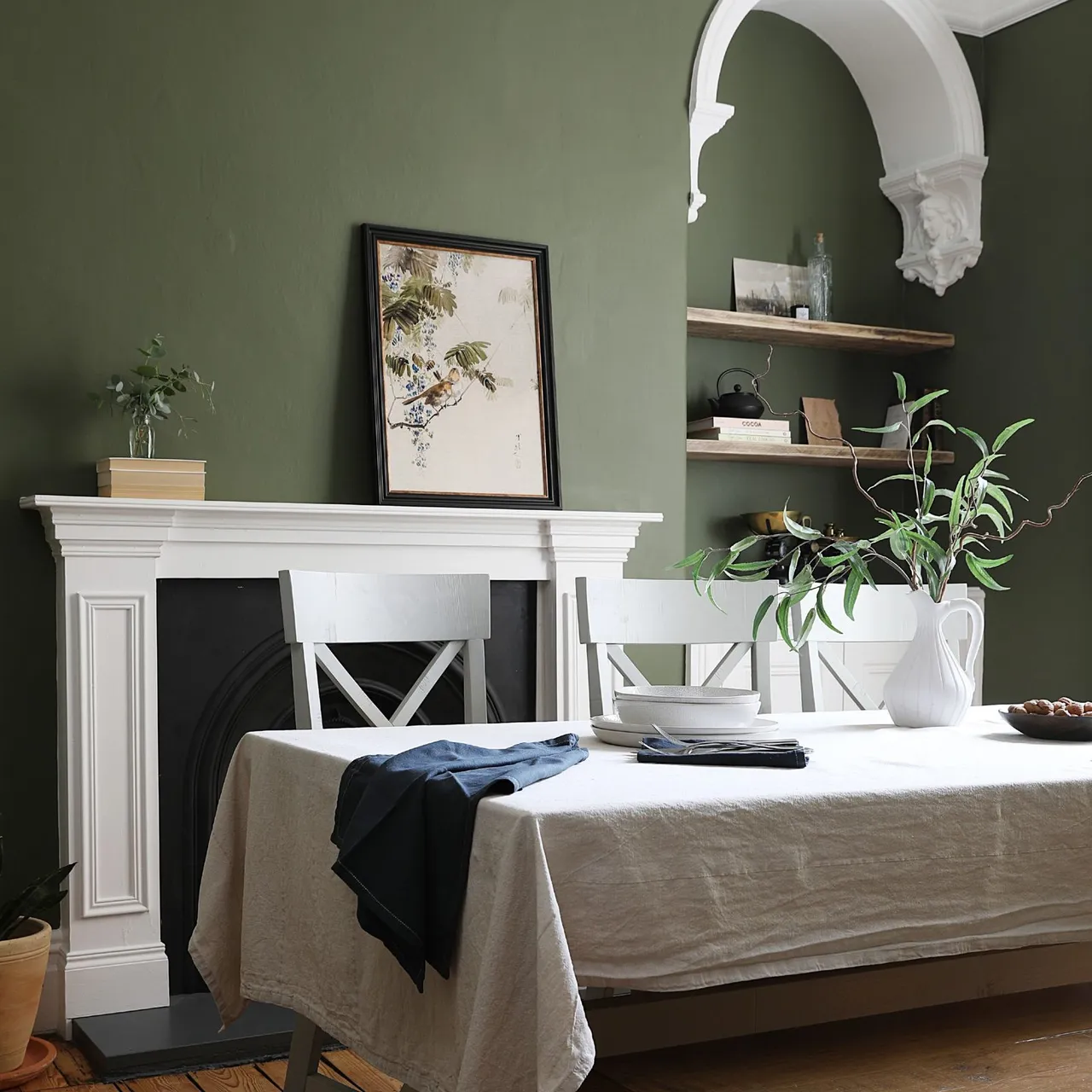
A pale mantel stands against dark green walls beneath a framed botanical picture. Simple objects and a leafy plant give the traditional surround informal character. The botanical picture relates to branches on the table without copying their arrangement. White chair backs and a pale tablecloth connect with the mantel, giving the green walls a softer foreground.
Choose objects with different heights but leave visible mantel space between them, keeping the arrangement clear of heat exposure and any needed access. Protect artwork from soot, heat and direct sunlight, choosing a position appropriate to the fireplace’s use. Keep the dining chairs’ pull-out space separate from the hearth so the room works comfortably for meals as well as display.
IDEA 04 / 20
Connect a small fireplace to dining furniture
 SaveSupport Non AI Creator
Source: idealhome.co.uk.
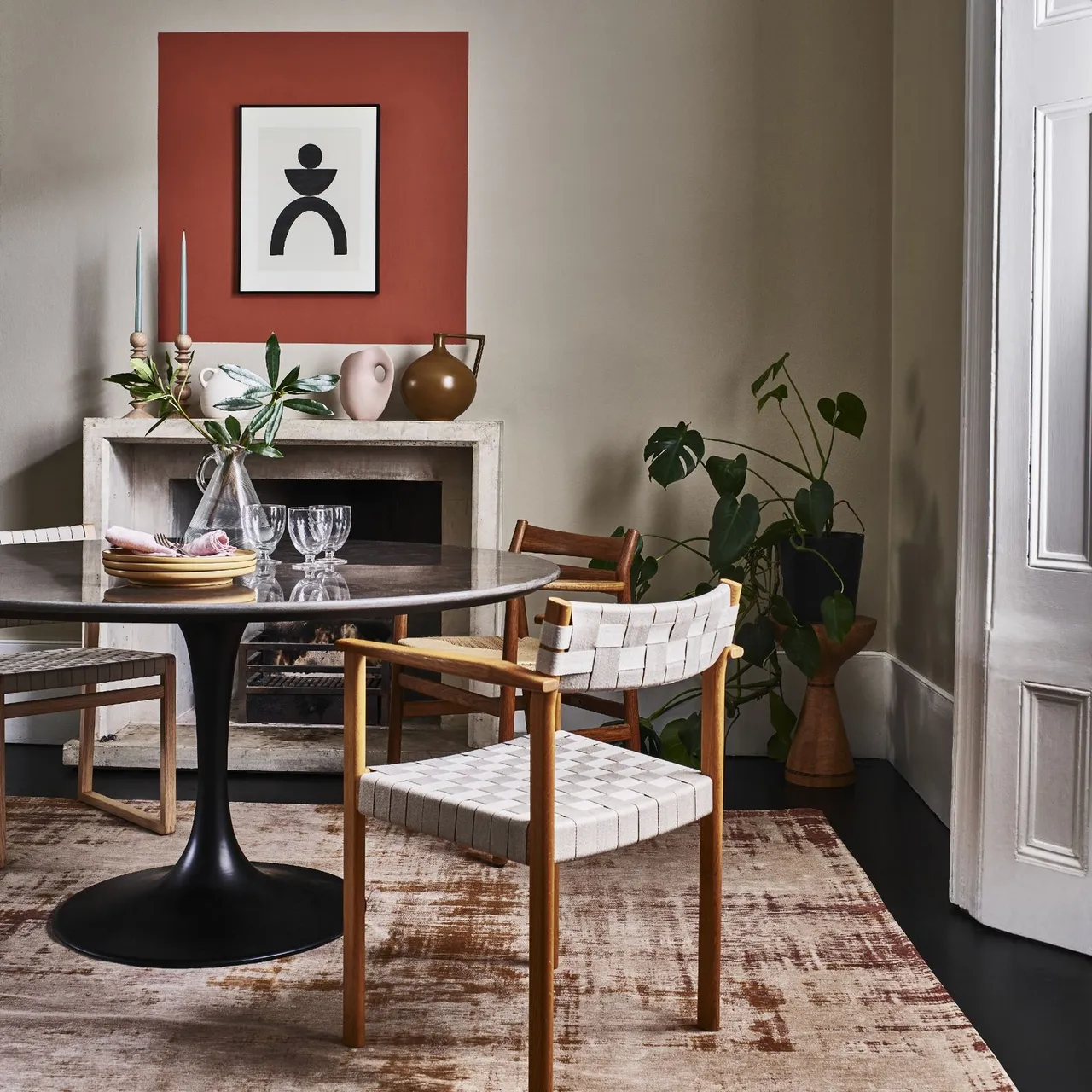
A pale fireplace sits beneath graphic framed art on a rust-colored wall patch, beside a small round dining table. Timber-framed chairs with pale woven seats introduce texture, while the dark pedestal table gives the lighter furniture a clear central shape.
Consider the dining arrangement and fireplace together before adding furniture, allowing chairs to pull back without entering the hearth’s required clearance. Keep mantel objects securely placed and choose a low table centerpiece so the artwork and people across the table remain visible during meals.
IDEA 05 / 20
Let patterned tiles carry the detail
 SaveSupport Non AI Creator
Source: idealhome.co.uk.
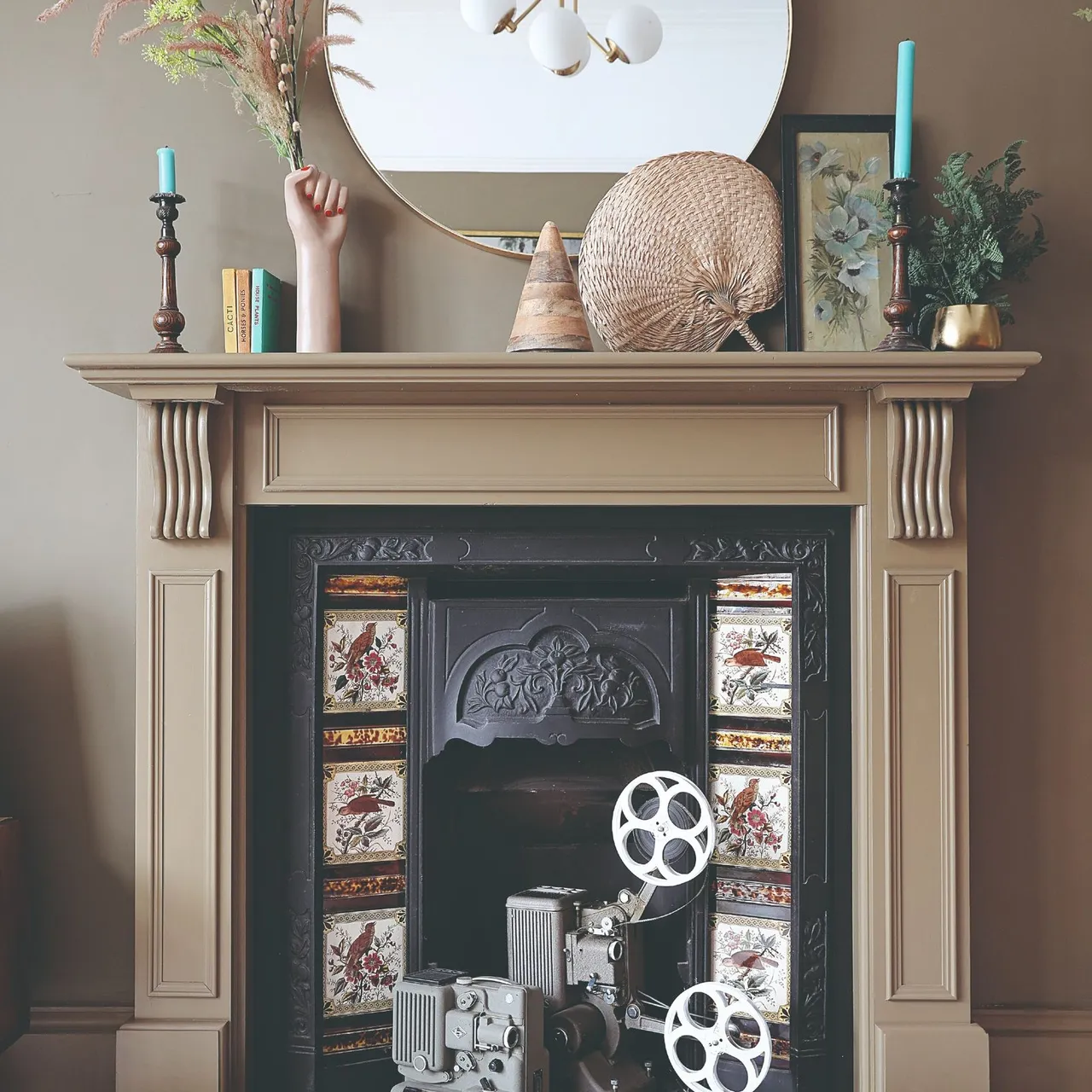
A warm neutral mantel surrounds a dark fireplace with small decorative tile panels. A round mirror and grouped objects draw attention to the older surround. Illustrated tiles sit in narrow strips inside the dark insert, creating detail at a smaller scale than the round mirror. Warm neutral paint unites the fluted surround with the wall, letting the older patterns remain distinct.
Keep additional patterns restrained near the tile border and check object placement against the fireplace's requirements, preserving a clear view of its original details. Inspect older tiles and joints before planning restoration, and use materials suitable for the fireplace’s actual operation. Do not assume that styling objects placed within the opening in a photograph are suitable beside a working fire.
PART 02
Expressive color and tile
IDEA 06 / 20
Use a bright surround in a colorful room
 SaveSupport Non AI Creator
Source: idealhome.co.uk.
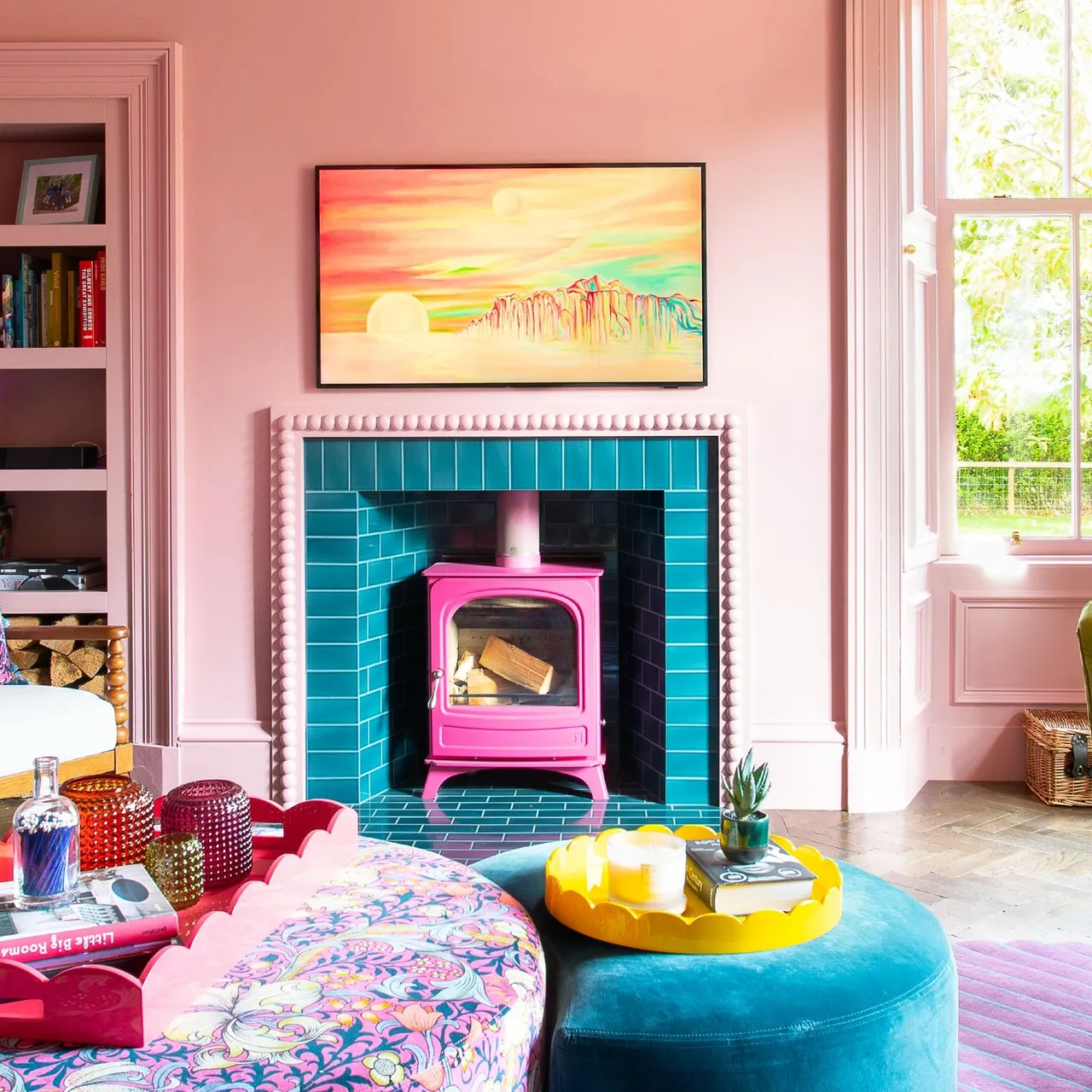
A pink-painted room combines a turquoise tile surround, a vivid pink stove and colorful upholstered furniture. Strong contrasts give the fireplace an unmistakable focal point. Turquoise tiles repeat the blue ottoman’s color, while the pink stove relates to the painted walls and floral seating. A yellow tray adds a smaller third accent instead of another major painted surface.
Choose paint and tile finishes appropriate to the installation and let one nearby textile repeat the colors, avoiding extra decoration within the required heat clearances. A colored stove finish requires the appliance maker’s guidance rather than ordinary furniture paint. Establish the required clearances before arranging nearby upholstery, then echo the palette through removable cushions or artwork positioned safely beyond the heated area.
IDEA 07 / 20
Give a pale mantel a deeper wall color
 SaveSupport Non AI Creator
Source: idealhome.co.uk.
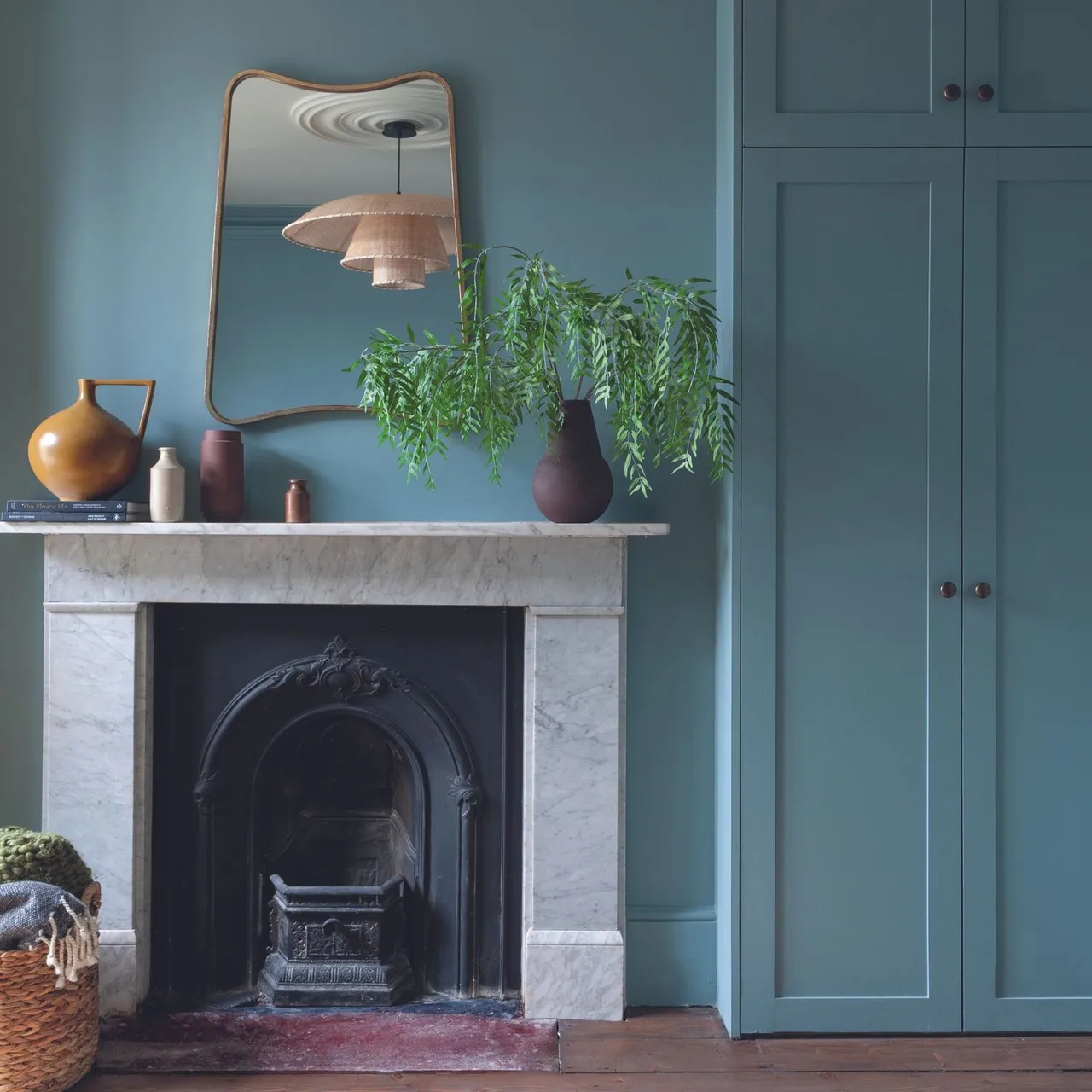
A pale stone mantel sits against teal walls beside a paneled door and framed art. A leafy arrangement and mirror soften the strong painted background. The pale veined surround separates the dark insert from the teal walls and cupboard doors. A softly shaped mirror and rounded vessels repeat gentler outlines above the fireplace’s straight horizontal mantel.
Test wall color in daylight and evening light before committing, and keep the mantel objects grouped so the pale surround remains clearly visible. Compare wall paint with the surrounding stone before choosing a shade, since veining may appear warmer or cooler under different lighting. Keep vases stable and foliage trimmed so the decorative grouping remains separate from the fire opening.
IDEA 08 / 20
Mix an older green mantel with warm walls
 SaveSupport Non AI Creator
Source: idealhome.co.uk.
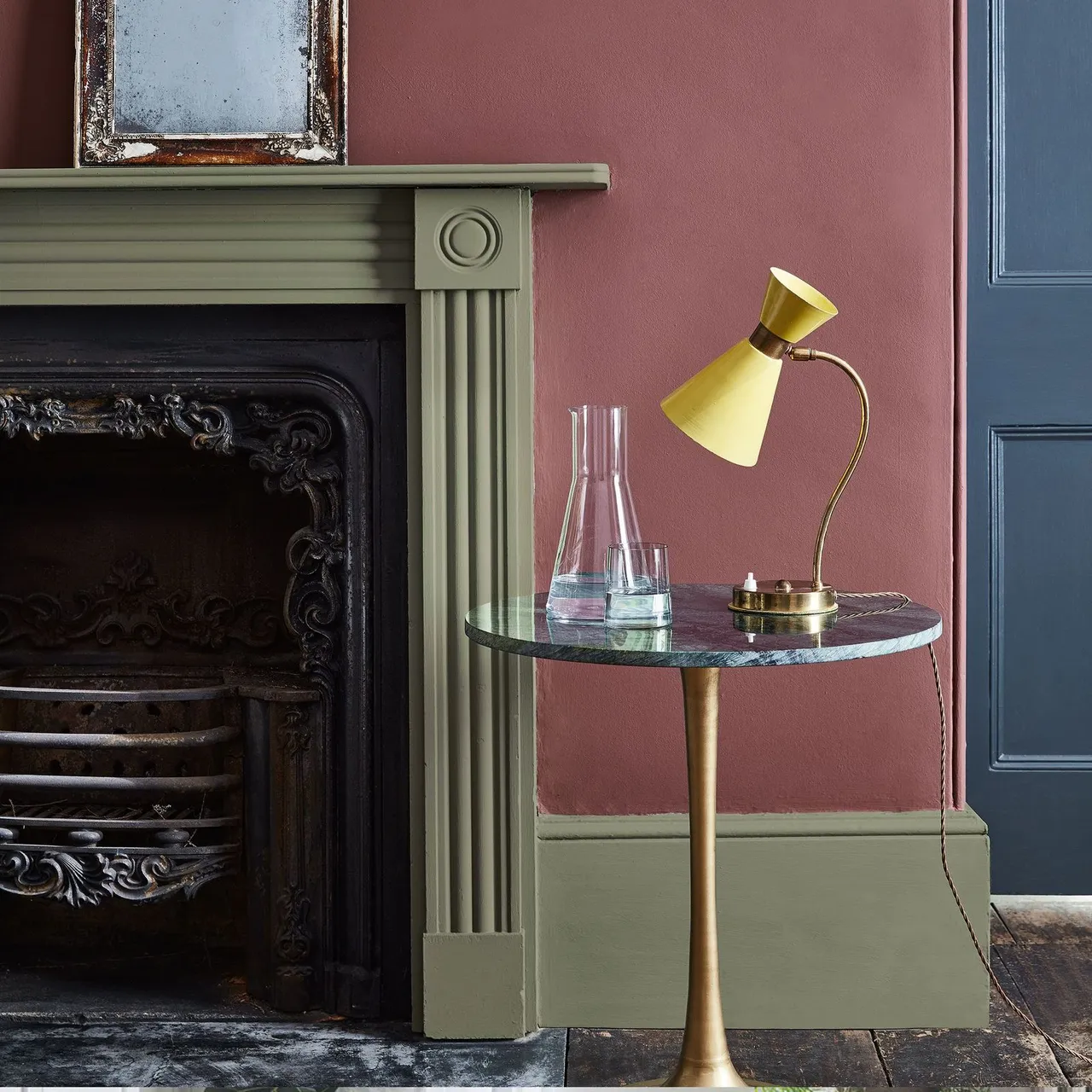
An ornate muted-green mantel stands against warm pink walls beside a small green-topped pedestal table. A yellow lamp supplies a concentrated brighter accent, while the dark decorative insert gives the softer surrounding colors a strong outline at the fireplace opening.
Use restrained accessories when the surround already has fluted columns and ornamental details. Check table stability and allow comfortable movement beside it, then establish the fireplace’s operating requirements before placing any electrical cord, lamp or furniture close to the heated area.
IDEA 09 / 20
Layer pattern around an antique surround
 SaveSupport Non AI Creator
Source: idealhome.co.uk.
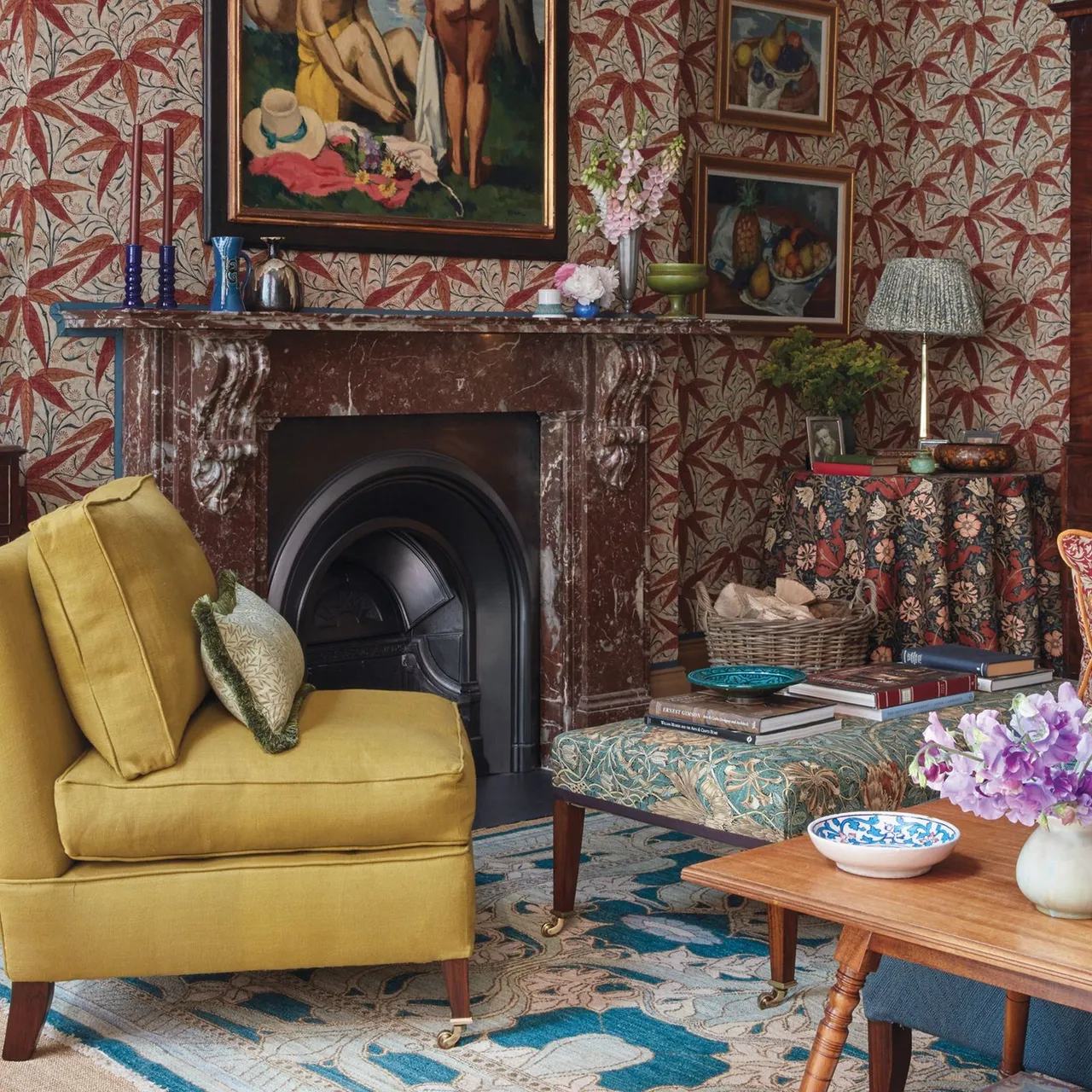
An ornate dark mantel sits beneath colorful art against richly patterned walls. A mustard-colored chair and patterned rug extend the collected atmosphere into the room. Red leaf-patterned walls connect with the reddish veining of the surround, while a mustard chair supplies a broader plain surface. Framed paintings and floral upholstery continue the collected mood at different scales.
Repeat one smaller color across the textiles and leave the hearth clear, keeping the dense wall pattern from spreading into every available surface. Choose one larger plain textile if you want to balance several dense patterns without removing their character. Keep upholstered footstools and rugs beyond the fireplace’s specified clearance, and move books away from any active hearth area.
IDEA 10 / 20
Warm a timber mantel with amber tiles
 SaveSupport Non AI Creator
Source: idealhome.co.uk.
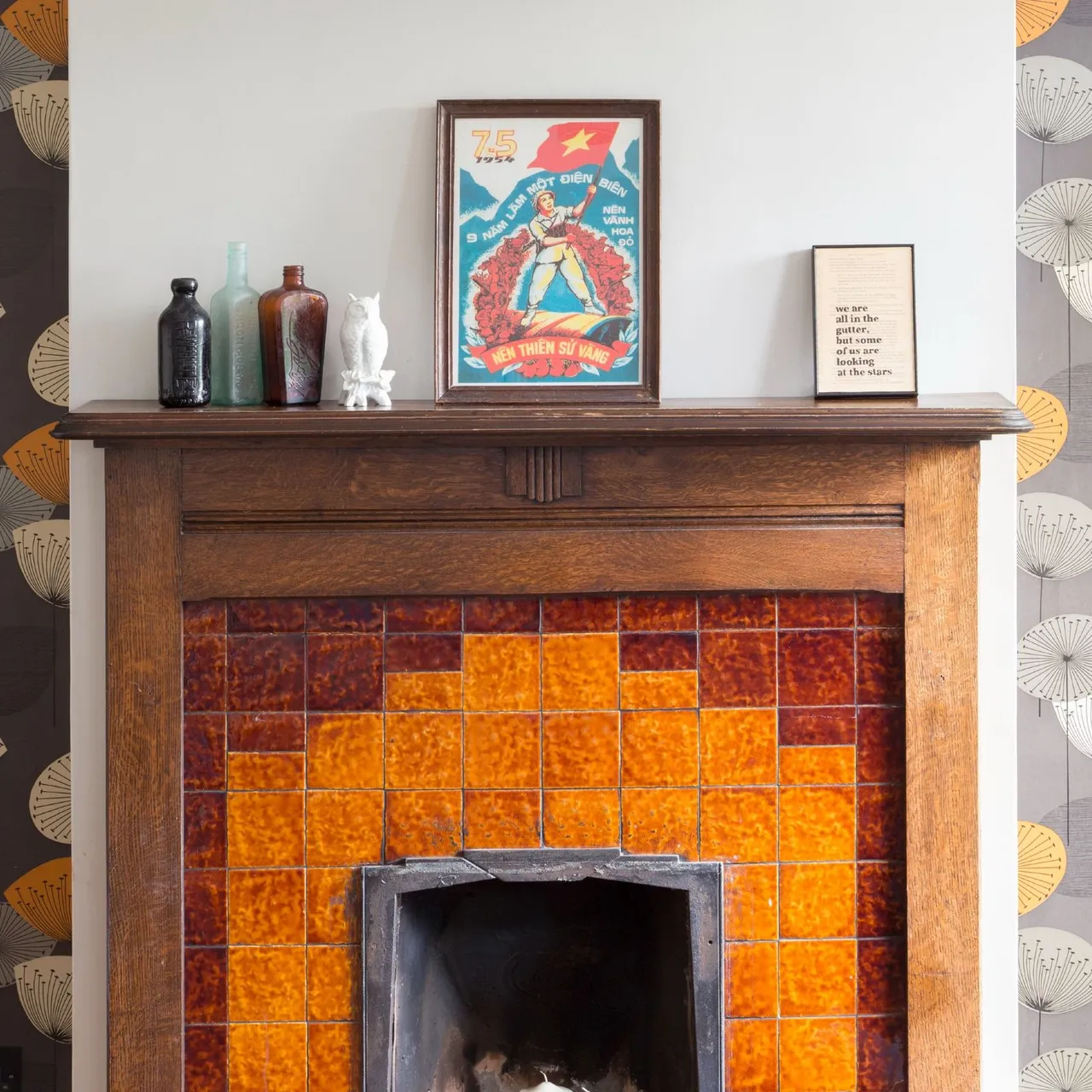
A timber mantel surrounds warm amber and orange tiles beneath a colorful framed picture. The related wood and tile tones give the simple arrangement rich texture. Amber tiles shift between yellow-orange and deeper red, adding variation inside the timber surround. Dark bottles and a colorful framed print continue the warm palette while leaving much of the mantel’s horizontal line visible.
Check the suitability and condition of existing materials before changing them, then keep smaller objects modest so the tile color can remain the strongest feature. Have existing surrounds assessed before sanding, painting or changing tile near an active fireplace. Choose objects that stand securely on the shelf, and avoid using decorative styling photographs as evidence that timber or ornaments have adequate heat clearance.
PART 03
Texture around the hearth
IDEA 11 / 20
Balance deep walls with a warm textured chair
 SaveSupport Non AI Creator
Source: idealhome.co.uk.
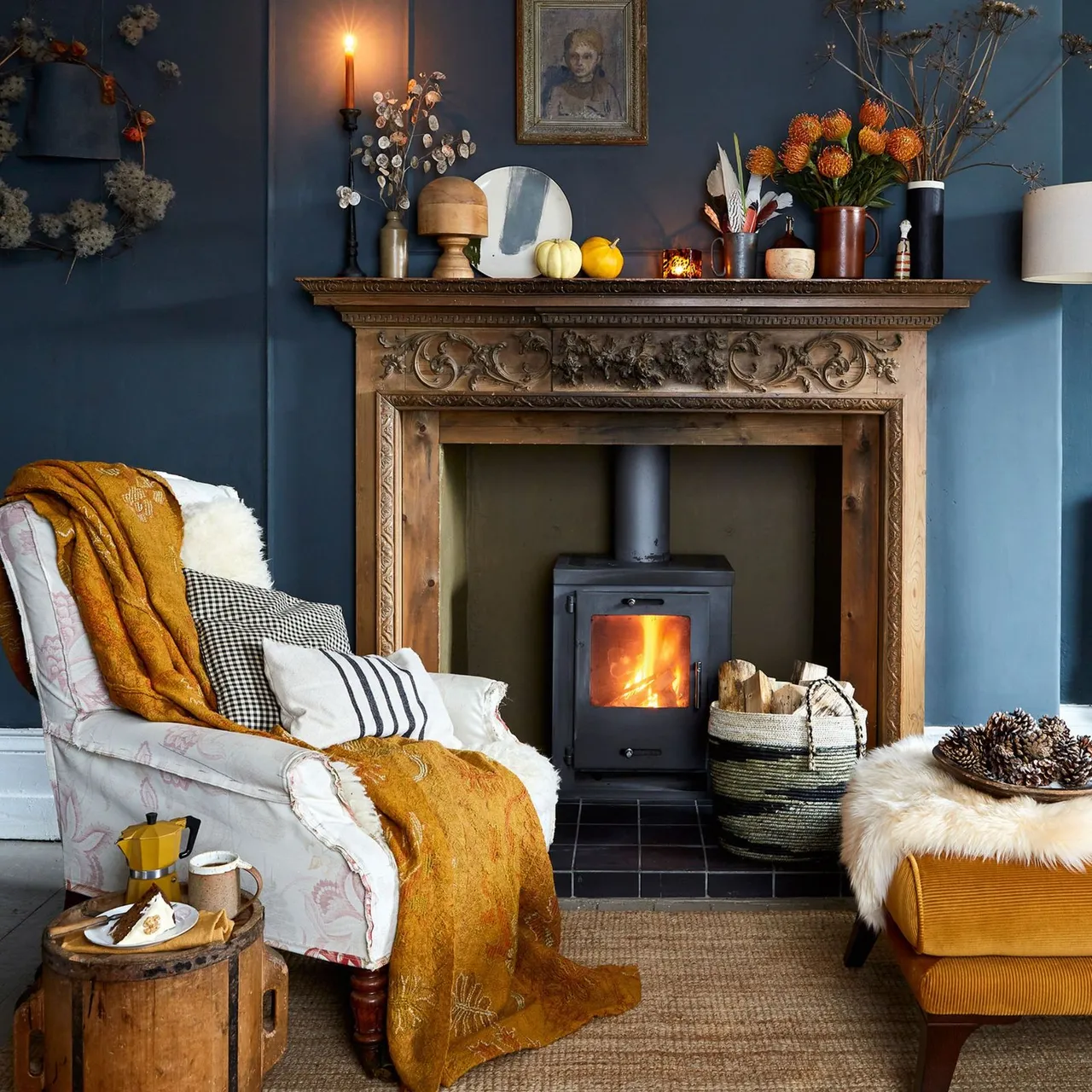
An ornate mantel and stove sit against deep blue walls beside a pale textured chair and mustard throw. Warm textiles soften the darker fireplace setting. The mustard throw and footstool brighten a pale patterned chair against the blue walls. A richly carved surround gives the compact stove a larger architectural frame, while natural baskets repeat warmer textures below.
Keep throws and cushions within the seating area and outside all required stove clearances, using color rather than nearby clutter to make the hearth inviting. Keep firewood storage, blankets and baskets outside the stove’s stated distances, even if a photograph groups them closely. Use the chair’s actual seating position when checking clearances, including where a throw may slip or hang down during use.
IDEA 12 / 20
Add personal art above decorative tile
 SaveSupport Non AI Creator
Source: idealhome.co.uk.
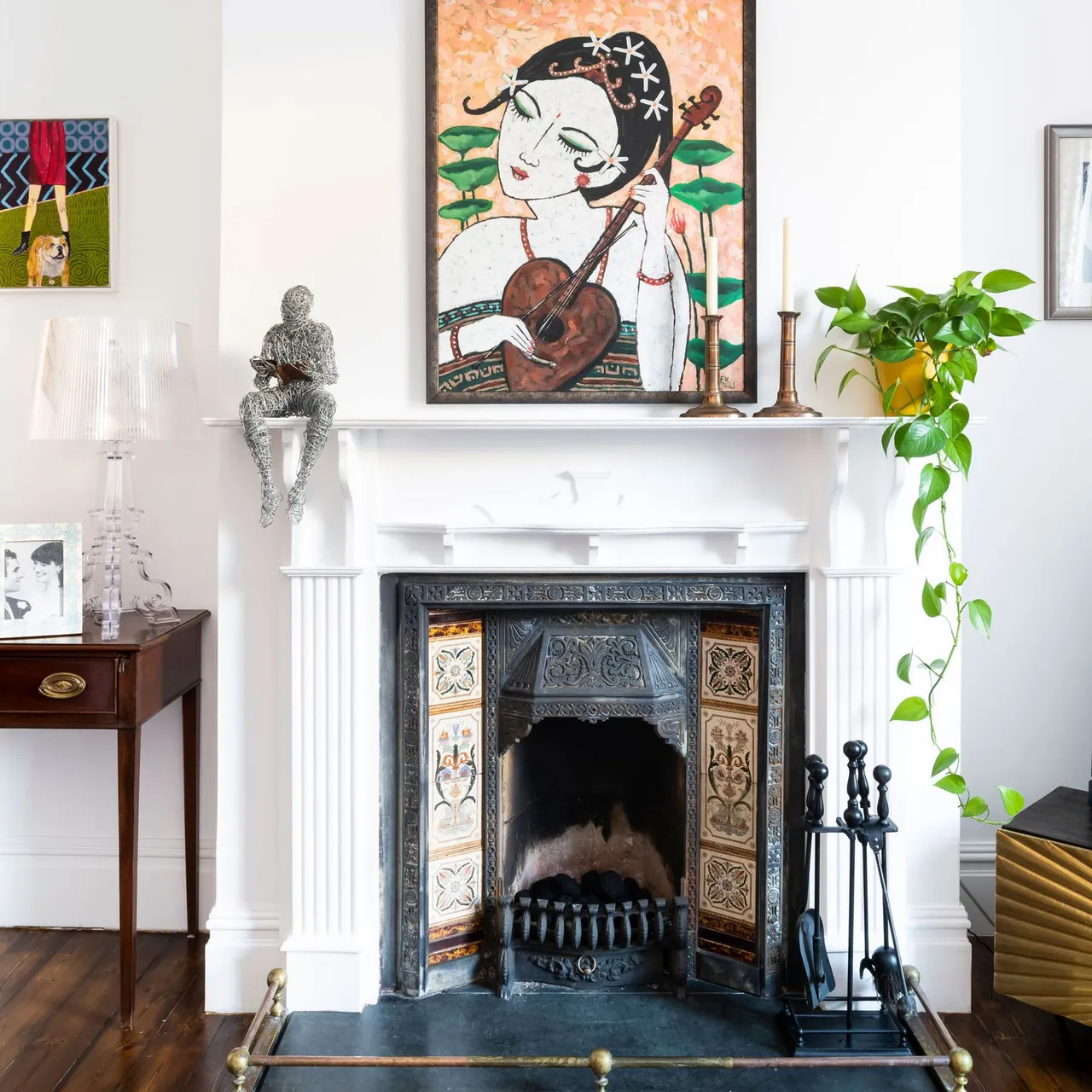
A white mantel with patterned tile panels sits below a colorful portrait beside a leafy plant. The pale surround gives the artwork and tile a calm frame. The portrait’s warm background relates to the illustrated tile panels without repeating their exact motifs. White paint separates these two busy areas, while a trailing plant adds a softer vertical shape at one end.
Choose a secure hanging position for the picture and keep plant foliage away from heat, leaving the decorative border visible without filling the mantel edge. Make sure the picture is safely attached instead of depending on a narrow ledge alone. Choose a plant position based on both light and heat exposure, and protect the mantel from watering drips with a suitable inner pot.
IDEA 13 / 20
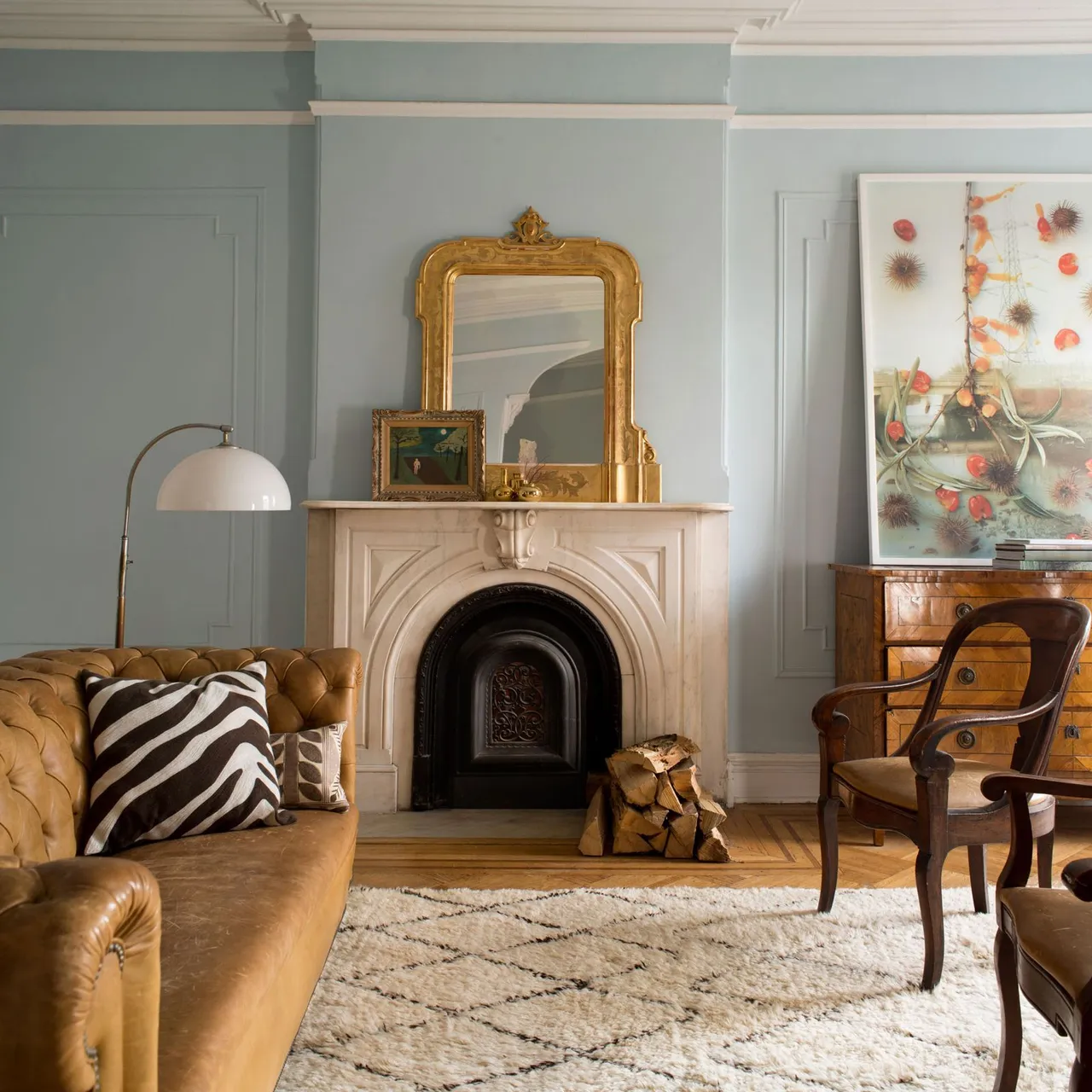
Mix an older stone surround with varied seating
 SaveSupport Non AI Creator
Source: idealhome.co.uk.
A pale stone surround stands against light blue walls beneath a gold-framed mirror, beside a warm leather sofa and timber armchair. A zebra-patterned cushion and soft rug add different textures, giving the traditional fireplace a relaxed setting rather than a formally matching suite.
Plan comfortable seats and reachable tables before adding more ornaments around the surround. Keep seating and textiles beyond the fireplace’s specified operating clearances, and use a few repeated warm tones to connect mixed furniture without needing every wood finish or fabric pattern to match.
IDEA 14 / 20
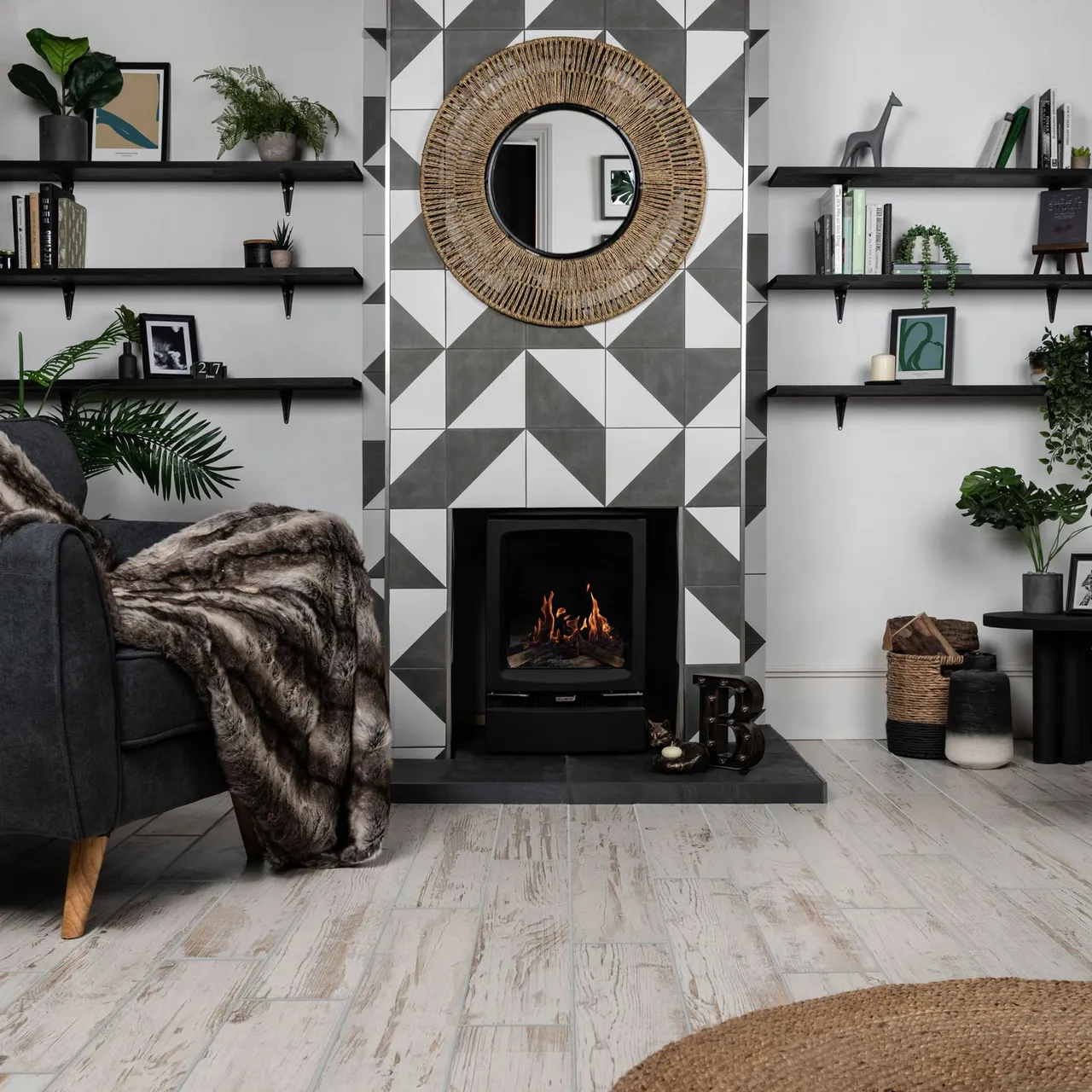
Give a geometric surround natural companions
 SaveSupport Non AI Creator
Source: idealhome.co.uk.
A geometric black-and-white surround sits beneath a woven-framed round mirror between open shelves. Plants and a textured throw soften the sharp pattern. Large triangular shapes run up the chimney wall, while the woven mirror introduces a softer circular outline. Dark open shelves echo the stove below, giving smaller plants and books a clear place beside the strong pattern.
Keep the shelves lightly arranged and repeat natural texture away from the hearth, allowing the strong geometric surface to remain the room's main pattern. Keep the mirror’s natural fibers and shelf contents outside heat-exposed areas according to the installation’s requirements. Test the geometric pattern at full size first, since the visible shape can change substantially around an opening or behind a round mirror.
IDEA 15 / 20
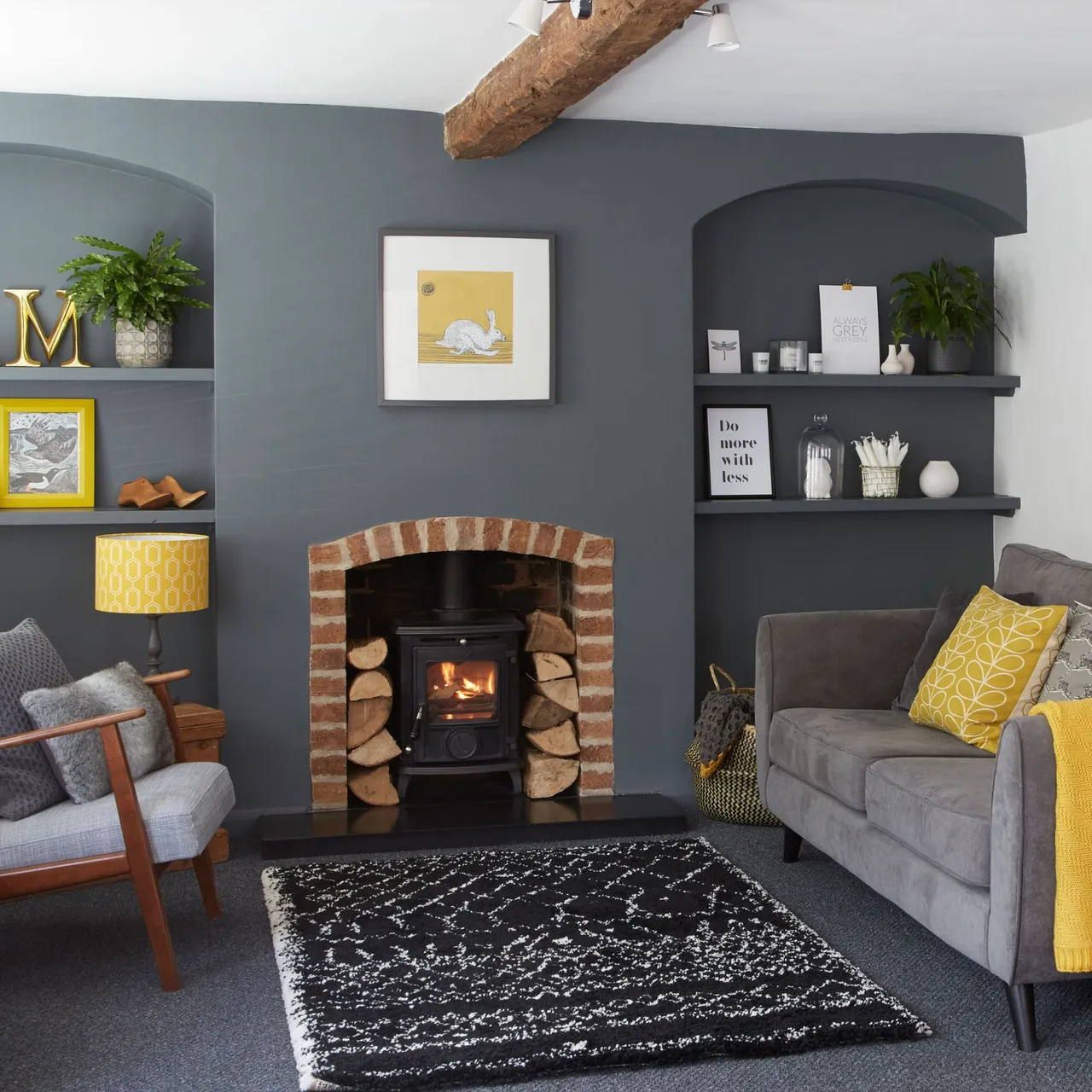
Echo brick warmth with a small yellow accent
 SaveSupport Non AI Creator
Source: idealhome.co.uk.
A brick arched fireplace sits against gray walls beside a gray sofa and yellow cushion. Timber ceiling detail adds warmth to the restrained room. Yellow repeats in a cushion, lampshade and framed artwork, linking the seating with the brick’s warm tone. Gray walls and upholstery provide a steady background, while the exposed ceiling beam adds another natural surface.
Use a small repeated accent color near the seating and keep the surrounding shelves useful, allowing the brick texture to provide character around the fireplace. Use the shelving for belongings you reach regularly, leaving some spaces open so the brick remains noticeable. Keep the rug and seat textiles at the required distance from the stove, including any cushions that may slip during use.
PART 04
Comfortable seating and simple layers
IDEA 16 / 20
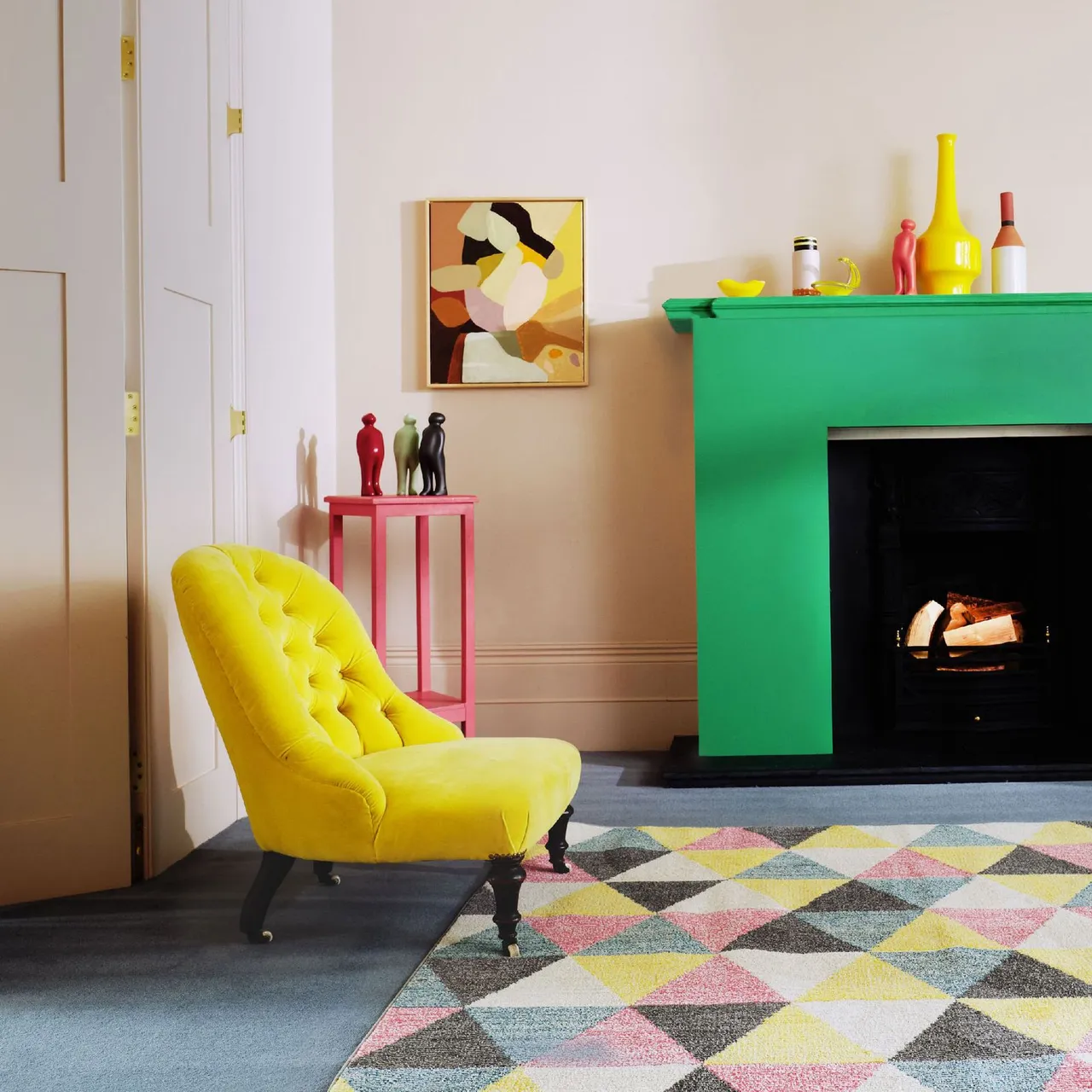
Pair a bold green surround with playful color
 SaveSupport Non AI Creator
Source: idealhome.co.uk.
A bright green fireplace surround stands beside a yellow chair above a multicolored geometric rug. Pale walls give the confident color combination breathing space. The yellow chair picks up the rug’s smaller yellow triangles, while red details on the side table and mantel add a second accent. Pale walls give the green surround enough contrast to remain central.
Choose an appropriate finish for the surround and keep other furniture simple, checking required clearances before placing the chair or any smaller objects nearby. Compare paint samples alongside the rug to avoid introducing several unrelated bright shades. Establish safe positions for the chair and decorative vessels before styling, and use finishes appropriate to the particular surfaces and temperatures around the fireplace.
IDEA 17 / 20
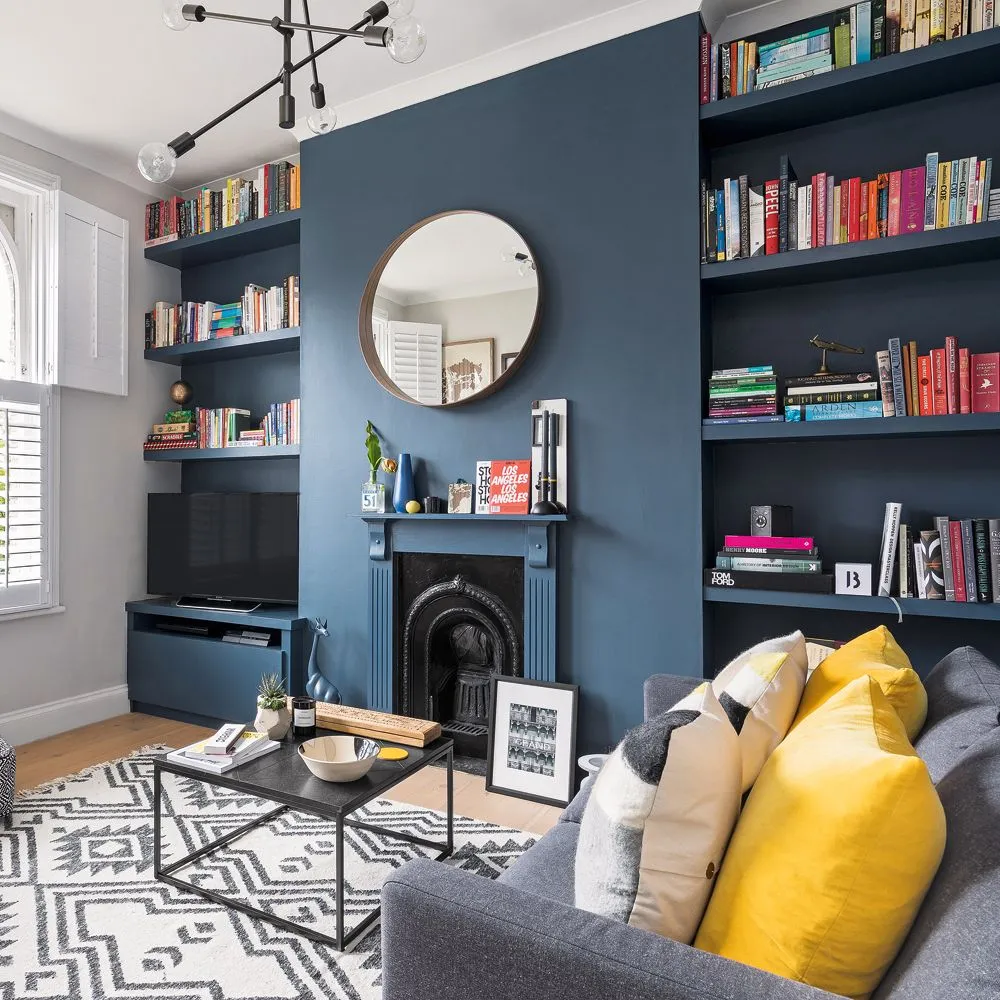
Let books and cushions brighten a dark mantel
 SaveSupport Non AI Creator
Source: idealhome.co.uk.
A dark fireplace sits beneath a round mirror between deep blue book shelves. Yellow cushions and a patterned rug bring color into the seating area. The blue wall and bookcases create a continuous frame around the dark insert. Yellow cushions supply larger bright patches below, while a geometric rug and simple round mirror introduce contrasting shapes without another wall print.
Leave the mantel less crowded than the shelves and use textiles outside the hearth area, keeping the room lively while maintaining practical access to the fireplace. Arrange heavier books on appropriate shelves and secure larger units where required. Reserve the seating textiles for the lounge area outside the hearth’s clearance, and keep the mantel simple enough that the dark fireplace profile remains visible.
IDEA 18 / 20
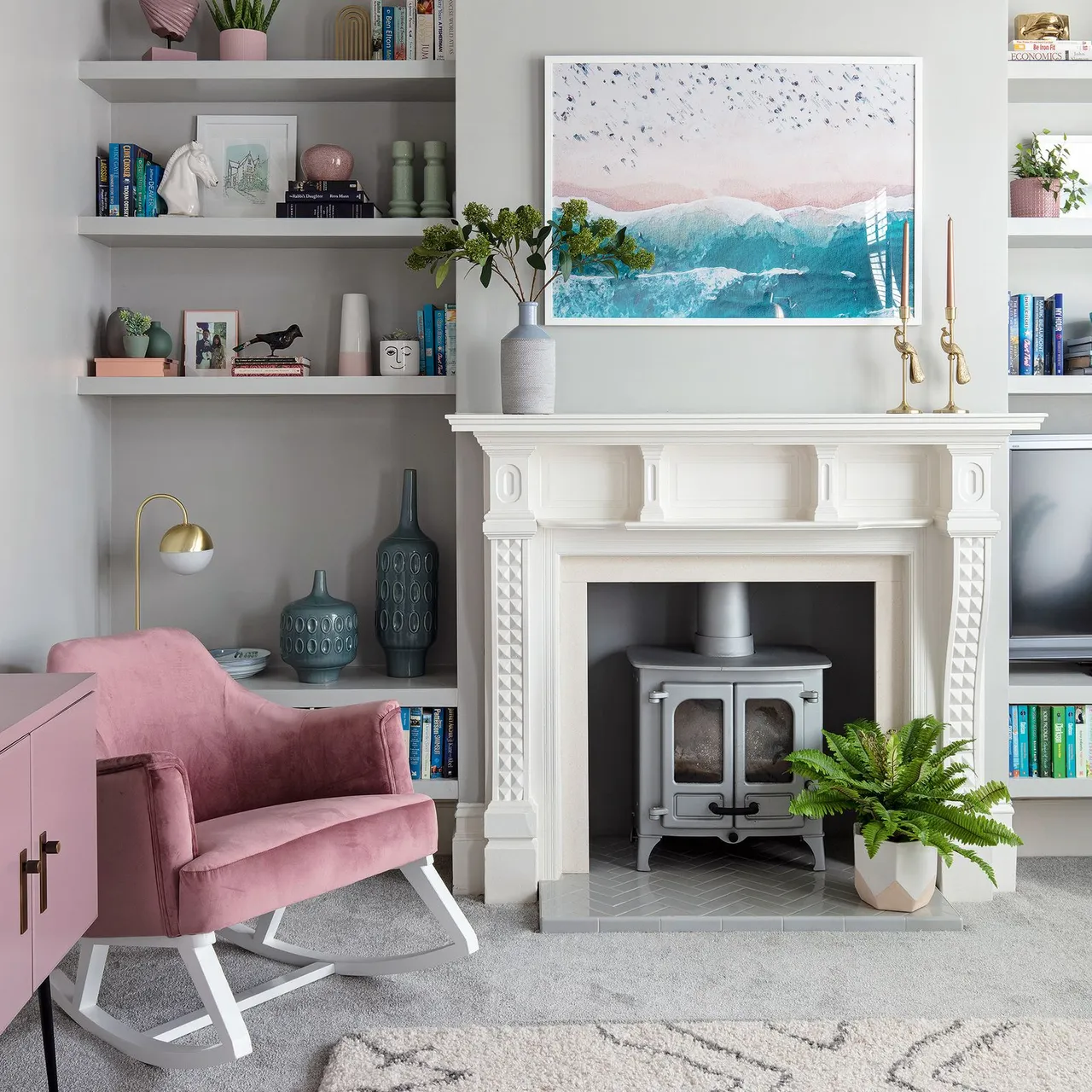
Use a pale mantel with a soft pink chair
 SaveSupport Non AI Creator
Source: idealhome.co.uk.
A white mantel sits between light shelves beneath pale artwork beside a pink upholstered chair. Green plants and a patterned rug keep the bright arrangement informal. Pink upholstery relates to small objects on the shelves and the artwork’s pale upper colors. Blue-green vessels repeat the picture’s cooler tones, while the white surround and light walls keep the composition relatively calm.
Choose a few objects that connect with the chair color and preserve open shelf space, letting the softer upholstery add character without overwhelming the pale surround. Place plants where their foliage and pots remain clear of heat from the stove; the photograph’s styling should not substitute for installation guidance. Choose accessories by color connection and everyday use rather than filling each shelf with matching ornaments.
IDEA 19 / 20
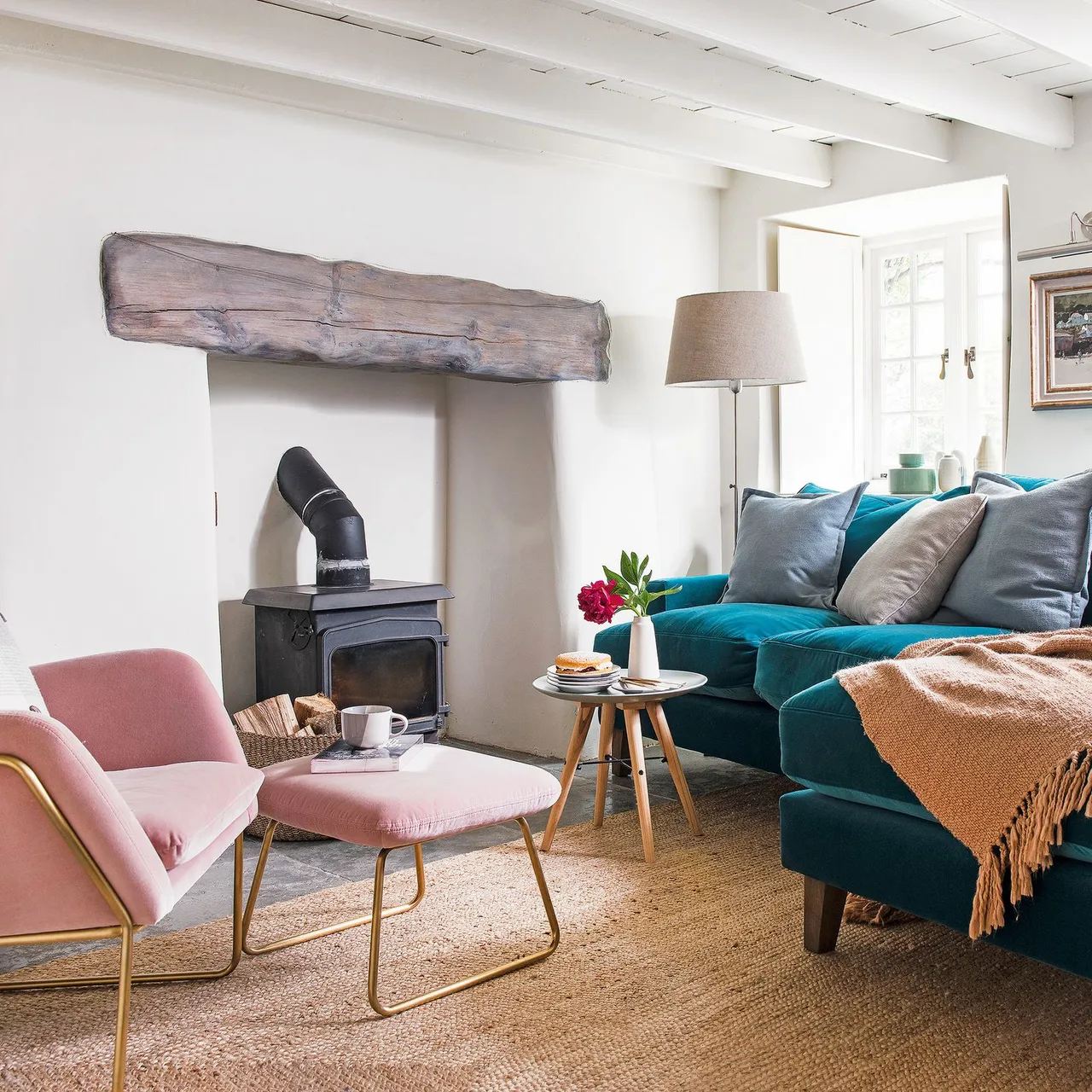
Combine a Rustic Beam with Colorful Seating
 SaveSupport Non AI Creator
Source: idealhome.co.uk.
A thick timber mantel spans a pale fireplace beside pink chairs and a deep teal sofa. A natural-toned rug links the varied upholstery to the rustic wood. A pink footstool extends the chair’s softer color toward the center, while warm neutral cushions and a throw soften the teal sofa. The broad timber beam gives these modern-looking seats a more rustic setting.
Check the installation's material and clearance requirements before copying the beam detail, then repeat one seating color in a small object away from heat. A combustible mantel’s placement depends on the appliance and its installation, so have the proposed detail checked before copying it. Position the footstool for comfortable use without allowing it or loose throws to enter the required stove clearance.
IDEA 20 / 20
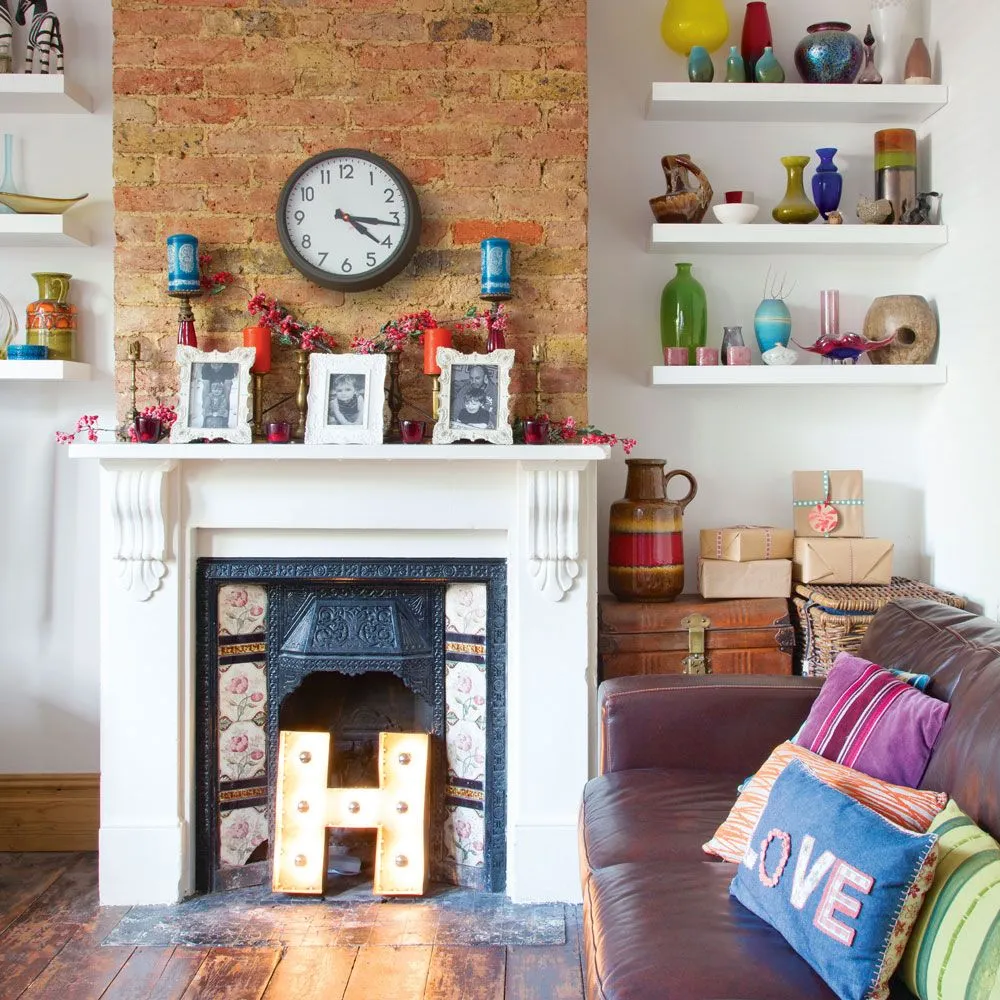
Bring collected color to an exposed brick chimney
 SaveSupport Non AI Creator
Source: idealhome.co.uk.
A pale mantel sits against exposed brick between shelves of colorful objects. Bright cushions and framed pictures give the older fireplace setting a playful collected mood. The exposed brick brings a warm textured background behind the pale surround and clock. Bright vessels on the flanking shelves repeat colors in the cushions, making the older architectural feature feel part of a lively collected room.
Choose a few repeat colors across the shelves and seating, keeping the hearth opening accessible and the smaller ornaments away from any active heat source. Keep illuminated decorative letters within an opening only after confirming it is safely decommissioned for that use. For a working fireplace, move decorations, electrical items and loose textiles out of the hearth area and follow the installation’s operating requirements.
BRING IT ALL TOGETHER
Make it work in your home
Choose one main expressive detail, such as a colored surround, a patterned tile border or a favorite picture, then keep the smaller objects deliberate.
Before styling a working hearth, check its required clearances and suitable materials. Decoration should preserve access, ventilation and safe use as well as the room's character.