A cottage fireplace can bring together textured masonry, familiar furniture and the smaller objects that make a room feel lived in. Start with the surround you already have, then compare paint, fabric and display ideas against its visible colors and proportions. A dining room fireplace can be just as useful a starting point as one in the main sitting room.
These photographs show different cottage-inspired combinations, from darker stoves and floral walls to quieter pale surrounds. Some are styled with objects or furniture close to the hearth. Borrow their color and texture ideas while having the fireplace, chimney, suitable surfaces and operating clearances assessed for your own home; a photograph cannot establish that an installation or furniture position is safe.
PART 01
Use paint and quieter surrounds
IDEA 01 / 20
Let rough stone anchor a softer seating group
 SaveSupport Non AI Creator
Image credit: Colin Poole
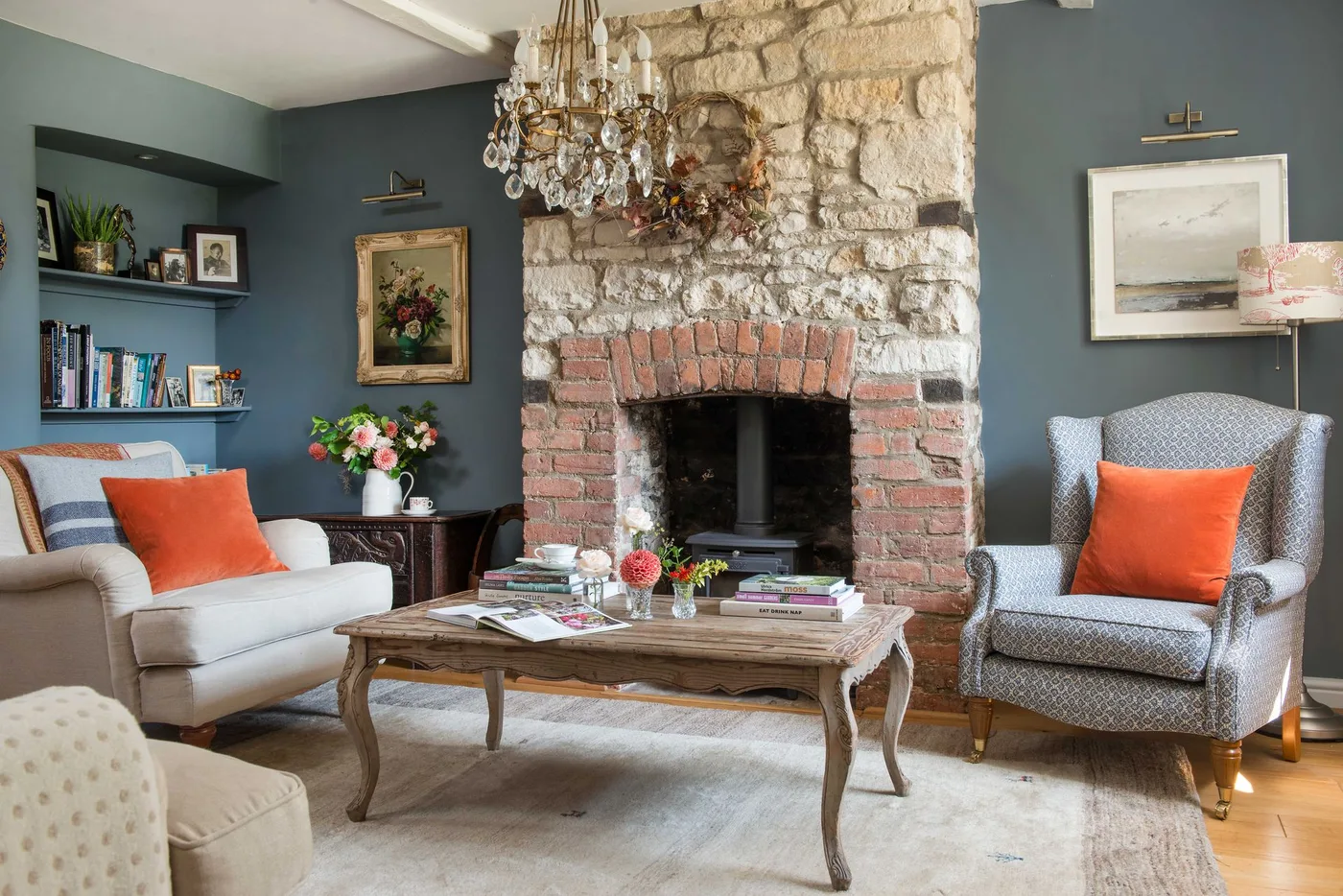
Rough pale stone surrounds a dark fireplace beneath a narrow wooden ledge. Blue-gray walls, pale seating and warm orange cushions soften its uneven texture without hiding the chimney breast. The darker opening supplies a strong center for the room, while quieter furniture lets the stone remain the largest pattern. This balance suits a cottage room that already has substantial masonry.
Use the stone’s visible colors when comparing paint and upholstery samples, rather than trying to match every surface exactly. Retain access for inspection and cleaning, and have the hearth and fireplace condition assessed before use. Keep furniture and fabrics outside the required clearance; a photograph shows a decorating arrangement, not evidence that its distance from a fire is suitable.
IDEA 02 / 20
Use a painted mantel against small-scale flowers
 SaveSupport Non AI Creator
Image credit: Douglas Gibb
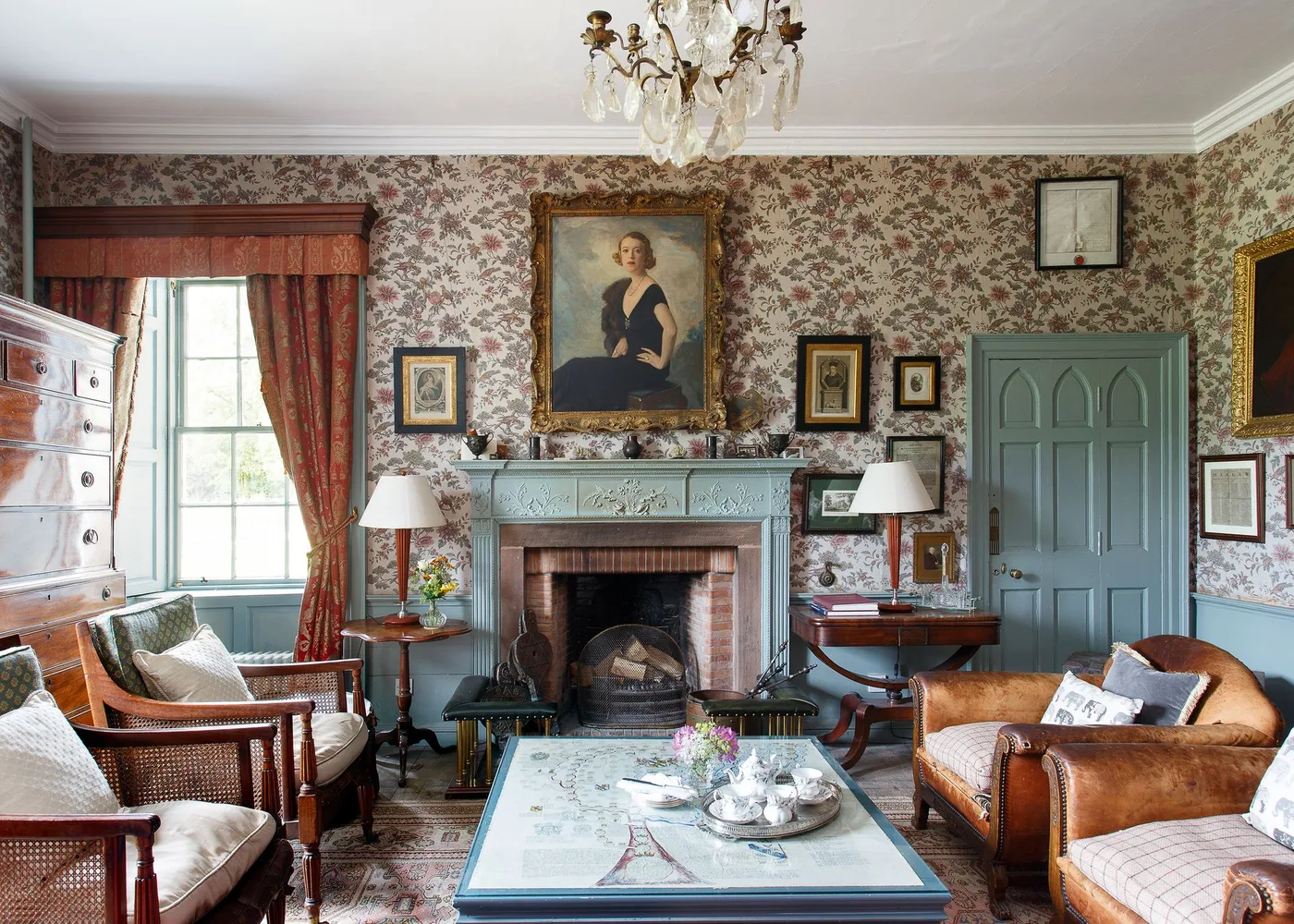
A blue-green painted mantel stands against a finely patterned floral wall. The darker fireplace opening gives the delicate print a clear boundary, while the decorative trim adds another traditional detail. The neighboring painted door helps the stronger color feel connected with the room instead of appearing as an isolated accent. It is a useful approach when your cottage character comes mainly from paint and pattern.
Compare a large wallpaper sample with the mantel color under your actual lighting before committing to both. Check the existing surface and appropriate preparation with the paint supplier, keeping decorative coatings away from surfaces for which they are unsuitable. Leave the mantel’s profile readable by limiting ornaments, and assess any fireplace work independently of the proposed color scheme.
IDEA 03 / 20
Keep a darker stove visible against teal walls
 SaveSupport Non AI Creator
Image credit: Brent Darby
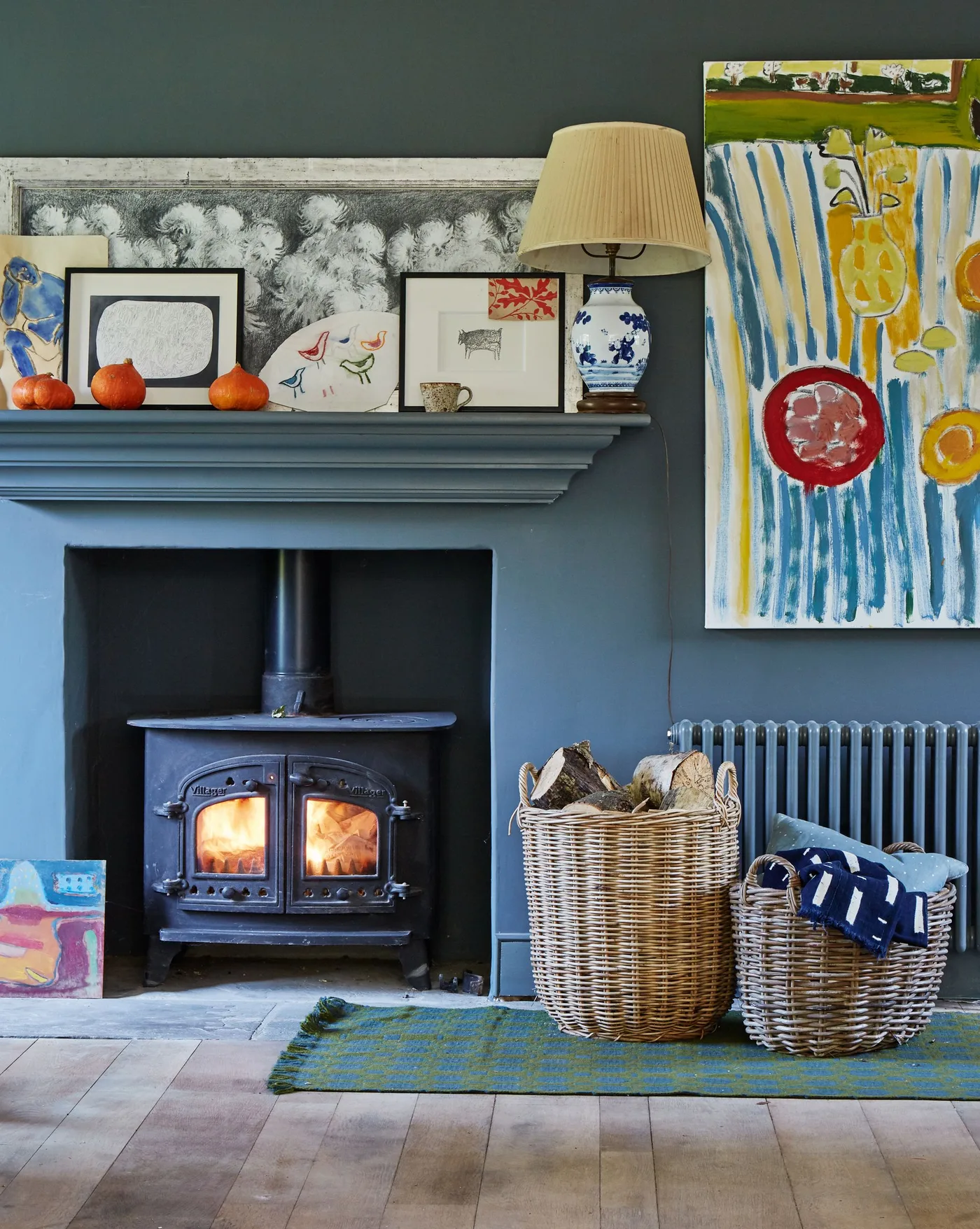
A black stove sits inside a dark opening framed by a teal mantel and matching walls. Pale flooring and a lighter rug bring contrast below, while baskets and stacked logs introduce a more informal country texture nearby. The continuous dark wall treatment makes the stove feel integrated with the room, rather than competing with a bright surround or several different wall colors.
Test a deeper paint sample across daylight and evening conditions before darkening the entire wall. Provide suitable task lighting elsewhere if the room becomes less useful for reading. Treat the pictured baskets, logs and rug as styling references only: combustible belongings need appropriate separation from the stove, and its installation, flue and clearances should be checked by a qualified professional.
IDEA 04 / 20
Bring a fireplace into a warmer dining room
 SaveSupport Non AI Creator
Image credit: Brent Darby
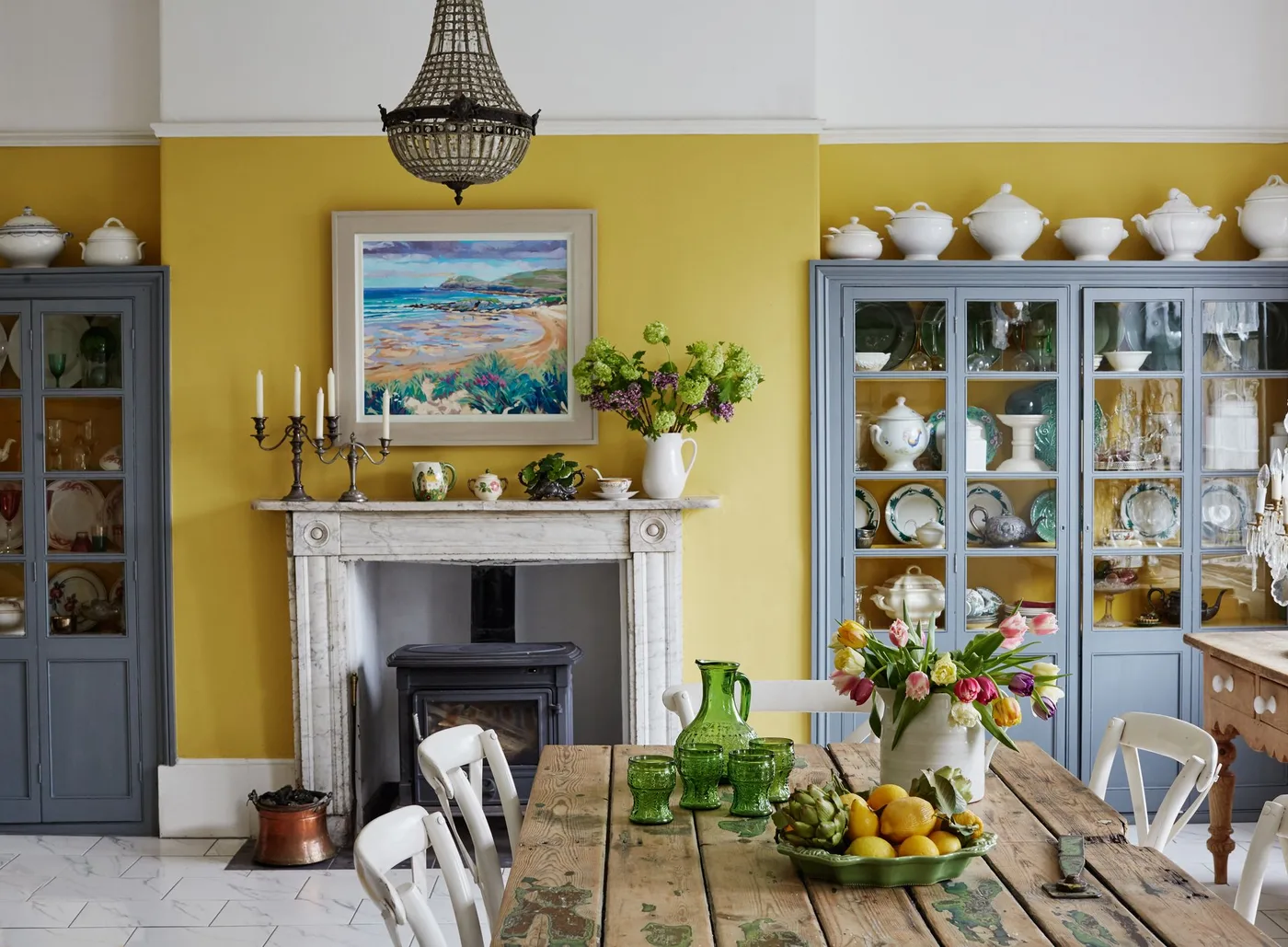
Yellow walls give the white fireplace surround a warmer background, while dark stove doors keep the opening distinct. Pale gray storage cupboards flank the chimney breast, connecting the hearth with the dining room’s everyday dishes and furniture. The wooden table adds another warm surface without repeating the yellow, showing how a cottage fireplace can belong to a useful eating space as well as a sitting room.
Compare the wall color with dishes, cupboard paint and the table you intend to keep before extending the scheme. Check that cupboard doors and dining chairs remain easy to use. Have the stove’s operating clearances assessed separately, and keep textiles, dining belongings and stored items appropriately away from heat rather than copying their distance from a styled photograph.
IDEA 05 / 20
Arrange smaller pictures above a quieter white surround
 SaveSupport Non AI Creator
Image credit: Malcolm Menzies
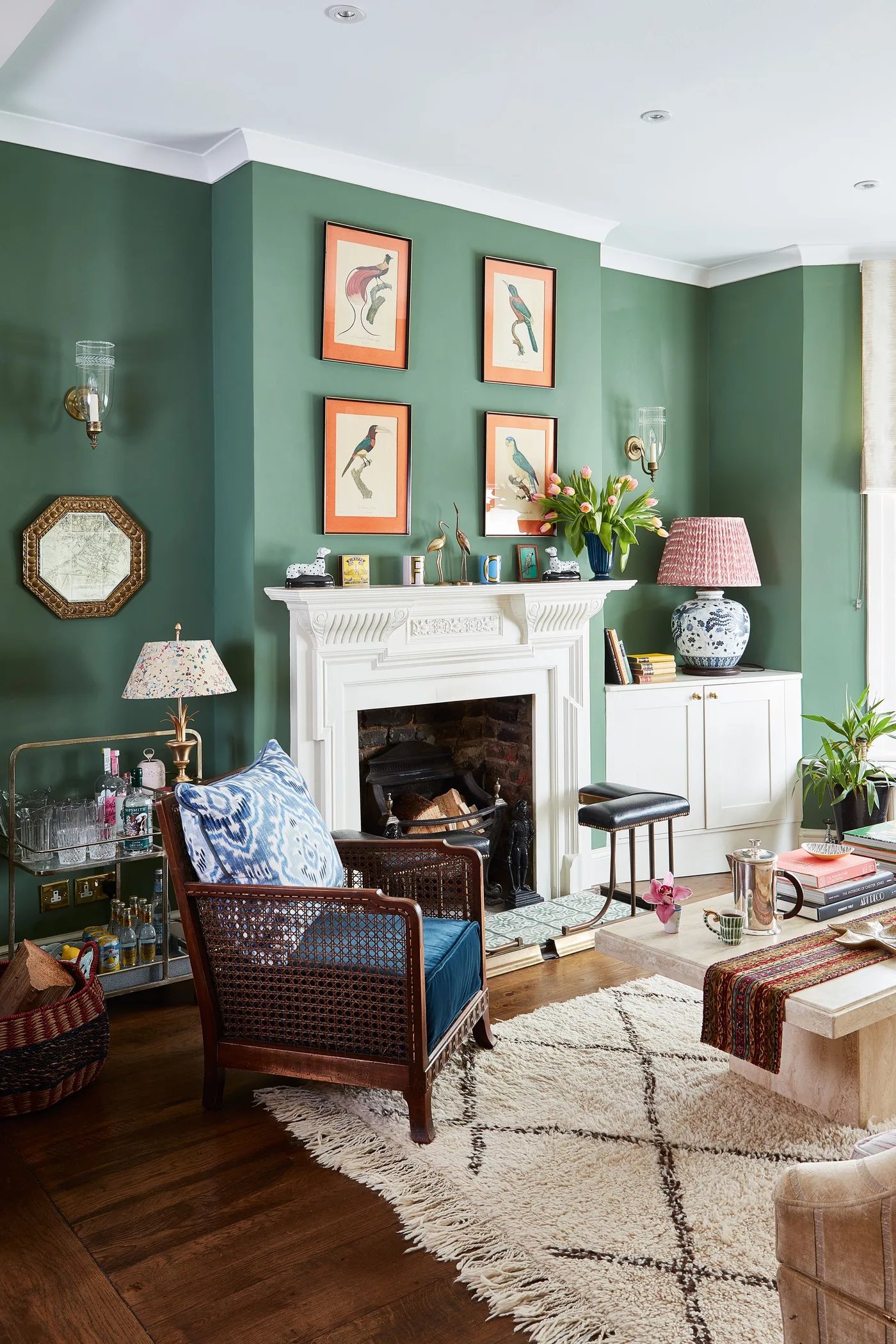
Four bird pictures form a compact group above the white fireplace against green walls. Books, a woven chair and patterned fabrics give the room its collected cottage character, with the pale surround offering a calmer break between those details. The artwork stays small enough to read as a group, rather than requiring one oversized picture to occupy the whole chimney breast.
Lay out the frame arrangement before fixing it, checking its overall width against the actual mantel. Use appropriate wall fixings and avoid drilling where services or the flue may be affected. Keep books and woven furniture outside the fireplace’s required clearance, and reduce smaller ornaments if the combination of framed pictures and fabric pattern starts to feel crowded.
PART 02
Keep existing character visible
IDEA 06 / 20
Connect a stone opening with country dining furniture
 SaveSupport Non AI Creator
Image credit: Colin Poole
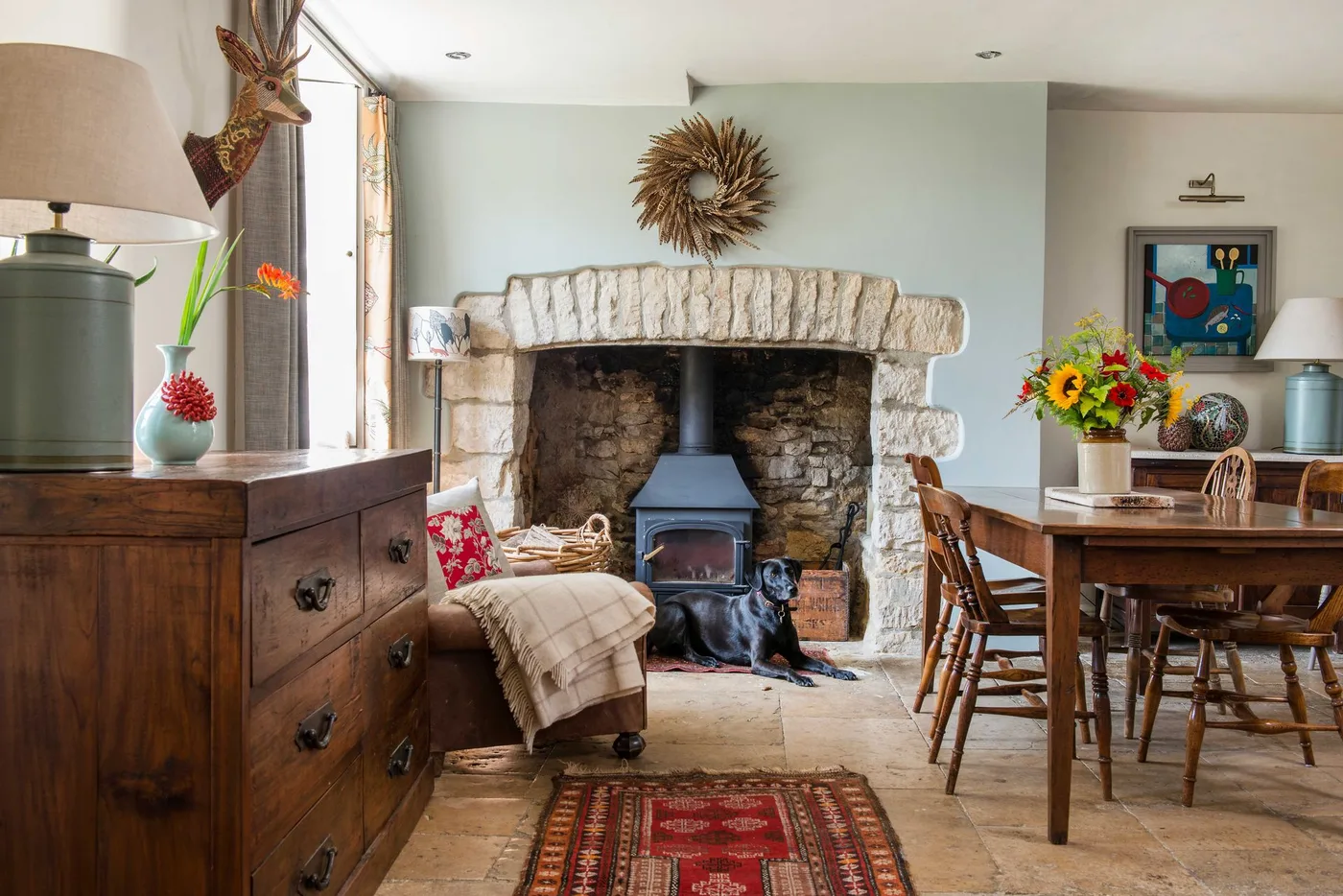
A dark stove sits within a pale stone opening in a gray-green dining room. The nearby wooden dresser and dining furniture bring warmer tones into the quieter wall palette, while the stone keeps a visible difference between the fireplace and surrounding paint. The arrangement shows a restrained cottage approach, relying on familiar furniture and contrasting surfaces rather than a strongly patterned chimney breast.
Compare the stone and wooden furniture with your proposed wall sample in the room itself. Keep the dresser useful by allowing doors and drawers to open fully, and preserve a clear route around dining chairs. Any stove installation or alteration needs its own professional assessment, including ventilation, hearth condition and clearances; the decorative palette does not establish those requirements.
IDEA 07 / 20
Keep decorative tiles visible beneath a wooden mantel
 SaveSupport Non AI Creator
Image credit: Brent Darby
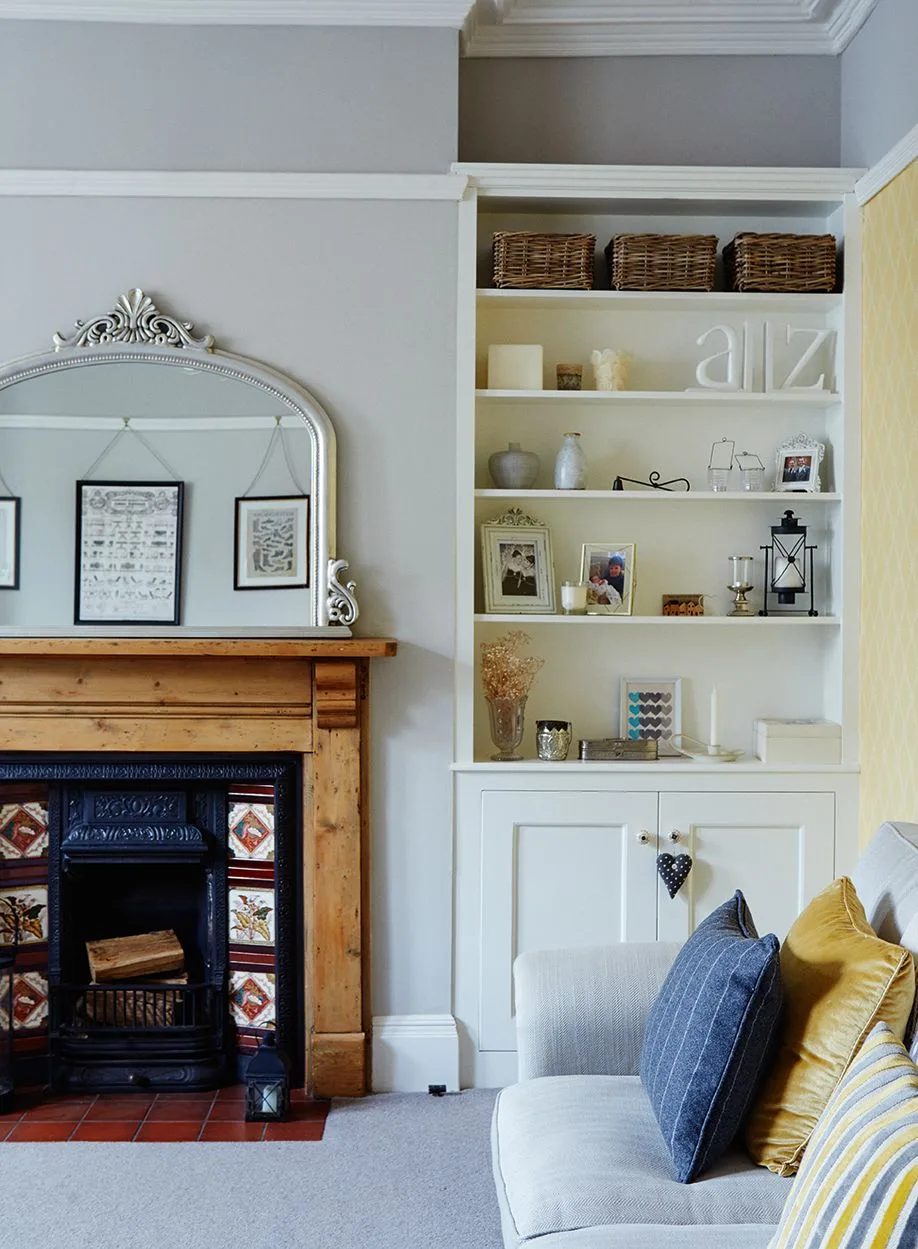
Small patterned tiles frame the black fireplace beneath a warm wooden mantel. Pale shelves and walls make that finer detail easier to see, while woven baskets and blue and yellow cushions carry the room’s cottage texture into the seating area. The surround is already decorative enough to provide interest without covering its ledge with a large collection of ornaments.
Look closely at existing tile condition before deciding to replace or conceal it. Choose cushion colors that borrow a detail from the fireplace rather than introducing several unrelated patterns. Check suitable cleaning methods for the actual tile and surround finishes, and have the fireplace inspected before use; its appearance alone cannot identify its age, condition or operating requirements.
IDEA 08 / 20
Pair an ornate fireplace with simpler painted furniture
 SaveSupport Non AI Creator
Image credit: Malcolm Menzies
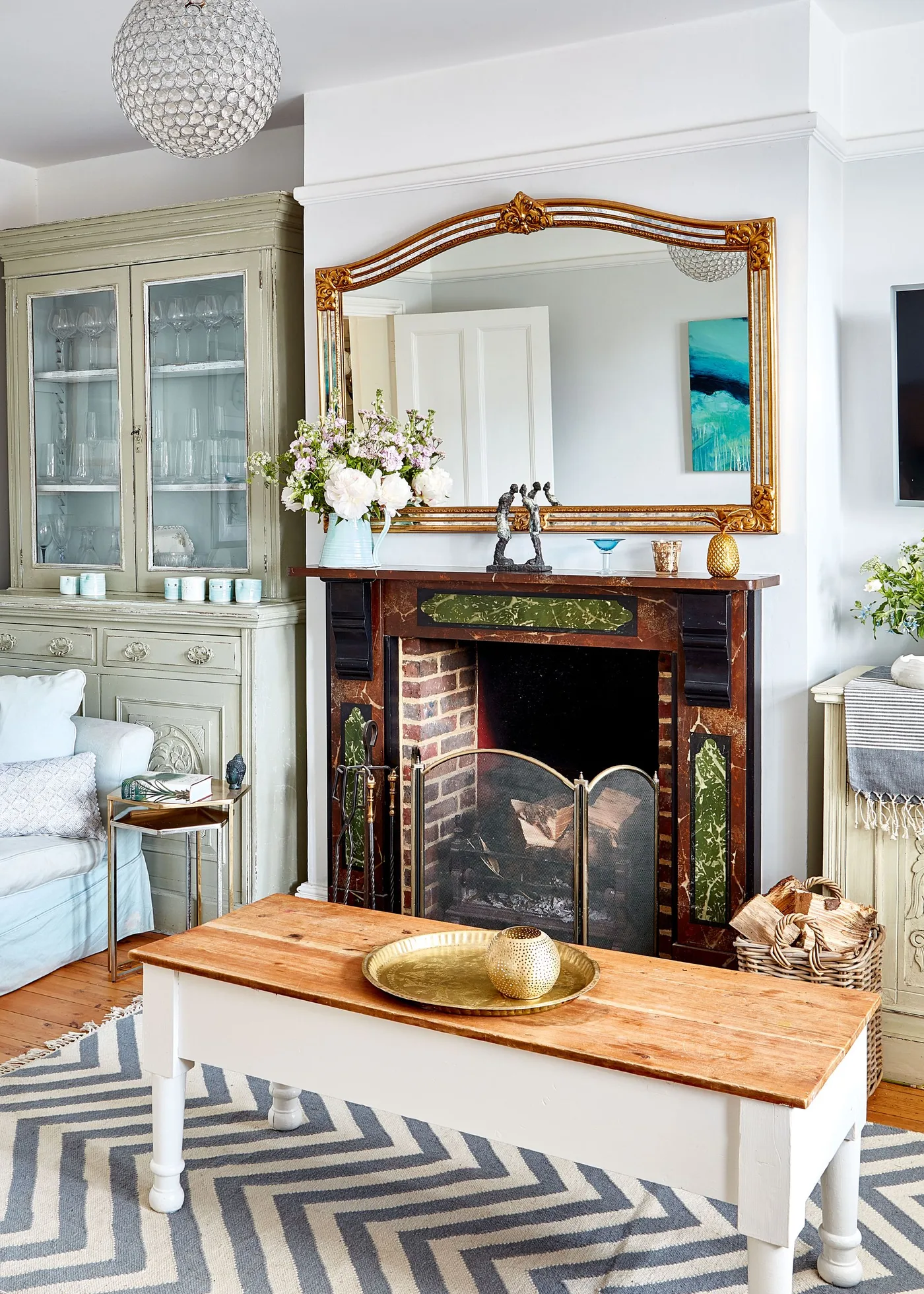
A decorative fireplace with dark red and green details sits beneath a large gold-framed mirror. Painted storage and a white table with a warm wooden top soften the more formal surround, while the geometric rug adds a separate fabric pattern below. The mix offers a cottage interpretation of a substantial traditional feature without requiring every piece of furniture to have equally ornate detailing.
Compare the mirror’s width with the surround and check suitable fixing into the actual wall. Keep the table and rug beyond the fireplace’s required clearance rather than judging distance from the photograph. Let one or two more decorative pieces lead, then choose simpler storage or seating so the room remains easy to use and the fireplace’s existing detail stays visible.
IDEA 09 / 20
Soften an ornate surround with floral upholstery
 SaveSupport Non AI Creator
Image credit: Malcolm Menzies
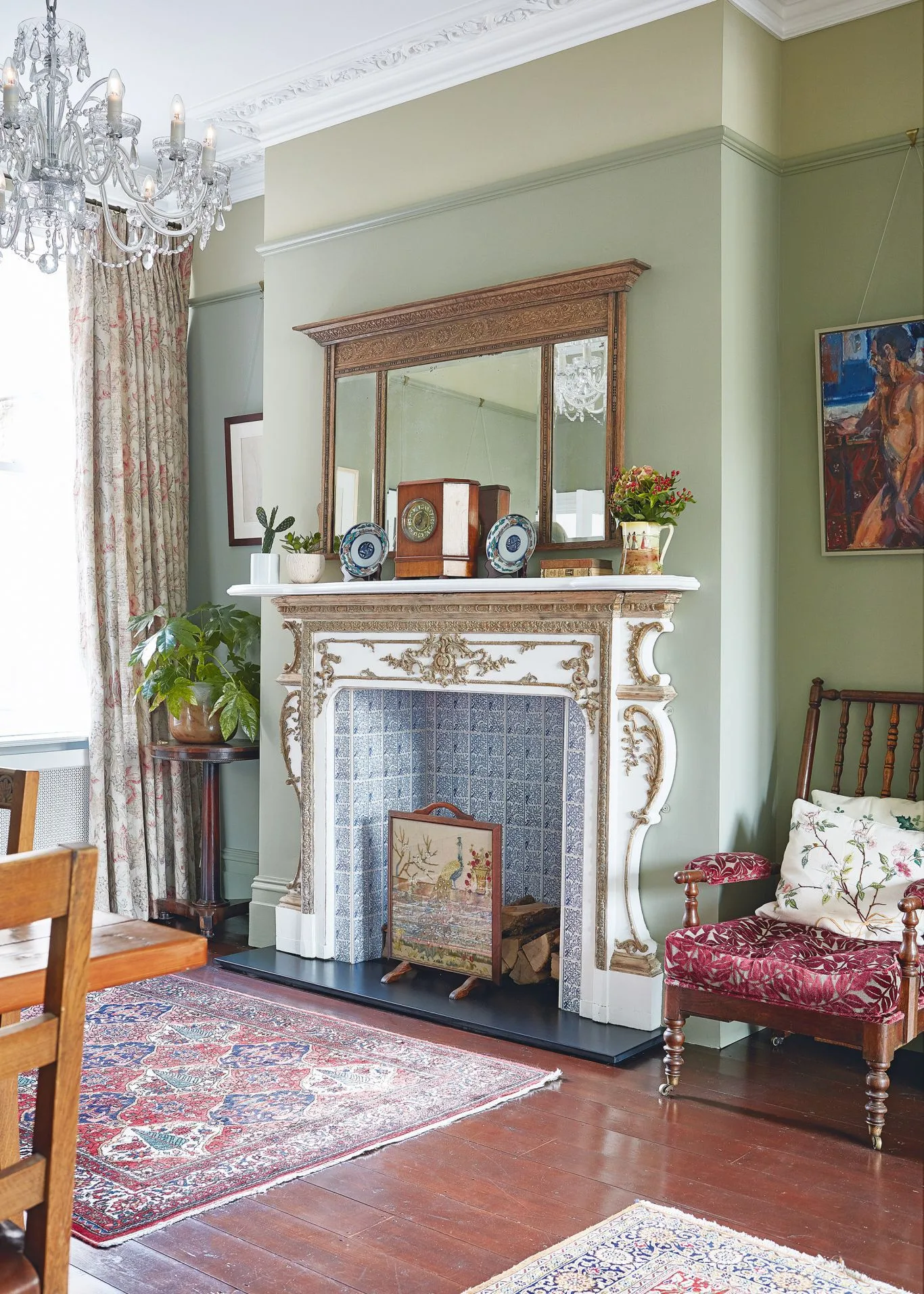
A pale ornate surround stands against green walls, with a large wooden-framed mirror and chandelier adding further traditional outlines. Floral upholstery, a patterned rug and smaller pictures introduce softer cottage detail around the opening. The room combines several scales of decoration, but the relatively quiet chimney breast gives the fireplace a clear frame within that collected arrangement.
Check floral fabric and rug samples together before adding another strong print. Measure the seating arrangement with the actual fireplace clearance and walking route in mind, reducing extra furniture where necessary. Secure the mirror for its weight and wall type, and keep hearth decorations suitable for the fireplace’s use; a decorative screen is not automatically an adequate spark guard.
IDEA 10 / 20
Make floral wallpaper the stove’s background
 SaveSupport Non AI Creator
Image credit: Farrow and Ball
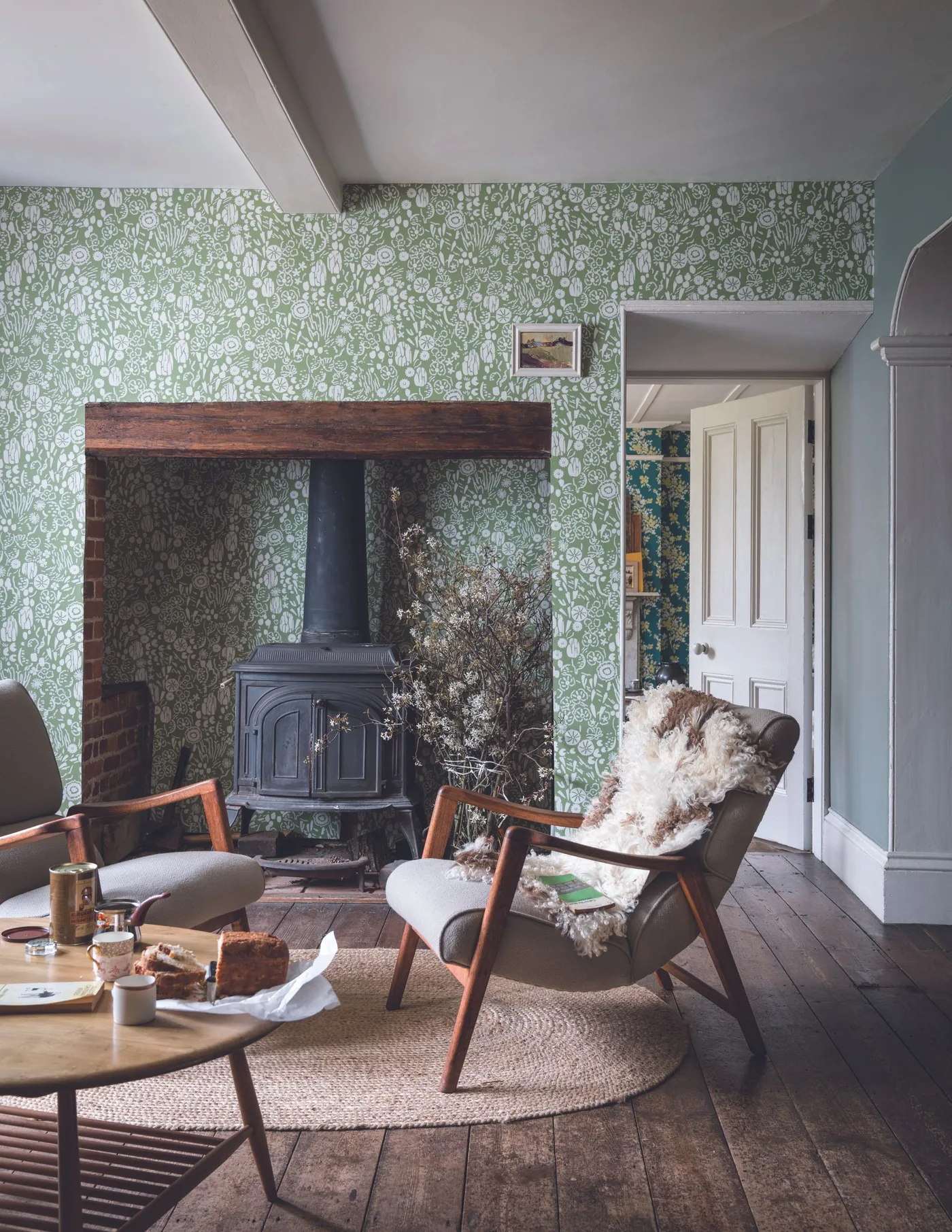
Green floral wallpaper surrounds a broad brick opening and dark stove. A substantial wooden lintel gives the finer print a stronger horizontal edge, while simpler chairs and a round table leave much of the wall visible. The arrangement combines cottage pattern with relatively plain furniture, letting the wallpaper supply most of the softer detail instead of covering every seat in another floral fabric.
Check the wallpaper specification and the appliance’s requirements before planning material close to a stove or opening. Have a professional establish appropriate clearances and suitable surfaces; decorative paper and timber should never be assumed safe because they appear in a photograph. Keep the chair and rug placement practical for circulation, and compare the print at its actual repeat size before buying.
PART 03
Add collected furniture and softer fabrics
IDEA 11 / 20
Balance a large dark opening with smaller color accents
 SaveSupport Non AI Creator
Image credit: Mark Watts/Unique Home Stays
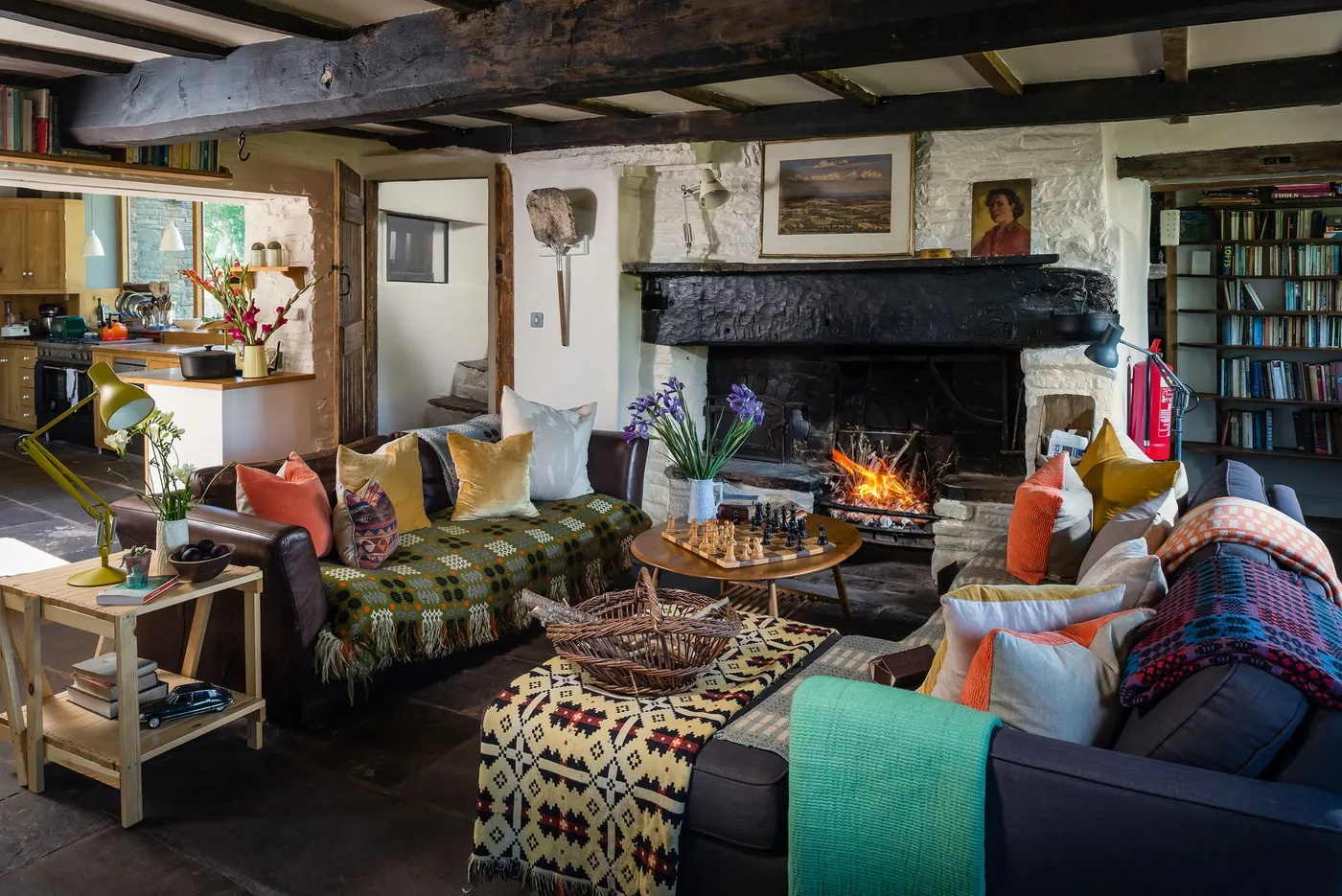
A broad dark fireplace stands beneath a substantial ceiling beam, with bookshelves and assorted seating gathered around the room. Warm orange and yellow cushions, patterned fabric and pale wall areas keep the darker structure from dominating every surface. The collected arrangement shows how a larger cottage hearth can remain the visual center while color appears in movable pieces rather than a new wall finish.
Choose a few cushion colors that connect the seating instead of trying to repeat every pattern in the room. Retain useful table access and a clear route between the chairs. Keep fabrics, baskets and other combustibles at the required distance from the fire, use an appropriate fireplace screen, and have the chimney inspected and maintained rather than treating this photograph as a placement guide.
IDEA 12 / 20
Use floral fabrics beside darker wooden walls
 SaveSupport Non AI Creator
Image credit: Kasia Fiszer
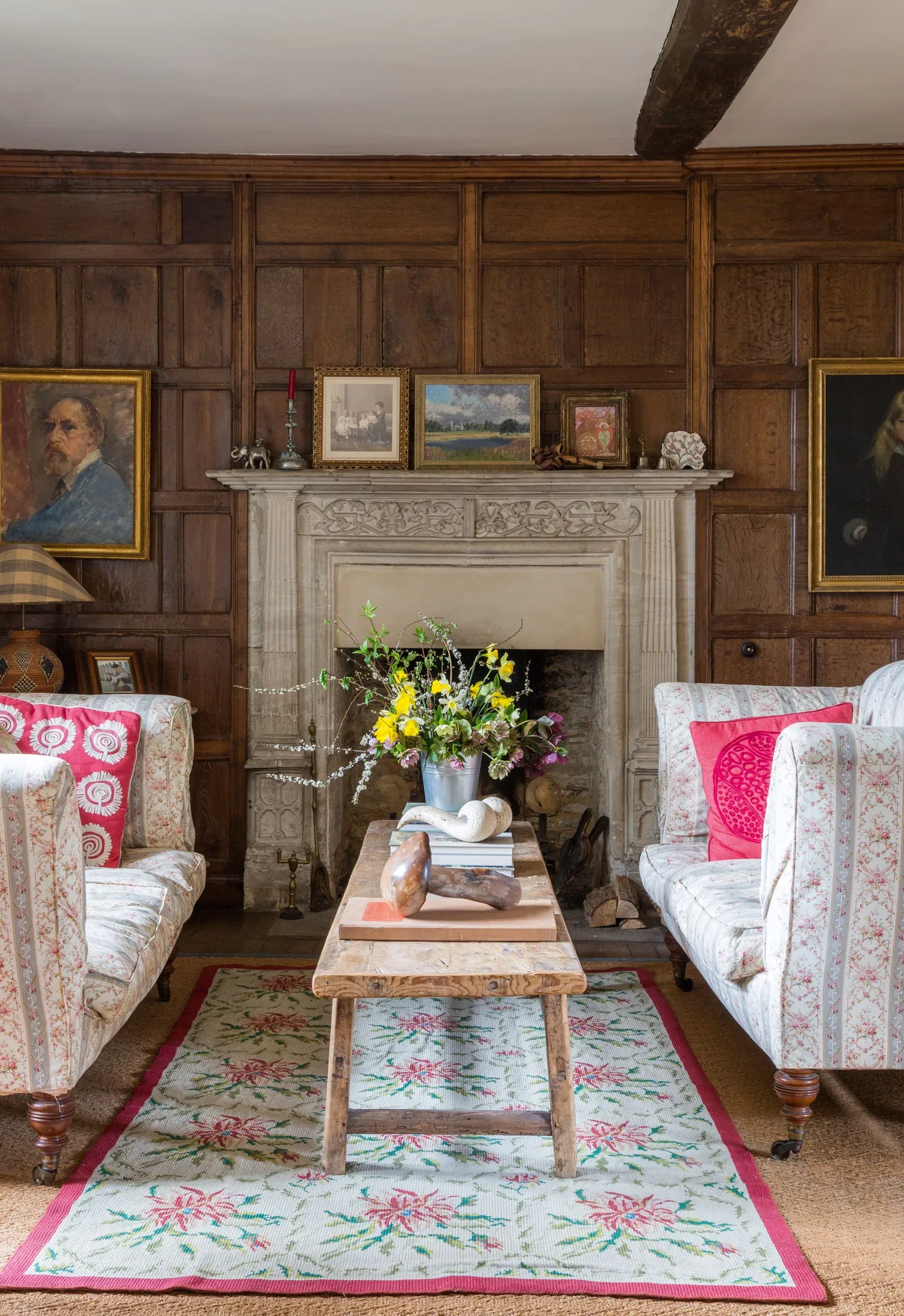
A pale carved fireplace creates a lighter center within darker wooden paneling. Floral seating and a flower-patterned rug repeat softer pink and green details around the opening, with framed pictures adding another collected layer above. The contrast is useful for cottage styling in a room that already has extensive wood: fabrics and a quieter surround can brighten the composition without replacing the paneling.
Compare the two floral patterns at full size, keeping their colors related even when their motifs differ. Leave the fireplace’s carved details readable and secure pictures appropriately above the mantel. Check furniture clearance and rug placement before use, and seek advice on cleaning the actual surround material rather than choosing an abrasive method based on its pale appearance.
IDEA 13 / 20
Keep a personal picture collection around the mantel
 SaveSupport Non AI Creator
Image credit: Kasia Fiszer
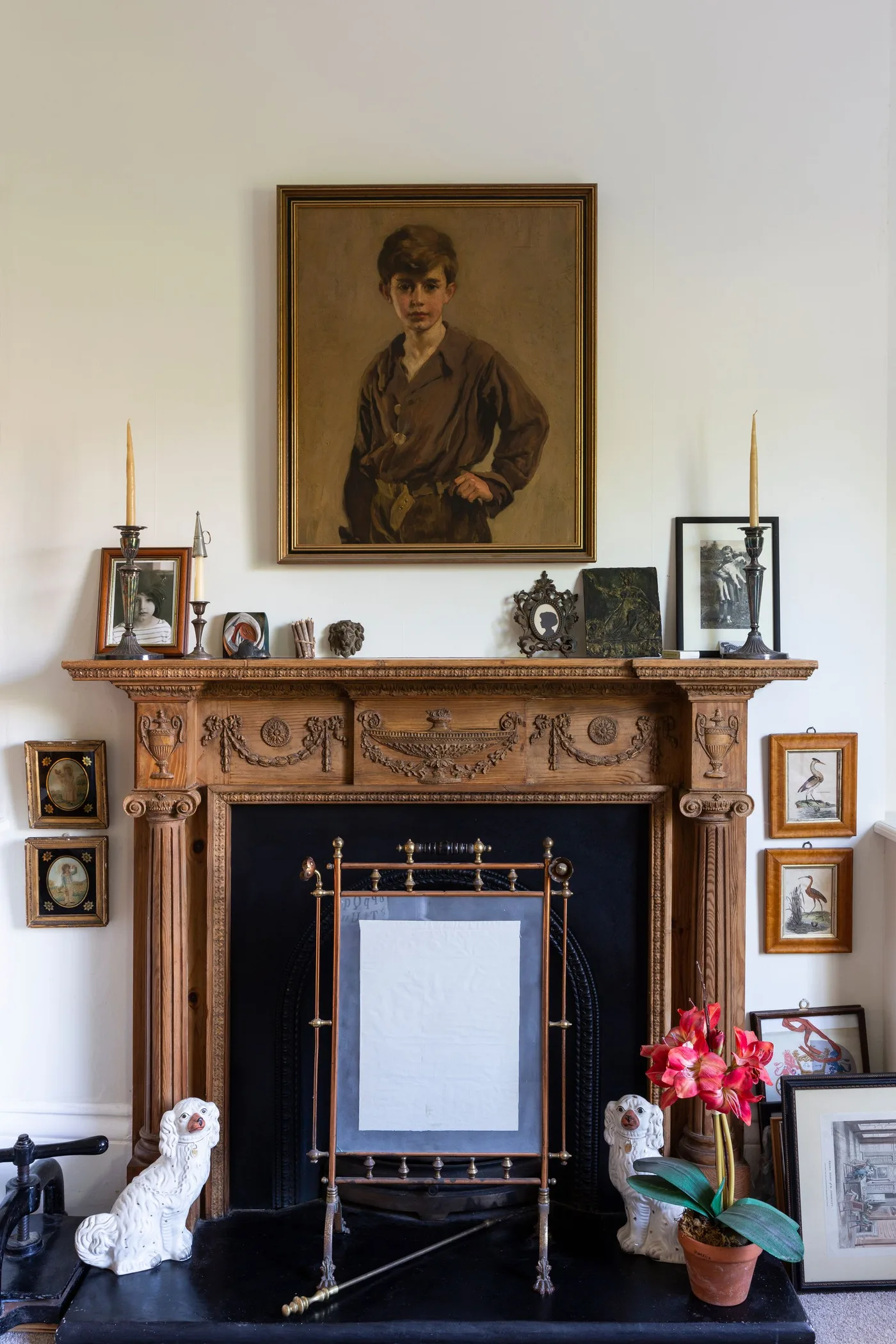
A carved wooden mantel supports a portrait-led arrangement of pictures and smaller objects. Pale walls make the darker surround’s detail visible, while a framed piece and decorative figures occupy the opening below. This offers inspiration for the display around a cottage fireplace, especially when family pictures matter more to the room than a carefully matched set of new ornaments.
Decide whether the fireplace is active before planning anything within its opening. Remove decorative pictures and objects from any operating firebox and keep combustible pieces appropriately clear of heat. Secure the larger portrait for its weight, reduce smaller objects when cleaning becomes difficult, and let the mantel’s carved profile remain visible instead of concealing it behind a continuous row of frames.
IDEA 14 / 20
Keep warmer seating around a quieter pale surround
 SaveSupport Non AI Creator
Image credit: Lucas Eilers
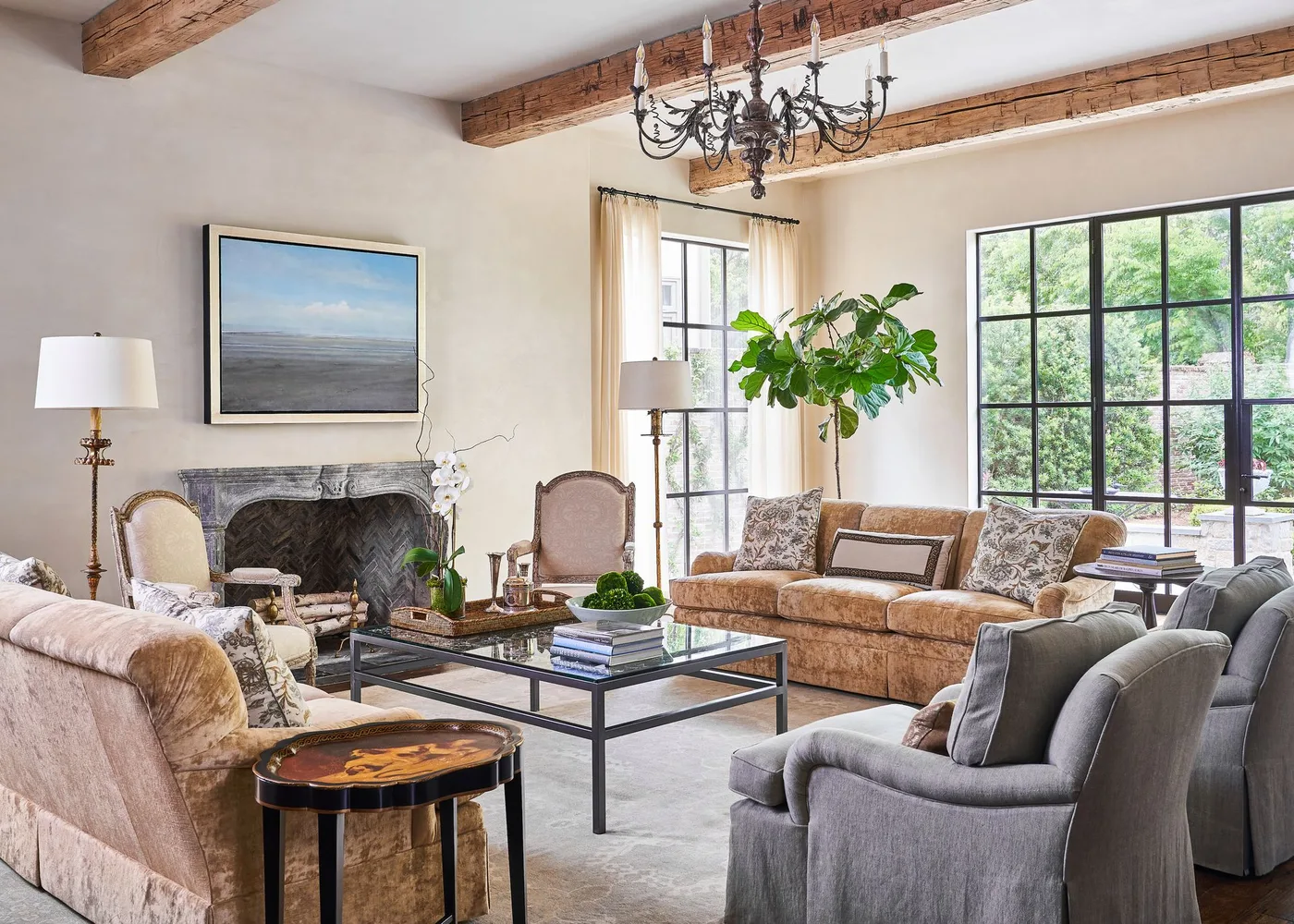
A pale fireplace anchors a seating group beneath exposed wooden ceiling beams. Tan and gray upholstery, patterned cushions and a dark-framed table bring separate textures into the room, while the lighter walls keep the fireplace area comparatively restrained. It is a cottage-friendly way to balance heavier overhead wood with furniture that feels comfortable without repeating that wood across every large surface.
Compare upholstery samples against the actual beam color, choosing a quieter rug when the cushions already introduce several patterns. Measure a clear route around the seating and retain the fireplace’s required clearance. Secure artwork above the surround appropriately, and keep greenery, lamps and other decorative pieces away from heat where their placement could interfere with safe use or maintenance.
IDEA 15 / 20
Give the fireplace useful storage on both sides
 SaveSupport Non AI Creator
Image credit: Charbonneau Interiors
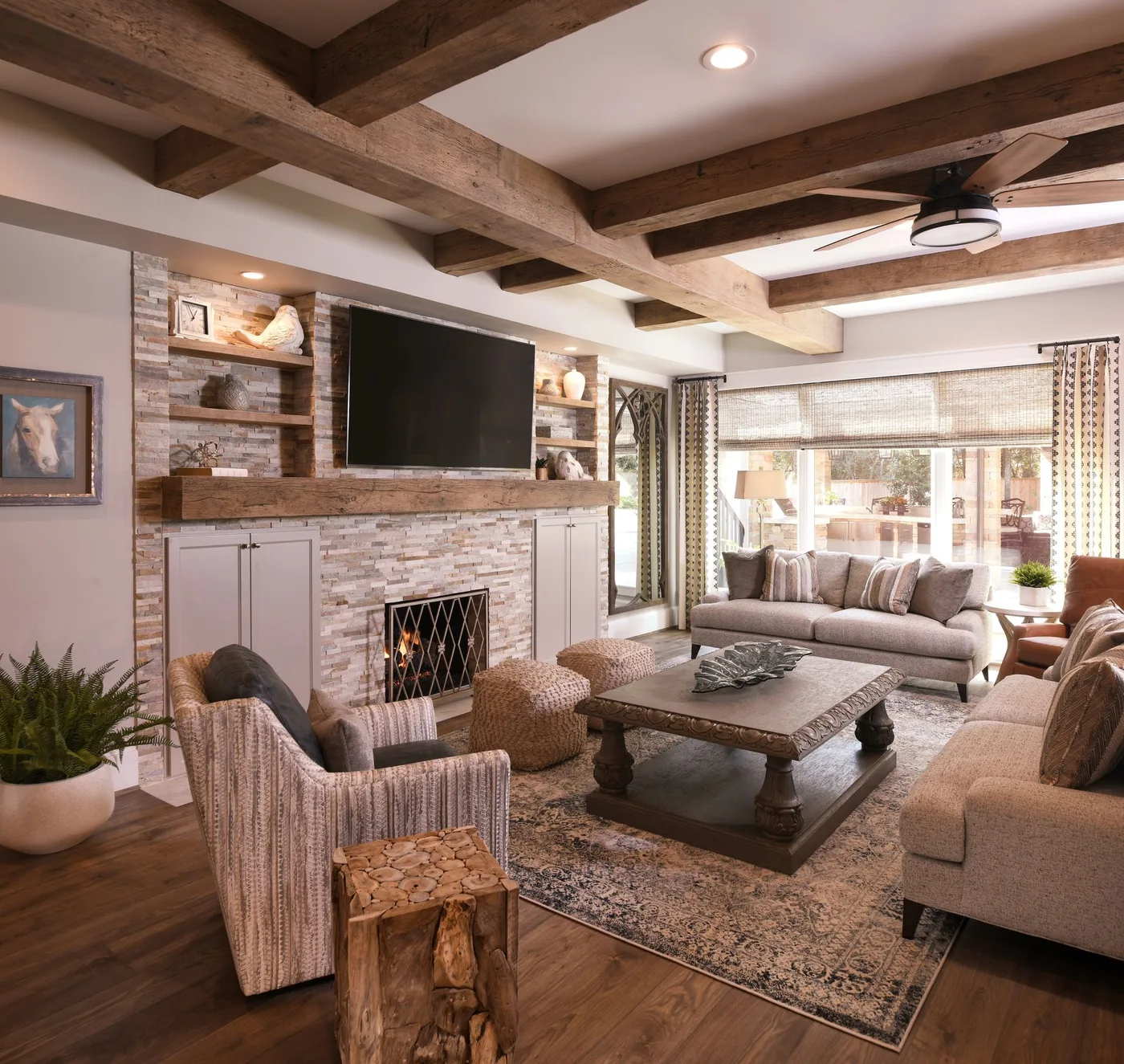
Pale lower cupboards and open upper shelves flank a textured fireplace wall beneath a broad wooden mantel. Upholstered seating and a patterned rug soften the stronger lines of the built-in storage, while the television occupies the central area above. The arrangement connects cottage warmth with everyday storage rather than relying entirely on decorative objects around the hearth.
Plan cupboard access and shelf contents around the things you need daily. Before placing a television above an operating fireplace, check both manufacturers’ heat and installation guidance and assess viewing comfort from the actual seats. Leave suitable access for inspection and cleaning, keeping upholstery and loose belongings outside the appliance’s required clearance rather than assuming the photographed arrangement suits your own fireplace.
PART 04
Choose display and layout with care
IDEA 16 / 20
Let a simple pair of vessels show the mantel detail
 SaveSupport Non AI Creator
Image credit: Future
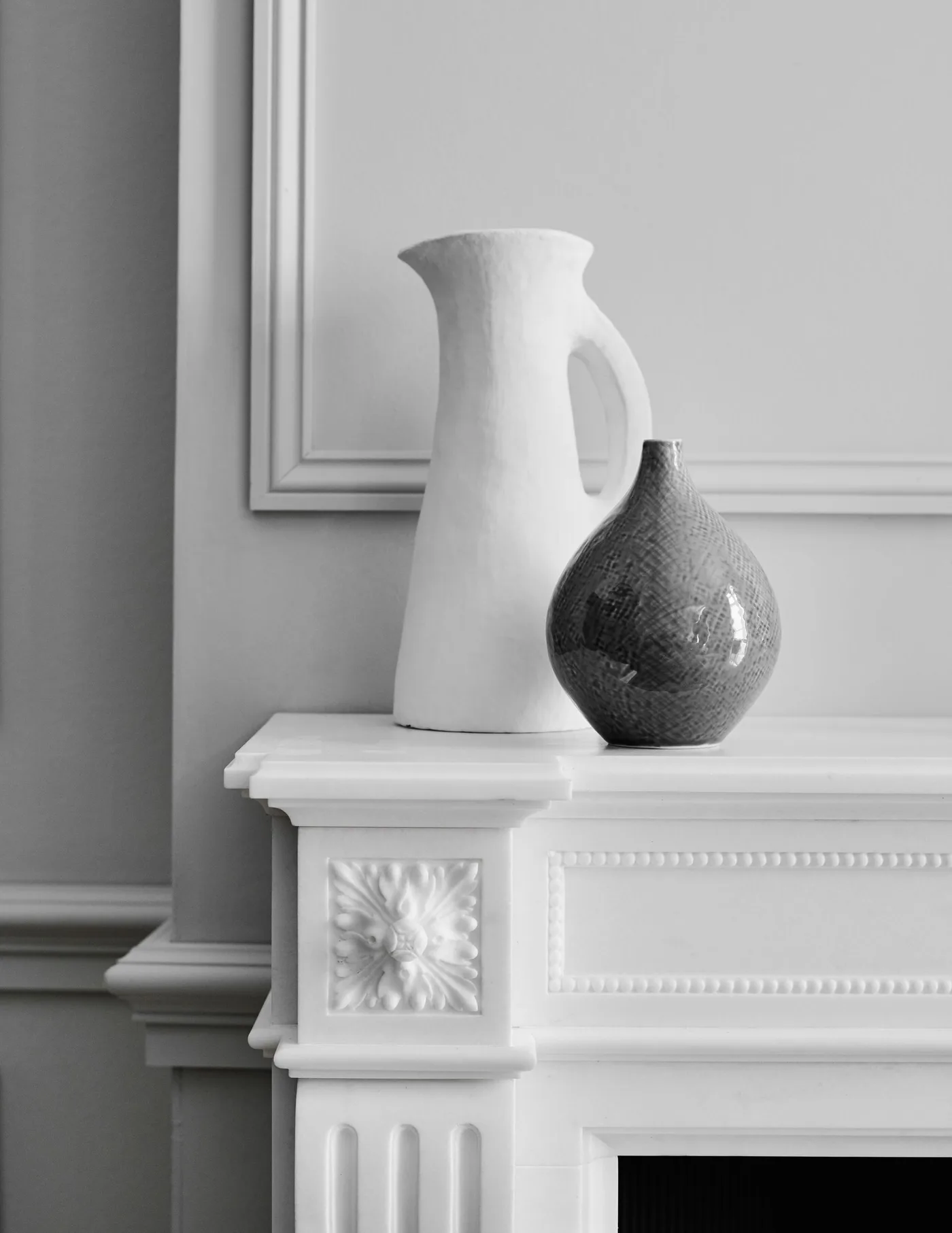
A pale pitcher and a smaller darker vessel sit on a white decorative mantel beneath a matching pale wall frame. Their different heights introduce a restrained shape contrast without hiding the surround’s molding. This detail offers a quieter cottage option when the room already contains floral fabric or collected furniture and the fireplace ledge needs less decoration rather than another dense arrangement.
Choose stable pieces sized for the actual ledge and leave enough space to lift them for cleaning. Check whether heat can reach the display when the fireplace is used, following the appliance’s guidance instead of relying on a pictured position. Avoid adding several small objects merely to fill gaps; the visible molding and open space are part of this arrangement’s appeal.
IDEA 17 / 20
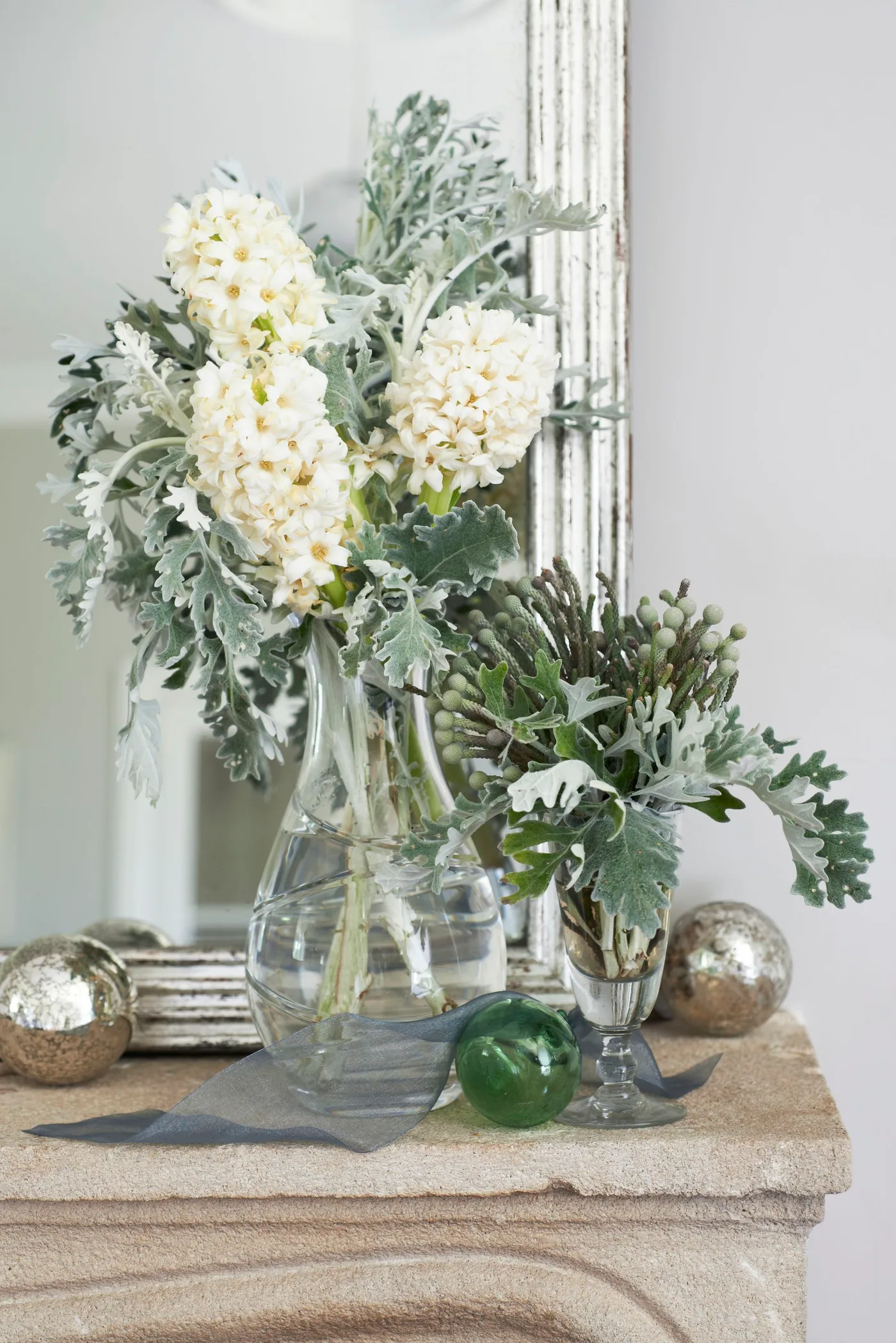
Use pale flowers as one changeable mantel accent
 SaveSupport Non AI Creator
Image credit: Future / Claire Richardson
Pale flowers and gray-green foliage rise from a clear vase beside smaller reflective pieces on a textured mantel. A large mirror gives the arrangement a taller background, while the different vessel heights keep it from reading as a continuous straight line. The display provides a softer cottage detail without requiring a painted surround or a permanent change to the fireplace wall.
Place water-filled vessels on a suitable protective surface for the actual mantel finish and keep them stable during everyday use. Use flowers or foliage that suit the setting, replacing tired stems rather than adding more objects. Keep plant material, candles and other belongings appropriately clear of an operating fireplace, and check the mirror’s support before arranging heavier items near it.
IDEA 18 / 20
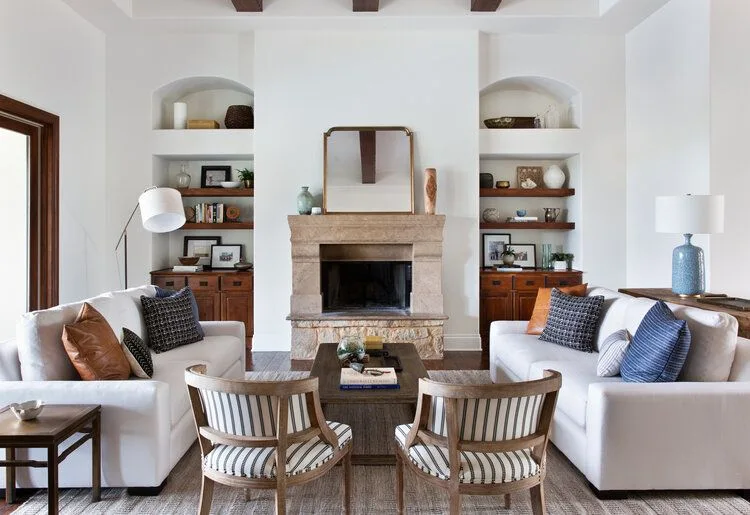
Use a pale stone fireplace between facing sofas
 SaveSupport Non AI Creator
Image credit: Lauren Ramirez
A pale stone surround sits between two white sofas, with arched shelf recesses and warm wooden storage on either side. A simple mirror gives the chimney breast one taller detail, while striped chair backs add a finer pattern in front. The arrangement combines cottage texture with a balanced furniture group, leaving the fireplace visible rather than interrupting it with an oversized central cabinet.
Measure the sofa group and circulation against the actual room before choosing a symmetrical layout. Retain the fireplace’s operating clearances and cupboard access, especially where several seats face the same center. Keep shelf displays manageable, use wall fixings suited to the mirror, and compare rug and striped-fabric samples with the stone instead of expecting all pale finishes to match.
IDEA 19 / 20
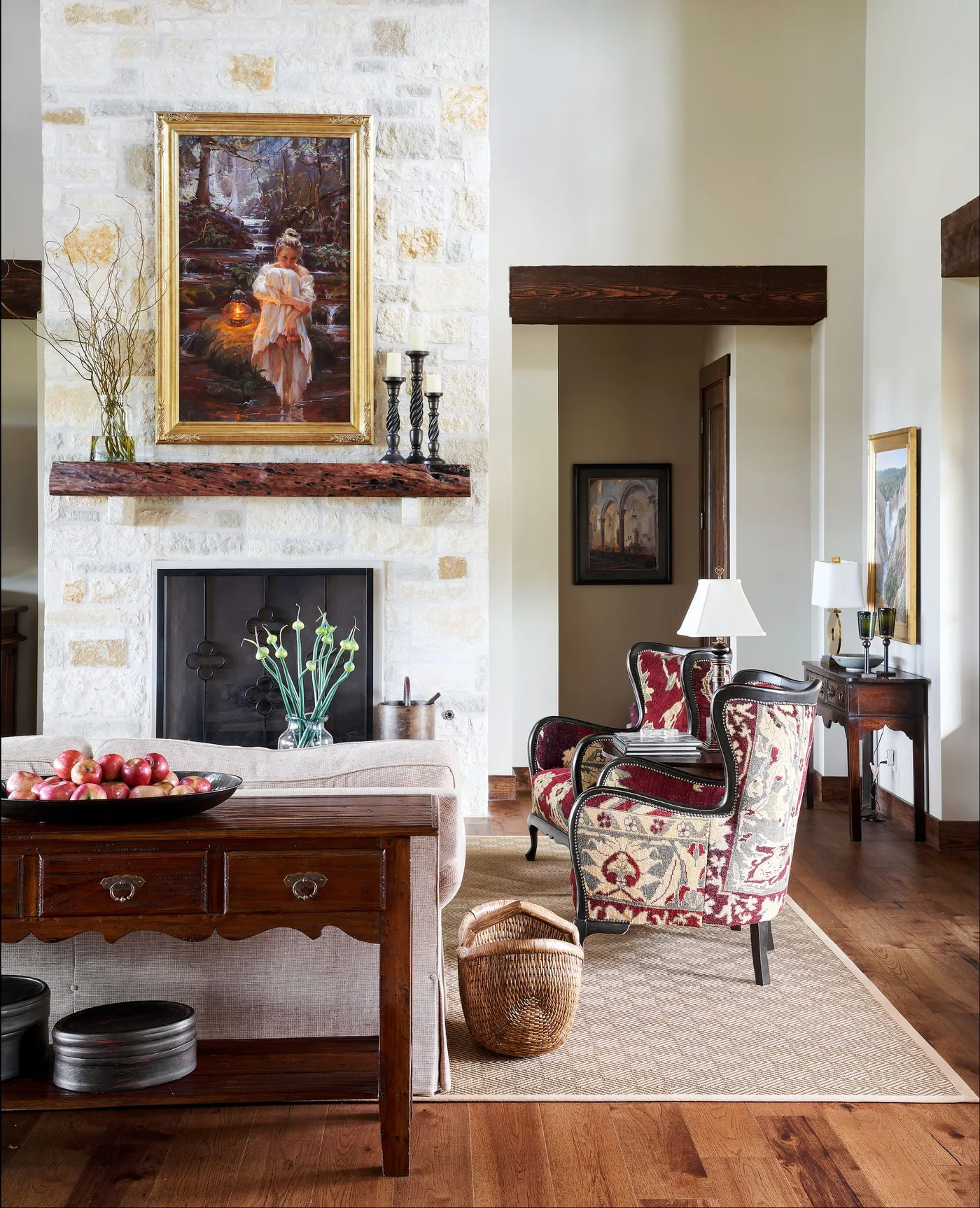
Connect a tall stone wall with patterned chairs
 SaveSupport Non AI Creator
Image credit: Lucas Eilers
A pale stone chimney wall rises behind a narrow wooden mantel and a large framed picture. Red-and-cream patterned chairs bring warmer fabric detail beside the darker opening, while a wooden table and woven basket add separate cottage textures lower in the room. The stone remains the dominant structural feature, with color carried mainly by movable furniture and the artwork rather than additional wall treatments.
Compare the chair print with the picture and stone under the actual room’s light before introducing further patterns. Have the artwork’s fixing and any work on the chimney breast assessed appropriately. Keep the basket, table and seating outside the required fireplace clearance, and retain space for cleaning the hearth so the taller architectural feature remains practical as well as attractive.
IDEA 20 / 20
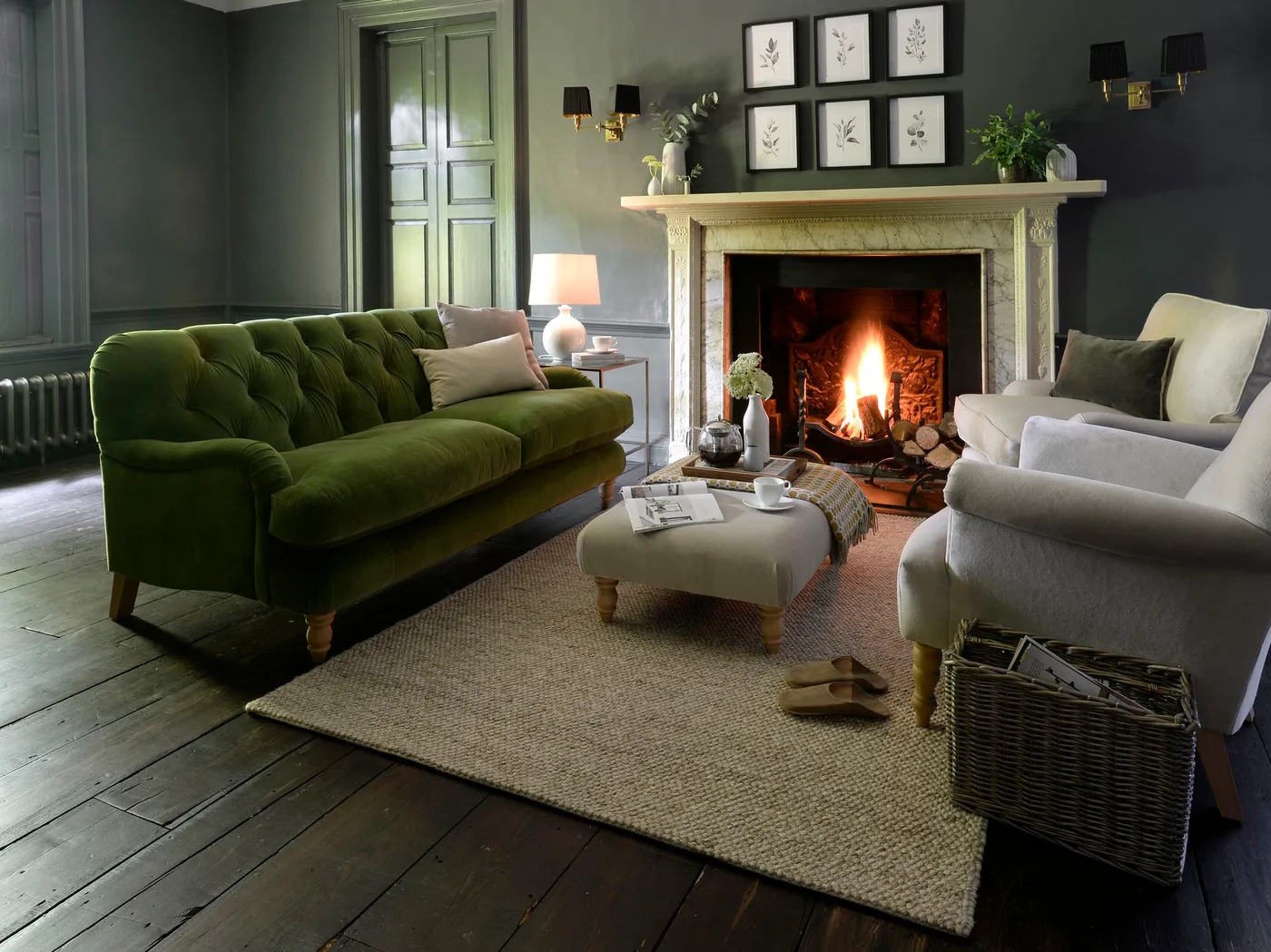
Let green upholstery soften a darker fireplace wall
 SaveSupport Non AI Creator
Image credit: The Cotswold Company
A green sofa and pale armchair flank a lighter fireplace against dark gray walls. Small botanical pictures form a compact group above the mantel, while a plain woven-looking rug gives the seating a quieter base. The contrast lets cottage color come through upholstery and collected artwork, with the fireplace surround supplying a lighter break in the deeper painted wall.
Test wall paint beside the sofa fabric in daylight and with lamps on, since a deeper finish can change how the green appears. Keep the framed group proportional to the mantel and use appropriate supports. Place the rug, ottoman, basket and seats outside required heat clearances, and use an appropriate screen and professional chimney maintenance when the fireplace is operating.
BRING IT ALL TOGETHER
Choose the surround first, then the softer details
Look at the fireplace’s condition, proportions and existing finishes before selecting a new wall color or fabric scheme. Have operating requirements and any changes assessed by a qualified professional. Once those practical decisions are clear, compare a few larger paint and textile samples with the surround rather than buying a complete collection of ornaments at once.
Leave the fireplace and chimney accessible for inspection and maintenance, and keep combustible furniture and belongings outside required clearances. Choose only the display pieces you can keep stable and clean. A quieter mantel, useful storage and a seating layout that fits the real room will make cottage character easier to enjoy every day.