Fireplace floor decor begins with the hearth and the space around it. A patterned surface, useful log container or well-chosen screen can provide more character than a collection of small ornaments. Look at the base of the fireplace alongside the seating, rug and routes through the room before deciding what to add.
These twenty photographs include working appliances and arrangements intended for an inactive opening. Borrow their colors, shapes and storage ideas while checking your own fireplace instructions for placement. Combustible baskets, textiles, plants and dried decorations may need to move before use; a photographed position cannot establish the clearances for a different fireplace.
PART 01
Begin With Hearth Surfaces and Useful Storage
IDEA 01 / 20
Let a Patterned Hearth Supply the Decoration
 SaveSupport Non AI Creator
Image credit: Photo: Travis J. Photography. From: House of Jade Interiors
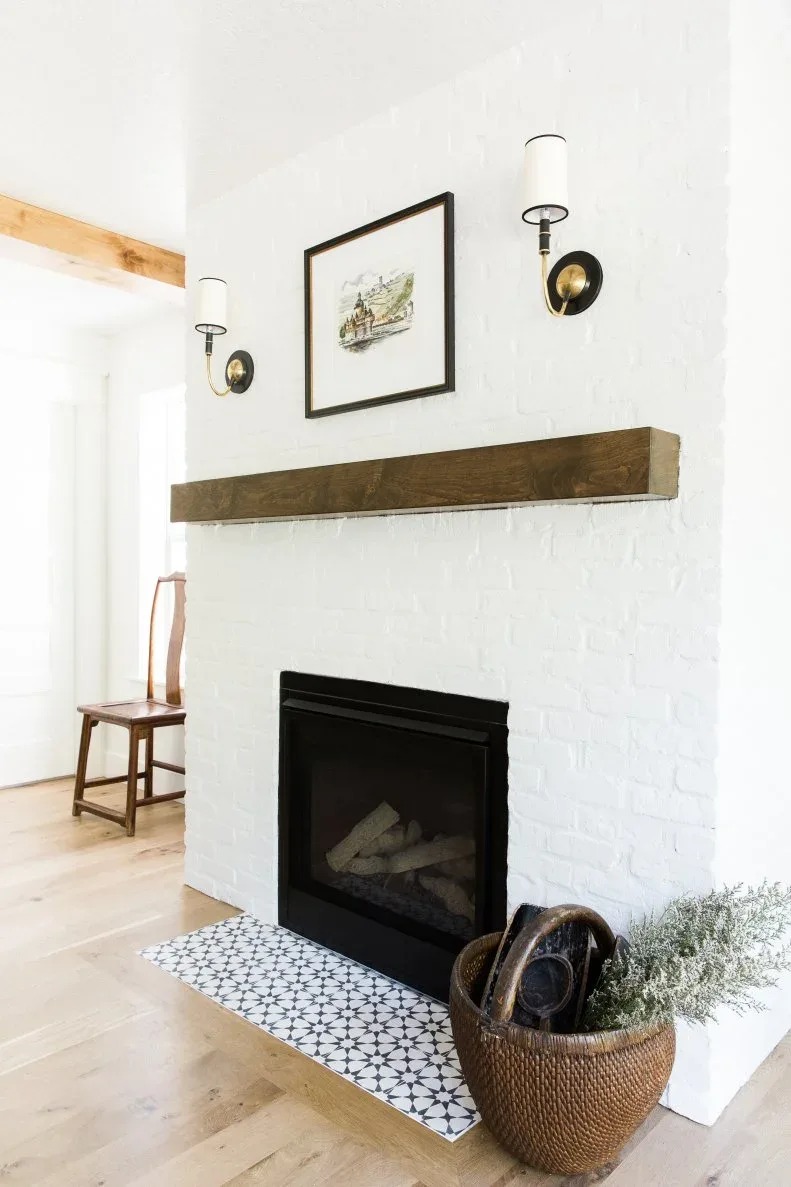
A black and white pattern gives the hearth a clear outline against the pale wood floor and white brick fireplace. The woven basket adds a softer shape at one side, while the simple chair leaves the approach open. This is a useful example when you want fireplace floor decor without a collection of ornaments: the finished surface itself provides most of the interest.
Compare a tile sample with the floor and surround before selecting the pattern. Ask an appropriate installer to confirm the hearth construction, dimensions and suitability for your appliance. Keep the basket and its contents outside required clearances during use. A busy pattern can disguise small marks, but its joints still need suitable cleaning; choose maintenance products for the actual tile and grout rather than its appearance alone.
IDEA 02 / 20
Use One Substantial Pot Beside a Dark Hearth
 SaveSupport Non AI Creator
Image credit: Photo: Erica Islas. From: EMI Interior Design
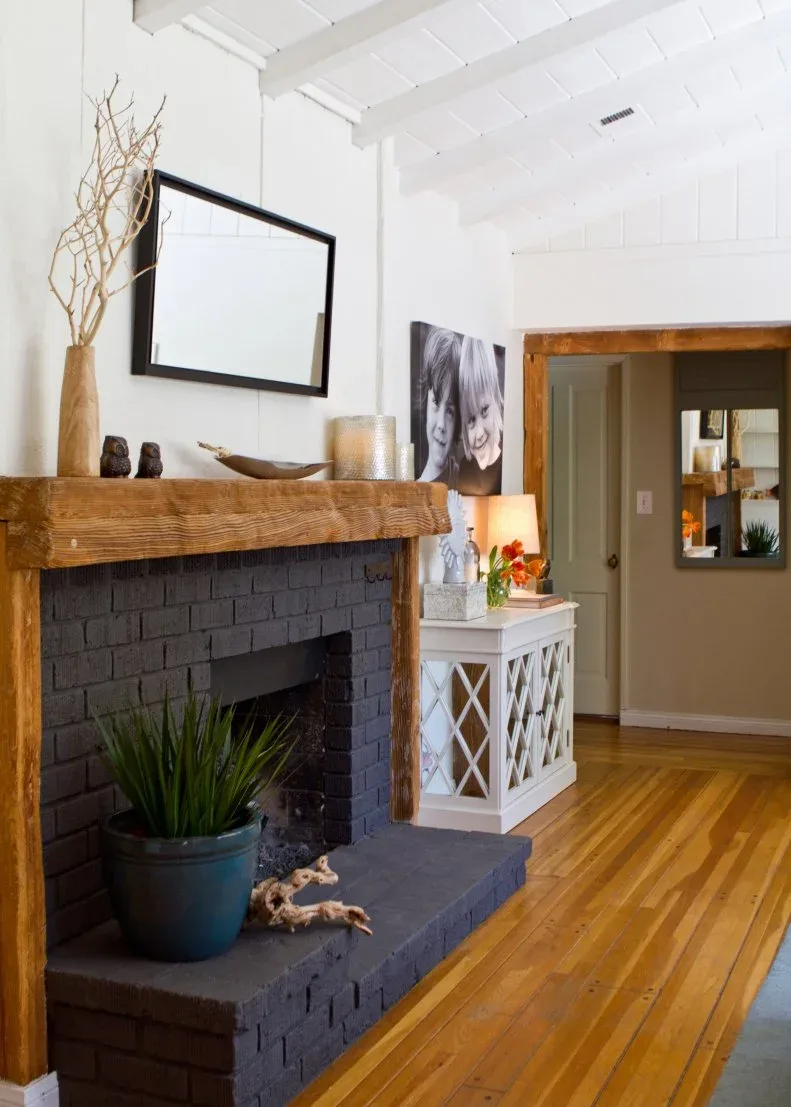
A green plant in a dark pot sits toward the left of this raised black brick hearth. Its upright leaves break up the broad horizontal platform, while the warm wood mantel and floor keep the dark fireplace from feeling isolated. The photograph shows how one substantial floor-level object can define an edge without covering the entire hearth in smaller pieces that compete with the opening.
Use this arrangement only where the plant can remain outside the fireplace’s operating clearances. Select a stable pot with a protective liner or tray, and check that watering cannot mark the hearth or floor. Move loose decorative branches away before lighting a fire. Assess the light and temperature at the proposed position; a plant that struggles there is better placed elsewhere in the room.
IDEA 03 / 20
Keep a Long Modern Hearth Mostly Clear
 SaveSupport Non AI Creator
Image credit: Mike Schwartz. Design: Studio Gild
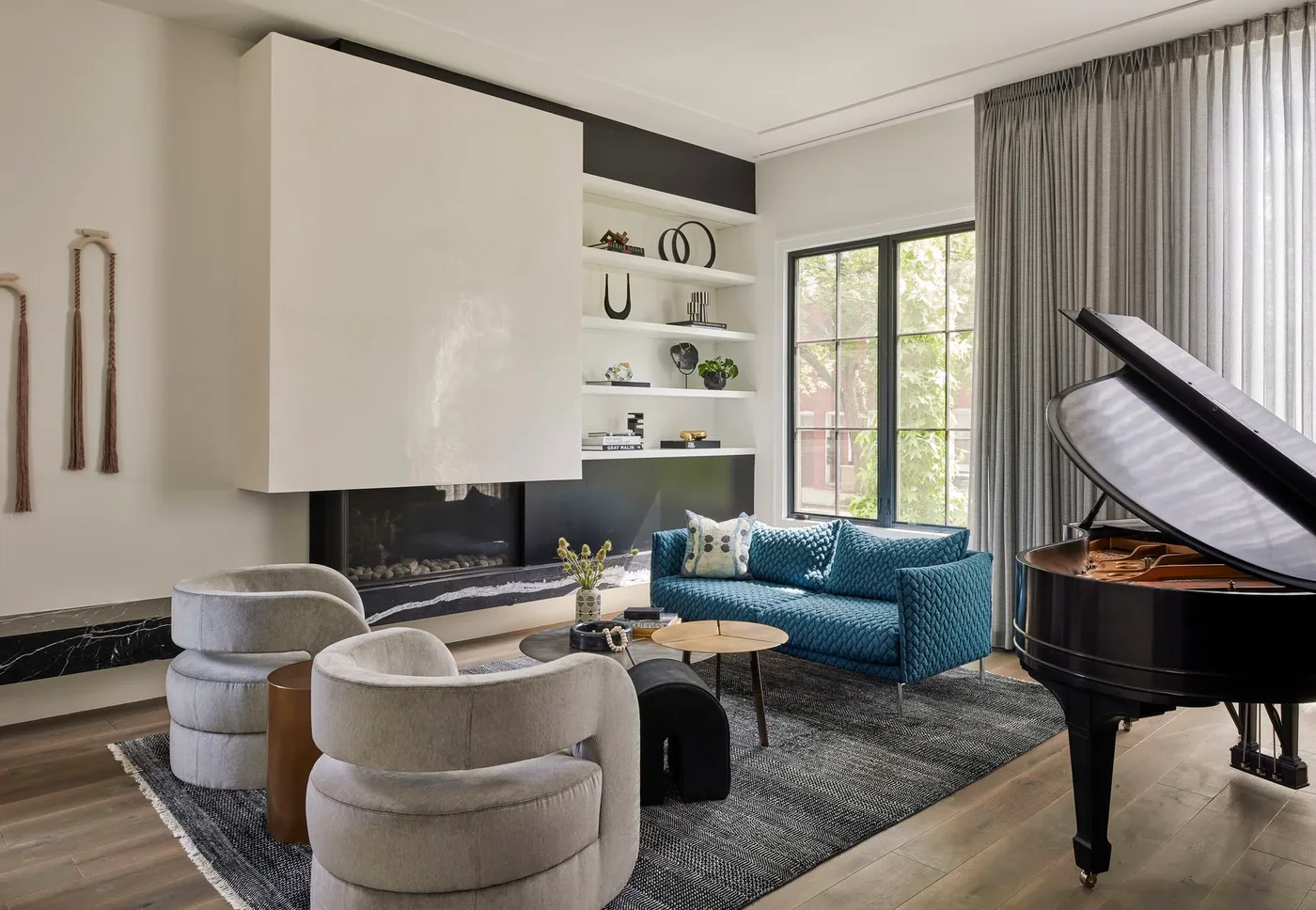
A long dark veined hearth runs beneath the white fireplace hood and toward the blue sofa in this modern room. Its strong horizontal line is visible because the platform carries very little decoration. Gray curved chairs and a black piano supply sculptural shapes on the floor instead. This example makes a useful case for leaving a dramatic hearth clear rather than trying to fill its entire length.
If creating a similar feature, resolve the appliance and hearth requirements with the installer before choosing the finish. Identify the actual surface material for appropriate care, especially around joints and exposed edges. Arrange chairs so people can move comfortably through the room and reach the piano. Keep decorative objects off the working hearth where they would interrupt its clean line or interfere with safe access.
IDEA 04 / 20
Make a Log Basket Part of the Room’s Texture
 SaveSupport Non AI Creator
Image credit: Future PLC/Simon Bevan
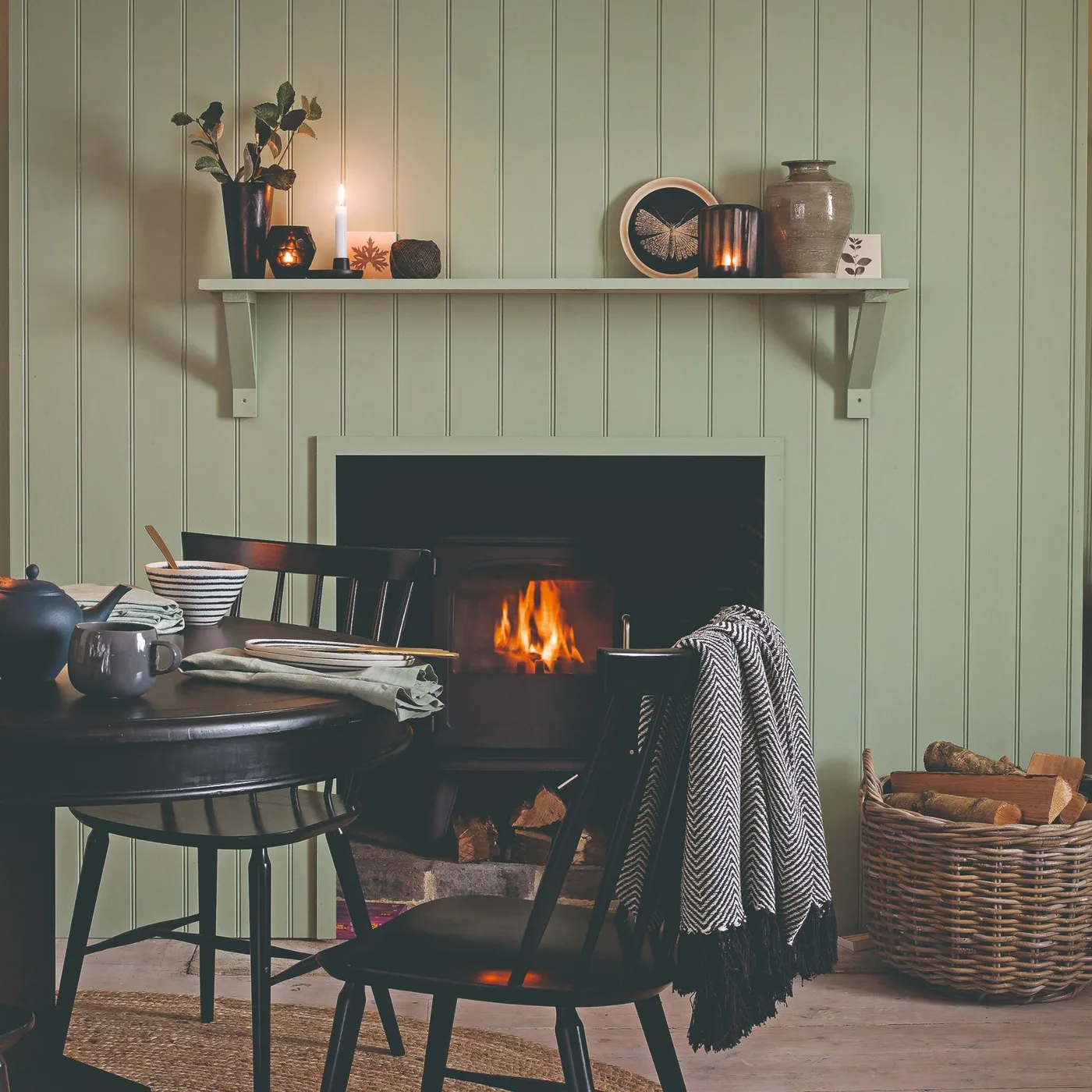
A woven log basket sits beside the dark stove in this sage paneled room. Its warmer color relates to the wood floor, while black dining furniture repeats the stove’s outline. The basket makes a practical item part of the floor-level arrangement rather than introducing an unrelated ornament. The photograph is especially helpful for seeing how log storage can sit beside a fireplace within a room used for other activities.
Choose a manageable basket size that you can lift when full, with a lining that limits bark and debris on the floor. Store only a convenient indoor supply and position it according to the appliance instructions. The photographed chair and blanket are not a clearance guide; move furnishings and textiles as required during operation. Keep access to the stove and the dining chairs unobstructed.
IDEA 05 / 20
Give a Curved Fire Screen Room to Stand Out
 SaveSupport Non AI Creator
Image credit: Future PLC / Chris Snook
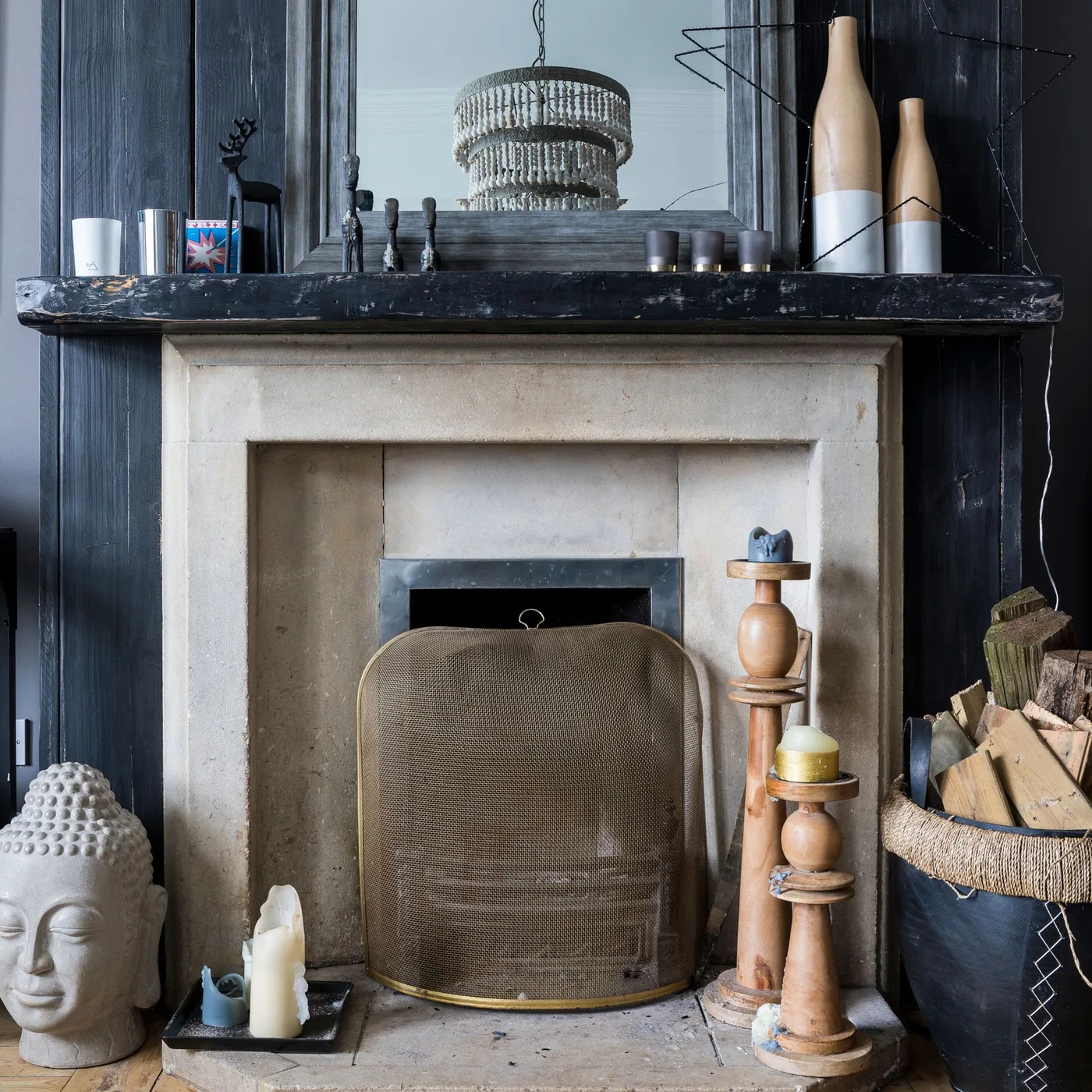
A curved metal mesh screen brings a rounded shape to the rectangular opening in this pale fireplace. Dark paneling behind it makes the screen’s warmer outline easier to see. A decorative head, tall holders and a log container form groups at the sides, showing how the hearth can carry a composed floor-level display. The screen remains the central feature rather than disappearing among the surrounding objects.
Choose a functional screen sized and positioned for your fireplace, following relevant appliance guidance rather than selecting on appearance alone. Keep it stable and easy to move for access. Treat the surrounding ornaments as a display for an inactive hearth unless their positions meet operating requirements. Avoid real candles among combustible decorations, and remove clutter before use so the screen and fireplace remain accessible.
PART 02
Connect the Hearth With Everyday Seating
IDEA 06 / 20
Place a Blanket Basket With the Seating
 SaveSupport Non AI Creator
Image credit: Future PLC
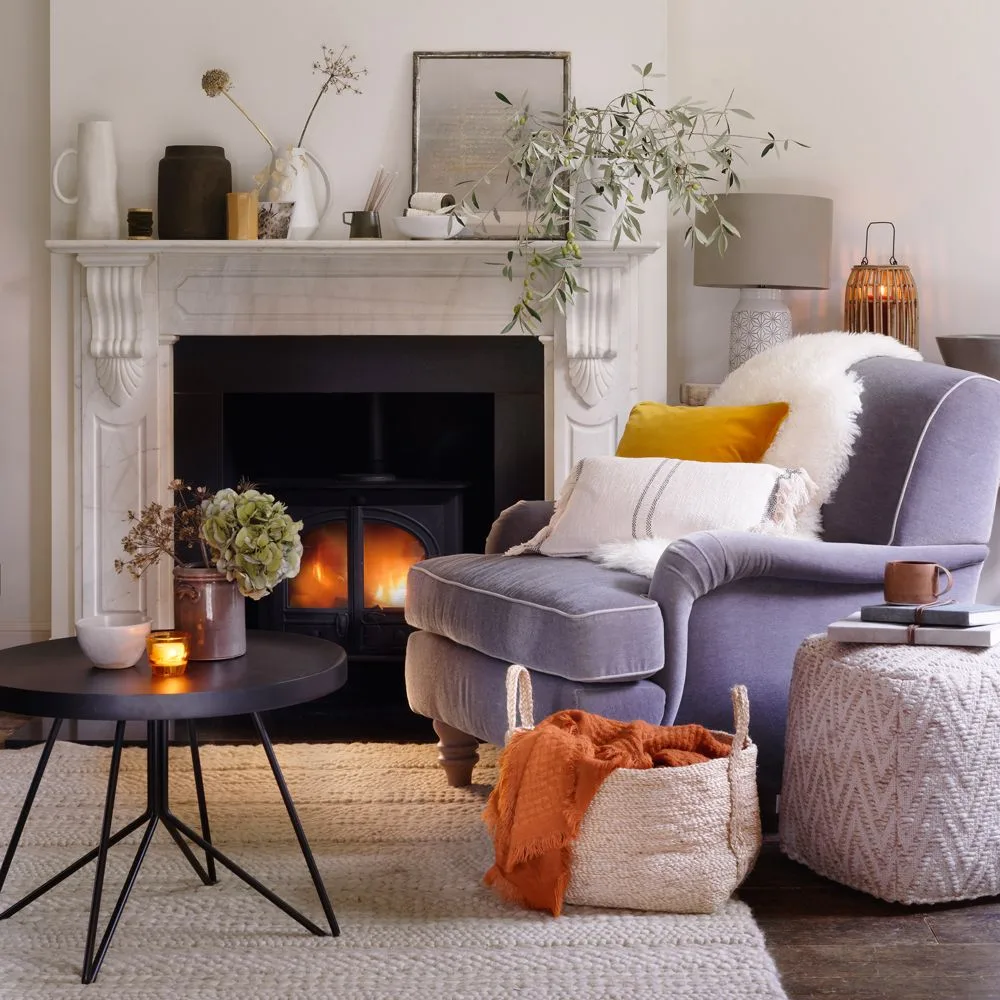
A woven basket holding an orange blanket sits in the seating area beside a gray upholstered armchair. The fireplace provides the backdrop, but the basket belongs to the chair rather than to the working hearth. Its texture relates to the rug and soft footstool, while its color adds a small warm accent. This is a useful floor-decor option when the hearth itself needs to stay clear.
Keep blankets close enough to use from the chair but outside the fireplace’s specified heat clearances. Choose a basket without rough edges that catch delicate textiles, and wash throws according to their labels. Leave a clear route between the chair, table and fireplace. A movable basket is easier to reposition for cleaning or operation than a permanent display crowded along the hearth’s edge.
IDEA 07 / 20
Connect a Stove Platform With a Geometric Rug
 SaveSupport Non AI Creator
Image credit: Morso
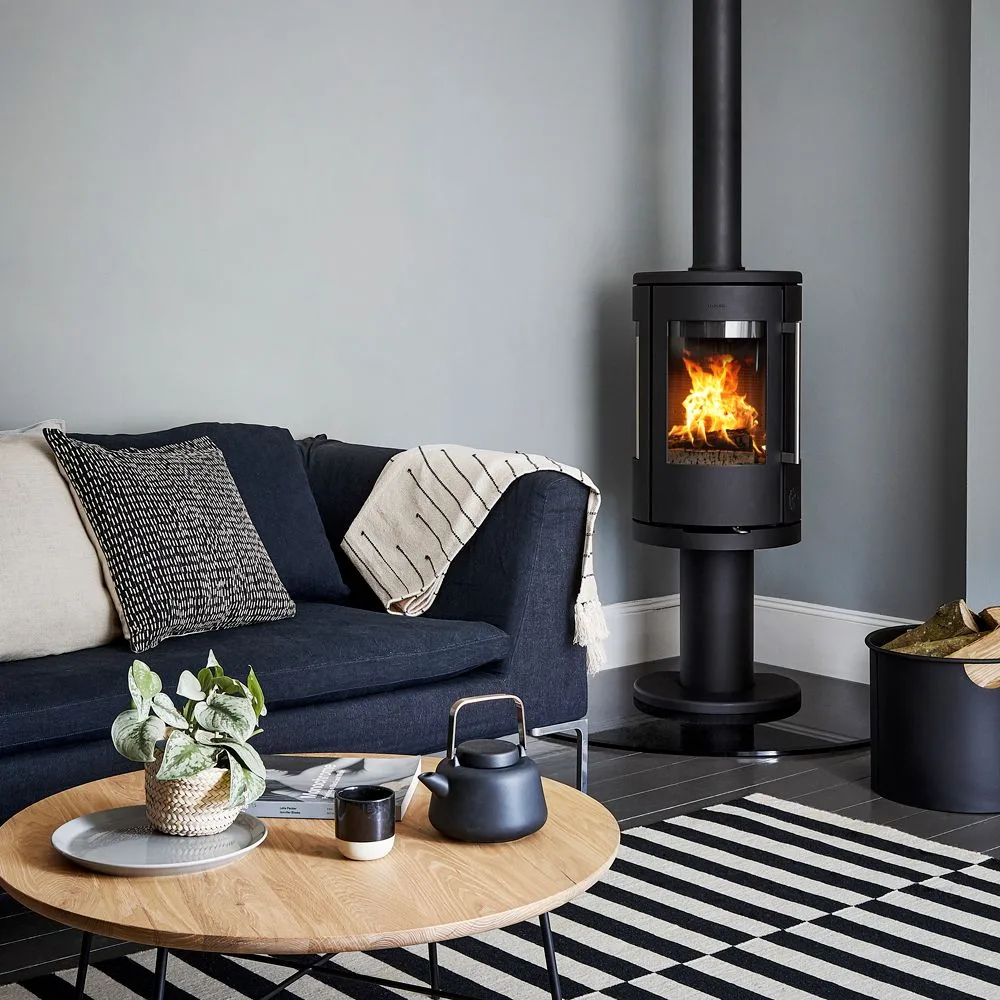
The dark platform beneath this freestanding stove has a clear boundary against the wood floor. A black and white geometric rug repeats its strong contrast farther into the seating area, while the blue sofa adds color. The small log container supplies a useful side element without extending across the platform. The floor arrangement connects the stove with the room through separate surfaces instead of continuous decoration around its base.
Plan the platform and rug position around the stove’s installation instructions, keeping combustible furnishings and textiles at the required distance. Secure the rug appropriately for its floor surface and keep the route to the stove clear. Choose a log container that collects debris and can be emptied easily. Do not infer hearth thickness, material or adequate clearance from the photograph; confirm those details for your own appliance.
IDEA 08 / 20
Treat a Hearth Bench as an Off-Season Seat
 SaveSupport Non AI Creator
Image credit: Future
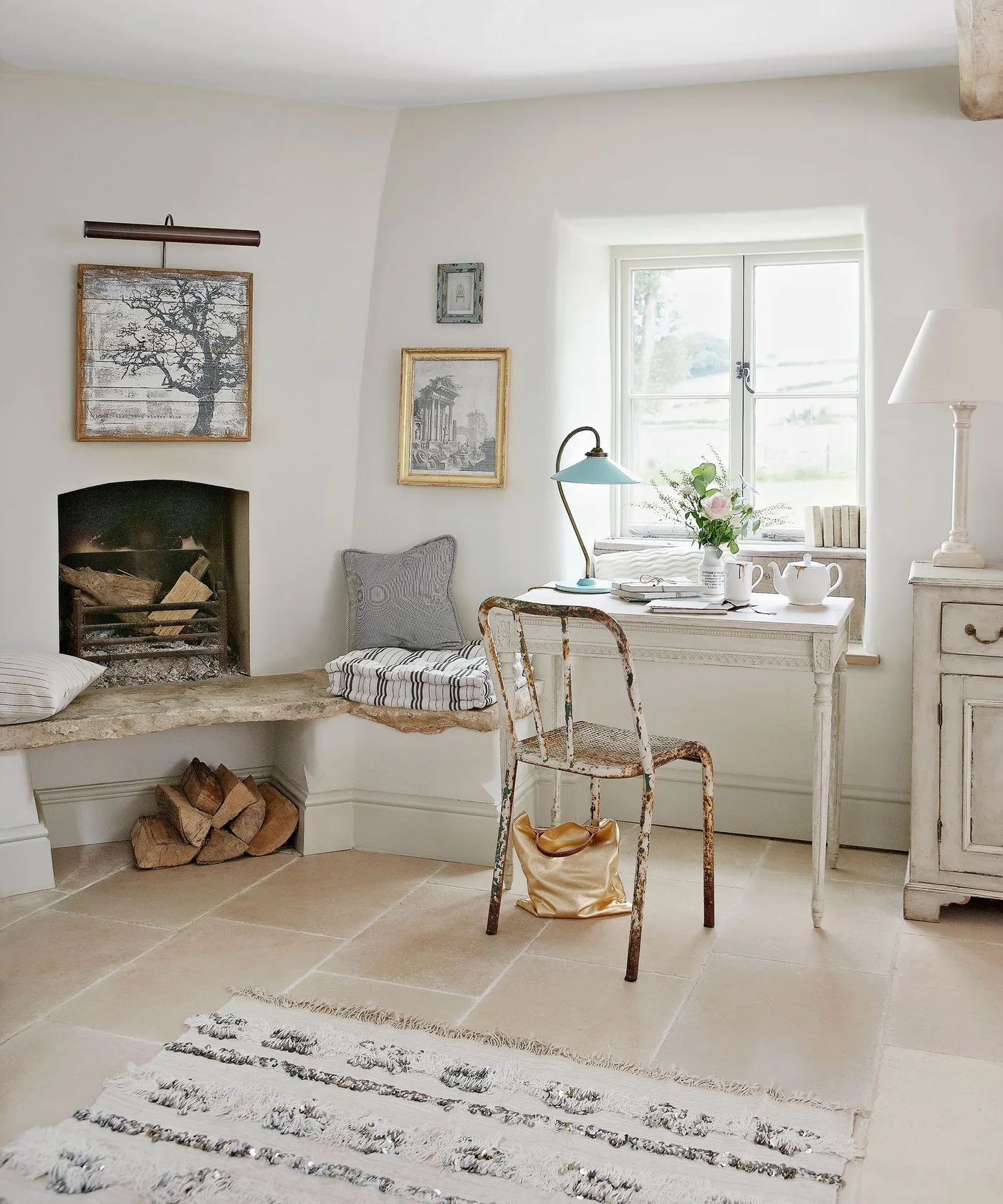
An extended hearth bench gives this pale fireplace a horizontal connection to the nearby desk. Striped cushions soften the platform beside the opening, and logs occupy the low space beneath. The photograph illustrates a compact room where the base of the fireplace becomes a useful architectural feature. The desk and window keep the arrangement connected to daily activities rather than making the fireplace a separate display wall.
Use cushions and sitting space near a fireplace only when its inactive status or operating instructions allow it. Remove incompatible furnishings before lighting a fire. If adding a bench, have the structure, finish and clearances assessed rather than assuming an existing hearth can carry seating. Keep stored logs dry, manageable and accessible, and choose removable cushion covers for a spot that may collect dust.
IDEA 09 / 20
Use a Small Bench in Front of an Inactive Opening
 SaveSupport Non AI Creator
Image credit: Bridget Peirson
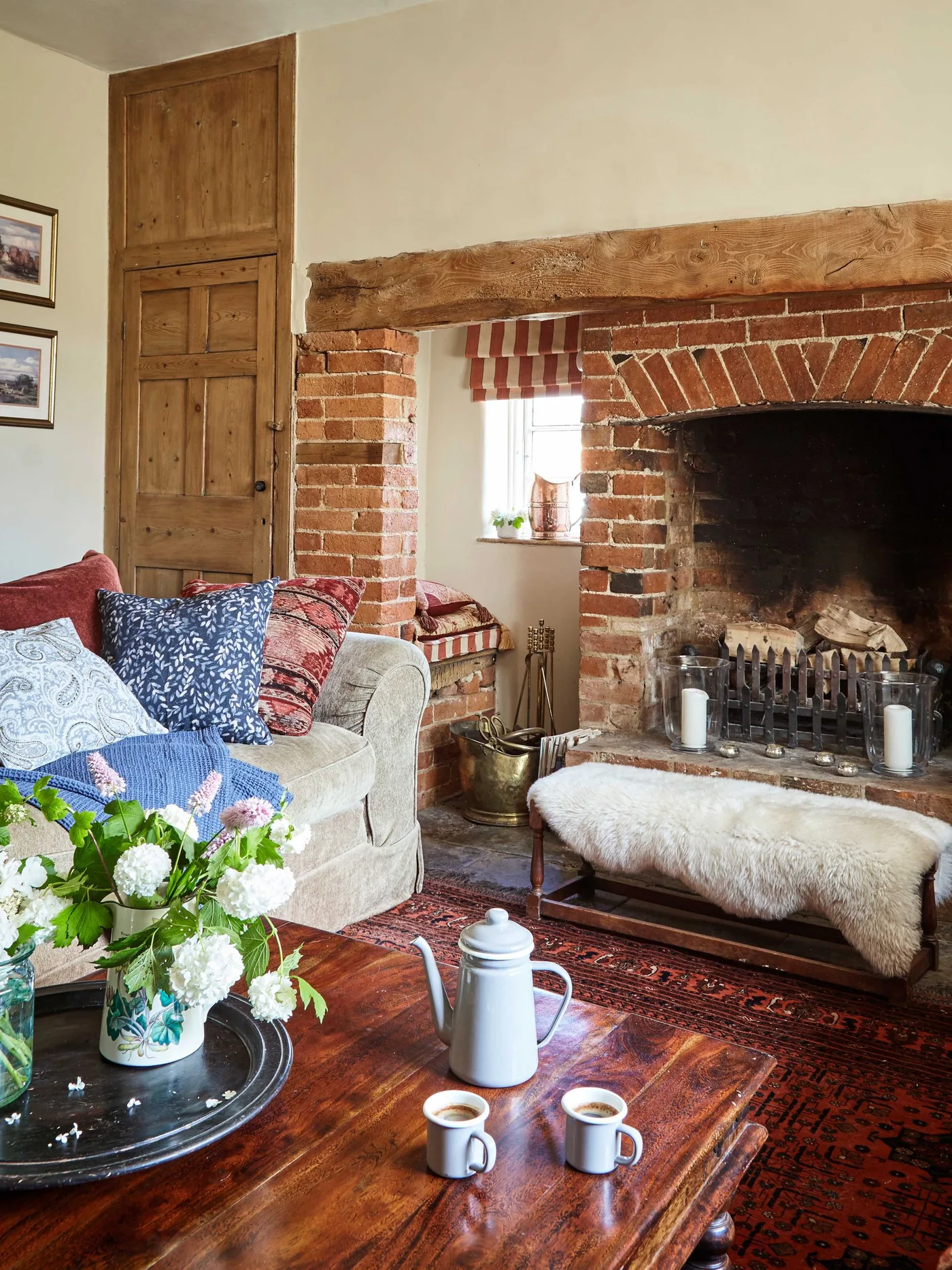
A low bench with a fluffy covering stands before this brick fireplace, where unlit candles sit inside the opening. Its soft texture contrasts with the brick and heavy wood mantel, while patterned cushions connect the nearby sofa with the rug. This is an example of treating an inactive fireplace as part of a sitting room, using one compact piece instead of a large cabinet across the opening.
Confirm that the fireplace is out of service before arranging an upholstered bench directly in front of it. Do not light candles behind combustible upholstery or use this layout while a fire is operating. Choose a bench you can move easily for cleaning and inspections, with a cover suited to regular care. Keep the surrounding tables far enough apart that the room remains comfortable to walk through.
IDEA 10 / 20
Separate Log Storage From Spare Textiles
 SaveSupport Non AI Creator
Image credit: Brent Darby
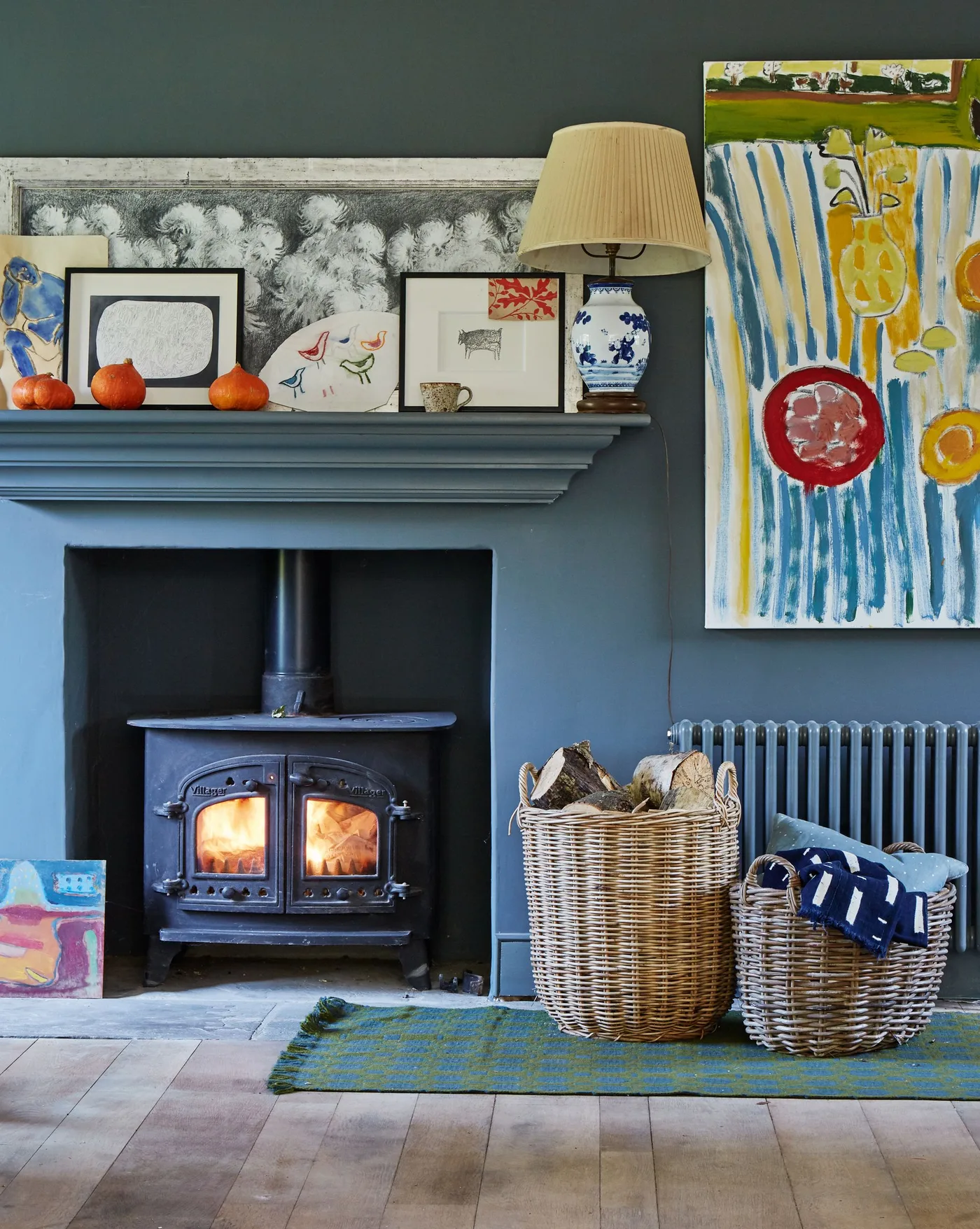
Two woven baskets beside the blue stove give this dark teal room a coordinated storage pair. One holds logs and the other holds folded textiles, so their shared shape connects two different everyday uses. A small green and blue rug adds color along the floor. This photograph offers a useful organizational idea: matching containers can bring order without requiring their contents to be identical.
Keep the log basket and textile basket separate, and place both outside the stove’s required clearances. Bark and dust transfer easily onto blankets when the same container is used for both. Choose baskets that can be lifted for sweeping and do not block access to the appliance or radiator. Check the rug’s permitted position as well; the photographed arrangement is a visual reference, not an installation specification.
PART 03
Choose Practical Screens and Small Collections
IDEA 11 / 20
Add a Useful Bucket to a Dining-Room Hearth
 SaveSupport Non AI Creator
Image credit: Brent Darby
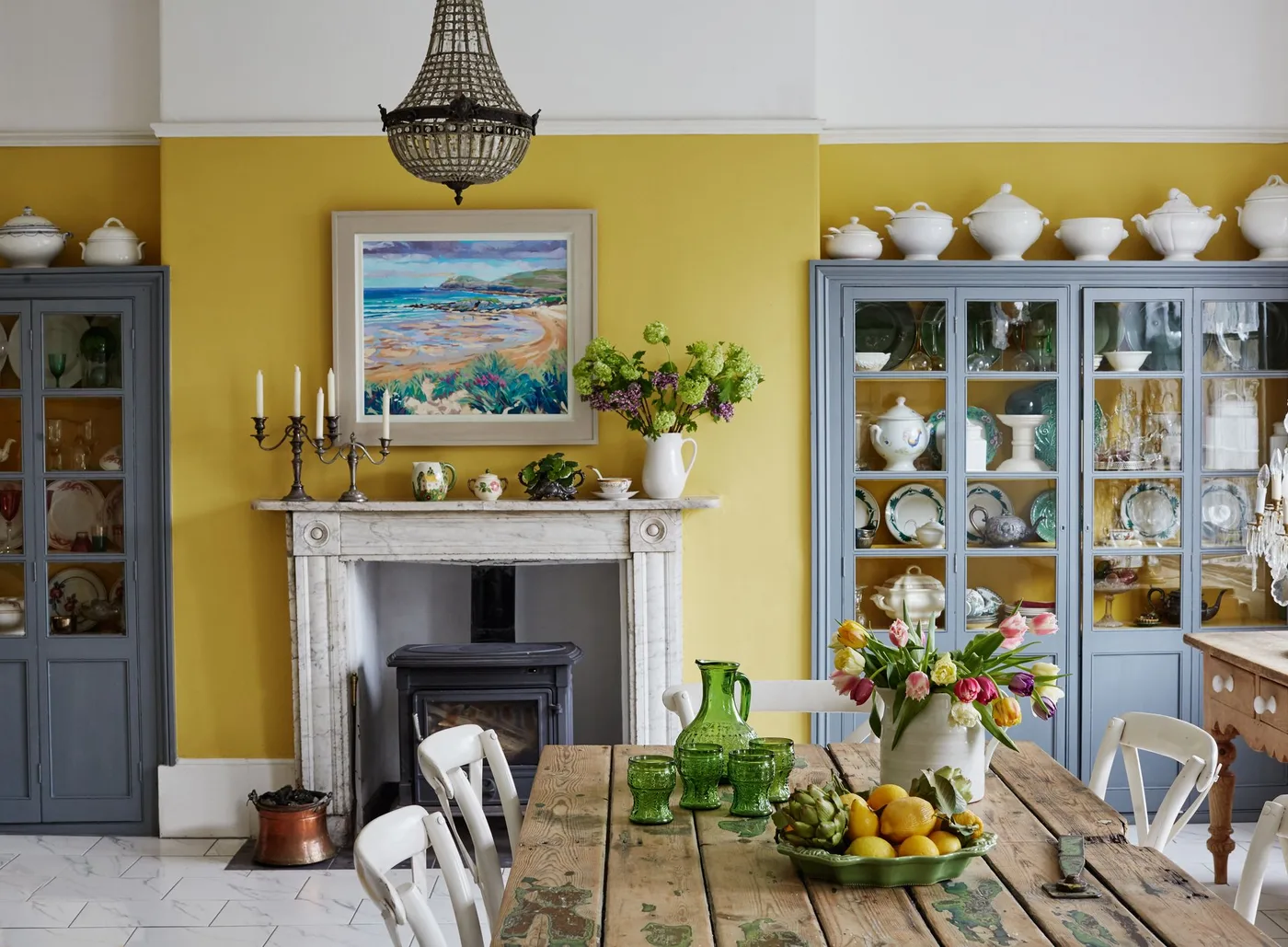
A copper-toned bucket sits at floor level beside the dark stove in this yellow dining room. It adds a warmer metallic shape beneath the pale fireplace, while the glass-front cabinets keep the room’s larger collections above floor level. The bucket is a restrained decorative detail in a room already filled with tableware and color. Its placement shows how a practical container can complement a hearth without becoming a large display.
Decide what the bucket will hold before choosing its size, handle and lining. A decorative vessel should not be assumed suitable for hot ash; use equipment specifically intended for that purpose and follow its instructions. Protect the floor from scratches and keep the container outside operating clearances. Leave enough space for dining chairs to move without catching on the hearth or its accessories.
IDEA 12 / 20
Keep Fireplace Tools Together Beside a Screen
 SaveSupport Non AI Creator
Image credit: Malcolm Menzies
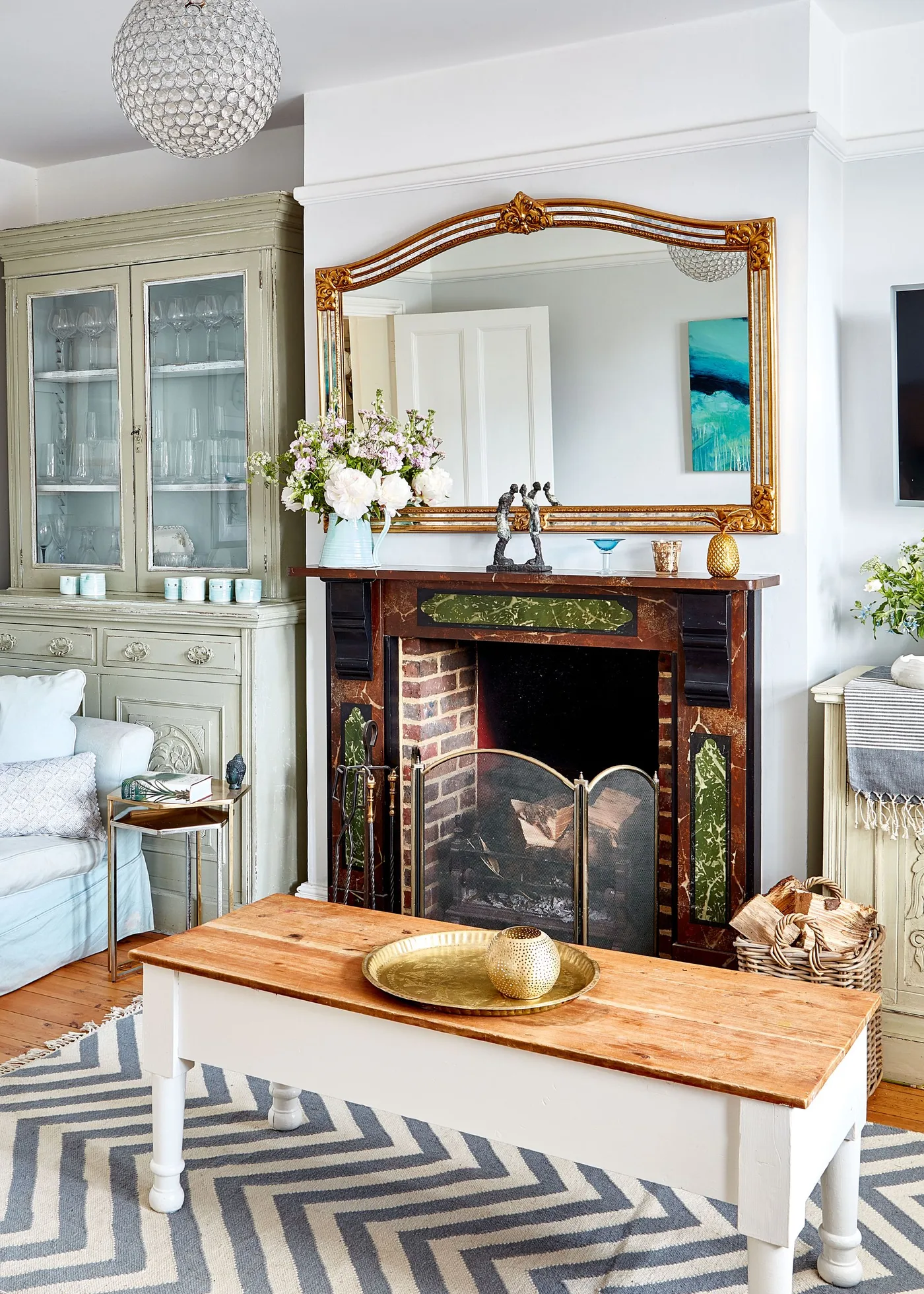
A tool stand sits at one side of this traditional fireplace, with a curved mesh screen across the opening and a woven log basket at the other side. Dark wood and green panels provide most of the decoration above, allowing the practical equipment to complete the floor-level arrangement. The photograph is useful for seeing how a balanced hearth can come from items that have a clear purpose.
Choose tools appropriate to your fireplace, with a stable stand and handles that are comfortable to use. Confirm the screen’s size and placement, and leave space to move it without knocking the basket or nearby table. Follow operating guidance for log storage and other combustible items. Clean equipment with methods suited to its finish, and remove debris beneath the stand rather than allowing it to collect against the hearth.
IDEA 13 / 20
Display a Decorative Screen in an Unused Fireplace
 SaveSupport Non AI Creator
Image credit: Malcolm Menzies
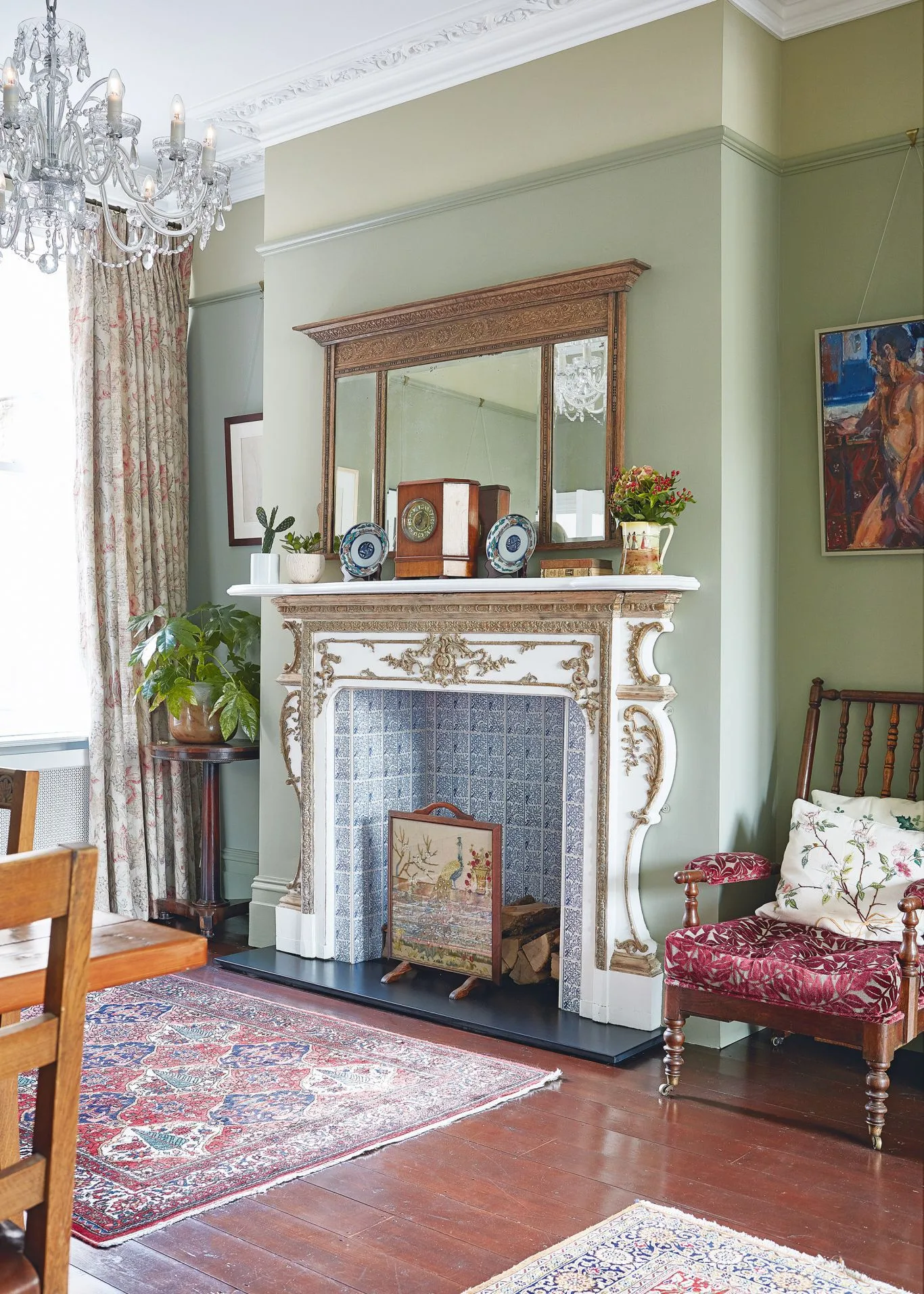
A small illustrated screen stands before the blue tiled opening of this ornate pale fireplace. Its picture adds a separate decorative layer below the mantel, while the dark hearth creates a quiet base beneath the carved surround. Patterned rugs remain farther into the room rather than covering the hearth. This example suits a fireplace that is being treated as a display feature, where the lower opening can carry an artwork-like detail.
Do not assume a decorative screen provides spark protection or is suitable for a working fireplace. Check its construction and intended use, keeping it for an inactive opening when necessary. Make sure its feet are stable and cannot catch passing shoes. Leave the tiles visible around its edges, and protect the floor when moving it. Any return to service should begin with removing unsuitable decoration and checking the fireplace’s condition.
IDEA 14 / 20
Build a Small Figurine Pair Around an Inactive Hearth
 SaveSupport Non AI Creator
Image credit: Kasia Fiszer
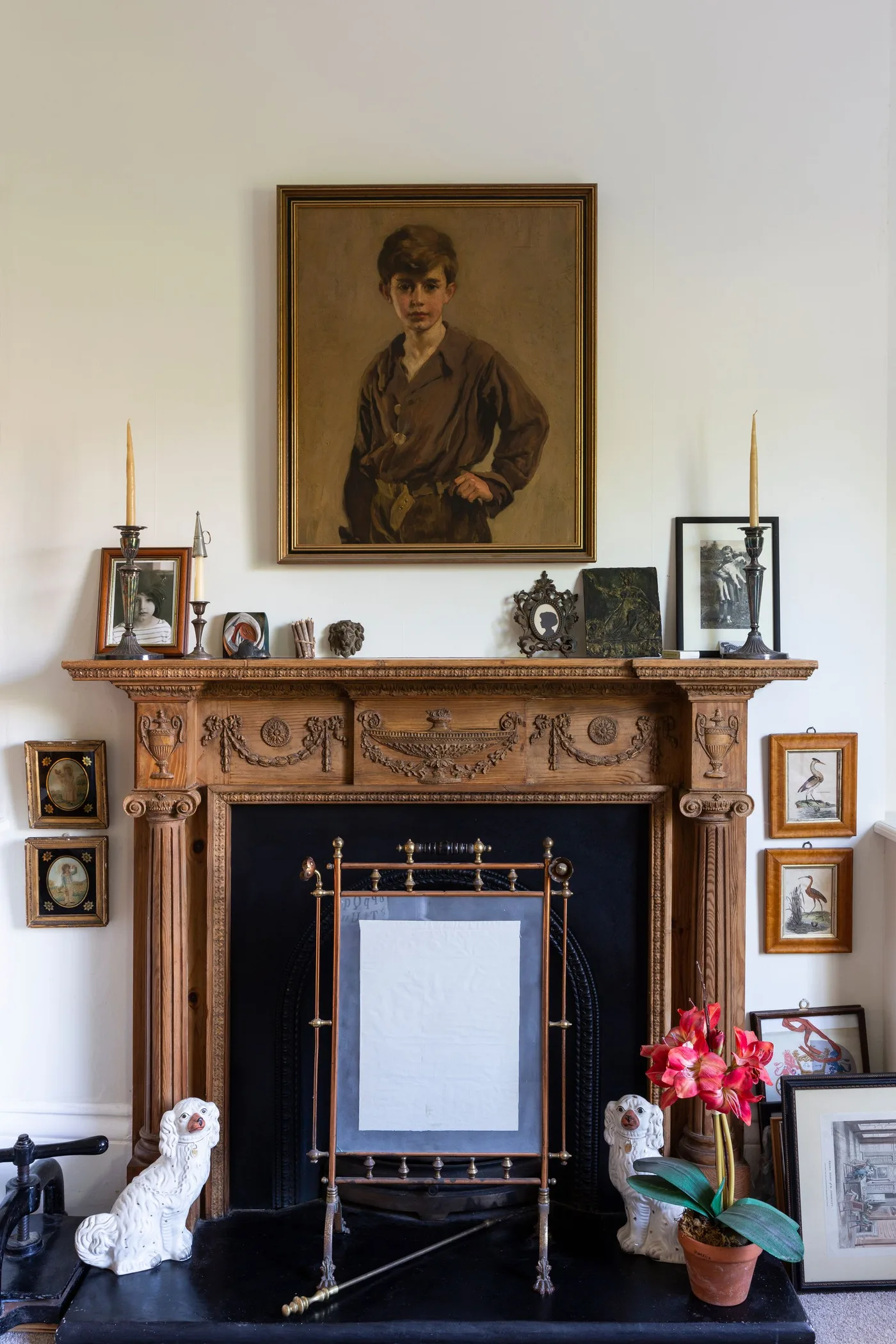
Two white dog figures sit at the sides of the dark hearth beneath this carved wood mantel. A rectangular decorative screen provides the central shape, while a potted orchid adds color at one side. The pairing gives the floor display a deliberate outline without matching every object above it. This photograph is helpful for arranging a treasured small collection around an inactive fireplace rather than scattering pieces across the room.
Use stable pieces with protected bases and enough space to lift each one for cleaning. Keep fragile figures away from busy routes, children’s play areas and pet movement. A decorative screen and nearby plant should not be treated as equipment for an operating fireplace. Confirm inactive status, and remove incompatible objects before use. Limit the group so the opening remains readable and the hearth does not become difficult to maintain.
IDEA 15 / 20
Balance a Wide Hearth With Objects of Different Heights
 SaveSupport Non AI Creator
Image credit: Photo: KuDa Photography - Darius Kuzmickas . From: Jordan Iverson
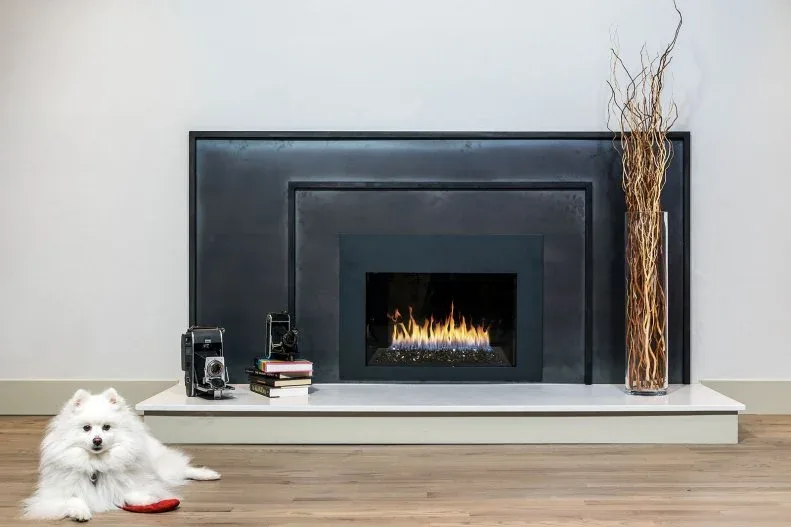
A wide white hearth carries two very different groups beneath this black surround: small vintage cameras at one side and a tall branch-filled vase at the other. The contrast in height makes the long platform feel deliberately arranged without filling its center. The photograph shows how a few distinct objects can mark the ends of a modern hearth while leaving the appliance opening visually clear.
Use this display only where objects and dried branches can meet the appliance’s operating requirements; relocate them otherwise. Keep valuable cameras away from heat, soot and moisture. Select a stable vase and avoid letting its branches project into a walkway. Protect the surface beneath heavy objects, and do not copy the photographed pet’s distance from the fire as a guide to safe seating or resting positions.
PART 04
Bring Platforms, Baskets and Rugs Together
IDEA 16 / 20
Let an Extended Pale Platform Frame a Floor Vase
 SaveSupport Non AI Creator
Source: hgtv.com
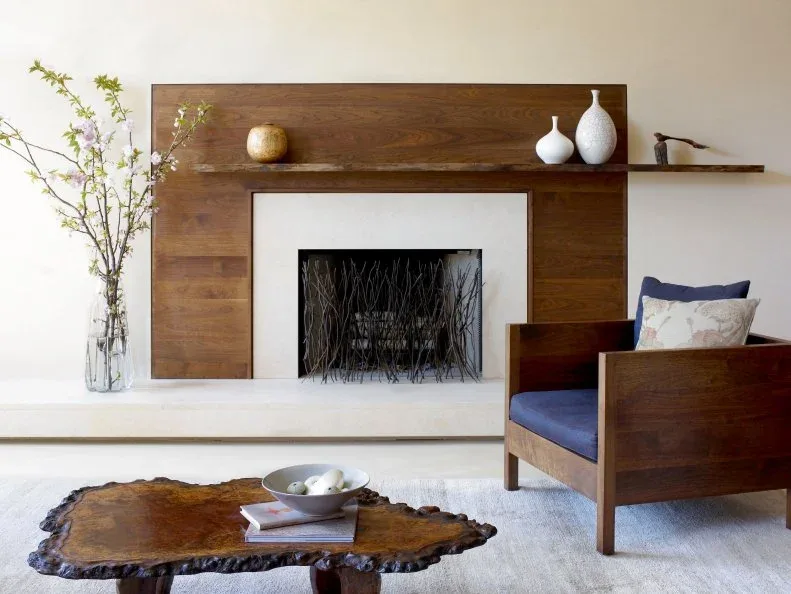
A long pale platform extends beyond the wood surround in this room. A tall clear vase sits at one end, while a blue-cushioned wood chair gives the opposite side a more substantial shape. The inactive opening contains a branch-like display, so the photograph reads as a composed sitting area rather than a fire in use. The platform links floor decoration with furniture without requiring a crowded row of accessories.
Keep branches and flower arrangements for a confirmed inactive fireplace or position them according to the appliance requirements. Use a stable vase with protected contact points and change its water away from the hearth to limit spills. Leave the platform edge visible so it does not become a concealed trip hazard. Check the chair’s position for comfort and access, moving it as needed if the fireplace returns to operation.
IDEA 17 / 20
Group Lanterns for an Off-Season Floor Display
 SaveSupport Non AI Creator
Image credit: From: Fixer Upper
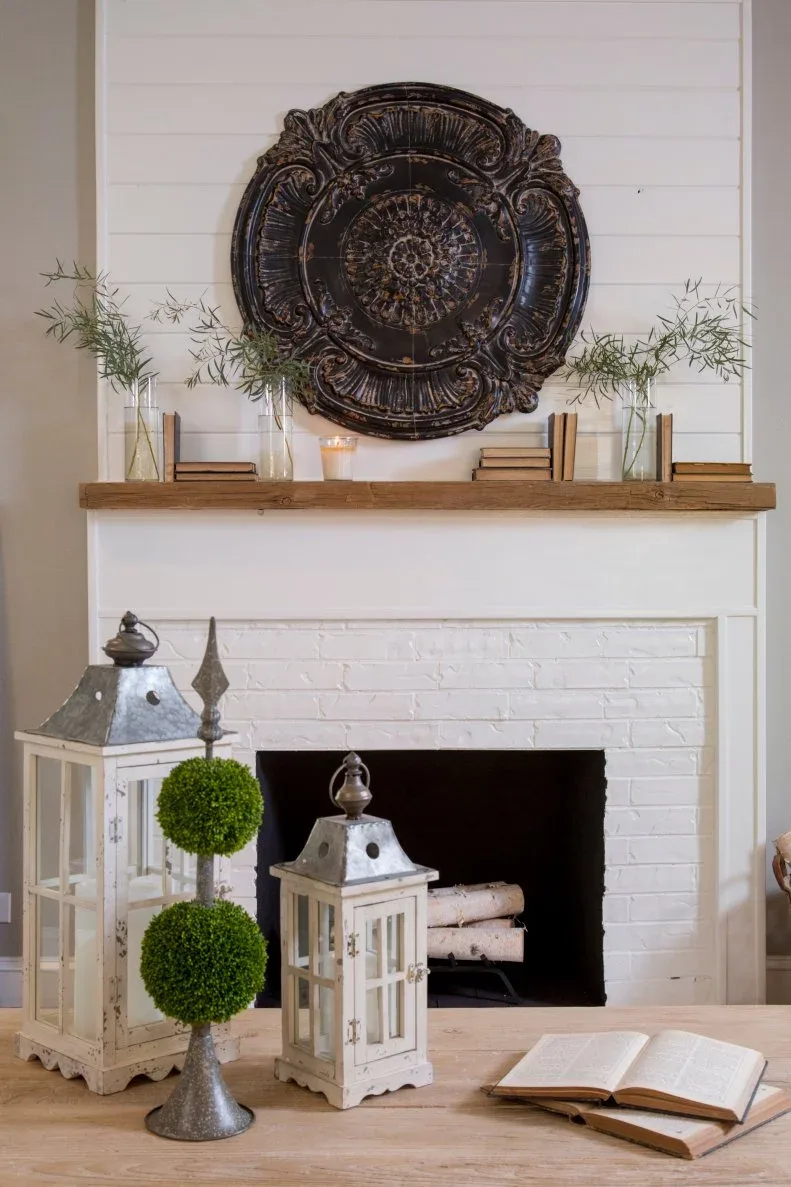
Two pale lanterns of different heights stand together at the base of this white brick fireplace. A double-ball topiary adds a green vertical shape between them, while the wood coffee table carries its own small reading arrangement. The lantern group gives the lower fireplace a clear decorative focus without depending on more objects along the mantel. Its shared pale finish keeps the collection connected to the surround.
Arrange lanterns as a stable display around an inactive hearth, or move them outside the fireplace’s operating clearances. Battery lighting can avoid an exposed candle flame, though the lantern’s intended use and ventilation still matter. Keep cords, trailing greenery and loose branches out of the opening. Leave the group easy to lift for cleaning, and protect the floor from metal feet and moisture beneath the plant.
IDEA 18 / 20
Use Matching Baskets Along a Tall Fireplace Base
 SaveSupport Non AI Creator
Image credit: Photo: Audrey Hall. From: Locati Architects
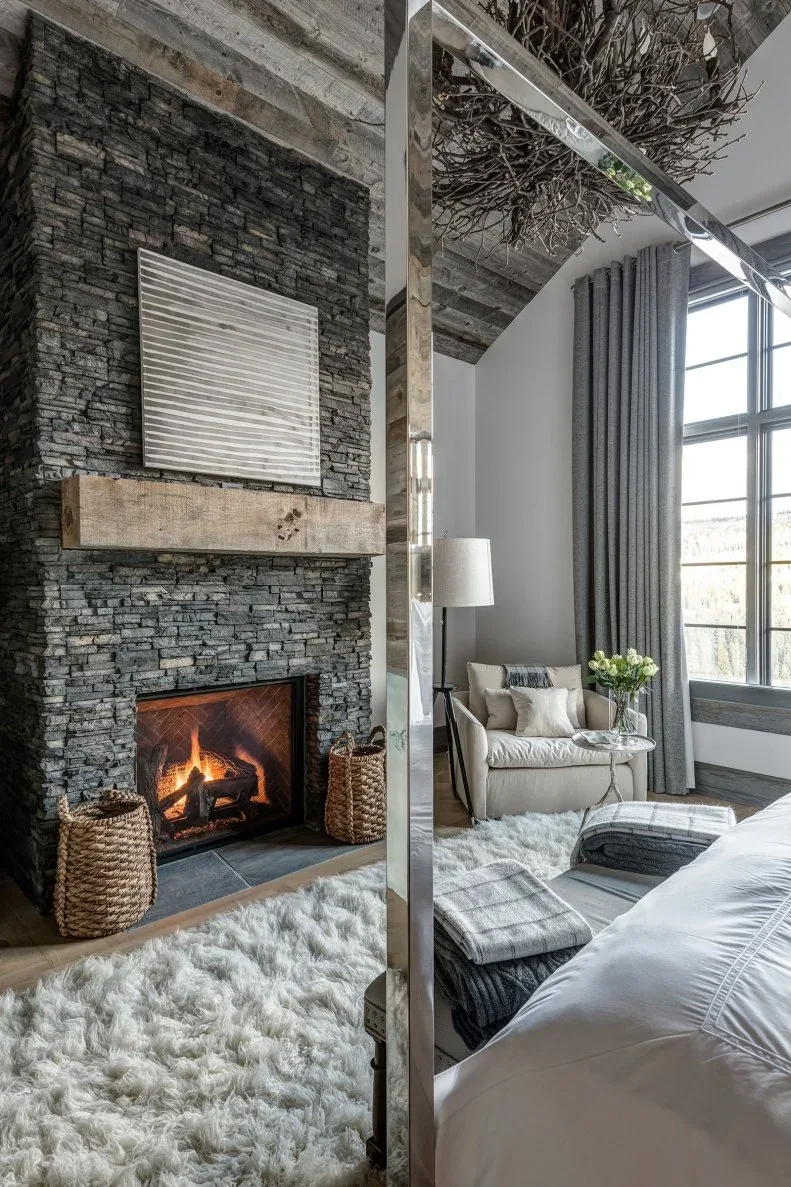
Two woven baskets sit along the base of this tall dark fireplace in a bedroom. Their warm texture makes a smaller-scale connection between the large stone-faced wall and the pale rug, chair and bedding. The matching shapes give the lower part of the fireplace a deliberate arrangement, while the wall above remains the dominant feature. This is a useful example of repeating one storage form in a taller room.
Choose baskets with a purpose, such as holding a manageable supply of logs or storing objects away from the working hearth. Position them and the bedroom textiles according to the fireplace instructions, checking the rug as well as the baskets. Keep the route around the bed open. Lift containers regularly to remove dust, and do not infer the suitability of the hearth’s construction from the stone-faced appearance.
IDEA 19 / 20
Use a Strong Rug Pattern Beyond the Hearth
 SaveSupport Non AI Creator
Image credit: Photo: Kip Dawkins. From: Joni Spear
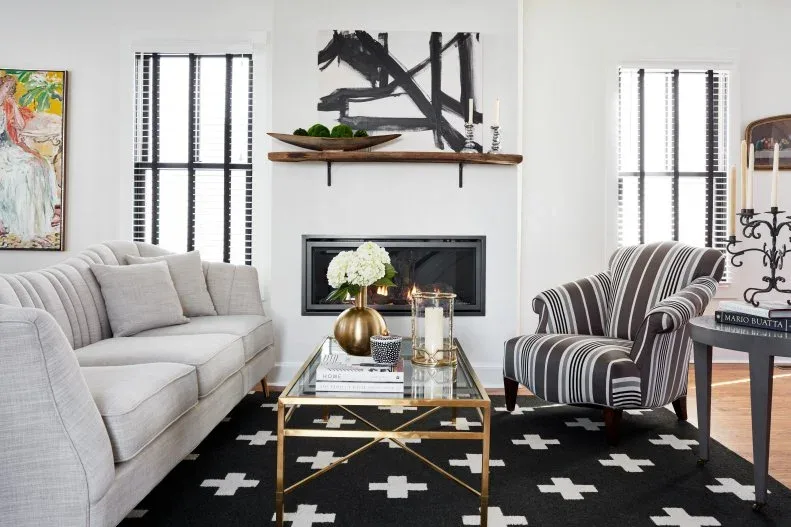
A black and white cross-pattern rug gives the floor strong character in this white living room. Its dark ground relates to the fireplace insert and striped armchair, while a pale sofa keeps the seating area lighter. The hearth itself remains visually simple. This photograph offers a floor-decor approach for a fireplace wall that already has distinctive artwork: use the seating-area rug to connect the focal feature with the furniture.
Size the rug for your actual seating arrangement and leave the fireplace’s required clearances unobstructed. A bold pattern works best when nearby shapes remain easy to read, so compare it with chair upholstery before buying. Choose an appropriate pad and clean the rug according to its fiber and backing. Keep a clear route to the appliance, checking that table legs and rug edges do not make access awkward.
IDEA 20 / 20
Allow a Broad Stone Hearth to Be the Main Feature
 SaveSupport Non AI Creator
Image credit: Photo: Lucy Call. From: LMK Interior Design
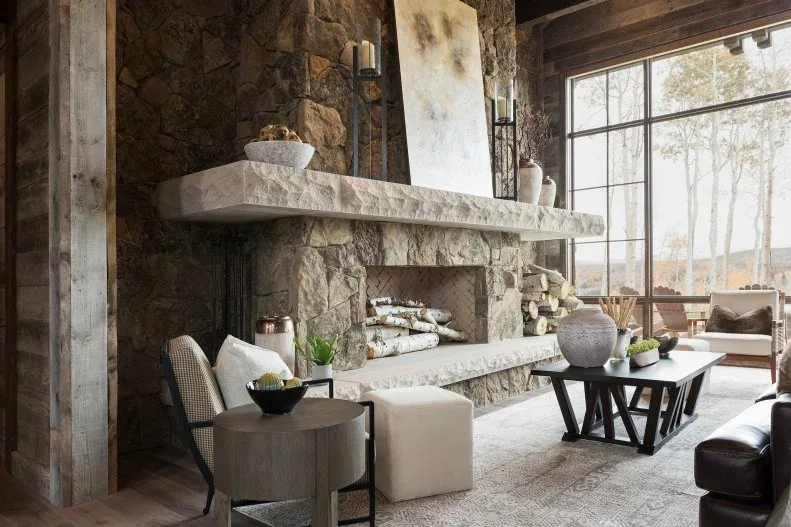
A broad pale hearth runs beneath this rustic stone fireplace, creating a clear horizontal base for the larger wall. Logs sit inside the opening and in the side area, while varied tables and light chairs form the seating group in front. The photograph shows that a substantial hearth can supply enough floor-level detail on its own. The surrounding furniture adds useful surfaces without covering the platform’s outline.
Have any new hearth structure and finish assessed for the intended appliance before planning furniture around it. Keep chairs, tables and stored logs at suitable distances and preserve access for cleaning and service. Identify the actual surface material for care, especially around edges where soot or moisture can collect. Resist using the entire platform as a shelf; a clear surface is easier to maintain and shows its shape more effectively.
BRING IT ALL TOGETHER
Give Every Floor-Level Piece a Purpose
Start with the hearth’s condition, finish and intended use. Decide whether the room needs storage, a screen or simply a clear architectural surface. Choose a small number of stable pieces and leave enough room to move around the furniture without catching a basket, screen foot or rug edge.
Keep decorative arrangements separate from the requirements of an operating fireplace. Follow the appliance instructions and obtain qualified advice for changes to the hearth or installation. Move incompatible displays before use, protect surfaces from moisture and scratches, and select pieces that remain easy to lift and clean.