Green bedroom wallpaper can be a pale leafy background, a strong tropical wall or a quieter textured surface. The amount of green and the size of the pattern matter as much as the shade itself. Compare the paper with the bed, woodwork and curtains you plan to keep.
These eighteen photographs include complete rooms and useful close views. Some patterns pair green with pink, yellow or blue, while others repeat it through painted trim and furniture. Look at how much of the paper remains visible around the bed, then consider installation, cleaning and the light your own bedroom receives.
PART 01
Start With Botanical Backdrops
IDEA 01 / 18
Match Pale Green Trim to a Large Floral Print
 SaveSupport Non AI Creator
Image credit: Future
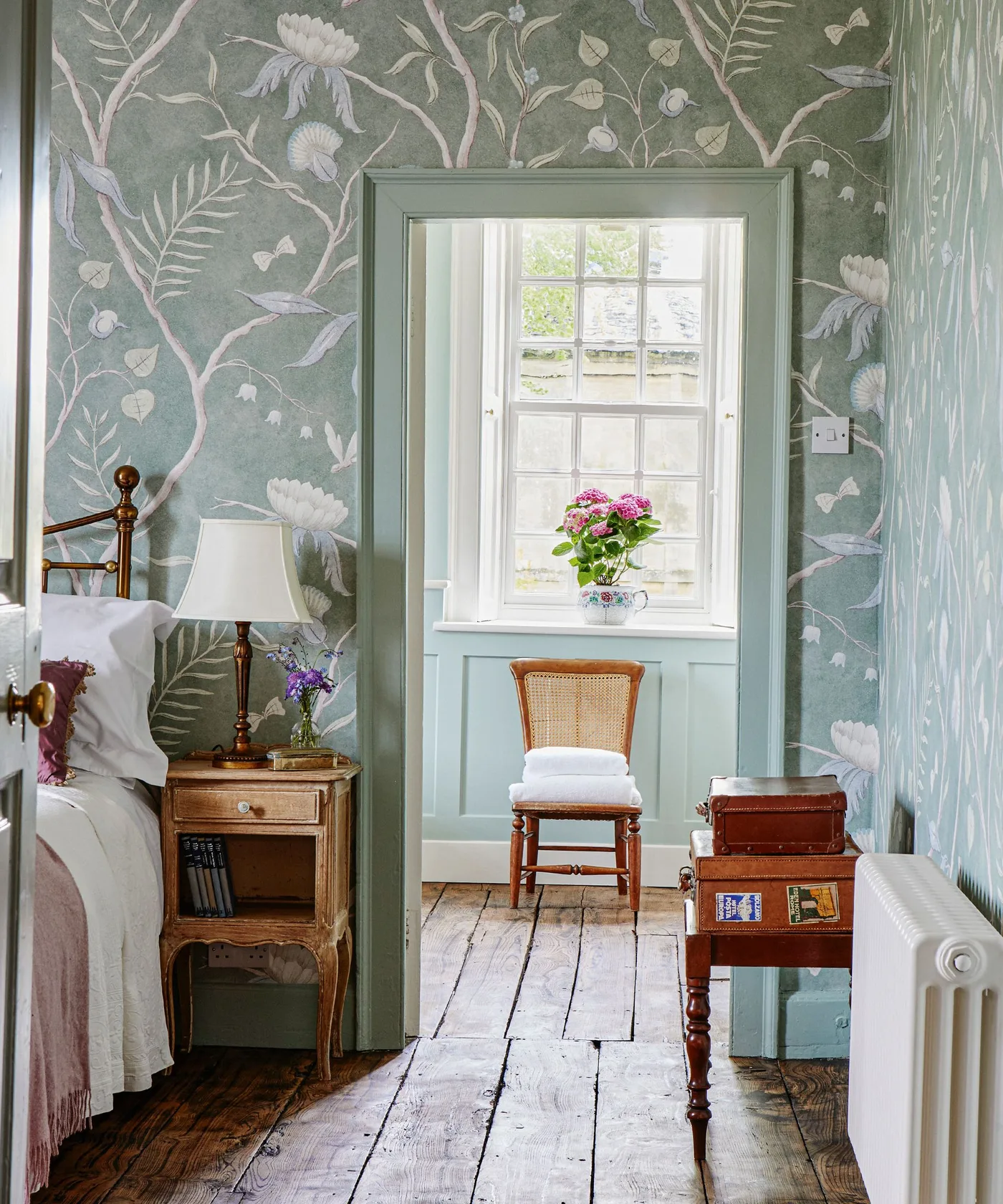
Large white flowers and fine branches spread across the pale green wallpaper in this bedroom. The window trim repeats the background color, while wooden furniture and floorboards introduce warmth below. The print continues around the window rather than stopping at a small bed panel. Its light outlines give a generously scaled pattern a softer presence in the room.
Compare a full pattern repeat with the window and bed position before choosing the paper. A large flower may land awkwardly against trim if the starting point is not planned. Select paint from an actual sample and check it in daylight and lamplight. Keep curtains relatively simple if you want the botanical outlines around the window to remain visible.
IDEA 02 / 18
Use Trailing Green Leaves Beneath a Plain Ledge
 SaveSupport Non AI Creator
Image credit: Future PLC/Dan Duchars
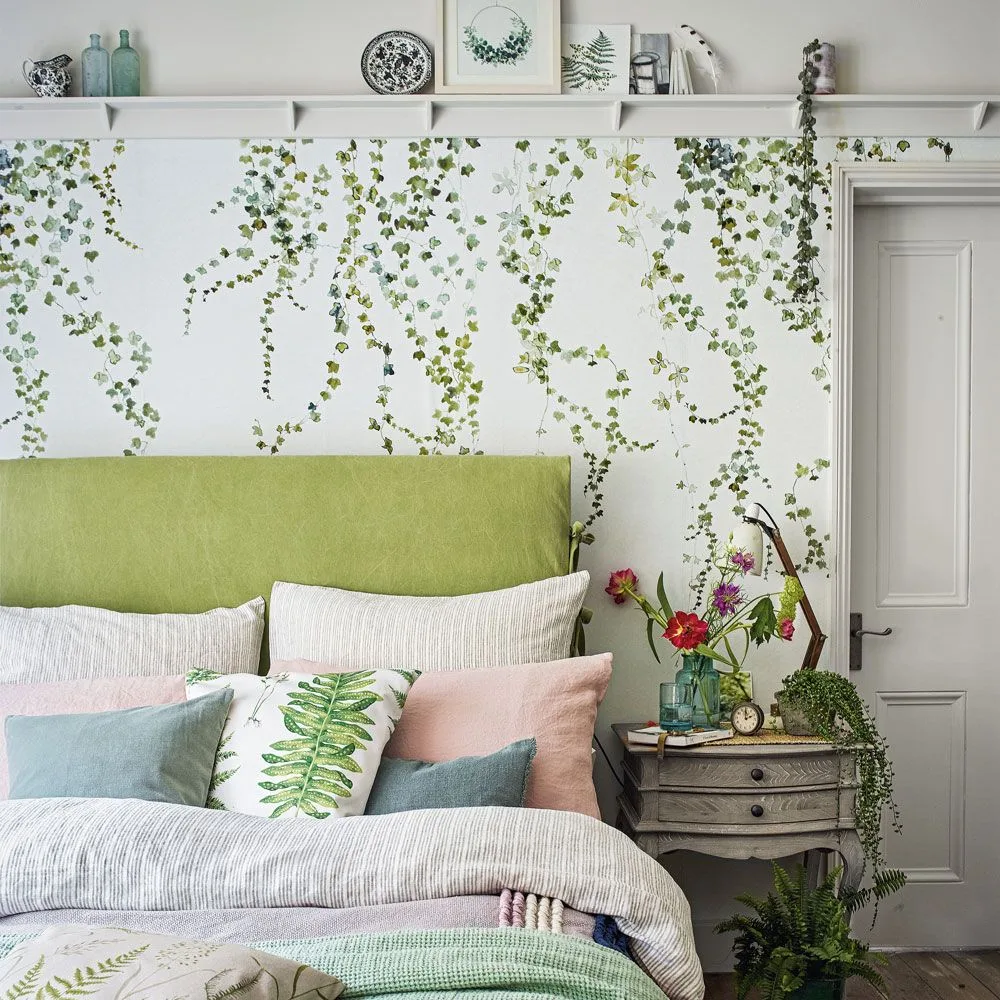
Trailing green leaves create a light pattern beneath the long white display ledge. A lime-colored headboard repeats the foliage’s brighter tones, while mostly pale bedding leaves the wall easy to see. Botanical pictures and glass objects occupy the ledge above. The white ground gives the leafy design plenty of open space instead of forming a dense block of color.
Decide where the ledge and headboard will sit before choosing the paper’s starting height. Keep the ledge securely installed and avoid heavy objects directly above sleepers. Compare the green paint or fabric with the paper sample rather than matching from memory. Use only a few objects above the pattern so the wall’s trailing shapes remain the main decorative detail.
IDEA 03 / 18
Frame a Dark Tropical Print With Pale Storage
 SaveSupport Non AI Creator
Image credit: Future PLC/ Dominic Blackmore
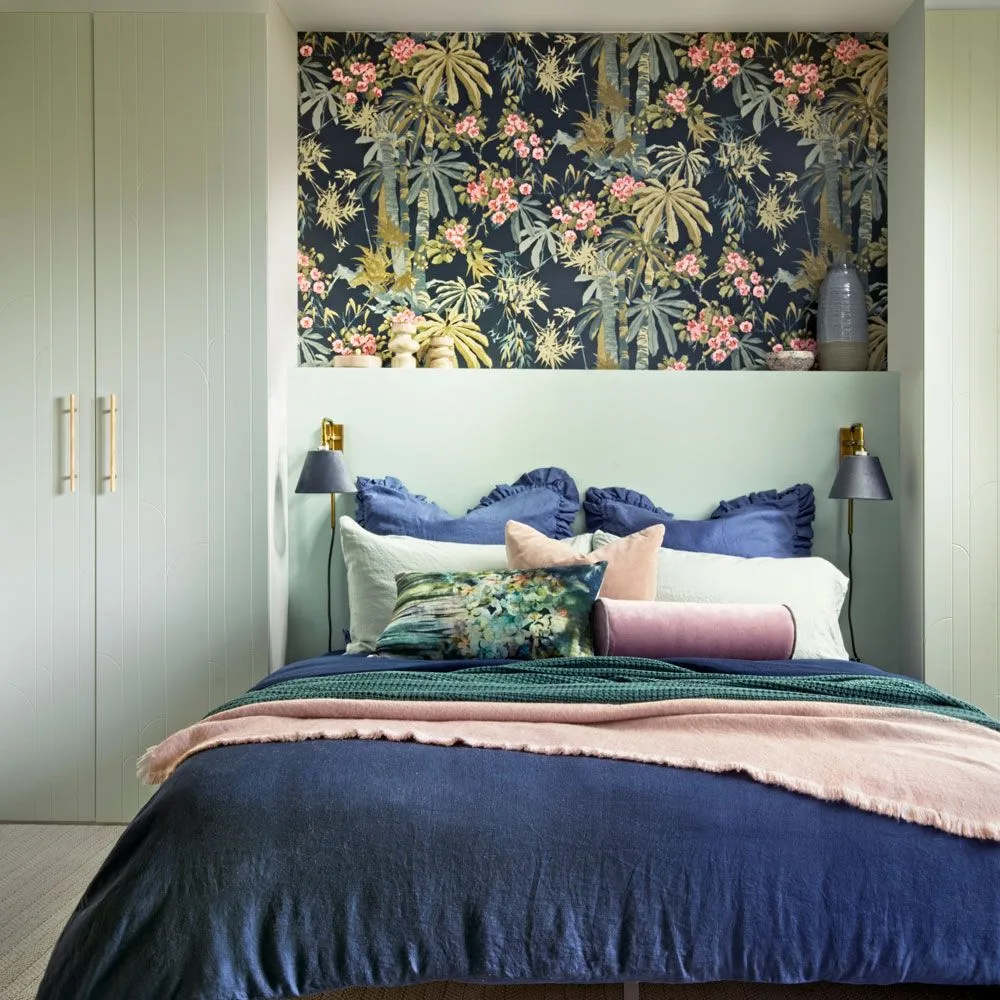
A dark tropical print fills the recessed wall above this bed, with green foliage and pink flowers standing out against the deep background. Pale green wardrobes frame the paper on both sides. Blue and pink bedding picks up smaller colors from the print. Restricting the pattern to the central section gives it a clear boundary within the fitted storage arrangement.
Measure the visible panel after accounting for the headboard, ledge and lights. A dramatic print needs enough exposed space for its leaves and flowers to be understood. Plan seams away from the most noticeable central motif where practical. Keep wardrobe doors and lamps clear of the paper, and use the manufacturer’s recommended cleaning method around areas touched frequently.
IDEA 04 / 18
Pair Soft Green Foliage With a Woven Headboard
 SaveSupport Non AI Creator
Image credit: Future PLC/ Mark Scott
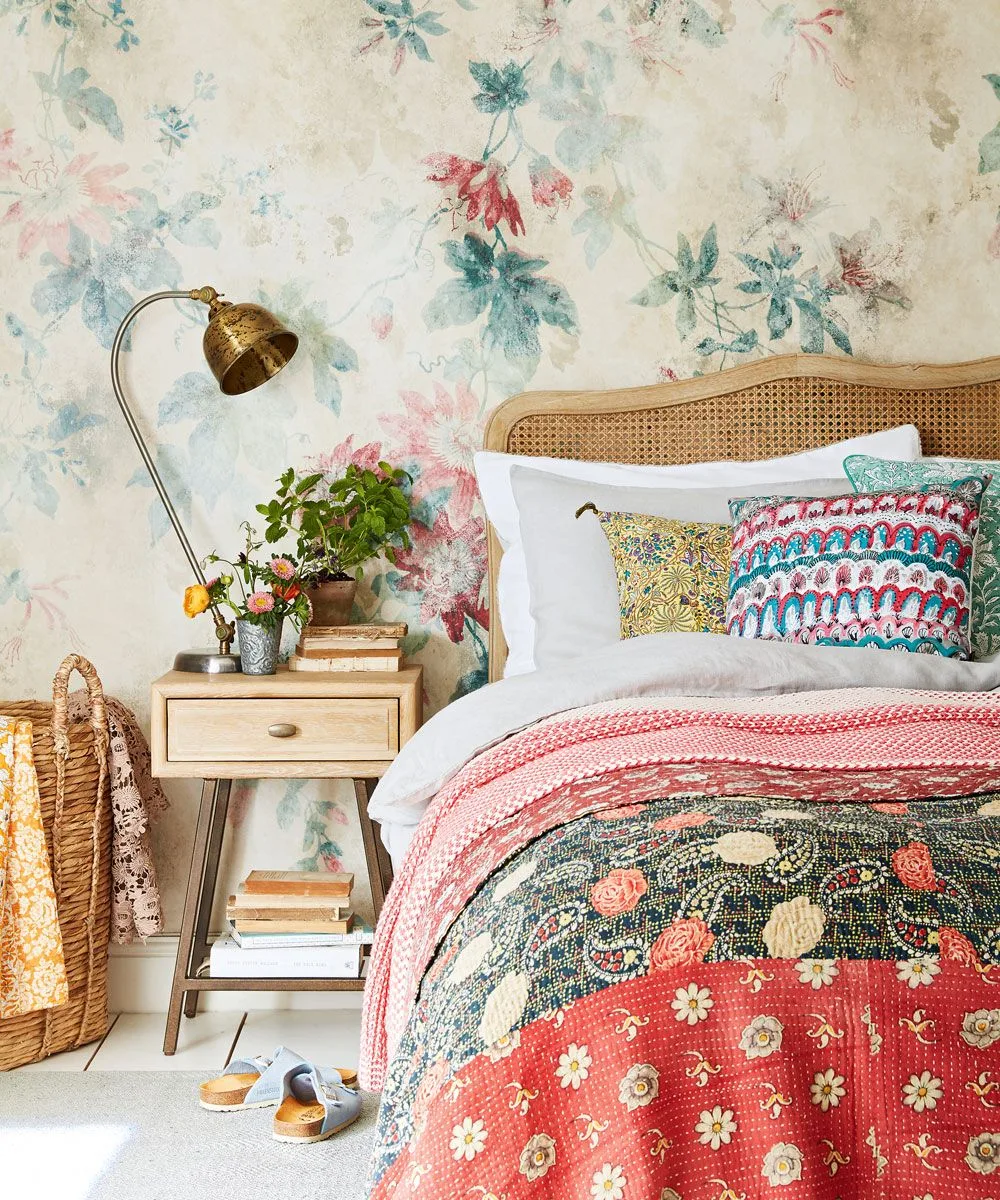
Soft green leaves and pale pink flowers spread across the light wallpaper behind a curved woven headboard. A wooden bedside table and warm metal lamp add a different texture beside the bed. The bedding introduces stronger red and green patterns below. The wall’s softer colors allow several textiles to share the arrangement without every surface carrying the same intensity.
Try the wallpaper beside the headboard material before choosing additional patterned cushions. Keep one or two larger bedding pieces plain if the room begins to feel busy. Check how much of the print will remain above the mattress and pillows. Position the bedside lamp for reading without letting its shade rub against the wall covering when adjusted.
IDEA 05 / 18
Repeat Green Toile Across Walls and Curtains
 SaveSupport Non AI Creator
Image credit: Jen Burner / Thomas Guy Interiors
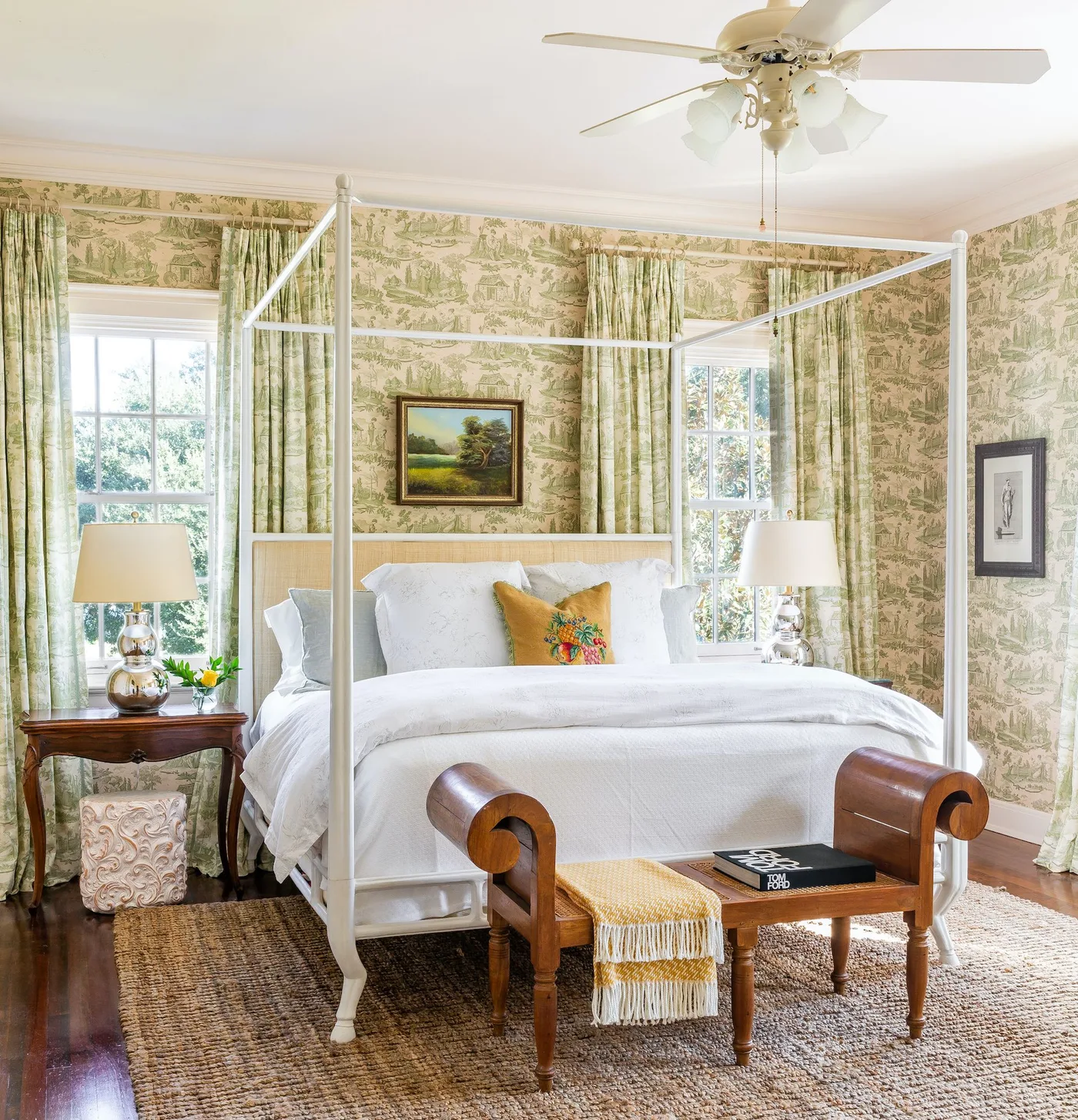
Green scenic wallpaper continues into matching curtains around the pale four-poster bed. White bedding creates a broad quiet area in the middle, and a wooden bench adds warmth at the foot. The repeated print gives the walls and windows a closely connected appearance. The bed frame remains light enough for the scenery behind it to stay readable.
Check the scale of a scenic repeat across both fabric and paper before ordering. Matching patterns still need careful placement around windows and corners. Keep enough plain bedding to avoid losing the bed’s outline. If curtains cover radiators or other heat sources, choose a practical length and arrangement appropriate to the room rather than copying their appearance without checking.
PART 02
Use Foliage Across Different Room Shapes
IDEA 06 / 18
Continue Ivy Around an Attic Bedroom
 SaveSupport Non AI Creator
Image credit: Future / Emma Ainscough
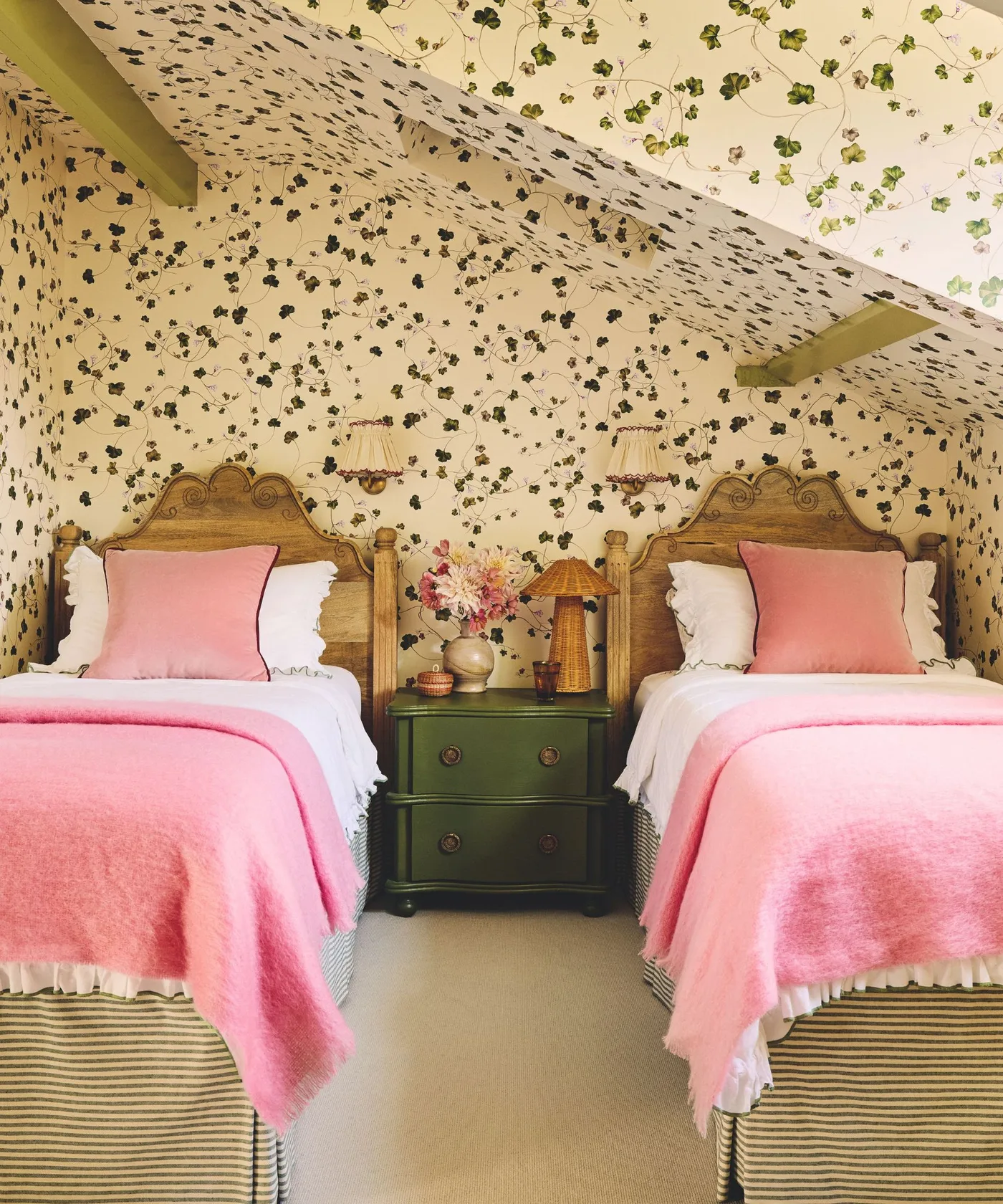
Trailing green ivy covers the walls and sloping ceiling of this twin bedroom. Green-painted beams and a shared bedside chest repeat the leaf color, while pink covers give each bed a distinct warm accent. The pattern follows the attic’s changing angles rather than treating every slope as a separate plain surface. Light space between the leaves keeps the room from feeling completely filled.
Lay out the pattern around roof slopes and beams before installation. Changes of angle can interrupt a repeat, so inspect where the joins will be most visible from the beds. Use appropriate preparation and adhesive for the actual surfaces. Keep bedding and larger furniture outlines straightforward when paper runs overhead, and check head clearance along the sloping parts of the room.
IDEA 07 / 18
Set a Pink Headboard Against an Olive Pattern
 SaveSupport Non AI Creator
Image credit: Madeaux
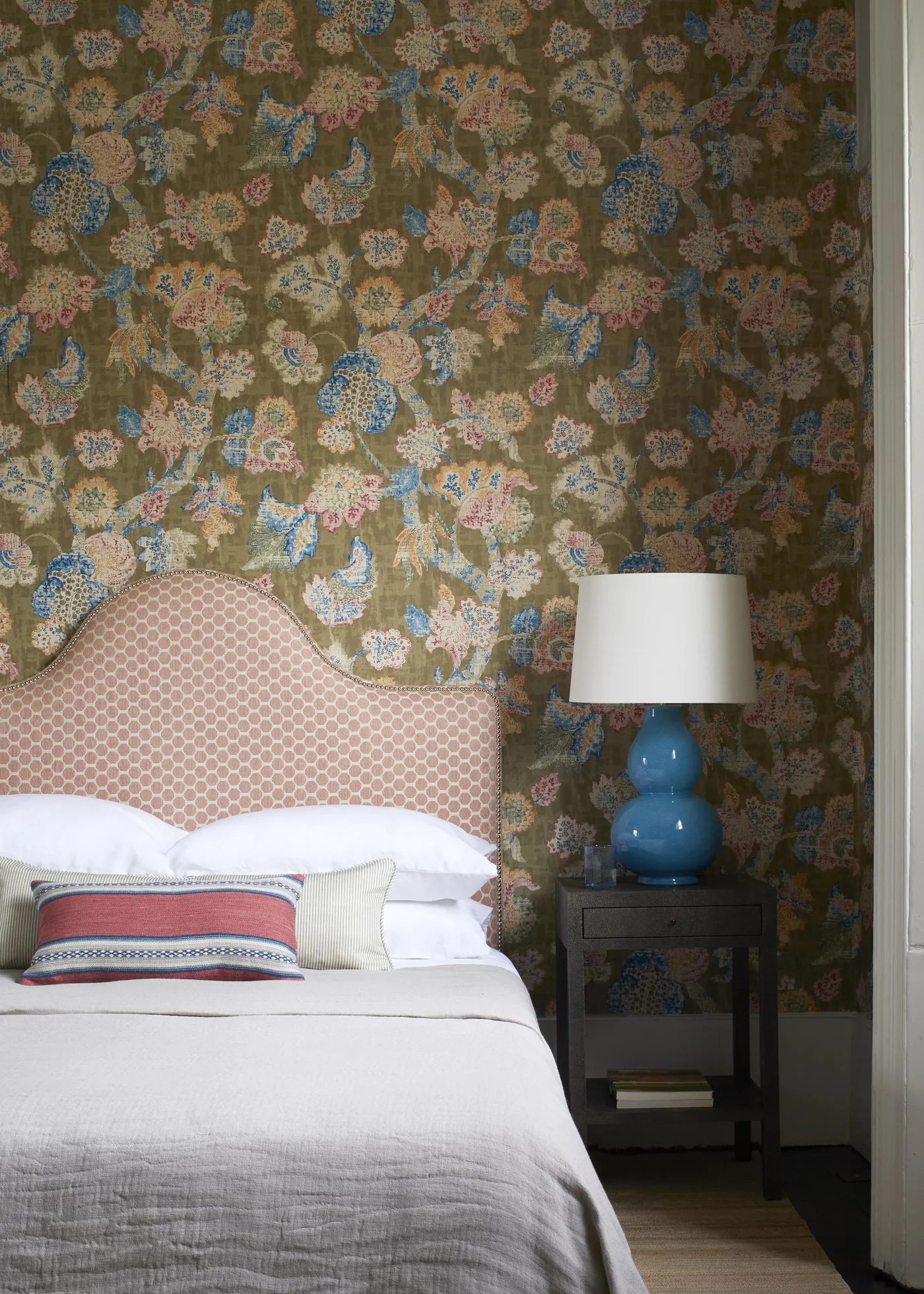
An olive-toned floral backdrop introduces a deeper green behind the pink curved headboard. Blue flowers in the paper connect with the bright blue bedside lamp, while white bedding creates a calmer central surface. The wallpaper has a closely layered, tapestry-like appearance. Its darker ground allows pale upholstery to stand out clearly without requiring a separate painted border around the bed.
Compare the headboard fabric and wallpaper under the same lighting before committing to the combination. A dense pattern can hide smaller artwork, so choose either a clear contrast or leave the paper uninterrupted. Plan the lamp position so its color remains visible without blocking too much of the print. Keep spare paper from the same batch for possible repairs later.
IDEA 08 / 18
Combine a Green Leaf Repeat With a Yellow Bed
 SaveSupport Non AI Creator
Image credit: Future
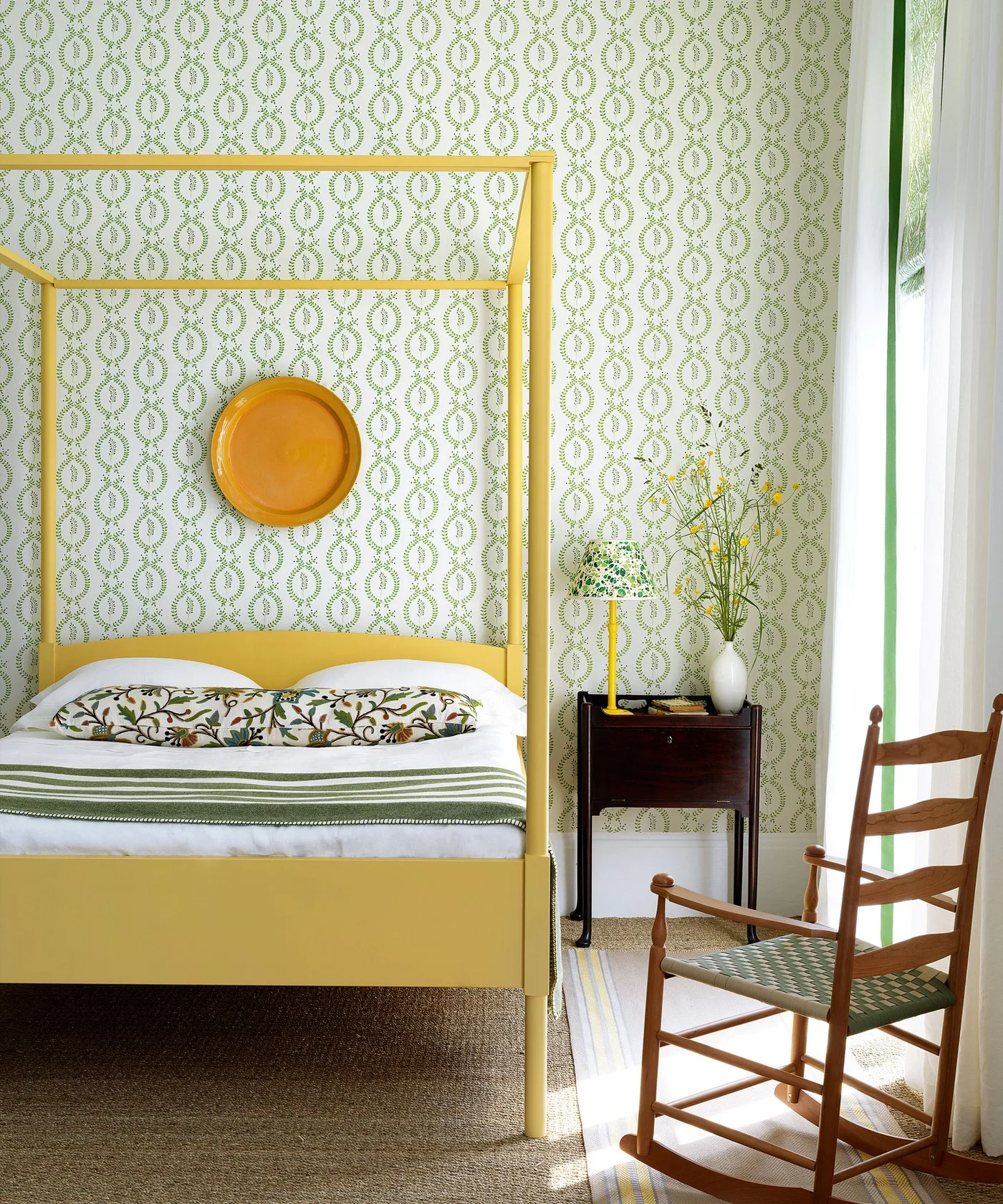
A repeating green leaf design forms orderly vertical shapes behind the yellow four-poster bed. White spaces within the paper keep the bright frame distinct, while green stripes on the bedding repeat the wall color lower down. A wooden chair introduces a quieter natural tone. The room combines bold furniture color with a pattern that remains regular and easy to follow.
Test the yellow paint or bed finish beside the actual wallpaper sample; some greens make yellow appear sharper than expected. Keep the repeat aligned through the most visible wall sections. A four-poster frame needs enough clearance around windows and walking routes. Use smaller plain accessories if the leaf repeat, striped bedding and bright frame already provide plenty of decoration.
IDEA 09 / 18
Give Blue Upholstery a Green Palm Backdrop
 SaveSupport Non AI Creator
Image credit: Future
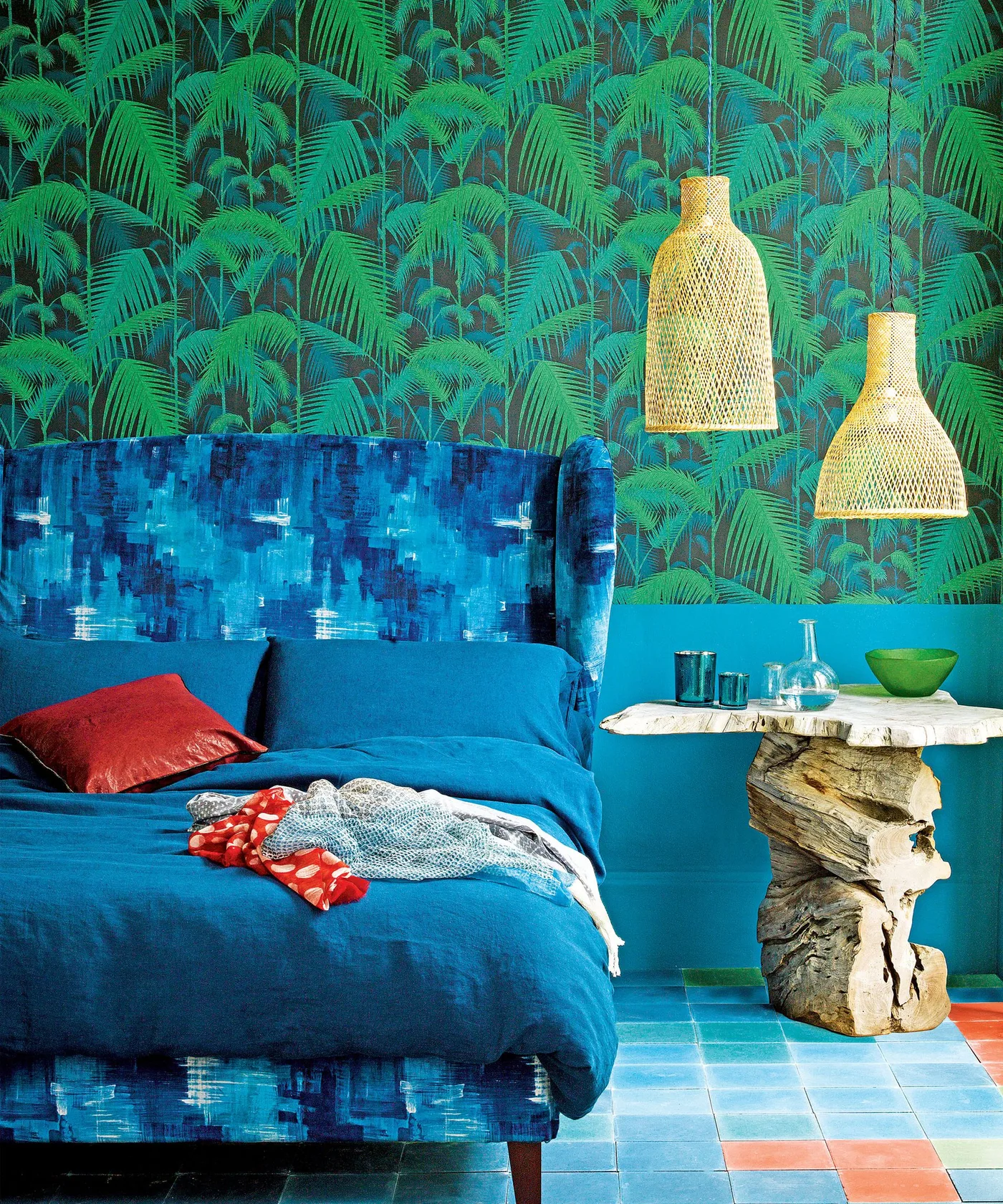
Bright green palms fill the wall behind the blue upholstered bed. The wallpaper’s layered leaves create depth, while woven pendant shades introduce a lighter warm texture beside the headboard. Blue surfaces below repeat the cooler part of the palette. The palm print gives the room a strong identity even without framed artwork placed over its larger leaf shapes.
Try the full-size paper sample behind the bed fabric rather than judging two separate swatches. A saturated palm design benefits from enough clear wall to show its fronds. Check hanging-light placement and access before installation, keeping fittings clear of bedding. Choose bedside surfaces that stay stable and useful, and avoid adding another large pattern immediately beside the tropical wall.
IDEA 10 / 18
Let Green Tree Branches Spread Behind White Bedding
 SaveSupport Non AI Creator
Image credit: Future/Michael Sinclair
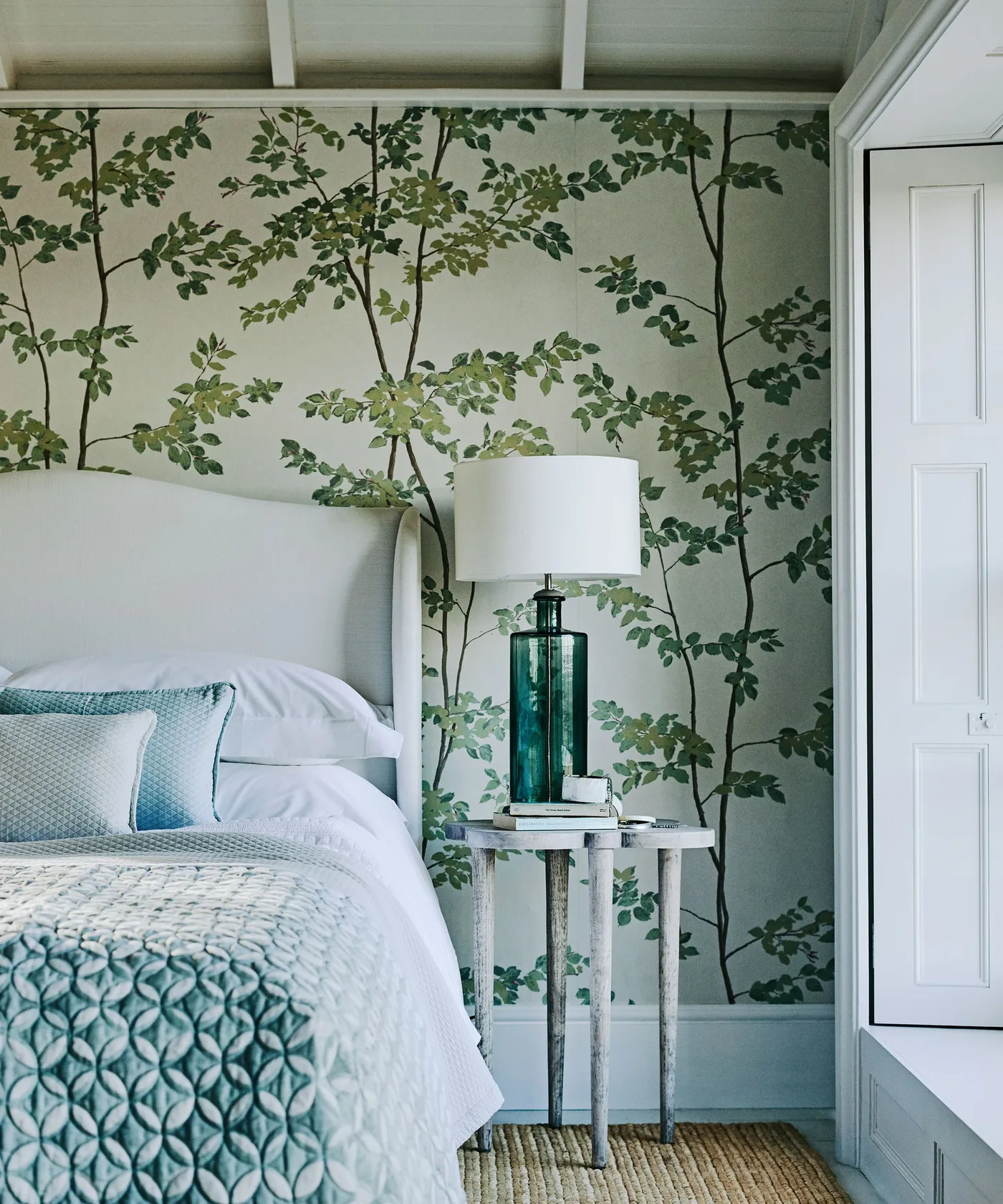
Green branches spread across the pale wallpaper behind this bed, forming a looser arrangement than a tightly repeated floral print. White bedding and a pale headboard keep the wall visible, while a tall green glass lamp repeats the foliage color. A narrow light-colored bedside table leaves more of the print exposed below. The branches give the corner a gently layered backdrop.
Plan the tree motif around the headboard and window so important branches are not hidden by furniture. Check whether the paper uses a regular repeat or a numbered mural layout before ordering. Keep large bedding pieces simple when the wall contains broad spreading forms. Test the bedside lamp’s height for reading as well as its relationship with the pattern behind it.
PART 03
Compare Layered Prints and Quieter Textures
IDEA 11 / 18
Choose a Smaller Green Tree Pattern for Layering
 SaveSupport Non AI Creator
Image credit: Mindthegap
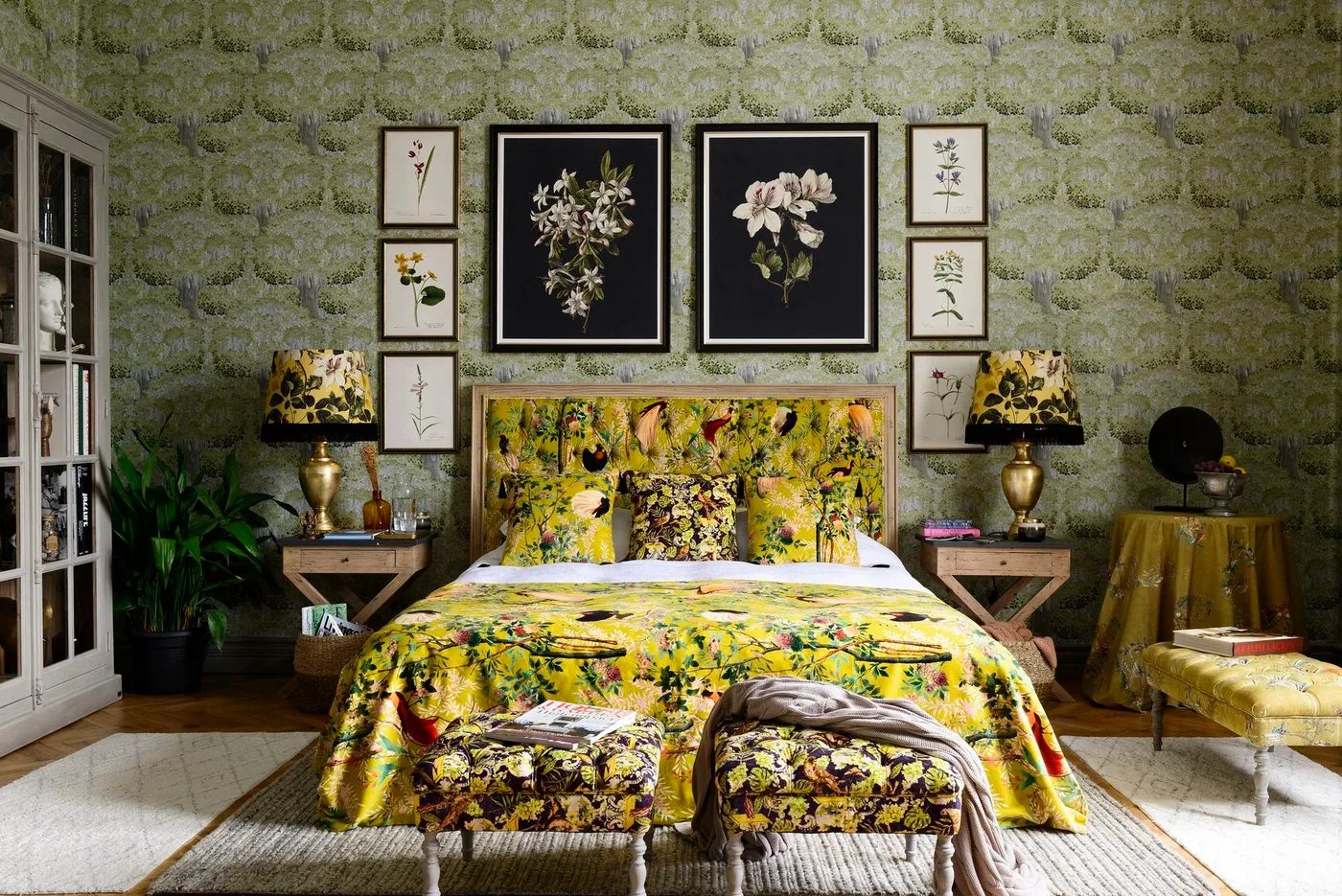
A smaller green tree pattern supplies the background for framed botanical pictures above this bed. Yellow patterned bedding and lamp shades introduce warmer decoration in front. The wallpaper’s repeated trees remain visible between the frames without becoming a single dominant mural. The room shows how a smaller green pattern can support a layered collection of pictures and textiles.
Compare pattern sizes before combining wallpaper with several fabrics. A smaller repeat can act as a background, but it should still be easy to distinguish from the bedding nearby. Lay out the pictures on the floor before making holes in the paper. Keep the frames secure and choose lamps that provide useful reading light beneath their decorative shades.
IDEA 12 / 18
Bring Olive Foliage Onto Walls and Ceiling
 SaveSupport Non AI Creator
Image credit: Archive by Sanderson Design
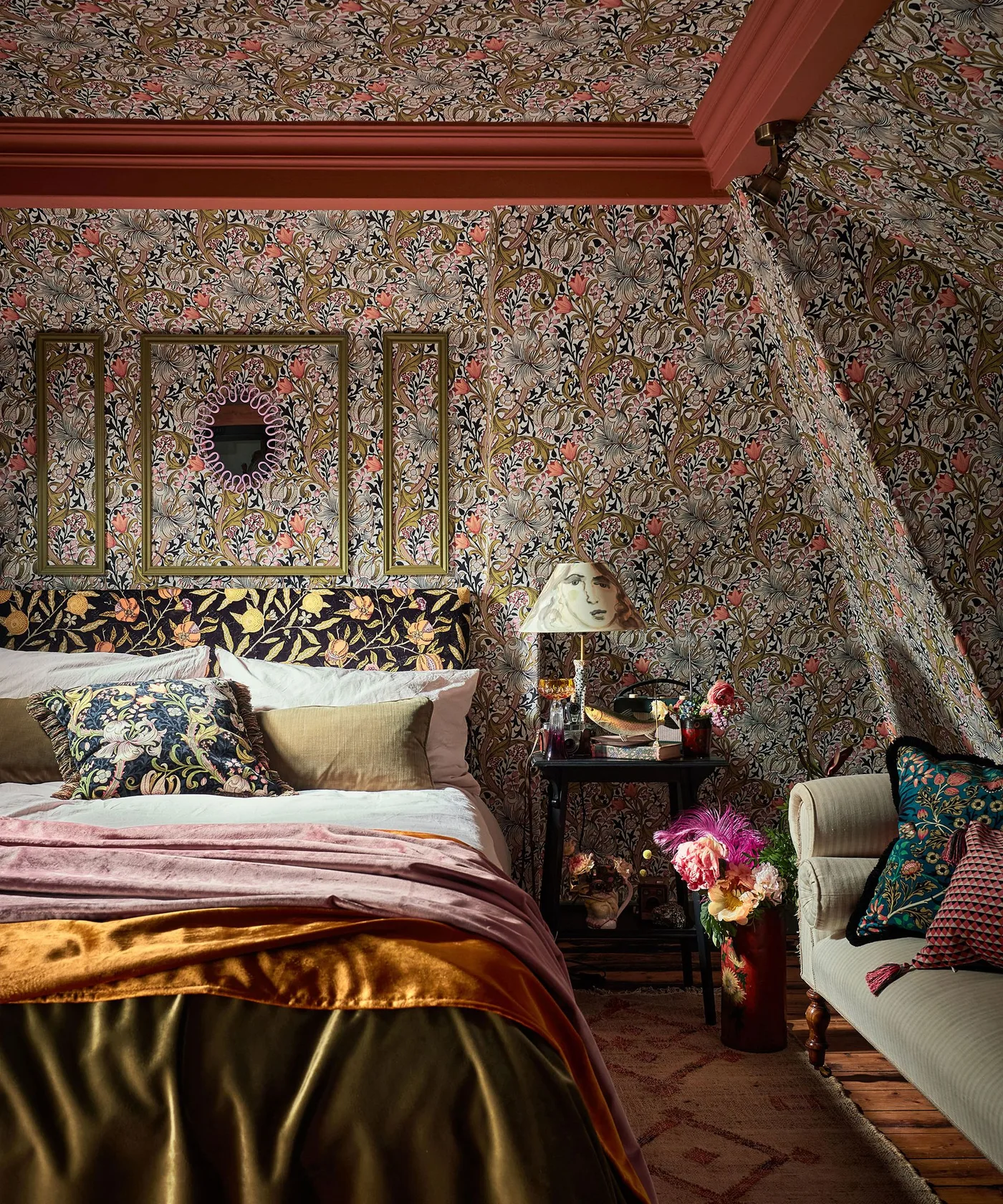
Olive-toned foliage sits within the densely patterned paper that continues over the walls and ceiling. Red trim outlines the edges, giving the wallpaper a clear architectural frame. Several textiles add more pattern around the bed and nearby chair. Green appears as one part of a richly mixed palette rather than as a plain uninterrupted wall color.
Look at a large sample overhead as well as at eye level before covering a ceiling. A dense print will be visible from the bed throughout the day, so make sure that level of detail suits you. Plan seams and trim carefully, and consider professional installation around awkward angles. If the room feels too busy, reduce patterned bedding before adding more decorative objects.
IDEA 13 / 18
Use a Green Textured Paper Without a Large Motif
 SaveSupport Non AI Creator
Image credit: Dustin Peck Photography Inc. Georgia Street Design
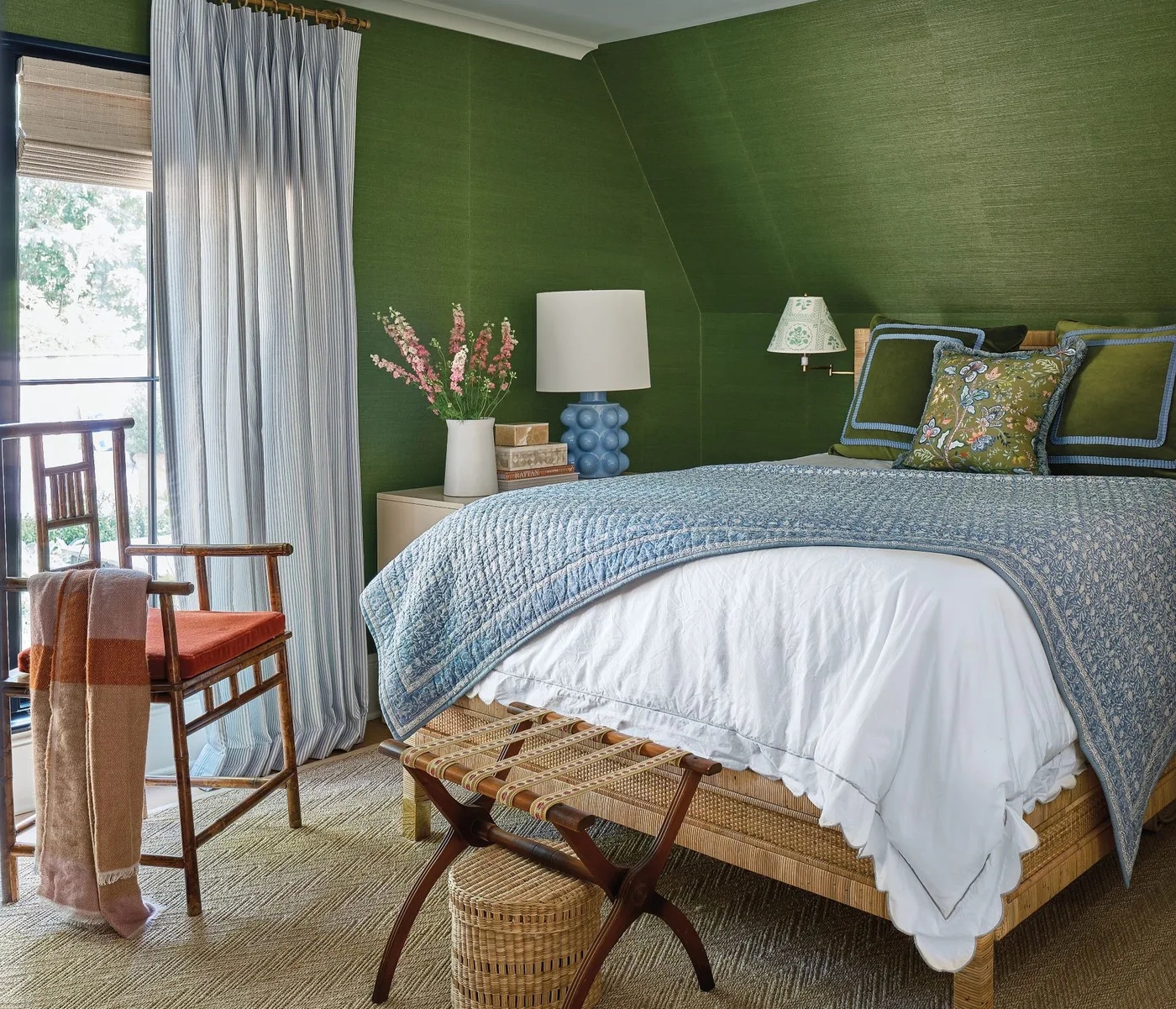
Green textured-looking wallpaper gives this bedroom an enveloping color without a large pictorial motif. A blue quilt and green-edged cushions continue the cool palette, while pale curtains brighten the window. Wooden seating and a small woven bench add different textures below. The quieter paper lets the furniture and textiles provide detail without competing with large printed leaves or flowers.
Inspect texture and seams on an actual sample rather than assuming the surface behaves like paint. Check cleaning guidance, especially if the covering is not washable. Use consistent lighting when comparing adjoining lengths, since textured papers can show differences at seams. Keep furniture slightly clear of the wall where movement might scuff it, and address dampness before installation.
IDEA 14 / 18
Pair a Blue-Green Texture With a Pink Bedside Table
 SaveSupport Non AI Creator
Image credit: Future
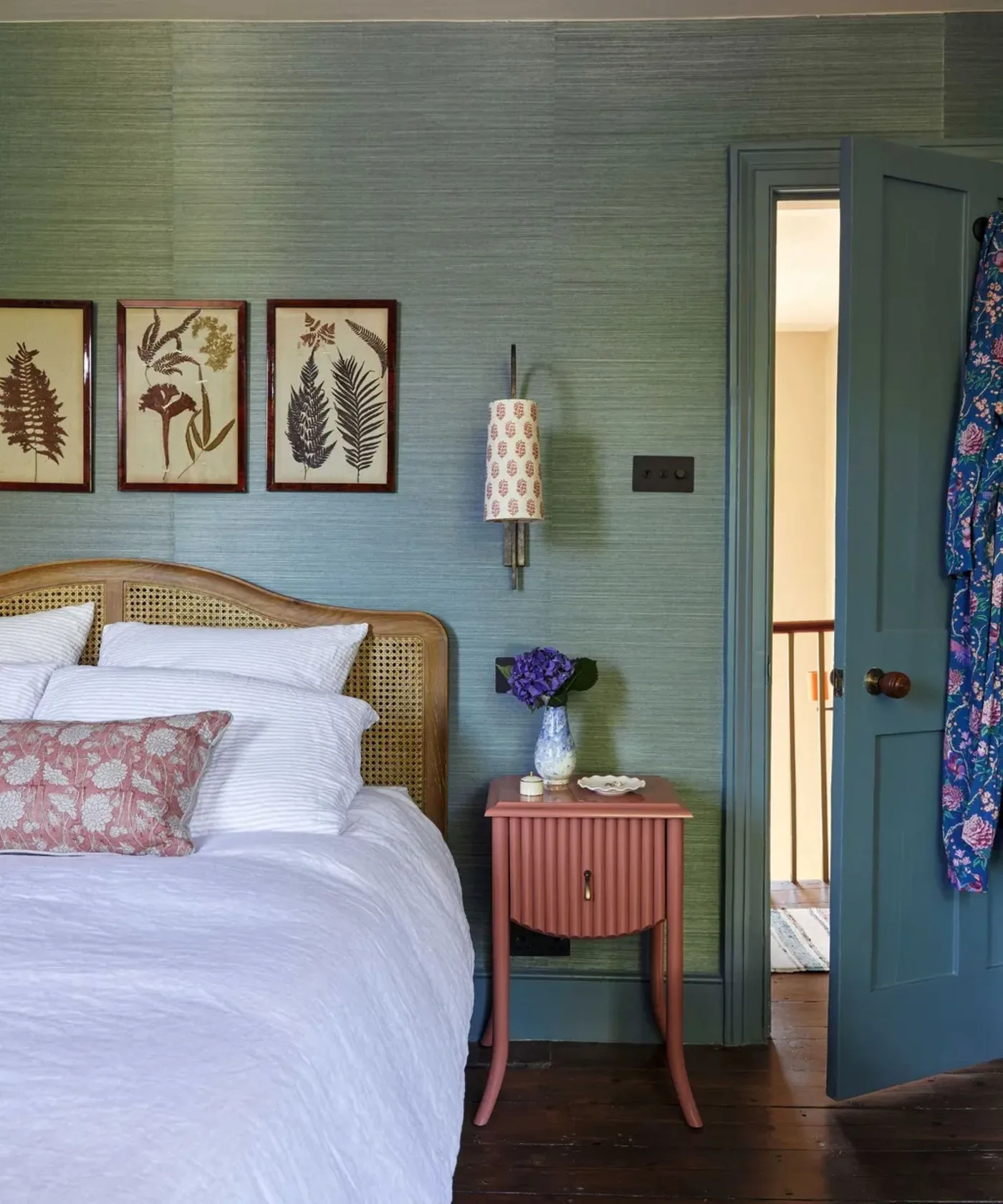
Blue-green textured wallpaper forms a quiet backdrop behind the woven headboard and three botanical prints. A pink bedside table adds a warmer accent, while the door repeats a deeper teal tone. White bedding leaves the smaller details clear. The wall covering supplies color and a fine linear texture without the room needing a large repeating print.
Compare blue-green samples beside the door paint in both daylight and evening light; neighboring colors can shift how each one reads. Check whether the paper has special hanging or cleaning requirements. Keep picture placement deliberate so the smaller frames do not scatter across the textured wall. Protect the area behind the bedside table from repeated contact when opening the cabinet or cleaning.
PART 04
Connect Wallpaper With Paint and Furniture
IDEA 15 / 18
Connect a Floral Bed Panel With Green Side Walls
 SaveSupport Non AI Creator
Image credit: Future PLC/ Tim Young
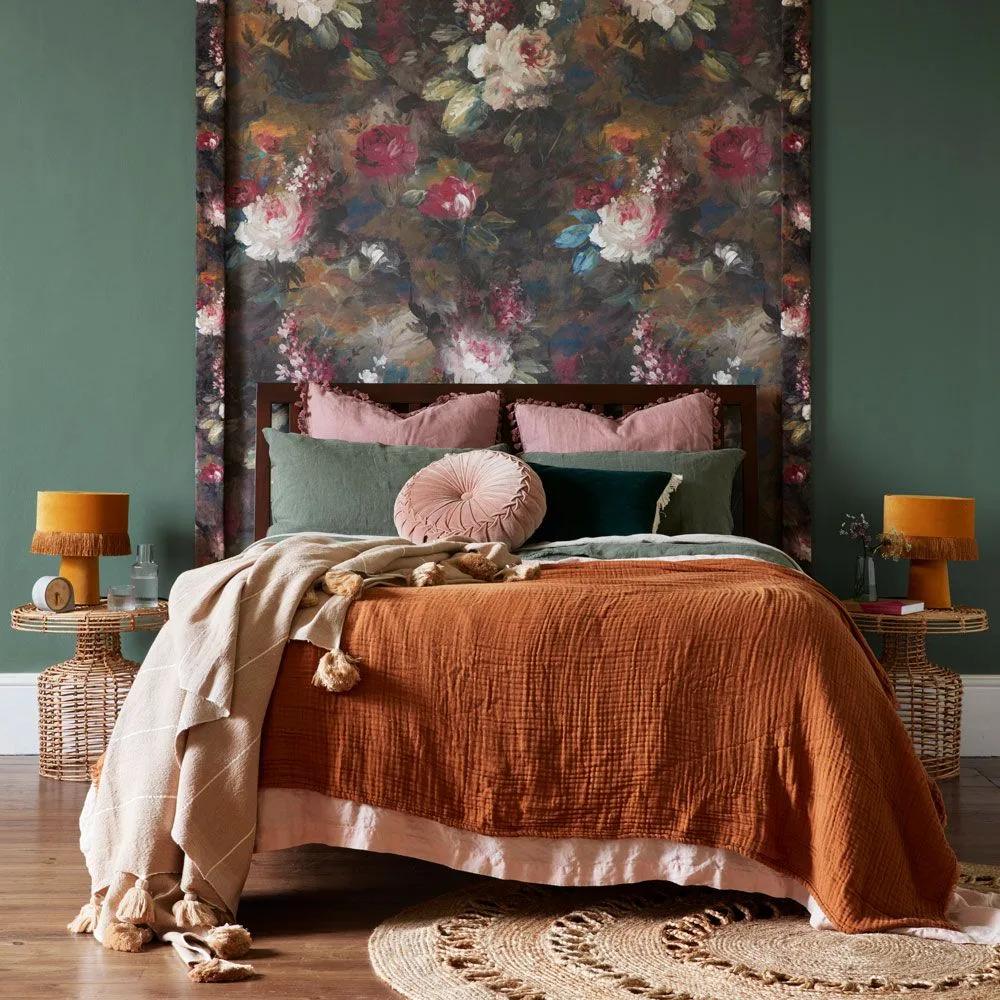
A large floral panel fills the wall behind the bed, with green foliage woven among pink, red and pale blooms. Solid green side walls extend one of the print’s quieter colors beyond the patterned section. Green cushions repeat it again at the bed. Ochre lamps and a warm cover add contrast while the tall floral arrangement remains the main backdrop.
Choose the adjacent paint from a wallpaper sample after viewing it at home. A floral panel can work as the room’s principal decoration, so keep other wall art limited. Check the panel width against the bed and bedside surfaces before installation. Leave enough useful space beside each lamp for everyday belongings, rather than copying every styled object in the photograph.
IDEA 16 / 18
Ground Green Floral Walls With a Wooden Ceiling
 SaveSupport Non AI Creator
Image credit: Nicole Fisher / Photography Kate S. Jordan
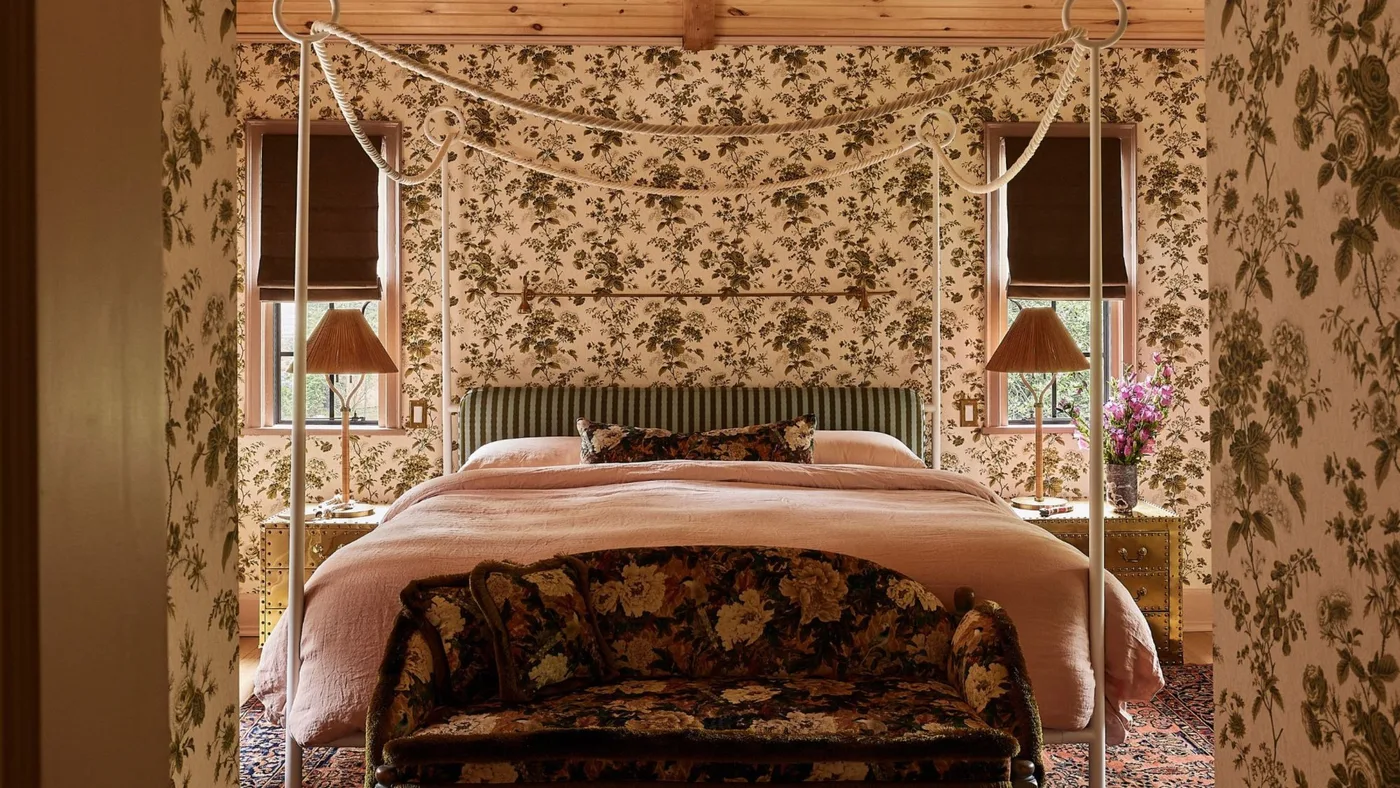
Green-and-brown floral wallpaper surrounds the pale canopy frame in this bedroom. The wooden ceiling supplies a broad warm surface above, while pink bedding and a dark floral seat introduce softer decoration below. The repeated foliage appears on several walls, connecting the space around the windows. A mostly plain bed cover gives the patterned surroundings a central area of rest.
Compare the wallpaper’s green with the wood’s tone before papering several walls. Keep the canopy frame and bedding simple enough to remain distinct against the print. Plan the repeat around windows, doorways and any built-in storage. Check that window coverings remain easy to operate behind furniture, and choose a paper whose care requirements suit the room’s daily use.
IDEA 17 / 18
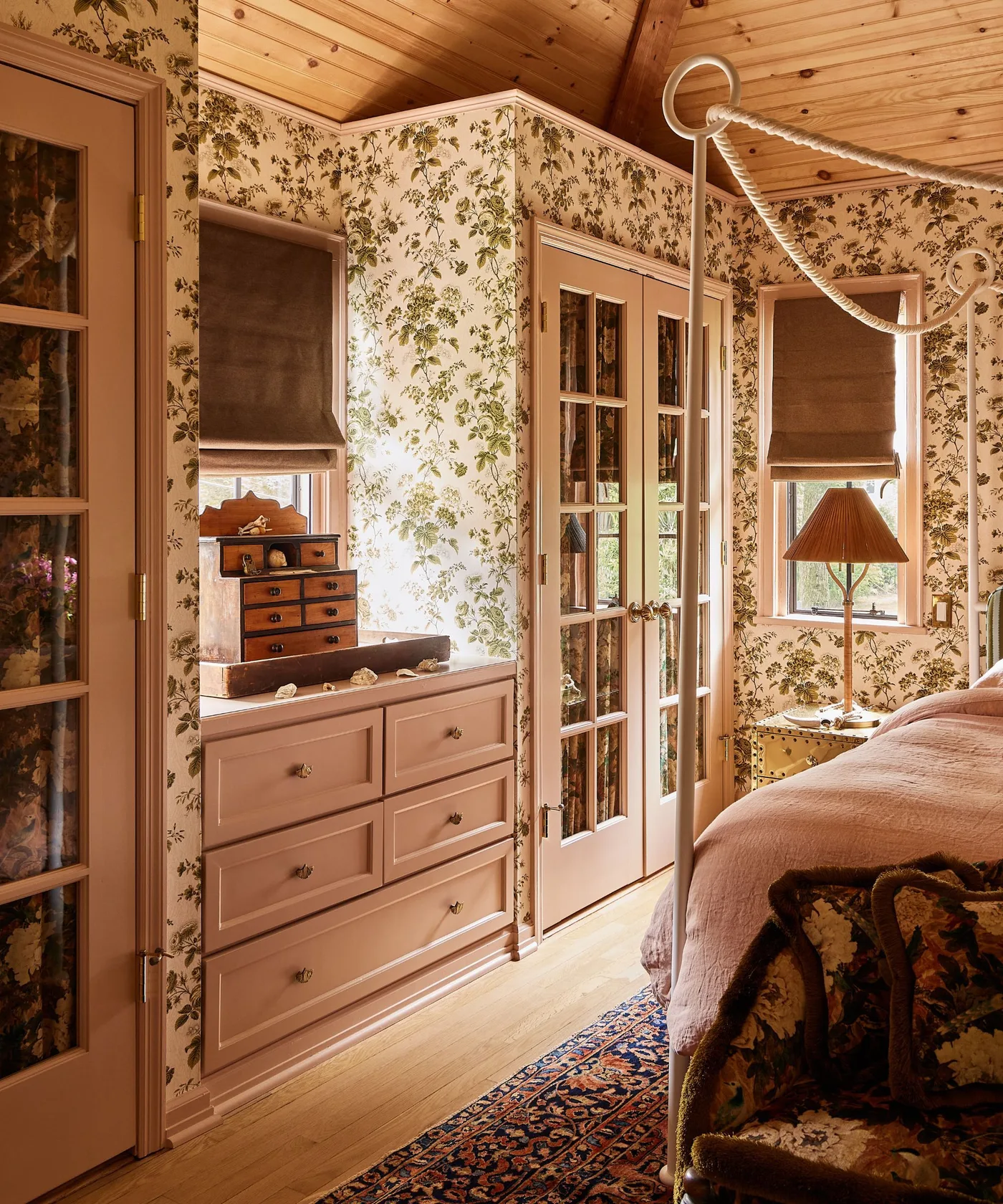
Let Pink Built-Ins Interrupt a Green Floral Repeat
 SaveSupport Non AI Creator
Image credit: Nicole Fisher / Photography Kate S. Jordan
Pink built-in drawers and glass-fronted cupboards interrupt the green floral wallpaper in a purposeful way. The paper wraps around the window and storage openings, while the canopy frame provides another pale outline nearby. The solid cabinetry prevents the repeated foliage from covering every surface. Its warmer color also connects with the bed cover visible at the edge of the photograph.
Complete measurements for cabinetry and trim before ordering wallpaper. Narrow strips around cupboard edges need planned pattern placement to avoid awkward fragments. Keep drawer and door movement clear of the papered surfaces. Choose hardware you can clean easily, and leave access to the window so a useful storage arrangement does not make ventilation or blind adjustment difficult.
IDEA 18 / 18
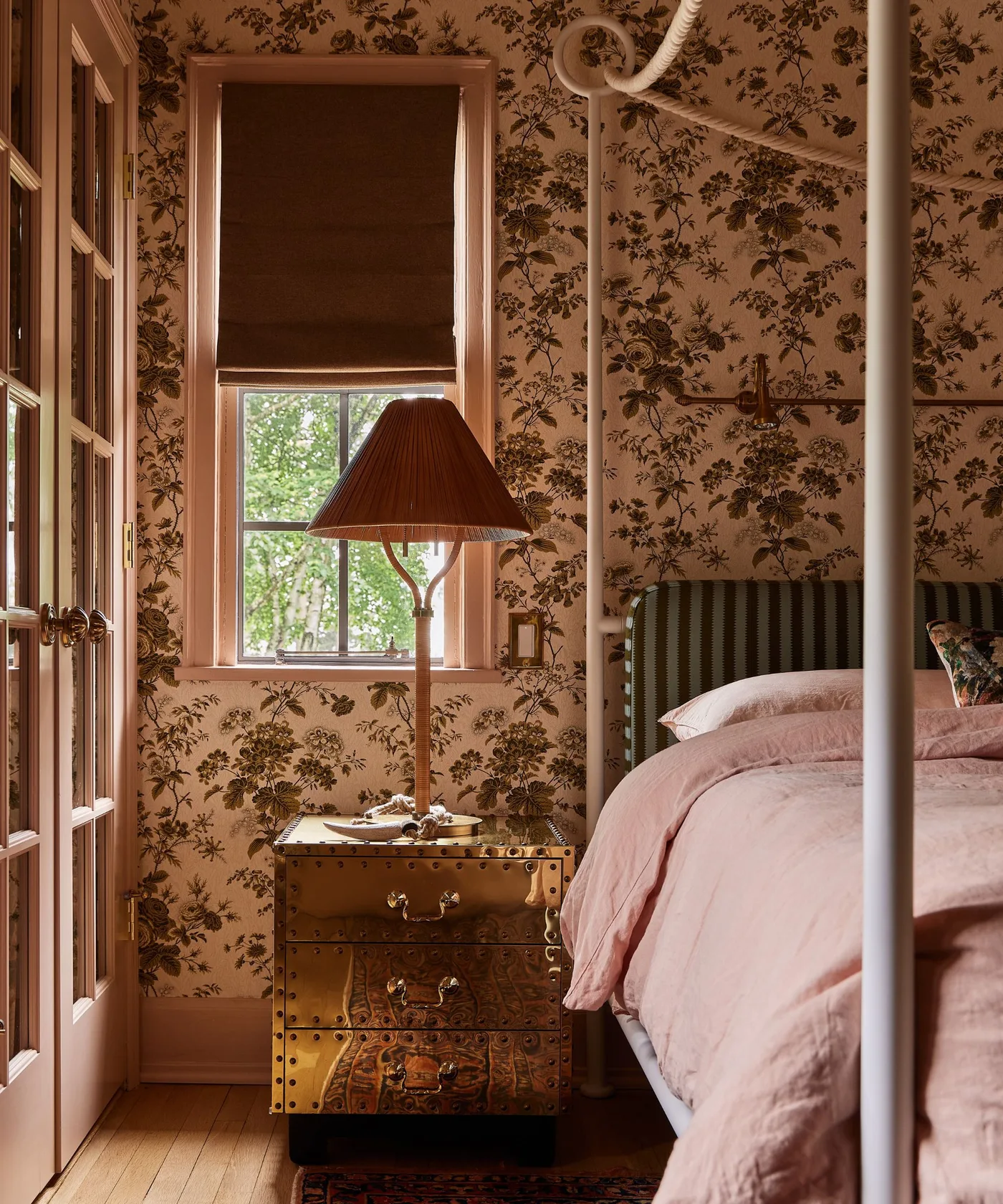
Add a Warm Metal Bedside Accent to Green Florals
 SaveSupport Non AI Creator
Image credit: Nicole Fisher / Photography Kate S. Jordan
A gold-toned bedside chest stands out against the green-and-brown floral wallpaper. A woven lamp adds a softer texture above, and the pale canopy post gives the corner a clear vertical line. Pink bedding provides another warm color beside the chest. This close view shows how a small reflective furniture piece can create contrast within a richly patterned bedroom.
Check the chest’s height against the mattress so the surface stays useful when sitting or lying in bed. Reflective finishes can show fingerprints, so follow their care guidance. Keep the lamp stable and reserve some surface for ordinary bedside items. Compare its shade with the wallpaper under evening light before deciding whether the patterned corner needs any additional decoration.
BRING IT ALL TOGETHER
Judge the Pattern at Room Scale
Put a large sample where the paper will hang, then check it from the doorway and bed in daylight and lamplight. Measure the visible wall after allowing for the headboard, wardrobes, windows and bedside lights. Ask about repeat size and any special installation requirements before ordering.
Select neighboring paint and fabrics from the sample rather than a screen image. Prepare the surface properly and follow the paper’s cleaning guidance. Keep spare material from the same batch for repairs, and leave enough plain space in bedding or furniture for the wallpaper to remain easy to appreciate.