A Japandi-inspired nursery starts with warm wood, simpler furniture outlines and a restrained palette. Choose the crib, useful storage and an adult seat around everyday care before adding decorative pieces. You can borrow these individual features from the photographs without reproducing every object in a styled room.
Some photographs include cushions, toys or loose bedding inside cribs. Remove these for infant sleep: use a firm, flat mattress and fitted sheet, following current American Academy of Pediatrics guidance. Keep cribs away from windows, cords and hanging decorations, anchor storage furniture, and check each product’s instructions as your child grows.
PART 01
Begin with useful wooden furniture
IDEA 01 / 19
Start with a Quiet Wooden Furniture Pair
 SaveSupport Non AI Creator
Source: www.petiteamelie.co.uk
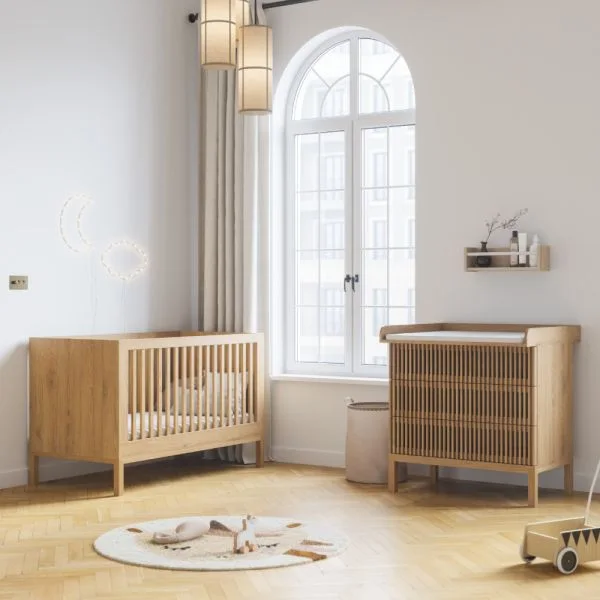
The wooden crib and changing chest repeat straight lines beside the tall arched window. Pale walls leave those warmer furniture surfaces easy to see. The small round rug introduces a softer shape without filling the floor, while the hanging lights add a separate vertical detail above.
Choose the crib and changing furniture around access, storage and manufacturer instructions before considering a matching finish. Place the crib away from windows, curtains and cords. The bedding and objects shown inside this styled crib should be removed for infant sleep, leaving a firm, flat mattress and fitted sheet.
IDEA 02 / 19
Combine a Simple Crib with Closed Drawers
 SaveSupport Non AI Creator
Source: www.petiteamelie.co.uk
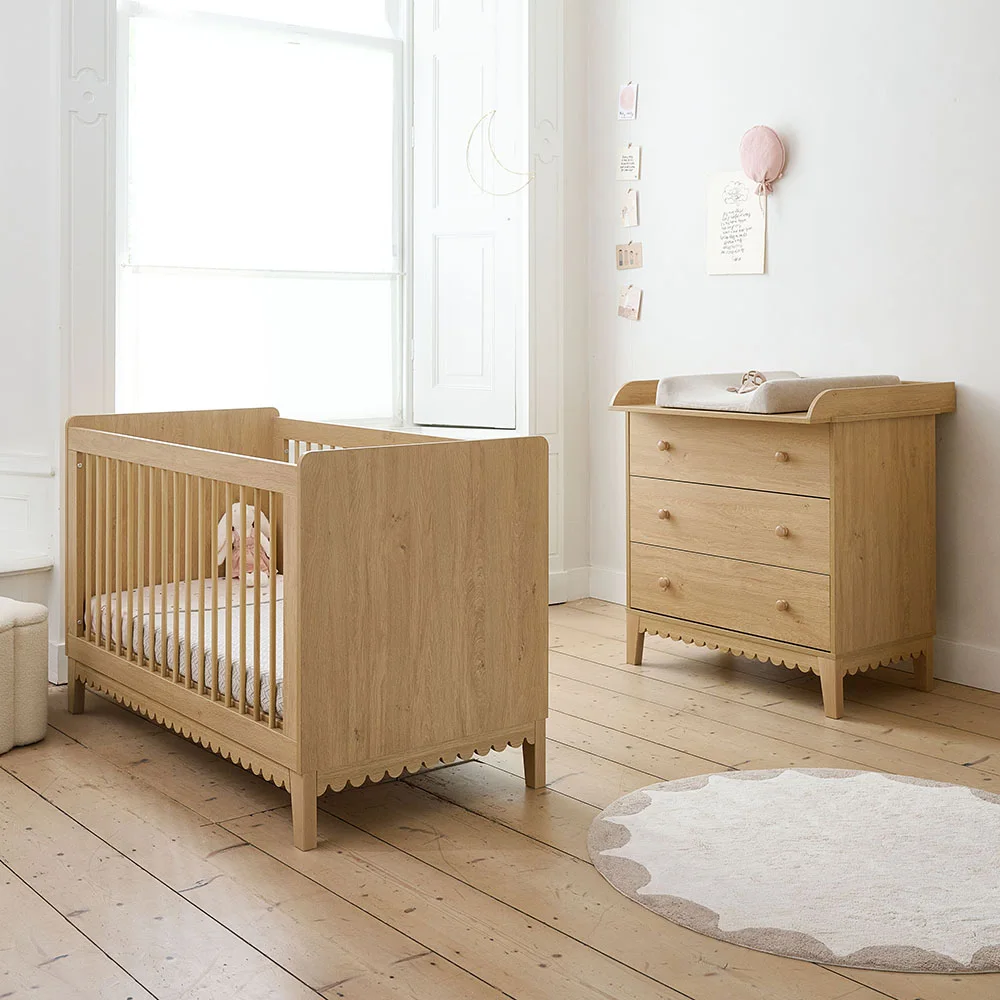
The pale crib and matching drawer chest give this room a compact, coordinated furniture group. Small rounded drawer pulls soften the straight cabinet fronts. White walls and the warm floor keep the furniture outlines readable, with most supplies concealed instead of displayed across open shelves.
Arrange daily clothing and changing supplies in the drawers you can reach comfortably, keeping heavy items lower down. Follow anchoring instructions for the chest and keep the crib clear of window coverings. For a warmer, less restrained variation, Country nursery ideas explore more rustic furniture and softer patterned details.
IDEA 03 / 19
Repeat Wood Across Everyday Storage
 SaveSupport Non AI Creator
Source: www.petiteamelie.co.uk
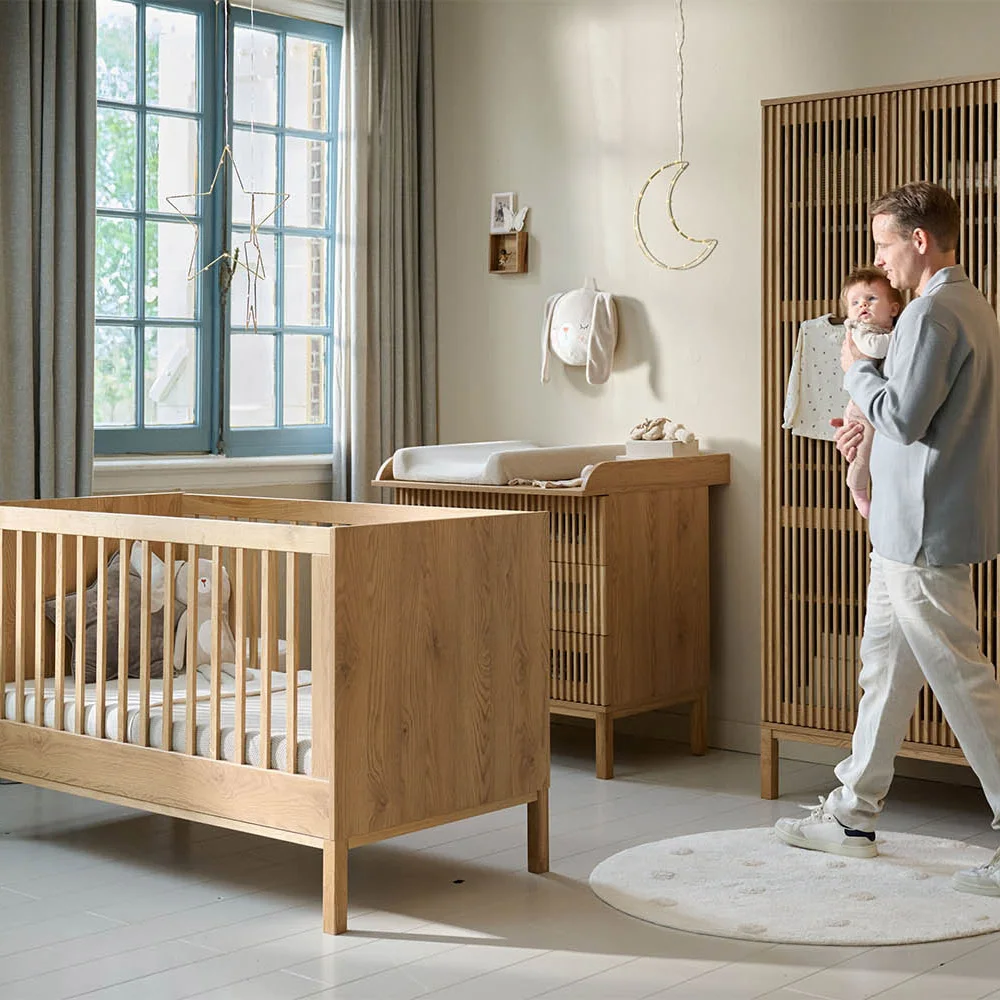
The crib, wardrobe and changing cabinet repeat warm wood across the nursery’s main furniture. Their upright lines give the room a consistent rhythm without several competing patterns. Pale walls and flooring provide a quieter background, with the storage doing much of the work of furnishing the room.
Check the wardrobe doors and drawer movement with the crib in its proposed position before ordering a complete set. Keep a clear route for carrying a baby and anchor storage furniture as instructed. Coordinate finishes if you enjoy the look, but prioritize safe placement and useful compartments over buying every matching piece.
IDEA 04 / 19
Use Pale Furniture with Small Wooden Details
 SaveSupport Non AI Creator
Source: www.petiteamelie.co.uk
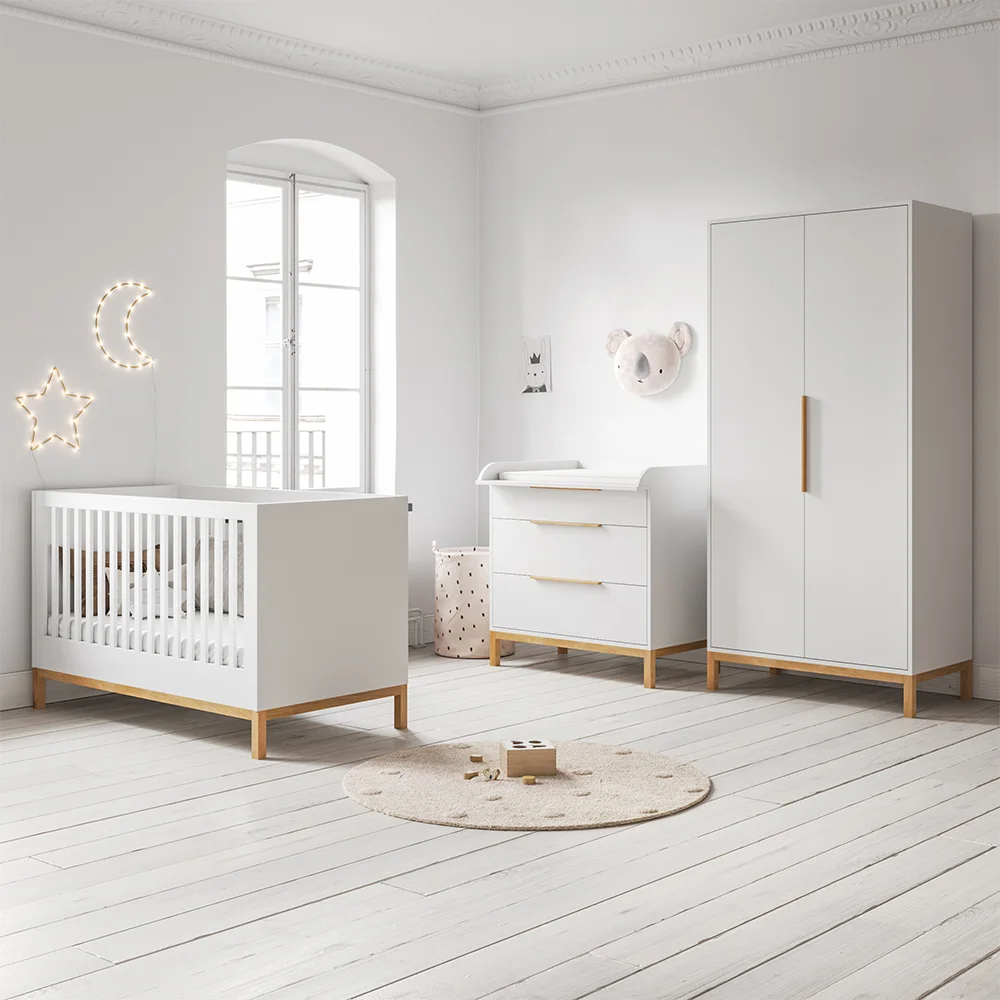
White furniture lightens this nursery against its gray walls. Wooden legs and smaller details bring warmth into the lower part of the room without requiring a large wooden cabinet front. The crib, chest and wardrobe share a simple outline that makes their different uses feel connected.
Choose a wardrobe interior around folded clothes, hanging garments and supplies rather than its exterior alone. Allow room to open every door without moving the crib. Keep window coverings and decorative light cords outside a child’s reach, and remove cushions and loose objects from the crib before infant sleep.
IDEA 05 / 19
Give Small Clothes a Defined Storage Area
 SaveSupport Non AI Creator
Source: www.petiteamelie.co.uk
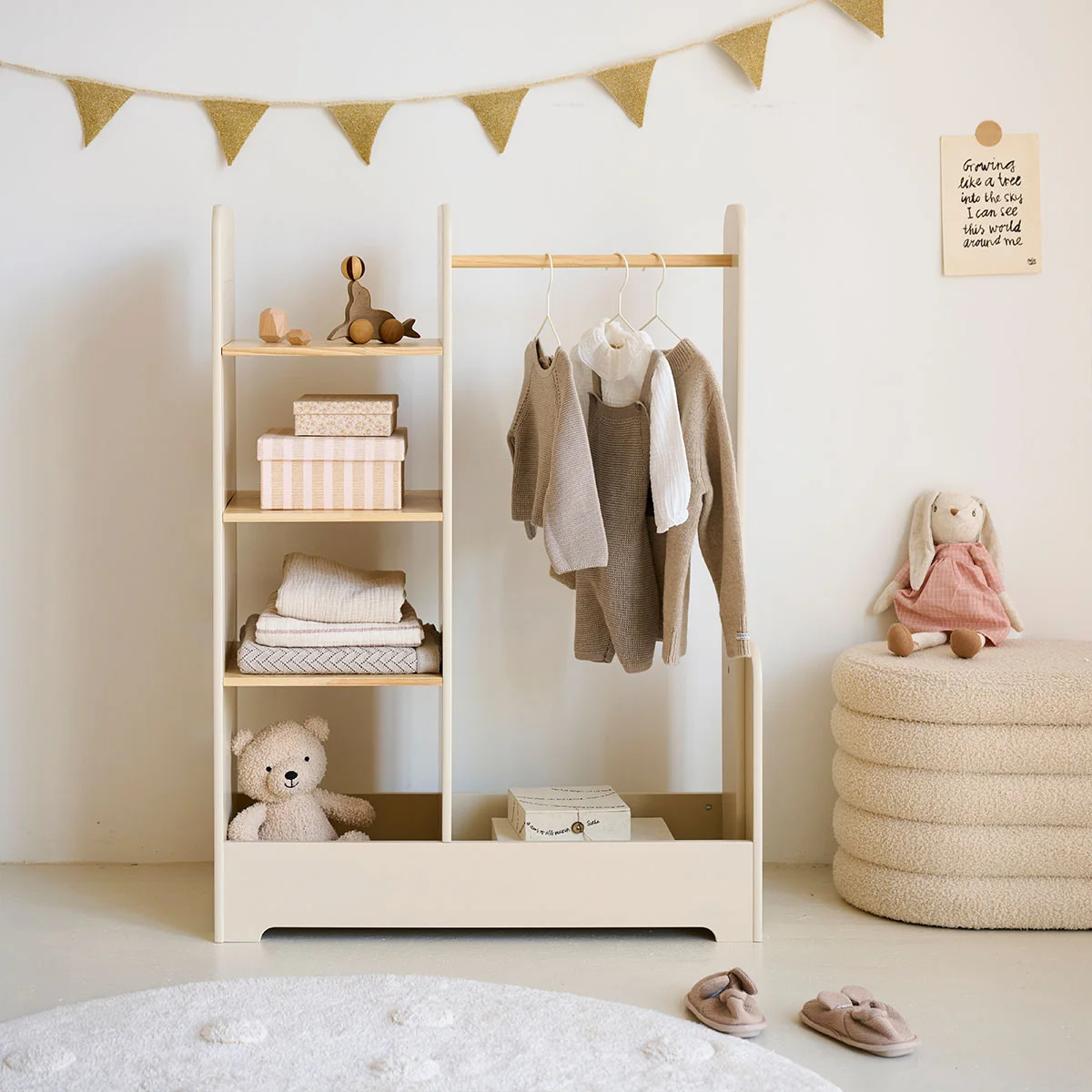
The open clothes rail makes a small group of garments visible above a closed lower drawer. White framing and wooden supports keep the arrangement relatively light against the pale wall. Nearby shelving separates smaller items from hanging clothes, rather than asking one large cupboard to hold everything.
Use an open rail for a manageable selection and put bulkier extras in closed storage to reduce dusting. Secure the furniture according to its instructions and keep loose hanging decorations out of reach. Choose garments for practical access rather than leaving more clothes on display than you can comfortably maintain.
PART 02
Connect storage and comfortable seating
IDEA 06 / 19
Leave the Dresser Top Easy to Use
 SaveSupport Non AI Creator
Source: www.petiteamelie.co.uk
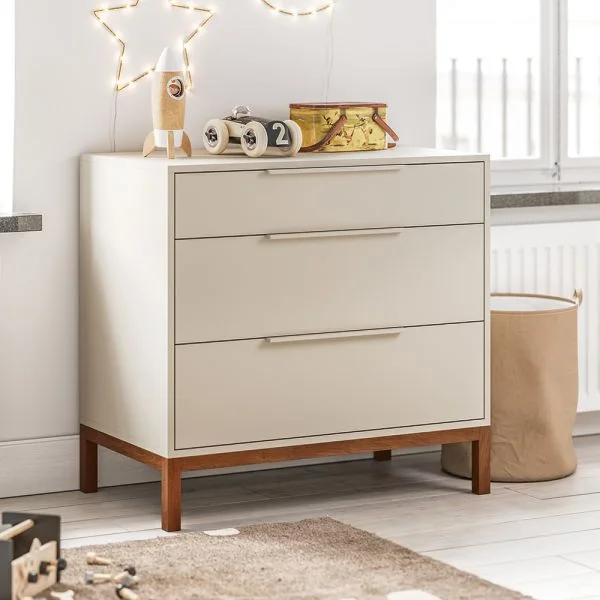
The pale chest has three broad drawers and a plain top, giving the corner a useful amount of concealed storage. Wooden legs add warmth without a large color change. The basket beside it provides a separate place for lighter items, leaving the cabinet’s clean outline mostly visible.
Decide what belongs on the top before adding ornaments, reserving space for the task you need it to perform. A dresser is not automatically a changing station; use only a suitable, manufacturer-approved arrangement. Keep decorative cords inaccessible and position anchored furniture so window controls remain convenient to reach.
IDEA 07 / 19
Choose an Adult Chair with a Warm Frame
 SaveSupport Non AI Creator
Image credit: Future PLC
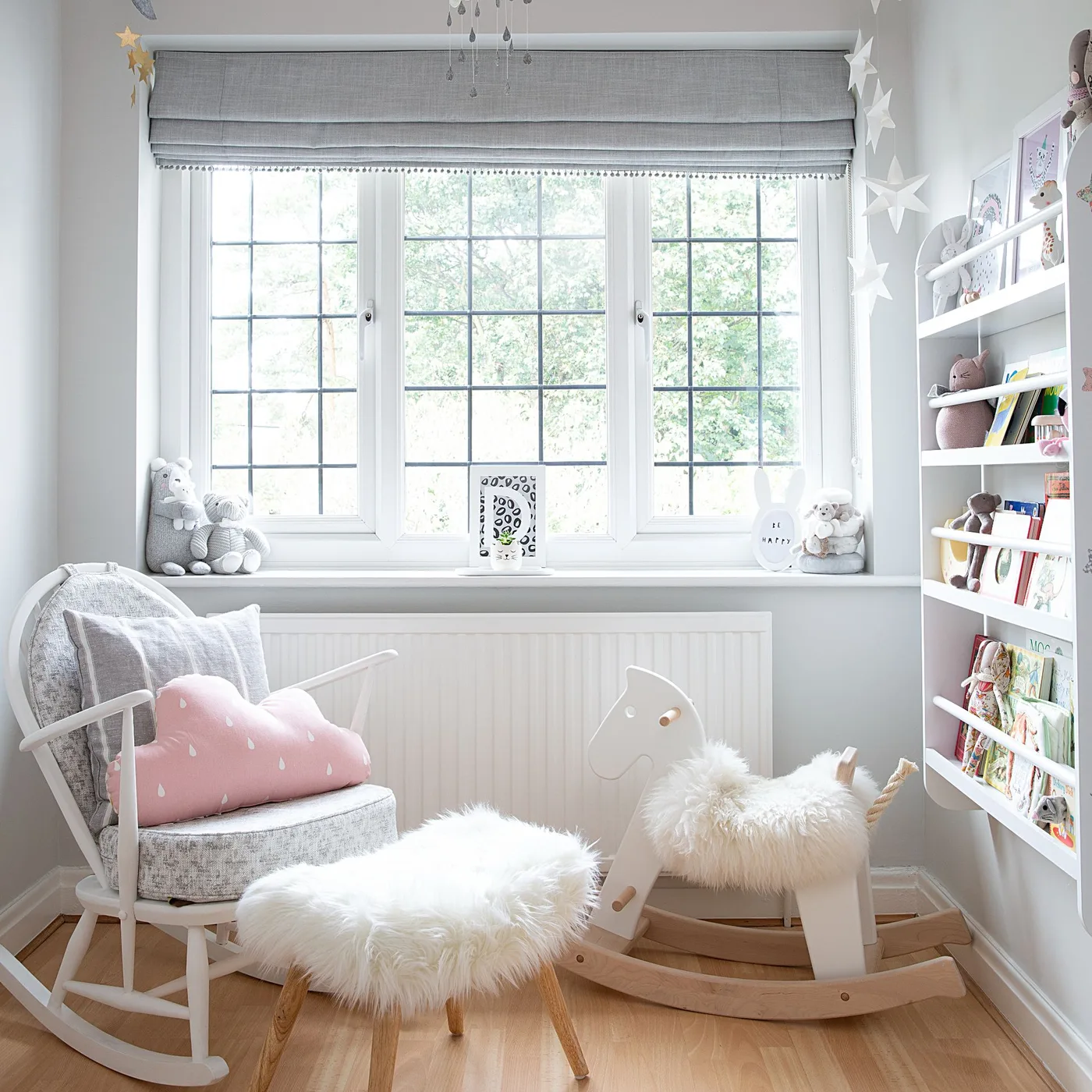
The rocking chair combines a warm wooden frame with quiet gray upholstery. Its curved runners soften the straighter nearby shelving. A small stool and book display make this corner feel separate from the crib area, while the pale surfaces keep the seating arrangement from becoming visually heavy.
Test the chair while seated, checking arm support, the rocking movement and the space needed behind it. Choose upholstery care that suits frequent use and keep the window covering’s controls inaccessible to children. This is seating for an awake caregiver; move a sleeping infant to an appropriate separate sleep surface.
IDEA 08 / 19
Put Texture on Practical Storage
 SaveSupport Non AI Creator
Image credit: Future PLC
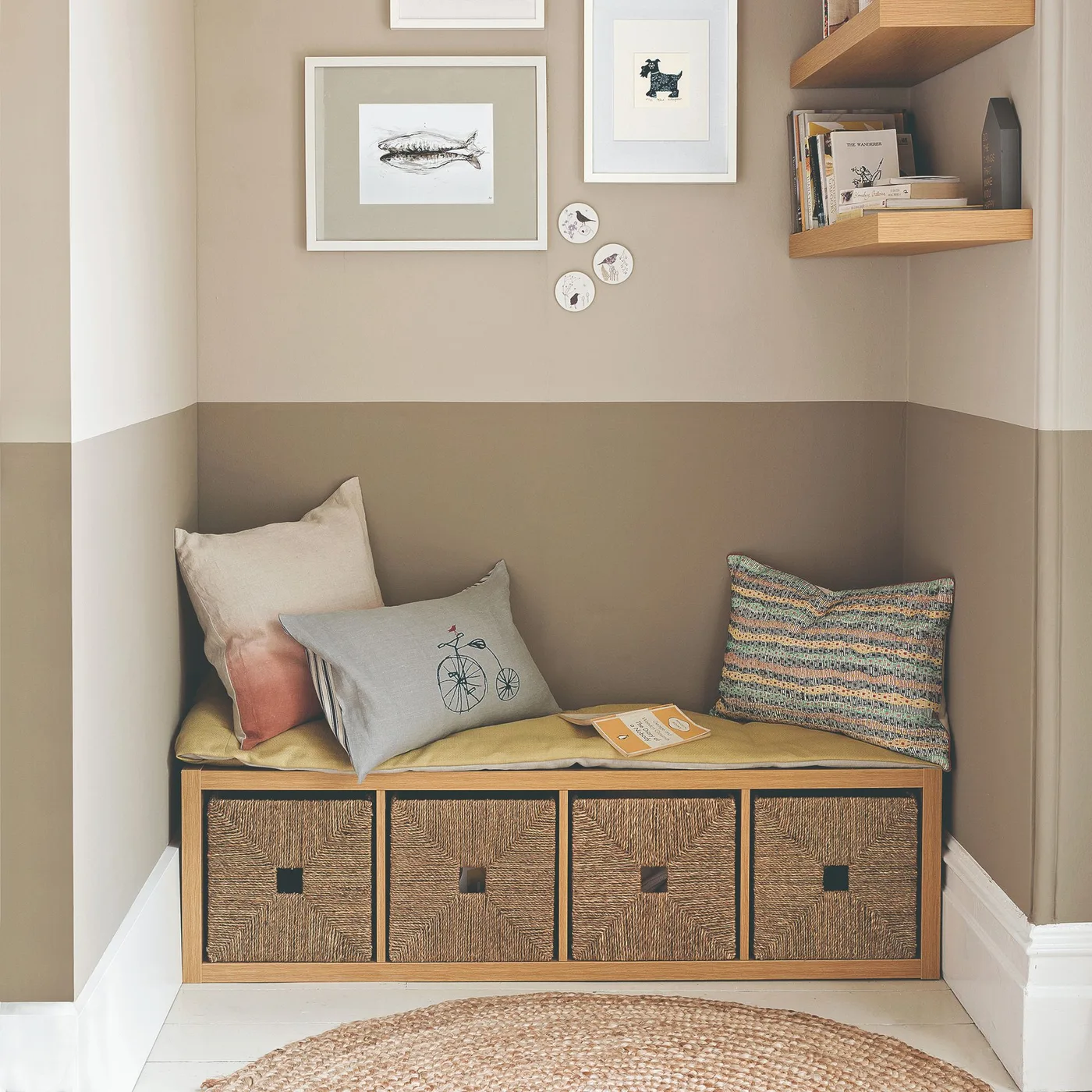
Woven drawer fronts add texture to this storage corner without covering the entire wall in pattern. The taupe paint separates the lower wall from the lighter upper area. Small book shelves and restrained animal pictures give the corner a nursery connection while leaving space around the furniture.
Check drawer movement and cleanability before choosing textured fronts that may collect dust in their gaps. Anchor the unit and keep heavier objects low. Boho nursery ideas offer more woven accents if you want a softer variation, but limit the number you add so everyday storage stays easy to use.
IDEA 09 / 19
Keep the Caregiver Corner Light
 SaveSupport Non AI Creator
Image credit: Photo: Erik Voake; Getty Images. From: Christina On The Coast and Out with an Original Bathroom
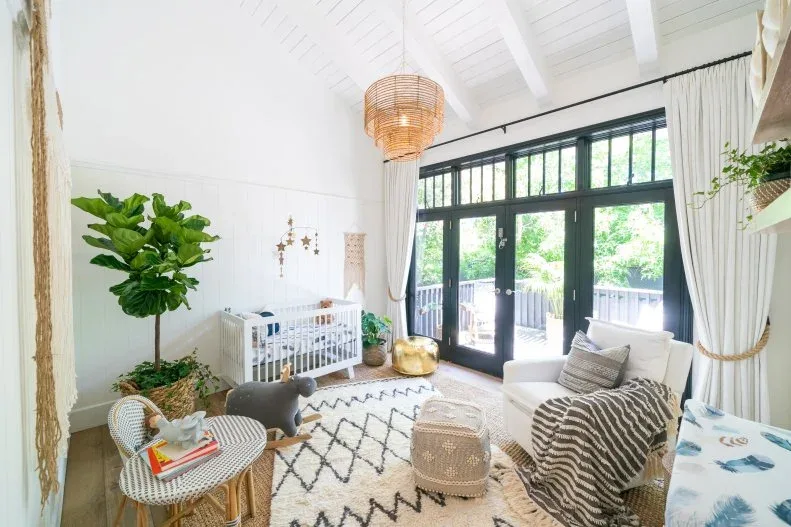
The pale armchair and white crib keep the larger furniture relatively quiet beneath the high ceiling. Smaller woven chairs introduce warmer texture at floor level. The dark door frames define the edge of the room, with the soft rug connecting the furniture without a strong change of color.
Place the adult chair where you can sit and stand comfortably without crossing the crib’s access route. Keep small chairs and decorative pieces away from doors that need to open fully. Check glazing, curtains and nearby plants against your child’s reach as mobility changes, rather than treating the original furniture arrangement as permanent.
IDEA 10 / 19
Warm a Muted Green Room with Wood
 SaveSupport Non AI Creator
Image credit: Photo: Jenna Kutcher. From: Little Crown Interiors
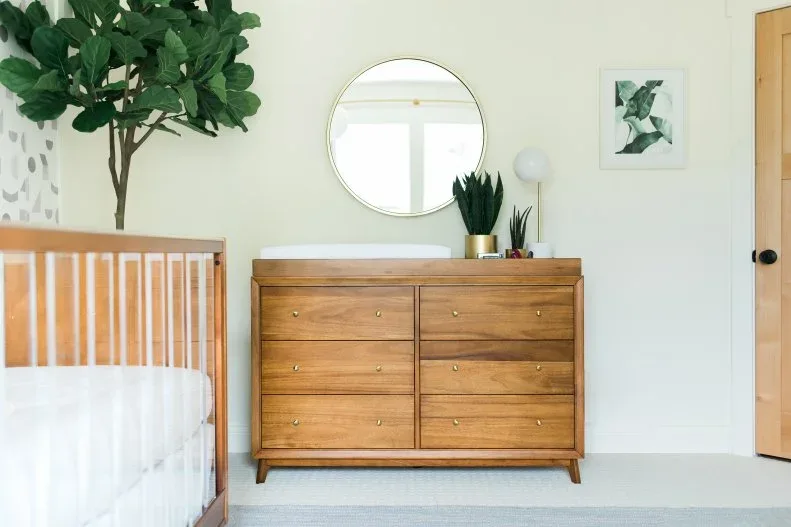
Pale green walls soften the warmer crib and dresser in this nursery. The round mirror gives the straight furniture a contrasting outline. A large leafy plant adds another softer shape beside the storage, while the relatively simple wall treatment lets the wooden surfaces remain easy to see.
Try the green paint beside a furniture sample in daytime and evening light before committing to the whole room. Keep plants, soil and containers outside a child’s reach and secure the mirror appropriately. Cottage nursery ideas offer more gentle color combinations if you want to compare this quiet green with warmer alternatives.
PART 03
Add quieter color and manageable texture
IDEA 11 / 19
Pair Closed Storage with a Comfortable Seat
 SaveSupport Non AI Creator
Image credit: Photo: Wake and Loom. From: WAKE + LOOM
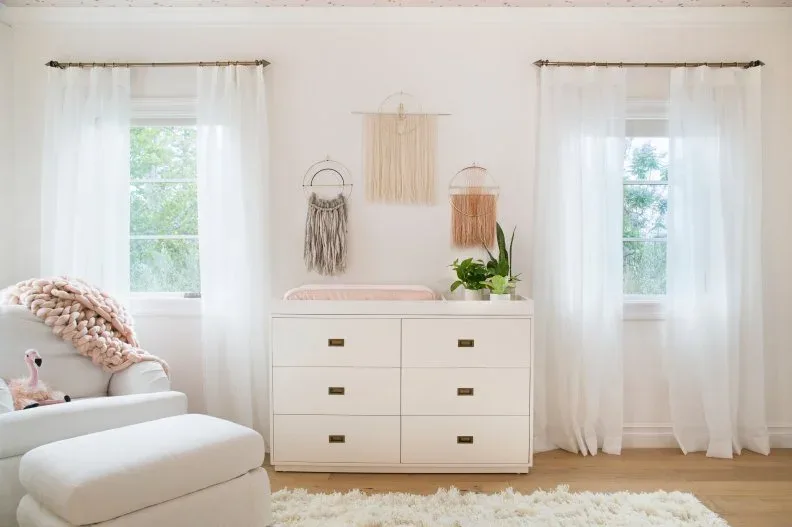
The white dresser holds the strongest horizontal line in this corner, with the gray chair and pouf creating a softer seating group beside it. Muted wall hangings add texture without a bold color change. Pale curtains and the lighter rug keep the storage and seating visually connected.
Choose an ottoman or pouf from seated comfort and the available walking space, testing whether it helps you stand as well as rest your feet. Follow furniture anchoring guidance and keep curtain cords inaccessible. Closed drawers are useful here because the seating corner does not need to share its surfaces with every spare supply.
IDEA 12 / 19
Balance Straight Furniture with Softer Shapes
 SaveSupport Non AI Creator
Image credit: Photo: Tessa Neudstadt
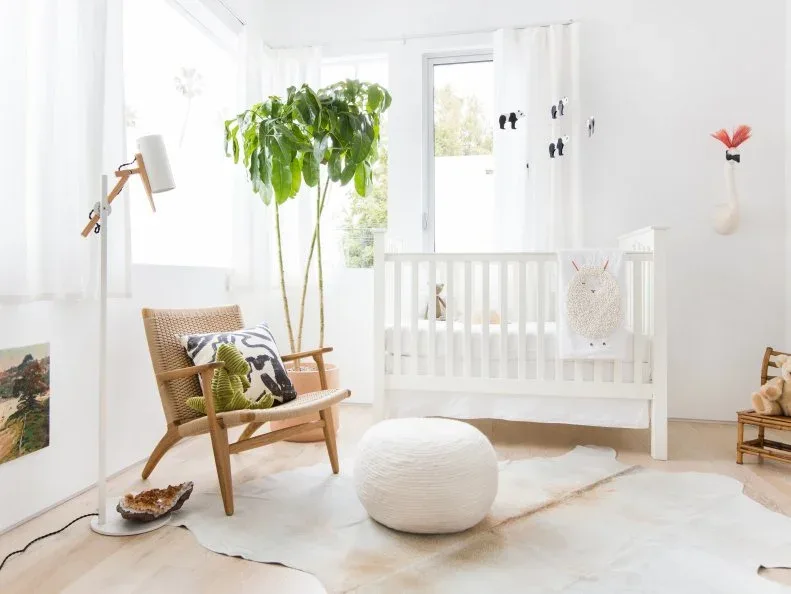
The white crib keeps its outline simple beside the warmer woven chair. A round pouf and pale floor covering soften the lower part of the room. The lamp introduces a taller line, while the plant adds an irregular shape that contrasts with the repeated crib rails.
Check the chair’s actual comfort and care requirements rather than choosing it only for its woven appearance. Keep the floor lamp stable and its cord inaccessible, and move plants out of reach. Leave enough space to approach the crib freely without shifting the pouf whenever you carry or settle a baby.
IDEA 13 / 19
Let Quiet Geometry Connect the Seating Area
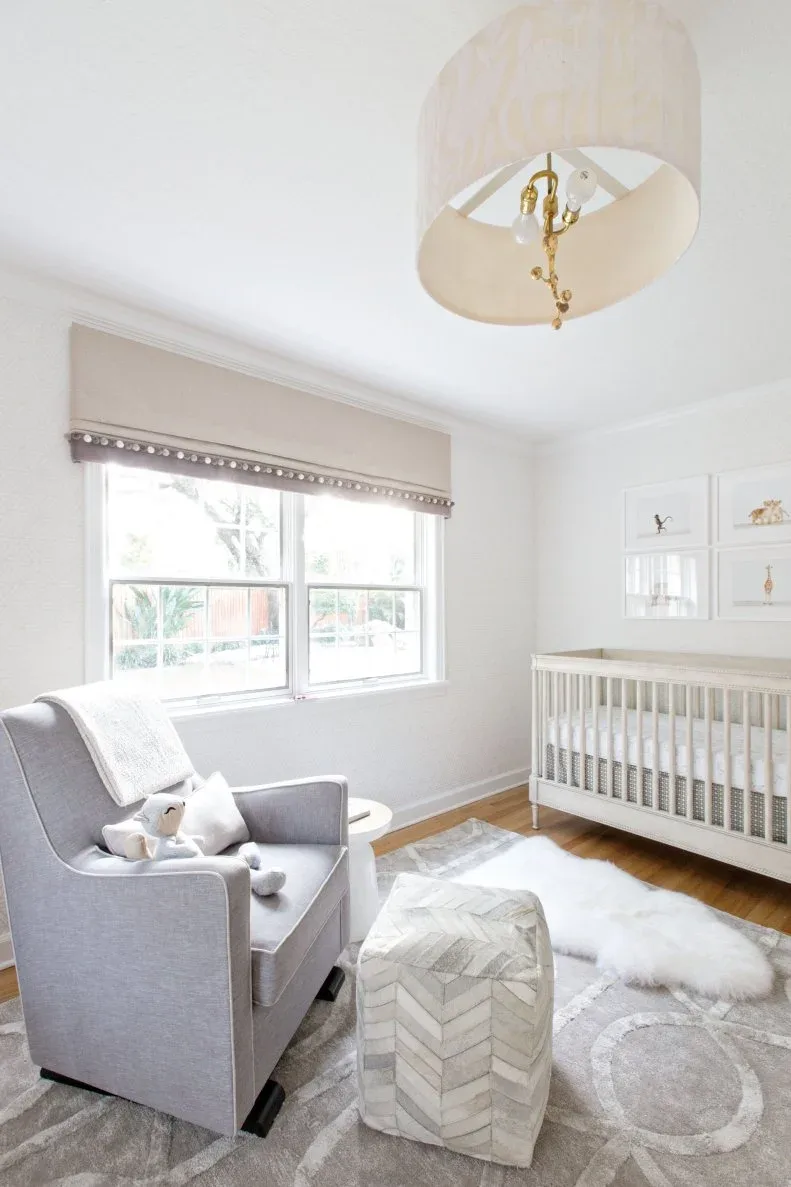 SaveSupport Non AI Creator
Image credit: Photo: Shannon Lazic Photography. From: Steele Street Studio
The gray chair and patterned pouf give this seating area a small amount of contrast against the pale crib. Their colors remain close to the surrounding wall, so the patterns do not take over the room. The window makes the different fabric and furniture outlines easier to distinguish.
Compare fabric samples together before buying the chair and pouf separately, especially when several grays have different undertones. Keep the chair clear of window cords and test how easily you can stand from it. Use washable covers where suitable, following the actual care label instead of assuming pale upholstery will tolerate every cleaning method.
IDEA 14 / 19
Arrange a Small Shelf Around Useful Objects
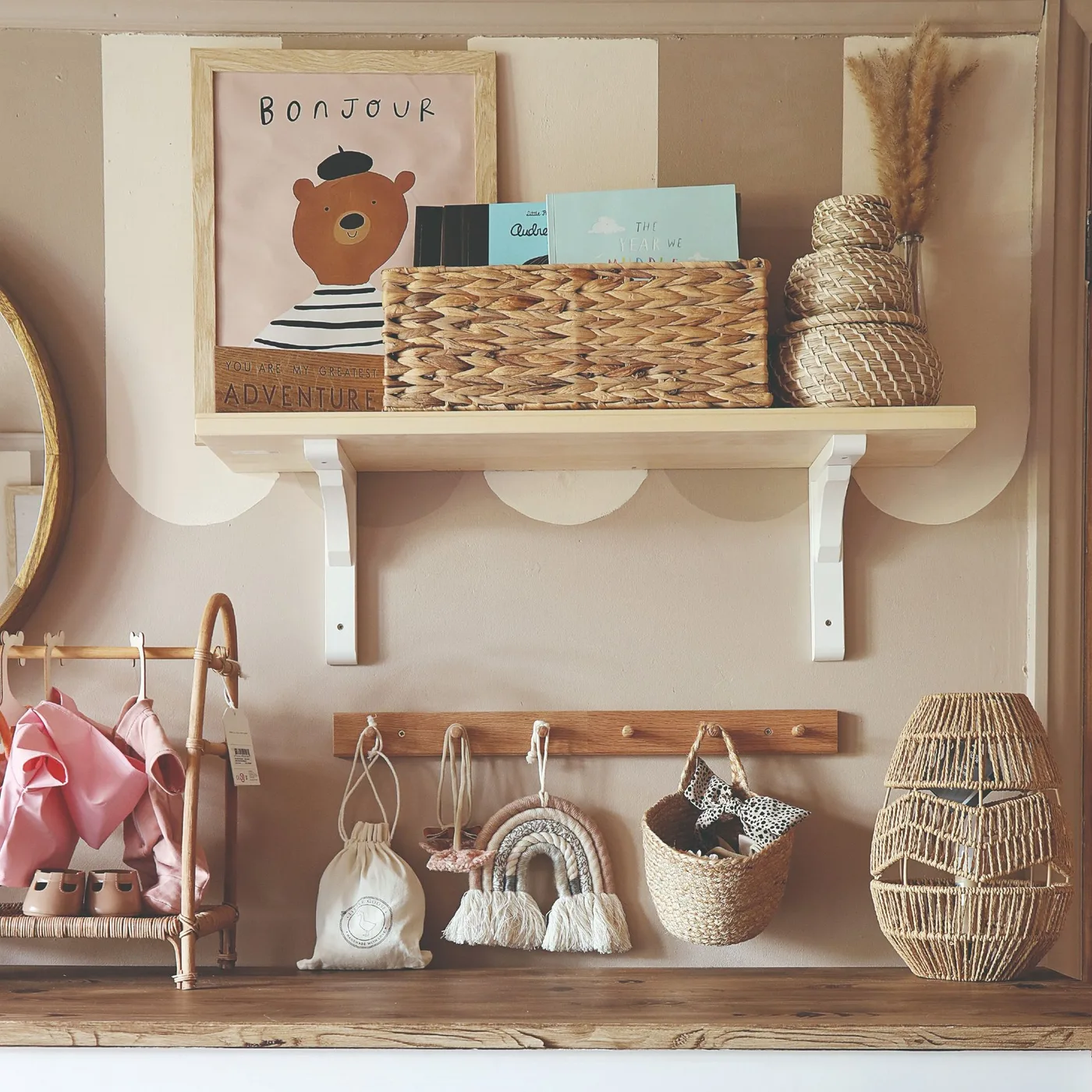 SaveSupport Non AI Creator
Image credit: Future PLC/Katie Lee
The narrow shelf gathers books and smaller objects into one defined area. Woven baskets add warmer texture without needing several larger furniture pieces. The wooden rail repeats that warmth below, with the pale wall leaving the individual containers and their shapes easy to distinguish.
Choose accessible storage for everyday supplies and reserve higher shelves for items you retrieve less often. Check fixings and load limits, keeping heavy or loose objects away from the crib and changing area. Farmhouse nursery ideas offer more basket storage arrangements when you want to compare this small wall feature with larger cabinets.
IDEA 15 / 19
Use Muted Color Behind a Simple Crib
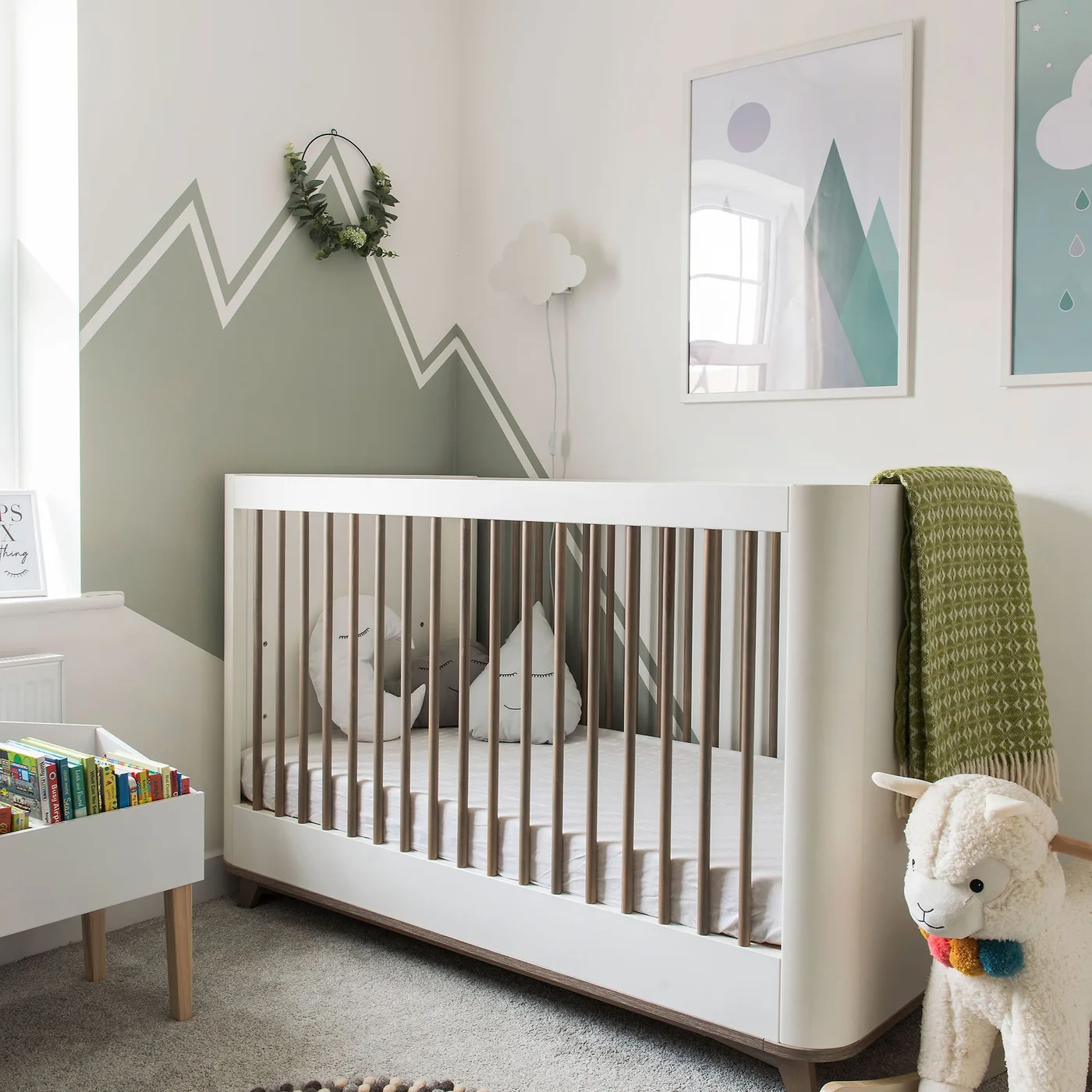 SaveSupport Non AI Creator
Image credit: Future PLC
The muted green mural gives this crib wall color without a busy all-over print. Wooden slats add warmth to the white frame. The three pictures repeat the wall’s geometric shapes, producing a more playful variation on the same restrained palette rather than introducing a separate bright theme.
Limit additional wall decorations if the mural already supplies the room’s main pattern. Secure pictures and lighting safely outside the child’s reach. The blanket and toy in this styled crib are decorative staging; remove them for infant sleep and use a firm, flat mattress with a properly fitted sheet.
PART 04
Keep smaller corners and daily care practical
IDEA 16 / 19
Keep Book Storage Small and Defined
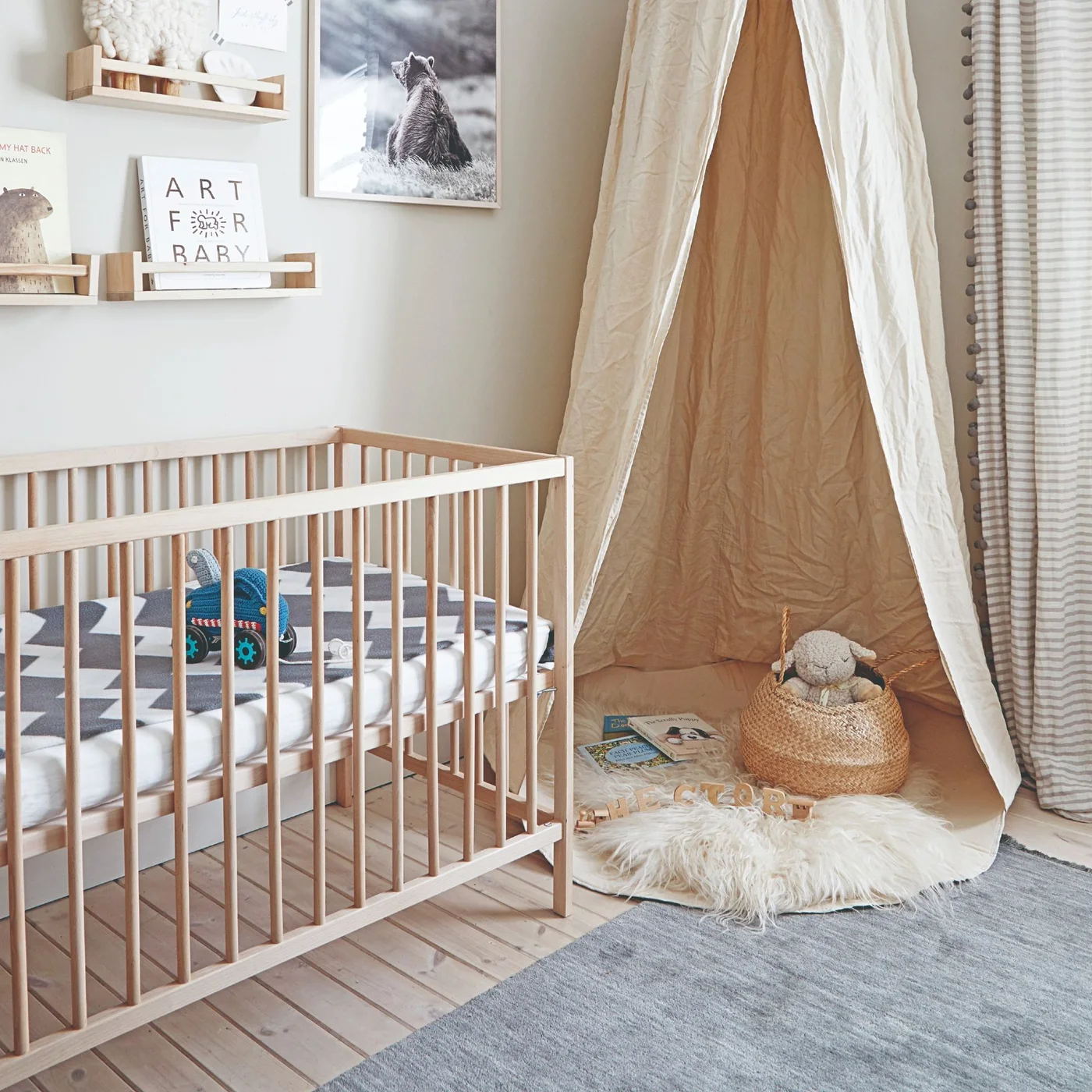 SaveSupport Non AI Creator
Image credit: Future PLC/Anna Stathaki
The light wooden crib and slim book ledges repeat warmer surfaces against the pale wall. A simple runner gives the floor a separate soft strip without a large pattern. The fabric play corner introduces a more enclosed shape beside the otherwise open furniture arrangement.
Use only a small, manageable selection of books on exposed ledges and secure the shelves appropriately. Keep all fabric, cords and hanging decorations beyond the crib’s reach; a styled play nook should not overlap an infant sleep space. Remove toys and loose bedding from the crib before sleep, regardless of the photograph’s arrangement.
IDEA 17 / 19
Choose a Wardrobe with a Quiet Repeated Front
 SaveSupport Non AI Creator
Source: www.petiteamelie.co.uk
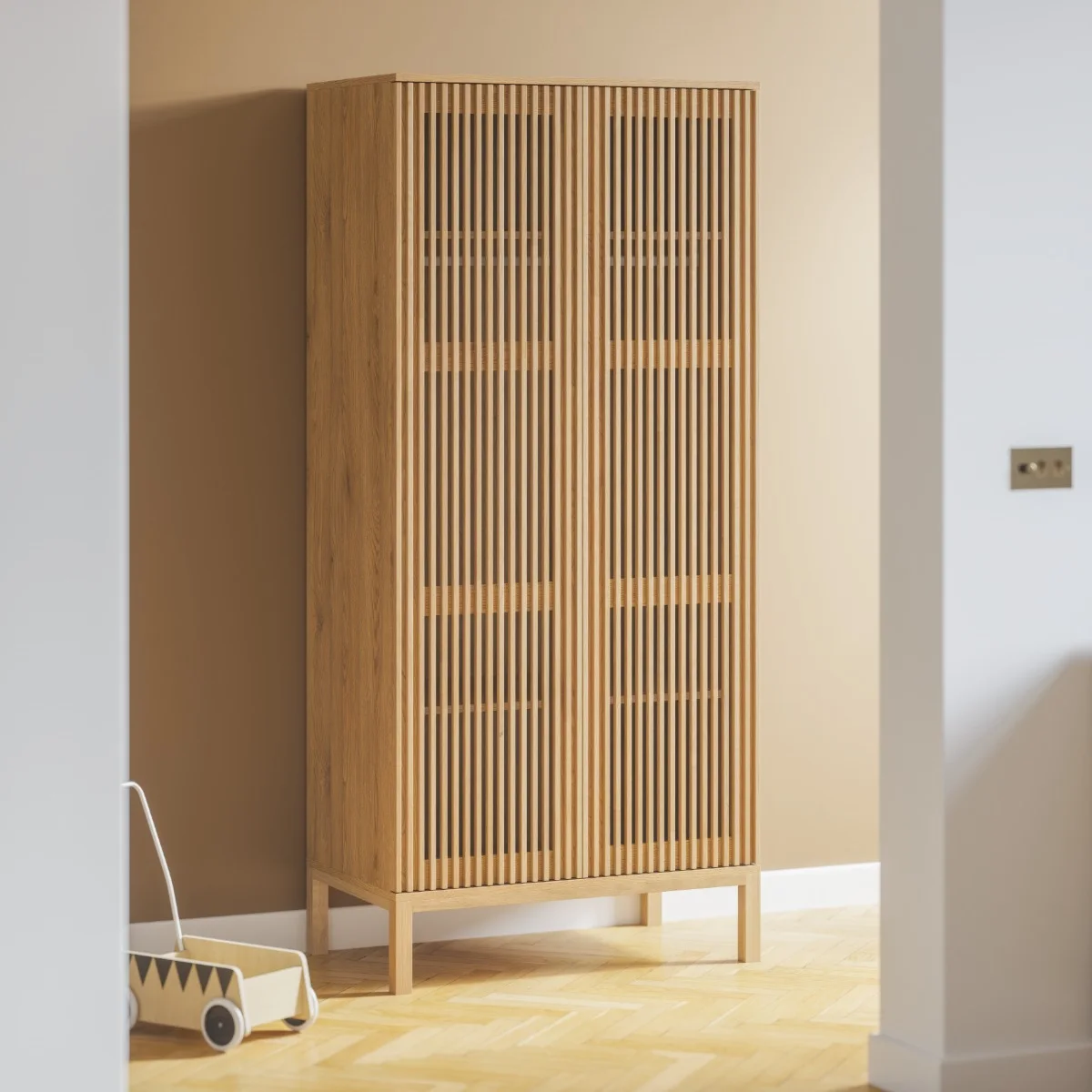
The wardrobe’s repeated vertical slats give this tall storage piece texture without introducing several separate colors. Its warm finish connects with the wooden floor, while the plain surrounding wall gives the front room to stand out. The raised base also makes the cabinet’s outline easy to see.
Check the internal layout as carefully as the front, allowing space for the clothing and supplies you actually store. Confirm anchoring, door clearance and access beneath the raised base. Slatted fronts may need more detailed dusting than a flat door, so choose them with your cleaning routine in mind.
IDEA 18 / 19
Reserve a Changing Surface for Its Real Task
 SaveSupport Non AI Creator
Source: www.petiteamelie.co.uk
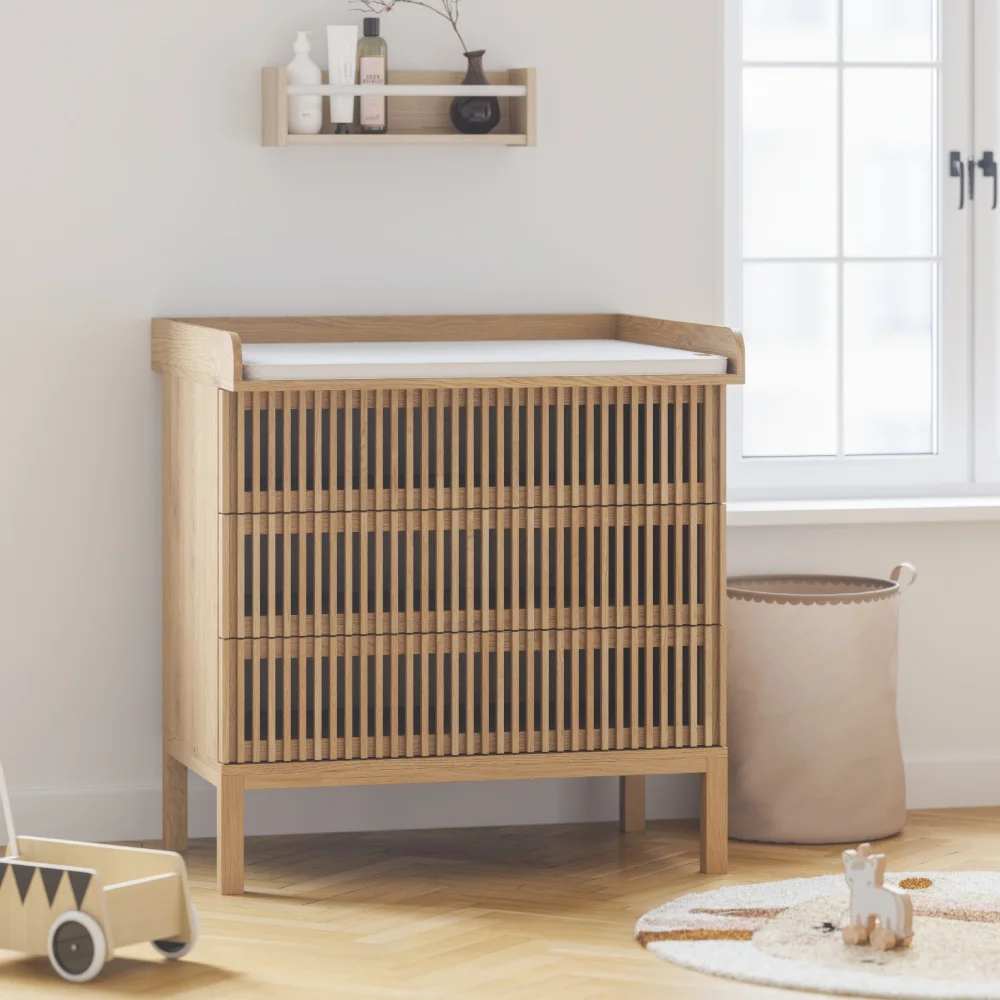
The slatted chest carries the same warm wood across its drawer fronts and raised changing surround. A pale pad separates the working surface from that texture. The small shelf above holds a restrained group of objects, leaving most of the surrounding wall relatively open.
Use the changing unit and pad according to their instructions, keeping supplies reachable while maintaining hands-on supervision. Do not assume raised edges prevent a fall. Secure the chest, keep window cords inaccessible and place shelf objects where they cannot fall into the changing area or become reachable as the child grows.
IDEA 19 / 19
Let the Crib Frame Carry the Warmth
 SaveSupport Non AI Creator
Source: www.petiteamelie.co.uk
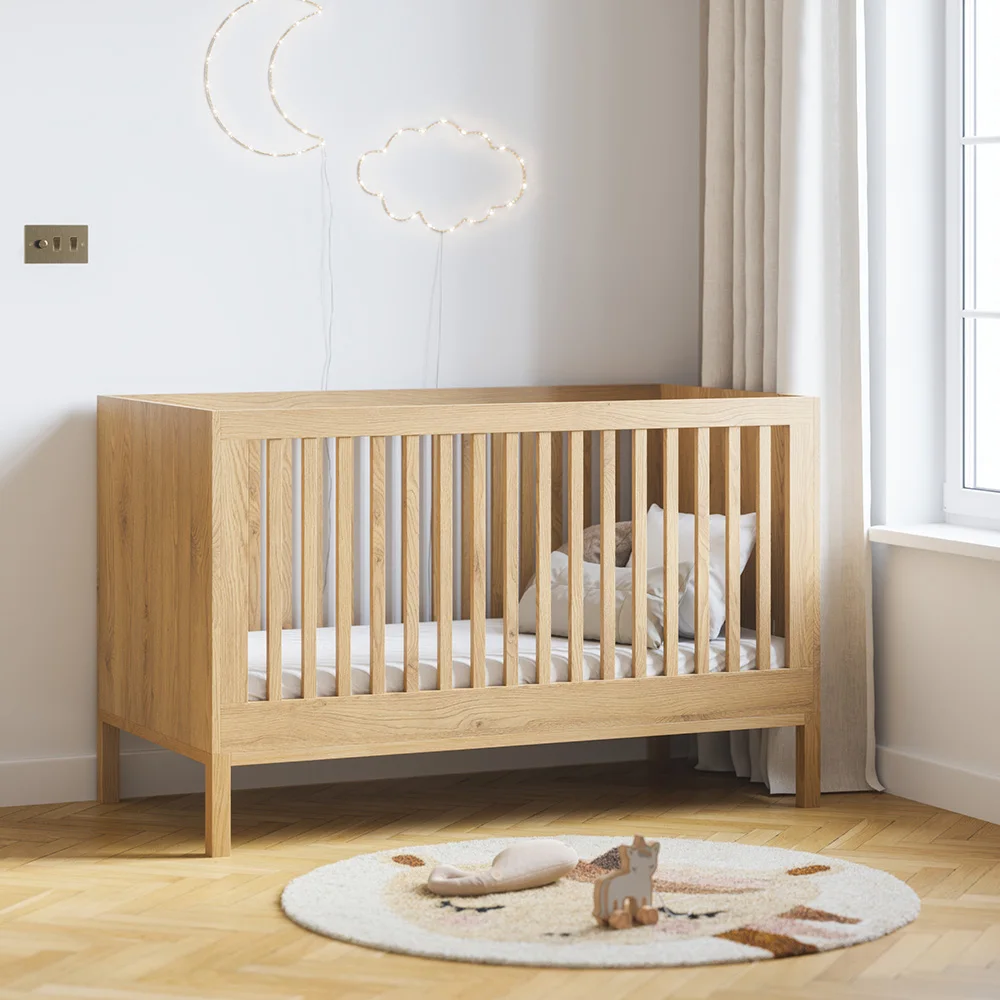
The crib’s broad wooden frame supplies the main warm surface against this pale wall. Closely spaced rails give it a repeated vertical rhythm. The round rug adds a softer floor shape, while the decorative lights introduce smaller outlines rather than a large patterned backdrop.
Select a crib from current safety requirements and manufacturer guidance before deciding whether its wood finish suits the room. Keep the crib away from windows and all decorative light cords. Remove the cushions, soft toys and loose bedding shown here before infant sleep; the appearance of a styled photograph does not establish a safe sleeping arrangement.
BRING IT ALL TOGETHER
Build the room around everyday care
Start with a suitable crib, secure storage and a comfortable adult seat. Check movement between them before adding baskets, books or decorative lights. A quieter palette can make the furniture feel connected, but the storage arrangement and reachable supplies determine how convenient the room will be during ordinary use.
Treat styled photographs as ideas for color and furniture relationships. Follow current infant sleep guidance, keep cords and hanging fabric out of reach, and check product instructions for furniture, changing surfaces and play equipment. Reassess the arrangement as your child grows rather than assuming the original placement will remain appropriate.