A leather couch changes how light and texture feel in a living room. Its surface may look smooth, creased or deeply tufted, and those differences affect the furniture you place around it. Start with the couch you have, including its color, arm shape and seat height, rather than assuming every leather sofa needs the same dark wood or traditional rug.
These rooms focus on the arrangement around the sofa: where guests sit, how a table can be reached and which textiles make the space comfortable. Leather finishes vary, so use the care instructions for your actual upholstery. A photograph can suggest a color combination or layout, but it cannot establish a cleaning method or the composition of a covering.
PART 01
Balance dark leather with lighter surroundings
IDEA 01 / 17
Lighten Black Leather with Pale Chairs
 SaveSupport Non AI Creator
Image credit: Tamsin Design Group
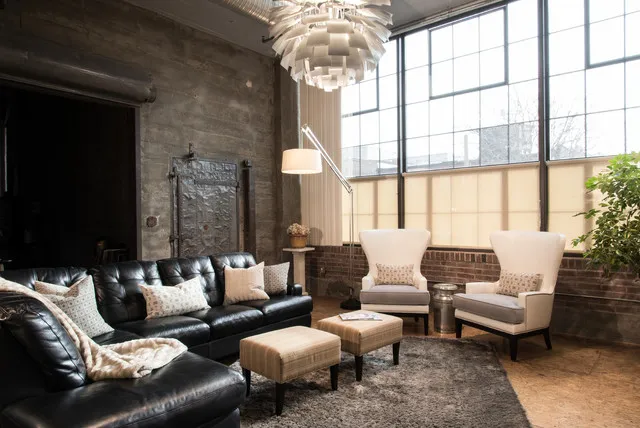
Pale wingback chairs face the black leather seating, with two smaller upholstered stools occupying the middle of the arrangement. The broad window keeps the room bright, while brick and a darker fireplace wall provide texture around the furniture. The contrast comes from whole seating pieces, so the sofas do not need to disappear beneath layers of cushions.
Mixing chair colors can make a large leather grouping feel less heavy. Compare the seat heights and depth in person so guests can sit comfortably together. Keep the small stools easy to move when more floor space is needed, and use a stable nearby surface for drinks instead of treating every upholstered piece as a table.
IDEA 02 / 17
Repeat Dark Frames Around the Sofa
 SaveSupport Non AI Creator
Image credit: Stephanie Badillo Interior Design Studio
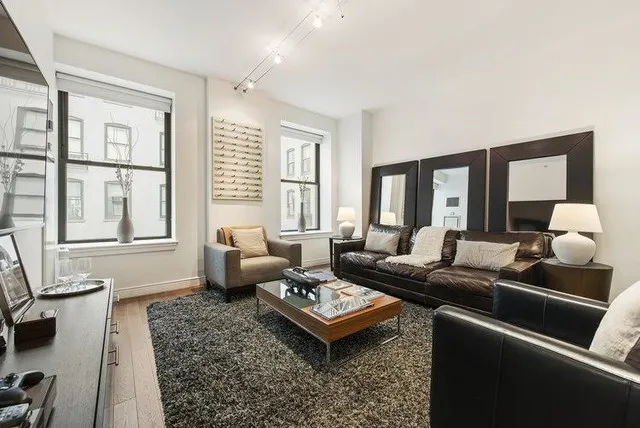
Two dark-framed mirrors repeat the sofa’s outline against pale walls, while lighter chairs break up the leather grouping. Table lamps sit at either end, giving the seating its own light sources. A wooden coffee table adds a warmer surface between the dark upholstery and the textured gray rug, keeping the arrangement from relying on one material throughout.
Before buying wall mirrors, consider what each will reflect from seated positions and fix them securely for their weight. Our black couch living room ideas offer other ways to balance dark seating with pale surroundings. Keep lamps within reach of the seats they serve and leave enough table space for everyday use rather than filling it with display objects.
IDEA 03 / 17
Give Rolled Arms Space to Stand Out
 SaveSupport Non AI Creator
Image credit: Wellington's Leather Furniture
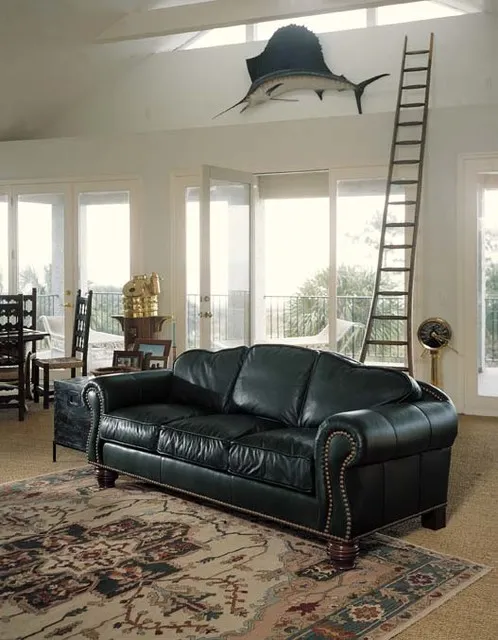
The sofa’s rolled arms and nailhead edging supply substantial detail on their own. A patterned rug connects it with the larger pale room, while the high ceiling and glazed doors keep the dark upholstery from dominating every view. The curved back is fully visible, making the sofa shape a stronger feature than any extra cushion arrangement.
Measure a rolled-arm couch across its widest points before planning nearby tables or a delivery route. Its overall footprint may be considerably larger than the seat area suggests. Choose side furniture that can be reached without squeezing around the arms, and check that the rug does not create an awkward raised edge along the walking route.
IDEA 04 / 17
Choose One Clear Graphic Accent
 SaveSupport Non AI Creator
Image credit: Modern Furniture Bay
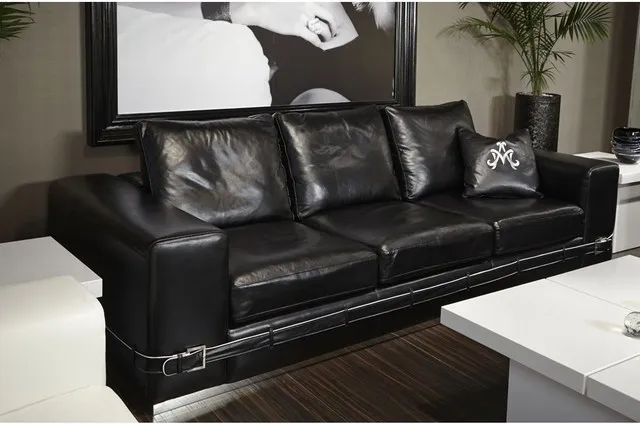
The large black-and-white picture reinforces the dark couch without introducing another strong color. A pale low table provides a lighter horizontal surface in front, while the upholstery’s creases remain visible. The room uses the artwork and sofa as its main features, leaving the surrounding furniture comparatively straightforward rather than layering several competing patterns.
If your couch already has pronounced texture, try one clear artwork arrangement before adding patterned cushions or multiple small frames. Compare coffee-table height with the seat so it is useful for the people who sit there. Keep artwork securely mounted and avoid assuming that a large picture must be placed immediately above the sofa to work.
PART 02
Layer textiles and familiar details
IDEA 05 / 17
Soften Leather with an Upholstered Ottoman
 SaveSupport Non AI Creator
Image credit: Houzz project gallery
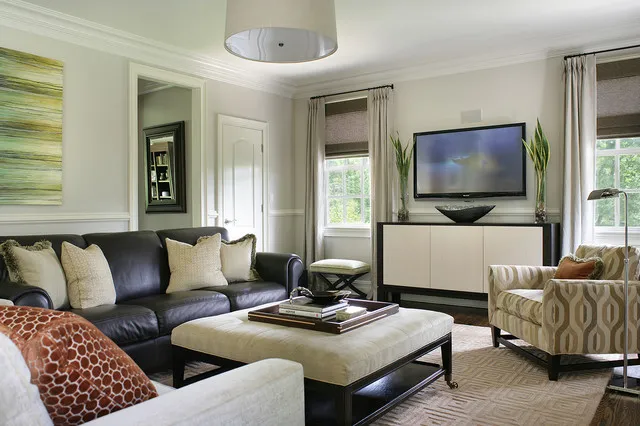
A pale rectangular ottoman sits between the dark leather couch and patterned chairs, adding a softer surface at the center of the room. Light curtains and walls extend that contrast upward. Cushions connect the couch with the paler furniture, while a tray groups small items on the ottoman without covering its entire surface.
An upholstered ottoman can support relaxed seating, but decide how drinks will be handled before replacing a firm coffee table. Use an appropriate stable tray or add a small side table. Consider washable or cleanable covers where spills are likely, and leave a comfortable gap so guests can pass between the ottoman and couch without turning sideways.
IDEA 06 / 17
Break Up a Matching Leather Group
 SaveSupport Non AI Creator
Image credit: Visual Fluidity
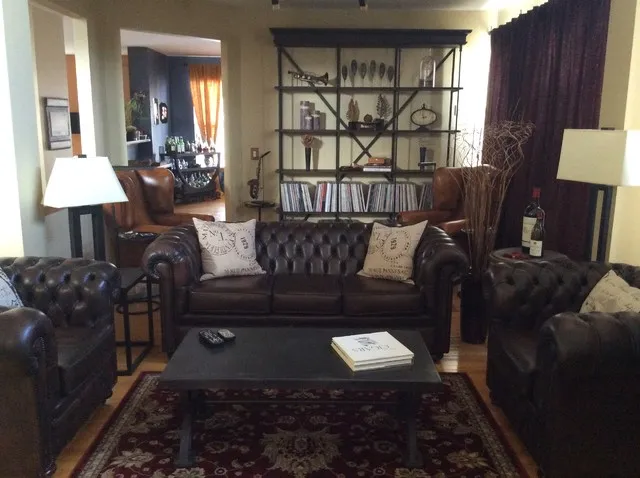
Several dark tufted leather pieces create a substantial seating group around the low black table. Pale cushions interrupt the dark surfaces, while brown chairs at the back introduce a warmer shade. Open shelving gives the background structure, and the patterned rug provides a shared base beneath furniture that could otherwise look like separate heavy blocks.
With a matching sofa group, vary the smaller pieces rather than buying another equally large dark item. Keep enough space around the table for the room’s normal traffic and consider whether every sofa is needed. Our couch pillow ideas can help you choose fewer, more deliberate cushion combinations while preserving usable seats and the upholstery’s visible shape.
IDEA 07 / 17
Use a Small Bright Accent on Tufted Leather
 SaveSupport Non AI Creator
Image credit: Visual Fluidity
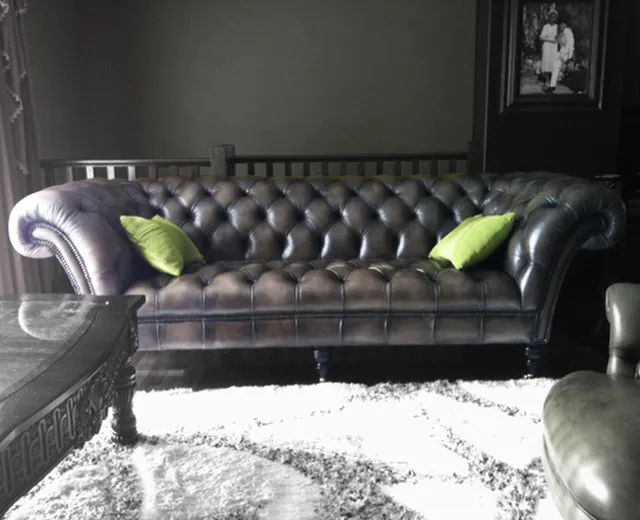
Two green cushions stand out against the black tufted couch and darker wall, while a pale rug gives the floor a lighter base. Deep buttons and rolled arms already make the seating visually detailed. The small color accent works because it occupies a limited part of the composition rather than competing with the entire sofa silhouette.
Test an accent cushion in the room before repeating its color across curtains, walls and accessories. On deeply tufted upholstery, fewer cushions can preserve the couch’s shape and keep the seats usable. Compare cushion texture with the actual leather finish, and choose covers that can be cleaned according to their labels when the room is used frequently.
IDEA 08 / 17
Connect Warm Leather with a Pale Fireplace
 SaveSupport Non AI Creator
Source: idealhome.co.uk
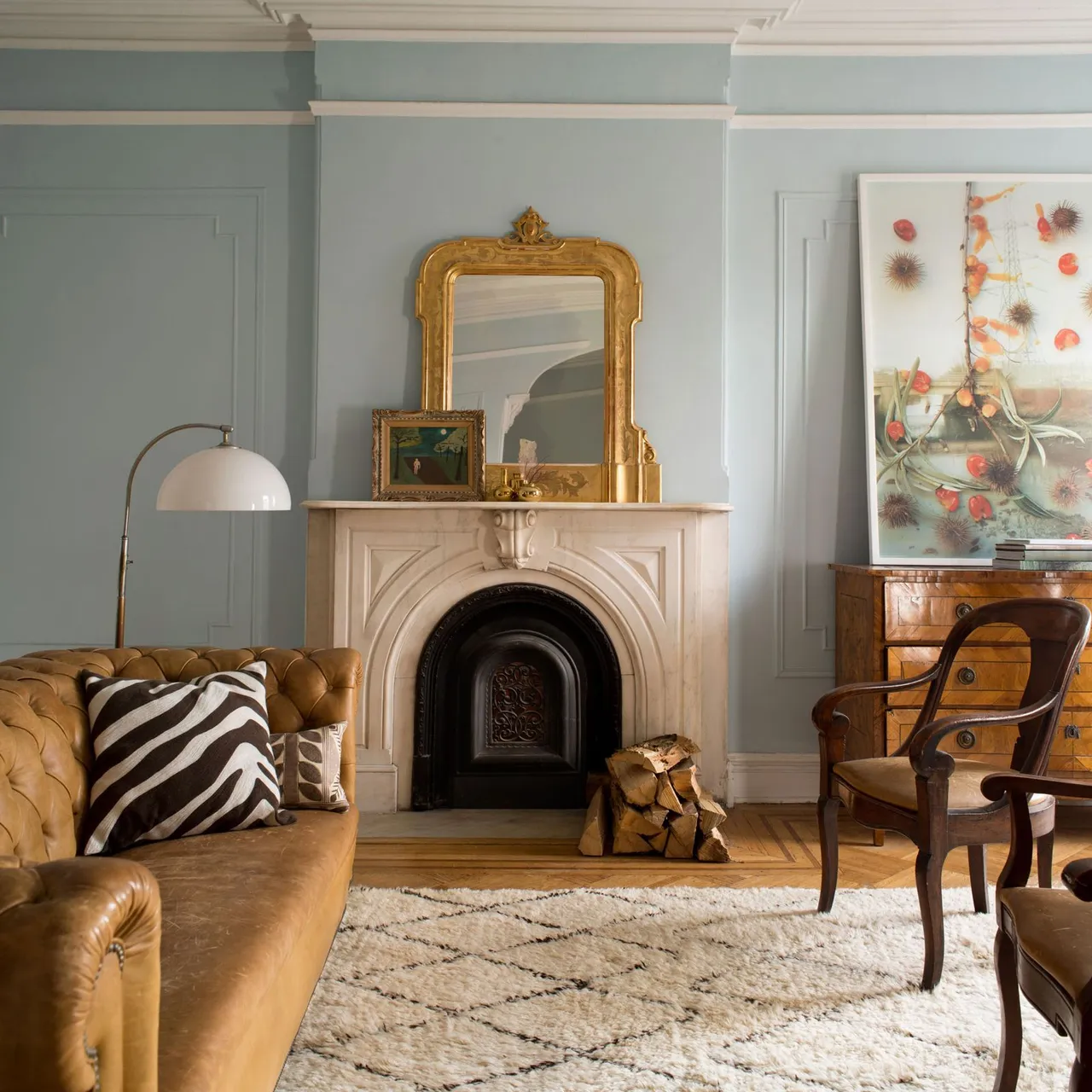
The brown tufted couch brings warmth beside a pale fireplace surround and blue-gray wall. A gold-framed mirror repeats the warmer tones above the mantel, while a wooden chair adds a different silhouette opposite the sofa. A pale patterned rug gathers those pieces into one seating area without matching the upholstery color exactly.
Keep the sofa’s placement compatible with the fireplace’s actual operating clearances and leave an unobstructed route through the room. For more warm-upholstery combinations, brown leather couch living room ideas compare different wall and rug choices. Test the chair alongside the sofa for comfort and conversation rather than choosing it solely because its wood tone coordinates.
PART 03
Arrange seating around the way you gather
IDEA 09 / 17
Pair Tufted Leather with Simpler Wood
 SaveSupport Non AI Creator
Source: idealhome.co.uk
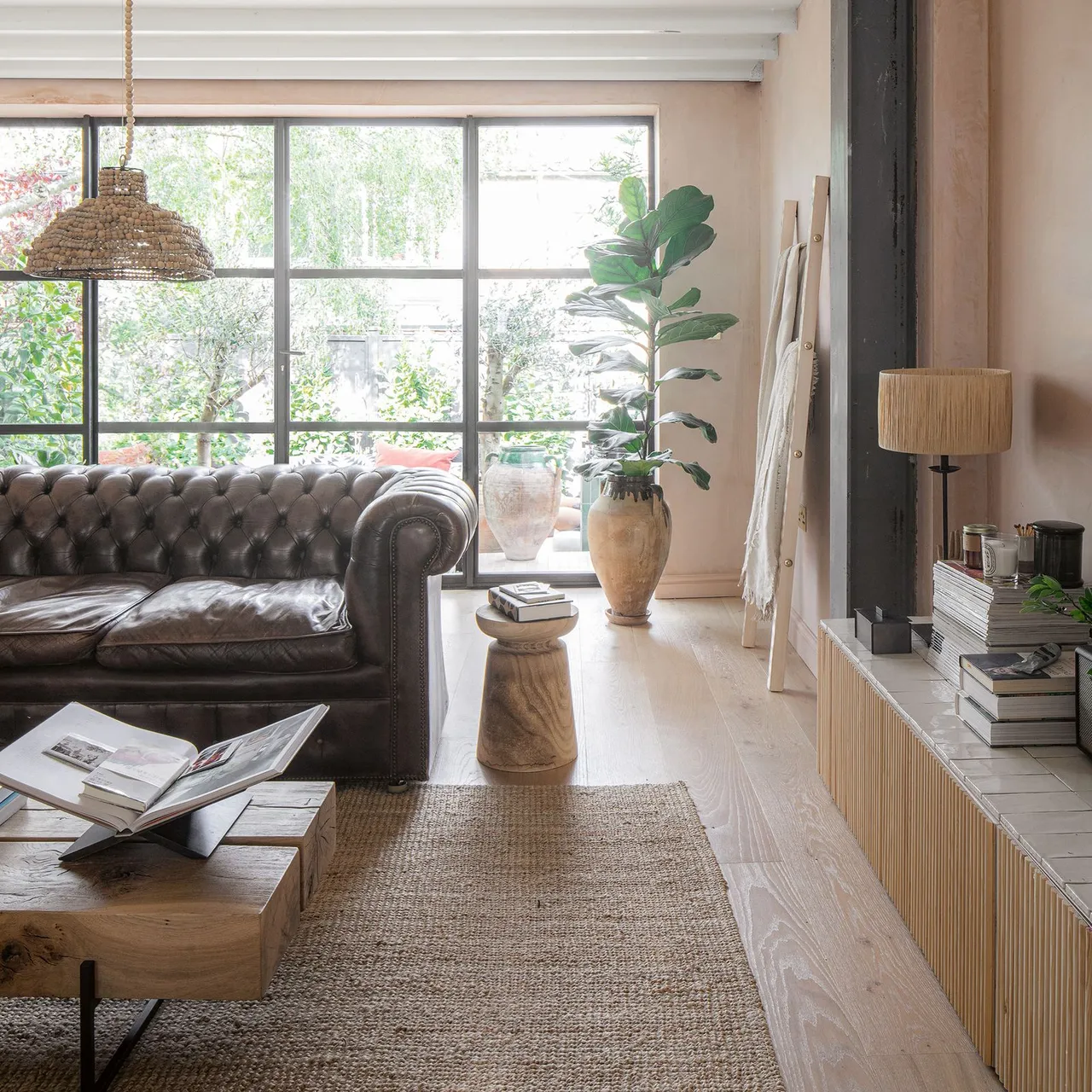
The low wooden table and woven rug give this dark tufted couch a simpler setting. A large window supplies the main background view, with a tall plant adding height beside the sofa. The couch has strong curves and buttons, while the table and small side piece use comparatively straightforward shapes, creating variety without another elaborate upholstered item.
When the sofa is decorative, compare plain tables before adding more curved or carved furniture. Check that the low table is comfortable to reach from the couch and leaves room for feet. Consider how direct sunlight moves through the window, and use the upholstery maker’s guidance when deciding whether shading or a different sofa position is needed.
IDEA 10 / 17
Use Separate Zones in a Long Room
 SaveSupport Non AI Creator
Image credit: Houzz project gallery
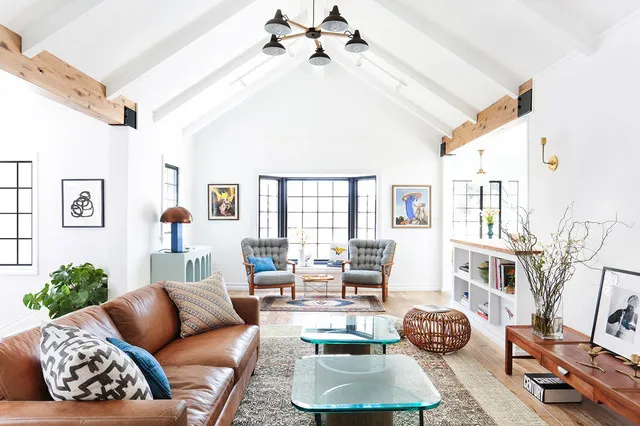
The tan couch occupies the nearer seating zone, while a pair of chairs at the far end creates another place to gather. Pale tables and blue cushions connect the furnishings beneath the pitched white ceiling. Open shelving and a low media unit add storage along the wall without forcing all the furniture into one tightly packed group.
In a long room, decide whether one large conversation area or two smaller ones better suits daily use. Test the route between them before adding more tables. Keep a reachable surface beside the sofa, and use a rug or repeated accent color to connect the zones when the furniture cannot reasonably share one central coffee table.
IDEA 11 / 17
Use a Clean Sofa Back to Define Seating
 SaveSupport Non AI Creator
Image credit: Photography by Jeff Jones
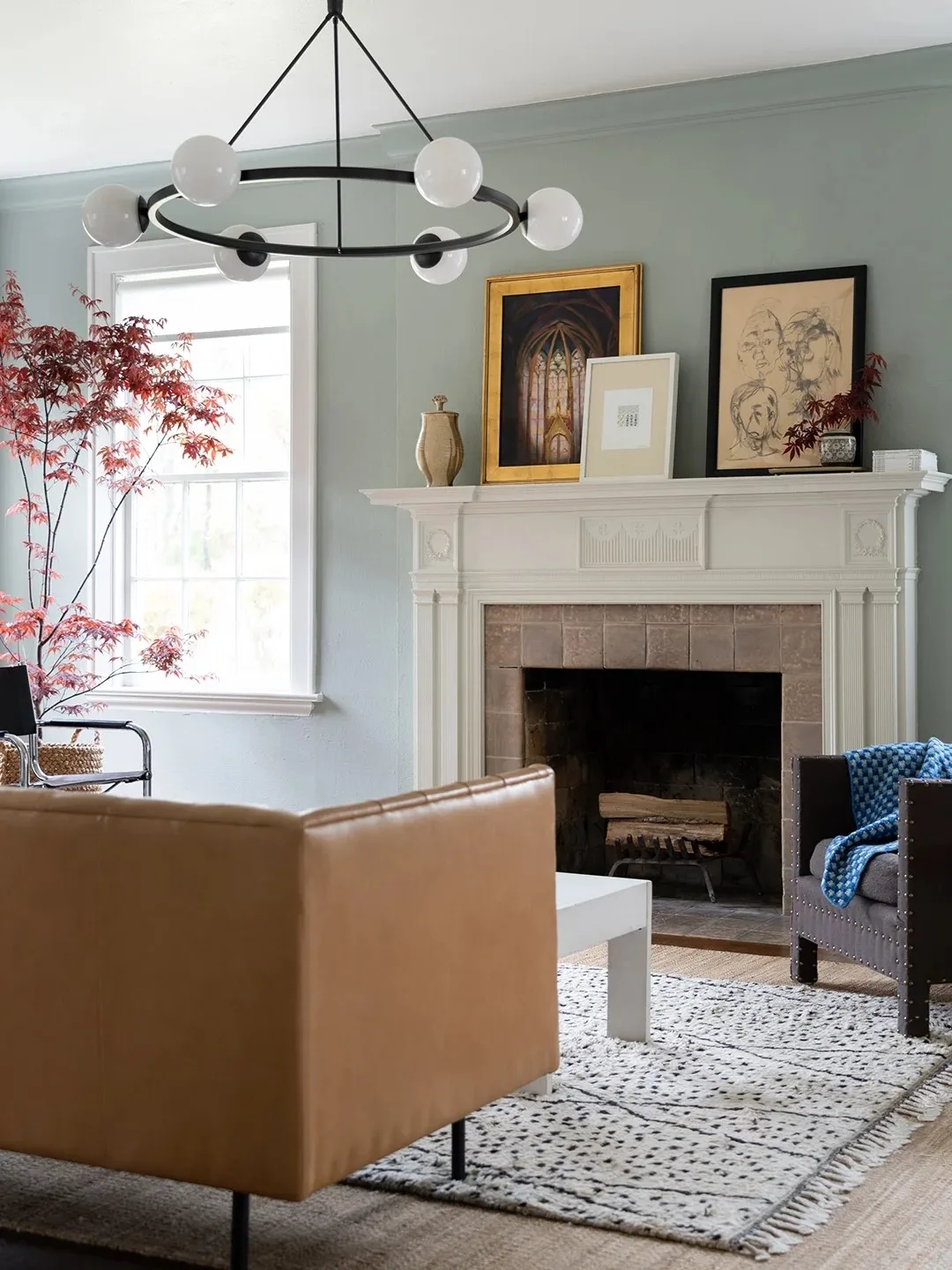
A clean-lined tan sofa faces the fireplace with its back visible from the room entrance. The simple rear profile defines the seating zone without adding a separate screen or cabinet. A patterned rug links it to the nearby chair, while framed artwork and the pale fireplace supply detail above the more restrained couch.
If a couch will stand away from a wall, inspect its back and base before buying; those surfaces become part of the room’s main view. Leave enough space behind it for comfortable movement. Avoid placing a console there automatically, since an extra piece can reduce the route without solving a practical storage or lighting need.
IDEA 12 / 17
Balance Patterned Walls with Familiar Shapes
 SaveSupport Non AI Creator
Image credit: Future PLC/Dominic Blackmore
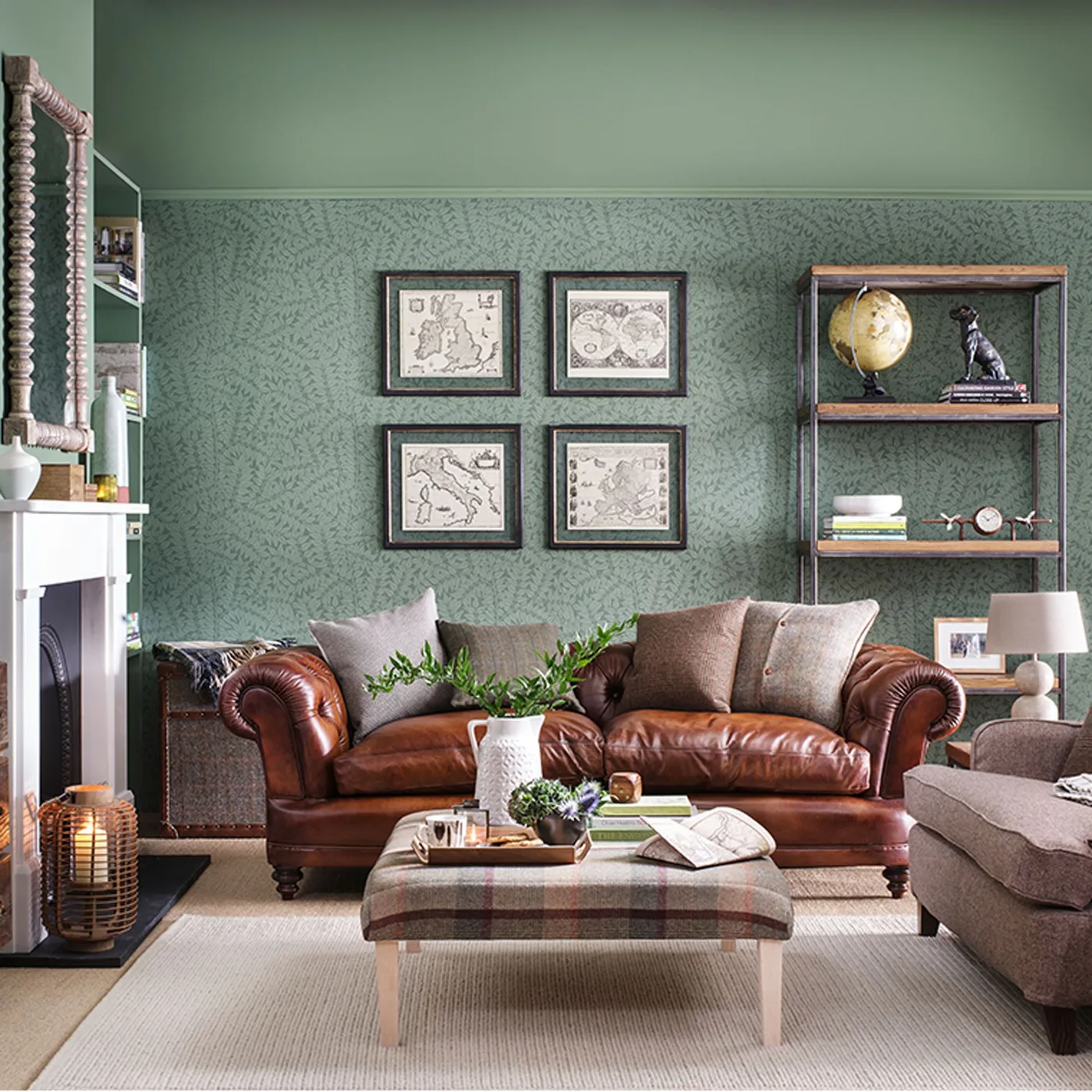
Green patterned walls surround the brown tufted couch, with four framed pictures providing a compact arrangement above it. A checked ottoman introduces a larger, more regular pattern at the center. Pale cushions and adjacent seating lighten the composition, so the room can include several textures without relying entirely on darker furniture.
Compare pattern sizes together before buying a wallpaper and ottoman covering. Keep at least one larger element, such as a cushion or adjacent chair, comparatively quiet. Try the room with fewer accessories first; the couch buttons, wall pattern and check already provide considerable detail, and extra ornaments may simply make the usable surfaces harder to clear.
PART 04
Work with wood, color and generous seating
IDEA 13 / 17
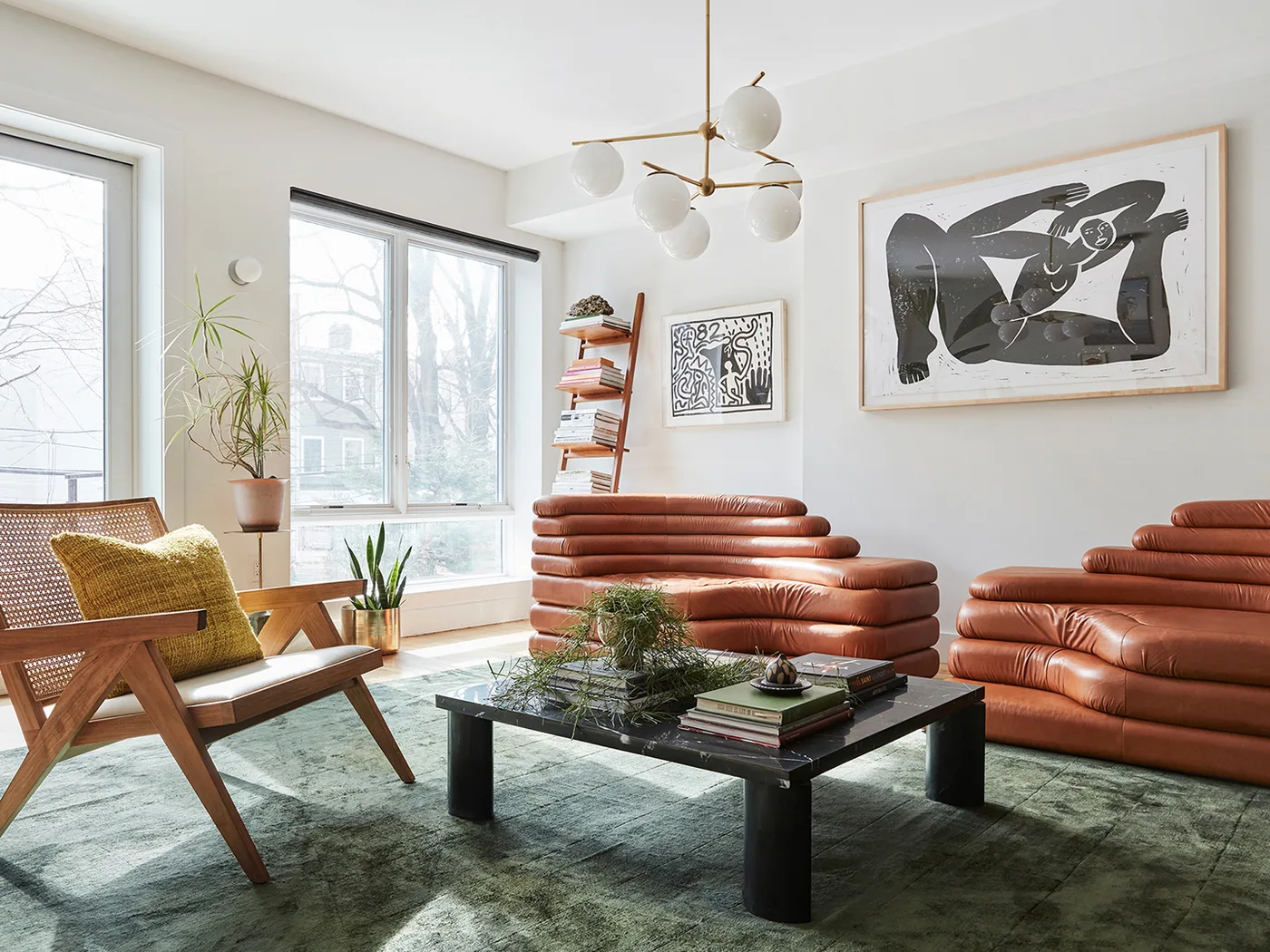
Let Sculptural Sofas Share a Simple Table
 SaveSupport Non AI Creator
Image credit: Photography by Angela Hau; Styling by Naomi Demañana and Julia Stevens
The tiered leather backs give these two sofas a sculptural presence around a dark square table. A green rug gathers the group, while pale walls and graphic artwork keep the background lighter. A wooden-framed chair introduces a different construction and leaves its frame visible, preventing the seating arrangement from becoming entirely solid upholstery.
With a distinctive sofa shape, test the table’s size and position before introducing more statement furniture. Each seat should have a useful surface within comfortable reach. Allow enough space to stand up from lower seating, and compare a conventional-height chair alongside it if some guests prefer more support or find a low couch difficult to use.
IDEA 14 / 17
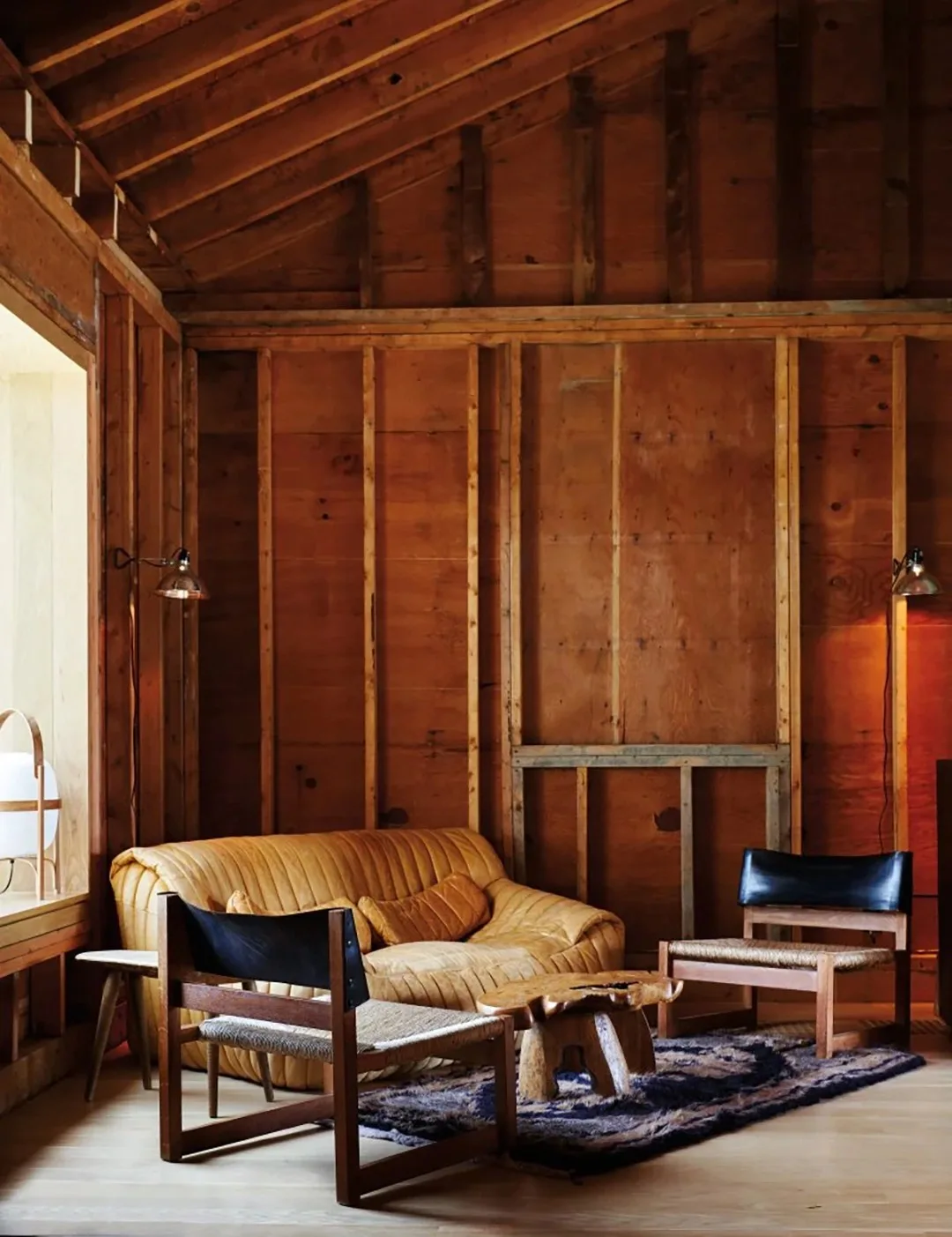
Contrast Tan Leather with Dark Chair Backs
 SaveSupport Non AI Creator
Image credit: Photography by Adrian Gaut
The pale tan sofa creates a lighter patch within a room lined with exposed wooden framing. Two dark chair backs introduce contrast without enclosing the seating group, and a low irregular table sits between them. A darker rug separates the furniture from the pale floor, keeping the sofa legible against several different wood tones.
When the room already contains substantial wood, compare the upholstery sample against more than one surface before adding matching wooden furniture. Darker chair backs can supply contrast with less visual bulk. Check whether the low table works for everyday drinks and reading, and keep an accessible alternative nearby if its uneven shape leaves some seats without a useful surface.
IDEA 15 / 17
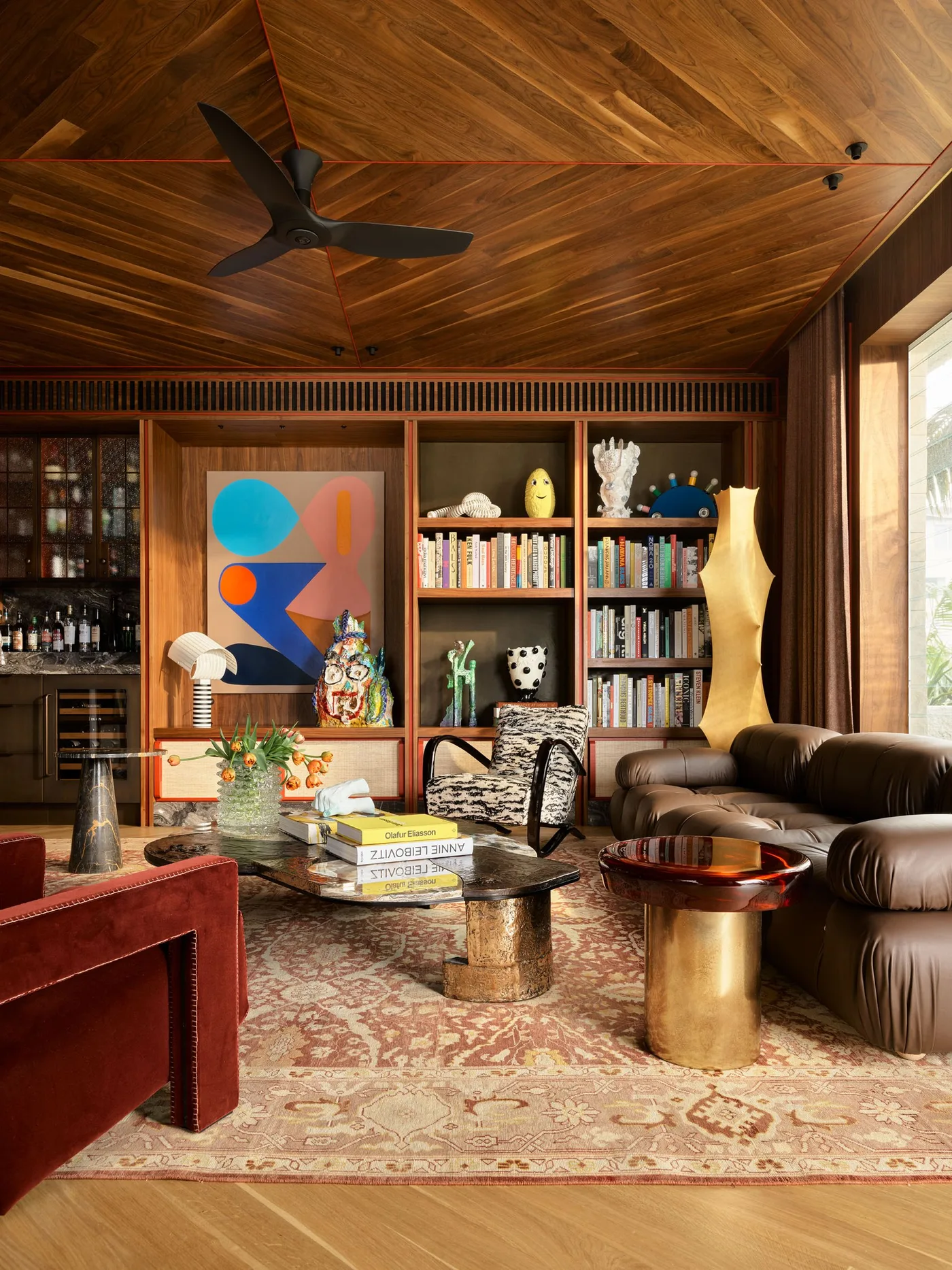
Give Modular Leather Room to Breathe
 SaveSupport Non AI Creator
Image credit: Anson Smart. Design: Flack Studio. Styling: Joseph Gardner
The low modular couch leaves much of the wooden shelving visible behind it, allowing books and objects to remain part of the room. Rounded metallic tables contrast with the upholstery’s broad cushioned sections. A patterned rug connects the seating with the other chairs, while the wooden ceiling supplies warmth above the darker couch.
Plan a modular couch around the configurations you will actually use, including the route through the room. Keep joins secure according to the manufacturer’s instructions and check access beneath the seating for cleaning. Our boho modern living room ideas offer more ways to combine collected objects with simpler furniture when you want a layered setting around a large sofa.
IDEA 16 / 17
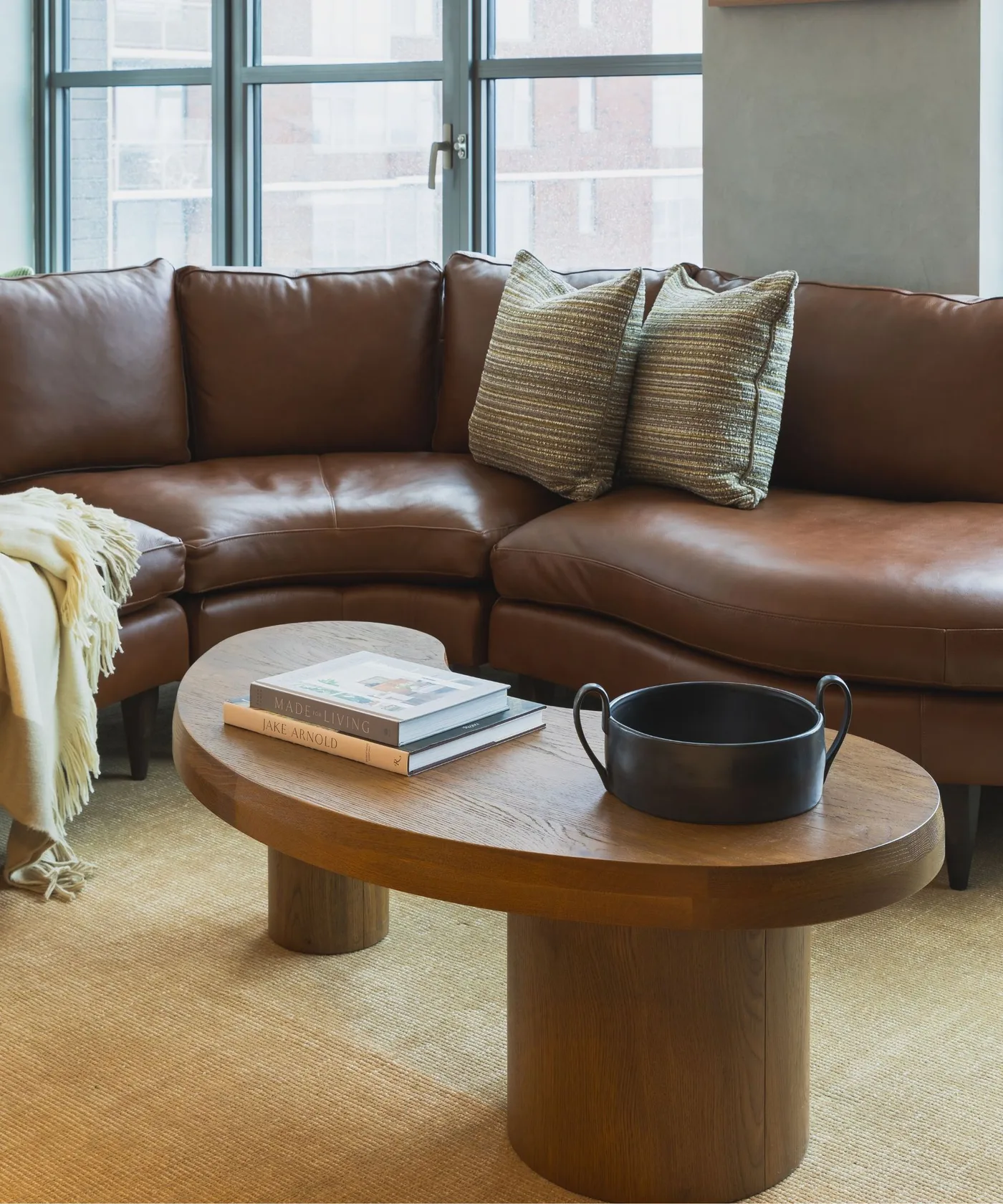
Choose a Rounded Table for a Corner Couch
 SaveSupport Non AI Creator
Image credit: Isy's Interiors, photography Duncan Smith
A rounded wooden table follows the open area within this corner couch without introducing another sharp corner. Two striped cushions provide a restrained pattern against the broad brown upholstery. The pale rug lightens the floor beneath it, while the windows give the seating a bright backdrop and reduce the need for a busy wall display.
Compare the table diameter with the space inside the corner arrangement and test the reach from both ends of the couch. Rounded edges may make movement easier, but a table that is too large can still block feet or the walking route. Keep cushions easy to move when several people sit together, and consider sunlight at different times of day.
IDEA 17 / 17
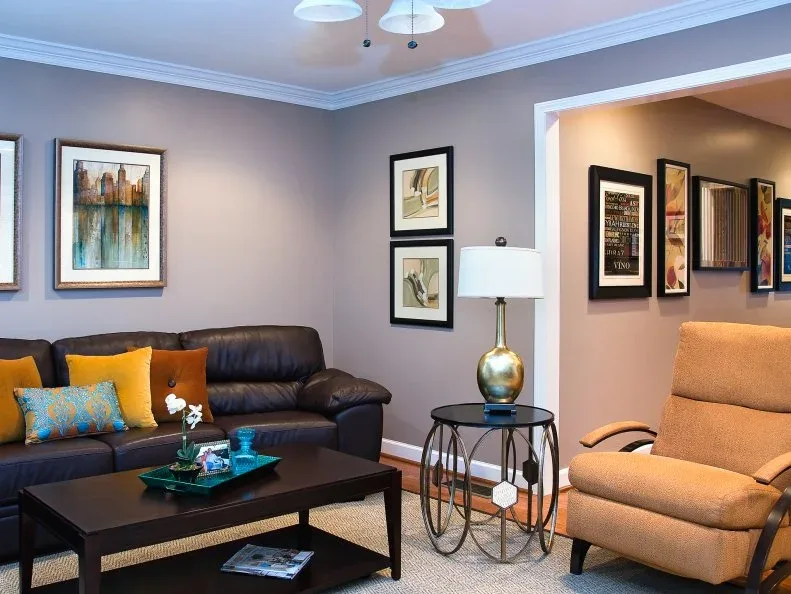
Repeat an Accent Across Separate Seats
 SaveSupport Non AI Creator
Image credit: From: Kristen Pawlak
Yellow cushions connect the dark brown couch with the armchair, while smaller blue accents provide another layer of color. Gray walls and a dark coffee table keep the larger background pieces comparatively quiet. Framed pictures extend the arrangement above the couch without requiring the leather seating and fabric chair to match.
Repeating one accent across separate seats can connect pieces you already own. Start with removable cushions before replacing a chair covering or painting a wall, then check the combination in your room’s lighting. Keep the accent items comfortable to use and easy to care for; the room should work when someone moves a cushion or sets down a book.
BRING IT ALL TOGETHER
Make the couch comfortable to live around
Sit in each place before finalizing the room. Check whether a drink can be set down without leaning across another person, whether a lamp shines into someone’s eyes and whether the route past the couch remains comfortable. Adjust small tables and lamps before replacing larger furniture; these changes can solve awkward everyday use.
Keep the upholstery instructions somewhere accessible and check them before applying a cleaner, conditioner or protective treatment. Consider sunlight, heating and accidental spills when choosing the location. Then use cushions, a rug and a contrasting chair to shape the room around the couch, leaving enough exposed upholstery for its own texture to remain visible.