An accent chair should do more than fill an empty corner. The right chair gives someone a comfortable place to sit, makes conversation easier, and contributes a shape or texture that the sofa does not offer. Before choosing a style, look at where feet will go, how the chair turns toward the rest of the seating, and whether a side table will fit.
The most successful living rooms use occasional chairs as part of a layout. A curved swivel chair can connect the television and conversation areas, while a narrow wood-frame chair keeps a small room airy. These ideas focus on proportions, placement, and everyday use rather than treating chairs as display objects.
PART 01
Color and contrast
IDEA 01 / 20
Soften a Timber Room With Rounded Chairs
 SaveSupport Non AI Creator
Source: Thompson Custom Homes on Houzz.
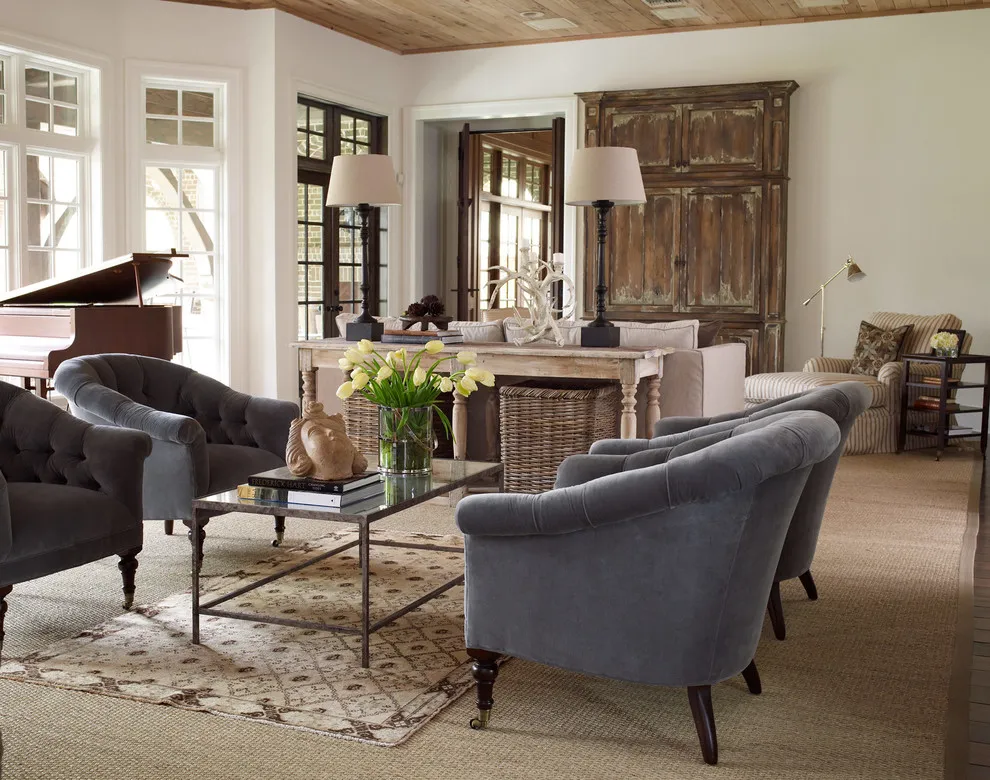
Rounded gray chairs soften a room filled with timber, from the substantial ceiling beams to the cabinet doors. Their curved backs create a comfortable-looking conversation group, while the glass table leaves the floor and the chair bases visible through its surface.
Measure the full width of each curved chair, including its arms, before planning this arrangement. A chair that looks compact from the front can occupy considerable space when angled. Check that seated guests can reach the table without moving their chairs into the walking route.
IDEA 02 / 20
Make Red Chairs the Accent
 SaveSupport Non AI Creator
Source: Joy R. Dabill Interior Design on Houzz.
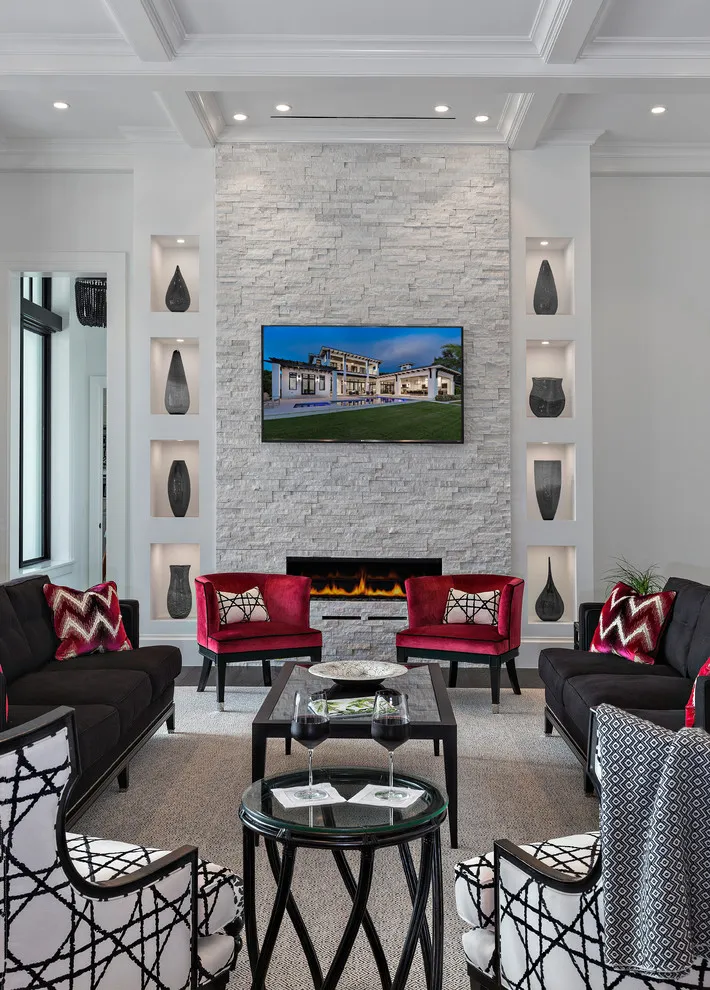
Red upholstered chairs sit against a bright fireplace wall beside dark seating. Their concentrated color gives the room a clear focal point. The pale fireplace surround separates the red upholstery from the dark sofas, allowing the color to stand out without needing an equally bright wall behind it.
Use one strong chair color before adding other bright furnishings. Repeat it only in a small detail if the pair already provides enough visual weight. Try a fabric sample beside the darker sofa first; reds can look warmer under lamps. Keeping the rug neutral helps the chairs remain the main accent.
IDEA 03 / 20
Choose Patterned Chairs for a Pale Room
 SaveSupport Non AI Creator
Source: Oak Hill Building & Remodeling on Houzz.
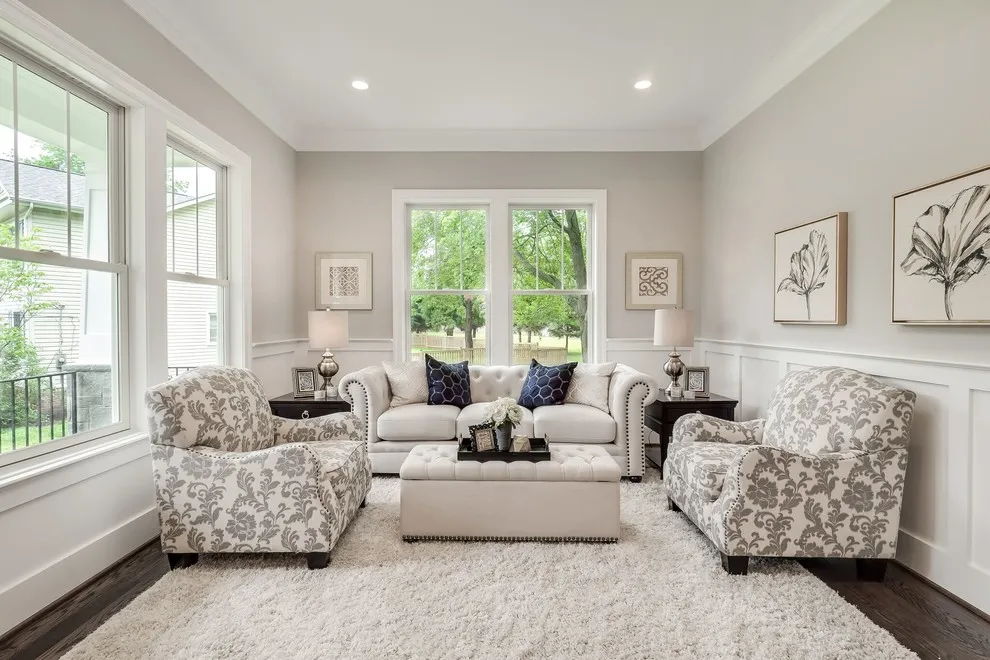
Two patterned armchairs face a pale sofa across an ottoman. The repeated fabric brings detail to the otherwise soft neutral room. Matching patterned chairs make the print feel deliberate, while the plain sofa and upholstered ottoman give the eye somewhere quieter to rest between the smaller decorative details.
View the fabric pattern at full chair scale before ordering. Keep the sofa quieter and check the ottoman height if it will double as a table. Order a large fabric sample if possible, because a repeating motif may land differently on a curved back. An ottoman tray can provide a steadier place for drinks.
IDEA 04 / 20
Mix an Open Timber Chair With a Sectional
 SaveSupport Non AI Creator
Source: Laura Moss Photography on Houzz.
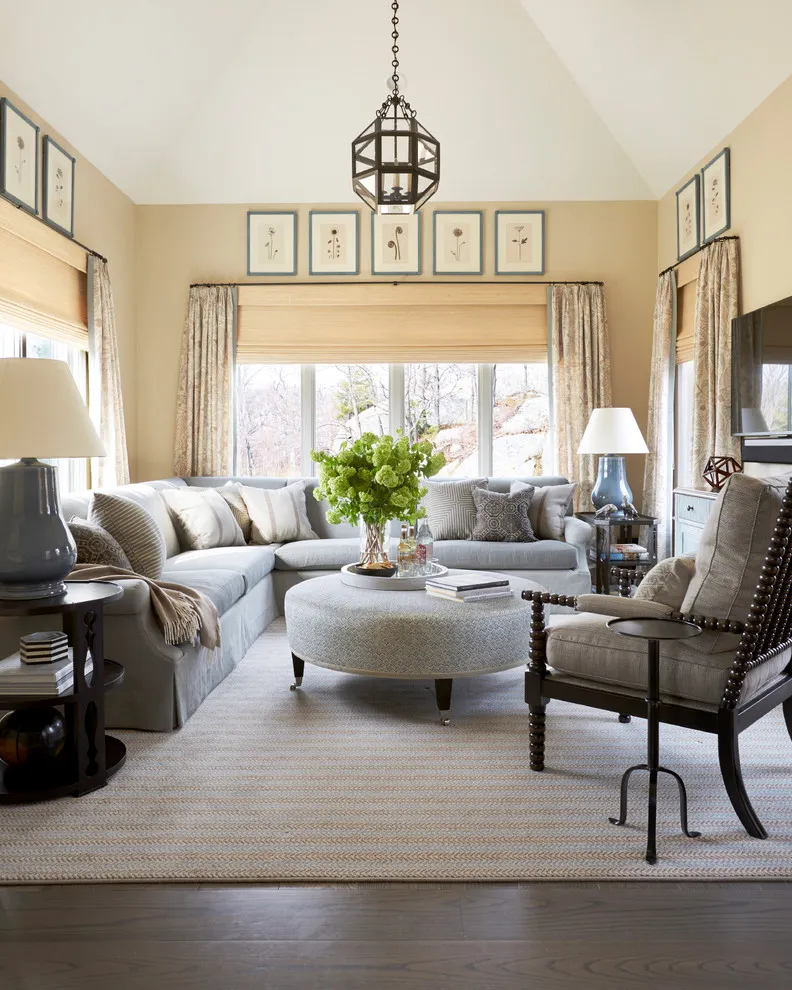
A dark timber chair with open spindle sides sits beside the blue-gray sectional, introducing a clearly different outline. Pale cushions connect it to the softer furnishings, while the round ottoman gives both seats a shared place to put their feet up.
Try this mix when a matching upholstered armchair would make a corner feel crowded. Check the timber arms for comfort, especially if you read for long periods, and compare cushion firmness with the sofa. Allow enough room beside the chair to get up easily.
IDEA 05 / 20
Connect Chairs With a Warm Wall
 SaveSupport Non AI Creator
Source: Sustainable Nine Design + Build on Houzz.
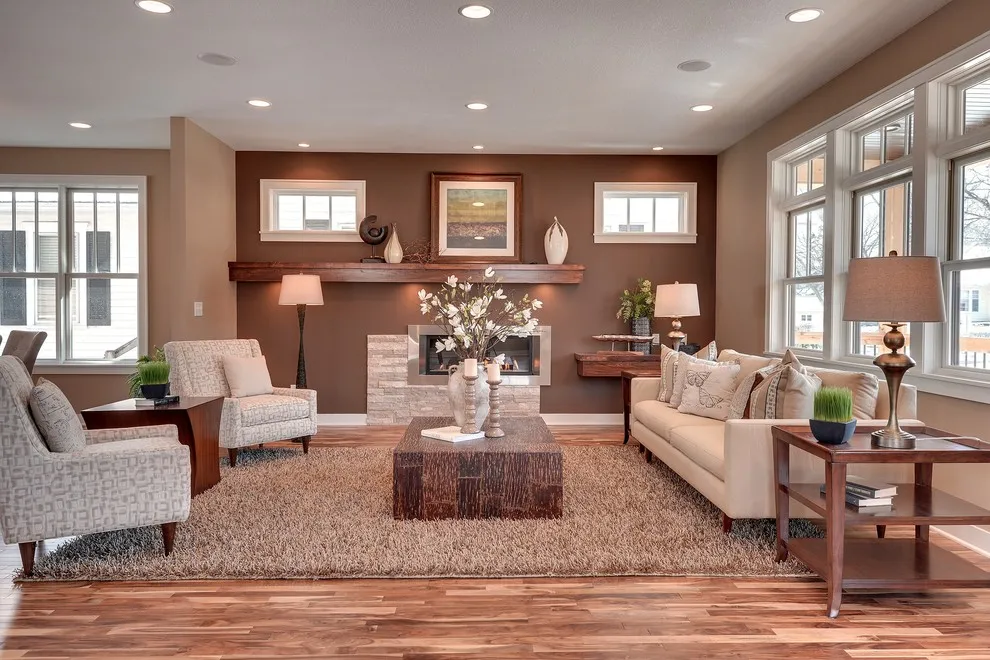
Pale patterned chairs sit opposite a light sofa beside a reddish-brown wall. The warm background gives the neutral upholstery depth. The pale upholstery gives the warm wall color room to show, while the long timber table brings another brown tone into the seating group without matching it exactly.
Compare upholstery samples with the wall color under evening lighting. Use a rug to connect the seats and keep pathways to the windows clear. Use washable cushion covers if the pale seats will see daily family use. Compare the table length with the sofa before choosing a smaller chair for each end.
PART 02
Materials and texture
IDEA 06 / 20
Pair Soft Blue Chairs With Pale Sofas
 SaveSupport Non AI Creator
Source: Evergreene Homes on Houzz.
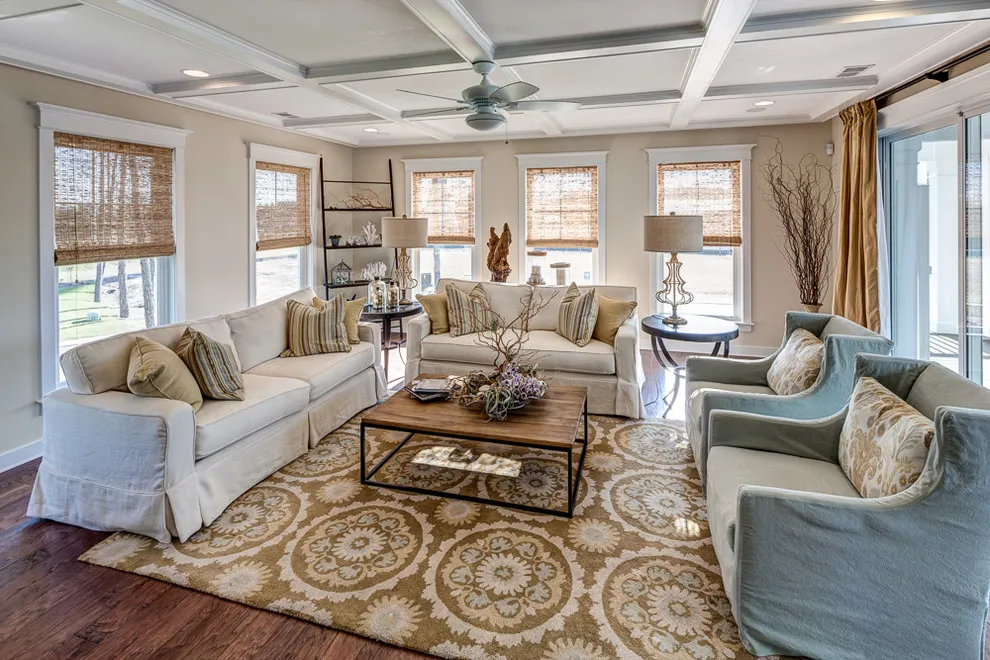
Soft blue armchairs add color to this pale seating group without the intensity of a dark feature wall. Their upholstery connects with the blue beneath the furniture, while the darker coffee table gives the surrounding light-colored pieces a firmer visual center.
Bring blue into a neutral room through chairs when you want the larger sofas to stay versatile. Compare the chair and sofa seat heights, then check that everyone can reach a drink surface. Keep additional patterns restrained so the different upholstery colors remain easy to appreciate.
IDEA 07 / 20
Give a Curved Chair a Bold Pattern
 SaveSupport Non AI Creator
Source: Savvy Design Group on Houzz.
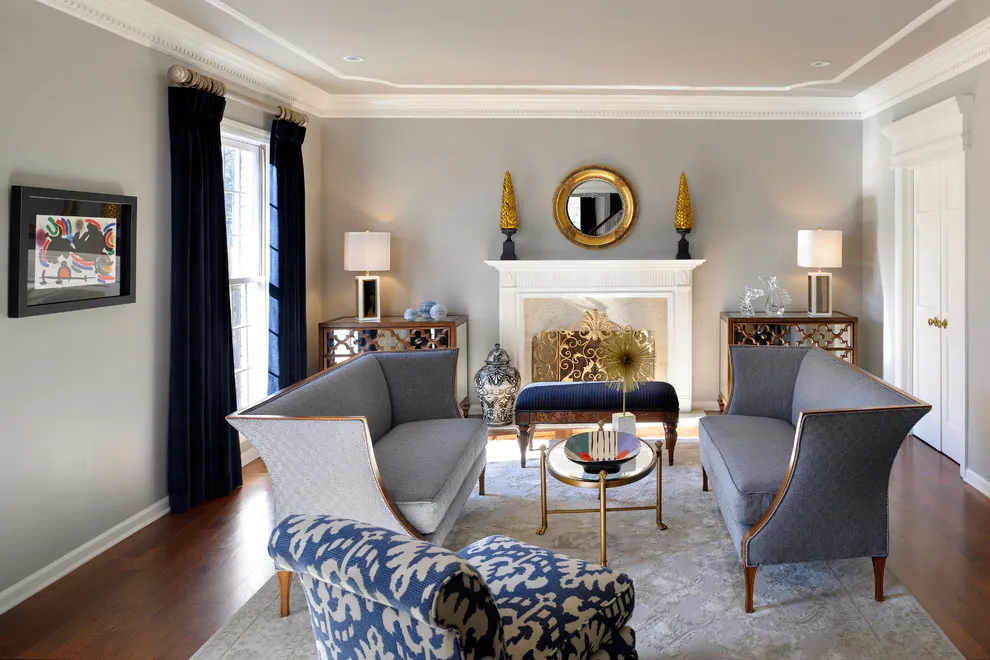
The curved chair in the foreground supplies the room's strongest pattern, while the gray sofas keep the larger seating areas quieter. Blue-and-white upholstery gives the smaller piece its own identity without requiring every cushion or surrounding furnishing to repeat the same print.
Use a patterned accent chair where you can see its back as well as its seat, so the fabric contributes from several viewpoints. Test the back support before buying and position a side table within reach. Check the pattern beside your rug to avoid competing busy surfaces.
IDEA 08 / 20
Pair a Blue Wingback With a Patterned Ottoman
 SaveSupport Non AI Creator
Source: SuzAnn Kletzien Design on Houzz.
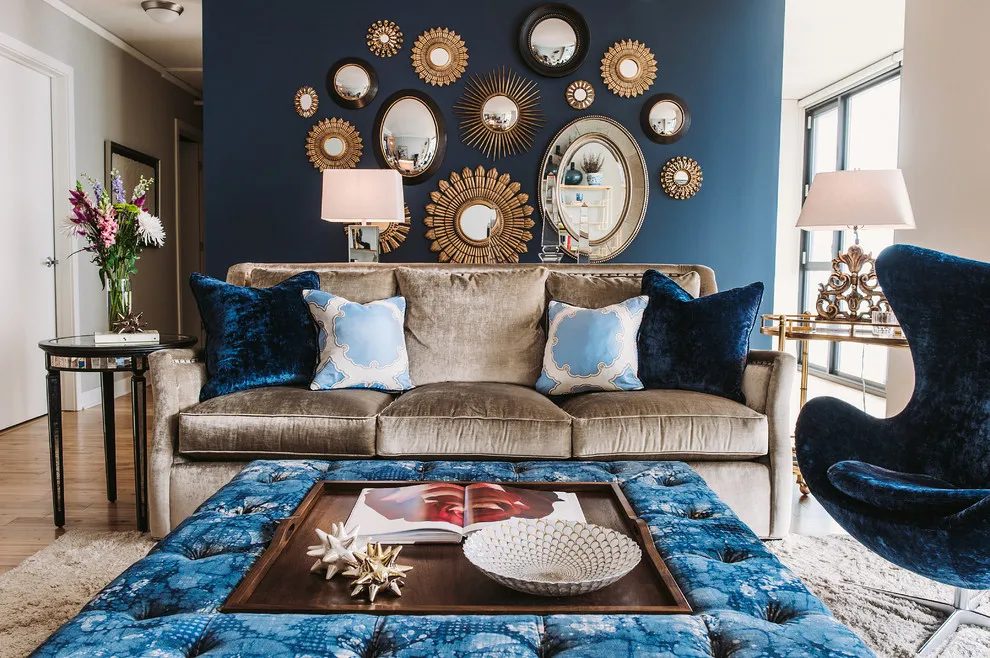
A blue wingback chair repeats the color in the patterned ottoman, while the taupe sofa provides a quieter background. The mirrors above the seating introduce several small outlines, so keeping the chair upholstery plain helps the room feel layered rather than restless.
A high-backed chair can make a comfortable reading seat, but consider what its back will conceal from the doorway. Keep a lamp and drink surface close by, and leave space for the ottoman without blocking access to the sofa or the adjoining room.
IDEA 09 / 20
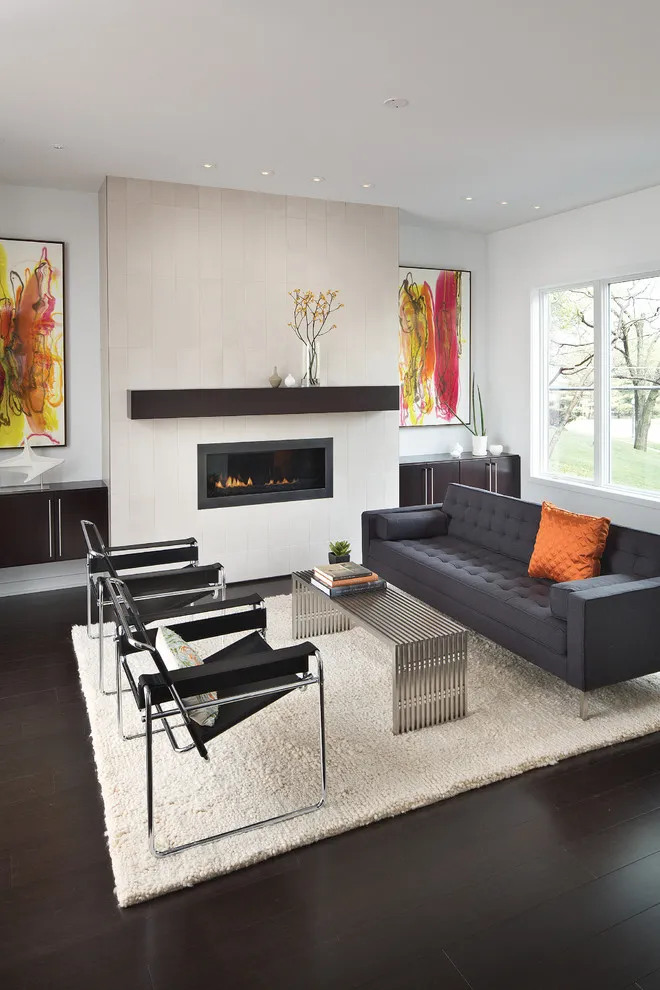
Use Slim Metal Frames With Dark Seating
 SaveSupport Non AI Creator
Source: Adam Gibson Design on Houzz.
Silver metal frames leave open space beneath and around these black upholstered chairs. Against the solid dark sofa, the narrower outlines provide a useful change in weight, while the white fireplace surround keeps the seating group from becoming an uninterrupted block of dark furniture.
Choose an open frame when you want additional seats without another bulky upholstered shape. Sit in the chair long enough to test its arms, firmness and back angle. Check that its feet sit securely on your rug and that getting up does not disturb a nearby table.
IDEA 10 / 20
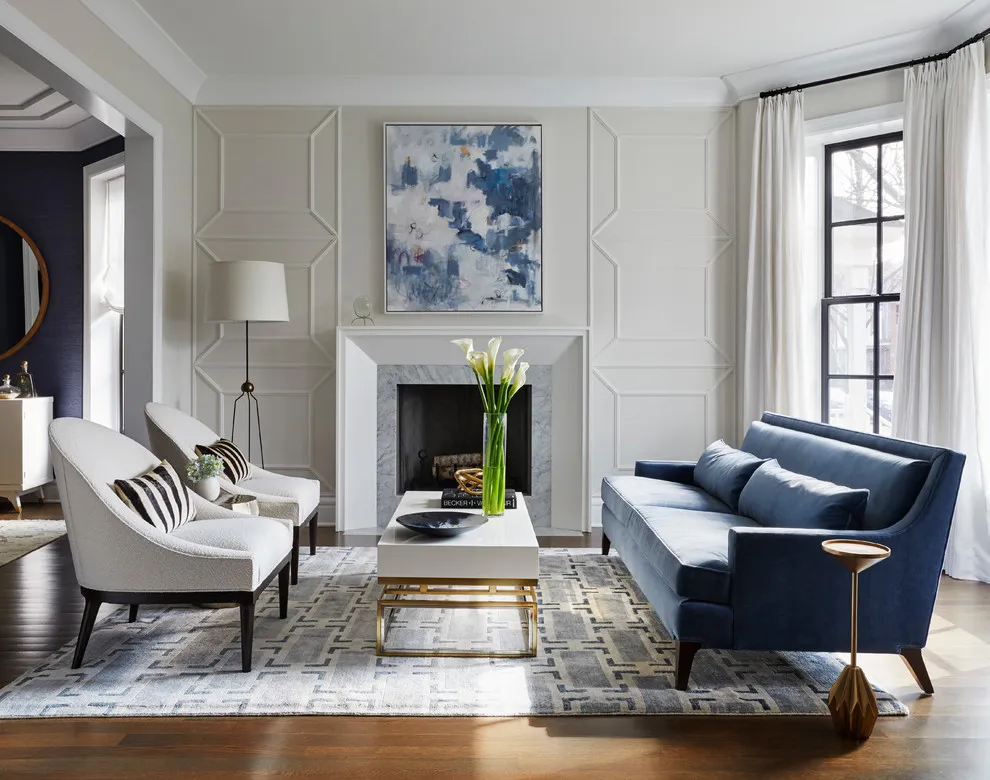
Add Striped Cushions to Pale Chairs
 SaveSupport Non AI Creator
Source: Amy Kartheiser Design on Houzz.
Striped cushions add pattern to the pale chairs rather than covering the entire seats in a busy fabric. The blue sofa remains the strongest color in the group, with smaller accents helping connect it to the chairs across the light-colored rug.
Start with removable cushion covers if you want to try stripes without committing to new upholstery. Compare stripe widths with nearby artwork and other textiles. Choose an insert that supports your back without pushing you too far forward on the chair's seat.
PART 03
Layout and everyday comfort
IDEA 11 / 20
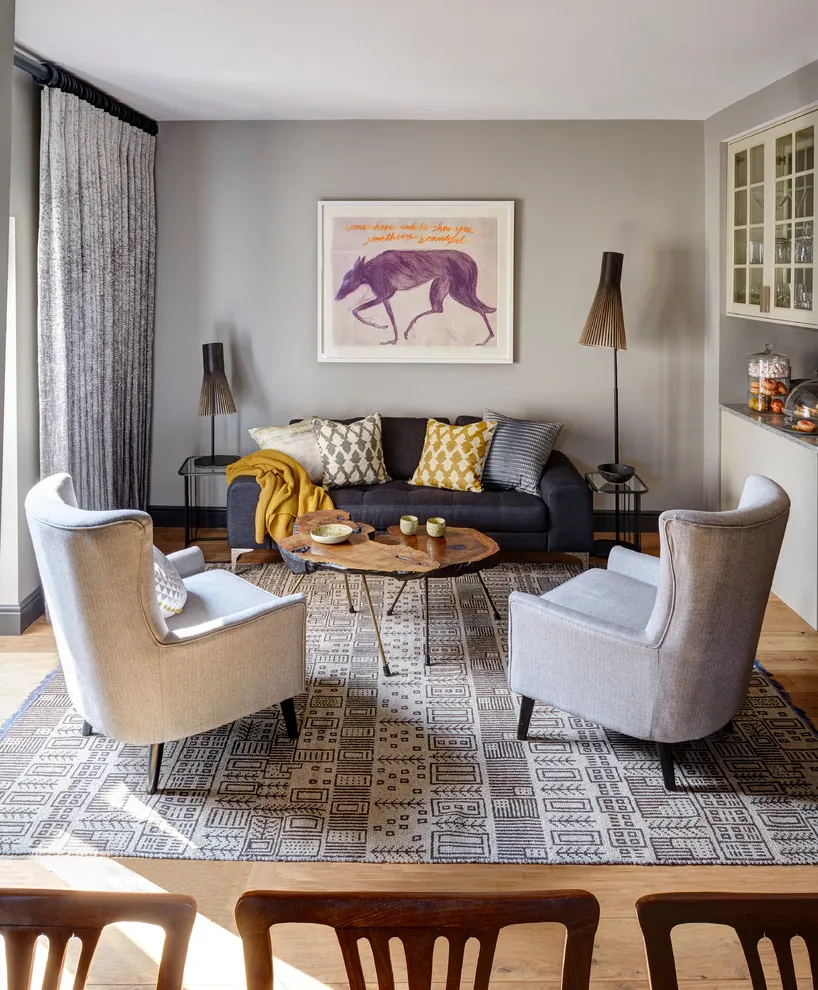
Arrange Two Pale Chairs for Conversation
 SaveSupport Non AI Creator
Source: Sigmar on Houzz.
Two pale armchairs face a dark sofa beneath framed artwork. Their angled positions make the table accessible from several seats. The light chairs bring balance opposite the darker sofa, and the artwork above it provides color without demanding another patterned upholstery fabric around the central table.
Angle chairs gently rather than pressing them squarely against a wall. Keep the route behind them clear and make sure each seat can reach the table comfortably. Mark the chair positions with tape before ordering a pair. Account for the space needed to stand up, especially if a doorway falls behind either seat.
IDEA 12 / 20
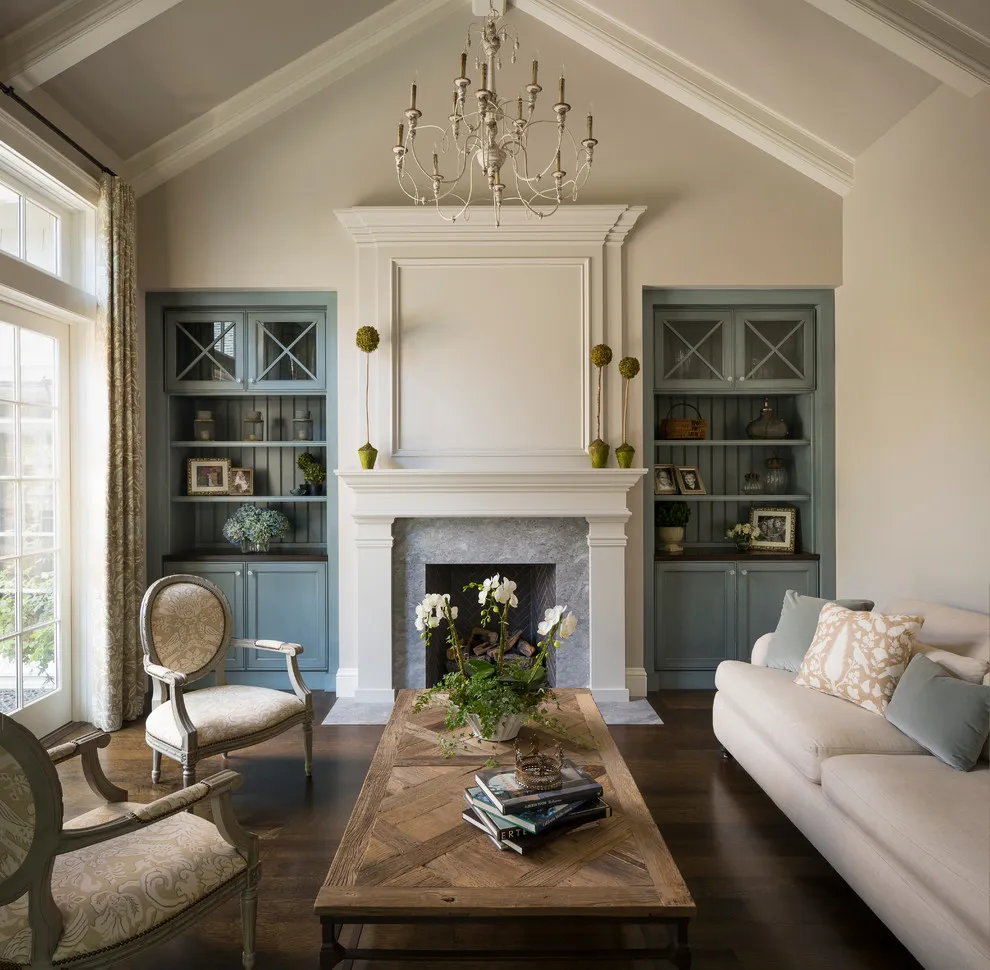
Add a Small Traditional Chair
 SaveSupport Non AI Creator
Source: W Design Interiors on Houzz.
A round-backed chair sits beside a pale sofa and a long timber table near a fireplace. Its compact frame adds another seat without matching the sofa. Its rounded timber back breaks up the longer, straighter sofa and table shapes. Exposed wood also connects the smaller seat to other warm details in the room.
Measure chair depth before placing it beside a long table. Choose a nearby lamp or side surface if the seat will be used regularly for reading. Try a small cushion if the back feels too firm, but make sure it does not shorten an already shallow seat. Keep the chair within comfortable conversation distance.
IDEA 13 / 20
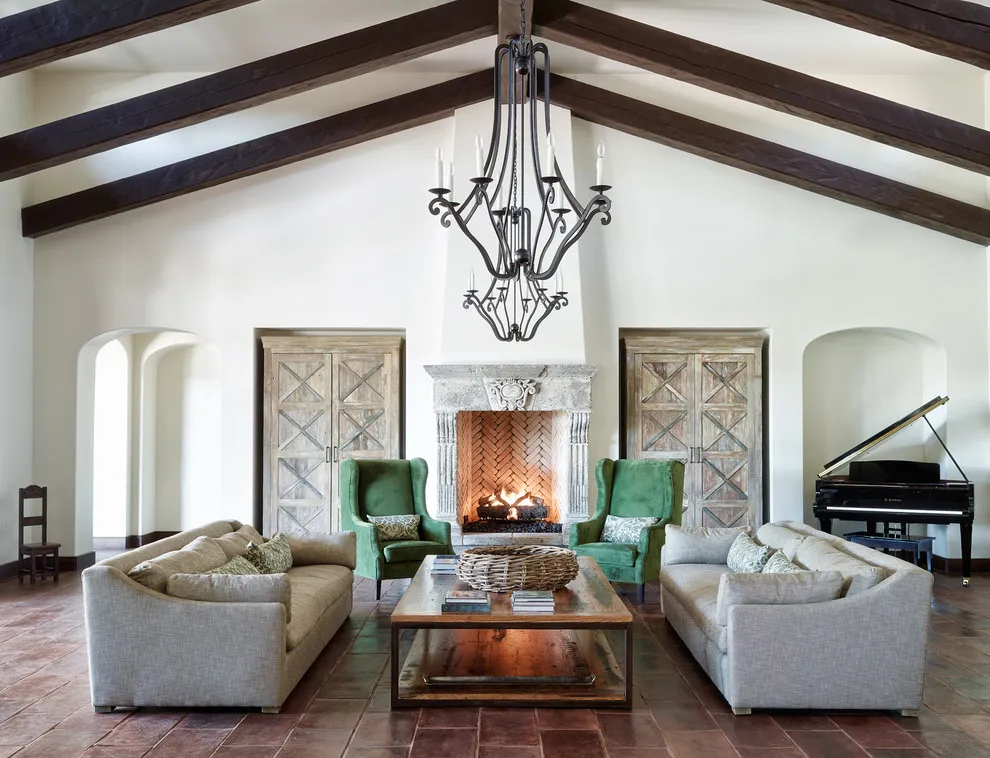
Use Green Chairs Under Dark Beams
 SaveSupport Non AI Creator
Source: The Refined Group on Houzz.
Green accent chairs sit between pale sofas beneath dark timber ceiling beams. The stronger upholstery color draws attention to the center of the room. The green upholstery introduces color beneath the dark ceiling beams, while the matching chair shapes give the large room a sense of order around its central seating area.
Use a shared rug to connect contrasting chairs and sofas. Compare green with the existing wood finish before adding more colored accessories. Test a large green swatch beside your flooring and curtains. A high wingback needs more visual breathing room than a low chair, even when their footprints are similar.
IDEA 14 / 20
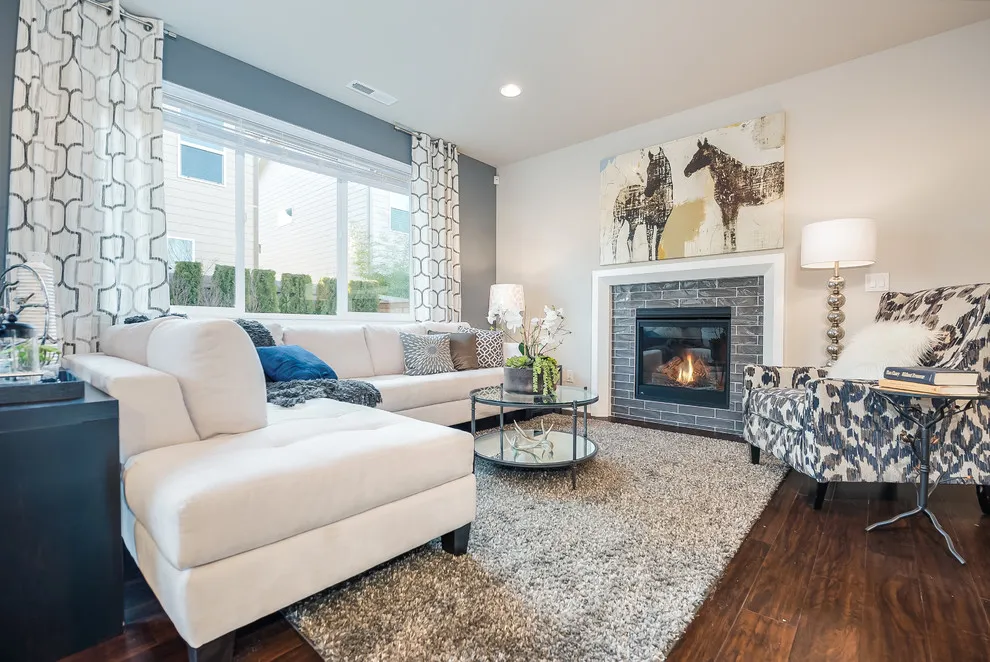
Choose a Patterned Chair Beside Plain Seating
 SaveSupport Non AI Creator
Source: Westcott Homes on Houzz.
A patterned chair faces a white sectional near a tiled fireplace. The single print supplies detail without covering the whole seating group. The smaller patterned seat provides detail beside the broad white upholstery, offering a place to introduce richer color without changing the entire main seating arrangement.
Check pattern scale against the chair size and nearby rug. Keep the remaining upholstery restrained if you want the chair to be the main decorative piece. Choose a print whose background works with the sofa, then compare the chair's seat depth with your preferred sitting posture. Leave a usable surface beside the smaller seat.
IDEA 15 / 20
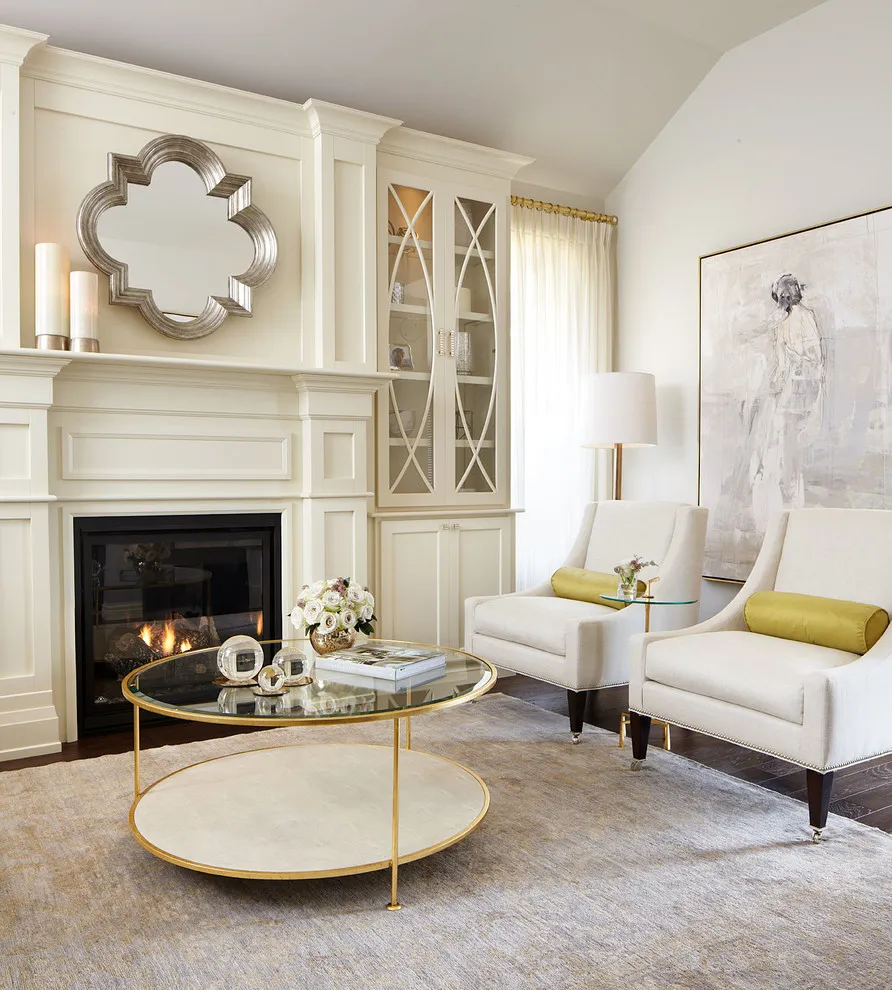
Pair Pale Chairs Around a Round Table
 SaveSupport Non AI Creator
Source: Sarah St. Amand Interior Design, Inc. on Houzz.
Two pale high-backed chairs form a quiet pair beside the white fireplace. Yellow cushions introduce a small warm accent, while the round glass table avoids adding another large opaque surface between the seats and the architectural details behind them.
Check that a shared round table is reachable from both chairs without requiring a deep lean. Compare table and arm heights, and choose cushions that improve comfort without crowding the seats. Follow the fireplace manufacturer's clearances when deciding how close the seating can stand.
PART 04
Finishing details
IDEA 16 / 20
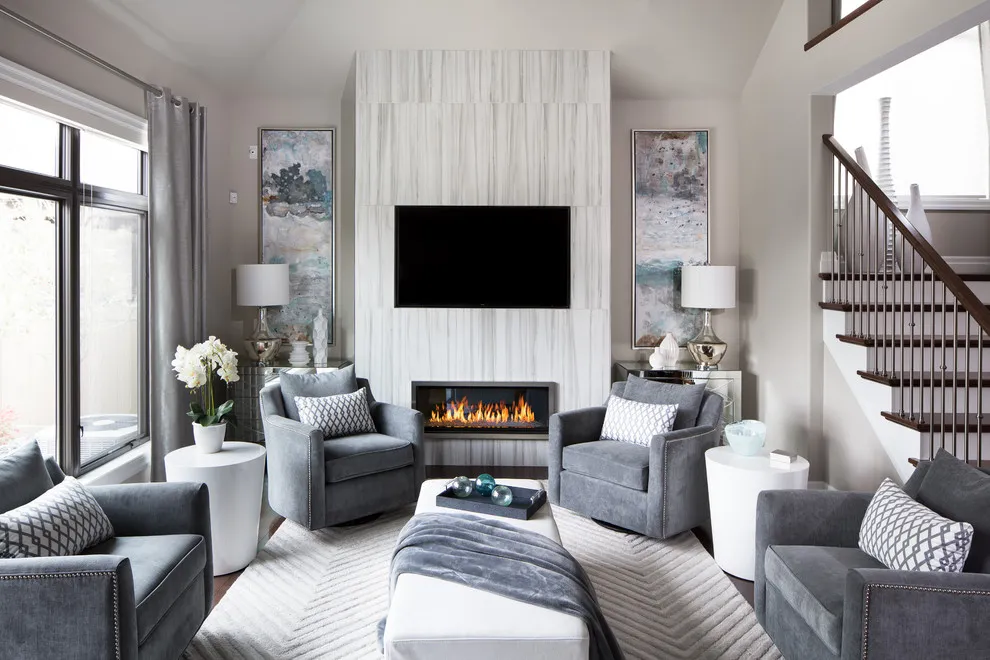
Arrange Four Chairs Around an Ottoman
 SaveSupport Non AI Creator
Source: Urbanhome Interior Design on Houzz.
Four matching gray armchairs create a conversation group around the pale ottoman, with each seat given similar importance. The repeated shapes help organize the tall room, while the lighter center keeps the arrangement from looking like a solid cluster of dark furniture.
Try a chair-only layout when conversation matters more than stretching out on a sofa. Draw the full chair depths before buying and allow a route toward the stairs. If the ottoman will hold drinks, use a stable tray and keep a separate table within comfortable reach.
IDEA 17 / 20
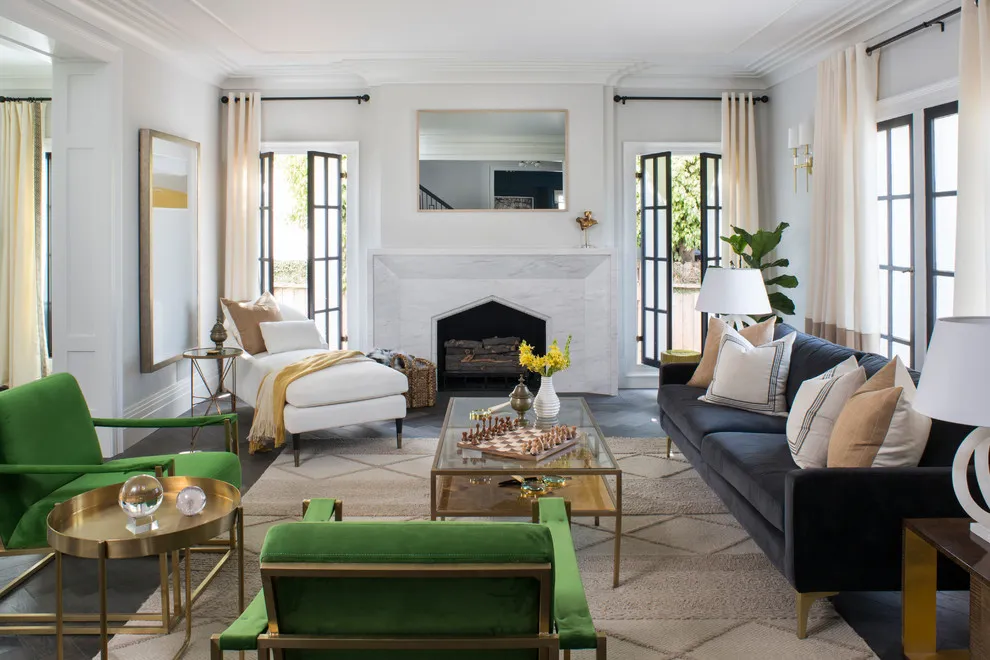
Try Green Low-Backed Chairs
 SaveSupport Non AI Creator
Source: Breeze Giannasio Interiors on Houzz.
Green low-backed chairs bring a fresh accent opposite the dark sofa without obscuring the bright windows and fireplace beyond them. Their open arms and low profiles give the room several clear sightlines, while the glass table keeps the central seating area visually light.
Use low chairs where you want to preserve a view, but test whether their backs give you enough support for longer sitting. Compare cushion firmness with the sofa and make sure each chair has a reachable surface. Keep the route behind the chairs easy to see.
IDEA 18 / 20
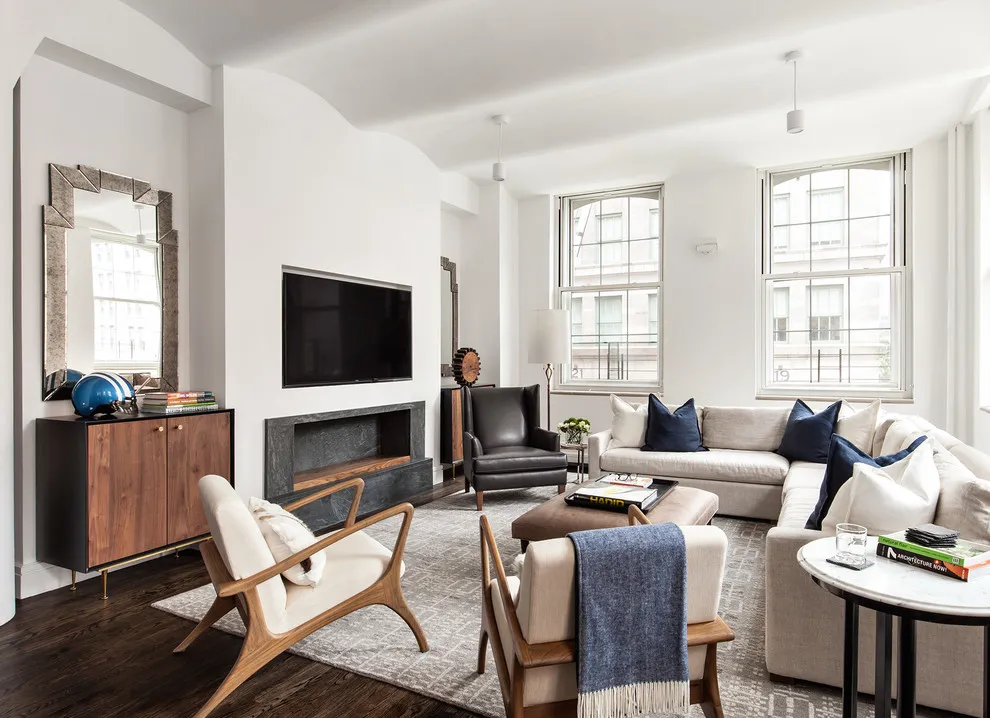
Use Timber-Framed Chairs in a Bright Room
 SaveSupport Non AI Creator
Source: Regan Wood Photography on Houzz.
Timber-framed lounge chairs face light seating near tall windows. Their open sides preserve a view across the room. The exposed timber curves provide warmth against the white walls and pale upholstery. Repeated wood on the cabinet gives those frames a connection elsewhere in the space.
Check frame comfort at the arms and shoulders as well as appearance. Choose a table height that works with the low seat and leaves an easy passage. Sit with the cushions in place before deciding whether a sculptural frame is comfortable. Check that the exposed arms do not press against your elbows during relaxed sitting.
IDEA 19 / 20
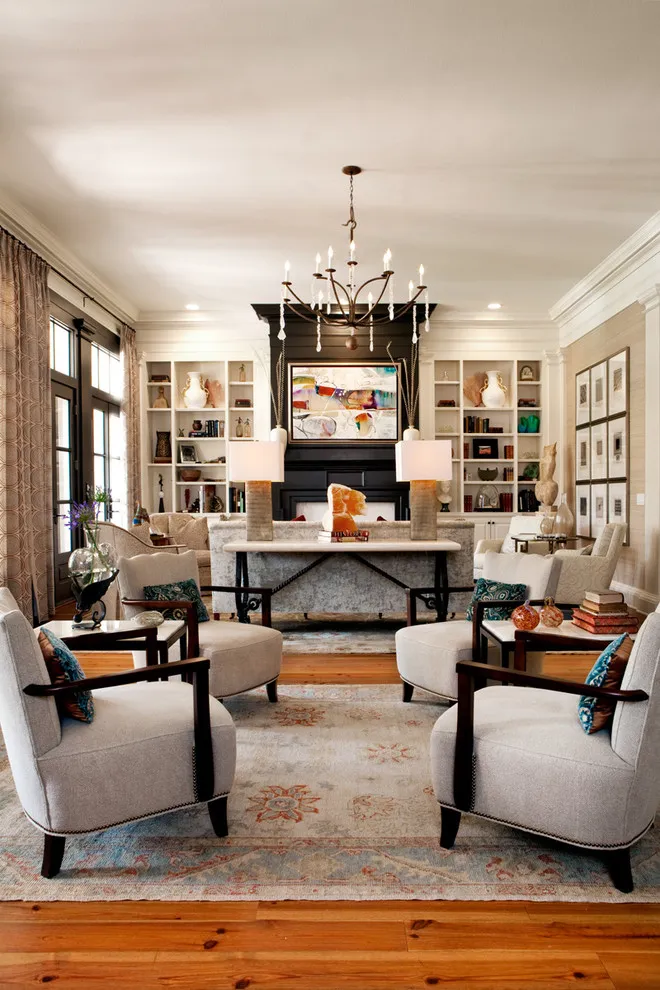
Arrange Pale Chairs Along a Long Room
 SaveSupport Non AI Creator
Source: LGB Interiors on Houzz.
Pale armchairs repeat along the length of this room, with dark timber arms giving each seat a distinct outline. A central table and rug pull the arrangement together, while the fireplace, shelving and artwork give the far end a clear focus.
In a long room, avoid spreading chairs so far apart that conversation becomes difficult. Group the seats within easy speaking distance and leave a continuous route along one side. Check table access from the outer seats, and respect the fireplace's required clearances when positioning the nearest chairs.
IDEA 20 / 20
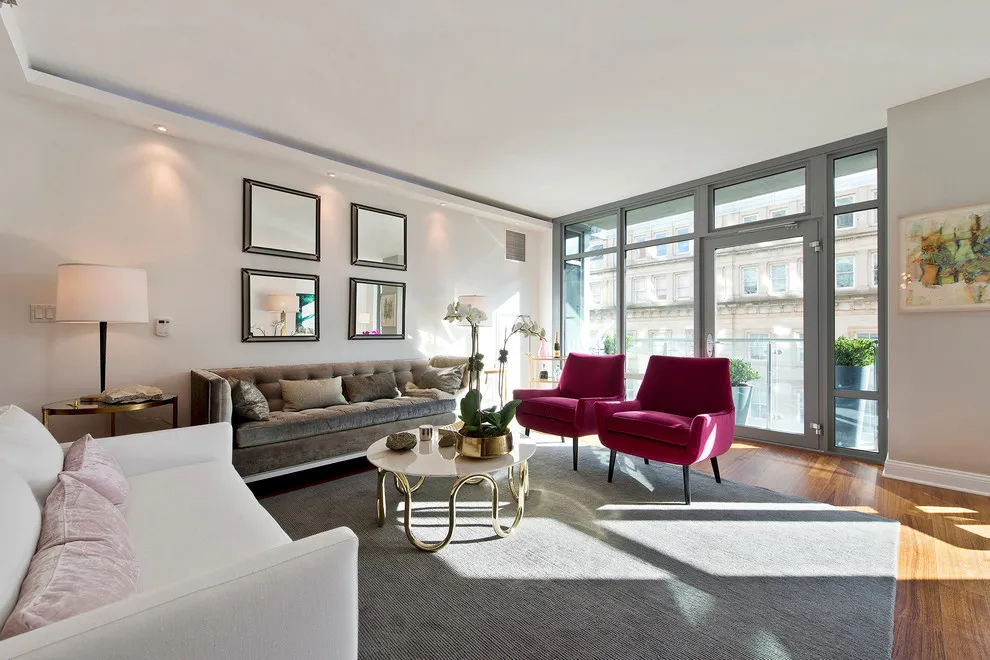
Use Burgundy Chairs as a Pair
 SaveSupport Non AI Creator
Source: M.Arch Architects on Houzz.
Two burgundy chairs introduce concentrated color beside the broad windows, standing out against the gray and white sofas. Their matching upholstery makes them read as a pair, while the pale rug and walls leave plenty of quieter space around the richer shade.
Give a bold chair pair enough room to sit comfortably without blocking the windows or balcony access. View the fabric in daylight and under your evening lamps before ordering. Keep nearby cushions relatively simple, and check that both chairs can reach the central table or a side surface.
BRING IT ALL TOGETHER
Make the idea work in your own home
Start with one change that solves a real problem or helps your favorite feature stand out. Compare colors and materials in your own light and measure clearances before ordering anything permanent.
A comfortable, practical room is more successful than a perfectly copied photograph. Keep what serves your daily routine and leave out details that do not suit your space.