Beige couches are easy to live with visually, but a room built entirely from similar smooth neutrals can fall flat. The strongest spaces balance the couch with distinct textures, a few darker accents, and furniture arranged for how people actually use the room.
Start by looking at the materials and lighting in your own home. An idea that looks effortless in a large photographed room may need changes in a compact or shaded space. These examples focus on adaptable design decisions rather than matching a staged room piece for piece.
PART 01
Color and contrast
IDEA 01 / 20
Keep the Window Wall Light
 SaveSupport Non AI Creator
(Image credit: Future PLC/Dominic Blackmore)
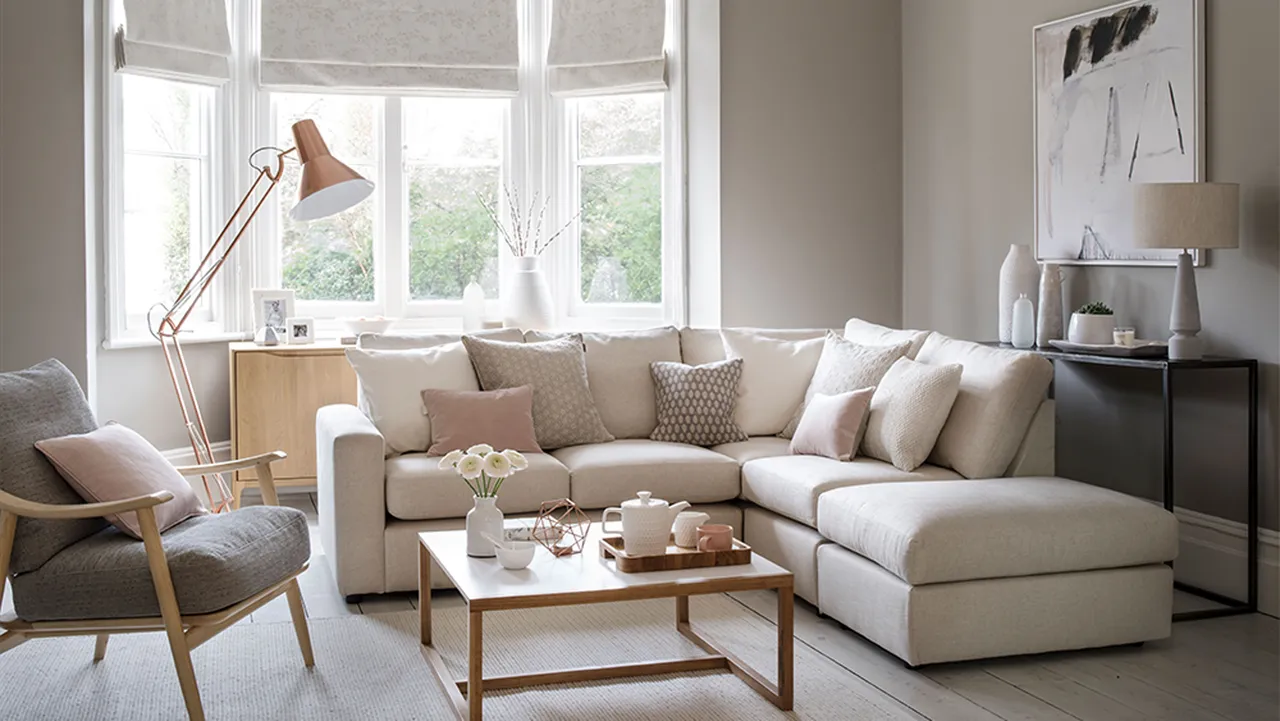
A pale beige sectional sits beneath a broad window beside a timber coffee table. The light upholstery keeps the large seating piece from dominating the bright corner. The uninterrupted upholstery lets the bay window remain the focal point, while the wood table prevents the pale seating from feeling washed out. A similar light palette works especially well when your room already receives generous daylight.
Measure the chaise against the walking route before choosing a sectional. Use a compact table that can be reached from the main seats without blocking access to the window. Before ordering, mark the chaise and table outlines on the floor and walk past them carrying a laundry basket. This makes awkward pinch points easier to spot than measurements on a furniture listing alone.
IDEA 02 / 20
Add Small Rust Accents
 SaveSupport Non AI Creator
(Image credit: Future PLC/Simon Whitmore)
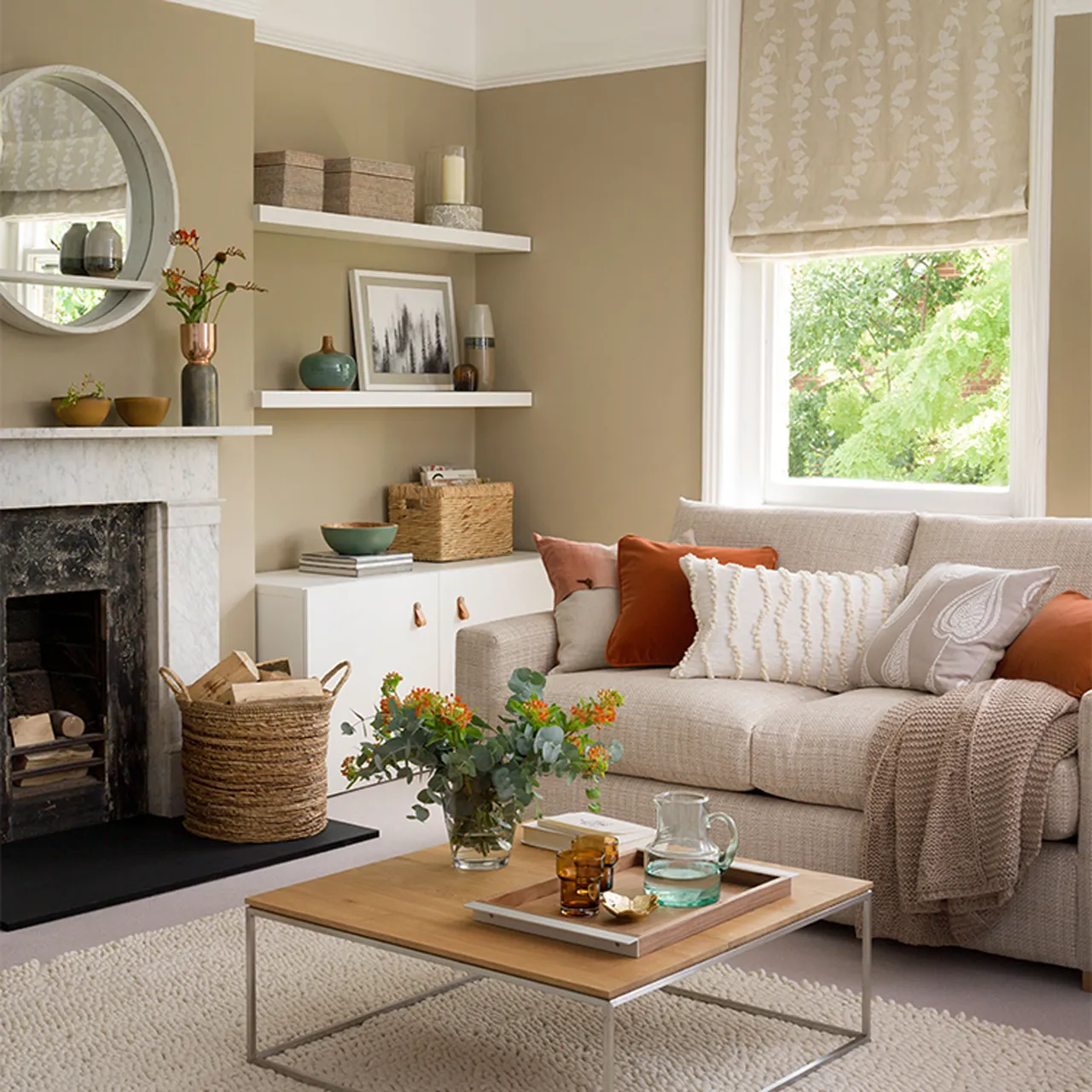
The rust cushions draw attention to the seating without competing with the fireplace, and the baskets add another warm texture at floor level. Repeating a warm accent in a few small objects creates a more settled arrangement than introducing several unrelated colors.
Bring a fabric sample home and compare it against the wall paint in daylight and under your evening lamps. A cream that looks neutral in a showroom can appear surprisingly yellow beside a cooler white fireplace.
IDEA 03 / 20
Layer Soft Textures
 SaveSupport Non AI Creator
(Image credit: Future/James Merrell)
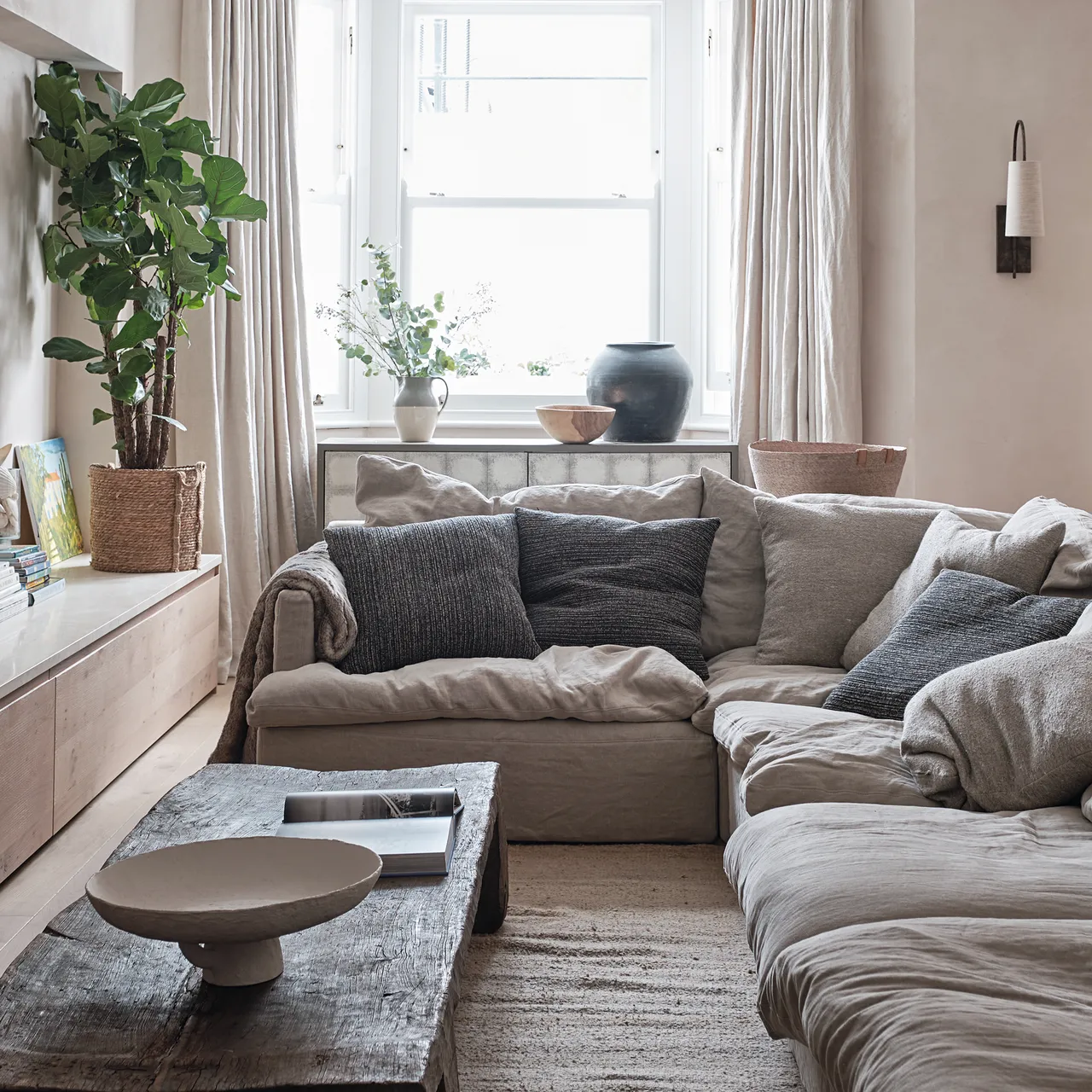
The darker cushions give this pale greige sofa a distinct outline, while the uneven texture of the rug and table makes the corner feel relaxed. The mix is useful when you want a neutral room with more depth than matching beige surfaces provide.
Choose the most washable fabric for the surfaces that receive everyday use, then introduce richer textures through removable cushions. Keep the table close enough to reach from the sofa without making the window-side route difficult to use.
IDEA 04 / 20
Use a Gallery Wall as the Accent
 SaveSupport Non AI Creator
(Image credit: Desenio)
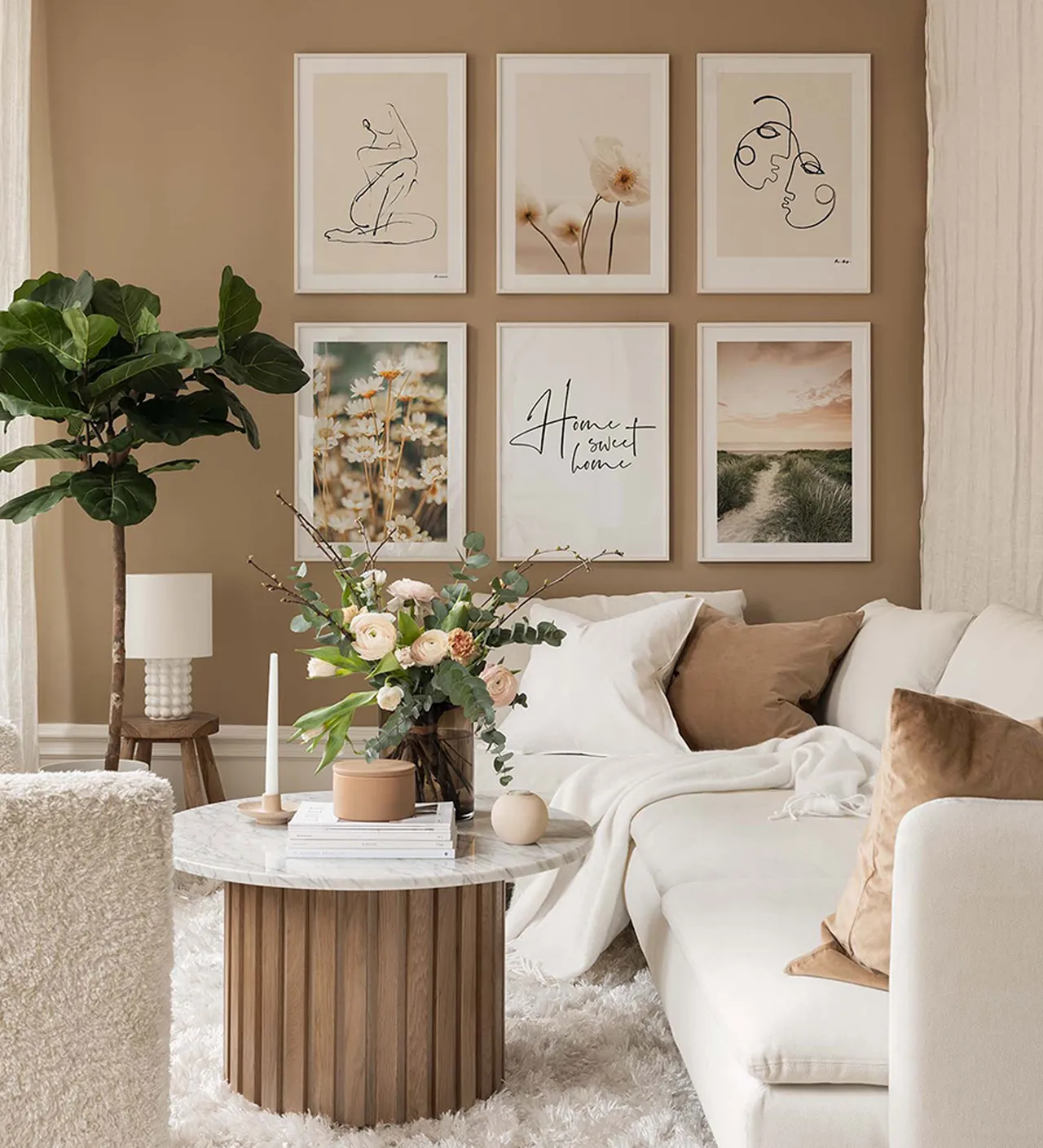
The repeated frames provide a clear rhythm above the sofa, and the softly varied cushions keep the arrangement from feeling rigid. A consistent frame finish helps a collection of different photographs or illustrations read as one piece of wall decoration.
Lay the pictures out on the floor before making holes, then use paper outlines to check their position from the doorway. Leave enough space above the sofa back for people to sit comfortably without brushing the lowest frames.
IDEA 05 / 20
Bring Beige Into a Collected Room
 SaveSupport Non AI Creator
(Image credit: Olivine Design / Styling Hannah Deacon / Photography Simon Bevan)
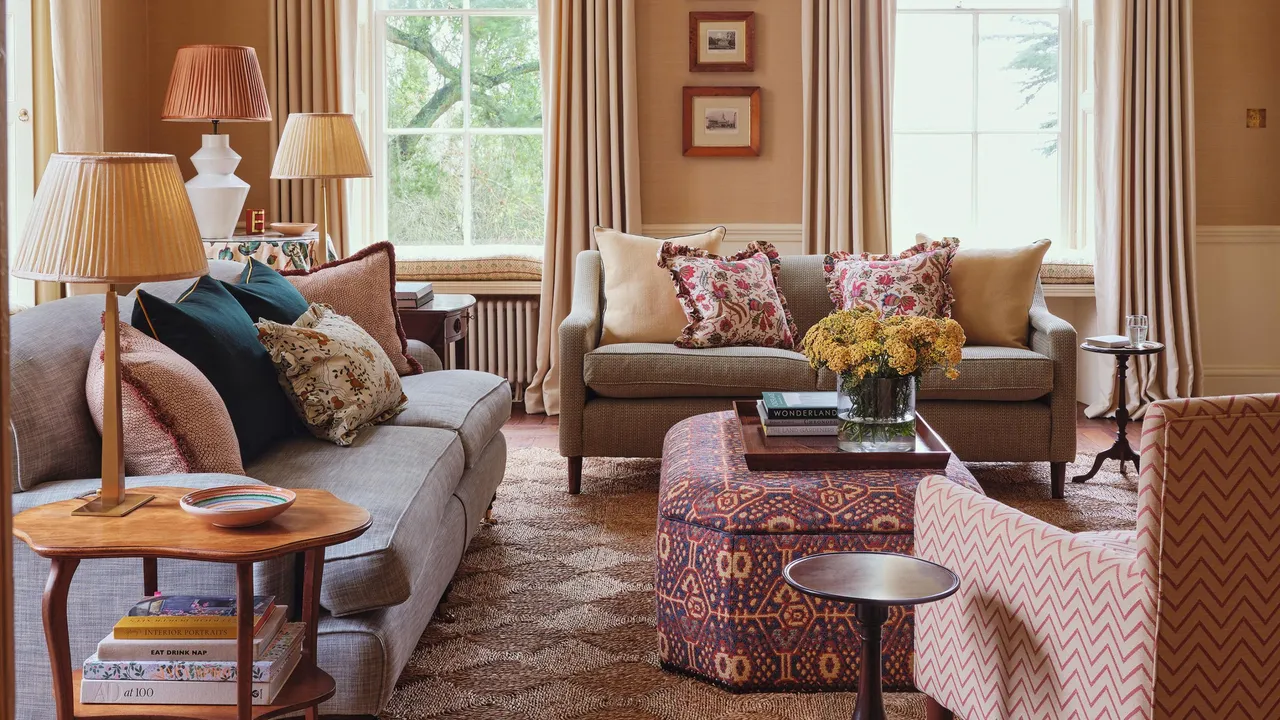
The upholstered ottoman carries the strongest pattern, giving the plain seating an intentional companion rather than another matching surface. This approach lets you introduce a collected look gradually, even if your main sofa needs to stay simple and versatile.
Treat the ottoman as the starting point for smaller textiles and repeat just one or two of its colors. If you use it for drinks, add a stable tray and keep enough uncovered space for its softer footrest role.
PART 02
Materials and texture
IDEA 06 / 20
Try a Curved Sofa
 SaveSupport Non AI Creator
(Image credit: Boz Gagovski. Design: Studio Raymond)
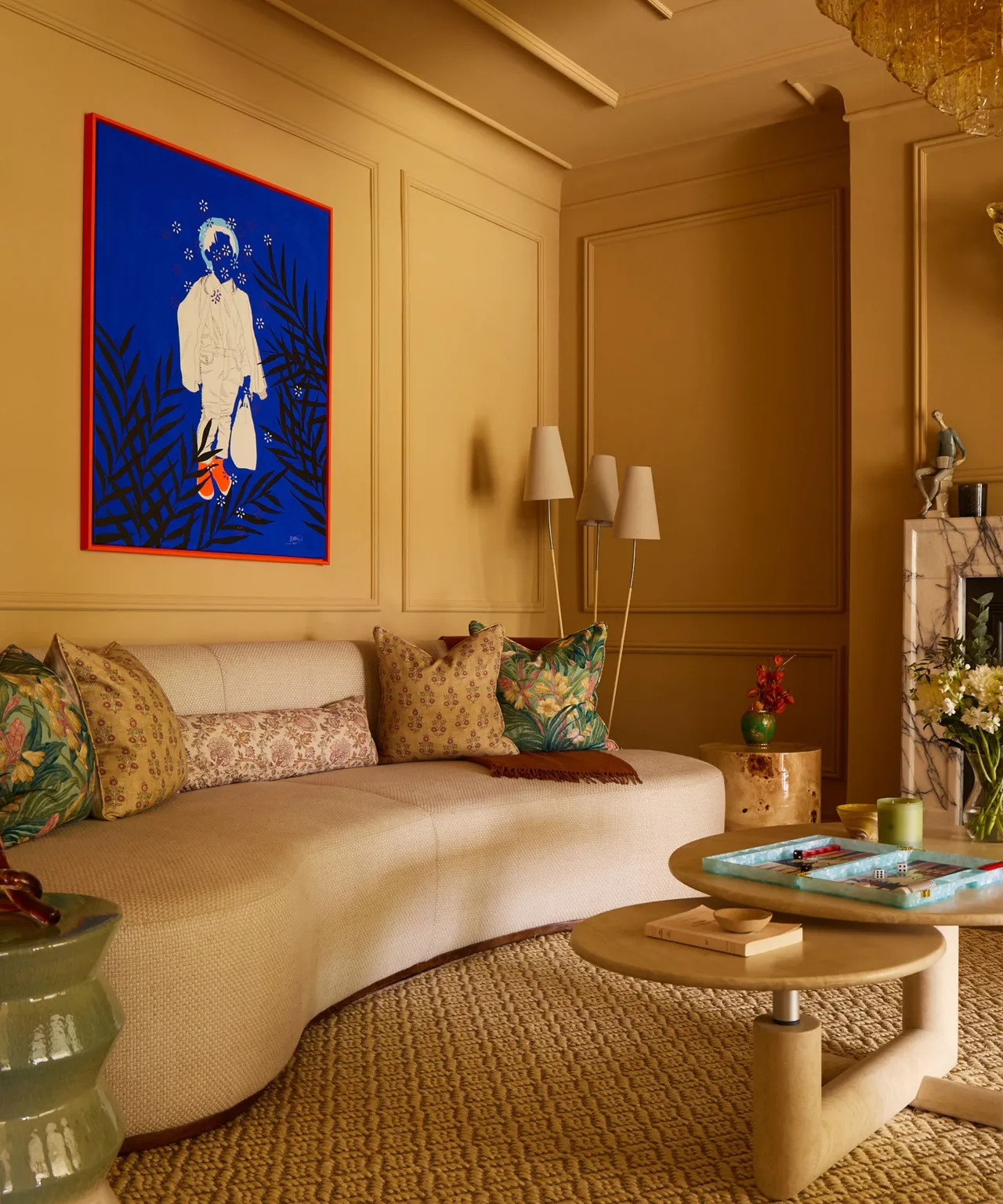
The rounded sofa softens the meeting of the walls, while the mustard paint and bright artwork bring energy to the pale upholstery. Curves can make a compact conversation area feel welcoming, particularly where a bulky square arm would interrupt the view.
A curved sofa may need more floor space than its listed width suggests, so check the deepest part of its footprint. Position side tables where seated people can reach them instead of assuming a central table will serve every seat.
IDEA 07 / 20
Use a Subtle Stripe
 SaveSupport Non AI Creator
(Image credit: Aimée Mazzenga / JBSA. Design: Paloma Contreras)
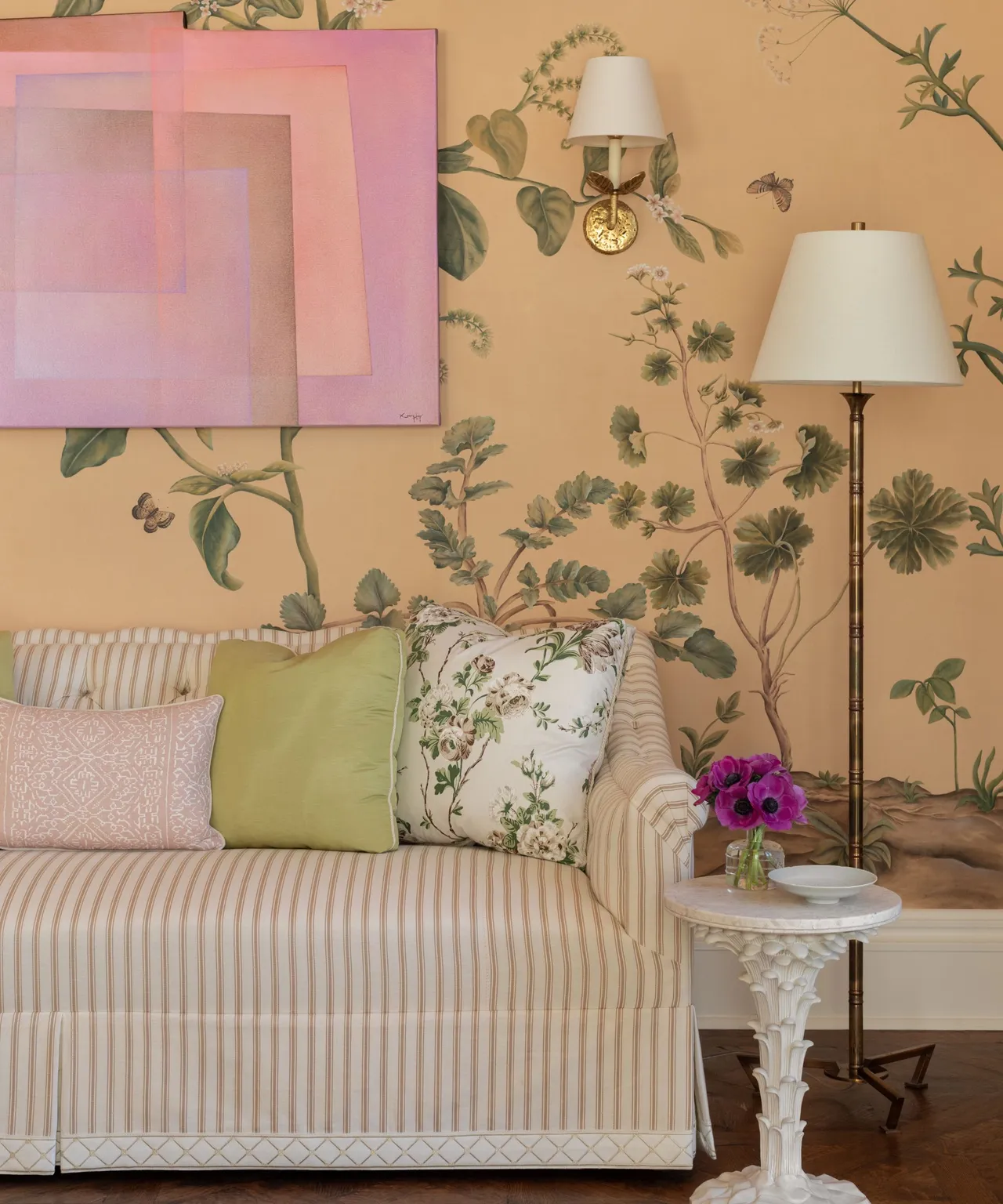
The fine stripes give the sofa a little movement without overwhelming the larger floral pattern on the wall. Pink artwork links the two surfaces, making a useful example of how a quiet upholstery pattern can sit comfortably within a more expressive room.
Compare fabric samples from across the room as well as up close; narrow stripes can blend into a single tone at a distance. Keep other large textiles quieter if you want the wall pattern to remain the main decorative feature.
IDEA 08 / 20
Pair Cream With Green Cushions
 SaveSupport Non AI Creator
(Image credit: Little Greene)
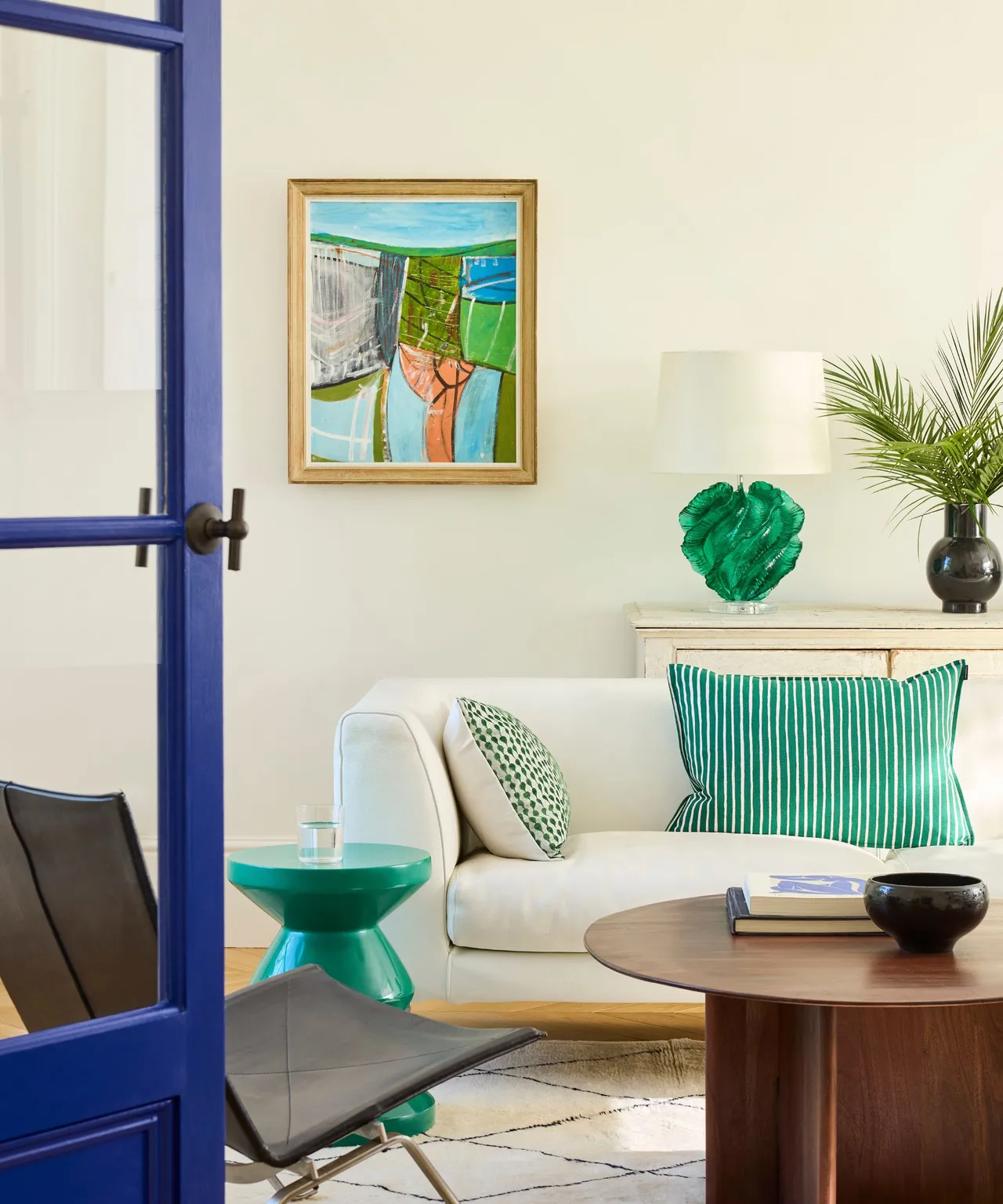
The green cushions and table bring a fresh accent to an otherwise pale seating area, with the bowl reinforcing the same color at a smaller scale. Keeping the sofa neutral makes this kind of color experiment easier to change later.
Start with a cushion or small accessory before committing to a painted table. Look at the green beside your existing flooring and curtains, since surrounding warm or cool tones can change how strong the accent feels in your room.
IDEA 09 / 20
Frame Pale Seating With Dark Curtains
 SaveSupport Non AI Creator
Source: Gemma Parker Design, LLC on Houzz.
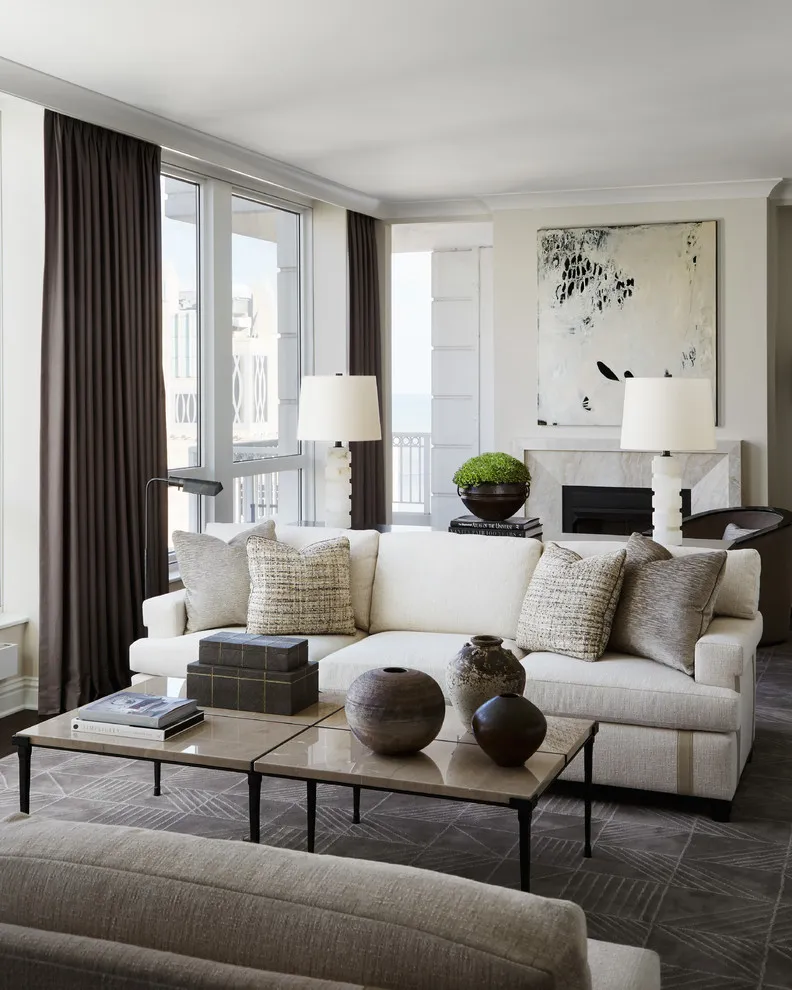
The dark curtains give the light sofa a strong frame, and the slender table base preserves an open view of the floor. This balance is useful when you like pale upholstery but want the room to have a more defined outline.
Choose curtains that can stack clear of the window so the darker fabric does not reduce useful daylight. Test the combination at night too, when the curtains become a much larger block of color behind the seating.
IDEA 10 / 20
Mix Beige Seating With Blue Chairs
 SaveSupport Non AI Creator
Source: Evergreene Homes on Houzz.
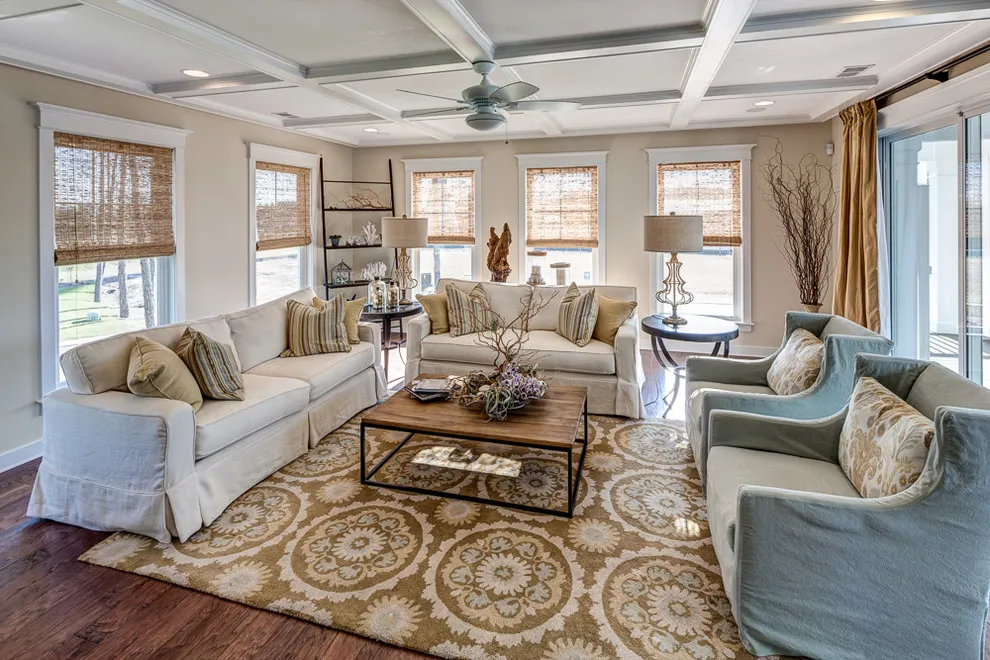
The pale blue-green chairs introduce a cool note without overpowering the neutral sofas, and the rug connects the different seats. Mixing upholstery in this way can make a conversation group feel layered while leaving the larger furniture flexible.
Check seat height and depth when combining chairs with a sofa, especially if people will use the group for long conversations. A shared table should be reachable from each seat without forcing the furniture into an uncomfortable, crowded circle.
PART 03
Layout and everyday comfort
IDEA 11 / 20
Keep a Large Sectional Visually Quiet
 SaveSupport Non AI Creator
Source: Interiors by Steven G on Houzz.
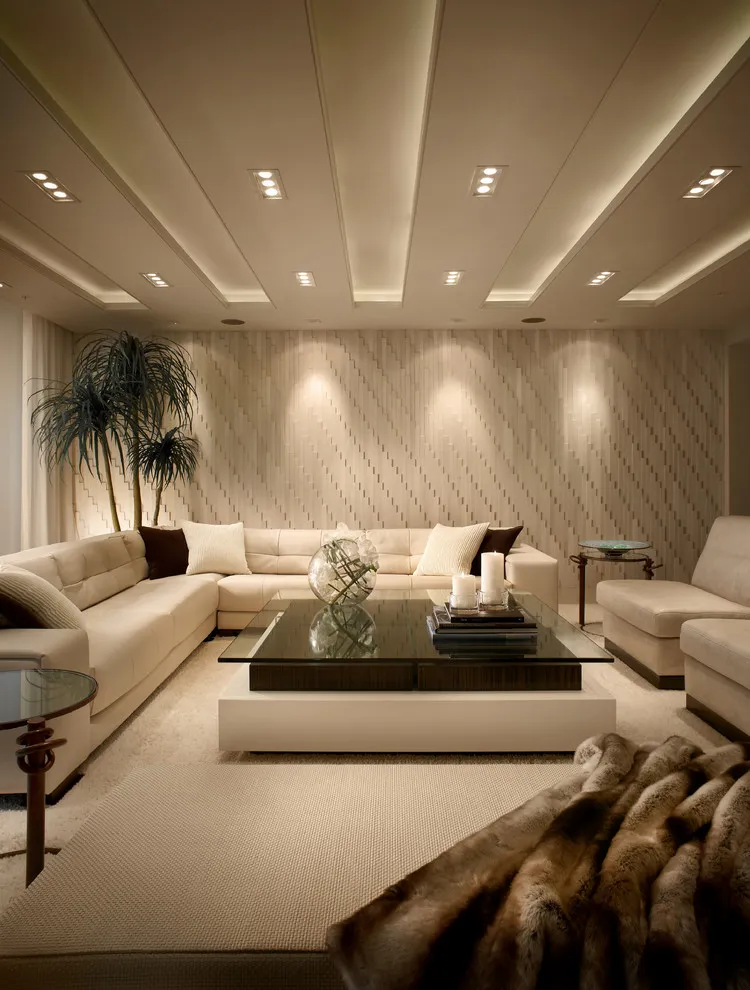
The broad sectional establishes a clear place to gather in the large room, with the low table keeping sightlines open. The restrained upholstery also leaves room for the long ceiling lights to act as a distinctive feature overhead.
Check how individual modules join and whether their positions can be changed before buying a large sectional. Add a task lamp near your preferred reading seat if the ceiling lights provide atmosphere but do not illuminate a book comfortably.
IDEA 12 / 20
Mix Beige Seating With Timber Shelves
 SaveSupport Non AI Creator
Source: Troy Lighting on Houzz.
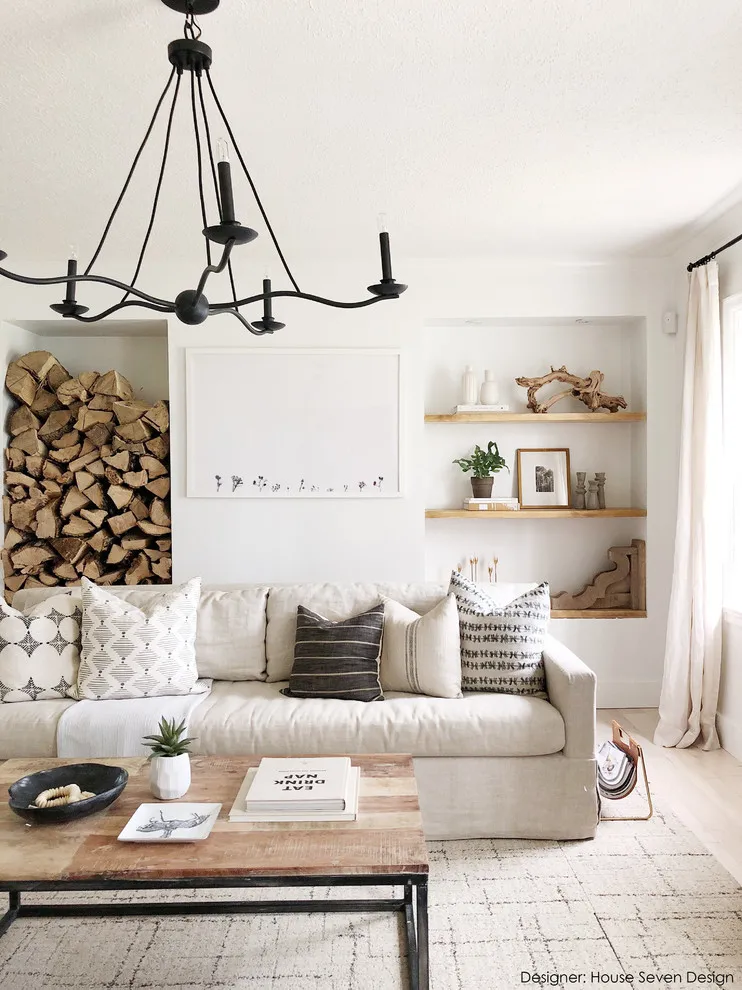
The timber shelves and table give the beige sofa a warmer setting, while the light wall keeps the stacked books and objects visible. The log pile adds a rougher texture that contrasts with the smooth upholstery without requiring another strong color.
Leave open space between groups of objects so the shelves remain easy to dust and rearrange. Store loose everyday items out of sight where possible, and keep anything stacked at floor level clear of the route around the sofa.
IDEA 13 / 20
Choose Blue as a Small Accent
 SaveSupport Non AI Creator
Source: Catherine Alison Interiors on Houzz.
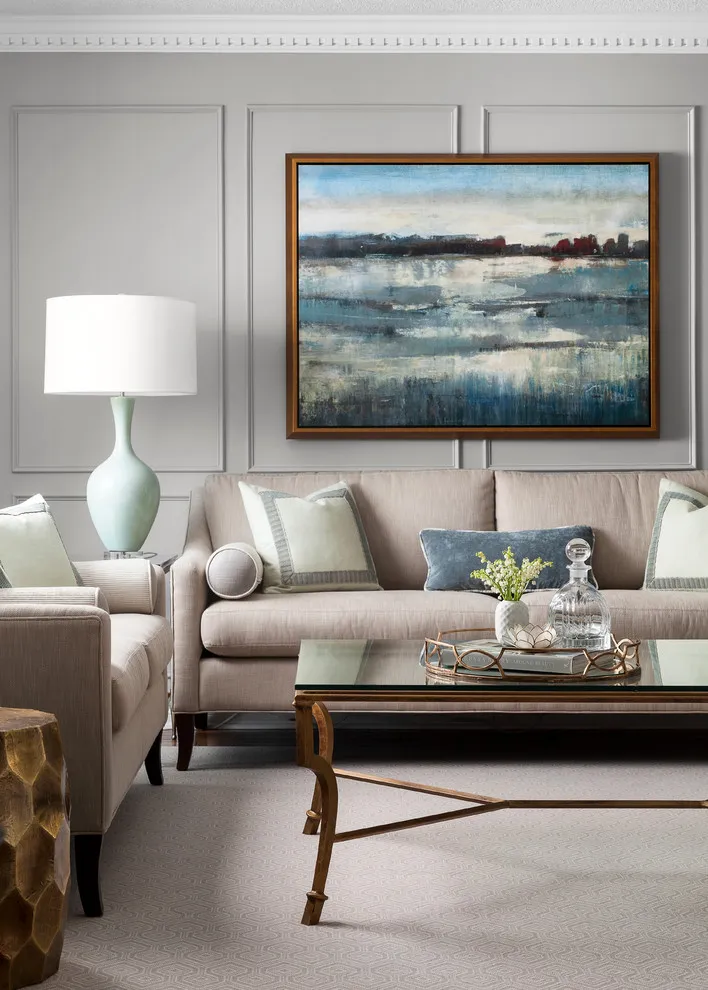
The seascape supplies a clear blue accent, which the cushions repeat without turning every surface into a matching set. The dark table gives the pale sofa a grounded companion and helps the artwork feel connected to the seating below it.
Choose one or two colors from an existing picture before shopping for cushions, and compare them beside the sofa fabric. Keep a large rug fairly quiet if the painting is the feature you want people to notice first.
IDEA 14 / 20
Balance a Sofa With Patterned Chairs
 SaveSupport Non AI Creator
Source: Oak Hill Building & Remodeling on Houzz.
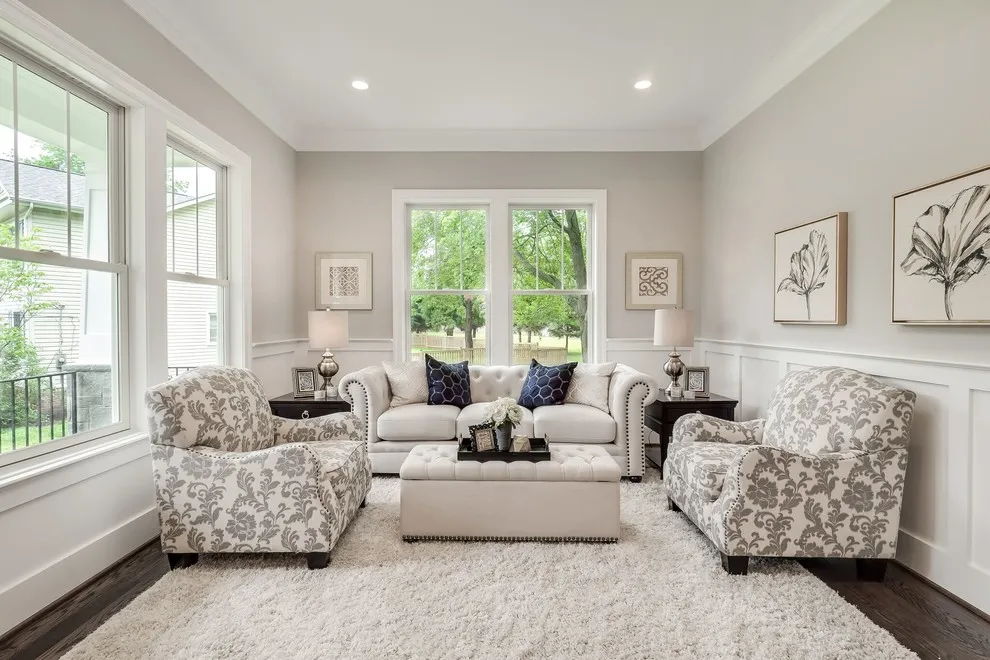
The floral chairs introduce pattern at the edges of the arrangement, allowing the pale sofa and central ottoman to remain calm. This is a useful balance when you enjoy traditional textiles but do not want a fully patterned upholstery scheme.
Check that the ottoman serves the way you actually use the room: a footrest needs different spacing from a table for snacks. Use a firm tray for drinks and leave a clear approach to each chair so the extra seating remains practical.
IDEA 15 / 20
Warm a Tall Room With Beige
 SaveSupport Non AI Creator
Source: Cassy Young Decorating Den Interiors Athens GA on Houzz.
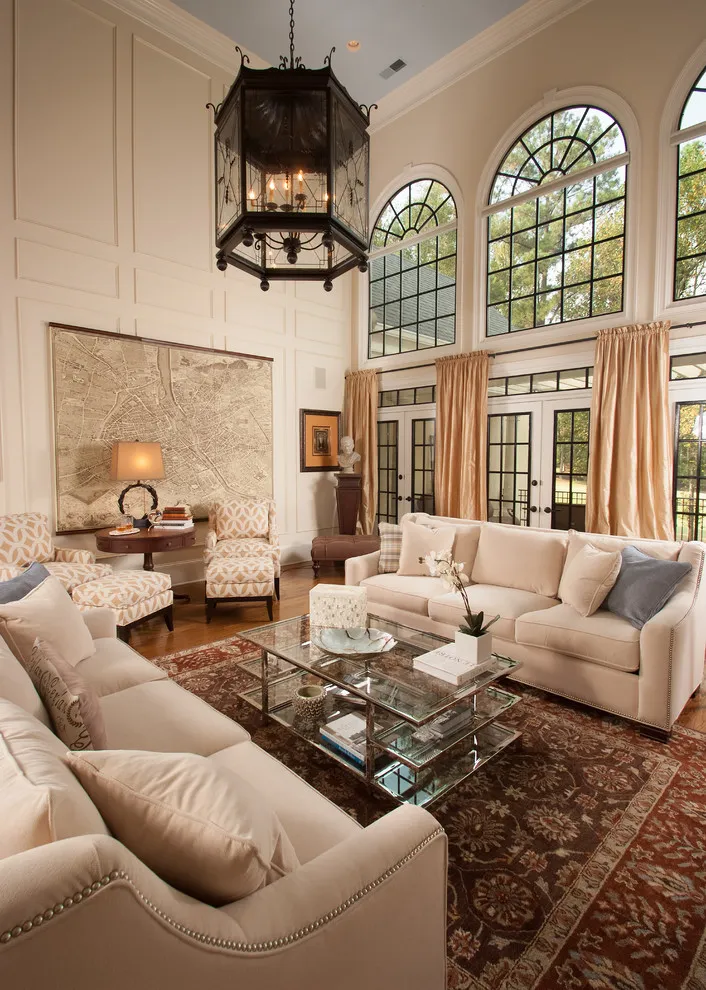
The pale sofas echo the generous scale of the arched window, while the darker table breaks up the light upholstery. In a room with prominent architecture, this restrained furniture palette lets the shape of the opening remain an important part of the decoration.
Use a rug large enough to connect the opposing seating without concealing all the surrounding floor. Plan lamps for the seats farthest from the window, since a bright room during the day can still need several useful pools of light in the evening.
PART 04
Finishing details
IDEA 16 / 20
Gather Mixed Seating Around a Timber Table
 SaveSupport Non AI Creator
Source: The Sitting Room on Houzz.
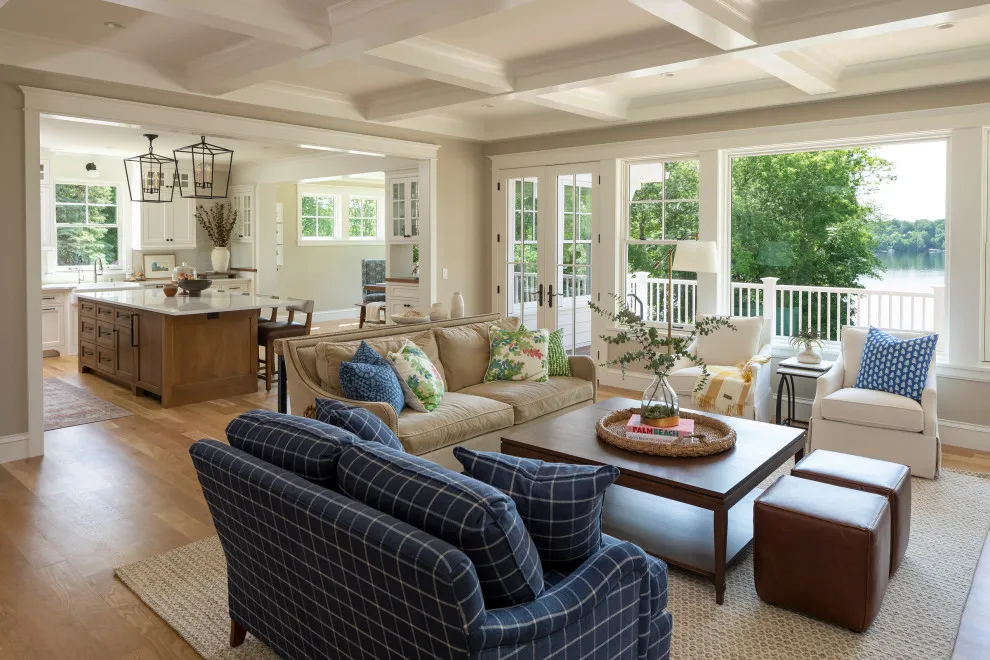
The pale sofa shares the seating group with blue patterned chairs around a rectangular timber table. The warm tabletop bridges the different upholstery colors, while the open view toward the kitchen makes the group feel part of the wider room rather than an isolated corner.
Keep the table positioned for the seats that people use most, then check the walking route toward the kitchen. Repeat a little of the chair color in cushions if you want a closer connection, but leave the sofa mostly plain so the patterned chairs retain their character.
IDEA 17 / 20
Give a Large Sofa a Clear Boundary
 SaveSupport Non AI Creator
Source: Ethan Allen of River Edge, NJ on Houzz.
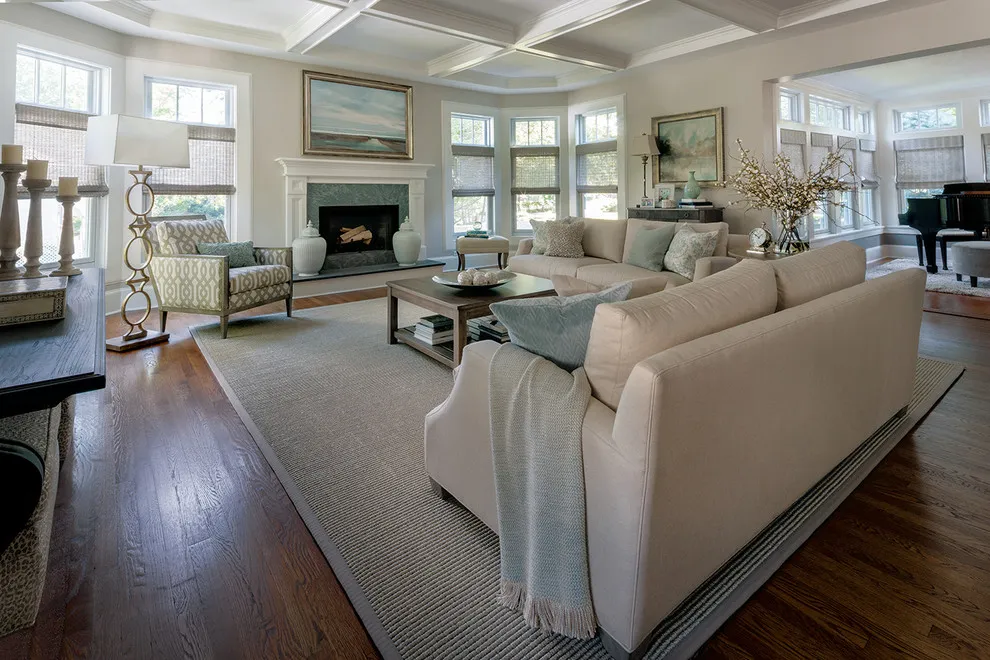
The two pale sofas define the sitting area within a room that also contains other furniture, and the rug makes that boundary easy to read. The visible wood around its edges adds contrast and leaves a practical route behind the seating.
Measure the rug together with the sofa positions rather than choosing it independently. In a multipurpose room, test the routes to the piano, windows and adjoining spaces so a comfortable conversation group does not make other activities awkward.
IDEA 18 / 20
Create a Compact Beige Sitting Area
 SaveSupport Non AI Creator
Source: Katie Lydon Interiors on Houzz.
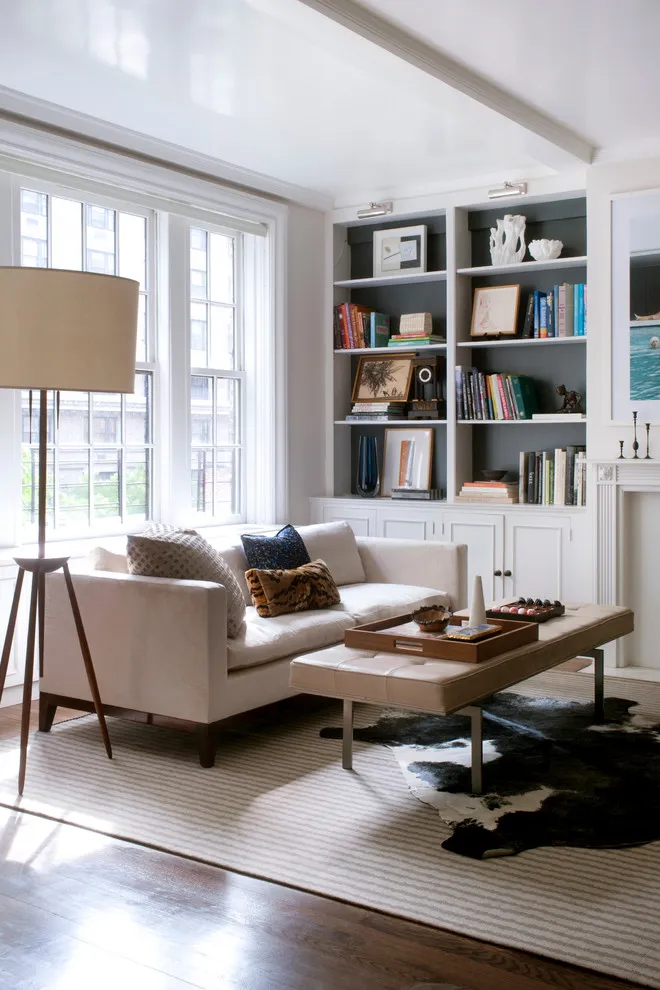
The compact sofa leaves the tall window and built-in shelves visible, and its simple arms avoid adding bulk to the corner. The dark shelf backs and small patterned cushions provide enough contrast to make the pale seating feel deliberate.
A shallow sofa can be easier to place, but sit on a similar model before deciding whether it supports you comfortably. Keep the window controls and lower cupboard doors accessible, and choose a side surface that does not obstruct their use.
IDEA 19 / 20
Add a Woven Pendant
 SaveSupport Non AI Creator
Source: Studio McGee on Houzz.
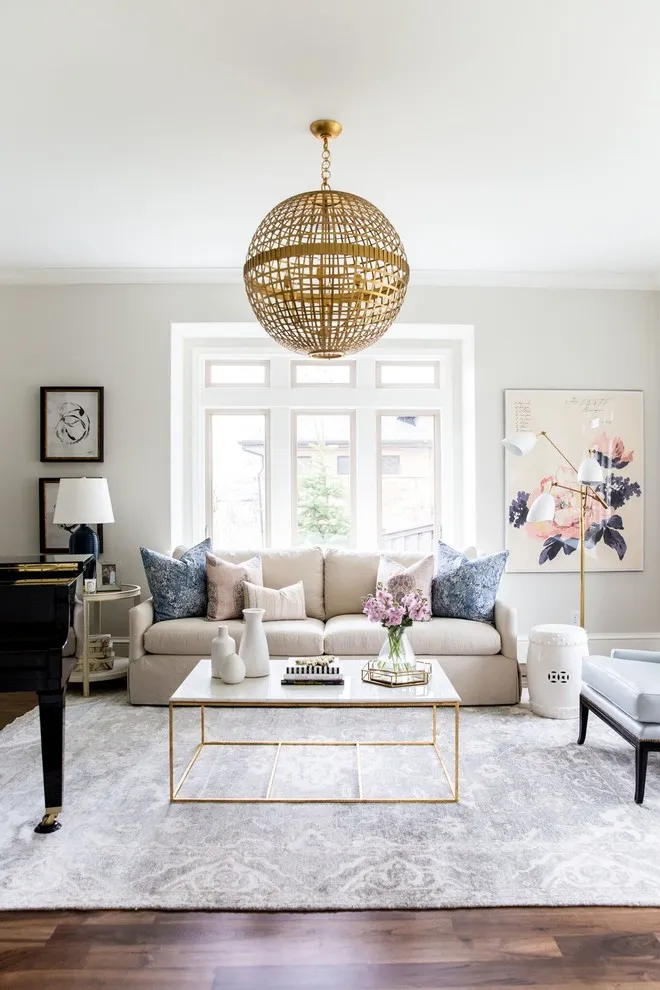
The woven pendant introduces texture above the straight-lined sofa and table, linking the seating to the upper part of the room. Blue cushions and the floral artwork add gentle color while the pale rug keeps the central arrangement visually light.
Confirm that the pendant can hang at a comfortable height without blocking the window or the view between seats. Add a reading lamp where needed, since a decorative woven shade may create attractive shadows without giving focused light for close tasks.
IDEA 20 / 20
Mix Beige With Floral Chairs
 SaveSupport Non AI Creator
Source: Debra Lynn Henno Design on Houzz.
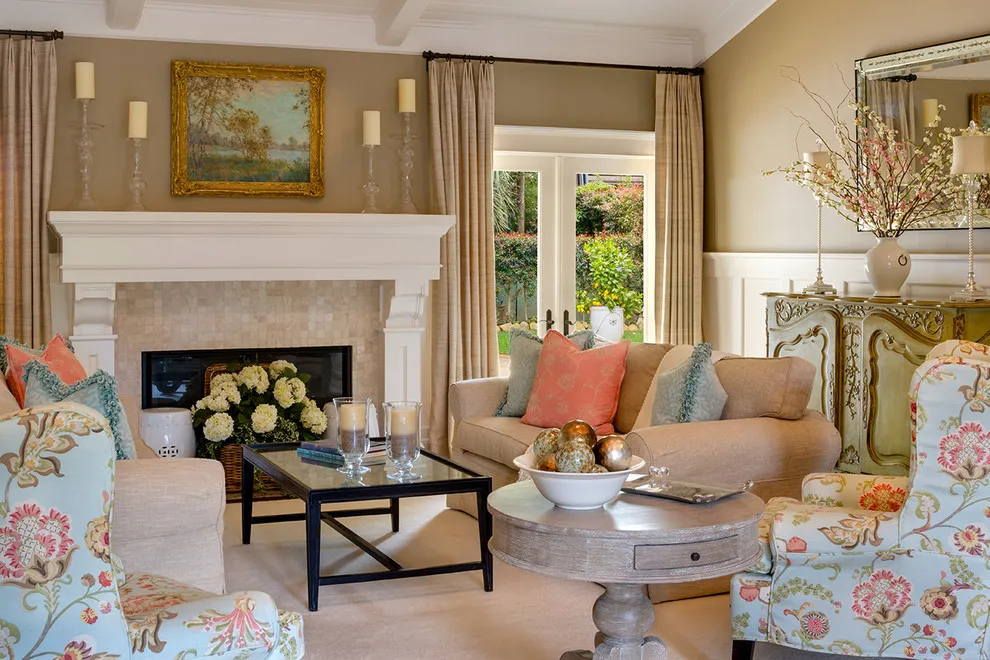
The floral chairs pick up the room’s coral and blue accents, giving the beige sofas a more lively setting. The pale background of the patterned fabric keeps those chairs connected to the neutral upholstery, even though their surface is much busier.
Use the chair fabric as a guide for a small number of cushion colors rather than matching every accessory. Check that side tables remain easy to reach from both the sofas and chairs, particularly when a large central table is already part of the group.
BRING IT ALL TOGETHER
Choose what works in your home
The most satisfying updates are usually the ones that solve an everyday problem while making the room more inviting. Begin with the largest fixed elements, then use lighting, texture, and smaller details to bring the look together.
There is no need to buy everything at once. Test samples, make one considered change, and let the rest of the room settle before adding more.