A bedroom accent wall can bring depth without making the whole room feel busy. The bed wall is an obvious place to begin because it frames the main piece of furniture, but a wall with unusual architecture or a reading nook can sometimes be the better choice. The finish matters just as much as the color.
Before committing to paint or wallpaper, notice the light at different hours and consider the headboard, bedding, and bedside lamps together. The ideas below range from low-cost paint approaches to textured finishes that need careful installation, with a practical reason to choose each one.
PART 01
Color and contrast
IDEA 01 / 20
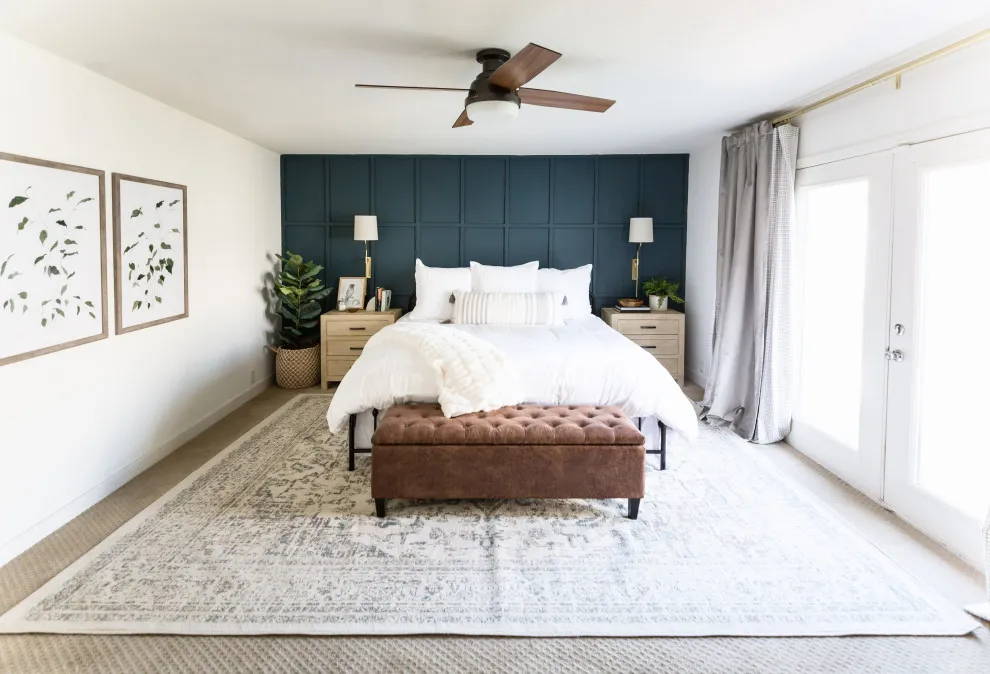
Frame the Bed With Deep Blue
 SaveSupport Non AI Creator
Source: Blue Copper Design on Houzz.
A deep blue paneled wall sits behind a pale bed and a brown bench. The darker background gives the bed a clear focal point. Pale bedding, a light rug and simple timber bedside chests keep the blue from dominating every part of the room, while the panel lines add structure without extra artwork.
Test blue beside the headboard fabric and floor in both daylight and lamplight. Keep bedside lighting useful for reading rather than relying only on the ceiling fixture. Paint a movable sample board and place it near both bedside lamps. If the ceiling stays white, check that the wall-to-ceiling edge is neat before choosing a deep shade.
IDEA 02 / 20
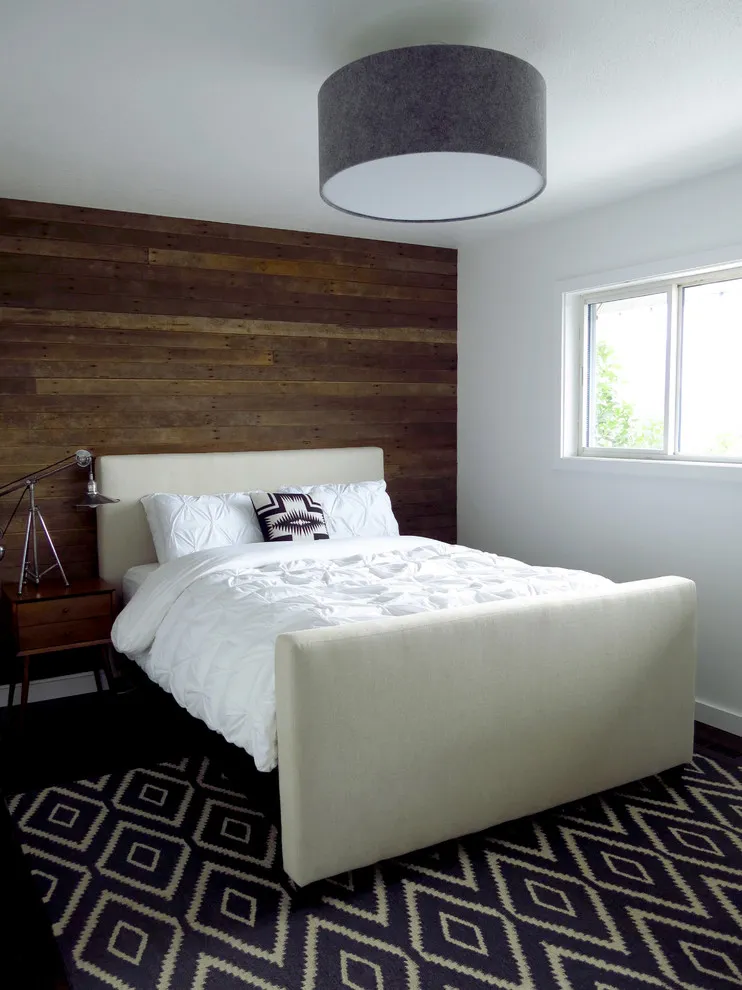
Use Horizontal Timber Boards
 SaveSupport Non AI Creator
Source: Aurora Mills Architectural Salvage on Houzz.
Horizontal timber boards cover the wall behind a light upholstered bed. The wood introduces warmth above the patterned rug and pale bedding. The horizontal joints make the grain part of the backdrop, so the upholstered bed offers a smoother contrast. White bedding separates the timber from the bolder geometric rug below.
Compare timber samples with the existing floor before installation. Keep the remaining walls quieter so the grain and rug do not compete for attention. Consider how the boards finish at the ceiling and side wall, as exposed cuts can interrupt the effect. Use a finish appropriate for an indoor bedroom and its cleaning needs.
IDEA 03 / 20
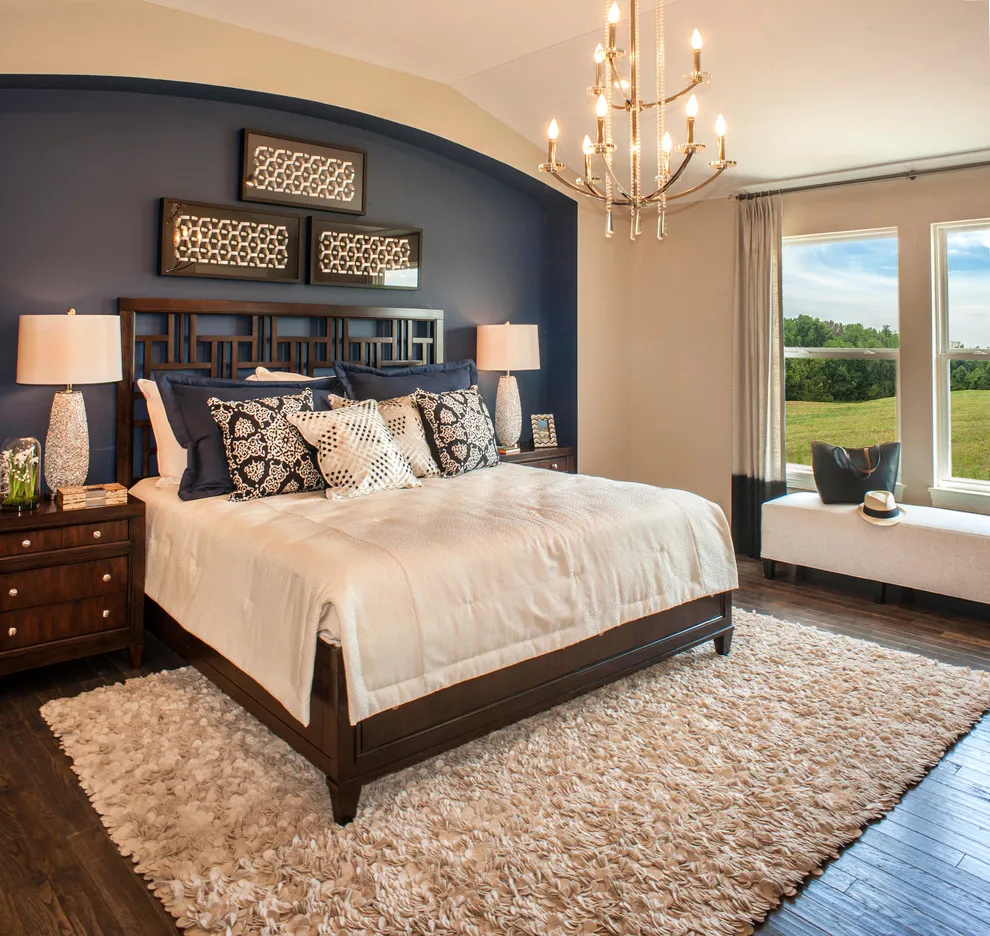
Try a Dark Arched Background
 SaveSupport Non AI Creator
Source: Progress Lighting on Houzz.
A dark blue wall follows an arched outline behind a traditional bed. The darker shape emphasizes the headboard and framed details. The arched shape contains the dark color instead of spreading it across the whole room. Timber furniture and cream textiles soften the contrast around the bed's decorative headboard.
Use the room’s existing architecture to guide the painted boundary. Check the curve with a template before painting and leave enough contrast for the headboard to remain visible. If your wall is flat, a painted arch can suggest a similar outline. Position its center from the bed rather than assuming the wall's midpoint will suit your furniture.
IDEA 04 / 20
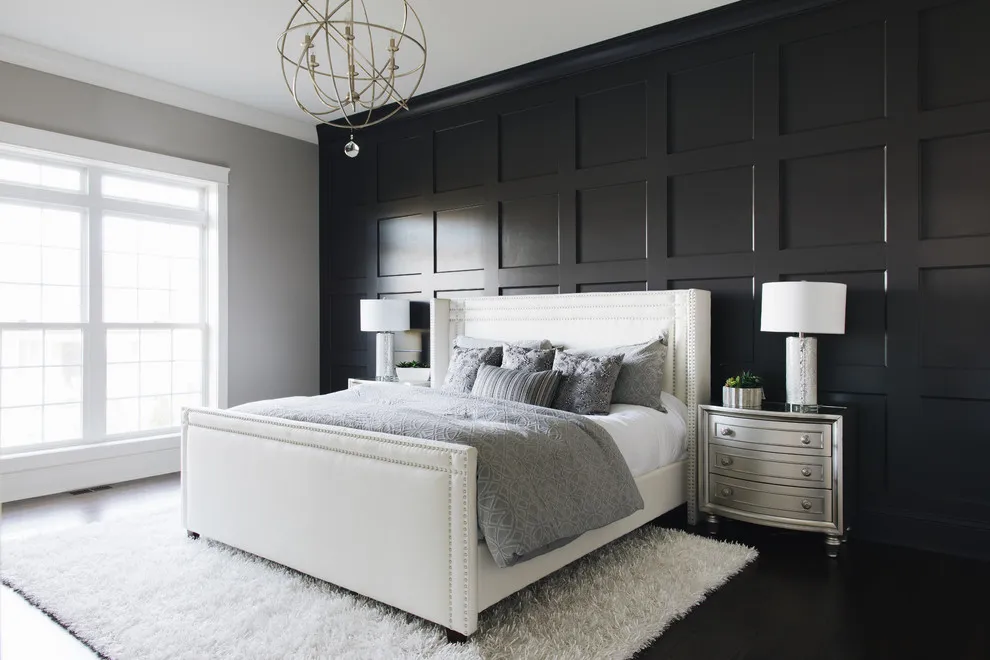
Combine Black Paneling With Pale Bedding
 SaveSupport Non AI Creator
Source: Timber Trails Development Company on Houzz.
Black rectangular paneling sits behind a light upholstered bed and pale rug. The broad contrast makes the bed stand out. The rectangular trim creates shadows across the dark surface, adding detail even without framed artwork. White upholstery and bedding prevent the bed from disappearing against the black background.
Plan panel spacing around the bed position before fitting trim. Test the paint sheen under the room lights so the dark wall does not show distracting reflections. Place a sample near the window as well as behind the bedside lamps. A flatter finish may hide minor surface flaws, but compare its cleaning guidance with your household needs.
IDEA 05 / 20
Add a Textured Stone Wall
 SaveSupport Non AI Creator
Source: Living Stone Design + Build on Houzz.
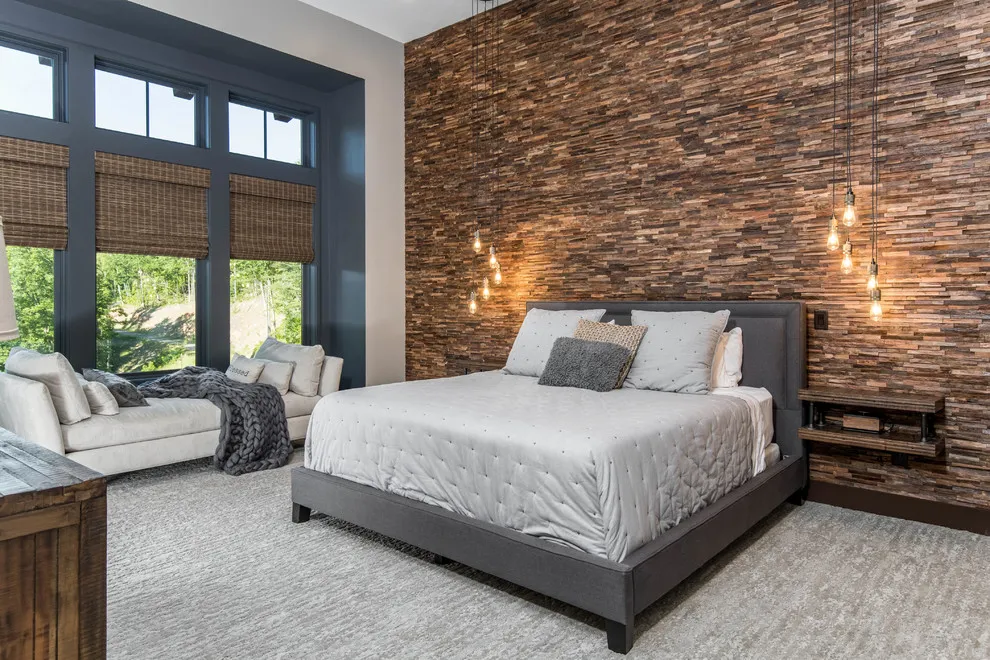
A textured stone wall rises behind a pale bed beside tall dark-framed windows. The rough surface gives the simple bedding a more substantial background. Warm brown and gray tones in the stacked surface connect with the timber furniture. Hanging bulbs highlight its uneven relief, while the bed's plain upholstery provides a softer foreground.
Check wall loading and installation requirements before choosing stone. Keep bedside surfaces practical and use lighter bedding if the texture already gives the room strong visual weight. If weight or budget is a concern, compare thinner stone-look finishes with full cladding. Ask the installer how electrical fittings and the upper edge will be finished before ordering material.
PART 02
Materials and texture
IDEA 06 / 20
Follow a Sloped Ceiling With Wood
 SaveSupport Non AI Creator
Source: Creative Floors on Houzz.
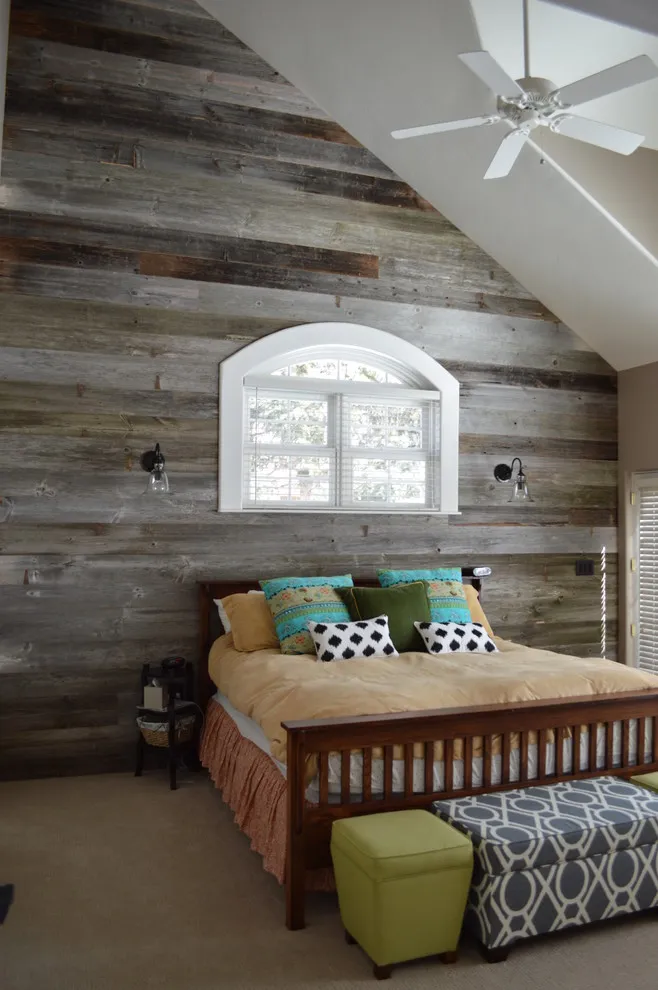
Weathered horizontal boards cover the wall beneath a sloped ceiling around an arched window. The material connects the irregular wall shape. The boards continue around the window, making the steep wall feel like one connected surface. Colored cushions enliven the quieter weathered timber without needing a second strongly patterned wall.
Plan board joints and window trim together before fitting the wall. Keep nearby textiles simpler when wood grain already supplies a strong pattern. Map out the first and last board widths so awkward narrow strips do not frame the window. Confirm that the finish and fixing method suit the existing wall construction.
IDEA 07 / 20
Use a Dark Wall Behind a Narrow Bed Zone
 SaveSupport Non AI Creator
Source: Picture KC on Houzz.
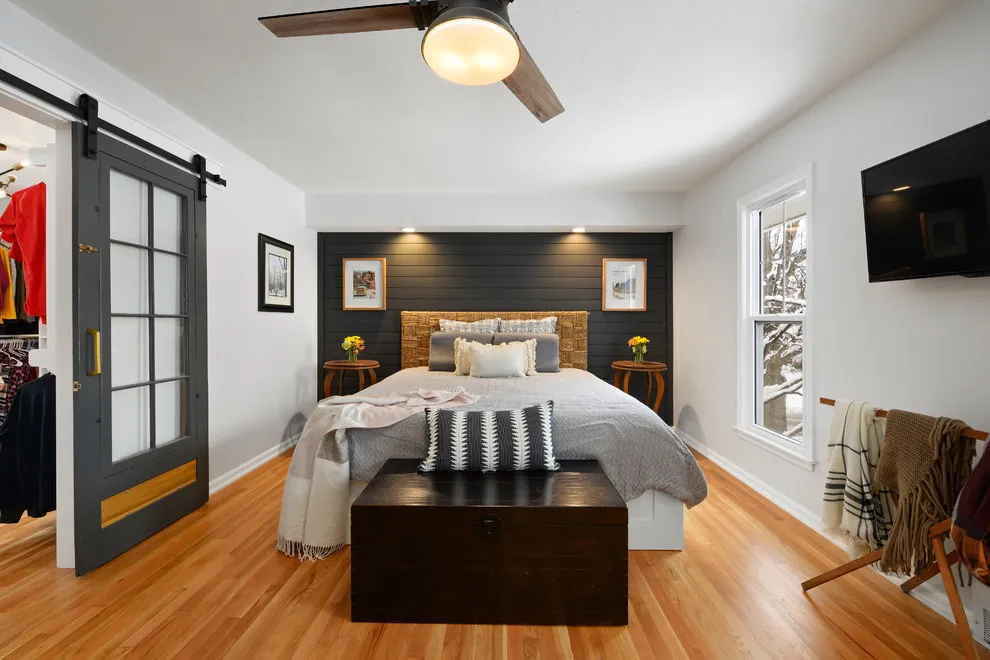
A dark painted wall frames a bed between pale side walls in a long bedroom. The darker end gives the room a clear stopping point. Horizontal boards add further definition to the end wall, while pale side walls carry daylight down the room. The darker sliding door repeats the accent without covering every surface.
Test the accent from the doorway, where the full layout is visible. Keep paths beside the bed clear and add lighting where the dark wall reduces reflected brightness. Plan where switches and reading lights fall before committing to a paneled finish. Keep furniture at the foot of the bed shallow enough to preserve the main walking route.
IDEA 08 / 20
Pair Charcoal With Tall Glass
 SaveSupport Non AI Creator
Source: Thompson Custom Homes on Houzz.
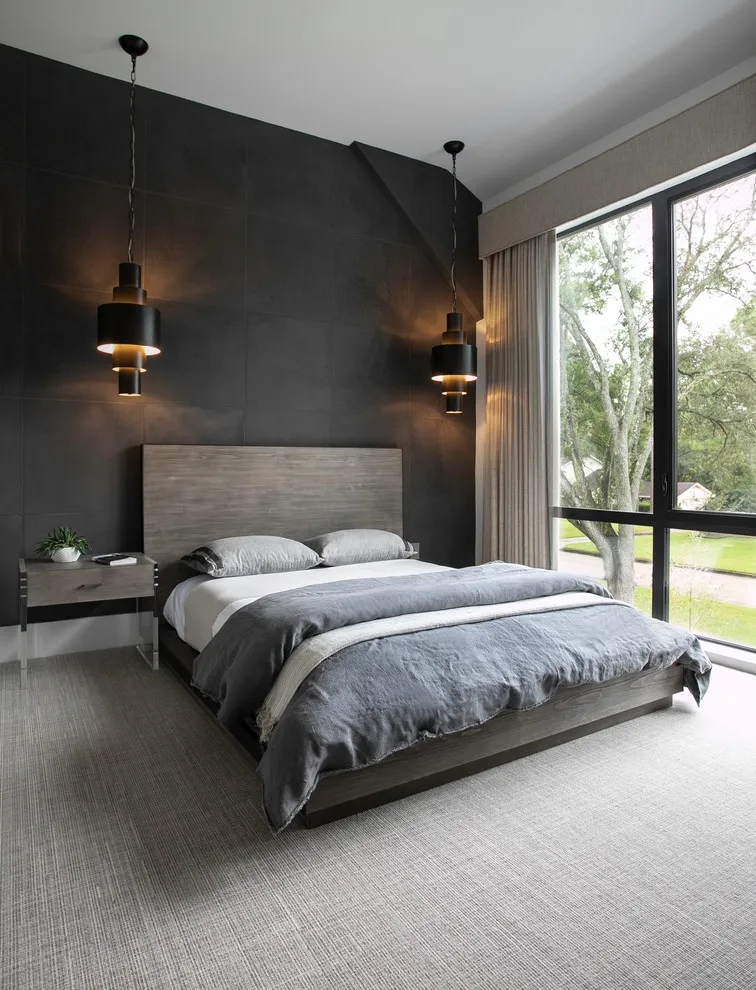
A charcoal wall stands behind a gray bed beside a tall garden-facing window. The deep color gives the bright opening a stronger outline. The broad charcoal surface connects with the gray bedding, while suspended lights add warm pools beside the headboard. The tall window supplies contrast that a smaller opening might not provide.
Choose window coverings for privacy and sleep before finalizing the wall treatment. Compare gray paint with the bedding so the room does not collect clashing cool undertones. Check how the shade looks after the curtains close, when daylight no longer balances it. Select lamp brightness for reading and place controls where you can reach them from bed.
IDEA 09 / 20
Contrast a Central Wall With Wood Panels
 SaveSupport Non AI Creator
Source: Jon Hensley Architects on Houzz.
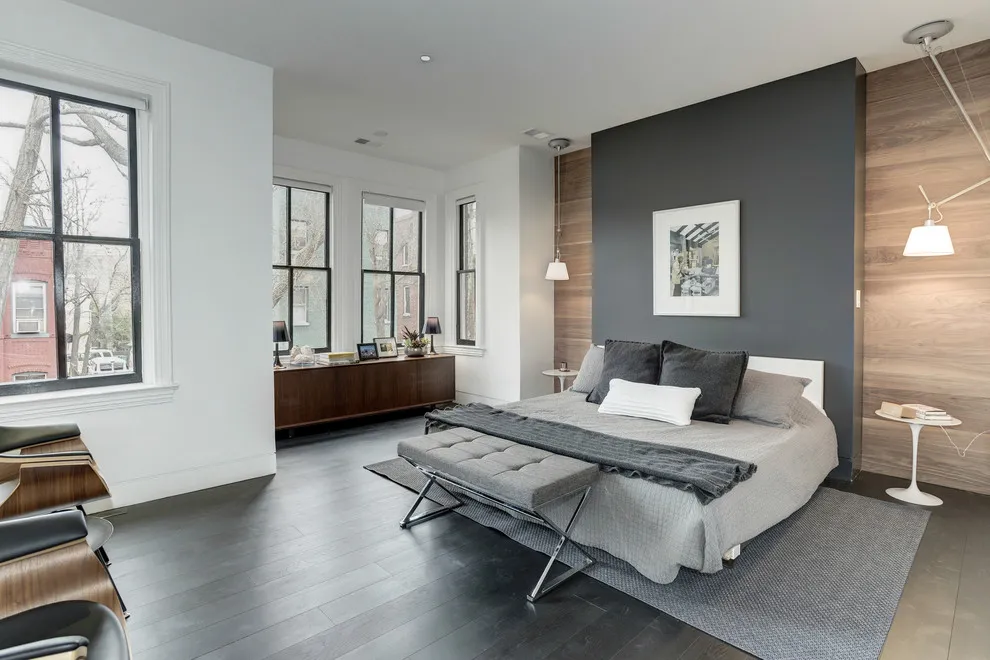
A dark central wall sits behind a bed between warmer timber wall sections. The change in material makes the sleeping area the focal point. Timber strips at either side warm the gray center without filling the bedroom with grain. Hanging lights and pale bedside tables help maintain a balanced arrangement across the wider backdrop.
Keep the central treatment aligned with the bed and bedside furniture. Use related wood tones elsewhere rather than adding several different stains. Measure the combined bed and bedside widths before dividing the wall. If your bed is likely to change size, leave enough flexibility for a wider headboard and different table positions.
IDEA 10 / 20
Use a Pale Textured Backdrop
 SaveSupport Non AI Creator
Source: Kat Alves Photography on Houzz.
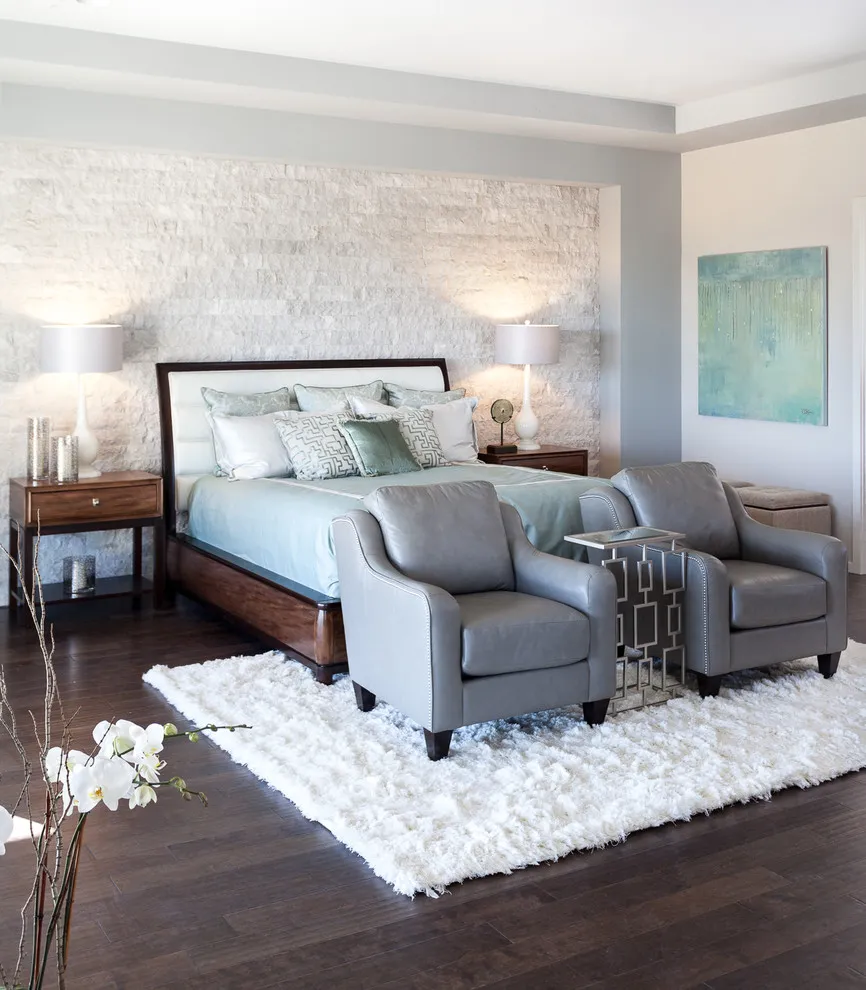
A light textured wall sits behind a timber bed beside soft gray chairs. The texture adds interest while the color remains quiet. Soft bedding, timber bedside tables and smooth gray chairs provide several contrasting surfaces. The light wall adds depth behind the headboard while keeping this already furnished room relatively bright.
View texture samples under side lighting before selecting them. Keep the finish suited to cleaning and use smoother fabrics to balance a strongly tactile wall. Use a sample large enough to show the texture's repeat, not just its color. Confirm how you will remove dust, particularly behind a headboard that is difficult to move.
PART 03
Layout and everyday comfort
IDEA 11 / 20
Choose Navy With White Furniture
 SaveSupport Non AI Creator
Source: Morr Interiors on Houzz.
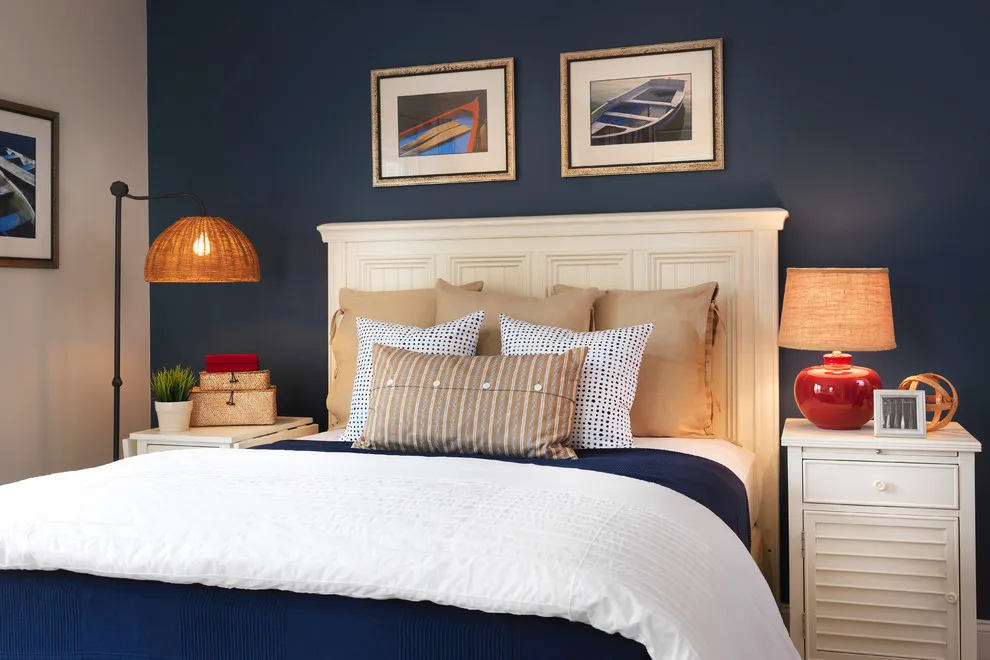
A navy wall frames a white headboard and pale bedside chest beneath two small pictures. The contrast gives traditional furniture more definition. White bedside storage and bedding carry the lighter tone across the foreground, while timber and woven lamp details add warmth. Small framed pictures leave much of the navy surface visible.
Compare the navy with the white finish before painting. Repeat the dark tone in one bedding detail if you want continuity without making every surface blue. Try your chosen white and navy side by side instead of judging them separately. Keep sockets and lamp cables easy to access when centering furniture against the newly painted wall.
IDEA 12 / 20
Build a Geometric Painted Grid
 SaveSupport Non AI Creator
Source: Beasley & Henley Interior Design on Houzz.
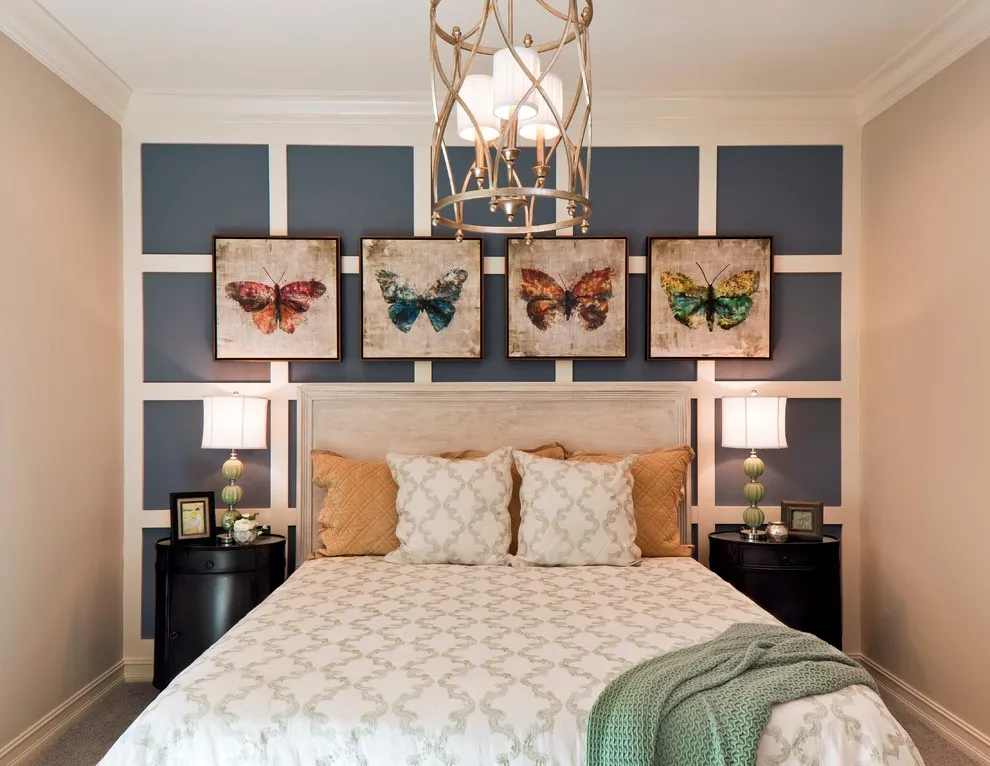
Blue-gray painted rectangles form a grid behind a pale headboard and framed artwork. The repeated shapes give the wall an ordered rhythm. White gaps between the blue-gray rectangles create the grid, with butterfly pictures layered across its middle. The bedding's warmer tones keep the wall from making the whole room feel cool.
Plan the grid around the headboard width and existing sockets. Use templates for the art so frames do not sit awkwardly across important painted divisions. Mark the pattern with removable tape and view it from the doorway before painting. Allow each coat to cure as directed before retaping, especially where contrasting edges meet.
IDEA 13 / 20
Use Muted Horizontal Texture
 SaveSupport Non AI Creator
Source: W Design Interiors on Houzz.
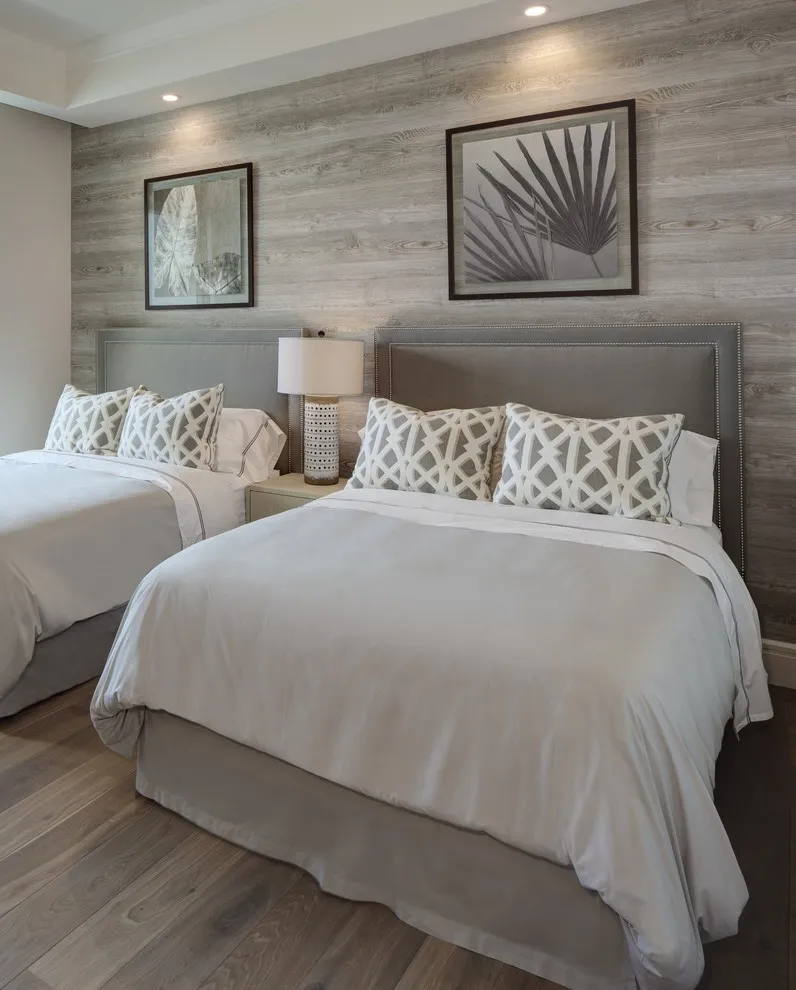
Horizontal timber grain gives the wall behind these twin beds a textured backdrop without a strong color contrast. Pale bedding and gray upholstered headboards keep the shared room coordinated, while two botanical pictures repeat the arrangement above the separate sleeping places.
In a shared bedroom, plan wall features around both beds so neither side feels like an afterthought. Compare timber or wood-look samples with the headboards before choosing a finish. Keep bedside lighting and storage accessible to each sleeper, even when the main wall treatment is continuous.
IDEA 14 / 20
Contrast Charcoal With White Boards
 SaveSupport Non AI Creator
Source: Crescent Homes on Houzz.
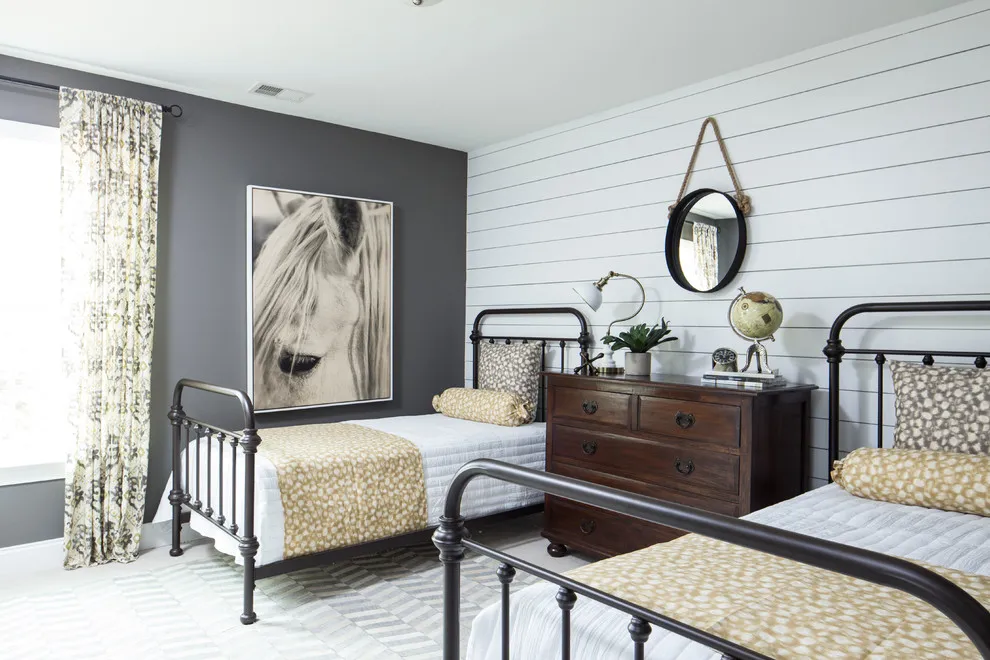
A charcoal accent wall stands beside white horizontal boards in a shared bedroom. The difference in finish separates the two wall surfaces. Black metal bed frames link the two backgrounds, and warm timber storage brings another texture into the shared room. The round mirror breaks up the straight horizontal board lines.
Choose one surface as the main accent and let the other support it. Coordinate trim and corner joints so the material change feels deliberate. Check paint samples beside the white boards, because a cooler white can change how charcoal appears. Position wall decor around each bed so neither sleeper loses useful bedside space.
IDEA 15 / 20
Use a Simple Gray Backdrop
 SaveSupport Non AI Creator
Source: Workroom Couture Home on Houzz.
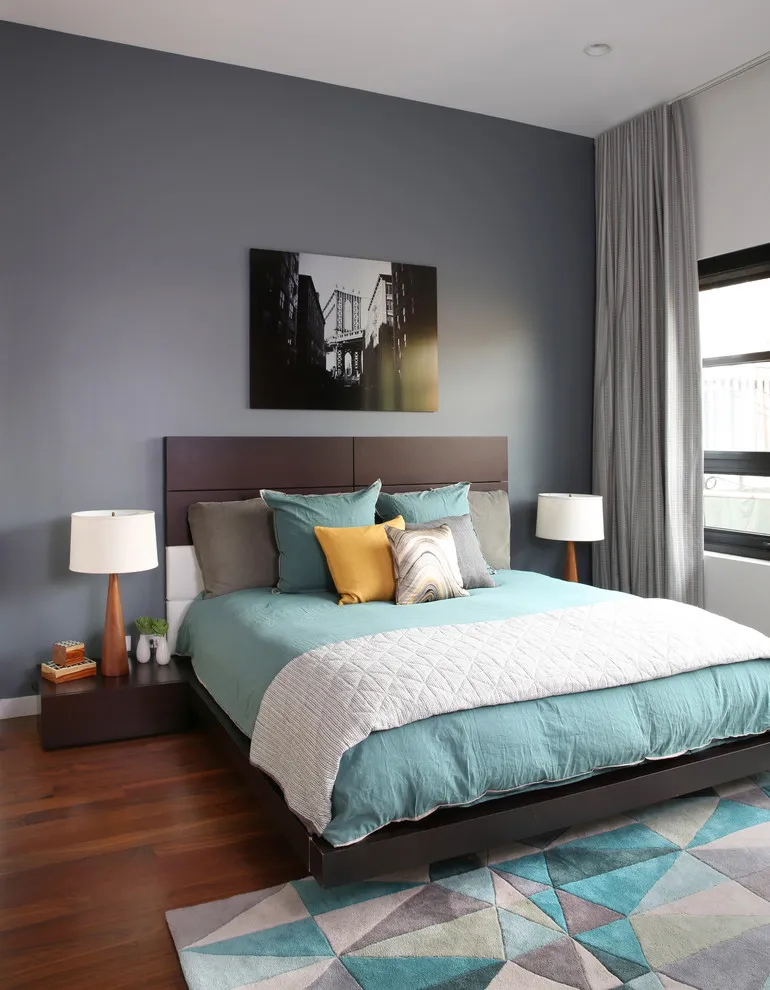
A dark gray wall frames a bed with turquoise bedding and a geometric rug. The plain wall gives the colorful textiles room to stand out. Turquoise and yellow cushions supply most of the color, while the dark timber headboard gives the bed definition against gray paint. Matching lamps make the arrangement feel balanced rather than busy.
Test gray against both the bedding and rug before painting. Keep bedside furniture restrained when the textiles already contain several strong shapes. Choose one textile as the color reference before buying paint. Place a sample behind the headboard so you can judge the contrast where the two finishes will actually meet.
PART 04
Finishing details
IDEA 16 / 20
Add Pale Geometric Paneling
 SaveSupport Non AI Creator
Source: Mary Hannah Interiors on Houzz.
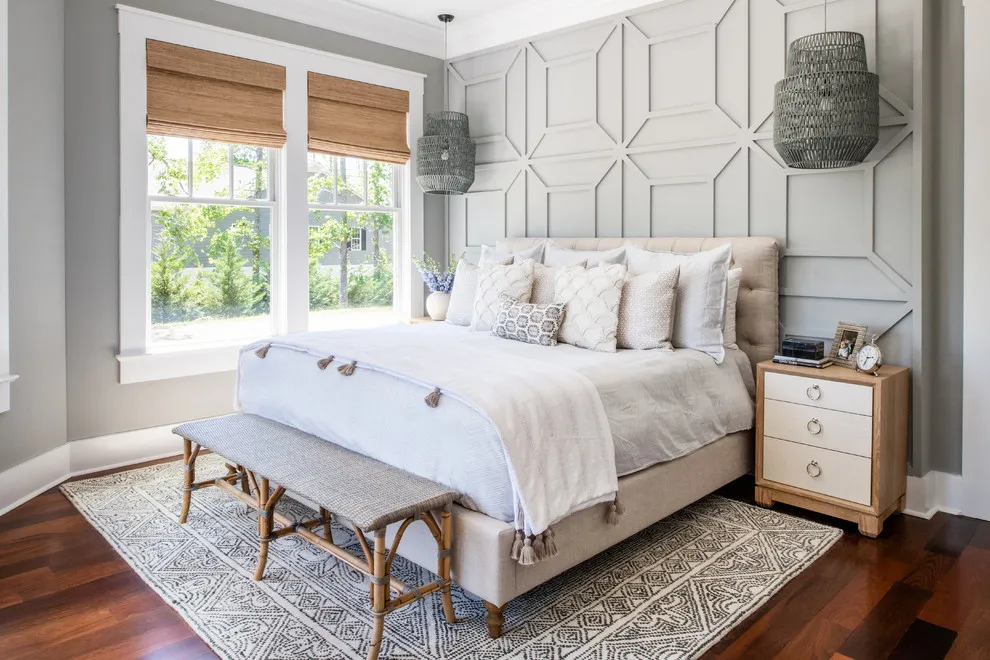
Pale geometric trim covers the wall behind a white upholstered bed. The raised lines supply detail without a strong color change. The raised angled lines cast small shadows across a pale surface, allowing texture to provide the accent. Timber furniture and woven lights give the white bedding a warmer setting.
Draw the panel layout at scale before installation. Check how trim meets sockets and bedside furniture, and use lighting that reveals the pattern without harsh glare. Tape a full-size section of the pattern onto the wall before cutting trim. Decide whether existing skirting and ceiling trim will frame the arrangement or need to be incorporated.
IDEA 17 / 20
Frame a Bed With Green-Gray Panels
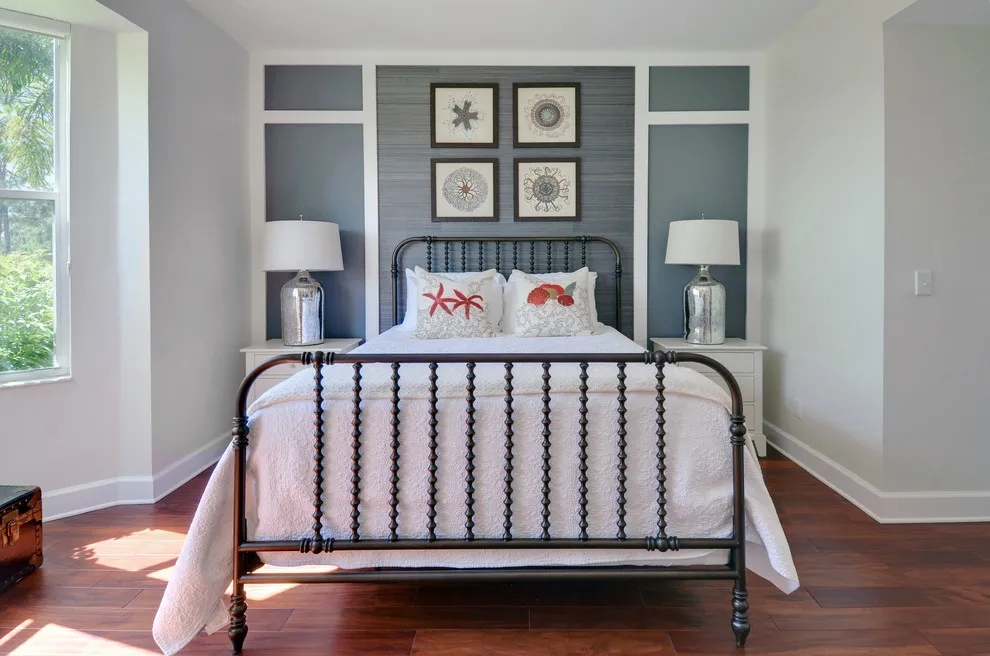 SaveSupport Non AI Creator
Source: Benson & Associates, Interior Design on Houzz.
A muted green-gray paneled wall sits behind a black metal bed and a small picture grid. The light trim outlines the accent. White divisions give the muted wall color a crisp outline, with a four-picture arrangement centered above the metal bed. The lighter bedding keeps the narrow room from feeling overly dark.
Compare the paint with the metal bed frame and floor together. Keep picture placement within the panel arrangement so the two grids do not compete. Lay out the frames on the floor before hanging them. Check their combined width against the bed and panel sections, and keep the lamps from blocking the lowest pictures.
IDEA 18 / 20
Try a Small-Scale Dark Pattern
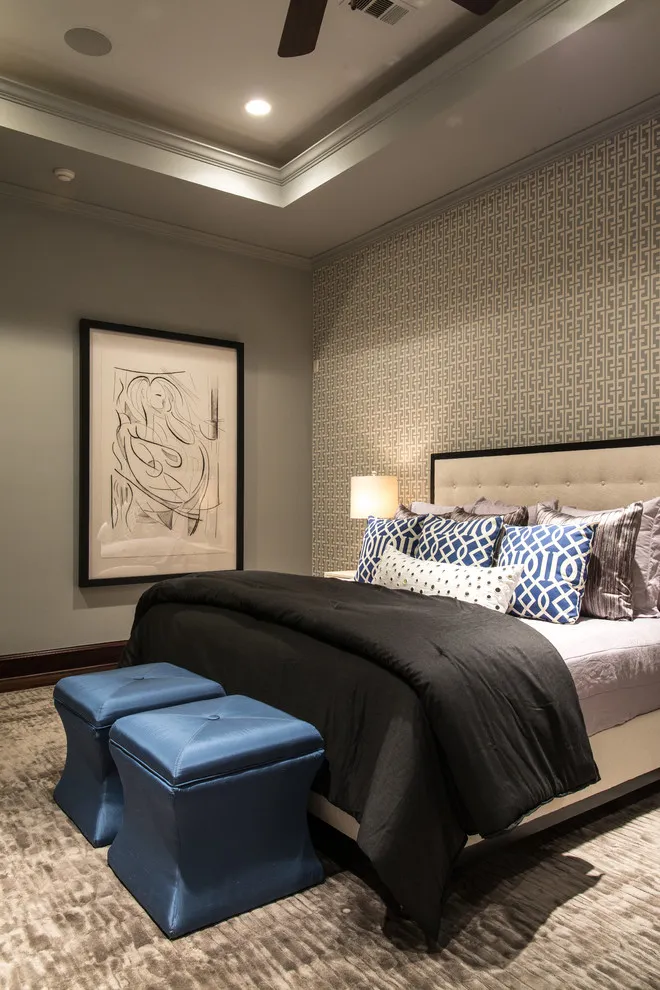 SaveSupport Non AI Creator
Source: Monarch & Maker on Houzz.
A fine dark patterned wall sits behind a pale headboard and black bedding. The close pattern gives depth without large decorative shapes. The fine repeat introduces texture behind the headboard while leaving the larger artwork on the adjacent wall prominent. Blue cushions and ottomans add a brighter note against the black bedding.
View a wallpaper sample from the doorway as well as close up. Keep the bedding simpler if the pattern becomes busy at room scale. Compare a full wallpaper repeat with the cushion pattern to judge whether both can sit comfortably together. Calculate roll quantities with the supplier's matching instructions before starting the wall.
IDEA 19 / 20
Use Purple as a Focused Accent
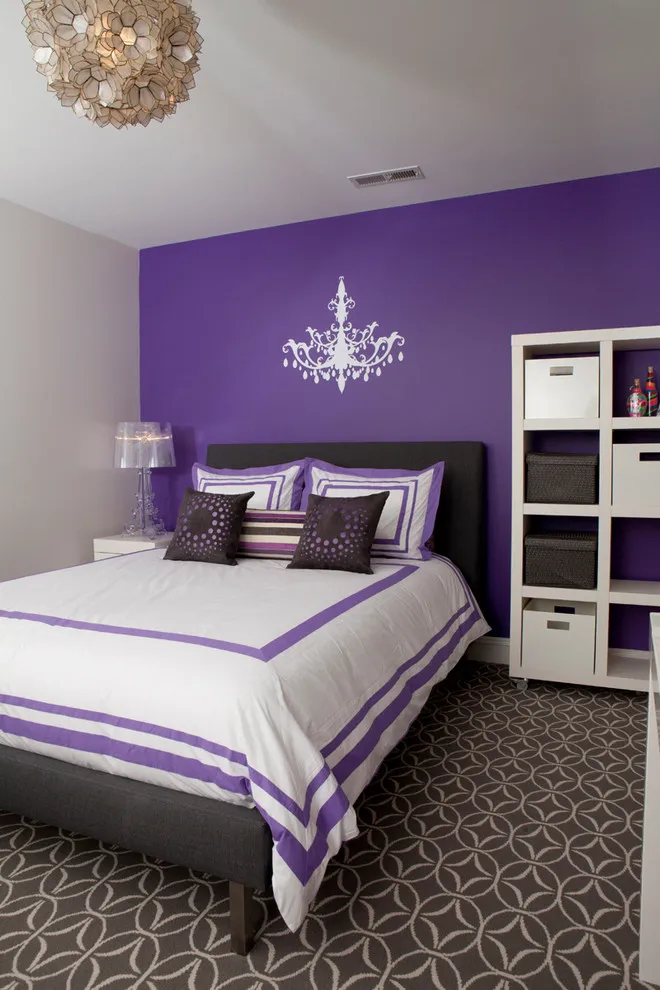 SaveSupport Non AI Creator
Source: Hubley Design Interiors, LLC on Houzz.
A purple wall sits behind a pale bed with matching purple bedding details. The single strong wall keeps the color concentrated. White bedding and storage break up the saturated background, while repeated purple stripes connect the bed to the wall. The small ornamental motif adds another point of interest above the headboard.
Test a large purple sample under the room lights before committing. Balance the saturated wall with quieter surrounding surfaces and avoid adding several unrelated bright colors. Try the shade beside the actual duvet cover before buying several tins. Use removable textile accents if you want to adjust the amount of purple without repainting the room.
IDEA 20 / 20
Add Fine Lines to a Dark Wall
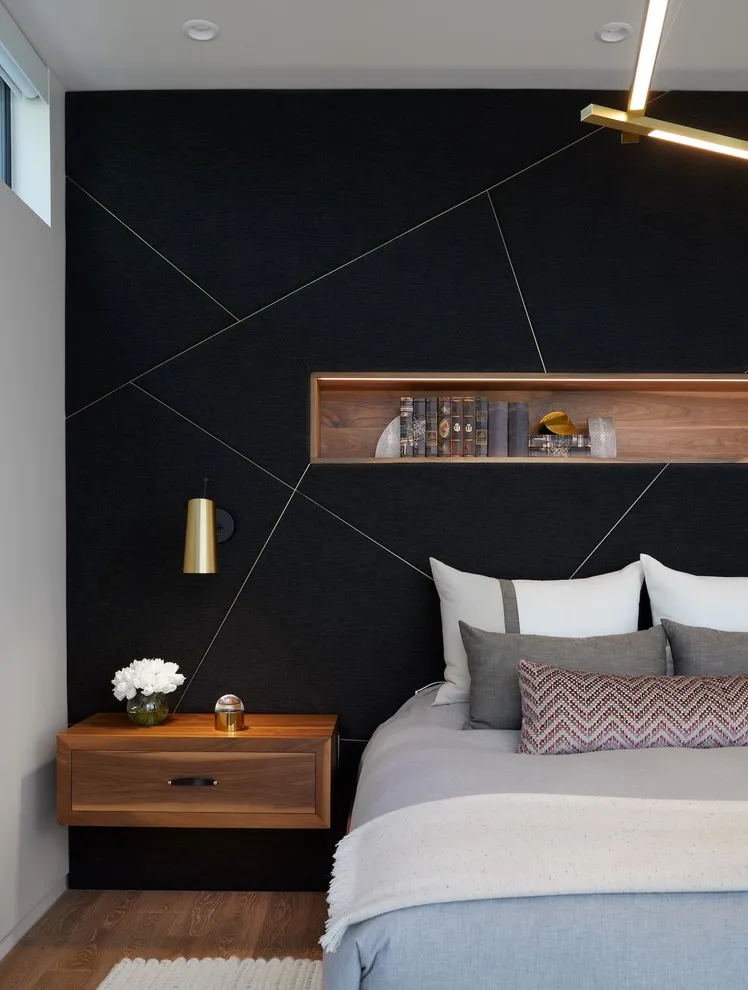 SaveSupport Non AI Creator
Source: Gingerwood on Houzz.
Fine diagonal lines cross a black wall behind a gray bed and timber shelf. The subtle geometry gives the dark backdrop more variation. Thin pale diagonals provide interest without the weight of thick trim. A timber shelf and bedside drawer introduce warmth, while white pillows ensure the bed remains visible against the black wall.
Plan the line pattern around the bed and shelf before applying it. Keep the remaining decor restrained so the wall pattern stays readable. Draw the lines across a photograph of your wall first to test their intersections. Keep the shelf reachable and choose fixings suitable for its intended load and the wall behind it.
BRING IT ALL TOGETHER
Make the idea work in your own home
Start with one change that solves a real problem or helps your favorite feature stand out. Compare colors and materials in your own light and measure clearances before ordering anything permanent.
A comfortable, practical room is more successful than a perfectly copied photograph. Keep what serves your daily routine and leave out details that do not suit your space.