Paneling can make an ordinary bedroom feel architectural, but only when the proportions work with the bed, doors, windows and ceiling height. A beautiful reference wall can look awkward if battens collide with sconces or molding ends just short of a bedside table.
From painted board and batten to natural timber slats, these bedroom paneling ideas focus on how the details are built and lived with. Use them to decide how much of the room to panel, where the lines should fall and which materials suit your style.
PART 01
Color and contrast
IDEA 01 / 20
Use Deep Panels Behind the Bed
 SaveSupport Non AI Creator
Source: Blue Copper Design on Houzz.
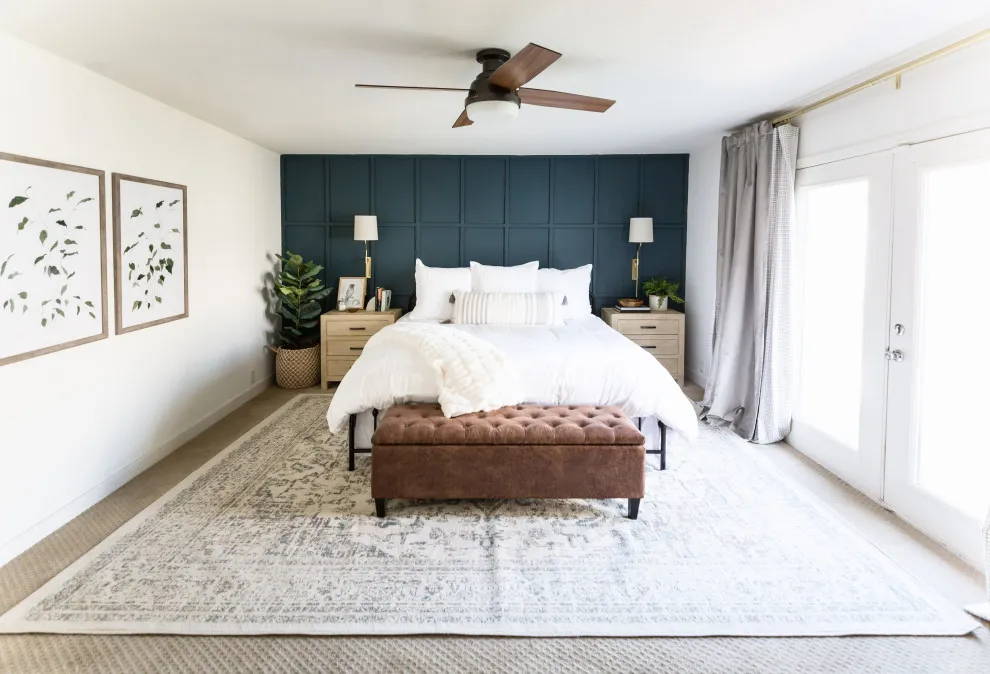
Deep blue rectangular panels sit behind a pale bed and brown bench. The single paneled wall creates a clear focal point. The navy wall stays behind the sleeping area, while the adjoining white walls keep the room bright. Pale nightstands and a warm brown bench soften the strong contrast.
Plan panel widths around the bed and bedside tables. Check socket positions before fitting trim and test the paint beside the upholstery in evening light. Mark the grid with tape before cutting any trim. Include the lamp positions and check that the headboard will leave enough of the lower rectangles visible.
IDEA 02 / 20
Keep Paneling Soft With Gray-Green
 SaveSupport Non AI Creator
Source: Mimi & Hill interiors on Houzz.
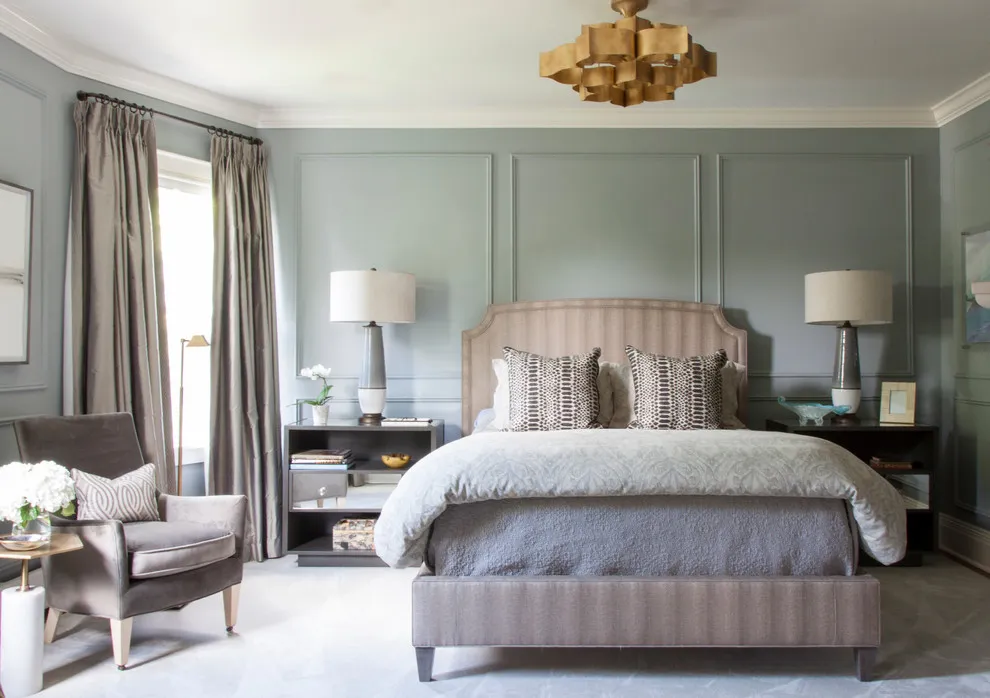
Gray-green rectangular panels give this timber bed a calm background, with tall outlined sections adding detail above the headboard. Dark bedside tables and pale lamp shades repeat the room’s restrained palette, while the muted wall color keeps the decorative lines from feeling sharp.
Compare the green-gray paint with both the bed finish and curtain fabric before selecting a shade. Sketch the panel arrangement around the furniture instead of dividing the wall into arbitrary equal sections. Keep artwork selective so the long raised outlines remain visible above the sleeping area.
IDEA 03 / 20
Use Pale Panels With a Dark Bed Frame
 SaveSupport Non AI Creator
Source: Diamond Custom Homes, Inc. on Houzz.
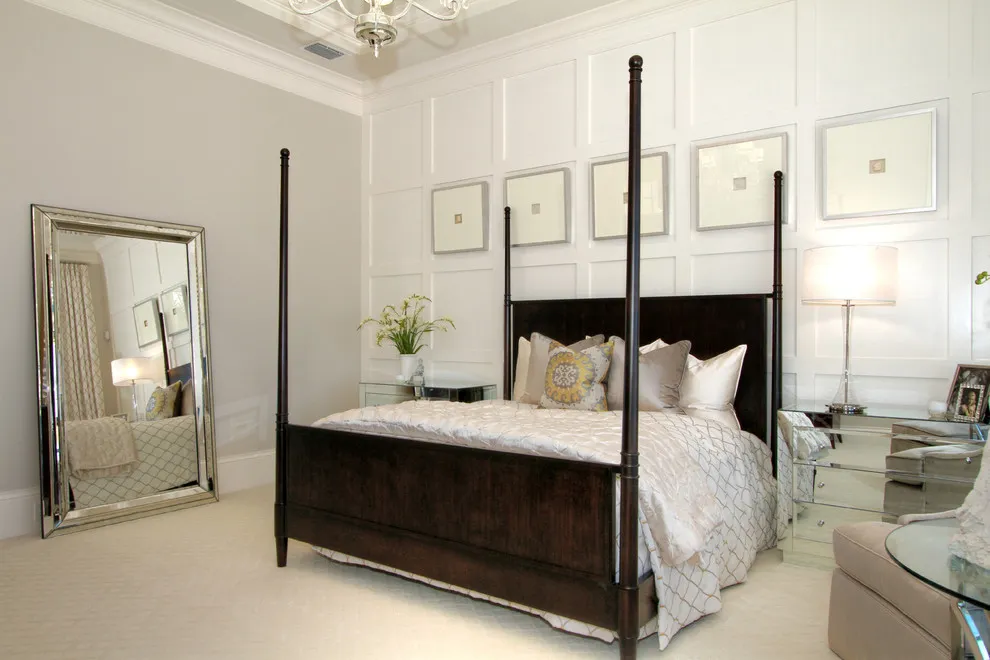
Pale wall panels sit behind a dark four-poster bed and a row of pictures. The light background gives the frame a clear outline. White trim and pale pictures give the dark four-poster a quiet background. Keeping the artwork in one row connects it to the wall without filling every rectangle separately.
Draw the panel grid with the bed in place before installation. Position pictures within the overall arrangement rather than forcing them onto every panel. Check the picture arrangement from the doorway as well as from the bed. Leave sufficient space around the posts so the wall detail does not look squeezed behind them.
IDEA 04 / 20
Try Muted Green Traditional Panels
 SaveSupport Non AI Creator
Source: Татьяна Вакуева | Abwarten! on Houzz.
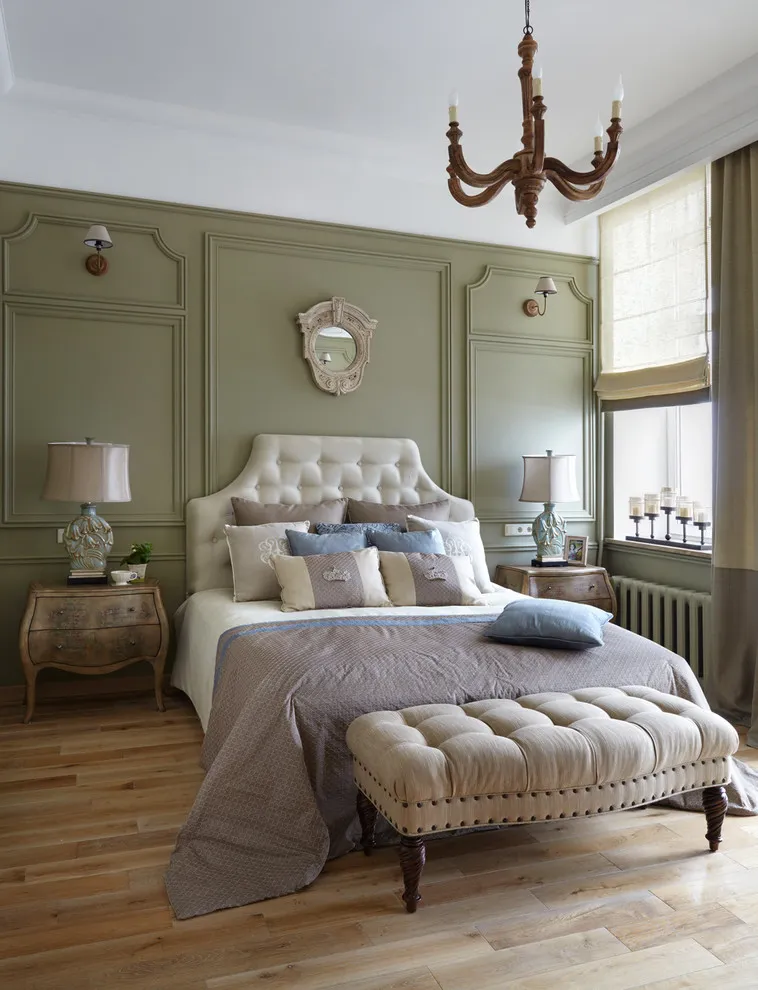
Green paneled walls surround a light bed and tufted bench. Their quiet color connects the decorative trim with the timber floor. The shaped corners of the trim repeat the room’s traditional furniture, while pale bedding keeps the green from feeling heavy. Wall lights leave more space on the curved nightstands.
Check green against existing wood and upholstery samples together. Keep bedside furniture practical and use lighting that reveals the trim without harsh reflections. Bring a floor sample beside the green paint if you are replacing either surface. Test wall lights after dark to see whether they create comfortable light or distracting shadows.
IDEA 05 / 20
Use Vertical Boards in a Shared Room
 SaveSupport Non AI Creator
Source: Coastal Chic on Houzz.
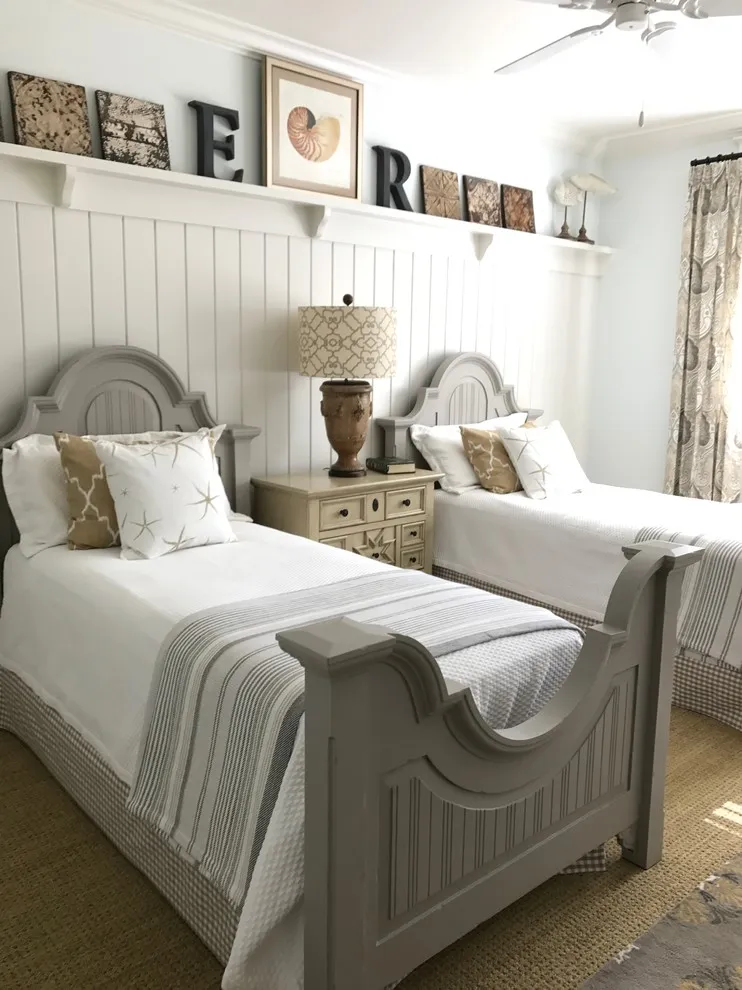
Pale vertical boards run behind two traditional beds beneath a narrow display ledge. The repeated lines connect the paired sleeping places. The paired headboards repeat the vertical lines below the shelf, giving the shared room a consistent background. A single bedside chest provides a practical center between the beds.
Plan the ledge and panel joints around both bed positions. Leave comfortable clearance above heads and secure displayed objects so they cannot fall toward the beds. Set the shelf height with both headboards in place and allow room for pillows to move. Use fewer securely fixed objects above sleeping positions rather than a crowded loose display.
PART 02
Materials and texture
IDEA 06 / 20
Add a Timber Slat Headboard Wall
 SaveSupport Non AI Creator
Source: DFI Interiors on Houzz.
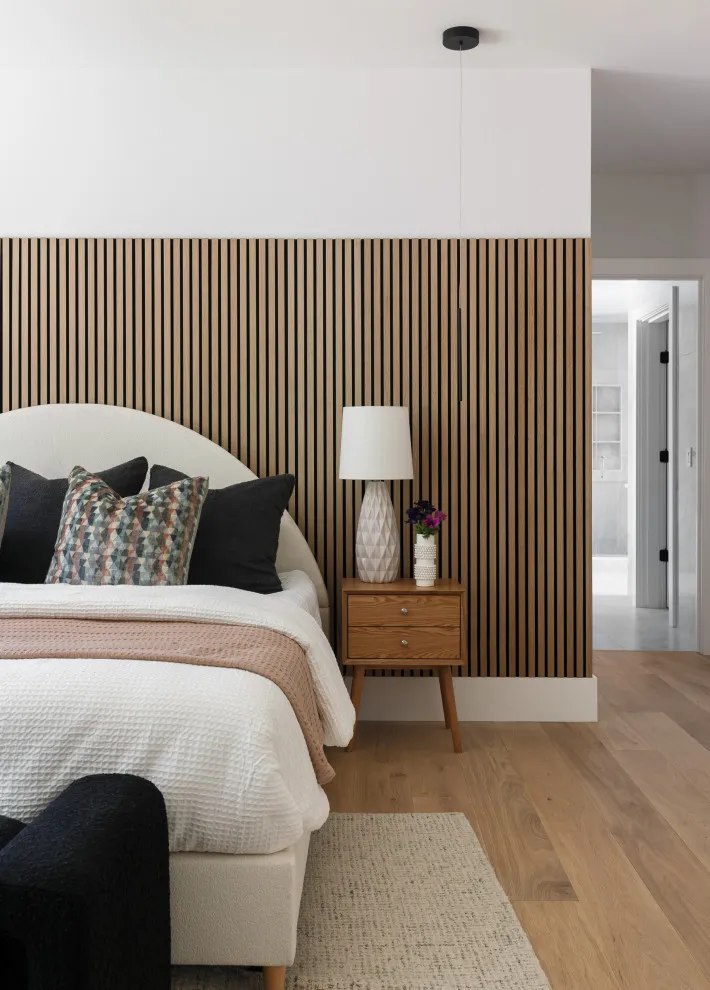
Vertical timber slats form a warm panel behind a pale bed and dark cushions. The wood adds texture without a large painted pattern. The narrow dark gaps between the timber slats add definition beside the pale curved headboard. A simple timber nightstand repeats the warm material without adding another wall pattern.
Compare the timber with your floor before fitting it. Plan sockets and bedside lights early so cables do not disrupt the repeated slat lines. Check the finished depth of the slats around existing outlets before installation. Leave lamp cords easy to access and consider how you will dust between the closely spaced strips.
IDEA 07 / 20
Frame Tall Windows With Light Panels
 SaveSupport Non AI Creator
Source: Hubley Design Interiors, LLC on Houzz.
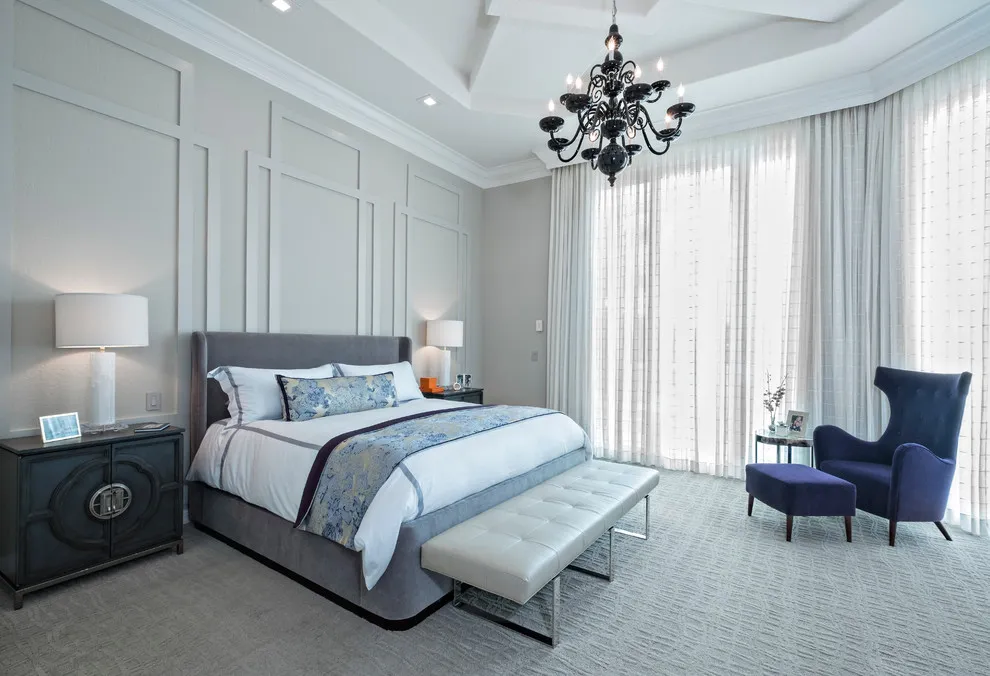
Pale panels sit behind a bed beside long curtains and tall windows. The restrained finish keeps attention on the room’s height and daylight. The tall rectangles follow the proportions of the room, while light curtains keep the glazed wall soft. Dark bedside cabinets and a blue chair provide smaller contrasts below the pale panels.
Keep trim proportions related to the wall height. Check how curtains open across the panel edges and use bedside lighting independent of the ceiling fixture. Sketch the wall with curtain stacks included so the edge panels are not unexpectedly hidden. Place reading lamps where you can use them without turning on the chandelier.
IDEA 08 / 20
Use a Pale Geometric Pattern
 SaveSupport Non AI Creator
Source: Mary Hannah Interiors on Houzz.
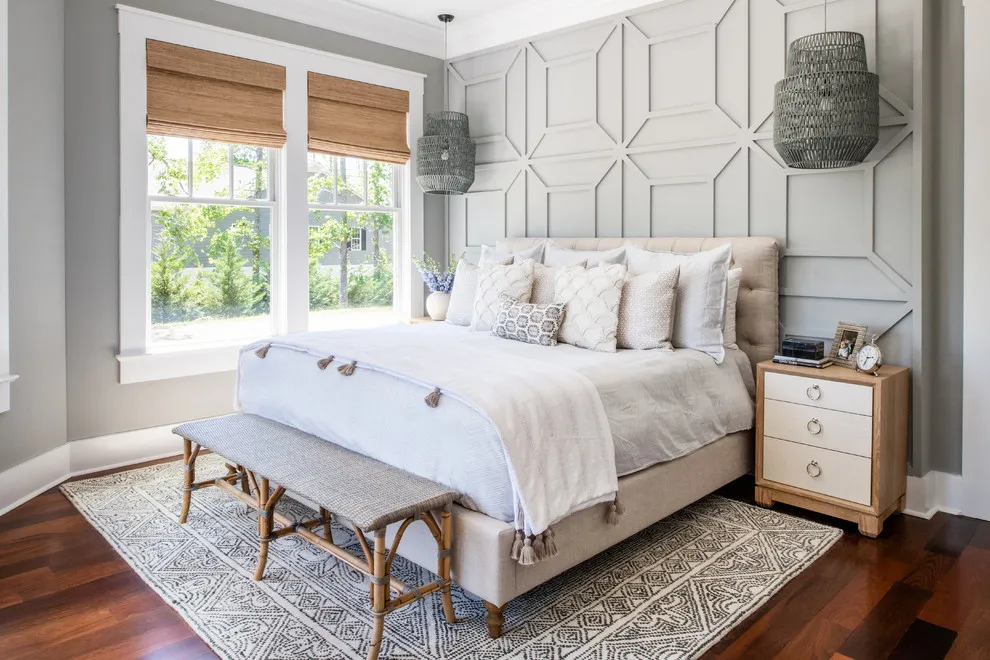
Raised geometric trim covers the wall behind a pale upholstered bed. The light color lets the changing line directions supply interest. Angled corners create a repeating pattern behind the bed without requiring different paint colors. Timber shades and the nightstand add warmer notes to the otherwise pale wall treatment.
Sketch the full pattern before cutting trim. Plan joints and outlets together, and keep nearby fabrics simpler if the geometric wall is already prominent. Start by drawing the full wall at scale, including the bed and hanging lights. Adjust the edge sections before fitting anything so the pattern finishes cleanly beside the window wall.
IDEA 09 / 20
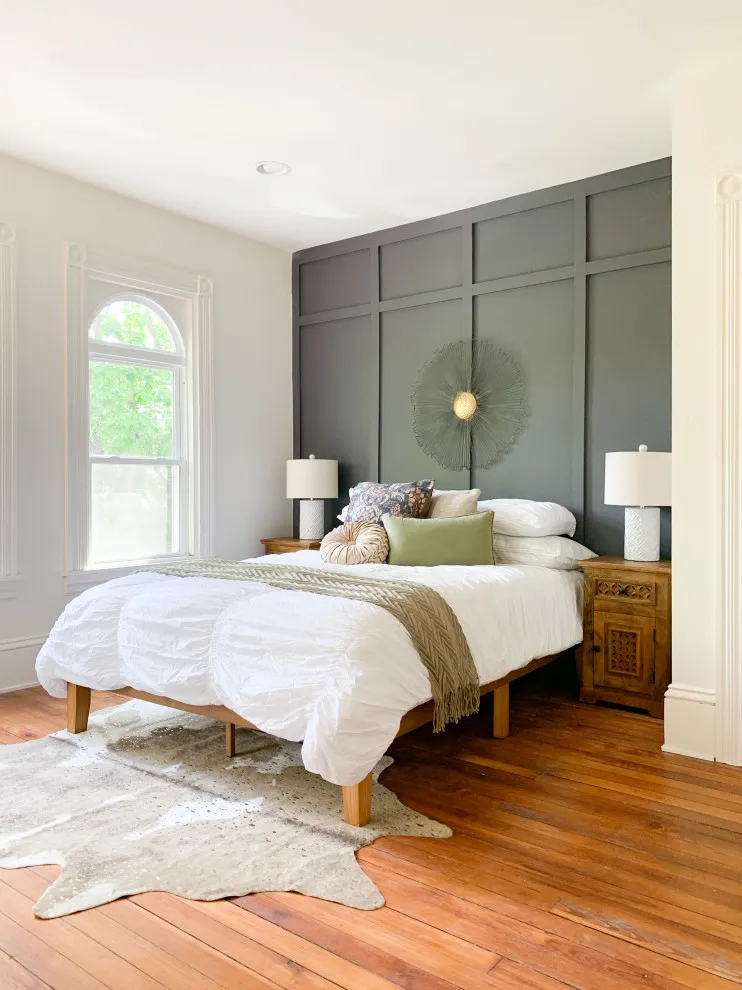
Use a Simple Grid at the End Wall
 SaveSupport Non AI Creator
Source: Blue Stone Staging & Design Company on Houzz.
A gray paneled grid frames a bed beside an arched window. The darker end wall gives the bright room a defined center. The darker grid surrounds the bed without extending onto the neighboring white wall. Timber bedside pieces and green textiles bring warmth between the gray panels and the bright window.
Measure the grid around the actual bed width rather than dividing the wall mechanically. Test the gray with the floor and window trim before painting. Put the bed and nightstand outlines into your sketch before deciding the panel widths. A centered arrangement can still need different edge panels when the wall is not perfectly symmetrical.
IDEA 10 / 20
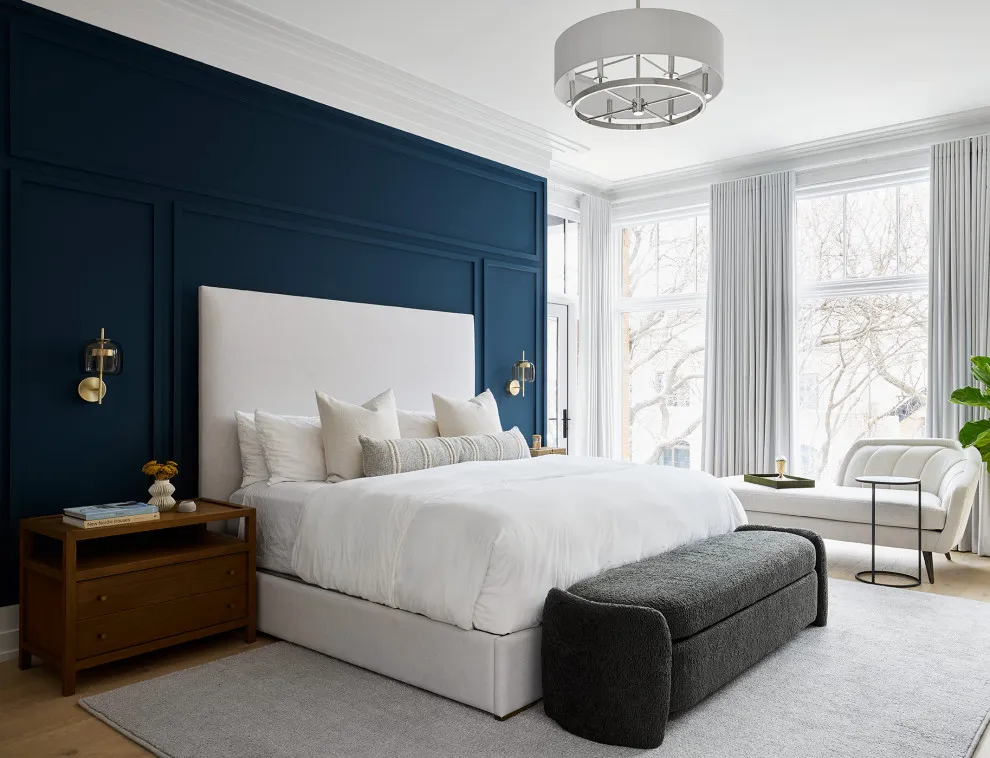
Choose Navy With Broad Rectangles
 SaveSupport Non AI Creator
Source: DGI Design x Build on Houzz.
Navy panels sit behind a white upholstered bed and a dark bench. The broad rectangles add depth to the strong color contrast. White bedding and a broad upholstered headboard make the navy wall feel crisp rather than crowded. The dark bench repeats the depth of color lower in the room.
Use a paint sheen that looks comfortable under the bedroom lights. Keep fittings and sockets aligned with the panel plan where possible. Try the paint behind a lamp and near the window before committing to a sheen. Small wall lights should sit comfortably within the panel layout rather than interrupting its main lines.
PART 03
Layout and everyday comfort
IDEA 11 / 20
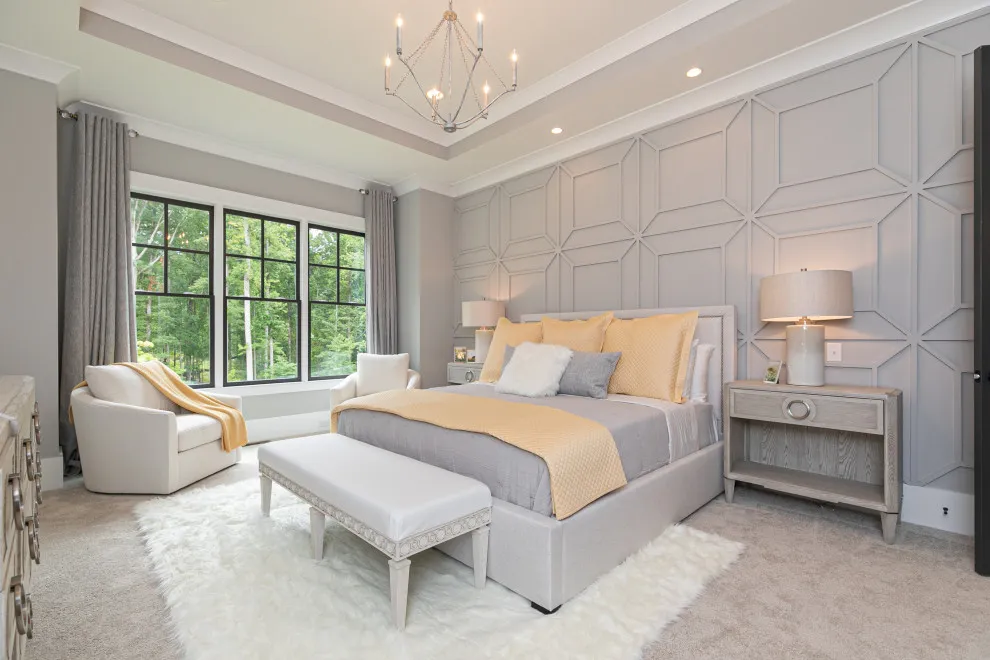
Mix Pale Geometry With Soft Bedding
 SaveSupport Non AI Creator
Source: Bercher Homes on Houzz.
Pale angular panels frame a bed with yellow bedding beside dark window frames. The quiet wall gives the textile color room to stand out. The angular trim gives the broad wall detail while yellow bedding introduces a softer color. Plain bedside lamps and chairs keep the room from repeating geometry in every object.
Compare bedding and wall samples together before choosing paint. Let the panel pattern lead the wall and avoid adding several strong prints nearby. Choose one or two textile accents that work with the yellow rather than adding several unrelated prints. Check how the raised lines look in side light, which can make their shadows more noticeable.
IDEA 12 / 20
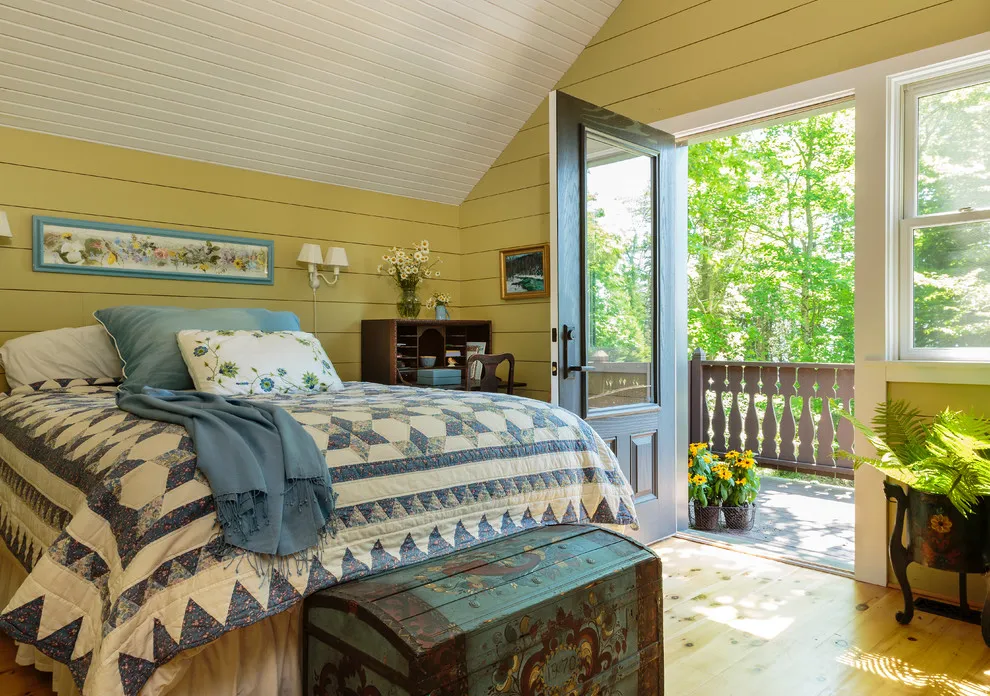
Use Horizontal Boards in a Cottage Room
 SaveSupport Non AI Creator
Source: Houzz project gallery.
Yellow horizontal boards cover a bedroom wall beside an open garden doorway. The warm paint connects the timber treatment to the room’s relaxed textiles. The yellow boards wrap the end wall and meet the pale sloping roof above. A patchwork quilt and painted trunk make the room feel collected without another patterned wall covering.
Choose paint beside the existing floor and bedding. Assess ventilation and finish requirements before adding boards, and keep access to doors and windows clear. Test yellow in both daylight and beside your reading light, since its warmth can change noticeably. Leave the garden doorway clear and choose simple curtains that do not hide the board treatment.
IDEA 13 / 20
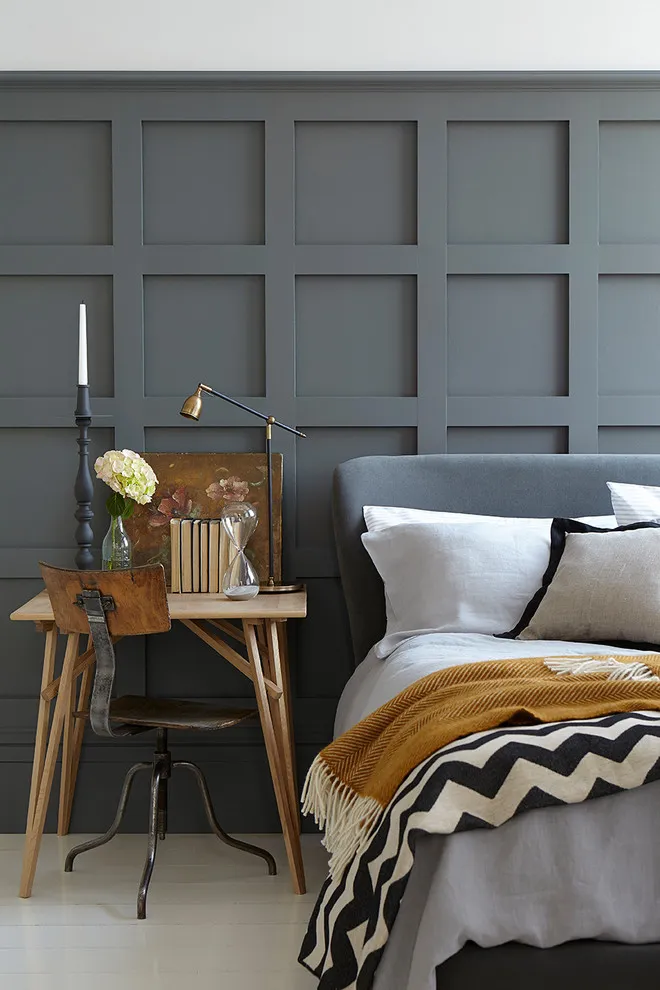
Try a Dark Rectangular Grid
 SaveSupport Non AI Creator
Source: Jenny Bond Interiors on Houzz.
Dark gray rectangular panels sit behind a bed with mustard accents. The repeated geometry gives the small visible wall a structured background. Mustard and black textiles add contrast against the gray grid, while a small timber desk warms the bedside. The squares remain readable because the wall decoration is limited to a few pieces.
Plan the grid with bedside furniture included. Keep accessories selective so the panel lines remain readable, and compare the paint with the floor under evening light. Include the desk or nightstand height when placing the horizontal rails. Keep lamps and objects below the most visible panel intersections if you want the repeated grid to remain the focus.
IDEA 14 / 20
Use White Panels Across the Wall
 SaveSupport Non AI Creator
Source: Tradewinds General Contracting, Inc. on Houzz.
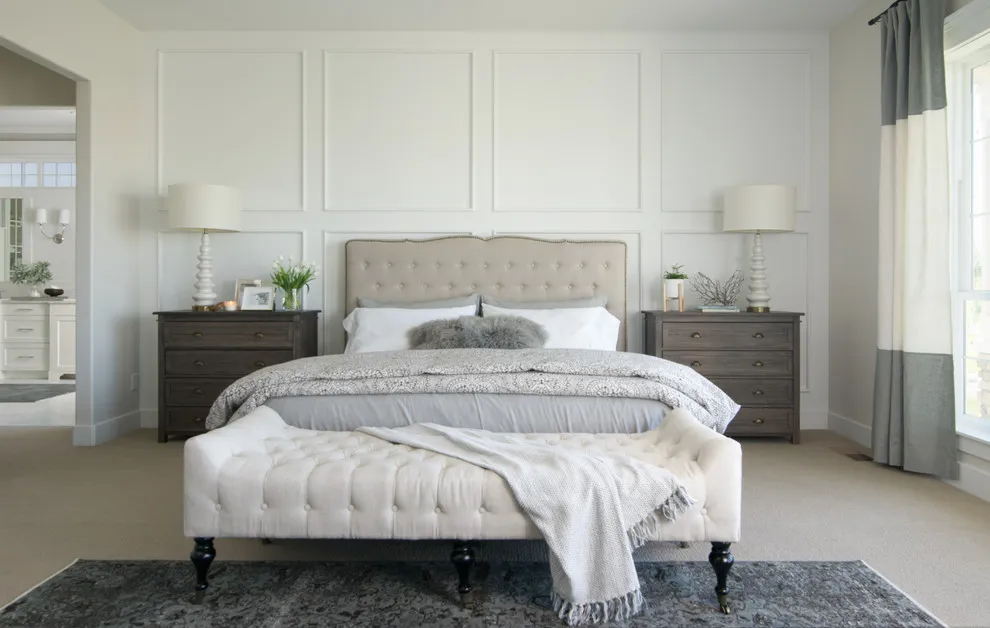
White rectangular panels frame a pale tufted bed and dark nightstands. The subtle treatment adds detail while retaining a bright background. The white lines are subtle beside the pale tufted bed, leaving the dark nightstands as smaller anchors. Keeping the ceiling and upper wall light makes the broad treatment feel airy.
Compare cabinet and wall whites before choosing a finish. Plan trim heights so the headboard does not hide every important horizontal line. Compare paint samples against the curtains and upholstery rather than choosing white on its own. Leave space between the headboard and a visible rail so the trim does not look accidentally cropped.
IDEA 15 / 20
Keep Paneling Below a Lighter Wall
 SaveSupport Non AI Creator
Source: OAD Interiors on Houzz.
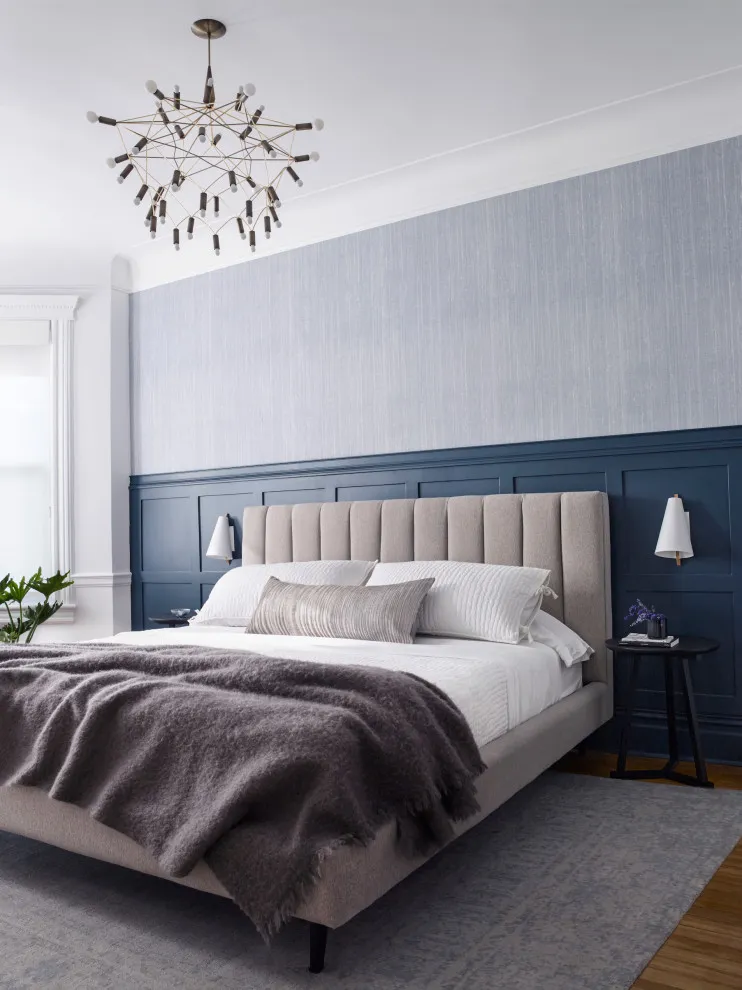
Blue-gray paneling covers the lower wall behind a bed beneath a lighter upper surface. The split gives the room contrast without a fully dark wall. The lower navy sections give the pale headboard a clear background without taking color to the ceiling. A lighter textured upper wall keeps the tall room from feeling fully enclosed.
Mark the upper edge against headboard and window heights before installation. Use the same trim profile across the run and keep the color transition clean at corners. Mark the top rail while the headboard is in place and inspect it from both sides of the room. Plan wall lights together with that edge so neither interrupts the other awkwardly.
PART 04
Finishing details
IDEA 16 / 20
Wrap a Small Room in Timber
 SaveSupport Non AI Creator
Source: Sergio Mercado Design on Houzz.
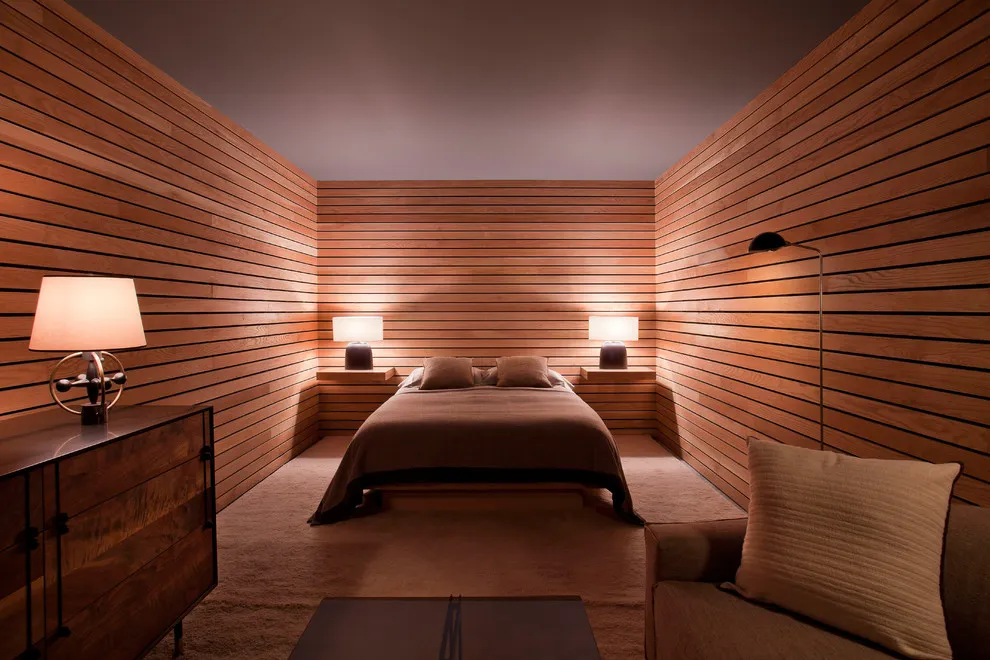
Horizontal timber boards wrap this narrow bedroom, with dark gaps between the rows emphasizing their repeated lines. Brown bedding continues the warm palette, while several lamps create separate pools of light along the walls rather than leaving the room to one central ceiling fixture.
Use a larger timber sample to judge how dark the complete room will feel before covering every wall. Keep bedding relatively plain and place reading lights within comfortable reach. Check walking space around the bed before adding another chair or chest to the narrow floor.
IDEA 17 / 20
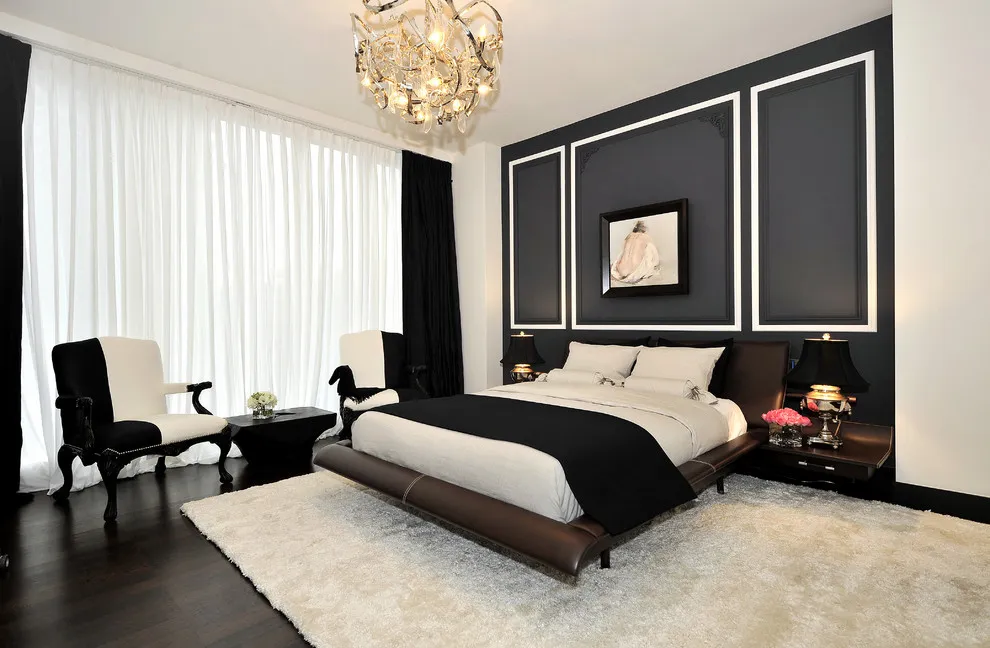
Outline Black Panels With White Trim
 SaveSupport Non AI Creator
Source: Legacy Construction Northeast LLC on Houzz.
Black walls with white rectangular trim sit behind a light bed and pale rug. The sharp outline makes the panel arrangement the main graphic feature. White outlines emphasize three broad rectangles above the dark bed. Pale bedding and a large light rug repeat the contrast below, while a single central picture keeps the graphic wall readable.
Lay out the rectangles at full scale before fitting trim. Keep nearby artwork smaller and simpler if the wall already carries strong contrast. Lay out the rectangles with the bed and both nightstands drawn beneath them. Test the trim width with tape, because high contrast can make a narrow molding look stronger than expected.
IDEA 18 / 20
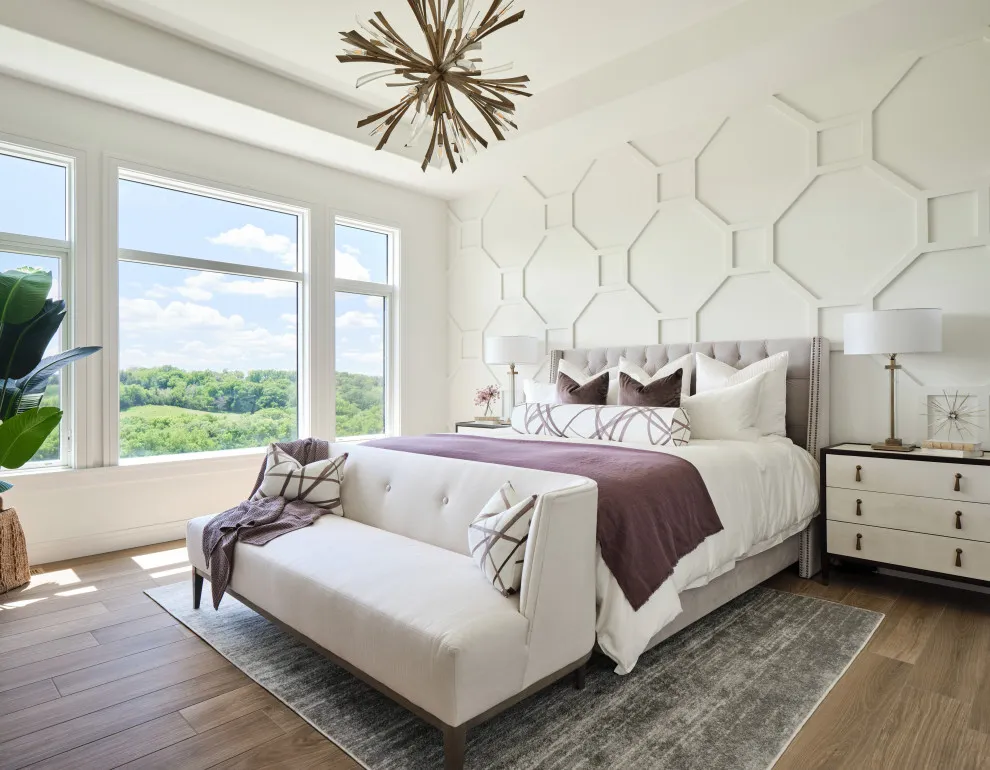
Use Large Hexagonal Lines
 SaveSupport Non AI Creator
Source: Haven Design and Construction on Houzz.
Pale raised hexagonal lines cover the wall behind a light upholstered bed. The broad geometry adds pattern without several paint colors. The large connected shapes cover the wall without needing contrasting paint inside each one. A pale bench and white bedding keep the purple throw as a small, changeable accent.
Check how the shapes end at wall edges before cutting. Use a restrained finish and simpler bedding so the large pattern remains easy to read. Draw the corner shapes before cutting the long runs so the pattern ends intentionally. Avoid adding equally large geometric prints to the bedding unless you want a much busier room.
IDEA 19 / 20
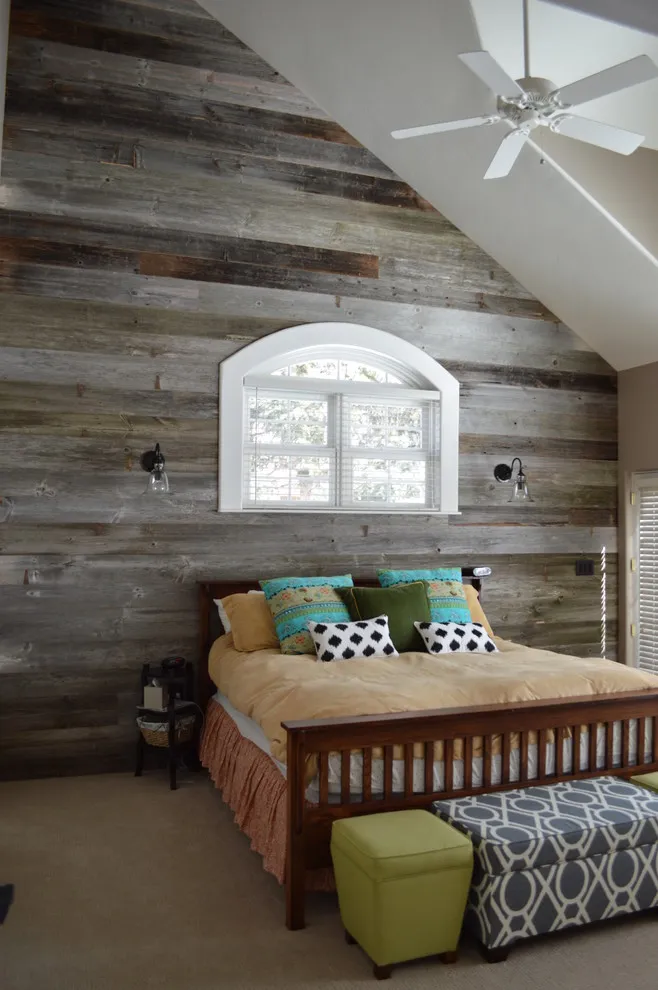
Follow a Gable With Weathered Boards
 SaveSupport Non AI Creator
Source: Creative Floors on Houzz.
Weathered horizontal timber covers a sloped bedroom wall around an arched window. The boards connect the irregular roof shape. Variation in the weathered boards gives the wall its own pattern around the arched window. The pale ceiling separates the timber from the roof above, while bright cushions add smaller color accents.
Plan joints around the window and ceiling slope together. Compare the timber with the floor and use lighter textiles if the wood has strong grain and color variation. Plan the board ends at the window opening before starting the wall. Compare their lightest and darkest tones with your floor, then choose bedding that calms rather than duplicates the wood grain.
IDEA 20 / 20
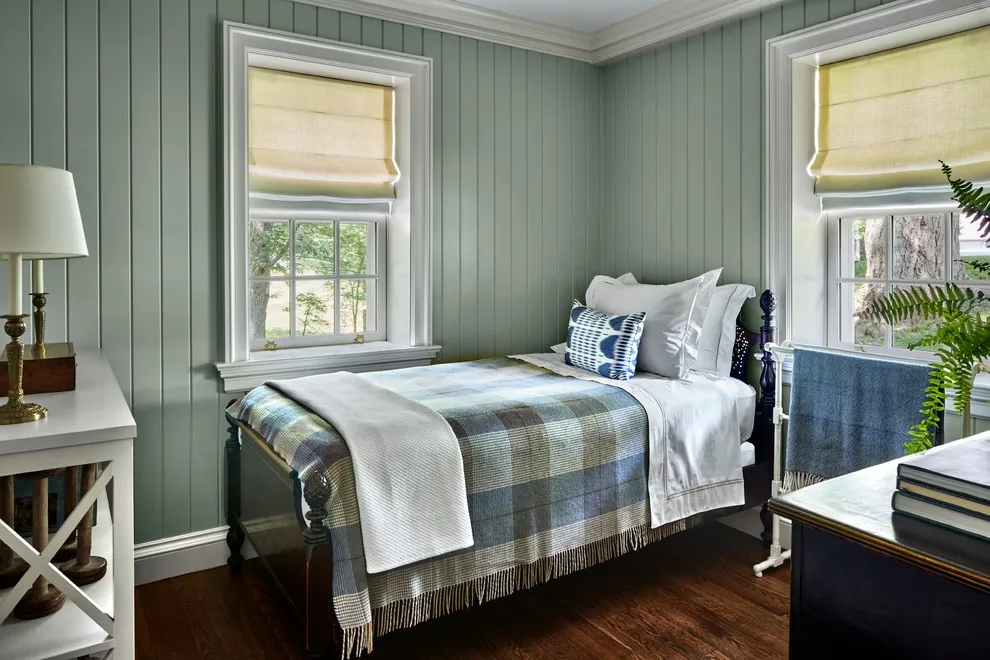
Pair Vertical Boards With Checked Bedding
 SaveSupport Non AI Creator
Source: Significant Homes LLC on Houzz.
Gray-green vertical boards surround the narrow bed between two windows, giving the room an orderly background. The large checked cover introduces a different direction of pattern, while pale window trim and white pillows prevent the muted wall treatment from making the small space feel heavy.
Choose wall paint beside the check fabric rather than trying to match it from memory. Repeat the same trim finish around both windows, and leave their controls accessible. A bedside lamp with a compact base provides useful reading light without crowding the small table or nearby storage.
BRING IT ALL TOGETHER
Plan the lines before buying the panels
The most convincing bedroom paneling follows the room’s architecture. Measure the bed and headboard, mark switches, windows and door edges, then lay out the pattern so the trim ends and repeats look intentional.
Keep the finish easy to maintain and resist covering every wall when one treatment will do. Subtle painted molding can be just as effective as expensive timber when its proportions fit the space.