An accent wall earns its place when it makes the living room easier to read. It might frame a fireplace, define the sofa wall, pick up the architecture around a window, or turn a plain stretch of wall into a more comfortable background for people and furniture. Bold color is only one way to do it.
Start with the wall you already look toward when entering the room. Then decide whether you need color, texture, storage, or a better proportion. These ideas explain how to build a focal point without creating a feature that fights the rug, art, and seating.
PART 01
Color and contrast
IDEA 01 / 20
Try Bold Color Behind a Small Sofa
 SaveSupport Non AI Creator
Courtesy of Masque Spacio
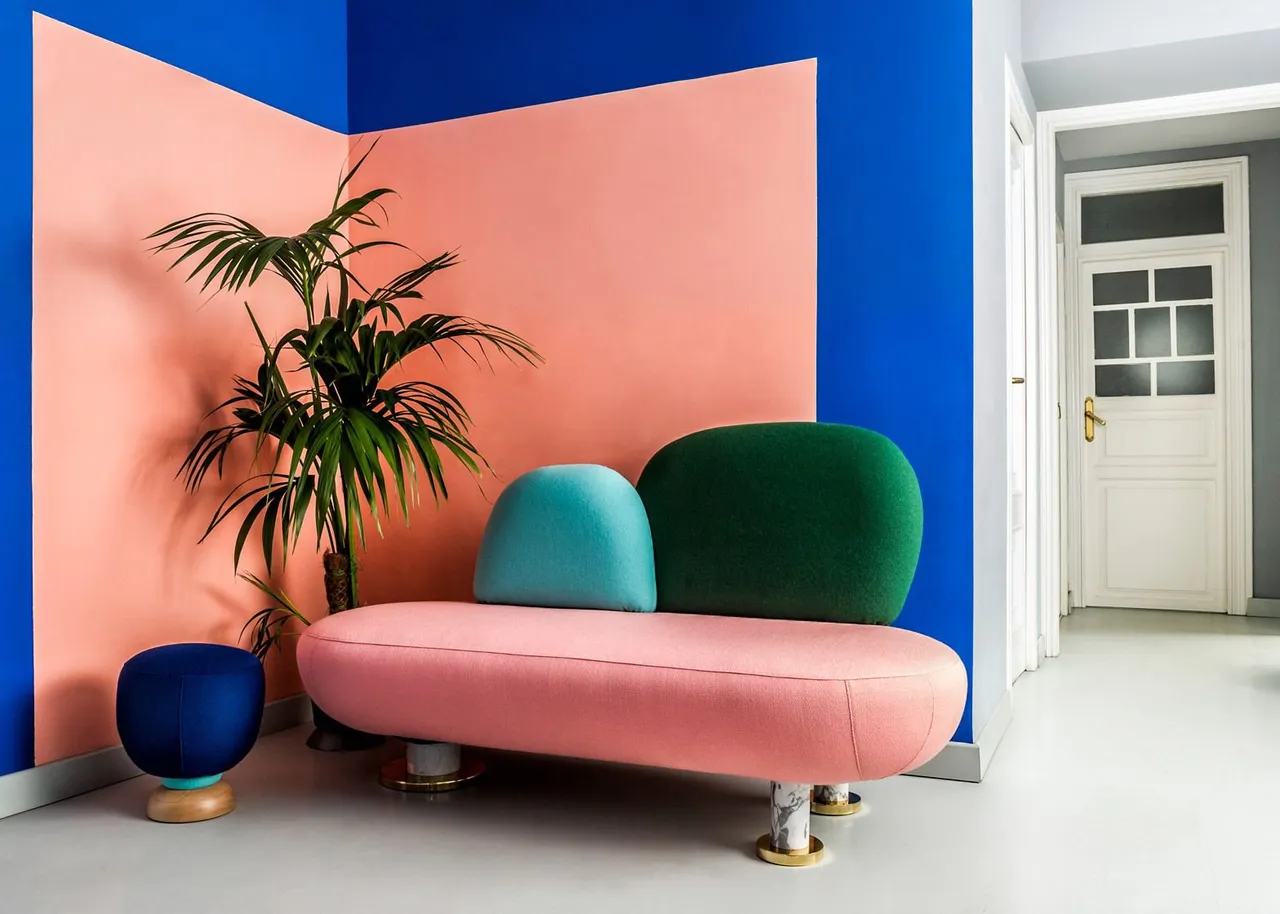
A pink sofa sits against intersecting peach and blue walls beside a plant. The strong color blocks define the seating corner. The peach shape wraps across the corner rather than stopping at one wall, tying the small seat to its setting. Blue around it gives the softer pink upholstery a stronger outline.
Test the full color combination with large samples before painting. Keep the nearby floor and furniture quieter if you want the wall geometry to remain the main feature. Sketch the shapes on a photograph of your corner first. Use furniture you already own as the color reference, and check the painted edges from the room's main entrance.
IDEA 02 / 20
Use Tile Around the Fireplace
 SaveSupport Non AI Creator
Source: Normandy Remodeling on Houzz.
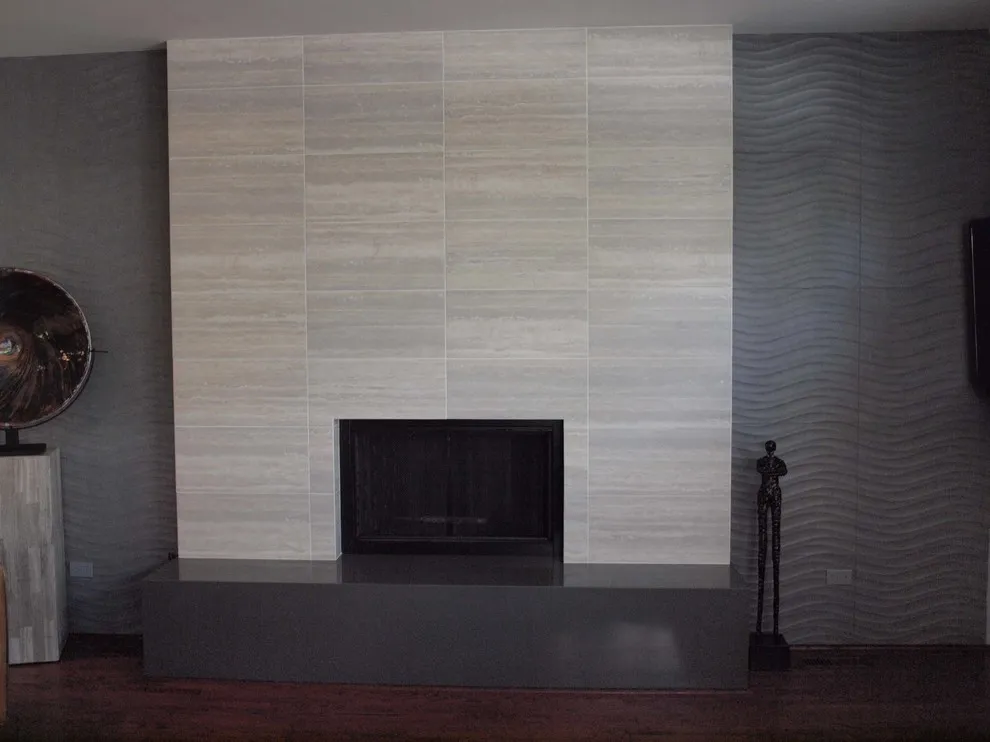
A pale tiled fireplace wall stands beside a dark gray painted section. The material change gives the fire opening a clear architectural frame. Lighter tiles make the central chimney section prominent against the darker surfaces on either side. Horizontal joints introduce detail without needing artwork immediately above the opening.
Choose finishes suitable for the fireplace location and required clearances. Compare grout and tile together so the pattern remains as quiet or pronounced as you intend. Request a sample of the finished grout color rather than judging dry powder. Have the installer confirm the complete tile, adhesive and backing system for your particular fireplace.
IDEA 03 / 20
Add Deep Rectangular Paneling
 SaveSupport Non AI Creator
Source: Dettaglio Interior Design on Houzz.
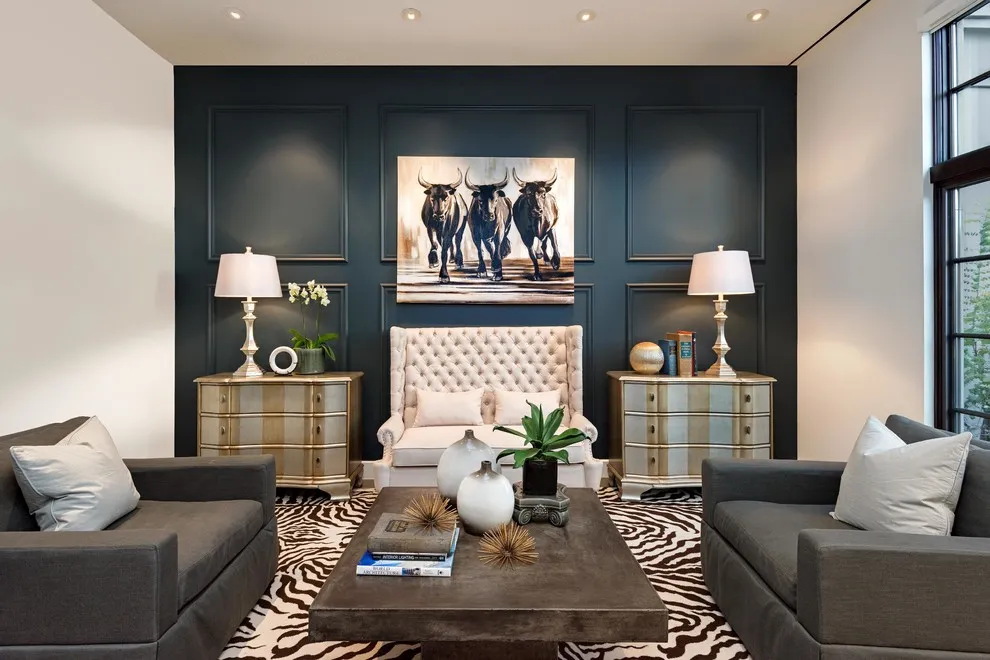
Deep blue-gray panels give the back wall a formal structure around the central artwork and pale tufted seat. Matching lamps reinforce its symmetry, while the gray sofas and boldly patterned rug introduce different textures without needing several competing accent-wall colors.
Plan the panel divisions around the furniture that will actually stand against the wall. Check sockets and lamp positions before fitting trim, then test a large paint sample under both ceiling and table lights. Leave enough plain space around the artwork to distinguish its frame from the panel edges.
IDEA 04 / 20
Use Navy Behind a Mirror Collection
 SaveSupport Non AI Creator
Source: SuzAnn Kletzien Design on Houzz.
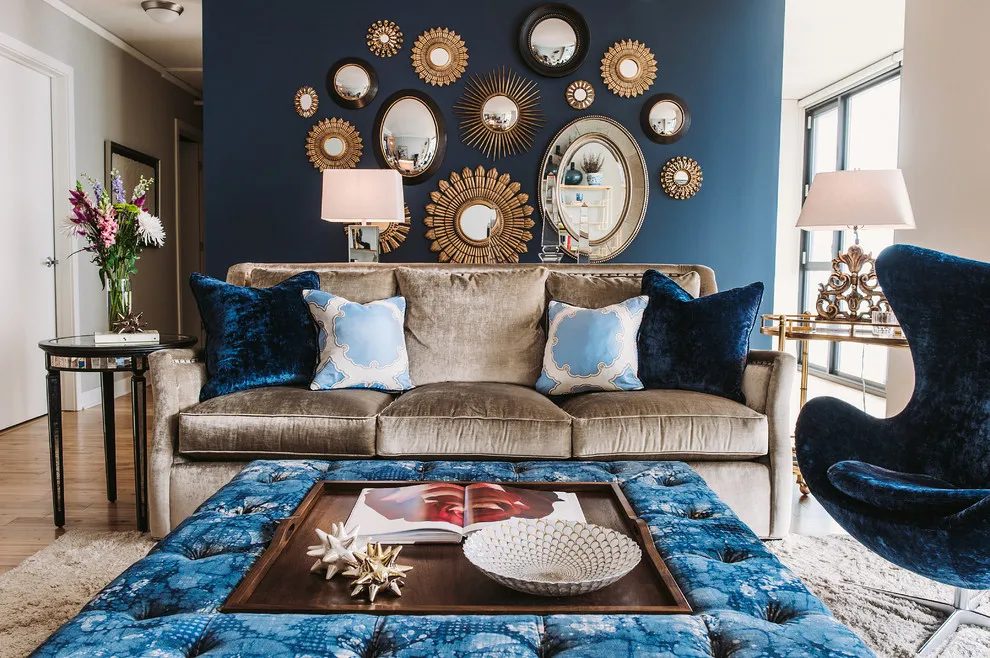
A group of decorative mirrors stands out against the navy wall, with their lighter metallic frames creating a varied display. The taupe sofa offers a plain background below, while blue cushions and the patterned ottoman repeat the wall color through the seating area.
Lay out a mirror collection on paper templates before making holes, allowing space between its different frame shapes. Check what each mirror will reflect from the main seats. Use fixings suited to the weight and wall, and avoid adding so many small accessories that the display loses its outline.
IDEA 05 / 20
Choose Pale Paneling for Texture
 SaveSupport Non AI Creator
Source: Burnham Design on Houzz.
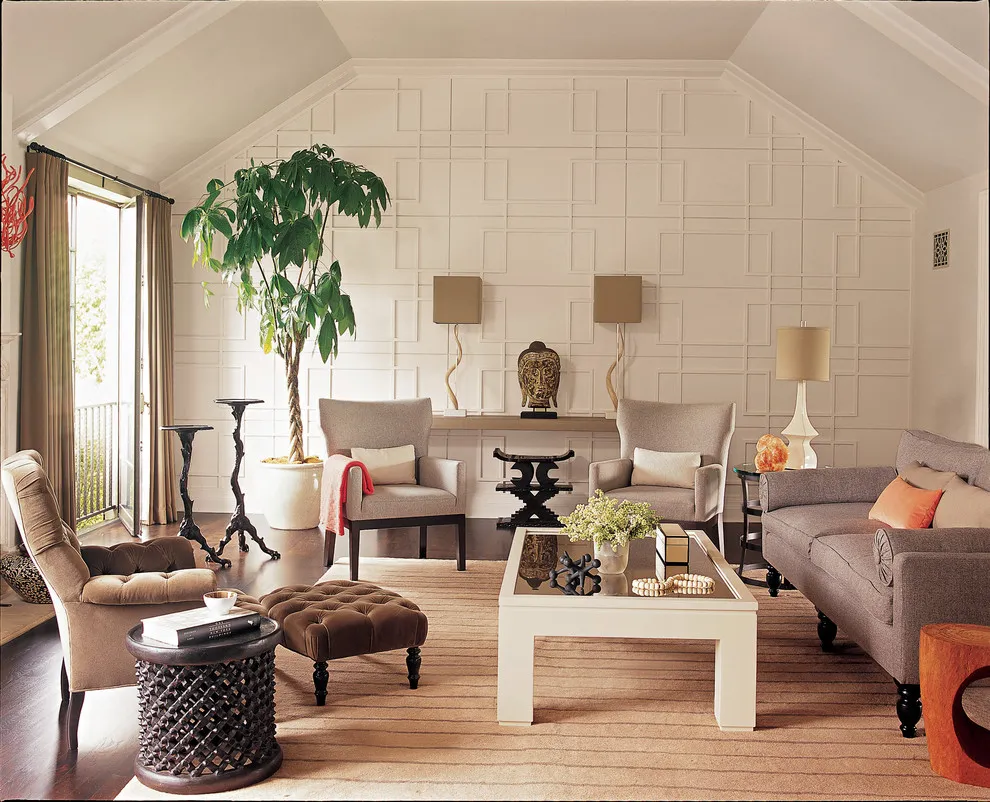
Pale rectangular paneling rises behind a living-room seating group. The light finish adds detail while keeping the room’s palette gentle. The pale treatment follows the tall wall beneath the sloping ceiling, linking several differently shaped seats. Its fine rectangular lines provide background detail while the furniture supplies most of the texture.
Draw the panel layout before installation and consider furniture height. Keep joints and trim consistent around windows and corners so the treatment feels integrated. Mark the layout behind the tallest furniture before cutting, since concealed divisions may not contribute much. Choose a finish that is easy to wipe where chairs could brush the wall.
PART 02
Materials and texture
IDEA 06 / 20
Use Angled Trim on a Light Wall
 SaveSupport Non AI Creator
Source: Carl Diaz on Houzz.
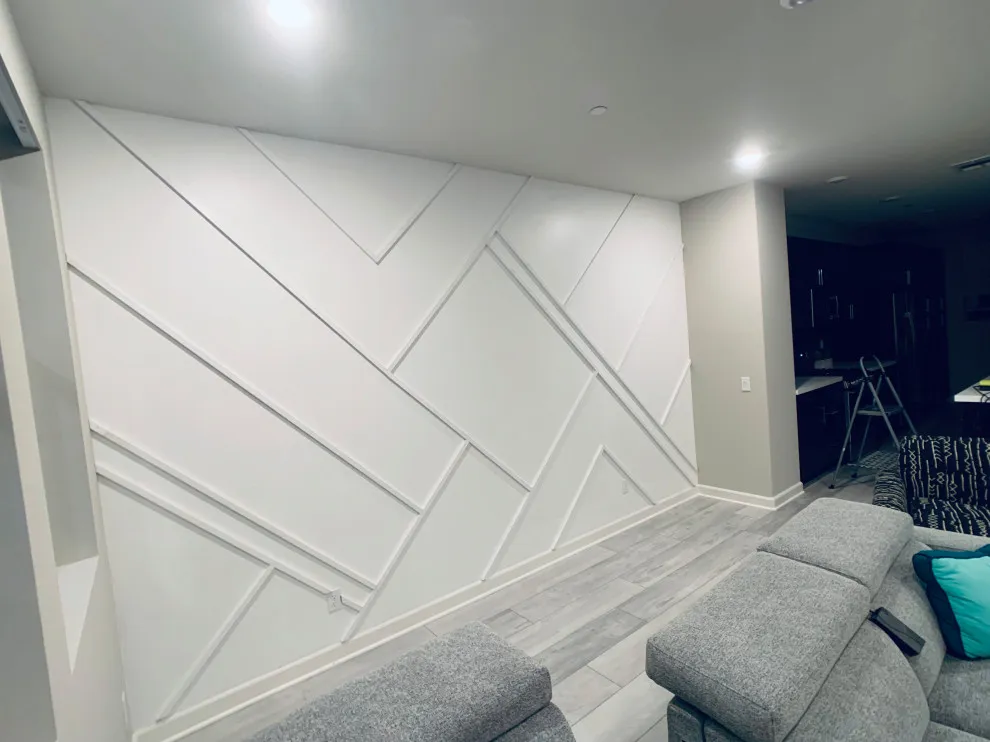
Angled strips create a geometric pattern on a white wall behind gray seating. The raised lines add interest without another strong paint color. Raised diagonals create shadows across the broad white wall, with no artwork needed to fill the empty area. Gray seating keeps the geometric treatment visible without a strong color contrast.
Plan the pattern at scale before cutting trim. Check how each line ends at the ceiling and corners, and use a paint sheen that suits the room’s light. Tape the entire pattern onto the wall before committing to cuts. Check that short pieces near corners look intentional, and account for sockets or controls that need continued access.
IDEA 07 / 20
Warm the Room With a Red-Brown Wall
 SaveSupport Non AI Creator
Source: Sustainable Nine Design + Build on Houzz.
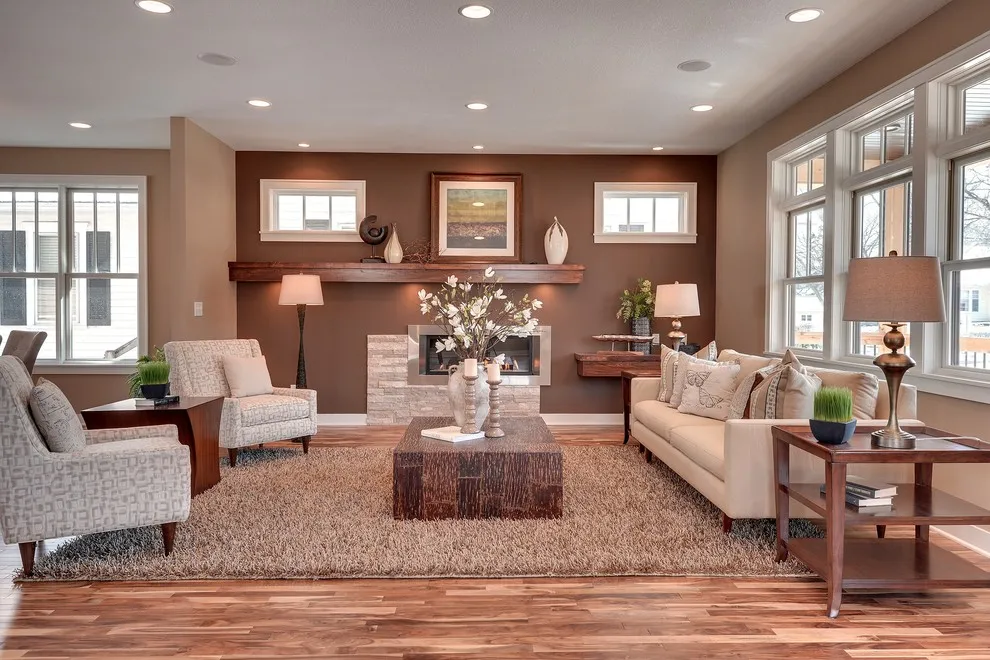
A red-brown wall sits behind pale seating and framed pictures. The warm background gives the neutral furniture a stronger outline. The red-brown backdrop sits mainly at the fireplace end, so the window wall continues to bring brightness into the room. Timber tables echo its warmth without precisely matching the paint.
Compare the wall sample with the sofa and wood floor together. Keep adjacent walls lighter if the room has limited daylight and test the color under evening lamps. Move a sample between the fireplace and window sides before deciding. Use the existing mantel as a guide to finish changes, and keep combustible decorative items outside required clearances.
IDEA 08 / 20
Frame a Television With Pale Wood
 SaveSupport Non AI Creator
Source: Brooke Wagner Design on Houzz.
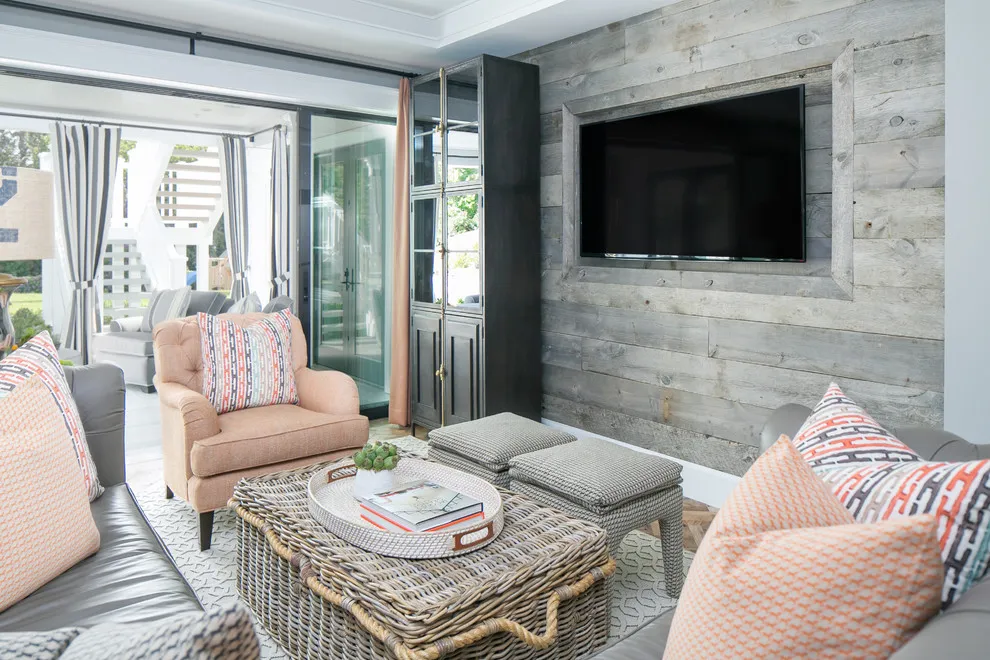
Pale horizontal wood boards surround a television beside soft pink seating. The timber connects the screen wall to the room’s softer colors. Weathered grain gives the black screen a textured surround, while the pale timber relates to the woven table and soft pink cushions. Glass doors keep the nearby area bright.
Plan cable routes and mounting positions before installing boards. Keep the grain restrained if the nearby upholstery or curtains already carry a strong pattern. Confirm that the television is fixed through the decorative boards to suitable support. Leave access to connections so changing equipment does not mean removing the entire wall treatment.
IDEA 09 / 20
Use Dark Shelving as the Accent
 SaveSupport Non AI Creator
Source: Vernich Interiors on Houzz.
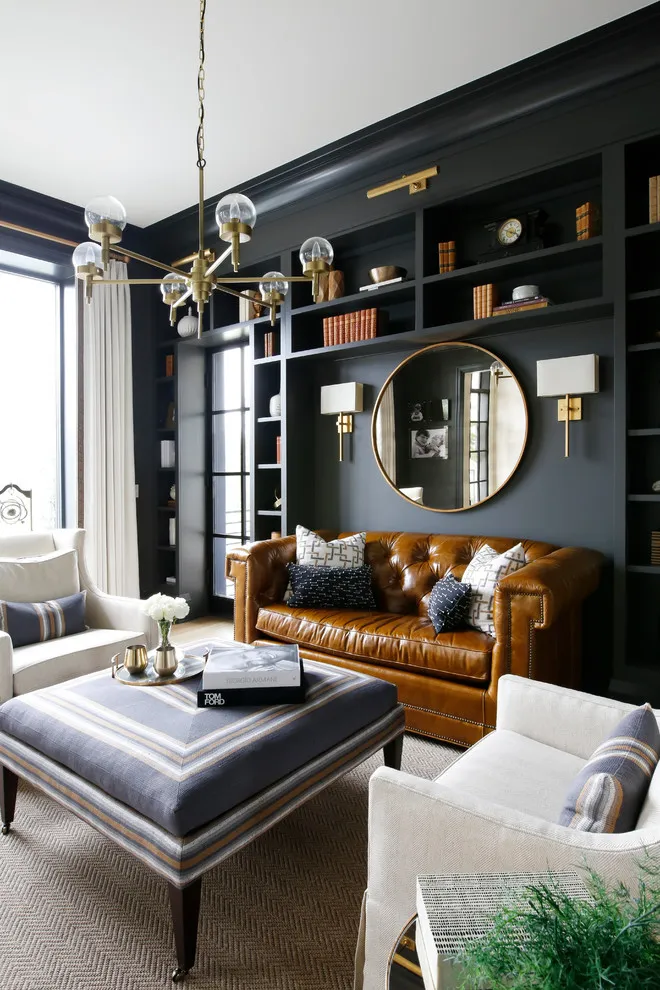
Dark built-in shelves and cabinetry frame a brown leather sofa. The storage wall creates the strongest contrast in the room. The cabinetry continues around the sofa, making storage part of the backdrop rather than a separate collection of pieces. A round mirror and warm leather break up the dark straight lines.
Balance closed storage with a limited number of display openings. Keep everyday clutter behind doors so the dark wall reads as a coherent feature. Plan shelves around books and objects you actually keep. Include reachable closed cupboards for less attractive essentials, and check that wall lights do not interfere with doors or shelf contents.
IDEA 10 / 20
Add Vertical Timber Slats
 SaveSupport Non AI Creator
Source: D&L Wall Design on Houzz.
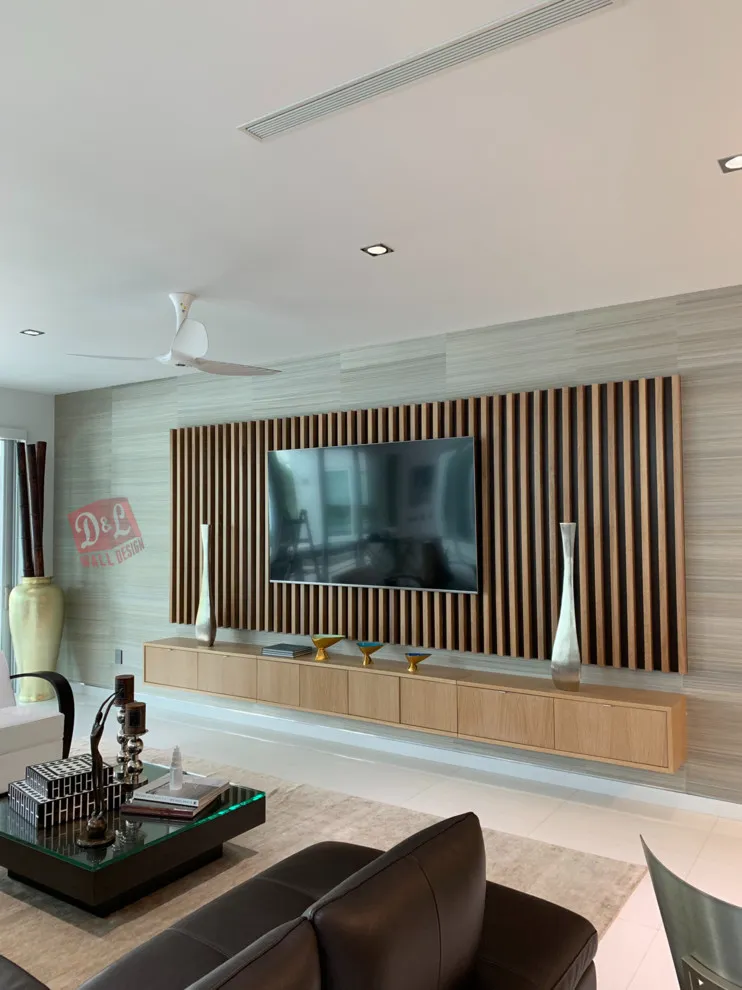
Vertical timber slats form a panel behind a television above a floating cabinet. The repeated lines give the screen a defined background. The slatted section frames the television as one rectangular feature, with the pale floating cabinet repeating its timber tone below. A quieter surrounding wall gives the narrow lines space to stand out.
Check mounting and cable access before choosing the slat spacing. Keep neighboring furniture simple so the repeated wall texture does not compete with several other patterns. Consider how you will dust between the slats and reach the screen's cables. If you want acoustic benefits, verify the complete product specification rather than assuming decorative timber alone provides them.
PART 03
Layout and everyday comfort
IDEA 11 / 20
Balance a Blue Wall With a Quiet Gallery Wall
 SaveSupport Non AI Creator
Source: PSW Real Estate on Houzz.
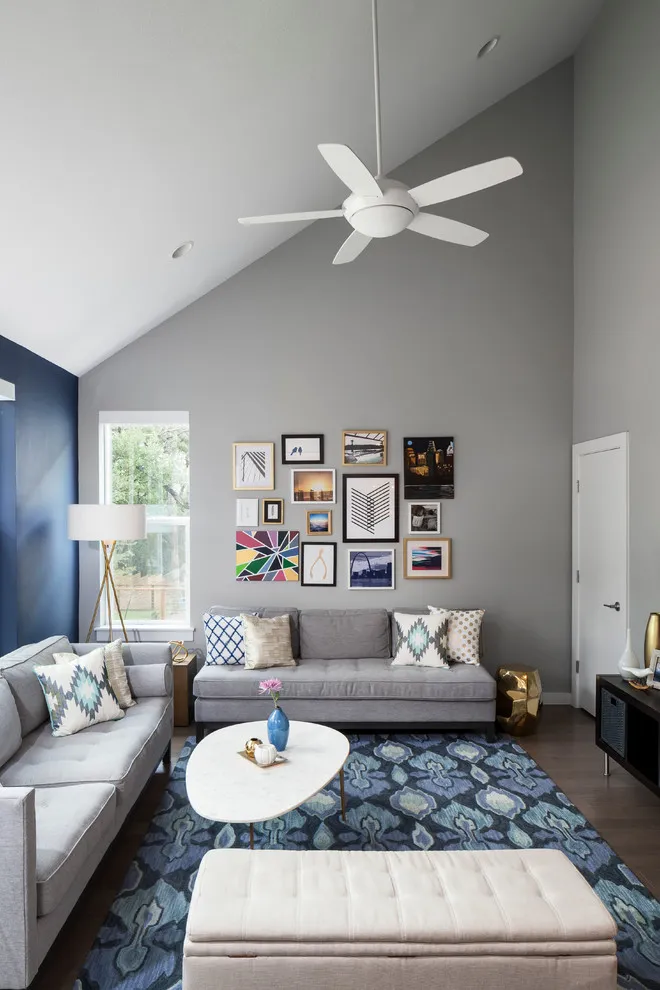
A blue wall introduces color along one side of the seating area, while the picture collection hangs against quieter gray paint behind the other sofa. Keeping the gallery background neutral makes it easier to distinguish the varied frames and artwork from the stronger accent nearby.
Choose which wall will carry the main color before placing a picture group. Test the blue beside the sofa fabric and patterned rug, then lay out the frames as one arrangement. Leave clear space around the grouping so the room does not feel busy from every viewing angle.
IDEA 12 / 20
Use Orange at the End of a Long Room
 SaveSupport Non AI Creator
Source: Magic Hill NYC on Houzz.
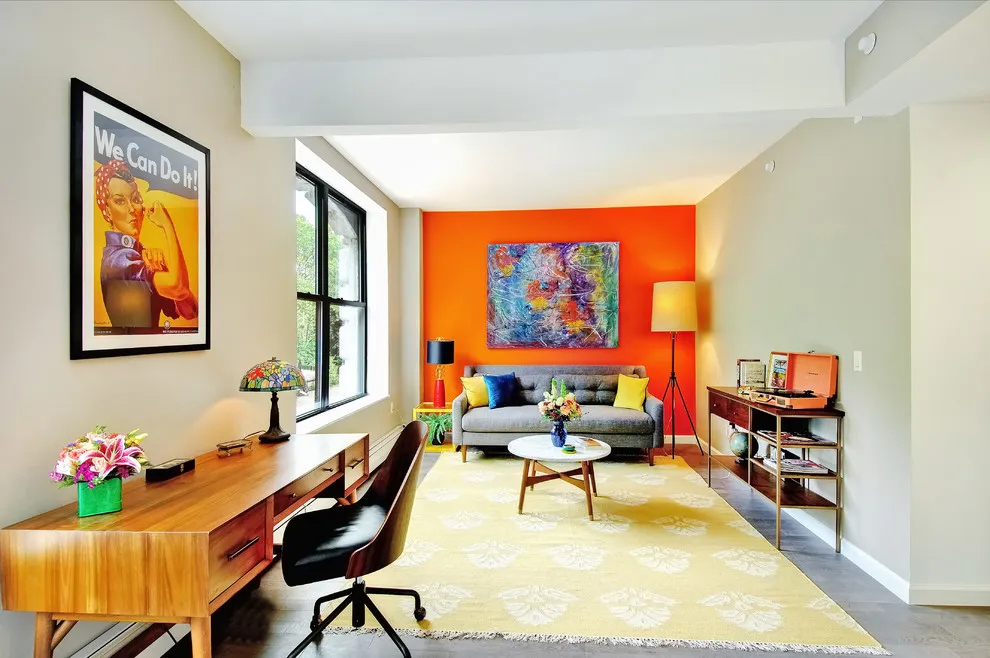
An orange wall frames a small seating area at the end of a long, bright room. The concentrated color gives the view a clear destination. A gray sofa gives the orange wall a quieter foreground, while yellow cushions and the large rug add warmth farther into the room. Light side walls keep the accent concentrated.
Judge the accent from the entrance as well as close up. Keep large nearby pieces restrained and check how the orange changes under the room’s evening lights. Try the sample behind the sofa before deciding how much orange to use. Keep the desk and walking route comfortable, since the wall's impact should not dictate impractical furniture placement.
IDEA 13 / 20
Use Light Boards in a Tall Room
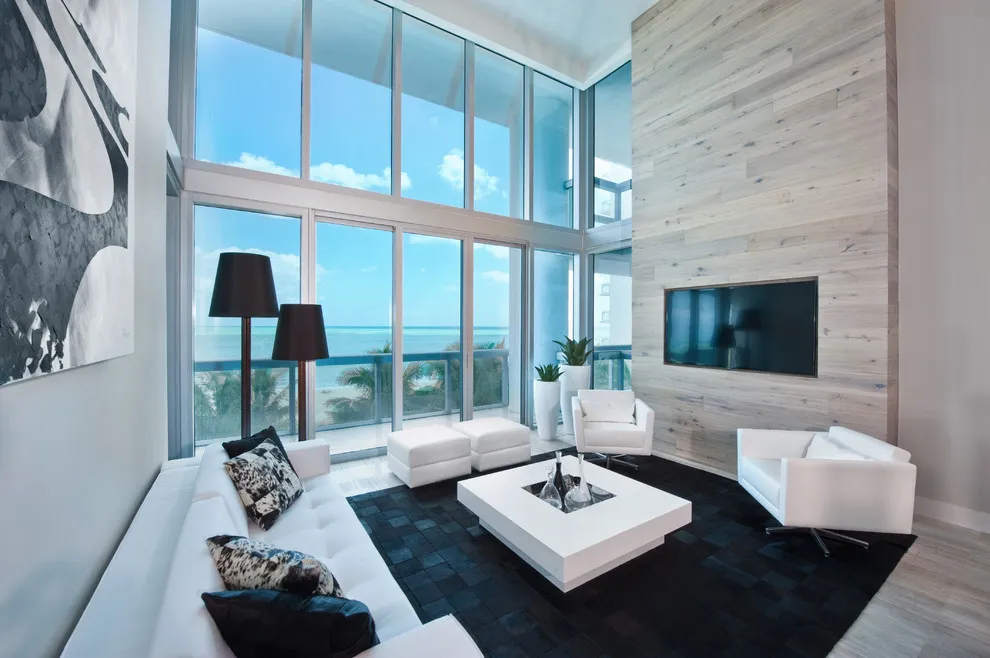 SaveSupport Non AI Creator
Source: EBL Construction on Houzz.
A pale plank wall sits behind a television in a room with tall windows and light seating. The quiet texture gives the high wall a clear purpose. Horizontal grain extends up the tall screen wall, adding warmth beside the large glass openings. White furniture and a dark rug provide contrasting blocks without competing with the wood's fine detail.
Coordinate board joints with the screen and storage below. Choose a light finish that works with the window frames rather than adding another unrelated neutral. Check samples at a similar distance to your main seating position. Confirm access for installing and maintaining the upper boards, and plan the television fixings before the finish is applied.
IDEA 14 / 20
Frame the Fireplace With Light Panels
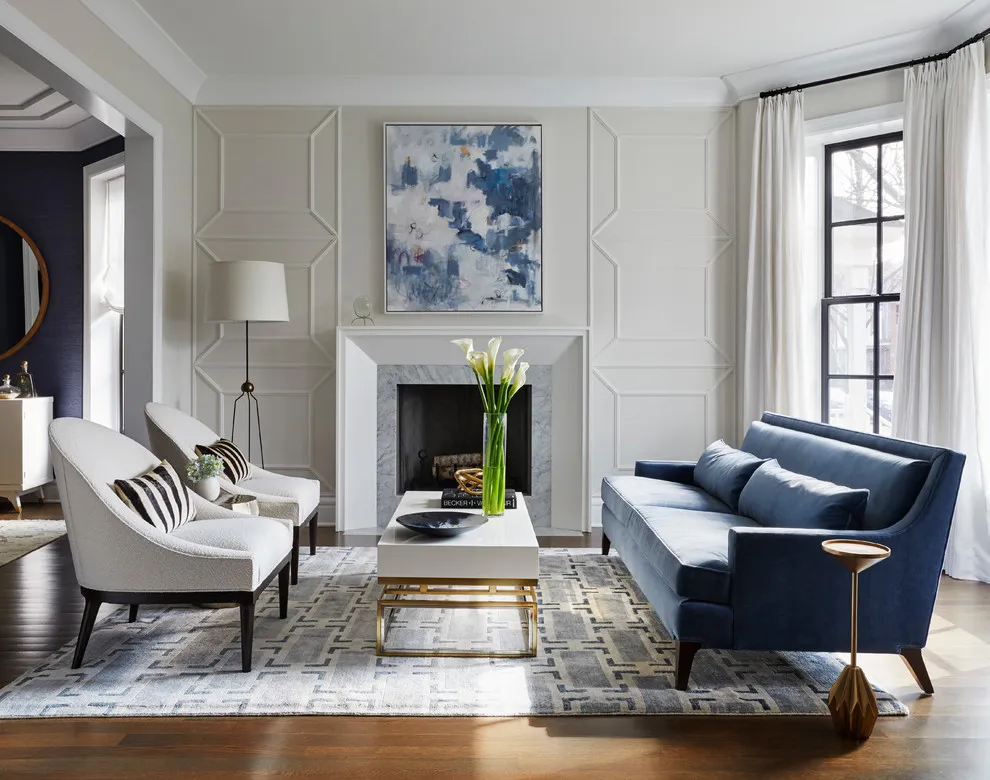 SaveSupport Non AI Creator
Source: Amy Kartheiser Design on Houzz.
Light wall panels surround a fireplace beneath a blue abstract picture. The simple framing ties the art and fire opening together. The pale trim forms a gentle geometric outline on either side of the fireplace. Blue in the artwork connects with the sofa, allowing the accent wall to remain light rather than saturated.
Plan panel proportions around the fireplace rather than applying a standard grid blindly. Follow the fireplace finish requirements and use a consistent trim profile. Arrange the panel lines and artwork together on a measured drawing. Leave room for the mantel and existing switches, and verify that any new trim complies with the fireplace's installation requirements.
IDEA 15 / 20
Accent a Window Wall With Blue and Pattern
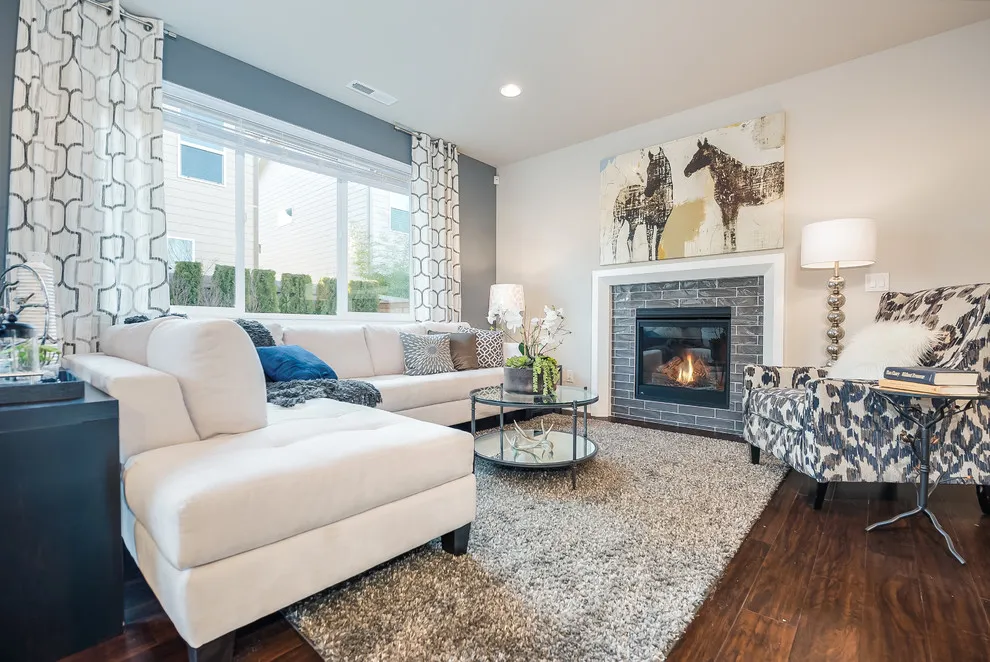 SaveSupport Non AI Creator
Source: Westcott Homes on Houzz.
Blue paint above the window gives this wall a focused accent, while the repeating pattern comes from the curtains rather than a wall covering. A white sectional keeps the foreground quiet, allowing the patterned armchair and fireplace artwork to add further detail.
Try a curtain sample beside the wall color before ordering the full set. Keep the rod wide enough for the curtains to stack away from the glass when open. If the window treatment is already busy, choose simpler cushions so the smaller painted accent remains easy to see.
PART 04
Finishing details
IDEA 16 / 20
Make a Tall Stone Wall the Feature
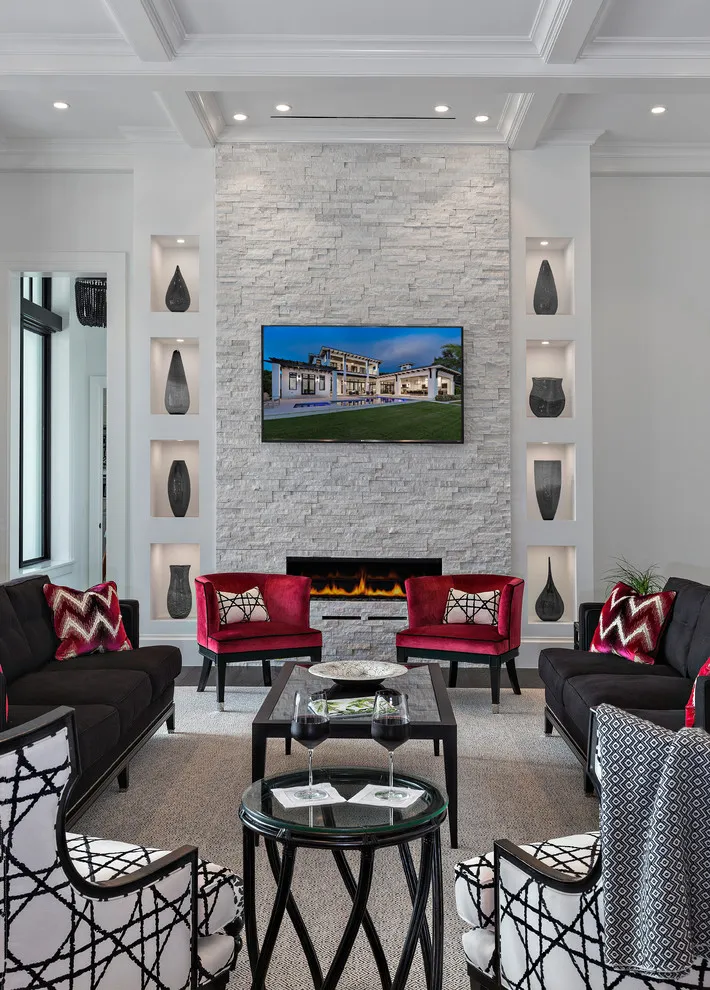 SaveSupport Non AI Creator
Source: Joy R. Dabill Interior Design on Houzz.
A pale stone fireplace wall rises behind a group of dark and red chairs. The textured vertical surface draws attention upward. Recessed display niches frame the textured center, with red chairs providing a brighter foreground below the television. The lighter wall surface prevents the tall feature from becoming one dark block.
Assess installation and fireplace requirements before adding stone. Balance the rough wall with comfortable upholstered seating and lighting at a useful height. Compare cladding samples with the mantel and floor, and ask how outside corners will be finished. Confirm suitable screen placement and cable routing with the fireplace and television manufacturers.
IDEA 17 / 20
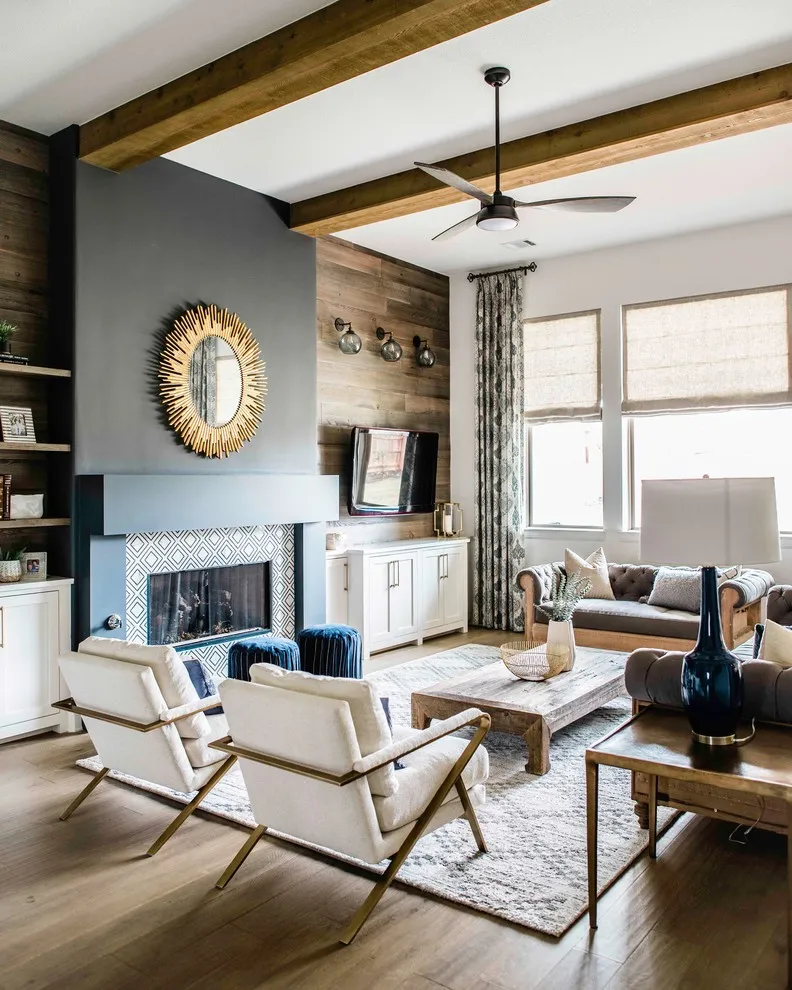
Paint the Fireplace Wall Gray
 SaveSupport Non AI Creator
Source: BANDD DESIGN on Houzz.
A gray-blue fireplace wall sits beneath timber beams beside pale chairs. The cooler painted area distinguishes the fireplace from the warmer wood. The cooler chimney section stands between timber surfaces, making the fireplace easy to distinguish. A round mirror softens its straight outline while the patterned surround adds detail closer to the fire opening.
Compare the wall sample with the existing beam color in daylight. Keep surrounding trim consistent so the accent feels connected to the room’s architecture. Test the gray beside both the warm timber and the patterned tile. Check how the color changes when your blinds are closed, since evening light can alter its undertone.
IDEA 18 / 20
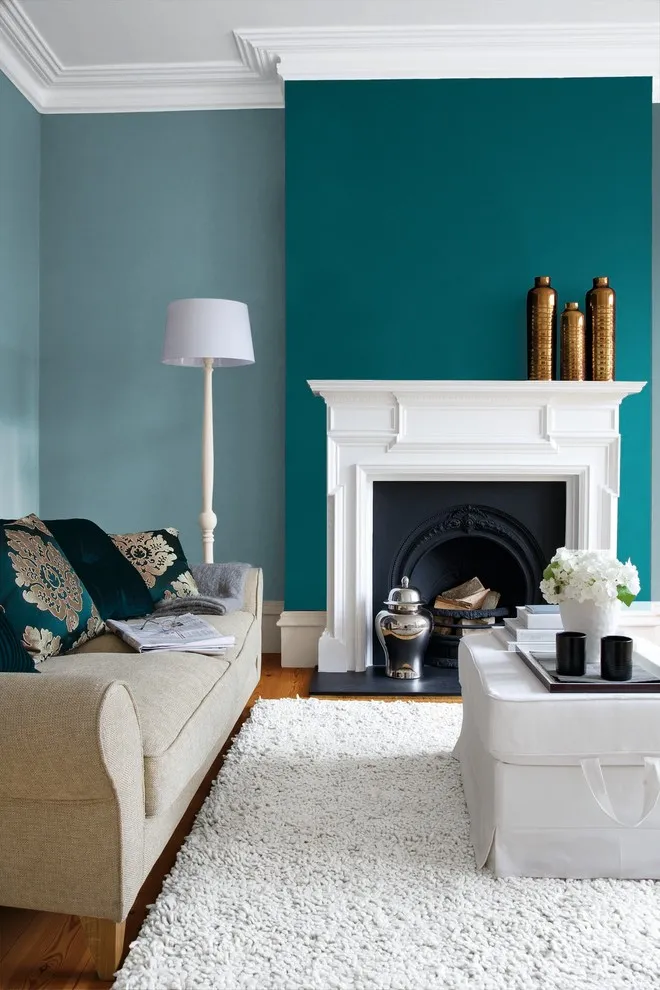
Use Teal Around a White Fireplace
 SaveSupport Non AI Creator
Source: Crown Paints on Houzz.
A teal painted section frames a white fireplace beside pale seating. The saturated color makes the white surround stand out. The teal stays concentrated on the chimney section, with a paler blue-gray beside it. White molding and a light rug introduce clear contrasts around the deeper painted surface.
Test the teal against the fireplace finish before painting. Keep adjacent accessories modest and choose lighting that makes the color comfortable in the evening. Paint a large sample close to the white mantel rather than on an unrelated wall. Decide whether the neighboring wall should share its undertone before buying the second paint color.
IDEA 19 / 20
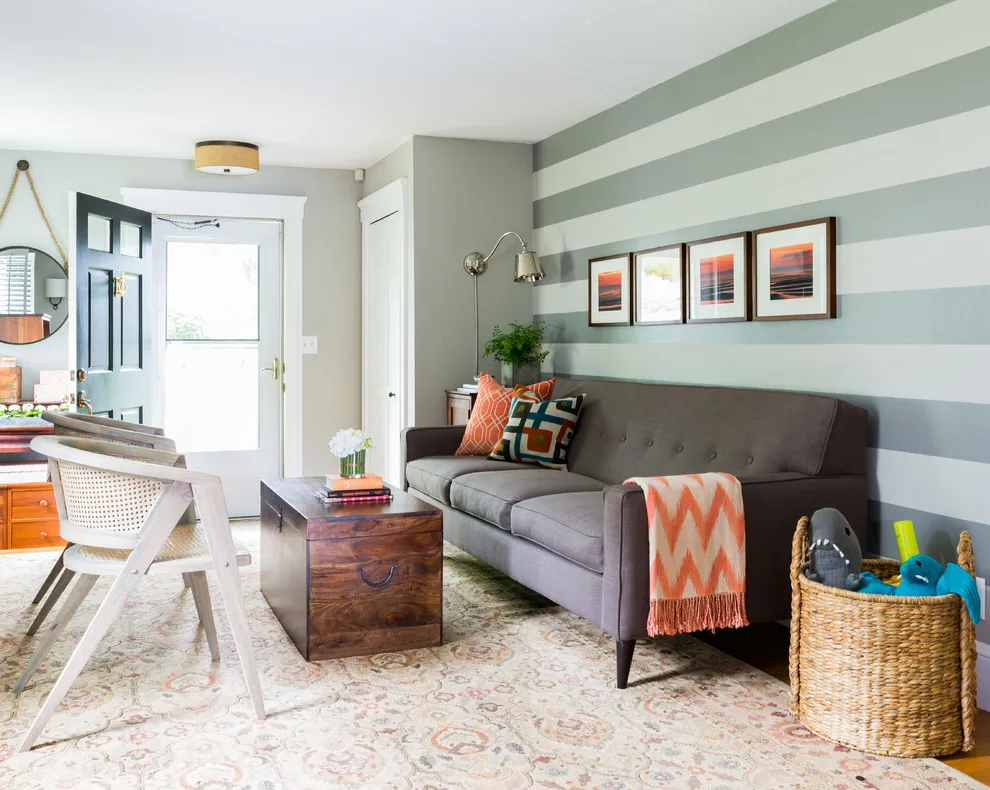
Try Broad Horizontal Stripes
 SaveSupport Non AI Creator
Source: Beth Bourque Design Studio on Houzz.
Broad green-gray stripes run behind a small sofa and three framed pictures. The bands add pattern without needing a separate wall covering. Closely related pale and green-gray tones keep the stripes gentler than a black-and-white treatment. A gray sofa and warm timber table allow the wall pattern to remain the main backdrop.
Mark the stripe heights before painting and check them against the sofa back. Use closely related colors if you want the pattern to feel calm rather than sharply graphic. Use a level to mark the bands and account for slightly uneven ceilings. Paint a test edge with your chosen tape, following its removal guidance to keep the boundaries clean.
IDEA 20 / 20
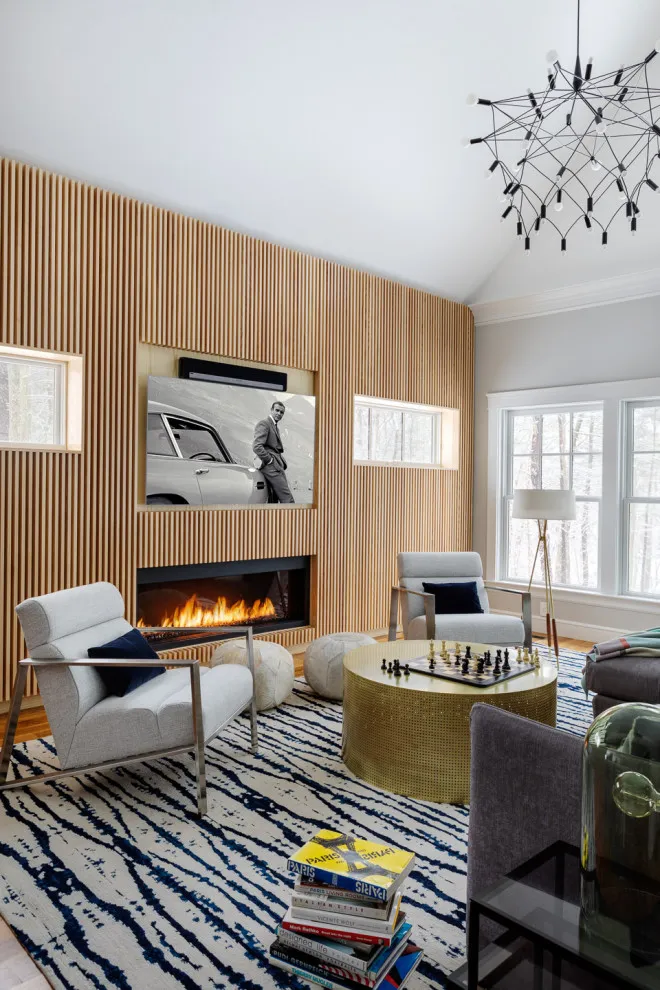
Combine Slats With a Fireplace
 SaveSupport Non AI Creator
Source: Eleven Interiors on Houzz.
Vertical timber slats cover a fireplace wall beside a pale seating group. Their warm color gives the bright room a more textured center. The slats extend above and beside the television, unifying the tall fireplace wall. Pale chairs and a round table give the linear background softer shapes to contrast with.
Plan the fireplace surround and timber placement around heat requirements. Keep artwork and upholstery patterns restrained so the vertical lines remain the main wall detail. Have the installer confirm where combustible timber is permitted for the specific fireplace. Plan ventilation and service access before fitting the slats, and preserve a practical viewing height for the screen.
BRING IT ALL TOGETHER
Make the idea work in your own home
Start with one change that solves a real problem or helps your favorite feature stand out. Compare colors and materials in your own light and measure clearances before ordering anything permanent.
A comfortable, practical room is more successful than a perfectly copied photograph. Keep what serves your daily routine and leave out details that do not suit your space.