Antique cream is not the same as pale gray, bright white, or yellow paint. It is a warm, slightly softened cabinet color that can make traditional door profiles and aged metal hardware feel at home. The finish works best when the nearby stone, flooring, and trim share a compatible undertone.
These kitchen ideas focus on classic cream cabinetry and the details that make the color credible: door styles, glazing, worktops, backsplashes, brass, bronze, and timber. There are also ways to keep the room light without making the cabinets look artificially distressed.
PART 01
Color and contrast
IDEA 01 / 20
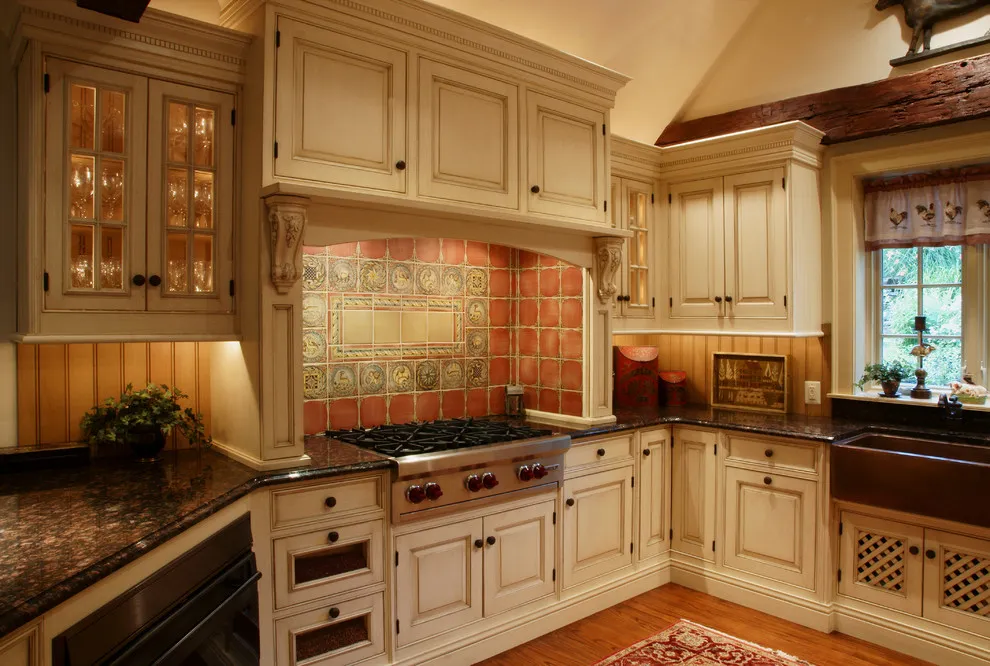
Let Detailed Cream Doors Lead
 SaveSupport Non AI Creator
Source: Hankins & Associates, Inc. - Kitchens and Baths on Houzz.
Cream cabinets with decorative moldings surround a warm tiled cooking alcove. The pale finish softens the substantial door and hood details. Dark worktops define the cabinet edges, while the warm patterned tiles concentrate detail around the cooking area. Glass doors offer a lighter break within the more substantial upper cupboards.
Use detailed profiles where you have space to appreciate them. Compare cream with the backsplash in the room and keep smaller accessories quiet if the joinery already supplies plenty of ornament. Ask for a door sample with the complete finish, including any glazing or antiquing. Check how easily the recessed profiles can be wiped clean near the stove before choosing elaborate detailing.
IDEA 02 / 20
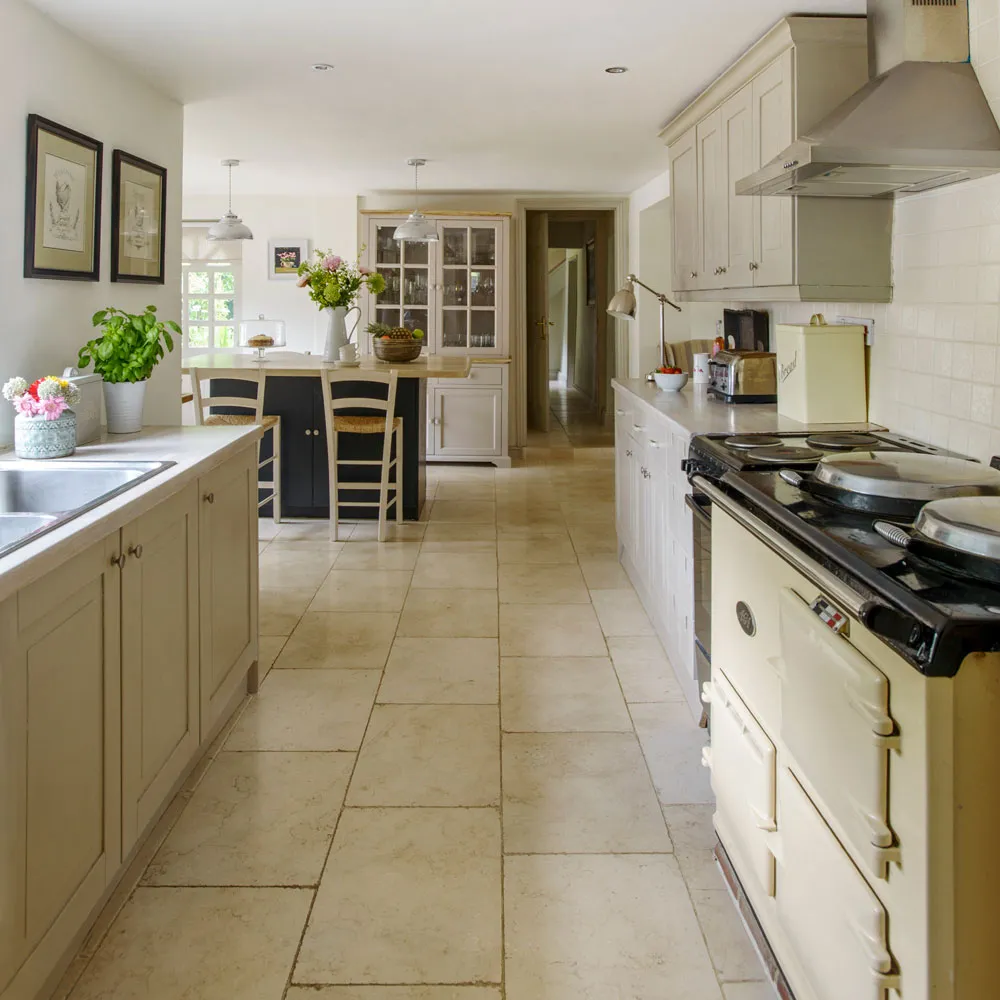
Keep a Long Country Kitchen Light
 SaveSupport Non AI Creator
(Image credit: Polly Eltes/Future PLC)
Cream paneled cabinets keep this long kitchen light, with pale worktops carrying the gentle palette along both sides. A dark range and the deeper island finish provide contrast, while the tiled floor gives the room a quieter base beneath the repeated cabinet doors.
Compare the cabinet finish with both the worktops and floor before ordering a full kitchen. Plan task lighting where upper cupboards shade preparation areas, and check the central aisle with appliance doors open. A light palette works best when the layout is equally easy to use.
IDEA 03 / 20
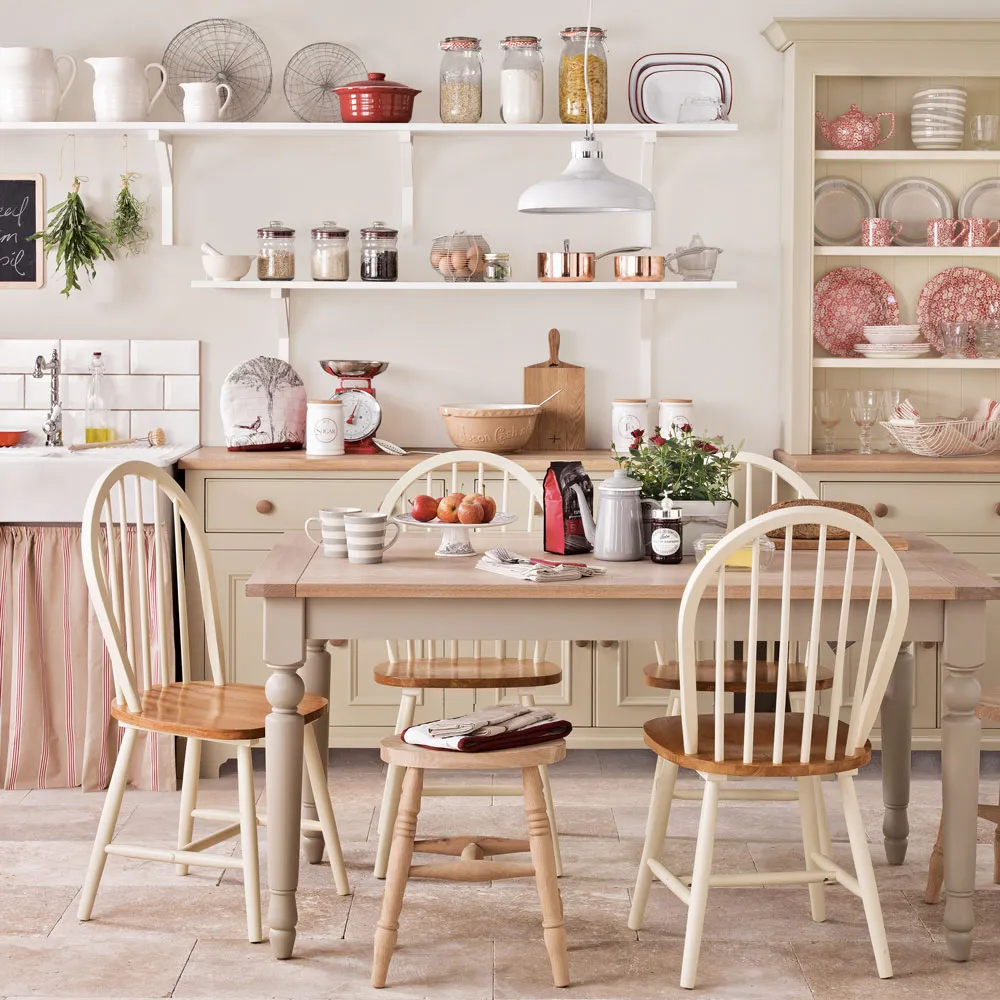
Use a Freestanding Cream Dresser
 SaveSupport Non AI Creator
(Image credit: Future PLC/Simon Bevan)
A pale cream dresser displays dishes beside a small timber dining table. The separate piece gives storage a more collected, furniture-like character. Open shelves make everyday dishes part of the room's character, with timber chair seats and a table top adding warmth. The pale cabinetry prevents the displayed colors from feeling too crowded.
Choose a dresser that fits the walking space around the table. Store frequently used pieces within reach and keep the display limited enough that shelves remain easy to clean. Measure the depth as well as the width of a dresser, allowing space to pull chairs out. Put heavier plates on reachable shelves and avoid filling every opening with rarely used objects.
IDEA 04 / 20
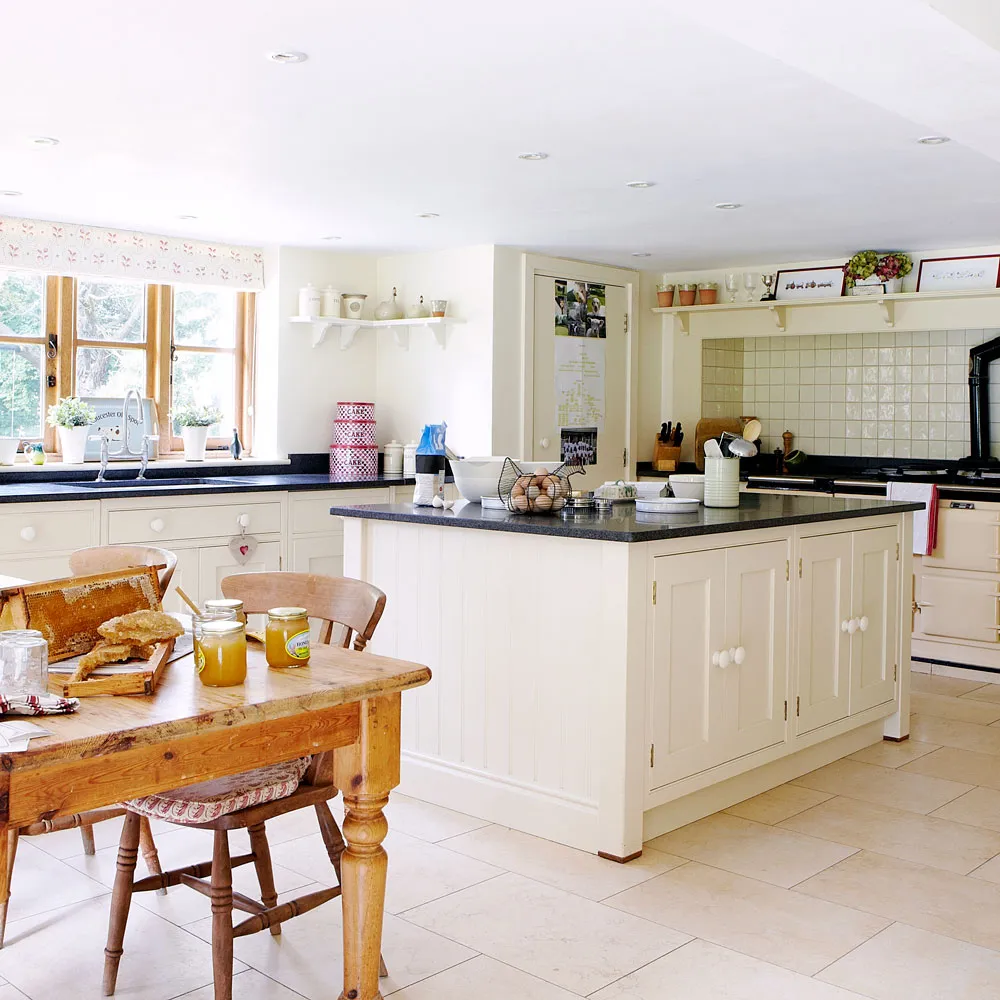
Choose Cream With a Dark Worktop
 SaveSupport Non AI Creator
(Image credit: Future PLC/Brent Darby)
Cream cabinet fronts sit beneath dark counters in a bright kitchen with a timber dining table. The strong horizontal contrast defines the pale doors. The black counters make the cream fronts easier to distinguish from the pale walls and floor. A separate timber table adds warmth while leaving the painted island as a practical work surface.
Test the cream beside your worktop before painting. A warm off-white can look different against black than it does against timber, especially under cool counter lights. View paint and worktop samples together beneath the lighting you intend to use. Check the island's door swings against the dining chairs so eating and preparing food remain comfortable.
IDEA 05 / 20
Pair Cream With a Red Range Wall
 SaveSupport Non AI Creator
(Image credit: Future PLC/Colin Poole)
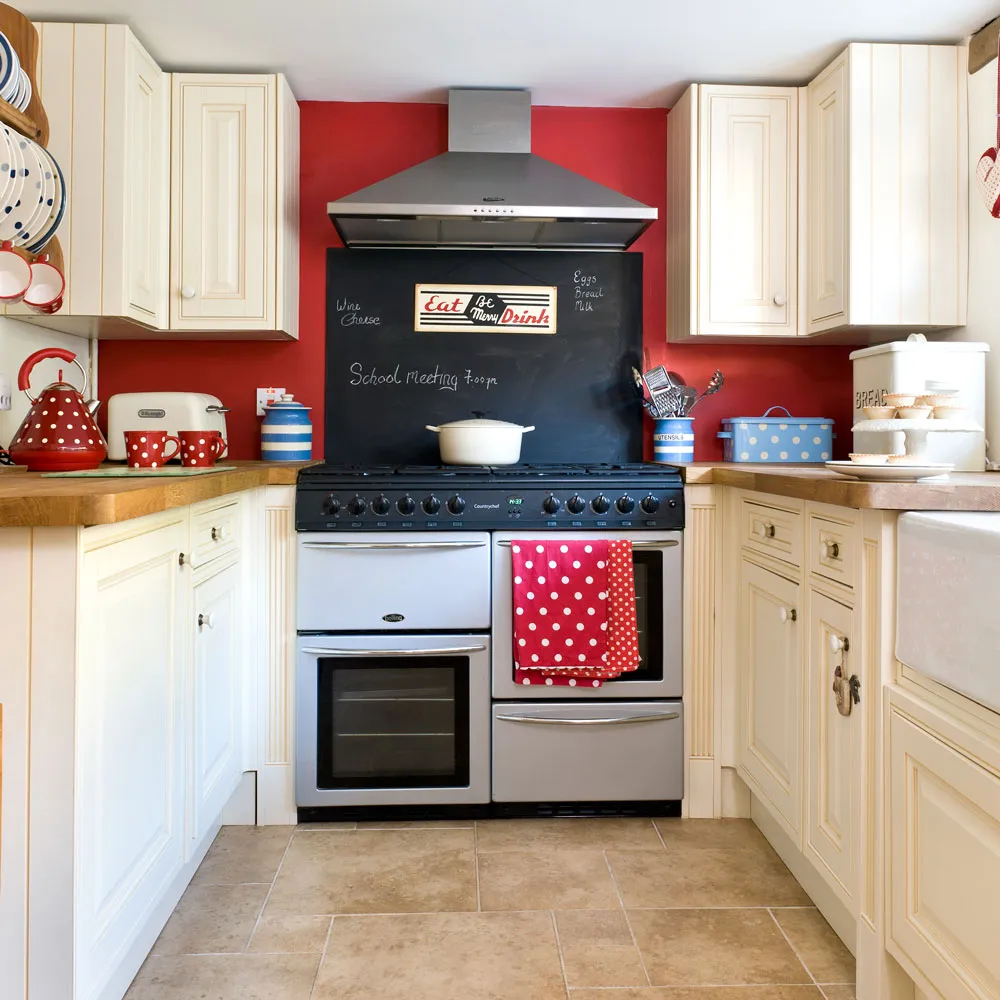
Cream cabinets frame a red wall and a dark range in a compact kitchen. The pale doors give the stronger accent color breathing room. The red stays concentrated behind the range, with light cupboards on either side containing the stronger color. Timber counters offer a warmer transition than another black surface across the entire kitchen.
Use a strong wall color in a clearly defined area rather than repeating it everywhere. Keep the cabinet sample beside the range and red paint when checking the whole palette. Check the suitability of the finish behind the range before painting. Keep colorful mugs and towels selective if you prefer the red wall to remain the main decorative accent.
PART 02
Materials and texture
IDEA 06 / 20
Contrast Cream With a Dark Floor
 SaveSupport Non AI Creator
(Image credit: Future PLC/Douglas Gibb)
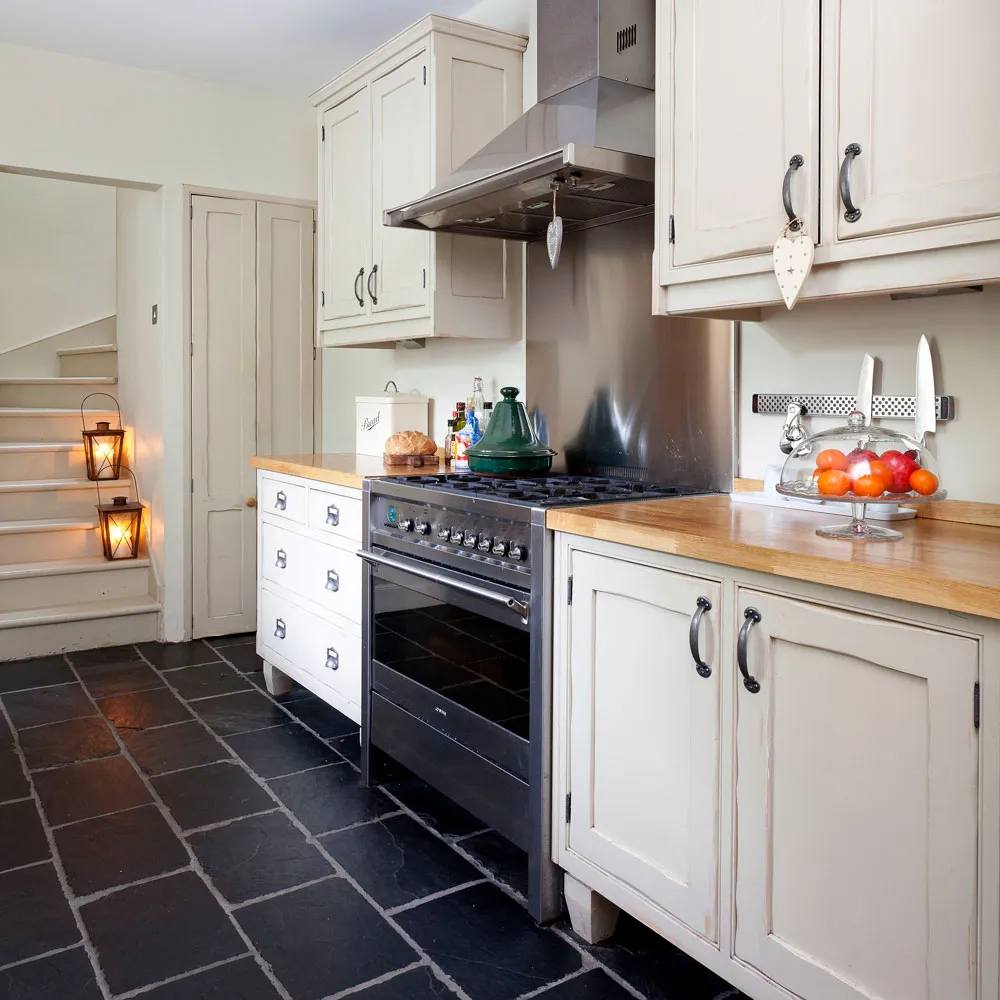
Cream paneled doors sit above a dark tiled floor beside a range. The light fronts separate the storage run from the heavier floor surface. Timber worktops provide a warm layer between the pale cabinetry and the dark floor. Curved handles add small traditional details without requiring more elaborate moldings across every door.
Choose grout and floor finish with maintenance in mind. Compare the cream paint against the tiles and use counter lighting to keep the working surface bright. Try your chosen handle on a sample door to judge both scale and grip. Follow the worktop supplier's maintenance guidance, particularly at joints and edges where water can linger.
IDEA 07 / 20
Use Sage Beside Cream
 SaveSupport Non AI Creator
(Image credit: Future PLC/Colin Poole)
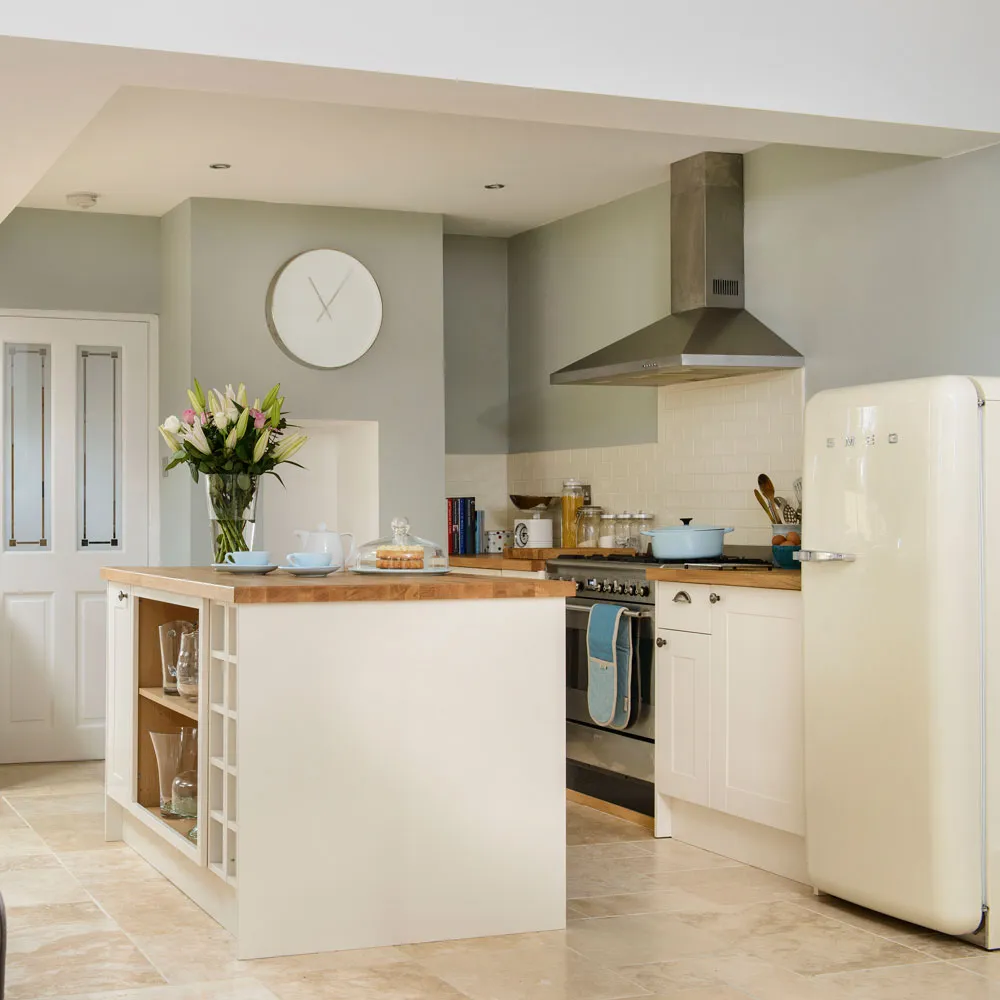
Cream lower cabinets and a small island sit beneath a sage-colored wall. The gentle green gives the warm neutral a quiet contrast. The sage wall adds a cooler note behind the warm cream doors and timber counters. A compact island supplies another work surface while keeping the room's main color changes gentle.
Test both colors under the same light before deciding. Keep timber and worktop finishes restrained if you want the soft cabinet and wall colors to carry the scheme. Check the green beside the refrigerator and any existing white tile, not only the cabinet sample. Keep enough clearance for the range and island storage to open comfortably.
IDEA 08 / 20
Bring Cream Under Exposed Beams
 SaveSupport Non AI Creator
(Image credit: Future PLC/David Still)
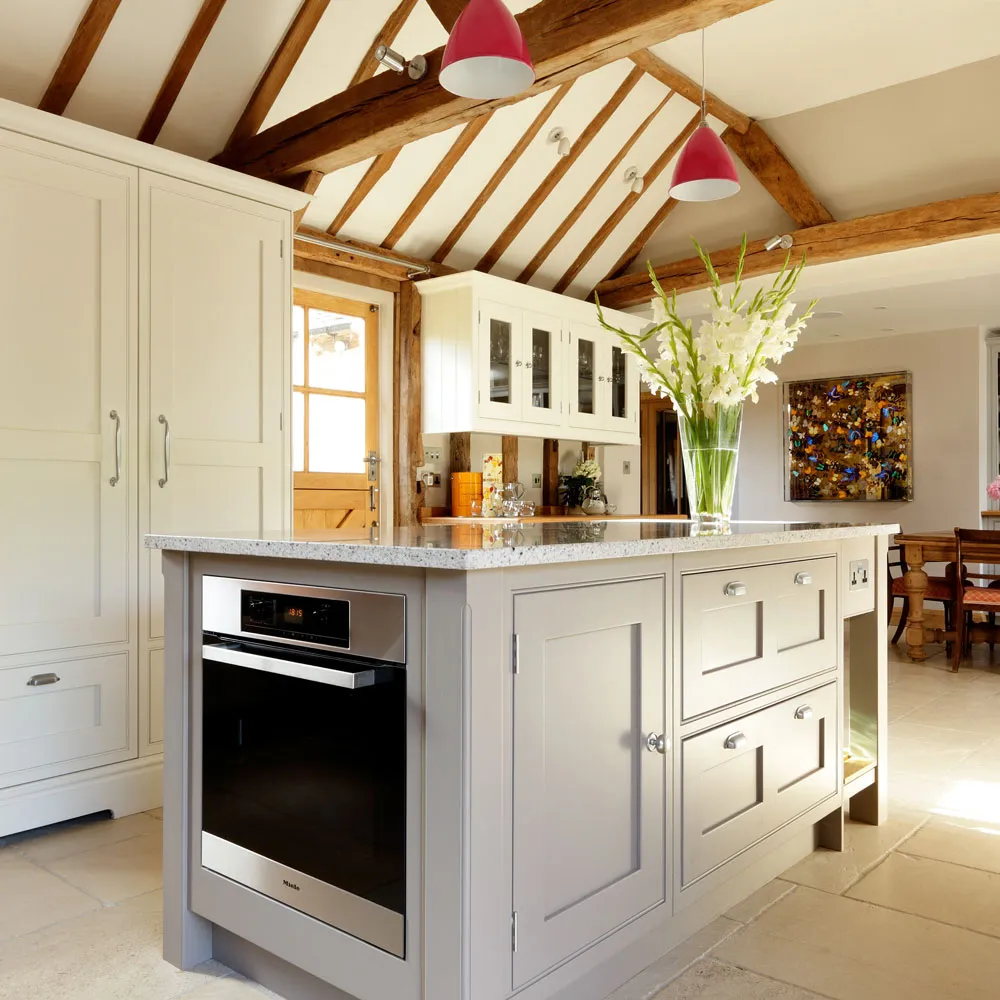
Cream cabinets lighten the kitchen beneath the exposed timber roof, while the gray island gives the center a separate identity. Glass upper doors and a pale counter reduce the weight of the cabinetry, allowing the beams to remain the strongest architectural detail overhead.
Compare cream and gray samples with the existing timber before deciding on a two-color scheme. Plan lighting for the worktops as well as the tall ceiling, and check appliance access around the island. Keep new timber accents restrained if the roof already supplies plenty of grain and warmth.
IDEA 09 / 20
Keep Glass Display Storage Gentle
 SaveSupport Non AI Creator
(Image credit: Future PLC/Polly Eltes)
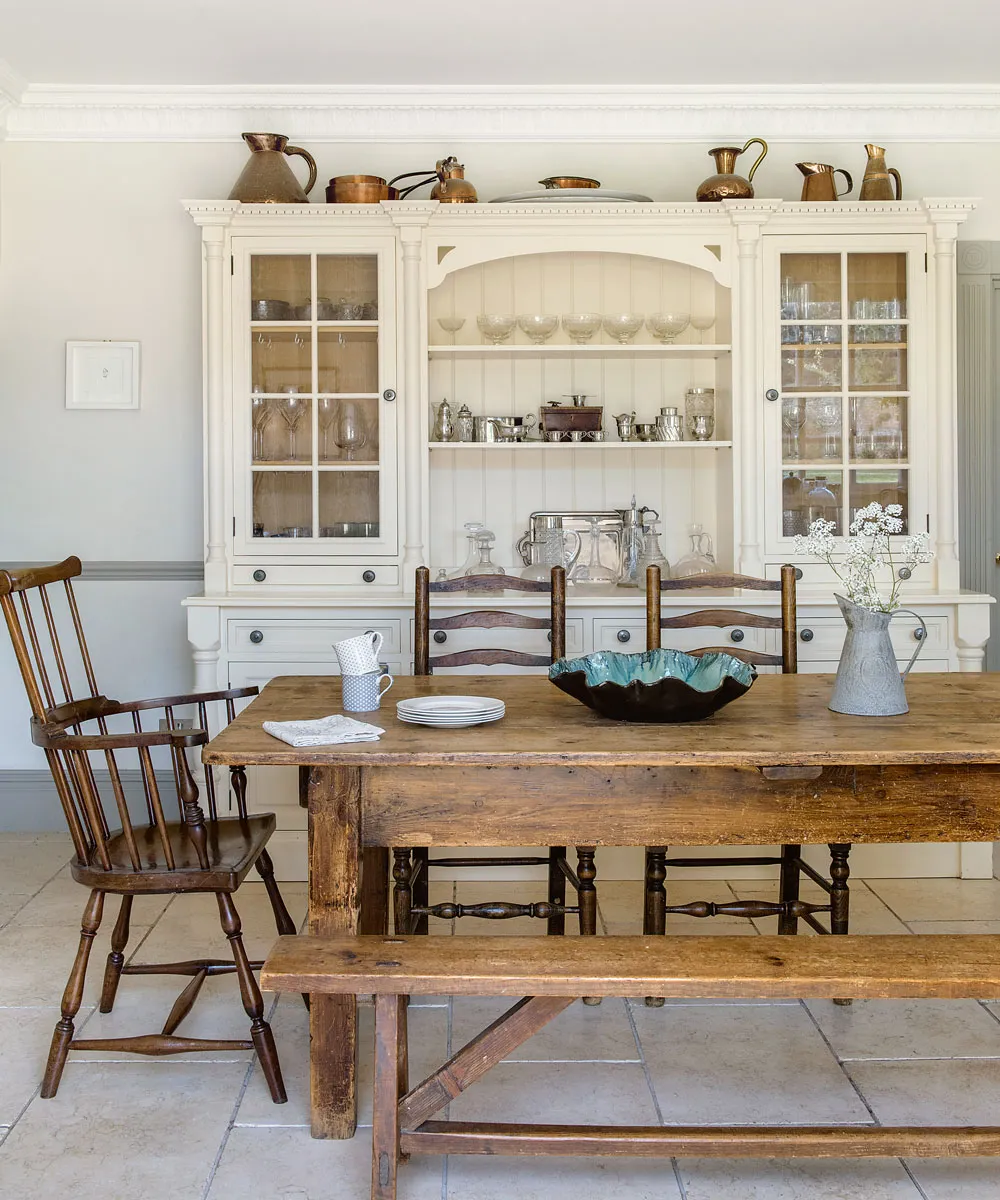
A pale dresser with glass upper doors stands behind a wooden dining table. The light frame gives the displayed crockery an orderly background. Glass upper doors protect displayed pieces while leaving them visible, and the central open shelves provide a different kind of access. The timber dining table brings warmth into the pale arrangement.
Use glass doors for pieces you enjoy seeing and closed storage for mixed supplies. Leave some space between objects so the dresser does not look crowded. Check shelf spacing against your tallest glasses before choosing a cabinet. Keep heavier serving pieces lower down and follow any wall-anchoring requirements supplied with the dresser.
IDEA 10 / 20
Use Cream Across a Traditional Kitchen
 SaveSupport Non AI Creator
Source: Carpet One Floor & Home on Houzz.
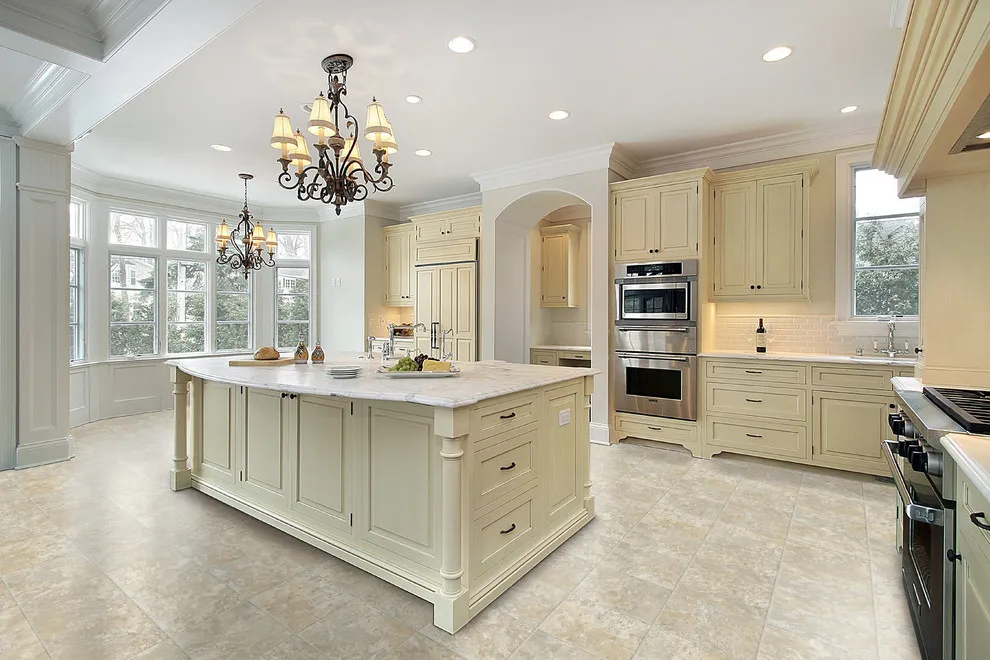
Pale cream cabinetry surrounds a large island beneath decorative ceiling lights. The continuous finish connects the substantial door profiles. Pale floors and counters keep the room's larger surfaces related, while dark decorative light fittings add definition overhead. Raised door profiles provide interest without a separate strongly colored cabinet run.
Compare cabinet, floor, and counter samples together at full scale. A large kitchen can handle detail, but keep the main working routes clear and the island dimensions practical. Make a measured plan with appliance doors open before finalizing the island. If you choose decorative lighting, add sufficient task lighting at preparation surfaces rather than relying on the chandeliers alone.
PART 03
Layout and everyday comfort
IDEA 11 / 20
Add a Simple Timber Bench
 SaveSupport Non AI Creator
Source: Timeless Kitchen Cabinetry on Houzz.
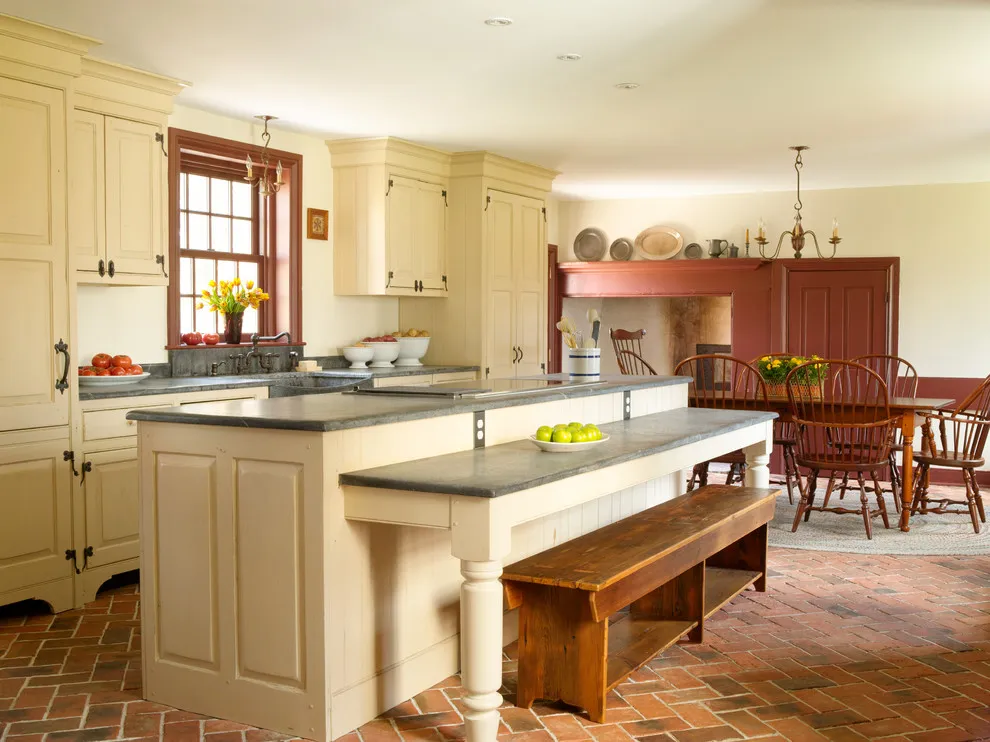
Cream cabinets and a pale island sit beside a wooden bench on a brick-patterned floor. The timber seating adds a less formal note. The bench introduces a simpler timber shape beside paneled cabinetry and turned island supports. Reddish tones in the floor and window trim give its wood a connection elsewhere in the room.
Measure bench height against the island overhang and leave access behind it. Keep the floor pattern in mind when choosing further decorative fabrics. Test whether the bench seat leaves comfortable knee space below the lower counter. Allow people to get in and out without moving the whole bench into the working aisle.
IDEA 12 / 20
Mix Cream With Rustic Timber
 SaveSupport Non AI Creator
Source: Concepts by Design on Houzz.
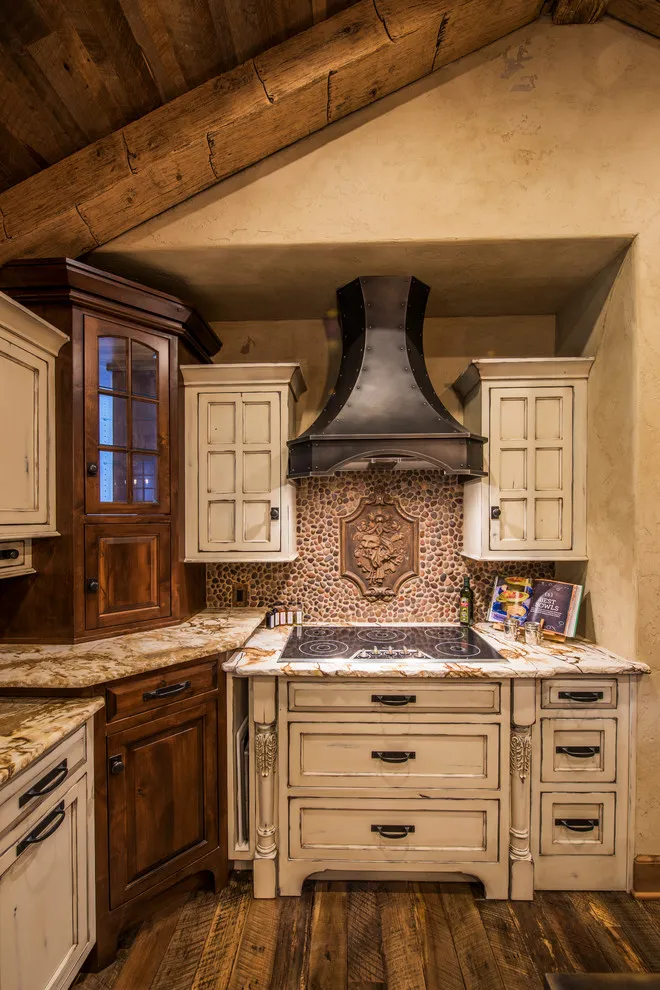
Cream cabinets sit below a dark hood in a kitchen with exposed beams and warm wood storage. The pale sections lighten the heavier materials. Cream-painted sections highlight the range area between darker timber cupboards, with a substantial dark hood above. The patterned backdrop and varied wood grain give this small view considerable visual detail.
Choose one timber tone to lead the room and compare the cream sample beside it. Check cleanability around the cooking area before adding rough or porous finishes. Use actual samples to avoid introducing too many unrelated brown undertones. Follow cleaning and sealing guidance for the chosen backsplash, especially where cooking splashes could settle into its relief.
IDEA 13 / 20
Ground Cream With a Dark Island
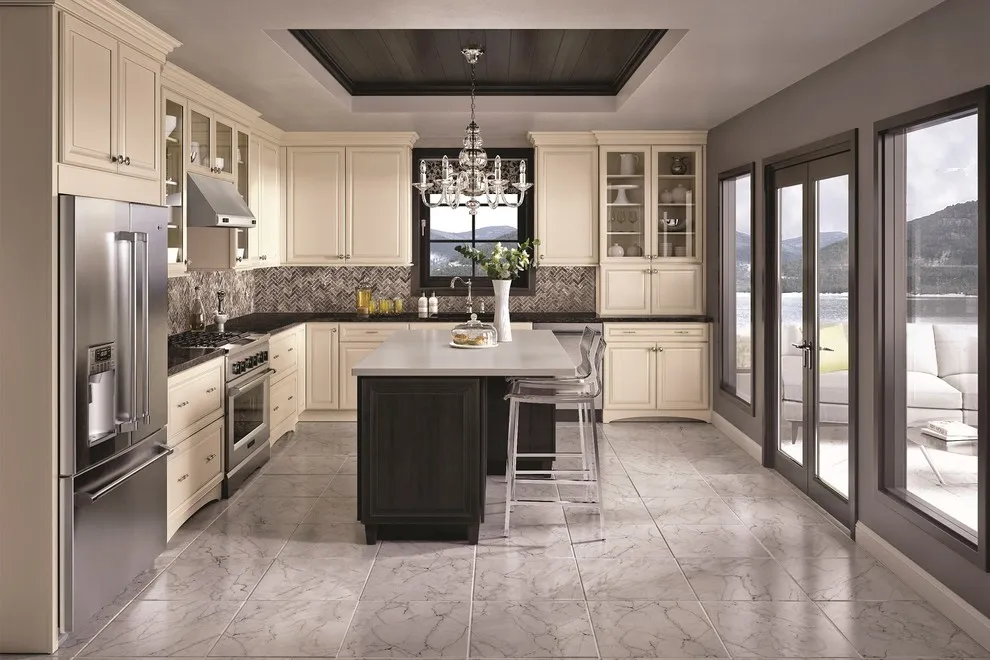 SaveSupport Non AI Creator
Source: Discount Cabinet Warehouse on Houzz.
Light paneled cabinets surround a dark island beneath a bright window. The deeper center gives the pale perimeter a clear anchor. The darker island connects with the window and door frames, while the pale cabinetry keeps the perimeter brighter. Clear stools avoid adding another opaque block beneath the lighter island counter.
Test the island color against the floor before committing. Repeat the hardware finish across both colors to connect the cabinets without requiring matching paint. Check the island sample beside the darkest existing frames before choosing a shade. Try stool dimensions on a floor plan, allowing knee space and a route behind seated guests.
IDEA 14 / 20
Pair Cream With Brick Flooring
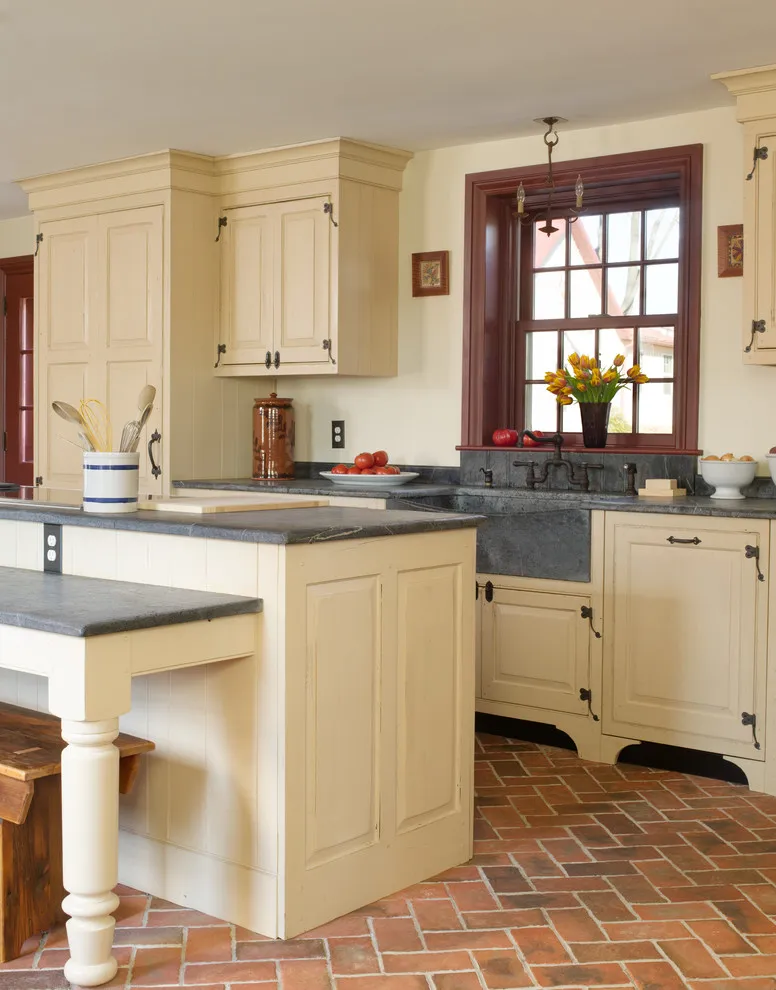 SaveSupport Non AI Creator
Source: Timeless Kitchen Cabinetry on Houzz.
Cream cabinet fronts meet a brick-patterned floor beside a timber-framed window. The warm floor gives the pale cabinetry a traditional setting. Reddish flooring and window trim make the warm cream look at home, while the darker counters define the cabinet tops. The raised doors add detail without another color change.
Compare the cream with the actual floor tones rather than a photograph. Choose a counter that does not add another competing pattern if the flooring already has strong variation. Ask for flooring samples that show its full range of color variation. Check cleaning requirements and suitable grout before installation, rather than treating the floor as a purely decorative choice.
IDEA 15 / 20
Let Stone Supply the Pattern
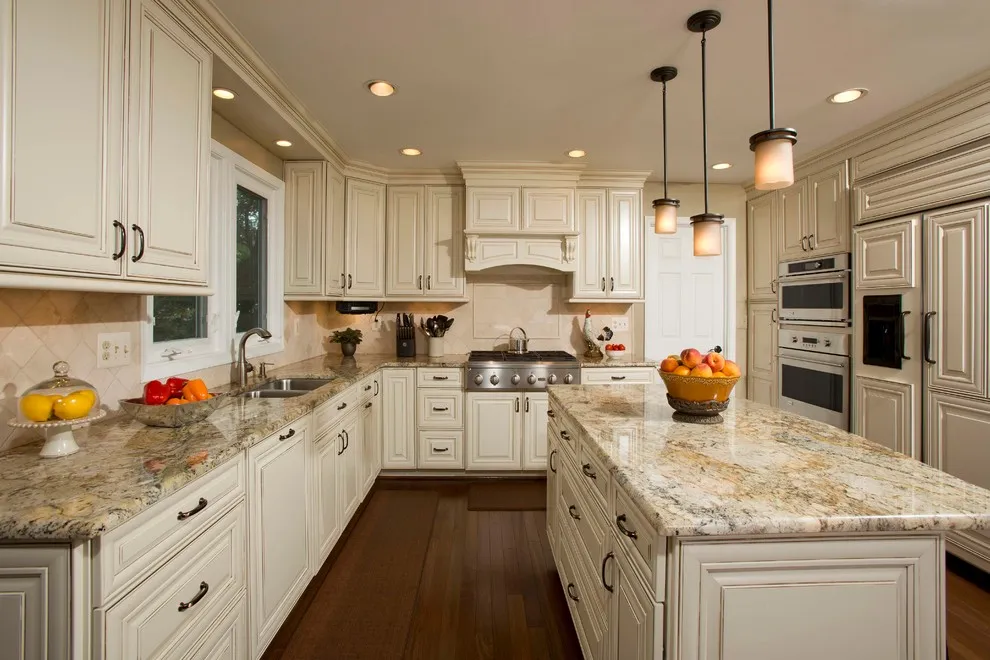 SaveSupport Non AI Creator
Source: Michael Nash Design, Build & Homes on Houzz.
Cream paneled cabinets sit beneath a speckled stone counter in a long kitchen. The cabinet finish gives the patterned worktop a quiet base. The speckled counter repeats across the island and perimeter, tying the separate runs together. Pale raised-panel doors allow the worktop's varied tones to remain the stronger surface pattern.
View a large counter sample beside the cabinet door before ordering. Keep the backsplash quieter if the stone already contains several contrasting colors. If selecting a natural slab, inspect the actual piece when possible because small samples cannot show every variation. Compare backsplash options alongside it before committing to another patterned finish.
PART 04
Finishing details
IDEA 16 / 20
Warm Cream Cabinets With Woven Stools
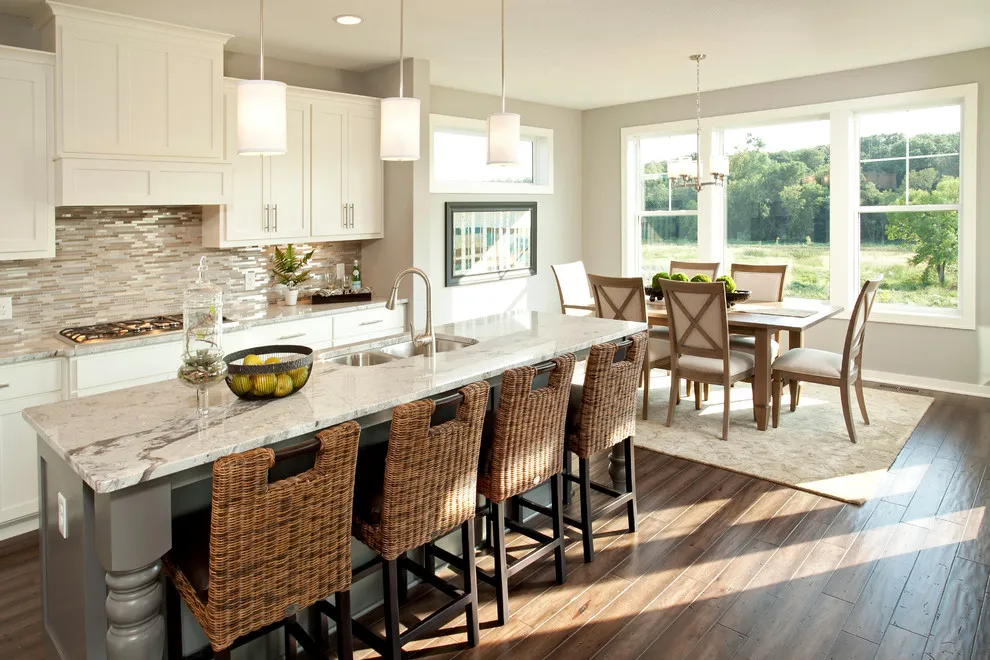 SaveSupport Non AI Creator
Source: Robert Thomas Homes on Houzz.
Woven stools bring warm texture to the pale island and cream cabinetry, with their darker legs adding definition below the counter. The layered backsplash supplies another pattern, while the lighter cabinet doors keep the kitchen from becoming a collection of equally busy surfaces.
Check stool width, seat height and knee clearance together before ordering a row of matching seats. Allow enough space between stools for elbows and easy access. Look at the woven material's cleaning guidance, especially if the island will be used regularly for meals with children.
IDEA 17 / 20
Make a Cottage Sink the Center
 SaveSupport Non AI Creator
Source: MAC Custom Homes on Houzz.
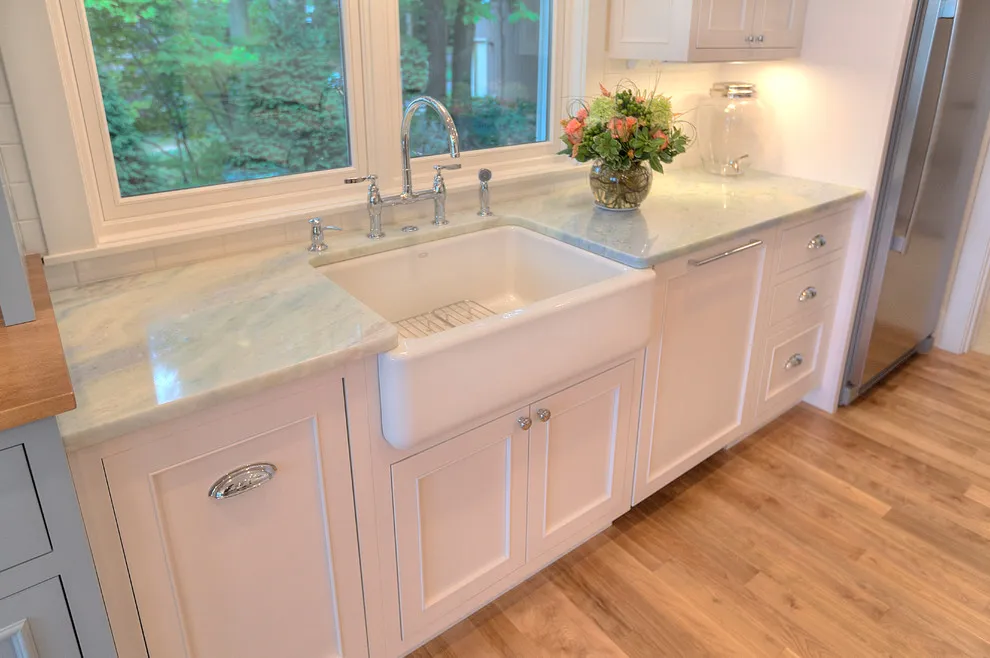
Pale cream-pink cabinet fronts sit beneath a broad apron sink and timber-framed windows. The warm finish supports the cottage-style details. The slight pink warmth in the doors connects with the timber floor, while the white sink and window frames offer a cleaner contrast. Simple hardware keeps attention on the softened cabinet color.
Check the cabinet shade against the sink’s white surface before painting. Use a durable finish around water and leave space to clean comfortably beside the faucet. Try the cabinet sample beside both the sink and worktop to judge its undertone. Check how the faucet operates beneath the window and protect exposed edges from standing water.
IDEA 18 / 20
Use Cream Along a Window Run
 SaveSupport Non AI Creator
Source: Connecticut Stone on Houzz.
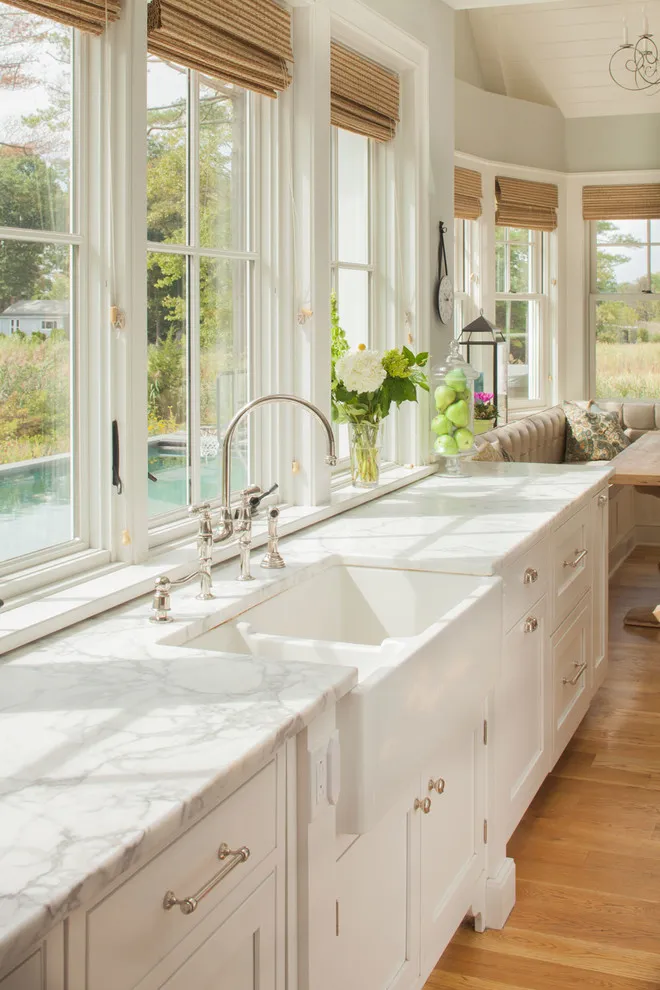
Light cream lower cabinets extend beneath several bright windows and pale counters. The uninterrupted pale run keeps attention on the daylight. The pale worktop and cabinet fronts form a continuous light band beneath the glass. Woven shades and timber flooring introduce warmth without interrupting the long view along the windows.
Plan useful storage below the windows before adding decoration. Choose a paint finish suited to kitchen cleaning and keep the windowsills clear enough to admit light. Check that faucet height and handles do not obstruct any opening window. Keep frequently used items in reachable drawers so a bright window run also works comfortably for everyday preparation.
IDEA 19 / 20
Frame Cream Doors With Natural Wood
 SaveSupport Non AI Creator
(Image credit: Stephen Kent Johnson)
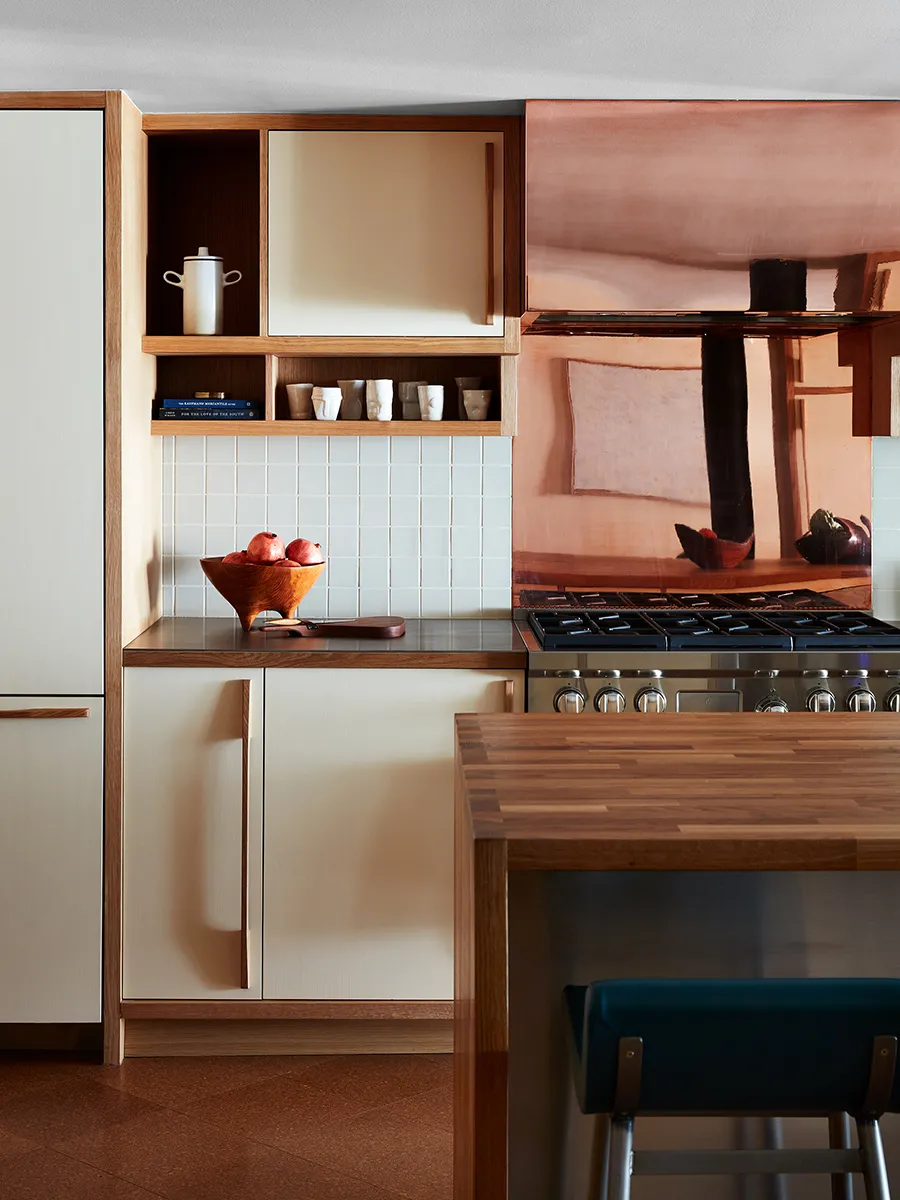
Timber frames surround the plain cream doors, giving them a warmer outline than painted cabinetry alone. Open shelves repeat the same material, while the copper-colored backsplash adds a reflective surface beside the range and distinguishes the cooking area from the quieter cabinet fronts.
Compare the cream with the timber's actual finish before choosing this combination. Keep open shelves for a manageable number of frequently used pieces, and check cleaning guidance for the reflective backsplash. Consider how fingerprints and cooking splashes will look before committing to a polished surface near the range.
IDEA 20 / 20
Keep Cream Simple With White Tile
 SaveSupport Non AI Creator
(Image credit: Future PLC/Jamie Mason)
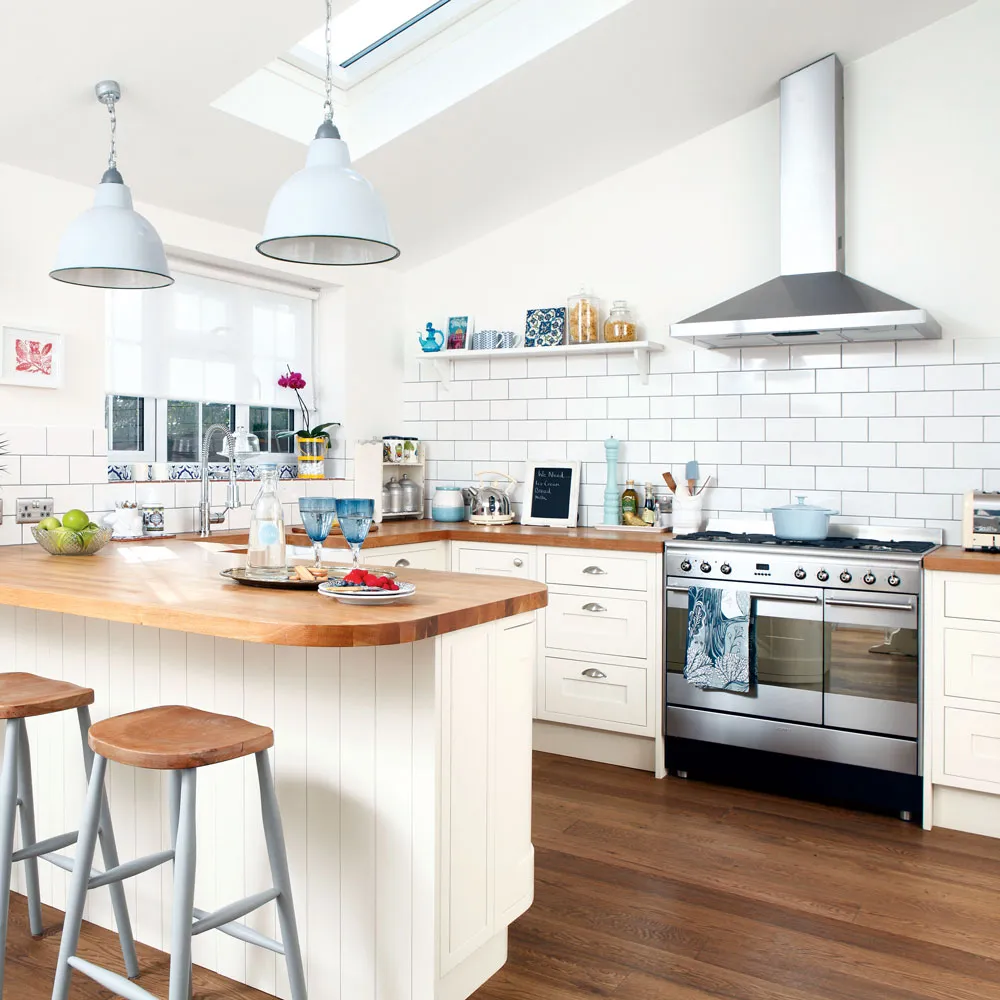
Pale cream cabinetry sits below white tile beside a timber breakfast counter. The lighter walls and warm wood give the cabinet color a modest role. Timber worktops connect the perimeter with the breakfast counter, while white tile gives the room a brighter background. Pale cabinet fronts offer a gentle transition rather than a strong color block.
Compare cream paint with the tile before choosing either finish. A small difference in undertone can be useful, but check that the pair still looks intentional in evening light. Check how the grout changes the tile pattern once installed. Choose stool heights for the finished counter, and follow the timber supplier's care instructions around sink edges and preparation areas.
BRING IT ALL TOGETHER
Make the idea work in your own home
Start with one change that solves a real problem or helps your favorite feature stand out. Compare colors and materials in your own light and measure clearances before ordering anything permanent.
A comfortable, practical room is more successful than a perfectly copied photograph. Keep what serves your daily routine and leave out details that do not suit your space.