An apartment living room often has more jobs than floor area. It may be the main place to relax, entertain, work, watch television, and store things that have nowhere else to go. A successful layout starts with those uses and the routes between them, not a list of accessories to buy.
You can make a modest room feel welcoming without pushing every item against a wall. The ideas below focus on the dimensions and choices that matter most: seating depth, circulation, layered lighting, storage, a correctly sized rug, and renter-friendly ways to make the room personal.
PART 01
Color and contrast
IDEA 01 / 20
Start With a Bright Seating Corner
 SaveSupport Non AI Creator
(Image credit: Future PLC/James French)
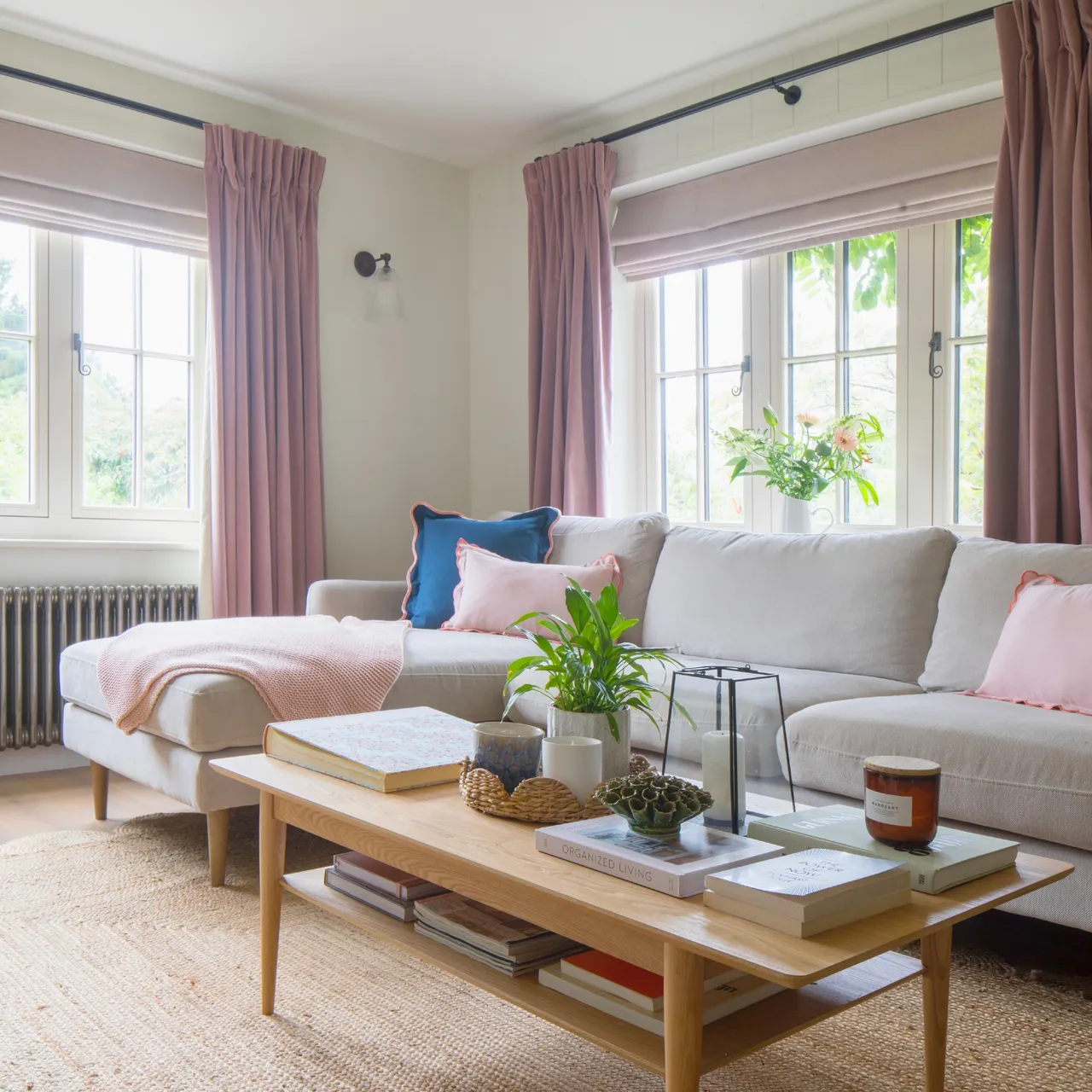
A pale sectional sits beneath broad windows beside a slim wooden coffee table. Light curtains and restrained furniture keep the corner feeling open. The table's lower shelf gives books a place away from the top, while the light rug connects the sofa sections. Pink curtains and smaller cushions add color without darkening the larger surfaces.
Choose a sofa depth that leaves a comfortable route through the room. Let curtains open fully and use a table that serves the seats without dominating the floor. Measure the chaise section separately from the main sofa, since it changes the usable floor area. Keep window handles reachable and check that the lower shelf can be cleaned comfortably.
IDEA 02 / 20
Give a Small Sofa a Clear Place
 SaveSupport Non AI Creator
(Image credit: Future PLC/Adam Carter)
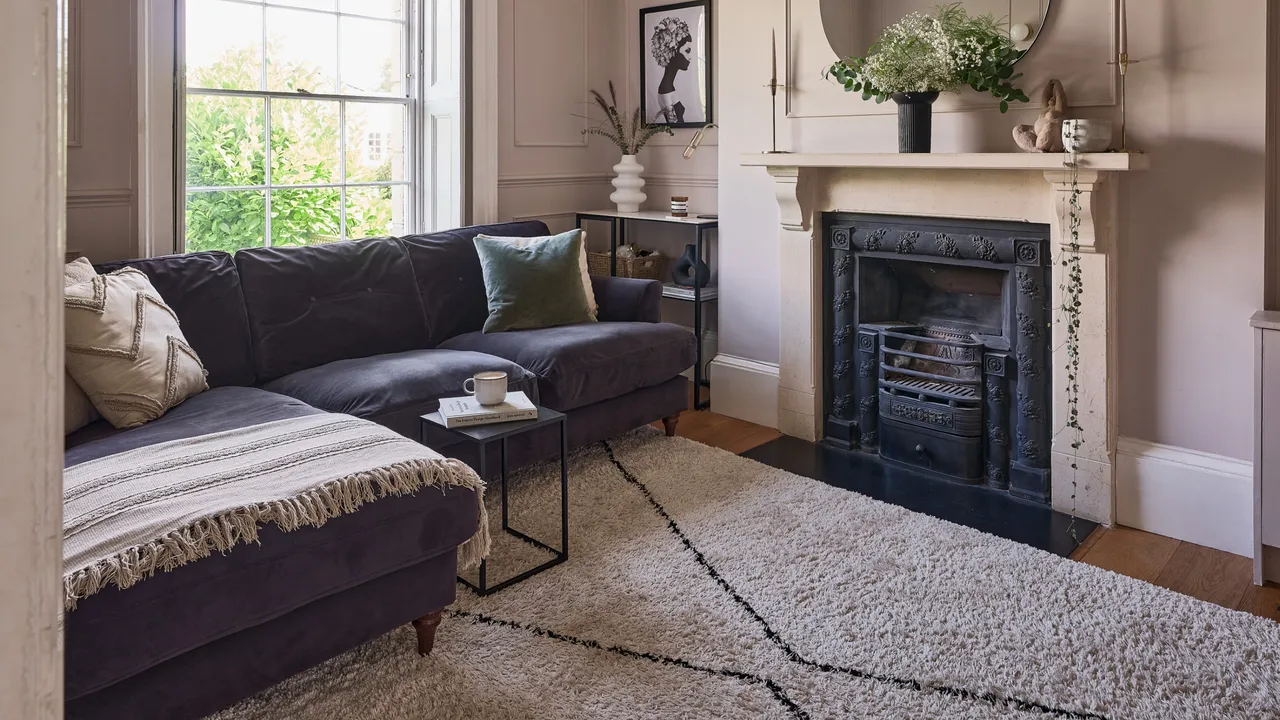
A dark sofa sits beside a fireplace and tall window in a compact living room. The rug connects the seat to the smaller table. The pale rug separates the dark upholstery from the floor, and a small slim-legged table provides a useful surface without occupying the full middle of the room. Light walls balance the deeper seat.
Measure the route past the sofa before selecting its width. Keep side furniture shallow where the room narrows and leave fireplace clearances unobstructed. Try a full sofa footprint on the floor before ordering, including its chaise or extended section. Check access to the fireplace and allow space to stand up beside the smaller table.
IDEA 03 / 20
Use Color in Small Accessories
 SaveSupport Non AI Creator
(Image credit: Future PLC/James French)
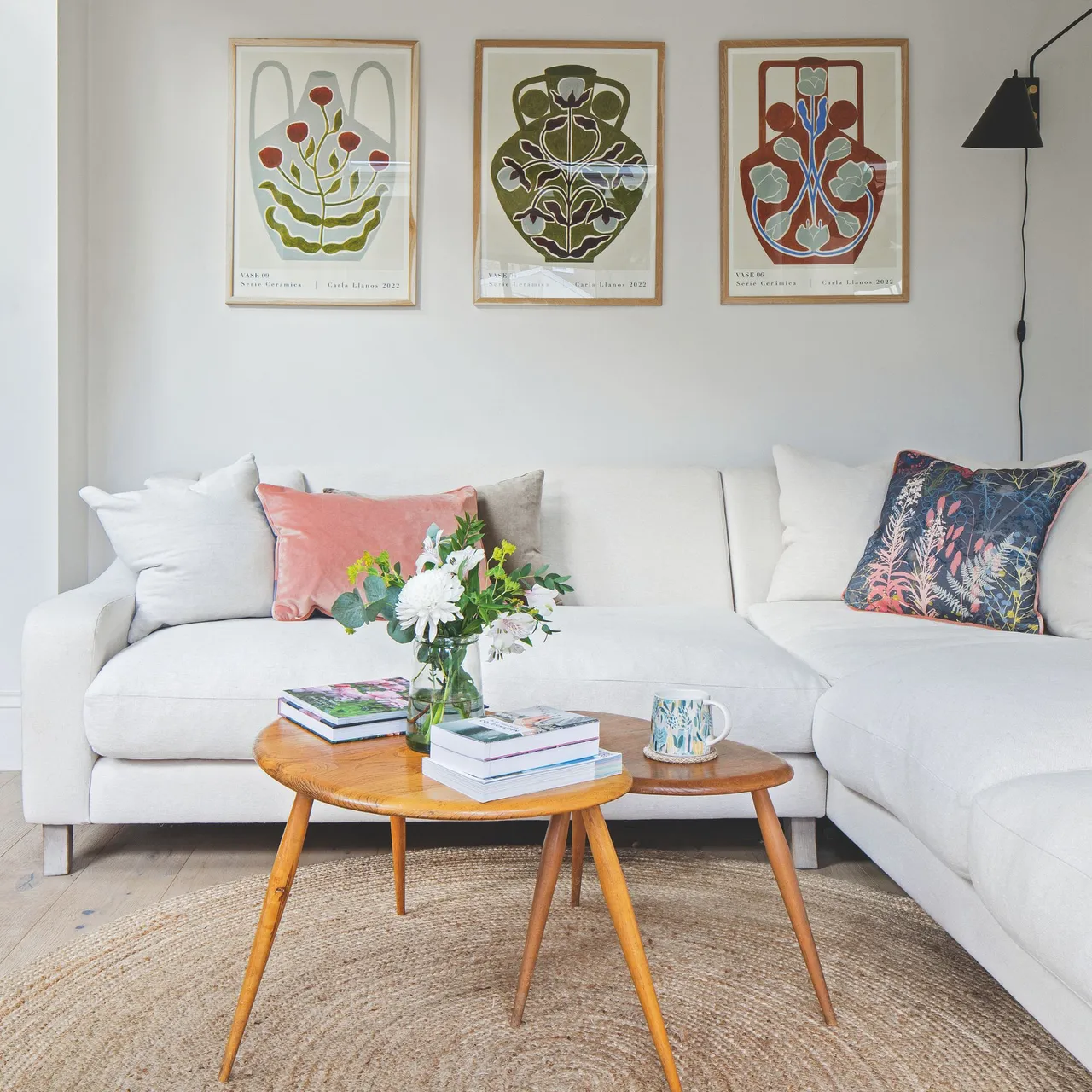
A white sectional has colorful cushions beneath three framed prints. The smaller accents bring variation while the large upholstery stays quiet. The framed prints provide several colors to draw from, with smaller cushions repeating their warmer and cooler notes. Timber tables add warmth while the white sofa remains the largest quiet surface.
Choose a few related accent colors rather than a different shade for every cushion. Use washable covers if the sofa serves as the main everyday seat. Start with colors already present in a favorite print instead of buying cushions independently. Leave enough usable seat space after adding pillows, and compare cover care instructions with your household's needs.
IDEA 04 / 20
Combine Pale Seating With Dark Frames
 SaveSupport Non AI Creator
(Image credit: Future/Katie Lee)
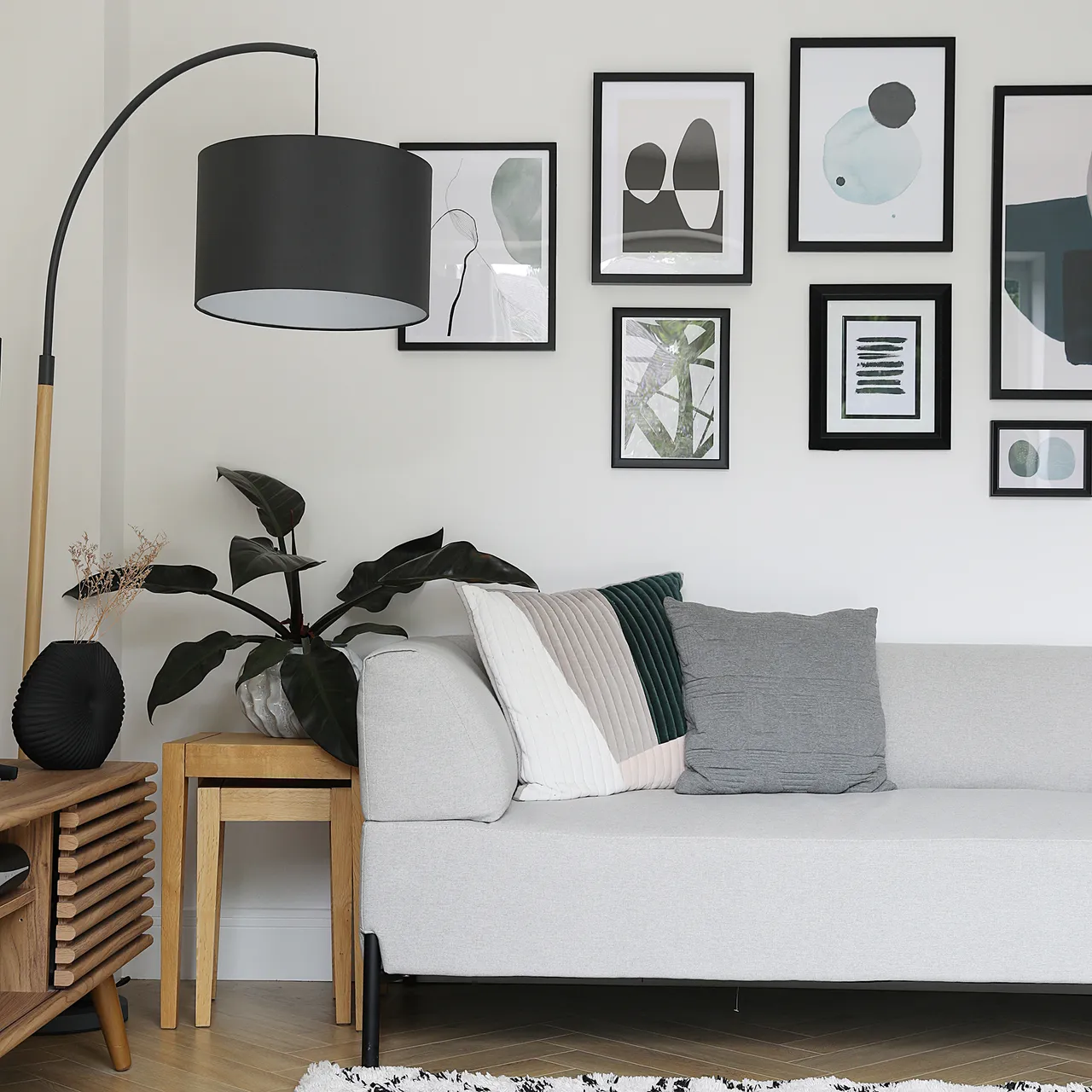
A light sofa sits beneath black-framed artwork beside a curved floor lamp. The dark outlines give the pale room definition. Black frames and the curved lamp shade provide repeated dark outlines above the lighter upholstery. Timber side furniture introduces warmth without needing another large colored object in the seating area.
Keep one repeated frame or metal finish when arranging several small pieces. Check that the lamp base leaves a clear passage beside the sofa. Lay out the picture group with paper templates before drilling. Check the lamp's arc and base together so its light reaches the seats without obstructing the route into the room.
IDEA 05 / 20
Use One Strong Color Throughout
 SaveSupport Non AI Creator
(Image credit: Future/Holly Jolliffe)
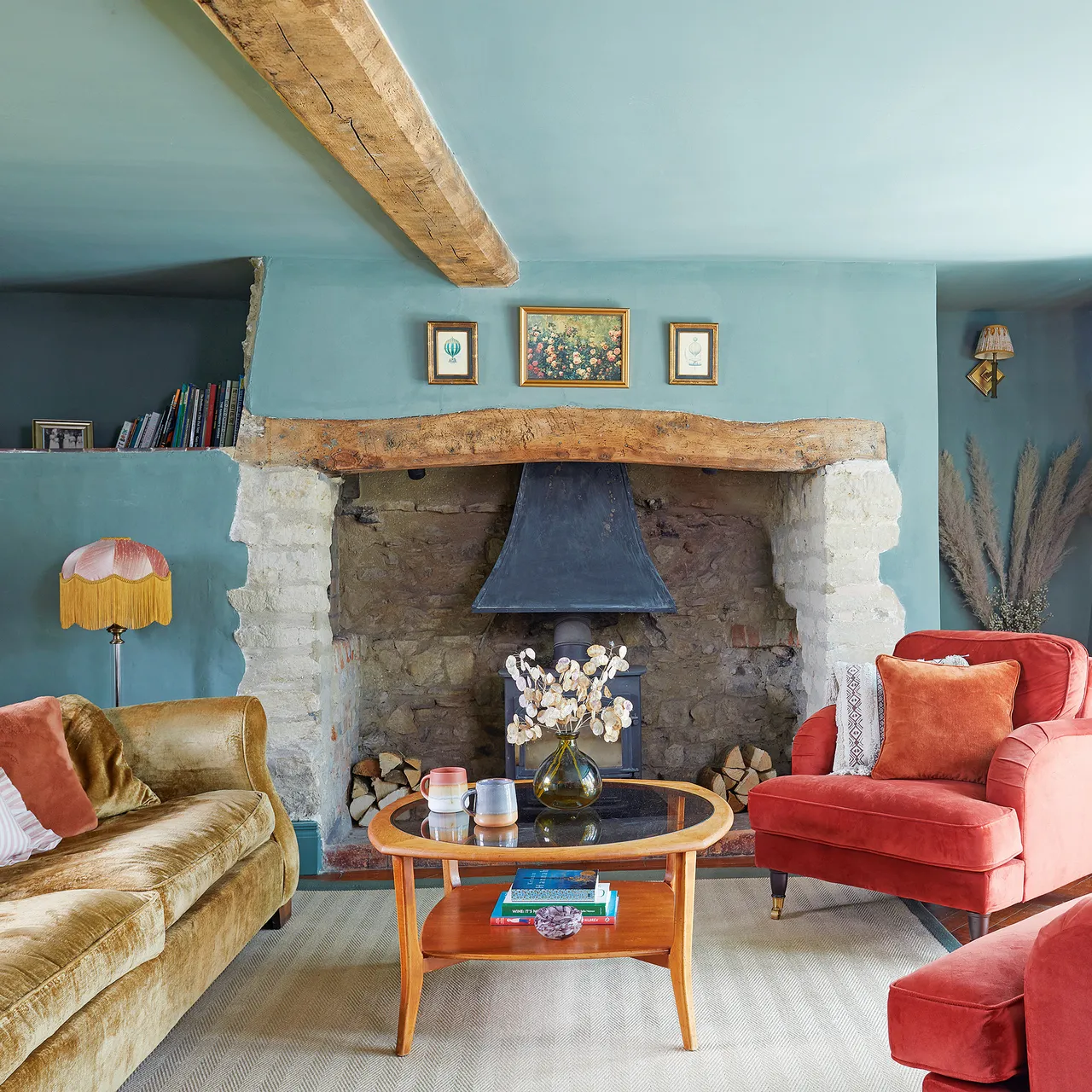
A turquoise room contains warm-colored chairs beside a stone fireplace. The continuous wall color connects a small space with several different materials. The turquoise continues overhead, connecting the textured fireplace and warm upholstery within one backdrop. Timber and stone details remain visible because their natural tones contrast with the surrounding painted surfaces.
Test saturated paint on more than one wall before committing. Keep the largest additional patterns restrained and use lamps where the deeper color reduces reflected light. View paint on a movable sample board beside the ceiling as well as at eye level. If you rent, check painting terms first and choose textile accents where permanent changes are restricted.
PART 02
Materials and texture
IDEA 06 / 20
Mix Pale Walls and Dark Seating
 SaveSupport Non AI Creator
(Image credit: Future/Katie Lee)
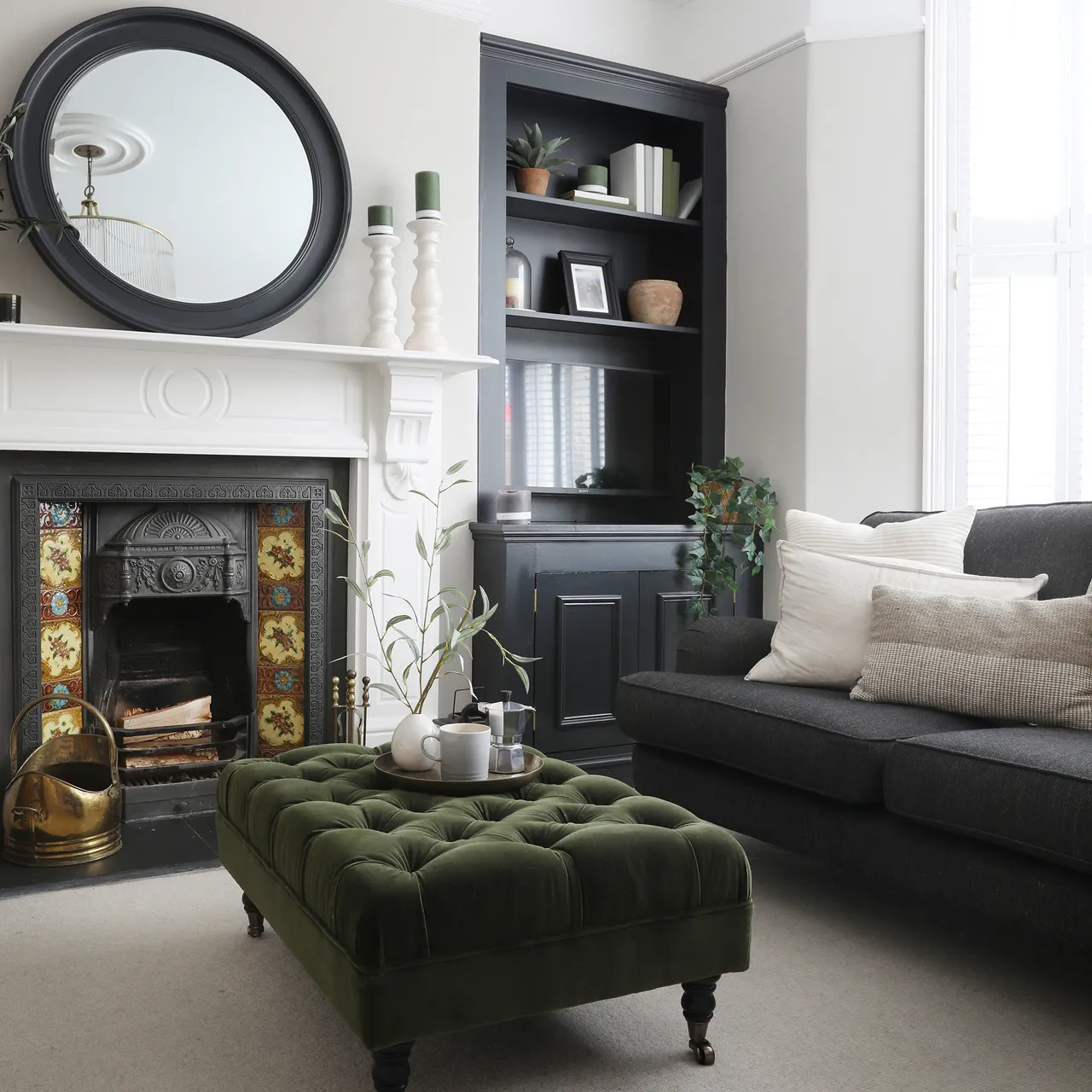
A tufted olive-green ottoman adds a softer shape between the dark sofa and white fireplace. Its deeper green brings color without a bright accent wall, while dark built-in storage connects with the upholstery and the black outlines around the fireplace opening.
Check the ottoman's size against both the sofa and the route through the room before ordering. Deep tufting is comfortable for feet but needs a stable tray for drinks. Keep a small side table nearby when the center is difficult to reach, and respect the fireplace's required clearances.
IDEA 07 / 20
Use a Picture Ledge Above the Sofa
 SaveSupport Non AI Creator
(Image credit: Future PLC/Anna Stathaki)
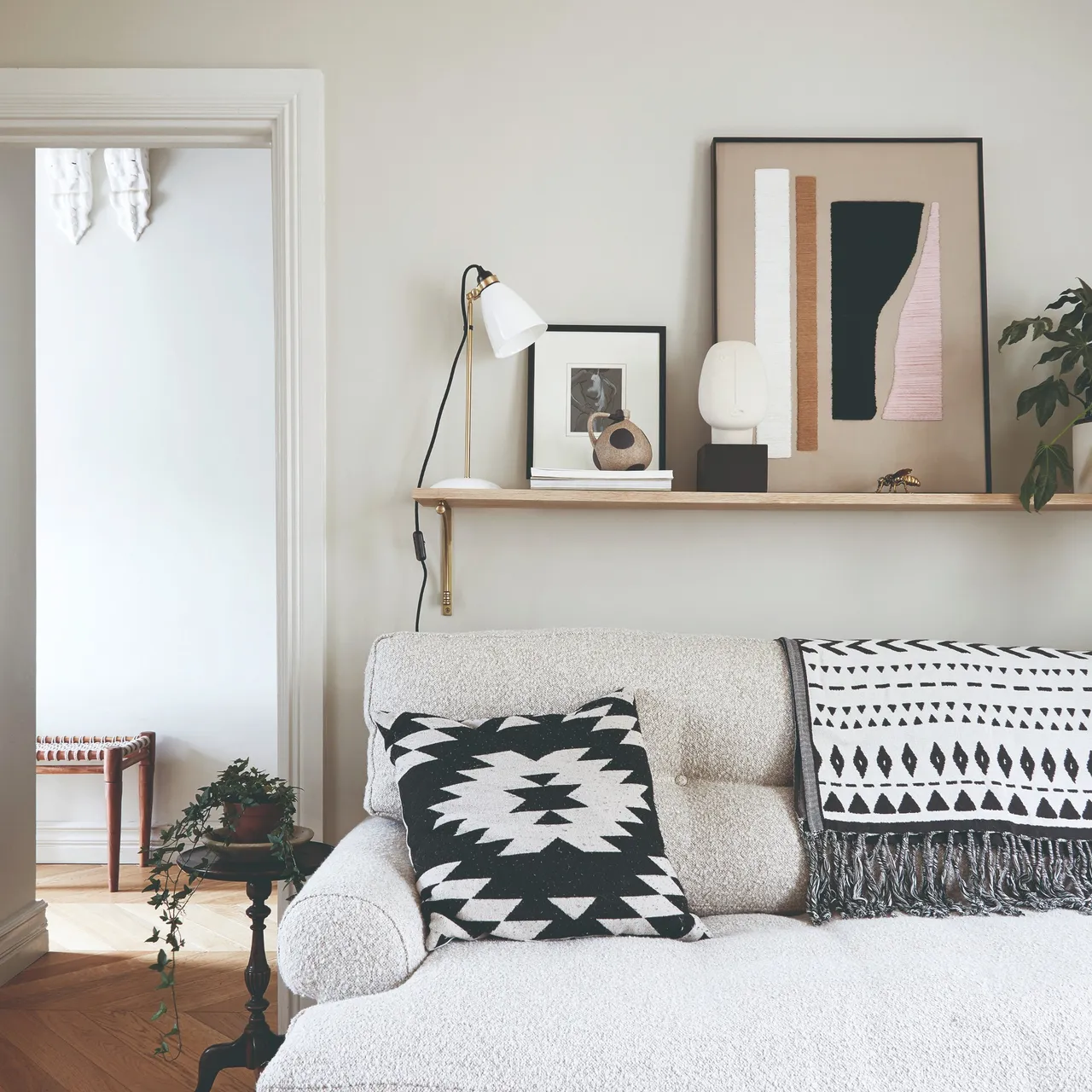
A pale sofa with patterned cushions sits beneath a narrow display shelf. The ledge adds a place for art without another floor-standing cabinet. The slim timber shelf connects several different pictures and small objects into one arrangement. Patterned cushions add detail below, while the pale wall gives the display enough breathing room around its edges.
Secure a ledge for its intended load and leave clearance above the cushions. Keep the display selective so the wall does not make the seating feel crowded. Use fixings suited to the wall and the shelf's intended load. Keep fragile items away from the front edge, especially over a regularly used seat, and check clearance for taller people sitting down.
IDEA 08 / 20
Choose a Modest Modular Layout
 SaveSupport Non AI Creator
(Image credit: Future PLC/Caroline Mardon)
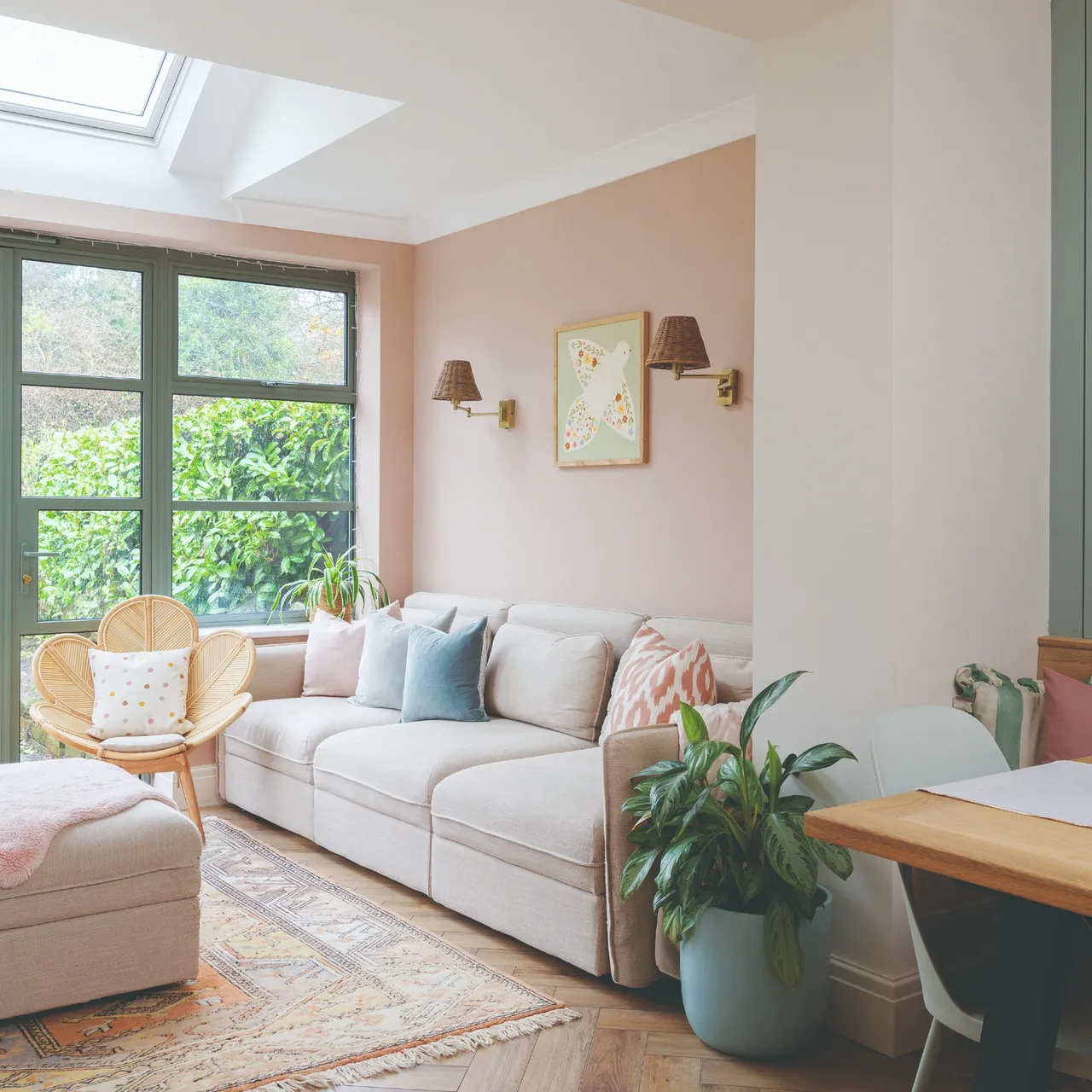
A compact pale sofa sits beneath a pink accent wall beside the garden-facing window, with a skylight bringing light from above. The separate upholstered footstool and woven chair add flexible places to sit or rest, while smaller cushions introduce color without overwhelming the main upholstery.
Choose modular pieces around the number of seats you use each day and the route between the sofa and dining area. Measure the assembled furniture, not just the individual modules, and check the delivery path through stairs and doorways. Keep window handles reachable and allow space to move the footstool when needed.
IDEA 09 / 20
Make the Corner Seat Useful
 SaveSupport Non AI Creator
(Image credit: Future PLC/James French)
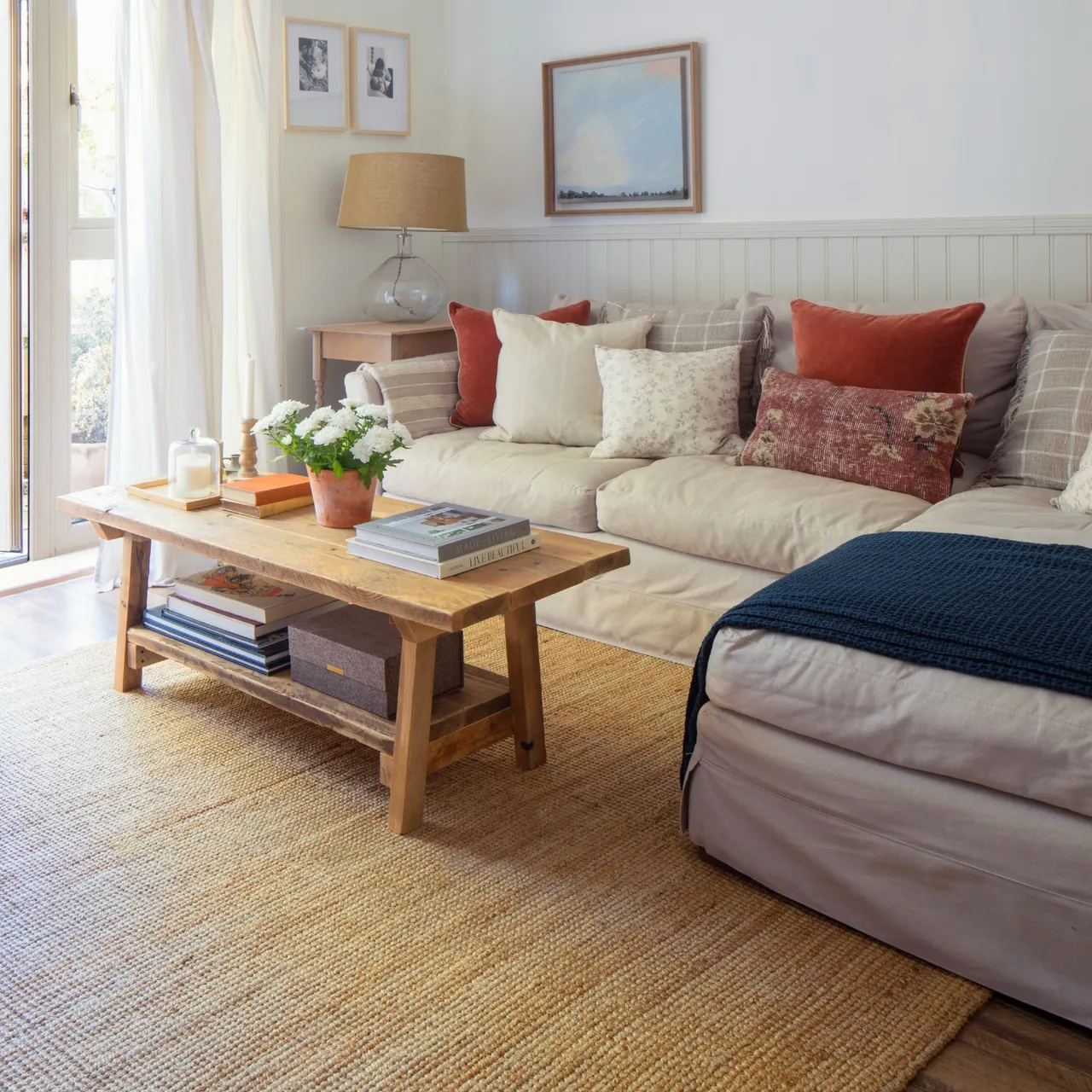
A pale corner sofa surrounds a wooden coffee table beside a bright window. The table connects the long and short seating sections. Pale cushions and upholstery keep the wide corner arrangement gentle, with red accents giving it warmth. The timber table's lower shelf provides storage without adding another cabinet beside the seat.
Check table reach from the corner seat before choosing a layout. Keep the rug and table within the seating group while leaving a clear route around it. Try sitting in the corner while testing the table position, since that spot is often farther from its edge. Keep cushions from filling the usable seat and allow access to the window.
IDEA 10 / 20
Use a Small Green Sofa
 SaveSupport Non AI Creator
(Image credit: Future PLC/Anna Stathaki)
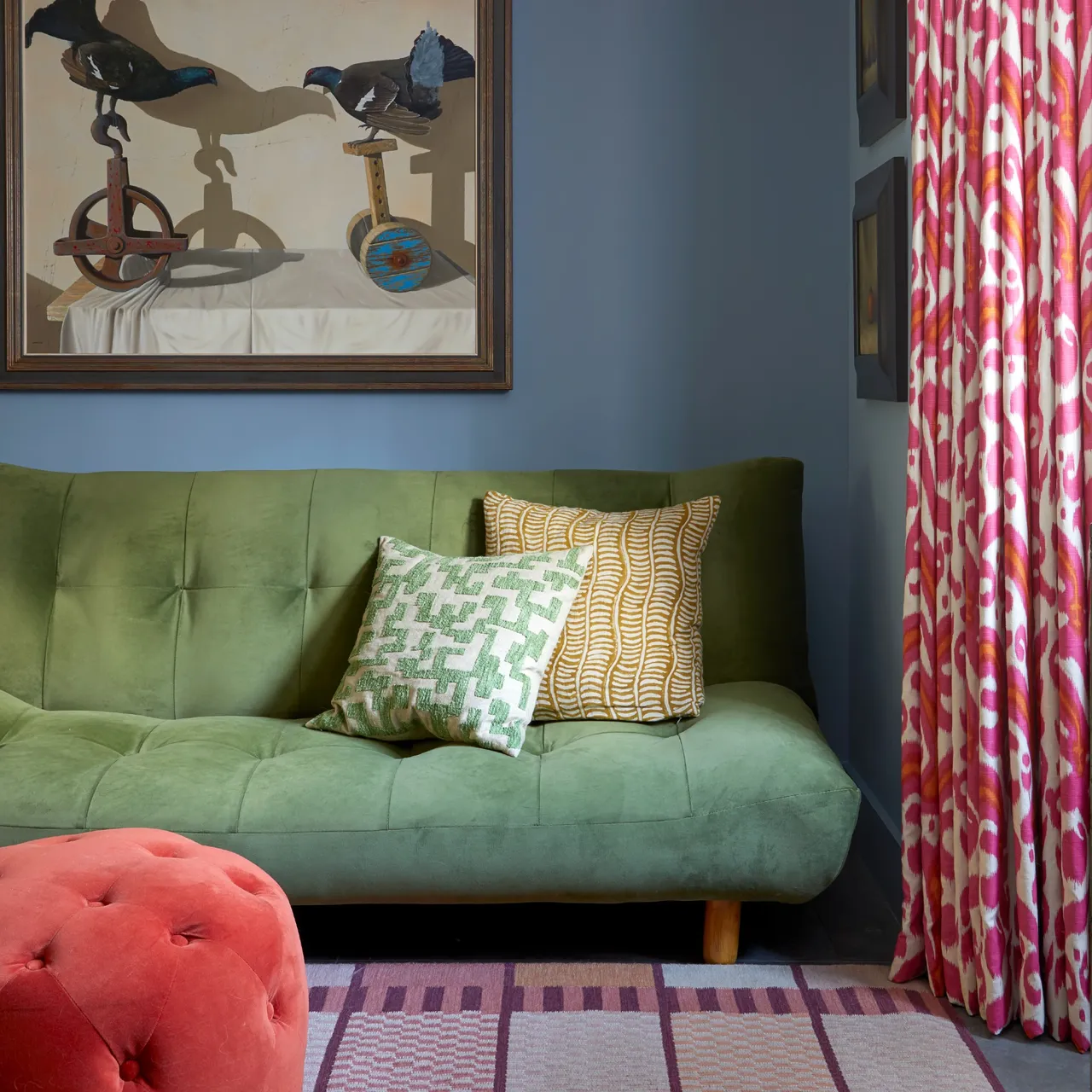
A compact green sofa sits beside a colorful curtain and a red footstool. The restrained sofa footprint leaves the room’s color visible. The armless green seat has a simple outline beside the more detailed curtain and artwork. A coral footstool gives the small arrangement another warm accent without requiring a second large upholstered piece.
Choose upholstery comfort and dimensions before matching the accessories. Limit additional large patterns if curtains and rugs already supply strong color. Test whether the low seat and back suit longer sitting before buying for its footprint alone. Keep the footstool movable so it can leave the walking route when not in use.
PART 03
Layout and everyday comfort
IDEA 11 / 20
Keep the Largest Upholstery Light
 SaveSupport Non AI Creator
(Image credit: Future PLC/Darren Chung)
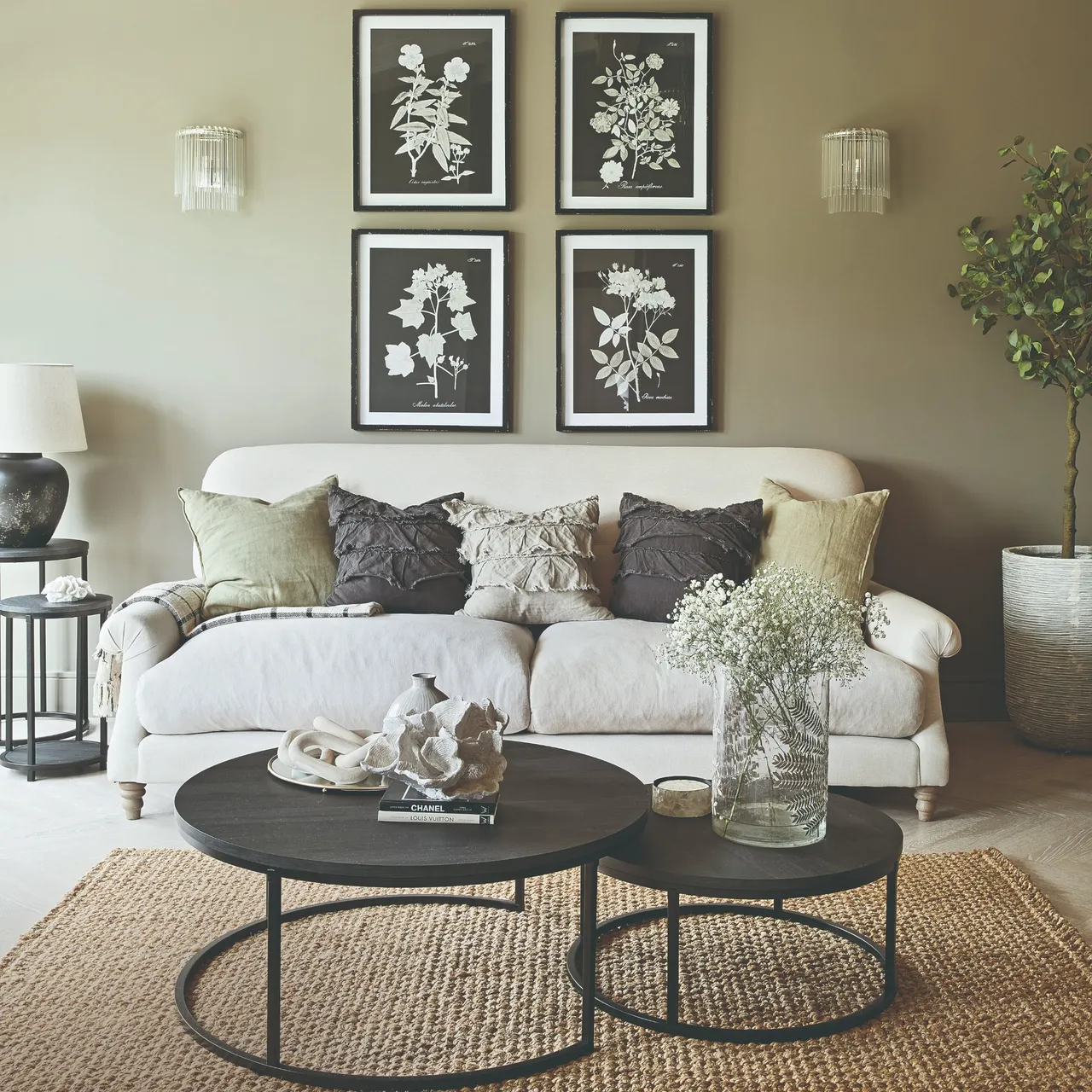
The pale sofa stands against a muted wall beneath four botanical pictures, with dark round nesting tables adding definition in front. Keeping the largest upholstery light gives the smaller gray cushions, black frames and table outlines room to stand out without making the seating group feel heavy.
Check the care guidance before choosing pale fabric for your everyday sofa, including whether covers can be removed or cleaned professionally. Size the rug around the whole seating group, and test the nesting tables from each seat. Their flexibility is useful only if you can move them without blocking the room's main passage.
IDEA 12 / 20
Mix an Armchair With a Compact Sofa
 SaveSupport Non AI Creator
(Image credit: Future PLC/Dan Duchars)
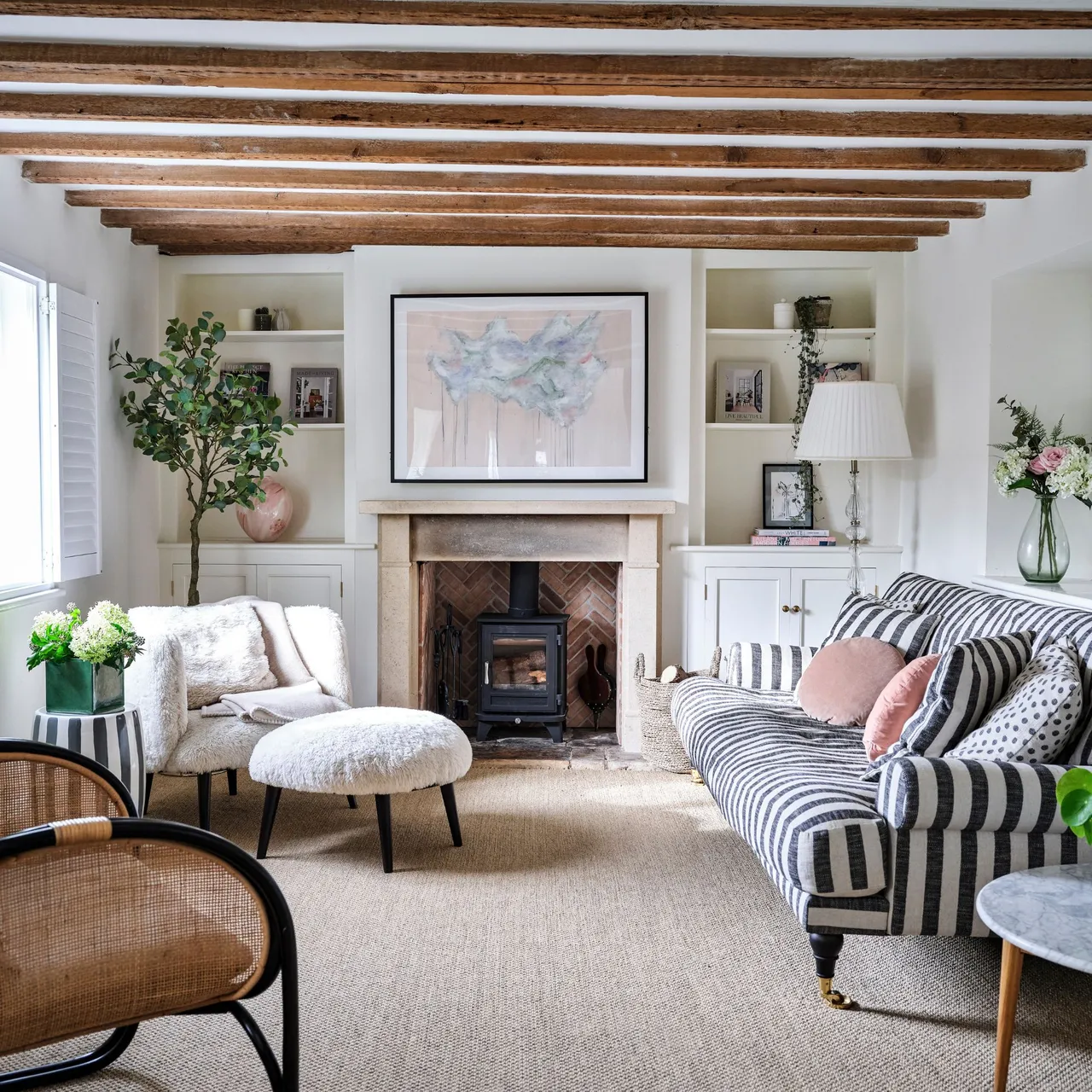
A striped sofa shares a small room with a pale chair and a stone fireplace. Different seat styles provide variety within a modest furniture group. The striped sofa provides the stronger pattern, while the pale chair and footstool offer quieter surfaces nearby. Timber ceiling beams supply another layer of texture above the compact arrangement.
Compare seat heights and depths before mixing pieces. Leave enough floor space between the chair and sofa for conversation and comfortable movement. Choose one patterned seat before adding several other prints, and compare its stripes with the rug. Check fireplace clearance and make sure the footstool can move without crowding the main passage.
IDEA 13 / 20
Try Two Chairs Instead of a Sofa
 SaveSupport Non AI Creator
(Image credit: Future PLC)
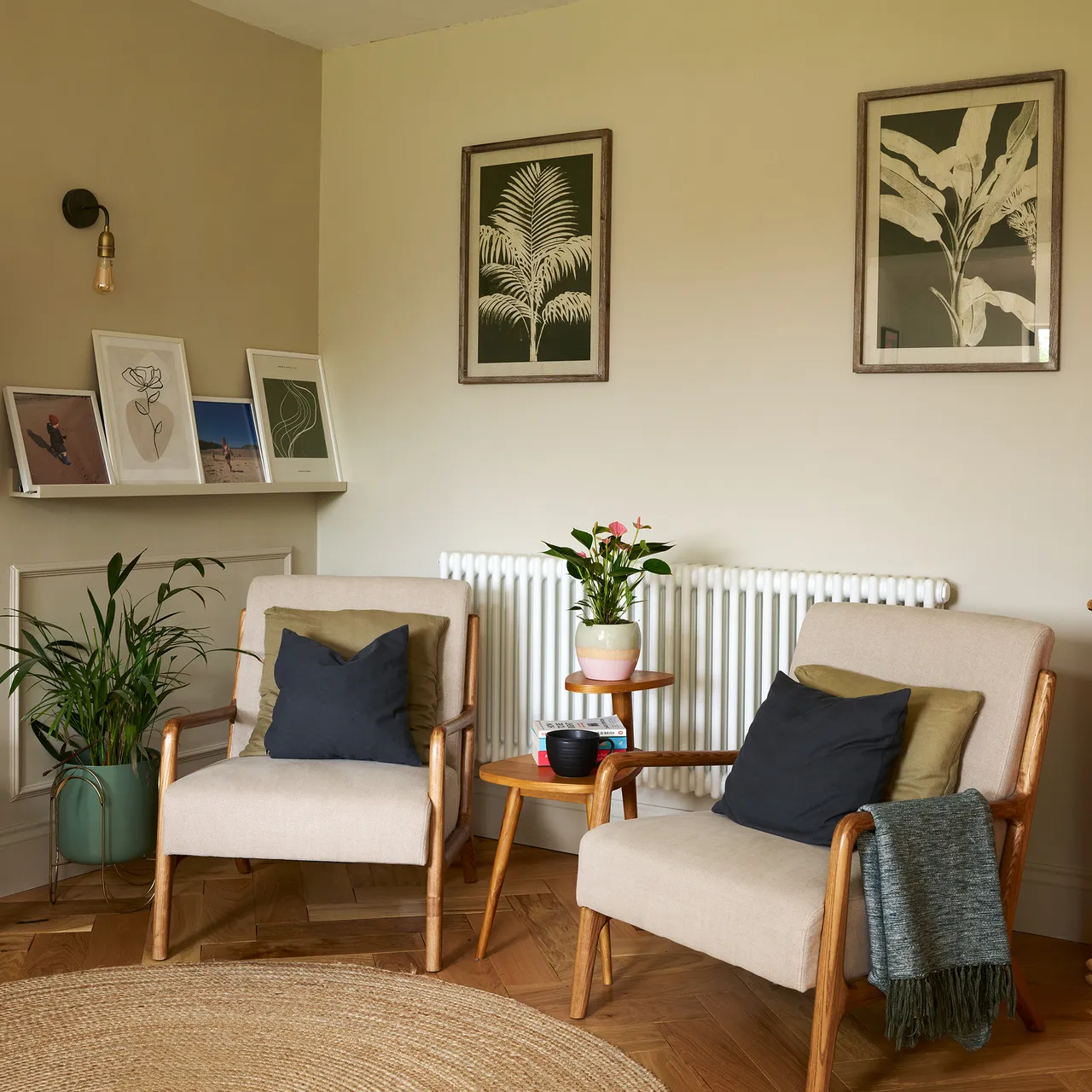
Two light armchairs sit beside a radiator and small side table. The separate seats create a compact sitting place without a long sofa. Open timber arms leave more of the wall and floor visible than fully upholstered sides would. Related cushions connect the separate seats, while a small shared table supplies a practical central surface.
Use this layout where two regular seats suit your household. Check radiator clearance and give each chair a reachable surface for a drink or book. Sit in each chair to test back support rather than choosing solely by appearance. Follow the radiator manufacturer's spacing guidance and keep the chair cushions from resting directly against it.
IDEA 14 / 20
Use One Dark Shelving Wall
 SaveSupport Non AI Creator
(Image credit: Future PLC / Caroline Mardon)
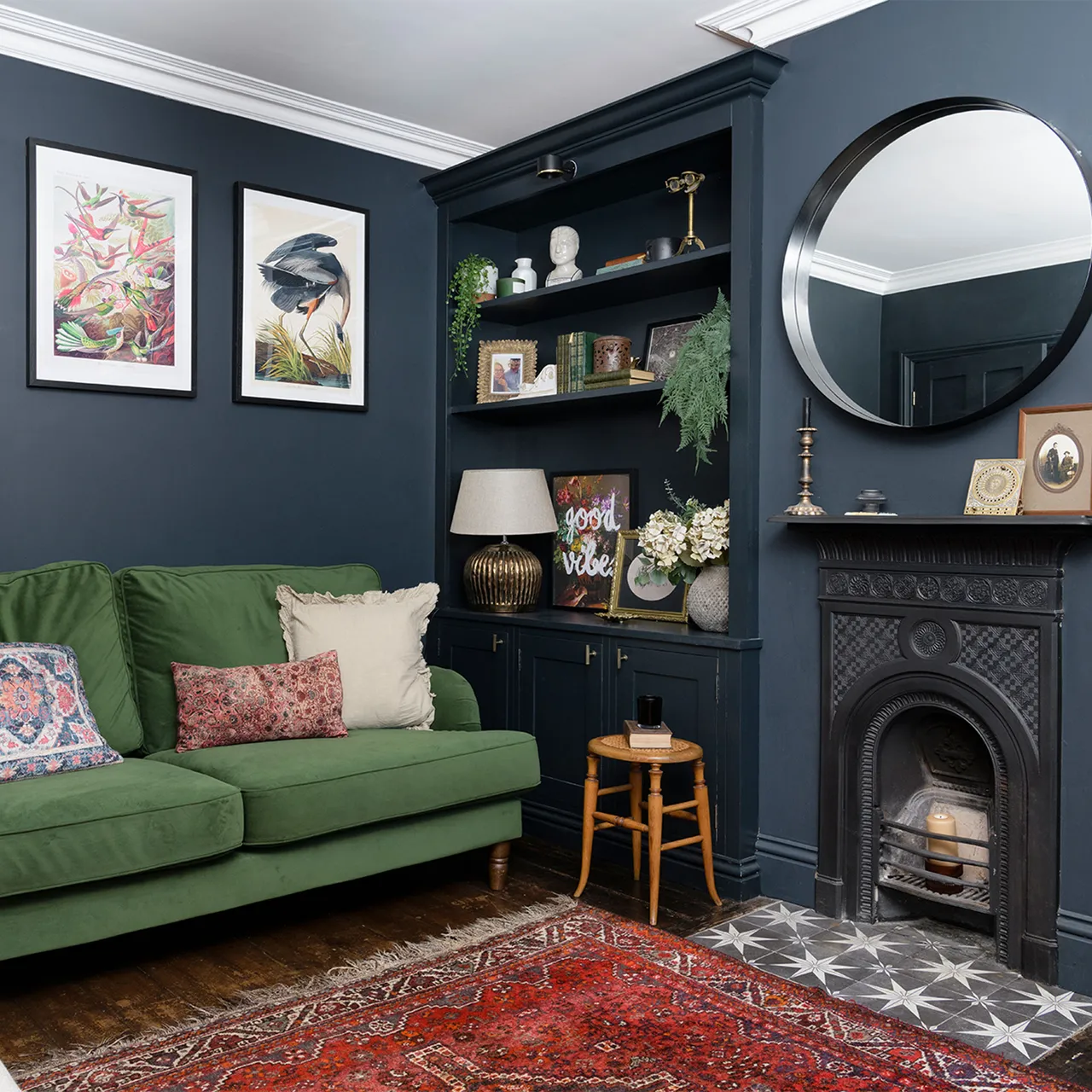
A green sofa sits beside dark built-in shelves and a patterned rug. The storage wall gives the small room a strong backdrop. The dark shelving connects with the fireplace wall, making storage part of one continuous backdrop. A green sofa and warmer patterned rug prevent the deeper paint from being the room's only strong tone.
Balance open display shelves with enclosed storage for mixed supplies. Keep a clear route to the seats and use a lamp where the dark wall absorbs light. Measure the books and objects you intend to keep before deciding shelf heights. Include reachable closed storage for mixed supplies and avoid blocking access to sockets behind the furniture.
IDEA 15 / 20
Carry Green Across the Room
 SaveSupport Non AI Creator
(Image credit: Future PLC/David Giles)
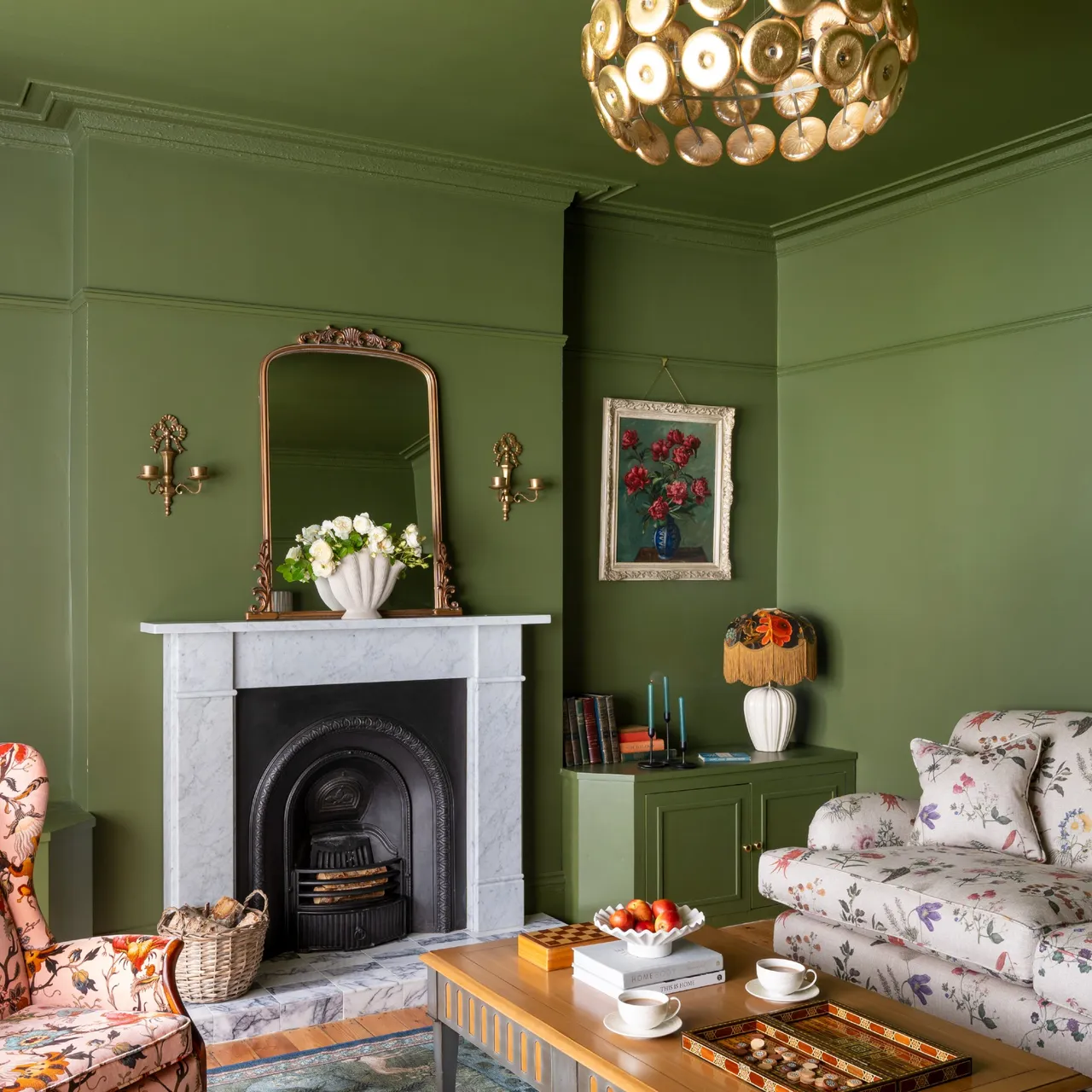
Green continues across the walls, ceiling and cabinetry, connecting this compact room's varied furnishings. Floral upholstery brings lighter colors into the foreground, while the white fireplace surround offers a clear break within the deeper backdrop and the timber table adds another warm surface.
Compare a large green sample with your upholstery before painting several connected surfaces. Check it after sunset as well as in daylight, since lamps will change how the deeper color reads. Keep reading light close to the seats, and leave enough contrast around shelves or cupboards to find everyday items easily.
PART 04
Finishing details
IDEA 16 / 20
Add a Simple Painted Band
 SaveSupport Non AI Creator
(Image credit: Future PLC/James French)
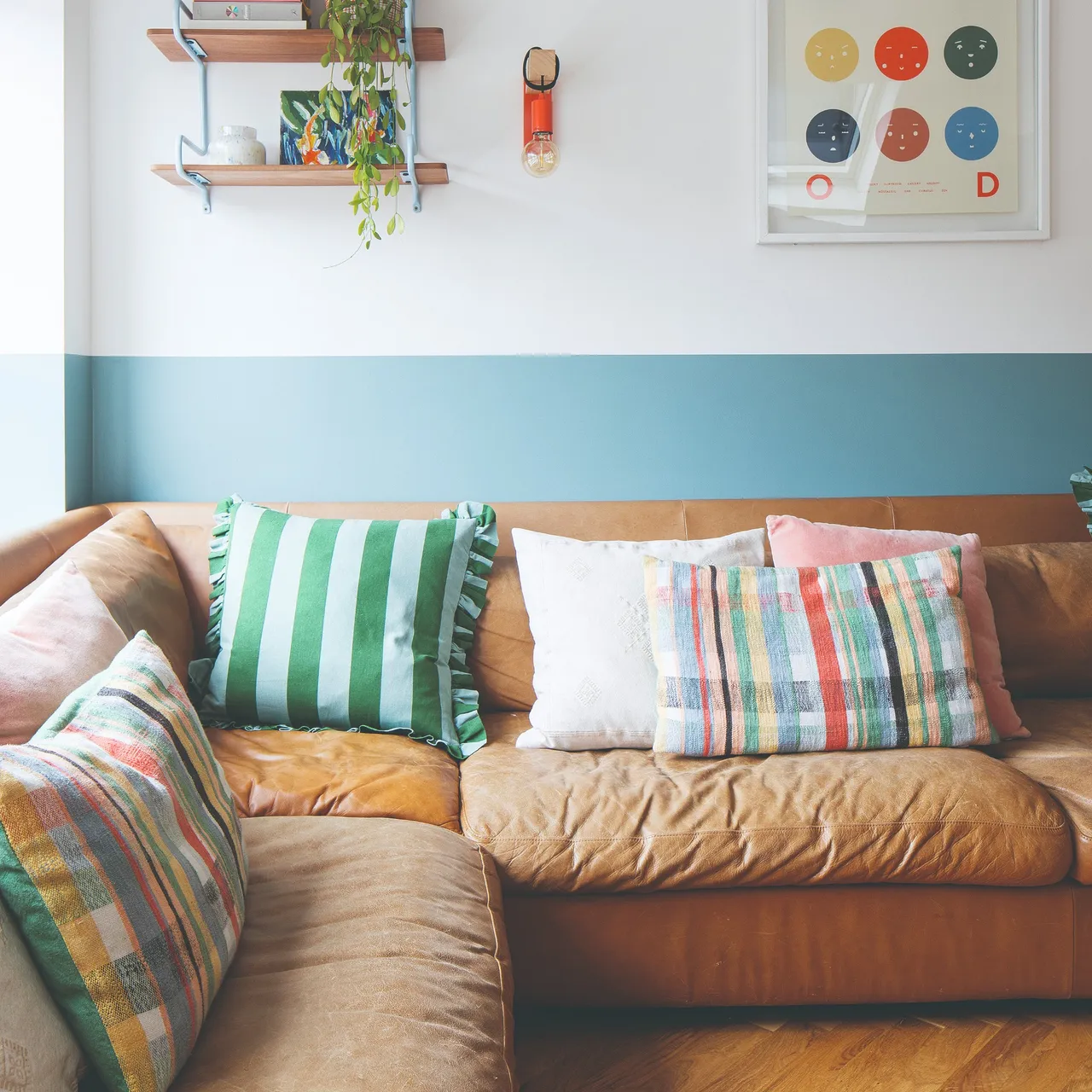
A wide blue painted band runs behind a tan sofa with striped cushions. The horizontal color defines the seating area without covering the whole wall. The band sits just above the tan sofa, linking it to the colorful striped cushions below. White above the painted area leaves a quieter background for shelves and framed artwork.
Mark the band height against the sofa back before painting. Keep nearby artwork and shelving positions deliberate so they do not interrupt the line awkwardly. Try removable tape to preview the height before painting a full wall. If the sofa may move later, check that the band also looks balanced from the doorway without furniture beneath it.
IDEA 17 / 20
Use Wall Storage Around the Seating
 SaveSupport Non AI Creator
(Image credit: Future PLC/Douglas Gibb)
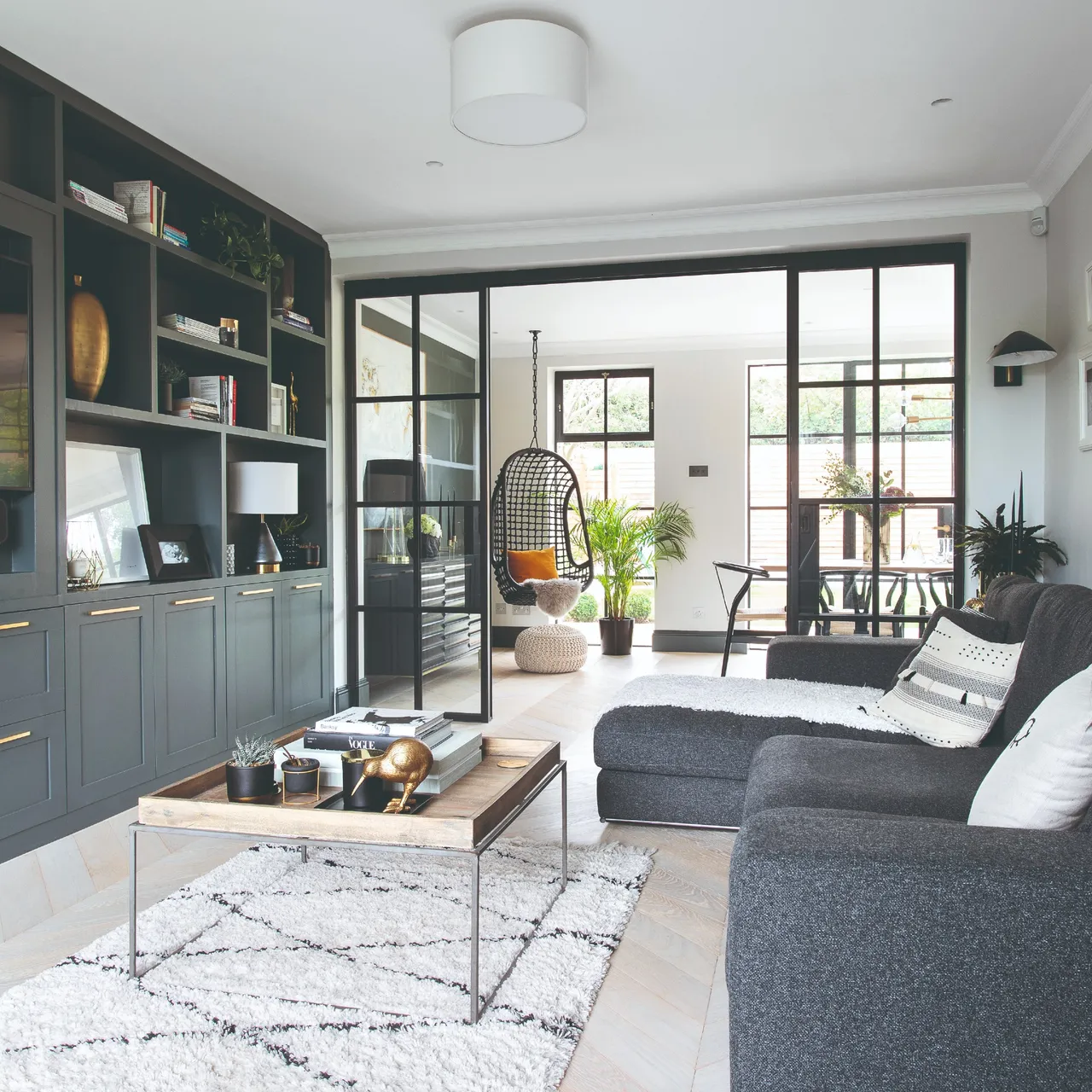
A dark sectional faces a long built-in storage wall with shelves and cupboards. The fitted storage leaves fewer separate pieces on the floor. Closed cupboards conceal mixed supplies while the upper shelves leave room for a selective display. The pale floor and glass partition balance the darker storage and sectional without adding more furniture to the center.
Plan cabinet depths around the route through the room. Use doors for clutter and keep only a small everyday collection on open shelves. Plan door swings before settling on cabinet depth, including the room needed to stand in front of an open cupboard. Keep regularly used items lower down and avoid overfilling the highest display shelves.
IDEA 18 / 20
Save Floor Space With Wall Lights
 SaveSupport Non AI Creator
(Image credit: Future PLC/Darren Chung)
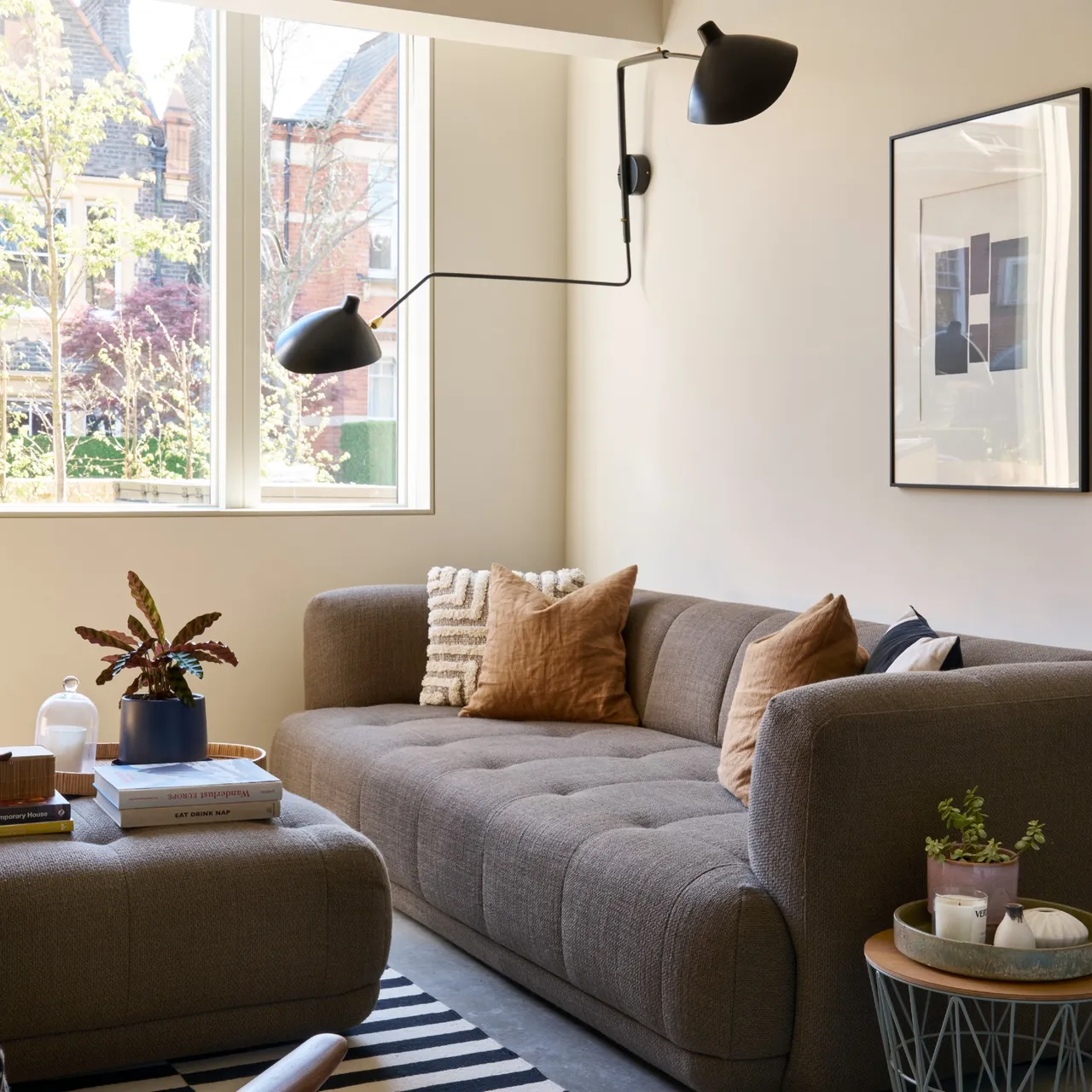
A dark sofa sits beside a window beneath adjustable wall lamps. The lighting provides reach without several floor-standing bases. The adjustable lamp reaches toward the sofa while leaving the floor beside it available for smaller surfaces. Its dark outline connects with the artwork without introducing another large furniture piece into the compact arrangement.
Check lamp reach and glare from the seated position. Plan wiring and fittings appropriately, and keep the lights clear of curtains and the usual walking route. Test the position with someone sitting in each usual seat before fixing the light. Keep the shade clear of window coverings and have any new wiring installed appropriately for the wall and fitting.
IDEA 19 / 20
Use Small Shelves Above the Seat
 SaveSupport Non AI Creator
(Image credit: Future PLC/Nathalie Priem)
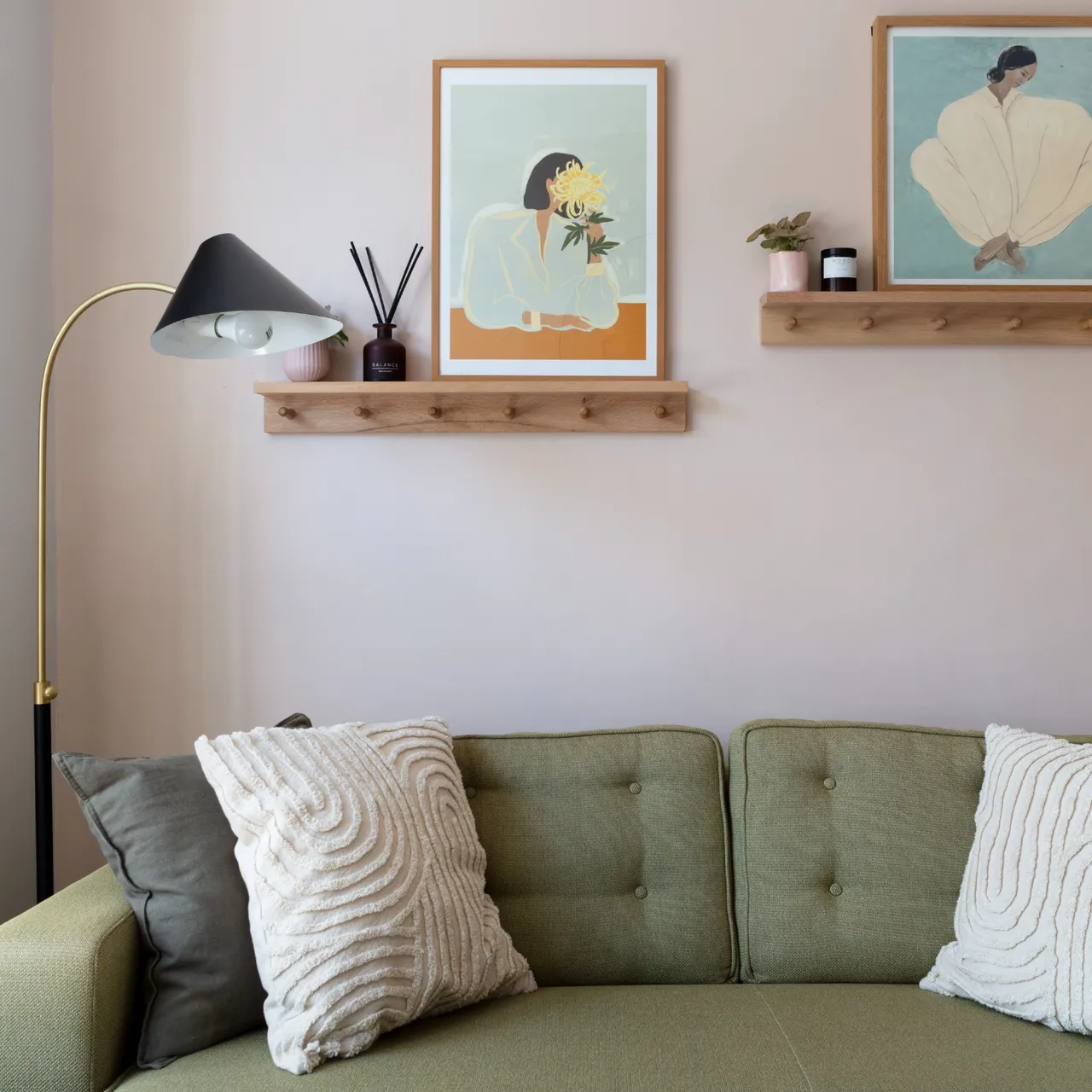
A compact green sofa sits beneath two small timber shelves and framed pictures. The shallow storage adds detail without taking floor space. Small timber ledges hold a pair of pictures at different heights, making a gentle backdrop above the green sofa. The shallow format provides display space while leaving the seating footprint unchanged.
Secure shelves for their load and leave comfortable clearance above heads. Keep heavier everyday storage lower down rather than relying on overhead display shelves. Check the maximum weight of both shelves and their fixings, including the frames you intend to use. Keep the arrangements stable and allow head clearance when someone sits upright or stands from the sofa.
IDEA 20 / 20
Add Baskets Where Storage Is Limited
 SaveSupport Non AI Creator
(Image credit: Future PLC / Joanna Henderson)
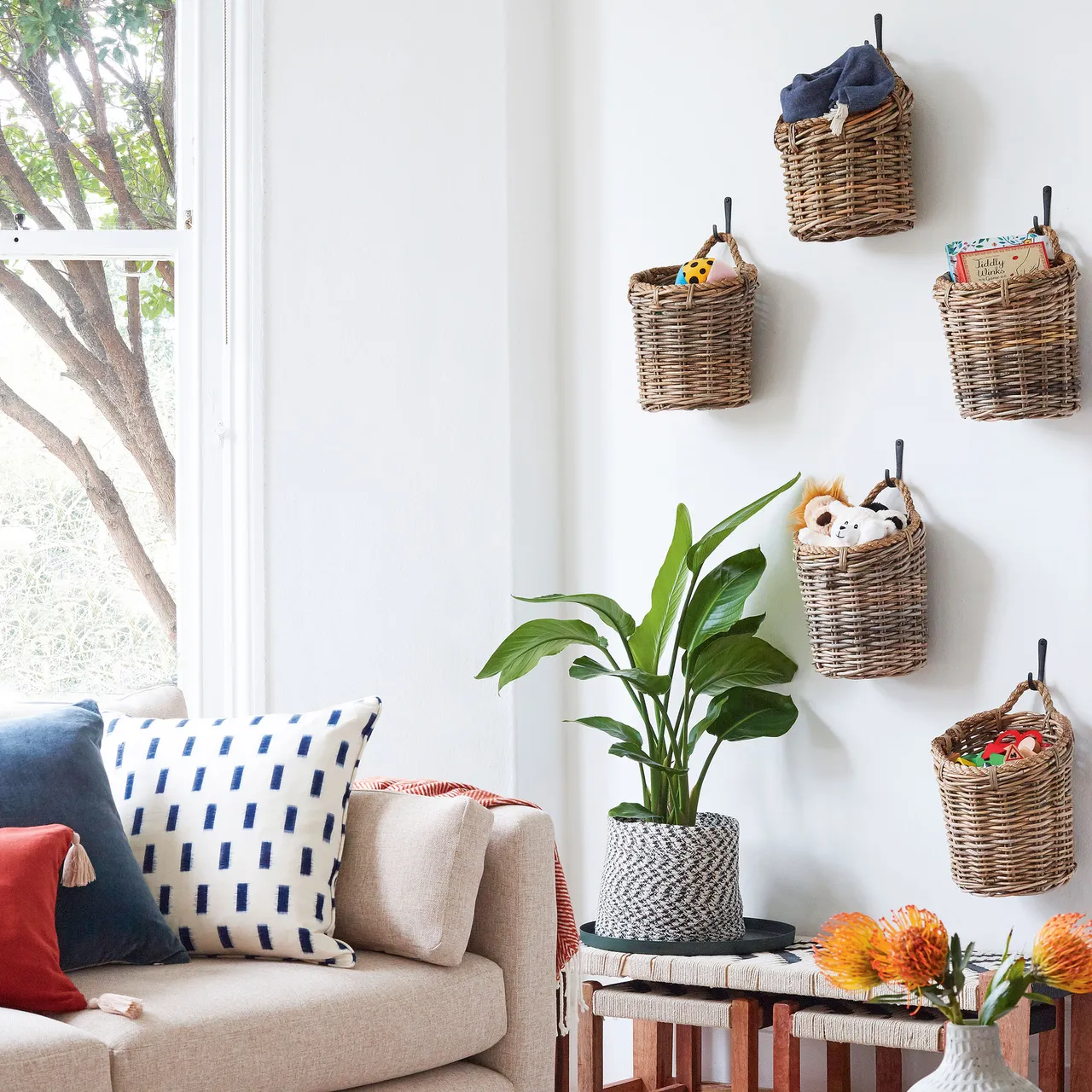
Woven baskets hang beside a window near pale seating and a small table. They add texture and a modest amount of wall storage. The baskets hold smaller everyday items, using the wall beside the window instead of another storage unit on the floor. Their woven texture connects with the room's softer cushions and compact side tables.
Use baskets for lightweight items and check the fittings individually. Keep the display clear of curtains and leave the seat’s approach unobstructed. Put lighter objects in the higher baskets and keep frequently used items within easy reach. Check the total hanging weight, including contents, and avoid hooks or basket edges that project into the seat's approach.
BRING IT ALL TOGETHER
Make the idea work in your own home
Start with one change that solves a real problem or helps your favorite feature stand out. Compare colors and materials in your own light and measure clearances before ordering anything permanent.
A comfortable, practical room is more successful than a perfectly copied photograph. Keep what serves your daily routine and leave out details that do not suit your space.