Black cabinetry gives a kitchen a clear outline, whether it covers one island or the whole perimeter. The surrounding surfaces determine whether that outline feels crisp, cozy or overly dark.
These examples focus on the cabinets themselves: door shapes, hardware, storage and the way dark runs meet lighter counters. Look beyond the paint color to the details that make a kitchen comfortable to use.
PART 01
Color and contrast
IDEA 01 / 17
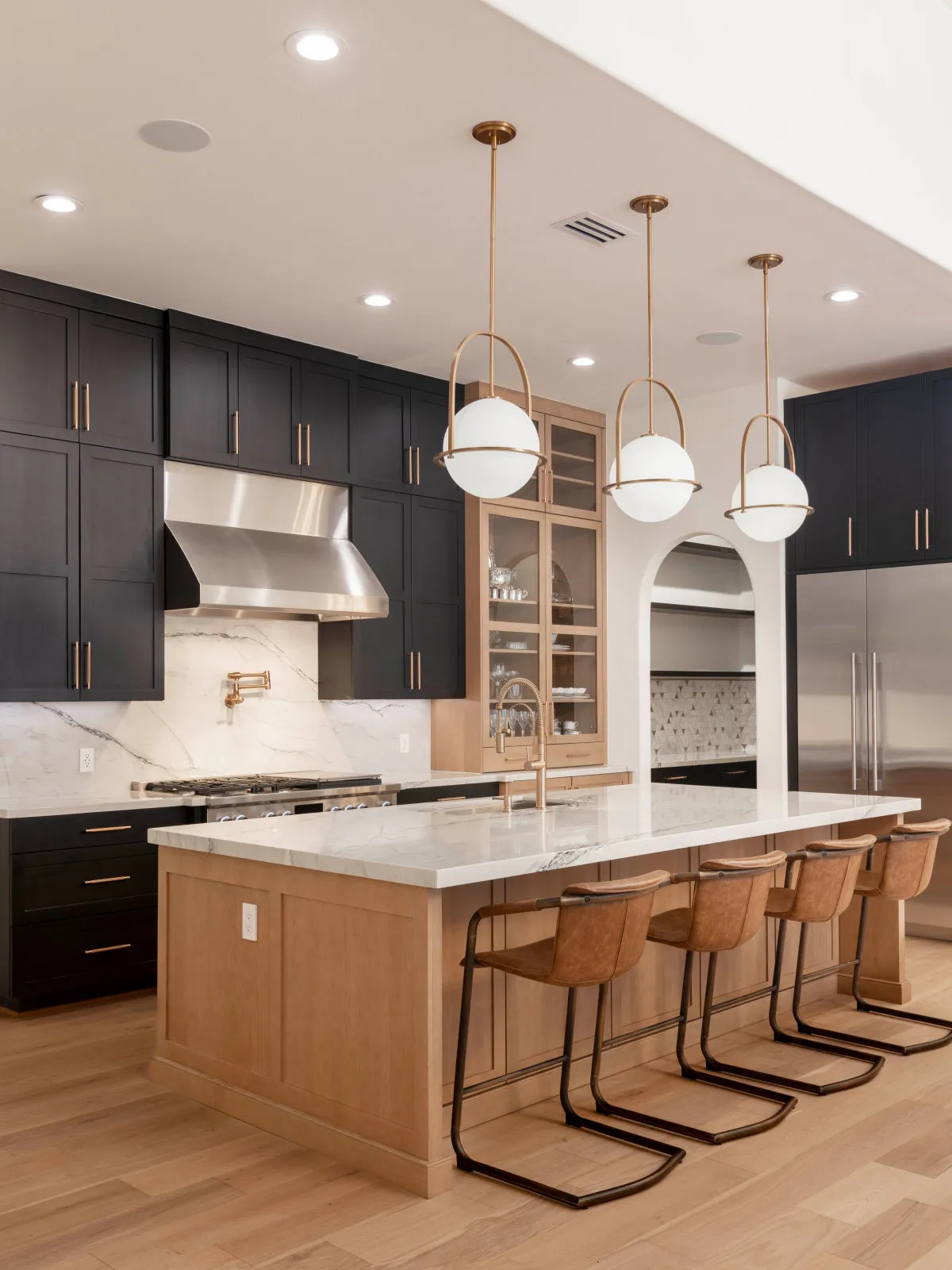
Mix black perimeter cabinets with a wood island
 SaveSupport Non AI Creator
Source: Gentech Homes on Houzz.
Black wall cabinets surround a timber island and pale counters. The warmer center softens the dark perimeter without changing its clear outline. The timber island repeats the warmth of the floor and stools, while pale counters connect it to the black cabinetry. Brass-colored handles and pendant frames add small highlights rather than another large contrasting surface.
Keep the cabinet door proportions consistent across both finishes, and choose a timber tone that sits comfortably beside the existing floor. Place door, floor and countertop samples together before choosing the island stain. A wood finish that looks neutral alone can turn noticeably orange beside black paint, so check the combination in the kitchen's actual daylight.
IDEA 02 / 17
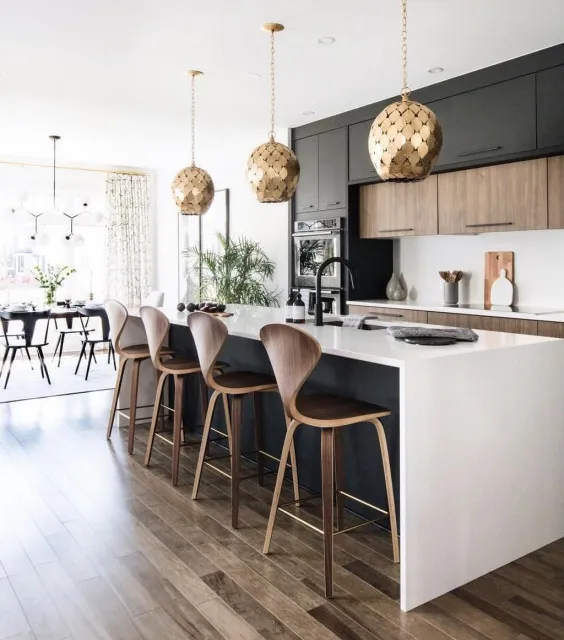
Use a lighter island end to soften black
 SaveSupport Non AI Creator
Source: Everingham Design on Houzz.
Dark upper cabinets and island seating contrast with a pale island end. The light surface gives the large cabinet grouping a gentler edge. The pale counter continues down the island end, giving the dark seating face a crisp boundary. Curved timber stool backs and wood cabinets above the rear counter introduce warmth without interrupting the black cabinet outlines.
Think about the island from the adjoining room as well as the kitchen, and choose an outer finish that suits both views. Check how the waterfall end affects knee space at the outer seat. Include stool backs in your measurements, and leave enough distance from the dining furniture that people can pass while someone is sitting at the island.
IDEA 03 / 17
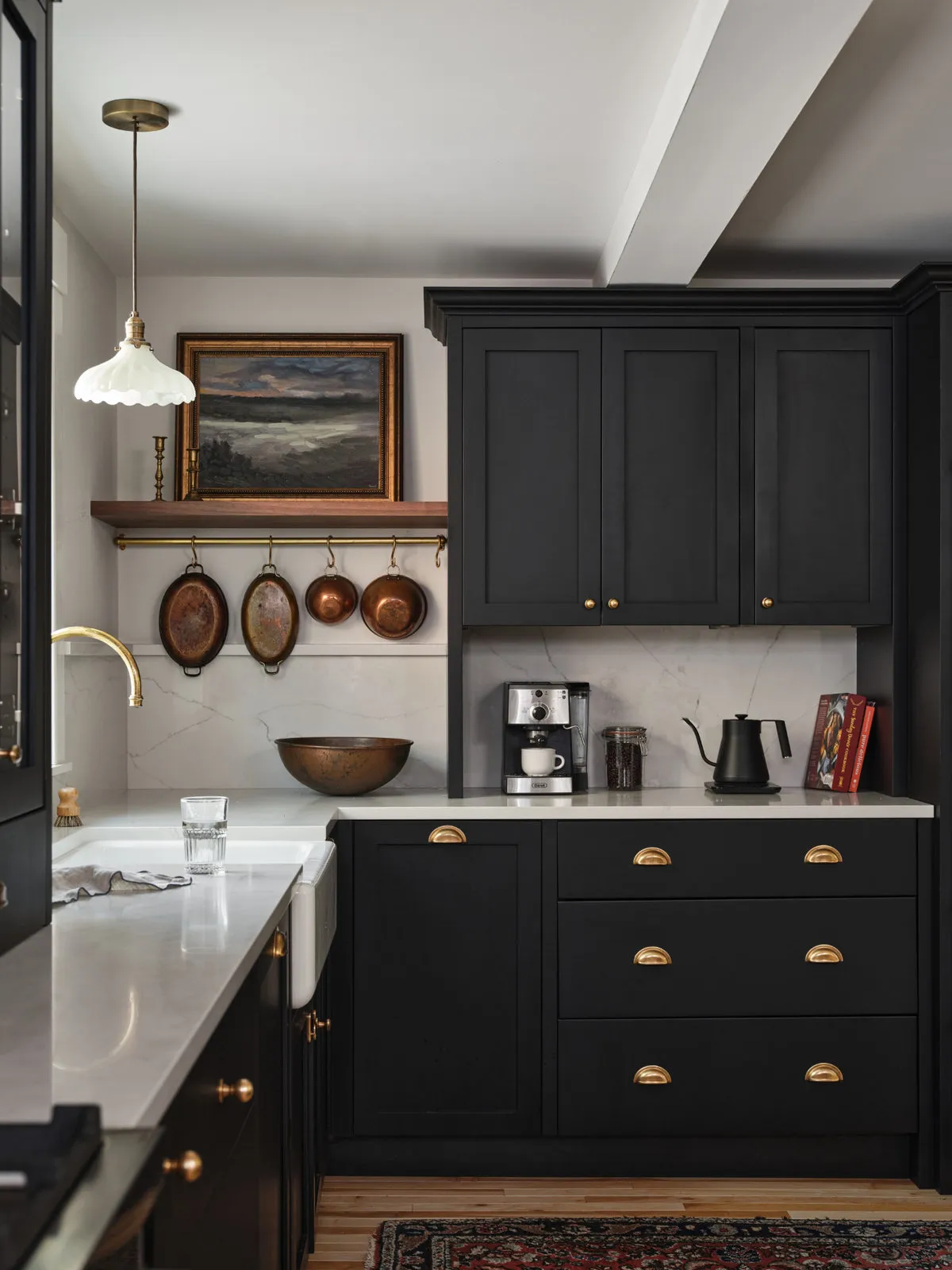
Warm black drawers with brass and copper
 SaveSupport Non AI Creator
Source: EYDER Curated Kitchens + Home on Houzz.
Brass cup pulls stand out against the broad black drawers, while copper pans add a second warm metallic finish above the counter. A slim timber shelf holds framed artwork, turning the wall into a useful display without competing with the solid cupboard doors beside it.
Test a cup pull on a sample drawer to make sure your fingers fit comfortably underneath it. If you hang cookware, use fixings suited to the wall and load, and keep the pans you actually use within reach rather than making every hook part of a purely decorative arrangement.
IDEA 04 / 17
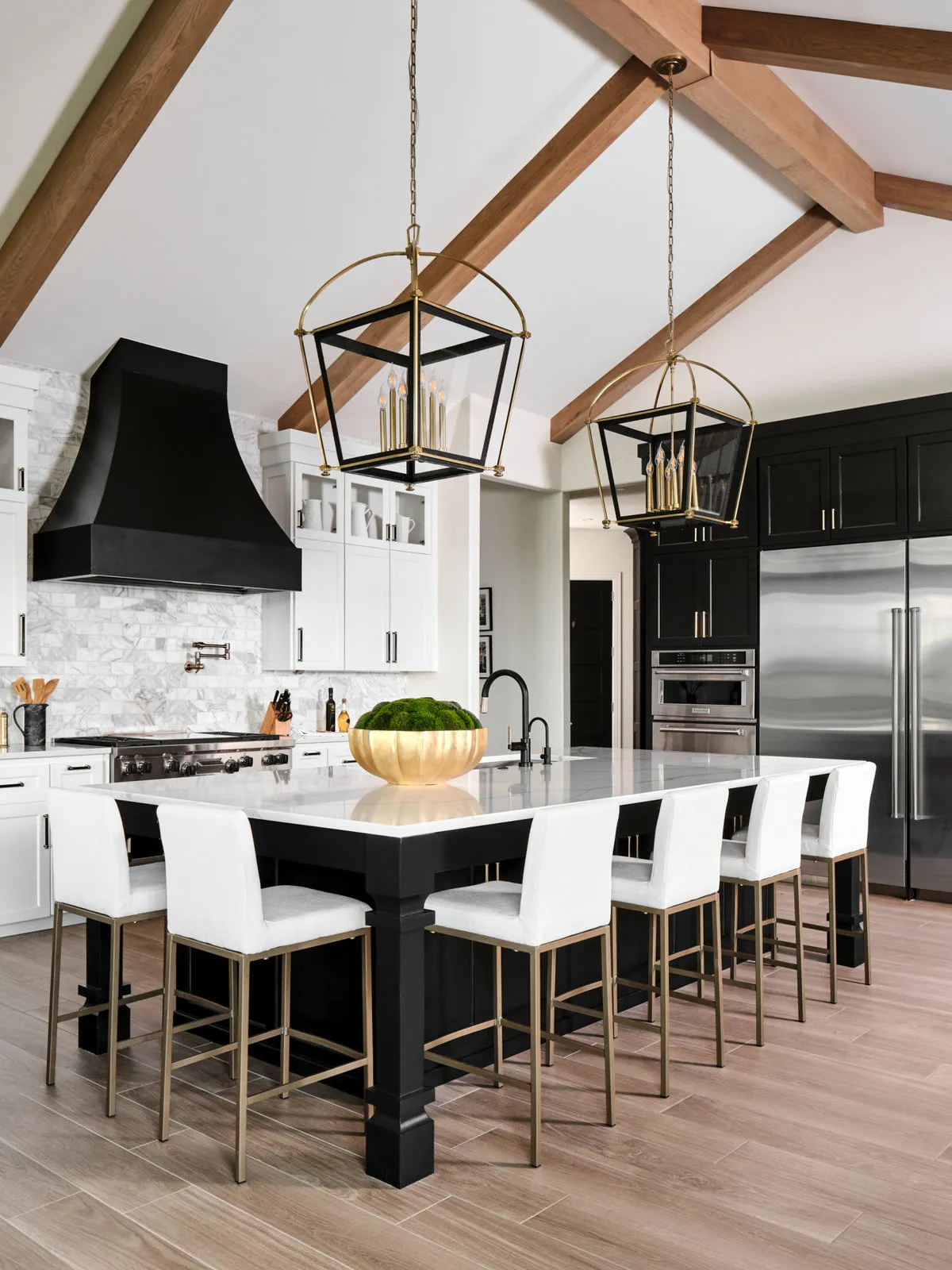
Keep a black island light-looking with pale stools
 SaveSupport Non AI Creator
Source: Haven Design and Construction on Houzz.
A black island sits beneath exposed beams with a row of white-backed stools. Their lighter silhouettes stop the seating edge from appearing solid. The white stool backs repeat the pale counter and nearby cabinets, leaving the island base as a distinct dark shape. Exposed beams add warmth overhead, and open lantern pendants let that timber remain visible through their frames.
Allow room for stools to tuck in without blocking cabinet doors, and use easy-clean upholstery where the island serves daily meals. Compare stool seat height with the underside of the counter, allowing comfortable room for legs. Ask about cleaning requirements before choosing white upholstery, and check whether the footrests are comfortable for both adults and children who use the island.
IDEA 05 / 17
Organize a dark cabinet's drawer interior
 SaveSupport Non AI Creator
Source: Houzz project gallery on Houzz.
An open drawer beside dark cabinetry contains divided sections for utensils and knives. The fitting shows how hidden storage can support a tidy exterior. The divided drawer separates small measuring tools from long utensils, while the fitted knife slots stop blades from mixing with loose items. Black cabinet fronts can look restrained even when the storage behind them is highly specialized.
Size organizers around your actual utensils and follow safe knife-storage guidance, keeping sharp blades protected and inaccessible to young children where necessary. Measure the drawer's internal depth and usable width, including any obstructions, before ordering inserts. Group tools by the meals you prepare most often, and leave a little spare space so new utensils do not undo the arrangement immediately.
PART 02
Texture and materials
IDEA 06 / 17
Place dark bases below a light upper wall
 SaveSupport Non AI Creator
Source: Breathe Design Studio: San Francisco on Houzz.
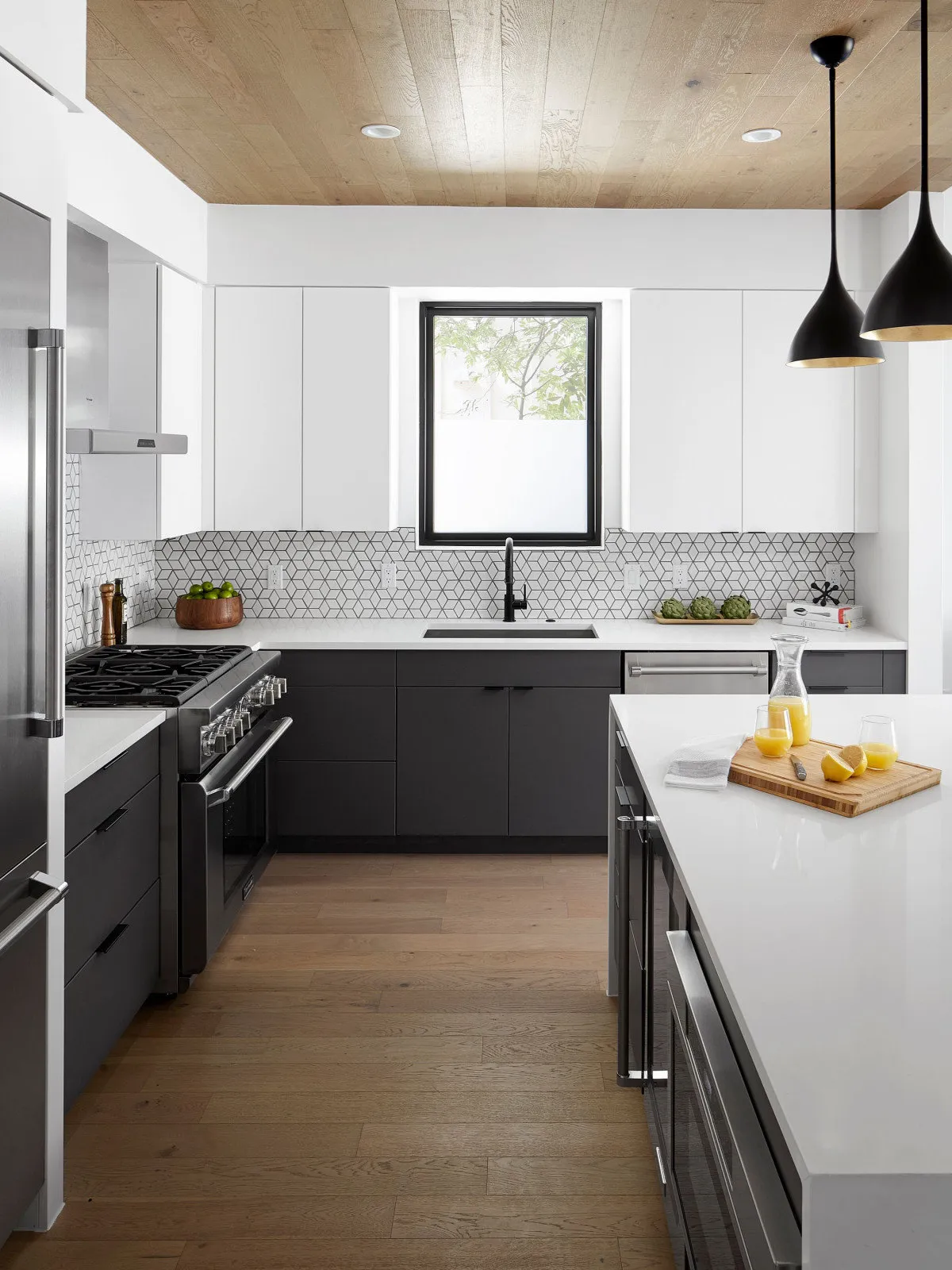
Dark lower cabinets sit beneath pale counters and white upper walls. The lighter upper half helps this compact kitchen retain an open appearance. Flat dark lower fronts contrast with the white cupboards around the window. The geometric backsplash adds a small-scale pattern, while a timber ceiling and floor supply warmth above and below the otherwise simple black-and-white cabinet arrangement.
Add continuous task lighting where upper cabinetry shades the worktop, and keep frequently used appliances from consuming the entire clear preparation area. Check the backsplash sample against the cabinet color before installation, since a busy pattern can look stronger across a full wall. Position countertop appliances near their outlets and leave an uninterrupted surface where you normally chop or assemble food.
IDEA 07 / 17
Break up black uppers with translucent doors
 SaveSupport Non AI Creator
Source: Berghuis Construction LLC on Houzz.
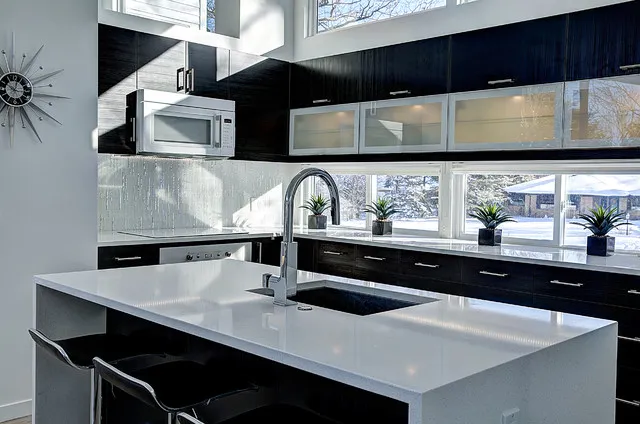
Dark upper cabinets include translucent panels above a bright window and pale island. The changing door surfaces give the cabinet wall visual variety. The pale translucent panels form a horizontal band between the glossy dark uppers and the windows. Their lighter appearance breaks up the storage without adding open shelves, while the white island echoes the brightness of the glazed wall.
Use enclosed display sections for items you can keep orderly, and avoid assuming translucent fronts will hide a crowded collection of mismatched containers. Look at a sample door with dishes behind it before choosing its opacity. Check the opening mechanism and handle position against your reach, especially for upper cupboards that stretch across a window or sit above a deep counter.
IDEA 08 / 17
Pair black cabinets with warm open shelving
 SaveSupport Non AI Creator
Source: User on Houzz.
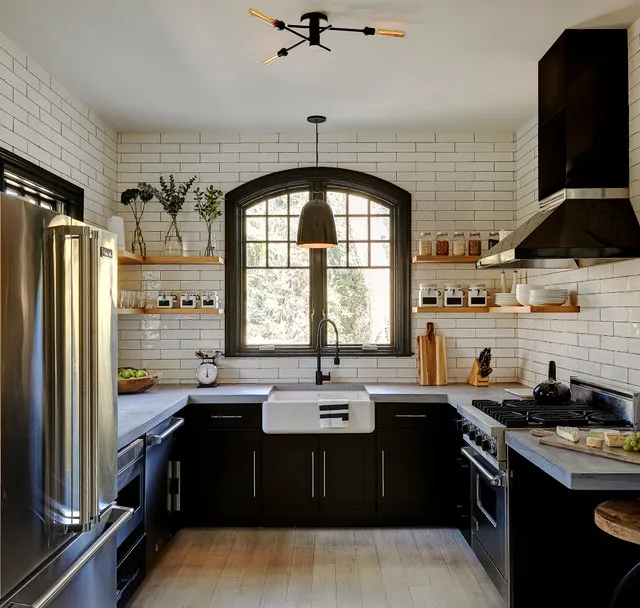
Black lower cabinets sit around an arched window beneath pale tile and timber shelves. The warm shelving prevents the compact room from feeling severe. The arched window remains the main feature because the shelves stop on either side of it. White tile covers the upper walls, while the dark lower cupboards and hood provide contrast without surrounding the entire room in black.
Keep everyday crockery on accessible shelves and reserve higher levels for lighter objects, with fittings appropriate to the wall and expected load. Keep shelf depth modest enough that cups and bowls are easy to reach over the counter. Near cooking areas, expect open shelving to need regular cleaning, and avoid placing delicate decorative pieces where grease or steam will reach them.
IDEA 09 / 17
Use glazing to lighten a black cabinet wall
 SaveSupport Non AI Creator
Source: Paper Moon Painting on Houzz.
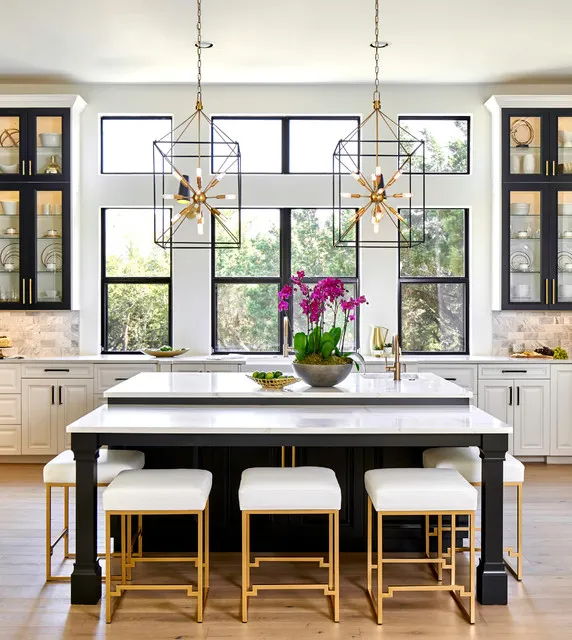
Dark glazed cupboards frame a bright kitchen window above a black island. Pale walls and gold-toned accents keep the substantial cabinets from dominating. Glazed cupboards sit symmetrically beside the windows, linking their dark frames to the black island. Gold-toned stool frames and pendant details add warmth, while the pale lower perimeter cabinets keep the contrast concentrated around selected areas.
Display a limited selection behind glass, and choose cabinet lighting only where it improves visibility rather than illuminating every shelf equally. Arrange displayed dishes in small groups with space between them so the cupboard backs remain visible. If adding internal lights, check how wiring and switches will be accessed, and choose lighting that makes the contents easy to see from the room.
PART 03
Furniture and layout
IDEA 10 / 17
Give black cabinets a patterned backsplash
 SaveSupport Non AI Creator
Source: Wiseman & Gale Interiors on Houzz.
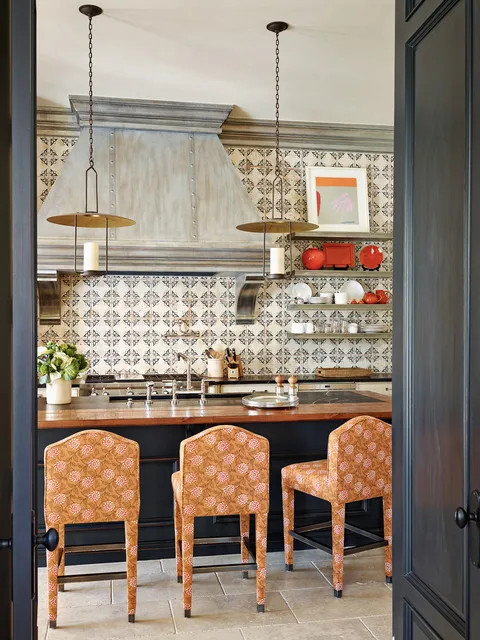
Dark cabinetry frames a small kitchen with a patterned backsplash and warm upholstered stools. The tile supplies movement between the broad painted surfaces. The patterned tile wraps around the large hood and open shelves, making a detailed backdrop for the dark island. Warm upholstered stools and a wood counter soften that strong pattern without adding another competing finish to the cabinet fronts.
Lay several tile samples together before choosing the pattern, and keep cabinet hardware simple when the backsplash already carries strong detail. View a repeated tile layout rather than one isolated sample to understand its full effect. Balance a busy wall with plain dinnerware and restrained handles, and choose stool fabric that can cope with the spills likely at your breakfast counter.
IDEA 11 / 17
Warm a black cabinet wall with gold-lined pendants
 SaveSupport Non AI Creator
Source: Atlas Moran Construction on Houzz.
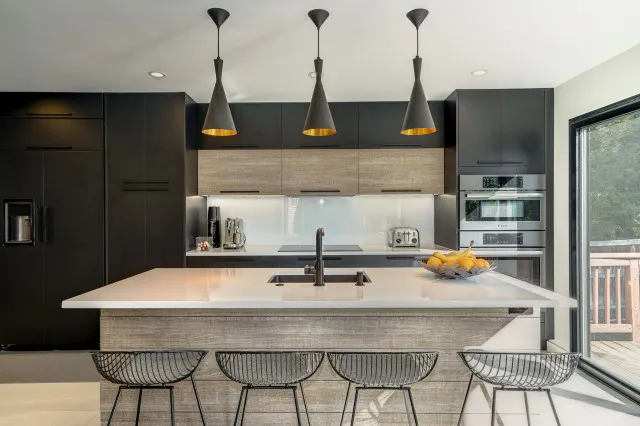
A broad black cabinet wall stands behind a pale island under three dark-and-gold pendants. Their warm interiors soften the room's sharp contrast. The pendants' gold-colored interiors repeat a warm note above the pale island, while a timber band breaks up the black wall behind. Open wire stools leave the island front visible and avoid adding another solid block at the seating edge.
Set the pendant height for comfortable sightlines and use separate task lights, because attractive fixtures alone may leave the cooking counters shaded. Check the fixtures' light distribution as well as their appearance before buying them. Put island pendants on a separate switch from counter lighting so you can prepare food comfortably, then soften the light when the kitchen becomes a gathering space.
IDEA 12 / 17
Let pale surroundings support a dark cabinet run
 SaveSupport Non AI Creator
Source: Breathe Design Studio: San Francisco on Houzz.
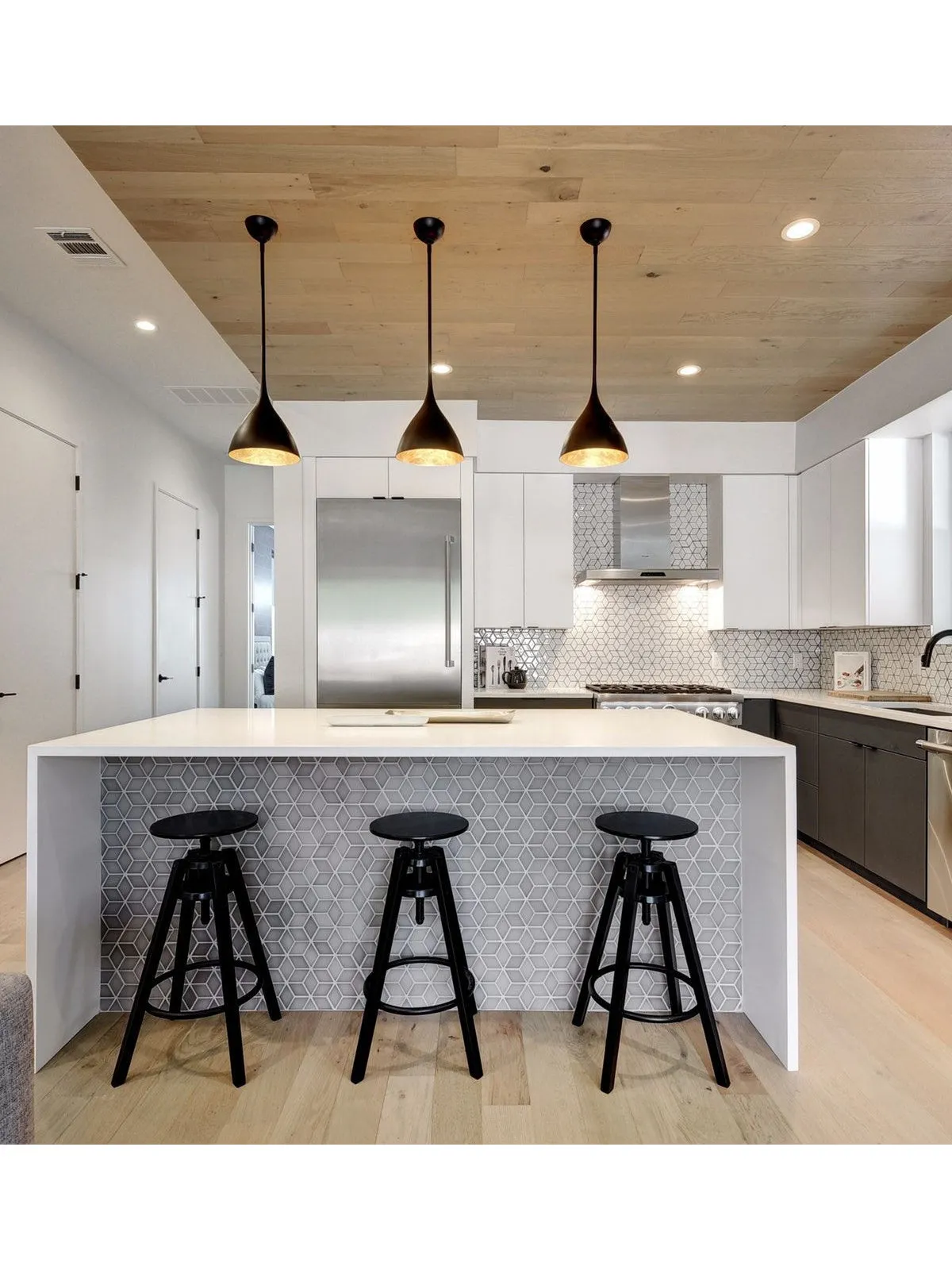
Dark lower cabinets line a bright kitchen beside a pale island and black stools. The restrained palette gives the room a straightforward modern character. The dark lower run meets white upper cabinets, while the island's patterned gray face adds detail at the seating area. Black stools and pendants repeat the deeper tone, and the timber ceiling keeps the pale room from feeling bare.
Use a washable wall finish where appropriate and keep the counters relatively clear, so the contrast remains readable without sacrificing everyday preparation space. Test the island-facing material for cleaning and wear where shoes may brush it. Keep the busiest preparation surfaces easy to wipe, and avoid introducing another patterned finish unless it works quietly beside the geometric backsplash and island tiles.
IDEA 13 / 17
Connect black glazed cupboards to a timber ceiling
 SaveSupport Non AI Creator
Source: Rosewood Custom Builders on Houzz.
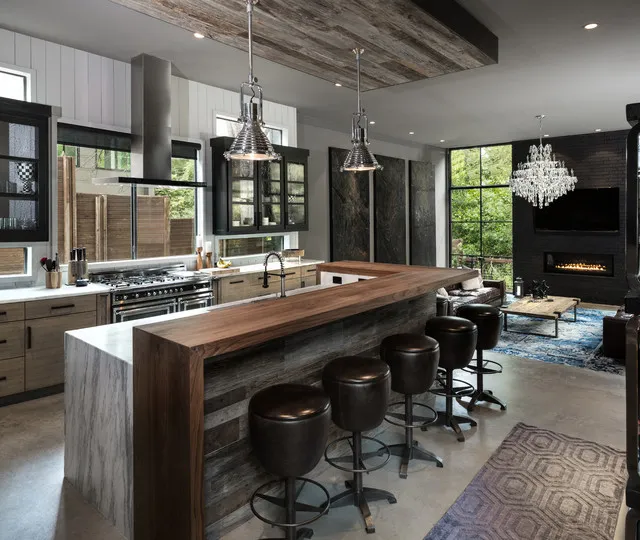
Black glazed cupboards frame the window above timber base cabinets, connecting the kitchen to the dark window frames and stools. A long wood-topped island repeats the warmth of the ceiling, while the pale counters give the cooking run a lighter edge.
Choose the amount of black around the windows carefully so the cupboards support the view rather than overwhelming it. Compare the island wood with the ceiling sample, and keep a clear working surface beside the range even when the island doubles as a place to gather.
PART 04
Finishing touches
IDEA 14 / 17
Give black cabinet doors a useful coffee station
 SaveSupport Non AI Creator
Source: Dura Supreme Cabinetry on Houzz.
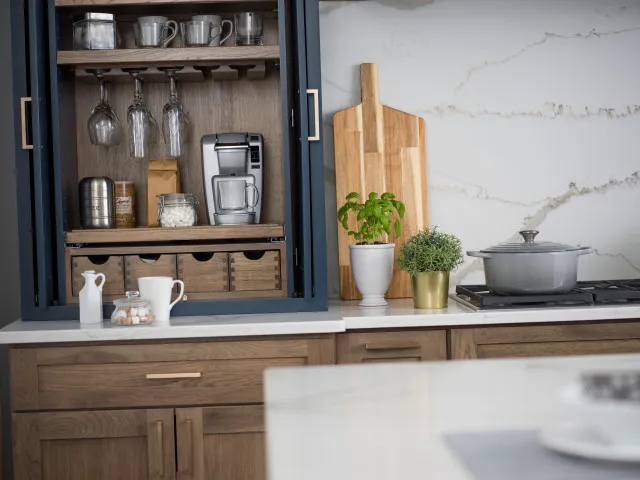
Opening the black cupboard doors reveals warm timber shelves, hanging glasses and a compact coffee station. The wood interior gives the dark cabinetry a softer layer, while small drawers keep supplies close to the equipment without covering the counter in containers.
Measure your coffee maker with its water tank and lid open before planning a cabinet around it. Follow the appliance's ventilation instructions, and leave space for filling, cleaning and setting down a mug so the station is comfortable to use each morning.
IDEA 15 / 17
Make one black island the main contrast
 SaveSupport Non AI Creator
Source: Urbanology Designs on Houzz.
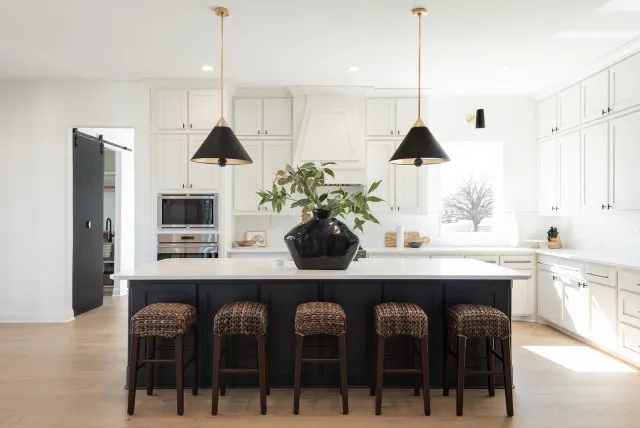
A black island anchors a kitchen with white perimeter cabinets and woven stools. The concentrated dark finish gives the room definition without covering every wall. Woven stools introduce texture against the island's plain dark front, while black pendants repeat its color at ceiling height. The surrounding white cupboards let these few dark elements supply definition without making the entire kitchen feel enclosed.
Try a single dark island if you want contrast with a lighter overall room, and repeat black in just a few nearby fixtures. Compare a full-sized black paint sample with your existing white doors, as warmer and cooler whites change its appearance. Choose stools that slide under the overhang, and check their footrests and seat height before buying a complete matching row.
IDEA 16 / 17
Place a tall black cupboard among timber cabinets
 SaveSupport Non AI Creator
Source: Allison Lind Interiors on Houzz.
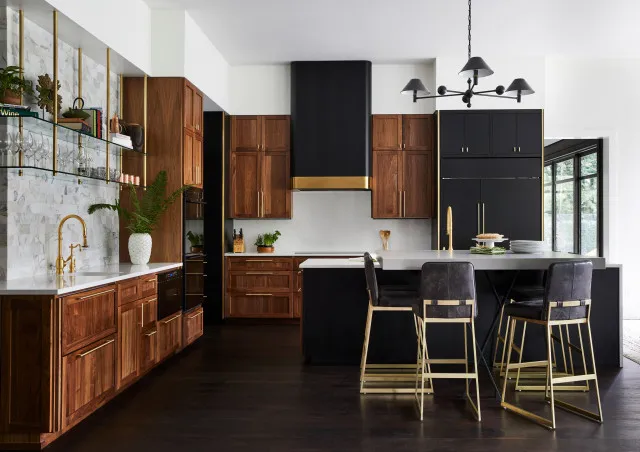
A tall black cabinet stands beside warm timber cupboards and a pale island. The dark vertical section creates a clear break in the wood grain. The tall dark cupboard echoes the hood and island, creating a repeated black outline between the wood cabinets. Brass-colored accents connect these darker sections, and the pale counter gives the island a lighter horizontal surface for preparation and seating.
Use the tall section for practical full-height storage, and check how its door swing affects the island seating and adjacent cabinet drawers. Decide whether the tall unit will hold pantry items or an appliance before choosing its internal fittings. Check shelves at your actual reach, and allow the cupboard doors to open fully without catching a stool or narrowing the main work route.
IDEA 17 / 17
Balance a dark cabinet with pale traditional trim
 SaveSupport Non AI Creator
Source: Haven Design and Construction on Houzz.
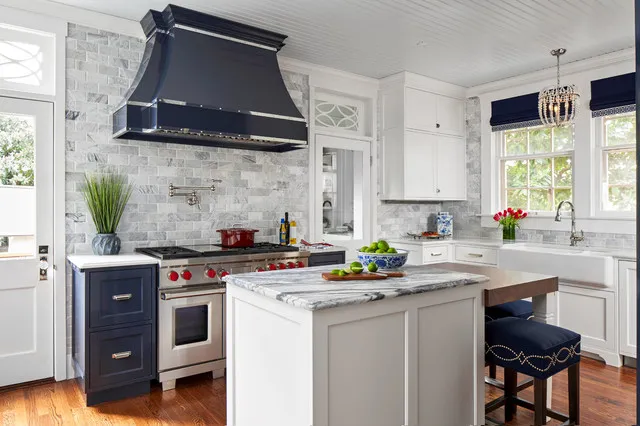
A dark lower cabinet sits beneath a matching substantial hood in a pale traditional kitchen. The lighter island and trim keep the pair from feeling heavy. The dark hood and lower cupboard create a concentrated contrast beside the range, while the pale island and white surrounding cabinets maintain a brighter background. Dark window shades and stools repeat the deeper color in smaller amounts around the room.
Let the hood and cabinet act as one focal area, and choose a quieter backsplash so the surrounding surfaces support their strong outline. Match the hood's size and installation to the cooking appliance rather than its decorative outline alone. Keep the nearby tile pattern quieter if you want the hood to stand out, and test the cabinet color under both daylight and evening kitchen lighting.
BRING IT ALL TOGETHER
Make it work in your home
Handle and clean a cabinet sample before committing to a dark finish. Its appearance under task lighting matters as much as its color in daylight.
Keep the darkest surfaces in balance with the room's light. Pale counters, warm timber or a lighter upper wall can give black cabinetry the breathing room it needs.