Black and timber work well together because each brings what the other lacks. Dark surfaces give a kitchen definition, while visible wood grain adds warmth and variation.
The balance does not have to be equal. These kitchens use black on islands, counters, shelving and cabinet runs, with timber appearing in floors, ceilings or furniture. Focus on the combination that works with your light and cooking routine.
PART 01
Color and contrast
IDEA 01 / 18
Connect a black island to timber architecture
 SaveSupport Non AI Creator
Source: At Home Design LLC on Houzz.
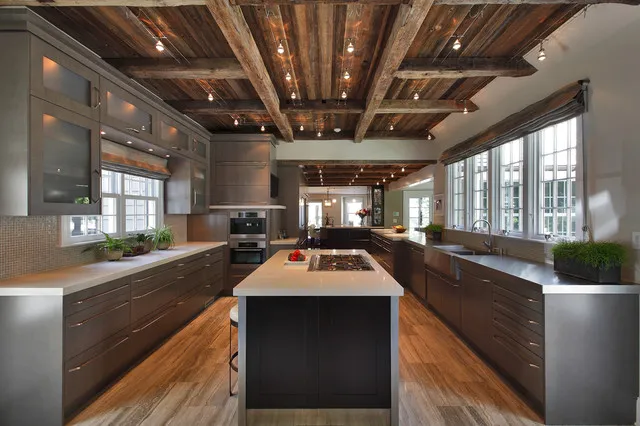
A black island stands between long gray cabinet runs beneath an exposed timber ceiling. The pale counters separate the darker lower furniture from the richly textured wood overhead, while windows along both sides bring daylight to the narrow preparation and cooking areas.
Keep the island top quieter than the ceiling so the strong timber grain remains the main pattern. Check the usable landing surfaces beside the cooktop before fixing its position. Plan counter lighting around the work areas as well as the beams, which can interrupt light from above.
IDEA 02 / 18
Warm a black island with curved timber stools
 SaveSupport Non AI Creator
Source: Studio McGee on Houzz.
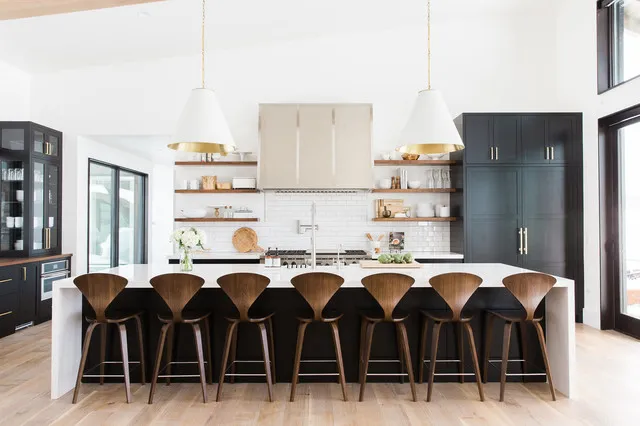
A long black island faces a row of curved timber stools in a bright kitchen. Their warm sculptural backs soften the dark cabinetry's straight lines. The pale worktop wraps the seating area, making the curved timber backs stand out against the black base. Timber shelves repeat their warmth without another substantial wooden cabinet wall.
Measure the stool width as well as its seat height, and allow elbow room so the curved backs do not crowd one another. Check that the stools tuck beneath the top without their backs catching the edge. Try the spacing with people seated, since seven attractive stools can still feel crowded during a meal.
IDEA 03 / 18
Pair charcoal cabinets with a timber island
 SaveSupport Non AI Creator
Source: Best Custom Homes, LLC on Houzz.
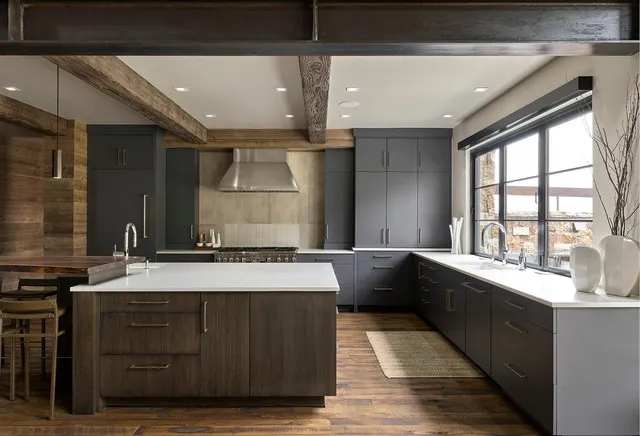
Charcoal perimeter cabinets wrap around a timber island beneath exposed beams. A pale countertop provides a light horizontal break between the darker materials. The timber island provides a warmer center than another run of charcoal doors would. Exposed beams and the floor repeat that grain, while pale surfaces keep the cooking area distinct.
Repeat the countertop material where it helps connect the cabinet runs, and compare the timber finish against the ceiling before choosing additional wood accents. Choose one timber finish to lead the room and compare the others against it. Keep the countertop sample beside the darkest cabinet door so its undertone works with both materials.
IDEA 04 / 18
Create a timber-lined coffee cupboard
 SaveSupport Non AI Creator
Source: Dura Supreme Cabinetry on Houzz.
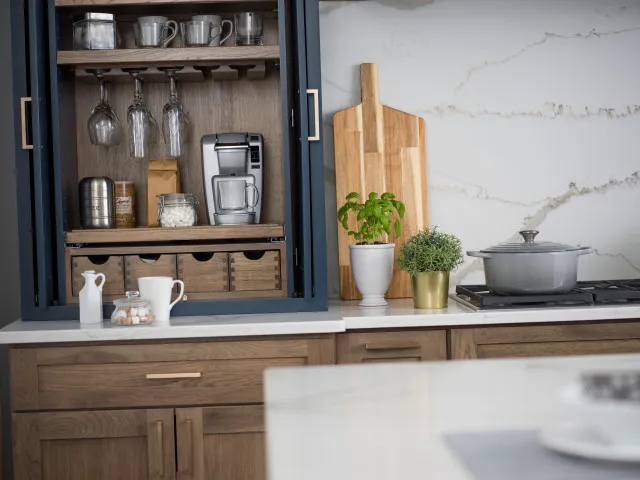
A timber-lined cupboard displays cups and coffee equipment beside darker cabinetry. The visible wood interior makes this practical station feel warmer than another solid black door. The wood interior shows only when the station is open, giving the dark cabinet front a warmer second layer. Drawers beneath it can keep smaller coffee supplies within the same area.
Plan outlets and appliance ventilation before enclosing a coffee area, and leave enough accessible counter space to prepare drinks without carrying everything elsewhere. Check the appliance instructions for clearances and steaming use before placing it inside a cupboard. Leave room to refill water and remove the jug without shifting every cup from the shelf.
IDEA 05 / 18
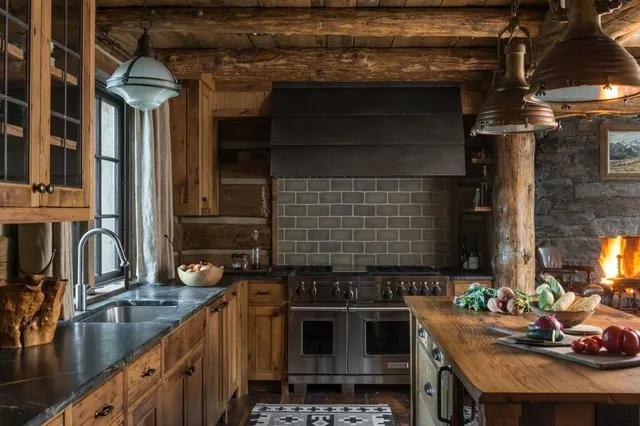
Use dark counters in a rustic timber kitchen
 SaveSupport Non AI Creator
Source: Yellowstone Traditions on Houzz.
Dark worktops and a substantial hood sit against timber cabinets and exposed logs. The black surfaces bring definition to an otherwise richly textured room. The deep worktops separate the sink and preparation areas from the log walls and warm timber doors. A simpler tiled cooking wall provides a practical break within the rustic textures.
Choose a backsplash that tolerates the cooking area's cleaning needs, and avoid adding delicate decorative timber directly beside a frequently used hob. Compare the worktop and backsplash beside the cabinet finish before choosing their darkest tones. Keep suitable surfaces around the range so ordinary splashes can be cleaned without repeatedly treating exposed decorative wood.
PART 02
Texture and materials
IDEA 06 / 18
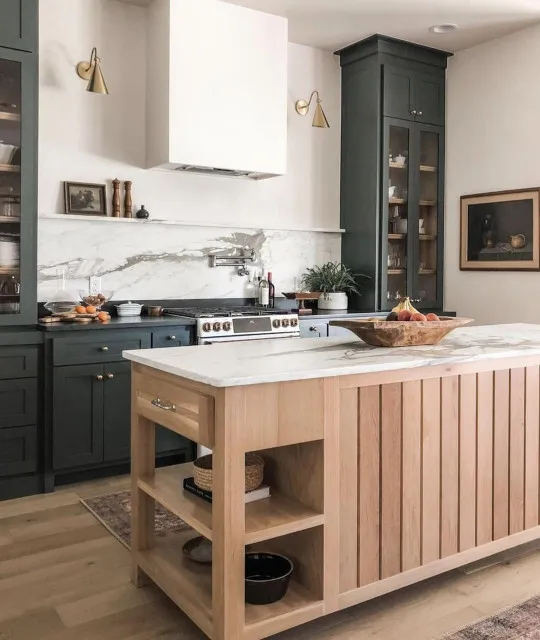
Let a pale timber island lighten dark cabinets
 SaveSupport Non AI Creator
Source: Everingham Design on Houzz.
A pale slatted timber island stands in front of tall charcoal cabinets. Its open side shelving introduces a smaller-scale detail against the broad dark doors. The pale island introduces a lighter grain than the tall dark cupboards, while the vertical front detail adds texture. A quiet pale hood creates another break above the cooking surface.
Keep open island shelves for items you actually reach for, and check that projecting handles and stored objects do not catch people walking past. Measure the open shelf height against your largest stored pot or basket before fitting it. Keep objects within the island outline so this useful end storage does not narrow the walking route.
IDEA 07 / 18
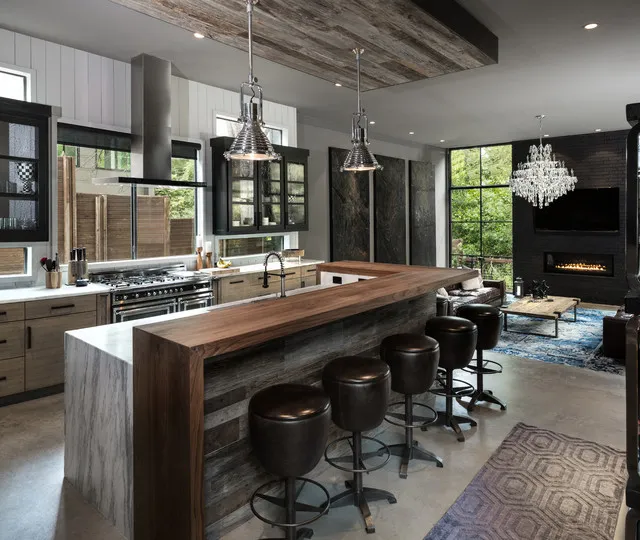
Pair a Timber Breakfast Bar With Black Stools
 SaveSupport Non AI Creator
Source: Rosewood Custom Builders on Houzz.
A broad timber breakfast bar faces a row of black stools, with a pale counter behind it serving the working side of the island. Dark-framed glass cupboards and window outlines repeat the stools’ color, while timber overhead ties the seating surface into the surrounding room.
Set the bar height and depth around the stools before choosing the final joinery. Keep the food-preparation surface separate enough that seated people do not occupy its working edge. Check the route behind the chairs and leave the bar free of permanent appliances if it also serves casual meals.
IDEA 08 / 18
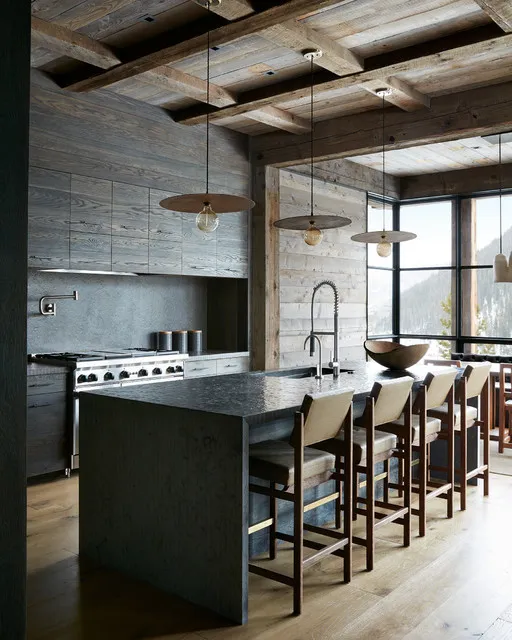
Balance a black island with open timber framing
 SaveSupport Non AI Creator
Source: Pearson Design Group on Houzz.
A solid black island anchors a kitchen beneath pale exposed timber beams. Light floors and broad windows keep the contrast clear without overwhelming the space. A deep island and dark worktop repeat the substantial tones of the cabinetry beneath the roof beams. Pale stool upholstery and a lighter floor introduce smaller breaks around the seating edge.
Leave the island's outer face simple if the architecture is already detailed, and use stools with a slender profile to preserve the open view. Choose stools by their full width, including the back and legs, rather than by seat diameter alone. Keep enough room behind them for someone to pass while the seats are occupied.
IDEA 09 / 18
Give a black island a warm seating edge
 SaveSupport Non AI Creator
Source: SuzAnn Kletzien Design on Houzz.
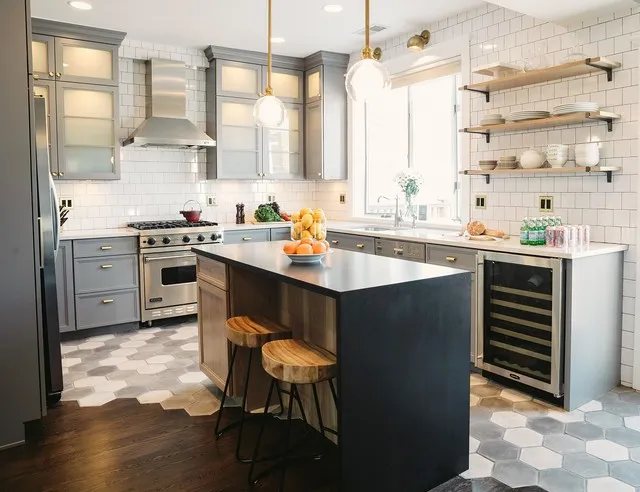
A black island includes timber seating details in a bright kitchen with pale cabinets. The wood adds warmth exactly where people sit and gather. Timber stool seats and inset island details give the compact black center a warm face. The neighboring gray cupboards and white tiles provide a quieter background for those different materials.
Check the countertop overhang against the stool depth, and make sure knees fit comfortably without relying on seats that project into the main walkway. Mark the overhang and stool positions before choosing the final island depth. Check the aisle with nearby beverage-storage doors open so the little seating area does not block routine kitchen access.
PART 03
Furniture and layout
IDEA 10 / 18
Mix dark base cabinets with characterful upper timber
 SaveSupport Non AI Creator
Source: Bailey General Contracting Co, Inc. on Houzz.
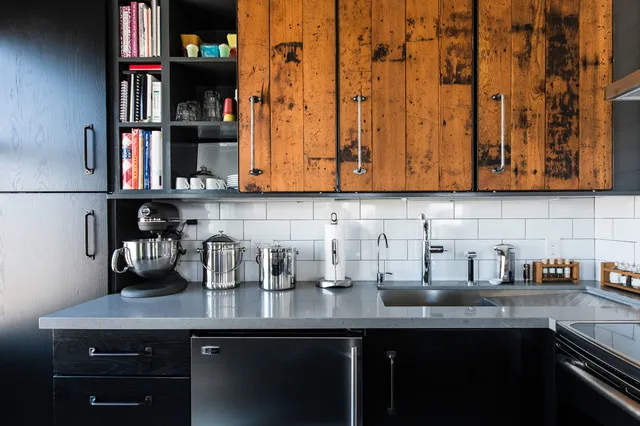
Dark base cabinets sit beneath strongly grained timber upper doors and open shelving. The distinct textures keep a compact cabinet wall from feeling uniform. Expressive orange-brown grain becomes the upper wall’s main decorative feature, while dark lower cabinets give it a quieter base. White tile separates the two materials around the working surface.
Use the most expressive wood in a limited area, and choose restrained handles so the grain remains the focal point of the upper cabinets. View several timber door samples to understand the range of marks and tones before ordering. Keep smaller shelf displays selective so the distinctive wood does not compete with numerous colored objects.
IDEA 11 / 18
Hide everyday waste behind a dark cabinet front
 SaveSupport Non AI Creator
Source: CDH Designs LLC on Houzz.
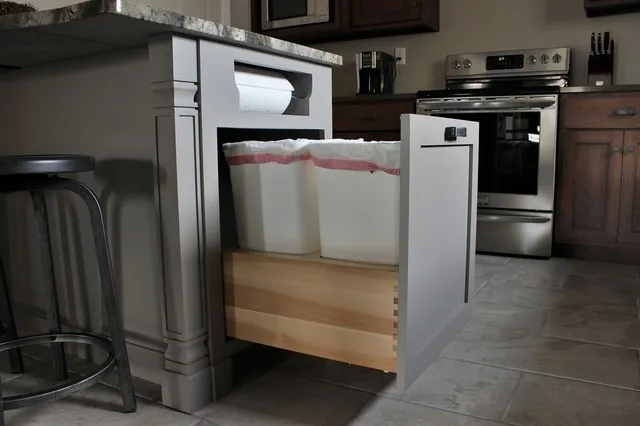
A dark pull-out cabinet reveals a timber drawer interior with space for a waste bin. The practical fitting keeps the kitchen's black exterior visually tidy. The pale timber drawer holds two lined bins beneath a built-in paper roll, placing several everyday tasks together. Its dark outer face keeps the contents hidden when the storage is closed.
Measure the bin opening before buying replacements, and position waste storage near preparation space while keeping the pull-out clear of another frequently opened door. Check both bin capacity and how easily each container lifts out for cleaning. Test the pull-out with neighboring drawers open and put it near preparation space without blocking the busiest aisle.
IDEA 12 / 18
Frame timber storage around a black island
 SaveSupport Non AI Creator
Source: Boxwood Avenue on Houzz.
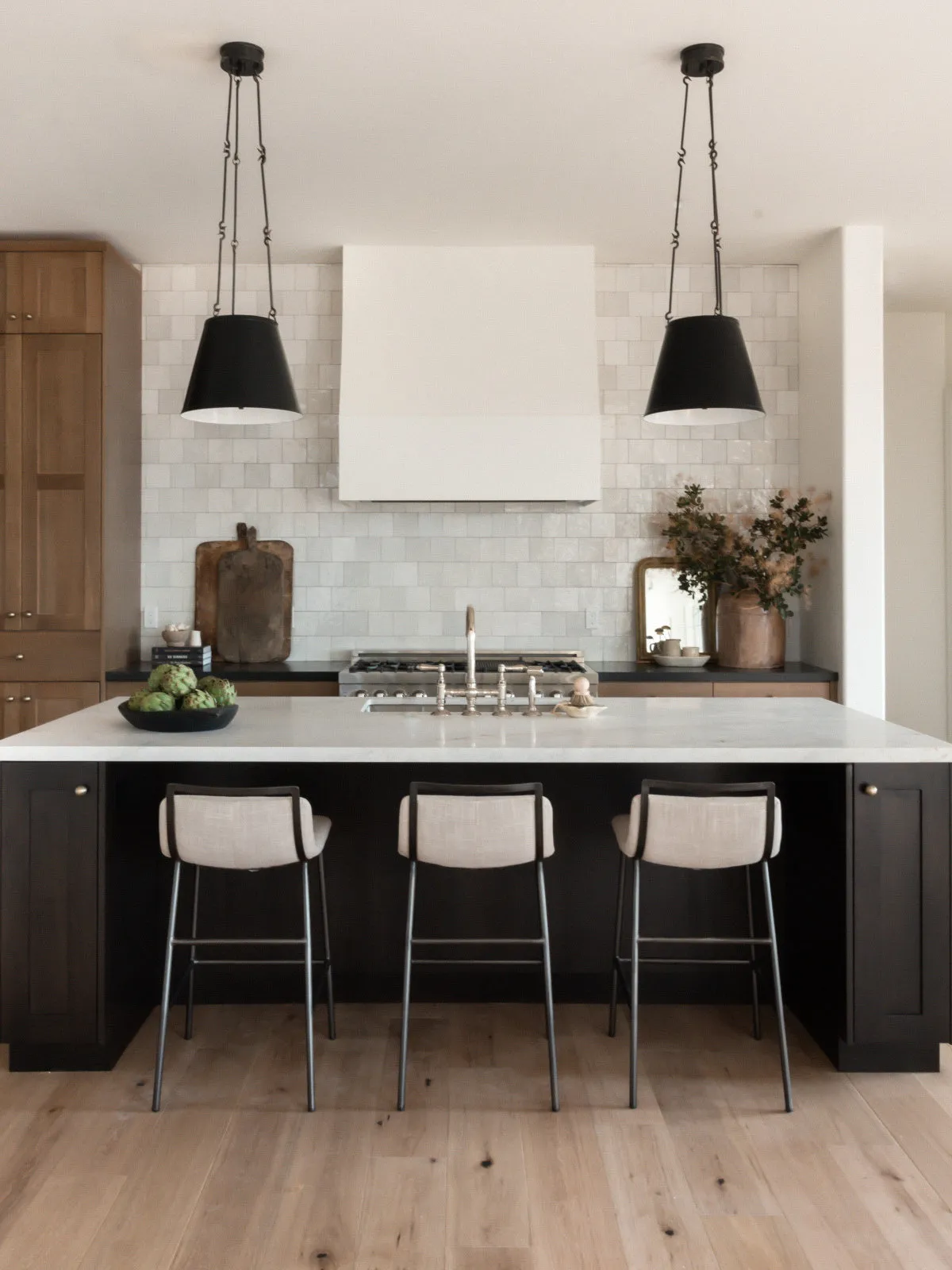
A black island stands between pale timber cabinets beneath simple dark pendants. The two finishes create a balanced kitchen without relying on elaborate trim. The pale top and hood create a bright middle layer between the timber perimeter and black island base. Dark pendants repeat the island color above the seating without an elaborate cabinet profile.
Match the pendant scale to the island rather than the whole room, and use additional task lighting wherever the suspended fixtures leave shaded counters. Choose pendant positions after marking the sink and preparation areas on the top. Test whether their light reaches the work surface, then add lighting beneath perimeter cupboards where necessary.
IDEA 13 / 18
Use a dark base run beneath a bright window
 SaveSupport Non AI Creator
Source: Halcyon Interiors Co. on Houzz.
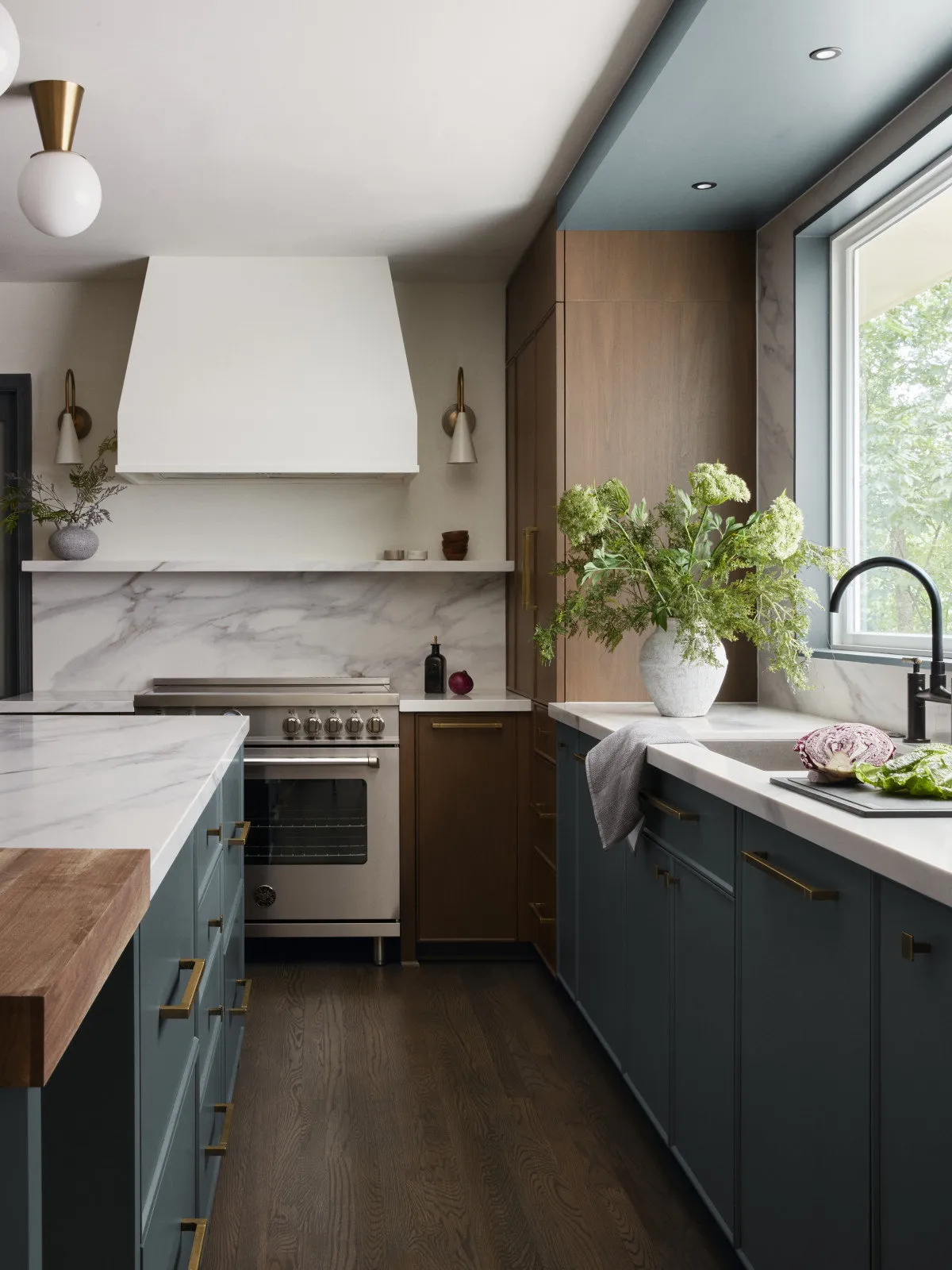
Dark lower cabinets face a wide window in a kitchen with timber upper storage. Pale counters connect the two sides and reflect useful daylight. The tall timber storage brings warmth to the deeper lower cabinet color, while the pale hood keeps the cooking wall light. Veined counters connect the island and window-side preparation run.
Keep window-side preparation space clear, and choose a durable finish around the sink where frequent splashes can mark dark cabinet fronts. Keep everyday appliances where they leave enough usable counter beside the sink. Check how the cabinet finish cleans after splashes, and avoid choosing a color solely from a bright showroom sample.
IDEA 14 / 18
Ground Warm Wood Cabinets With a Dark Floor
 SaveSupport Non AI Creator
Source: Walker Workshop on Houzz.
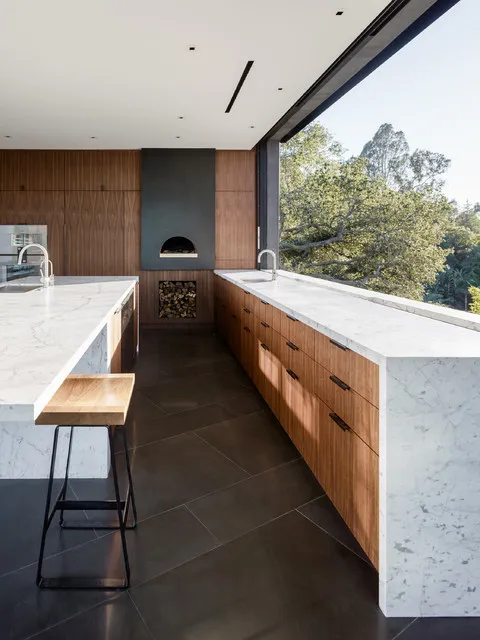
Warm timber drawers run beneath broad glazing beside a pale veined island and a dark tile floor. The deep cooking-wall feature and slim black handles repeat that contrast, giving the wood a defined setting without replacing every warm surface with another dark cabinet.
Compare a large floor sample with the timber and veined top before choosing their finishes. Keep drawer access clear when the island stools are occupied, and allow useful landing space beside the cooking area. A restrained handle shape lets the timber grain remain the main detail on the cabinet fronts.
PART 04
Finishing touches
IDEA 15 / 18
Anchor a timber kitchen with dark worktops
 SaveSupport Non AI Creator
Source: Stoddard Construction & Design Inc. on Houzz.
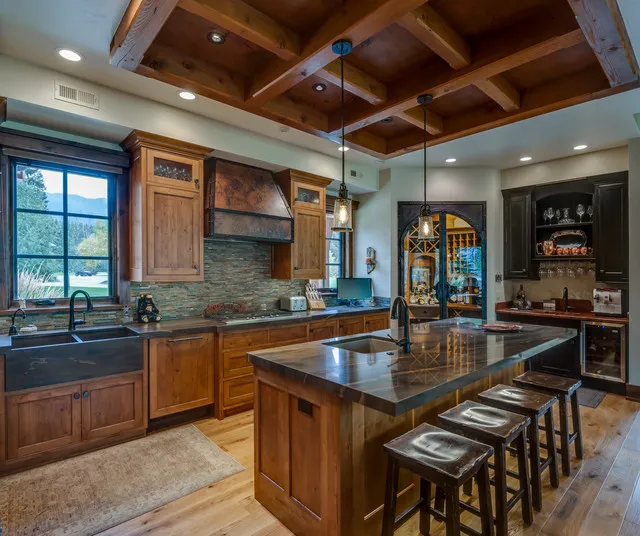
A timber island and cabinet wall sit beneath an exposed wood ceiling with dark countertops. The repeated black surfaces give the warm materials a clear outline. The dark island top repeats the perimeter counter, giving the richly grained doors a consistent edge. Timber overhead and a textured backsplash remain prominent because the worktops add no large contrasting motif.
Use a countertop sample large enough to compare with the wood grain, and inspect how crumbs and water marks appear under your usual kitchen lighting. Look at the counter near the window and in an evening-lit corner before choosing its sheen. Ask which cleaning products suit it, and compare that maintenance routine with how you use the kitchen.
IDEA 16 / 18
Give a wood breakfast bar a dark backdrop
 SaveSupport Non AI Creator
Source: Hammer Architects on Houzz.
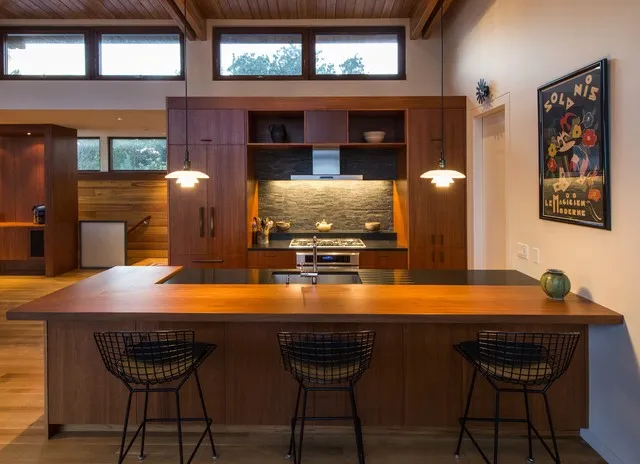
A long timber breakfast bar faces a wood cabinet wall with a darker backsplash. Black metal stools provide a light-looking contrast to the substantial joinery. The wire-backed stools leave more of the substantial breakfast bar visible than solid upholstered chairs would. Pale walls and the high windows interrupt the extensive timber cabinetry and ceiling.
Keep the breakfast bar's seating route independent of the busiest cooking path, especially where the same counter is used for homework or casual meals. Check the seat height against the finished bar, including space for knees beneath it. Leave a usable passage behind the stools when someone is seated so meals do not obstruct preparation.
IDEA 17 / 18
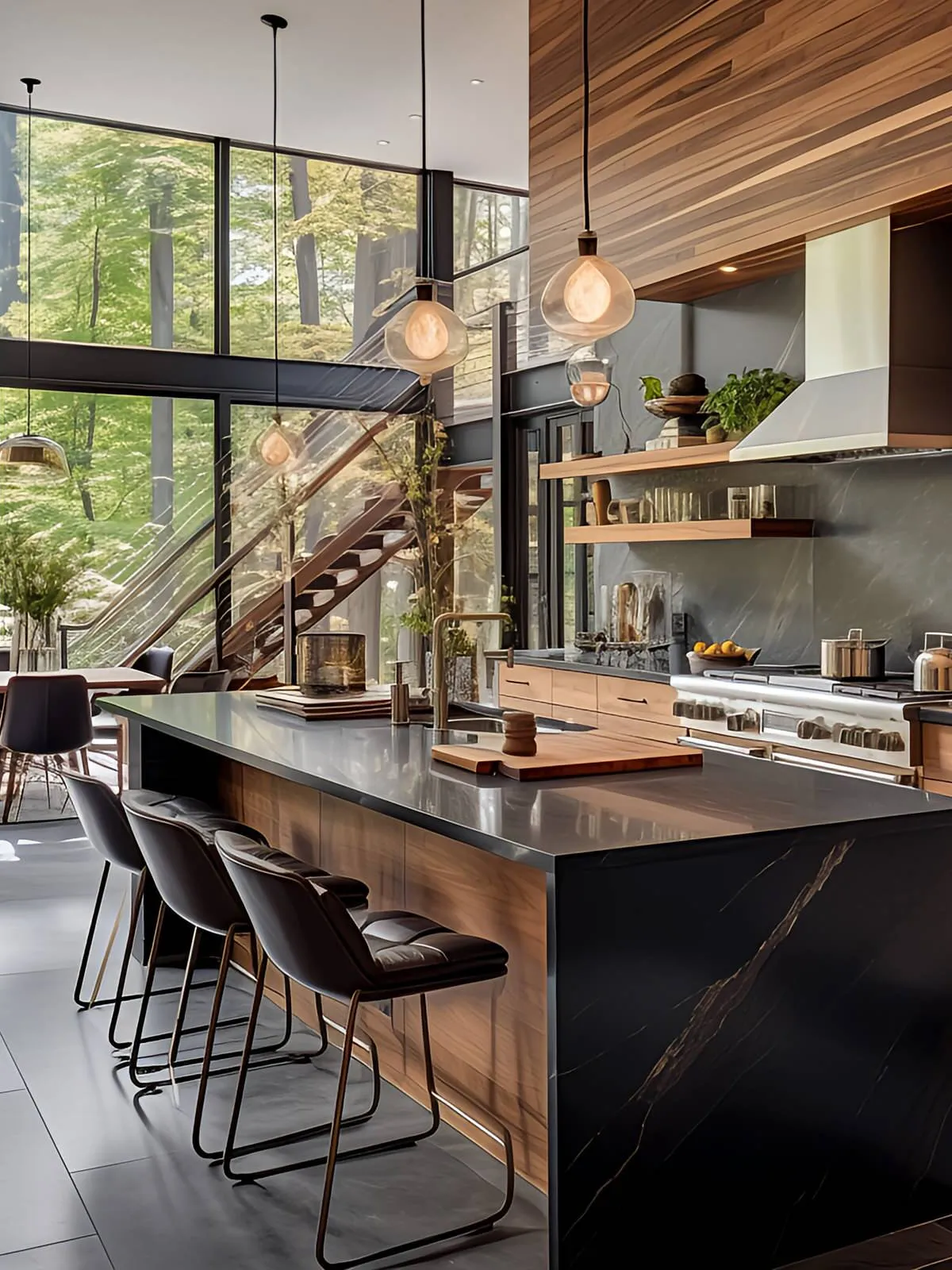
Pair Dark Worktops With High Timber Cladding
 SaveSupport Non AI Creator
Source: EK ARCHITECTURE, PLLC on Houzz.
A dark island worktop and veined side panel sit below high timber wall cladding beside large windows. Timber drawer fronts and open shelves repeat the warmer material lower down, while dark seating and window frames connect the stronger outlines through the tall room.
Keep the window-side counters free of tall appliances if preserving the view is a priority. Compare the dark side panel’s veining with the timber before choosing another patterned surface. Add lighting beneath shelves where needed so the preparation area stays usable when the large windows no longer provide daylight.
IDEA 18 / 18
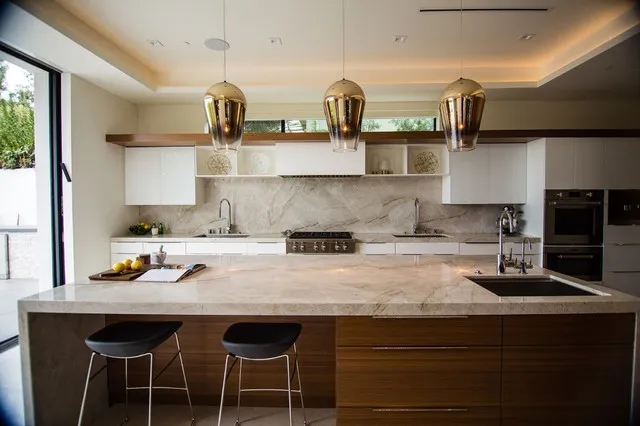
Define a Timber Island With Black Stools
 SaveSupport Non AI Creator
Source: Dauer Design on Houzz.
Two black stools give the timber island a distinct seating edge beneath its broad pale counter. White upper cupboards and a pale veined backsplash lighten the working wall, while a narrow wood band and reflective pendants connect to the warmer lower storage.
Choose stools that tuck beneath the overhang without crowding the island drawers or main aisle. Keep the pale worktop usable around the sink rather than filling it with permanent accessories. Compare pendant reflections and light quality at night before relying on the decorative fittings for preparation tasks.
BRING IT ALL TOGETHER
Make it work in your home
Choose the visible timber tone first, then test the black finish beside it. Brown-black, charcoal and cooler black paint can produce very different results with the same wood sample.
Keep daily cleaning and lighting in the plan. A beautiful dark cabinet still needs a practical handle, a durable finish and enough task light for preparing food.