Blue kitchen cabinets can feel gentle or dramatic depending on their depth and the surfaces around them. A pale blue base run behaves very differently from a tall navy cupboard, even beside the same white counter.
These kitchens show ways to use blue selectively, pair it with warm wood and make the darker shades easier to live with. Test the color beside your floor and backsplash before deciding how much cabinetry to paint.
PART 01
Color and contrast
IDEA 01 / 20
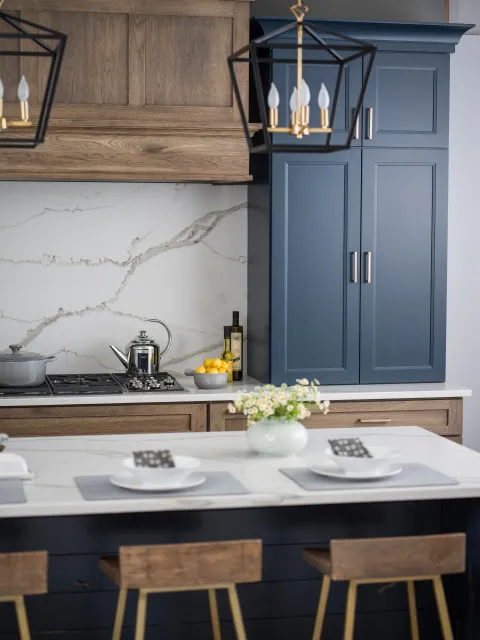
Pair blue cupboards with warm timber
 SaveSupport Non AI Creator
Source: Dura Supreme Cabinetry on Houzz.
Blue tall cupboards stand beside timber cabinetry and pale stone-patterned surfaces. The wood grain softens the cool paint without obscuring its color. The tall blue doors provide a smooth contrast to the timber hood and lower cabinets. Pale veined surfaces link the two finishes, while silver-toned handles stay quiet enough that the cabinet color and wood grain remain the main features.
Compare the blue sample directly against your chosen timber, and keep hardware finishes consistent so the mixed cabinet wall feels connected. Look at the blue against the hood timber as well as the floor before choosing a stain. Keep a pale countertop sample between them to judge the whole combination, and check that handles are comfortable on the tallest, heaviest cupboard doors.
IDEA 02 / 20
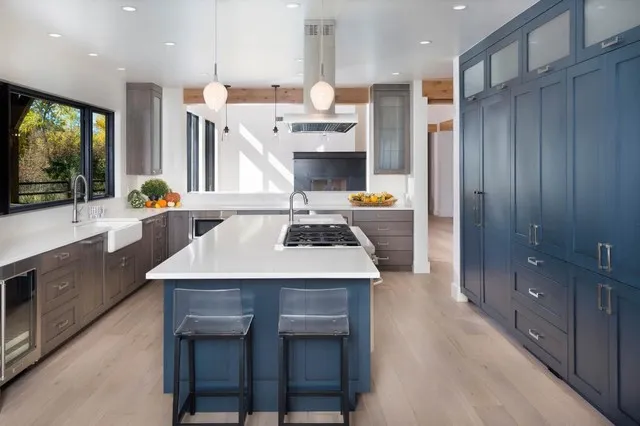
Give tall blue storage a clear role
 SaveSupport Non AI Creator
Source: KM Design on Houzz.
A full-height blue cabinet wall stands beside a blue island in a bright kitchen. Its continuous color gives the storage a clear architectural presence. A long blue cabinet wall gathers the tall storage on one side, with blue repeated on the island. Gray-brown perimeter cabinets and pale counters balance those larger colored surfaces, while the clear-backed stools keep the island end visually light.
Group tall storage where it leaves the main preparation area open, and check door swings against island seating before finalizing the layout. Plan the contents of tall cupboards before choosing their internal shelves or pullouts. Check access with an island stool occupied, and make sure the cooktop's position leaves usable landing space rather than letting the storage wall dictate every other part of the kitchen.
IDEA 03 / 20
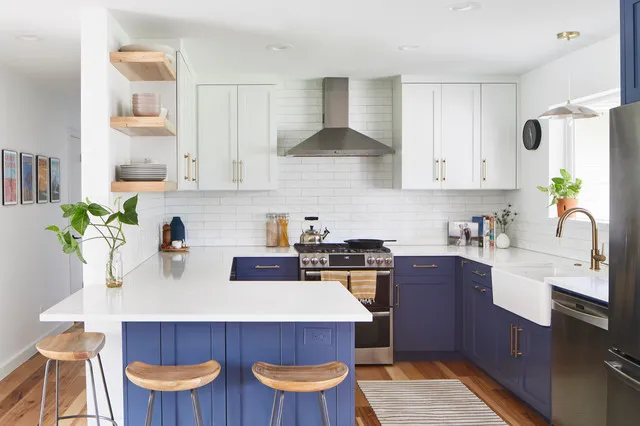
Use blue below white upper cabinets
 SaveSupport Non AI Creator
Source: Jameson Design Group on Houzz.
Blue lower cabinets and a small island sit beneath white uppers and a simple hood. The lighter upper surfaces keep the kitchen bright. Blue is concentrated below counter height, with white cabinets and a simple metal hood above the cooking area. Pale counters join the island to the perimeter, and small timber stools add warmth without covering the lower cabinet color.
Use the same door proportions across both colors, and choose a counter that gives the blue bases a clean, continuous upper edge. Compare the white cabinet sample with the counter and wall tile so their undertones work together. Measure stool spacing along the short island face, and keep the preparation surface clear enough that the small kitchen remains useful when the seating is occupied.
IDEA 04 / 20
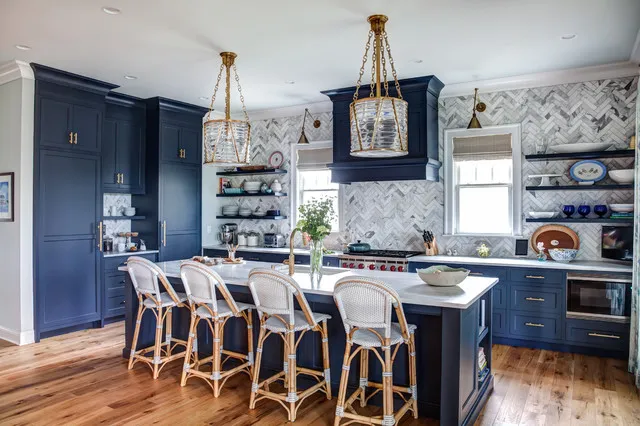
Layer navy cabinets with woven stools
 SaveSupport Non AI Creator
Source: Kountry Kraft on Houzz.
Navy cabinetry continues across the island and perimeter, with pale counters separating it from the woven-backed stools. Warm metal pendants and timber floors soften the deep blue, while open shelves and a patterned backsplash add detail around the cooking area.
Compare the stool weave with the floor before buying a full row, and leave enough space between backs for people to sit comfortably. If the backsplash is patterned, choose cabinet hardware with a simple outline so the tile, pendants and woven seating do not all compete for attention.
IDEA 05 / 20
Brighten deep blue cabinetry with pale worktops
 SaveSupport Non AI Creator
Source: Granite State Cabinetry on Houzz.
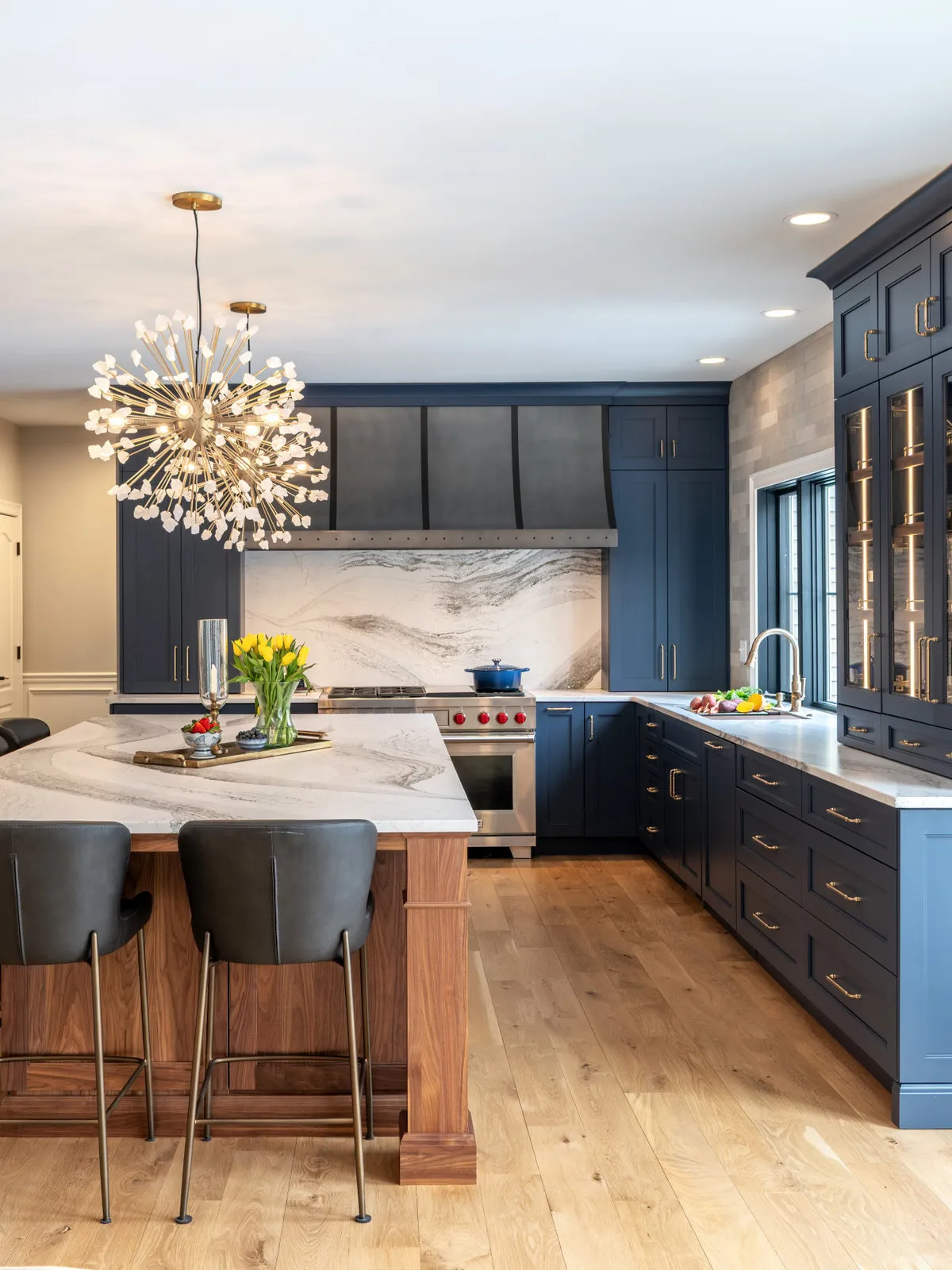
Deep blue cabinet runs frame this kitchen, while a pale countertop lifts the warmer timber island in the center. The light surface repeats the backsplash behind the range, giving the dark cupboards a clear boundary without requiring a white island base.
Compare the counter's veining with the backsplash before choosing both large surfaces. Keep the island's busiest preparation area free of tall arrangements, and add lighting where the upper cupboards shade the perimeter counters so the decorative pendant does not have to illuminate every task.
PART 02
Texture and materials
IDEA 06 / 20
Keep blue galley storage bright and accessible
 SaveSupport Non AI Creator
Source: O’Hara Interiors on Houzz.
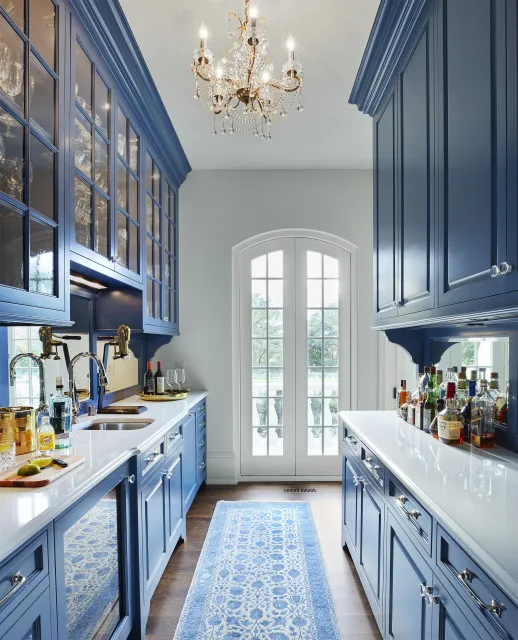
Blue cabinets run along both sides of a narrow kitchen beneath a chandelier. Tall glazing and a pale counter keep the corridor-like room lighter. Glazed upper cupboards lighten one side of the narrow space, while pale counters create a continuous line toward the door. The blue runner repeats the cabinetry at floor level, and the chandelier adds detail above a mainly practical storage arrangement.
Keep the aisle free of projecting accessories and check opposing doors together, especially where a dishwasher and cabinet drawer face each other. Check that cupboards can open without colliding across the aisle, and keep bottles or serving pieces back from the counter edge. Choose a runner that stays secure underfoot and does not catch the door or make the narrow route harder to clean.
IDEA 07 / 20
Give a blue island warm brass details
 SaveSupport Non AI Creator
Source: Houzz project gallery on Houzz.
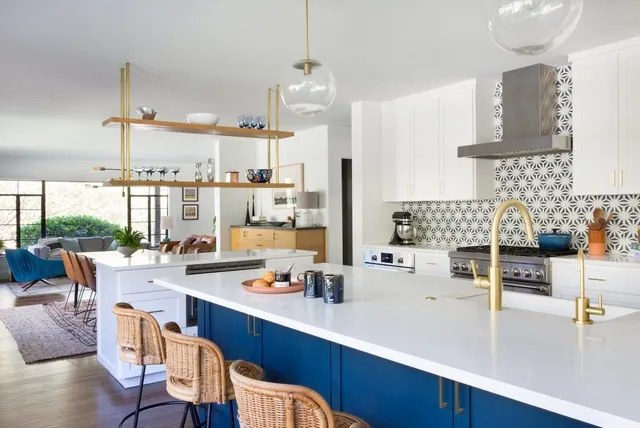
A bright blue island carries a pale counter and warm brass faucet beside woven seating. Its strong color becomes the room's main accent. The bright blue island stands out beneath a pale counter, while brass-colored faucets and shelf supports repeat a warm metallic accent. Woven stools soften the seating edge, and white rear cabinets leave the stronger color concentrated in the center of the room.
Repeat brass in a small number of useful fittings, and test the blue beside both daylight and warm lamps before painting a large island. Match the faucet finish to a real sample of the cabinet hardware rather than relying on online photographs. Check the sink position leaves room for serving at the stools, and compare the blue under the lighting you use during breakfast and evening meals.
IDEA 08 / 20
Connect blue cabinets to open island shelves
 SaveSupport Non AI Creator
Source: Studio Dearborn on Houzz.
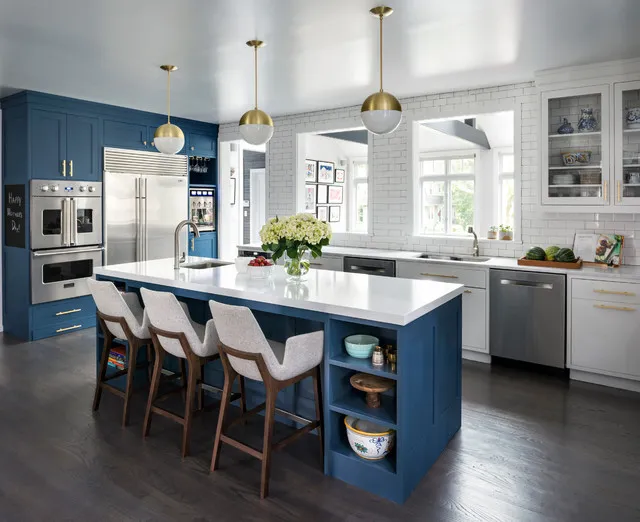
Blue cabinets and island shelving sit beside pale counters in a bright kitchen. The open end makes the island feel less like a solid block. The island end has small open shelves for bowls and serving pieces, showing the blue finish from another angle. A tall blue cabinet wall repeats the color behind it, while pale upholstered stool backs and white counters keep the center brighter.
Use the exposed shelf for regularly handled pieces and keep its edges clear, particularly where people walk past while carrying food or hot drinks. Measure the bowls or platters you intend to store before fixing the shelf depths. Keep heavy pieces low and avoid anything projecting into the walkway, then check that the outer stool does not block access to the shelves when someone sits there.
IDEA 09 / 20
Mix blue cabinets with a restrained runner
 SaveSupport Non AI Creator
Source: Studio Dearborn on Houzz.
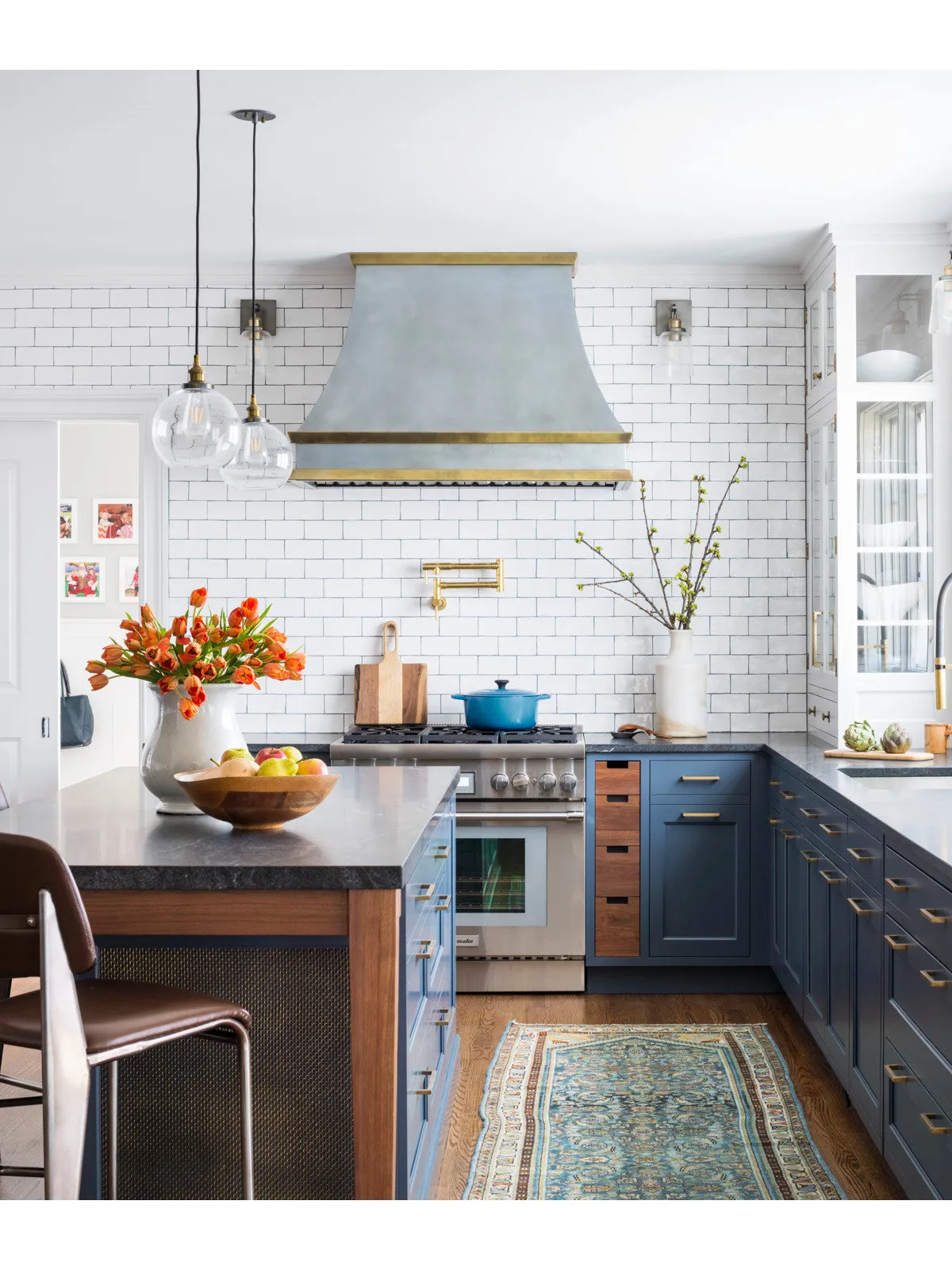
Blue cabinetry sits beneath a pale hood and tile wall beside a narrow patterned runner. The textile adds warmth to the room's crisp surfaces. The narrow runner introduces a softer blue-green pattern below the plain cabinet fronts. Brass-colored pulls and a warm wood detail beside the range add smaller highlights, while the white tile wall gives the deeper lower cupboards a brighter upper background.
Choose a low-profile, secure runner suitable for kitchen use, and leave cabinet toes and appliance doors unobstructed when placing it along the work area. Try the runner in place with the range and dishwasher doors open before deciding its length. Choose a backing suitable for your floor, and follow the care instructions so a decorative textile does not become difficult to clean in the busiest cooking route.
IDEA 10 / 20
Balance navy bases with a timber ceiling beam
 SaveSupport Non AI Creator
Source: Vine Street Design on Houzz.
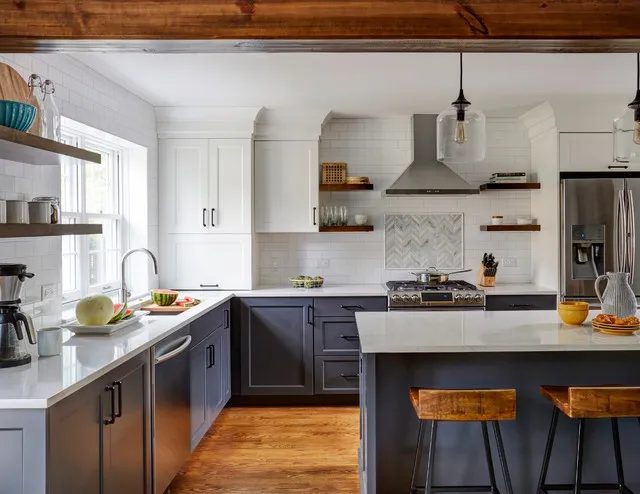
Dark blue lower cabinets sit below white uppers and an exposed timber beam. The natural wood provides warmth above the room's cool painted surfaces. The exposed beam repeats the warmth of the floor and stool seats, balancing the dark blue lower cupboards. White uppers and pale counters keep the upper room lighter, while small timber shelves add a gentler echo of the large overhead wood feature.
Limit additional timber finishes if the ceiling already has character, and keep the backsplash relatively quiet so the material balance remains easy to read. Avoid adding several new wood stains when the beam and floor already provide strong grain. Compare the blue against both existing timber surfaces, and check shelf positions do not reduce the useful counter space beside the range or sink.
PART 03
Furniture and layout
IDEA 11 / 20
Try a softer blue in an open kitchen
 SaveSupport Non AI Creator
Source: Homes By Dickerson on Houzz.
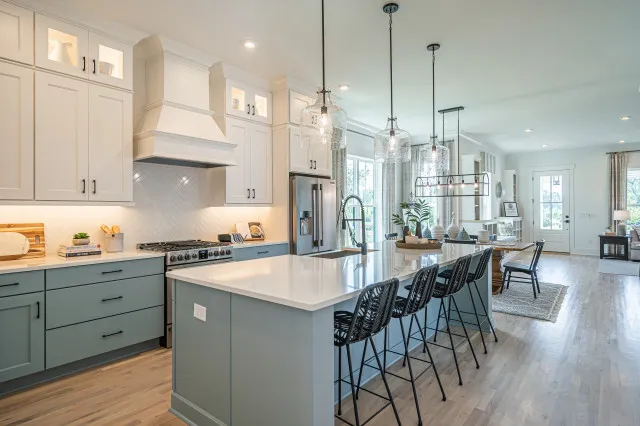
Pale blue lower cabinets and an island sit beneath white cabinetry beside an open dining area. The gentler shade adds color without a sharp visual boundary. The muted blue-gray bases extend toward the dining area without forming a sharp contrast against the white upper cabinets. A long pale island counter joins the two zones, while dark woven stools give the gentler cabinet color a clearer outline.
View the sample from the adjoining room as well as close up, and make sure its undertone works with nearby upholstery and dining furniture. Check the cabinet sample from the dining table as well as the cooking area. Include nearby curtains and upholstery in the comparison, and plan stool spacing so people can move between the dining furniture and kitchen while the island is in use.
IDEA 12 / 20
Give a compact blue kitchen open shelving
 SaveSupport Non AI Creator
Source: dezign interiors, llc on Houzz.
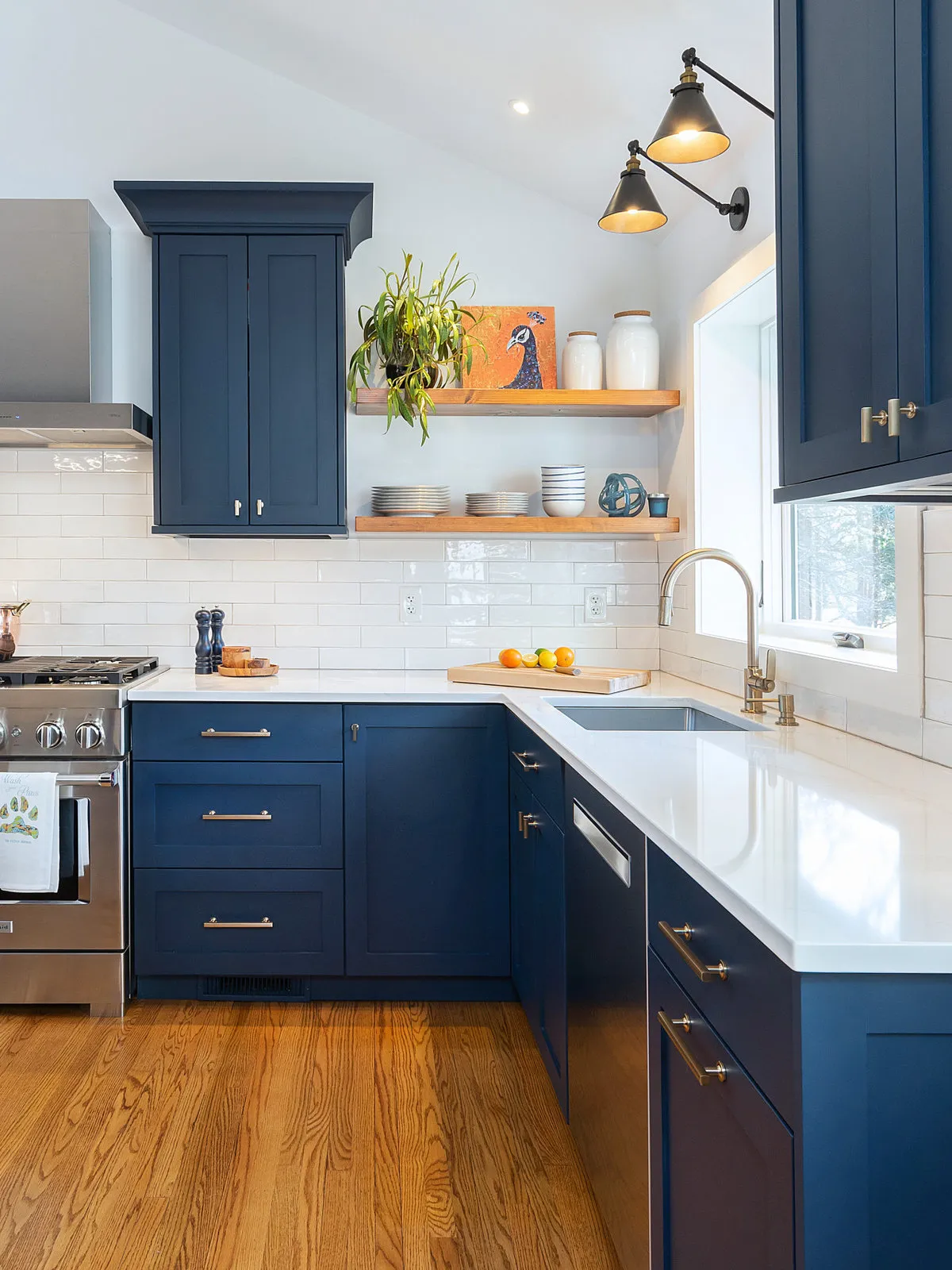
Blue base cabinets sit below small timber shelves against pale walls. The open gap breaks up the painted cupboards and provides a warmer detail. The timber shelves sit between blue upper cupboards, creating a warmer gap instead of a continuous cabinet wall. White tile and counters keep the small work area bright, while brass-colored handles and wall lights add modest warmth around the deeper paint.
Reserve open shelving for a manageable collection of daily crockery, and use enclosed cabinets for items that would otherwise make the small kitchen feel busy. Measure the dishes you use most often to set practical shelf heights. Keep the lower shelf reachable without leaning over the sink, and reserve closed storage for appliances or packages that would make the limited open display feel crowded.
IDEA 13 / 20
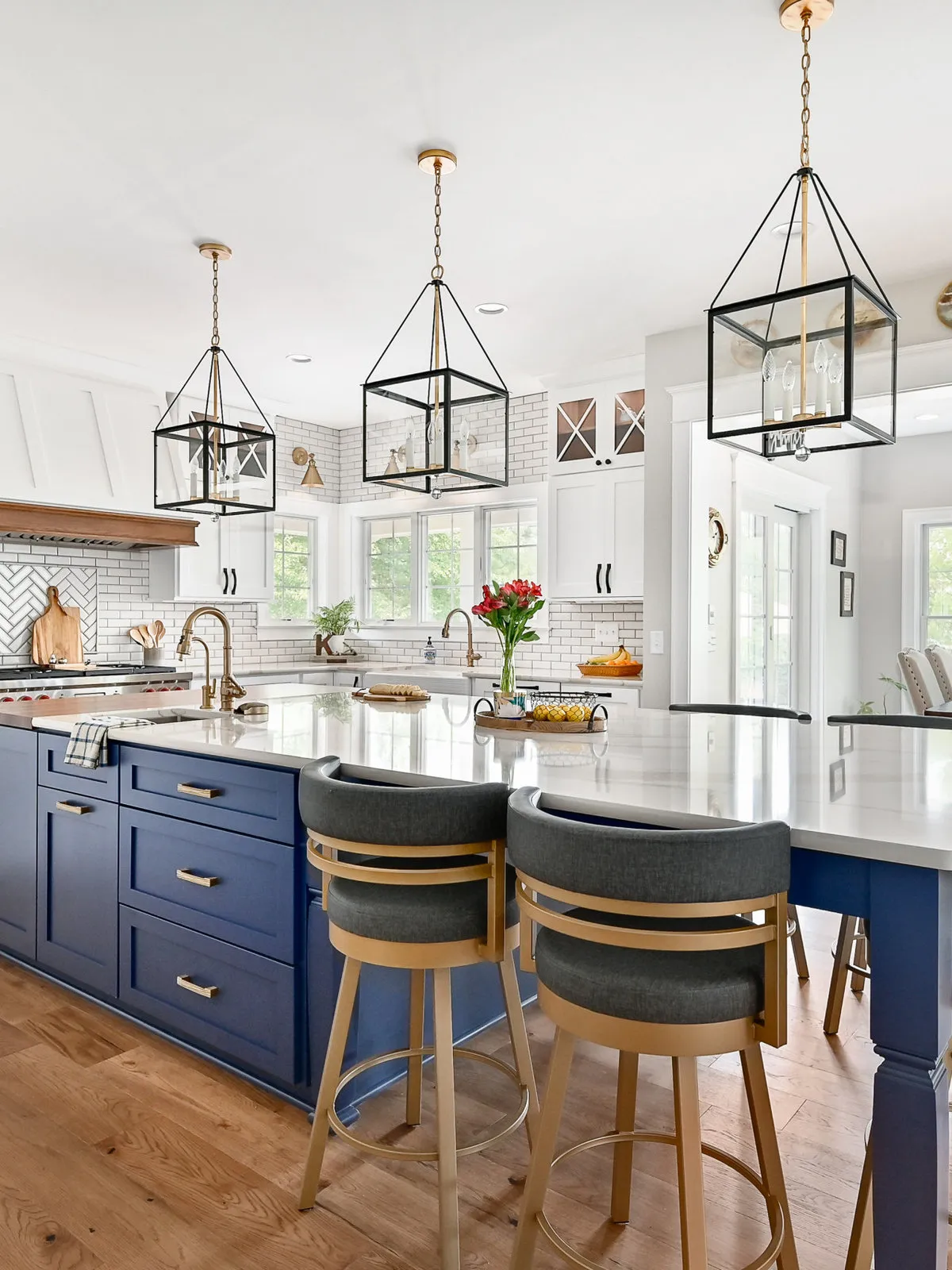
Use navy on a generous island
 SaveSupport Non AI Creator
Source: Kowalske Kitchen & Bath on Houzz.
A navy island stands beneath open metal pendants with dark upholstered stools. The strong cabinet color gives the seating and preparation area a clear anchor. The navy island has a pale counter and broad drawers, giving the central work area color without darkening the surrounding white cabinets. Open lantern pendants and metal-framed stools repeat warm accents while allowing views through their lighter outlines.
Check the island's storage access with stools in place, and avoid choosing an overhang so deep that it leaves awkwardly shallow cupboards beneath. Decide which island drawers need to hold cookware before specifying their widths and fittings. Check they can open when people are seated, and test the counter overhang with the chosen stools so comfortable legroom does not come at the expense of useful storage.
IDEA 14 / 20
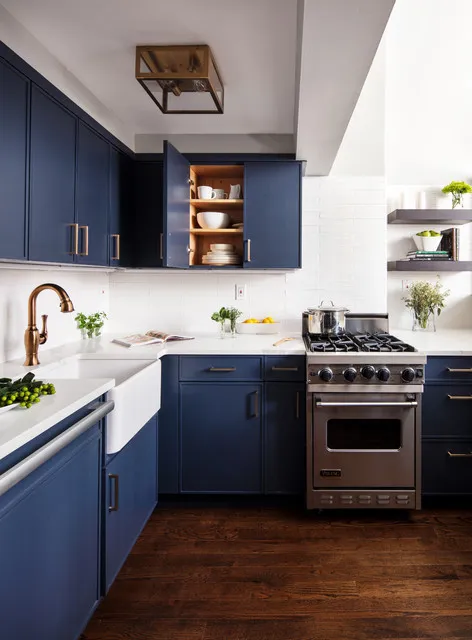
Make a small navy kitchen brighter at counter height
 SaveSupport Non AI Creator
Source: Palette Pro Painting & Renovation on Houzz.
Navy cabinets wrap a compact kitchen below pale counters and a small timber-lined display niche. The bright horizontal surfaces keep the work area readable. The pale counter wraps the compact work area, separating the navy bases from the matching upper cabinets. An open timber-lined cupboard reveals warm shelving and white dishes, giving the dark wall a useful lighter break without a large display arrangement.
Provide task lighting over the longest preparation run, and keep the display niche limited to a few pieces rather than another crowded storage area. Keep the main counter lighting separate from any light inside the display cupboard. Plan where dishes and frequently used utensils will go before installing shelves, and leave a clear landing area beside the range so the compact layout supports everyday cooking.
IDEA 15 / 20
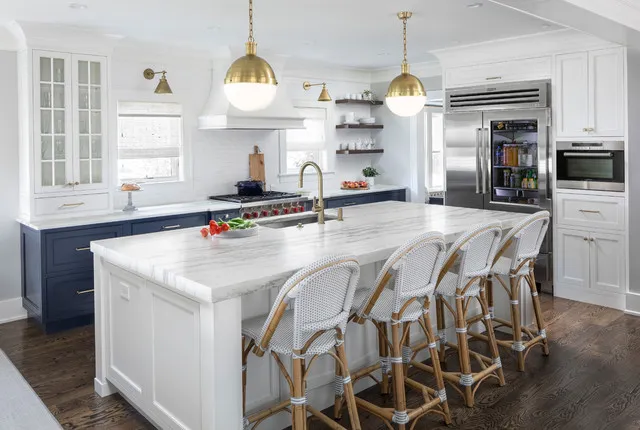
Let blue bases support a pale gathering island
 SaveSupport Non AI Creator
Source: EuroCraft Interiors Custom Cabinetry on Houzz.
Blue lower cabinets surround a pale island with woven chairs and brass-toned pendants. The mixed finishes keep this generous kitchen from feeling uniform. Blue remains on the lower perimeter cupboards while the island is pale from its top to its paneled base. Woven-backed stools and brass-colored pendants bring warmth to the center, keeping the large white surfaces from feeling disconnected from the darker cooking run.
Choose seating that suits the countertop height and your household's daily use, then leave a clear route from the island to the cooking area. Test the stool seats and footrests before ordering several for a daily eating space. Check refrigerator and oven access with someone seated at the island, and leave the corner nearest the cooking area clear enough for carrying pans or dishes comfortably.
PART 04
Finishing touches
IDEA 16 / 20
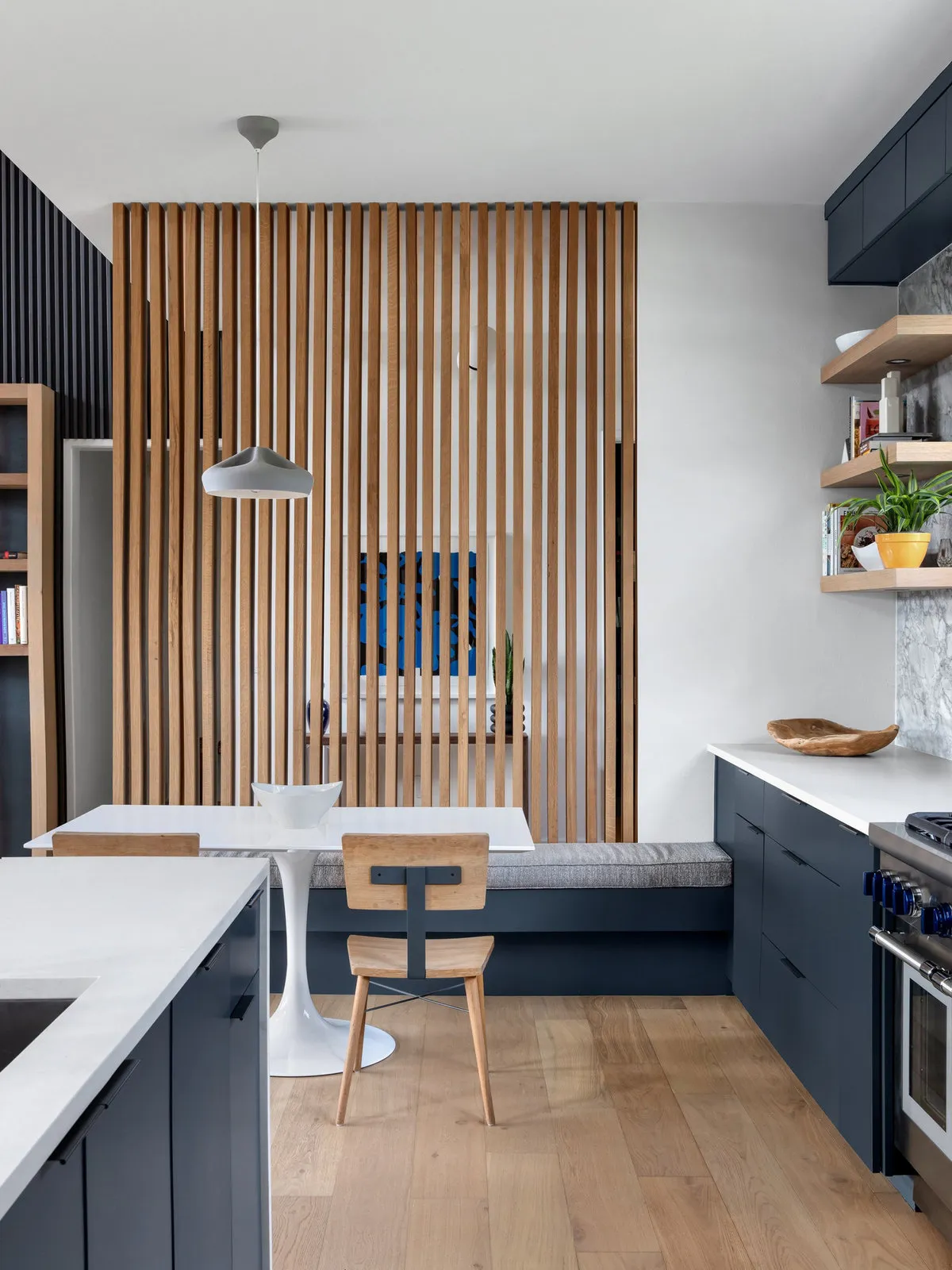
Pair blue cupboards with a timber slat divider
 SaveSupport Non AI Creator
Source: Mosier Luxury Homes on Houzz.
The timber slat divider gives the dining nook a warm backdrop beside the blue cupboards. Gaps between its narrow vertical pieces let the adjoining space remain partly visible, while pale counters and walls keep the compact kitchen from feeling enclosed by another solid partition.
Plan how you will clean between the slats before choosing this detail, and keep the seating arrangement easy to access from the kitchen. Compare the timber finish with the dining chair and floor so the divider adds texture without introducing an unrelated wood tone.
IDEA 17 / 20
Break up navy uppers with timber display niches
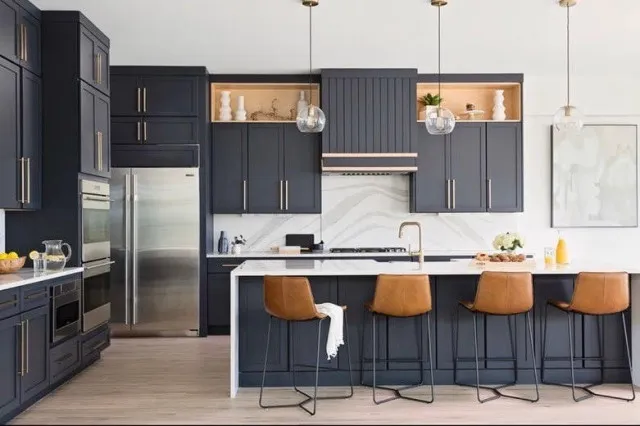 SaveSupport Non AI Creator
Source: Save home on Houzz.
Navy upper cabinets include timber-lined display sections above a pale counter and matching island. The warmer openings keep the tall cabinet wall from looking flat. Warm timber interiors appear inside two open niches above the navy doors, breaking up the dark upper run. Tan stools repeat their warmth below the island counter, while pale surfaces and a few simple pendants keep the cabinet wall's outline clear.
Use consistent shelf heights for a calm composition, and store bulky everyday equipment behind closed doors so the smaller niches remain easy to maintain. Choose display pieces that leave space around the niche edges rather than filling every opening. Check the shelves can be reached for cleaning, and keep daily appliances behind closed doors if their cords or packaging would compete with the calmer upper display.
IDEA 18 / 20
Combine deep blue with traditional island seating
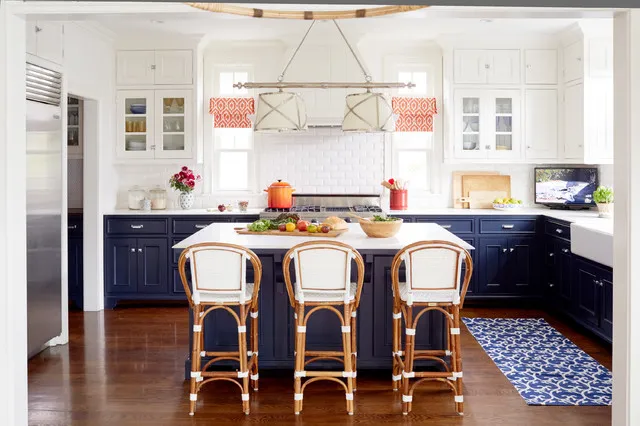 SaveSupport Non AI Creator
Source: Alison Kandler Interior Design on Houzz.
Deep blue cabinets frame a pale island beneath warm decorative lighting and cane-backed stools. The lighter woven backs soften the dark room's perimeter. The light stool backs sit against a dark blue island, repeating the white upper cabinets without matching their finish. Warm timber floors and coral window treatments add color around the navy bases, while the pale counter gives the seating edge a bright boundary.
Choose stools with practical footrests and durable seat covers, and leave enough spacing that people can sit comfortably without touching neighboring chair backs. Compare the woven backs and seat fabric with the floor before choosing the stools. Check the footrests suit the people who use the kitchen, and leave room between seats so the curved frames do not catch one another when someone turns to stand up.
IDEA 19 / 20
Add silver-toned handles to blue drawers
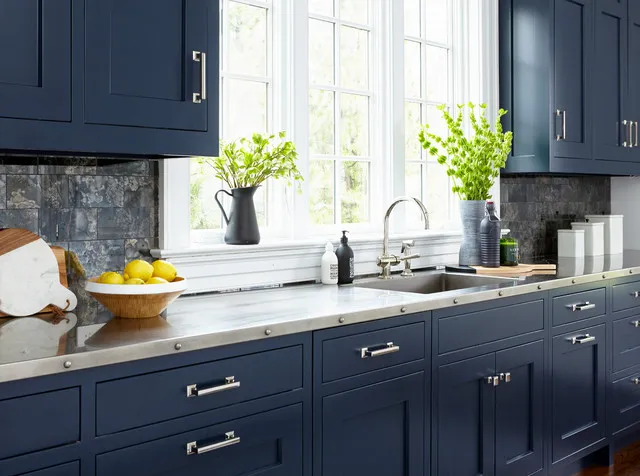 SaveSupport Non AI Creator
Source: DEANE Inc | Distinctive Design & Cabinetry on Houzz.
Blue drawers with silver-toned handles sit beneath a pale counter beside bright windows. The crisp hardware gives the cool cabinetry a clear, practical outline. Silver-toned handles repeat the sink fittings and counter edge, giving the blue doors a crisp finish. The broad window supplies a brighter center between the upper cupboards, while the darker backsplash keeps the surrounding surface restrained rather than introducing a new pattern.
Test the handle grip before ordering a full set, and use suitable pull lengths on wider drawers that will carry heavier cookware. Hold a handle sample against the blue door to judge both its finish and comfortable grip. Check the screw spacing before replacing existing pulls, and compare long drawer handles with smaller door hardware so the full run looks balanced and remains practical.
IDEA 20 / 20
Keep a blue island simple beneath dark pendants
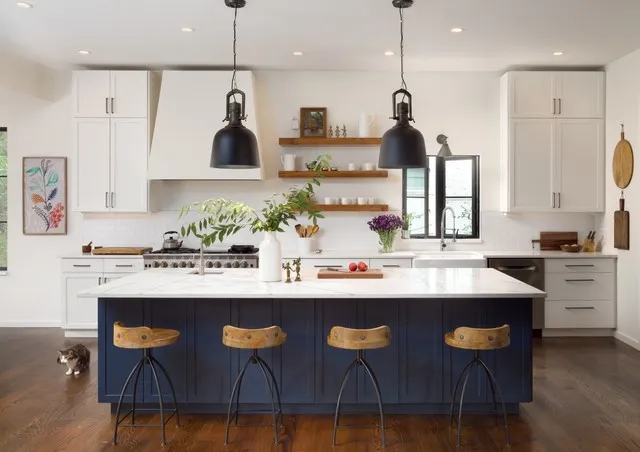 SaveSupport Non AI Creator
Source: Liz Mearns | Imagine Design on Houzz.
A blue island stands below black pendants in a pale kitchen with timber shelves. The limited color palette gives the room an uncluttered character. Dark pendants echo the island's deeper blue without copying it exactly, while pale perimeter cabinets keep the room bright. Small timber shelves and warm stool seats introduce wood at different heights, giving the simple painted cabinetry a softer everyday setting.
Repeat blue selectively rather than on every accessory, and use the open shelves for a few familiar pieces that add warmth to the painted cabinetry. Choose shelf contents that you use or enjoy rather than filling the whole wall with accessories. Check pendant placement against the island's working and seating areas, and leave the counter edges clear enough that the blue base remains visible and the kitchen stays useful.
BRING IT ALL TOGETHER
Make it work in your home
A blue sample needs to be seen upright in the kitchen, not only flat on a counter. Compare it beside the finishes that will stay, under daylight and evening lighting.
Build the room around practical storage and durable surfaces. Hardware, drawer access and task light will influence everyday satisfaction long after the color decision is made.