Blue can shape a living room through more than the sofa. Painted shelves, a quieter wall color, wallpaper or a ceiling detail can give the whole room a different atmosphere.
These ideas focus on the surrounding palette and architecture. Consider how much color you want to live with, then test it beside your fixed flooring, existing furniture and the light the room receives throughout the day.
PART 01
Color and contrast
IDEA 01 / 20
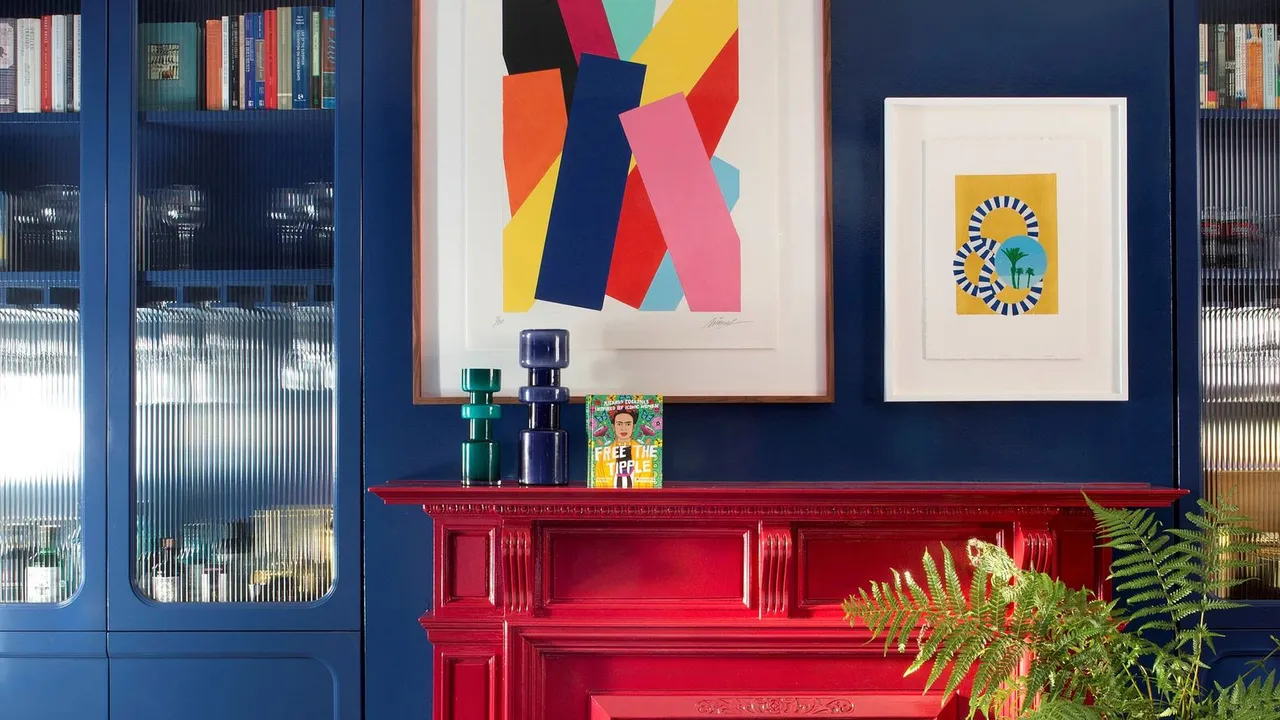
Contrast blue storage with a red mantel
 SaveSupport Non AI Creator
Source: Kingston Lafferty.
Blue glazed storage stands beside a bright red mantel beneath graphic artwork. The strong architectural colors give the room a lively, clearly organized focus. The red mantel provides a warm horizontal accent between two tall blue cupboards. Graphic pictures repeat both colors above it, while ribbed glass softens the contents of the storage so the cabinet wall does not become another dense display.
Test the red and blue together on substantial samples and leave smaller accessories quieter, so the painted features do not compete with another dominant palette. Compare the mantel color with artwork you already own before choosing the paint. Keep objects on the mantel low enough to leave the pictures visible, and test the combination in a broad sample rather than relying on a tiny paint chip.
IDEA 02 / 20
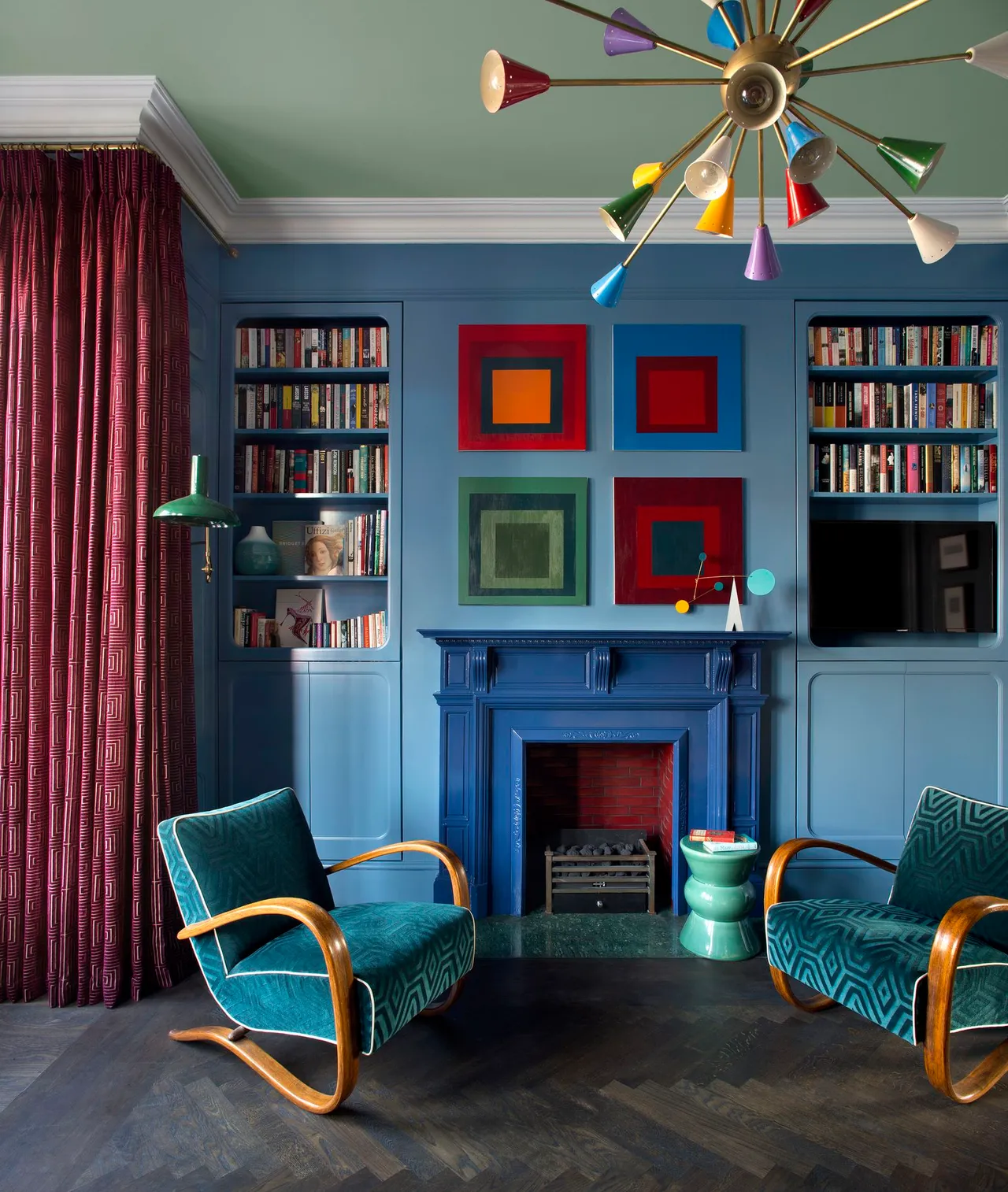
Connect blue walls through colorful artwork
 SaveSupport Non AI Creator
Source: livingetc.com.
Blue walls and shelves surround warm framed artwork and green chairs. The repeated wall color gives the expressive furniture and pictures a shared background. Red curtains and warm geometric pictures bring contrast to the blue fireplace wall, while green upholstered chairs repeat a cooler accent. Painting the bookcase frames the same blue as the wall gives the room's many smaller colors a consistent structure.
Choose art you already enjoy and pull one accent color from it, rather than buying unrelated objects simply because the walls can support bold colors. Choose one or two accent colors from your favorite pictures and repeat them in removable cushions first. Keep books accessible and group display pieces with room around them, so the colorful arrangement remains useful rather than becoming difficult to tidy.
IDEA 03 / 20
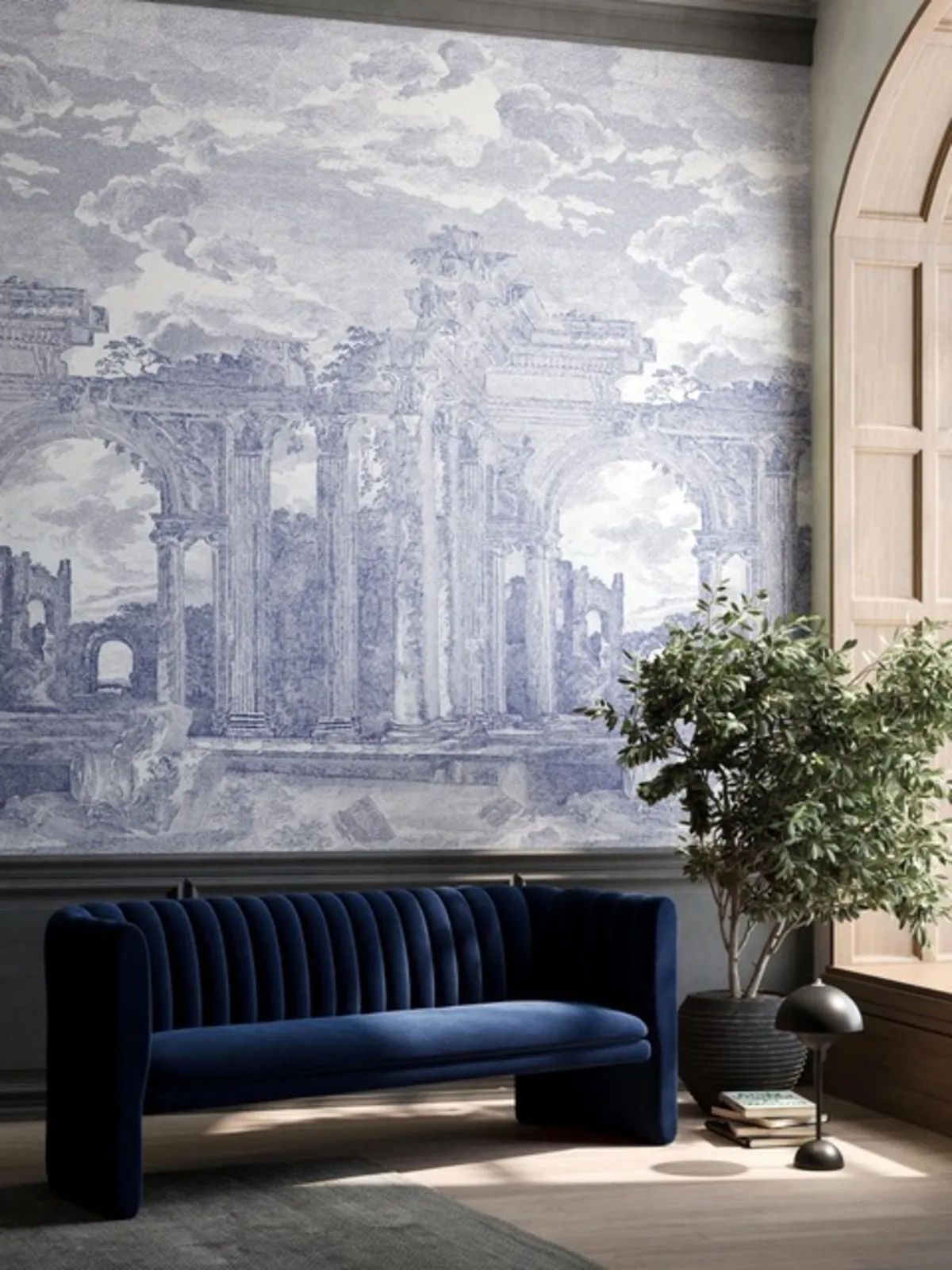
Use a blue scenic wallpaper as the main feature
 SaveSupport Non AI Creator
Source: livingetc.com.
A broad blue-gray scenic wall stands behind a dark upholstered bench and pale architectural details. The large composition gives the room atmosphere beyond plain paint. The pale blue-gray scene rises well above the low navy seat, leaving the architectural illustrations visible. A plain dark seat and restrained side lamp give the wall a quieter foreground, while the pale arched opening supplies a distinct edge to the composition.
Plan the wallpaper layout around the furniture height and leave the main scene visible, using fewer additional pictures on the same featured wall. Request the full scenic layout before ordering and mark the seat height on the wall. Check whether joins will cross important features, and use the wallpaper as the main artwork here instead of covering its larger illustrations with additional frames.
IDEA 04 / 20
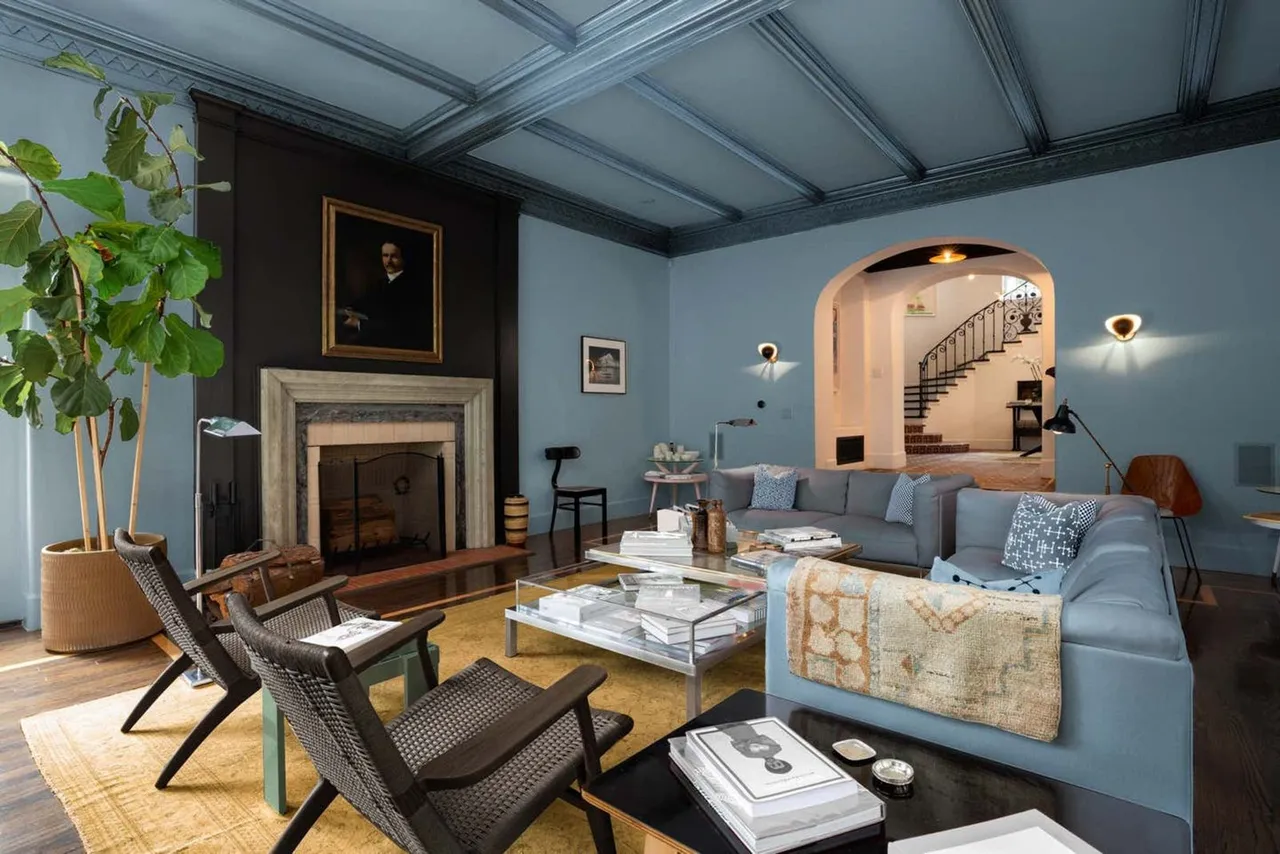
Carry soft blue from walls to the ceiling
 SaveSupport Non AI Creator
Source: livingetc.com.
Soft blue walls and ceiling details surround pale seating and darker chairs. The related colors make the room feel connected without a severe contrast. Blue extends across the walls, sofa and coffered ceiling, while a darker fireplace wall supplies depth at one end. Woven chairs, a warm rug and timber floors interrupt the cool palette, giving the continuous color a more comfortable everyday setting.
Compare ceiling and wall samples under evening lighting, and keep a few warmer furniture tones visible so the continuous blue does not feel overly cool. Sample the ceiling finish separately from the wall paint because overhead light changes how blue appears. Check that ceiling details remain visible after painting, and keep a few warm materials in the seating area if the matching walls and upholstery begin to feel too cool.
IDEA 05 / 20
Try deep blue with warm pink seating
 SaveSupport Non AI Creator
Source: livingetc.com.
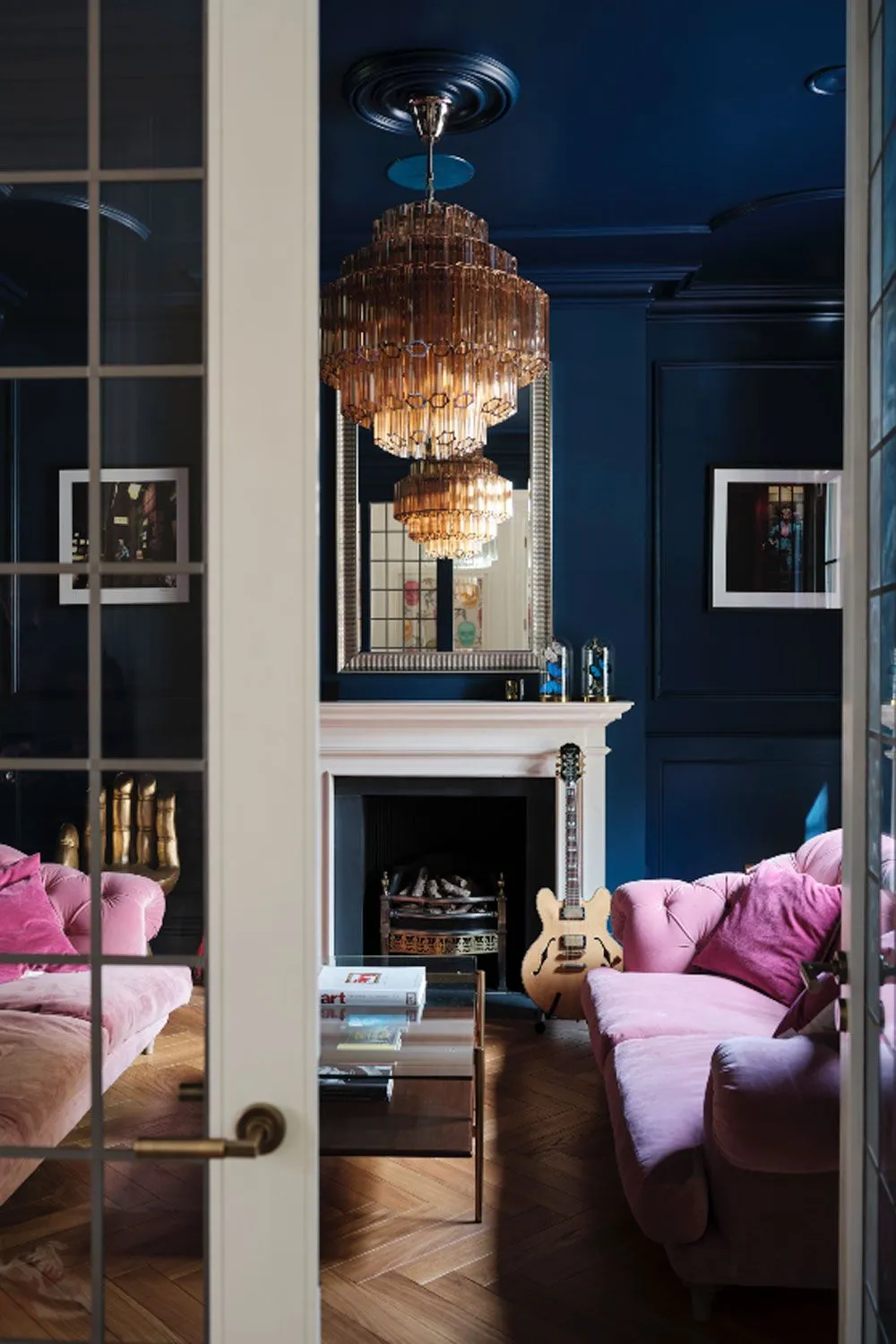
Deep blue walls frame pale pink seating beside a light fireplace and warm pendant. The contrasting upholstery softens the saturated room without changing its enclosing character. Pink sofas brighten the enclosed navy room, while the pale fireplace and large mirror provide a lighter center. The warm pendant repeats in the mirror, adding a decorative highlight without introducing another strong upholstery color to the seating group.
Keep lamps near the seats and test the pink fabric against the painted sample, especially if the room receives limited natural light. View the pink fabric beside a large blue paint sample in evening light before buying sofas. Add lamps where people read or sit, and check the mirror's reflection so it catches a pleasant part of the room without directing glare toward the seats.
PART 02
Texture and materials
IDEA 06 / 20
Give a blue-paneled room a yellow focal point
 SaveSupport Non AI Creator
Source: livingetc.com.
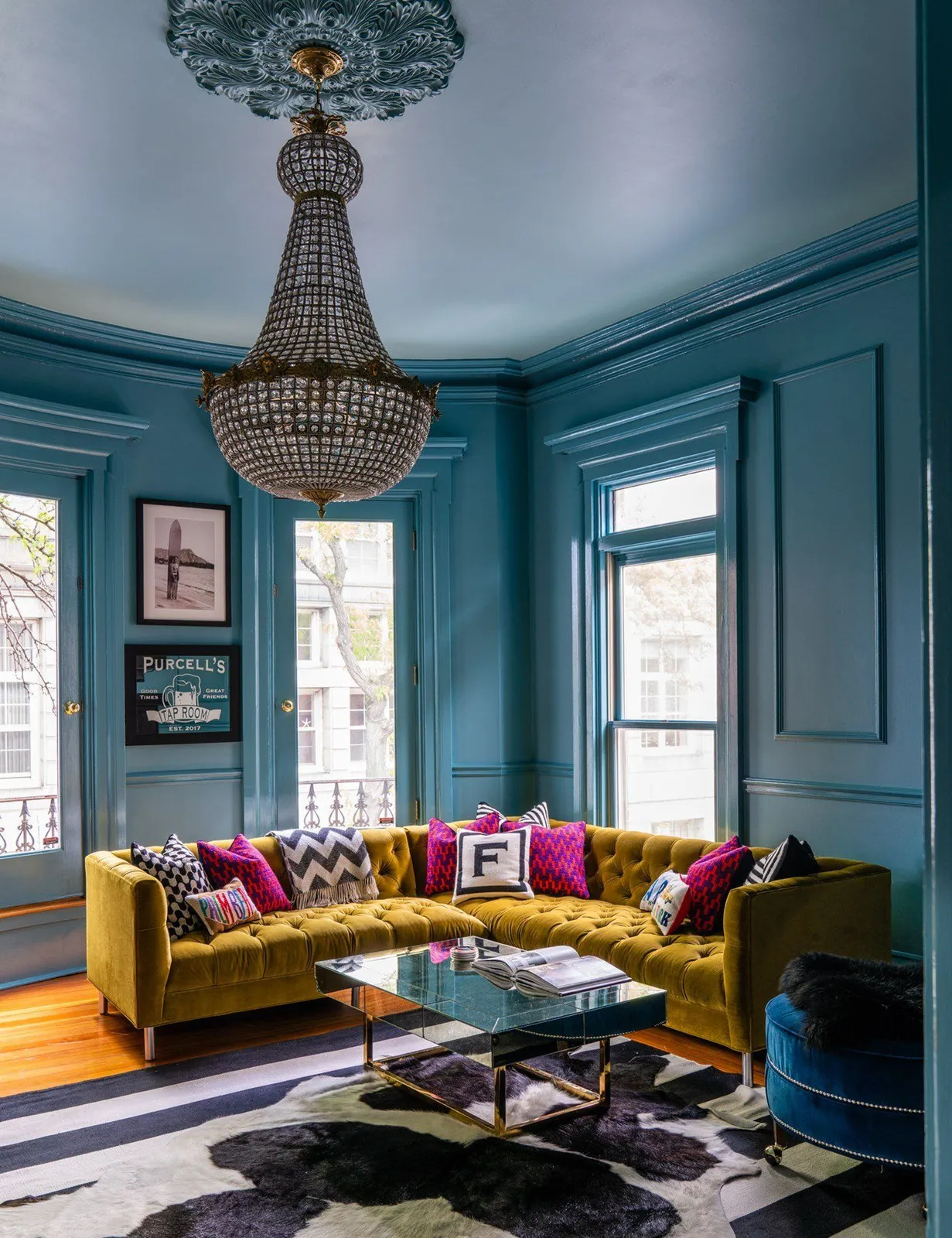
Blue paneling rises behind a yellow sofa with pink accents under a decorative pendant. The warm upholstery makes the architectural color feel expressive rather than restrained. The yellow sectional stands out against blue window trim and paneling, while pink cushions add a smaller warm accent. A glass table allows the rug to remain visible, and the pale ceiling keeps the richly colored walls from covering every surface.
Let the sofa supply the strongest warm accent and keep other large textiles quieter, so the paneled walls and seating remain easy to distinguish. Limit the number of large warm-colored pieces if the sofa already carries the main contrast. Try a plain cushion beside the patterned ones, and check the sectional return leaves enough room to open the nearby doors and move around the table.
IDEA 07 / 20
Make built-in bookcases part of the blue palette
 SaveSupport Non AI Creator
Source: livingetc.com.
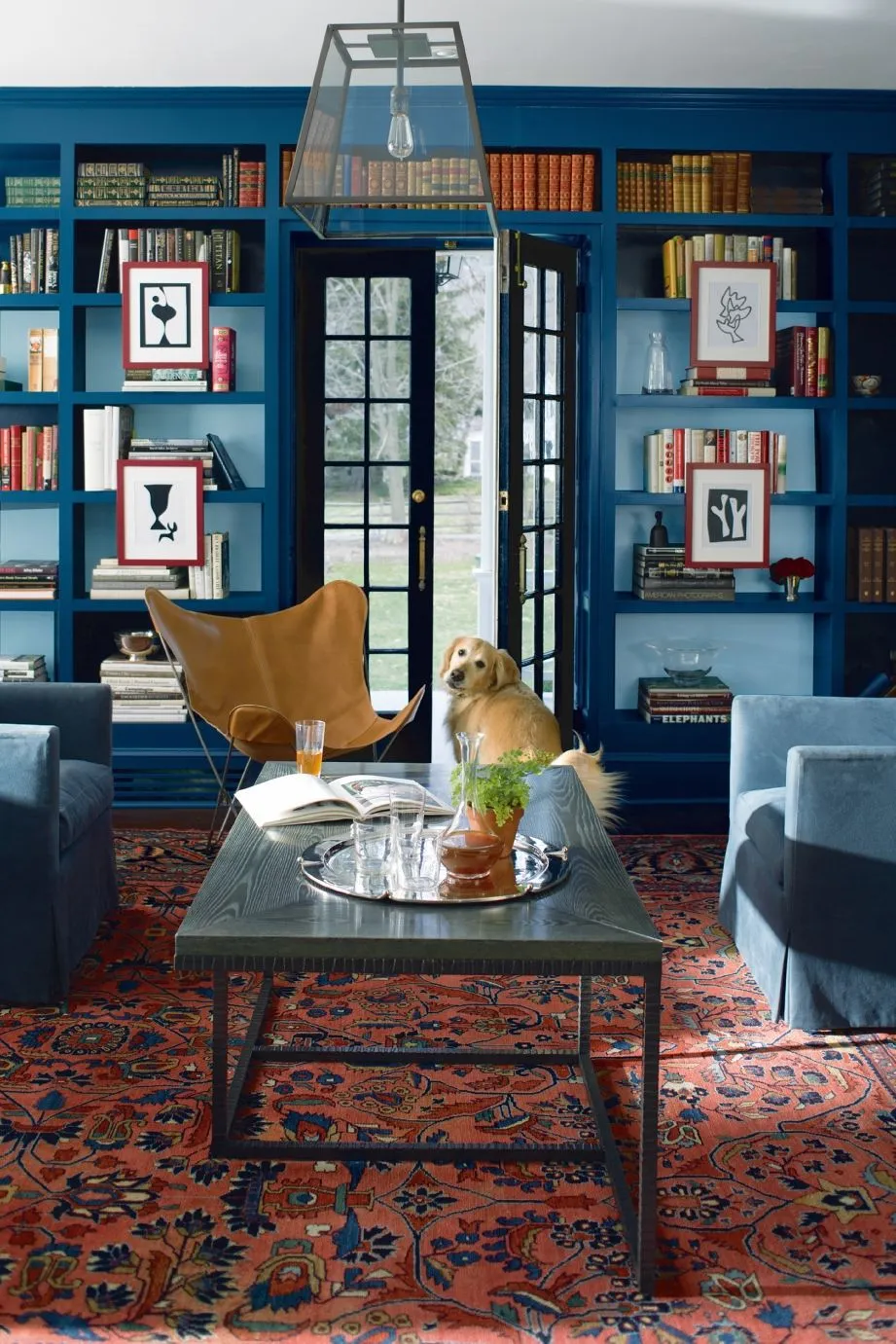
Deep blue bookcases frame a doorway beside patterned furniture and a colorful rug. The consistent joinery color organizes the room's varied books and artwork. Blue shelves continue around the doorway, giving the books and small framed pictures a common background. A warm tan chair and red patterned rug provide contrast at floor level, while blue sofas connect the storage color to the seating group.
Leave shelf space around individual displays and keep daily books accessible, using the blue storage to provide structure rather than another densely filled decorative wall. Keep regularly read books on shelves you can reach comfortably and leave taller openings for larger objects. Before painting fitted shelves, label their positions and check their weight limits so the refreshed storage still works for the collection you intend to keep.
IDEA 08 / 20
Keep a darker blue room open at ceiling height
 SaveSupport Non AI Creator
Source: livingetc.com.
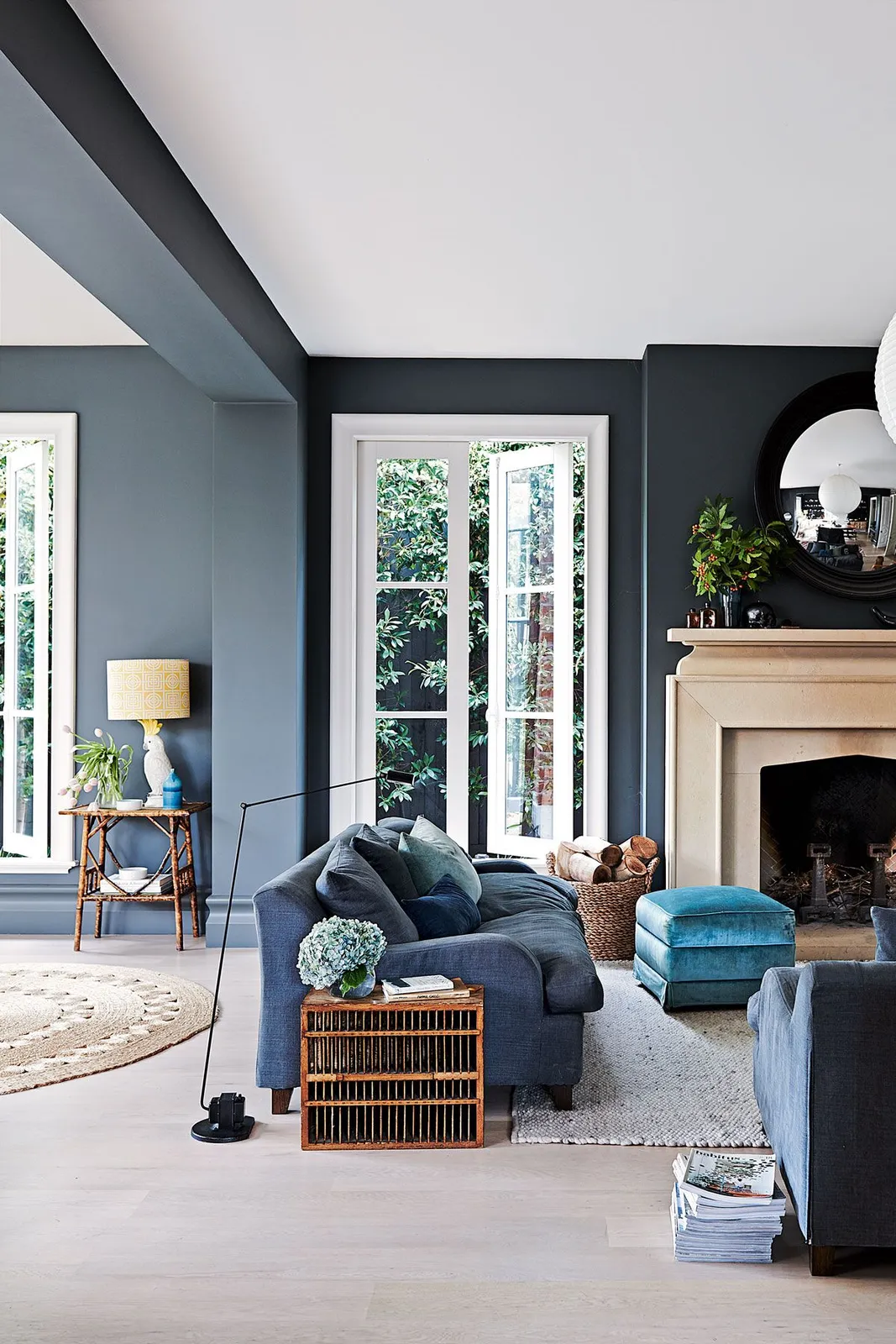
Deep blue-gray walls and the broad painted beam meet a pale ceiling above this seating group. The blue sofas stay within the room's cool palette, while a light rug, pale flooring and a warm timber side table separate the furniture from the darker background.
Test the ceiling color beside the blue before painting a whole room, and check the contrast in evening light. Place reading lamps close to the seats rather than asking the ceiling fixtures to do every job, and use a pale textile if the sofa starts to blend into the wall.
IDEA 09 / 20
Use pale blue around a window seat
 SaveSupport Non AI Creator
Source: livingetc.com.
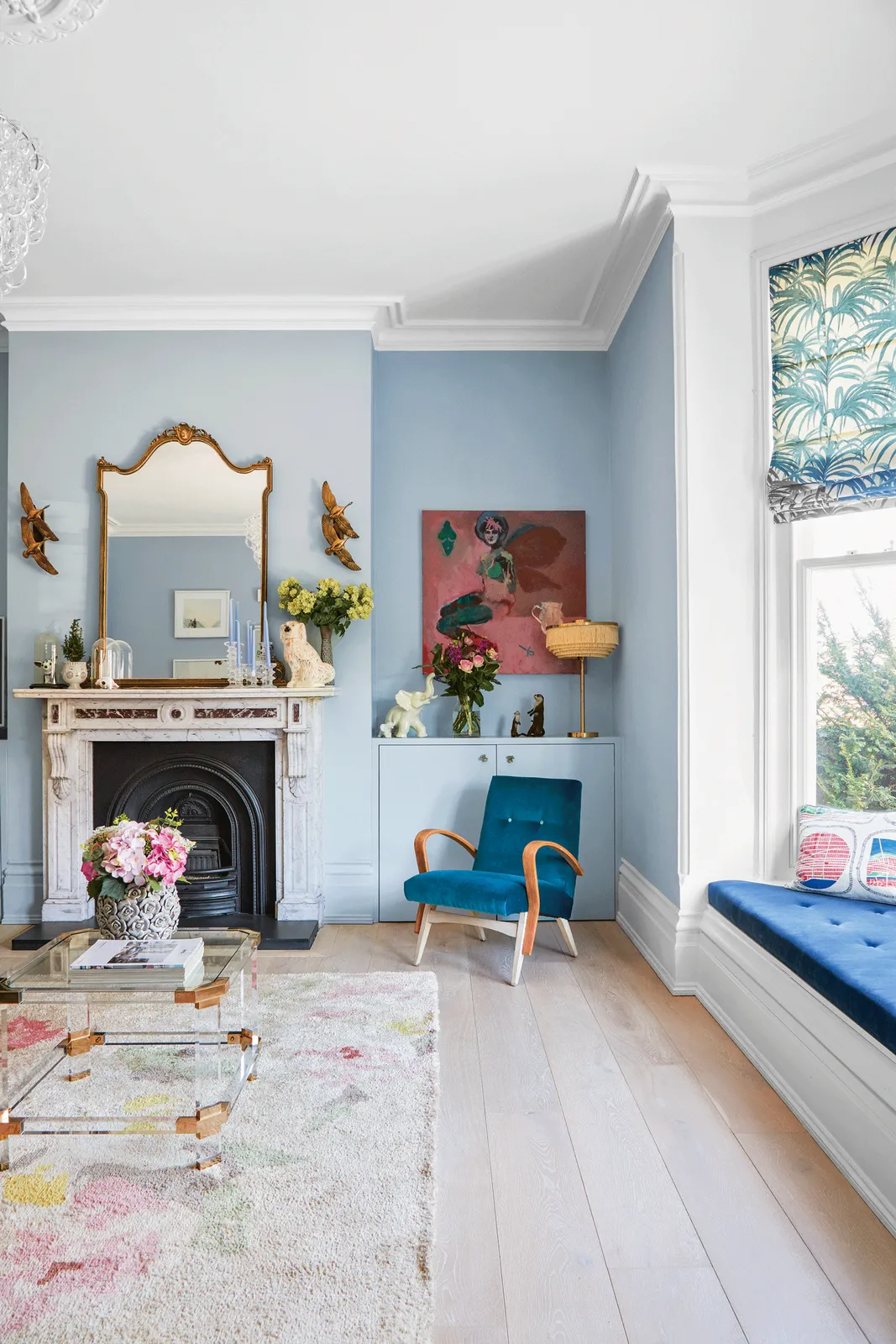
Pale blue walls surround a low window seat and colorful artwork beside a fireplace. The softer backdrop lets the compact room retain a bright atmosphere. The pale blue walls connect the fireplace and fitted window seat, leaving deeper blue upholstery to define the smaller seats. Warm framed artwork and floral details add color without changing the room's light background or crowding the window area.
Choose washable seat covers and check access to window controls, then repeat a little blue in the cushions rather than adding another large painted feature. Measure the bench cushion to fit the seat without covering window catches or access panels. Choose a cover that suits regular use, and leave enough room near the fireplace and chair that the window seat remains easy to approach and comfortable to sit on.
IDEA 10 / 20
Warm blue walls with rust upholstery
 SaveSupport Non AI Creator
Source: livingetc.com.
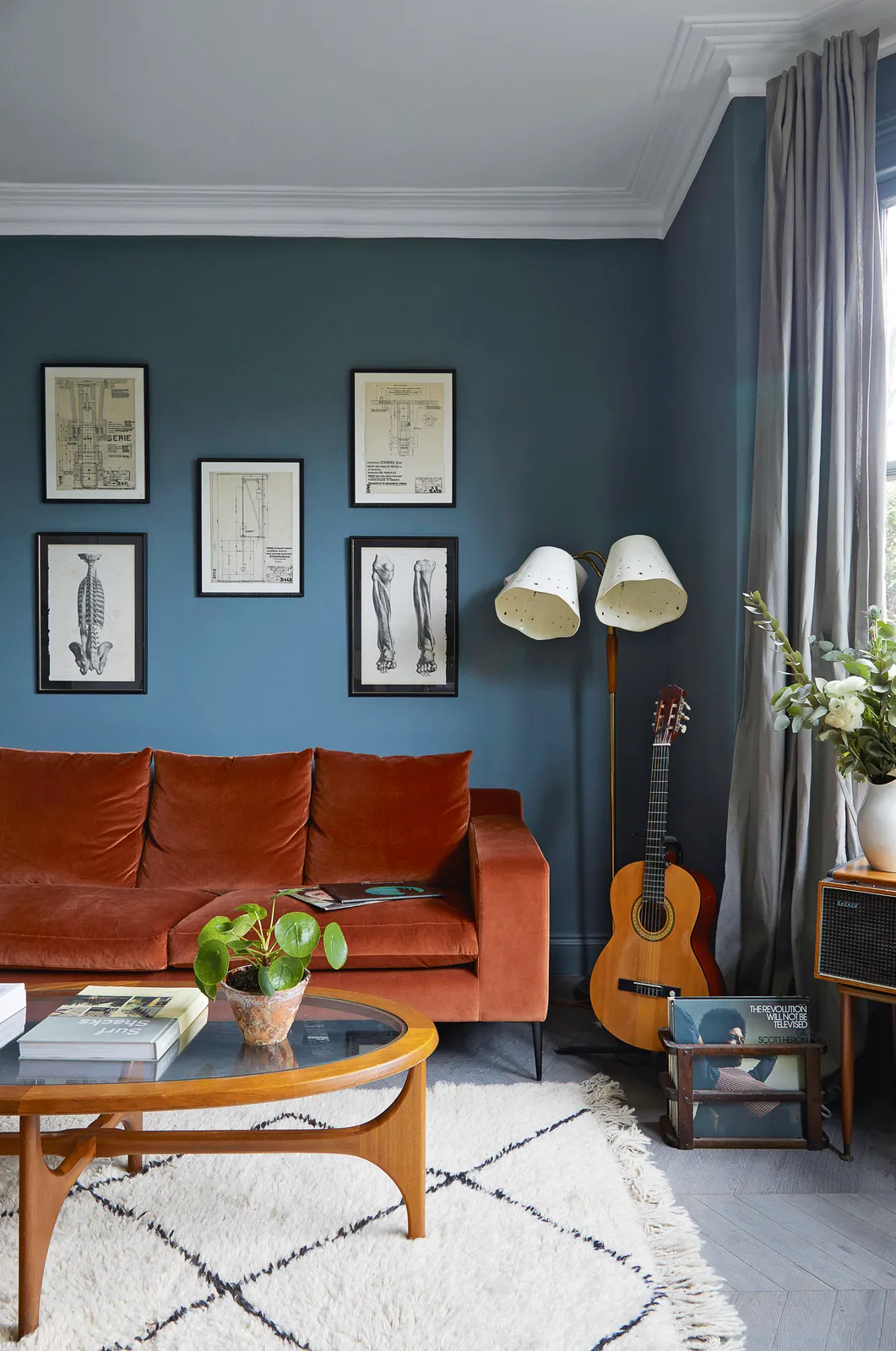
Muted blue walls sit behind a rust-colored sofa and framed pictures. The complementary warm seating gives the quiet architectural color a more inviting presence. Rust upholstery warms the muted blue wall, with pale framed pictures adding a lighter band above the sofa. A timber-edged glass table repeats the warm tone, while gray curtains keep the window treatment quieter than the contrast between wall and seating.
Compare the upholstery and wall samples with the existing floor, and use a quieter rug if you want the blue-and-rust pairing to remain the main feature. Place fabric, wall and floor samples together to check whether the rust tone suits existing wood. Keep a clear surface for drinks on the table, and choose a rug whose pattern does not compete with the picture group directly above the sofa.
PART 03
Furniture and layout
IDEA 11 / 20
Add blue through a simple painted wall
 SaveSupport Non AI Creator
Source: livingetc.com.
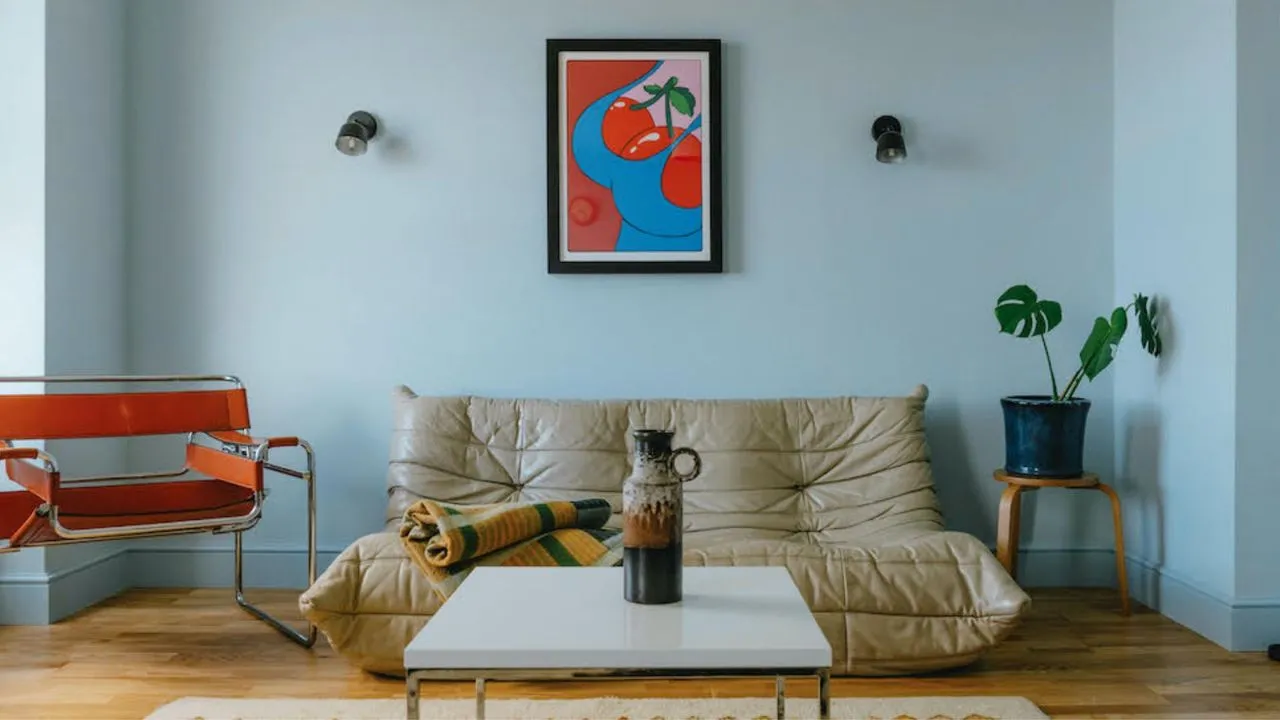
A pale blue wall stands behind light seating and a bright framed artwork. The broad color surface gives the restrained furniture a gentle visual setting. The pale blue wall gives the low cream sofa a cooler backdrop, while a red chair and bright picture provide concentrated warm accents. Timber flooring and a simple table keep the room informal without adding several competing materials to the small arrangement.
Try the paint beside a large piece of upholstery before applying it throughout the room, and keep the trim color compatible with its undertone. Try the paint beside the cream upholstery before selecting a trim color. Keep low seating comfortable by checking its back support and seat height, and position a useful lamp where someone reads rather than relying only on the small wall fixtures.
IDEA 12 / 20
Create depth with related shades of blue
 SaveSupport Non AI Creator
Source: livingetc.com.
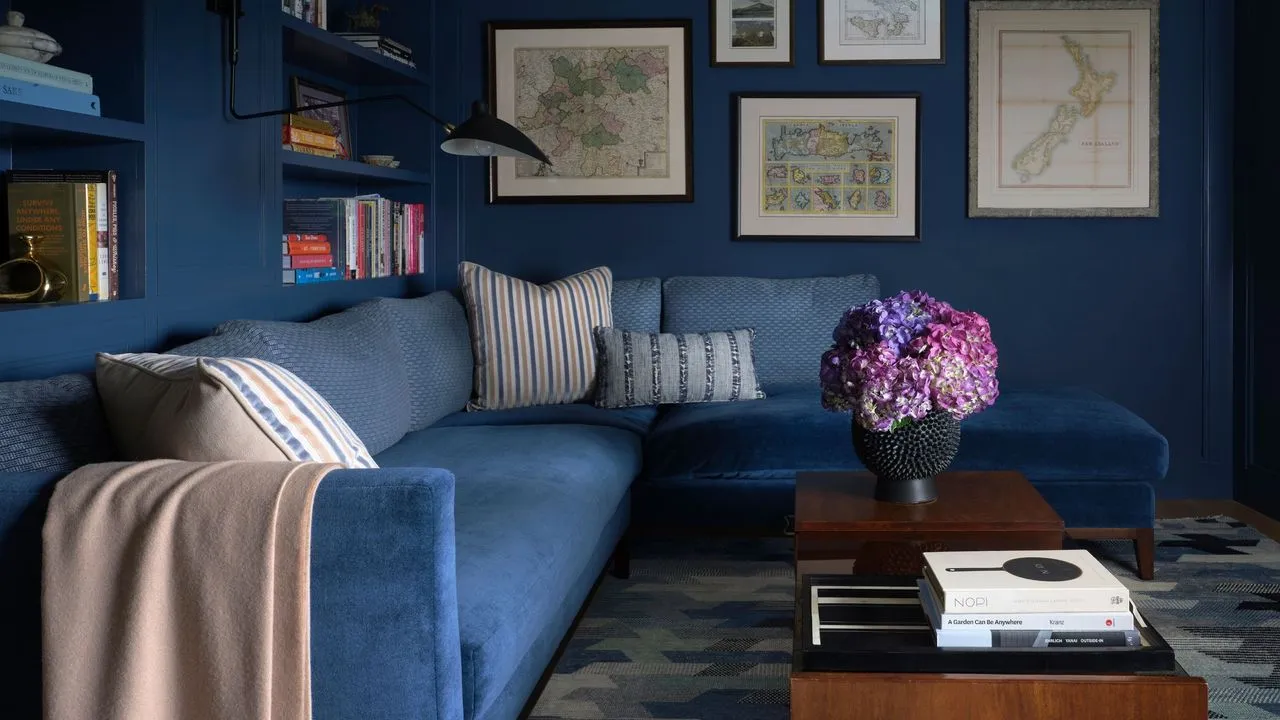
A blue sofa sits against deeper blue walls beneath pale framed artwork. The related tones build depth while keeping the room's main palette focused. The sectional, shelves and walls use related blues, with pale map prints and striped cushions separating their surfaces. Timber tables and a muted throw bring warmth close to the seats, making the deeper palette feel layered rather than completely uniform.
Make sure the sofa and wall remain visibly different under evening lamps and add a pale textile layer if their outlines disappear into one another. Use a fabric sample against the wall after sunset to check that the sectional still has a visible outline. Keep a few cushions plain if the shelves already hold many books, and leave enough space on the tables for everyday use beneath the wall display.
IDEA 13 / 20
Pair muted blue-gray walls with burgundy seating
 SaveSupport Non AI Creator
Source: livingetc.com.
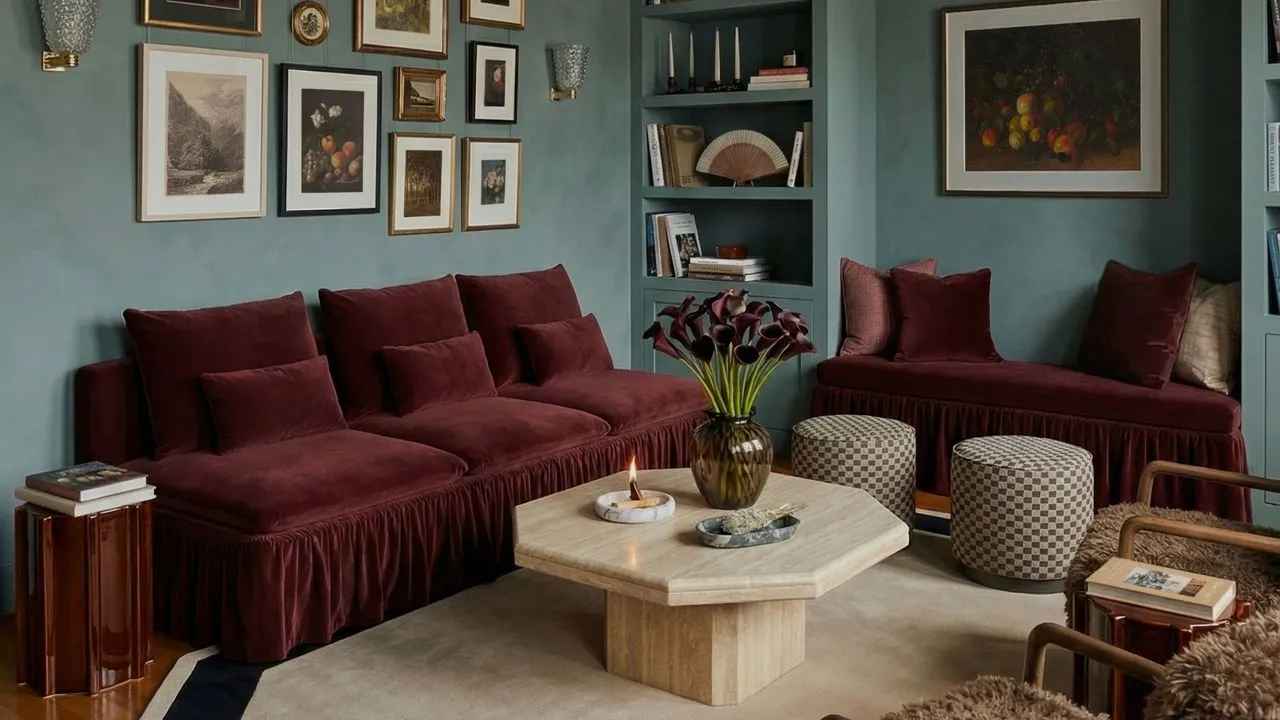
Soft blue-gray walls surround burgundy sofas and a pale rounded table. The warmer seating gives the cool wall color a comfortable, collected contrast. Burgundy seating adds a warm, substantial contrast to the softer blue-gray walls and shelves. A pale faceted table provides a lighter center, while framed artwork repeats quieter tones above the sofa without matching every upholstered piece exactly.
Use a few shared colors in the artwork and cushions, keeping the wall shade gentle enough to support the richer upholstered furniture. Compare the wall paint beside the burgundy fabric in the room's daylight before committing to both. Keep cushions proportionate to the usable seat width, and choose a table size that lets guests move between the sofas without stepping around every occasional stool.
IDEA 14 / 20
Balance a strong blue wall with white surfaces
 SaveSupport Non AI Creator
Source: Mint Decor Inc. on Houzz.
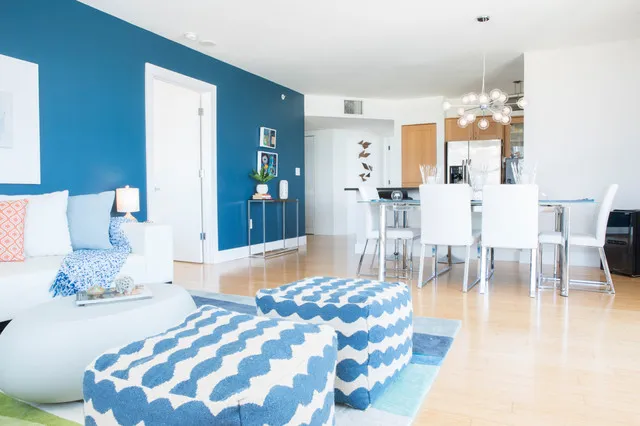
A bright blue wall borders pale furnishings and blue patterned ottomans in an open room. The white areas give the saturated paint a clean boundary. The strong blue is concentrated on one long wall, while white furniture and adjoining surfaces keep the open room bright. Blue-and-white ottomans carry the color into the seating area, creating a link to the wall without painting the kitchen blue as well.
Use existing wall edges to define the painted section and limit extra patterned pieces, especially where the living area is visible from the kitchen. Use an existing corner or doorway to define the blue section cleanly. View the sample from the dining area before painting, and keep the number of extra patterned cushions modest so the ottomans remain the main printed detail in the living space.
IDEA 15 / 20
Use brighter blue with simple curtains
 SaveSupport Non AI Creator
Source: Tara Lenney Design on Houzz.
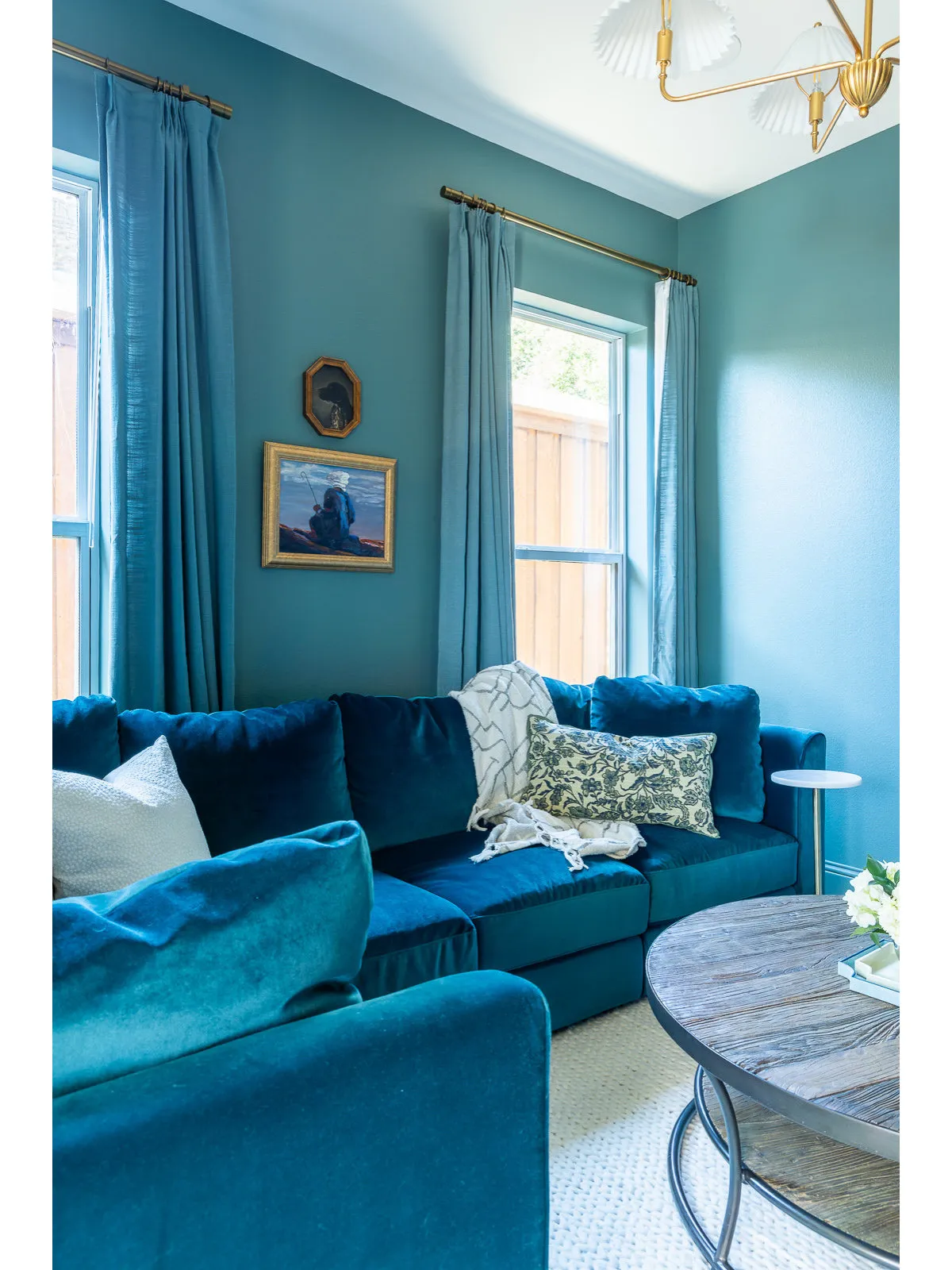
Blue walls and seating gather beside light windows with plain curtains. The limited pattern gives the strongly colored room a more straightforward overall rhythm. Blue curtains and upholstery sit against a softer blue-green wall, making the palette continuous without an exact color match. Pale cushions and a light ceiling supply contrast, while the curtains' plain fabric leaves the smaller botanical cushion print easy to notice.
Check the blue under both daylight and lamps and choose curtains for privacy as well as appearance, keeping their operation accessible behind the seating. Check that curtains can stack beside the glazing without catching the sofa arms. Compare the three blue finishes in daylight and lamplight, and use plain cushions or a quieter throw if the wall, curtains and sofa begin to merge into one surface.
PART 04
Finishing touches
IDEA 16 / 20
Add a warm accent chair to vivid blue walls
 SaveSupport Non AI Creator
Source: Chesney's on Houzz.
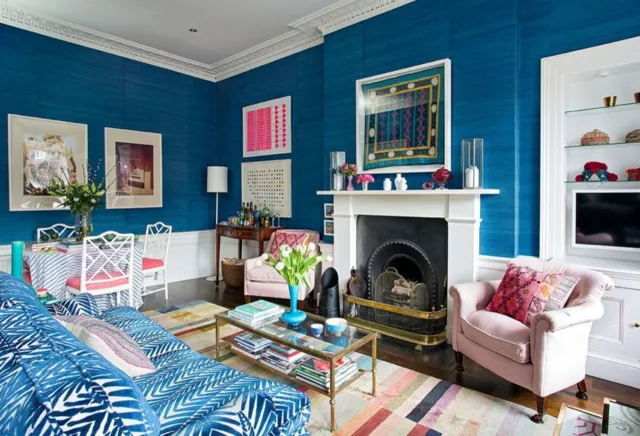
Vivid blue walls frame a pale fireplace beside patterned seating and a pink chair. The warmer accent makes the strong room color more approachable. Pink chairs soften the vivid blue walls, while blue patterned seating repeats the background color in a different form. The pale fireplace, trim and shelving provide clear breaks between the saturated wall sections and the room's many framed pictures.
Keep one shared color running through the fabrics and artwork, and avoid adding another large pattern if the main sofa already has an expressive print. Use one shared blue in the larger fabric patterns before adding other accents. Keep the chairs' pink finish relatively plain if the sofa is busy, and leave mantel space around each object so the pale fireplace remains a visible resting point in the colorful room.
IDEA 17 / 20
Choose pale blue for practical living room cupboards
 SaveSupport Non AI Creator
Source: Organization & Relocation on Houzz.
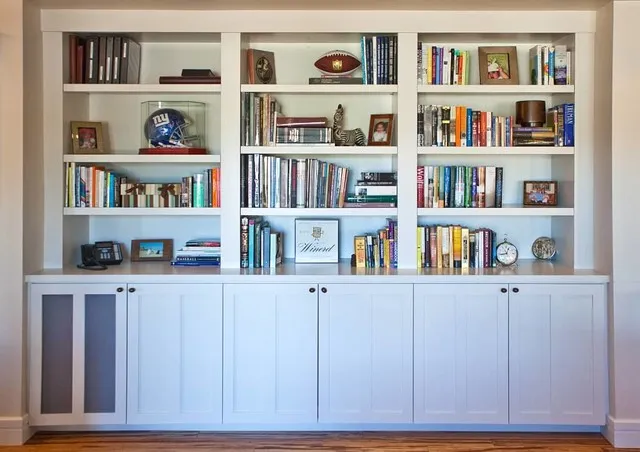
Pale blue lower cupboards sit beneath bookshelves filled with framed pieces and objects. The softer painted storage provides color without changing every surrounding wall. The pale blue lower cupboards give closed storage a little color while the open shelves display books, photographs and keepsakes. White framing separates the compartments, helping a varied collection feel organized without requiring every object to share the same finish.
Plan cupboard compartments around everyday belongings and leave the display shelves with breathing room, so the useful storage remains the main benefit. List the belongings you want hidden before choosing cupboard compartments or internal shelves. Keep cables and frequently used equipment accessible, and leave room beside favorite display pieces so the open section stays easy to dust and rearrange as the collection changes.
IDEA 18 / 20
Make pale blue shelves a gentle room detail
 SaveSupport Non AI Creator
Source: Jeanne Campana Design on Houzz.
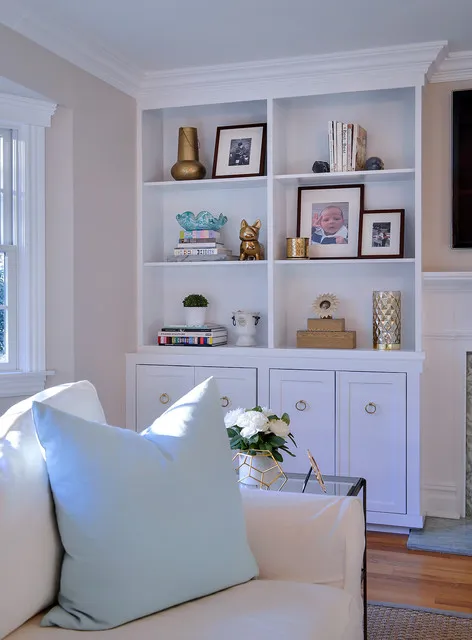
Light blue built-in shelves sit beside a pale chair and small framed pictures. The quiet painted feature adds character while preserving the room's brighter feel. The lightly colored shelves sit within white framing, giving photographs and metallic objects a gentle background. A pale blue cushion repeats that color closer to the seating, while closed cupboards underneath keep less decorative belongings out of the open display.
Use the shelves for a manageable selection of books or meaningful objects and keep lower cupboards available for things you prefer not to display. Group framed photographs by size or spacing rather than filling every shelf edge to edge. Keep heavier items on suitable lower shelves, and check that cupboard doors can open behind nearby seating so the attractive display does not make hidden storage harder to use.
IDEA 19 / 20
Try a blue ceiling inset above light furniture
 SaveSupport Non AI Creator
Source: User on Houzz.
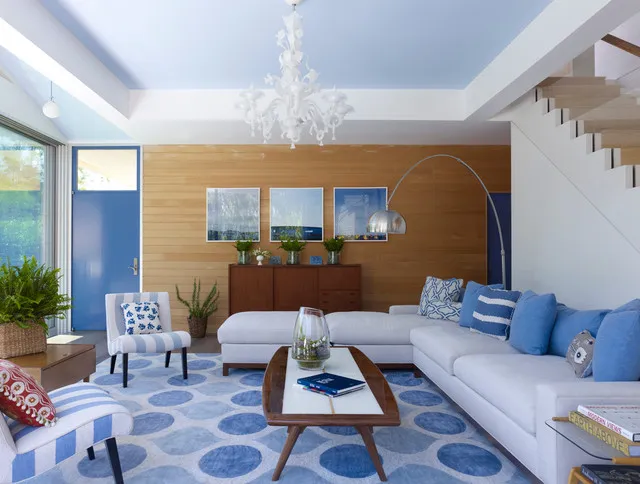
A pale blue ceiling section sits above light seating and a blue patterned rug. The repeated color links the upper and lower room without dark walls. The pale blue ceiling inset repeats the rug's circular blue motifs and the cushions on the light sectional. A warm timber wall gives the room a contrasting surface, while white trim outlines the ceiling color rather than letting it cover every upper detail.
Check the ceiling color's effect on evening light and keep the rug's scale comfortable beneath the main furniture, rather than choosing it only for color. Compare the ceiling sample with the rug in the light used after sunset. Size the rug for the furniture footprint before judging its colors, and keep the ceiling finish simple enough that its outline remains clear beside the decorative pendant and nearby stairs.
IDEA 20 / 20
Frame a pale fireplace with rich blue walls
 SaveSupport Non AI Creator
Source: Richmond Hill Interiors, llc on Houzz.
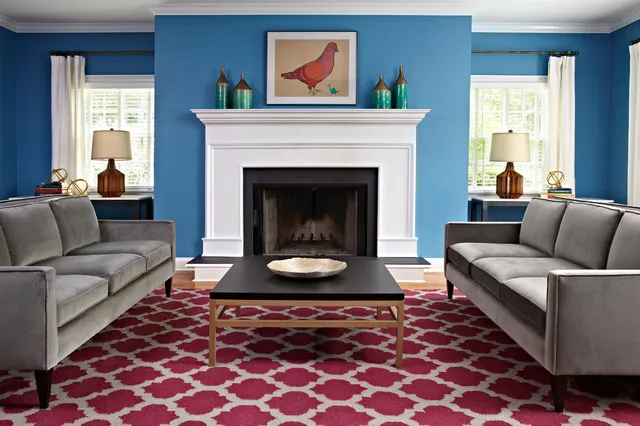
Rich blue walls surround a pale fireplace between matching windows and gray seating. The balanced architecture keeps the stronger paint color orderly. Rich blue walls frame the pale fireplace between matching windows, giving the room a balanced center. Gray sofas keep the seating restrained, while the red patterned rug adds warmth below the black table without changing the strong blue architectural background.
Choose a restrained trim color and keep mantel objects modest, allowing the blue walls and fireplace shape to remain the room's principal composition. Check the sofa spacing with people seated so the symmetrical arrangement still leaves comfortable room to move. Keep mantel accessories low enough to show the artwork, and compare the rug's red with the wall color before choosing additional cushions or curtains.
BRING IT ALL TOGETHER
Make it work in your home
Decide where blue will have its main role before buying accessories. One clear painted surface or storage wall often feels more purposeful than many unrelated blue objects.
Compare generous paint or wallpaper samples in the room. Blue can change noticeably beside warm timber, cool daylight and the lamps used after sunset.