A boho living room can feel personal and easy to live in at the same time. The most useful starting point is a comfortable seat and a clear route through the room; favorite textiles, pictures and plants can grow around that foundation.
These rooms show different ways to combine old and new pieces without buying a matching set. Look for a detail that solves something in your own home, whether that is extra guest seating, an empty wall or a corner that needs better light.
PART 01
Build character through texture
IDEA 01 / 20
Keep a pale room interesting with hanging texture
 SaveSupport Non AI Creator
Image credit: Photo: codyulrich.com. From: Paige Morse
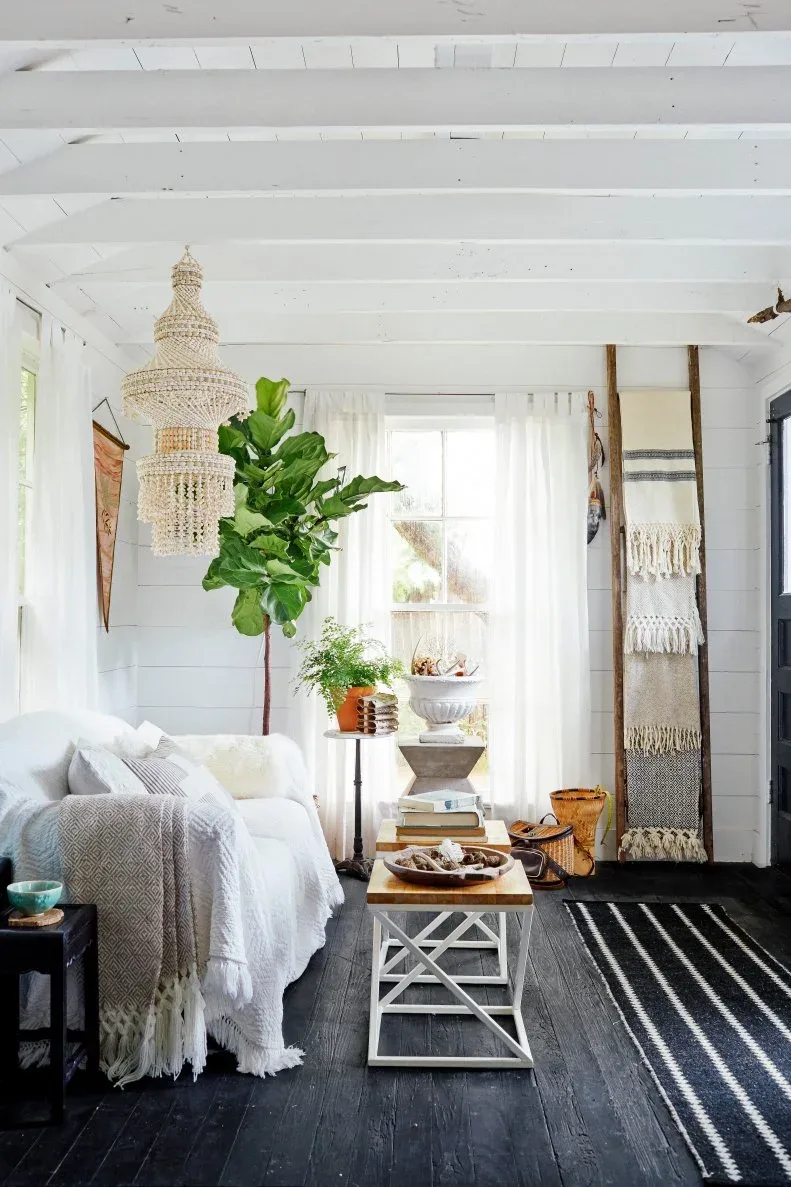
White walls and ceiling beams create a quiet background for the tiered chandelier and blankets displayed on a leaning ladder. A dark striped rug draws a line through the seating area, while the tall leafy plant gives the pale room a stronger outline beside the window.
Choose one overhead feature rather than several competing decorations in a narrow room. Keep a blanket ladder outside the main route and secure it if it could tip. Removable throws are easier to clean than a collection of delicate objects placed around everyday seating.
IDEA 02 / 20
Let a textured wall anchor the mix
 SaveSupport Non AI Creator
Image credit: Photo: Gerardine and Jude Vargas. From: BOXHILL
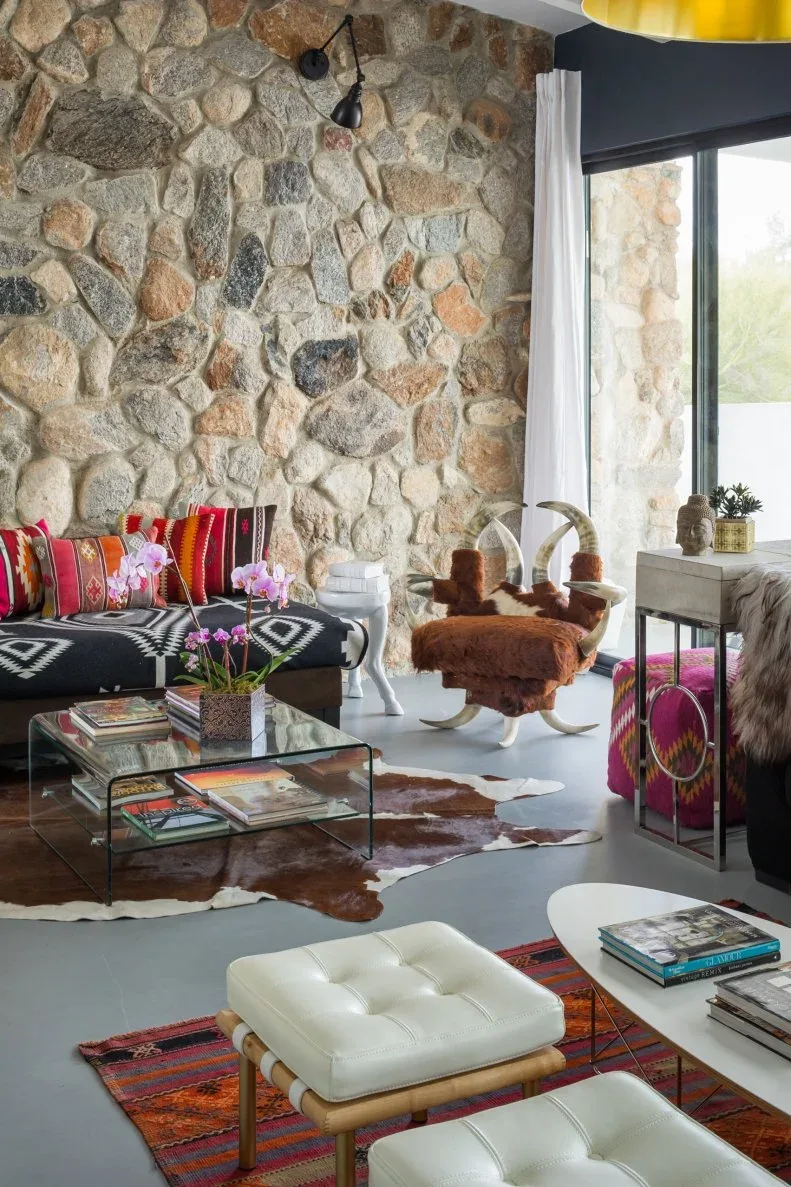
The large stone wall gives this room its strongest texture, leaving the furniture free to mix different shapes and colors. Red patterned cushions brighten the dark bench seat. A transparent coffee table allows the rugs beneath it to remain visible instead of covering another large section of pattern.
When a wall already has this much variation, choose smaller furnishings that repeat a few of its tones. A glass table keeps the view open but shows fingerprints readily. Overlapping rugs need secure edges, particularly beside chairs that move when somebody stands up.
IDEA 03 / 20
Turn a window seat into a relaxed conversation spot
 SaveSupport Non AI Creator
Image credit: Photo: D2 Interieurs. From: D2 Interieurs
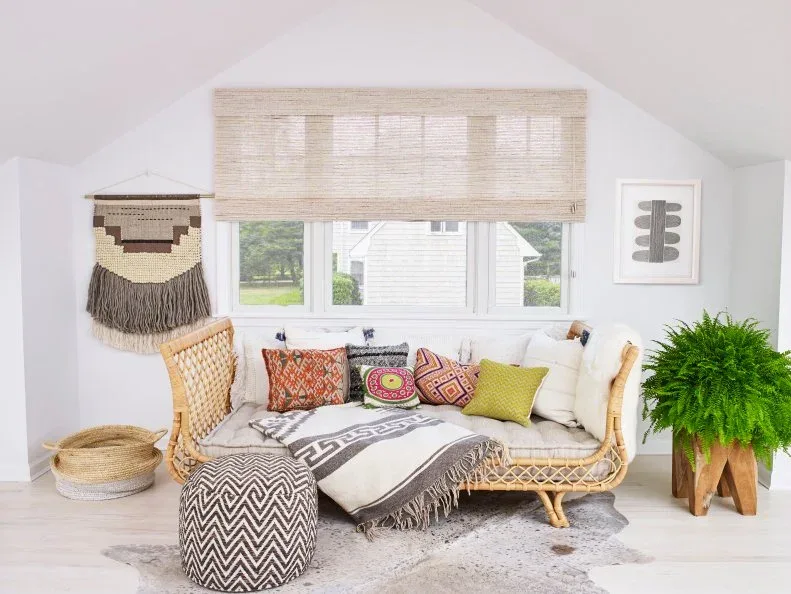
A woven settee sits directly beneath the window, surrounded by cushions in warm colors and several different patterns. The fringed wall hanging balances the fern on the opposite side. A black-and-white pouf repeats the throw's geometric lines without making every textile in the room identical.
Keep enough plain cushion space for someone to sit comfortably rather than lining the entire seat with decorative pillows. A movable pouf can serve guests, but choose a stable side surface for drinks. Leave the window hardware accessible behind the settee and its cushions.
IDEA 04 / 20
Use one large pendant to connect a tall room
 SaveSupport Non AI Creator
Image credit: Photo: John Downs
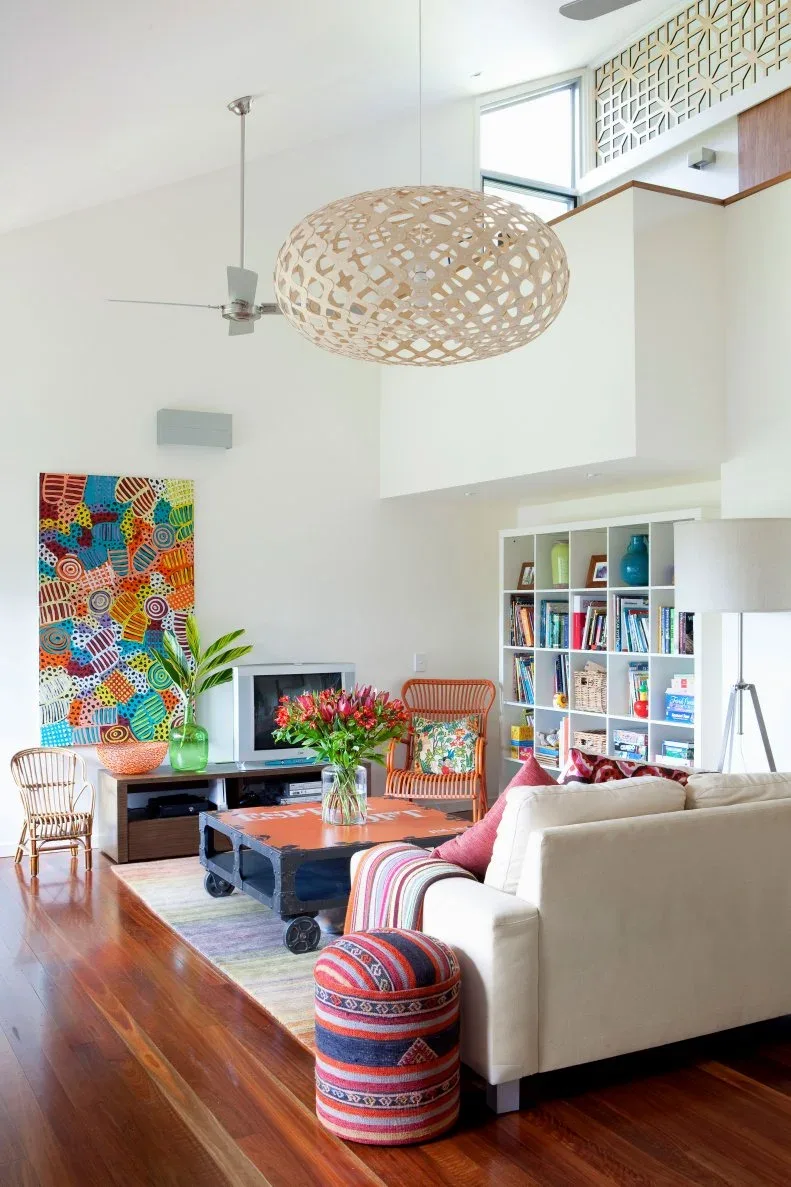
The oversized woven pendant brings a lower point of interest into this tall white room. A colorful painting stands beside the fireplace, while the bookcase and striped cushions carry smaller patches of color across the seating area. The room feels collected because the pieces vary in scale as well as pattern.
Check a pendant's overall diameter against the furniture beneath it before ordering. In a tall space, a larger fixture can connect the room, but its drop must still suit circulation and sightlines. Keep books and favorite objects grouped so the shelves retain useful empty space.
IDEA 05 / 20
Give a sectional flexible extra seats
 SaveSupport Non AI Creator
Image credit: Photo: Amy Bartlam. From: Genna Margolis
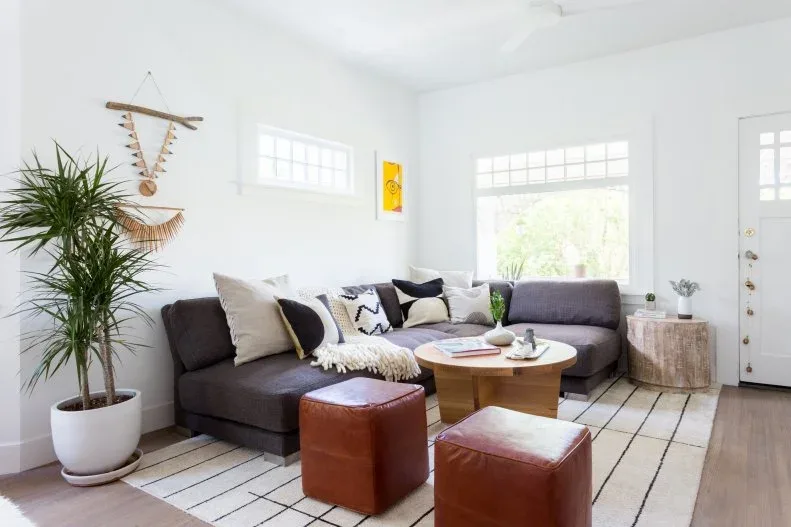
Two brown cube stools bring warm color to the gray sectional and white walls. The round coffee table softens the straight lines in the rug and sofa, while a small hanging textile gives the corner a handmade-looking accent. The stools offer a different seating height without adding another large chair.
Use movable stools when guest seating is occasional rather than permanent. Test whether they are comfortable enough for the way you entertain, and keep their usual parking spots outside the doorway. A rounded table can help circulation, but it still needs enough space around each seat.
PART 02
Make room for comfortable seating
IDEA 06 / 20
Pair a warm sofa with a pale wall hanging
 SaveSupport Non AI Creator
Image credit: Photo: Amy Bartlam. From: Natalie Myers
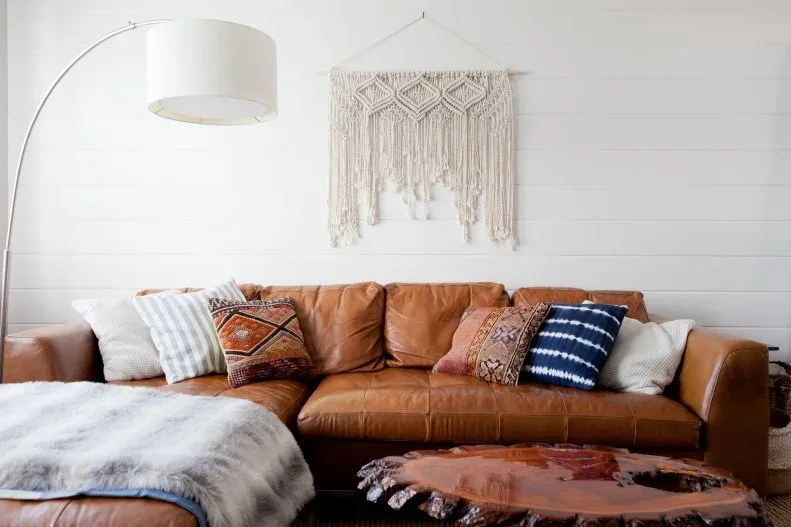
The brown sofa provides a broad warm surface beneath a pale knotted wall hanging. Orange and blue patterned cushions add smaller accents, and the curved floor lamp reaches over the seating without another table beside the arm. The wall remains simple enough for the hanging's texture to show clearly.
Choose cushion covers that you can remove and clean, especially if this is the household's main sofa. A large throw changes the feel quickly but should not slide beneath somebody sitting down. Leave the lamp base clear of the place where feet naturally land.
IDEA 07 / 20
Face mixed chairs toward a shared table
 SaveSupport Non AI Creator
Image credit: Photo: Amy Bartlam. From: Natalie Myers
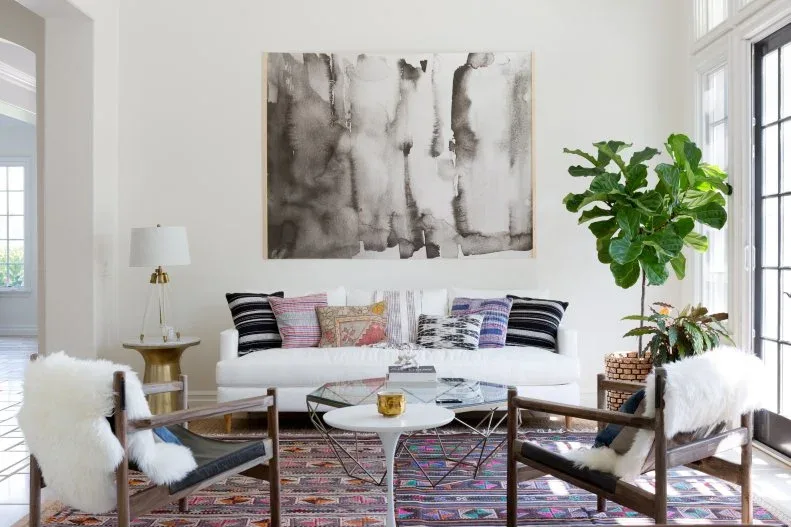
A white sofa faces two dark-framed chairs, creating a conversation arrangement around the small round tables. Patterned cushions and a richly colored rug add the boho layer beneath a restrained abstract picture. The chairs' open frames leave more of the rug visible than bulky upholstered sides would.
Match seating by comfort and usable height rather than buying identical shapes. Everyone should be able to reach a drink without leaning across another person. If a light sofa suits the room, check its cleaning requirements before choosing a fabric for frequent family use.
IDEA 08 / 20
Make an awkward long wall part of the room
 SaveSupport Non AI Creator
Image credit: Photo: Matthew Williams. From: LABLstudio
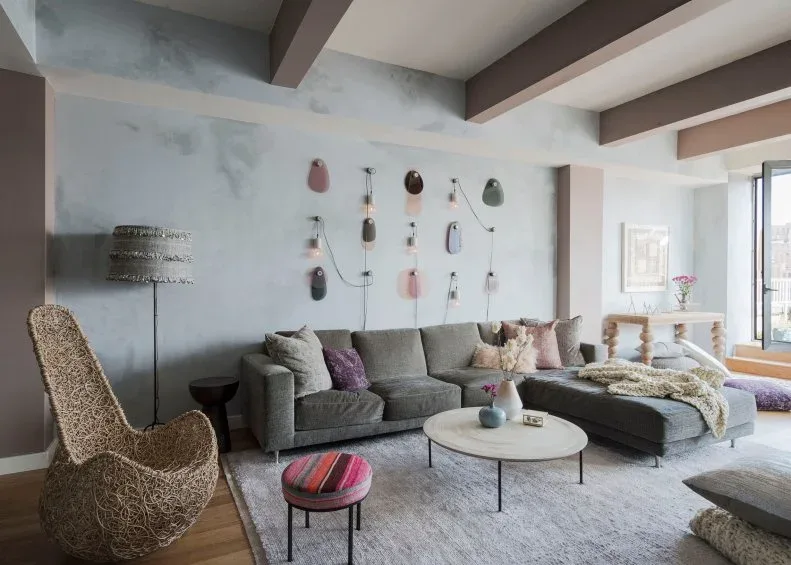
The scattered wall display stretches along the gray sectional instead of concentrating everything above its center. A tall textured chair and small pink stool break up the sofa's low horizontal shape. The pale rug connects these different pieces while the exposed ceiling beams remain the room's strongest structural lines.
Plan a loose wall arrangement on the floor before making holes, leaving room to adjust individual pieces later. A sculptural chair needs enough space around its widest point. Keep the small stool where it can move into the conversation area without obstructing the room's daily walkway.
IDEA 09 / 20
Hang a colorful textile above a quieter sofa
 SaveSupport Non AI Creator
Image credit: Photo: Sarah Stacey. From: Sarah Stacey Interior Design
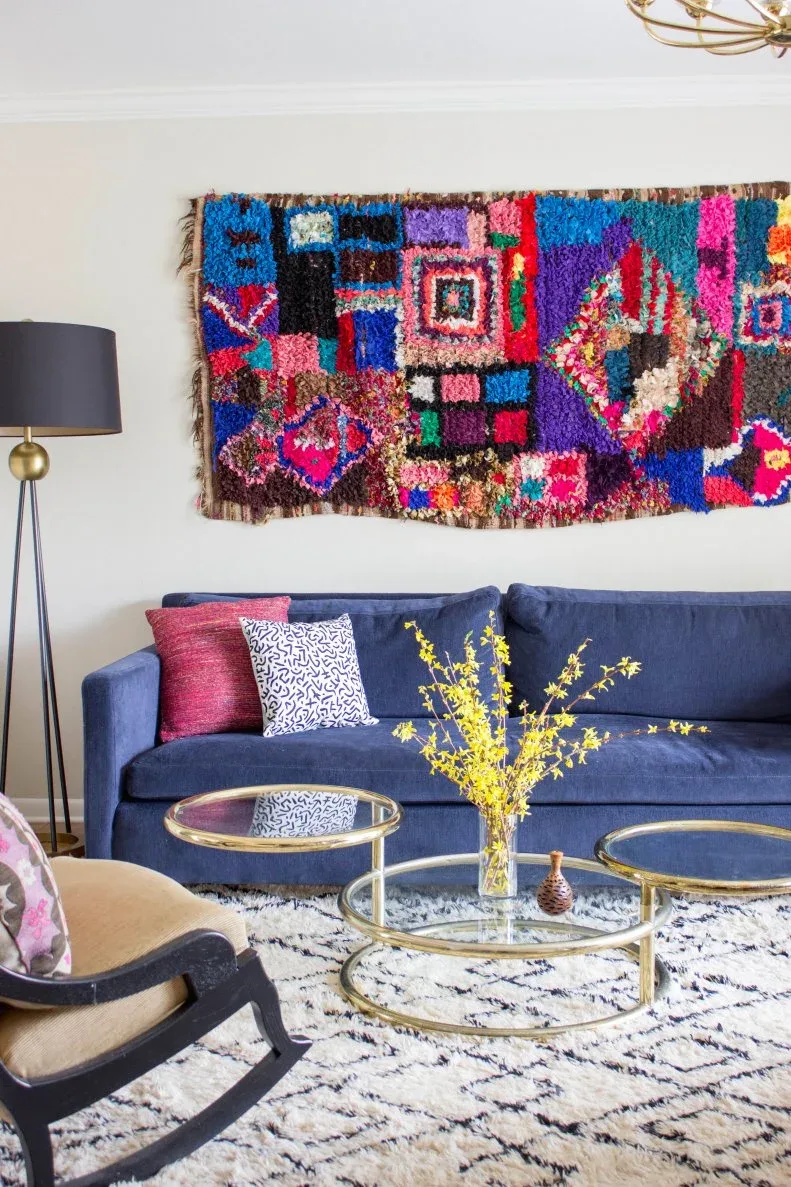
The blue sofa picks up a strong shade from the wall textile, giving the many bright squares a clear connection to the furniture. Pale walls and a mostly light rug keep the arrangement from becoming completely saturated. Two round tables add useful surfaces while leaving portions of the rug exposed.
Support a wall textile evenly with a hanging method appropriate to its weight and condition. Let it supply most of the pattern, then use simpler cushions for everyday comfort. Position separate tables where people actually sit rather than treating them as a single decorative display.
IDEA 10 / 20
Create a separate reading corner
 SaveSupport Non AI Creator
Image credit: Photo: Amy Bartlam. From: Genna Margolis
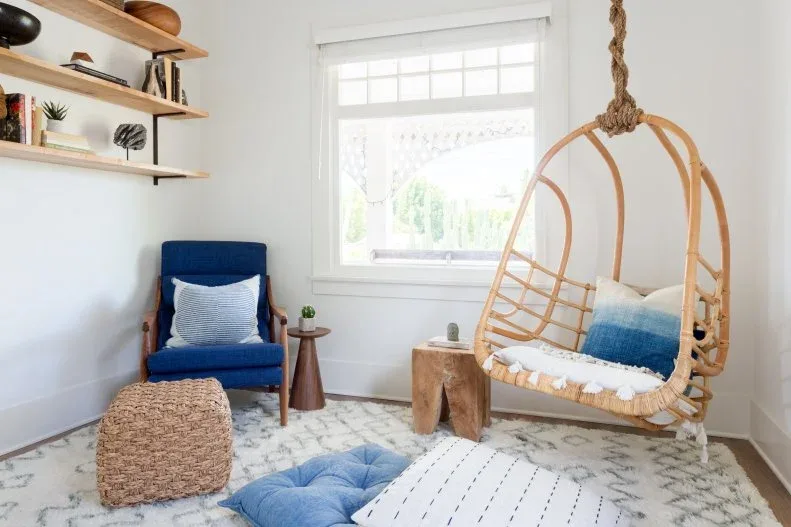
A hanging chair and blue armchair make a small reading group near the window. The wooden chair frame, woven pouf and open shelves introduce texture without covering the white walls. Pale floor cushions give the corner a relaxed appearance, with a small side table tucked between the seats.
A hanging seat requires suitable structural support and installation for its rated load; a freestanding chair is a simpler alternative. Allow space for any movement and keep nearby tables out of the swing path. Put a reading light within reach if this corner is used after sunset.
PART 03
Give color a clear purpose
IDEA 11 / 20
Balance a lively mantel with a substantial table
 SaveSupport Non AI Creator
Image credit: Photo: Melanie Johnson. From: Abbe Fenimore
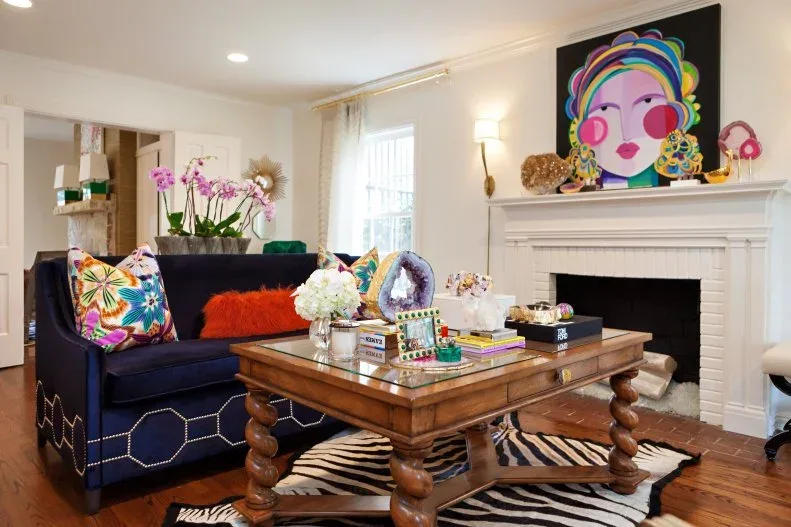
The colorful portrait above the white fireplace becomes the main focal point, echoed by bright cushions on the dark sofa. A large wooden coffee table gives the arrangement visual weight beneath the playful accessories. The zebra-patterned rug adds another strong graphic layer without repeating the portrait's colors.
Keep a busy mantel display smaller than the picture above it so the focal point remains easy to read. A substantial table needs generous room around its corners and legs. Leave part of its surface clear for everyday use rather than filling the whole top with ornaments.
IDEA 12 / 20
Display collections on a broad open shelf
 SaveSupport Non AI Creator
Image credit: Photo: Tessa Neustadt . From: Blackband Design
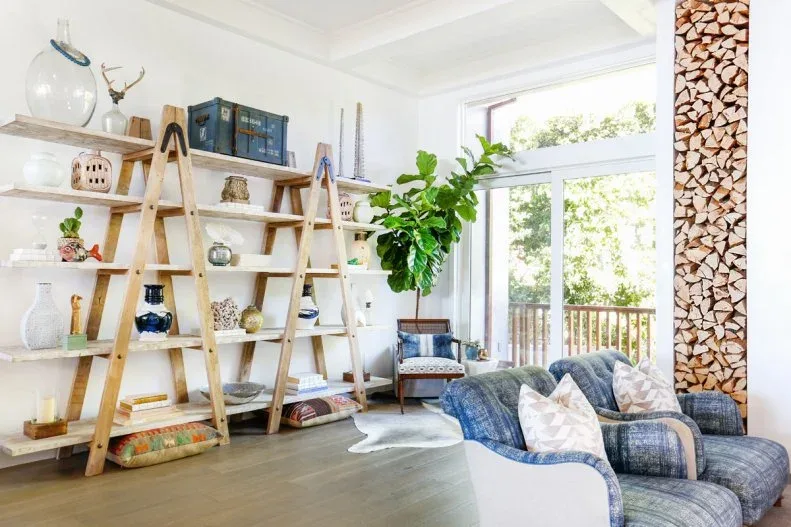
Wide open shelving brings books, vessels and small decorative pieces into this pale living room. The ladder-like supports give the display a stronger shape, while a blue chair and leafy plant keep the lower part of the room colorful. The adjacent glazed doors leave the collection well lit during the day.
Choose shelves with secure supports and suitable load ratings, then place heavier pieces lower down. Group objects with a little breathing room instead of filling every shelf edge. Keep the collection away from door handles and remember that exposed displays require regular dusting.
IDEA 13 / 20
Use curtains as the room's boldest color
 SaveSupport Non AI Creator
Image credit: Photo: Gerardine and Jude Vargas. From: BOXHILL
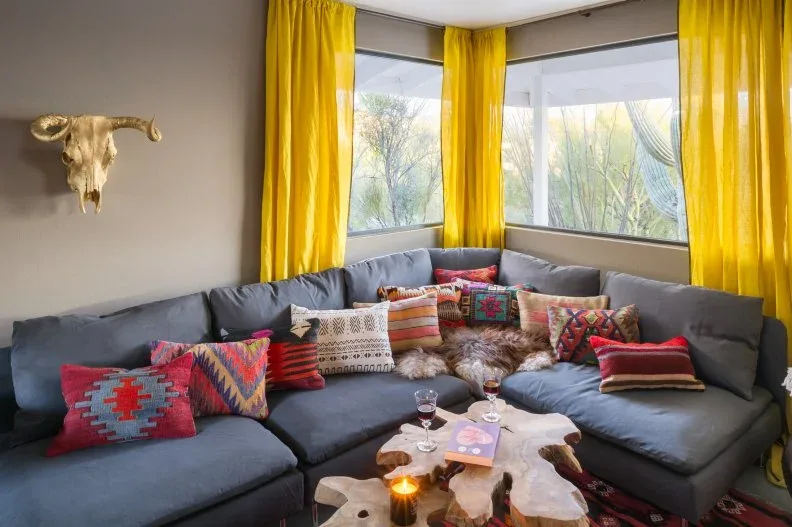
Yellow curtains frame the broad windows above a gray sectional, making the window wall the brightest part of the room. Red cushions add smaller warm accents across the seats. The irregular coffee table contrasts with the sofa's orderly shape, while the gray upholstery holds the varied patterns together.
A strong curtain color changes the room even when the rest of the furniture stays the same. Look at a fabric sample both open and gathered before buying. Leave room to operate the windows, and keep enough cushions off the seats for people to settle in comfortably.
IDEA 14 / 20
Bring a deep wall color around the window
 SaveSupport Non AI Creator
Image credit: Photo: SuzAnn Kletzien. From: SuzAnn Kletzien
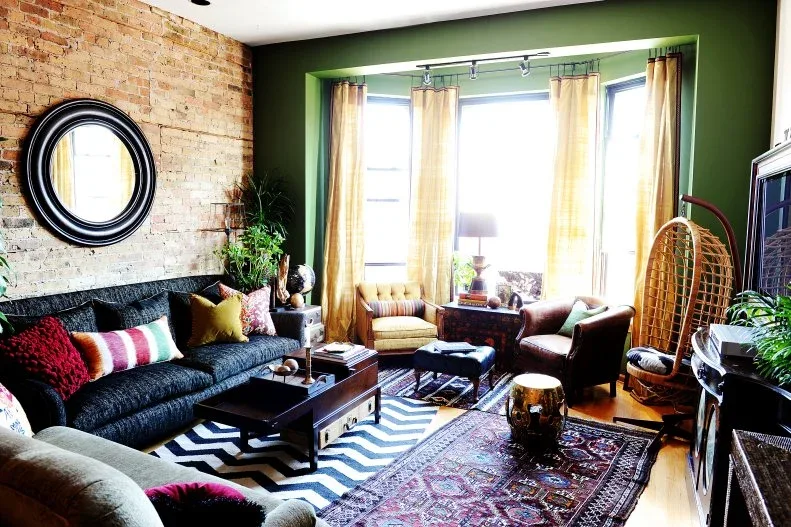
Deep green surrounds the bay window and meets an exposed brick wall, setting a rich background for the dark sofa. Pale curtains soften the window edges. A hanging chair brings a different shape to the corner, while layered rugs carry contrasting patterns through the middle of the room.
Test a dark green beside the existing brick before painting; their undertones need to feel comfortable together. Keep the window dressing easy to open so daylight remains available. Use secure rug pads and avoid overlapping edges in the route between the sofa and doorway.
IDEA 15 / 20
Repeat a warm color at several heights
 SaveSupport Non AI Creator
Image credit: Photo: Stacy Zarin Goldberg
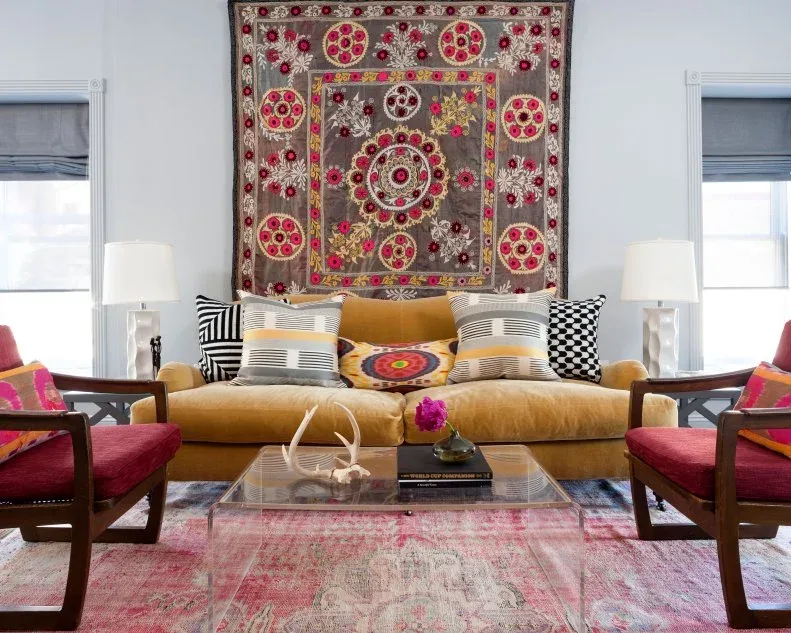
Warm gold upholstery sits below a tall patterned wall textile, with pink repeated in the side chairs and rug. Black-and-white cushions add a sharper contrast to the softer warm colors. The glass table keeps the view of the rug open, helping the layers feel connected rather than stacked behind opaque furniture.
Choose one warm color family and repeat it at floor, seat and wall height for an intentional mix. The shades can vary; exact matches are unnecessary. If the rug is already vivid, use simpler everyday accessories on the table so the room retains places for the eye to rest.
PART 04
Bring the layers into everyday life
IDEA 16 / 20
Give a familiar lounge chair a collected setting
 SaveSupport Non AI Creator
Image credit: Photo: Miha Matei
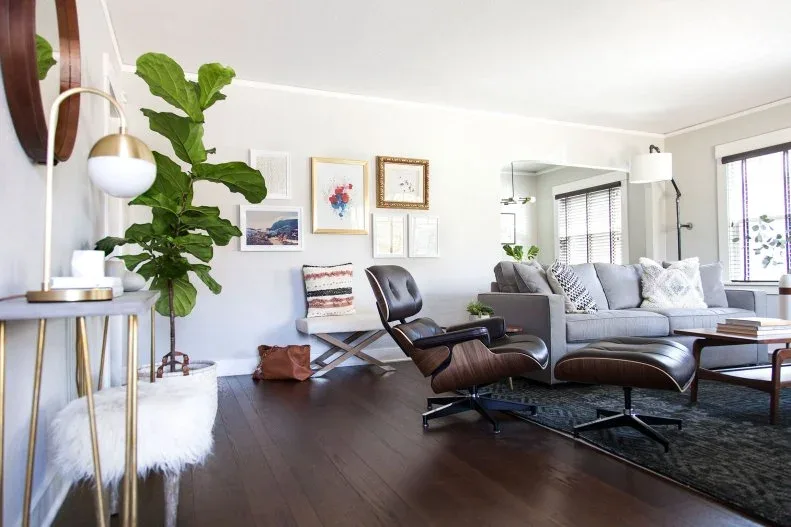
The black lounge chair and ottoman bring a sculptural outline into a room furnished with a gray sofa and several different framed pictures. A tall leafy plant softens the corner, and patterned cushions add smaller textile details. The dark floor helps connect the chair with the rug beneath it.
An ottoman is useful only if the layout leaves room to put your feet up without blocking passage. Check that clearance before choosing a large lounge chair. Mix frame sizes around a common spacing rhythm, and keep plant pots protected so watering does not damage the floor.
IDEA 17 / 20
Warm a sunny corner with a pale pink sofa
 SaveSupport Non AI Creator
Image credit: Photo: TravisJPhotography.2013. From: Mollie Openshaw
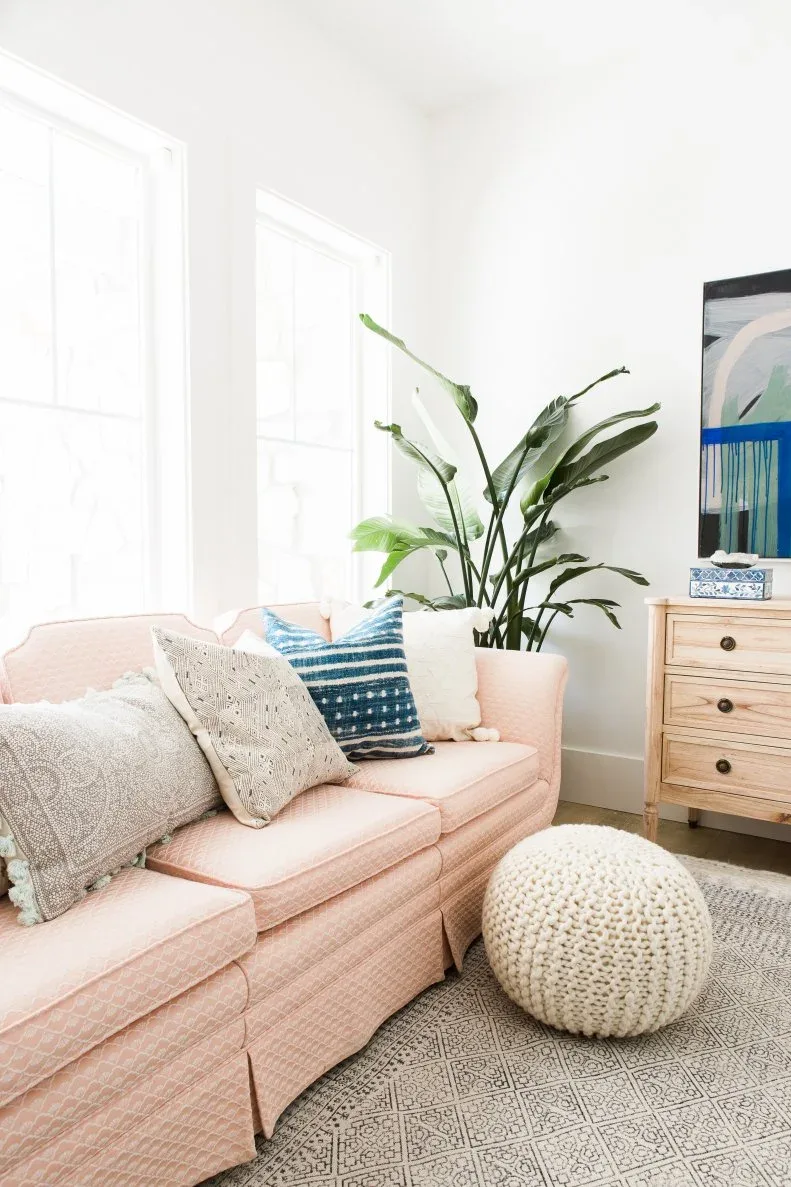
Pale pink upholstery warms this sunny corner without turning the entire room bright pink. A blue striped cushion provides a cooler accent, and the knitted pouf adds a different texture beside the sofa. The nearby wooden chest gives the airy arrangement a useful solid piece for storage.
Compare pale upholstery samples beside the window because strong daylight can change how the color looks. A washable cover or suitable cleaning routine matters more than a delicate finish. Keep a pouf close enough to use while leaving access to the chest's drawers.
IDEA 18 / 20
Give a compact room several small patterns
 SaveSupport Non AI Creator
Image credit: Photo: LABL studio. From: LABLstudio
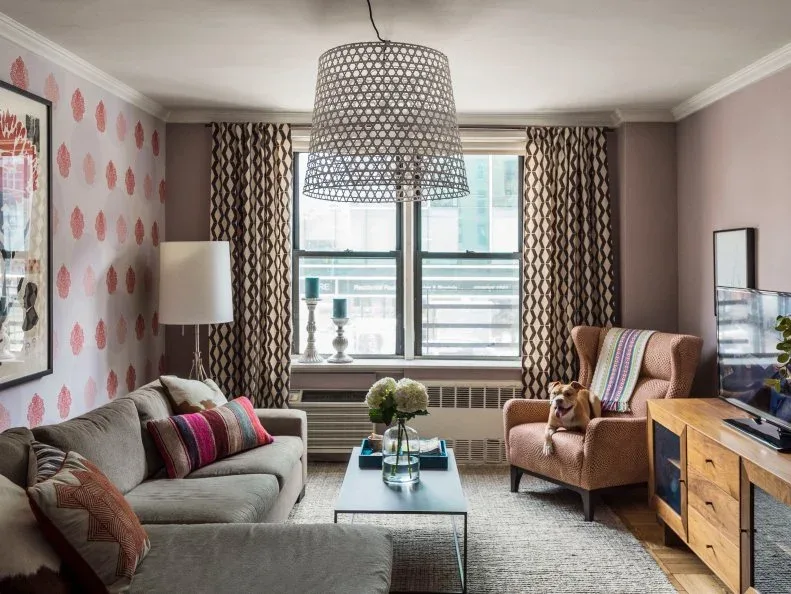
Small pink motifs on the wall sit beside larger zigzag curtains, allowing the patterns to feel different rather than competing at the same scale. A gray sofa keeps the largest furniture piece quiet. The woven armchair and shaded pendant add texture within a compact seating arrangement around the narrow table.
Vary the scale of patterns when several need to share a small room. Keep the largest upholstered piece relatively plain if changing it later would be expensive. Check that curtains do not cover heating or cooling equipment, and preserve space to move between the sofa and table.
IDEA 19 / 20
Leave open floor space around a bright rug
 SaveSupport Non AI Creator
Image credit: Photo: Claire Esparros for Homepolish. From: Justin DiPiero
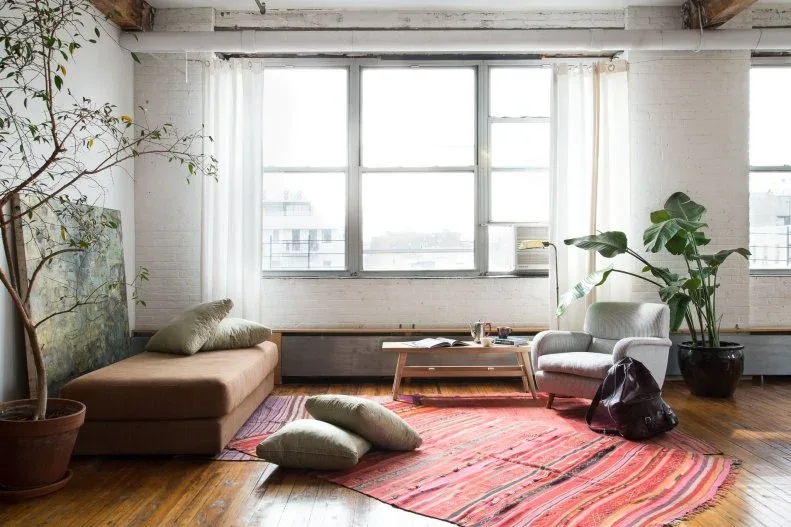
A red striped rug defines this loft's sitting area, with a low brown sofa on one side and a pale chair on the other. Plants soften the white brick walls and broad windows. The empty floor around the rug gives the furniture room to breathe rather than filling the whole loft with seats.
Use a rug to establish a seating zone before deciding whether you need more furniture. Floor cushions suit some households but are harder to get up from than a chair. Keep a conventional comfortable seat available, and place drinks on a stable table rather than the rug.
IDEA 20 / 20
Let exposed beams frame a layered sitting room
 SaveSupport Non AI Creator
Image credit: Photo: JWT Associates. From: Jeff Troyer Associates
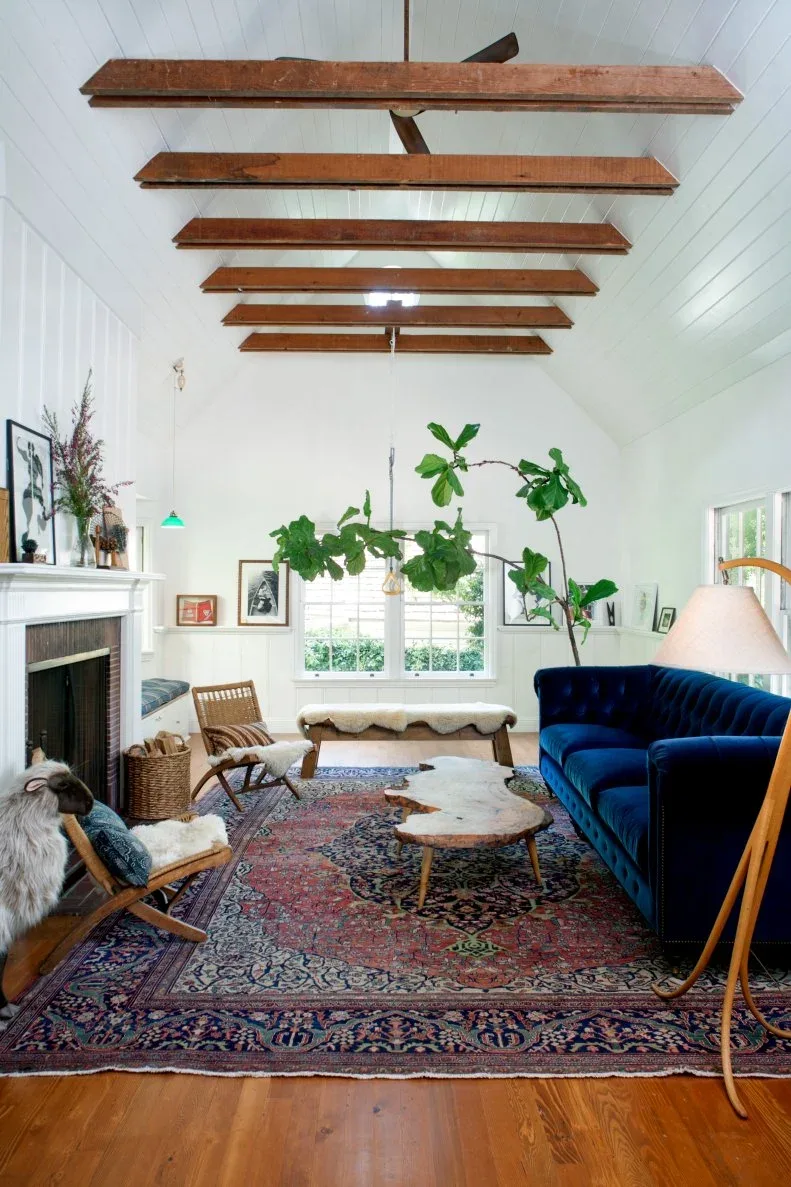
Exposed wooden beams frame a sitting room with a blue sofa, open chairs and a deeply patterned rug. A pale bench below the window adds another low horizontal line, while the irregular table brings a contrasting shape into the center. Leafy plants soften the tall white walls around the furniture.
Choose lower furniture when you want exposed ceiling details to remain a prominent part of the room. Give each seat a useful view and an accessible surface rather than arranging everything only for the photograph. Keep plant growth out of the window opening and inspect rug edges regularly.
BRING IT ALL TOGETHER
Keep the room personal and usable
Choose the pieces that make daily life more comfortable before adding another layer of pattern. A favorite textile or picture has more presence when the seating works and the tables still have room for a cup.
Build the mix gradually. If an arrangement makes cleaning, watering plants or moving through the room awkward, change that part before adding more accessories.