A classic entryway makes the arrival home feel considered without putting decoration ahead of daily use. A place for keys, room to remove shoes and a clear route past the front door matter as much as the mirror or lamp you choose.
These entrances combine traditional details with several different color palettes. Borrow the arrangement that suits your hallway's width, daylight and storage needs rather than assuming a welcoming entrance must be large or furnished symmetrically.
PART 01
Give traditional details room to show
IDEA 01 / 20
Use a colorful console beneath an ornate mirror
 SaveSupport Non AI Creator
Image credit: Vanrenen GW Designs
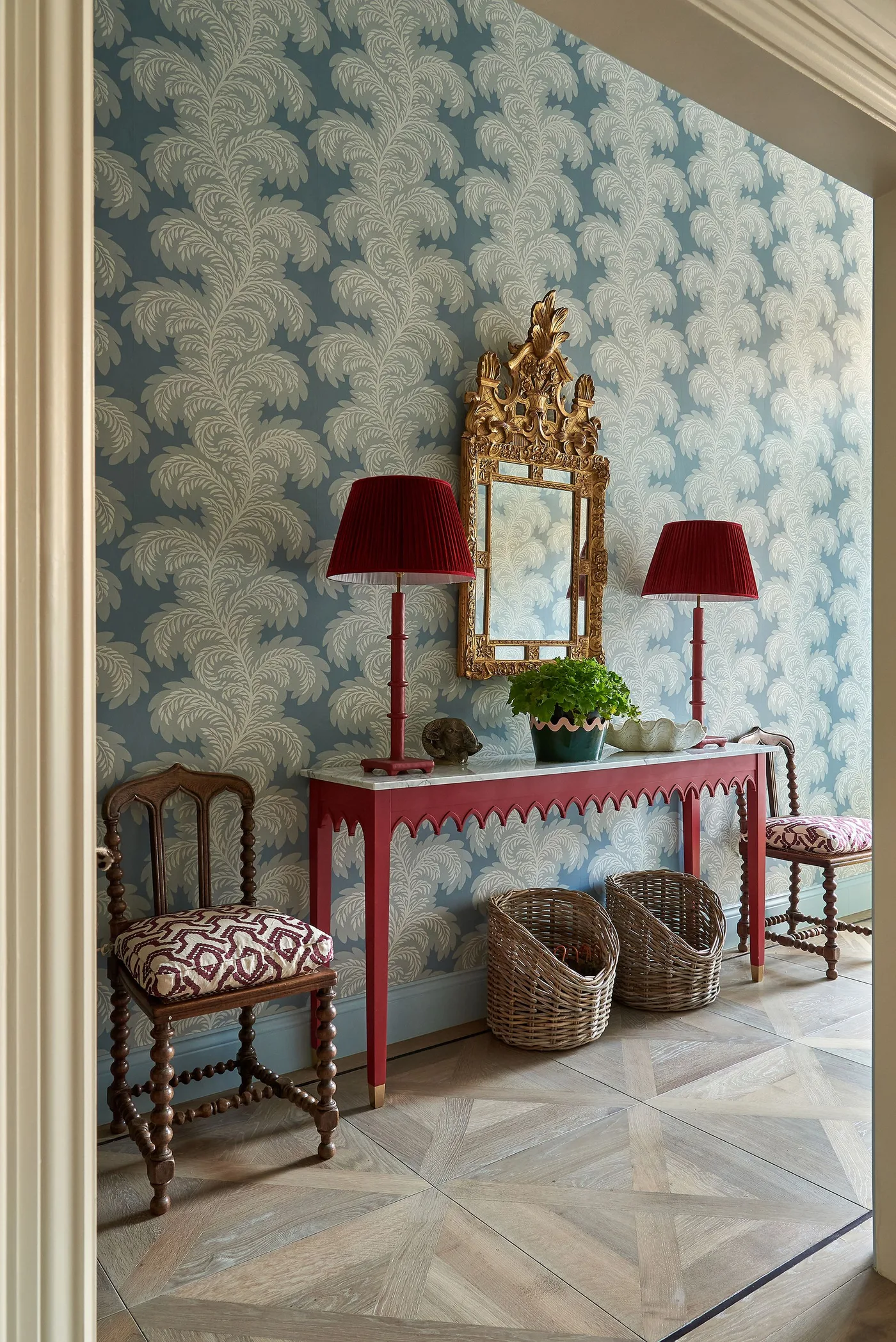
The slim red console and two red-shaded lamps give the blue patterned wall a warm contrast. An ornate gold-colored mirror sits between the lamps, while patterned chairs balance the arrangement at either end. Baskets beneath the table add a practical lower layer without covering the decorative front edge.
Start with the console's depth when planning a narrow entrance, because paired chairs need extra space beyond the tabletop. Choose baskets that slide out easily and leave the doorway route clear. Repeat a strong color in a few pieces rather than trying to match every accessory.
IDEA 02 / 20
Let a traditional staircase share a bright wall color
 SaveSupport Non AI Creator
Image credit: Future / Darren Chung
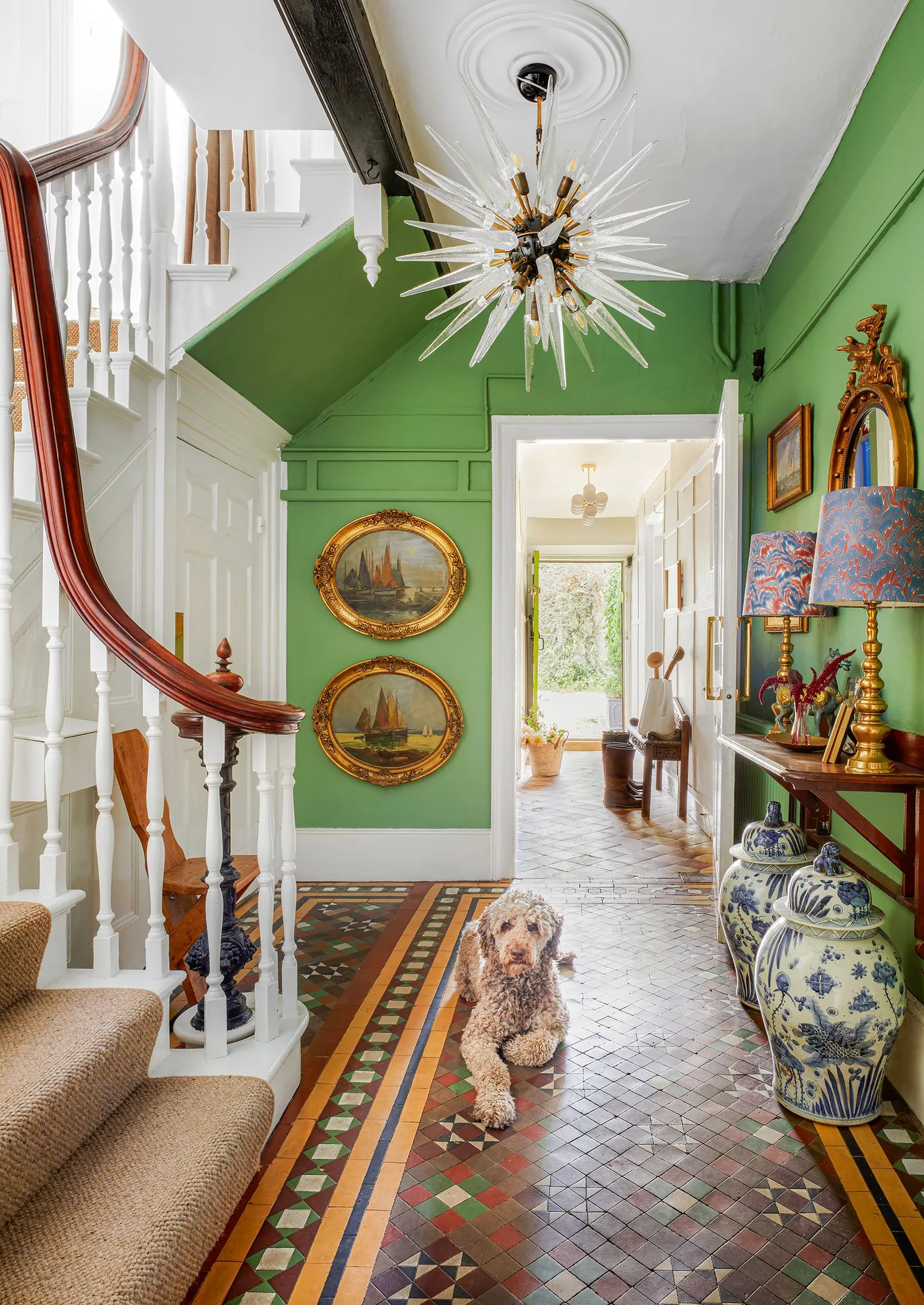
Bright green walls make the white staircase and warm wooden handrail stand out. Ornate framed pictures and a large mirror keep traditional details visible within the colorful setting. Patterned floor tiles add another layer below, with the narrow console following the wall rather than occupying the middle of the passage.
A traditional hallway can take a strong color when its trim supplies a clear contrast. Test the shade near the stair shadow as well as the front door. Keep console accessories within the furniture's footprint and leave the handrail unobstructed for people using the stairs.
IDEA 03 / 20
Build a formal greeting around a mural
 SaveSupport Non AI Creator
Image credit: Polly Wreford
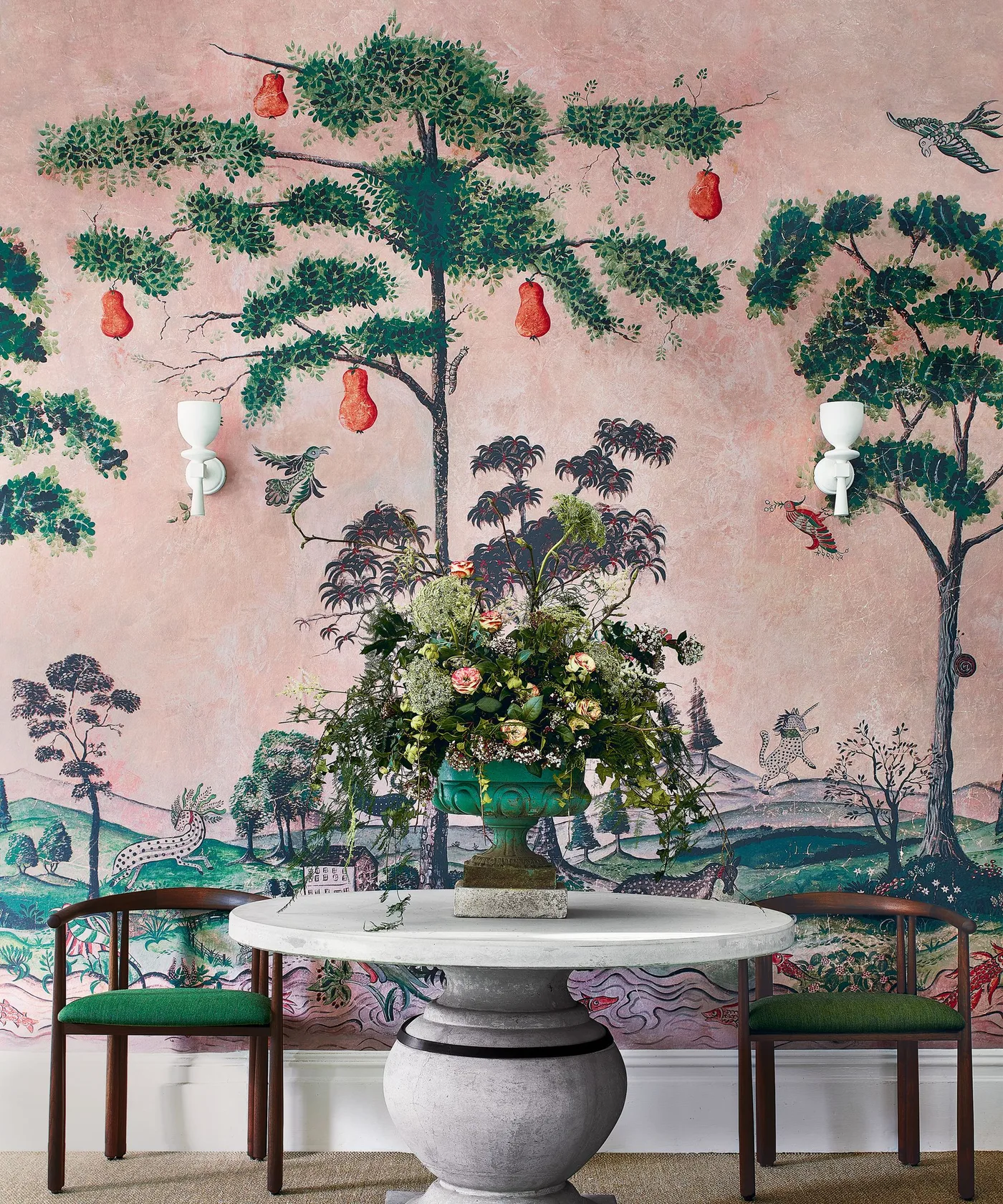
A landscape mural with a pink background gives this entrance a broad decorative scene. The round pedestal table sits between two green chairs, repeating the trees' darker color at seating height. Paired pale sconces add a balanced arrangement without covering large sections of the mural with framed pictures.
A central table needs enough room to walk comfortably around it from every doorway. Check that first before choosing a statement arrangement for an entrance. Keep a floral display low or narrow enough for useful sightlines, and select a wall finish suited to the traffic it will receive.
IDEA 04 / 20
Guide the entrance with a simple striped runner
 SaveSupport Non AI Creator
Image credit: Fitzroy flatweave wool runner in Midnight by Roger Oates
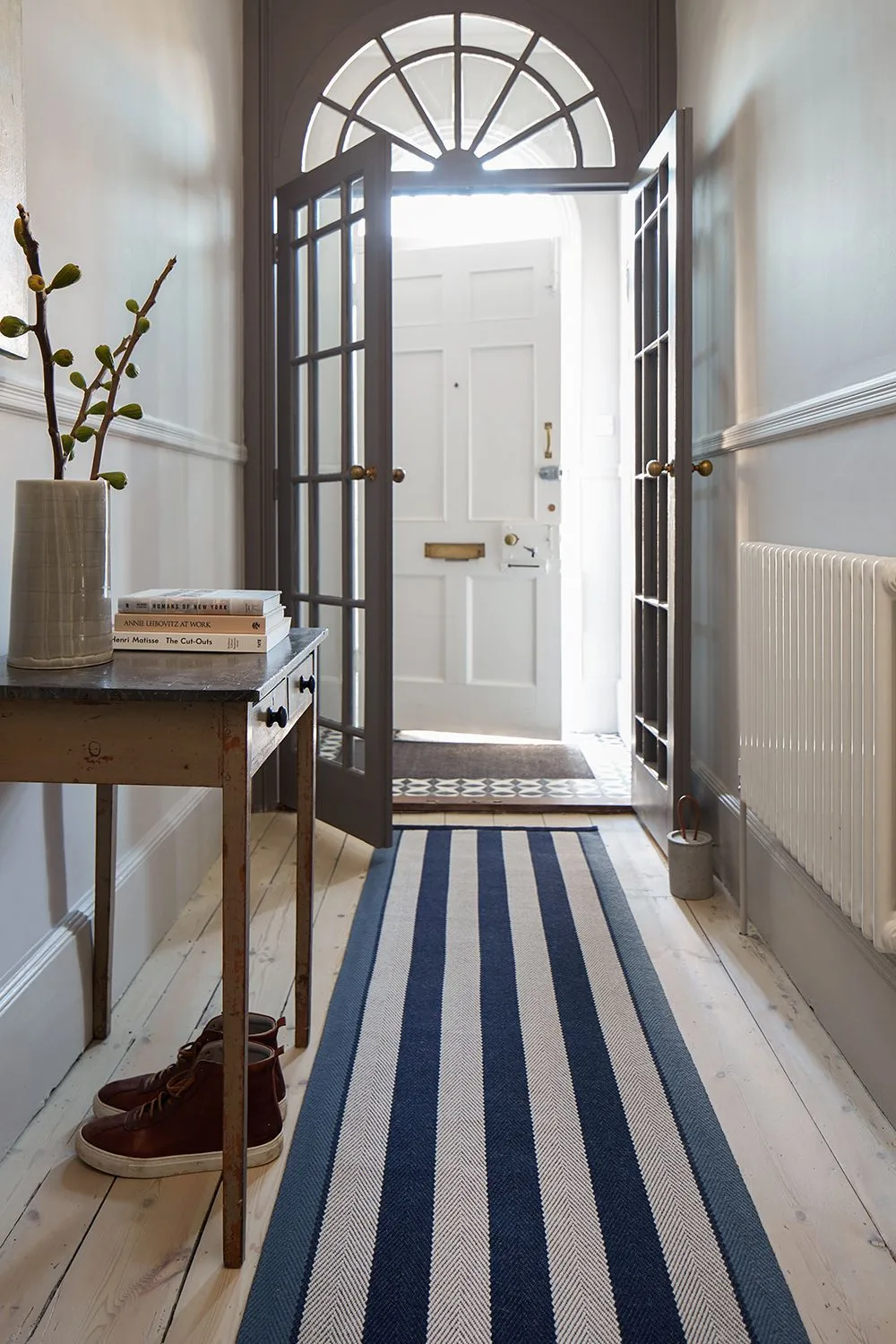
Blue and white stripes draw a line through this pale hallway toward the front door. The slim wooden console adds a useful surface without narrowing the whole passage. Dark-framed glazed inner doors give the entrance a more defined outline while allowing daylight to continue into the hall.
Choose a runner length that leaves door swings and thresholds unobstructed. Use an appropriate nonslip underlay and inspect the ends for curling. A slim console should still be stable for daily use; avoid setting heavy objects close to its edge where bags or coats could knock them.
IDEA 05 / 20
Soften a glazed front door with a patterned curtain
 SaveSupport Non AI Creator
Image credit: Vanessa Arbuthnott
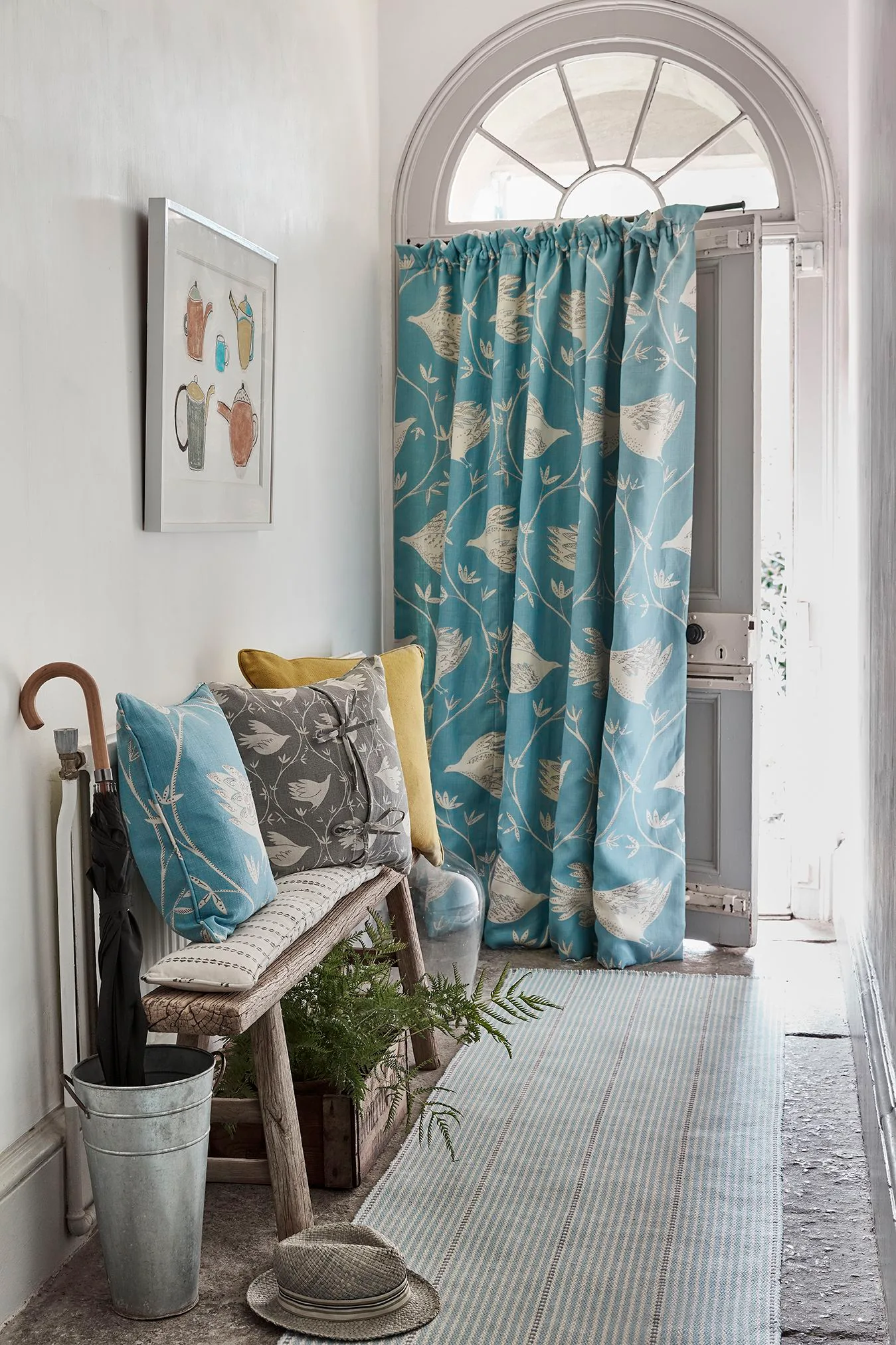
A blue bird-patterned curtain softens the glazed front door beneath its arched window. Matching blue appears on a bench cushion, while yellow supplies a smaller warm accent. The wooden bench gives the entrance a place to sit, and the umbrella container keeps a daily necessity close to the door.
A door curtain must draw completely clear of the opening and its locking hardware. Check its movement with the door fully open before installation. Keep wet umbrellas in a suitable container, and choose removable bench cushions if they will regularly meet damp coats or outdoor clothing.
PART 02
Fit useful storage into the entrance
IDEA 06 / 20
Use a console shelf for accessible baskets
 SaveSupport Non AI Creator
Image credit: Sims Hilditch
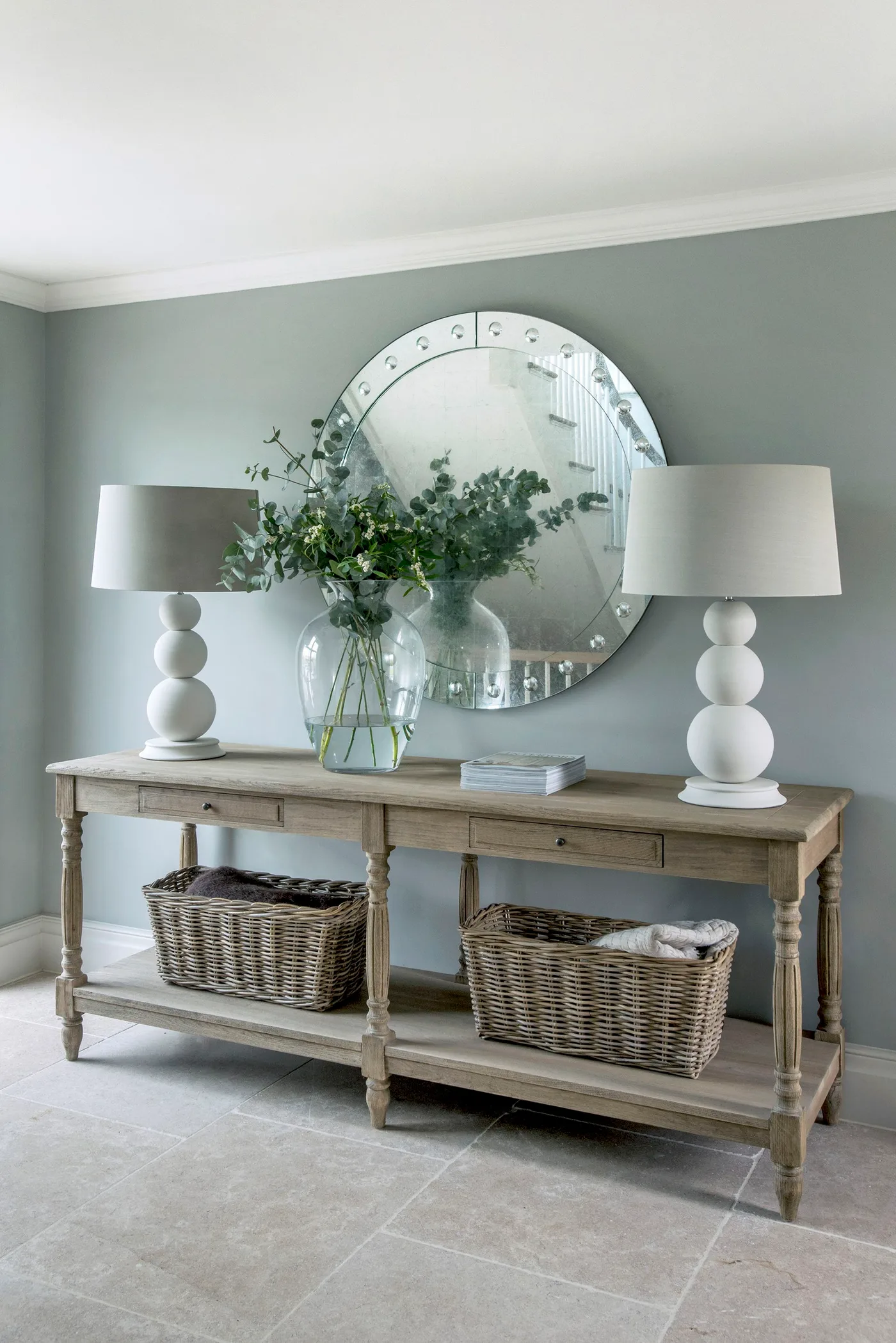
A wooden console provides a broad surface below the round mirror, with two pale lamps forming a balanced pair. Baskets on the lower shelf turn the display into useful storage. The muted green wall keeps the arrangement softer than a stark white background while allowing the lamp shapes to remain clear.
Measure basket handles and shelf clearance so storage is easy to pull out rather than merely attractive. Leave part of the tabletop for keys or mail. Protect the wood beneath the flower vessel and route both lamp leads where they cannot catch on a basket or passing bag.
IDEA 07 / 20
Give wall paneling a gentle two-tone treatment
 SaveSupport Non AI Creator
Image credit: Paper & Paint Library
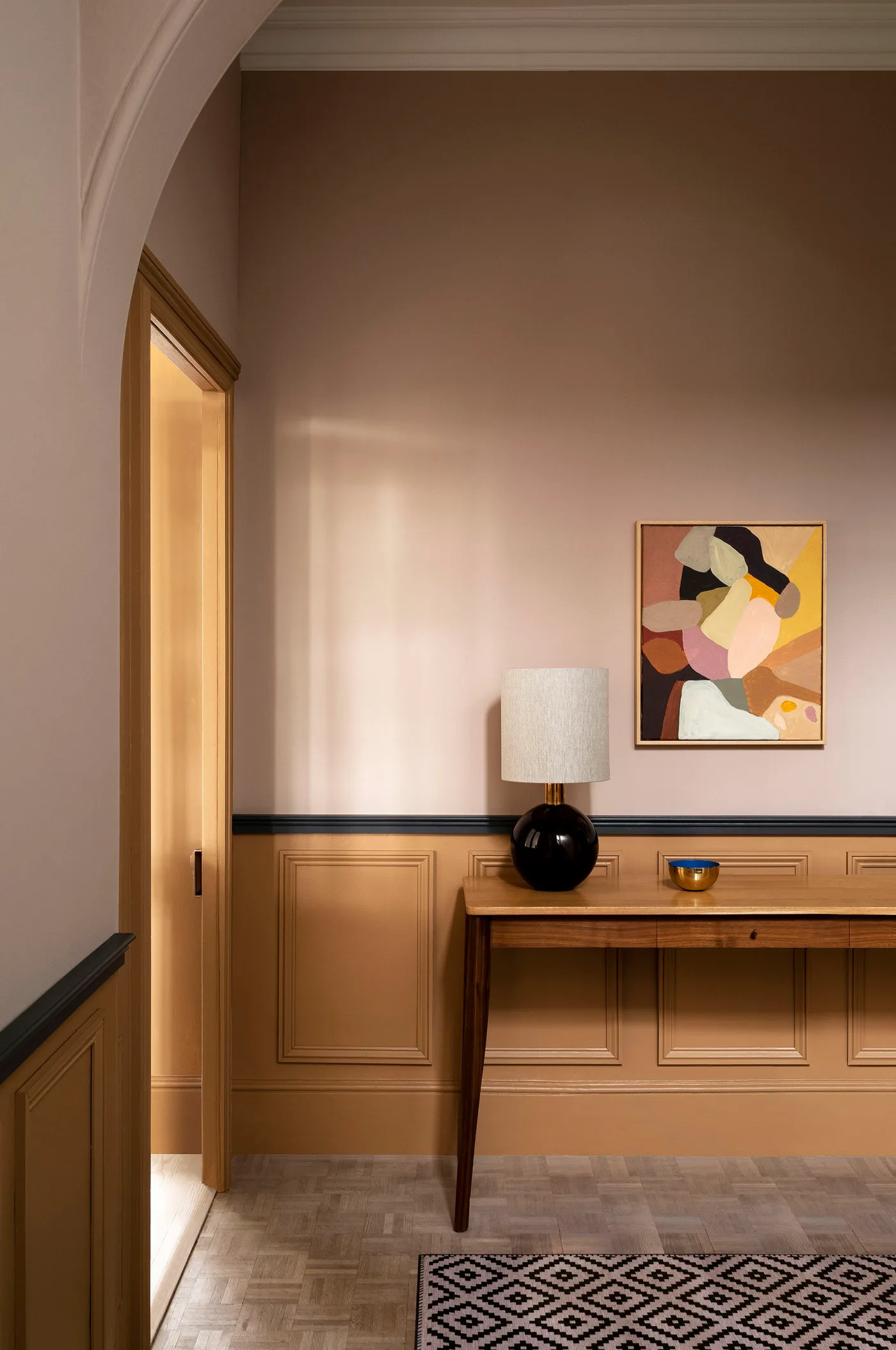
Warm pink walls meet ochre lower paneling beneath a thin dark line. The simple wooden console lets the wall details remain visible, with a shaded black lamp repeating the darker trim. A small abstract picture adds another color connection without replacing the paneling as the main decorative feature.
Try the upper and lower colors together before painting; their relationship matters more than choosing each separately. Select a finish suitable for a frequently touched hallway wall. Keep the console shallow enough for comfortable passage, and confirm the lamp offers useful light where you leave keys.
IDEA 08 / 20
Keep patterned walls beside a pale staircase
 SaveSupport Non AI Creator
Image credit: Manuel Canovas
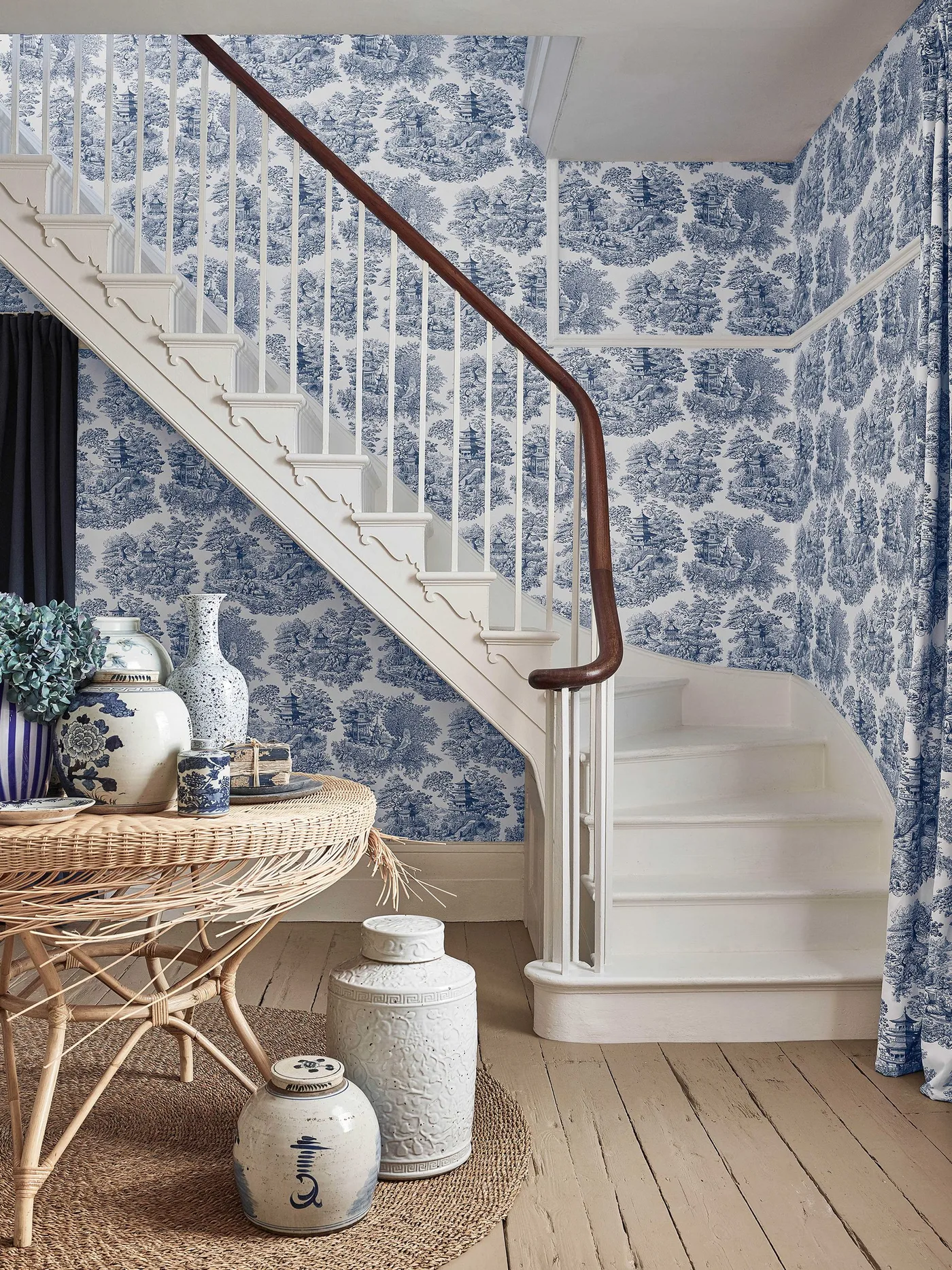
Blue-and-white wallpaper surrounds the pale staircase, with the warm handrail making a clear diagonal line through the pattern. Blue-and-white vessels on the round table echo the wall colors. The table's open woven base adds a different texture without creating another solid block beside the stairs.
Look at a full wallpaper repeat before ordering for a stair wall, where the pattern will be viewed at several heights. Keep furniture beyond the route to the first step. If you display tall vessels near circulation, make sure they are stable and easy to clean around.
IDEA 09 / 20
Use paneled cupboards to conceal daily clutter
 SaveSupport Non AI Creator
Image credit: Little Greene
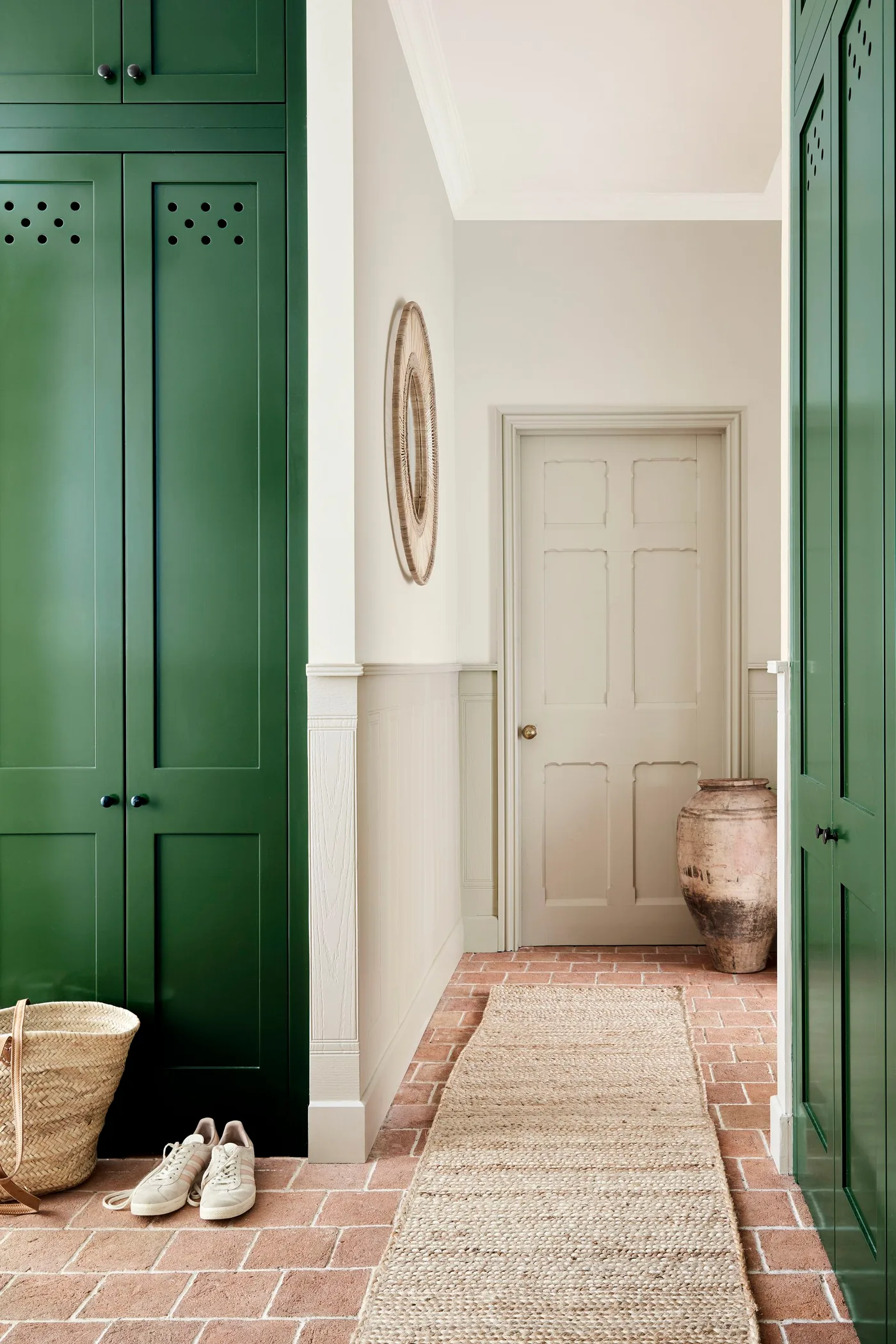
Tall green cupboards give the passage useful closed storage while their paneled doors retain a traditional outline. A pale runner softens the reddish floor and provides a quieter center between the cabinet runs. The white wall and door at the end keep the strong green from enclosing every visible surface.
Plan cupboard interiors around actual coats, bags and shoes before deciding on door details. Check that open doors still leave room for someone to pass where necessary. Choose a runner that tolerates the entrance's cleaning routine, and keep loose footwear inside storage instead of against the walking route.
IDEA 10 / 20
Let a stair runner keep a patterned ceiling calm
 SaveSupport Non AI Creator
Image credit: Brent Darby
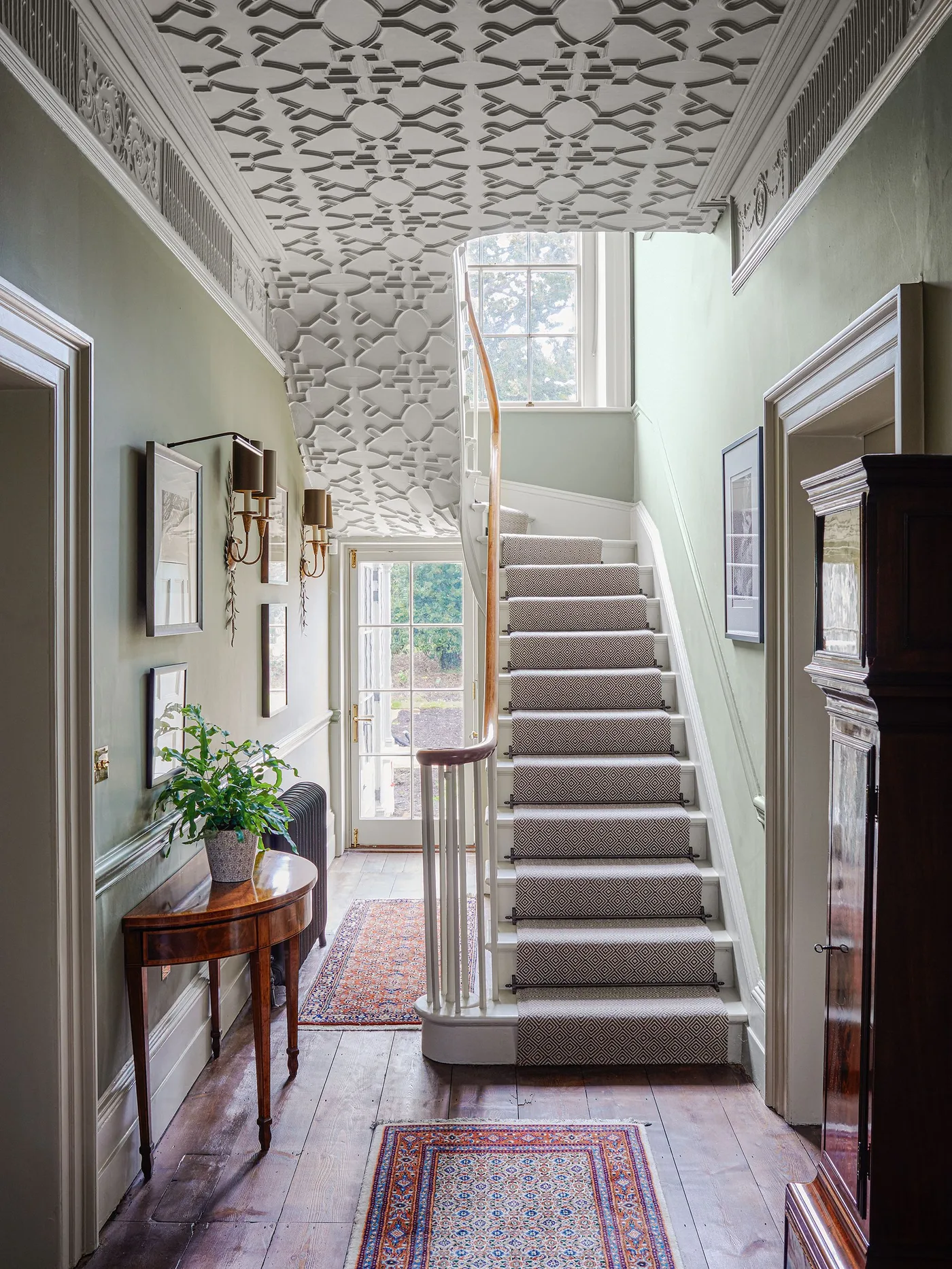
The patterned ceiling adds unexpected detail above a comparatively calm staircase and pale runner. Small rugs bring warmer color to the floor, while a rounded console follows the side wall. Framed pictures and sconces remain spaced apart, leaving the hallway's architectural lines visible through the layered arrangement.
If the ceiling carries a strong pattern, keep the stair covering simpler so the two surfaces remain distinct. Stair runners need appropriate professional fixing for safe use. Avoid loose rugs at the stair landing, and check that the rounded console leaves a clear approach to the first step.
PART 03
Work with mirrors and light
IDEA 11 / 20
Carry closed storage over an internal doorway
 SaveSupport Non AI Creator
Image credit: Future / Kasia Fiszer
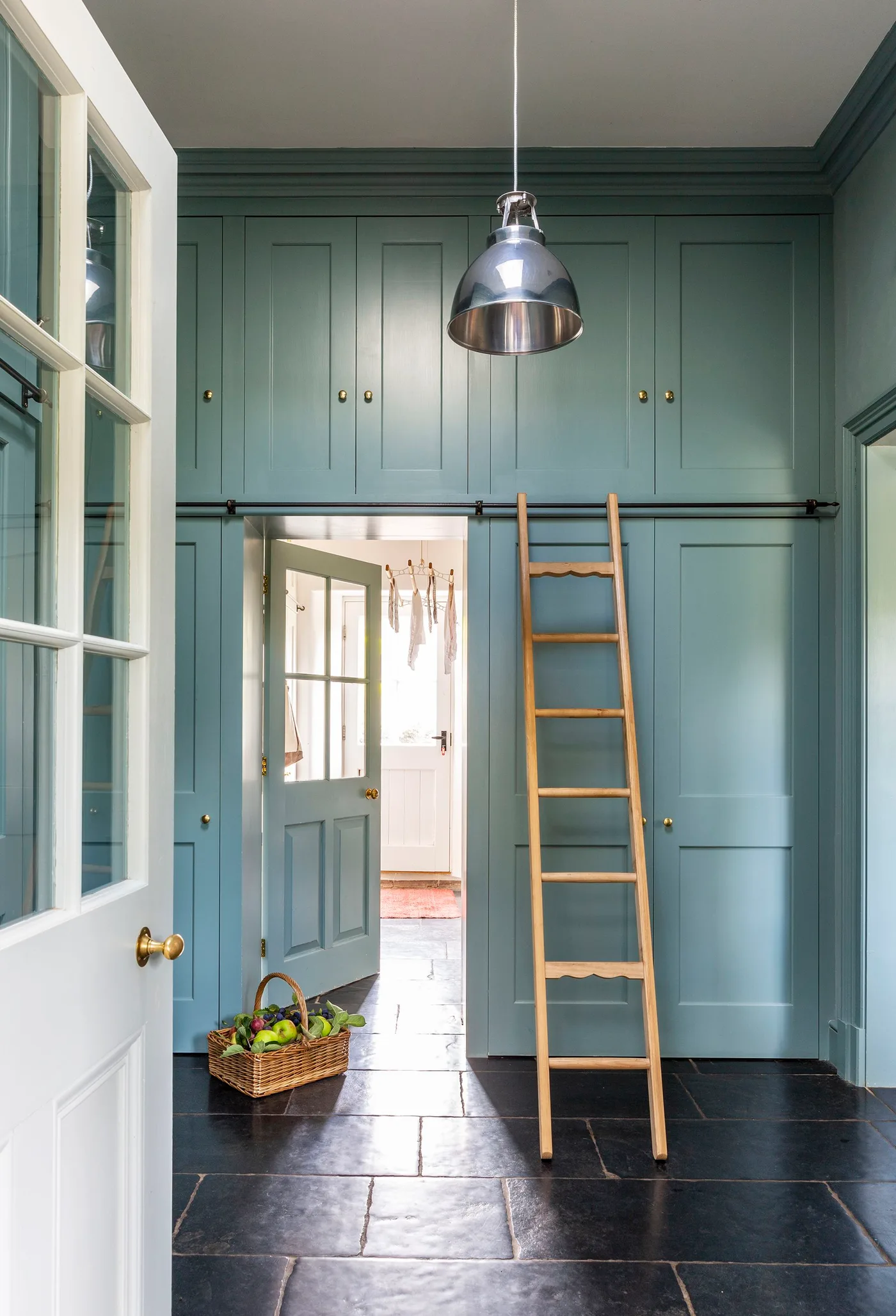
Muted teal cupboards surround the doorway and continue above it, using wall height for storage while retaining paneled fronts. The pale ceiling and darker floor give the cabinet wall clear limits. A wooden ladder provides access to the higher cupboards, making this a more substantial arrangement than a freestanding console.
High storage works best for items used less often, with everyday essentials kept within easy reach. Any ladder arrangement needs suitable installation and safe access rather than an improvised leaning position. Check doorway clearance and leave space to operate the cupboards before committing to storage above an opening.
IDEA 12 / 20
Use a broad mirror where furniture must stay small
 SaveSupport Non AI Creator
Image credit: Heal's
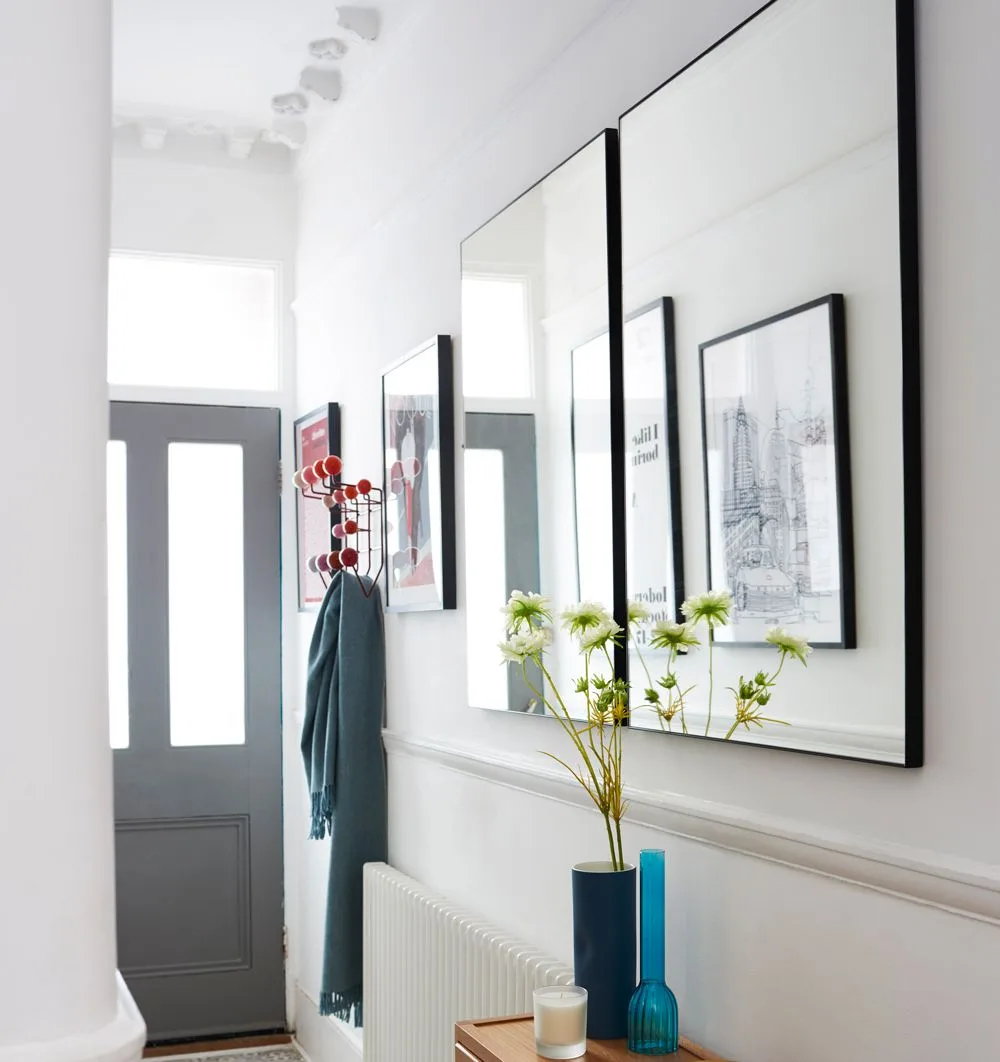
The broad rectangular mirror adds depth to a narrow hallway without requiring a deep piece of furniture beneath it. Blue vases on a small table bring color below the reflective surface. Framed pictures and a gray front door add darker outlines, keeping the pale walls from feeling completely blank.
Choose mirror dimensions for the wall and secure it with fixings suitable for its weight. Keep radiator airflow and maintenance access clear when adding a table nearby. Check the reflection from the doorway so the mirror shows a useful part of the entrance rather than an awkward collection of coats.
IDEA 13 / 20
Choose a narrow console beside the stairs
 SaveSupport Non AI Creator
Image credit: Future PLC/Bridget Peirson
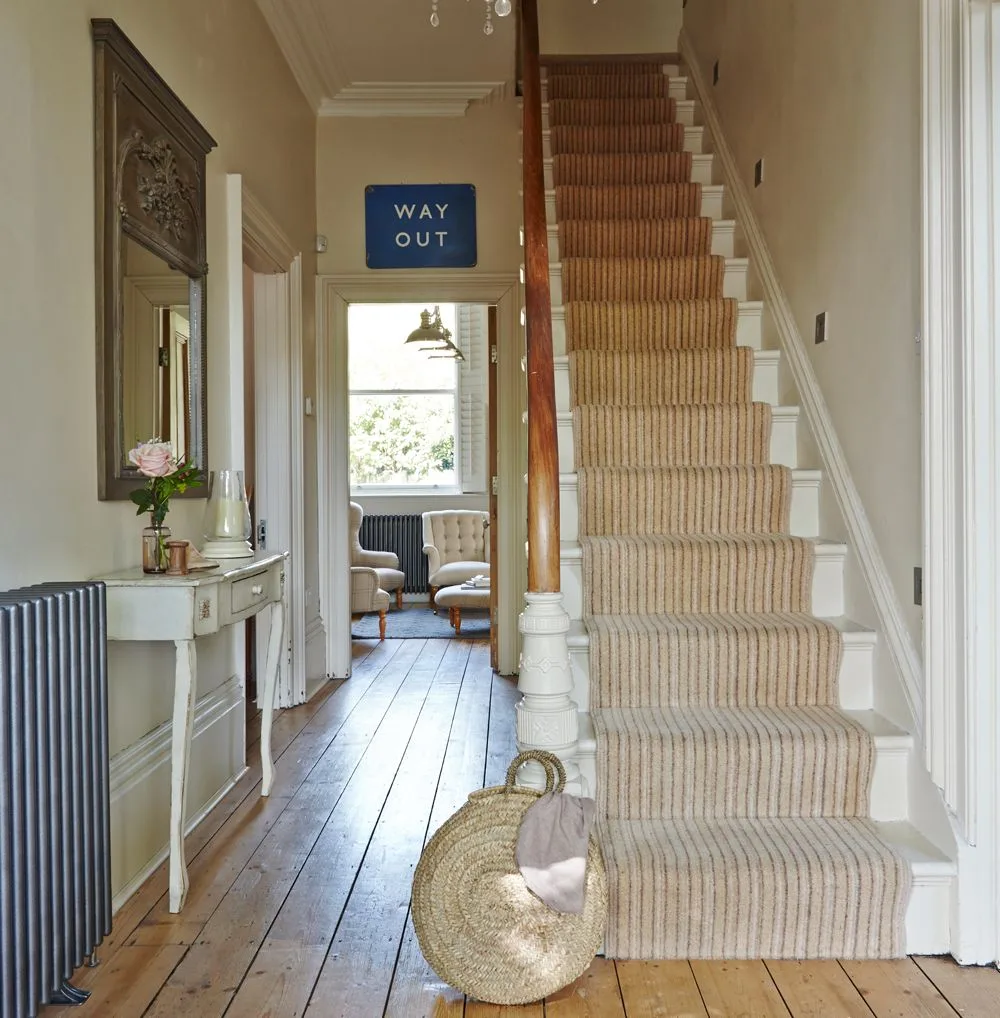
A slim white console fits along the wall beside the traditional staircase. Its pale finish connects with the stair trim, while the runner and warm floorboards add texture below. The darker radiator gives the side wall a clear contrast without needing another large picture or bulky piece of storage.
Measure the remaining passage after adding a console, including its handles and any objects on top. A shallow surface can still hold a small key dish and lamp. Keep the radiator accessible and place flowers in a stable vessel that passing coats will not easily catch.
IDEA 14 / 20
Repeat an arched detail in the hallway lighting
 SaveSupport Non AI Creator
Image credit: Future PLC
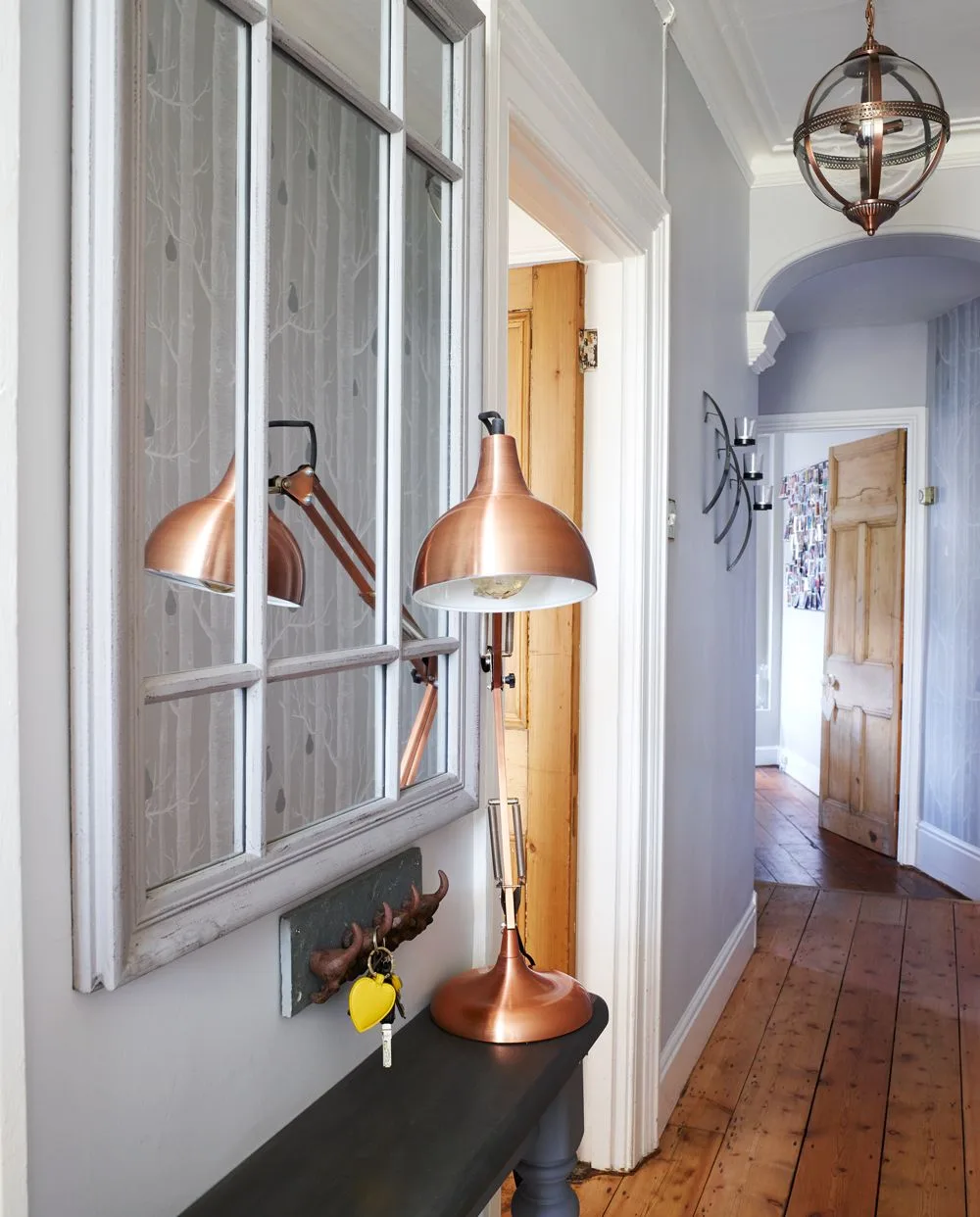
The arched opening leads the view through this narrow hallway, with a framed mirror adding another vertical feature along the side. A copper-colored desk lamp brings warmth below the ceiling lantern. Small wall hooks make everyday storage part of the arrangement rather than leaving keys loose on the console.
A decorative lamp should still illuminate the surface you use when arriving home. Keep its projecting shade within the console's footprint and secure the cable away from hooks. Position wall storage where bags or keys can hang without scraping door trim or catching someone walking through the arch.
IDEA 15 / 20
Use a traditional mirror above quieter paneling
 SaveSupport Non AI Creator
Image credit: Future PLC/Simon Whitmore
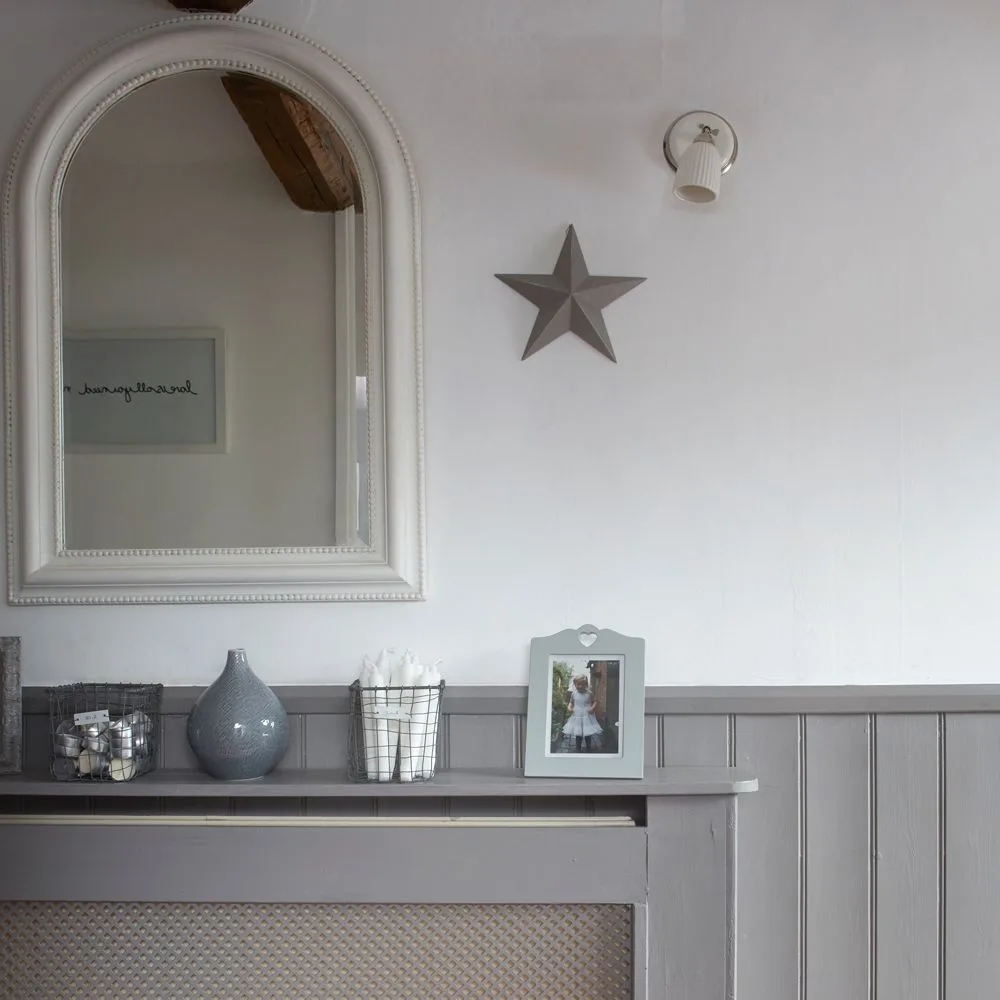
The pale arched mirror brings a traditional outline above the gray lower paneling. A narrow surface over the covered radiator holds a small picture and vessels, keeping the display modest. The white upper wall lets the mirror's molded frame show clearly without adding another strong pattern around it.
Check radiator-cover suitability and airflow before using this arrangement at home. Keep heating controls accessible and avoid heat-sensitive decorations on its top. A few stable objects are enough for a narrow display surface; leave space to wipe it regularly rather than arranging several fragile pieces edge to edge.
PART 04
Keep the hallway ready for everyday use
IDEA 16 / 20
Pair a practical shoe bench with an arched mirror
 SaveSupport Non AI Creator
Image credit: Future PLC/Lizzie Orme
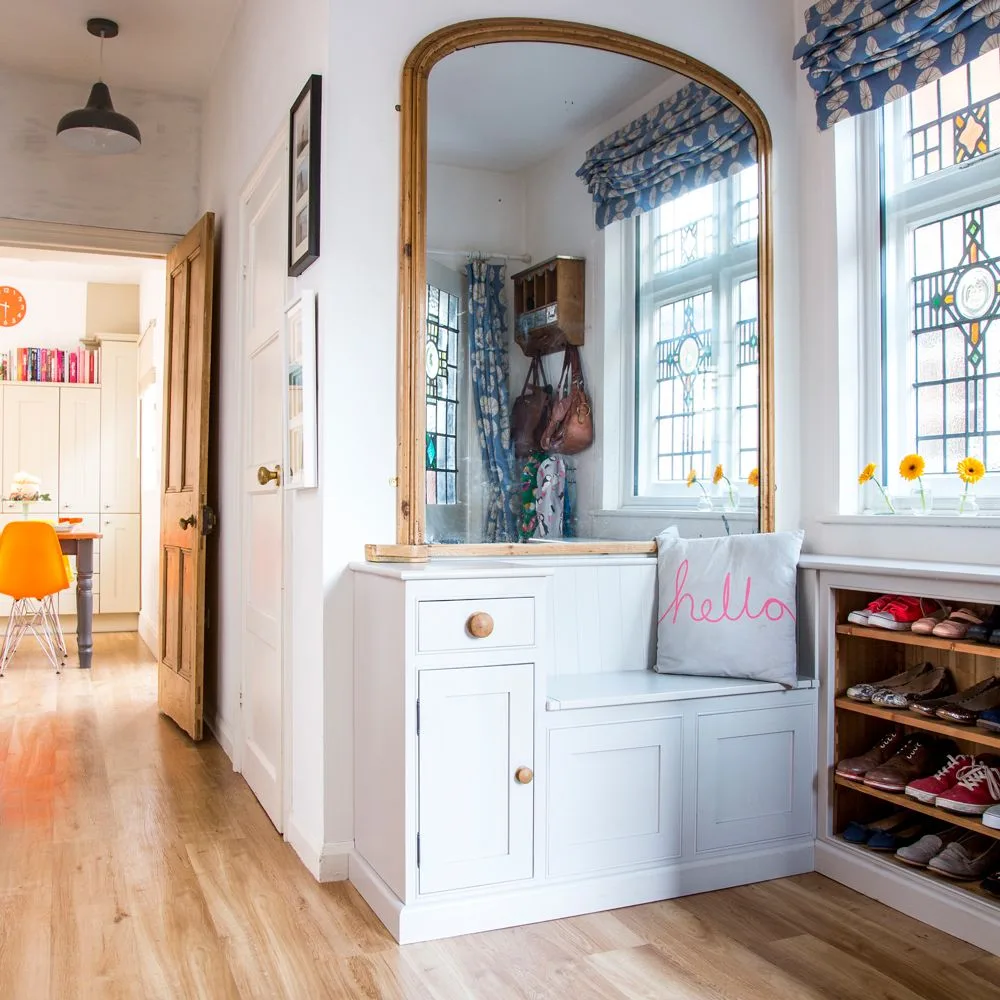
The white bench offers a place to sit beneath a large arched mirror, with a cupboard beside the seat and shoe cubbies on the other side. Blue patterned blinds give the window a softer layer. The mirror's warm frame adds a traditional feature without sacrificing the entrance's everyday storage functions.
Plan shoe storage for the pairs actually worn, including taller footwear that may not fit small cubbies. Test the bench height and leave the cupboard door easy to open. Use a washable cushion if needed, and secure the large mirror rather than leaving it casually balanced over a busy seat.
IDEA 17 / 20
Use a compact cupboard beneath a tall mirror
 SaveSupport Non AI Creator
Image credit: Future PLC
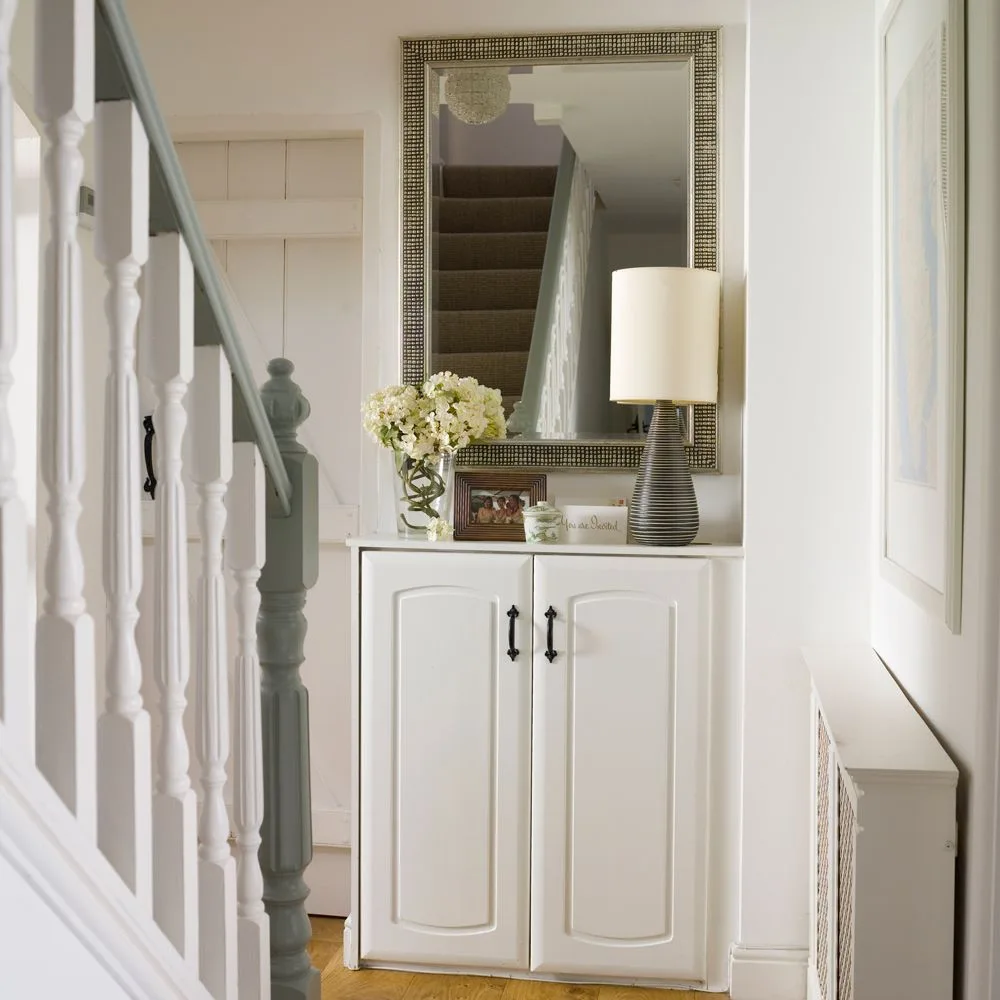
A white paneled cupboard provides closed storage beneath the tall mirror, making the arrangement more practical than a display-only table. Gray-green stair trim adds a soft contrast to the pale walls. A shaded lamp and flowers bring smaller welcoming details without covering the cupboard's useful top surface entirely.
Check whether a compact cupboard holds the items you intend to hide, not just whether its width fits the wall. Leave handles and hinges accessible beside the stair rail. Use a small dish for daily essentials and keep electrical leads clear of the cupboard doors.
IDEA 18 / 20
Give a narrow staircase a clear dark center
 SaveSupport Non AI Creator
Image credit: Future PLC/Colin Poole
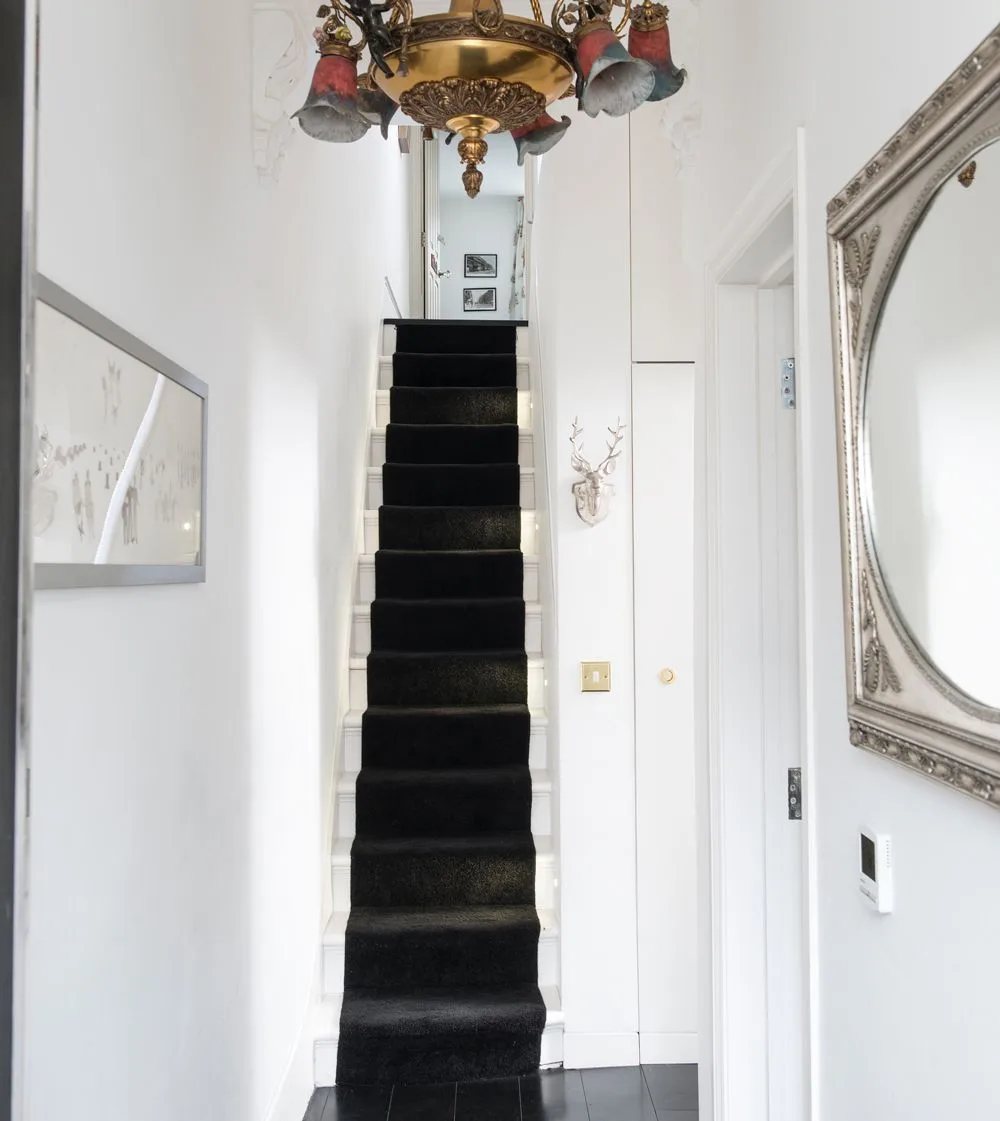
A dark stair runner creates a clear center within the white staircase and narrow walls. Ornate lighting and framed mirrors bring traditional detail without adding furniture at the stair base. The pale wall surfaces leave those darker accents easy to read, keeping the entrance visually ordered despite its limited width.
A narrow hall may work better without a console if furniture would crowd the first step. Keep decorative mirrors securely fixed and the handrail free to grasp. Choose stair covering for traction and appropriate installation, and ensure lighting reaches the steps rather than only highlighting the ceiling fixture.
IDEA 19 / 20
Make a collected mirror wall the main display
 SaveSupport Non AI Creator
Image credit: Future PLC
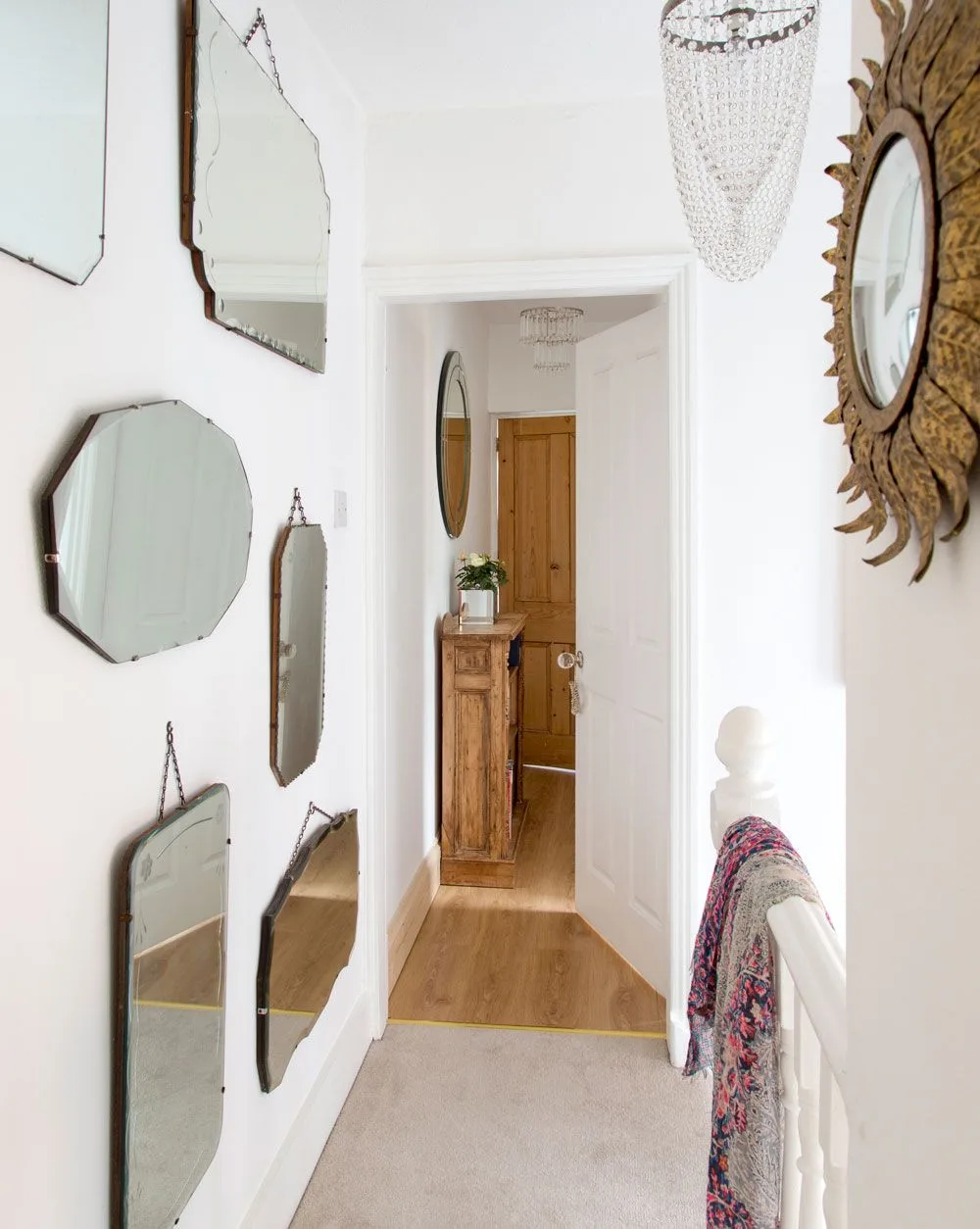
Several differently shaped mirrors create a collected display along one pale wall. The larger sunburst mirror provides a warmer contrasting shape on the opposite side, with a small wooden table close to the door. The arrangement keeps most decoration on the walls, leaving the narrow floor area relatively clear.
Map a group of mirrors before hanging and check what each reflects from the entrance. Secure every piece for its weight and avoid sharp projecting frames in a tight passage. If the collection feels too busy, keep one wall quieter rather than adding more mirrors to balance it.
IDEA 20 / 20
Keep a traditional passage simple with hooks and a mirror
 SaveSupport Non AI Creator
Image credit: Future PLC/Jonathan Jones
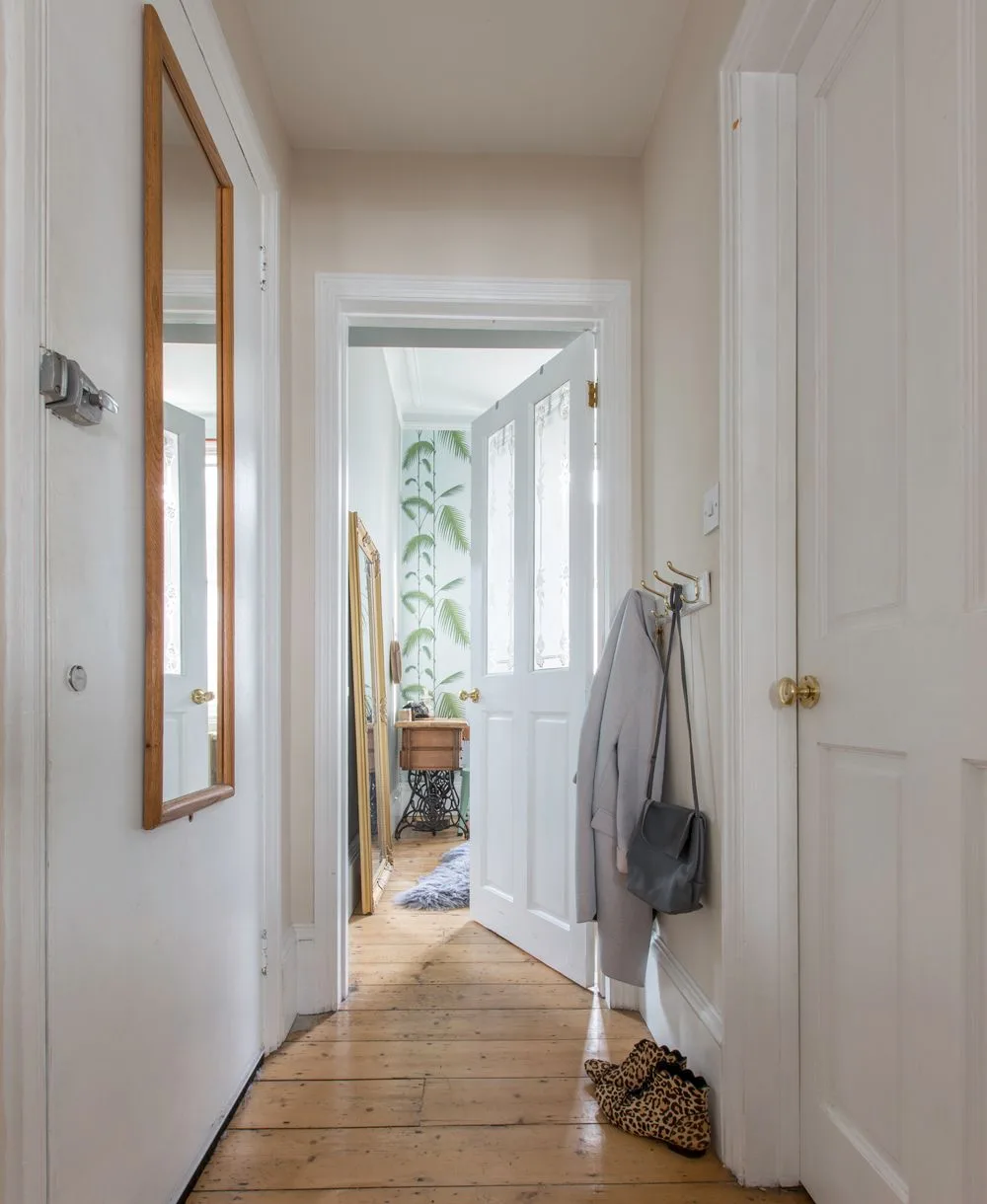
White paneled doors and warm floorboards give this narrow passage a traditional structure. A tall wooden-framed mirror adds a useful reflective surface without a console beneath it. Coat hooks provide the main everyday storage, leaving the floor clear and the adjoining doorway visible at the end of the hall.
In a small entrance, a few useful wall fittings may be more comfortable than another cabinet. Fix hooks for the expected weight and place them where hanging coats will not block doors. Keep shoes in suitable storage rather than using the clear passage as a permanent parking place.
BRING IT ALL TOGETHER
Make the entrance useful before adding another detail
Choose one arrangement that suits the hallway's width: a console, a compact cupboard or simply a mirror and hooks. Traditional color and decorative detail can grow around that practical starting point.
Keep the doorway, stairs and everyday storage easy to use. A welcoming entrance feels cared for when you can arrive home, put things away and move into the house comfortably.