A corner mudroom may use two adjoining walls, a recessed seat or a smaller storage position beside a doorway. Those arrangements have different advantages, but each needs useful access with coats hanging and the seat occupied. Check the door swing and walking route before deciding how much storage the corner can hold.
These photographs show full corner arrangements alongside compact nooks and details that can work at the end of a storage run. Look at the visible shape rather than assuming every bench requires an L-shaped installation. Size the furniture around your belongings and follow the actual finish, fitting and load requirements when adapting an idea to your home.
PART 01
Choose the storage shape around the corner you have
IDEA 01 / 20
Use an L-shaped seat beside taller closed storage
 SaveSupport Non AI Creator
Image credit: Yond Interiors
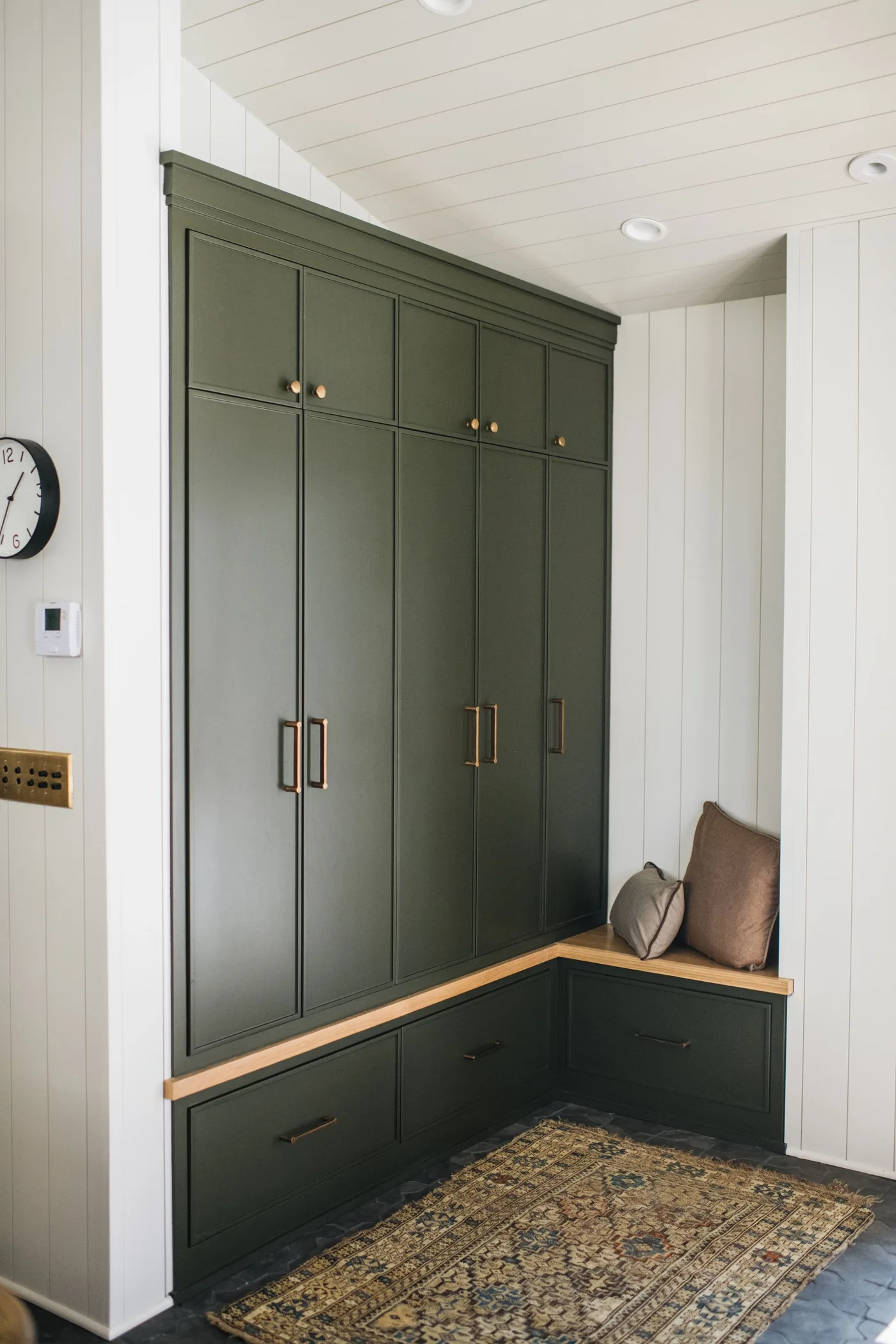
A wooden bench top turns around the corner beside this tall green cupboard. Lower drawers add storage beneath the seat, while the white paneled wall keeps the smaller return lighter. The arrangement combines a longer cabinet run with a shorter sitting edge, making the corner useful without requiring upper cupboards to continue equally across both walls.
Check that the shorter return gives comfortable sitting depth and does not block access to the neighboring drawers. Test the cupboard doors with someone seated, and place daily belongings where they can be reached without leaning across the inside corner. Keep the rug stable beneath the approach and follow the bench finish guidance around wet outdoor clothing.
IDEA 02 / 20
Put a closed cupboard beside an open hanging wall
 SaveSupport Non AI Creator
Image credit: Blakes London
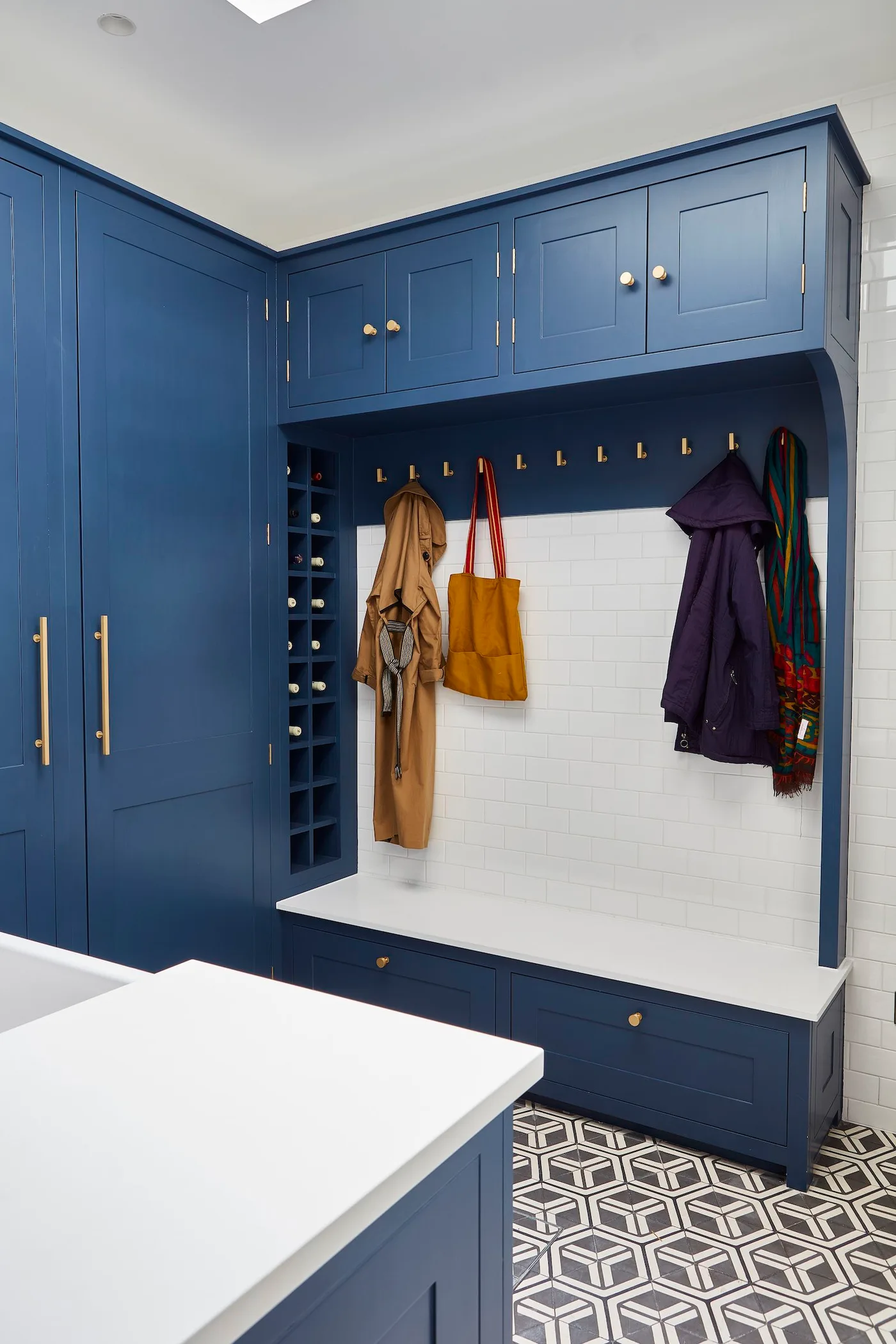
A tall blue cupboard meets an open hanging wall at the turn in this mudroom. Upper cupboards continue above the hooks, with a pale bench keeping the sitting area distinct from the darker storage. A narrow divided section adds another type of compartment at the junction, showing how a corner can combine several storage needs without making the whole wall open.
Check the junction with cupboard doors open and coats hanging at their real depth. Use the narrow compartments only for belongings that fit and can be retrieved comfortably. Keep the bench available for sitting, secure hooks for their expected load, and avoid placing heavy items in upper cupboards where reaching across the corner makes them difficult to lift down safely.
IDEA 03 / 20
Use a tall cabinet to define one side of the nook
 SaveSupport Non AI Creator
Image credit: James Balston
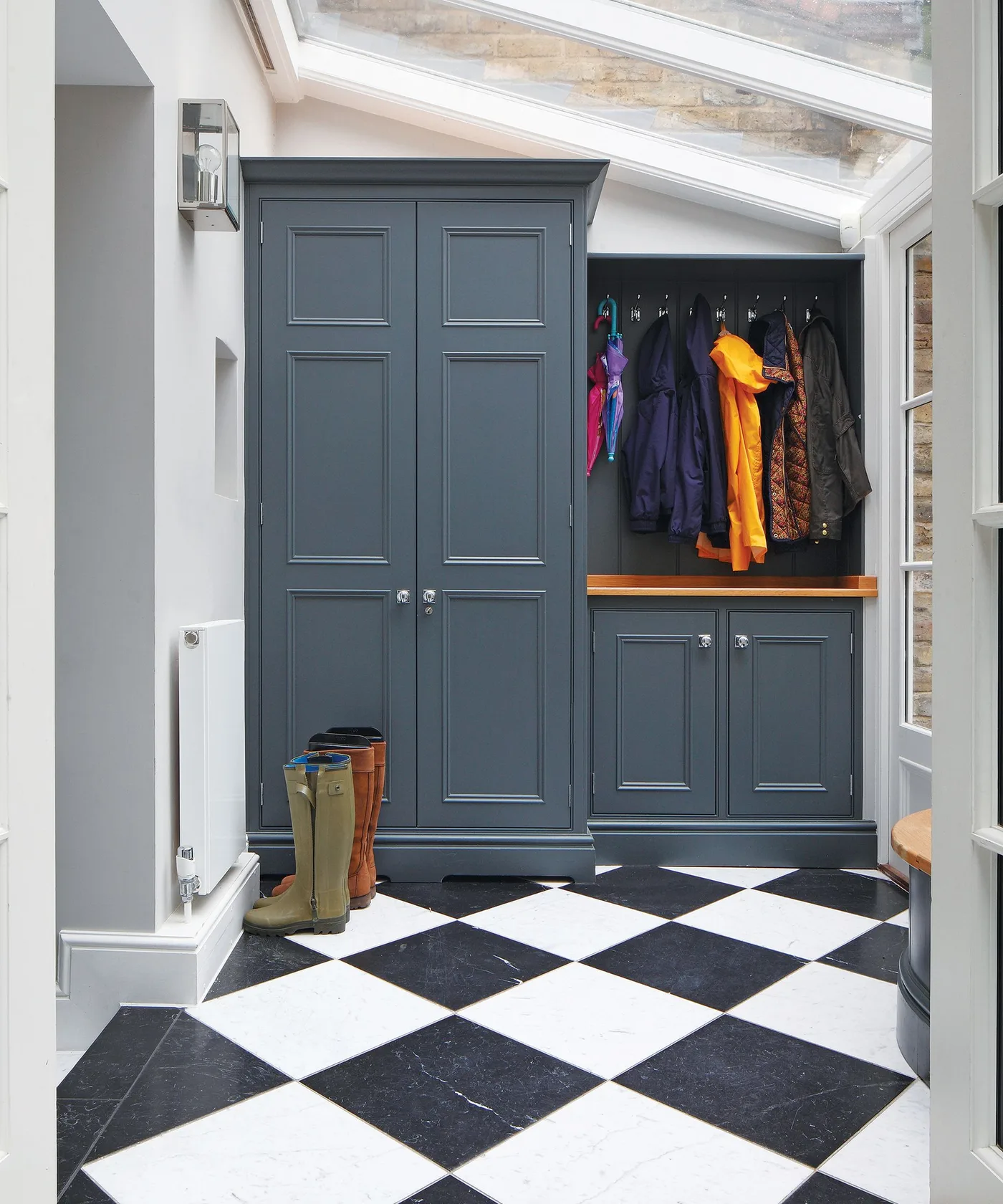
A tall closed cabinet gives one side of this mudroom a clear storage boundary. Beside it, open hooks and a wooden seat keep the everyday arrival area easier to reach. The sloping glazed roof changes the available upper space, with the bench and cabinet fitting beneath different parts of that overhead shape rather than repeating one uniform height throughout.
Measure the available height and opening space carefully before choosing tall storage beneath a slope. Check cabinet doors against the glazing and neighboring route, and keep hanging coats from covering the entire seat. Select a floor finish suited to outdoor traffic, following its care instructions, and maintain clear access to any window or roof controls that need regular operation.
IDEA 04 / 20
Keep a wooden return seat beside simpler vertical doors
 SaveSupport Non AI Creator
Image credit: Yond Interiors
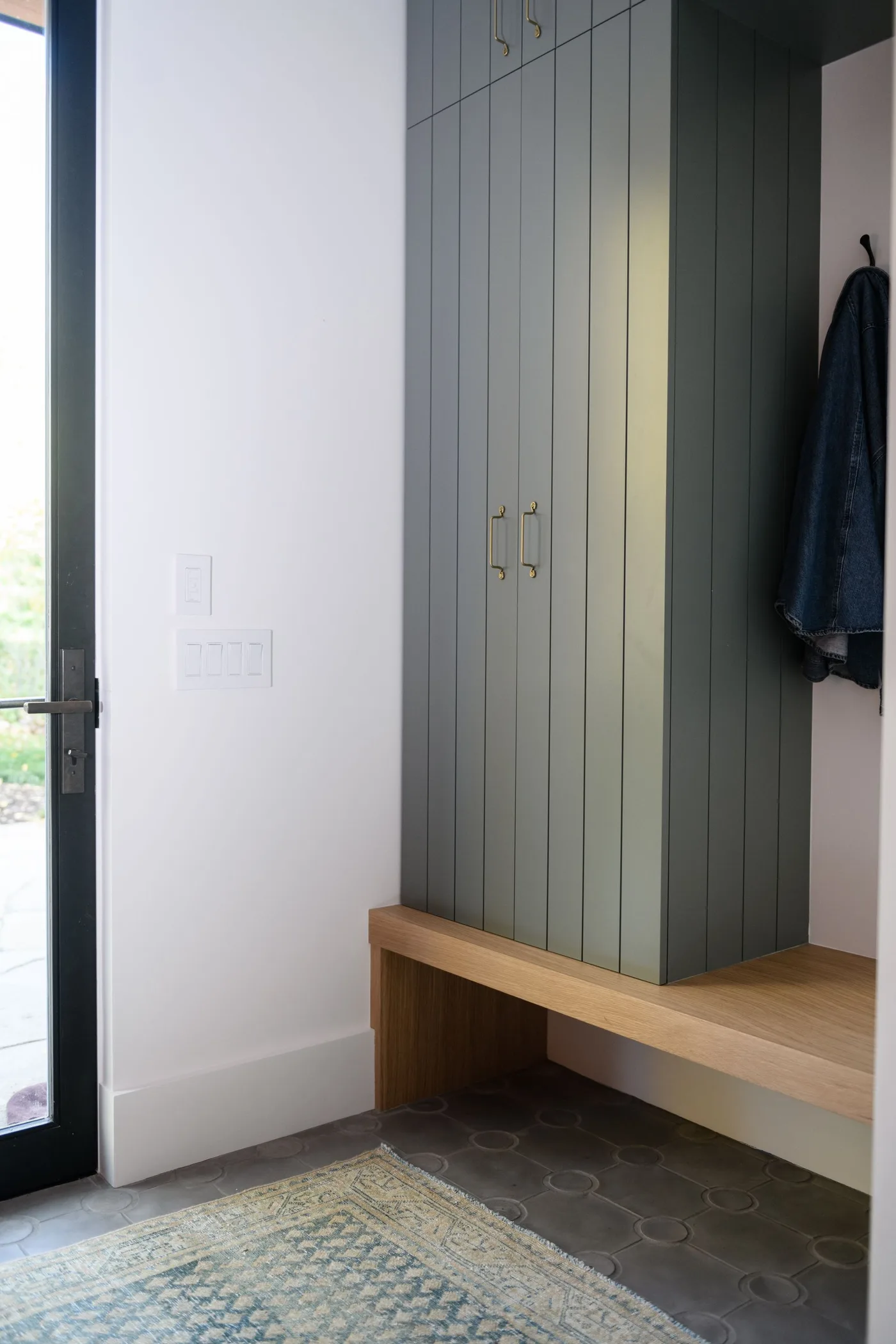
A wooden bench turns along the side wall beside this muted green storage. The vertical cabinet lines keep the taller section quieter, while the warmer seat gives the lower area a clearer purpose. The corner remains comparatively simple, relying on the storage shape and one furniture contrast rather than adding several baskets or decorative objects to the sitting surface.
Check the returning seat for stable support and usable depth, especially near the cabinet doors. Leave enough space for a person to stand and change shoes without blocking the entrance. Keep the inside turn easy to clean, and choose the storage contents around their accessibility rather than filling deeper positions with daily belongings that require awkward reaching.
IDEA 05 / 20
Fit a recessed bench beside a full-height cupboard
 SaveSupport Non AI Creator
Image credit: Yond Interiors
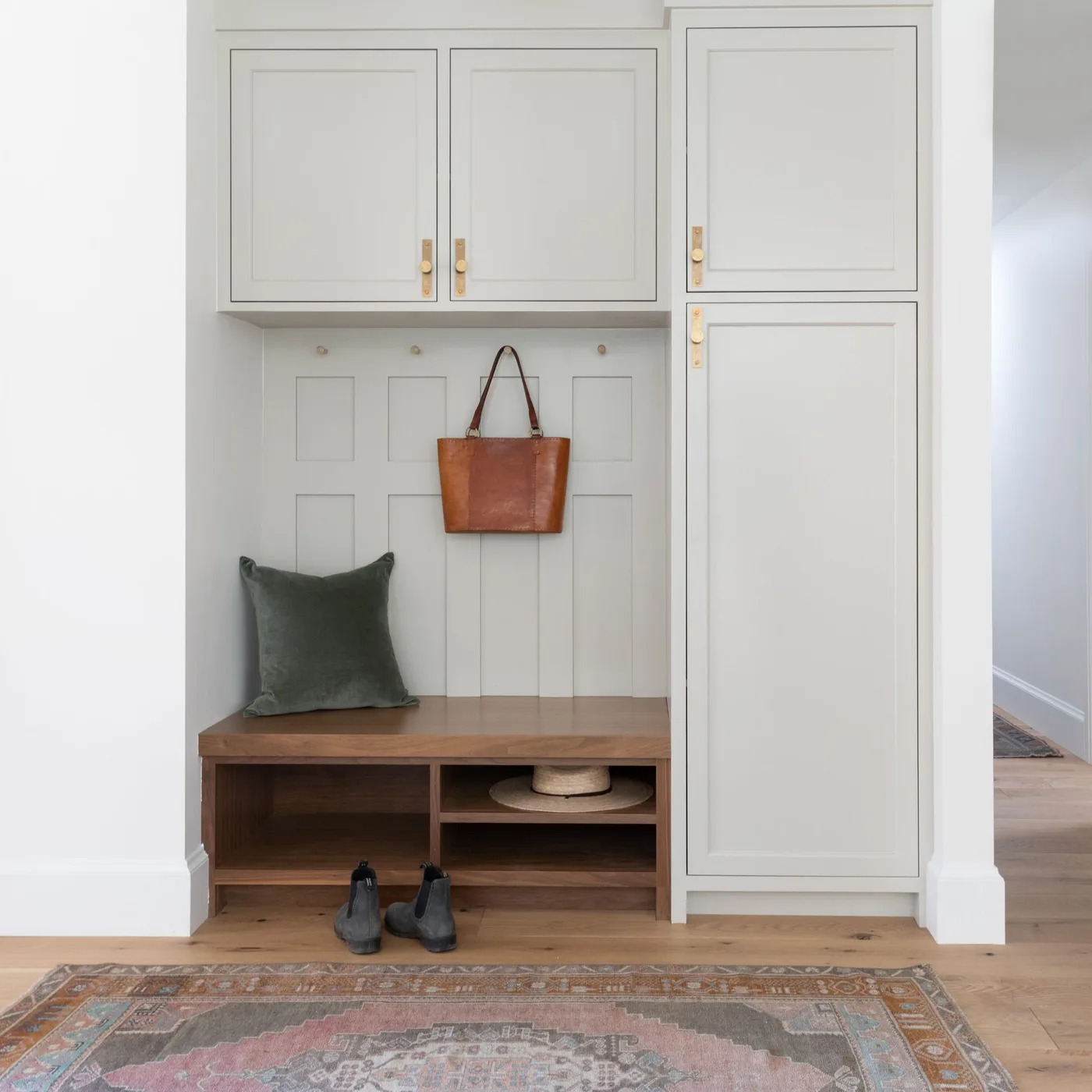
A recessed bench places the sitting area within the storage wall rather than extending it across the room. Wooden shelves below provide separate footwear positions, while pale upper cupboards and a taller side unit frame the nook. The arrangement uses a compact opening for the daily pause on arrival, keeping more enclosed storage beside it instead of surrounding every seat edge.
Check the bench opening against the room needed to bend and change shoes. Size the lower shelves for your actual footwear and keep taller pairs from blocking the seat approach. Follow suitable cabinet and shelf installation requirements, and reserve upper cupboards for belongings that can be lifted down safely without balancing on the bench or leaning awkwardly into the recess.
PART 02
Make compact seating useful on arrival
IDEA 06 / 20
Use a narrow hall tree at the end of a cupboard run
 SaveSupport Non AI Creator
Image credit: Polly Eltes
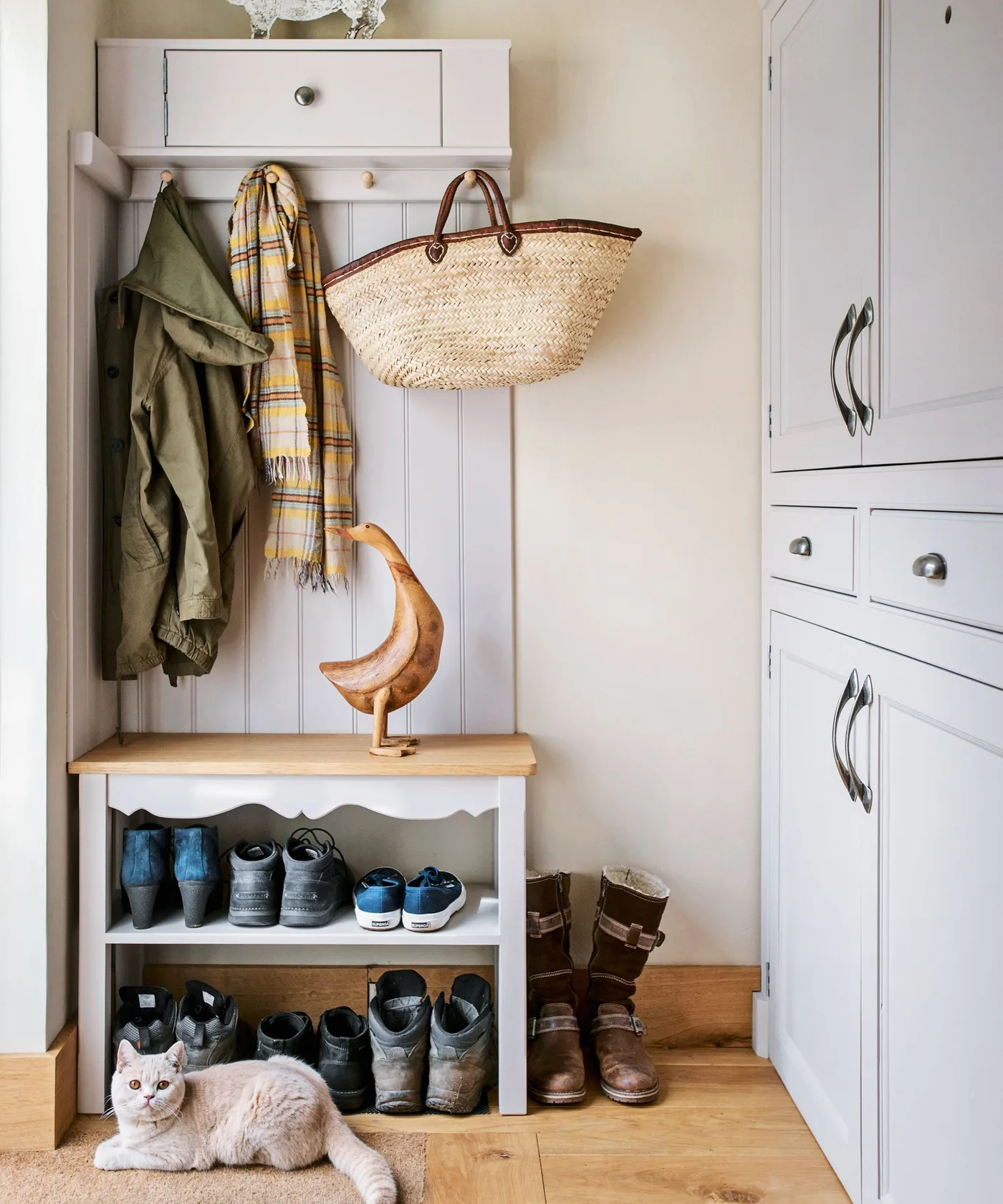
A narrow hall tree gives this smaller storage position a wooden sitting surface and lower shoe shelves. Coat pegs and an upper drawer place several daily tasks within one piece, with the taller cupboard providing another storage boundary beside it. This is a compact nook arrangement rather than a full L-shaped bench, offering a lighter option where a larger return would crowd the room.
Check the hall tree for appropriate anchoring and stable seating before relying on it for daily use. Keep the seat clear of decorative objects when changing shoes, and allow useful access to the neighboring cupboard. Let wet footwear dry on a suitable surface first, then store pairs so they can be retrieved without pulling several other belongings onto the floor.
IDEA 07 / 20
Use a window-side seat when the nook needs less storage
 SaveSupport Non AI Creator
Image credit: Yond Interiors
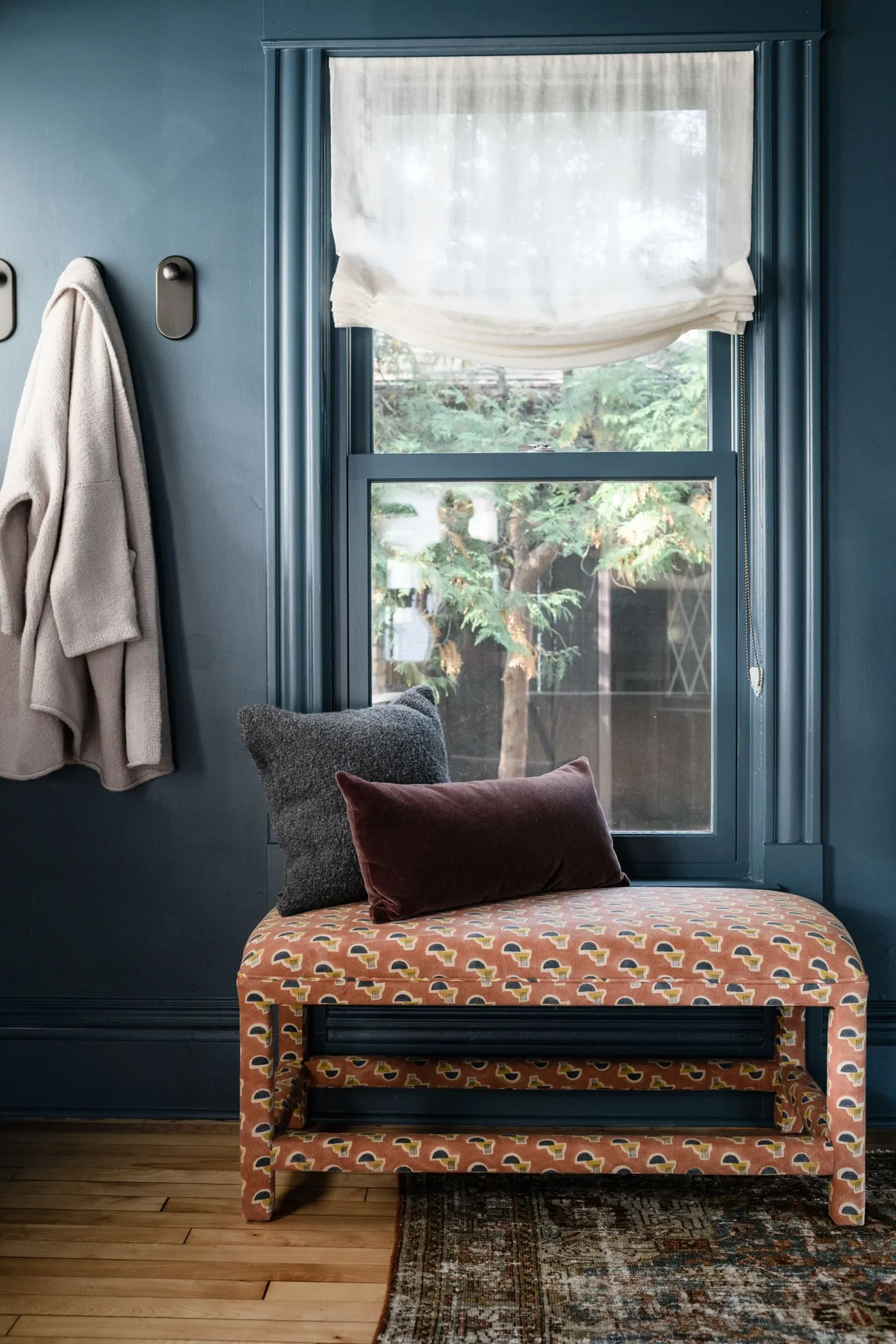
A patterned upholstered bench gives this window-side nook a warmer seat within the blue room. The hook provides a smaller amount of hanging storage nearby, with the pale shade softening the glazing above. This compact seating approach leaves the arrangement less enclosed than a full cabinet wall, making it useful where the corner mainly needs a place to pause.
Check the seat footprint with a person using it and coats hanging from the hook. Choose upholstery care suited to outdoor clothing and leave the window controls accessible. Keep the rug approach stable, and avoid adding a large cupboard simply to fill the nearby space if it would make the window or seating position more difficult to use.
IDEA 08 / 20
Place a wardrobe within a quieter corner boundary
 SaveSupport Non AI Creator
Image credit: DeVol Kitchens
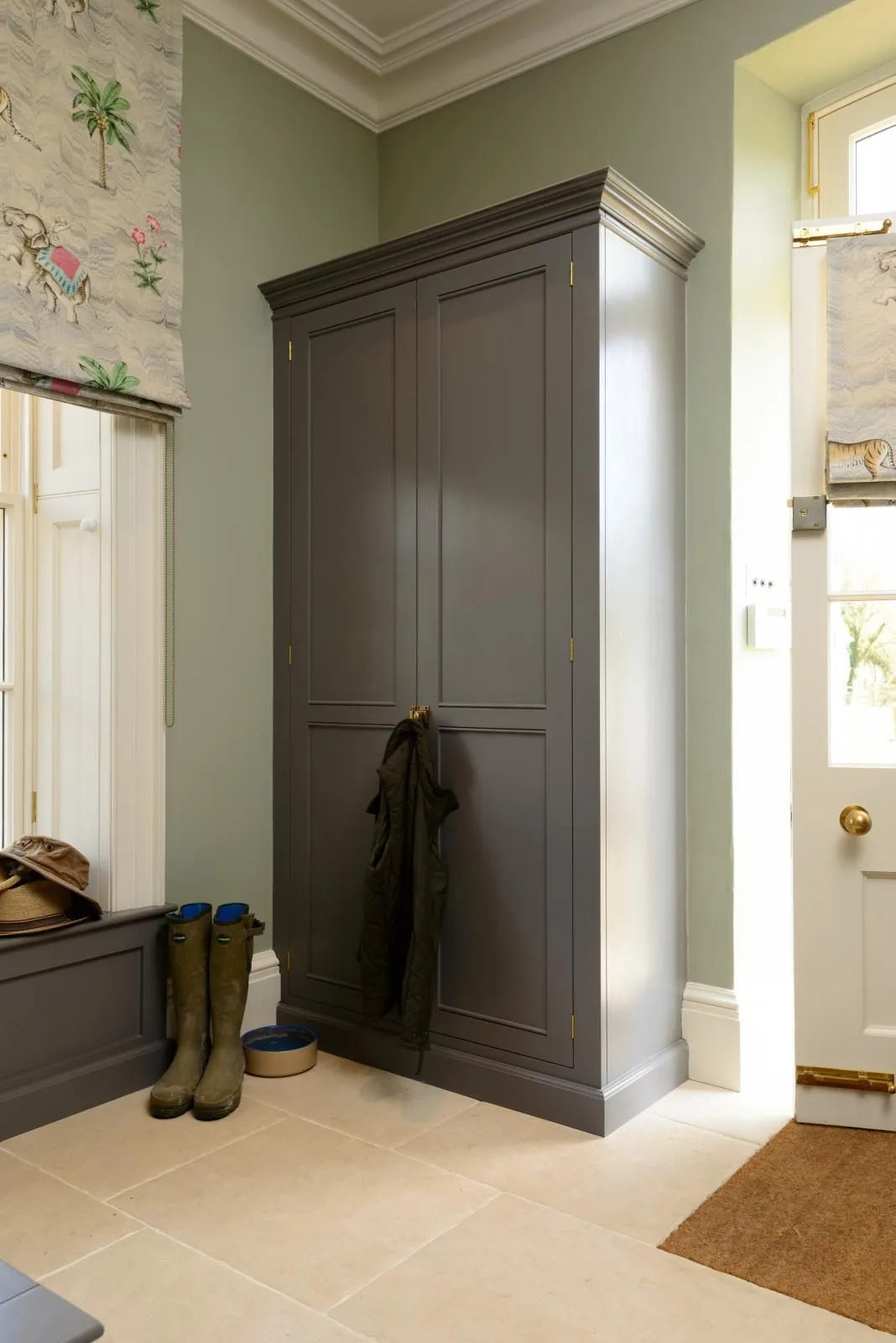
A tall gray wardrobe occupies this corner beside the glazed door, placing a substantial amount of storage behind two main doors. The pale green wall and patterned blind soften the surrounding area, while boots show the practical purpose near the threshold. Unlike an open bench arrangement, this option concentrates the storage into a larger enclosed furniture position.
Check the wardrobe doors and entrance door together before choosing the footprint. Anchor the unit according to its requirements and keep daily belongings within comfortable reach. Allow wet clothing to dry appropriately before closing it away, and leave a suitable place for boots so the floor beside the door does not become the overflow for everything that cannot fit inside.
IDEA 09 / 20
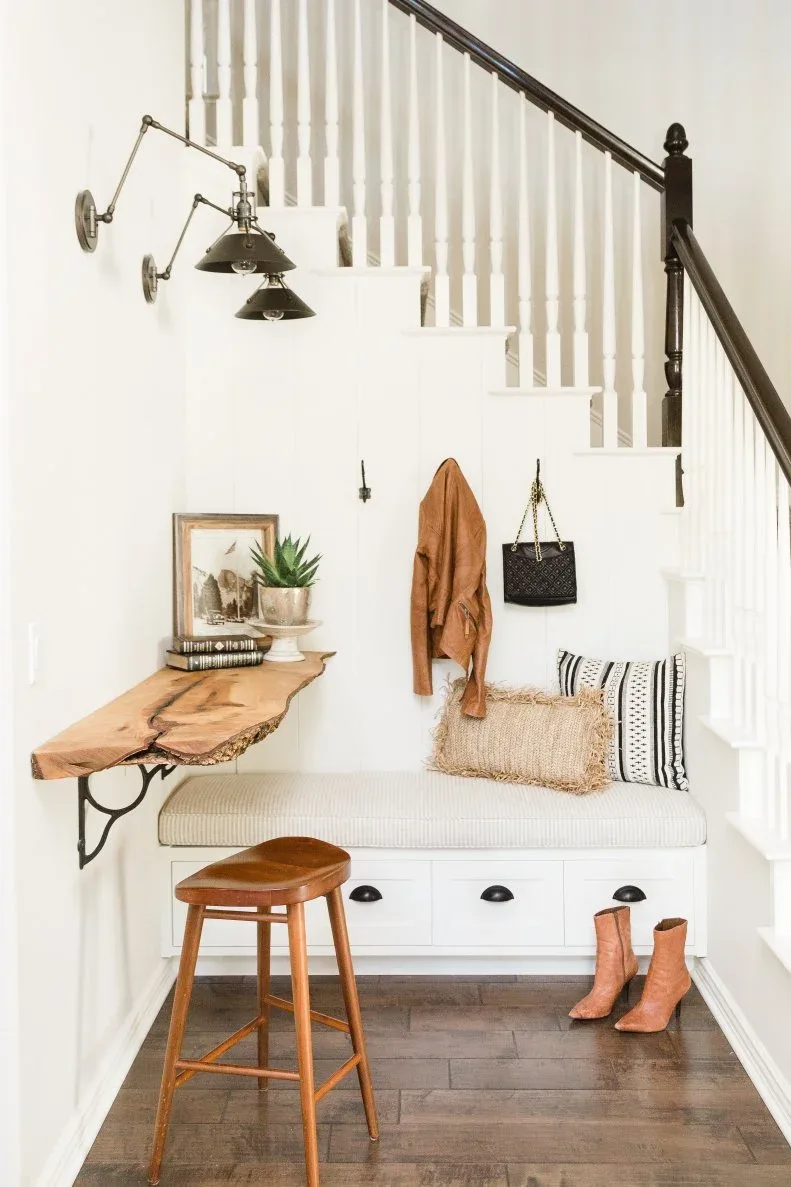
Turn an under-stair space into a useful sitting nook
 SaveSupport Non AI Creator
Image credit: Photo: Design 4 Corners. From: Design 4 Corners
A drawer bench places seating beneath the stairs, with a short wooden shelf using one side of the nook. Paired wall lights give the compact corner a more deliberate position within the entrance. The pale seat and warmer shelf separate the sitting and smaller surface tasks, allowing an awkward shaped area to contribute without needing a full-height storage cabinet.
Measure the available headroom where someone sits and stands before fitting a bench under stairs. Keep drawers accessible and the approach clear of loose stools or shoes. Secure the shelf for its intended load, choose cushions that leave useful sitting space, and position wall lights so projecting parts do not catch someone as they stand from the lower seat.
IDEA 10 / 20
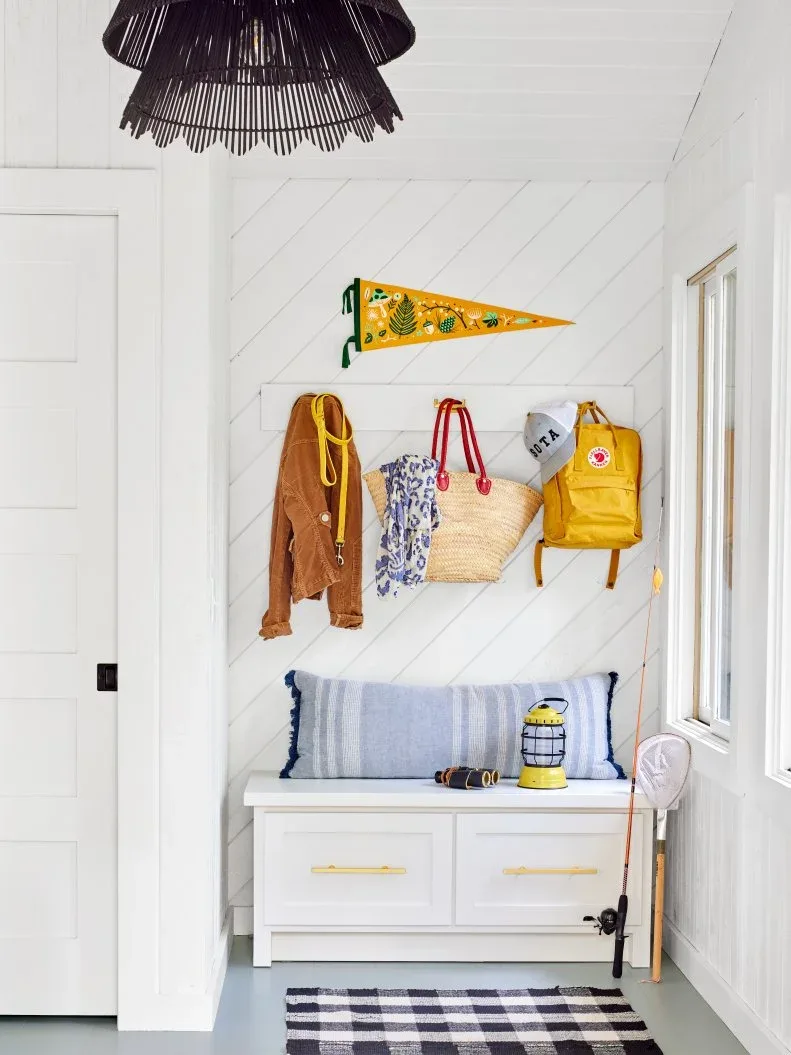
Give a smaller end corner a drawer bench and hooks
 SaveSupport Non AI Creator
Image credit: Photo: Adam Albright. From: HGTV Magazine
A small drawer bench uses this end corner for sitting, with hooks keeping bags and coats immediately above it. The window brings light beside the seat, while a striped cushion gives the lower position a softer edge. The storage is concentrated within a short stretch of wall, showing a compact alternative to extending a bench around every neighboring surface.
Check drawer movement with the bench occupied and leave window controls accessible. Secure hooks for the intended bag weight and keep hanging coats from covering the whole seat. Choose a cushion that stays in place during shoe-changing, and keep loose equipment or tall footwear from collecting in the narrow approach where someone needs to stand before leaving.
PART 03
Keep coats and footwear reachable around the turn
IDEA 11 / 20
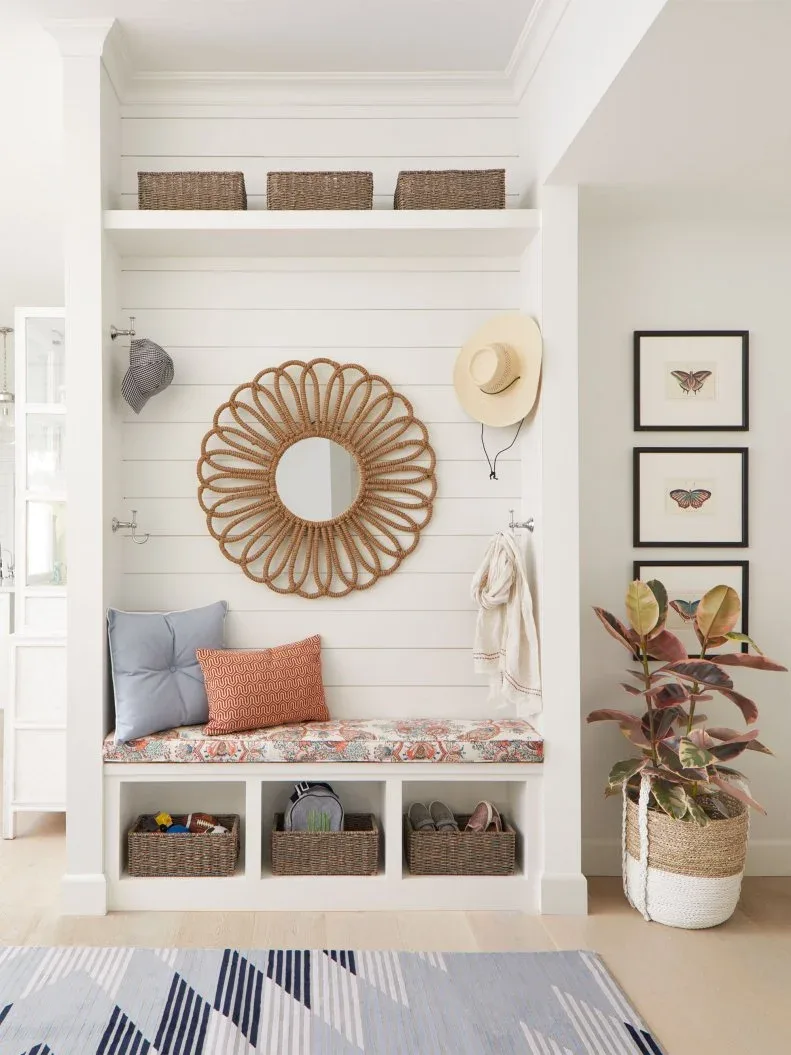
Use upper and lower baskets within one bench recess
 SaveSupport Non AI Creator
Image credit: Photo: David Tsay. From: HGTV Magazine
Upper and lower baskets organize smaller belongings around this recessed bench. The paneled background and round mirror give the nook a softer decorative focus, while the patterned cushion marks the sitting position below. The arrangement keeps storage within the bench wall rather than using additional freestanding furniture at the corner, leaving the wider entrance to provide the main walking route.
Keep upper basket contents light and dry, with shelf support suited to their load. Leave enough cushion-free space to sit comfortably and check how the lower baskets pull out. Secure the mirror appropriately and position the plant clear of the approach, using a suitable liner so watering does not add moisture to the floor or nearby dry storage.
IDEA 12 / 20
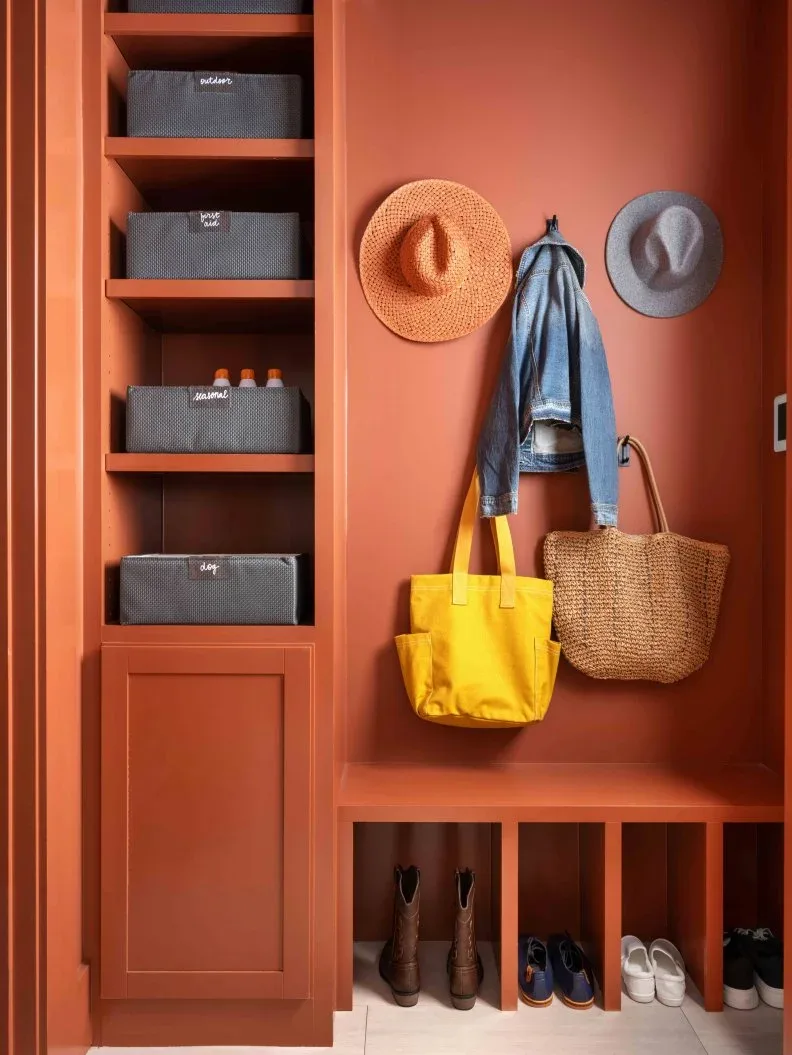
Combine side shelves with a deeper coat recess
 SaveSupport Non AI Creator
Image credit: Photo: JOSEPH BRADSHAW
Side shelves frame this deeper coat recess, with basket storage occupying the narrower vertical section. The bench sits beneath hooks, while lower divisions give shoes defined places close to the floor. The orange-toned finish connects the different compartments, showing how a recessed arrangement can organize several arrival tasks without leaving the corner as one large unstructured storage opening.
Size the coat recess around the depth of your hanging outerwear and keep a usable sitting edge below it. Check basket retrieval with coats in place, choosing lower shelves for heavier contents. Leave wet footwear a suitable drying position, and avoid packing every compartment so tightly that removing one pair or bag disturbs the rest of the organized corner.
IDEA 13 / 20
Leave a wooden bench beside taller corner cabinetry
 SaveSupport Non AI Creator
Image credit: Photo: Anastasia Alkema. From: Copper Sky Design + Remodel
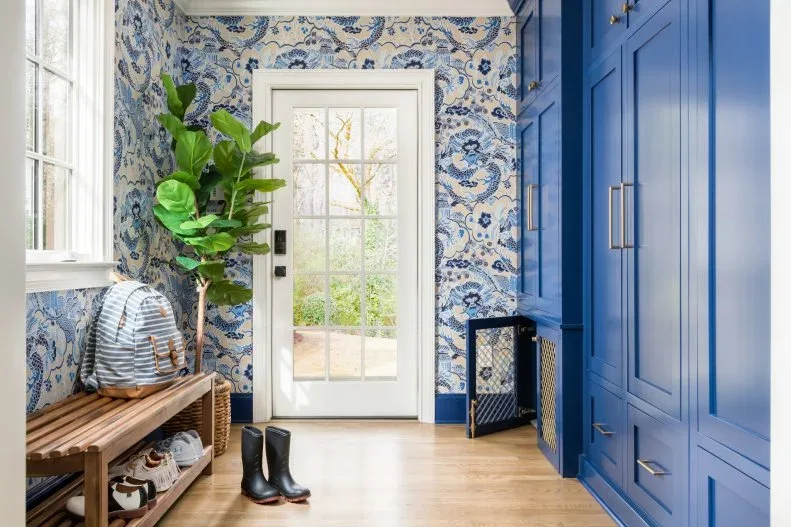
Blue cabinets provide taller storage beside a wooden bench under the window in this mudroom. The patterned wall connects the sitting position with the cabinet color, while the plant introduces a softer edge near the corner. The furniture does not need to form one continuous L-shaped built-in to make both adjoining parts of the room useful on arrival.
Check the route between the bench, cabinet doors and entrance with belongings in place. Keep the window and seat accessible instead of letting a plant or loose shoes occupy their approach. Follow the bench finish care guidance, and choose cabinet contents around comfortable reach so the corner remains practical when you need a coat quickly on the way out.
IDEA 14 / 20
Keep seating separate from a taller corner cupboard
 SaveSupport Non AI Creator
Image credit: Photo: Gloribell LeBron
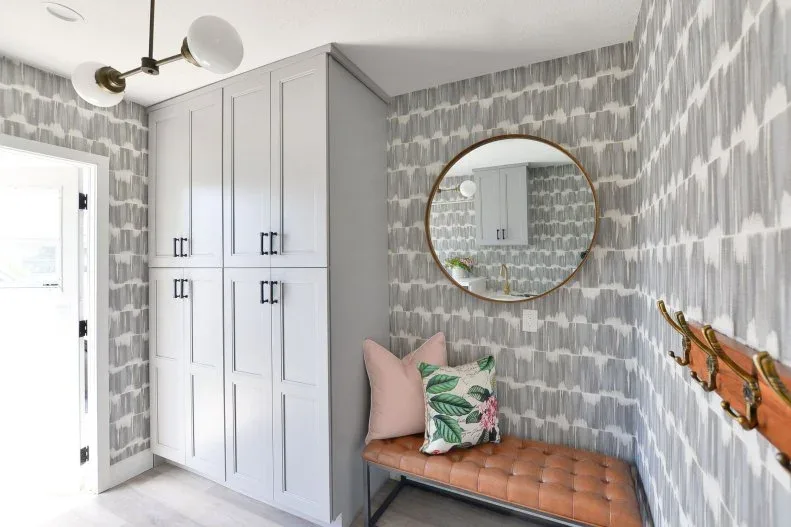
A pale cupboard provides enclosed storage beside the warmer upholstered bench in this corner. The patterned wall gives the seat a distinct background, with hooks continuing along the neighboring side. A round mirror adds another shape above, demonstrating an arrangement that combines separate furniture and fittings instead of requiring the entire corner to become one built-in storage unit.
Check cupboard opening space with someone seated and coats hanging from the rail. Choose upholstery care appropriate for outdoor clothing, and keep the bench clear enough to change shoes comfortably. Secure the mirror and hooks according to their loads, then test the corner with a larger bag so the decorative arrangement still leaves a useful route through the room.
IDEA 15 / 20
Use a side drawer unit to finish the bench corner
 SaveSupport Non AI Creator
Image credit: Photo: Joseph Bradshaw
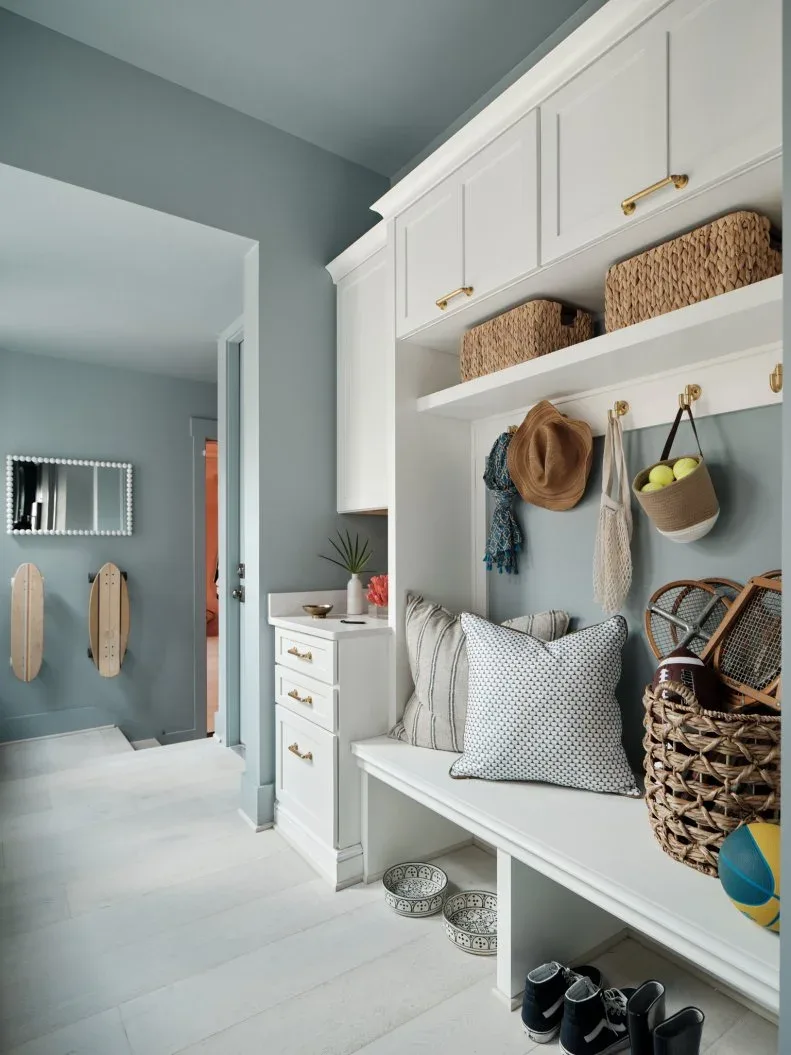
A smaller drawer unit finishes one end of this bench wall, adding closed storage beside the open footwear positions. Upper baskets and hanging bags bring texture above the seat, while the pale blue wall connects the different storage elements. The corner gains several types of organization without extending the entire bench or coat wall equally across the neighboring side.
Check the side drawers with hanging bags in place and keep their handles easy to reach. Use upper baskets for lighter dry belongings, reserving accessible lower storage for daily items. Leave a useful sitting area and check that the decorative cushions do not make the corner seat awkward to use when someone needs to bend and remove shoes.
PART 04
Connect the corner with the room around it
IDEA 16 / 20
Give a washing corner suitable storage for wet tasks
 SaveSupport Non AI Creator
Image credit: Photo: Laurey Glenn. From: River Brook Design
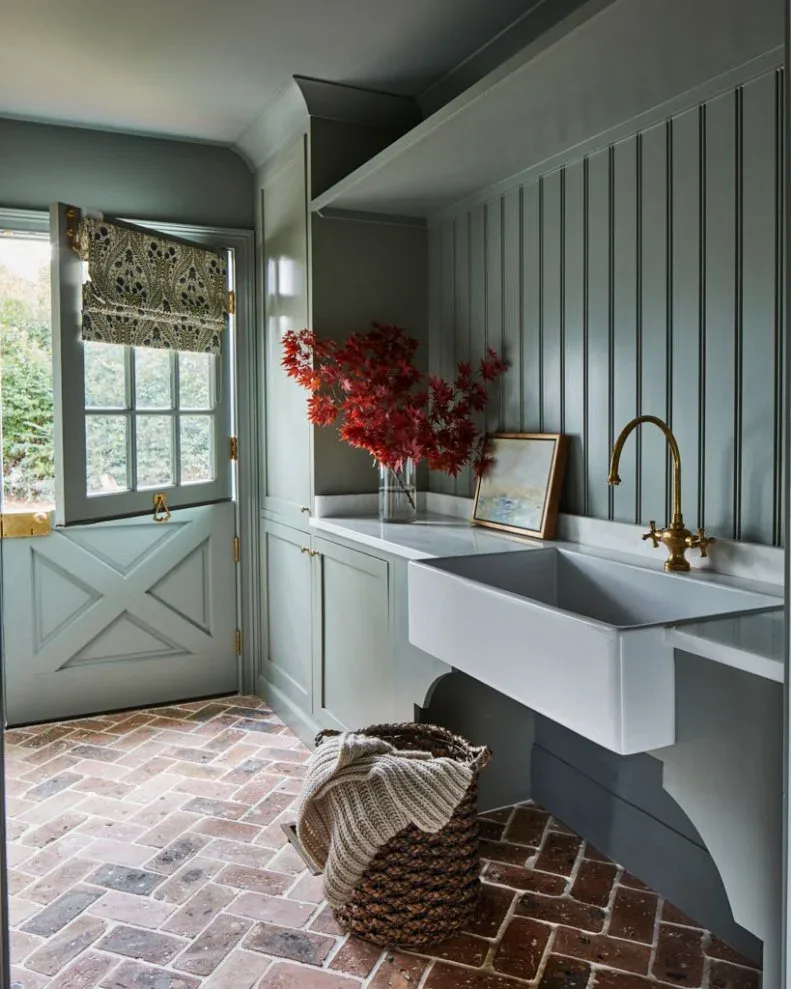
The sink gives this mudroom corner a different job from the sitting arrangements elsewhere in the collection. Blue-gray cabinets keep storage nearby, with the window and patterned blind above the working surface. A woven basket adds a softer detail below, showing how a corner can support washing and sorting outdoor belongings without needing to be the main coat bench as well.
Check plumbing and cabinet installation requirements before adapting a washing corner. Leave the tap and window controls accessible and choose wall and floor finishes suited to expected splashes. Keep dry or moisture-sensitive belongings away from wet tasks, and use baskets only for contents appropriate to their location rather than assuming the decorative container provides protection from water.
IDEA 17 / 20
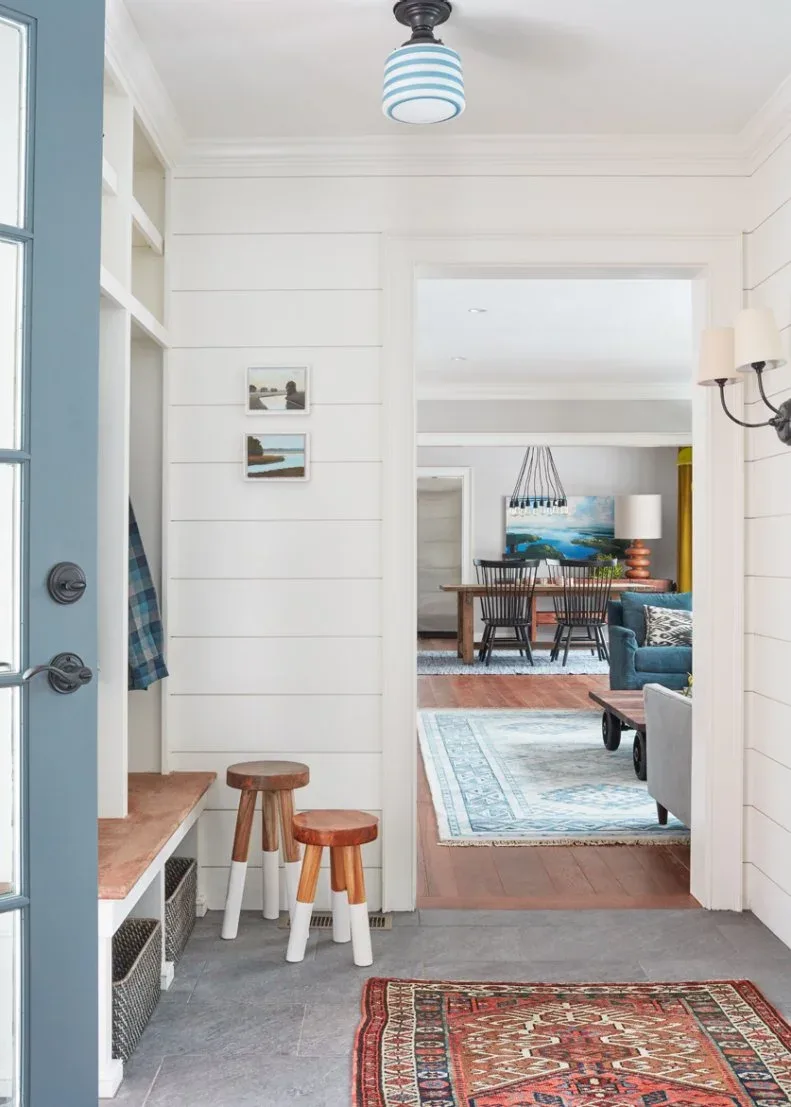
Keep movable seats beside a shorter bench return
 SaveSupport Non AI Creator
Image credit: Photo: Jared Kuzia Photography. From: Kristina Crestin
A shorter bench run leaves this entrance room for smaller movable wooden seats. Lower baskets provide storage beneath the fixed seat, while the patterned rug gives the corner another visual boundary near the door. The arrangement shows a more flexible option than filling the available side space with a permanent longer return bench or another tall cabinet.
Choose movable stools only if they provide useful seating and are intended for that purpose. Check their position against the door swing and the route into the next room. Keep baskets accessible without shifting every seat, and make sure the rug remains stable around the furniture so using the corner does not involve stepping across loose edges or crowded footwear.
IDEA 18 / 20
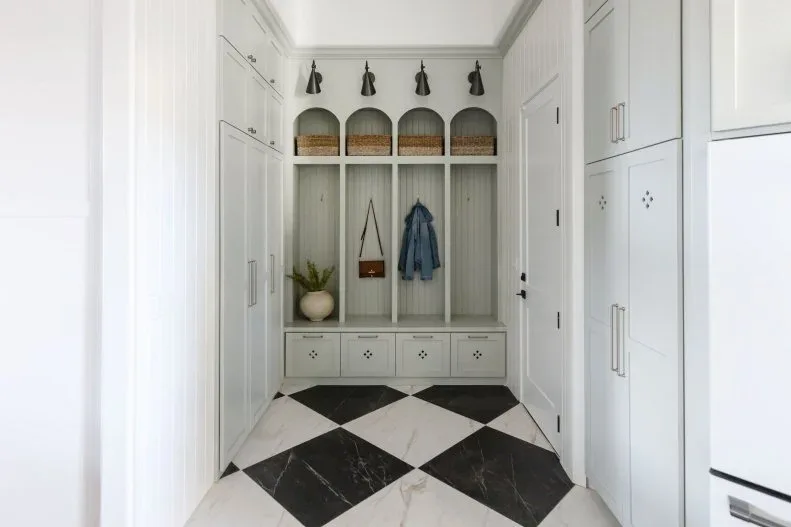
Place a coat bench at the end of a cabinet-lined room
 SaveSupport Non AI Creator
Image credit: Photo: LifeCreated, Weber Construction. From: Kirsten Holmstedt
Arched coat cubbies mark the bench at the end of this cabinet-lined mudroom. Baskets occupy the upper openings, with lower drawers keeping some belongings beneath the seat. The side cupboards provide a different storage layer around the approach, making the room feel like a defined arrival space rather than leaving every wall as an open row of coats.
Check the central route with side cupboard doors and bench drawers open. Keep upper baskets light enough to retrieve safely and reserve seat space for changing shoes. Choose the floor according to its actual cleaning and moisture guidance, and resist adding more storage at the inside turns if it would make the end bench difficult to approach or use comfortably.
IDEA 19 / 20
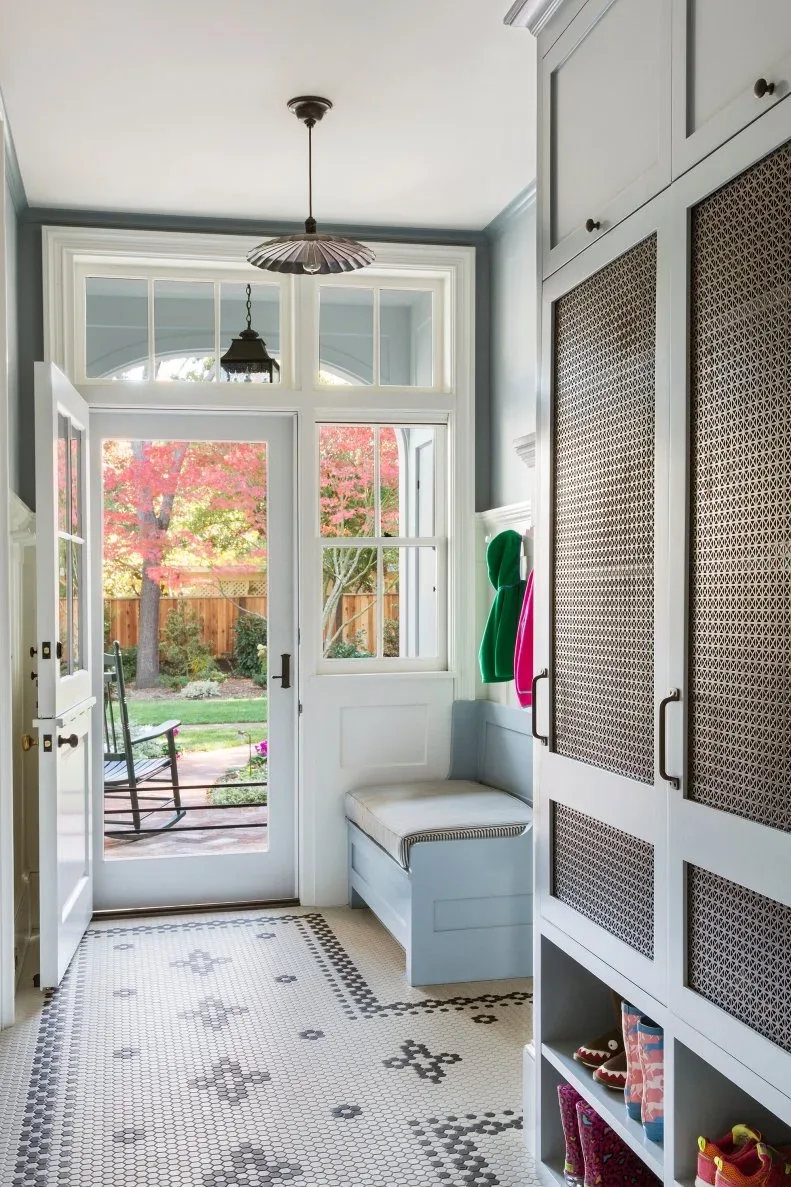
Keep a small seat beside a taller textured cabinet
 SaveSupport Non AI Creator
Image credit: Photo: Laura Hull Photography. From: Tim Barber Ltd.
A tall textured-panel cupboard supplies most of the storage in this pale blue mudroom. The smaller bench beside it leaves a separate sitting position close to the glazed door, while the patterned floor connects the two lower areas. The corner remains divided into clear tasks rather than becoming one deep cabinet space that is difficult to use for both seating and coats.
Check the cabinet doors against the bench and entrance before selecting a similar layout. Keep the small seat clear enough for daily use and size its cushion around stable sitting. Follow cleaning guidance for the textured panels, and leave footwear storage easy to retrieve so the compact corner does not turn into a pile of belongings across the door route.
IDEA 20 / 20
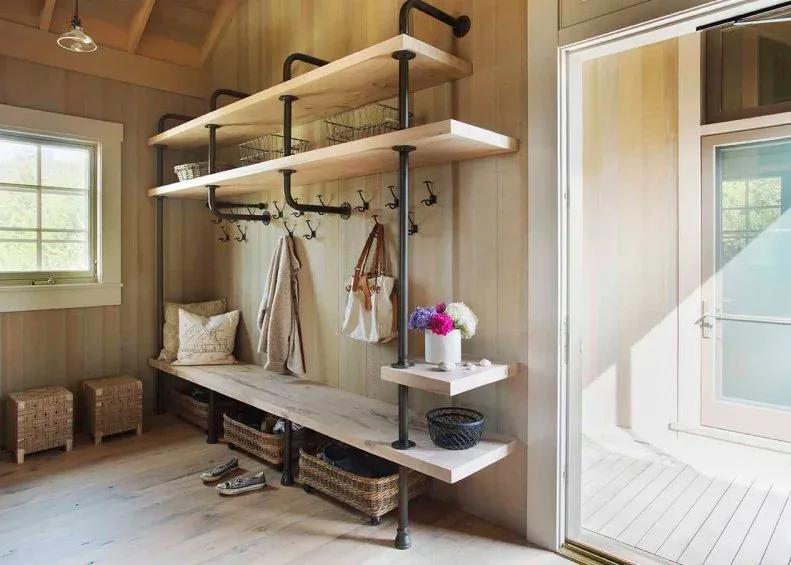
Finish an open bench wall with a small side surface
 SaveSupport Non AI Creator
Image credit: Photo: Eric Roth. From: Martha's Vineyard Interior Design
A small side surface finishes this open bench wall near the glazed door, providing another place to put down smaller belongings. Wooden shelves and a matching bench connect with the paneled room, while darker supports give the storage a clearer outline. Baskets below soften the lower positions, making the corner useful through several reachable layers instead of a large closed cupboard.
Have the bench and shelf support checked for their intended loads and sitting use. Keep hooks accessible and use the side surface for belongings that fit securely without projecting into the route. Place heavier items lower and keep wet shoes on a suitable drying surface, following the actual wood finish care guidance around outdoor moisture and regular cleaning.
BRING IT ALL TOGETHER
Check access before filling the corner
Measure the corner with the surrounding doors open and consider how people use the seat. A continuous bench may be helpful, but a recessed seat or shorter storage unit can leave a better route in a compact room. Put daily belongings within safe reach and avoid treating every unused upper space as a place for heavy storage.
Choose finishes for the moisture and dirt that actually enter your home, keeping wet belongings separate from unsuitable closed storage. Secure hooks, shelves and seating for their intended loads. Add pattern or color after those practical decisions so the corner remains easy to use when the entrance is busy, rather than only when its surfaces are empty.