A country entryway works best when it welcomes people and gives their belongings somewhere sensible to go. A seat for changing shoes, reachable coat storage and a clear path through the door are useful starting points, whether the entrance is a separate hall or opens into a living room.
These photographs show warm wooden furniture, painted doors, patterned curtains and storage arrangements in different sized spaces. Look at the route through each one before borrowing its details, and choose surfaces that suit the wet shoes, bags and daily traffic your own entrance needs to handle.
PART 01
Keep the arrival route clear and welcoming
IDEA 01 / 20
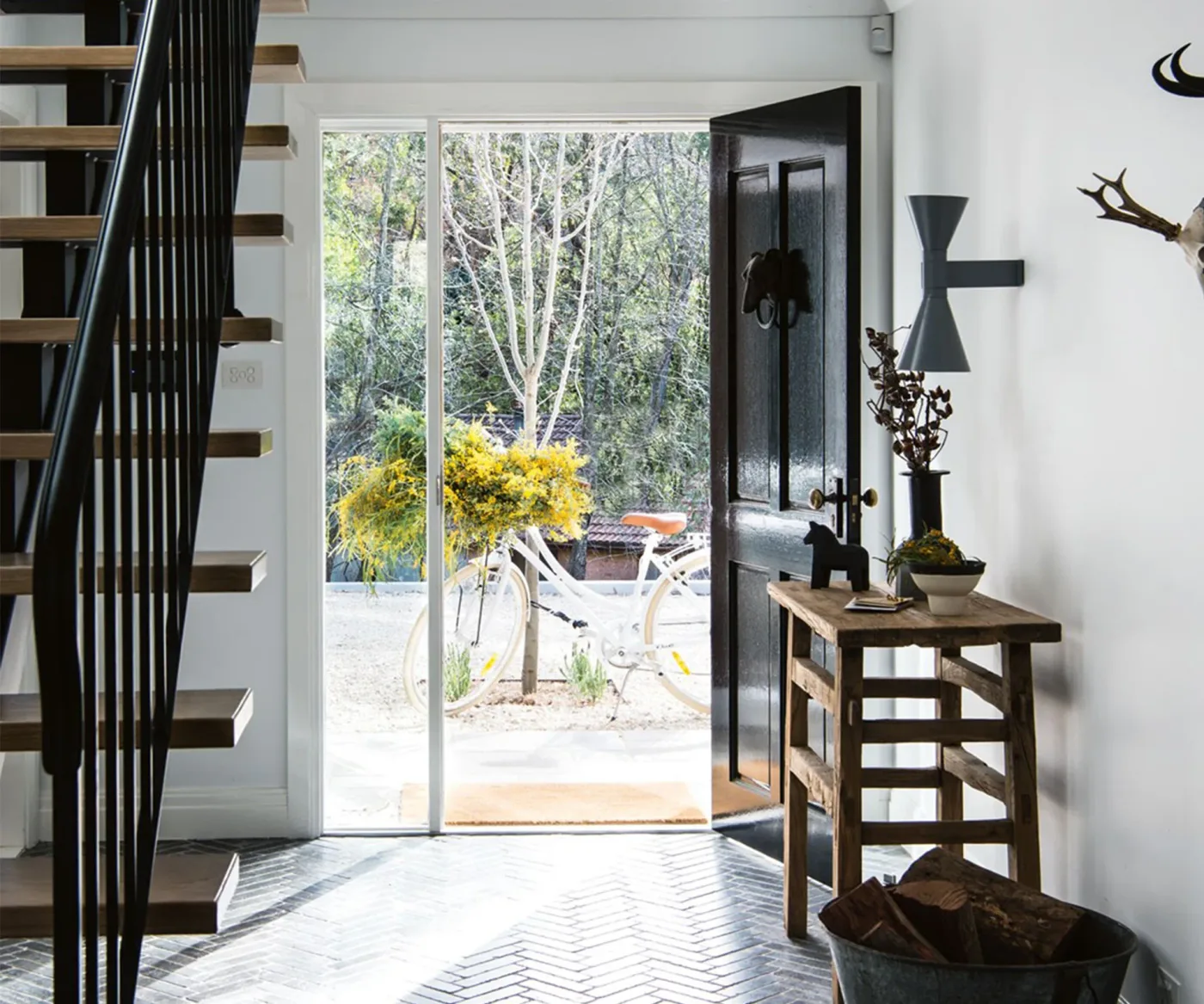
Keep the entrance clear beside a compact wooden table
 SaveSupport Non AI Creator
Source: homestolove.com.au
A compact wooden table sits beside the open front door, leaving the approach to the staircase visible. The dark door and stair railing repeat a stronger outline against pale walls, while the patterned floor gives the entrance detail without using more furniture. The glazed side panel brings outdoor light into the arrival area.
Check the table depth with the door fully open and people carrying bags through the entrance. Leave a useful area for keys rather than filling the top with ornaments. Choose flooring or a mat that suits outdoor dirt and moisture, and keep any lower basket or container from projecting into the walking route.
IDEA 02 / 20
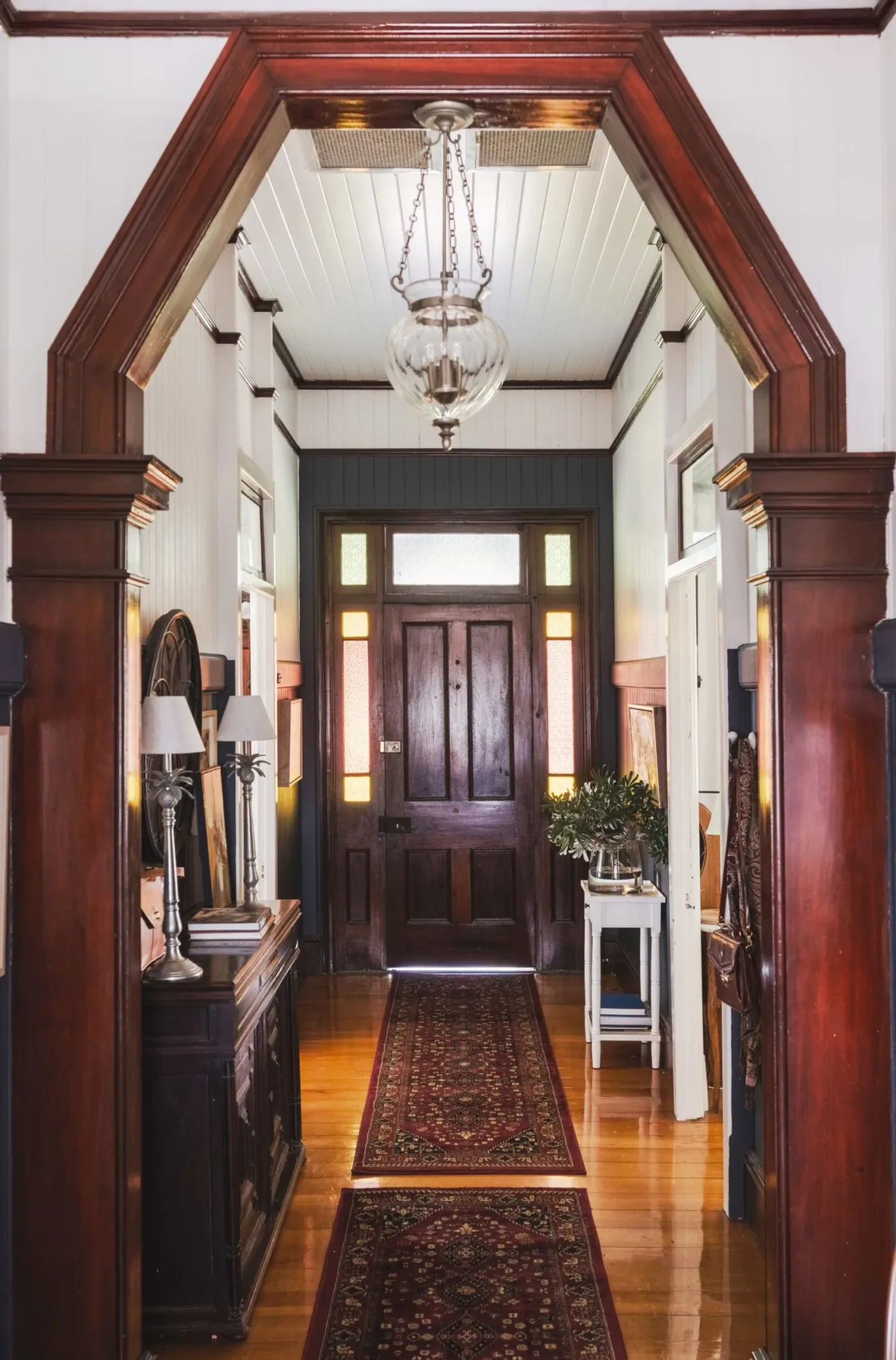
Let strong timber trim lead a longer hallway
 SaveSupport Non AI Creator
Image credit: Photography: Hannah Puechmarin | Styling: Cheryl Carr
Dark timber trim frames the entrance and the decorative opening farther along this hall. Pale walls keep the long route lighter, while patterned runners mark the floor beneath the hanging lights. A narrow dark cabinet repeats the stronger wood tones without occupying the center, allowing the architectural outlines to provide much of the character.
In a long hallway, compare furniture depth with the busiest points of the route, including nearby doors. Runners should lie securely and allow doors to operate comfortably. If the existing timber is the strongest detail, keep accessories restrained and provide enough useful light along the passage instead of trying to decorate every wall section.
IDEA 03 / 20
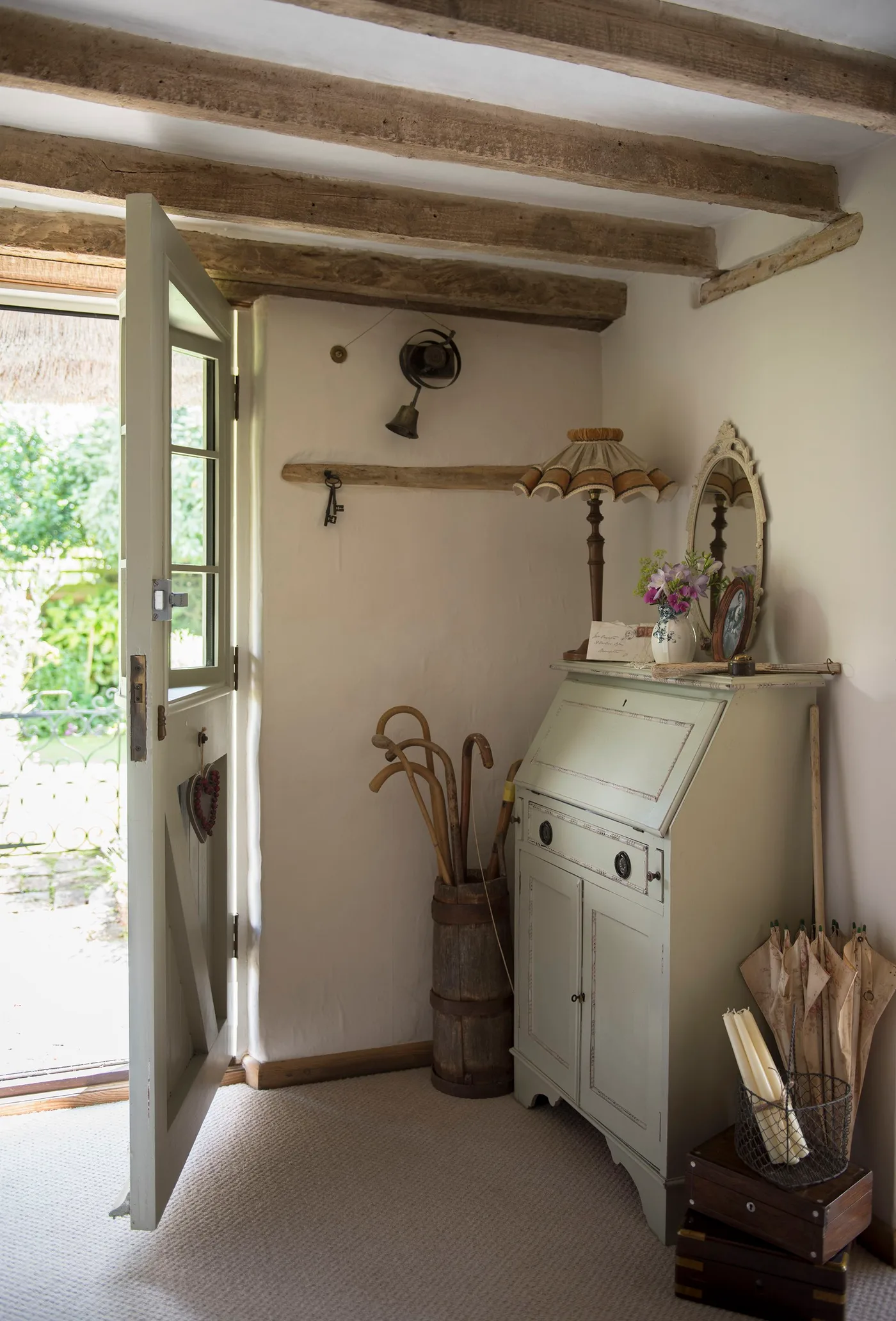
Use a small cabinet for the things you carry home
 SaveSupport Non AI Creator
Image credit: Future / Jody Stewart
A small painted writing cabinet gives this entrance a useful surface beneath exposed beams. Its pale green finish relates to the open door, while a shaped mirror and lamp add softer detail above. Umbrella containers sit at the sides, making the storage needs of the arrival area part of the room's visible arrangement.
Test the cabinet with its doors or writing flap open before choosing a similar piece for an entrance. Keep wet umbrellas in a suitable container rather than against furniture that may be damaged by moisture. Limit items on the top so keys and incoming mail still have a practical temporary place.
IDEA 04 / 20
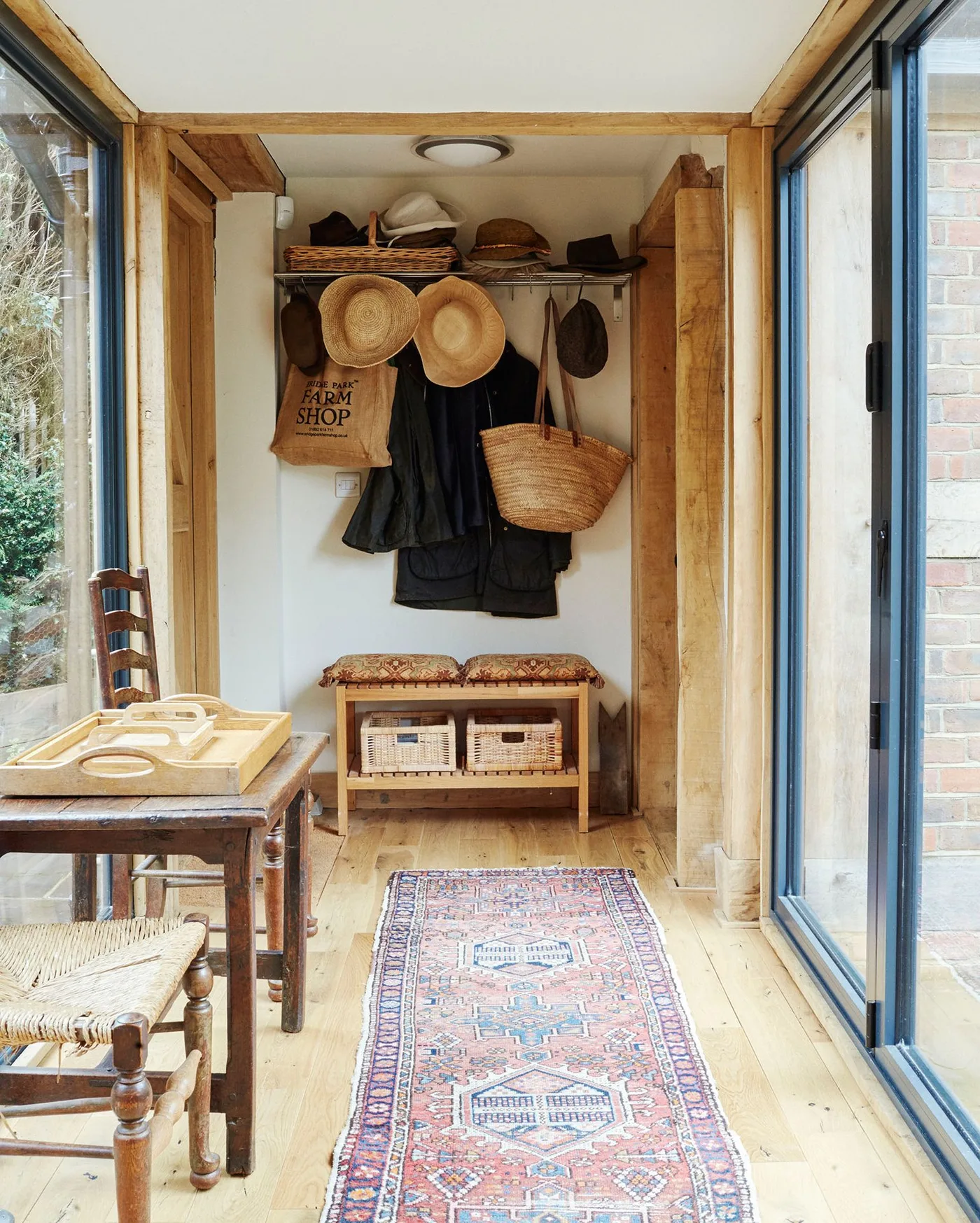
Put everyday storage at the end of a bright passage
 SaveSupport Non AI Creator
Image credit: Future /Brent Darby
Wooden framing warms this bright glazed passage, with coats and hats grouped at the far end. A small bench and baskets sit beneath the rail, while a runner gives the long floor a clearer route. The side table and chairs add another use to the space without replacing the entry storage at the end.
A passage used for arrivals needs a clear route even when coats are hanging and baskets are pulled forward. Check the runner's stability and the sunlight exposure of fabrics near extensive glazing. Keep frequently used outerwear easy to reach, and consider whether extra furniture remains useful during the busiest times of the day.
IDEA 05 / 20
Mark the arrival area when the door opens into a room
 SaveSupport Non AI Creator
Image credit: Jeremy Philips
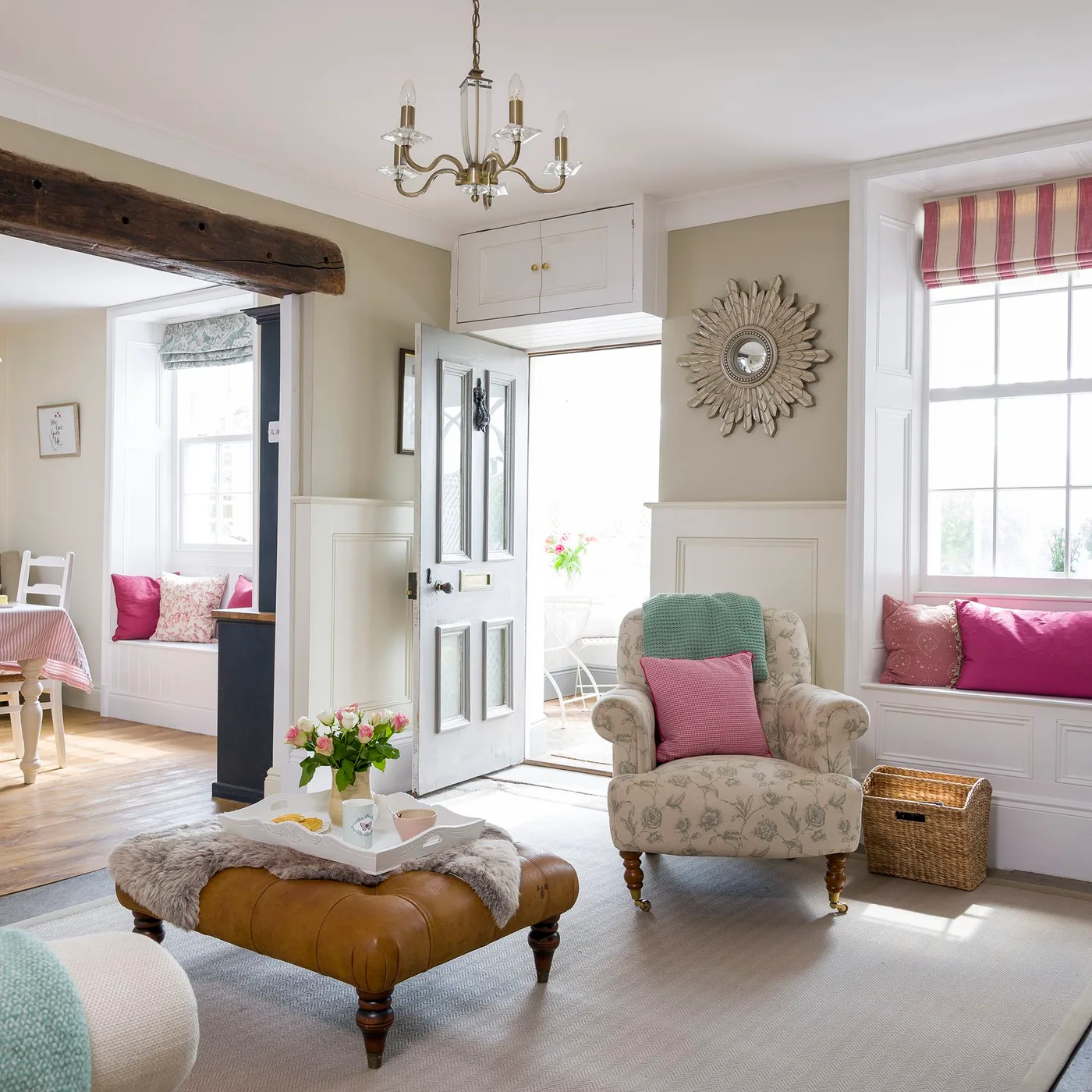
The front door opens directly into a furnished room rather than a separate hallway. Pale paneling and the neighboring window seat help the entrance relate to the surrounding seating, while baskets provide smaller storage opportunities. The armchair and low table show why the path from the door needs attention within this more relaxed country arrangement.
If your front door opens into a living area, first mark out the route people use with bags and outdoor shoes. Put any arrival storage where it can be reached before crossing the seating group. Keep furniture and loose floor coverings clear of the door swing, and choose a practical surface or mat for the incoming traffic.
PART 02
Give coats and shoes a usable place
IDEA 06 / 20
Give both sides of the door a simple storage role
 SaveSupport Non AI Creator
Image credit: Photography: Brigid Arnott
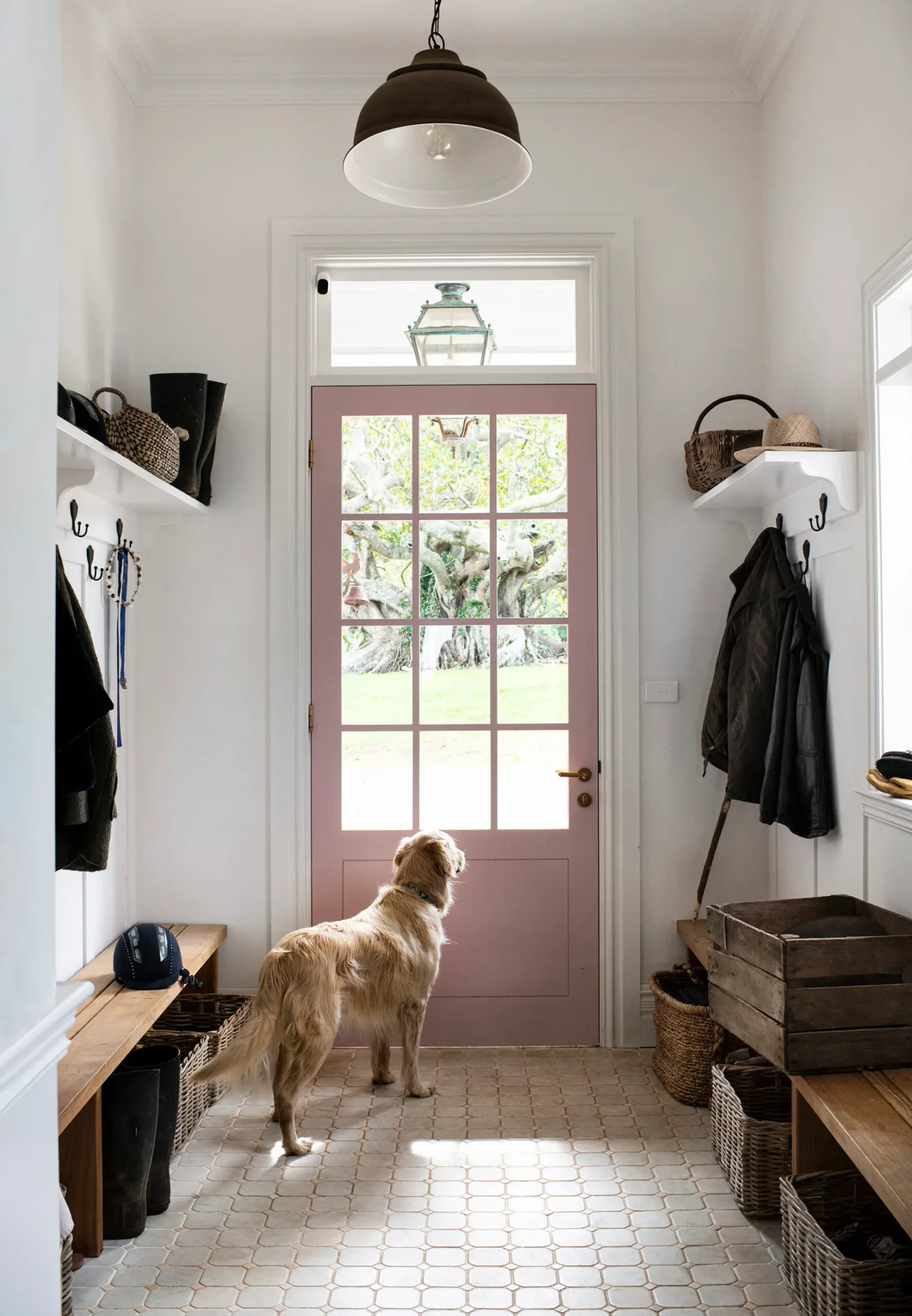
A pink glazed door gives this entryway a warm focal point between two simple storage sides. Wooden benches sit below hooks and shelves, with baskets tucked into the lower areas. The pale patterned floor continues through the middle, leaving a clear central route between the seating and the coats hanging above it.
Plan the storage for the actual coats, boots and bags your household brings home. Hooks should be secure and reachable, while upper shelves are better suited to items that are not needed every time you leave. Check that coats do not hang across the seats, and allow wet belongings to dry before storing them in unsuitable containers.
IDEA 07 / 20
Put a comfortable seat below the coat rail
 SaveSupport Non AI Creator
Image credit: William Goddard
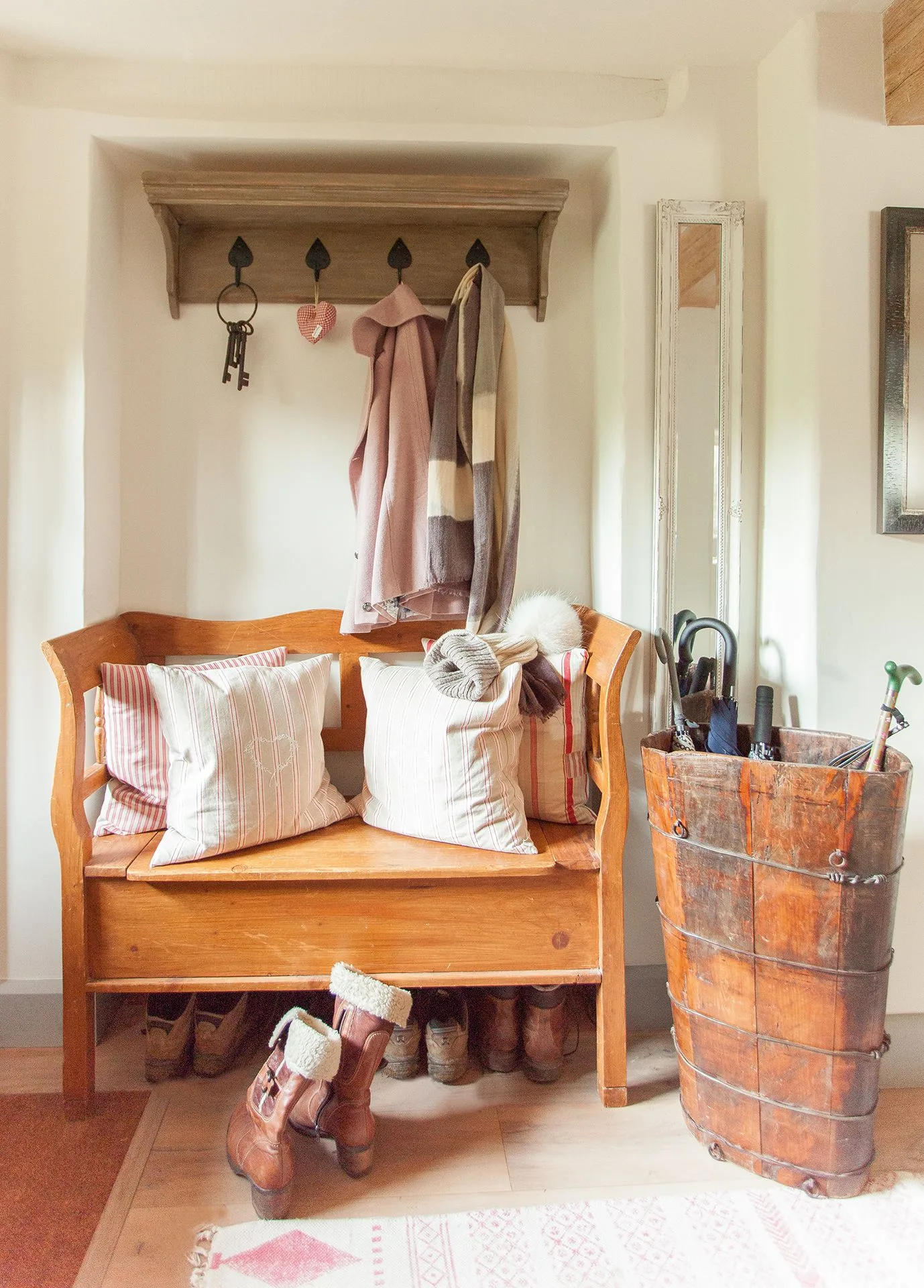
A wooden settle gives the entryway a back-supported seat beneath the coat rail. Pale cushions soften the bench, while shoes below and an umbrella holder at the side make its everyday use clear. The pale wall keeps the warm wooden pieces prominent, allowing useful furniture rather than a large patterned surface to carry the country detail.
Test the bench height for changing shoes and leave enough floor space to stand up comfortably. Keep only the cushions you want to move or clean regularly. Check the rail fixings for the intended load, and use a moisture suitable container for umbrellas so wet arrivals do not damage nearby wood or soft furnishings.
IDEA 08 / 20
Arrange hats above a warm wooden bench
 SaveSupport Non AI Creator
Image credit: Photography: John Downs | Styling: Tahn Scoon
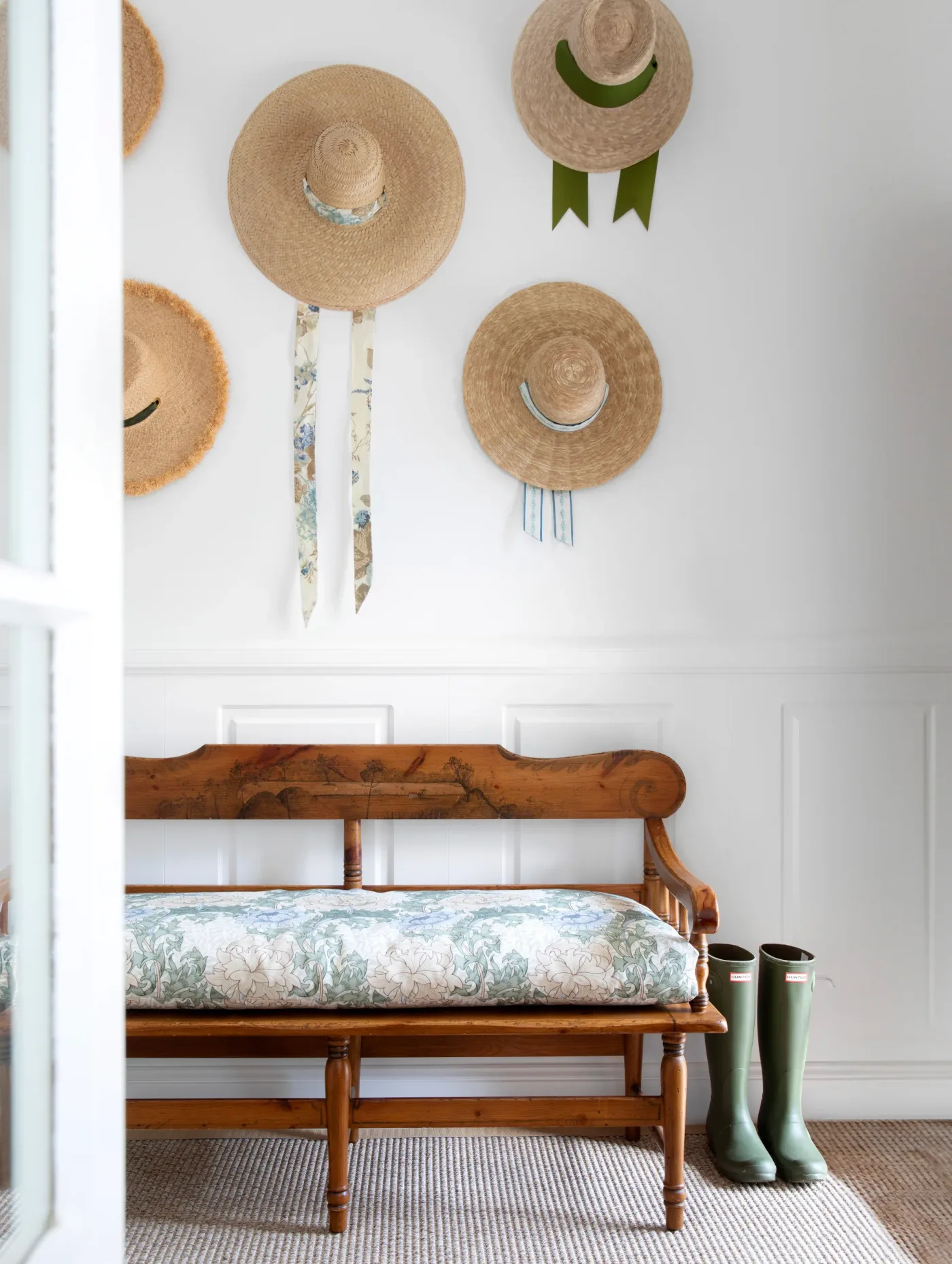
Woven hats make a rounded grouping above the warm wooden bench in this entry corner. A pale patterned cushion gives the seat a softer layer, while the white lower wall paneling keeps the arrangement light. Boots at the side make the bench's practical role recognizable without requiring a larger storage cabinet in the same small area.
Choose a bench cushion that stays secure and can be cleaned according to the way you use the entrance. If the hats are everyday items, place their hooks within comfortable reach. Keep boots from narrowing the route beside the seat, and add a suitable tray or storage spot where wet footwear would otherwise rest against furniture.
IDEA 09 / 20
Use a bench basket for dry everyday belongings
 SaveSupport Non AI Creator
Image credit: Future PLC
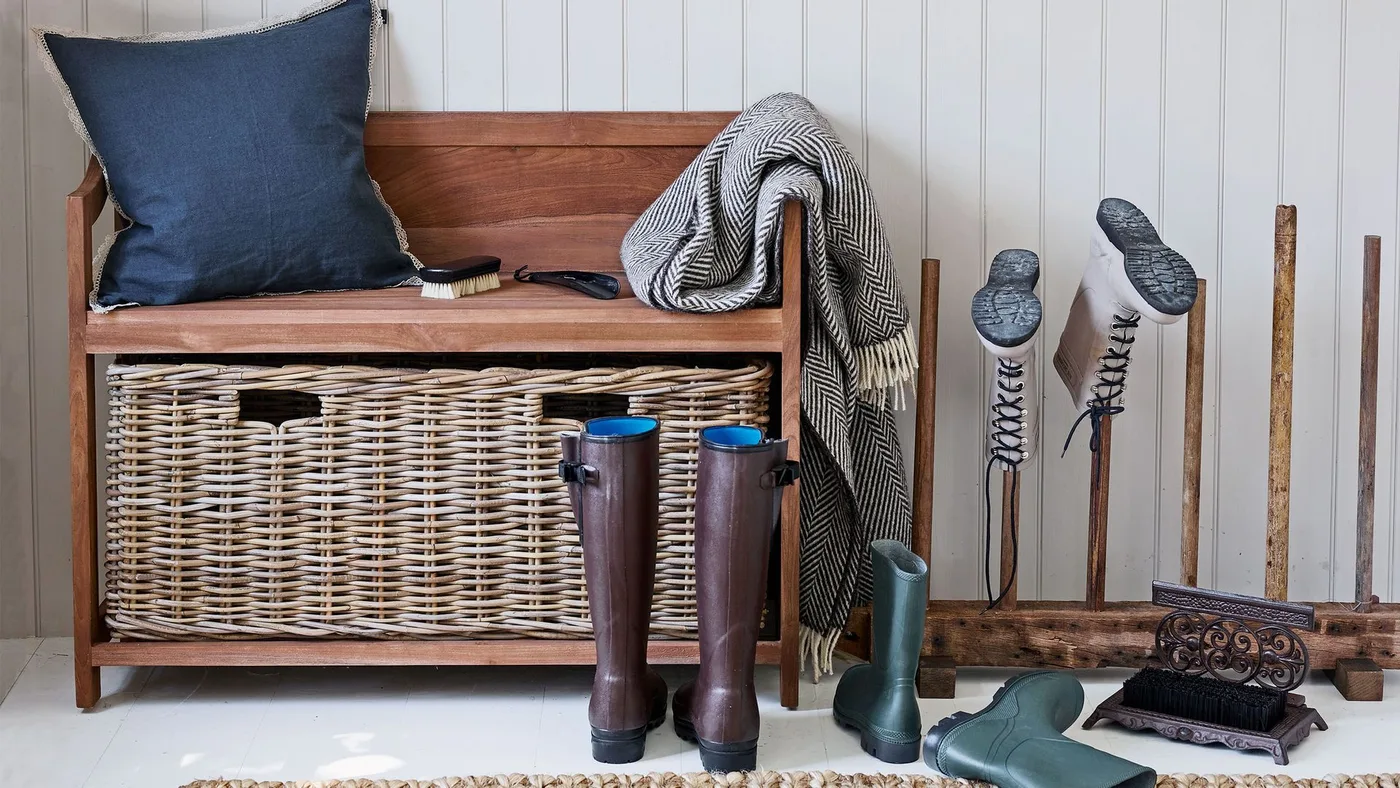
A large woven basket fits beneath this wooden bench, giving the seat a second useful role. The dark cushion adds a stronger color against pale wall boards, while boots and shoe-care tools sit beside it. The arrangement keeps the main furniture compact, with several arrival tasks grouped around one piece rather than separate stands and cabinets.
Choose a basket that can be pulled out without catching the bench frame or blocking the door. Store dry items inside unless the container is specifically suitable for wet belongings. Keep cleaning tools and footwear organized at the side, and leave the seat available so the bench does not become another surface permanently covered in bags.
IDEA 10 / 20
Combine closed coat storage with a drawer bench
 SaveSupport Non AI Creator
Image credit: Cotswold Co.
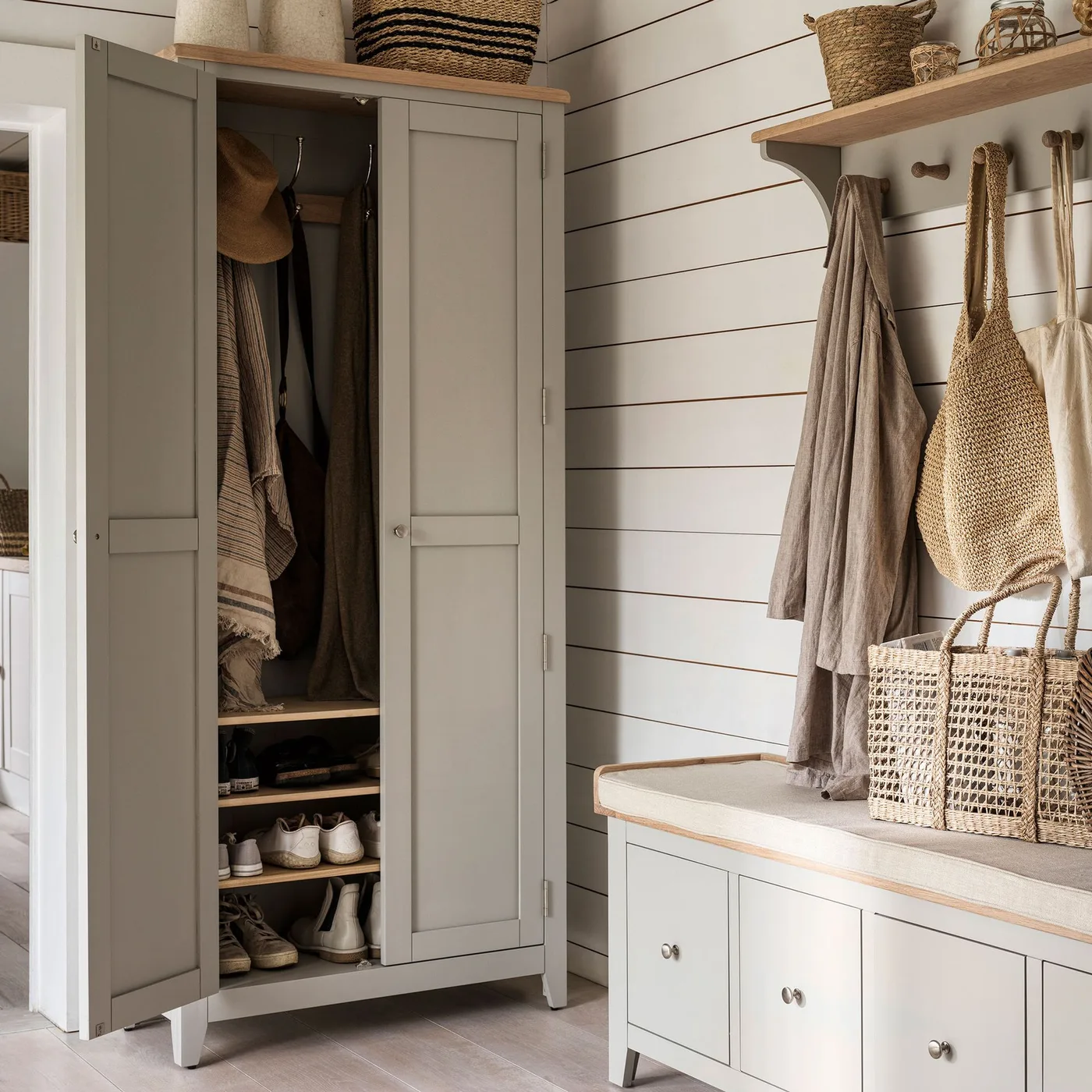
A gray cupboard provides enclosed hanging space and lower shoe shelves beside a matching drawer bench. Wall pegs offer a more immediate place for frequently used belongings, while wooden tops and shelves add warmth above the painted fronts. The combination gives different types of storage without making every coat and pair of shoes permanently visible.
Decide which belongings need daily access and which can stay behind doors. Check cupboard and drawer clearance with people seated on the bench, and allow damp coats or footwear to dry appropriately before enclosing them. Secure tall furniture as required, and keep baskets on upper shelves light enough to retrieve comfortably.
PART 03
Bring country character through color and pattern
IDEA 11 / 20
Let a brighter door sit beside a patterned wall
 SaveSupport Non AI Creator
Image credit: Future / Dan Duchars
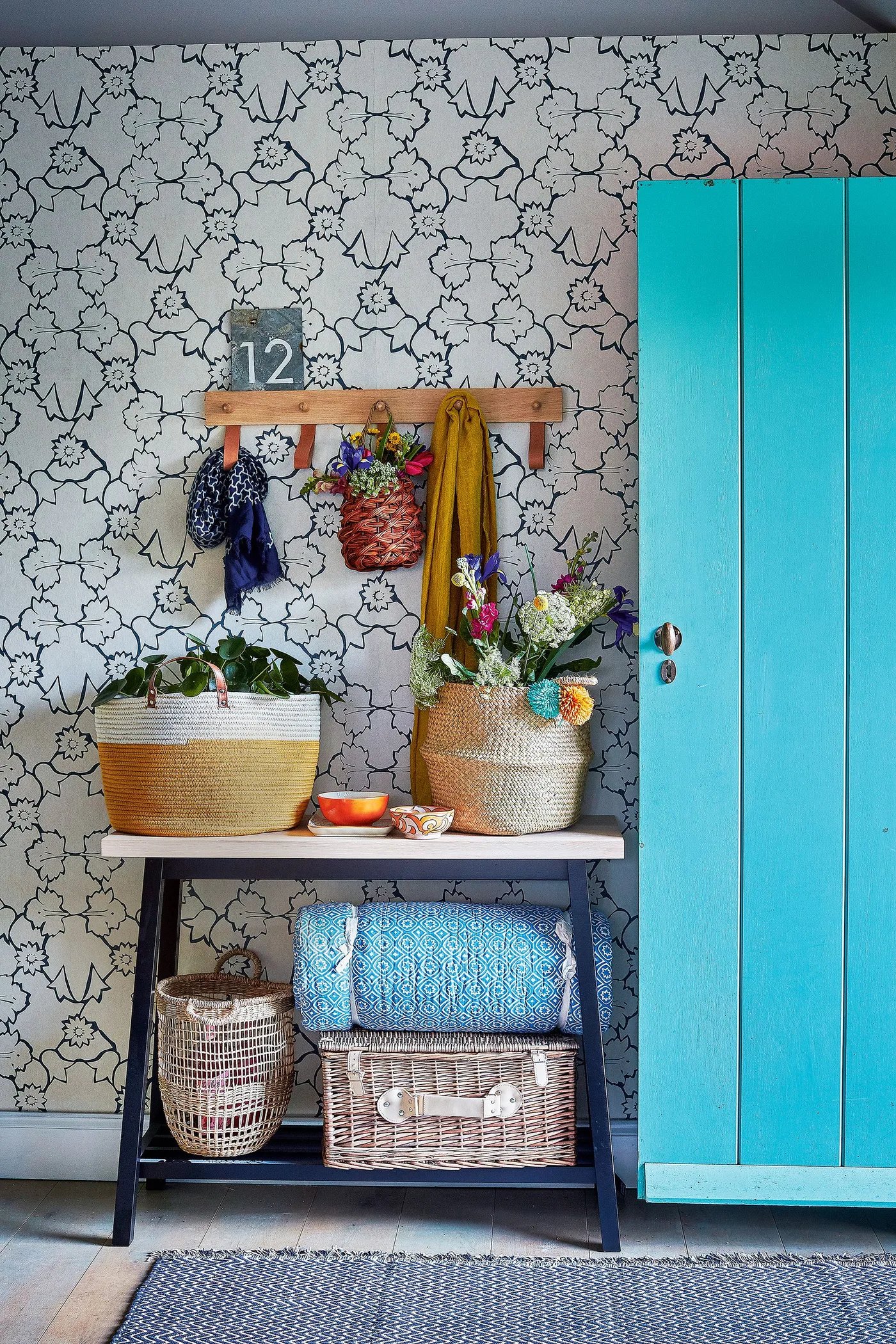
A turquoise door brings the strongest color into this patterned entry corner. Dark outlines in the floral wallpaper relate to the narrow console, while the wooden peg rail introduces a warmer horizontal line. Woven baskets above and below the console soften its shape, giving the smaller wall enough storage detail without a large cabinet.
Compare a door paint sample with a larger section of wallpaper before choosing the combination. A patterned wall still needs clear, usable hooks and a surface for everyday items. Check that baskets and hanging scarves remain clear of the door hardware, and keep the console stable rather than relying on its decorative appearance alone.
IDEA 12 / 20
Connect a leafy wall with everyday bags and coats
 SaveSupport Non AI Creator
Image credit: Future PLC / David Brittain
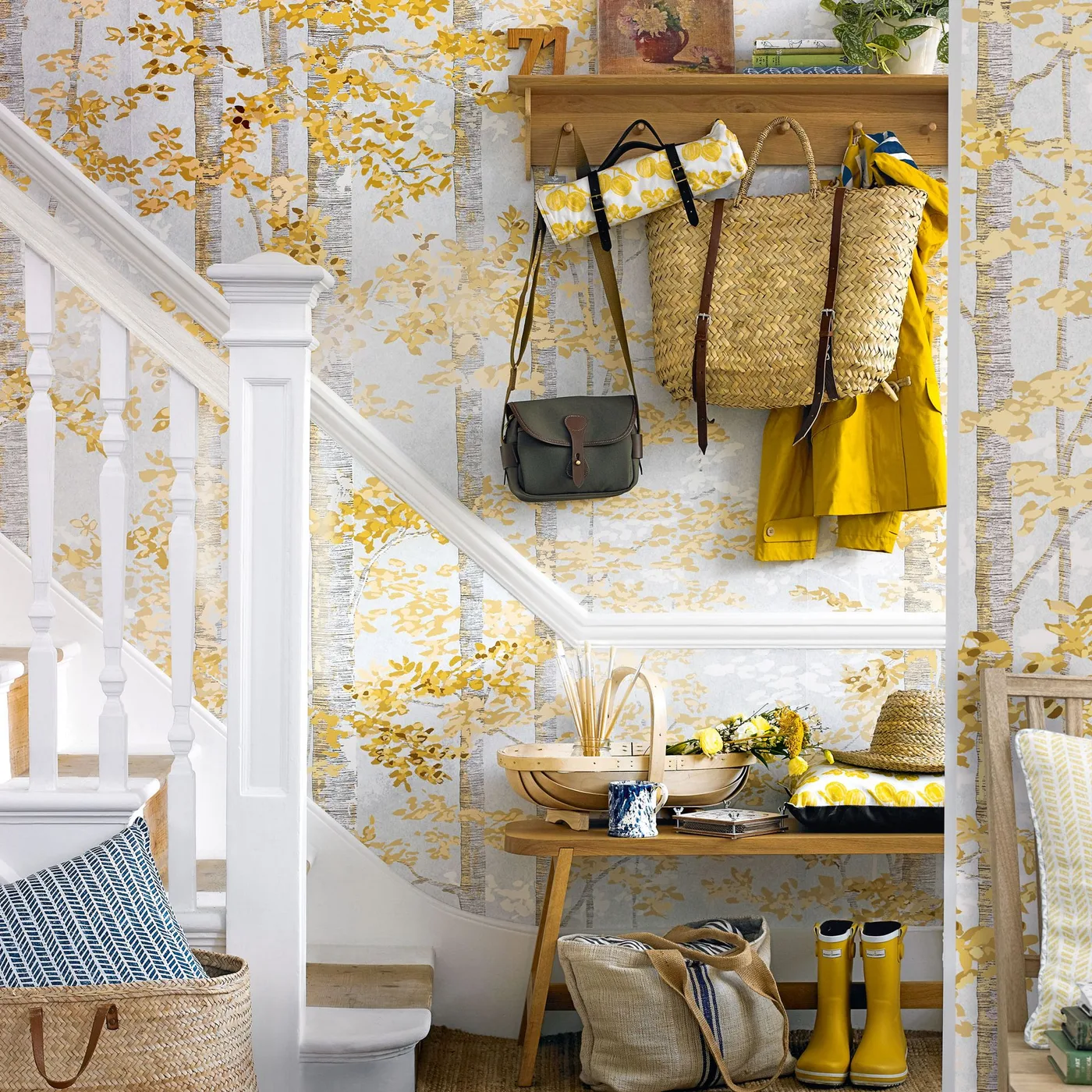
Yellow leafy wallpaper makes the area beneath the staircase feel warmer, with a coat and smaller fabric accessories repeating the color. A wooden shelf and hooks gather bags above the bench, while the white stair trim keeps the busy wall pattern framed. The lower space holds practical belongings rather than adding another decorative furniture layer.
Check how far loaded bags project from the hooks, particularly near a staircase. Give regularly used coats and footwear reachable positions, and keep the bench free enough to sit on. Compare the wallpaper's durability and cleaning guidance with the contact it will receive from bags, sleeves and everyday traffic in this location.
IDEA 13 / 20
Keep a darker paneled corner useful and contained
 SaveSupport Non AI Creator
Image credit: Porcelain Superstore
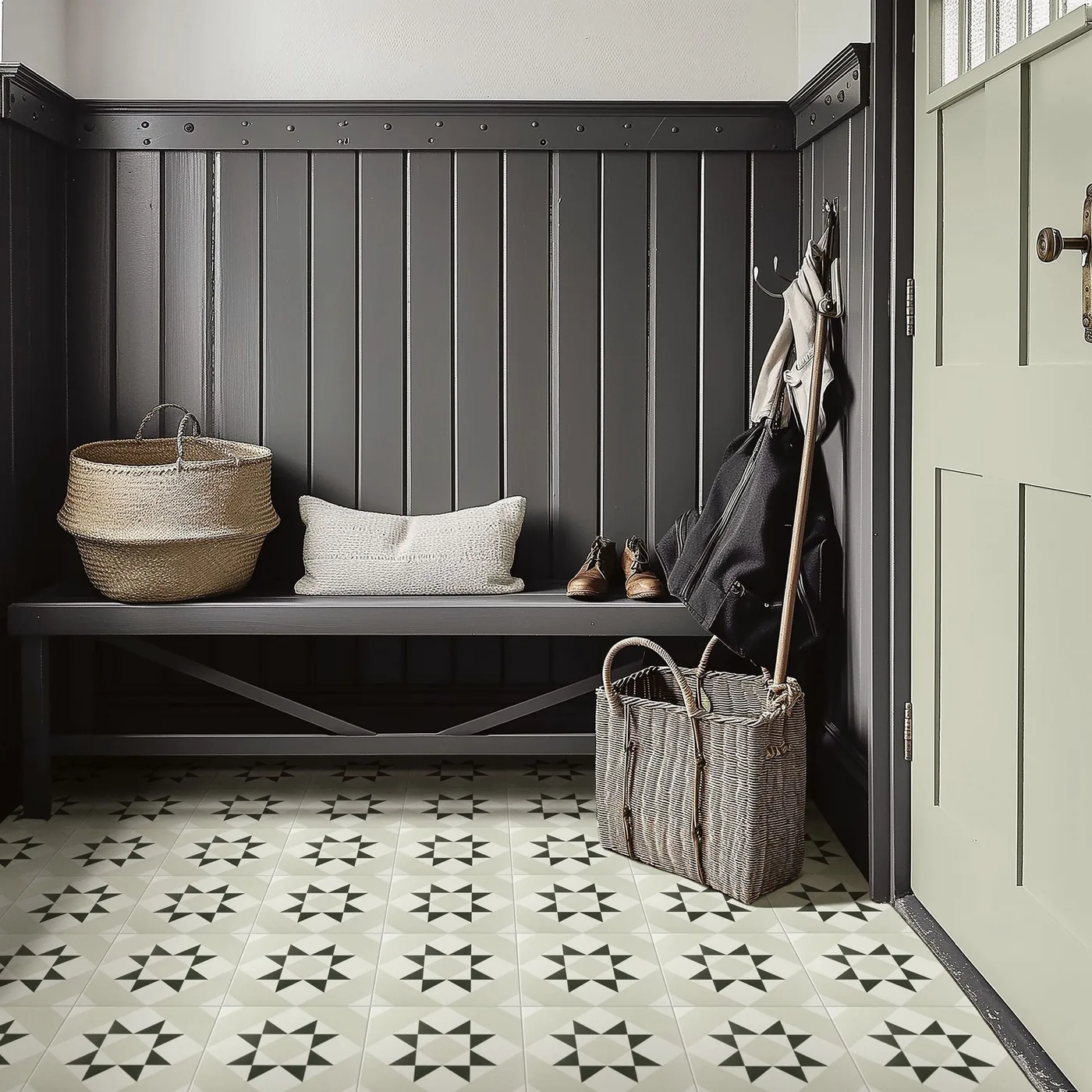
Dark vertical paneling wraps the corner around a matching narrow bench. The pale green door and lighter patterned floor keep the entrance from becoming entirely dark, while woven baskets supply warmer texture beside the seat. Small hooks and a pale cushion make the wall useful without introducing another bulky cupboard into the corner.
Test the darker paint on adjoining walls so you can judge how it feels in the corner under evening lighting. Check bench depth and the door swing together, including any hanging coat. Choose the floor and storage containers for the moisture likely at the entrance, and keep the central walking area clear when baskets are in use.
IDEA 14 / 20
Repeat a curtain color in a small entry bench
 SaveSupport Non AI Creator
Image credit: Vanessa Arbuthnott
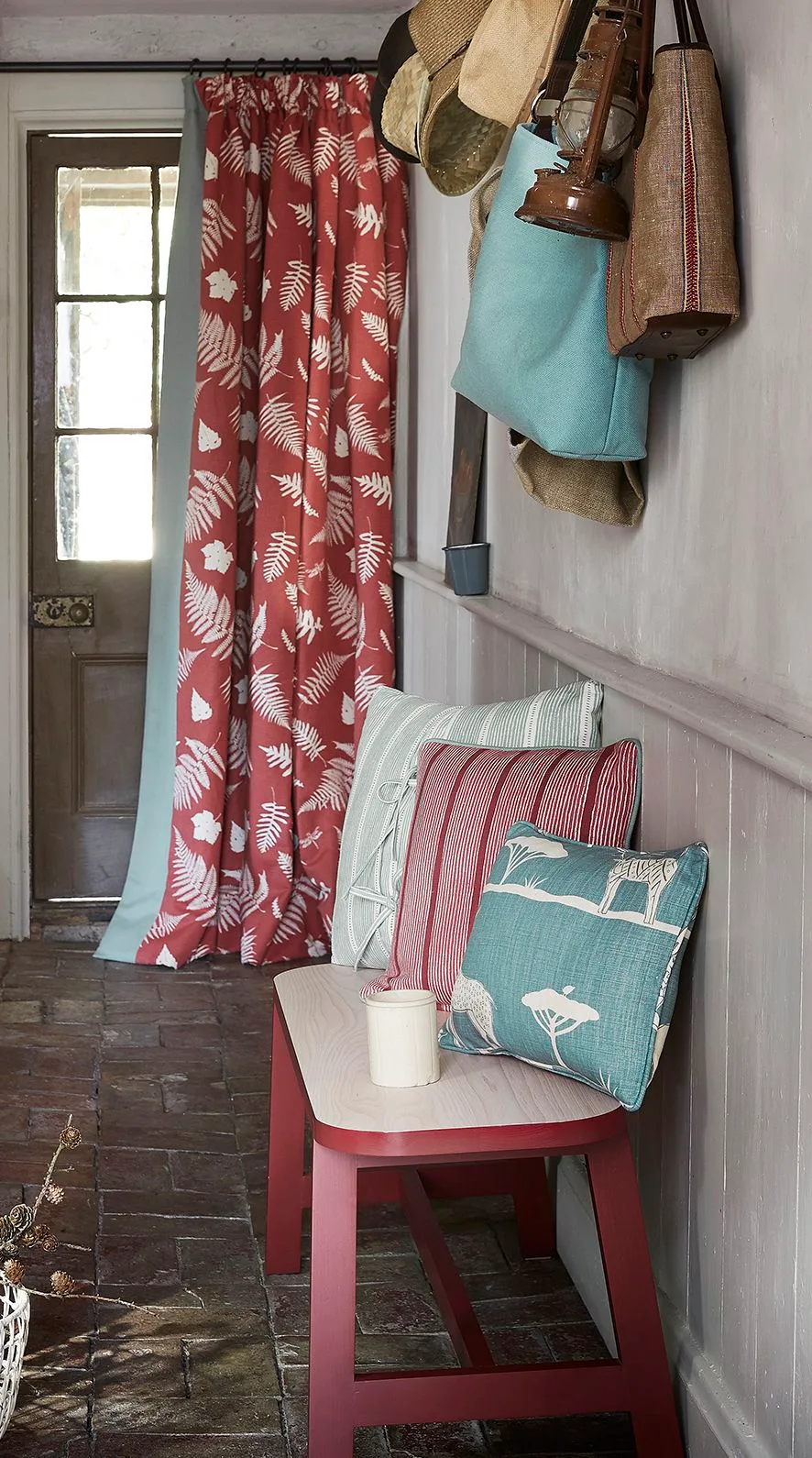
A red leafy curtain gives the doorway a strong fabric pattern, repeated more quietly by the bench legs beneath the hooks. Patterned cushions add softer accents along the pale paneled wall, while hats and bags provide everyday hanging storage above. The warmer floor and pale wall let the curtain remain the main decorative feature in the narrow view.
A door curtain must move fully clear of the opening without catching bags or furniture. Choose a manageable fabric and length for regular use, and leave the hem clear of the route. Keep hanging items secure above the seat, and consider which cushions you actually need when the bench is used for changing shoes.
IDEA 15 / 20
Give a floral door curtain a quieter surrounding wall
 SaveSupport Non AI Creator
Image credit: Colefax and Fowler
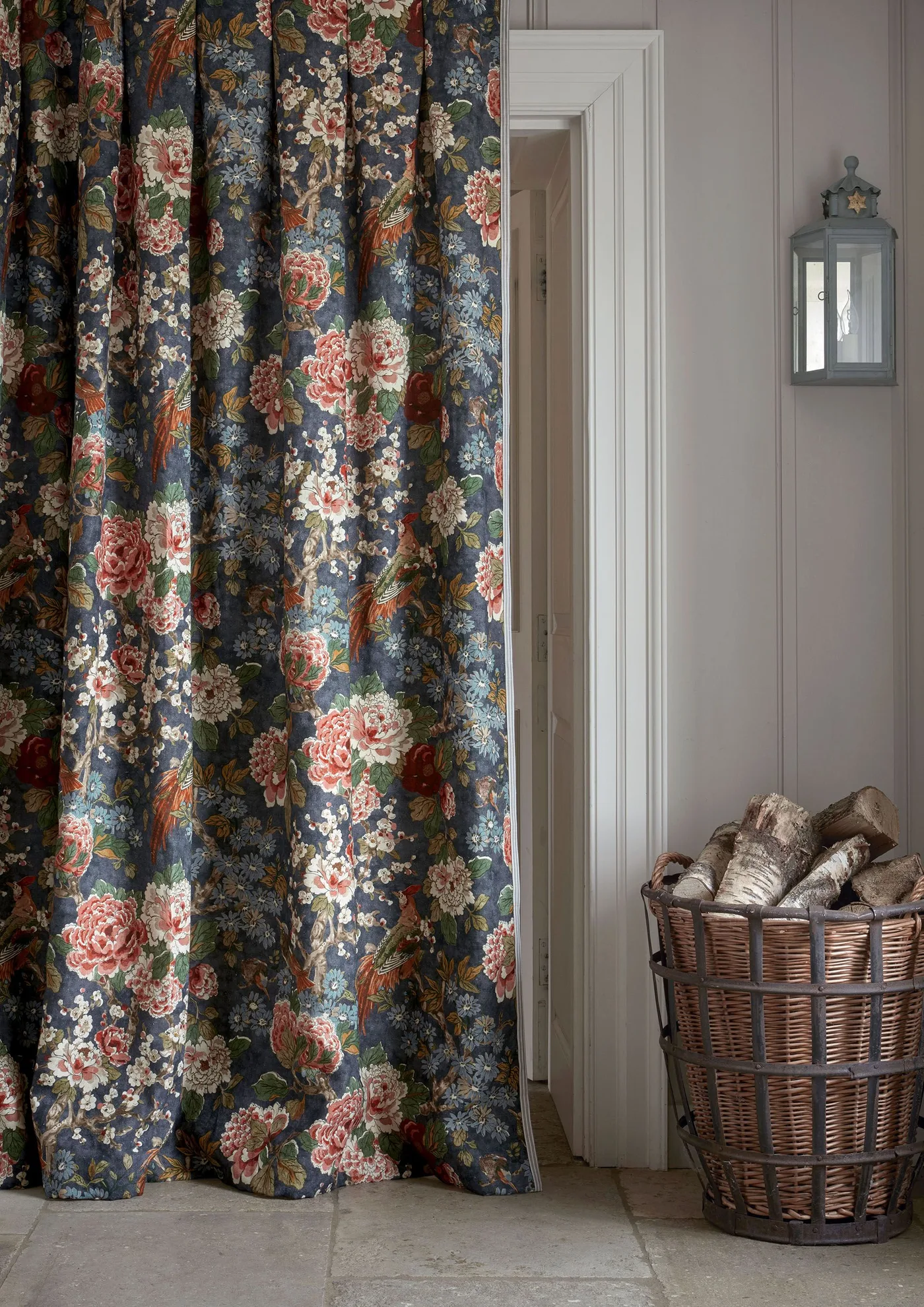
A dark floral curtain provides rich pattern beside pale gray vertical paneling. The wall lantern has a simpler outline, while the woven basket introduces texture near the lower edge of the doorway. Keeping the wall quiet allows the fabric to carry the main color and decorative detail without adding another competing printed surface beside it.
Check that a door curtain has a secure track or pole and can be moved fully away from the opening. Keep its fabric away from heat sources and the main walking route. A floor basket should have a deliberate position where it cannot become an obstacle, and its contents should suit the conditions in that location.
PART 04
Make smaller surfaces and door treatments work
IDEA 16 / 20
Use a rounded console where the route is narrow
 SaveSupport Non AI Creator
Image credit: Susie Watson Designs
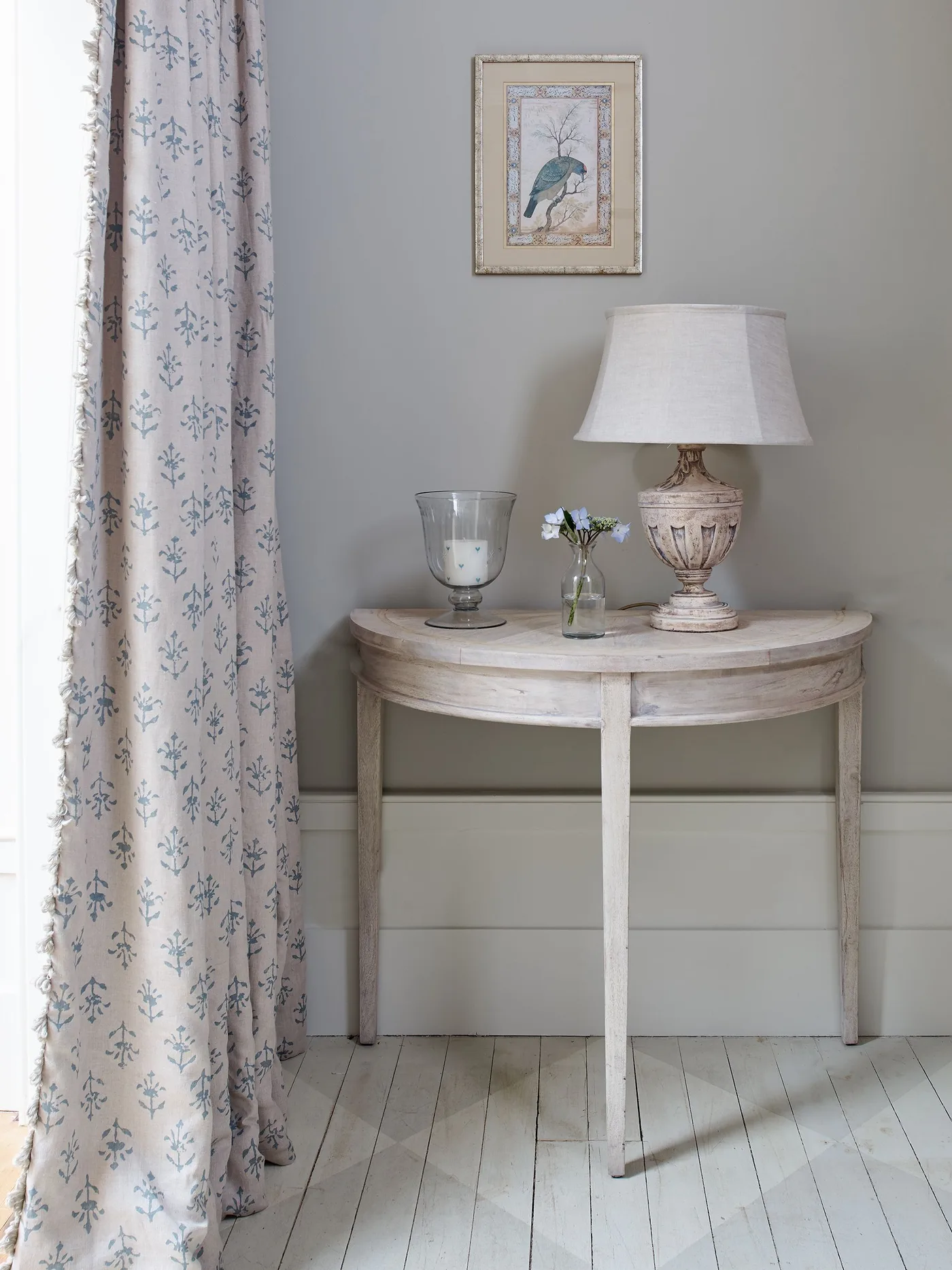
A pale half-round console gives this wall a useful surface with a curved front edge. The small lamp and bird picture add concentrated detail above it, while the neighboring curtain supplies a softer pattern. The restrained colors keep the arrangement gentle, with the table shape providing interest without needing a larger cabinet or elaborate wall grouping.
Check the actual depth and stability of a rounded console before choosing it for a tight entrance. Its curved outline still needs enough space for people carrying bags past it. Leave a useful part of the top for keys, and route the lamp cable safely so it does not cross the passage or catch the curtain.
IDEA 17 / 20
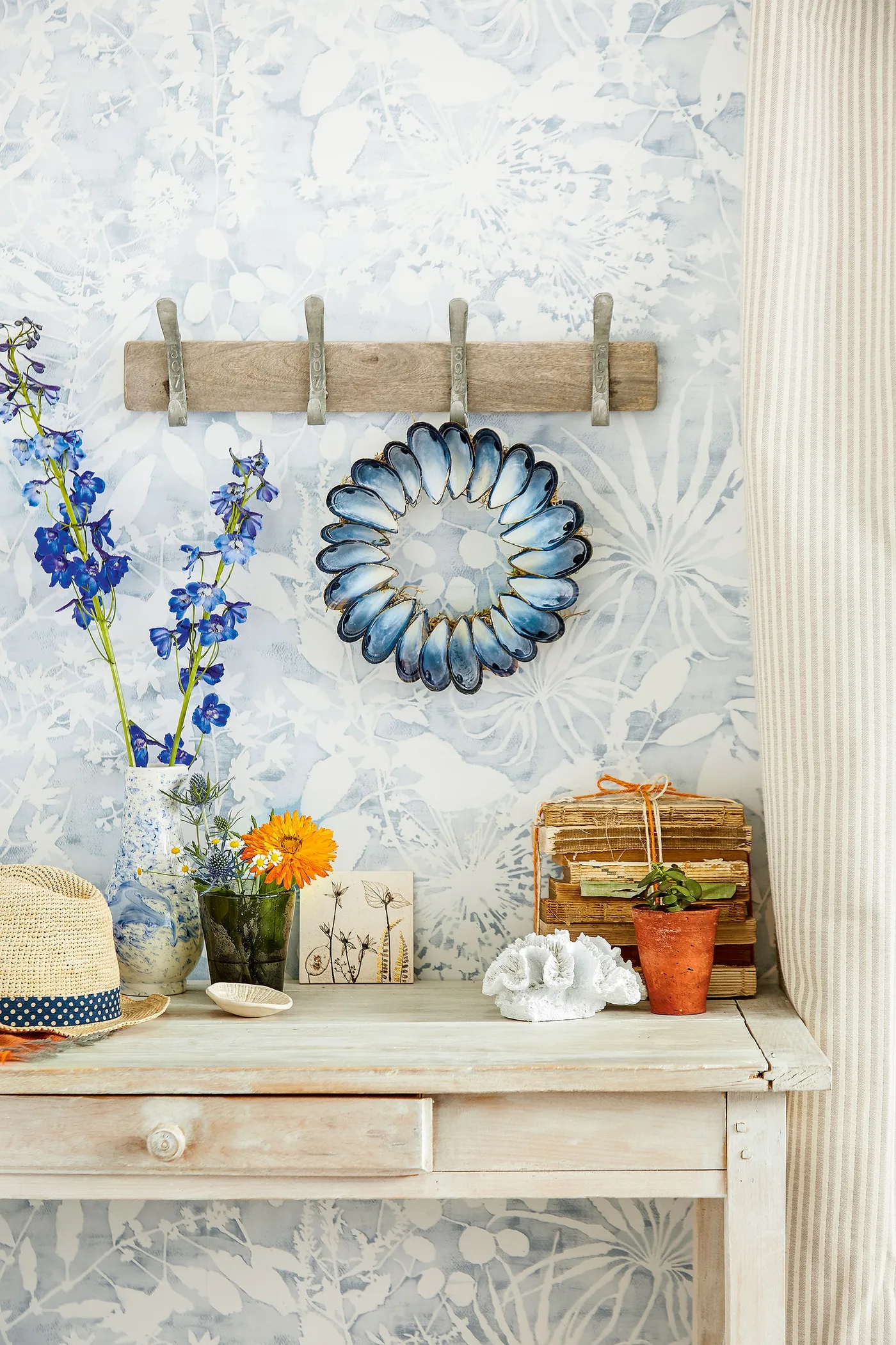
Keep a country console useful beneath simple pegs
 SaveSupport Non AI Creator
Image credit: Future /Dan Duchars
Pale leafy wallpaper gives the console corner a gentle patterned background. A simple wooden peg rail and blue-edged round mirror create clearer shapes above the pale table, while flowers and small containers add warmer details below. The combination brings country character to a small wall without relying on a larger furniture grouping around it.
A console should still have an everyday role when the decorative objects are in place. Keep a clear area for keys or incoming mail, and use secure fixings for the rail and mirror. Check how hanging belongings affect the view and access to the table, and avoid fragile containers where passing bags are likely to knock them.
IDEA 18 / 20
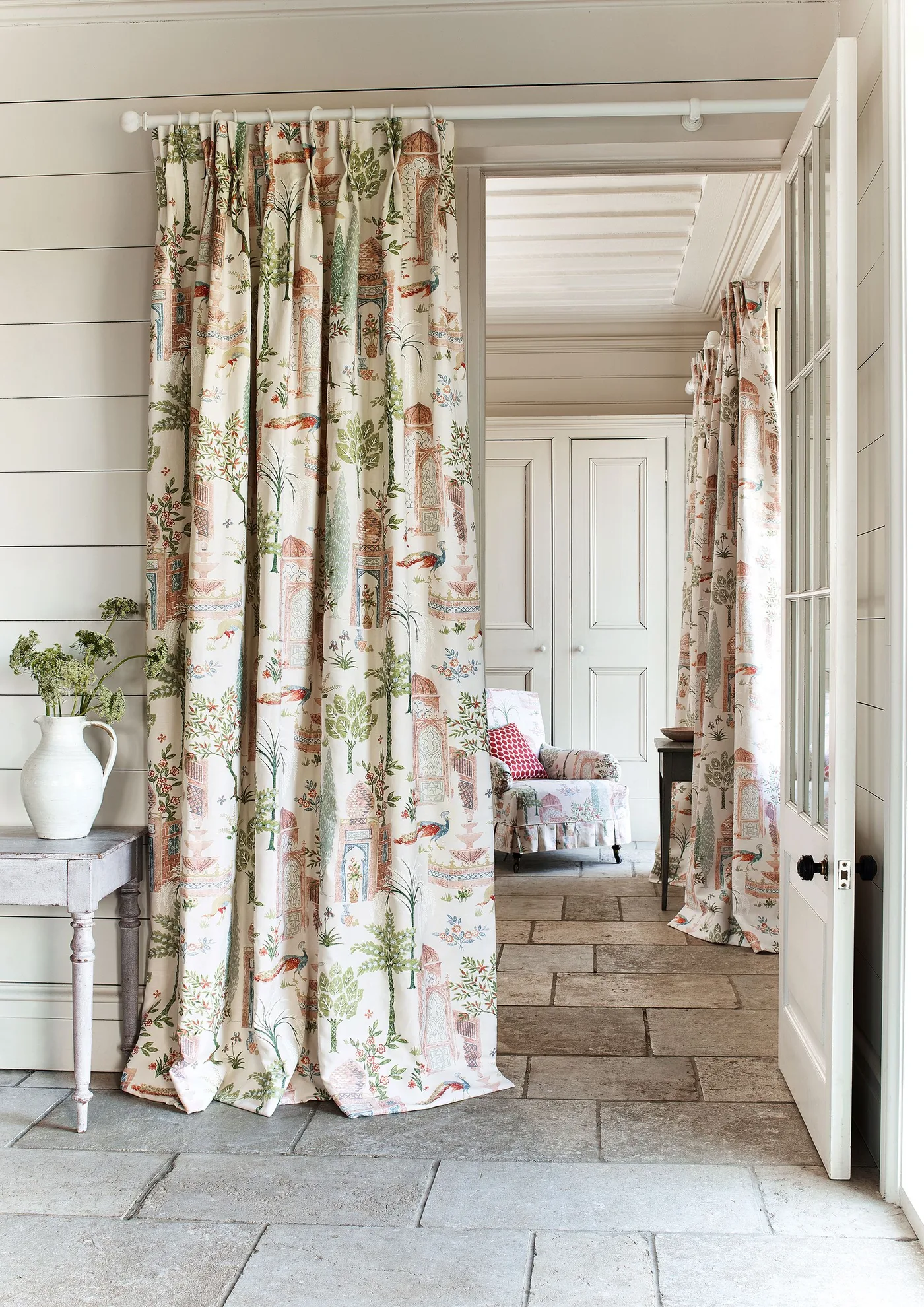
Use patterned curtains to soften a longer passage
 SaveSupport Non AI Creator
Image credit: Jane Churchill
Botanical curtains soften the opening in this pale paneled passage. Their pattern adds color against simpler wall boards and larger floor tiles, while a narrow painted table provides a small surface at the side. The view into the next room stays recognizable, making the fabric a softer boundary within the route through the house.
Curtains across a passage need enough room to stack clear of the walking route. Choose an appropriate length and fitting so the fabric does not drag where people pass. Keep the side table shallow enough for the space, and compare the curtain's cleaning requirements with the dust and contact it will receive in a busy hallway.
IDEA 19 / 20
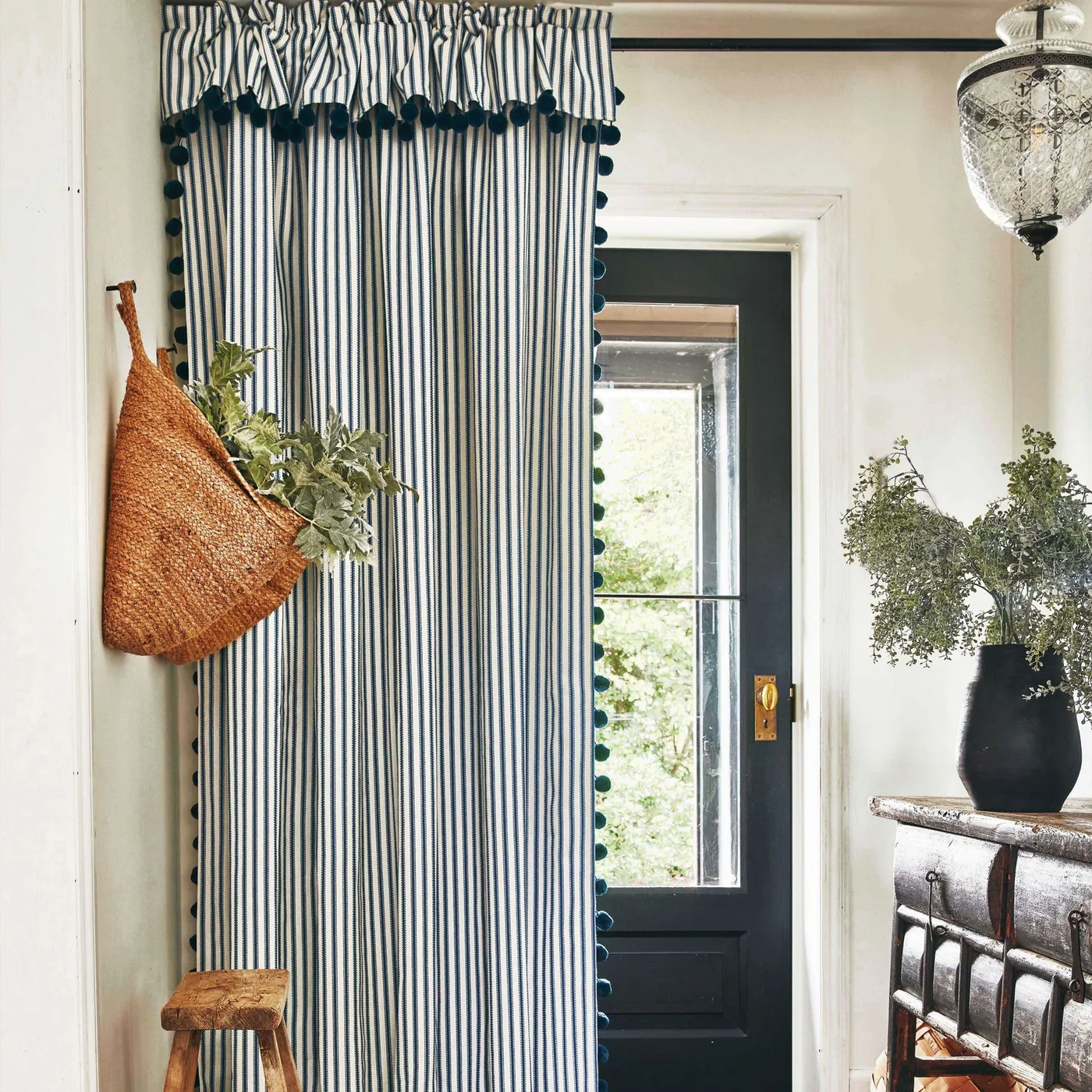
Frame a glazed door with a simple stripe
 SaveSupport Non AI Creator
Image credit: Prestigious Textiles
A long blue striped curtain frames the darker glazed door, giving the entrance a clear vertical fabric pattern. The wooden console adds warmth at the side, while a woven hanging bag repeats a softer texture on the pale wall. Decorative edging gives the curtain extra detail without changing the main stripe that organizes the doorway.
Check that the curtain can move clear of the handle and glazing whenever the door is used. Compare the full fabric repeat and edging with the door color before ordering. Keep the console surface practical and hanging bags secure, and choose a curtain length that will not gather dirt or become an obstacle beside the entrance.
IDEA 20 / 20
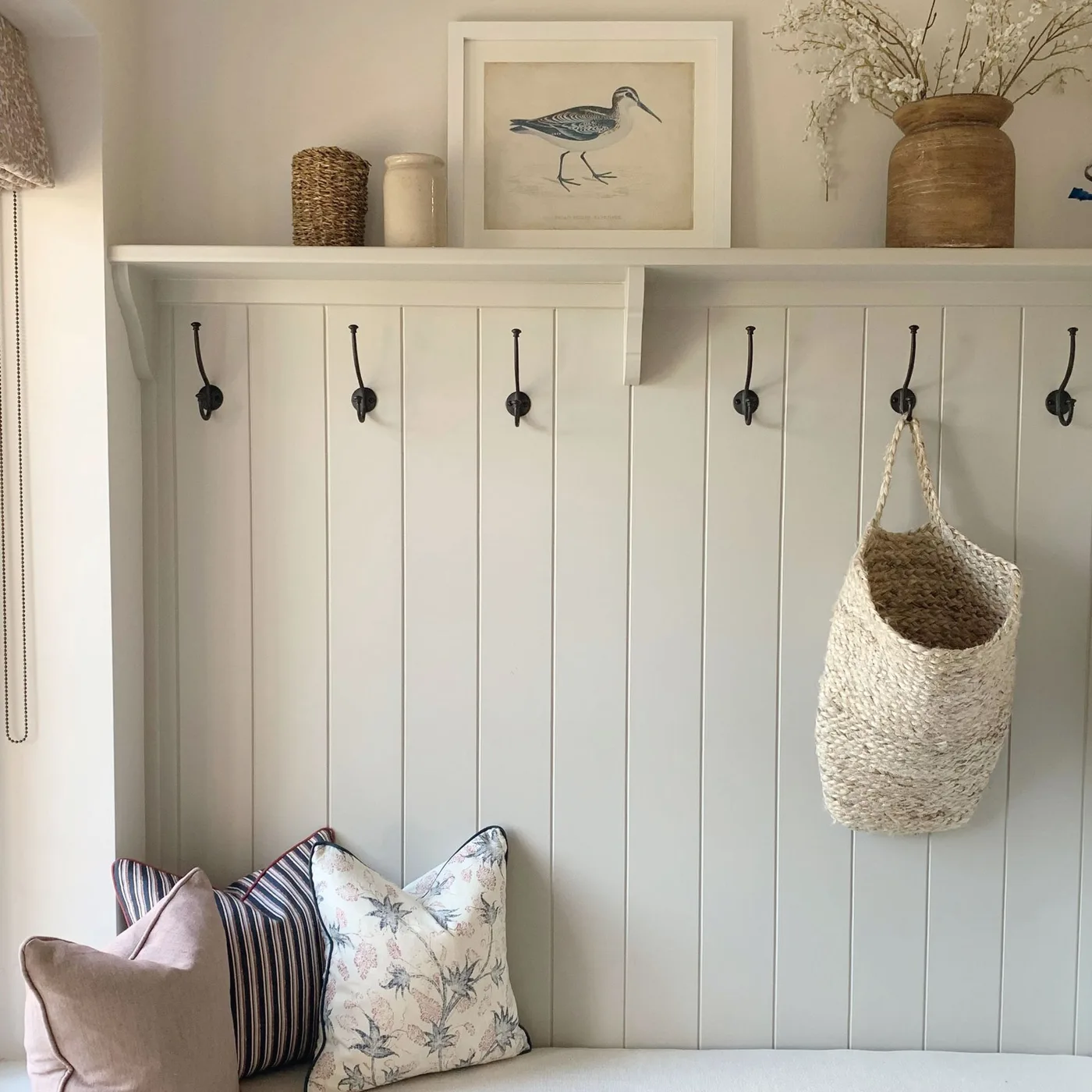
Leave enough hooks free above a cushioned seat
 SaveSupport Non AI Creator
Image credit: Claire Garner Design Studio
A row of dark hooks sits above the cushioned seat, creating a clear storage line across pale vertical boards. Striped and floral cushions add softer detail below, while a bird picture and containers occupy the upper shelf. The pale finish keeps the corner light, making the separate roles of seat, hooks and shelf easy to distinguish.
Plan hook spacing for actual coats rather than leaving every gap sized only for a decorative bag. Keep enough height between hanging items and the seat for someone to sit comfortably. Secure the shelf and its contents appropriately, and choose washable cushion covers so the softer country details can cope with frequent use.
BRING IT ALL TOGETHER
Choose details around your everyday arrival
Begin with the door swing and the route into the next room. Put regularly used coats, bags and shoes where they can be reached without crossing that route, and choose a seat only if there is enough room to use it comfortably.
Add warmth through a few connected materials and colors, then keep the surfaces practical. Stable mats, suitable storage and washable fabric will help the entrance stay welcoming after wet walks and busy mornings, instead of needing constant rearrangement.