Country bedrooms can be pale and quiet, richly patterned or shaped by exposed beams and older furniture. What connects them is a comfortable arrangement that leaves room to sleep, dress and reach the things you use, rather than a requirement to fill the room with rustic decorations.
These photographs show several ways to bring warmth into a bedroom through furniture, fabrics, wall color and lighting. Compare the bed and bedside area first, then choose the details that suit your room and the amount of washing, dusting and storage you want to manage.
PART 01
Work with the room's strongest features
IDEA 01 / 20
Keep the bed softer than the roof structure
 SaveSupport Non AI Creator
Image credit: The Refined Group
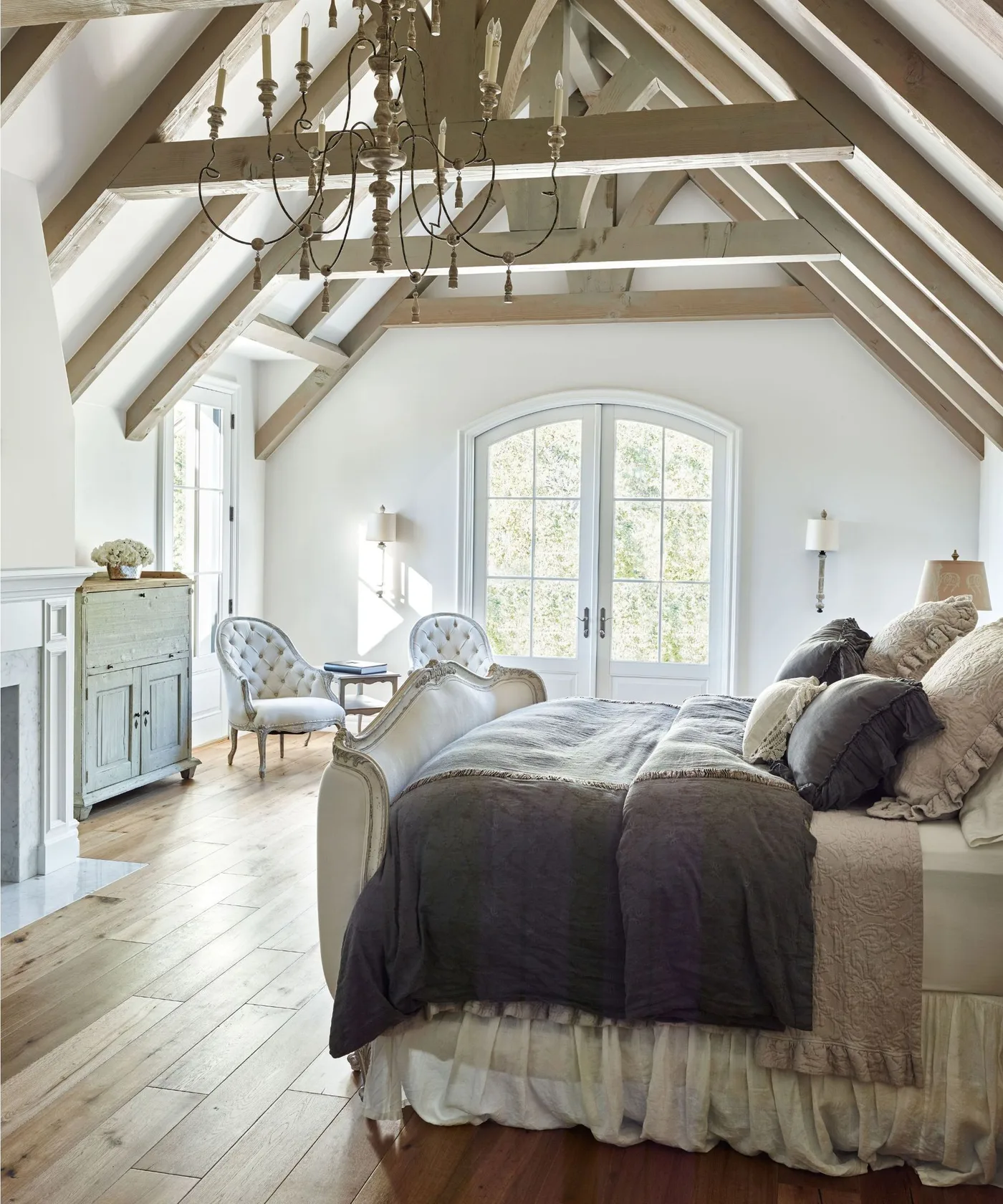
Angled beams give this bedroom a strong overhead structure, while the pale shaped bed and gathered lower fabric soften the sleeping area. A dark gray coverlet creates a quieter central layer below the busier roof. Two small chairs sit beside the glazed doors, extending the room beyond the bed without hiding its main architectural features.
Check walking routes and usable ceiling height before choosing extra seating beneath a roof like this. Bedding layers should suit the room's temperature and your laundering routine. Keep gathered fabric clear of the floor when necessary, and decide where spare cushions will go at night so the decorative layers remain easy to manage.
IDEA 02 / 20
Leave a textured ceiling above a quiet bed
 SaveSupport Non AI Creator
Image credit: Kara Childress
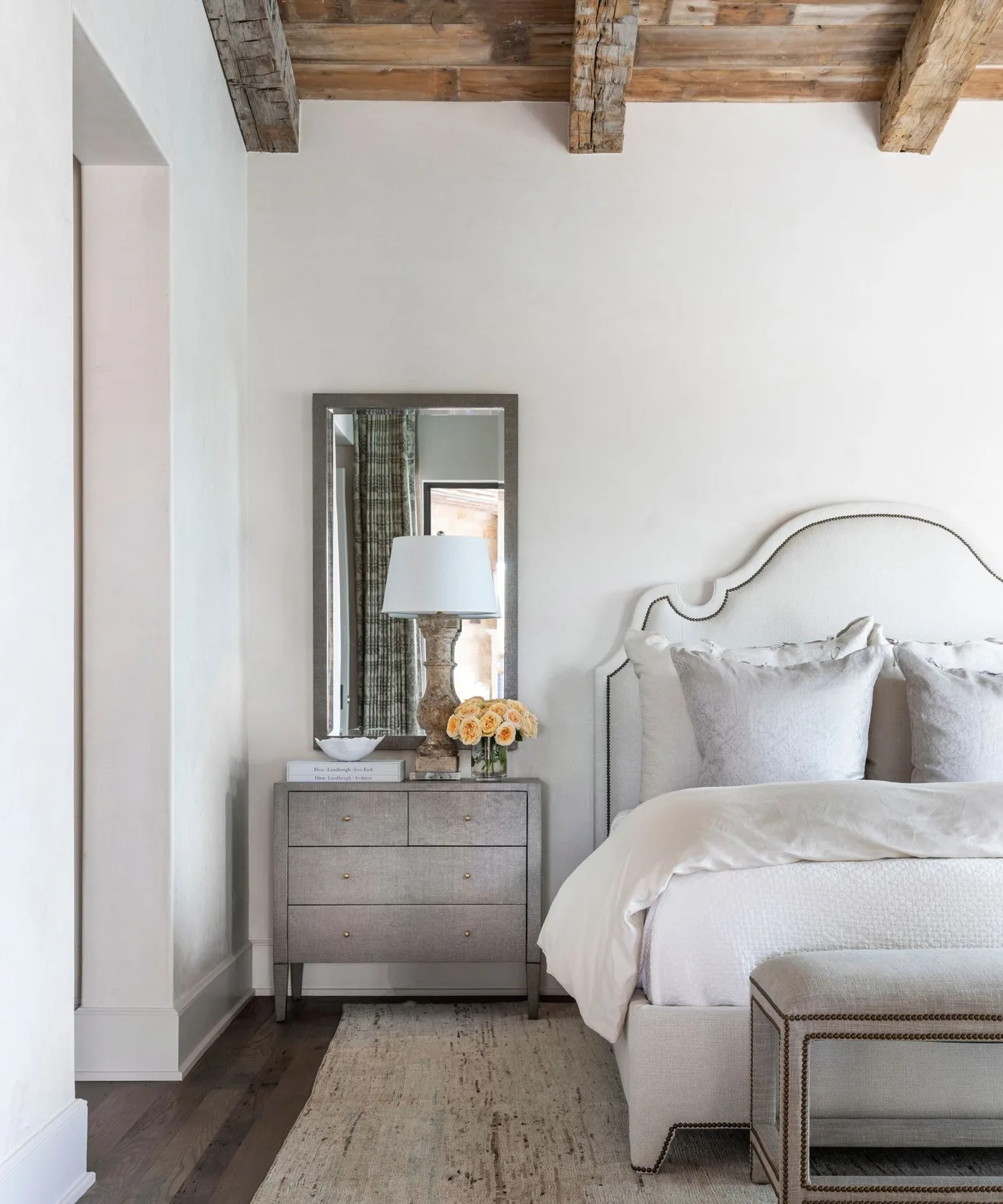
The textured wooden ceiling brings warmth above a mostly pale bedroom. A shaped white headboard adds a gentle curve, while gray bedside drawers and a tall rectangular mirror give the side of the bed clearer outlines. The light bench and rug continue the quieter palette, letting the overhead timbers remain the most pronounced texture.
A pale bedroom still needs useful bedside surfaces and lighting. Check that the lamp, reading materials and any charging equipment fit comfortably on the table without crowding it. Choose upholstery and bedding with care instructions you can follow, and leave enough space to use the bench without narrowing the route around the bed.
IDEA 03 / 20
Keep an older looking chair useful beside the bed
 SaveSupport Non AI Creator
Image credit: Benji Lewis Design
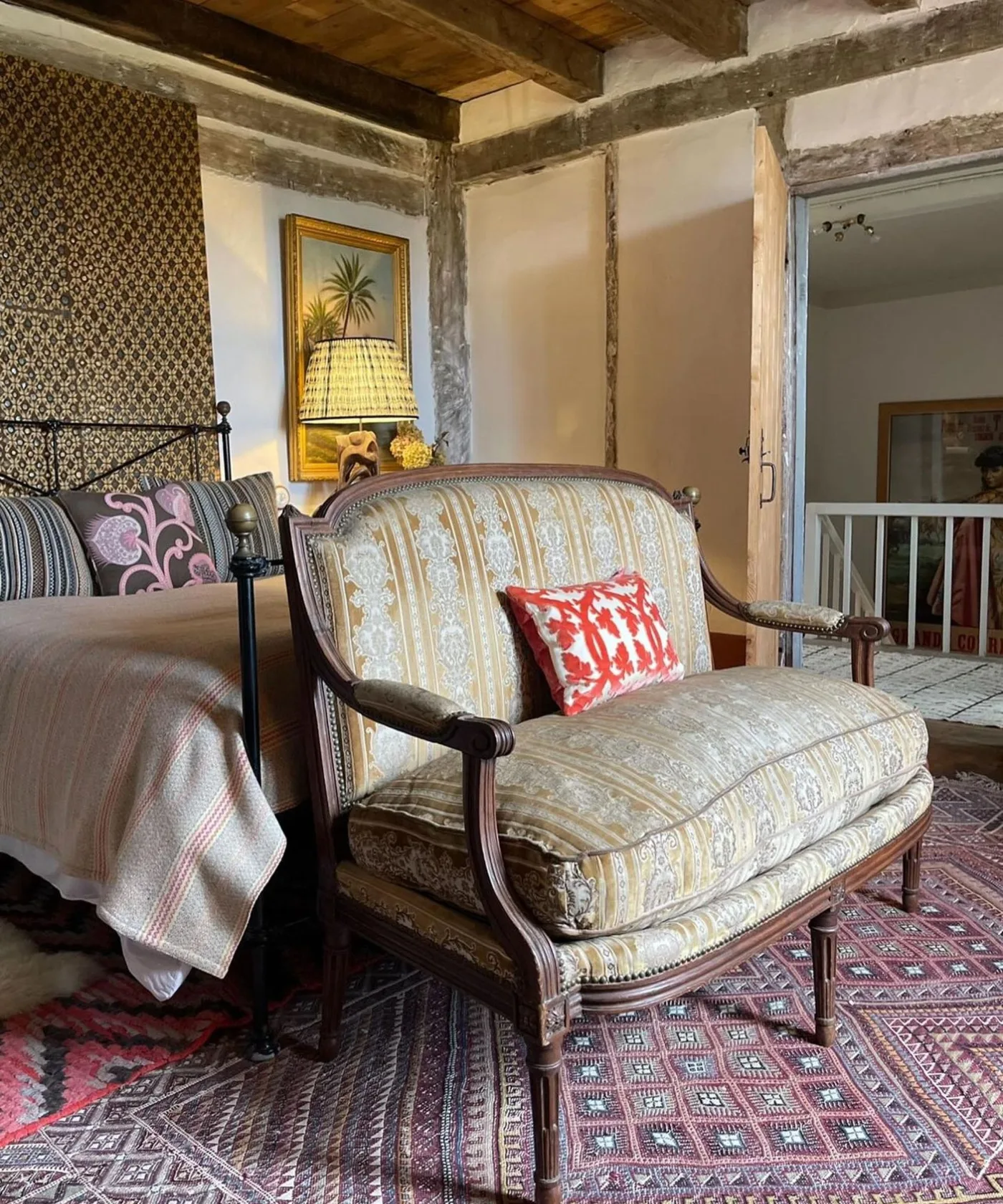
Exposed wall timbers frame the patterned armchair beside the bed. The chair's wooden arms and pale patterned upholstery connect with the warm structural details, while the dark metal bed frame provides a different outline. Striped pillows and a brighter cushion add smaller fabric contrasts within the bedroom's already textured surroundings.
A bedroom chair should offer a comfortable seat and leave room for its user to stand up. Test its position beside the bed rather than treating it only as a display piece. If mixing several fabrics, compare the repeat sizes and limit the number of strong colors so the quieter sleeping area remains easy to enjoy.
IDEA 04 / 20
Give exposed wall timbers a simple sleeping area
 SaveSupport Non AI Creator
Image credit: Amara
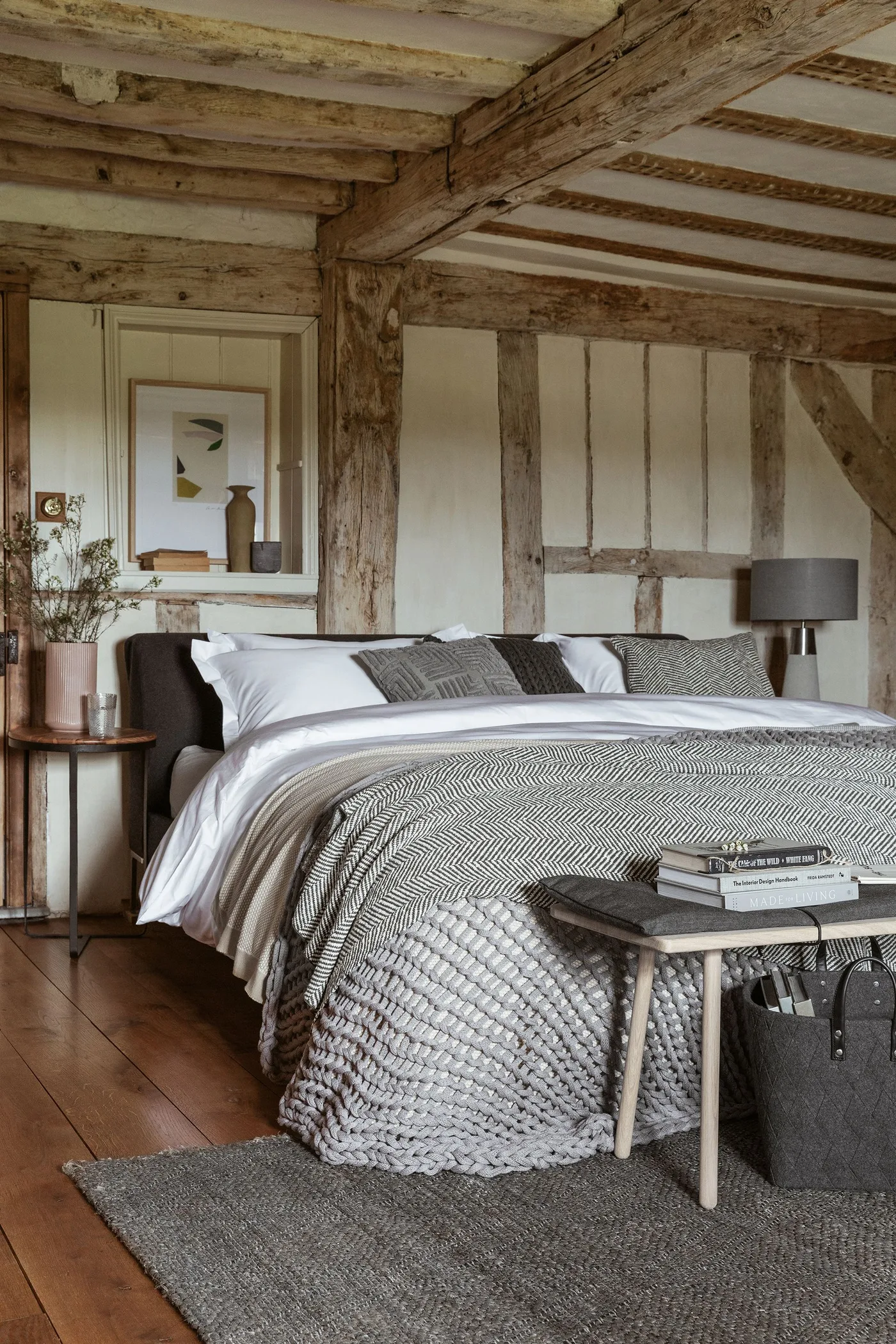
Exposed wall and ceiling timbers give this bedroom a strong framework. The dark headboard and pale bedding keep the bed readable against the uneven background, with a gray textured throw providing a softer layer. A small round bedside table and a larger framed mirror add useful elements without covering the timber pattern across the wall.
Where the room already has extensive texture, begin with simpler bedding and a manageable number of accessories. Check that each bedside surface can hold the items you use without becoming crowded. Have existing structural features assessed appropriately if their condition is uncertain, and choose lamp positions that give useful light without awkward cable routes.
IDEA 05 / 20
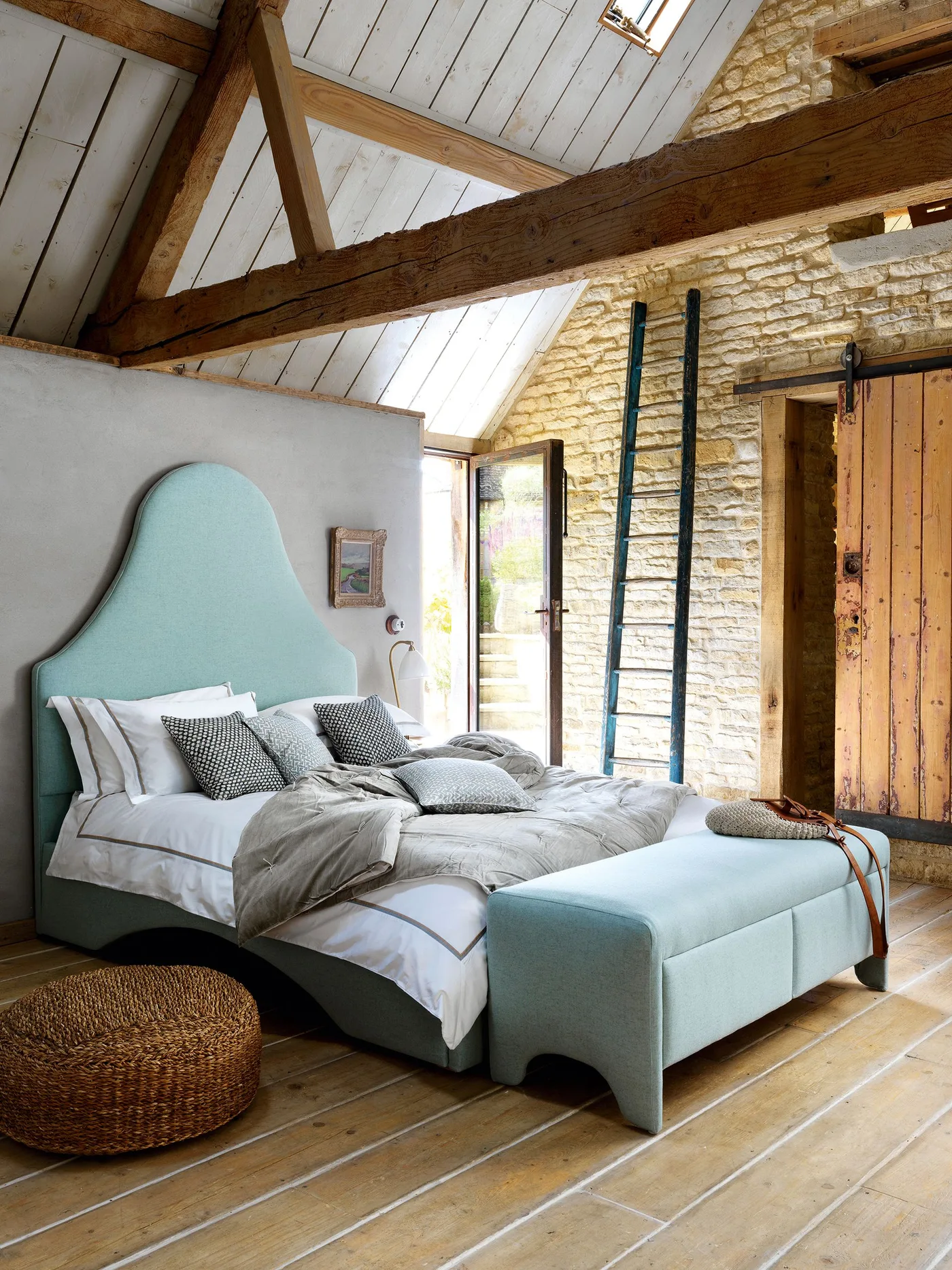
Set a soft blue bed against a warm stone wall
 SaveSupport Non AI Creator
Image credit: Naturalmat for Homes & Gardens
A pale blue upholstered bed and matching bench introduce softness beneath the wooden roof beams. The stone wall and sliding wooden door provide warmer, rougher surroundings, making the bed's broad curved headboard stand out. A woven floor cushion adds another low texture, while the tall ceiling keeps the stronger architectural details visible.
An upholstered bed brings a different cleaning routine from a hard frame, so check the fabric care before choosing it. Test the bench position with the door fully open and the bed in use. Keep floor cushions away from the main route, and consider whether a matching bench is useful enough to justify its space.
PART 02
Give pattern a comfortable balance
IDEA 06 / 20
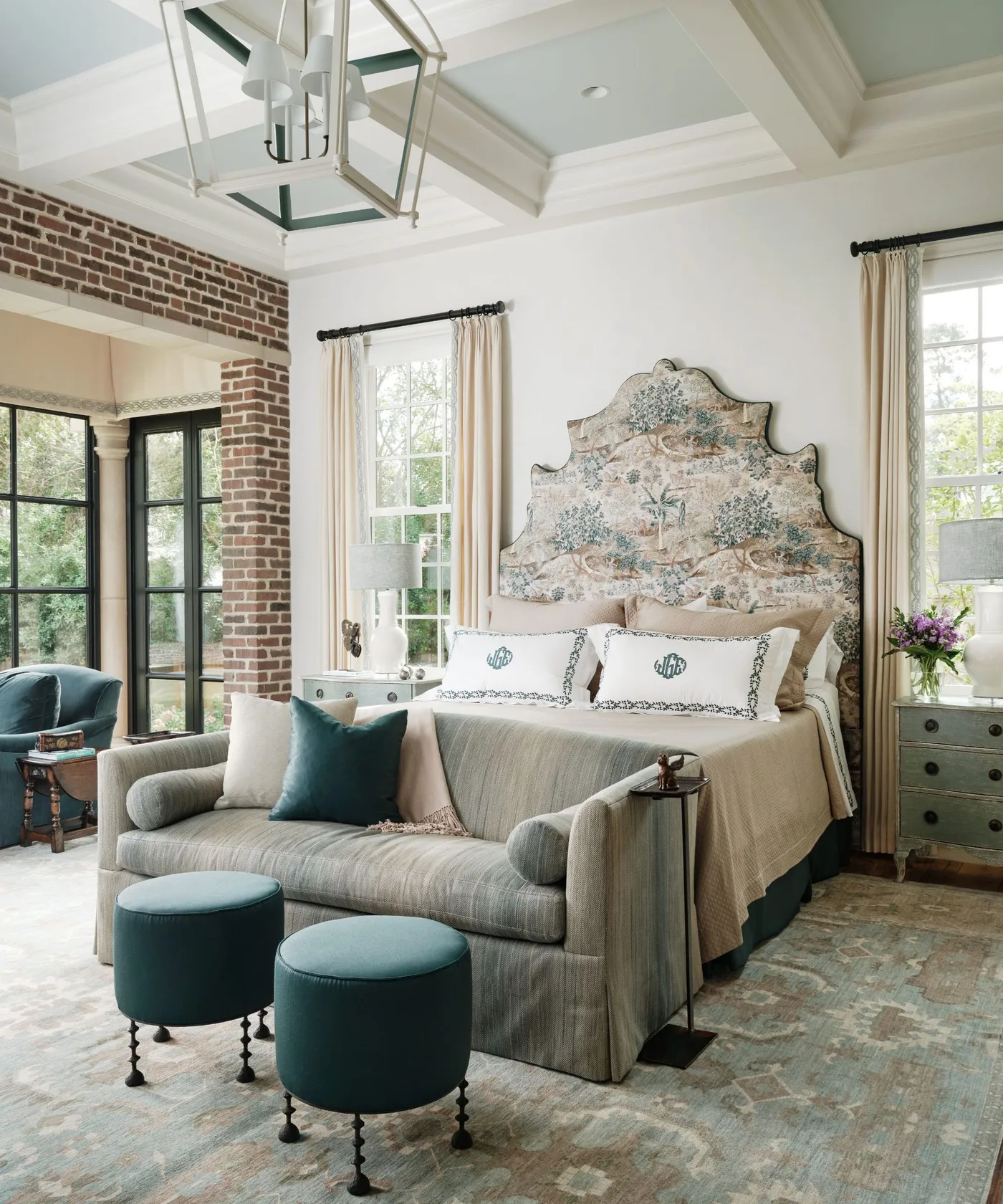
Make a patterned headboard the main fabric choice
 SaveSupport Non AI Creator
Image credit: Lucas Eilers
A tall shaped headboard carries the room's main fabric pattern between two curtained windows. Pale bedding gives that outline space to stand out, while a striped settee adds another scale of pattern at the foot. Dark green stools and a cushion repeat deeper accents without covering the bed in several equally strong prints.
Choose the headboard fabric alongside the curtains and any bedroom seating. A large shaped headboard needs enough wall space to show its outline and allow useful bedside lighting. Measure the settee and stools in the actual walking route before copying the grouping, and confirm the upholstery care suits how frequently each piece will be used.
IDEA 07 / 20
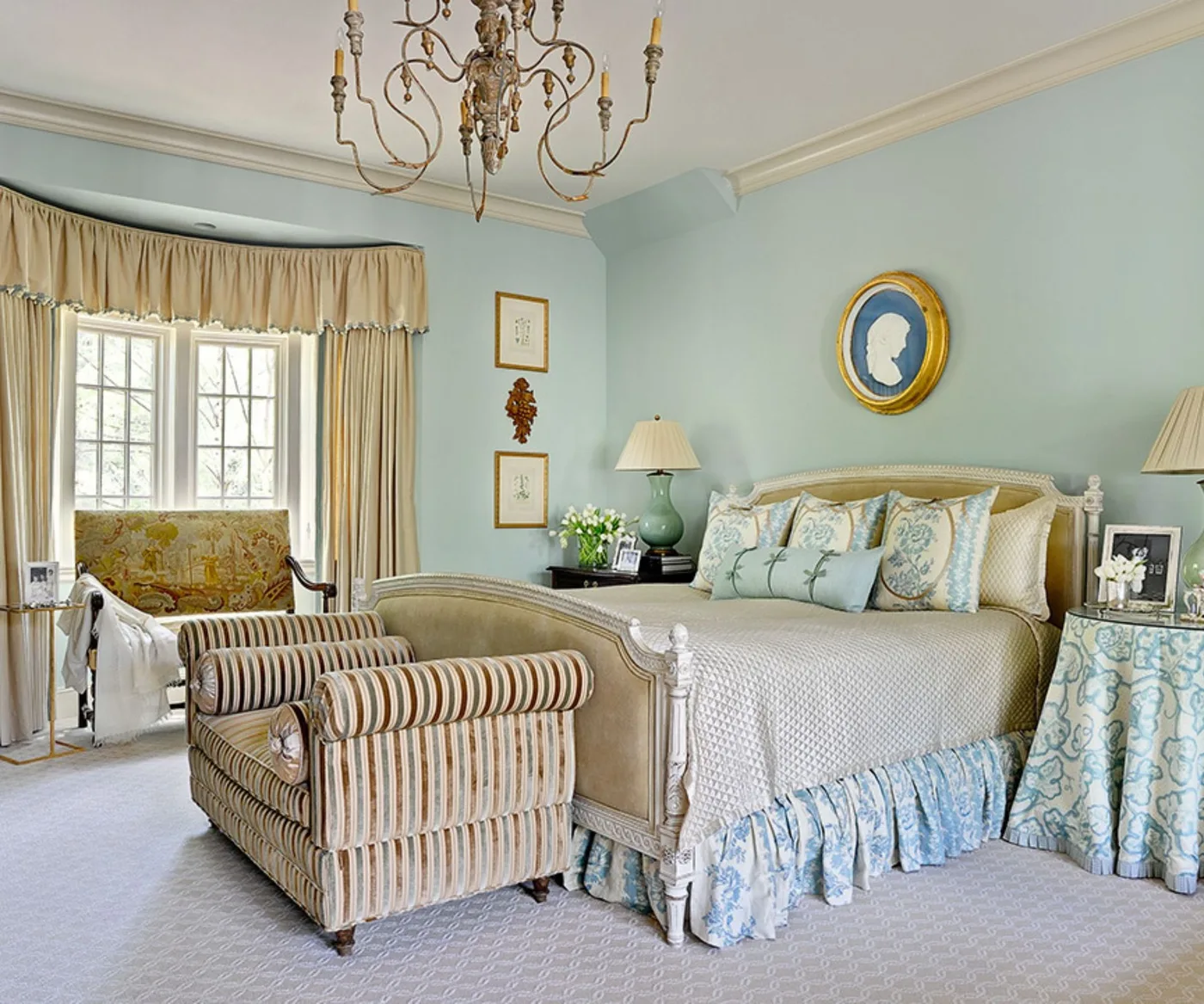
Connect different prints with a pale blue background
 SaveSupport Non AI Creator
Image credit: Gray Walker Interiors
Pale blue walls connect the different fabrics in this bedroom. A patterned bed skirt and side table cover repeat softer blue tones, while the striped armchair adds a more linear print. The curved bed frame, cream curtains and ceiling light introduce familiar shapes, leaving several plain areas around the more decorative upholstery.
When combining fabrics, compare them as a group under the room's lighting rather than choosing each from a separate small sample. Make skirts and table covers removable for cleaning, and keep them from catching drawers or trailing into a walking route. Leave a convenient place for cushions so bedtime does not become a lengthy rearrangement.
IDEA 08 / 20
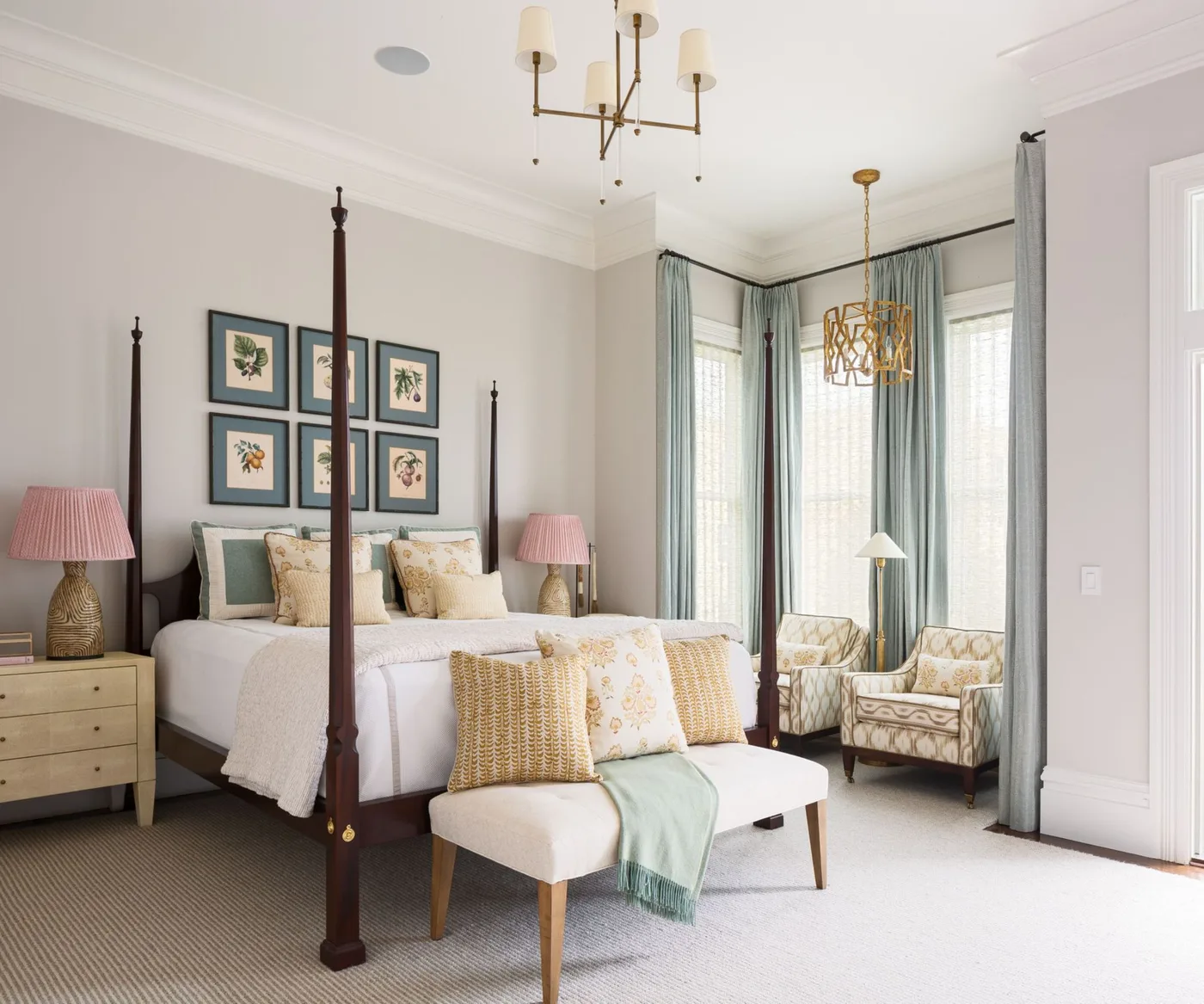
Let a four-poster bed frame the wall arrangement
 SaveSupport Non AI Creator
Image credit: Margaret Ash Design / Photography Tim D Coy
The dark four-poster bed frames a group of botanical pictures above the headboard. Pale bedding keeps the center lighter, while pink lamps introduce warmer accents beside the posts. Patterned chairs and long blue curtains add softer layers at the window, with a small upholstered bench occupying the foot of the bed.
Check the poster height against the ceiling and lighting before choosing a similar frame. The posts can affect the view of artwork and the reach to lamps, so plan those positions together. Extra seating should leave comfortable access to the windows and bed, and each fabric layer should have a manageable cleaning routine.
IDEA 09 / 20
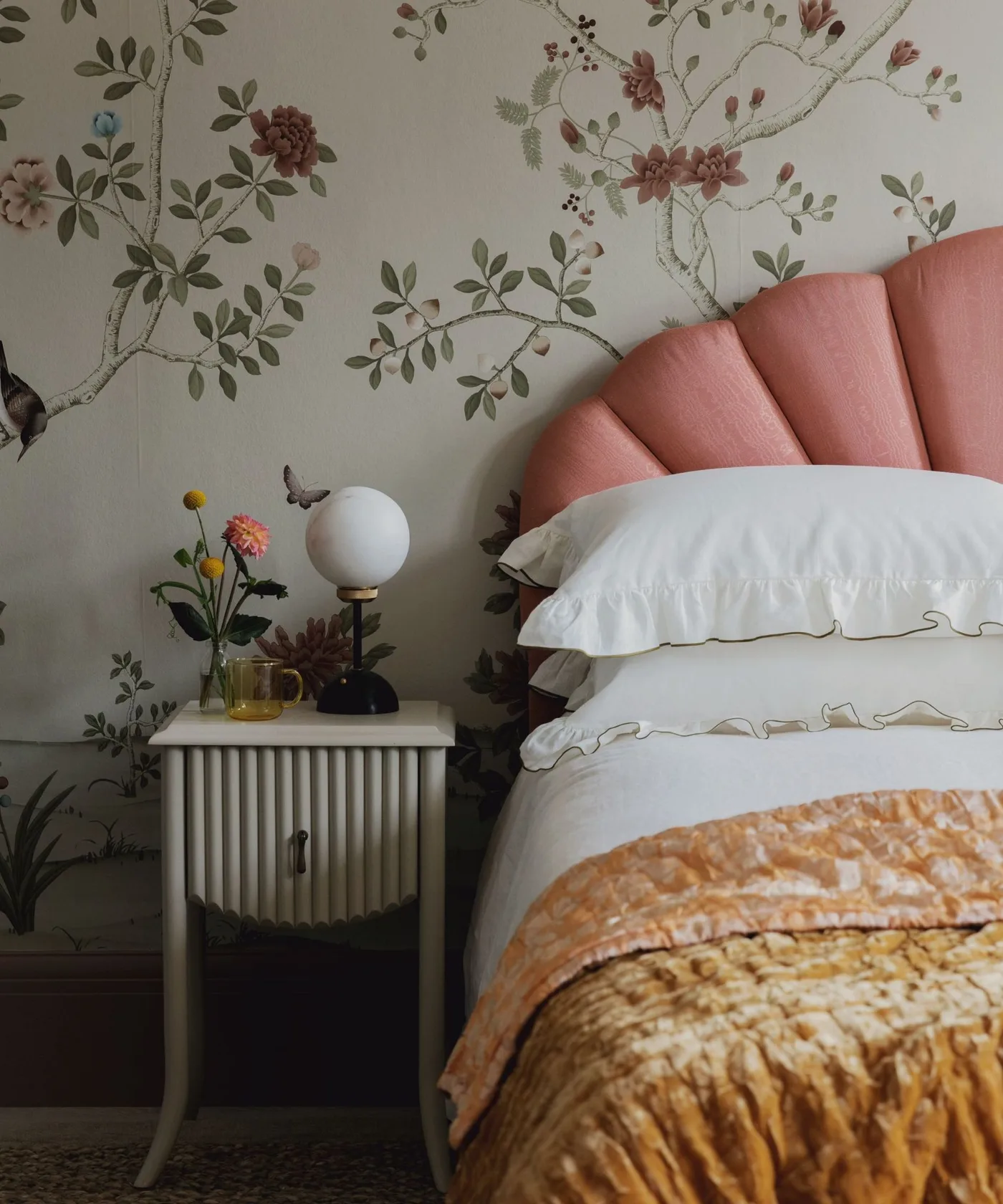
Give a curved pink headboard a quieter floral wall
 SaveSupport Non AI Creator
Image credit: TROVE by Studio Duggan
Branching floral wallpaper provides a delicate background behind the curved pink headboard. White bedding separates that stronger shape from the warmer throw, while a small fluted bedside cabinet introduces another fine texture. The globe lamp and simple flowers keep the bedside arrangement compact, leaving the wallpaper visible around the bed rather than covering it with objects.
Use a larger wallpaper sample to judge how branches and flowers repeat behind the headboard. Compare its colors with the upholstery before ordering either one. A compact bedside cabinet still needs useful reach and surface space; choose a lamp that leaves room for everyday items, and avoid placing water filled containers where a spill would affect electrical equipment.
IDEA 10 / 20
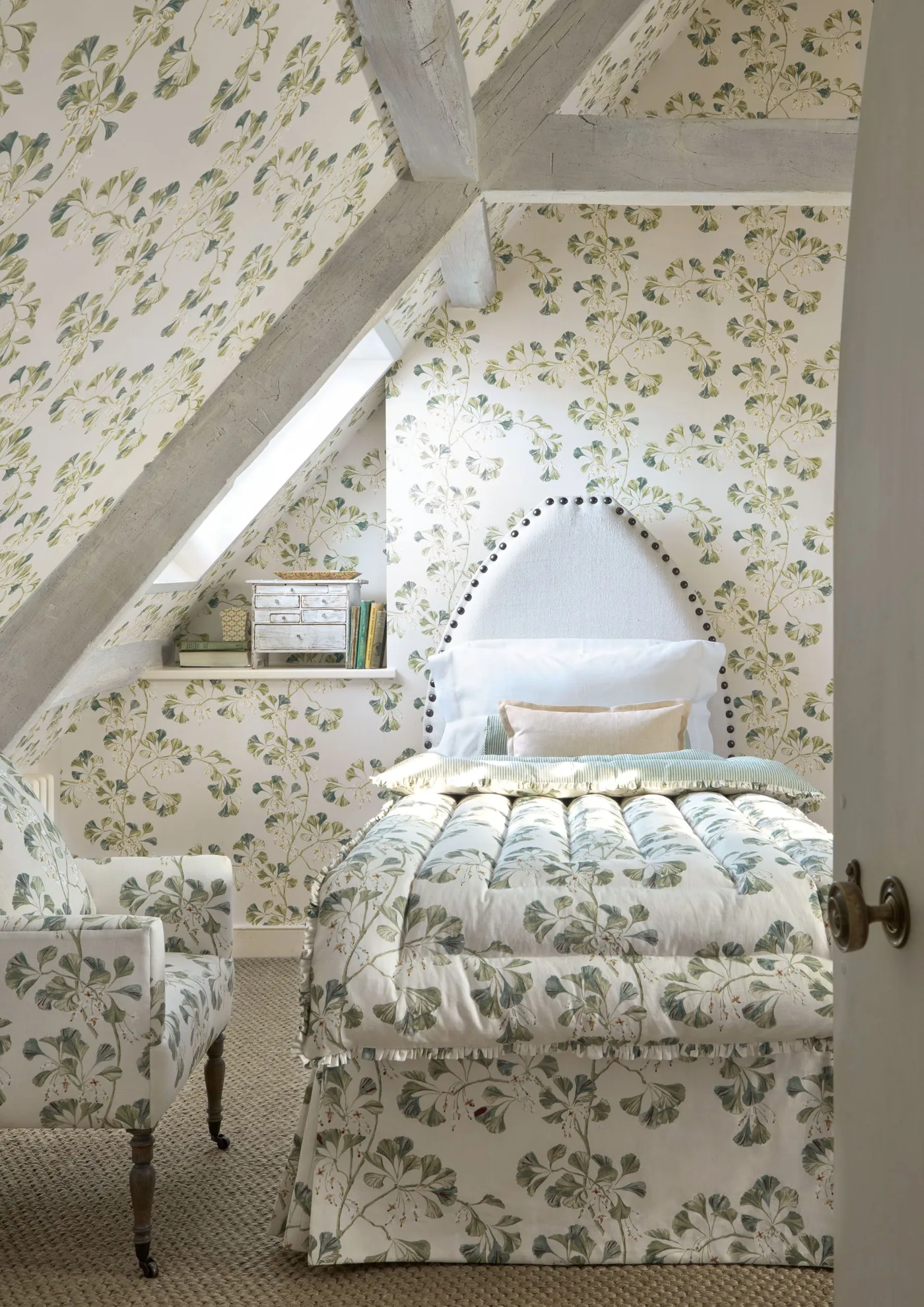
Repeat a leafy pattern in a small roof bedroom
 SaveSupport Non AI Creator
Image credit: Colefax and Fowler
Leafy pattern covers the walls and bedding in this small roof bedroom, creating a closely connected fabric arrangement. The pale shaped headboard and white pillows provide a few simpler areas within it. A matching chair repeats the print at the side, while the skylight brings light across the sloping wall and central bed.
A repeated pattern across several surfaces becomes much stronger than a single cushion or blind. Try larger samples in the room and view them from the bed before committing. Check headroom and chair access beneath the slope, and choose how many matching items you want to wash or maintain before extending the print further.
PART 03
Bring warmth through simpler layers
IDEA 11 / 20
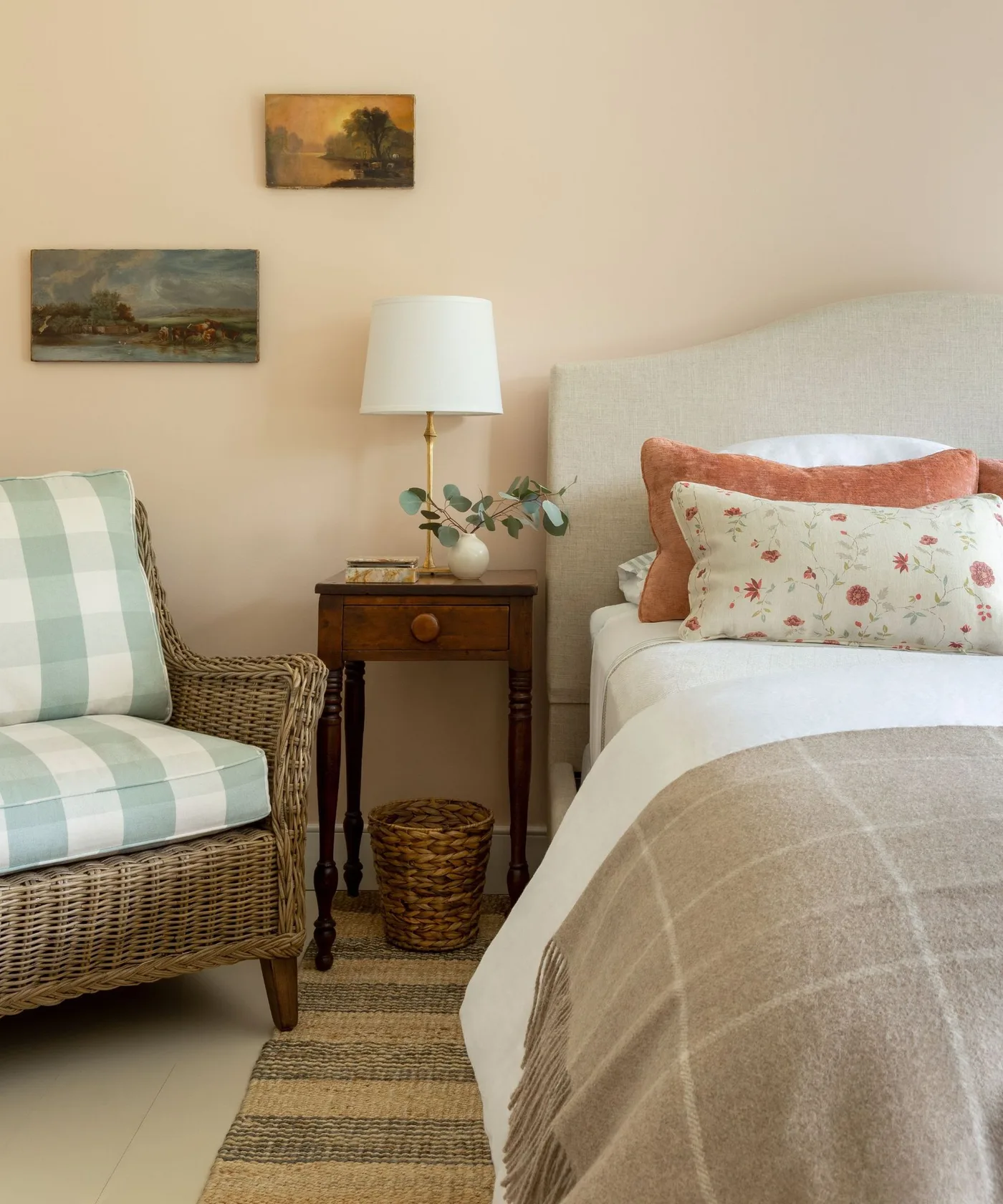
Use a checked chair to soften the bedside corner
 SaveSupport Non AI Creator
Image credit: Joshua Smith Interior Design
A green checked chair adds a broad, simple pattern beside the pale upholstered bed. Its woven frame and the wooden bedside table bring warmth to the corner, while small landscape paintings introduce quieter detail above. Pink and floral cushions connect with the pale wall without making every fabric in the room carry the same print.
Check the chair's seat comfort and the route beside it before using a bedroom corner this way. The bedside table should remain easy to reach from bed, even when the chair is occupied. Choose cushion covers that suit your washing routine, and keep enough table space available for the items you actually use at night.
IDEA 12 / 20
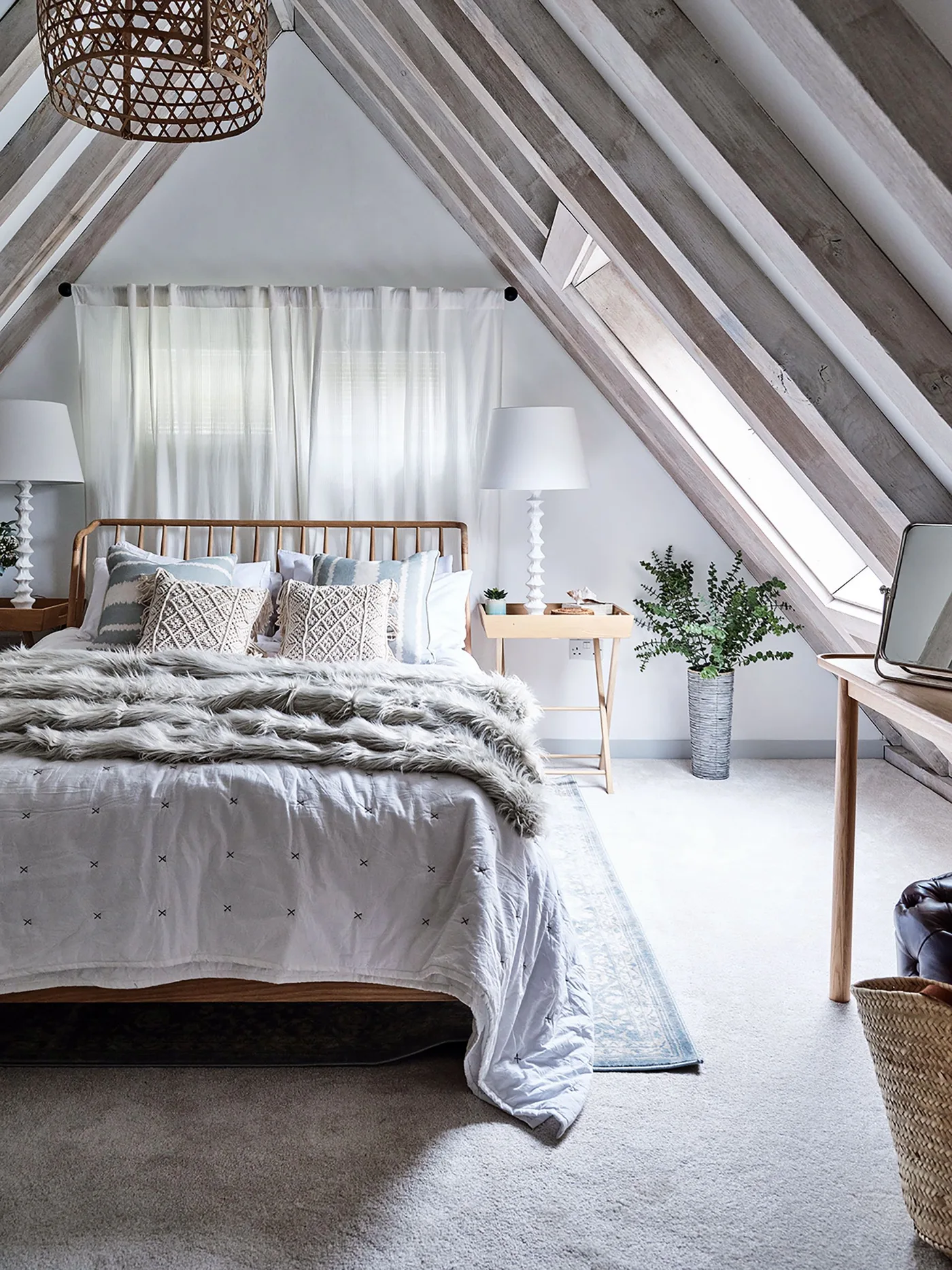
Keep attic bedding pale beneath darker roof lines
 SaveSupport Non AI Creator
Image credit: Dan Duchars
Gray roof timbers form strong angled lines above the wooden bed frame. Pale layered bedding and white bedside lamps keep the sleeping area lighter beneath them, while a narrow skylight brings daylight down one side. A small bedside surface and a plant add warmer details without competing with the roof's repeated diagonal structure.
Check standing height at the sides of the bed, not just at the center of the room. A bedside lamp must be reachable without leaning into a slope, and curtains or blinds should be practical to operate. Use only the bedding layers you need for comfort, particularly if an attic room becomes warm in summer.
IDEA 13 / 20
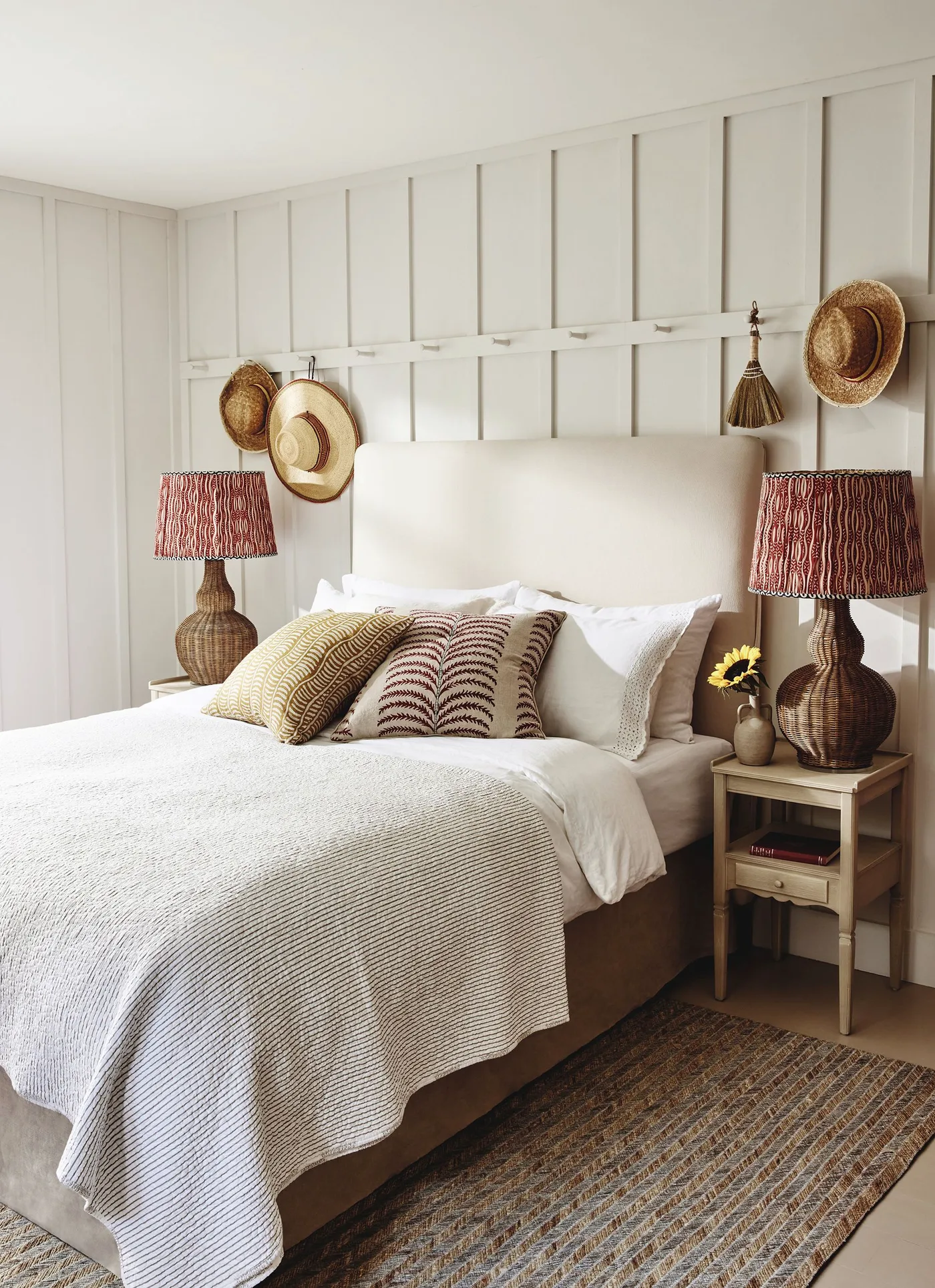
Bring woven lamps into a pale paneled bedroom
 SaveSupport Non AI Creator
Image credit: Oka
Woven bedside lamp bases bring texture to a pale paneled wall. Their patterned red shades repeat warmer accents in the cushions, while the broad white headboard keeps the bed itself quieter. Hats arranged along the upper rail add smaller rounded shapes, making the wall feel collected without changing the room's main pale background.
Choose bedside shades for useful light as well as their pattern. Test whether the fitting gives enough light for reading without glare when you are lying down. Keep hanging objects secure and away from lamps, and check that the bedside tables offer enough space for regular items alongside the larger woven bases.
IDEA 14 / 20
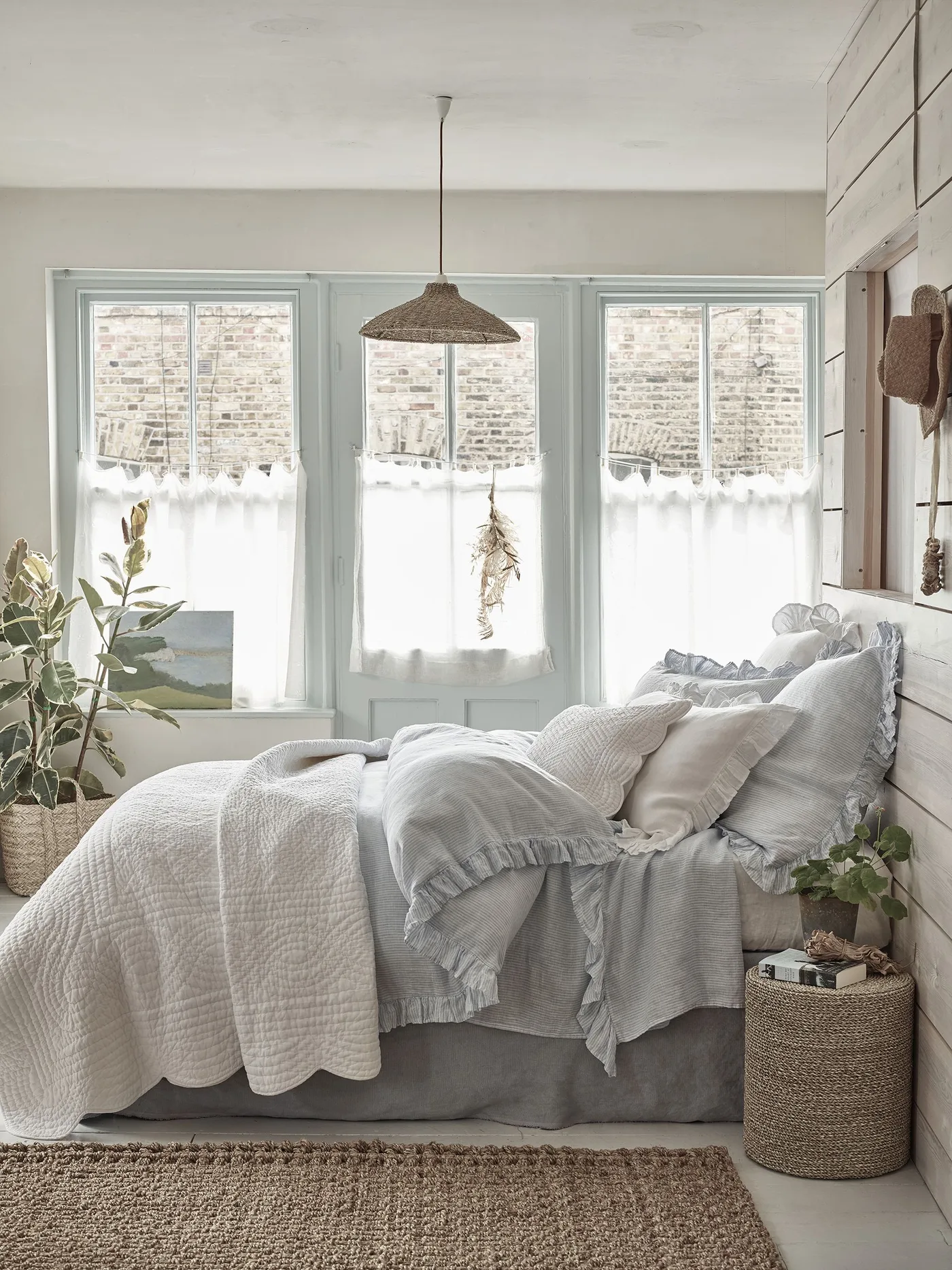
Layer pale bedding around soft window light
 SaveSupport Non AI Creator
Image credit: The White Company
Pale bedding layers sit beside windows with soft lower curtains, giving this bedroom a gentle range of whites and light grays. A woven pendant and small round bedside surface introduce warmer texture. The paneled wall and window frames provide clearer outlines around the loose bedding, preventing the pale surfaces from merging into one undifferentiated area.
Compare pale fabrics in the room before buying several layers, since similar whites can have noticeably different undertones. Check the privacy offered by lower-window curtains from outside, and choose bedding that suits your temperature and laundry routine. A small bedside surface should be stable and large enough for the essential items you keep within reach.
IDEA 15 / 20
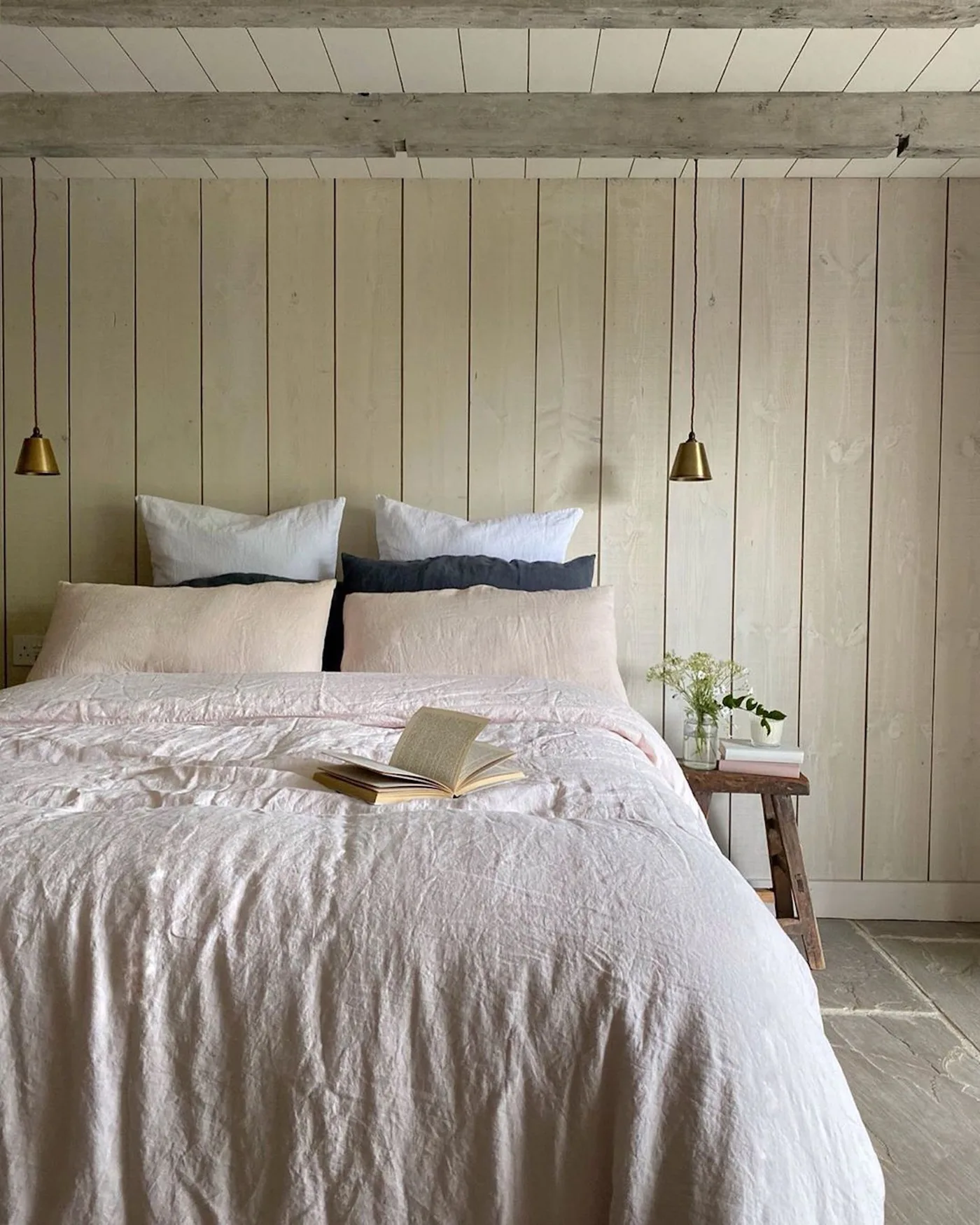
Keep a paneled bedroom warm with simple bedding
 SaveSupport Non AI Creator
Image credit: Steph Gowland/Bedfolk
Pale vertical boards create a quiet rhythm behind the bed. Mostly white bedding keeps that background simple, with narrow dark pillows adding a small contrast beneath the larger pale cushions. Two small hanging lights mark the bedside positions, while a wooden stool provides a compact surface at one side rather than a larger matching cabinet.
If using hanging bedside lights, plan their height and controls around the bed's actual position. A stool can work as a small surface, but it needs stability and enough area for the items you use. Choose a separate storage solution where necessary, and keep bedding layers manageable rather than relying on extra cushions for every texture.
PART 04
Keep storage and bedside details useful
IDEA 16 / 20
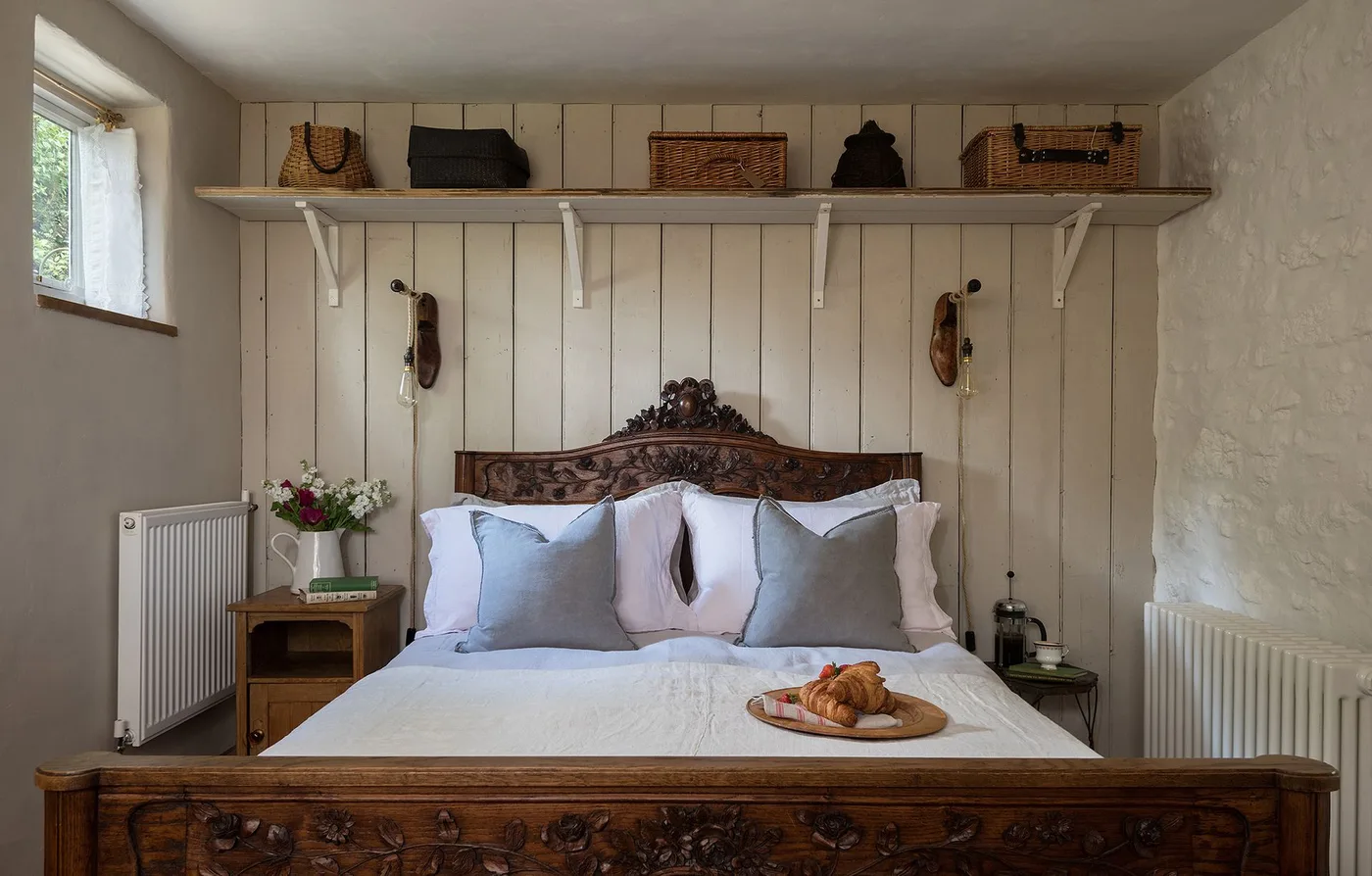
Set an ornate wooden bed beneath a practical shelf
 SaveSupport Non AI Creator
Image credit: Unique Home Stays
An ornate wooden frame gives this bed a strong carved outline, balanced by pale blue and white bedding. Vertical wall boards provide a simpler background, while the high shelf holds baskets and bags above the sleeping area. Smaller bedside surfaces keep the lower arrangement compact, letting the bed frame carry most of the decorative detail.
Treat a shelf above a bed as a storage decision that needs secure installation and suitable contents. Keep heavy or unstable objects out of a position where they could fall onto someone sleeping. Check access for cleaning and retrieving items, and ensure the bedside surfaces still accommodate useful lighting and everyday belongings.
IDEA 17 / 20
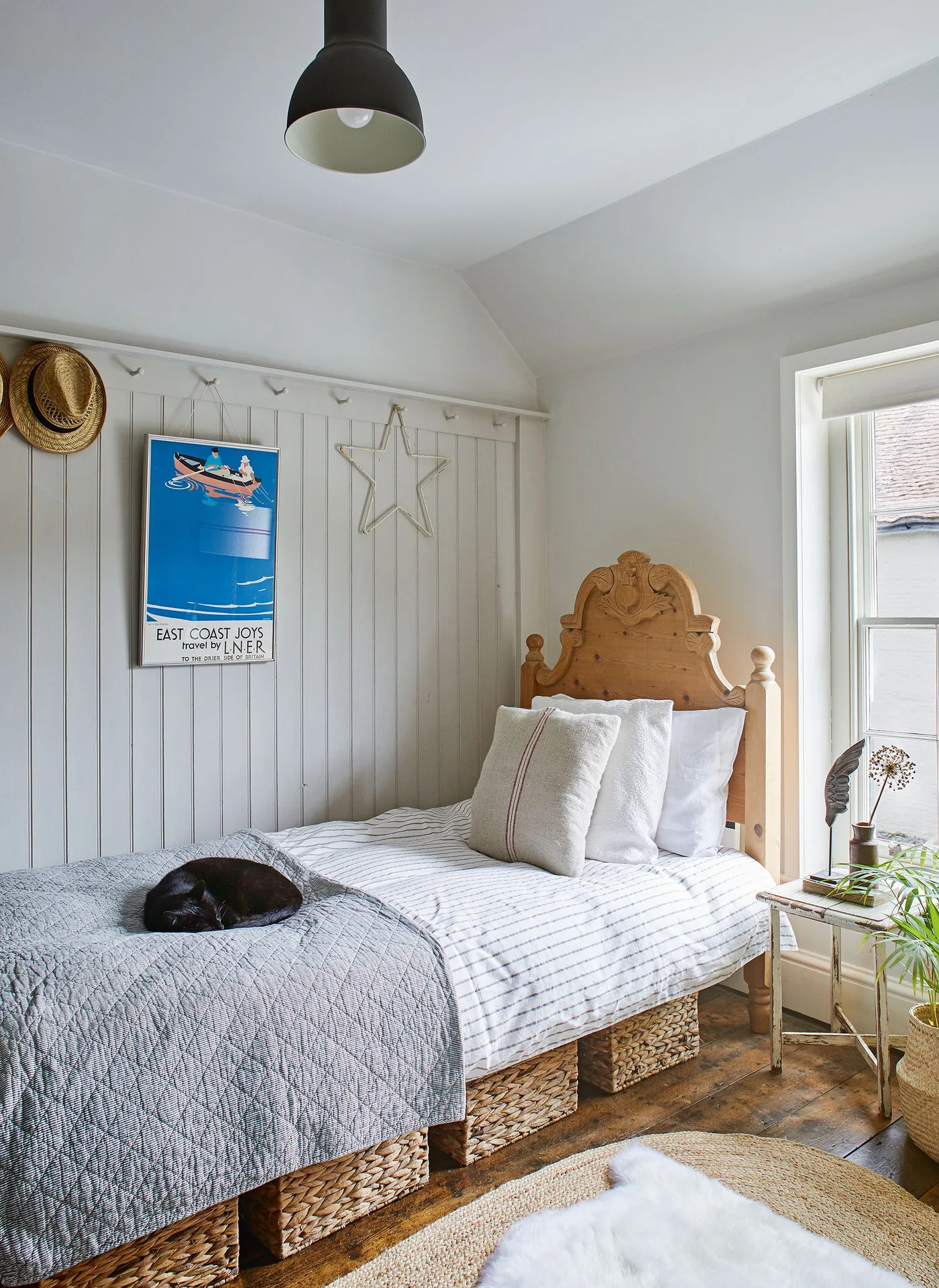
Use the space below a narrow bed for baskets
 SaveSupport Non AI Creator
Image credit: Brent Darby
A carved wooden single bed gives this small bedroom a warmer focal point against pale wall boards. Striped bedding and a blue framed print add restrained pattern and color, while woven baskets occupy the space below the bed. A small table sits beside the window, making the narrow room's storage and bedside arrangement easy to read.
Measure the clearance beneath the actual bed before choosing baskets. Leave space to pull them out without moving the table or blocking the doorway, and choose containers that protect their contents from dust. Keep a useful bedside surface available, and secure wall decorations appropriately rather than adding more objects where the route is already narrow.
IDEA 18 / 20
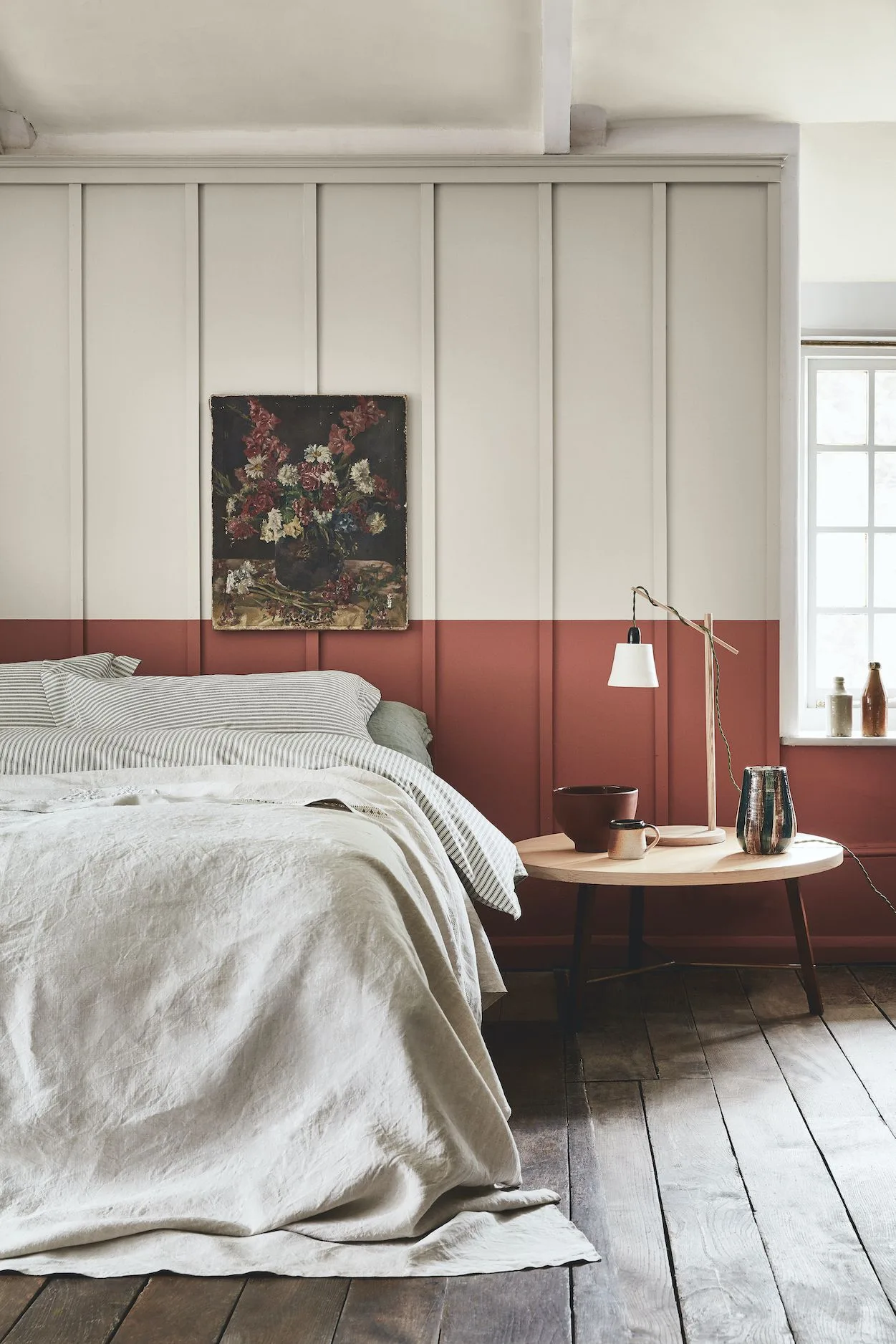
Give paneling a warmer lower band of color
 SaveSupport Non AI Creator
Image credit: Little Greene
A warmer red band across the lower paneling adds color close to the bed while leaving the upper wall pale. The floral picture introduces another concentrated patch of pattern, with simple light bedding giving both choices room to stand out. A round wooden table and adjustable lamp create a useful bedside area beside the paneled wall.
Mark the proposed paint boundary in the room before committing to a two-color wall. Check how it meets the headboard, bedside furniture and window trim from several viewpoints. Use a suitable paint finish for the surface, and leave enough space on the table for everyday items rather than filling it to match the photograph.
IDEA 19 / 20
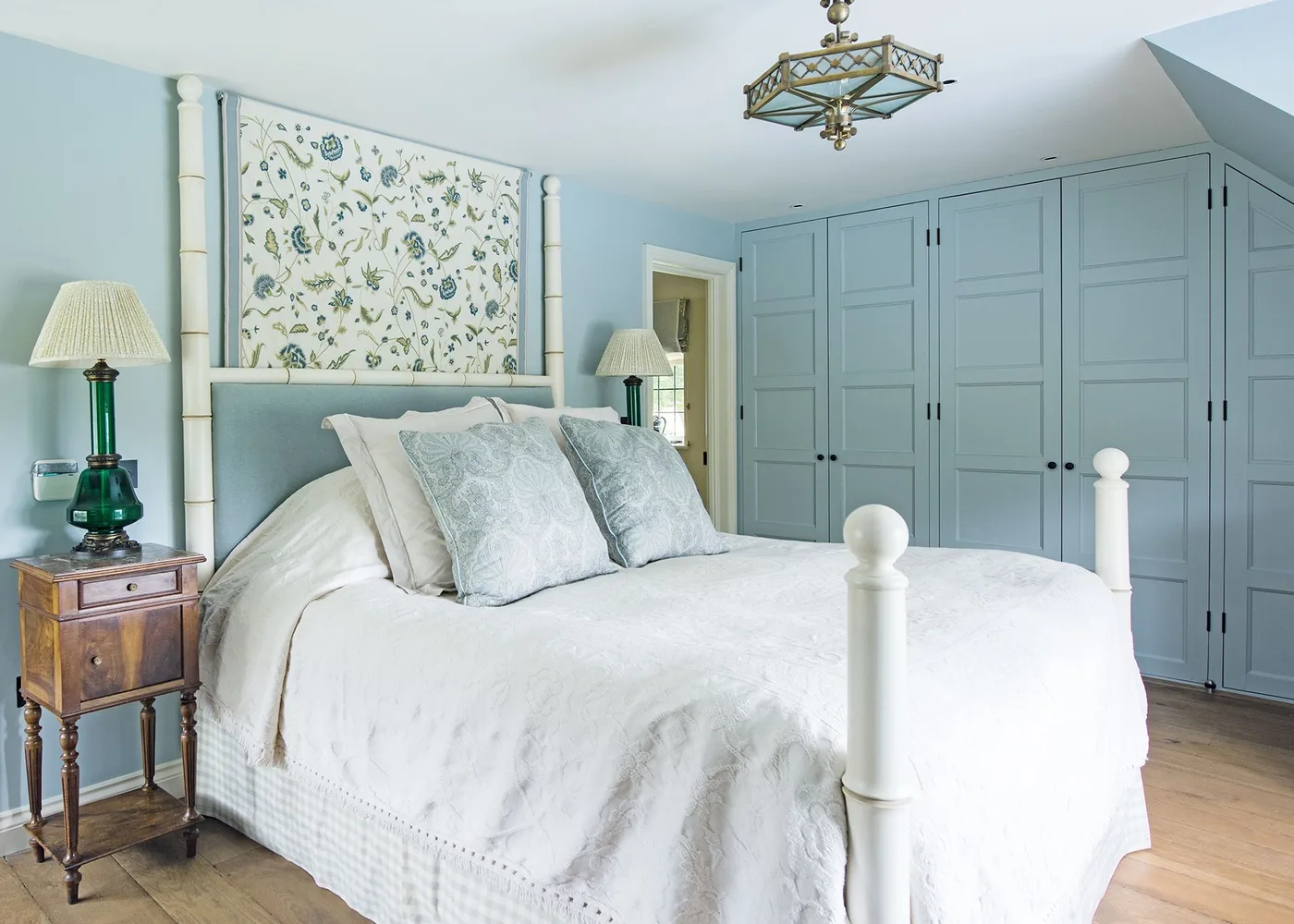
Combine fitted storage with a few warmer pieces
 SaveSupport Non AI Creator
Image credit: Future / Jody Stewart
Pale blue fitted cupboards provide a continuous storage wall in this bedroom. The white bed frame and light bedding keep the sleeping area quieter, while floral fabric behind the headboard brings a concentrated pattern. A small wooden bedside cabinet and green lamp add warmer detail, preventing all the visible furniture from carrying the same painted finish.
Plan cupboard access with the bed and bedside table in their final positions. Doors and drawers should work without needing furniture moved each morning. A patterned section behind the bed can add character while preserving useful closed storage elsewhere; compare that fabric with the cupboard paint and keep bedside lighting easy to reach.
IDEA 20 / 20
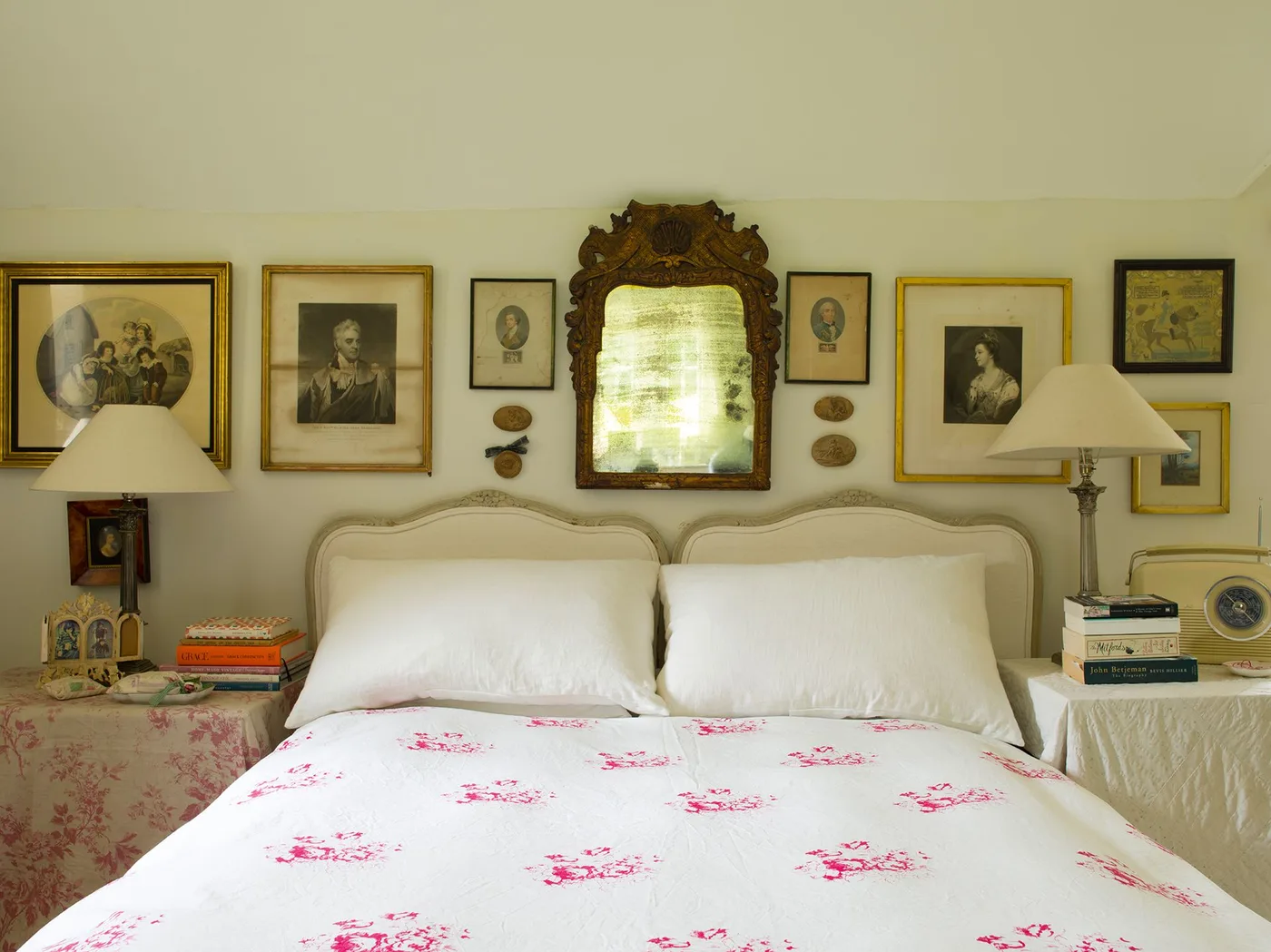
Keep collected pictures organized above a pale bed
 SaveSupport Non AI Creator
Image credit: Claire Worthy
A dark ornate mirror anchors the collected pictures above this pale curved headboard. Floral bedside coverings and small pink motifs on the bedding give the lower part of the room a softer pattern. Matching lamps create useful symmetry at the sides, allowing the different frames above to feel intentional without requiring every picture to match.
Arrange a collected picture group on the floor or with paper templates before fixing it above the bed. Use suitable secure fixings and consider the height of the headboard and lamps together. Keep bedside coverings removable for laundering, and preserve enough usable surface for reading materials or other nighttime items alongside the lamps.
BRING IT ALL TOGETHER
Make the bedroom easy to use as well as welcoming
Start with the bed position and check access to windows, wardrobes and each bedside surface. Keep the strongest structural detail visible, then add colors and fabrics that connect with it. Pattern works best when there is enough plain space around it to make the room comfortable to rest in.
Choose bedding for your actual sleeping temperature and laundering routine. A chair, bench or decorative skirt can add character, but it should earn its place through useful seating, storage or softness without making the routes through the bedroom harder to navigate.