A classic bedroom can be calm, colorful or richly patterned, but it should still make everyday rest comfortable. Useful bedside surfaces, accessible storage and a clear route around the bed matter as much as the headboard, curtains or wallpaper.
These rooms combine traditional shapes with different ways to handle color and fabric. Choose the details that suit your room's light and proportions, and think about how you will wash, dust and move around each layer before bringing it home.
PART 01
Start with useful traditional furniture
IDEA 01 / 20
Keep useful storage within a pale traditional room
 SaveSupport Non AI Creator
Image credit: Future
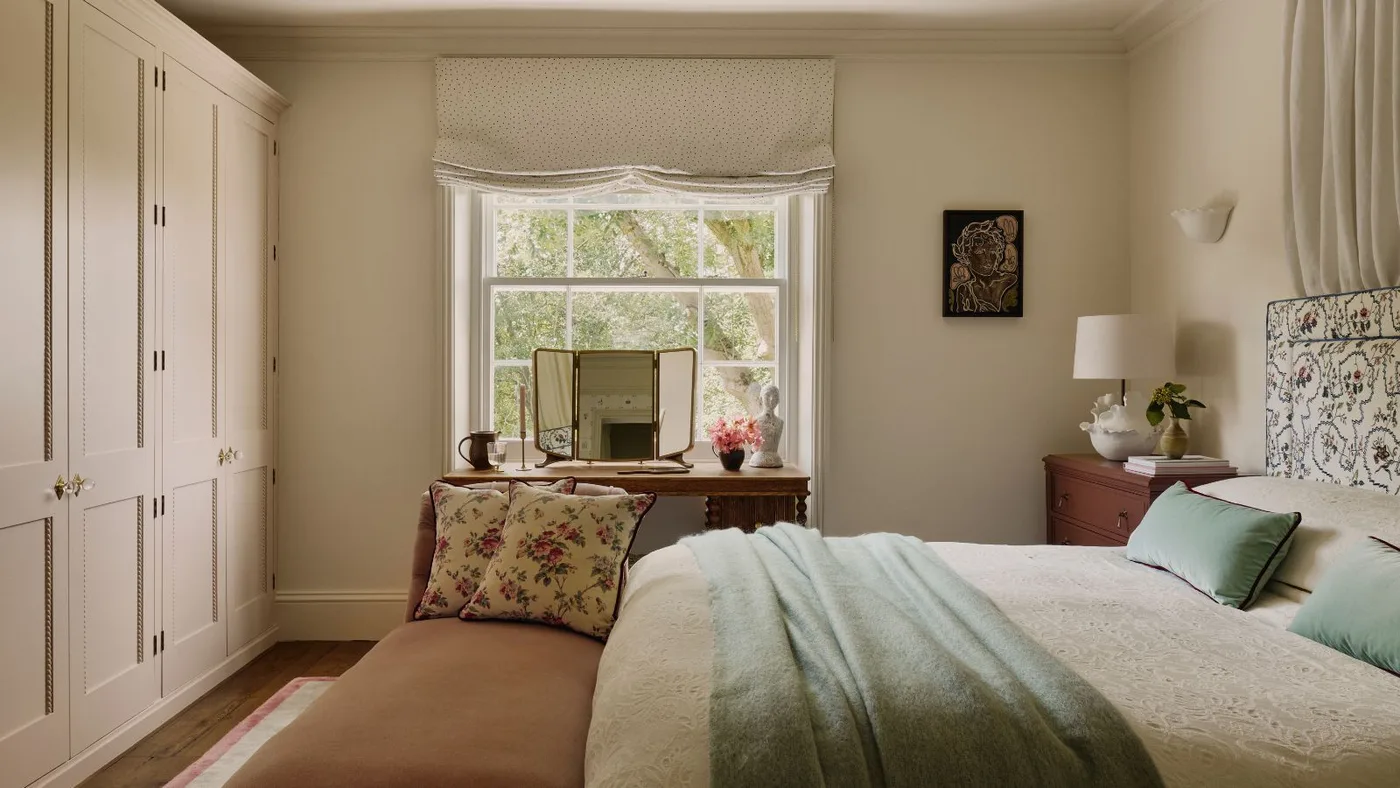
Pale paneled wardrobes provide closed storage along one wall, leaving the window area available for a dressing table. A patterned headboard supplies the bed's strongest decorative detail, while a soft green throw connects it with the quieter bedding. The upholstered bench and small lamp add comfort without changing the room's traditional furniture framework.
Measure wardrobe door swings and the route around the bench before adding several furniture pieces. A dressing table is most useful when its chair can pull out comfortably and everyday supplies have a place to return to. Choose headboard fabric for the cleaning it needs, not just the pattern seen from the doorway.
IDEA 02 / 20
Give a shaped headboard a quiet surrounding palette
 SaveSupport Non AI Creator
Image credit: Michael Hunter. Minnette Jackson Interiors
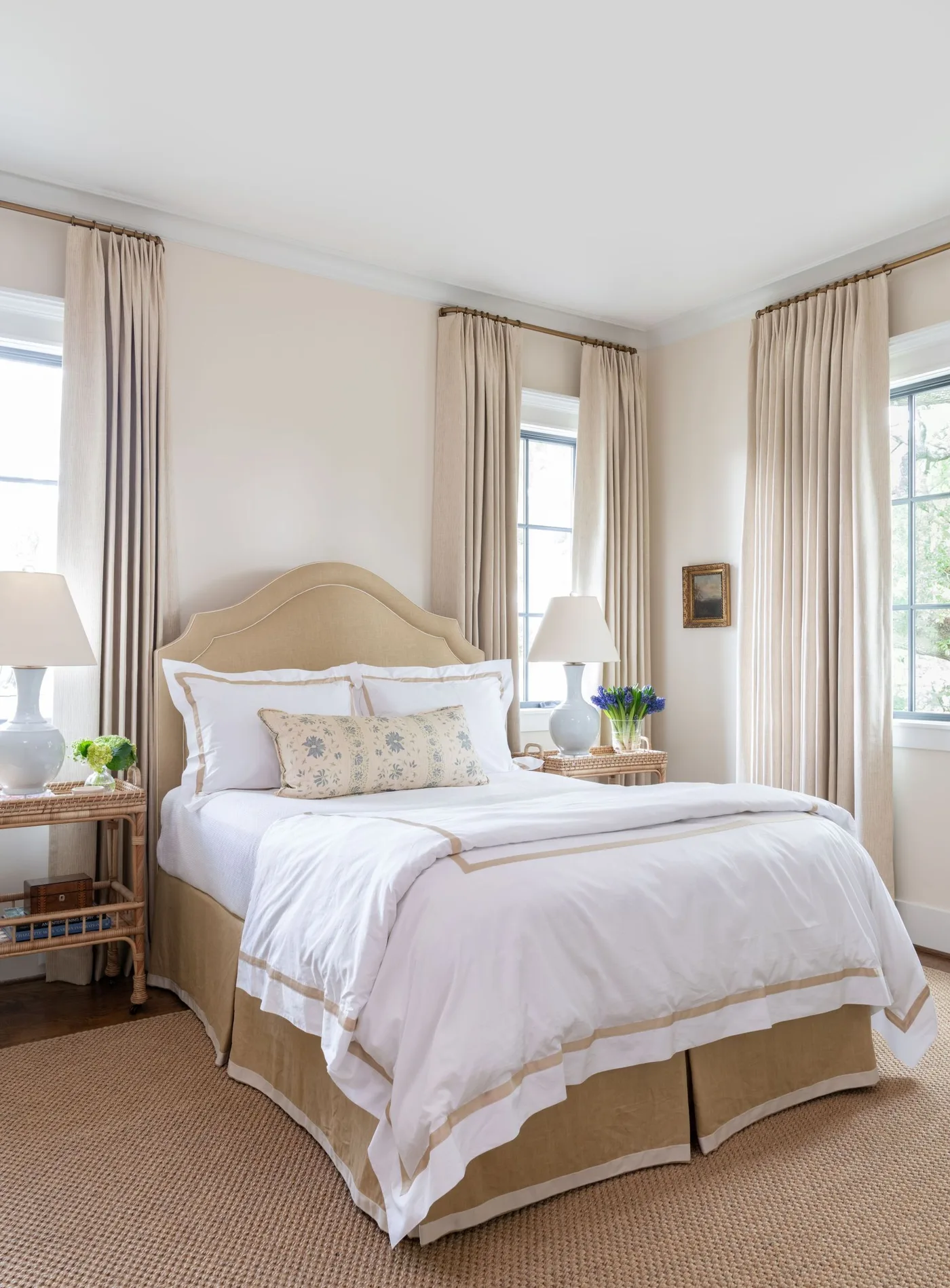
The curved beige headboard gives the bed a traditional outline within a largely pale room. White bedding with a narrow border repeats the quieter palette, while woven bedside tables add texture beside the smooth lamp bases. Long curtains soften the windows, leaving the shaped headboard and small floral cushion as the main decorative details.
A quiet palette works best when the different pale finishes are compared together in your actual light. Check bedside table height against the mattress so lamps and drinks remain within easy reach. Keep curtain length practical for cleaning, and choose bed covers that can be washed as often as your routine requires.
IDEA 03 / 20
Use a quilt as a traditional wall feature
 SaveSupport Non AI Creator
Image credit: Kate S. Jordan. The Six Bells Inn
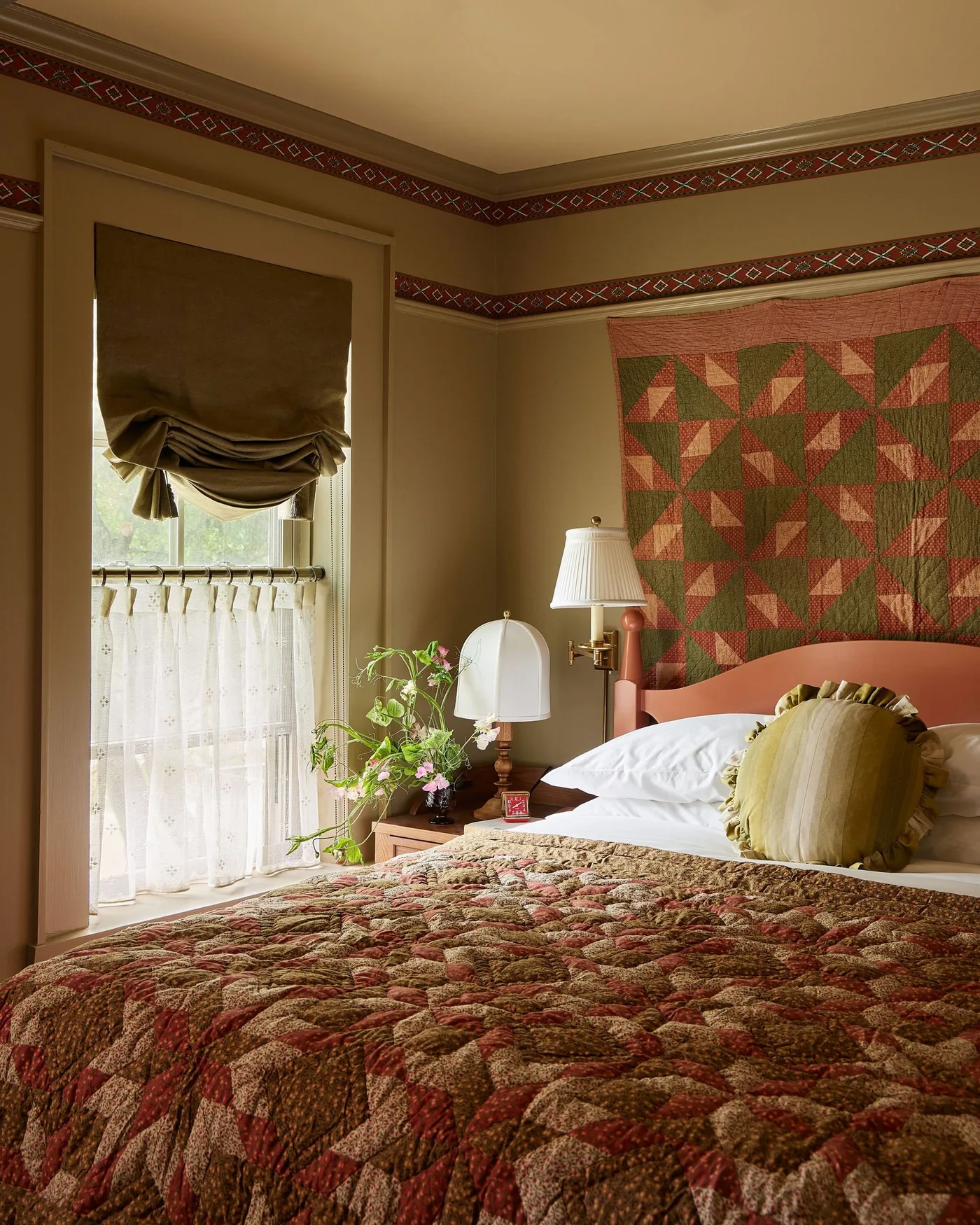
A geometric quilt hangs above the bed, repeating the warmer reds and greens in the patchwork bedding. Narrow patterned borders define the upper walls, while shaded bedside lamps provide gentler shapes beside the textiles. The room's traditional character comes from layered fabric and familiar details rather than a large matching suite of furniture.
A textile wall display needs secure support that distributes its weight without damaging the fabric. Check the care guidance before hanging a treasured quilt near strong daylight. Keep bedding layers appropriate to comfort and washing, and allow bedside lamps enough clear surface that their shades are not pressed against loose fabric.
IDEA 04 / 20
Frame the bed with pale curtains and blue bedding
 SaveSupport Non AI Creator
Image credit: Katharine Pooley
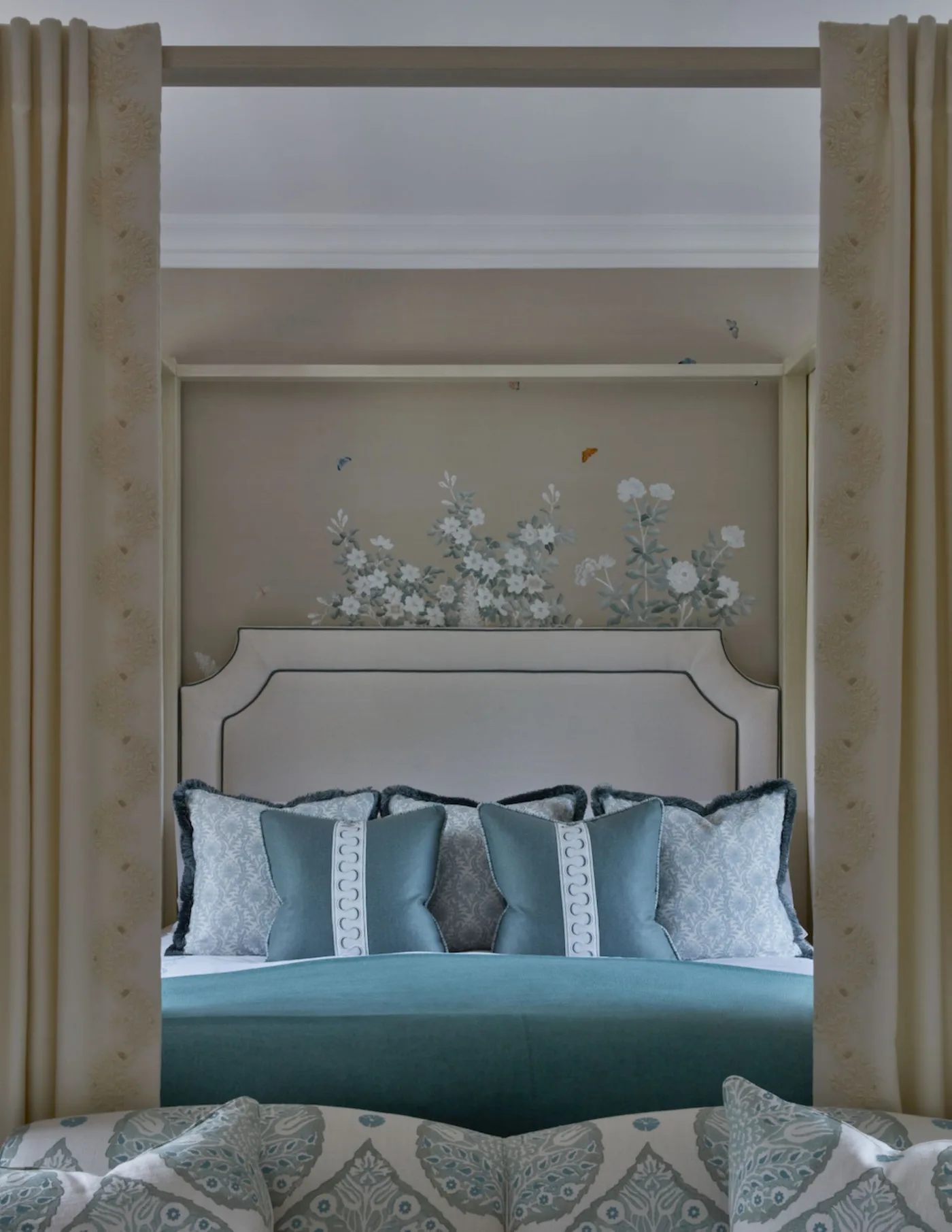
Pale curtains frame the shaped headboard, giving the bed an enclosed traditional outline. Blue bedding and cushions provide a cool color against the quieter fabric surround, while a small floral wall detail adds interest above the pillow line. The curtain framing makes the bed feel like the room's central feature without a busy surrounding wall.
Curtains around a bed introduce more fabric to wash or dust, so decide whether that upkeep suits you. Keep them clear of lamps, heaters and the route used to get in and out. In a smaller room, a shaped headboard and coordinated bedding may provide the same focal point without a full fabric surround.
IDEA 05 / 20
Make a window seat part of the bedroom's comfort
 SaveSupport Non AI Creator
Image credit: Future/Kasia Fiszer
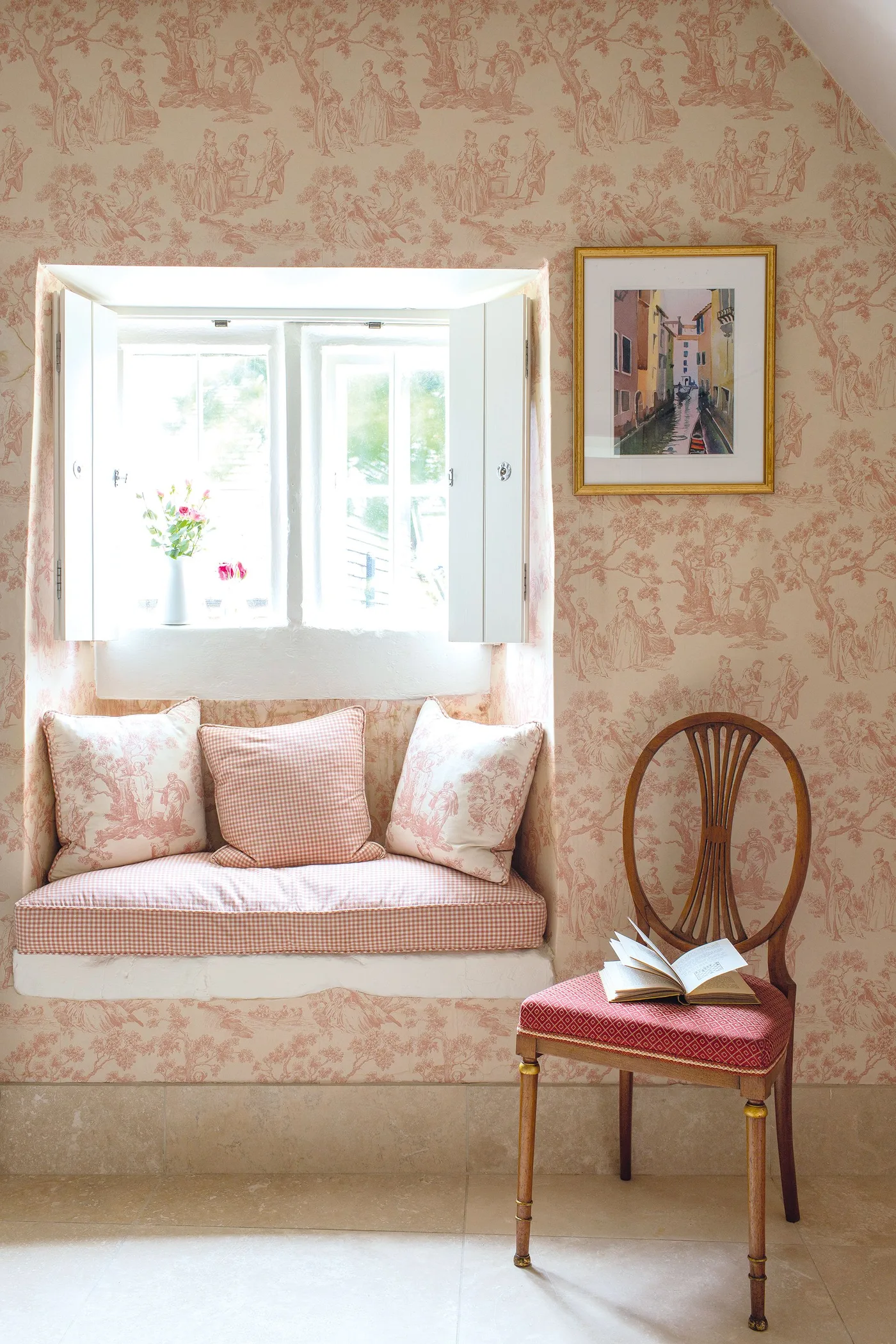
A recessed window seat creates a place to pause within the pink patterned wall. Its checked cushion and pale patterned pillows repeat the room's softer colors, while the curved wooden chair adds a more defined traditional silhouette nearby. The window remains the brightest part of the corner, with decoration concentrated in fabric and one framed picture.
A window seat should provide a comfortable depth and a clear way to open the window. Consider washable cushion covers and avoid blocking ventilation with permanent layers of fabric. If the room is tight, choose the built-in seat or the loose chair according to actual use rather than keeping both because the photograph shows them.
PART 02
Give familiar shapes a considered color palette
IDEA 06 / 20
Let a dark metal bed stand out against small florals
 SaveSupport Non AI Creator
Image credit: Emily Minton Redfield
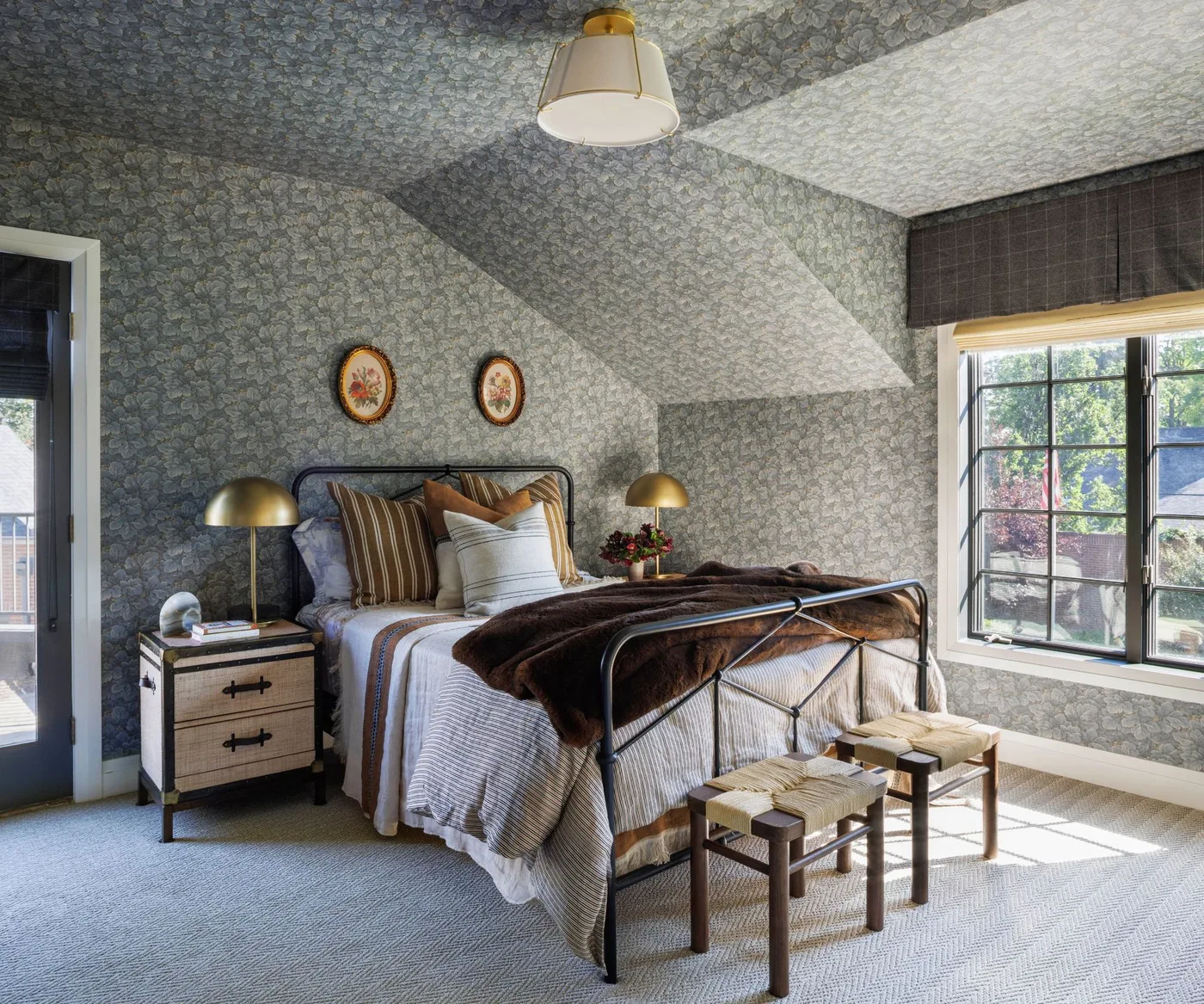
Gray floral wallpaper continues from the walls onto the sloping ceiling, creating a surrounding pattern above the bed. The dark metal frame gives the sleeping area a clear outline within it. Pale bedding and small shaded lamps make the center quieter, with two woven stools adding a different texture near the foot of the bed.
A pattern that covers the ceiling can feel enclosing, so examine a generous sample before committing to the whole room. Keep major bedding simpler if the walls already provide dense detail. Check that stools leave a clear route around the bed and choose them for a useful function rather than as permanent obstacles.
IDEA 07 / 20
Combine a green wall with blue bedding
 SaveSupport Non AI Creator
Image credit: Dustin Peck Photography Inc. Georgia Street Design
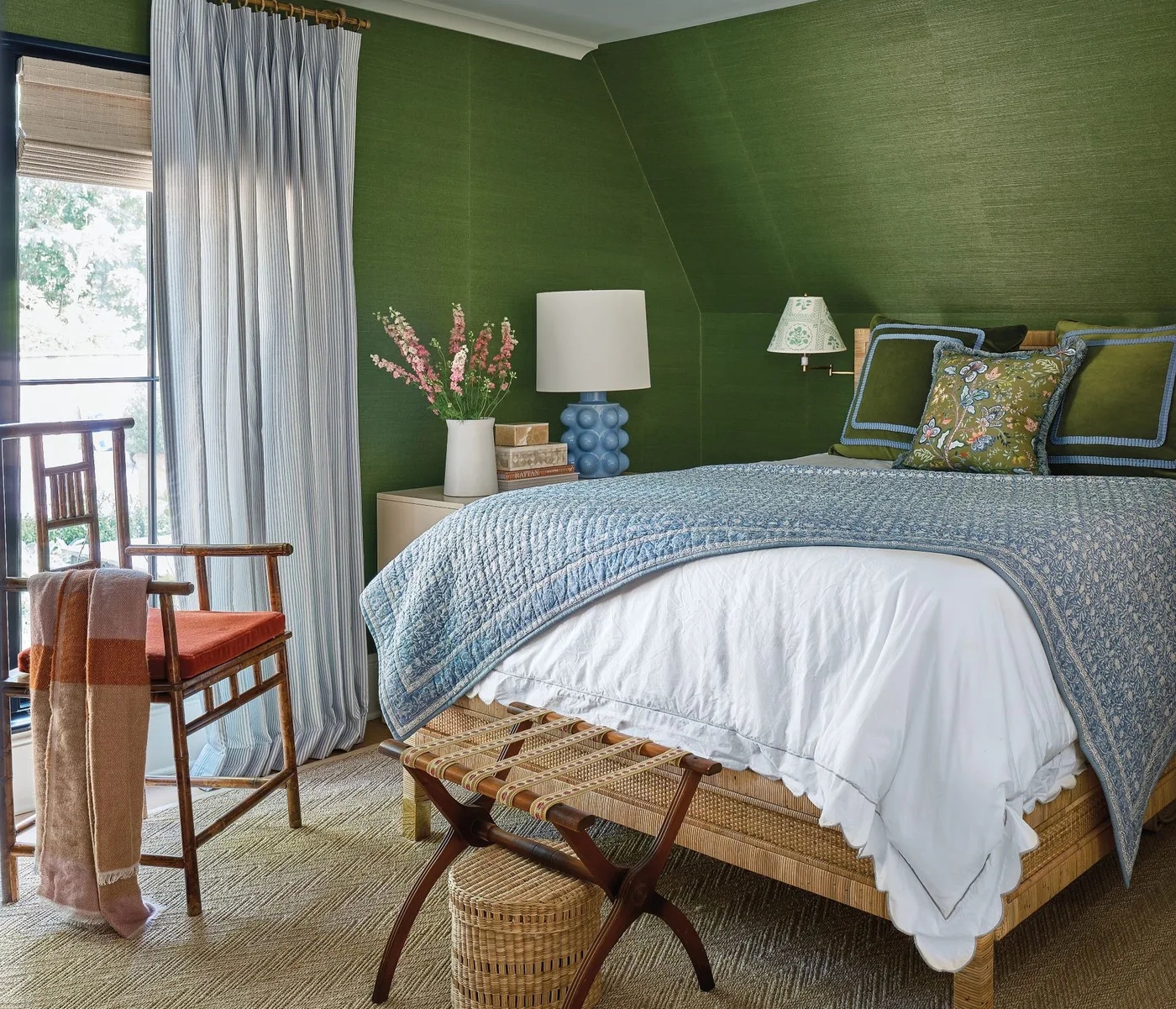
Green walls and blue bedding create a cool surrounding palette, with the woven headboard adding a warmer texture at the bed. Pale blue curtains soften the window, while the wooden chair's warm-colored seat gives the room a smaller contrasting note. The familiar furniture shapes keep the stronger color combination connected to a traditional bedroom setting.
Test green and blue samples together rather than treating either as an automatically calming choice. Check them in both window light and evening lamp light. Use the chair only where it leaves access to curtains and the bedside area, and keep throws neatly stored when they are not needed for comfort.
IDEA 08 / 20
Make a yellow headboard the clearest color accent
 SaveSupport Non AI Creator
Image credit: Mark Mauldin. Duffy Scott Interiors
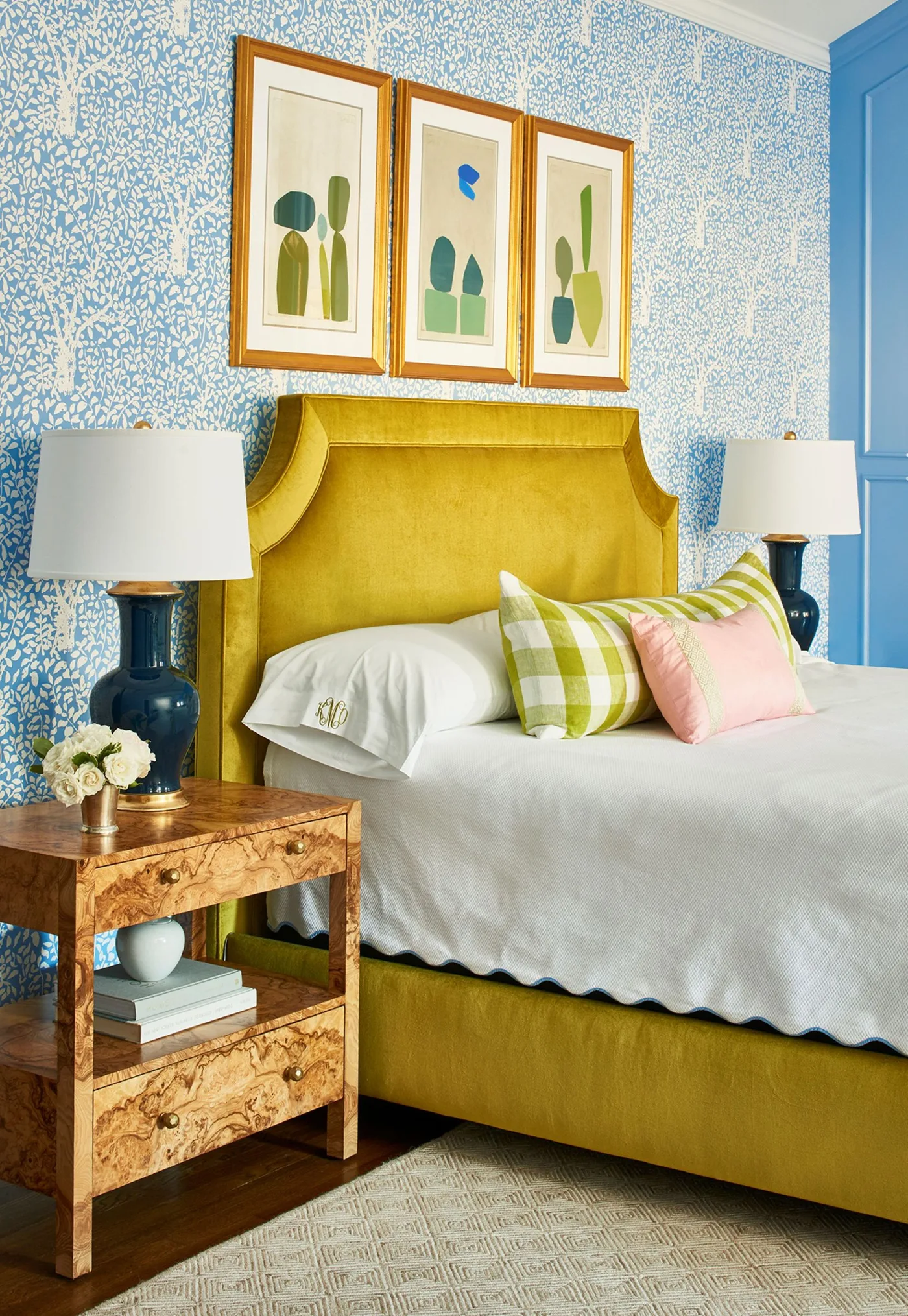
The shaped yellow headboard stands clearly against blue-and-white wallpaper, making the bed the room's strongest color feature. Patterned cushions introduce smaller green and pink notes without replacing the largely pale bedding. A figured wooden bedside table and a shaded dark lamp give the lively palette familiar furniture details beside the mattress.
A bright upholstered bed is a lasting color commitment, so compare its fabric with the wall pattern before ordering. Keep some bedding plain to avoid equal competition between every layer. Check that the bedside table offers enough usable surface after the lamp is placed, and leave room to reach its drawer comfortably.
IDEA 09 / 20
Keep a pale blue bed light with white layers
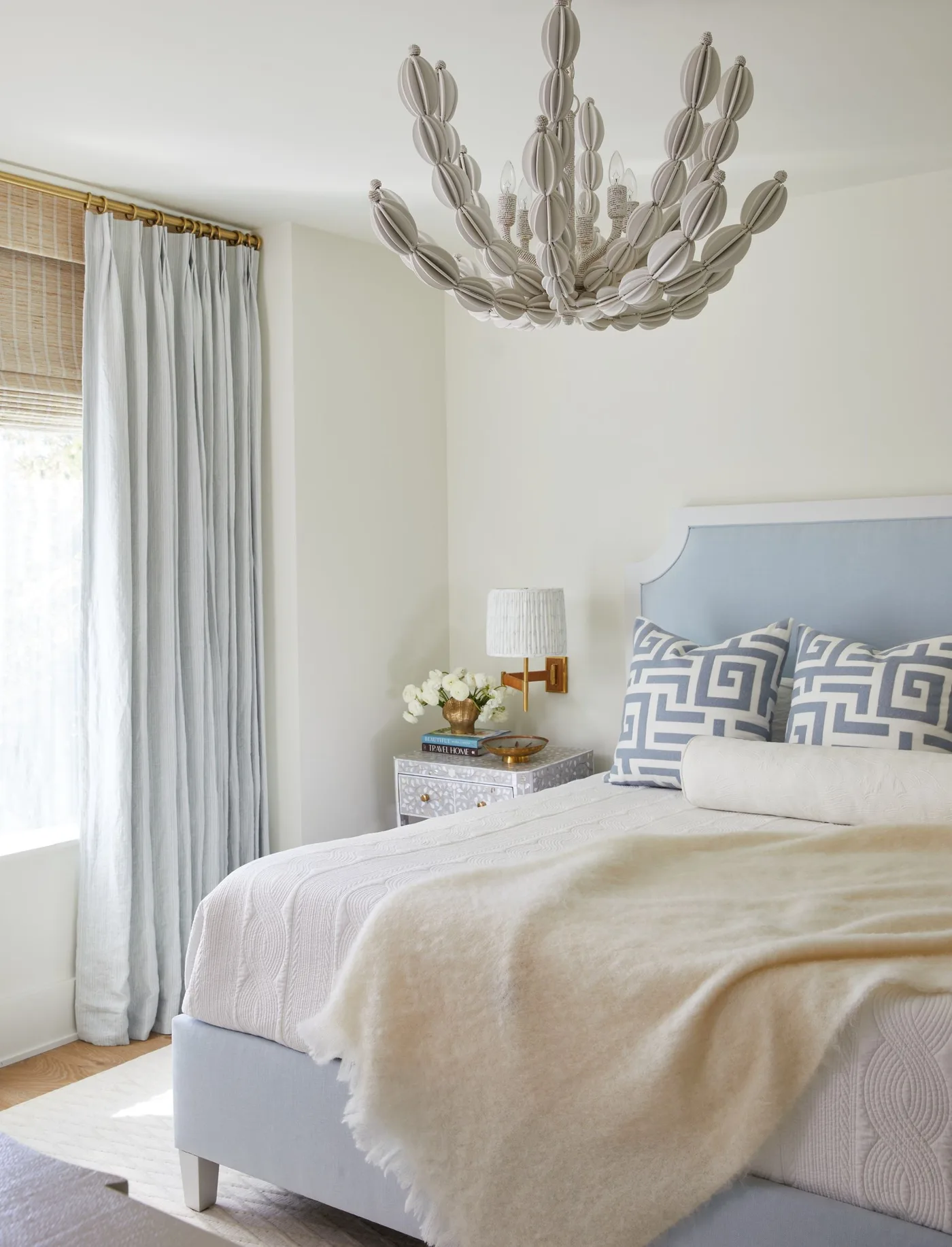 SaveSupport Non AI Creator
Image credit: Brie Williams. Georgia Street Design
A shaped pale blue headboard gives the bed a traditional silhouette without making the room dark. White bedding and a soft pale throw keep the center light, while geometric cushions add a sharper pattern. Long curtains and the decorative ceiling light provide other soft shapes around the restrained wall color and simple bedside surface.
Compare the scale of a large ceiling light with both ceiling height and the space above the bed. It should remain comfortable to move around during cleaning and bed-making. Choose bedding textures for care as well as softness, and keep a useful reading light so the decorative fixture is not the only evening option.
IDEA 10 / 20
Use a pink bedside piece against textured blue walls
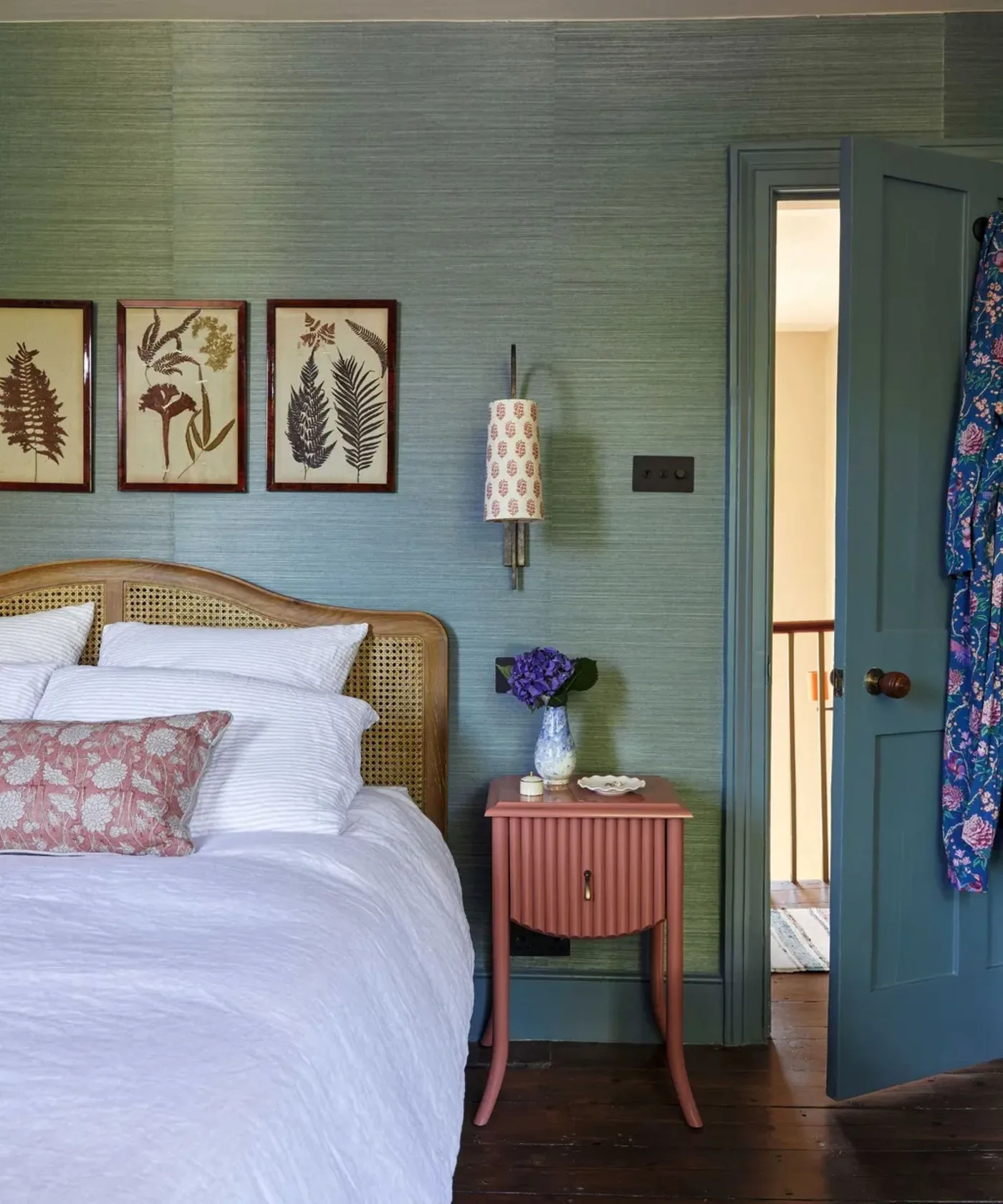 SaveSupport Non AI Creator
Image credit: Future
The blue textured wall gives the woven headboard a clear surrounding color. A pink bedside cabinet adds a warm contrast below the slim shaded light, while botanical pictures repeat familiar natural forms above the bed. White bedding provides a quieter center, letting the cabinet and headboard carry the traditional detail without a matching furniture set.
A small painted bedside piece can introduce color without changing the bed or whole room. Check whether its top and storage suit your actual evening essentials. Follow the wall covering's cleaning instructions before using it near frequently handled surfaces, and secure the pictures rather than balancing them casually above the pillows.
PART 03
Layer patterns without losing the room's balance
IDEA 11 / 20
Mix blue and red around a shaped bed frame
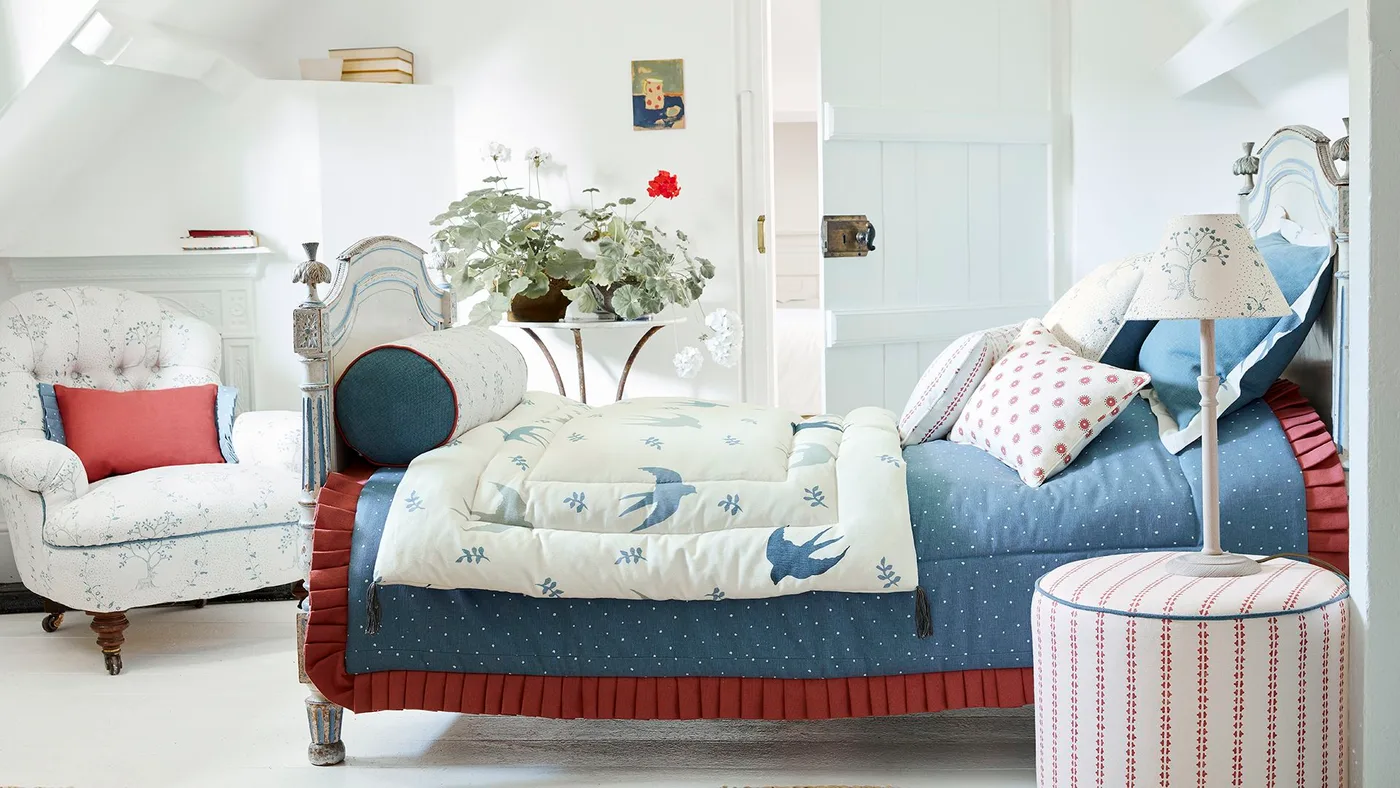 SaveSupport Non AI Creator
Image credit: Vanessa Arbuthnott
The decorative pale bed frame gives this bright room a traditional centerpiece. Blue bedding and a red bed skirt bring clear color below it, with the patterned armchair and striped stool adding smaller fabric details. Pale walls leave those layers visible, preventing the room from needing a strong wall pattern as well as colorful furnishings.
Keep a shared color connection when mixing several fabrics, but vary their pattern scale so each can be distinguished. Check washing guidance for the bed skirt and upholstered stool before buying. A chair beside the bed should have enough room for comfortable use, rather than becoming a place that blocks drawers or the doorway.
IDEA 12 / 20
Repeat a leafy print around a compact bed
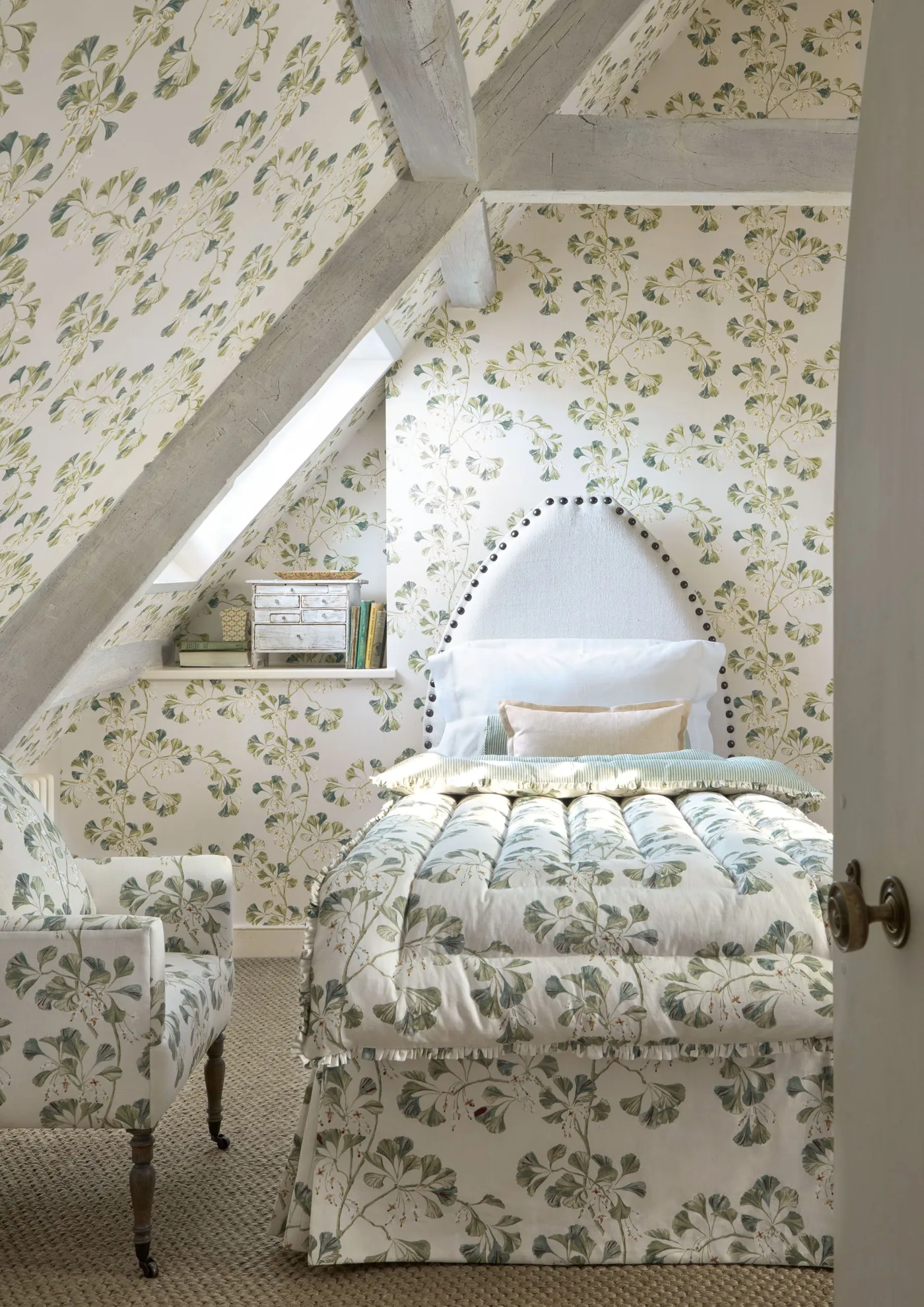 SaveSupport Non AI Creator
Image credit: Colefax and Fowler
A leafy print repeats across the wallpaper and bedding, surrounding the compact bed with one consistent motif. The pale shaped headboard provides a quieter center, while white-painted beams keep the ceiling structure distinct within the pattern. A small shelf gives the room a modest storage surface without requiring another large piece of furniture beside the bed.
Matching several surfaces can feel coordinated but makes the pattern a substantial commitment. View a larger sample in the room before using it across walls and bedding. Preserve comfortable head space near sloping ceilings, and keep the bedside surface useful rather than adding another decorative piece where circulation is already limited.
IDEA 13 / 20
Connect fitted wardrobes with a pale blue wall
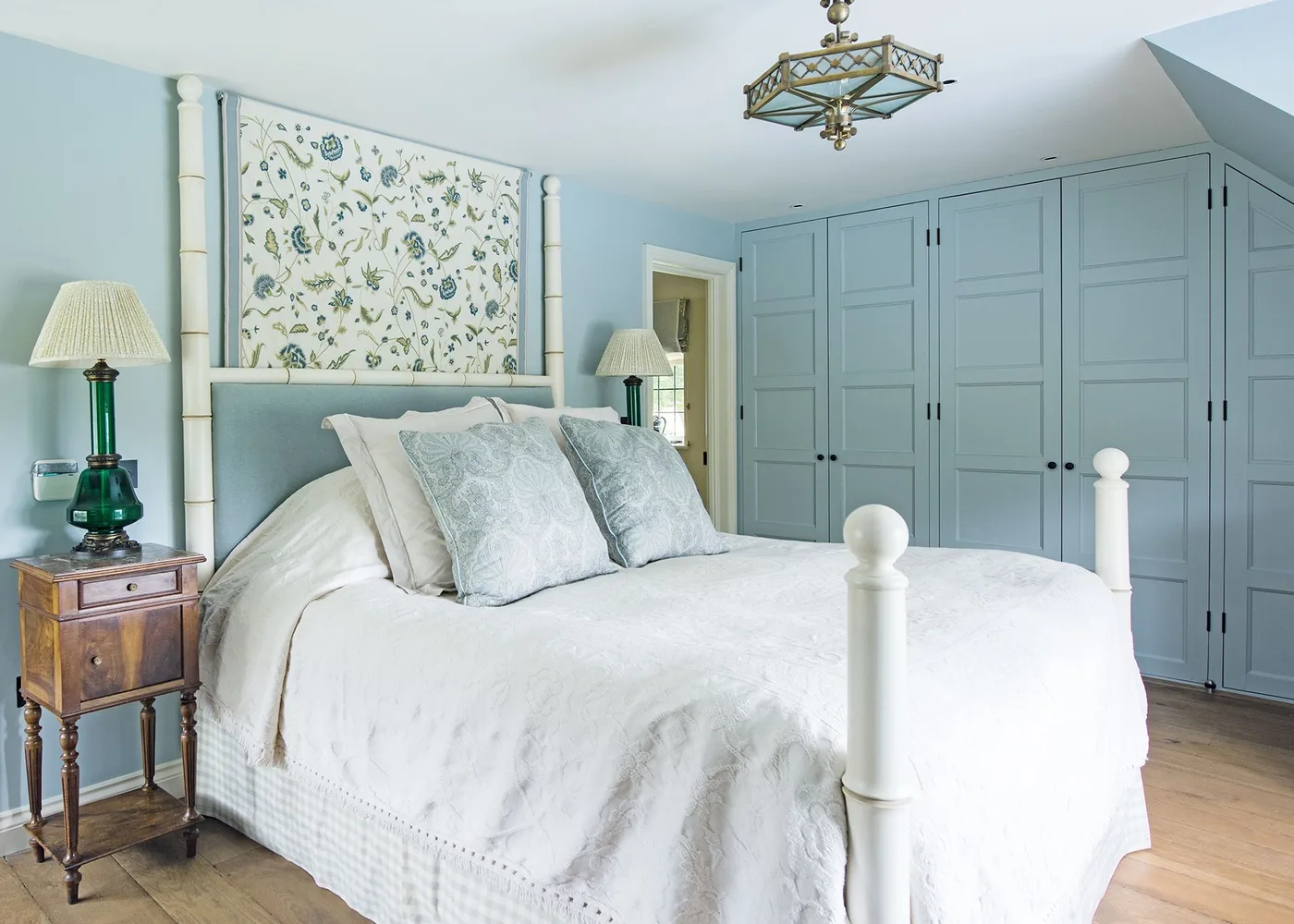 SaveSupport Non AI Creator
Image credit: Future / Jody Stewart
Paneled wardrobes share the pale blue wall color, helping the storage sit within the room rather than appear as a separate block. The white post bed and patterned headboard insert add traditional outlines in front. Wooden bedside tables and green lamp bases supply warmer and stronger details around the otherwise light bedding and cabinetry.
Painting fitted storage with the wall can make its fronts less prominent, but the interior still needs to suit your clothes. Plan shelf heights and hanging space before deciding door details. Check that the bed posts and bedside tables leave wardrobe doors easy to open, and keep lamps usable from the mattress.
IDEA 14 / 20
Gather framed pictures above a shaped headboard
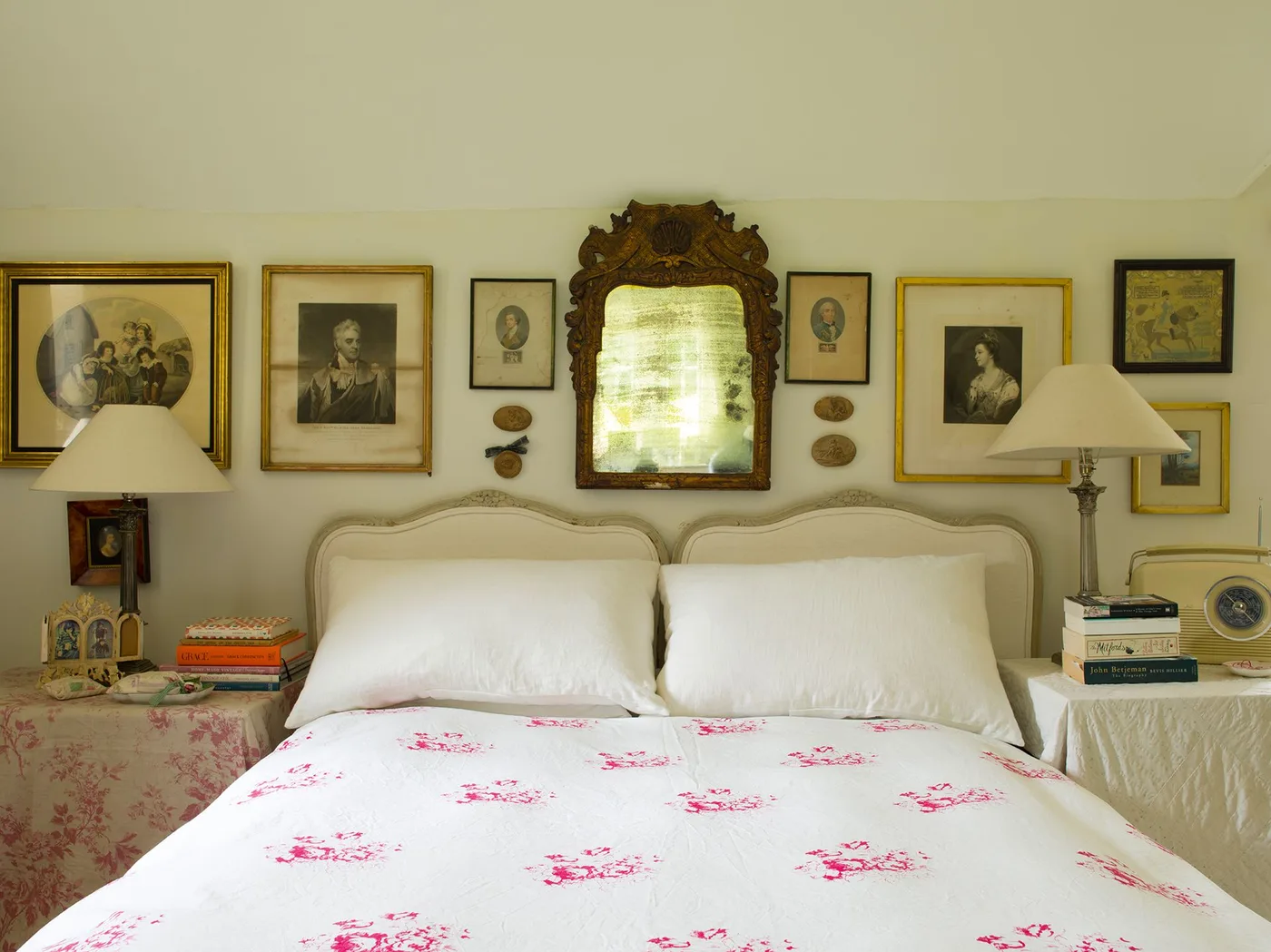 SaveSupport Non AI Creator
Image credit: Claire Worthy
Framed pictures and an ornate mirror form a collected display above the pale shaped headboard. Pink floral bedding adds a softer pattern below, while shaded lamps give each side of the bed a familiar outline. The wall collection supplies most of the room's decorative detail without requiring a busy wallpaper background behind it.
Arrange a collected picture wall before hanging and secure every piece appropriately, especially above a bed. Keep spacing clear enough that the smaller frames can be read individually. Choose lamps for usable light at pillow height and leave bedside surface space for daily essentials rather than extending the collection across both tables.
IDEA 15 / 20
Use pale furniture within a densely patterned room
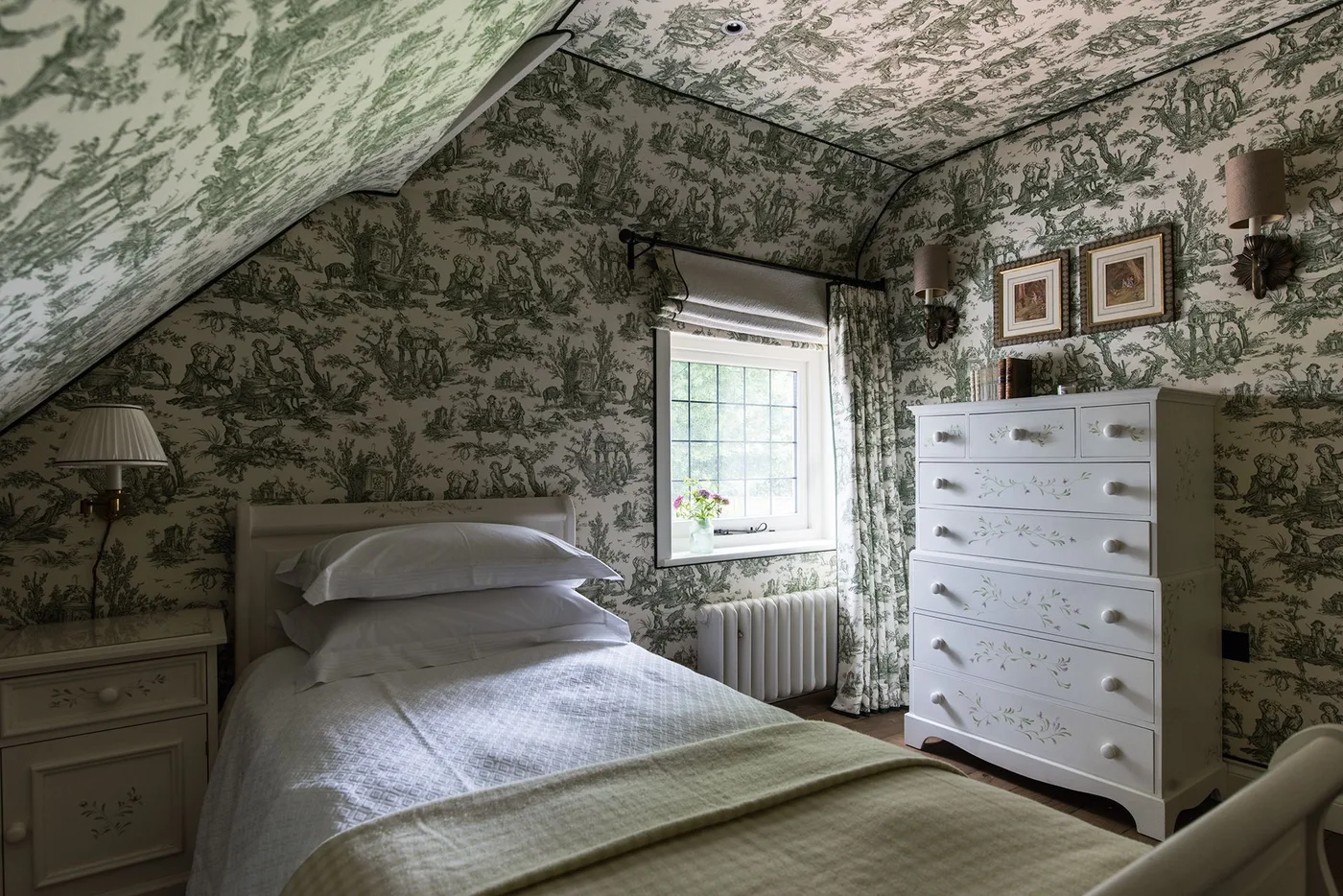 SaveSupport Non AI Creator
Image credit: Future/ Jody Stewart
Green scenic wallpaper covers the walls and sloping ceiling, creating a dense traditional surround. Pale bedding and a white chest of drawers provide quieter surfaces within it, with small framed pictures adding detail near the window. The repeated wall pattern supplies the character while the furniture's lighter finish keeps the bed and storage easy to identify.
A dense pattern needs to suit the room at full scale, so try several sample repeats near the bed before committing. Check the chest's drawer access under the ceiling slope and secure tall furniture appropriately. Keep major bedding relatively simple and leave the window covering easy to operate without moving storage pieces.
PART 04
Make the finishing details comfortable
IDEA 16 / 20
Give a dark carved bed lighter patterned layers
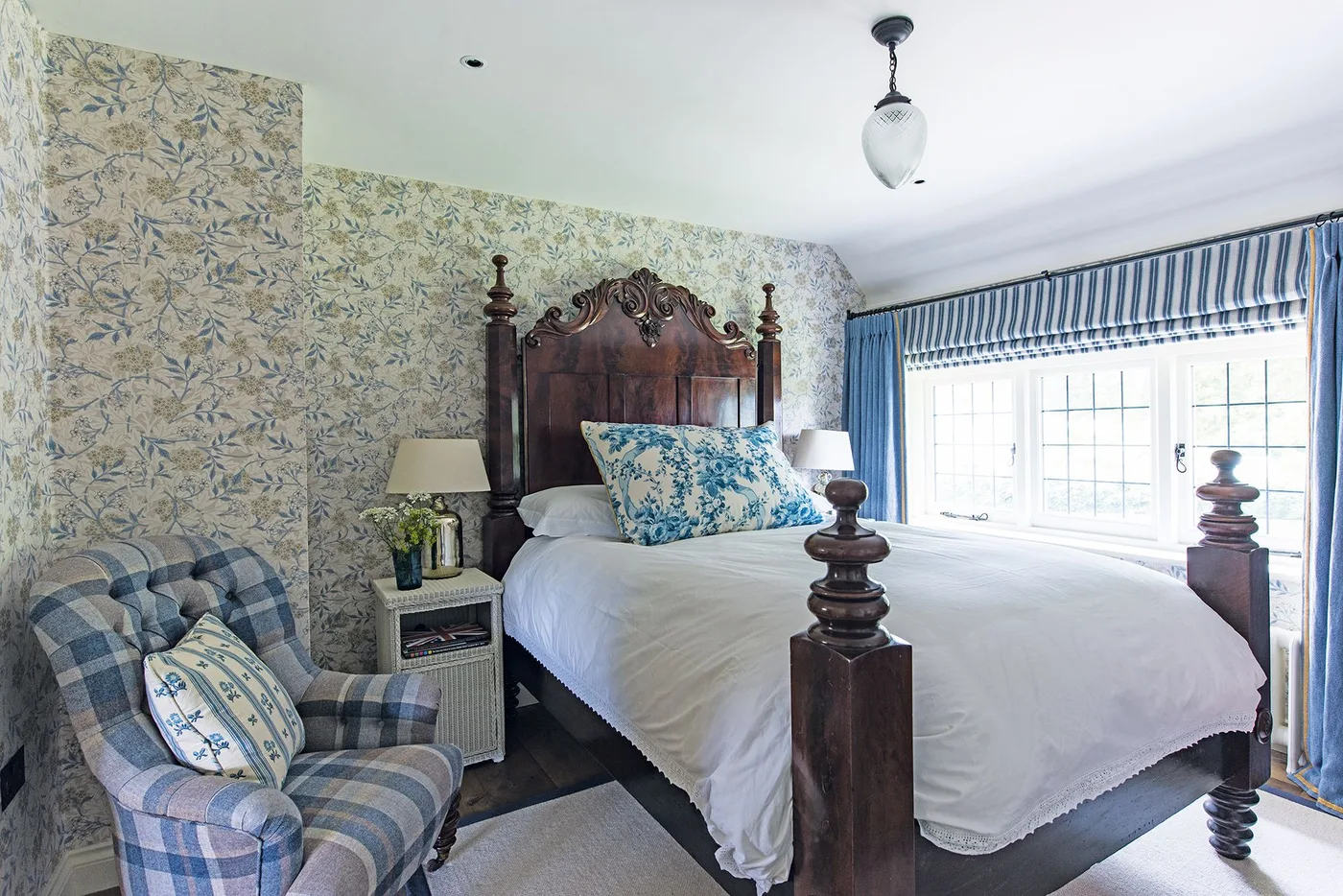 SaveSupport Non AI Creator
Image credit: Future /Jody Stewart
The dark carved bed provides a substantial traditional focal point against blue floral wallpaper. A checked armchair and striped window valance introduce different pattern shapes within a related blue palette. Pale bedding keeps the bed's outline visible, while lighter bedside pieces stop every furniture surface from becoming equally dark or visually heavy.
A substantial bed needs enough floor space for its posts and footboard as well as the mattress. Check the route around it before adding an armchair. Mix fabric patterns by comparing their colors and scale together, and retain some plain bedding so the furniture and wallpaper do not have to compete at every level.
IDEA 17 / 20
Soften a decorative metal headboard with pink textiles
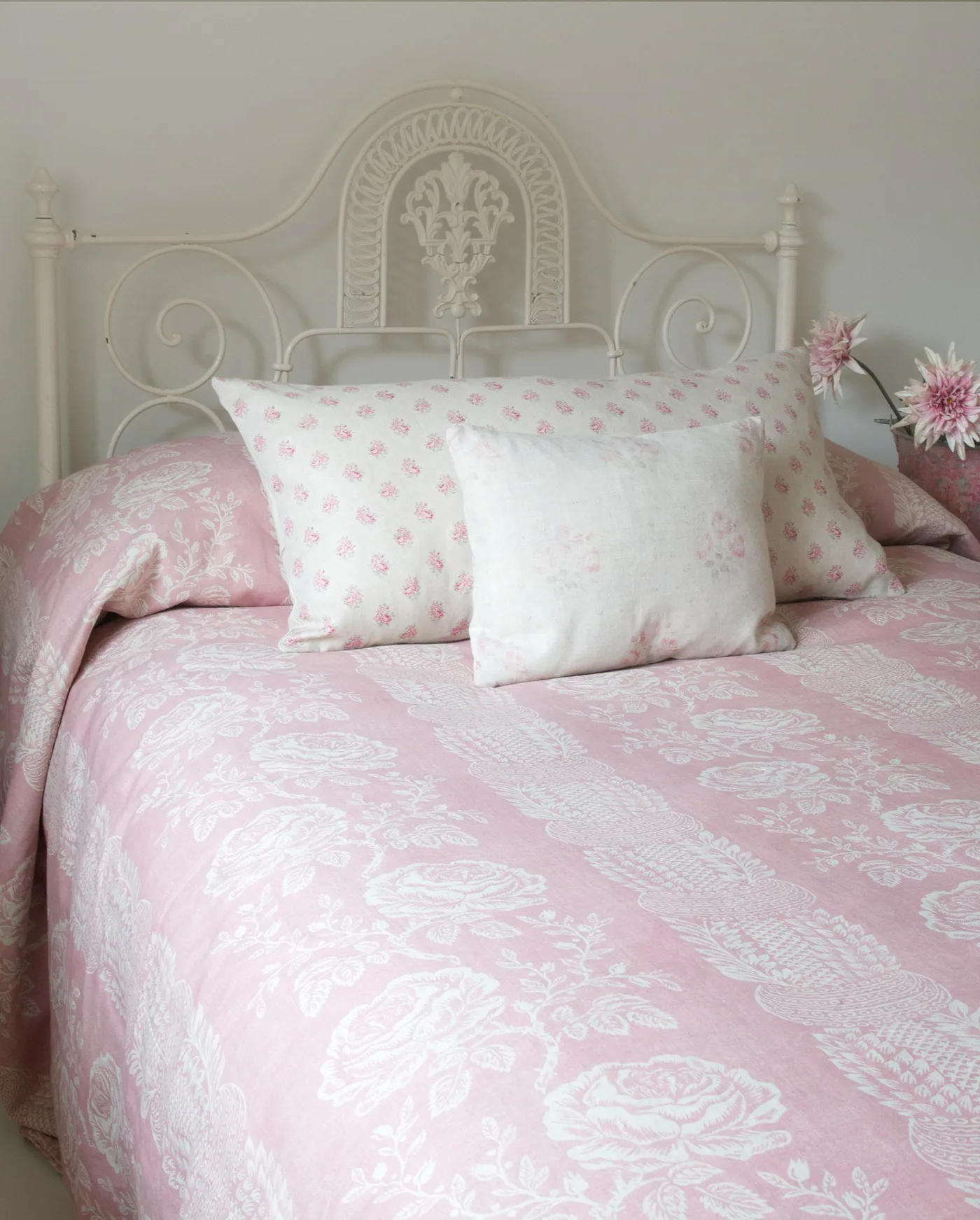 SaveSupport Non AI Creator
Image credit: Kate Forman Designs
The ornate white metal headboard supplies traditional scrollwork behind the soft pink bedding. A pale floral cushion repeats the lighter wall color while adding another small pattern above the broader bed cover. The combination creates a gentle decorative focus at the bed without needing dark furniture or a strongly colored surrounding wall.
Choose pink fabrics together in natural light, since similar shades may have different warm or cool undertones. Check the bedding's washing instructions and avoid so many decorative cushions that making the bed becomes awkward. An intricate headboard also has more surfaces to dust, so leave access behind and around it where possible.
IDEA 18 / 20
Frame a striped headboard with darker lower paneling
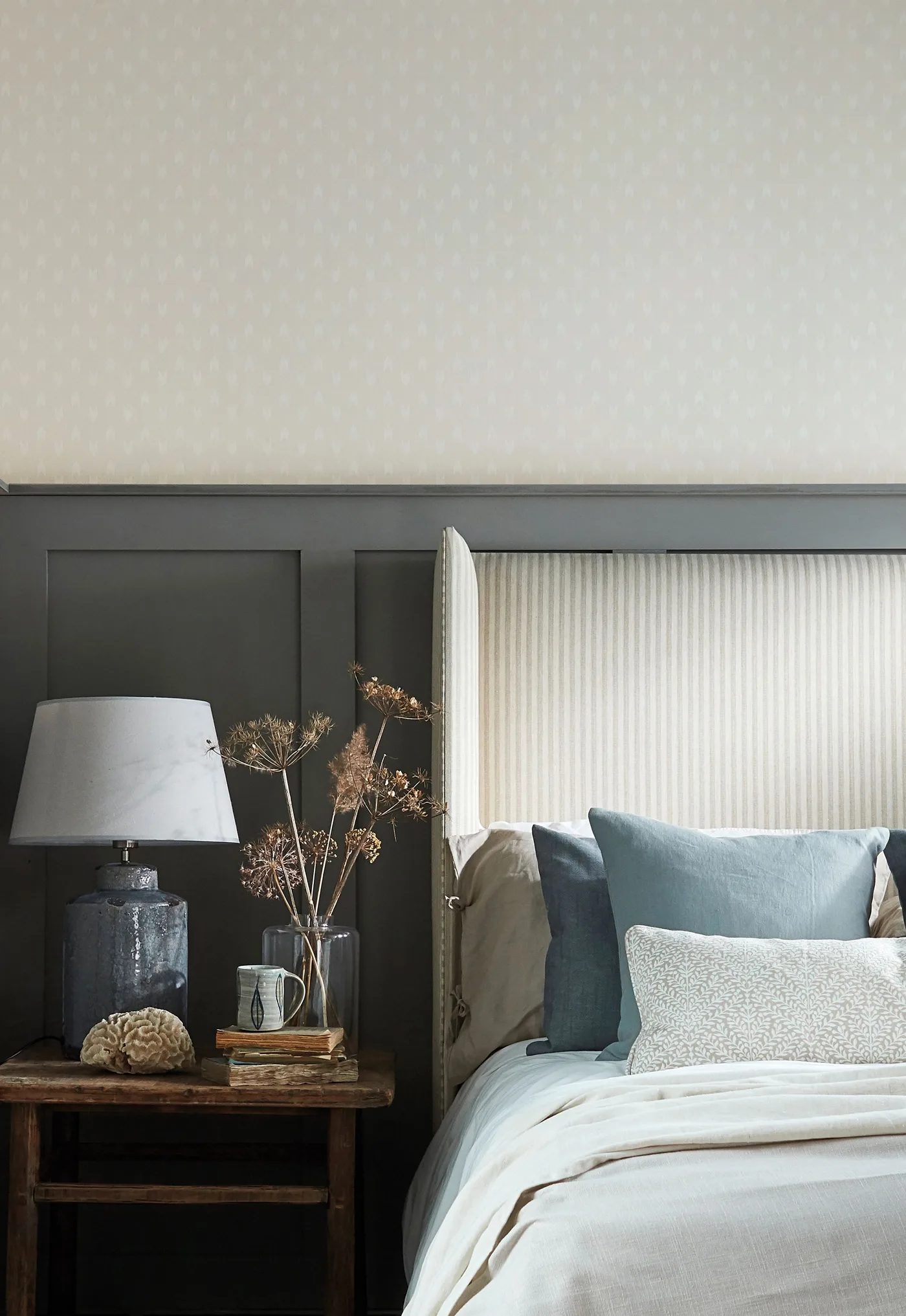 SaveSupport Non AI Creator
Image credit: Sanderson
Dark lower paneling creates a clear background for the pale striped winged headboard. A blue cushion adds a soft color at pillow height, with the wooden bedside table bringing warmth below the shaded lamp. The restrained wall pattern above lets the headboard shape and panel lines establish the bedroom's traditional character.
Paneling height and a tall headboard should be considered together so their outlines do not meet awkwardly. Compare the actual fabric with a painted sample before installation. Keep the bedside table large enough for a lamp and daily essentials, and choose a headboard shape that still leaves comfortable room to reach either side of the bed.
IDEA 19 / 20
Make a traditional chair a useful bedroom corner
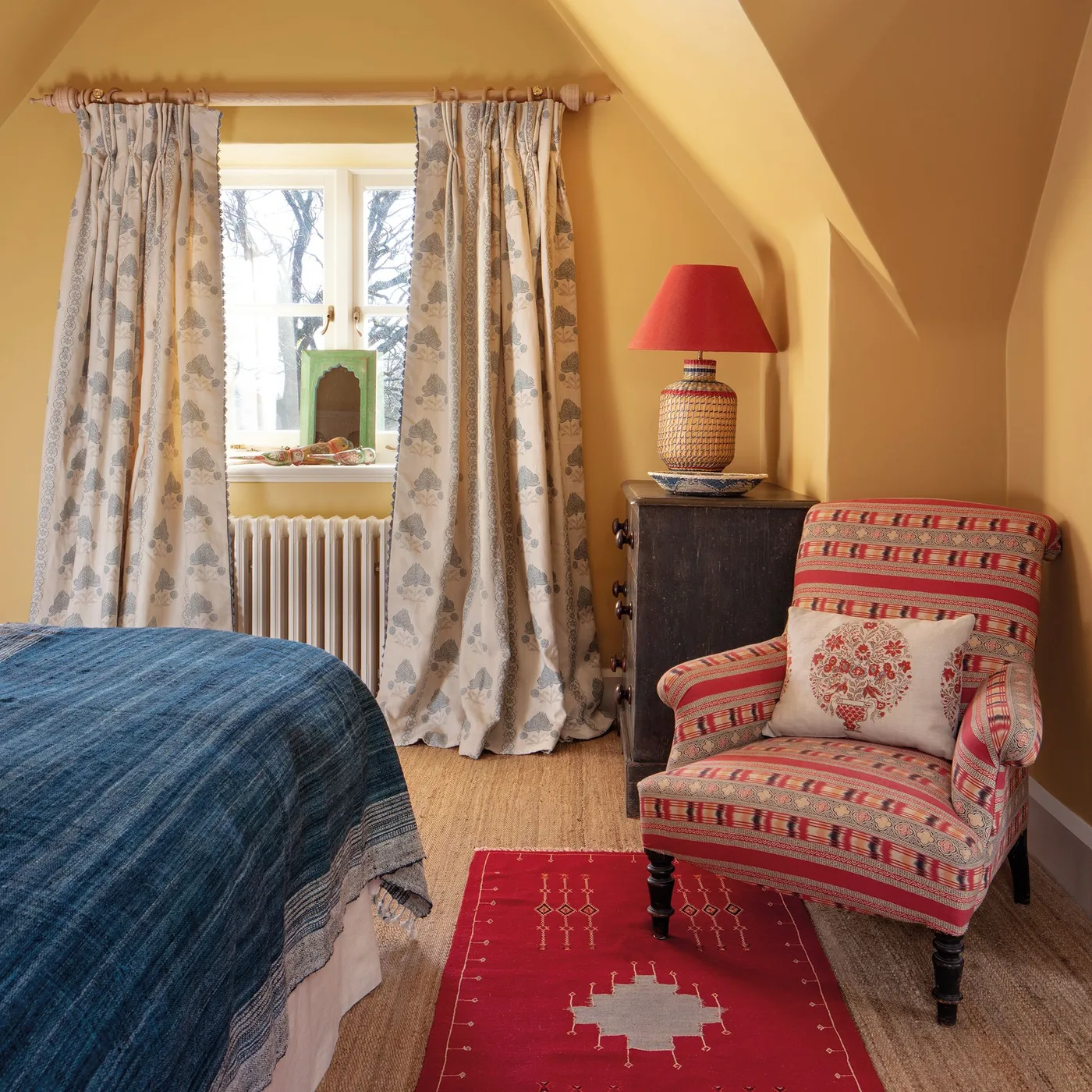 SaveSupport Non AI Creator
Image credit: Kate Forman
Warm yellow walls surround a corner with patterned curtains and a red-striped armchair. The blue bed cover introduces a cooler surface nearby, while a small dark chest and shaded lamp give the sitting area practical furniture. The traditional shapes and layered fabrics make the corner feel connected to the bedroom rather than a separate formal display.
A bedroom chair should have a purpose, such as reading or putting on shoes, and leave room to move around it. Check that curtains can open without catching on furniture. Keep the chest usable for storage and choose fabric layers that share a few colors rather than trying to repeat every shade throughout the room.
IDEA 20 / 20
Keep a small traditional room light with pale pink
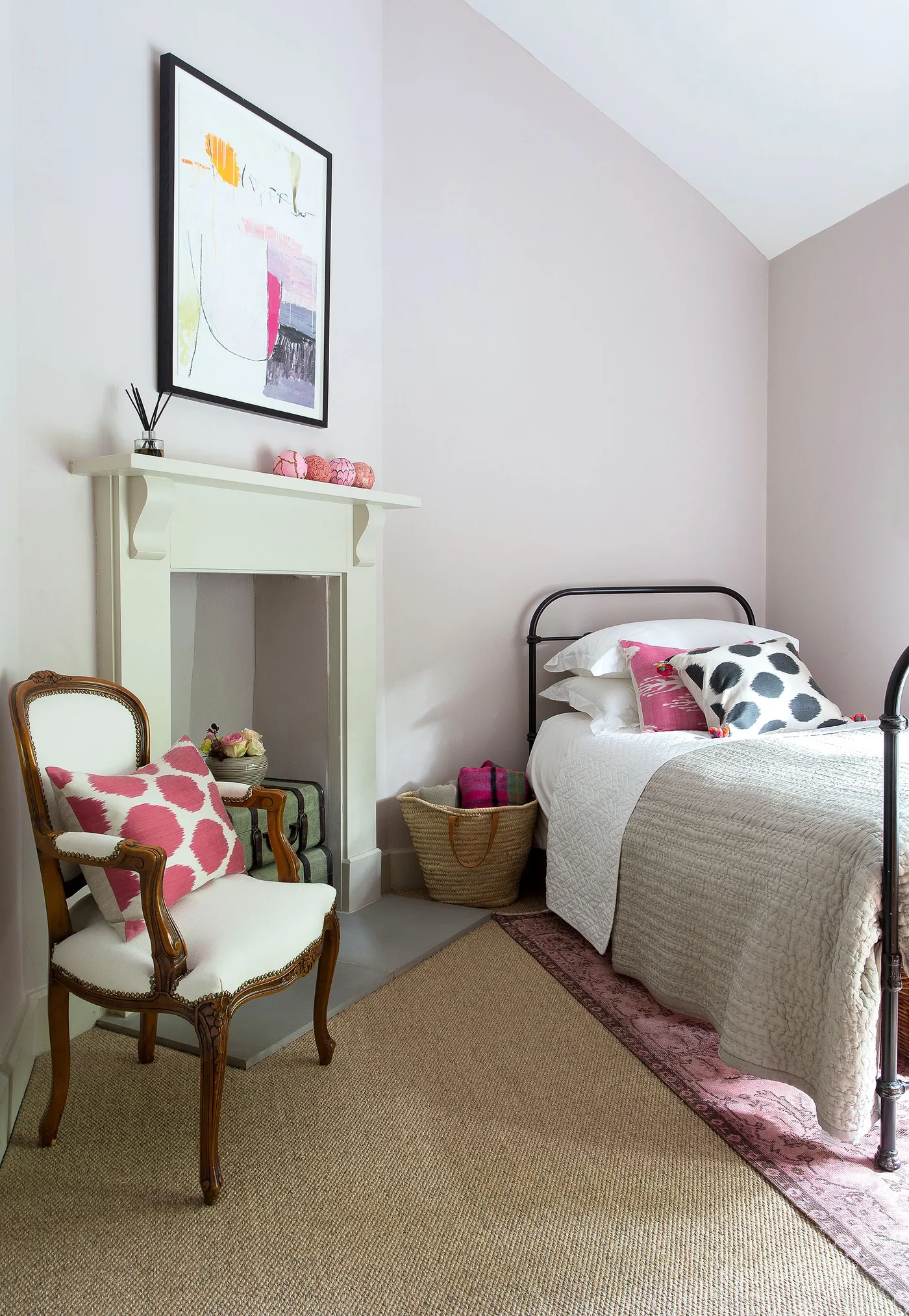 SaveSupport Non AI Creator
Image credit: Douglas Gibb
Pale pink walls keep the small room light around the dark metal bed frame. The pale fireplace surround and decorative chair add familiar traditional details, while bright cushions supply smaller accents on the mostly quiet bedding. The furniture's different shapes remain visible because the surrounding wall and floor colors are comparatively restrained.
Choose smaller traditional pieces by their usable footprint rather than by style alone. Check the chair, basket and bed together so the route through the room stays comfortable. Keep an unused fireplace tidy, or follow appropriate clearances if it is active, and secure artwork rather than leaving heavy frames unstable on a narrow ledge.
BRING IT ALL TOGETHER
Let traditional details support everyday rest
A shaped headboard, considered curtains or a familiar bedside cabinet may be enough to establish the room's character. Choose the pieces around useful storage, comfortable lighting and a clear route to the bed.
Layer color and fabric at a pace that suits the room. When the decorative choices remain easy to clean and live with, a classic bedroom can feel personal without becoming crowded or difficult to maintain.