Dark blue can make a bedroom feel settled, whether you paint the whole room or start with a bedspread. The useful question is where that depth belongs: behind the pillows, around a window, across storage, or in a few removable pieces that you can change with the seasons.
These bedrooms show several ways to balance blue with lighter bedding, wood, pattern, and focused lighting. Look at the contrast around each bed as well as the paint color. A room that photographs beautifully still needs comfortable reading light, accessible storage, and curtains that suit your sleeping routine.
PART 01
Give Blue Walls Structure
IDEA 01 / 20
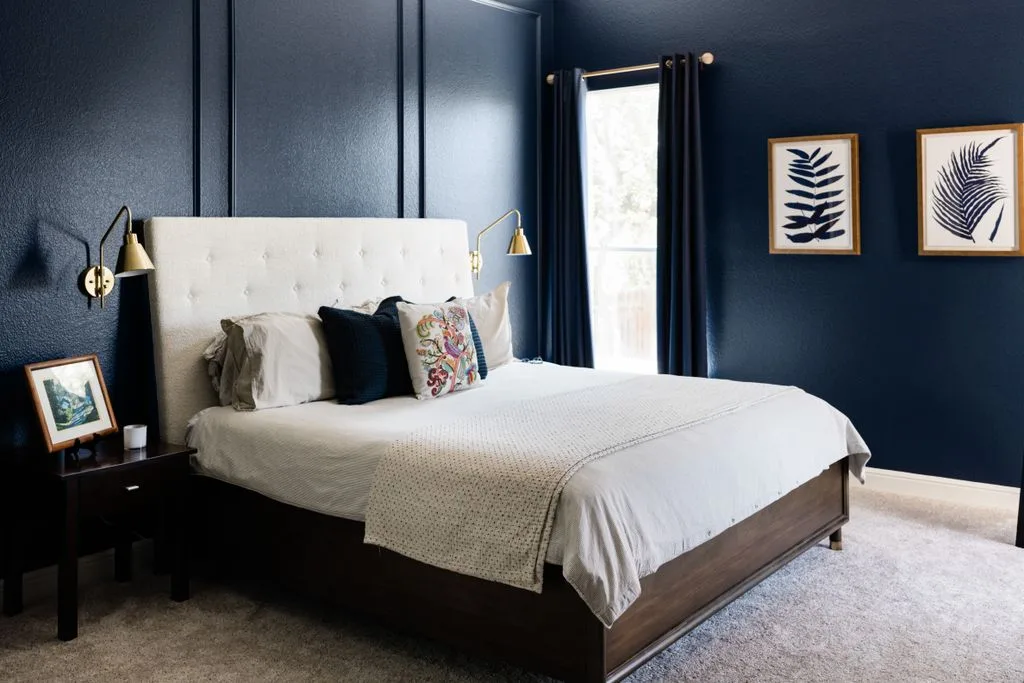
Frame the Bed with Navy Wall Molding
 SaveSupport Non AI Creator
Image credit: Photo: Madeline Harper
Rectangular molding gives the navy wall a clear rhythm behind this tall cream headboard. White bedding and a pale rug bring light into the lower half of the room, while slim wall lights keep the bedside surfaces open. The dark curtains repeat the wall color without adding another competing pattern around the bed.
Plan the molding around your actual headboard and bedside furniture before fixing it in place. A panel line that disappears awkwardly behind a lamp can undermine the arrangement. Test the blue beside the upholstery in daylight and lamplight, and keep reading lights adjustable so their usefulness survives a future change of bed.
IDEA 02 / 20
Keep the Cornice Light Above Navy Walls
 SaveSupport Non AI Creator
Image credit: Future PLC
Navy paint surrounds the fireplace and sits beside narrow areas of patterned wallpaper in this bedroom. The white cornice draws a bright line around the ceiling, while the chandelier and wood floor add detail beyond the wall color. The wallpaper supplies a softer texture without covering every surface in the same print.
Use the light ceiling edge deliberately if you want definition between dark walls and the space overhead. Check how a wallpaper sample meets painted trim before ordering a whole roll. If you have an existing fireplace, keep its use and clearance requirements in mind when arranging furniture or adding decoration around the opening.
IDEA 03 / 20
Add Vertical Lines Behind a Cane Headboard
 SaveSupport Non AI Creator
Image credit: Secret Linen Store
Close vertical lines give this navy wall texture without relying on a large print. The cane headboard brings a lighter, open pattern in front of it, and blue-and-white striped bedding connects the bed to the wall. A small white light stands out clearly, making the bedside arrangement easy to read against the darker background.
Balance two linear patterns by changing their scale rather than matching every stripe. Test panel spacing behind the headboard, where much of the surface will be partly hidden. Choose a light that reaches your book without shining straight into your eyes, and leave its switch accessible from a comfortable position on the pillow.
IDEA 04 / 20
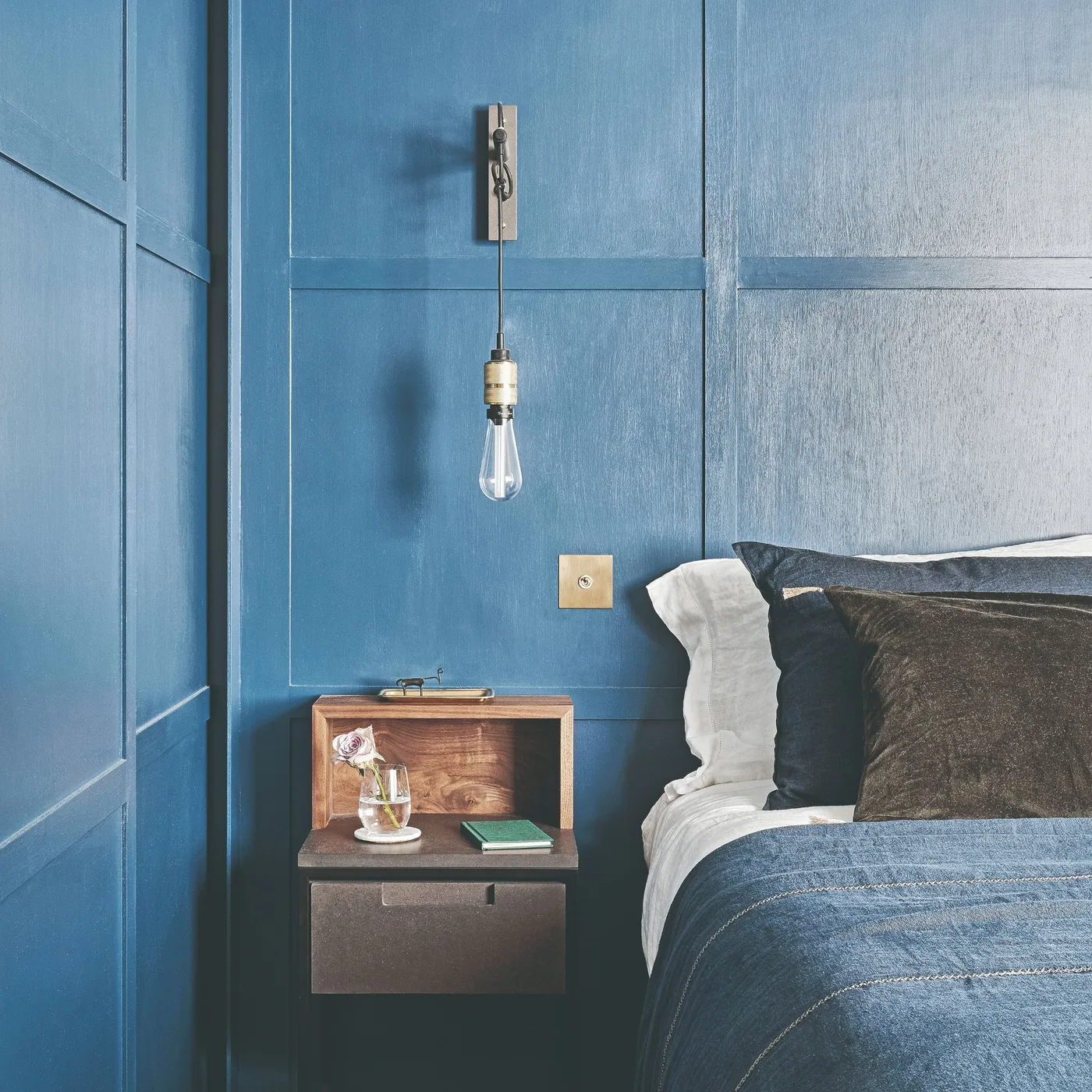
Pair Deep Blue Panels with a Floating Bedside
 SaveSupport Non AI Creator
Image credit: Future PLC
The blue panels here sit behind a compact wooden bedside surface and a hanging bulb. Blue-gray bedding keeps the palette close, while the warm wood interrupts the cool wall color. Keeping the bedside furniture off the floor makes the small corner feel less crowded and leaves the floor edge visible beneath the sleeping area.
Check wall construction and the weight rating before fitting a floating bedside table. Its top still needs to hold the things you actually use, rather than only a decorative object. An exposed bulb can cause glare at pillow height, so try the light from the bed and choose suitable diffusion or dimming when necessary.
IDEA 05 / 20
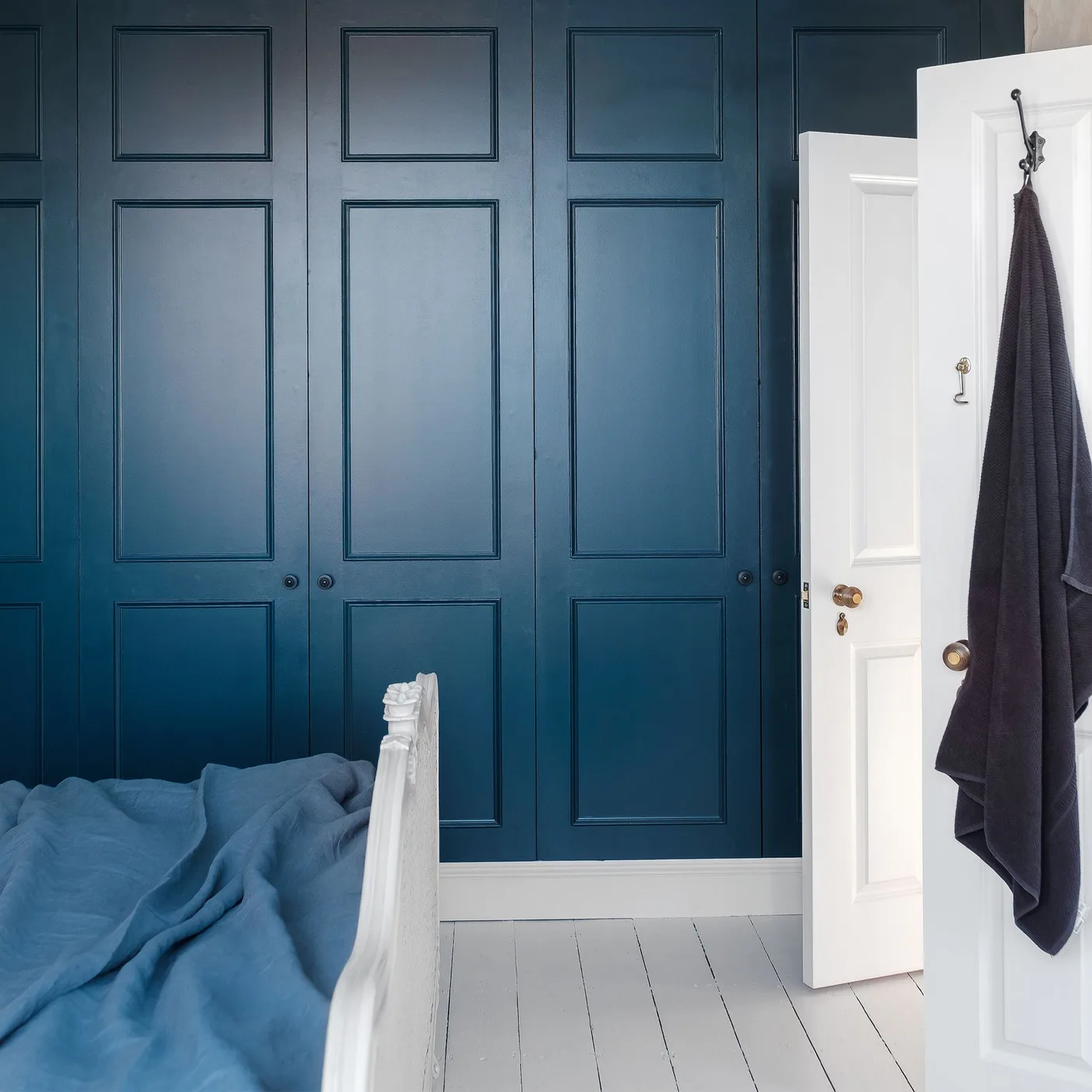
Let Bedroom Storage Join the Blue Scheme
 SaveSupport Non AI Creator
Image credit: James Merrell
Deep blue carries across the paneled storage and neighboring wall in this bedroom, making the cupboards feel part of the room rather than separate furniture. The pale floor and white doorway give the dark surfaces a clean edge. Blue bedding repeats the color at a lower level without introducing another large block of cabinetry.
Painted storage should remain easy to use as well as attractive. Check door swing, handle clearance, and access beside the bed before deciding how much cabinetry to add. Choose a finish suitable for frequent handling, and retain the paint information so small marks around knobs or door edges can be touched up consistently.
PART 02
Balance Depth with Contrast
IDEA 06 / 20
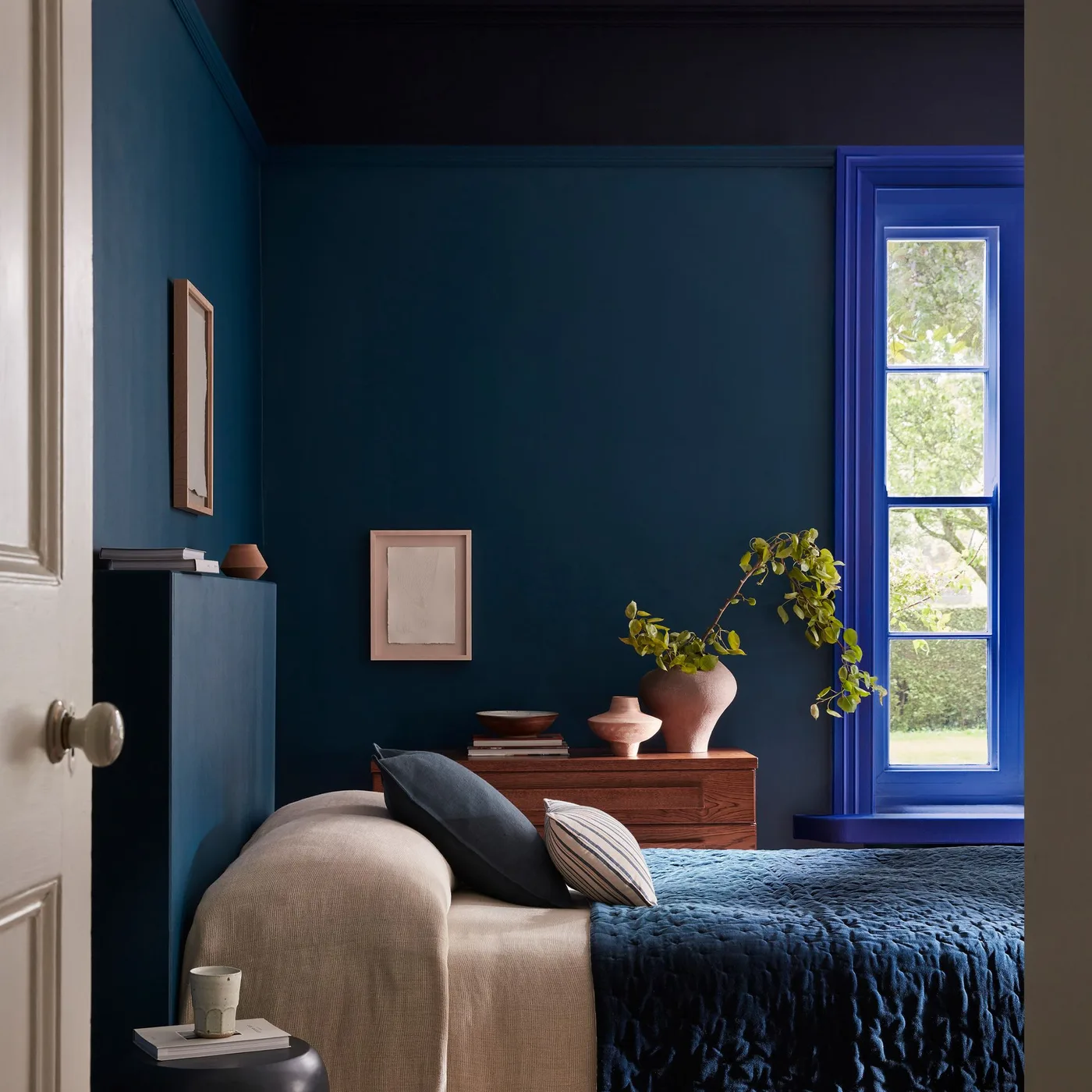
Try a Brighter Blue Around the Window
 SaveSupport Non AI Creator
Image credit: Little Greene
The walls and ceiling wrap this corner in dark blue, while brighter blue trim draws attention to the window. A beige bed and wooden dresser keep the room from becoming a single uninterrupted dark surface. The small collection on the dresser feels restrained, letting the change of blue around the opening carry the main visual interest.
Compare both blues on sample boards before committing to contrasting trim. A brighter shade can look much stronger when it forms a complete frame around a window. Keep curtain or blind operation in mind, and use a lighter bedcover if you want to retain the depth overhead while making the sleeping area feel more open.
IDEA 07 / 20
Give Navy a Bold Green and Red Accent
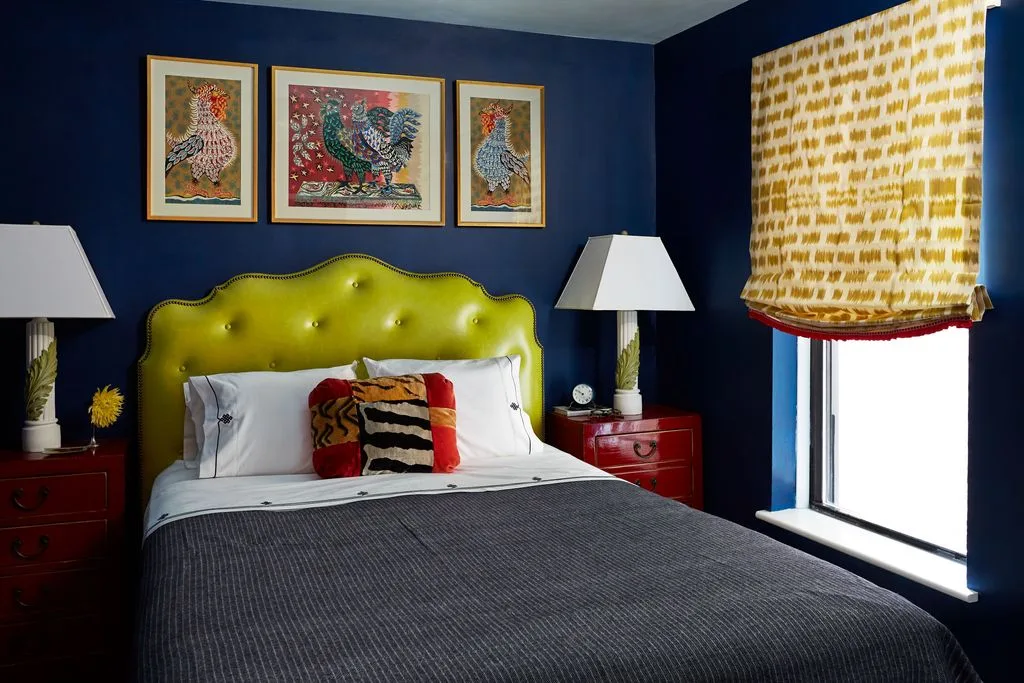 SaveSupport Non AI Creator
Image credit: Photo: MJ Kroeger
Navy walls provide a steady background for the bright green headboard and red bedside tables in this bedroom. Framed bird pictures and the yellow patterned blind carry smaller touches of color across the upper wall. The dark bedcover helps ground the scheme, so the lively accents stay concentrated around the head of the bed.
If you like this combination, choose one main accent first and introduce the others in smaller areas. Bring fabric and paint samples together before buying several strong colors separately. A patterned blind also needs to suit privacy and sleep requirements, so check its lining and coverage rather than choosing it only for the print.
IDEA 08 / 20
Warm Navy with a Pink Bedcover
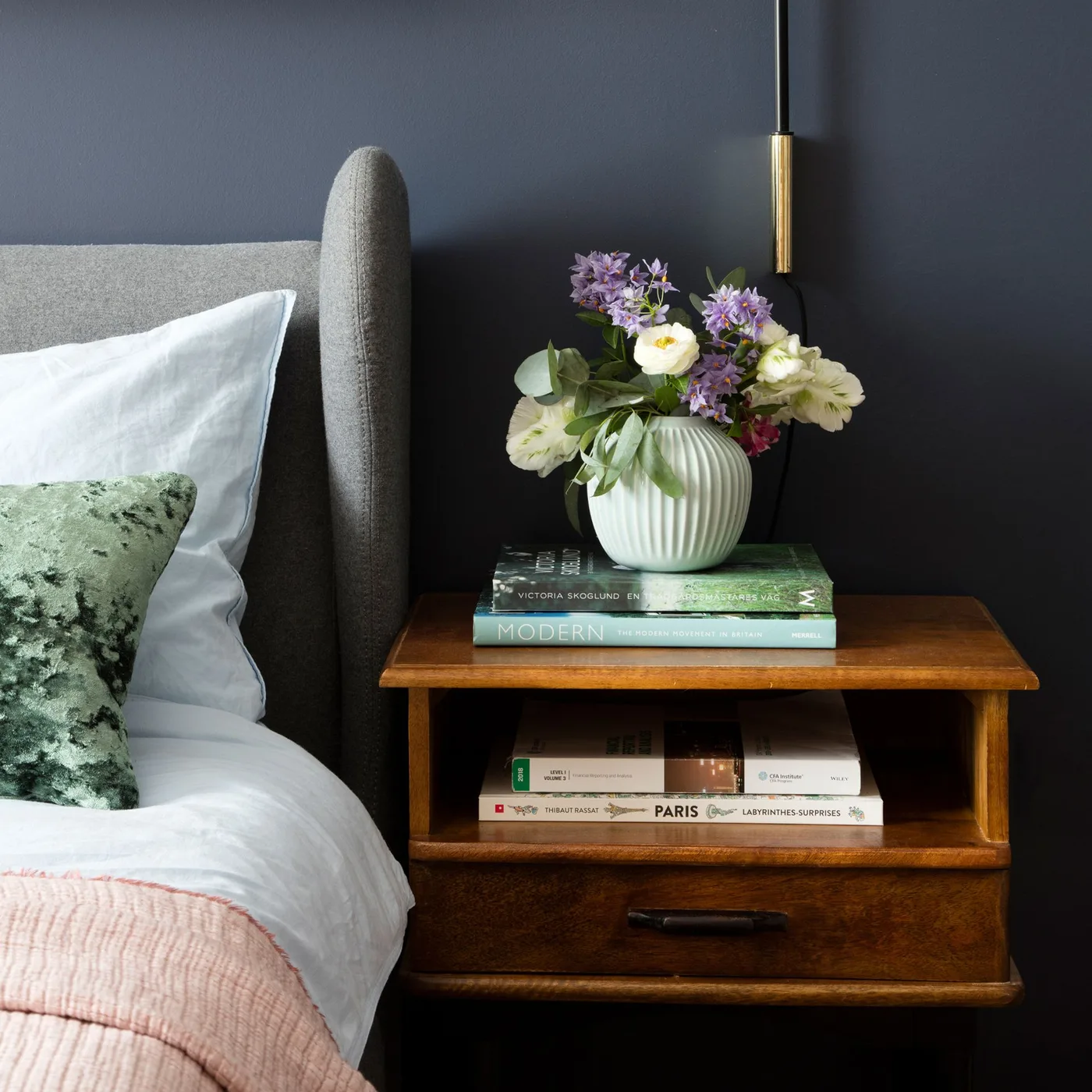 SaveSupport Non AI Creator
Image credit: David Giles
A pink bedcover softens the navy wall behind this gray winged headboard. The small green patterned cushion adds another color without taking over the bed, and the wooden bedside table gives the arrangement a warm edge. A narrow hanging light uses little visual space beside the headboard and leaves room for books and flowers.
Start with the bedcover when trying pink beside an existing navy wall, since it is easier to change than upholstery. Compare the pink against both the headboard and evening lighting. Keep a vase away from charging equipment, and make sure a pendant does not hang where you might knock it while reaching for the bedside table.
IDEA 09 / 20
Use One Orange Cushion to Break Up Blue
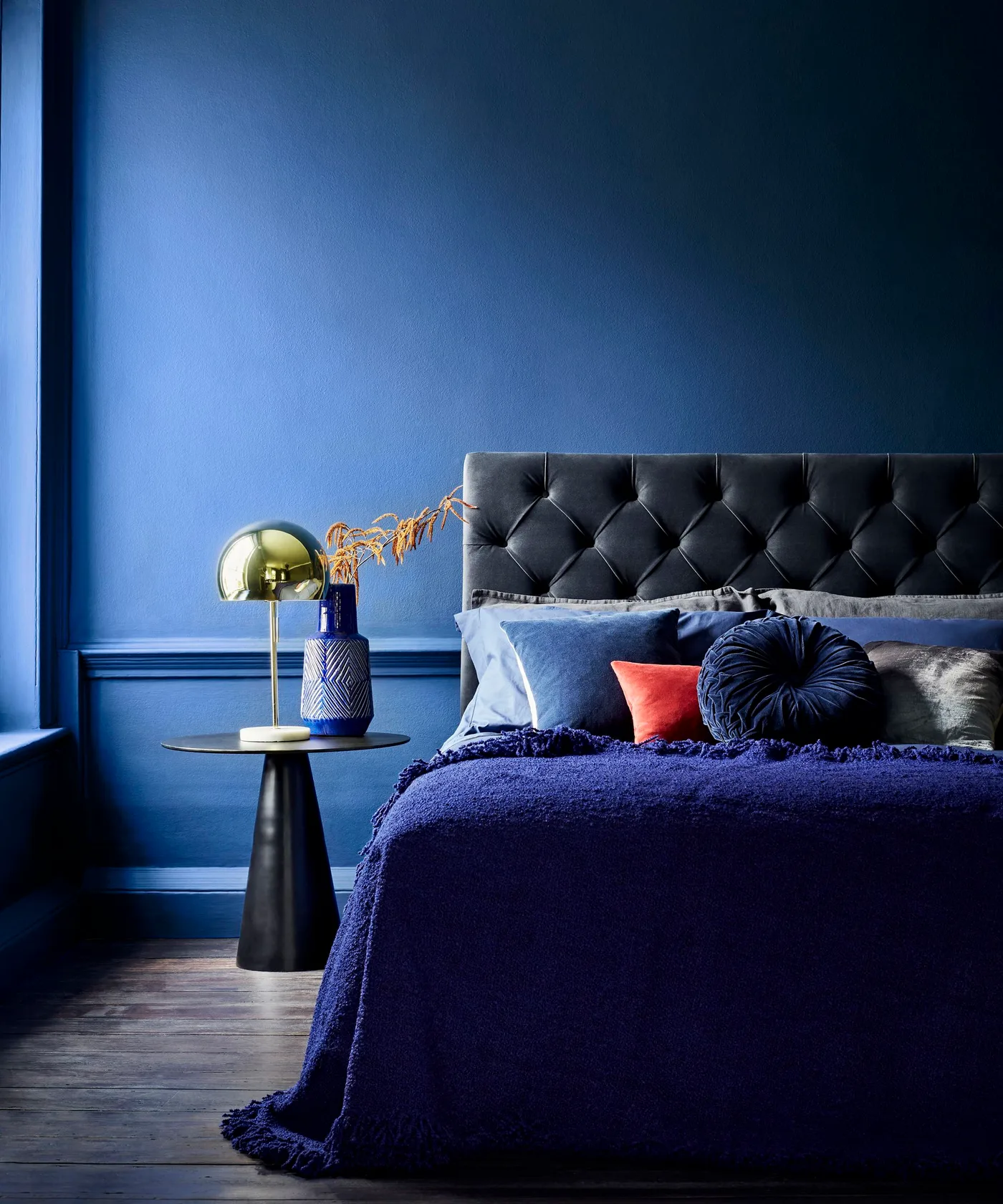 SaveSupport Non AI Creator
Image credit: Crown
The wall and bedcover use closely related deep blues, with a darker tufted headboard adding texture between them. A single orange cushion interrupts the blue without scattering bright objects throughout the room. The domed lamp and compact dark bedside table keep the corner simple, allowing the pillow and folds in the cover to supply the detail.
Try a small warm accent before buying a whole set of contrasting accessories. One cushion may be enough when the walls and bedding already have strong depth. Check the care label on a textured bedcover, and choose a lamp that lights the page comfortably rather than relying on reflected light from a dark wall.
IDEA 10 / 20
Bring Woven Texture to a Blue-Gray Corner
 SaveSupport Non AI Creator
Image credit: Future PLC
The dark blue-gray wall sits behind a tufted gray headboard, while white bedding separates the two darker surfaces. A woven pendant, wooden bedside table, and round woven rug introduce texture without another strong color. The fern adds a small leafy shape beside the bed rather than competing with the headboard or hanging light.
Treat woven lighting as atmosphere unless it also gives enough light for reading. Check the shade cleaning instructions, since open textures can collect dust. Position a plant where its light requirements are met and protect the bedside surface from watering, while keeping enough clear space for a glass, phone, or book you use each night.
PART 03
Layer Bedding and Pattern
IDEA 11 / 20
Start with Navy Bedding in a White Room
 SaveSupport Non AI Creator
Image credit: Future PLC
Dark blue appears mainly in the patterned bedding and cushions in this otherwise white bedroom. The arched windows, wooden bed, and light woven rug keep the surroundings bright. This is a useful example of adding depth at the bed without painting the walls, particularly when existing architectural details already give the room plenty of character.
Use a bedcover as the first test if you are uncertain about committing to navy. Look at it fully spread out, since a folded sample hides how much dark color the bed will occupy. Keep the window area accessible, and select bedding you can wash conveniently rather than treating a photographed arrangement as a permanent display.
IDEA 12 / 20
Mix Navy Cushions with Soft Neutrals
 SaveSupport Non AI Creator
Image credit: Dominic Blackmore
Quilted navy cushions provide the deepest color against pale bedding and a gray upholstered headboard. The gray knitted throw brings a larger, softer texture below them, while the woven bedside stool adds another tactile surface. A small warm-colored edge on the bedding stops the cool palette from feeling entirely uniform without becoming a separate theme.
Limit decorative cushions to the number you are willing to move every night. A textured cushion cover is a manageable way to test navy before replacing a larger piece. Check wash instructions for knitted throws, and use a stable bedside surface if your daily routine includes drinks or items that could tip on an uneven woven top.
IDEA 13 / 20
Repeat Dark Blue in a Slim Four-Poster
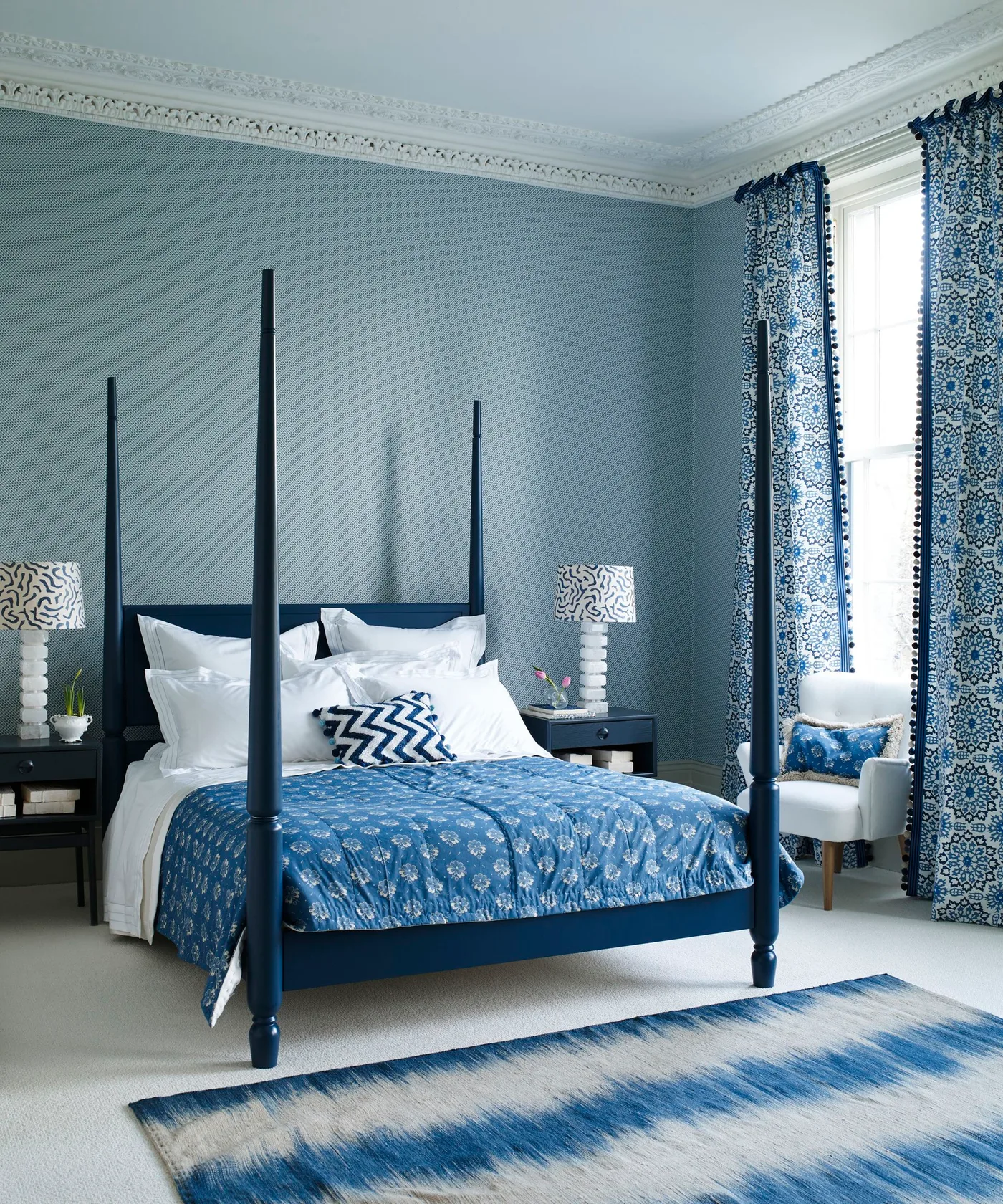 SaveSupport Non AI Creator
Image credit: Future/Chris Everard
The slim dark blue posts give this bed a strong outline against the pale walls. Patterned curtains and bedding repeat blue in smaller marks, while white pillows keep the center of the bed clear. The bedside tables remain compact, allowing the vertical bed frame to act as the main structure rather than surrounding it with heavy furniture.
Measure a four-poster against ceiling fixtures and the route through the room before choosing it. A slender frame can still obstruct a pendant or the view from a window. If both curtains and bedding are patterned, vary the scale and keep some plain fabric between them so changing one set does not require replacing everything else.
IDEA 14 / 20
Give Twin Beds Matching Blue Outlines
 SaveSupport Non AI Creator
Image credit: Photo: Pieter Estersohn
Two deep blue upholstered beds create matching outlines in this shared room. White bedding gives each sleeping area a bright center, while checked cushions and leafy blue wallpaper carry pattern in different sizes. The red bedside furniture adds warmth between and beside the beds, helping the arrangement feel coordinated without making every piece the same color.
For a shared bedroom, plan individual access to a light, charging point, and useful storage before arranging decorative symmetry. Check that both occupants can get in and out comfortably. Keep the main bedding simple if wallpaper and cushions already supply strong pattern, and choose washable fabrics appropriate to how the room will be used.
IDEA 15 / 20
Echo a Leafy Print with Navy Textiles
 SaveSupport Non AI Creator
Image credit: Future/Alyce Taylor/Jake Curtis
The dark blue bedcover and lampshade pick up the deeper tones in this leafy wallpaper. A pink upholstered bed and turquoise bedside table bring lighter color into the foreground, so the print remains visible rather than blending into a dark mass. The plain bedcover provides a pause beside the busy wall and patterned curtain at the edge.
Choose one dark color from a wallpaper sample to repeat in removable textiles. That connection is easier to manage than finding separate prints for every surface. Hold the sample beside the headboard fabric before buying, and check whether a dark lampshade gives enough useful light or whether a separate adjustable reading light would make evenings more comfortable.
PART 04
Make the Whole Room Comfortable
IDEA 16 / 20
Soften Navy Paneling with Layered Throws
 SaveSupport Non AI Creator
Image credit: Simon Whitmore
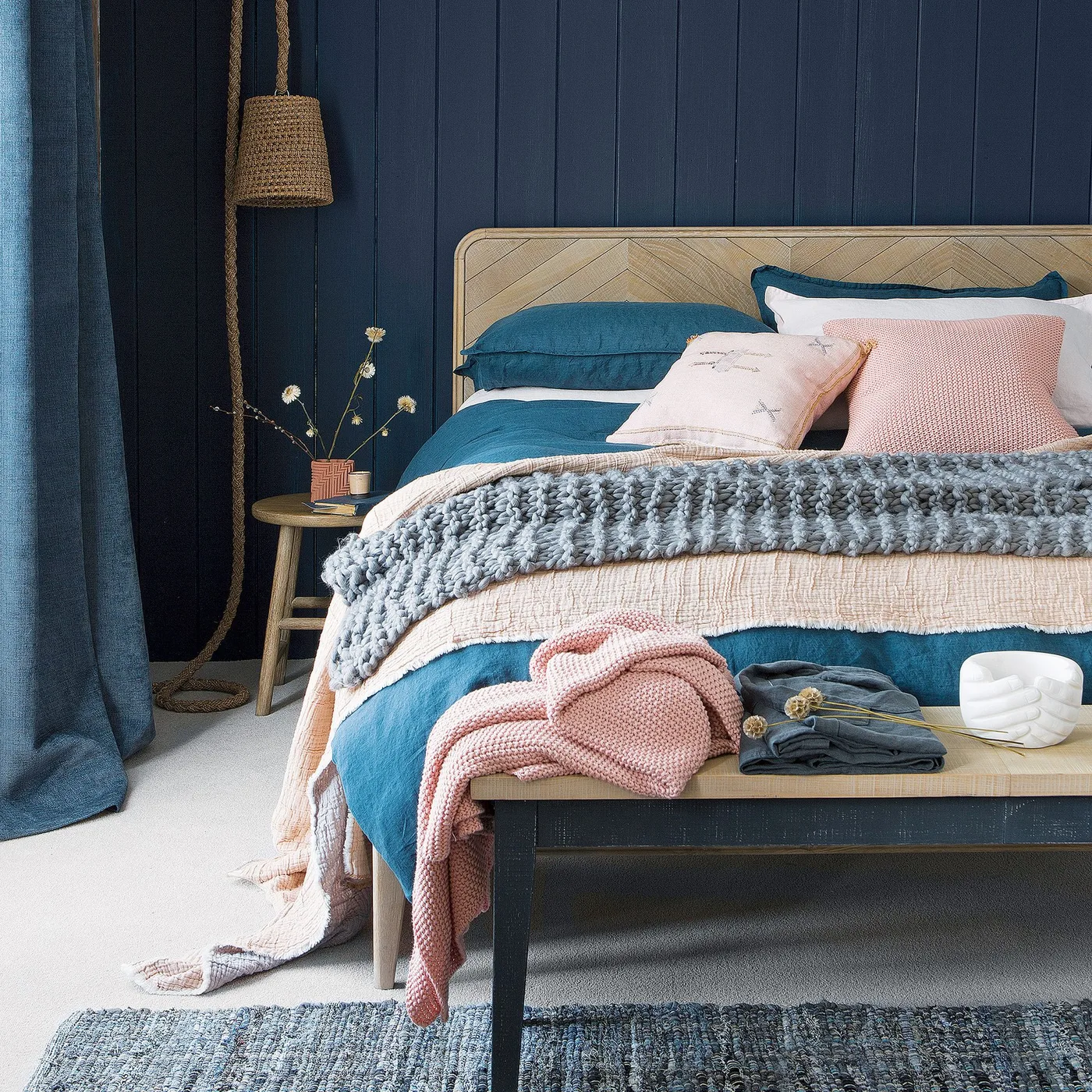
Navy paneling and curtains surround a geometric wooden headboard in this bedroom. Pink fabric and a chunky gray throw loosen the strong lines, while a dark bench at the foot extends the sleeping area visually. The woven pendant and floor rug add lighter texture without competing with the angular design of the headboard behind the pillows.
Layer only the blankets you will use, leaving a place to put extra bedding when the room warms up. Check the walking space beyond a foot-of-bed bench with cupboard doors open. If the headboard already has a strong geometric pattern, simpler curtains and a restrained rug make the room easier to update one piece at a time.
IDEA 17 / 20
Keep Wall Lights Clear of a Spindle Bed
 SaveSupport Non AI Creator
Image credit: Future/Adrian Briscoe
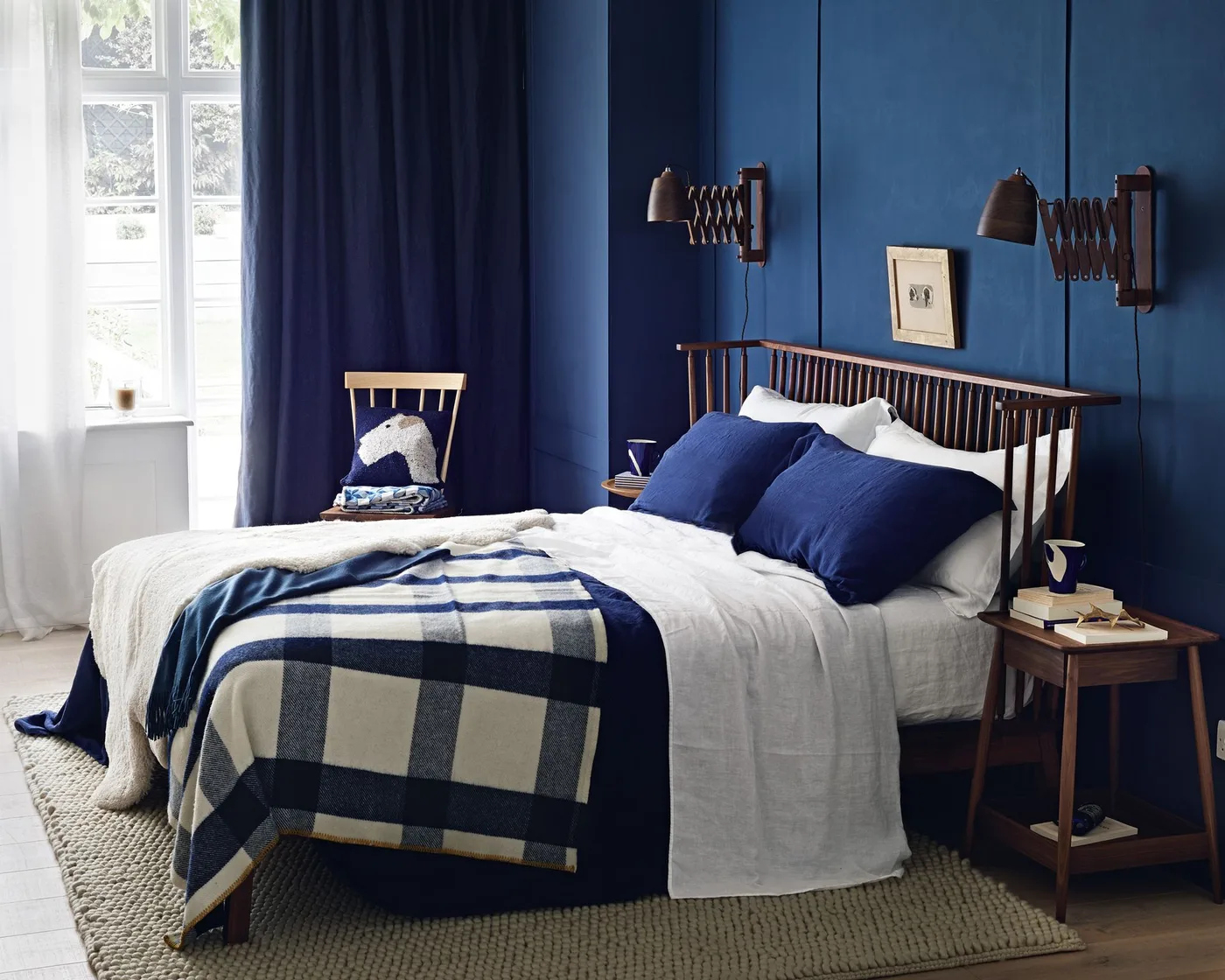
The navy wall and curtain provide a quiet background for this wooden spindle bed. White bedding keeps the bed light, and a blue checked blanket connects it to the darker surroundings. Extending wall lights sit on either side, adding a practical shape above the bedside furniture without placing large lamp bases beside the narrow bed frame.
Test the reach of an extending light from your usual reading position and make sure it folds away clear of the headboard. Leave controls accessible without stretching across a partner. A checked blanket is an easy way to repeat blue, but choose its weight and washing requirements for your climate rather than adding layers simply to fill the bed.
IDEA 18 / 20
Divide the Wall with a Long Display Shelf
 SaveSupport Non AI Creator
Image credit: Future PLC
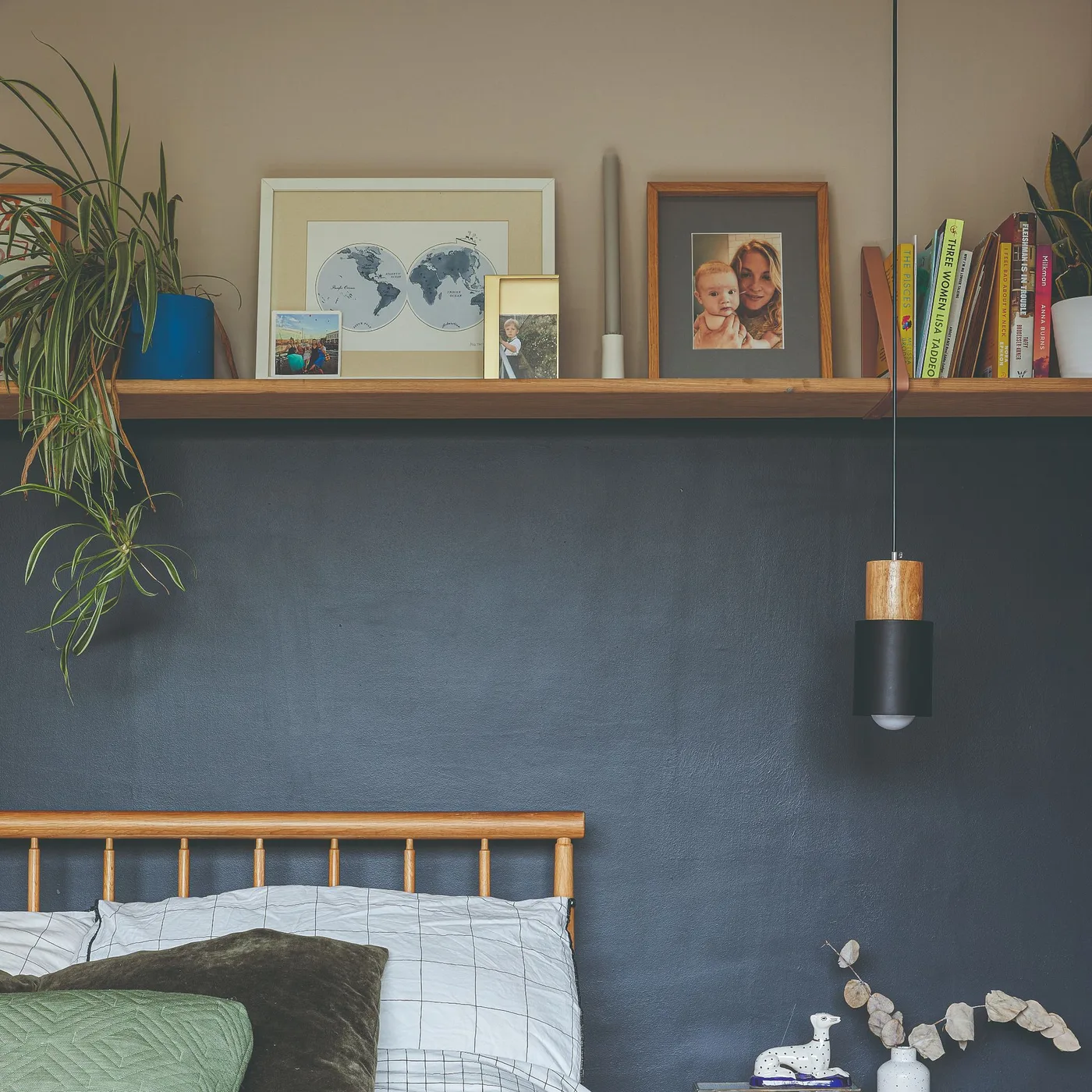
Navy occupies the lower wall here, while a long wooden shelf separates it from the paler surface above. Books, small pictures, and greenery spread along the shelf rather than crowding the bedside area. The dark hanging light repeats the lower wall color, creating a connection across the horizontal divide without needing a second painted feature.
Fix a shelf securely to appropriate supports and avoid heavy loose objects directly above where you sleep. Plan the paint boundary with the shelf position before painting, so the line does not drift around fittings. Leave breathing room between displayed pieces, and keep nearby lights far enough from books and plants to follow the fixture instructions.
IDEA 19 / 20
Show the Texture of a Blue Brick Wall
 SaveSupport Non AI Creator
Image credit: Photo: House Of Design LLC
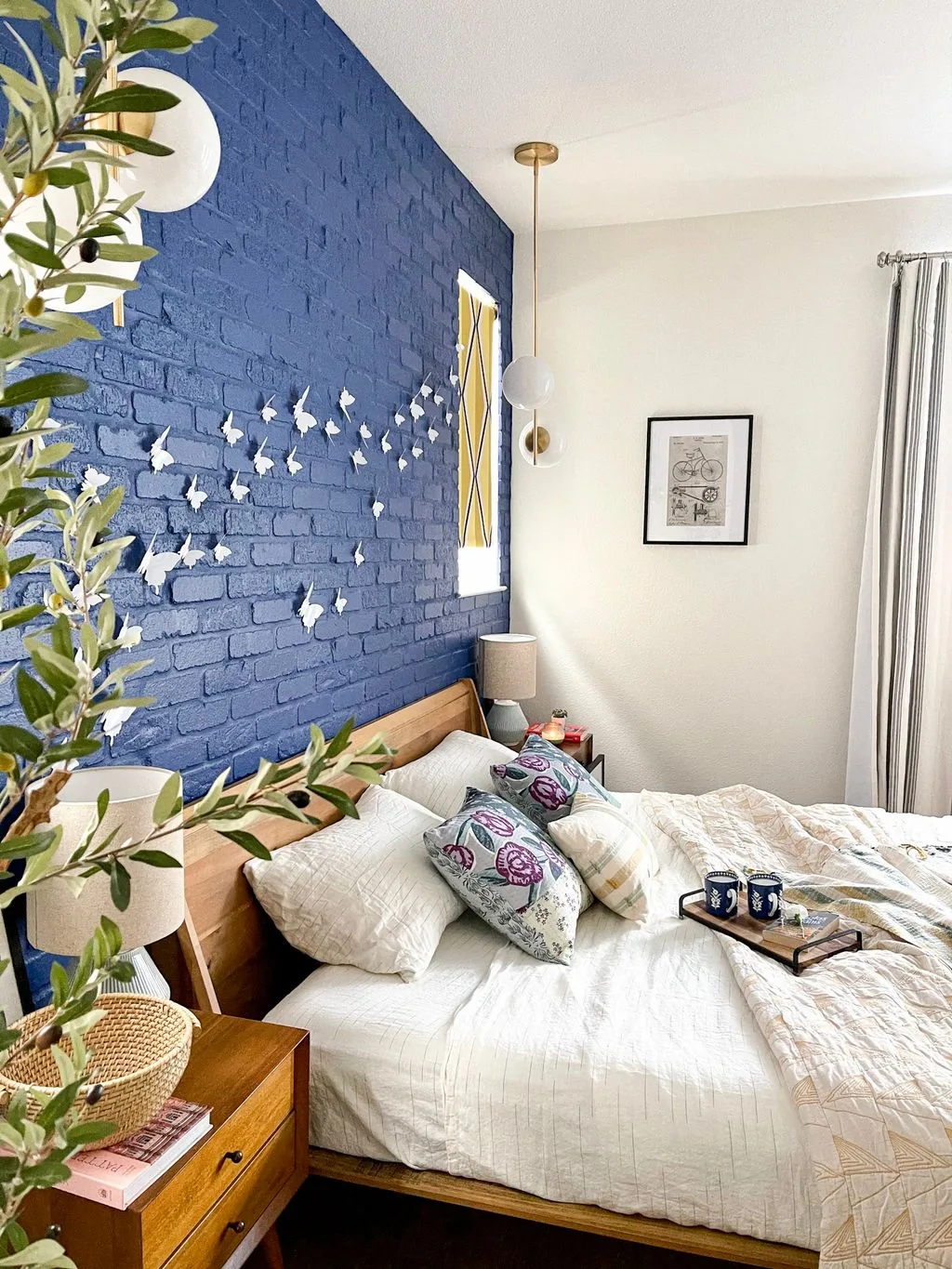
Blue paint follows the texture of the brick wall rather than concealing it behind a flat panel. Small butterfly decorations add a light shape above the wooden headboard, and white bedding keeps the bed from becoming another dark block. The pale adjoining wall makes the painted brick a distinct feature within the brighter room around it.
Check the condition and suitability of existing masonry before choosing a paint system, especially if dampness or flaking is present. Test a small area to see how the joints affect coverage. Keep decorative attachments secure above the bed, and consider whether you want the brick permanently painted before choosing this approach in a room with original exposed masonry.
IDEA 20 / 20
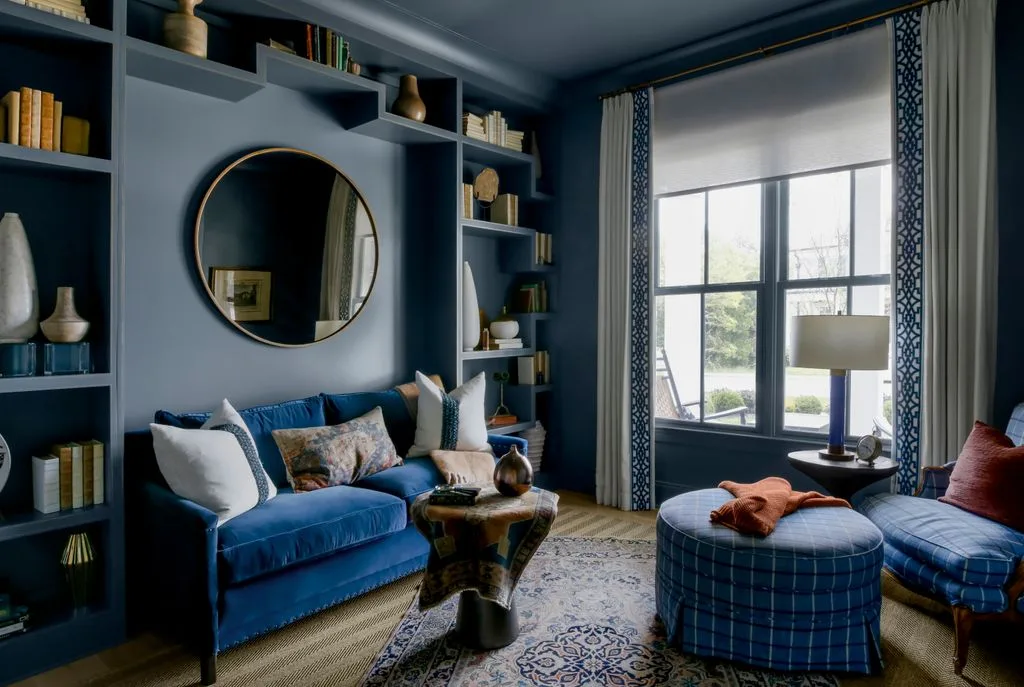
Carry Blue into a Bedroom Reading Area
 SaveSupport Non AI Creator
Image credit: Photo: Paige Rumore
Blue continues across the shelves and seating in this bedroom sitting area, with a round mirror breaking up the rectangular storage. The plaid ottoman repeats the color in a softer pattern, and light cushions relieve the darker sofa. The window supplies a clear focal point, making the corner useful as somewhere to sit away from the bed.
Add a sitting area only after preserving comfortable routes to the bed, window, and storage. A compact seat with a usable lamp may serve you better than a full sofa in a smaller room. Keep an ottoman easy to move, leave lower shelves accessible, and avoid overfilling the display so regular dusting remains a manageable task.
BRING IT ALL TOGETHER
Choose the Right Amount of Blue
Start with the surface you most want to change. Navy bedding is a flexible first step, a painted bed wall gives more permanence, and blue cabinetry or a dark ceiling becomes part of the room itself. Put samples beside your existing headboard and curtains before deciding how widely to carry the color.
Then check the room from the pillow, not only from the doorway. Make sure lights are comfortable to read by, switches are reachable, storage opens freely, and extra bedding has somewhere to go. A deep blue bedroom works best when its restful appearance supports the way you actually sleep and use the space.