A dining room mirror changes the view around the table as well as the wall it hangs on. A simple round frame can echo a tabletop, a wide mirror can define a sideboard, and smaller decorative mirrors can fit into a relaxed gallery wall.
Choose the reflection as carefully as the frame. These rooms show different shapes and placements, with practical points to consider from the dining chairs: lighting glare, nearby storage, cleaning access and the space needed to move around a larger mirror.
PART 01
Choose a Frame for the Wall
IDEA 01 / 20
Group Two Small Mirrors Beside the Window
 SaveSupport Non AI Creator
Image credit: Future PLC/Simon Scarboro
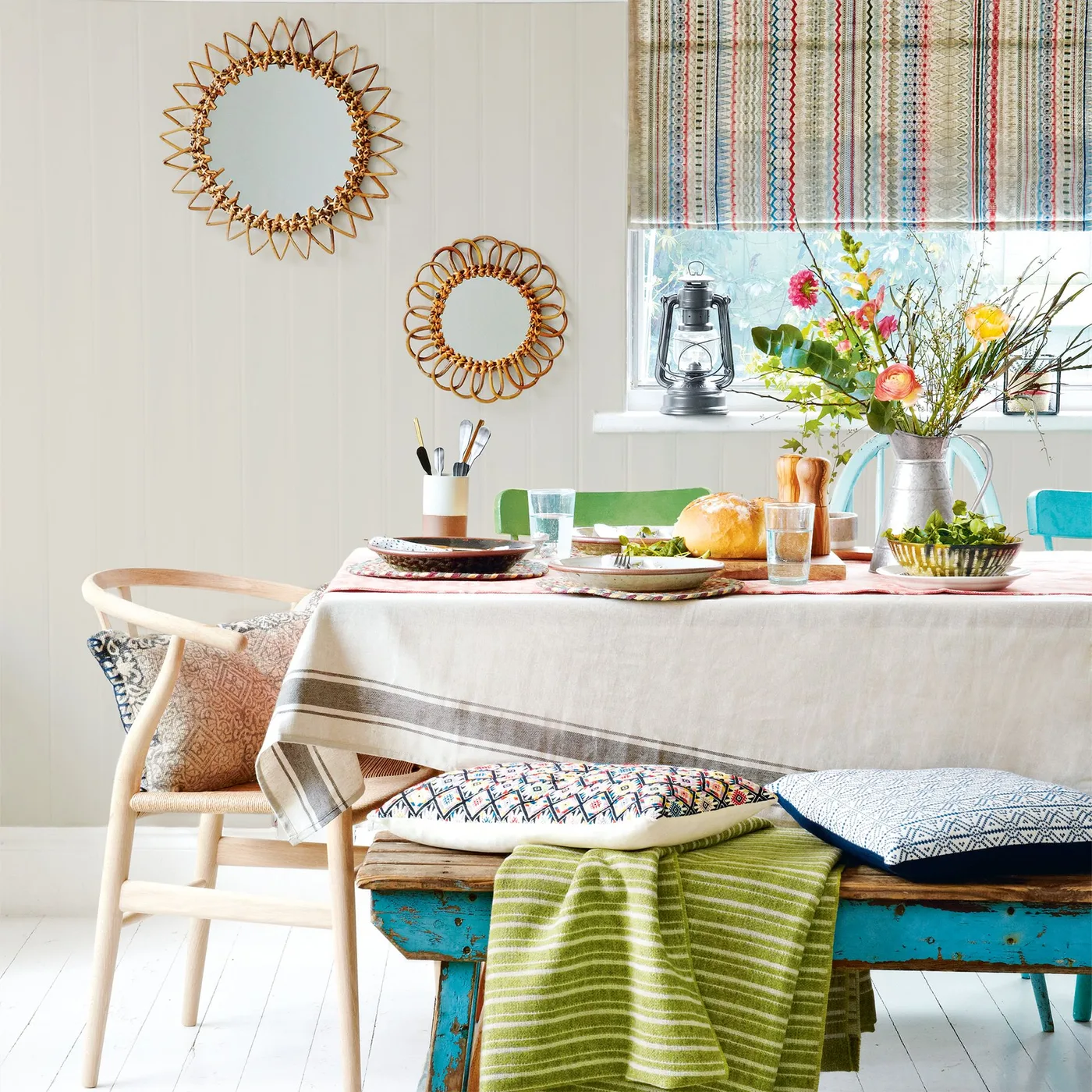
Two round mirrors with woven-looking frames sit beside a striped window blind, adding warm shapes to a pale dining wall. A turquoise bench, patterned cushions and a green throw bring color to the seating below. The mirrors differ in size and frame pattern, so the small group feels collected rather than rigid, complementing the informal table setting without covering the entire wall.
Arrange small mirrors as a group before making fixing holes, leaving enough space between the frames for their different outlines to show. Check the reflection from the dining chairs as well as the doorway. A smaller reflective area is often more useful as decoration than as a broad view of the room. Keep the surrounding wall simple if the blind and bench already carry several patterns.
IDEA 02 / 20
Balance a Sunburst With Quiet Dining Chairs
 SaveSupport Non AI Creator
Image credit: Future PLC/Dominic Blackmore
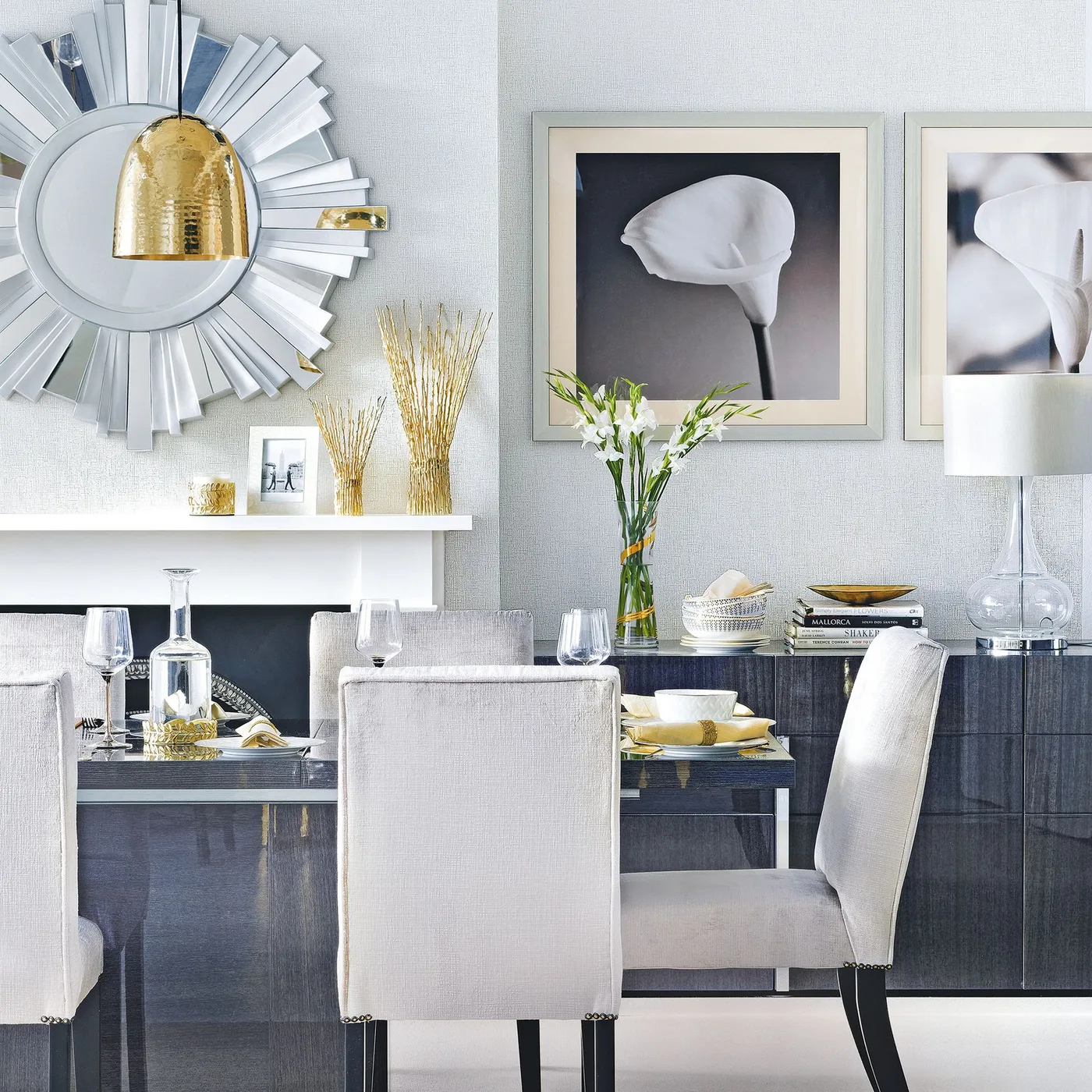
A silver sunburst mirror sits above a white fireplace beside a dark dining table and pale upholstered chairs. Its radiating frame gives the wall a strong decorative center, while black and white floral pictures keep the adjacent wall restrained. A gold-toned pendant is reflected in the mirror, showing how one reflective feature can connect the wall decoration with the lighting above the meal.
Treat a sunburst frame as a substantial wall object even when its central mirror is small. Leave room around the outer rays and check that nearby pictures do not crowd them. Look for distracting reflections of the pendant from seated eye level before deciding on height. Keep mantel objects modest, allowing the frame to remain clear, and use fixings appropriate to the mirror and wall.
IDEA 03 / 20
Add Tall Mirror Panels Behind a Dining Bench
 SaveSupport Non AI Creator
Image credit: Future PLC
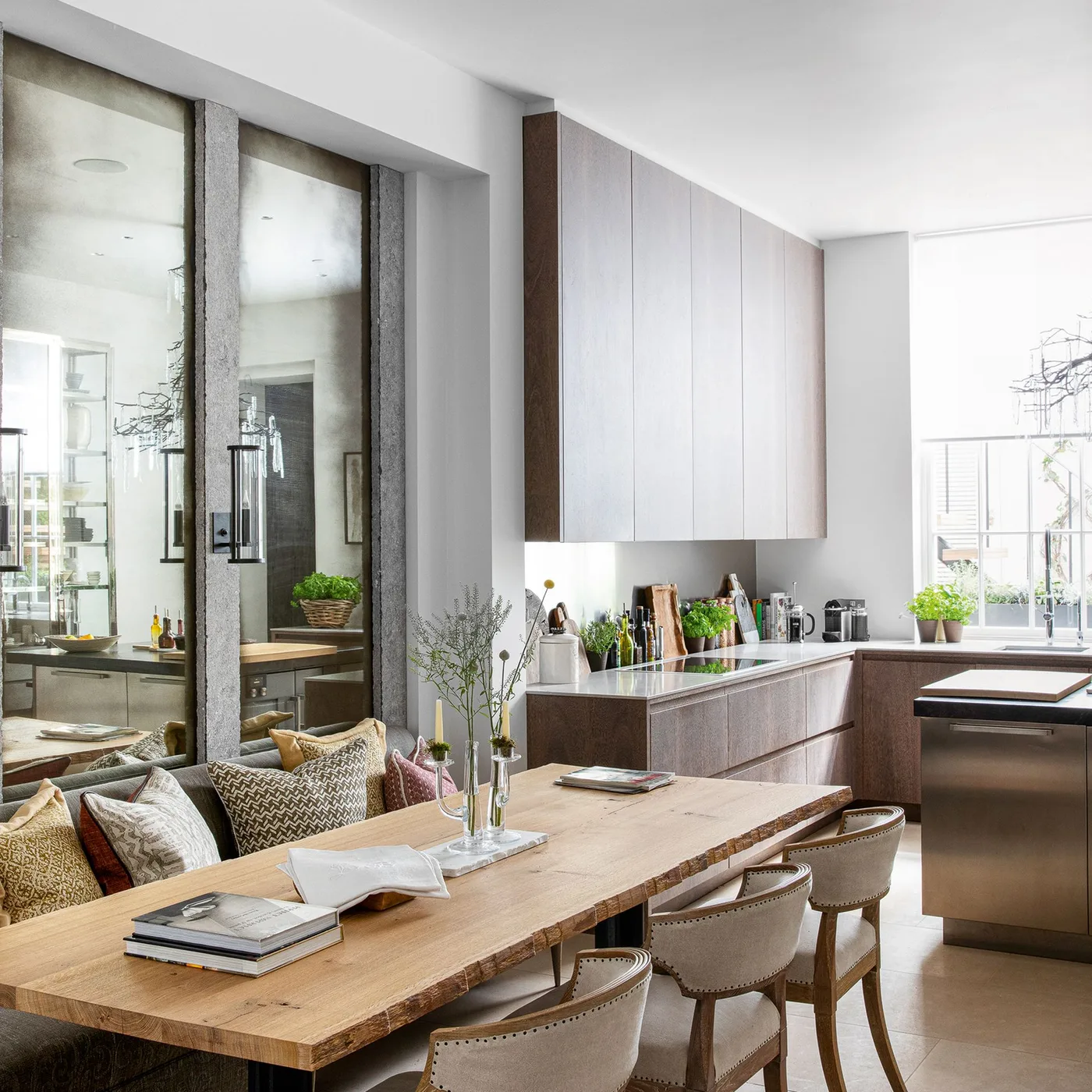
Tall mirror panels line the wall behind a dining bench in an open kitchen and dining area. Their narrow dark borders divide the reflections into clear vertical sections, while the long wood table and pale chairs form a warmer foreground. The panels repeat the room beyond, giving the bench wall a different depth without requiring a row of separate pictures above the cushions.
Plan a large mirrored wall around the seating and the objects it will reflect. Check the view from each chair, especially toward the kitchen, where everyday counter clutter may become more noticeable. Have panel support and edges planned for the installation rather than assuming a decorative recess provides enough protection. Keep bench cushions from rubbing against the glass, and leave a practical route for cleaning the lower panels.
IDEA 04 / 20
Repeat the Fireplace Shape With a Soft Arch
 SaveSupport Non AI Creator
Image credit: Future PLC/James French
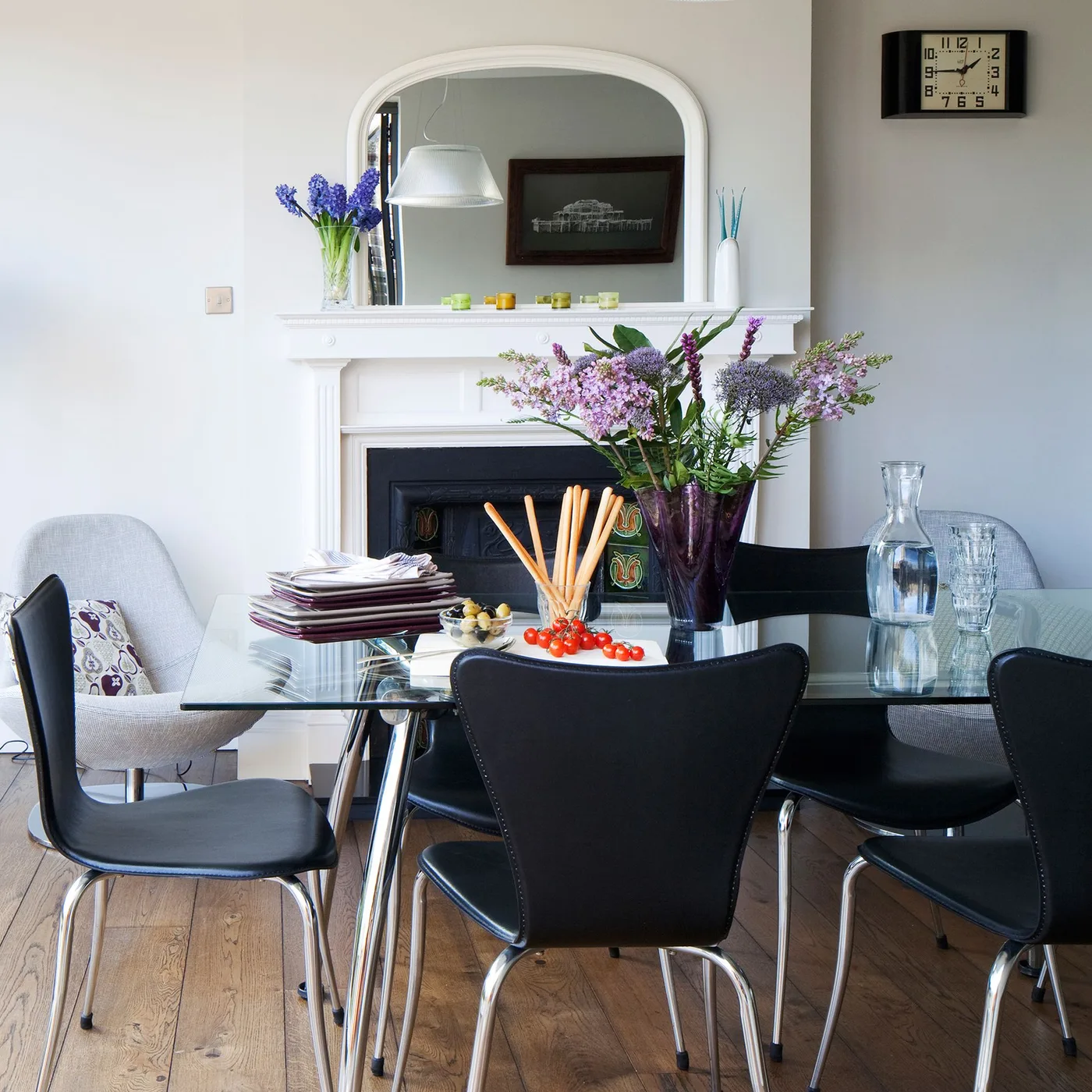
A white arched mirror sits above a white mantel behind a glass dining table and black chairs. Its rounded top softens the fireplace wall, while the matching pale frame keeps the mirror connected to the surrounding trim. Purple flowers add color at the table and mantel, with the mirror returning a view of the pendant and opposite wall rather than introducing another framed picture.
Use an arched frame when you want a gentle shape within a fairly straight dining arrangement. Check the reflected pendant at night, since a fitting that looks pleasant in daylight may become a bright point from some seats. Leave enough space between the mantel objects and the mirror’s lower edge for easy cleaning. Confirm the fixing arrangement independently of the mantel; resting against trim does not establish secure support.
IDEA 05 / 20
Mix One Mirror Into a Gallery Wall
 SaveSupport Non AI Creator
Image credit: Future PLC/Simon Whitmore
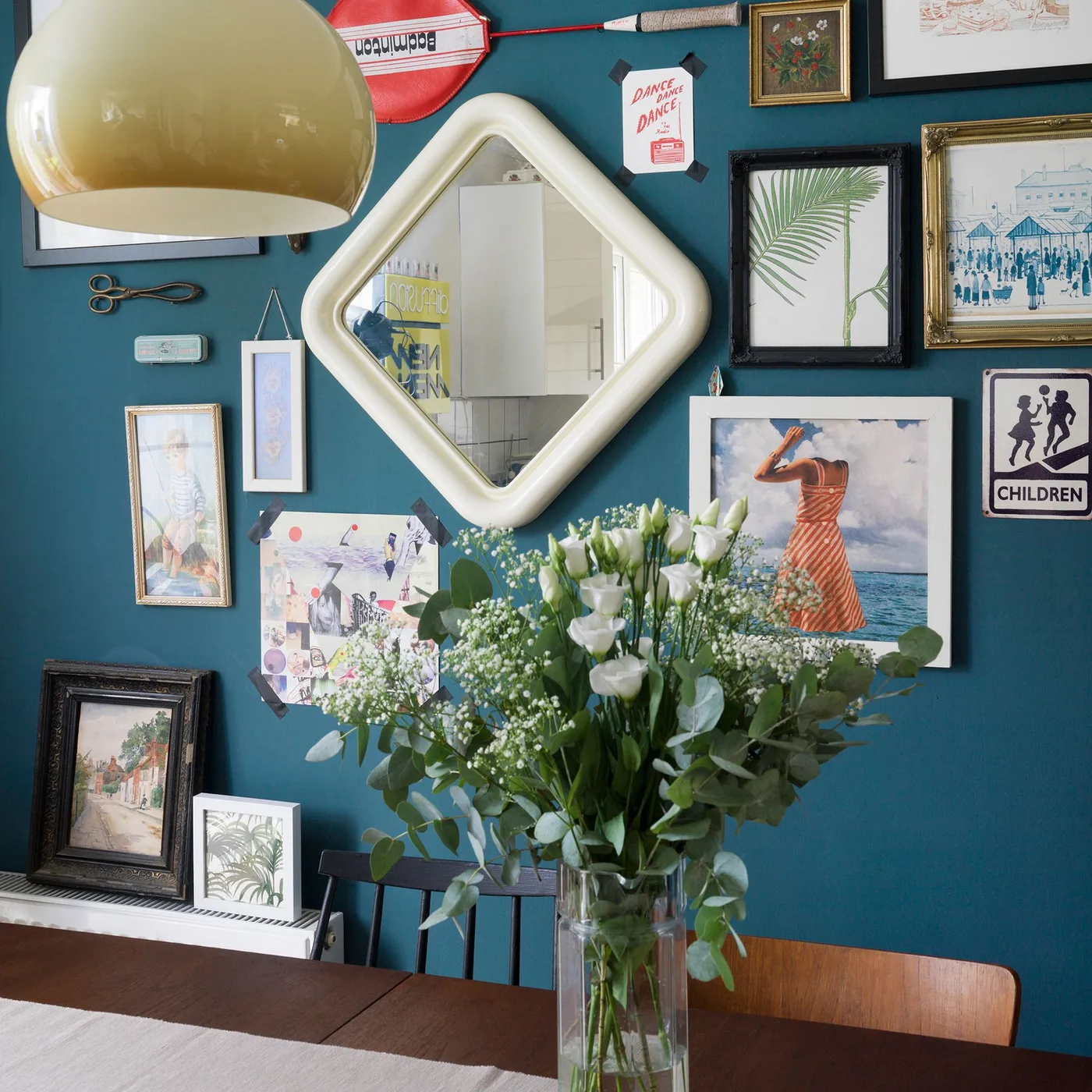
A pale rounded diamond-shaped mirror sits among framed artwork on a teal dining wall. Its reflective center offers a pause between the pictures, while the unusual outline keeps it from blending into the rectangular frames around it. Flowers on the wood table add another layer in the foreground, and the warm pendant shade repeats some of the softer colors found in the display.
Plan the mirror and artwork together so the reflection becomes part of the gallery rather than an accidental interruption. Check what appears in the mirror from the table before choosing its position. Leave a little space around its distinctive frame, and avoid placing reflective glass directly opposite an uncomfortable bright bulb. Use a paper layout to test the arrangement without repeatedly moving heavy pieces on the wall.
PART 02
Connect Mirrors With Dining Furniture
IDEA 06 / 20
Keep an Ornate White Frame Light Against the Wall
 SaveSupport Non AI Creator
Image credit: Future PLC/Colin Poole
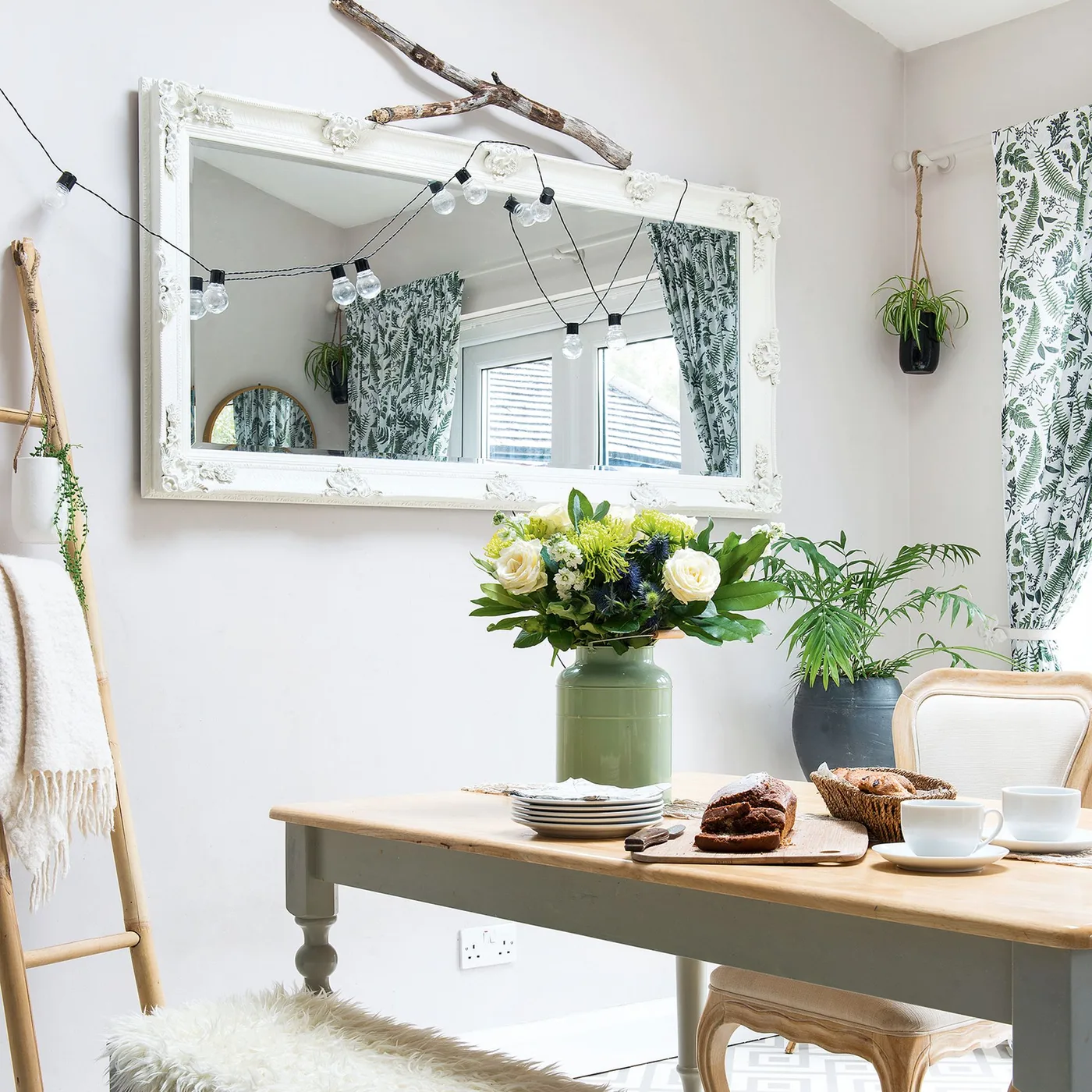
An ornate white rectangular mirror blends with the pale wall above a wood dining table, letting its carved-looking border add texture without a strong new color. Botanical curtains and plants supply green detail around the room. Festoon lights cross in front of the mirror, and their reflection repeats the small bulbs, making the wall arrangement feel lively even though the frame itself is quiet.
A pale ornate frame can work when nearby textiles already provide most of the pattern. Keep the reflected lighting comfortable from the chairs and route any decorative-light cable according to its instructions. Avoid using the mirror frame as an improvised electrical support. Check the mounting separately, and keep table flowers low enough that they do not obscure the lower reflective area or conversation across the table.
IDEA 07 / 20
Frame the Serving Corner With a Shutter Mirror
 SaveSupport Non AI Creator
Image credit: Future PLC/Simon Whitmore
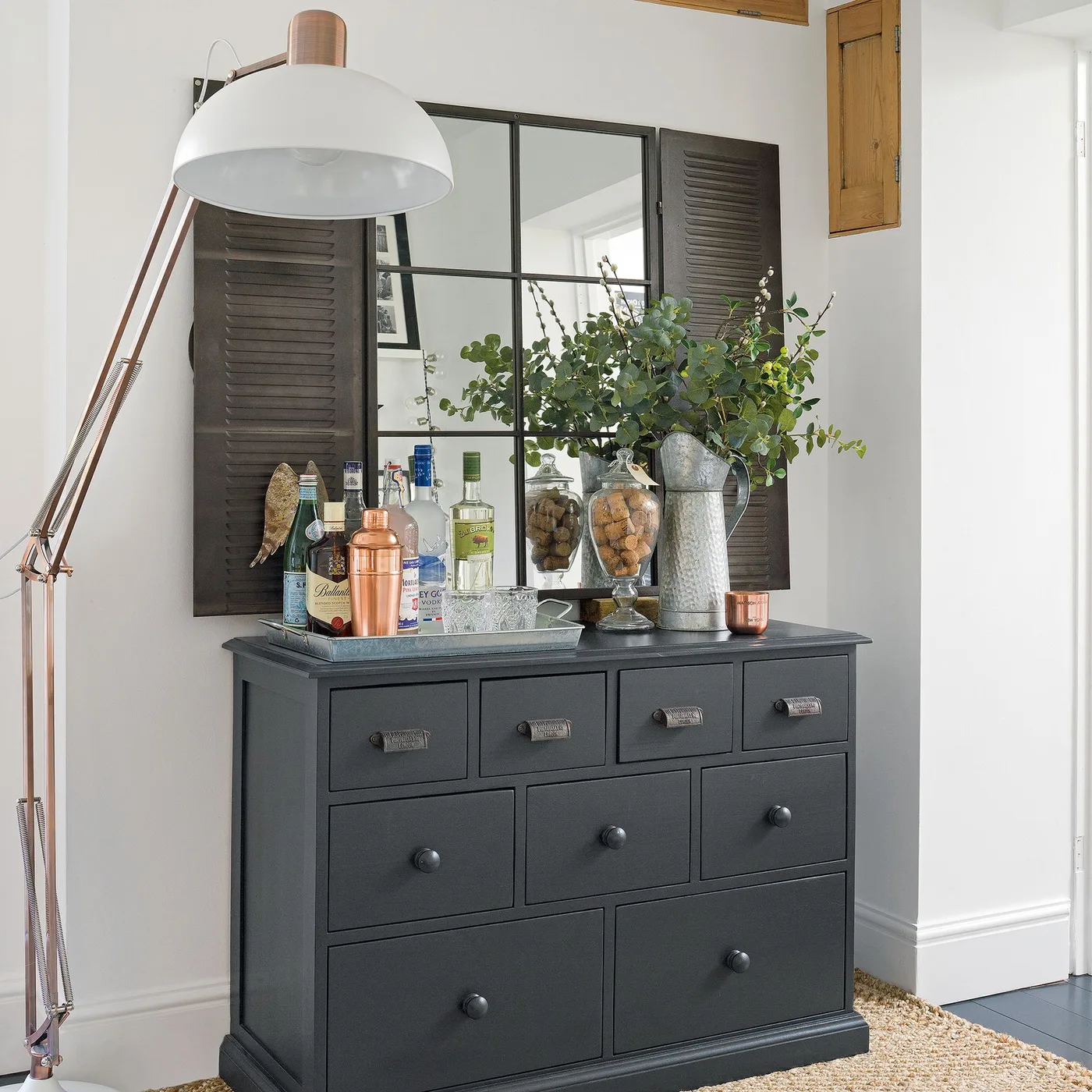
A dark mirror with shutter-like side panels sits above a gray drawer cabinet arranged with bottles and glassware. A large pale floor lamp adds a rounded shape beside the cabinet, while foliage softens the reflective center. The mirror gives this drinks and serving corner a defined background, echoing the darker furniture without filling the small surface with additional objects that would compete with the bar arrangement.
Check a mirror above a serving cabinet for reflections of nearby lamps and glassware. A busy surface can appear twice as full, so group bottles on a tray and leave space for actually pouring drinks. Keep foliage from rubbing against the mirror when moved. Secure the frame using suitable wall fixings, and leave enough access to clean the glass without shifting every object on the cabinet.
IDEA 08 / 20
Let a Radiating Frame Decorate a Plain Wall
 SaveSupport Non AI Creator
Image credit: Future PLC/David Giles
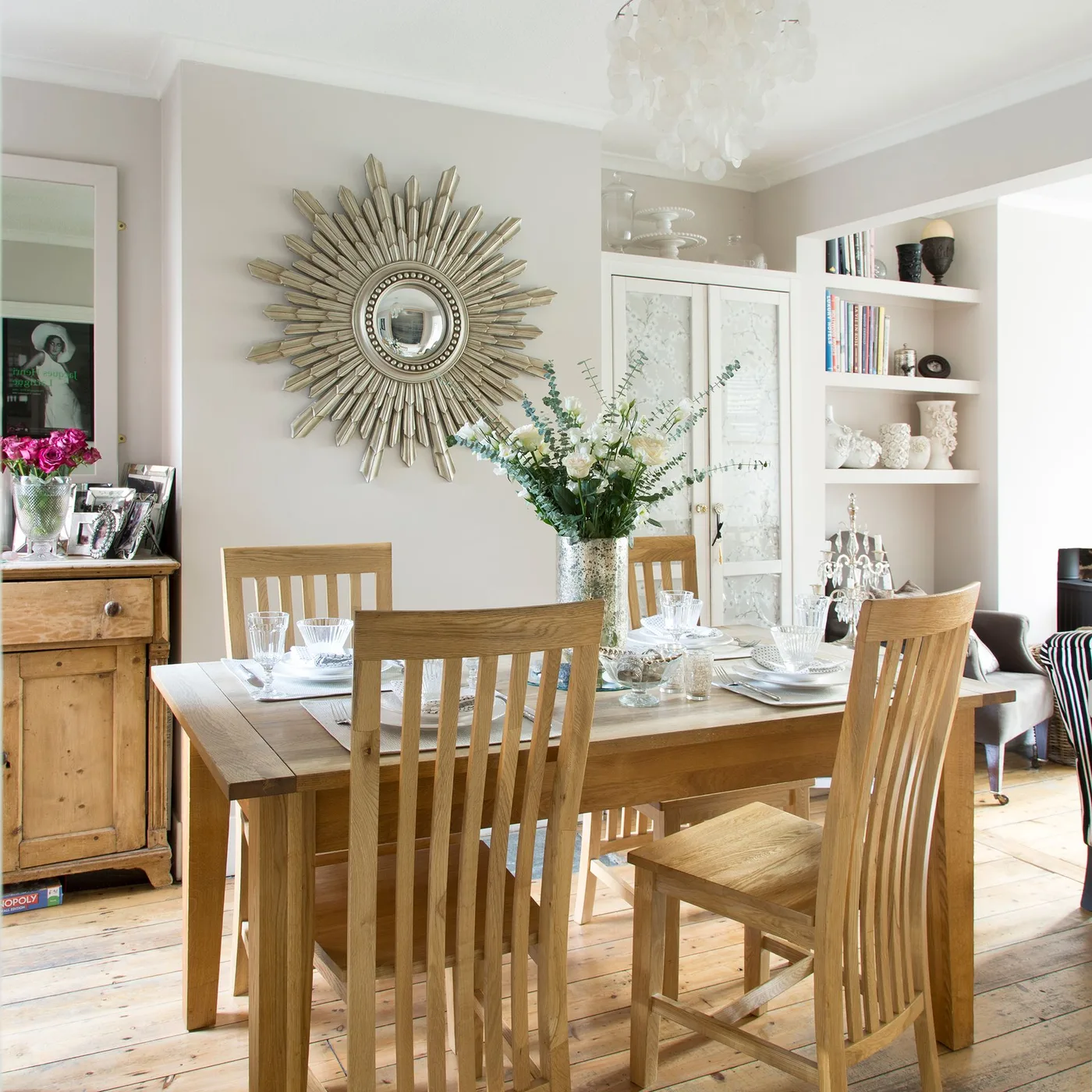
A large metallic sunburst frame supplies the main wall decoration above a wood dining table and tall-back chairs. White glazed storage and open bookshelves fill the adjacent area, while the pale wall keeps the mirror’s outline easy to see. The small reflective center is surrounded by many projecting rays, giving the dining room a decorative focal point without adding another large block of color.
Choose a sunburst for its whole frame size, not just the central glass. Its projecting edges need space away from shelving, doors and nearby objects. Check the reflection from normal seated height before hanging it. Keep the table arrangement restrained when the frame is already elaborate, and use the mirror maker’s recommended cleaning approach so dust can be removed from the detailed border without damaging its finish.
IDEA 09 / 20
Use a Dark Rectangle Beside a Round Table
 SaveSupport Non AI Creator
Image credit: Future PLC/Rachael Smith
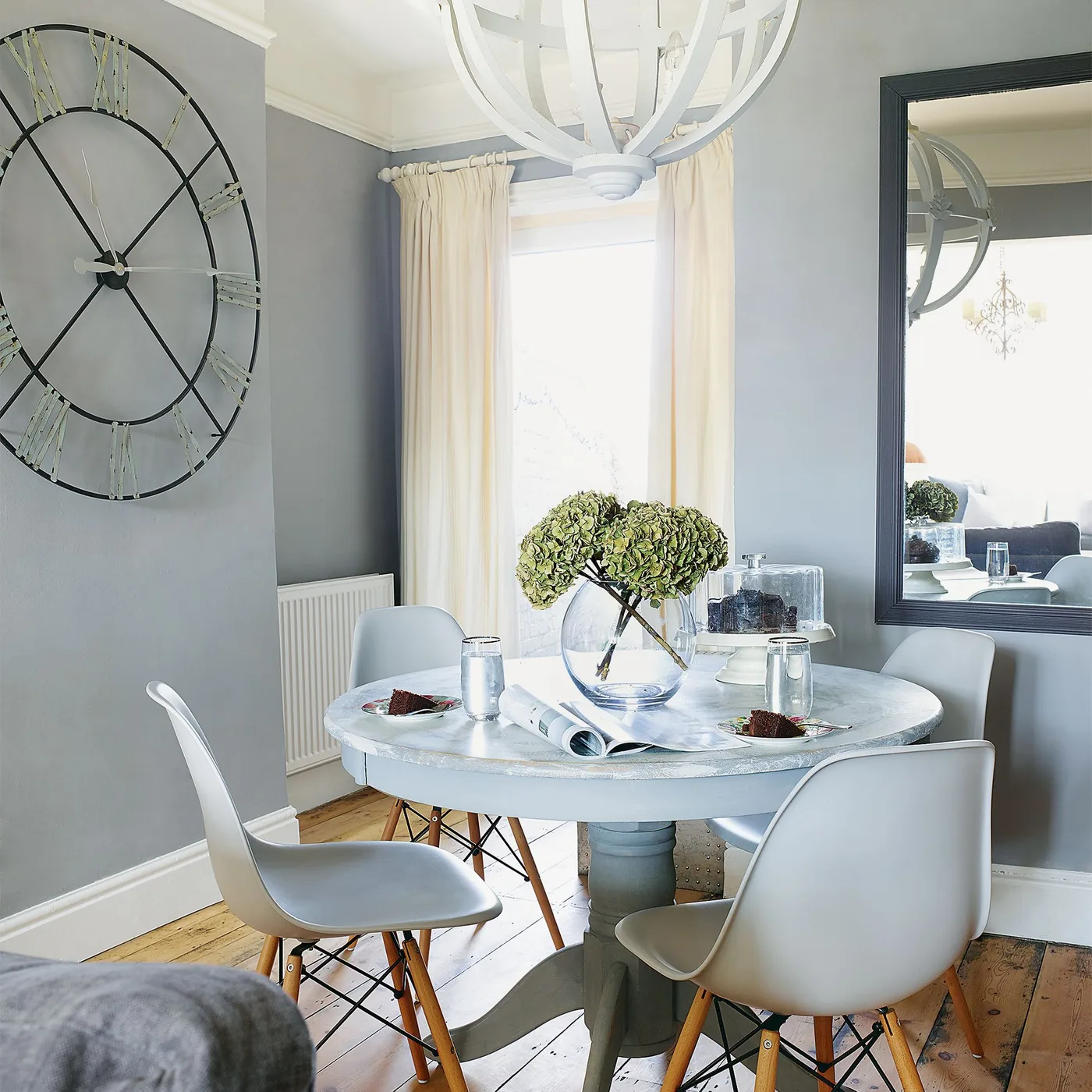
A dark rectangular mirror stands out beside a round pale dining table in a gray room. An oversized open clock adds a second strong wall outline, while pale molded chairs keep the seating quieter. The mirror returns a view of the pendant and table arrangement, making the narrow wall beside the window feel more connected to the dining group than a plain stretch of paint.
Balance a mirror with nearby wall objects by considering their combined size and spacing. A large clock and dark frame can dominate a small corner if they sit too close together. Check whether the reflection shows the part of the room you enjoy rather than a crowded surface. Leave space for chairs to move comfortably below, and assess pendant glare from the seat nearest the mirror.
IDEA 10 / 20
Bring a Window-Like Arch to Deep Blue Walls
 SaveSupport Non AI Creator
Image credit: Future PLC/Lizzie Orme
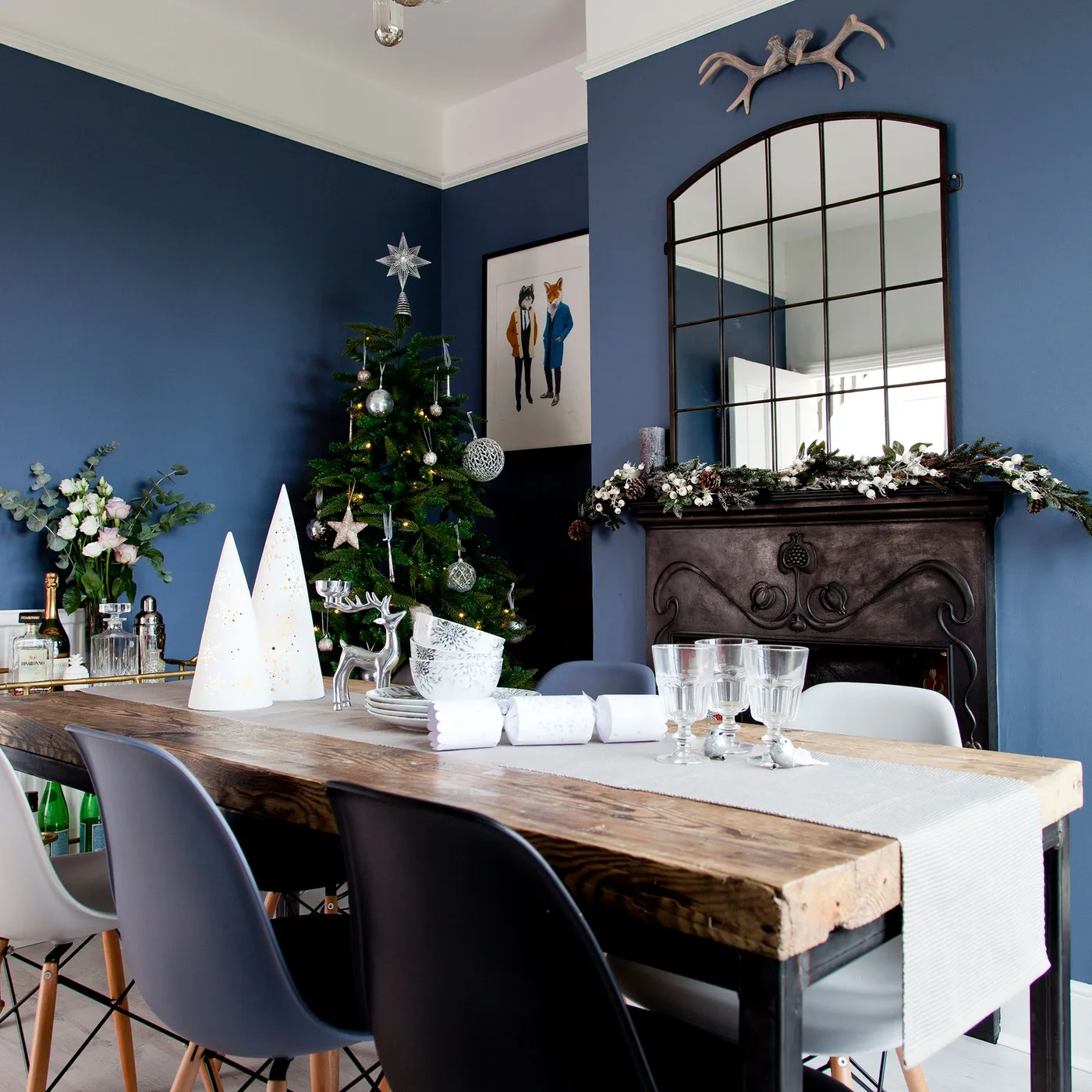
A dark arched grid mirror hangs above an ornate fireplace against deep blue dining walls. Seasonal greenery runs along the mantel, while a wood table and dark chairs give the room a substantial base. The mirror’s divided surface resembles a window outline, breaking the reflection into smaller sections and providing a tall center above the fireplace without introducing another large artwork beside the holiday display.
Check the mirror with both everyday and seasonal mantel arrangements. Decorations can cover the lower reflection or create awkward overlaps with the grid, so leave the central surface clear enough to read. Keep any greenery and lights safely arranged according to their use instructions. Use suitable fixings for the frame, and assess the room from seated height before choosing how high the arch should rise above the mantel.
PART 03
Try Circles, Arches and Panels
IDEA 11 / 20
Place a Wide Mirror Across From the Room
 SaveSupport Non AI Creator
Image credit: Future PLC
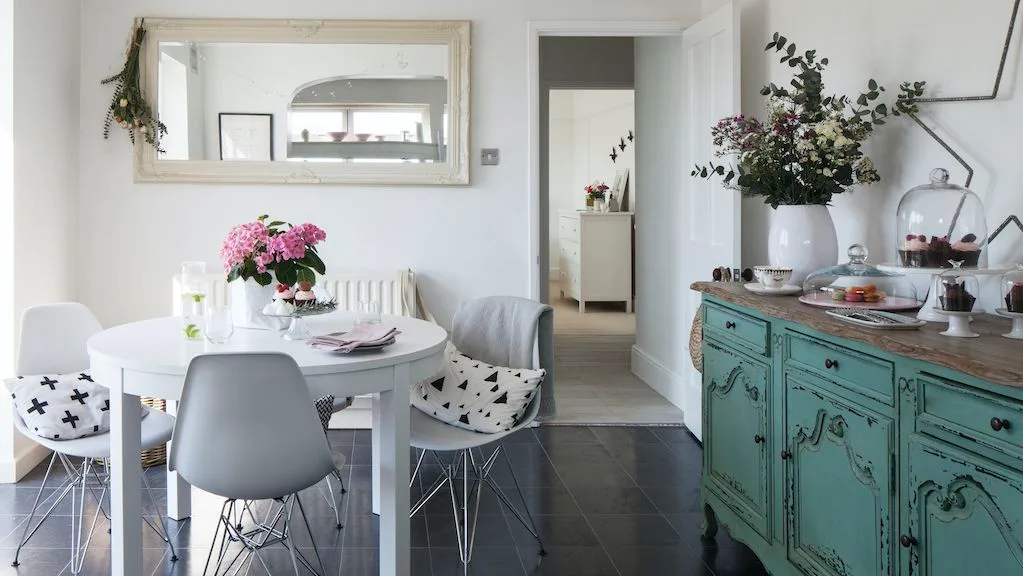
A wide pale mirror spans the wall above a small round white dining table with gray chairs. A turquoise sideboard adds color along the neighboring wall, while the mirror reflects an arched opening and parts of the room beyond. The horizontal frame gives the compact dining area a broader wall feature without adding another piece of furniture around the already closely grouped table and seating.
Try a horizontal mirror when a compact dining wall needs a clear feature, but measure the available wall and chair movement first. Reflection changes the visual impression rather than the physical space around the table. Check what the opposite doorway reveals and avoid reflecting a cluttered passage. Keep the lower edge accessible for cleaning, and confirm that the wall can support the selected frame with the appropriate mounting hardware.
IDEA 12 / 20
Echo Rounded Pendants in a Simple Circle
 SaveSupport Non AI Creator
Image credit: Future PLC
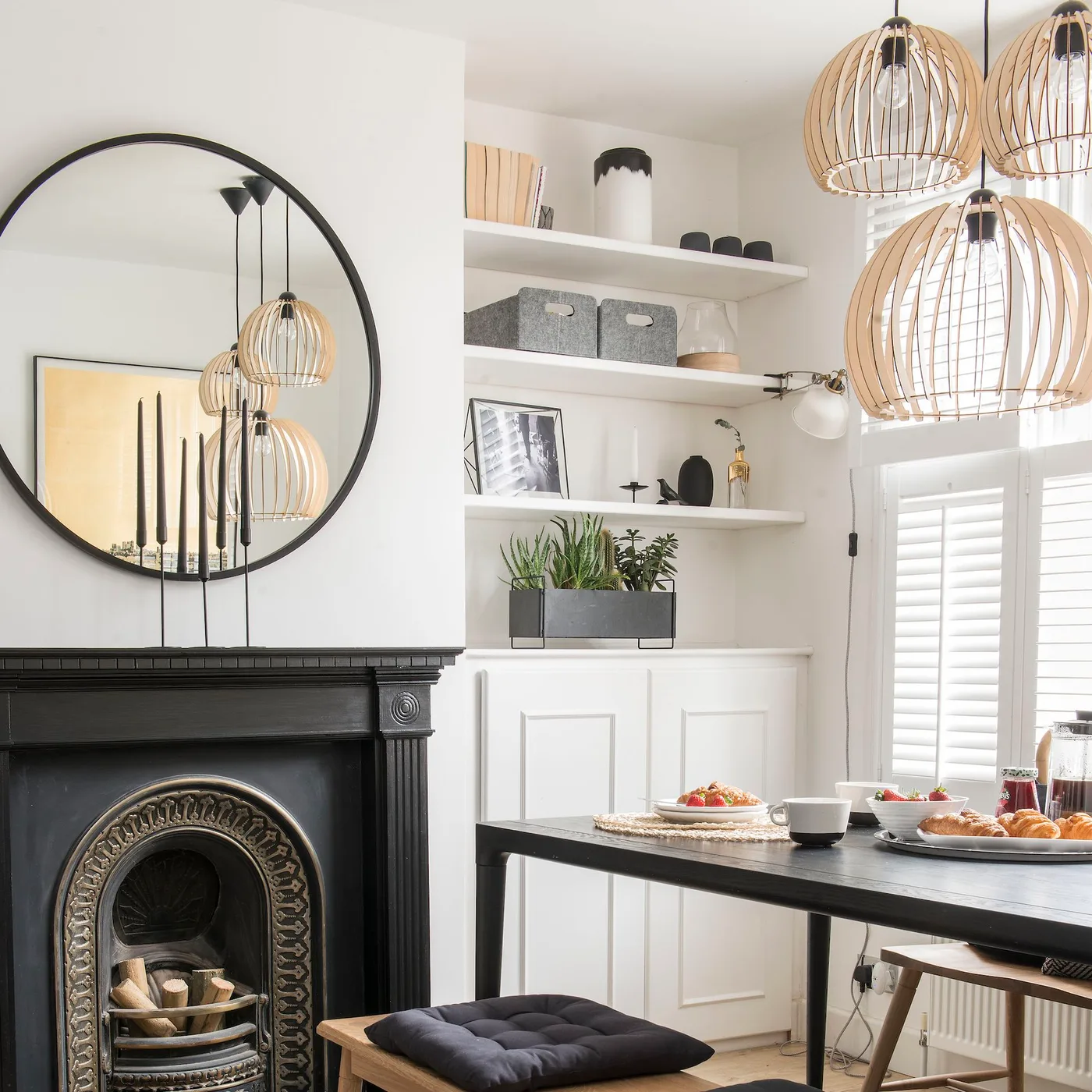
A large black round mirror sits above a dark fireplace, repeating the rounded shapes of the open wood-toned pendant shades nearby. White shelving and cabinetry keep the wall bright, while the table and cushioned bench add a stronger dark line below. The mirror reflects the pendant group and artwork, bringing familiar room details into the fireplace wall without adding a second decorative frame pattern.
A simple circular frame can connect several rounded features without making the wall too busy. Check the reflection with the lights on, because the repeated pendant shapes may become more prominent at night. Keep tall candleholders from obscuring too much of the mirror’s center. Plan mounting for the mirror itself, and leave enough room around the outer edge to clean it without reaching across crowded shelving.
IDEA 13 / 20
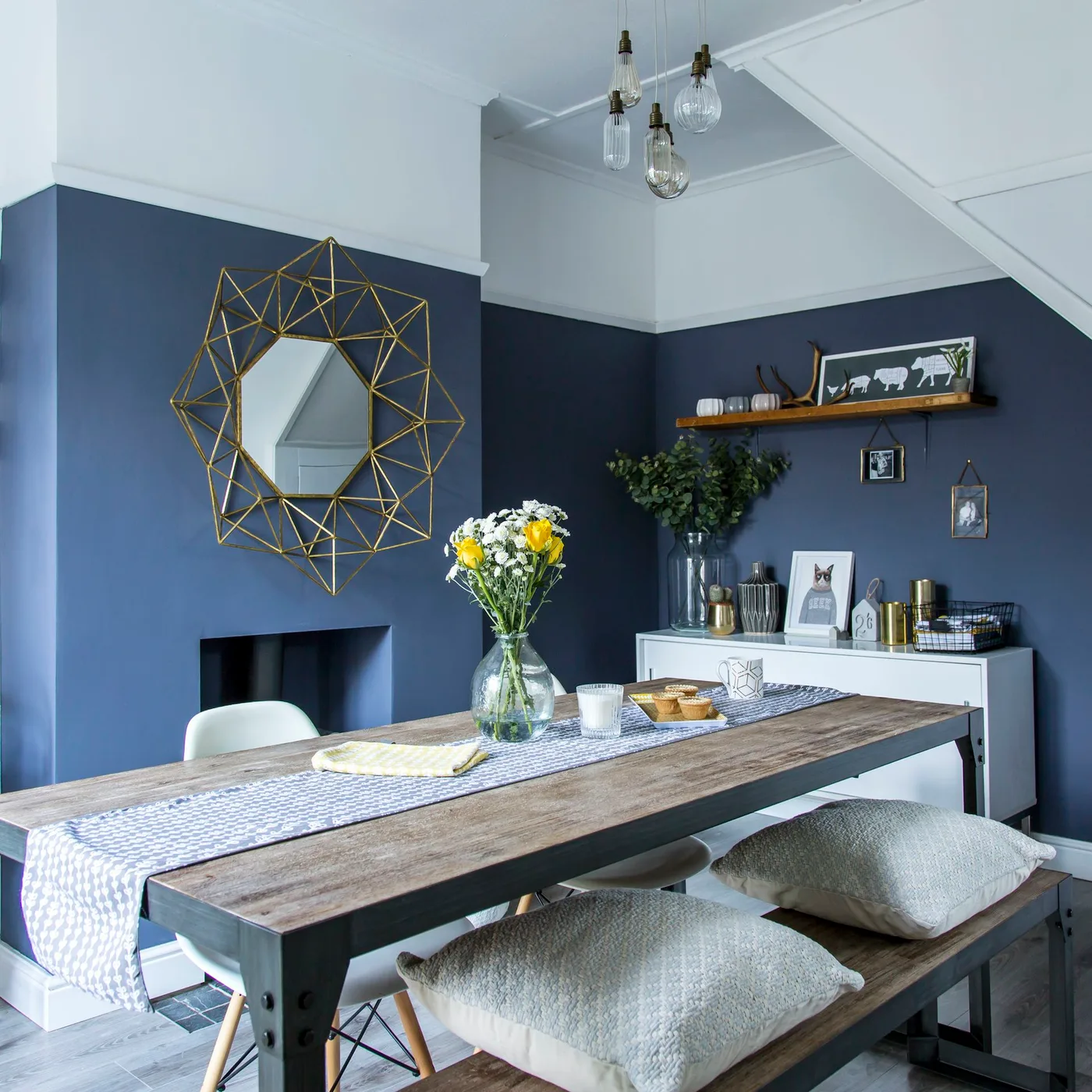
Give a Dark Wall a Geometric Frame
 SaveSupport Non AI Creator
Image credit: Future PLC
A gold-toned geometric frame stands out above the fireplace in a navy dining room. Its angular outer structure surrounds a smaller reflective center, while a long wood table and cushioned bench create straight lines below. A pale sideboard and short wall shelf add practical storage nearby, so the mirror supplies a decorative focus without requiring the entire dining wall to become a display.
Use a geometric frame where the wall color gives its outline room to show. Check the full width against the fireplace and nearby shelving before choosing the size. The reflective center is smaller than the overall object, so judge it as decoration as well as a mirror. Keep table flowers modest, and choose a fixing and cleaning method suited to the projecting frame rather than treating it as a flat picture.
IDEA 14 / 20
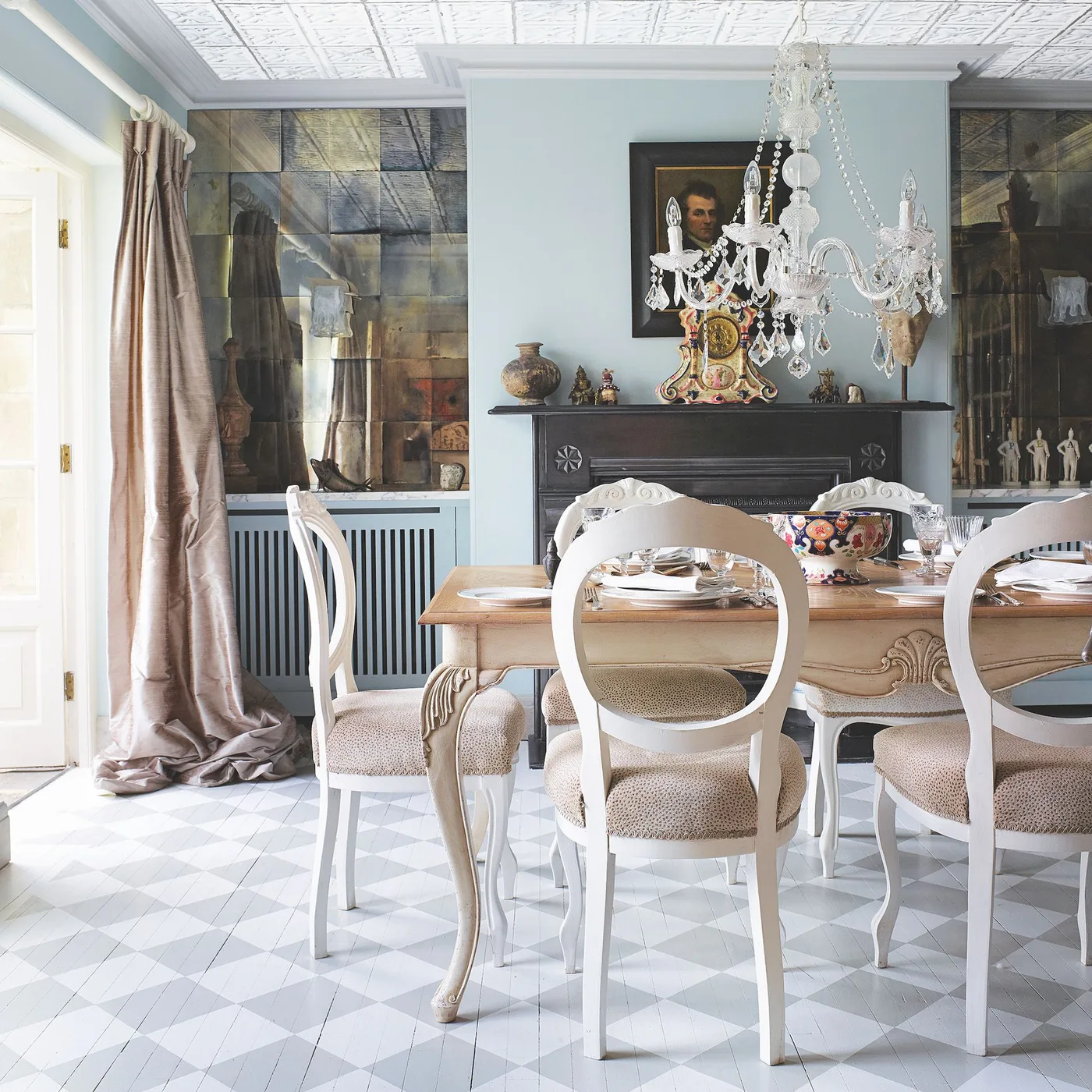
Use Aged-Looking Panels Around a Fireplace
 SaveSupport Non AI Creator
Image credit: Future PLC
Mottled mirror panels sit on either side of a black fireplace in a dining room with pale ornate chairs. A hanging chandelier and patterned floor add detail above and below, while the panels reflect the room through a softer, less uniform surface. Their placement creates a wider decorative backdrop around the fireplace without replacing the portrait and objects arranged in its central section.
Choose a mottled mirror finish for its appearance rather than expecting the clarity of a plain mirror. Inspect a sample if possible so the amount of variation suits your room. Keep the surrounding table and mantel arrangement manageable, since several reflective surfaces can make decorative objects feel more numerous. Have large panels installed appropriately and follow the supplier’s care advice; do not try to remove intentional finish variation as if it were dirt.
IDEA 15 / 20
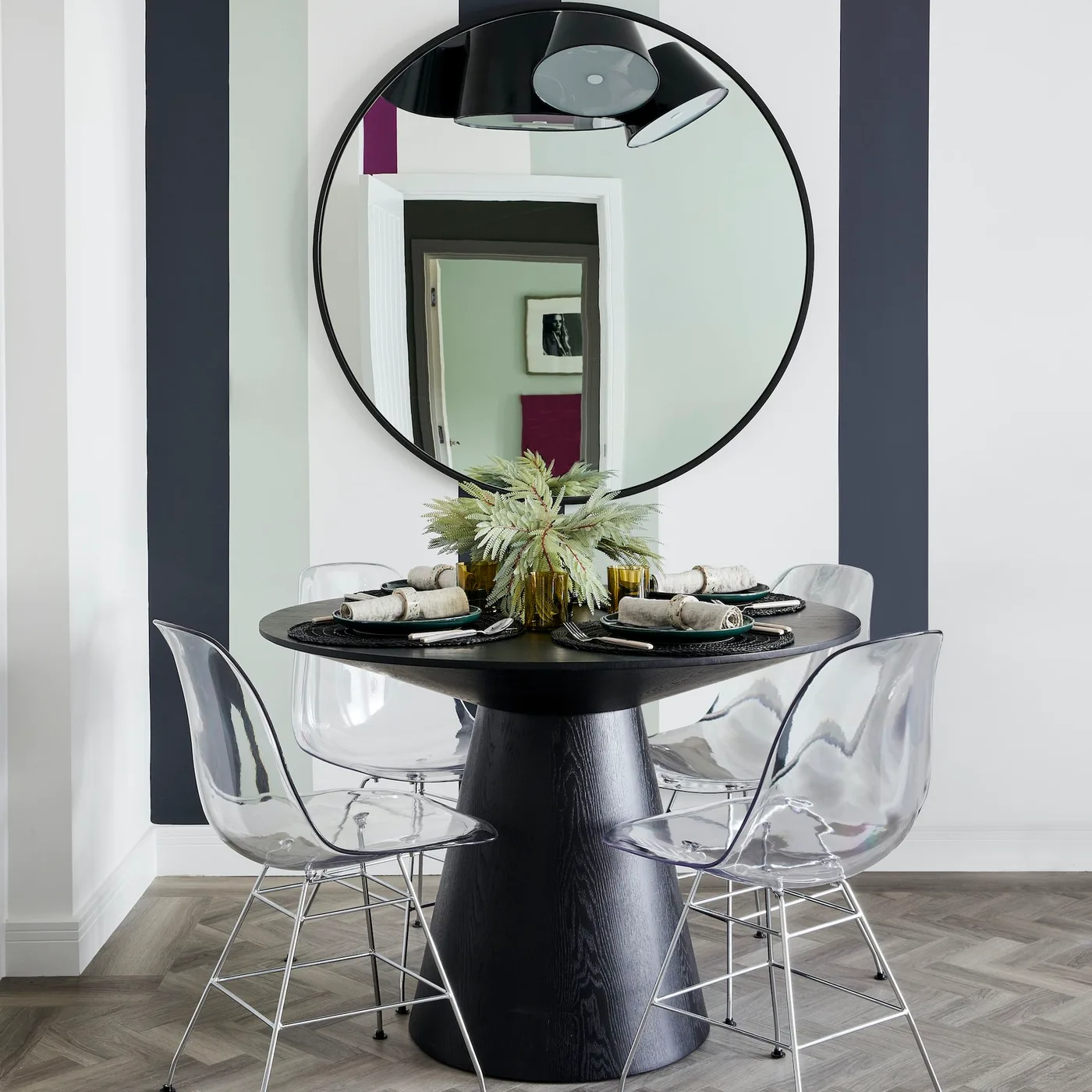
Repeat a Black Round Table on the Wall
 SaveSupport Non AI Creator
Image credit: Vesta
A large black round mirror repeats the shape of a small black round dining table below. Clear chairs leave the table outline easy to see, while dark vertical wall stripes frame the arrangement on either side. The mirror returns a view of the doorway and hanging light, adding another circular feature to a compact dining corner without placing more furniture around the seats.
Check the mirror diameter against both the table and the wall stripes so the circles feel related without crowding the corner. Look at the reflected doorway from each chair, especially if it opens onto another strongly colored room. Keep the centerpiece low enough for conversation. Clear chairs still need their normal pull-out space, so the mirror should improve the view while the furniture arrangement remains practical.
PART 04
Make the Placement Work Every Day
IDEA 16 / 20
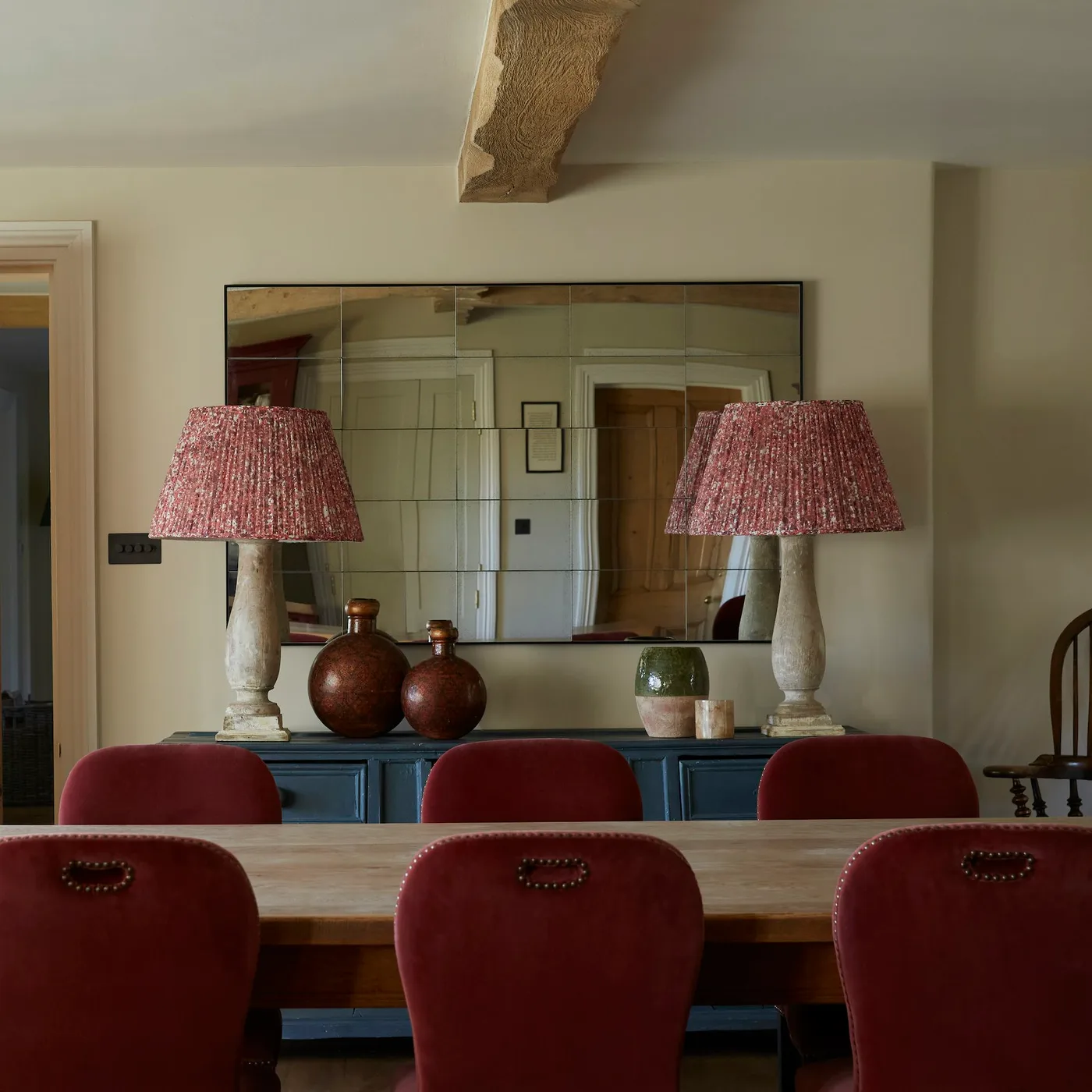
Balance a Wide Mirror With Two Lamps
 SaveSupport Non AI Creator
Image credit: Fentiman Design
A wide rectangular mirror hangs above a blue sideboard between two lamps with red-patterned shades. Red dining chairs repeat the color in front, while the mirror reflects the wood ceiling beam and opposite wall. The arrangement gives the dining room a balanced serving backdrop, with the lamps marking the ends and the reflective center keeping the large wall feature from becoming one solid block.
Set the lamps and mirror out as one arrangement before fixing the frame. Check whether the shades cover too much of the reflection and whether the mirror returns an uncomfortable view of bright bulbs. Keep a useful serving area between the lamps instead of filling the whole sideboard with decoration. Use a suitable mounting system for a broad frame, and leave enough space to clean behind the lamps.
IDEA 17 / 20
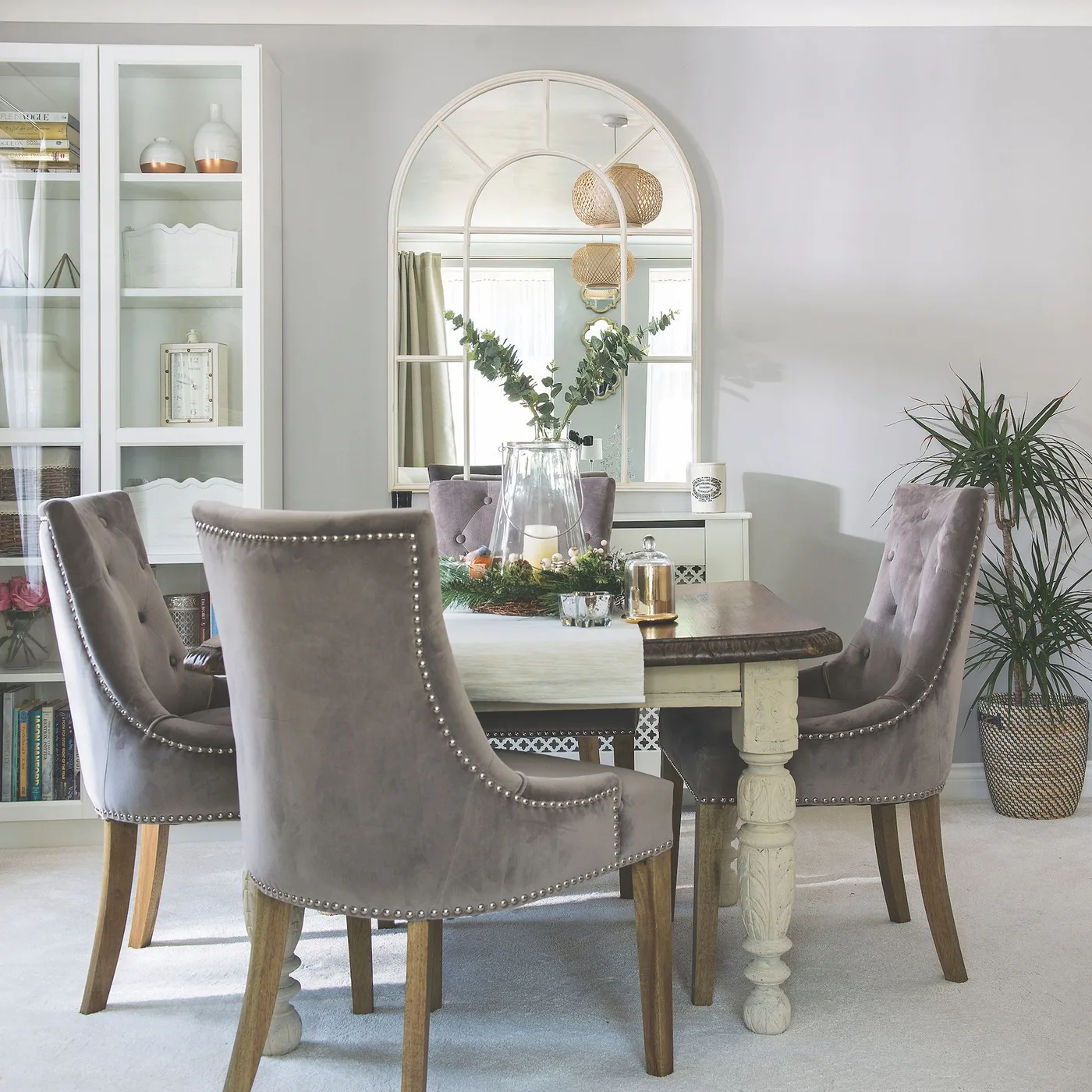
Put a Pale Arched Mirror Beside Display Storage
 SaveSupport Non AI Creator
Image credit: Future PLC
A pale arched grid mirror hangs beside a glazed display cabinet behind a dining table with gray upholstered chairs. Its curved top softens the cabinet’s straight sides, while the divided glass repeats the nearby storage’s framed doors. A woven pendant appears in the reflection, connecting the mirror with the eating area without adding another strong color to the room’s quiet pale and gray palette.
Compare the mirror with nearby glazed storage so their framed surfaces complement each other rather than creating a crowded pattern. Check the reflected pendant from the chairs and keep the table centerpiece from hiding the lower glass. Leave a practical gap between the mirror and cabinet for cleaning and door operation. Use wall fixings suited to the frame and keep tall objects from leaning against its surface.
IDEA 18 / 20
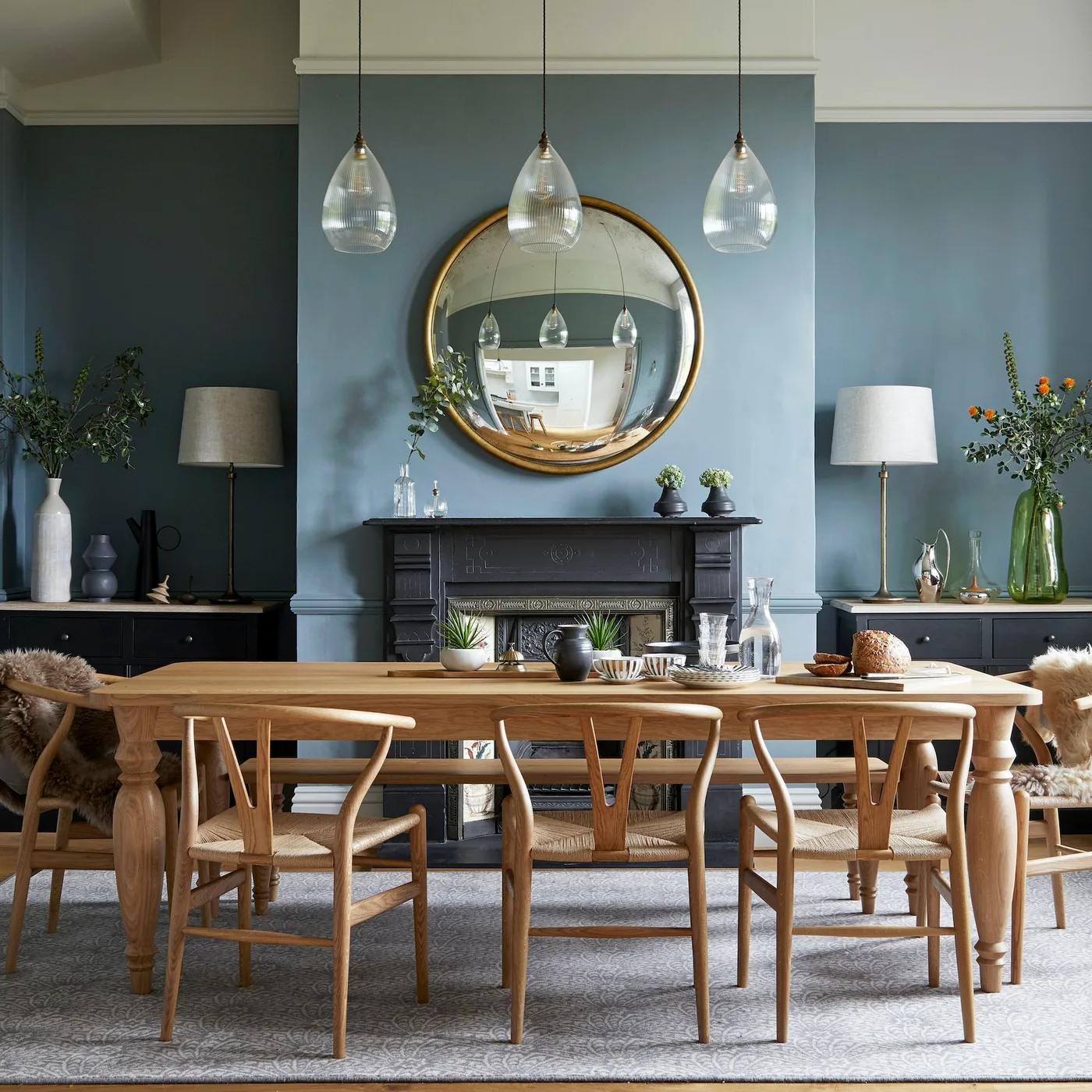
Center a Round Mirror Between Side Lamps
 SaveSupport Non AI Creator
Image credit: Fiona Duke / Anna Stathaki
A gold-toned round mirror centers the wall above a black fireplace, with lamps on dark cabinets to either side. Clear pendants hang in front of the mirror and long wood table, bringing another reflective layer to the room. Blue walls provide a calm background, while wood chairs and the mirror’s warm border stop the dining arrangement from feeling entirely cool or dark.
Check the mirror, side lamps and pendants together during an evening meal. Their reflections can be attractive, but each chair should have a comfortable view without a distracting bright bulb. Keep mantel decoration modest so the circle remains clear. Center the frame around the fireplace while checking the table view separately, and use the correct mounting hardware rather than relying on the mantel to hold its weight.
IDEA 19 / 20
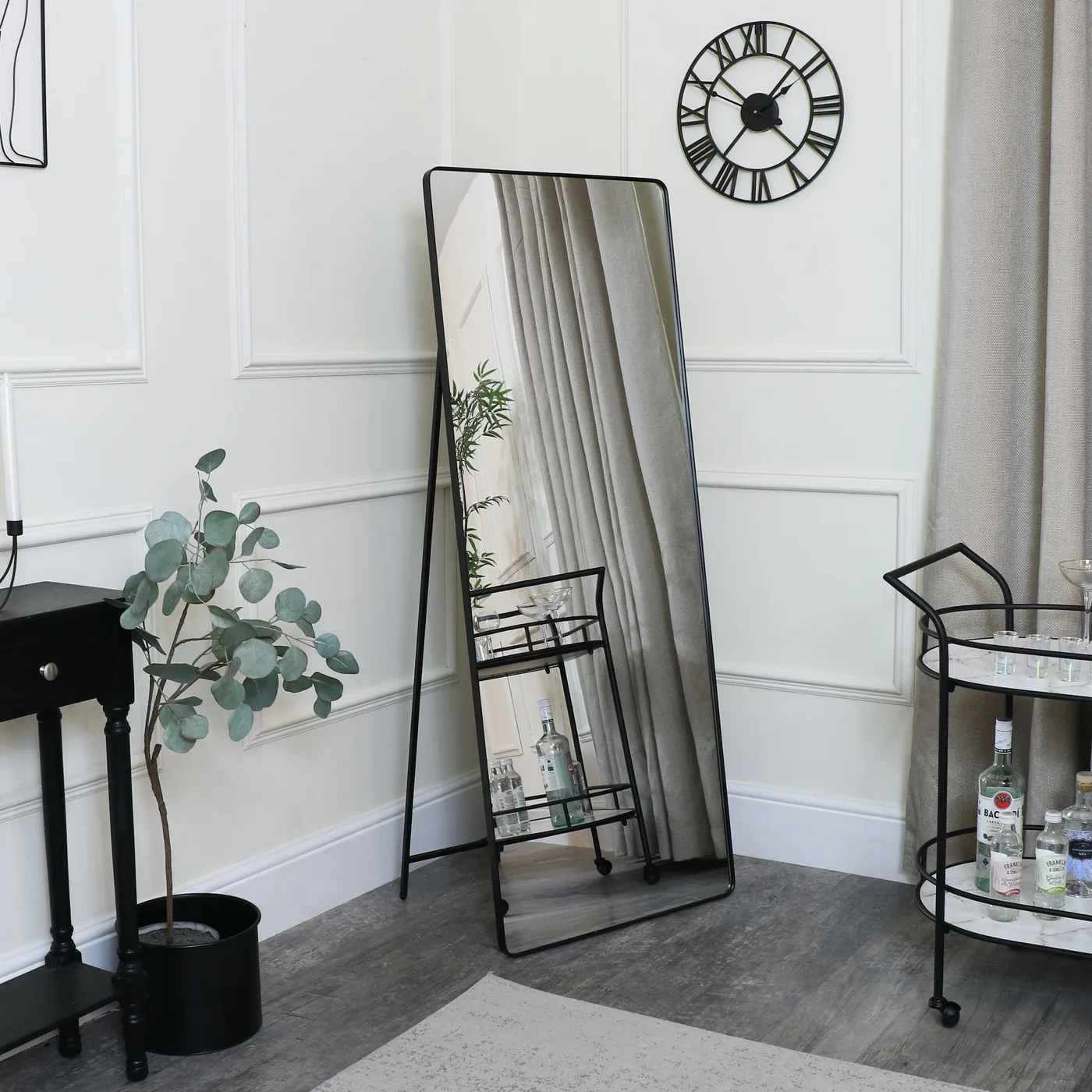
Add a Tall Reflection Beside a Drinks Cart
 SaveSupport Non AI Creator
Image credit: Melody Maison
A tall narrow black-framed mirror sits beside a black drinks cart against a pale paneled wall. It reflects the cart, nearby greenery and curtain, repeating familiar serving-corner details without adding more objects to the floor. The slim dark border links with the cart’s metal outline and the wall clock, giving this small arrangement a consistent shape and color around the reflective surface.
A floor-height mirror needs secure support appropriate to its design, even when a photograph shows it leaning. Keep it outside the cart’s movement and the routes used for serving. Check that the reflected bottles and glassware do not make the corner look overly crowded. Leave room to reach the bottom edge for cleaning, and use a wall-mounted arrangement if the available floor space would otherwise be obstructed.
IDEA 20 / 20
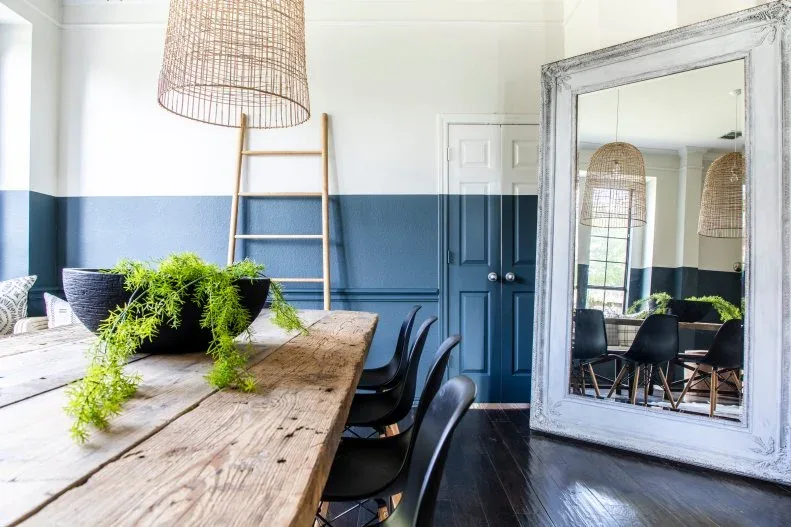
Give a Long Table a Full-Height Reflection
 SaveSupport Non AI Creator
Image credit: Photo: J. Turnbow Photography. From: Urbanology Designs
A large pale floor mirror stands beside a long wood table with black chairs in a room with blue lower walls and white above. A woven pendant and green plants add texture, while the reflection repeats the chairs and window beyond. The mirror introduces a tall, continuous view beside the dining group, contrasting with the table’s long horizontal surface and the divided wall color.
Measure the mirror’s depth and position alongside the chair pull-out area before choosing a floor arrangement. A broad frame can interrupt a narrow dining route even when its reflection makes the room feel more open. Secure it using a support system appropriate to the mirror and wall. Keep the lower glass accessible for cleaning, and check the reflected window for glare when the room is brightest.
BRING IT ALL TOGETHER
Check the Reflection Before Hanging
Hold a mirror in the proposed position or use a temporary outline to judge the frame size. Check the view from each chair and the doorway, then repeat the lighting check after dark. Keep the surrounding table, mantel or serving surface useful rather than filling every reflected space with decoration.
Use mounting hardware suited to the mirror’s weight, construction and wall. Large panels and floor mirrors need an appropriate support arrangement, and the reflective effect does not reduce the space required for chairs or serving. Follow the supplier’s cleaning guidance for both glass and frame.