Comfortable dining room lighting reaches beyond the center of the table. A sideboard lamp can help with serving, a wall light can make a dark corner feel welcoming, and a well-chosen hanging shade can support everyday meals without uncomfortable glare.
These rooms combine different light types, colors and shade shapes. Look at the whole room after dark as well as in daylight, then decide which areas need practical brightness and which can feel quieter during dinner.
PART 01
Bring Light Beyond the Table
IDEA 01 / 20
Give Dark Paneling a Clear Light Outline
 SaveSupport Non AI Creator
Image credit: Garden Trading
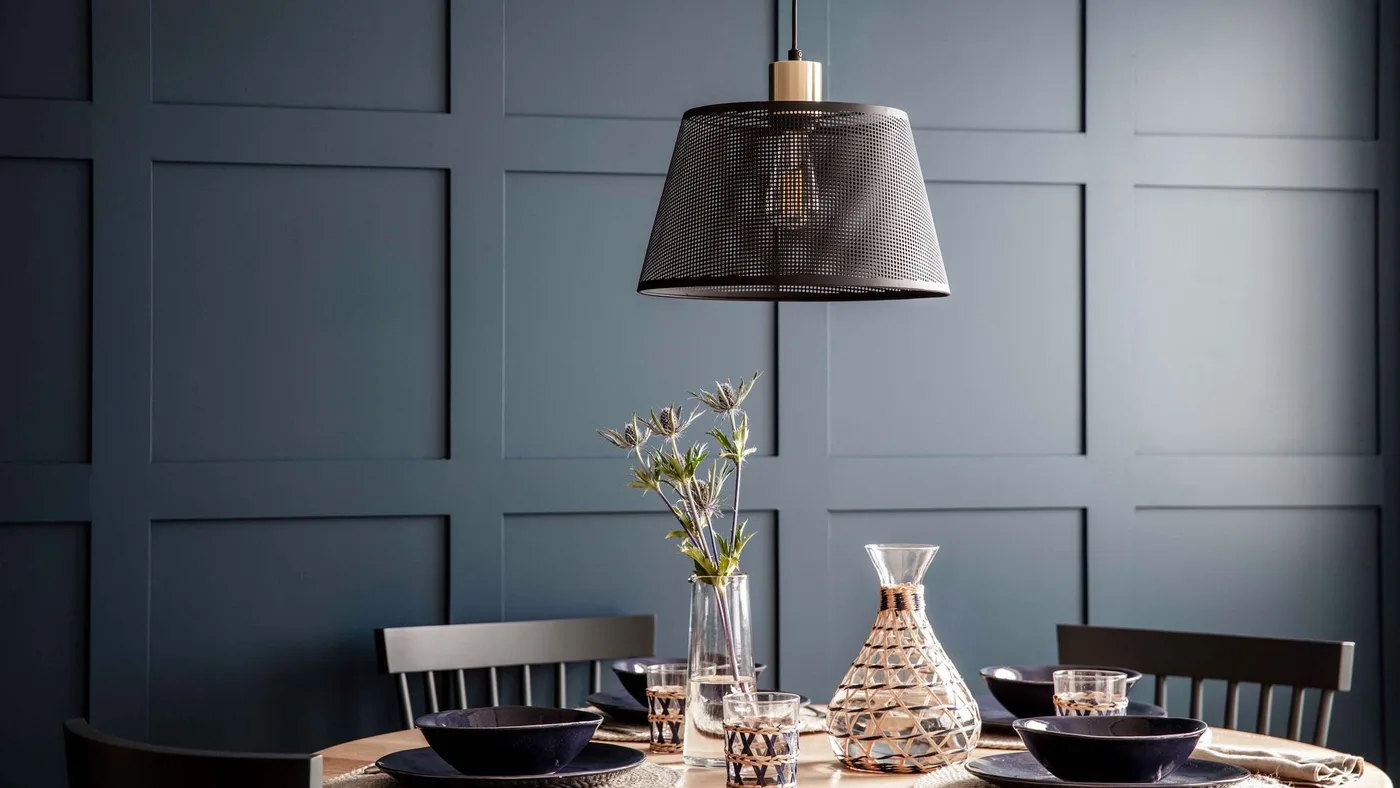
A black mesh shade hangs in front of blue-gray wall paneling, with dark chairs and tableware keeping the dining group quiet. The open shade has a clear outline without becoming a solid block against the wall. A narrow vase and patterned carafe add detail below, showing how a restrained light can sit comfortably in a room where the wall treatment already provides structure.
Check the shade in the actual room after dark before deciding how bright the dining area should be. Dark walls and dark tableware may need additional room lighting so movement around the chairs remains comfortable. Mesh can leave a bulb visible, so look at it from seated eye level. Keep the table center low, and follow the fitting instructions for suitable bulbs and cleaning.
IDEA 02 / 20
Spread Small Points of Light Around the Room
 SaveSupport Non AI Creator
Image credit: Future PLC
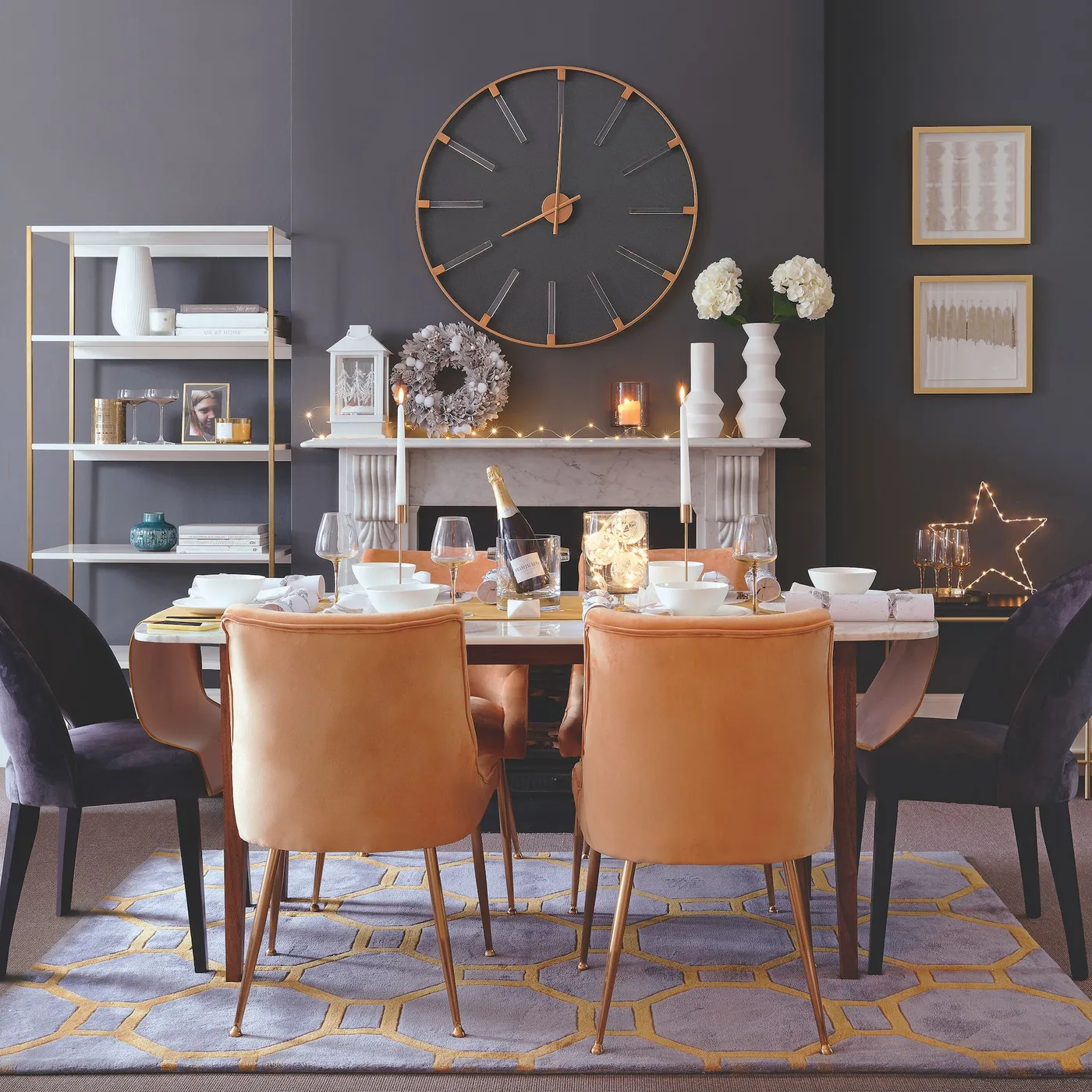
Small decorative lights and candles are spread around this dining room rather than gathered only above the table. Tan chairs stand out against the dark walls, while the mantel, shelving and table carry several warm points of brightness. The arrangement draws attention to the room’s edges as well as the meal setting, giving the large wall clock and pale fireplace a visible place in the evening scene.
Use a few separate light sources when you want the room to feel welcoming beyond the tabletop. Keep enough steady light for serving and walking, with decorative lights acting as an addition. For a similar effect without open flames, consider suitable battery candles. Keep cables out of chair routes and away from fabrics, and leave the mantel and table arrangements simple enough to maintain comfortably.
IDEA 03 / 20
Soften a Dark Room With Pale Globes
 SaveSupport Non AI Creator
Image credit: Industville
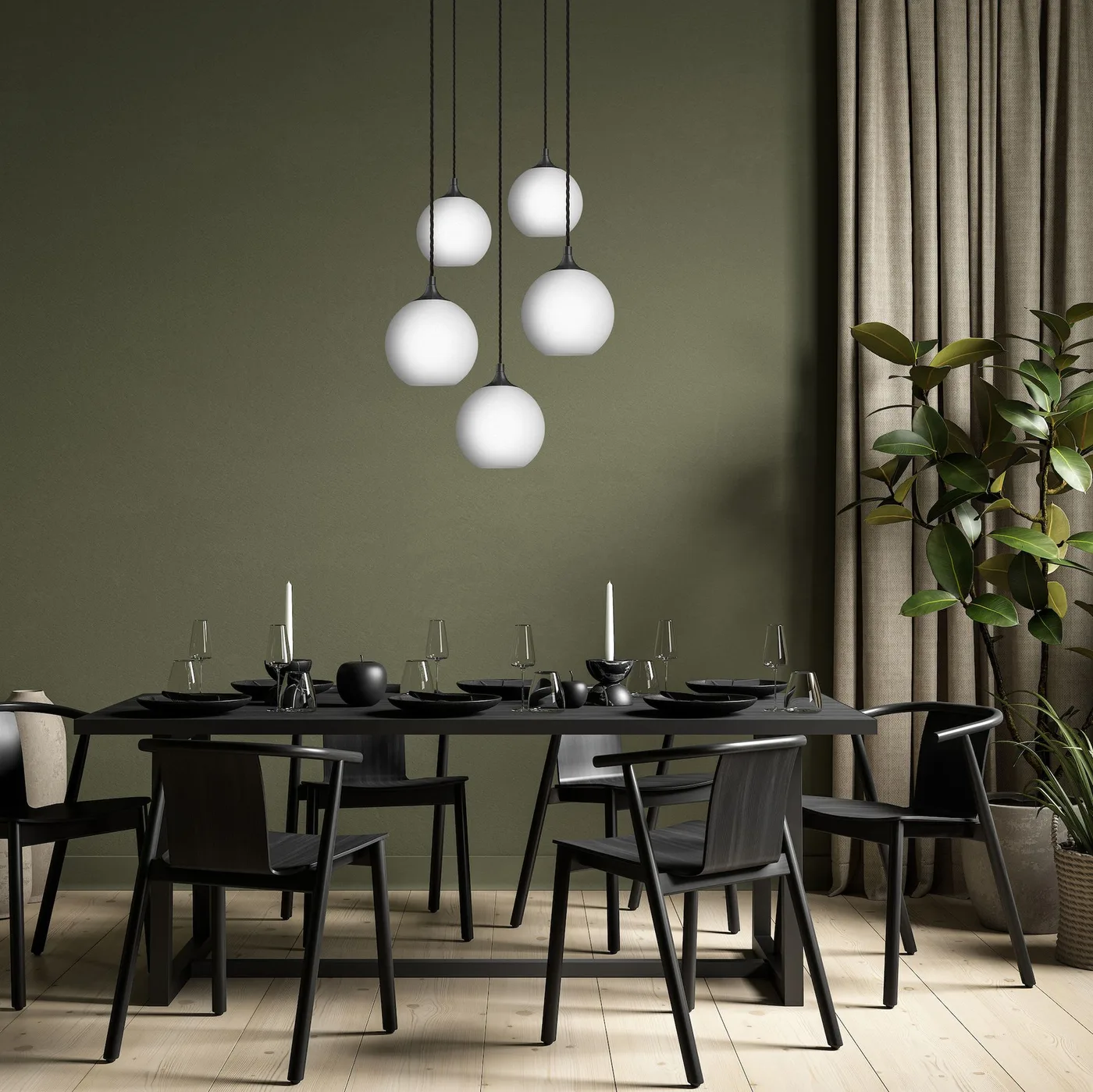
Five white globes hang at staggered heights above a black dining table against olive walls. Their pale rounded surfaces contrast with the angular dark chairs, giving the dining area a softer detail overhead. A tall curtain and plant add another layer at the side, while the fairly restrained place settings let the hanging lights remain the most noticeable feature around the meal.
Pale enclosed shades can create a gentler-looking fixture than exposed bulbs, but assess the real light output before choosing. Check whether the table ends and chair routes receive enough illumination for everyday use. A group of globes also needs a practical cleaning routine, especially where several hang at different heights. Compare the light with the wall color at night so the room does not feel unexpectedly flat or overly bright.
IDEA 04 / 20
Light the Sideboard as Well as the Table
 SaveSupport Non AI Creator
Image credit: John Lewis
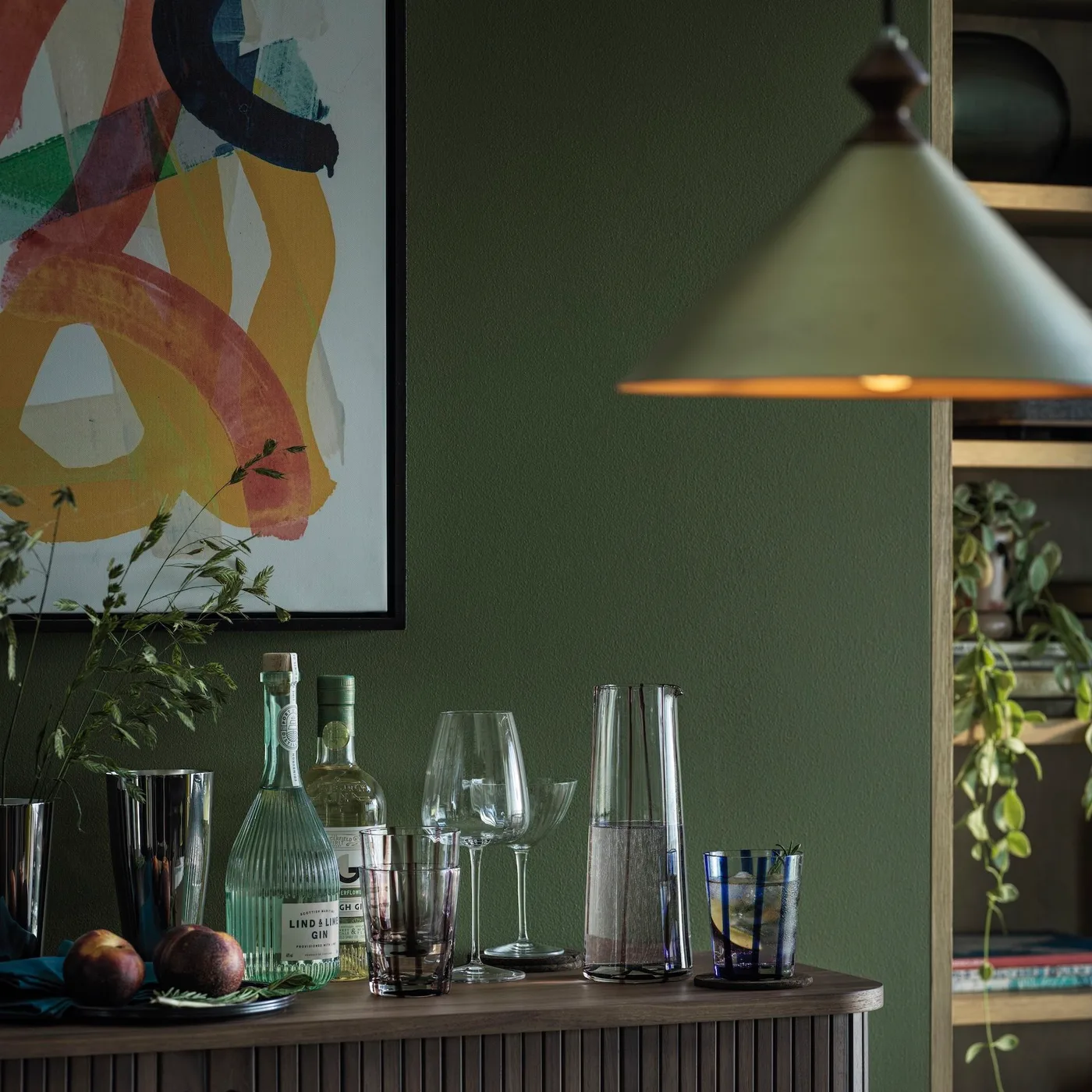
A green pendant hangs above a dark fluted sideboard set up with bottles, glassware and a jug. Colorful artwork gives the wall another focal point, while the shade’s warm-looking underside draws attention to the serving surface. This close view shows a useful lighting opportunity away from the dining table: the place where drinks are poured and dishes or glassware are gathered between courses.
Add light to a serving area if the main dining fixture leaves it difficult to use after dark. Keep the fitting clear of bottle heights and your normal reaching space. Avoid creating a bright reflection directly in the glassware from the diners’ viewpoint. Give the sideboard light separate control where practical, so it can help with serving without requiring the whole room to stay at full brightness.
IDEA 05 / 20
Combine Pendants With a Corner Floor Lamp
 SaveSupport Non AI Creator
Image credit: Industville
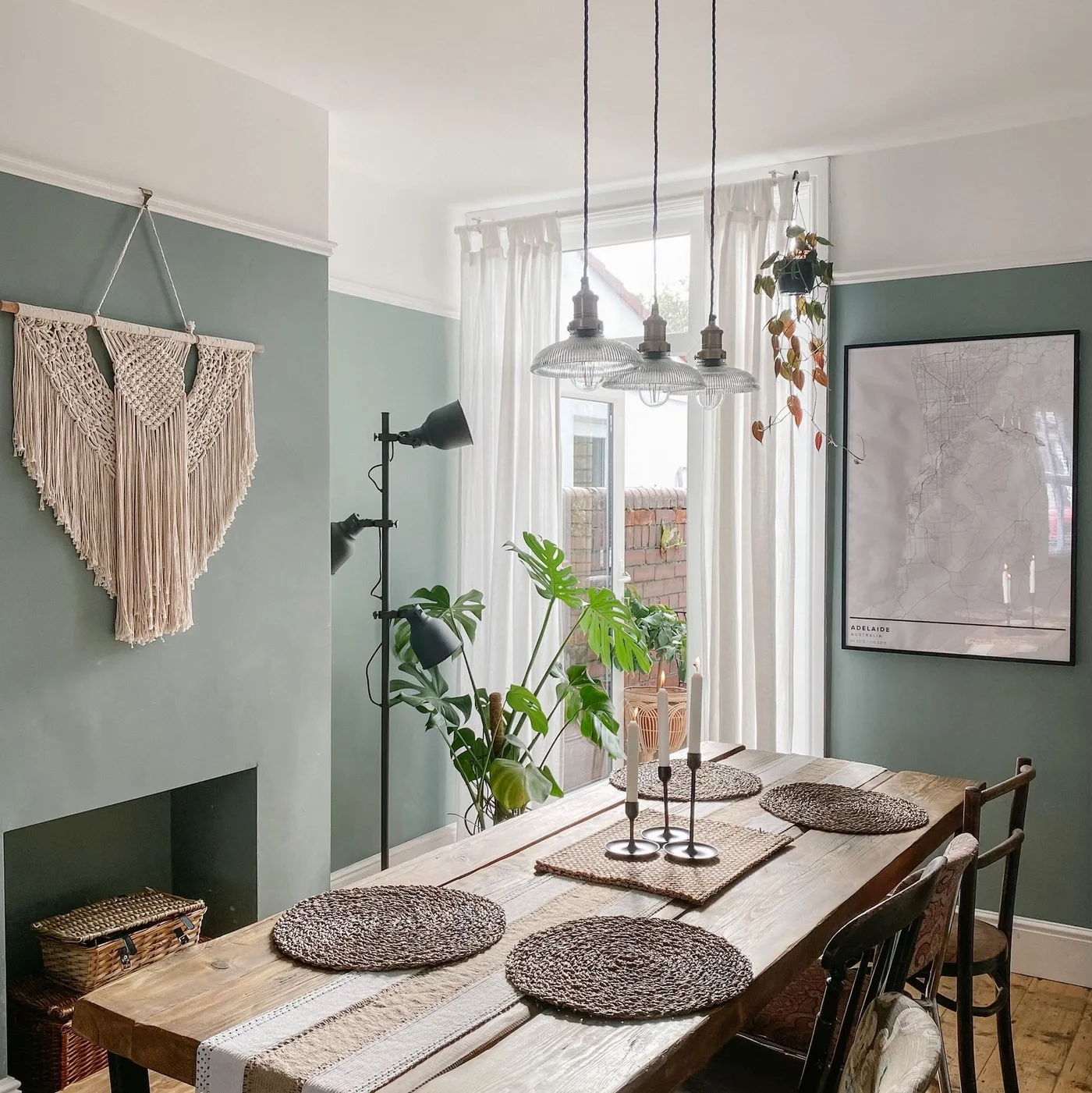
Three clear pendants hang over a wood dining table, while a black floor lamp adds several small shades near the window. Green walls, a woven wall hanging and round place mats bring texture into the room without making every light a statement. The floor lamp sits outside the table arrangement, giving the corner a separate source of illumination beside the plants and glazing.
A corner lamp can complement table lighting when the room edges otherwise feel dim. Put its base outside the chair pull-out area and keep the cable away from the route to the window. Check where each shade points so the lamp supports the room rather than shining into a diner’s eyes. Clear pendants still need their own glare check; a second lamp does not correct an uncomfortable exposed bulb.
PART 02
Add Lamps and Softer Details
IDEA 06 / 20
Add a Large Lamp Beside Hanging Shades
 SaveSupport Non AI Creator
Image credit: Future PLC
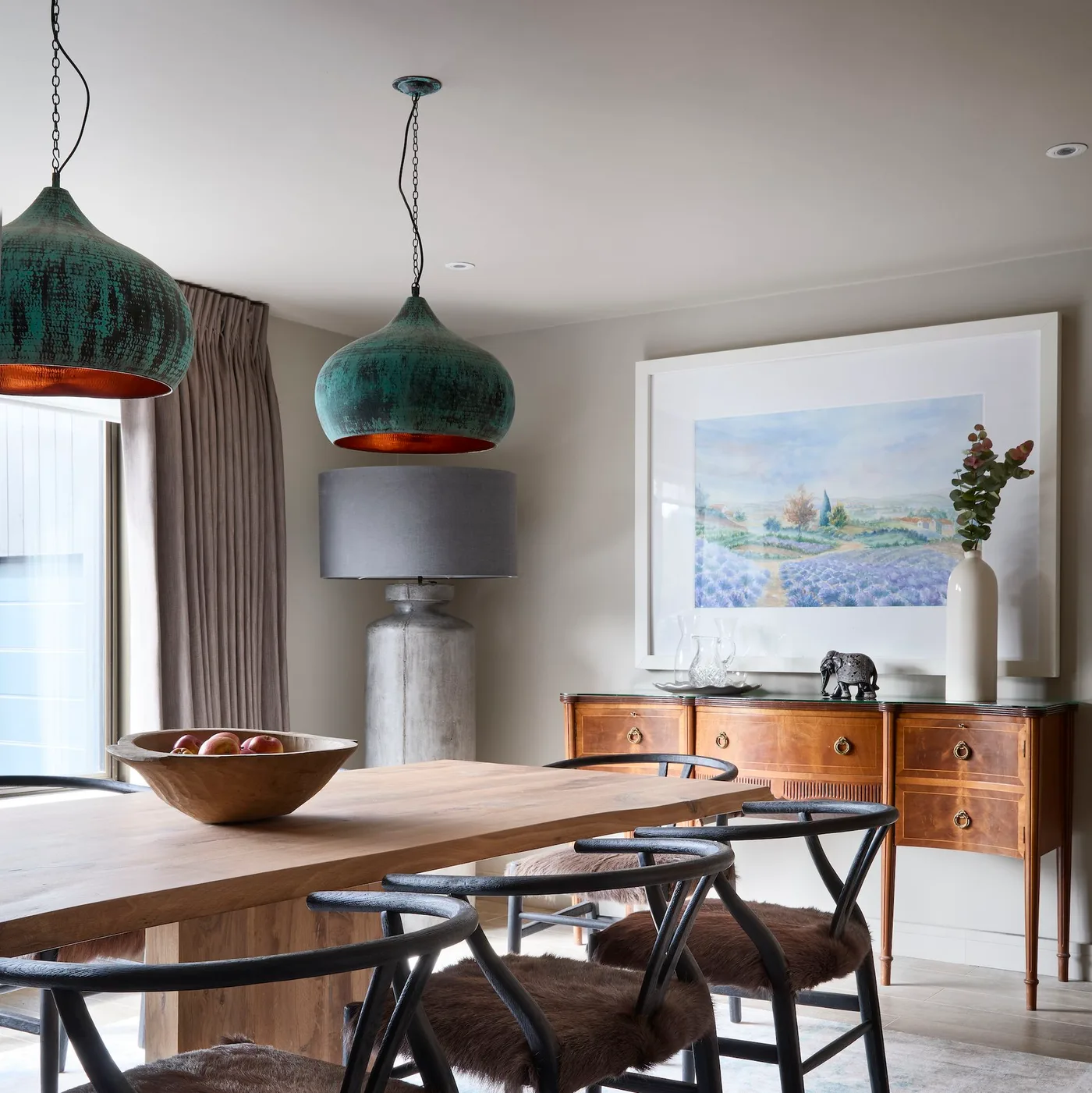
Two green-toned hanging shades sit above a wood table, with a large gray-shaded lamp beside the wood sideboard. The pendants have warmer-looking interiors that contrast with their outer color, while the lamp brings a broader, quieter shape to the wall. Dark chairs and pale curtains complete the arrangement, showing how different light types can share a room without needing matching shades.
Give the side lamp a useful purpose, such as making a serving corner easier to see after the ceiling lights are lowered. Check that the base is stable and does not reduce access to the sideboard. Compare the bulbs together so the room does not have a distracting mix of brightness or color. Keep both lamp and pendants reachable for cleaning according to their individual finishes.
IDEA 07 / 20
Make a Small Table Lamp Part of Dinner
 SaveSupport Non AI Creator
Image credit: Pooky
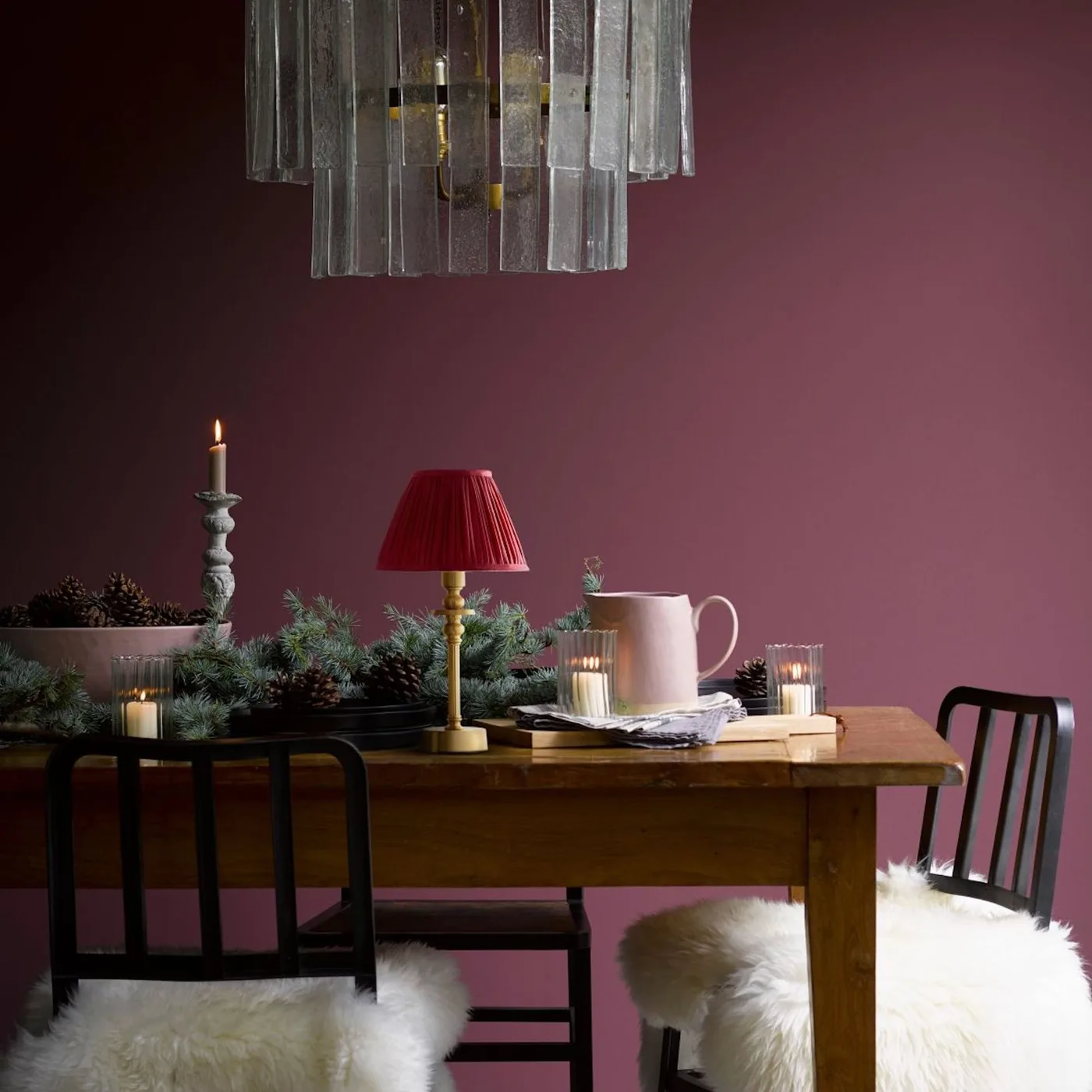
A small red pleated lamp sits on the wood table beneath a much larger hanging light in a raspberry-colored room. Glass holders and greenery add a seasonal arrangement around it, while dark chairs keep the furniture outline simple. The table lamp brings a point of light closer to the meal, giving the tabletop a different presence from the dramatic fixture suspended above.
Use a table lamp only if it leaves enough room for plates, shared dishes and comfortable conversation. Choose a suitable portable model when a trailing cable would cross the eating surface or floor. Keep the lamp away from spills and follow its instructions for use near food. Decorative candle arrangements should not crowd the shade; suitable flameless lights can give a similar effect with easier everyday handling.
IDEA 08 / 20
Leave a Dark Room Visually Open
 SaveSupport Non AI Creator
Image credit: Future PLC
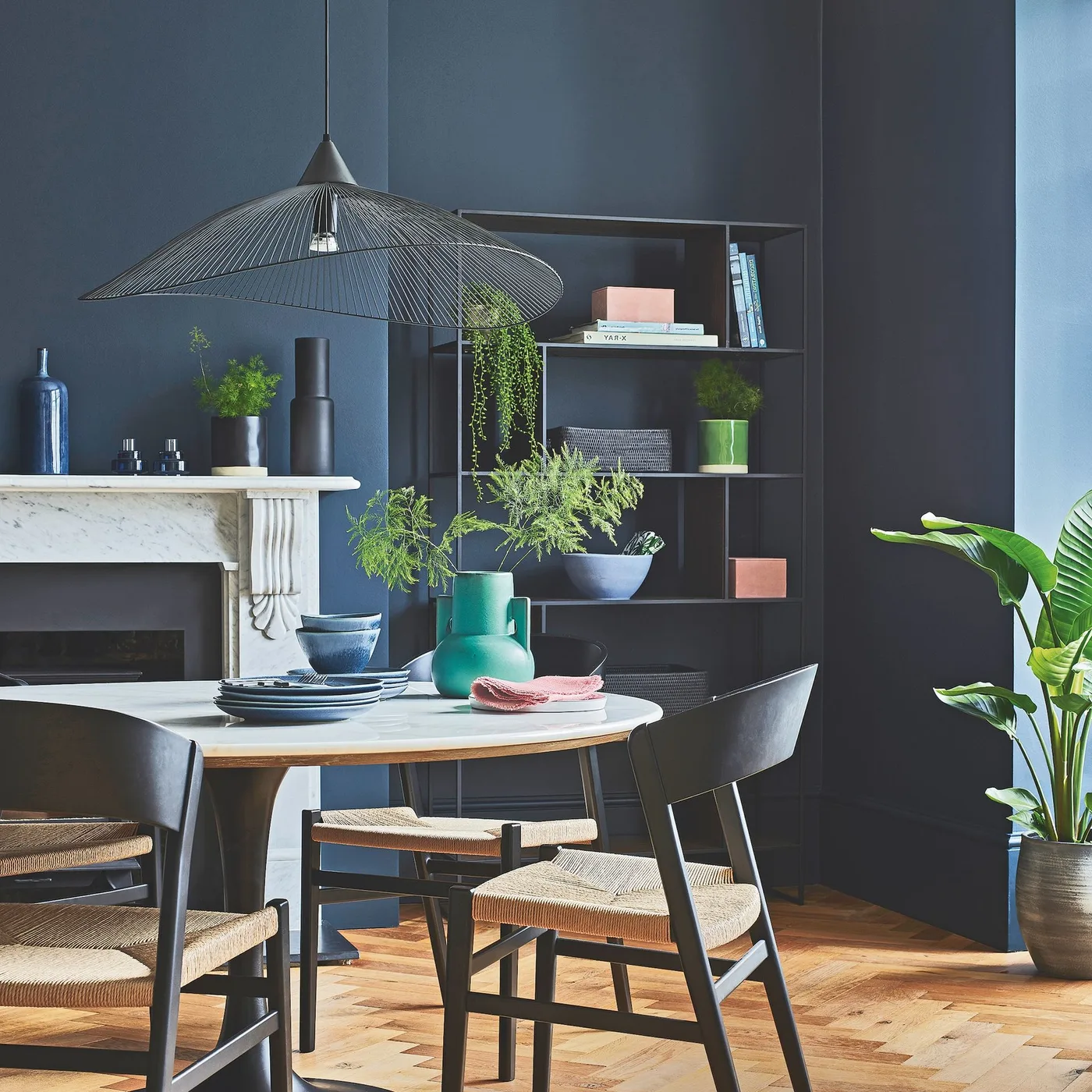
A broad open wire shade hangs above a round pale table against navy walls. Black chairs, a fireplace and open shelving give the room several dark outlines, while green plants add softer shapes at the edges. The pendant remains transparent enough for the background to show through, making a wide fitting look lighter than a solid shade of similar spread in this compact arrangement.
An open shade changes the fixture’s visual weight but does not guarantee comfortable light. Check the visible bulb from the chairs and add a separate lamp if the shelving or circulation area stays too dark. Avoid filling the round table with tall objects that compete with the broad overhead shape. Dust the open structure using the maker’s guidance, since its outline remains an obvious part of the room.
IDEA 09 / 20
Use Three Different Lights With Quiet Furniture
 SaveSupport Non AI Creator
Image credit: Nicole Franzen
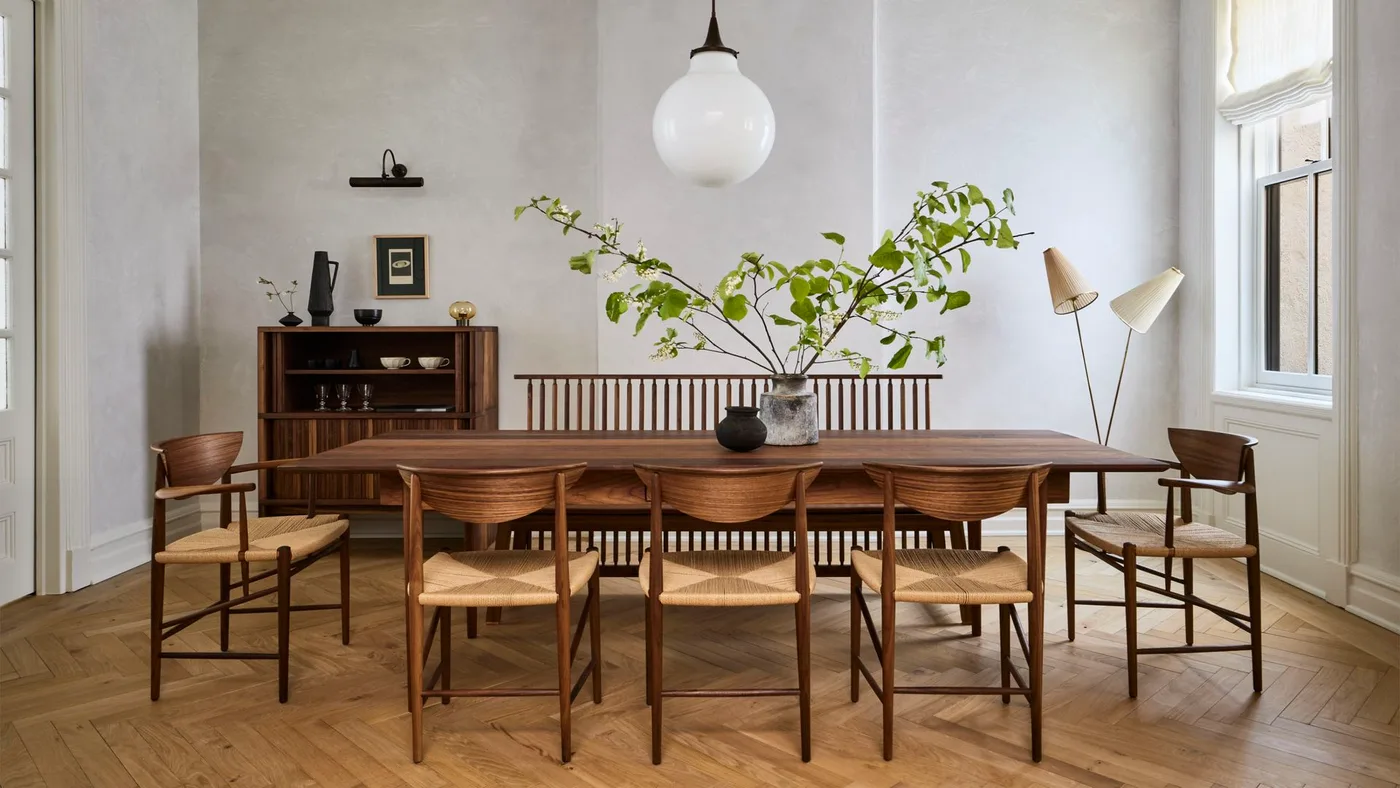
A white globe hangs above a wood table, while a twin-shade floor lamp stands beside the window and a small picture light sits above the wall display. The table, bench and chairs share warm wood tones, giving the varied lights a quiet background. Each fitting occupies a different part of the room, so the dining area has several useful lighting positions without a crowded ceiling.
Choose each light for the area it needs to serve: the meal, the room edge or the wall display. Test them separately and together to see which combination suits dinner, reading or clearing the table. Keep the floor lamp base outside the seating route, and check picture-light reflections in any glazed frame. Similar brightness is less important than making each source comfortable from the chairs.
IDEA 10 / 20
Balance a Metal Drum With Soft Seating
 SaveSupport Non AI Creator
Image credit: Theresa Butler Interiors / Marc Mauldin
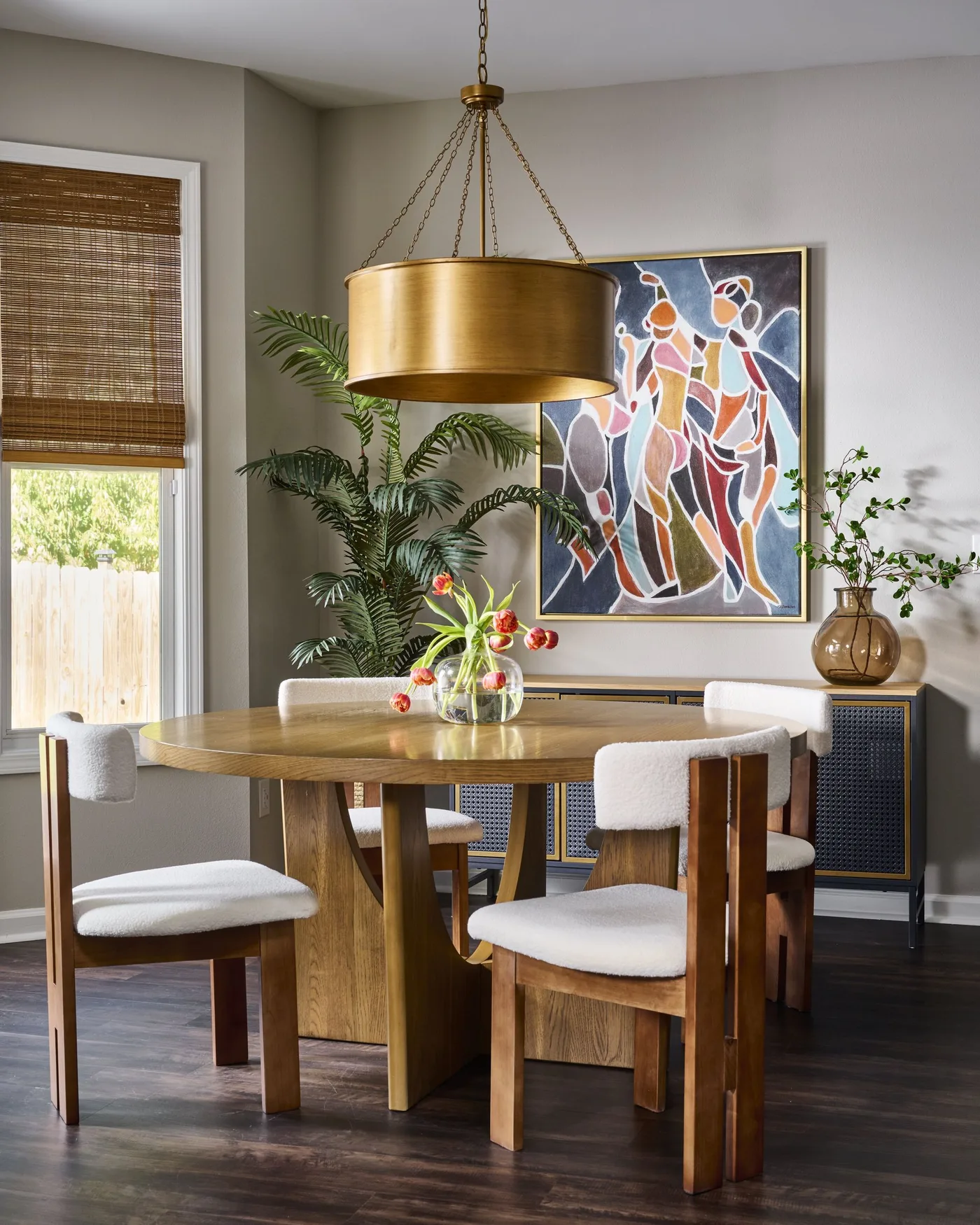
A gold-toned drum hangs above a round wood table surrounded by pale upholstered chairs. Colorful artwork and a dark sideboard give the wall a strong background, while the wide shade supplies one simple shape overhead. The repeated warm wood and metallic tones bring the dining group together, with the pale seating stopping the arrangement from feeling uniformly dark or reflective around the table.
Check a broad metal shade from the seated positions before choosing its size. It can define a round dining group clearly, but the underside and bulb position affect comfort during a meal. Use additional room lighting if the wall behind the table feels lost after dark. Keep the centerpiece easy to move, and follow the finish guidance when cleaning a shade that may show fingerprints.
PART 03
Light Walls, Nooks and Windows
IDEA 11 / 20
Echo a Table Lamp With Small Wall Lights
 SaveSupport Non AI Creator
Image credit: Pooky
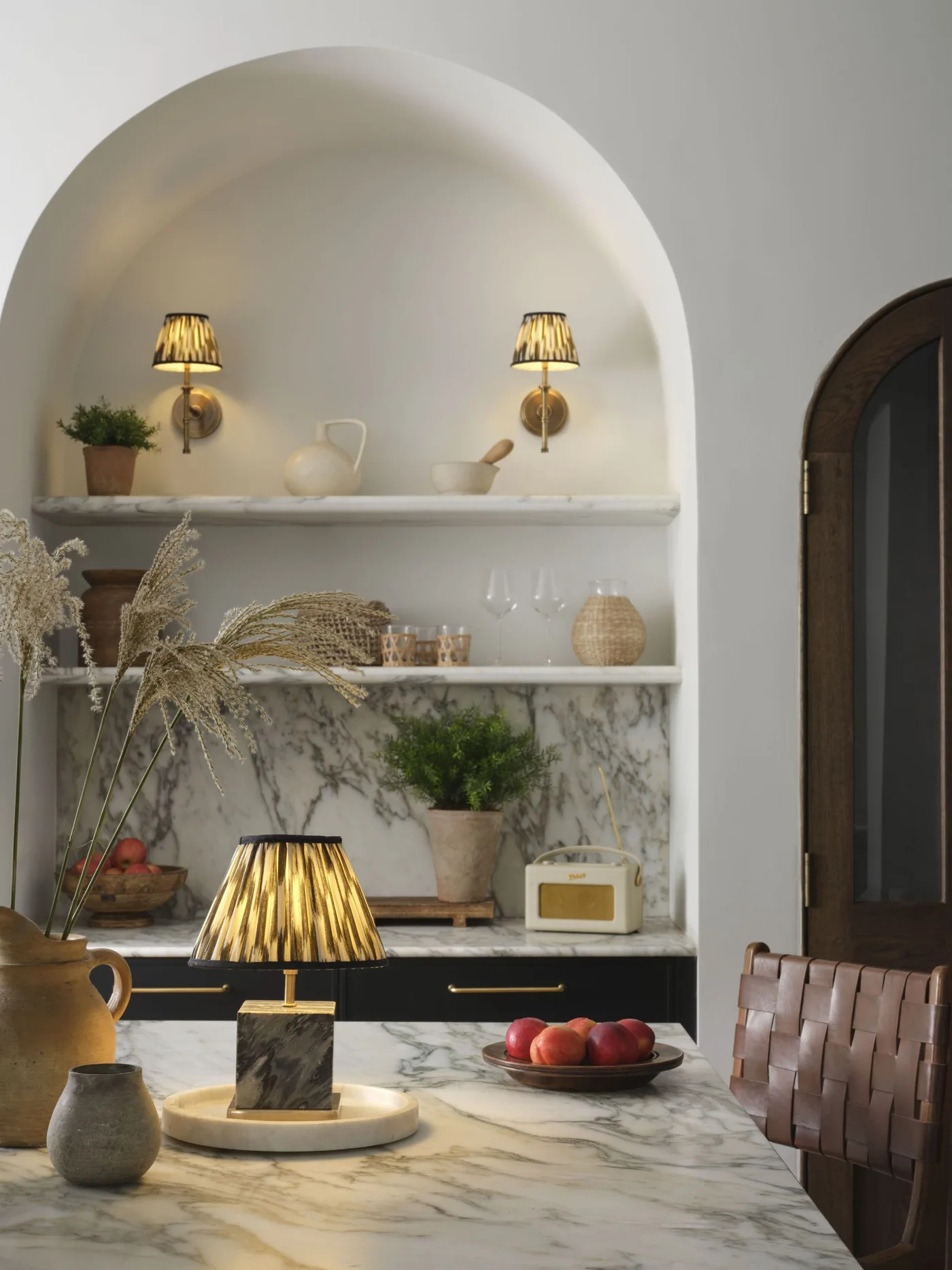
A small pleated lamp sits on a veined dining tabletop, with two similar shaded wall lights in the arched alcove behind. The repeated shade shape connects the eating surface and the room’s storage area, while a woven chair and pottery keep the setting relaxed. The lights are spread at different heights, making the background feel considered rather than leaving all the illumination concentrated overhead.
Repeat a shade detail if you want several light types to feel related without buying large matching fixtures. Keep the table lamp out of the serving area and check its height for conversation. Wall lights should make the alcove comfortable to use without creating glare in visible glassware. Confirm the selected lamp’s power arrangement and care requirements; a photograph does not reveal whether it is rechargeable or wired.
IDEA 12 / 20
Frame the Window With Discreet Wall Lights
 SaveSupport Non AI Creator
Image credit: Jessica Nicastro Design
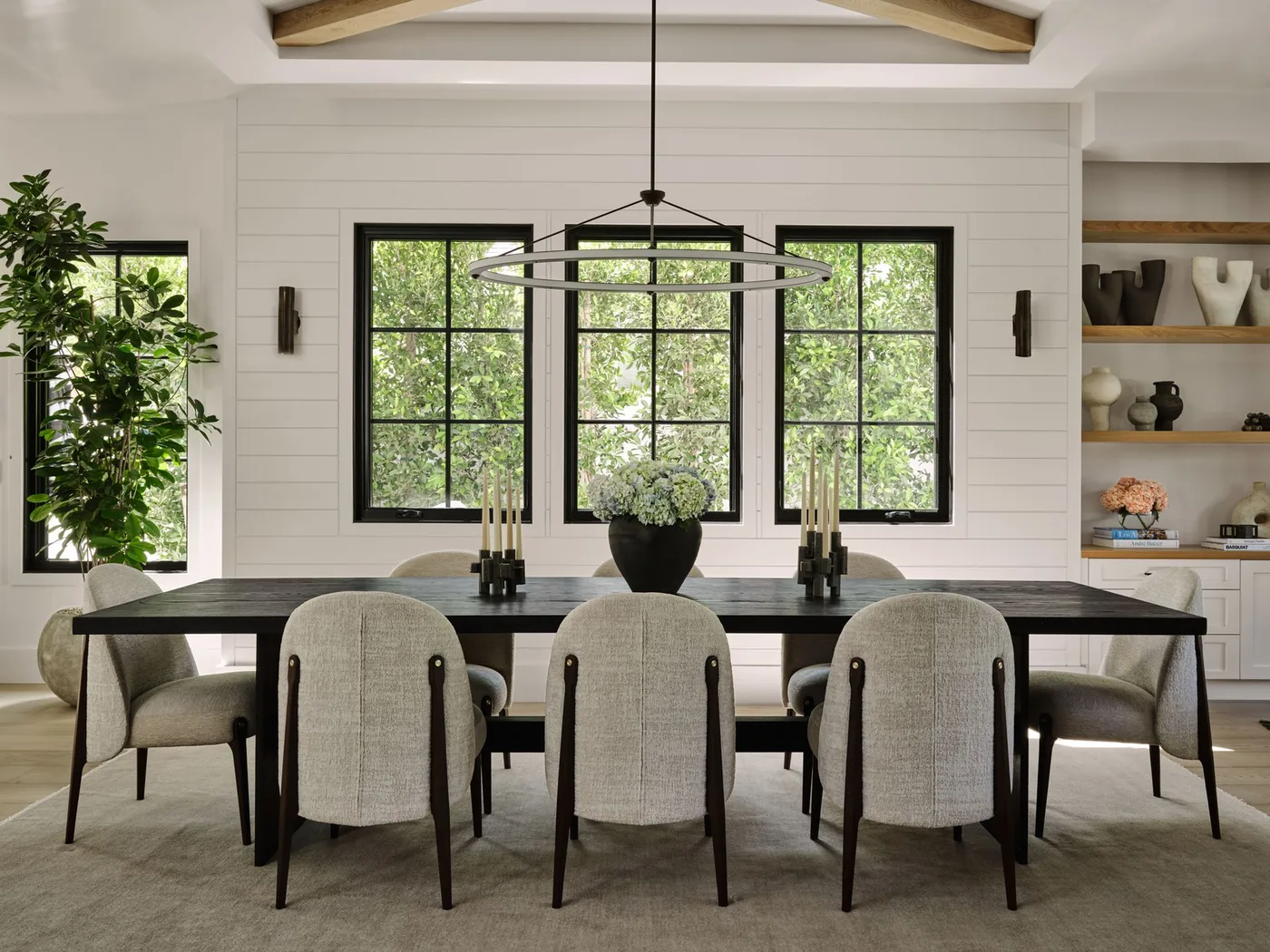
An open ring pendant hangs above a dark dining table, while small dark wall lights flank the black-framed windows. Pale upholstered chairs and white horizontal wall boards keep the room bright, and open shelves add a display area at the side. The wall fittings provide another lighting position without covering the window view or competing with the simple circular shape above the table.
Include wall lighting early if the table area needs a softer background after sunset. Check the wall fixtures from every chair so they do not produce a bright distraction beside the windows. Separate control can let you use the wall lights without keeping the pendant at full output. Keep their placement clear of shelving and curtains, and have the installation planned for the chosen fittings.
IDEA 13 / 20
Bring Light Into a Shelved Dining Nook
 SaveSupport Non AI Creator
Image credit: Industville
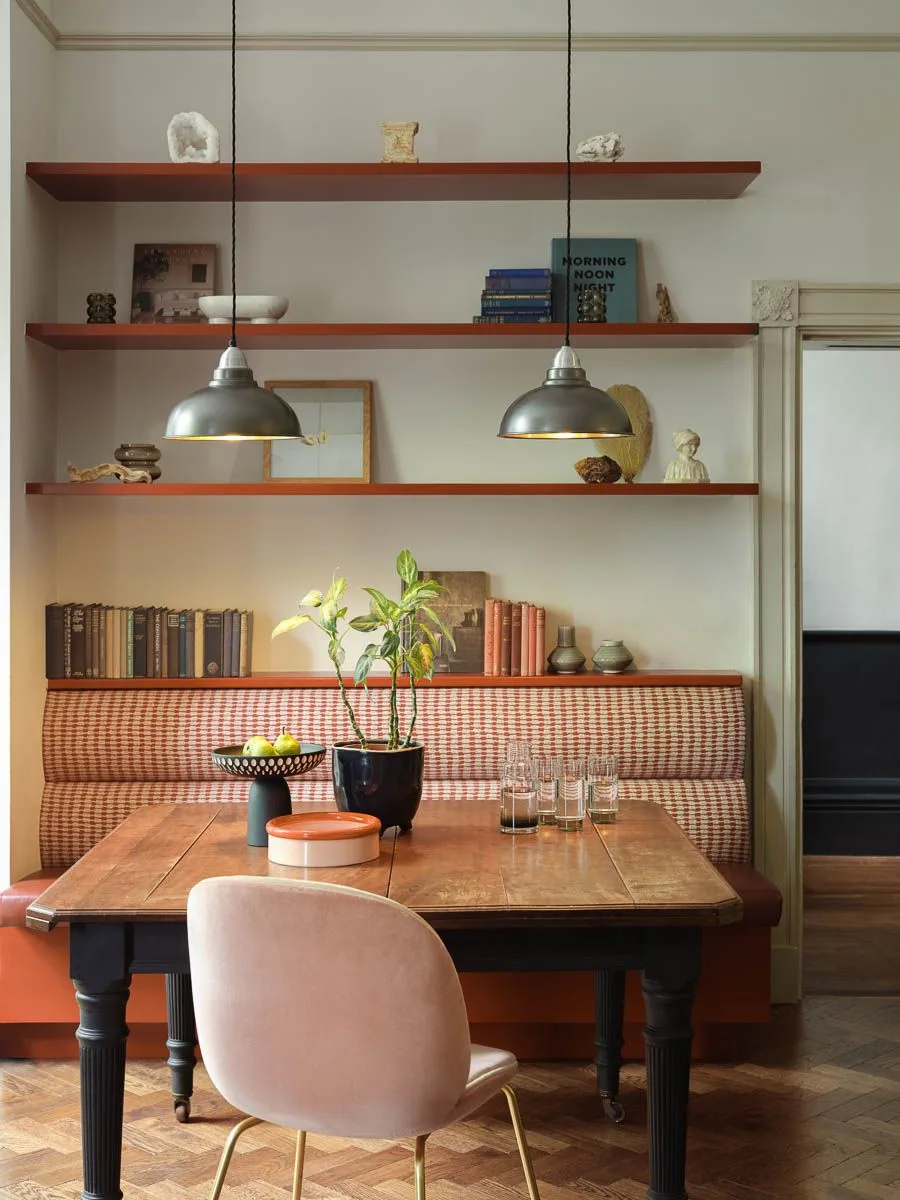
Two metal shades hang in front of open shelves above a dining nook with checked bench upholstery. The wood table and colored shelf edges make the corner feel warm, while books and small objects fill the wall behind. The pendants mark the eating area distinctly, but the shelves remain an important part of the view from the chairs, adding detail beyond the table setting.
Test the nook after dark to see whether the bench and shelving feel comfortable as well as the tabletop. Downward-facing shades can leave the wall less visible, so a separate nearby light may be useful. Keep the pendant drops clear of the shelves and the items you lift from them. Avoid overcrowding the display, making both cleaning and access easier around the hanging fixtures.
IDEA 14 / 20
Reach the Table With a Wall-Mounted Arm
 SaveSupport Non AI Creator
Image credit: Le White. Photo credit: Nicole Franzen
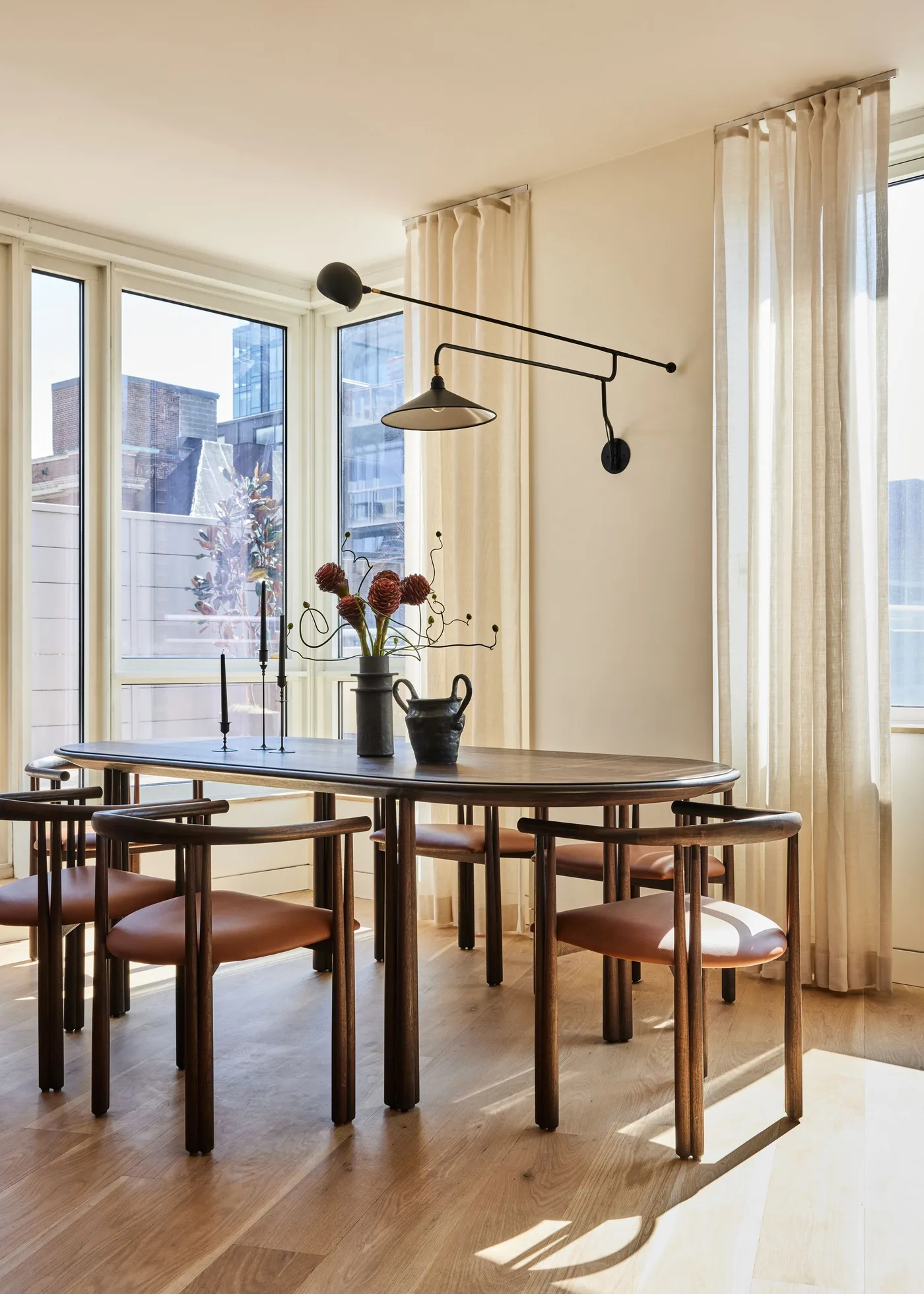
A long black arm extends from the wall over a dark oval table beside tall windows and pale curtains. Its hanging shade brings light into the dining group without a ceiling drop directly above, while brown cushioned chairs repeat the table’s warm outline. The fitting’s extended line becomes part of the room’s composition, connecting the wall and eating area across an otherwise open corner.
A wall-mounted arm needs to suit the actual reach, support and table position. Have the mounting arrangement checked for the selected fixture, and confirm that the arm stays clear of curtains and normal movement. Keep the table in a position that works with the shade rather than assuming any extension is adjustable. Check the seated view along both sides so the fitting remains comfortable during conversation.
IDEA 15 / 20
Keep a Minimal Room Comfortable After Dark
 SaveSupport Non AI Creator
Image credit: Matthew Williams
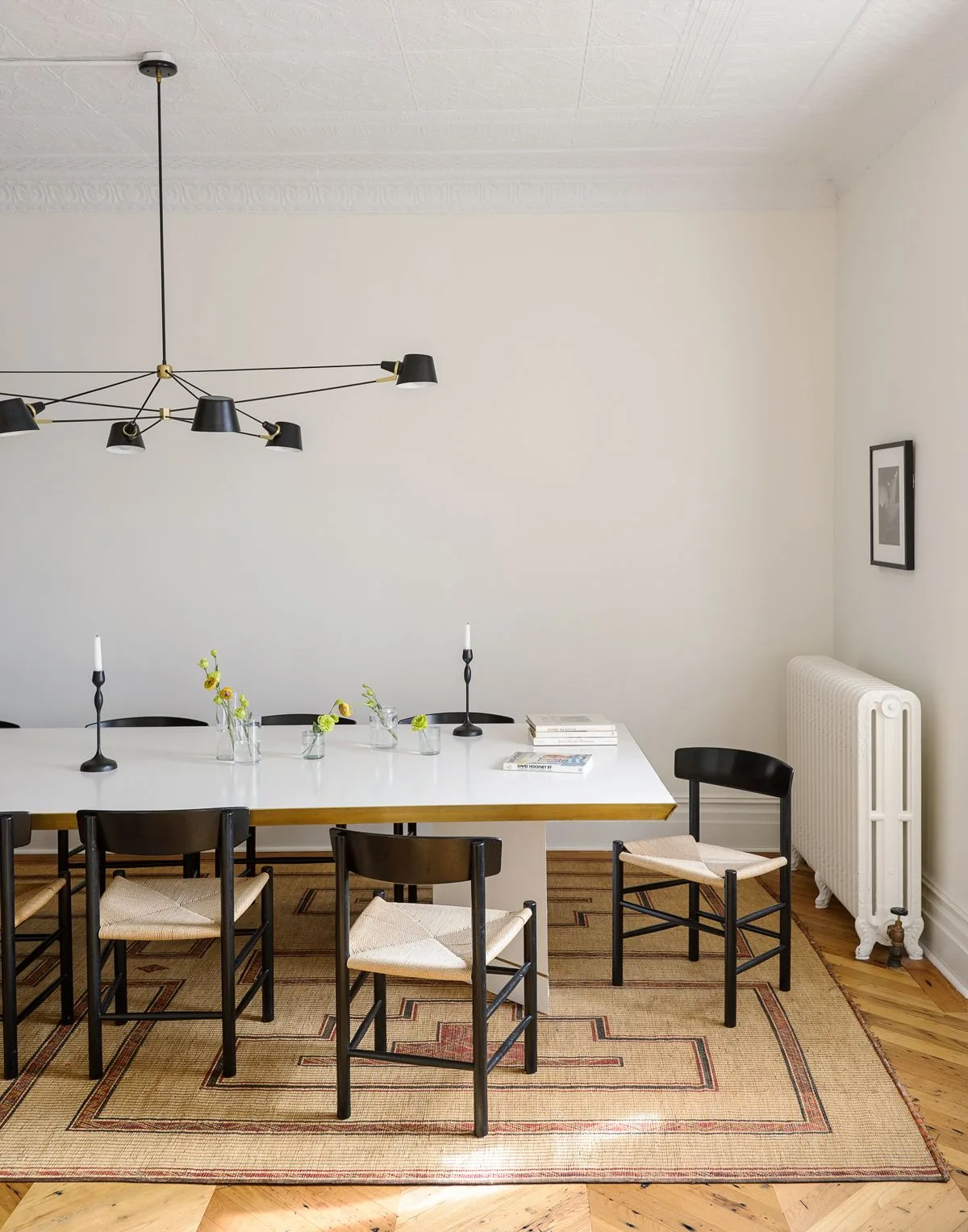
A thin black multi-arm light spreads over a pale rectangular table in a white dining room. Dark chairs and candleholders repeat its outline below, while a small wall picture keeps the background restrained. The fixture adds a broad shape without a bulky central shade, letting the room’s plain surfaces and simple furniture remain the main setting around the dining group.
A minimal room still needs useful light at the table ends and along the walking routes. Check each small shade from the seats rather than assuming a wide fixture lights every position evenly. Use compatible bulbs and controls suited to the fitting. Keep the table arrangement low and simple, then add a separate room light if the corners feel uncomfortable when the main fixture is lowered for dinner.
PART 04
Choose Shapes and Finishes That Fit
IDEA 16 / 20
Balance Hanging Lights With a Curved Window
 SaveSupport Non AI Creator
Image credit: Future
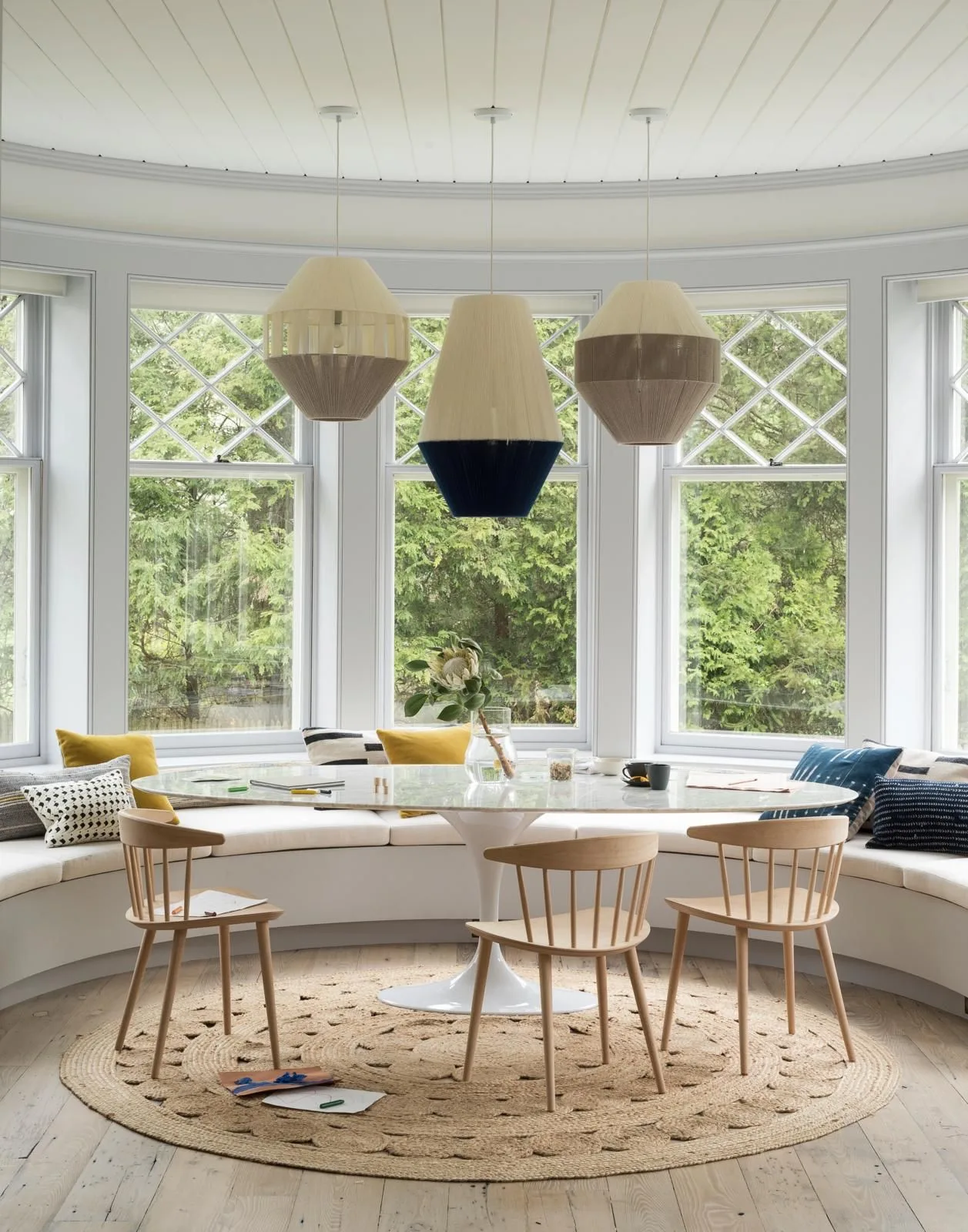
Three pale geometric shades hang over a round table within a curved window bench. Their varied shapes and lower colors give the upper part of the nook interest, while pale chairs and scattered cushions keep the seating informal. The windows surround much of the dining area, so the pendant group supplies an indoor focal point without requiring another large wall feature beside the glass.
Check a window-lined dining nook both in strong daylight and after sunset. Daytime brightness can hide gaps in the room’s evening lighting, while the glass may reflect pendant bulbs at night. Keep the shades inside the table footprint and clear of anyone sliding onto the bench. Use suitable window coverings if privacy is needed, and compare their effect on the room before setting the final lamp brightness.
IDEA 17 / 20
Let Pale Globes Break Up a Metallic Fixture
 SaveSupport Non AI Creator
Image credit: Suzanna Scott
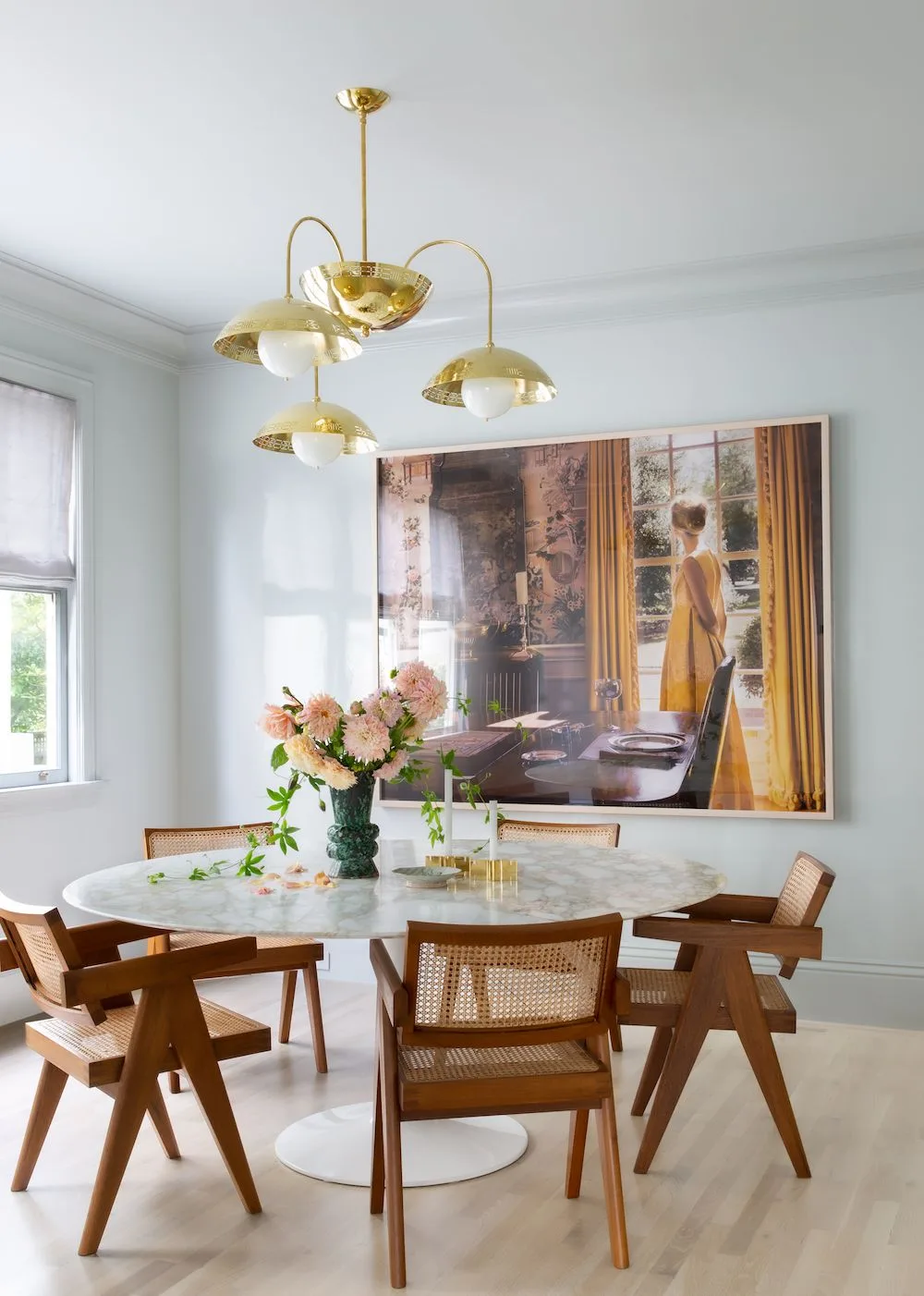
Pale globes soften a gold-toned multi-arm fixture above a round pale table. Wood chairs with woven backs add another warm detail, while one large artwork gives the wall a clear focus. The fixture has several separate branches, but the repeated globes keep its appearance organized, allowing it to sit above the dining group without requiring additional metallic decoration on the tabletop.
Look at each globe from the chairs when evaluating a branched fixture. Several bulbs can be visually prominent even when the fitting looks delicate from across the room. Check that the available output suits everyday meals and that any control is compatible with the lamps. Keep flowers modest enough for conversation, and plan a safe cleaning approach for the individual globes and metallic arms.
IDEA 18 / 20
Add Woven Light to a Brick Dining Corner
 SaveSupport Non AI Creator
Image credit: Montse Garriga Grau
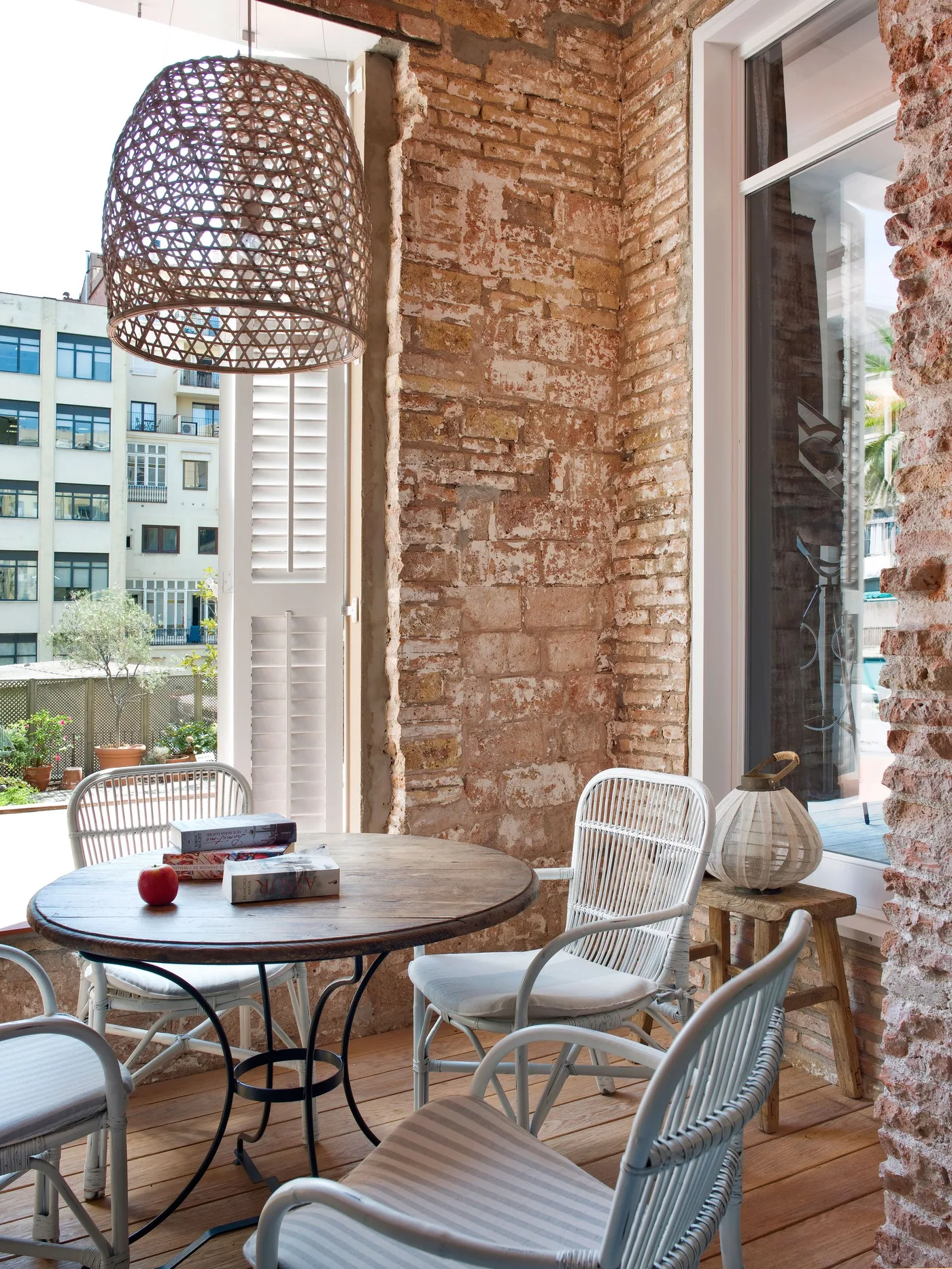
An open woven pendant hangs above a round dark table beside exposed brick walls. Pale woven chairs repeat its texture at seated height, while tall windows bring a different, smoother surface into the corner. The hanging shade adds a rounded form to a room dominated by the brick’s irregular detail, connecting the dining group without concealing the wall or view outside.
Use a woven shade when its texture belongs with the chairs or other room details, then test the actual light pattern after dark. Open weaving may reveal the bulb or cast noticeable shadows on the brick. Choose a suitable lamp according to the fitting instructions and check it from seated eye level. Keep the shade clear of window operation and make sure its cleaning requirements fit your routine.
IDEA 19 / 20
Mix Ceiling, Floor and Sideboard Lights
 SaveSupport Non AI Creator
Image credit: Ti Archive
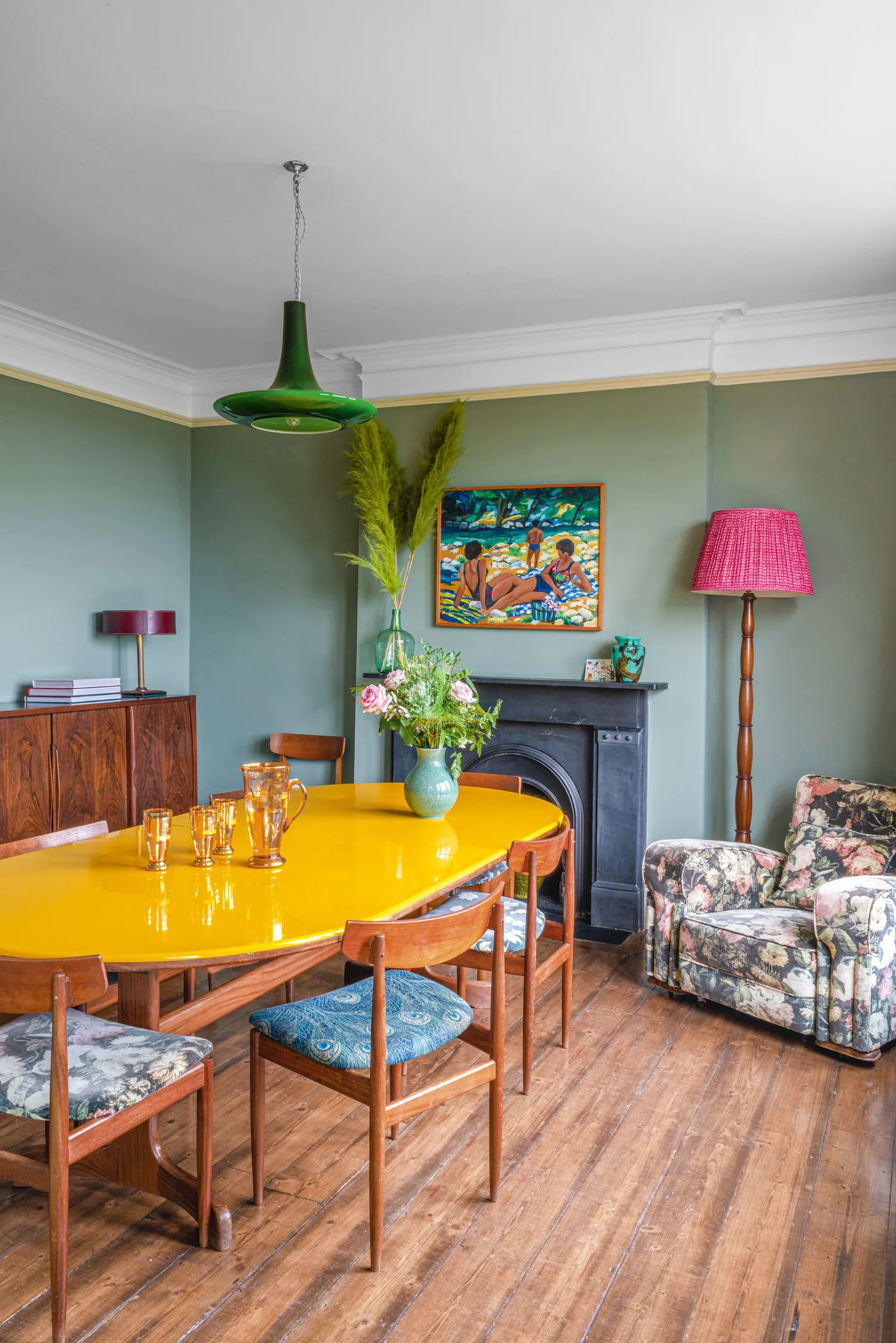
A green hanging shade sits over a glossy yellow oval table, while a pink-shaded floor lamp and a small lamp on the wood sideboard add light positions around the room. Green walls, patterned seating and framed artwork make the setting colorful throughout. The lights vary in height and shape, giving the dining table and nearby armchair separate points of attention within the same space.
Use several light types to support a room that serves more than one activity. A floor lamp can suit the armchair, a small lamp can help the sideboard and a ceiling shade can serve meals. Keep their cables and bases outside the chair routes. Compare the lights together after dark, especially where a glossy tabletop reflects them, and use separate controls to adjust the different areas.
IDEA 20 / 20
Warm a Quiet Room With a Pleated Shade
 SaveSupport Non AI Creator
Image credit: Nicole Franzen. Styling: Katja Greeff. Design: Arianna De Gasparis
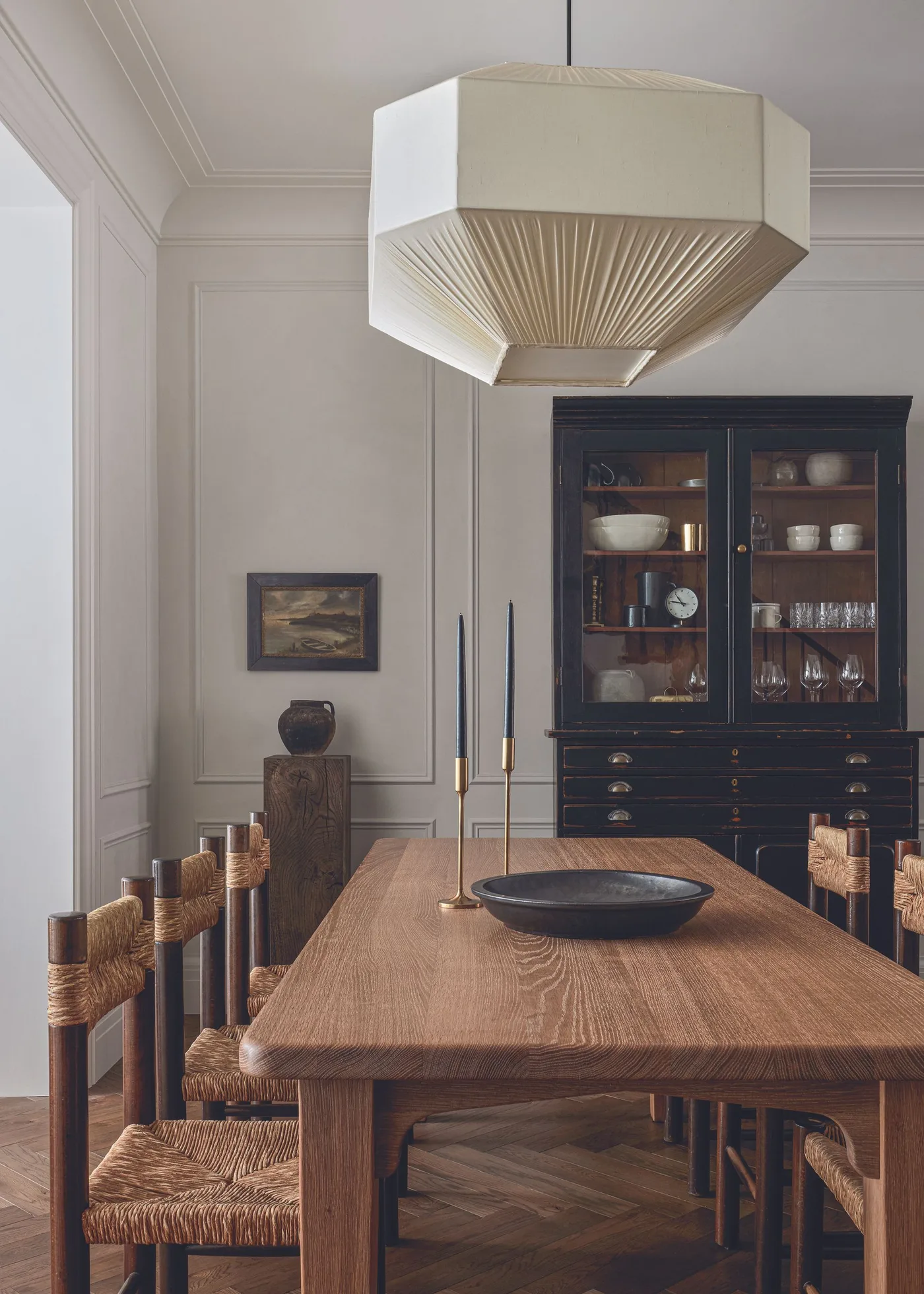
A large pale geometric shade hangs over a substantial wood table in a quiet paneled room. Its pleated underside adds detail without introducing a strong new color, while woven-seat chairs and a dark glazed cabinet give the setting texture below. The shade becomes the room’s main overhead feature, balancing the weight of the table and storage with a lighter shape at ceiling level.
Check how a broad shade distributes light before choosing it for a room with tall storage. The table may be well lit while the cabinet and walking area need a separate lamp or wall fitting. Follow the shade instructions for cleaning, particularly around pleats where dust can collect. Keep the hanging position comfortable from every chair, and leave enough clearance for reaching across the table during serving.
BRING IT ALL TOGETHER
Choose a Comfortable Evening Combination
Turn on each light separately, then try the combinations you expect to use for dinner, serving and clearing away. Check the view from each chair and the route around the table. A room can feel welcoming with several modest lights while still providing useful brightness where you need it.
Use fixtures and bulbs that work together, follow their care instructions and plan a safe installation for wall or ceiling fittings. Keep portable lamps stable and their cables clear of movement. Adjust the arrangement around your own room rather than assuming a photograph reveals its brightness or electrical setup.