A dining table display should leave room for the meal and the people sharing it. Flowers, a bowl of fruit or a small group of vessels can add interest, but their height, footprint and upkeep matter as much as their appearance.
These twenty photographs range from simple everyday arrangements to fuller decorative displays. Compare each one from seated height and set out your usual dishes first, then choose a version that is easy to maintain and move when the table needs more space.
PART 01
Start With a Clear Everyday Center
IDEA 01 / 20
Keep Everyday Flowers Within a Simple Table Setting
 SaveSupport Non AI Creator
Image credit: Viv Yapp
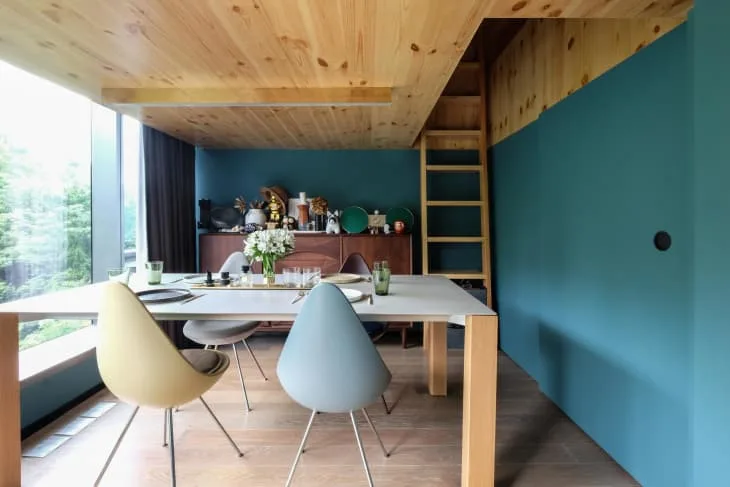
A small arrangement of pale flowers sits on a rectangular dining table among plates and drinking glasses. Mixed pastel chairs and blue walls give the room plenty of color, so the flowers add a softer center without introducing another large object. The visible setting leaves portions of the tabletop open, making the decoration part of an everyday meal rather than a separate display.
Set out the plates, glasses and serving dishes before choosing the size of a daily flower arrangement. Keep the vessel stable and protect the tabletop from water. Check the view from every seat, since even a modest bouquet can hide someone across a narrow table. Choose a display you can move easily when the same surface is needed for work or a larger meal. For a larger holiday meal, Thanksgiving place settings offer practical ways to add readable name cards and seasonal details without crowding each plate.
IDEA 02 / 20
Give a Traditional Table One Leafy Centerpiece
 SaveSupport Non AI Creator
Image credit: Photo: Ashley Gilbreath. From: Ashley Gilbreath
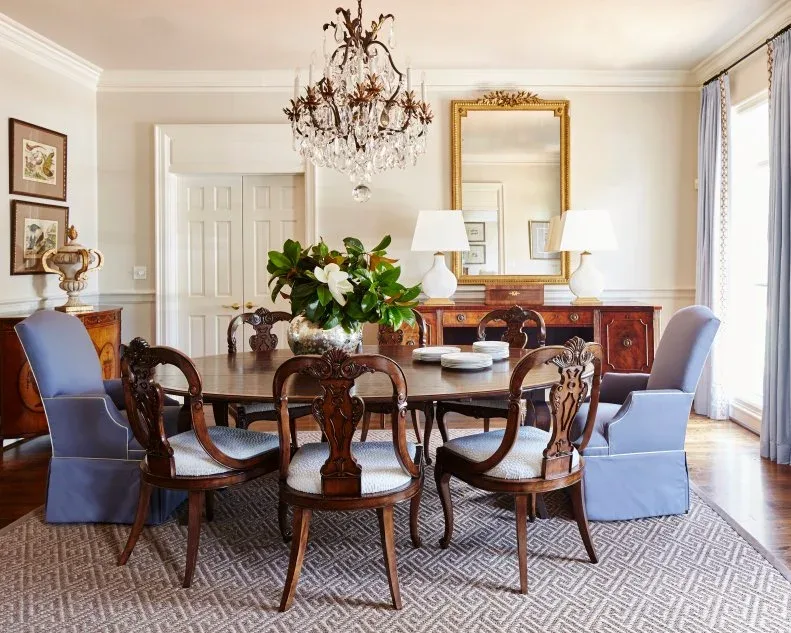
A leafy arrangement with pale flowers creates one strong center on a dark dining table. Carved wood chairs and blue upholstered end seats surround it, with a detailed chandelier and mirror adding more decoration above. The single broad vessel keeps the tabletop arrangement concentrated, allowing the room’s traditional furniture to remain visible rather than spreading many small objects across the surface.
Check a broad arrangement from seated height before a meal. Trim or reposition foliage that blocks faces or extends into place settings, and keep enough space for shared dishes. Use a watertight container with appropriate surface protection beneath it. Larger displays may suit the room between meals but need to move to a sideboard when their spread makes dining less comfortable. Our green Thanksgiving tablescape ideas compare contained plants, leafy runners and smaller green accents when you want a seasonal version with clearer serving space.
IDEA 03 / 20
Pair Two Rounded Vases Without Adding Flowers
 SaveSupport Non AI Creator
Image credit: Photo: D2 Interieurs, Jane Beiles. From: D2 Interieurs
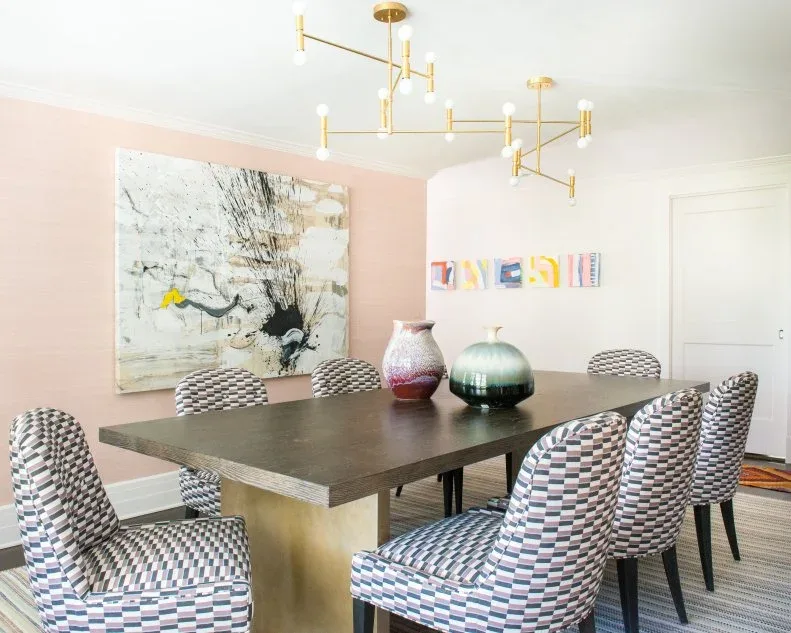
Two rounded vases form a compact pair on a dark rectangular table in a pink dining room. One vessel has a purple-toned lower section, while the other carries green-blue color, connecting with the patterned chair upholstery without copying it exactly. Their different profiles create a small contrast at the center, leaving the surrounding table surface visible and the wall artwork unobstructed.
Choose a pair whose combined footprint still leaves room for plates and serving pieces. Check stability on the actual tabletop and use protective bases suited to its finish. Empty vessels avoid flower maintenance, but their height can still interrupt conversation across the table. Move them aside for crowded meals rather than placing glasses or hot dishes between an awkward collection of fragile objects.
IDEA 04 / 20
Spread Three Low Bowls Across a Long Table
 SaveSupport Non AI Creator
Image credit: Photo: Breeze Giannasio. From: Breeze Giannasio
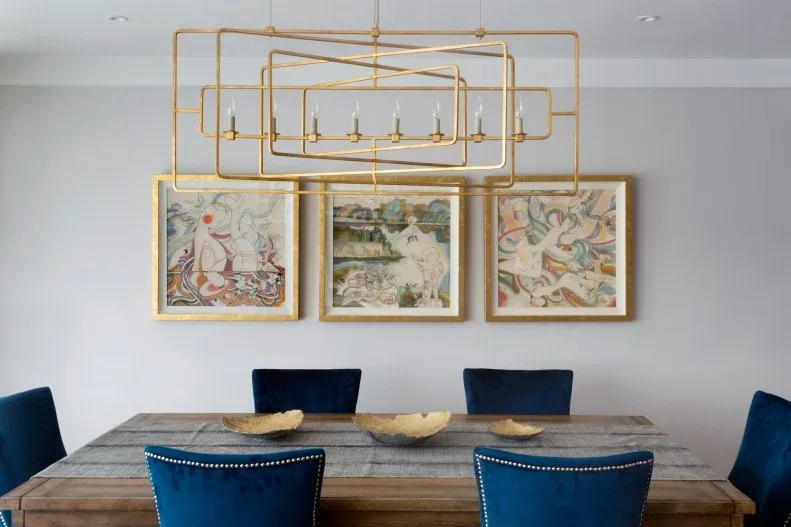
Three low gold-toned bowls sit across a wood dining table surrounded by deep blue chairs. The bowls repeat the warm outline of the geometric chandelier and picture frames above, bringing that accent down to the eating surface. Their low profiles leave the artwork and chair backs visible, while the spaced arrangement gives the long table more than one small point of interest.
Keep each bowl far enough from place settings that diners can use their cutlery comfortably. If the bowls will hold food, confirm they are intended for that use rather than assuming a decorative finish is food-safe. Leave gaps for serving dishes and protect the tabletop as its care instructions require. A repeated arrangement should be easy to lift away when the table needs its full working surface.
IDEA 05 / 20
Contain a Breakfast Display on a Small Tray
 SaveSupport Non AI Creator
Image credit: Photo: Spacecrafting. From: Bria Hammel Interiors
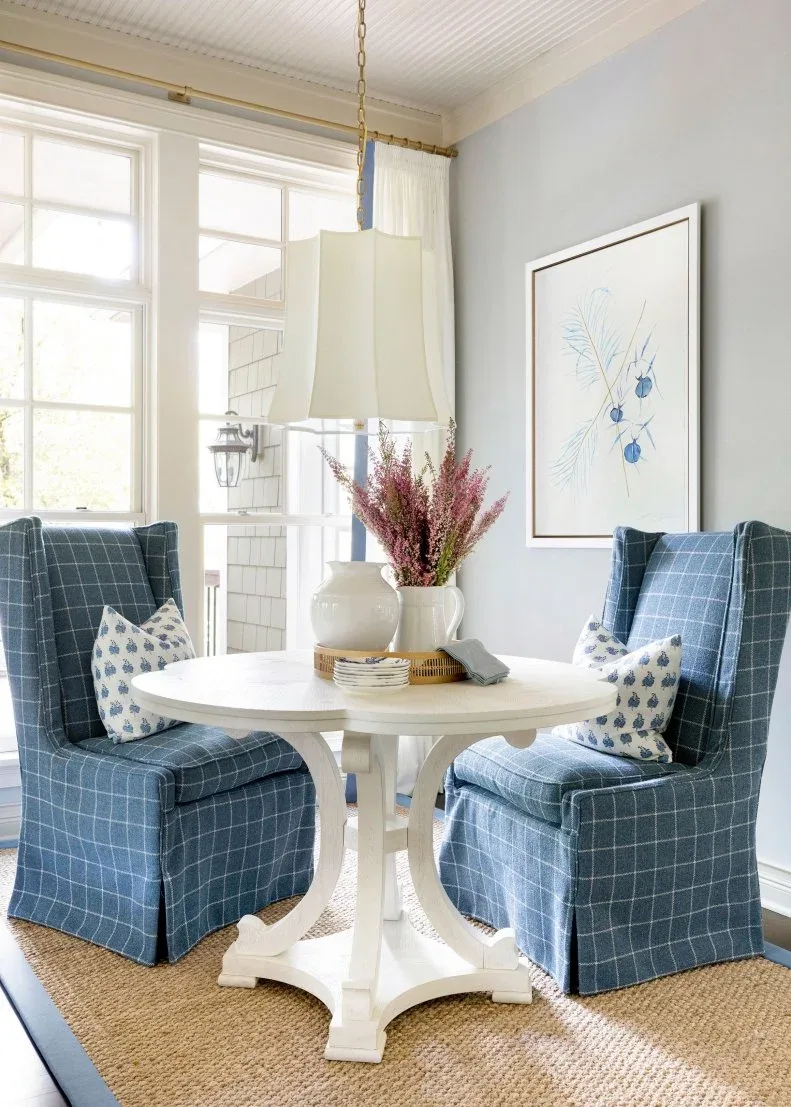
Pale vessels and pink stems sit together on a small tray on a white round breakfast table. Blue checked chairs and patterned cushions give the nook a soft surrounding texture, while the tray concentrates the display beneath the hanging shade. Stacked dishes sit nearby, showing how a modest arrangement can share a small tabletop with practical items instead of covering its entire center.
Choose a tray that leaves enough usable space around a round table for each setting. Check that its base protects the finish and that vessels remain stable when the tray is lifted. Keep water contained and remove loose stems or fallen plant pieces promptly. A grouped display is convenient only when it can be moved safely without carrying a precarious stack of breakable items.
PART 02
Repeat Shapes Without Losing Serving Space
IDEA 06 / 20
Repeat Low Flowers Along a Dark Dining Table
 SaveSupport Non AI Creator
Image credit: Photo: David Christensen
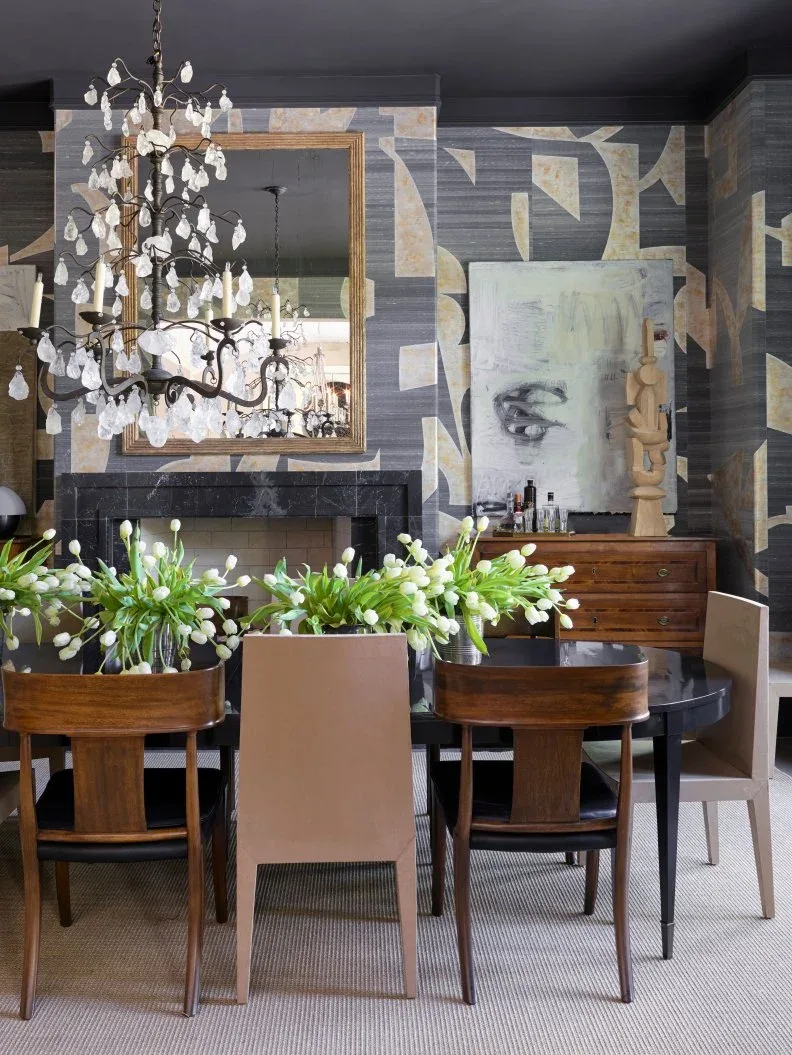
Several low arrangements of white flowers and green leaves stretch across a dark dining table. Their pale buds stand out against the tabletop and patterned gray wall, while the ornate chandelier supplies the taller decoration above. Repeating the flowers along the table gives the display length without relying on one towering bouquet, connecting the dining surface with the room’s layered background.
Arrange the flowers after marking out place settings and serving areas so the repeated groups do not consume every useful gap. Check views between the seats and keep foliage from resting on plates. Use stable, watertight vessels with appropriate protection underneath. Several containers mean several water checks, so choose a number you can maintain and lift away comfortably during a busy meal.
IDEA 07 / 20
Use Three Lanterns as a Clear Table Rhythm
 SaveSupport Non AI Creator
Image credit: Photo: Amy Bartlam. From: Natalie Myers
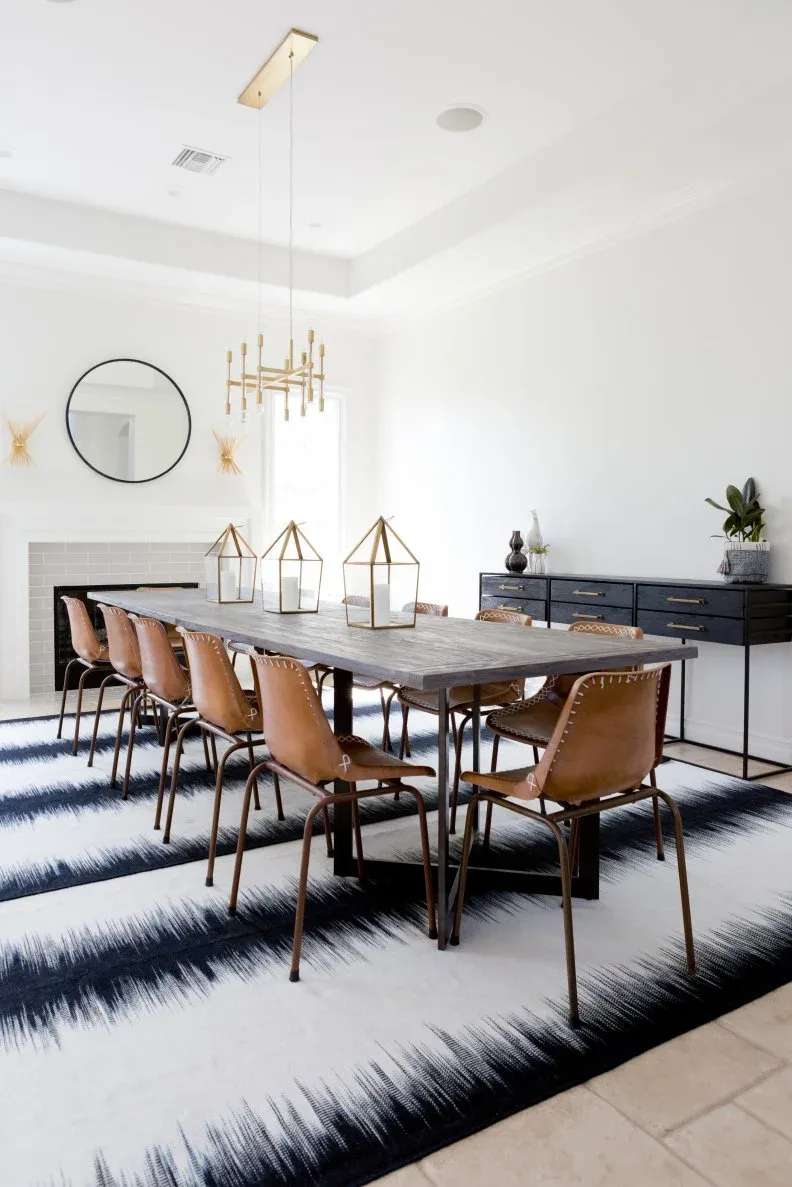
Three gold-framed glass lanterns form a clear line on a long gray table surrounded by brown chairs. Their open outlines repeat the warm hanging light above, while the pale candles keep the interior simple. The lanterns give a broad tabletop a repeated shape without filling it with flowers, and their spacing allows the individual pieces to remain visible against the room’s pale walls.
Check lantern stability and leave enough space for diners to pass serving dishes between them. Follow the candle and lantern instructions for use, keeping flames away from nearby objects and never leaving them unattended. Flameless candles can suit a display used between meals. Protect the tabletop from heat or marks as needed, and move the lanterns when their height interrupts seated views.
IDEA 08 / 20
Group Pale Sculptural Objects Around Low Flowers
 SaveSupport Non AI Creator
Image credit: Photo: David Christensen
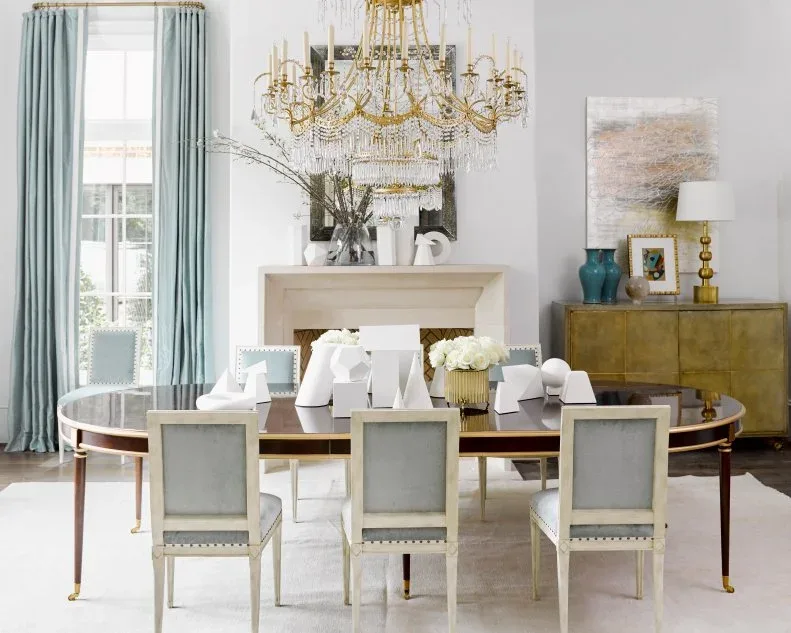
White sculptural objects sit around low pale flower arrangements on a dark oval dining table. Their angular and curved silhouettes bring a different kind of detail below the ornate chandelier, while pale upholstered chairs repeat the light color at the table’s edge. The flowers add softer shapes among the objects, allowing the display to mix decorative forms without using several competing bright colors.
Keep decorative objects clear of plates, glasses and reaching arms before deciding how many to leave on the table. Check that each piece has a stable base and suitable protection beneath it. A display arranged for viewing may need editing for a meal, especially when several objects divide the serving area. Store removed pieces safely rather than clustering them precariously on a nearby chair.
IDEA 09 / 20
Lay a Patterned Cloth on the Diagonal
 SaveSupport Non AI Creator
Image credit: Photo: Marisa Vitale Photography . From: Lindye Galloway
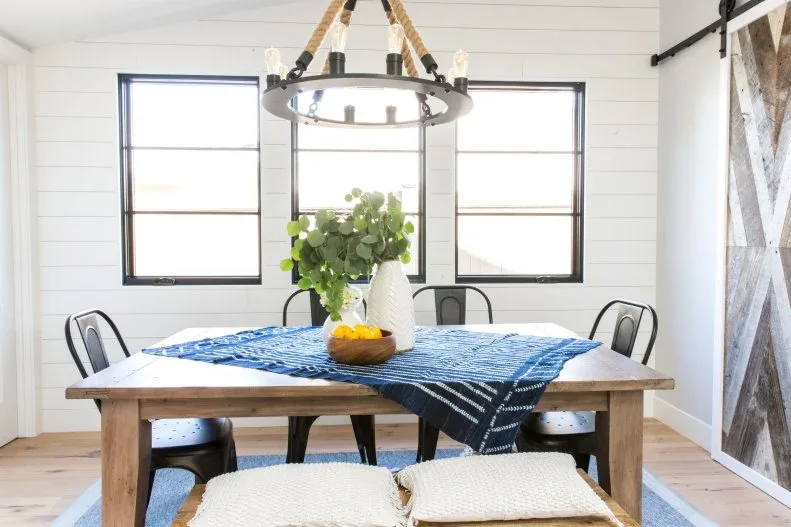
A blue patterned cloth lies diagonally across a wood dining table beneath a white vase of foliage and a bowl of yellow fruit. Its angled placement leaves the table corners exposed, giving the arrangement a less formal outline than a full tablecloth. Dark chairs and white boarded walls keep the background simple, allowing the blue fabric and green stems to carry the tabletop color.
Check that the cloth stays flat and does not catch sleeves or chair movement where it hangs over an edge. Use appropriate protection under the vase; a decorative cloth alone may not prevent water marks. Leave enough table space for place settings before adding the fruit bowl. Follow the fabric’s washing guidance and inspect fruit regularly so the everyday display remains fresh and easy to use.
IDEA 10 / 20
Repeat Blue Glass With a Few Broad Leaves
 SaveSupport Non AI Creator
Image credit: Photo: Ashley Gilbreath. From: Ashley Gilbreath
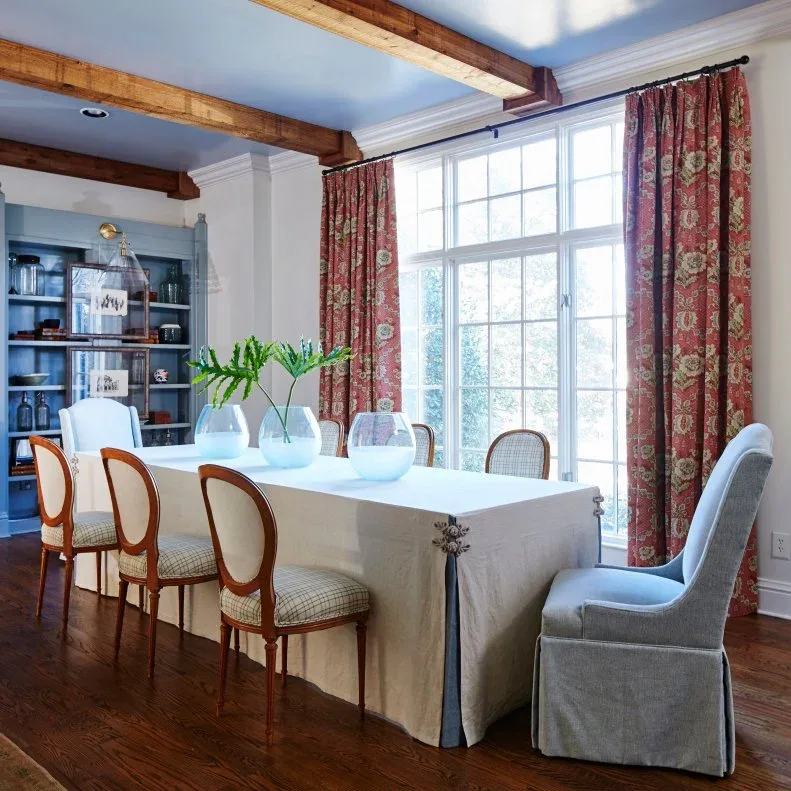
Three pale blue glass vessels sit on a cloth-covered dining table, with broad green leaves rising from two of them. Blue shelves and a pale blue ceiling repeat their color around red patterned curtains and light dining chairs. The matching vessel shapes give the table a simple repeated form, while the different leaf positions keep the line from looking completely identical.
Set the vessels far enough apart to leave useful gaps for serving, and check leaf spread from the side seats as well as the ends. Choose stems and containers that remain stable when people move around the table. Keep water from spilling onto the cloth and protect the surface beneath it. Remove or shorten leaves that obstruct conversation rather than relying on their light color to make them unobtrusive.
PART 03
Connect Flowers, Fruit and Leaves With the Room
IDEA 11 / 20
Echo Wall Pattern With a Green Table Runner
 SaveSupport Non AI Creator
Image credit: Photo: Tim Souza Photography. From: Lotus + Lilac Design Studio
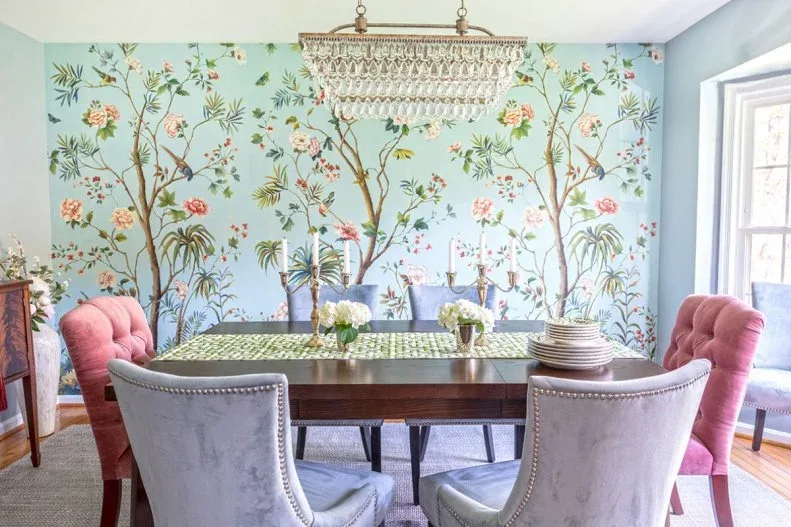
A green patterned runner lies across a dark dining table beneath low pale flowers and slender candlesticks. Stacked plates sit at one end, while pink and blue chairs surround the setting against botanical wallpaper. The runner brings a smaller pattern onto the tabletop, linking it with the room’s decorated walls without covering the whole surface in another large expanse of fabric.
Leave the runner smooth beneath any vessels and keep its edges clear of individual plates. Check the flowers and candlesticks from seated height, then remove pieces that make passing food awkward. Use stable candle holders and follow safe candle-use instructions. Confirm suitable protection under wet containers and hot dishes, since a decorative runner may add pattern without providing the protection the table finish needs.
IDEA 12 / 20
Brighten Blue-and-White Vessels With Yellow Fruit
 SaveSupport Non AI Creator
Image credit: Photo: Alyssa Rosenheck. From: Mel Bean Interiors
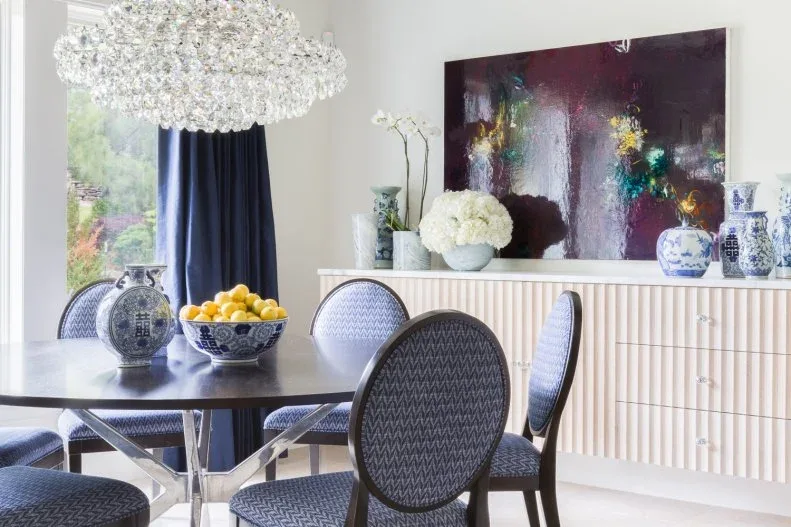
A blue-and-white vase stands beside a matching bowl filled with yellow fruit on a dark round dining table. Blue oval-back chairs and more patterned vessels on the sideboard continue the same color family around the room. The yellow fruit supplies a brighter accent within the familiar blue-and-white pair, giving the tabletop a clear contrast without needing another tall flower arrangement.
Confirm that any bowl used for edible fruit is suitable for food contact. Keep the vase and bowl stable, and leave enough room for plates around the circular edge. Inspect fruit regularly and clean the bowl before refilling it. Matching pieces do not need to stay on the table during every meal; move the taller vase when it blocks the view between seats or crowds a shared serving dish.
IDEA 13 / 20
Repeat Green Plants Along a Long Wood Table
 SaveSupport Non AI Creator
Image credit: Photo: Ashley Gilbreath. From: Ashley Gilbreath
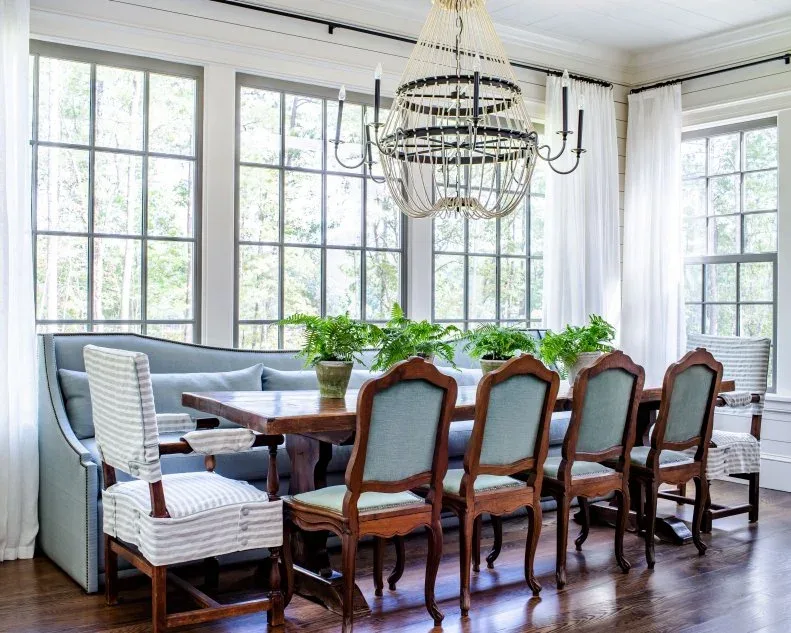
Several green potted plants run along a long wood dining table between blue upholstered chairs and a window bench. Their leafy shapes repeat the greenery outside the broad windows, while the separate containers give the table a sequence of small centers. The plants add texture beneath the large hanging light without covering the entire surface with one continuous arrangement.
Use containers that protect the tabletop from drainage and moisture, and water plants away from the eating surface when practical. Check their combined spread against place settings and sightlines. Plant care depends on the actual species and available light, so choose suitable plants rather than assuming the window view establishes ideal conditions. Remove fallen leaves and keep soil or standing water away from dishes.
IDEA 14 / 20
Let One Clear Vase Carry Broad Green Stems
 SaveSupport Non AI Creator
Image credit: Photo: Chipper Hatter. From: Corine Maggio
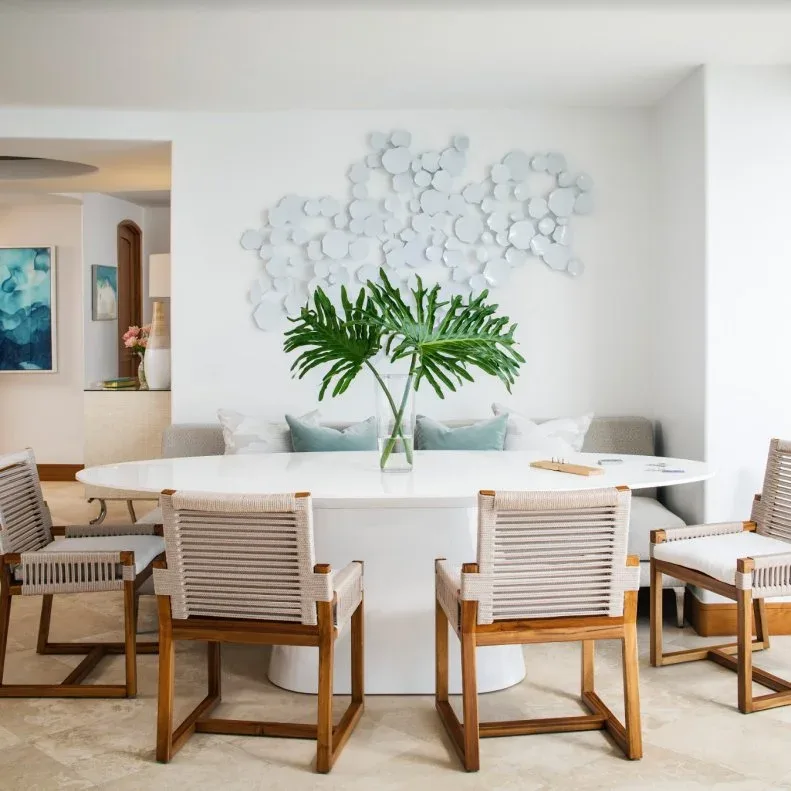
A clear vase holding broad split green leaves sits on a white oval table surrounded by woven-back wood chairs. The leaves provide the main tabletop color against a pale wall and light bench cushions. The transparent vessel keeps the stems visible, allowing one simple arrangement to carry the display while the table’s curved shape and surrounding furniture remain easy to see.
Check the spread of broad leaves from each seat before choosing their final position. A narrow vase needs enough stability for the stems above it, especially when diners reach across the table. Keep the outside of the container dry and use suitable protection underneath. Change or refresh the arrangement as needed for the actual cut stems, and move it aside when a shared meal needs more central space.
IDEA 15 / 20
Repeat Rounded Pots Beneath a Large Chandelier
 SaveSupport Non AI Creator
Image credit: Photo: Ashley Gilbreath. From: Ashley Gilbreath
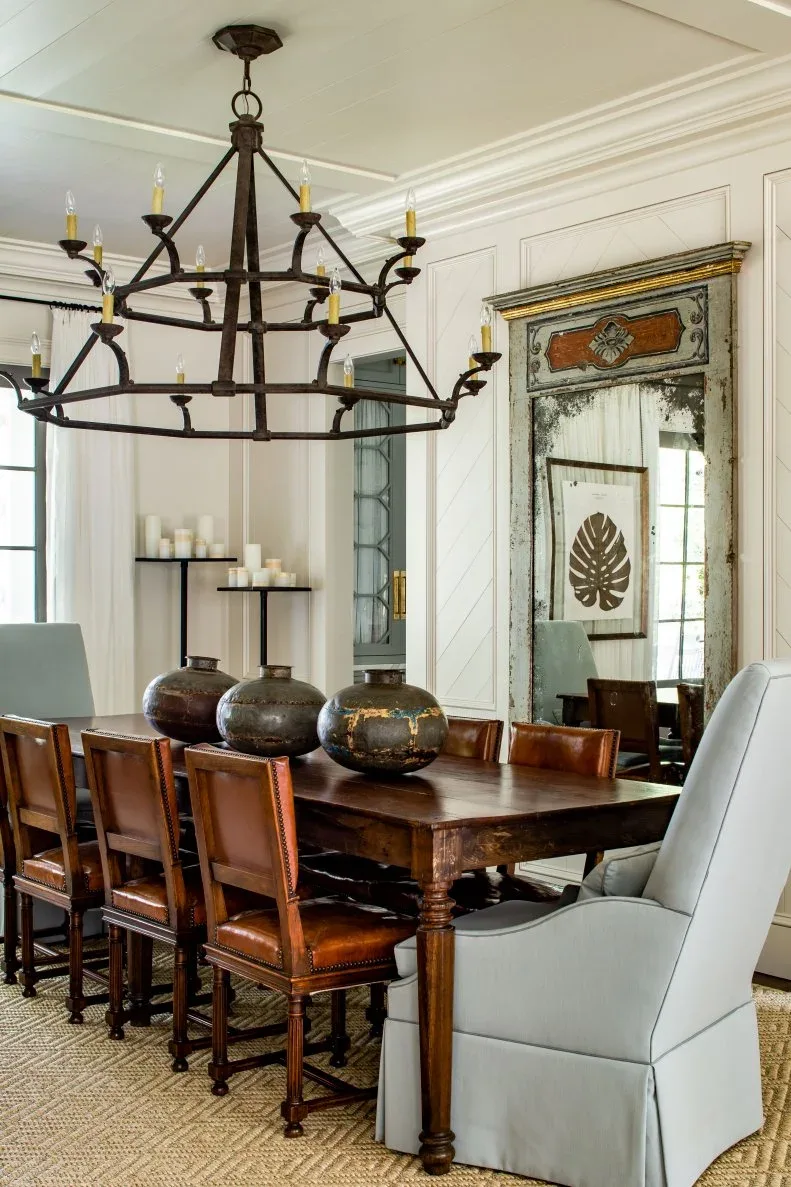
Three rounded dark pots form a repeated group on a wood dining table beneath a large tiered chandelier. Brown chairs and pale upholstered end seats give the room a traditional dining outline, while the vessels add lower, fuller shapes at the center. Their related profiles create continuity without needing matching colors, allowing the surface variations to remain part of the arrangement.
Check the pots’ bases for stability and use finish-appropriate protection on the table. Decorative vessels should not be treated as food or drink containers unless they are intended for that use. Leave gaps for serving and test the view across the group from seated height. Larger pots can be heavy, so plan a safe nearby place to move them before setting the table for a meal.
PART 04
Keep Grouped Displays Easy to Use and Move
IDEA 16 / 20
Give a Mixed Collection One Long Runner
 SaveSupport Non AI Creator
Image credit: Photo: Suzanne Childress
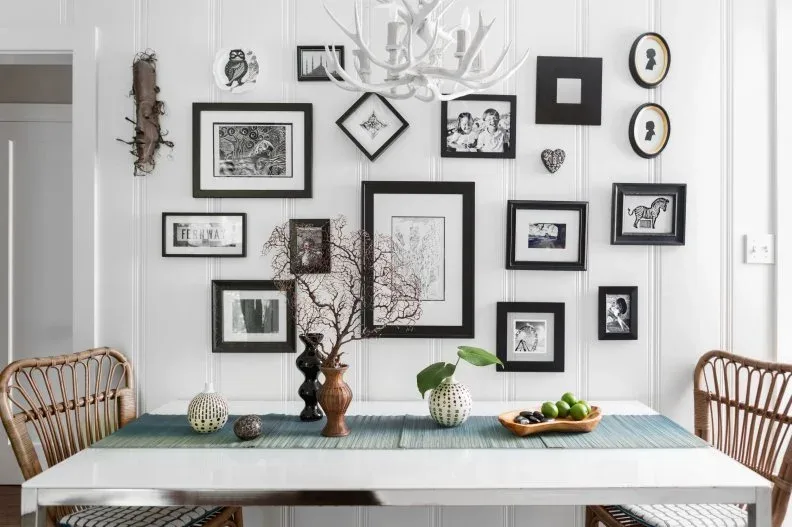
A green runner unites several small vessels, bare branches and a shallow bowl of green fruit on a white dining table. Different heights give the collection a varied profile beneath a gallery wall, while woven chairs bring warmer texture at the ends. The runner supplies a common base, allowing the objects to differ without appearing scattered across unrelated parts of the table.
Edit the collection around the space needed for actual dining before adding another object. Keep branches stable and away from faces or reaching arms, and choose food-safe containers for edible fruit. Small decorative pieces can be easily knocked over when dishes are passed. Leave enough space to lift each item out and wipe the runner area, and move fragile objects aside for crowded meals.
IDEA 17 / 20
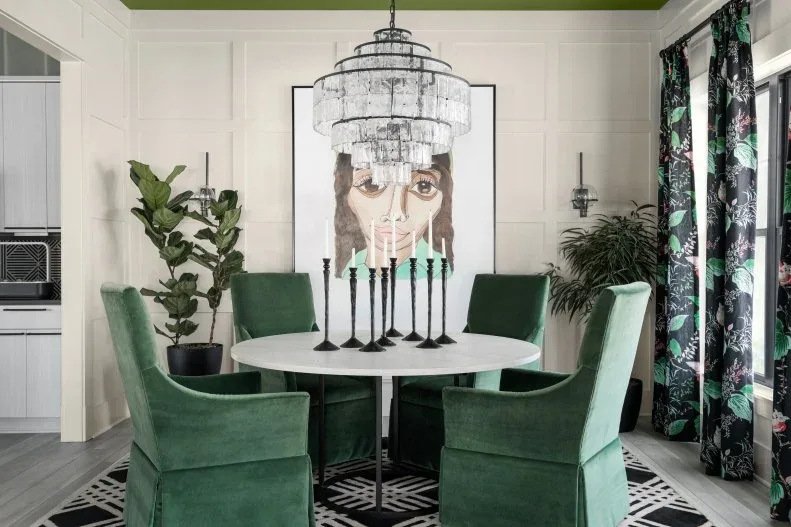
Gather Slender Candlesticks at a Round Table’s Center
 SaveSupport Non AI Creator
Image credit: Photo: Robert Peterson, Rustic White Photography. From: Tiffany Brooks
Slender black candlesticks gather at the center of a white round table surrounded by green upholstered chairs. Their different heights create a narrow upright display beneath the tiered hanging light, while the black bases connect with darker details in the rug and window area. The pale and green candles give the group a lighter upper outline without adding a wide spread of flowers.
Check stability and leave enough space between holders for safe use according to their instructions. Keep flames away from objects, curtains and reaching hands, and never leave burning candles unattended. Flameless alternatives can suit a display left in place between meals. Test the group from every seat around the round table, then reduce its height or move it when it interrupts conversation.
IDEA 18 / 20
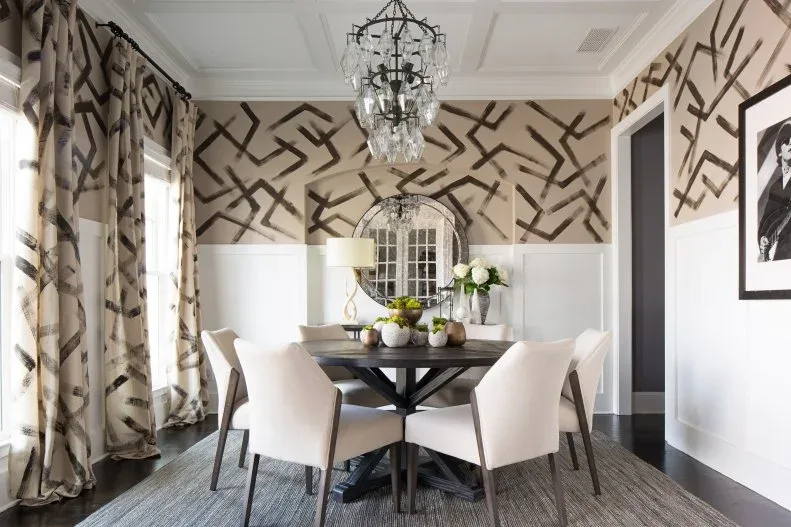
Group Small Planters Within a Shallow Tray
 SaveSupport Non AI Creator
Image credit: Photo: Kimberly Murray Photography. From: FORBES + MASTERS
Small pale and warm-toned planters sit within a shallow tray on a round dark dining table. A raised bowl of green fruit adds another level behind the lower plants, while cream chairs and patterned walls surround the setting. The tray gives the small pieces a shared boundary, helping the display read as one group rather than a collection spread around each place setting.
Check that every planter contains water safely and protect the tray’s underside against the tabletop. Water plants away from dishes when practical, then wipe containers before returning them. Keep the raised bowl stable and use a food-safe vessel for edible fruit. Leave enough space around the tray to serve a meal, and lift it only when its weight and contents can be handled securely.
IDEA 19 / 20
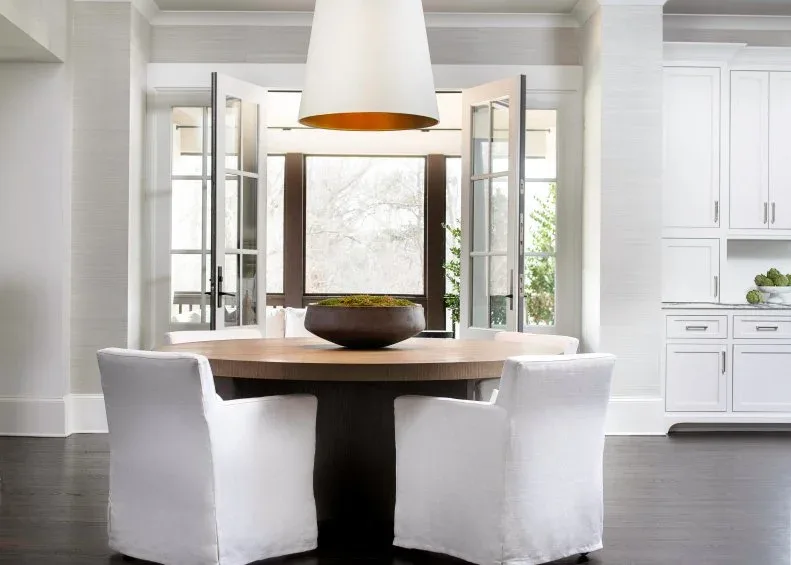
Let a Broad Bowl Be the Only Centerpiece
 SaveSupport Non AI Creator
Image credit: Photo: Galina Coada Photography. From: Pineapple House Interior Design
A broad dark bowl holding a low green arrangement sits alone at the center of a round wood dining table. White upholstered chairs and a white pendant keep the surrounding shapes restrained, while open glass doors connect the dining area with the view beyond. The bowl provides one clear horizontal accent, allowing the tabletop to remain largely open instead of adding multiple smaller decorations.
Choose a bowl whose footprint leaves comfortable room for every place setting around the table. The photograph does not establish what the green arrangement is made from, so select and maintain your own contents accordingly. Check the bowl’s base and use appropriate surface protection. Keep the display easy to remove when serving dishes need the center, and wipe beneath it as part of regular table care.
IDEA 20 / 20
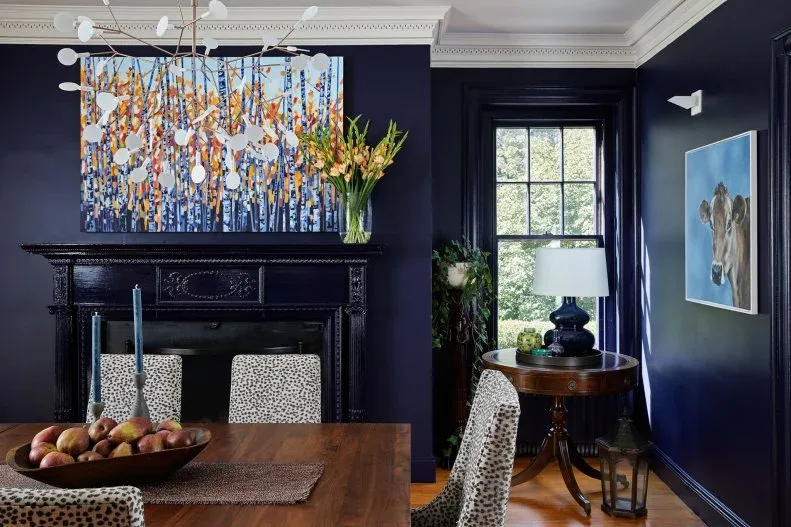
Put Everyday Fruit on a Short Textured Runner
 SaveSupport Non AI Creator
Image credit: Photo: Sean Litchfield. From: Casagrande Studio
A shallow bowl of mixed fruit sits on a short textured runner across a wood dining table in a navy room. The low arrangement leaves the fireplace artwork and patterned chair backs visible, with its warm fruit colors contrasting the dark walls. The runner defines a small display area rather than covering the whole table, keeping the furniture’s wood surface part of the room.
Use a food-safe bowl and inspect fruit regularly, removing damaged pieces before they affect the rest. Check that the runner lies flat and does not interfere with plates or glasses. A bowl can remain useful during meals when it leaves enough serving space, but move it when needed. Follow the table and fabric care instructions after spills rather than allowing moisture to remain beneath the display.
BRING IT ALL TOGETHER
Set the Meal Out Before Finishing the Display
Place plates, glasses and your usual serving dishes first. Check the view between seats and keep reaching routes clear, then choose a centerpiece that fits the remaining space. A display can move to another surface when the occasion needs a fuller table setting.
Use stable containers, suitable surface protection and food-safe bowls where food is involved. Keep water, soil and fallen leaves away from dishes, and follow safe candle-use instructions. Choose an arrangement whose routine cleaning and care fit the way you use the table.