An easy mudroom starts with a place for the things you carry through the door: a coat, a bag, shoes and perhaps an umbrella or sports kit. You can often improve the daily routine with a few well-chosen pieces before considering fitted cupboards. The most useful arrangement is one you can reach, clean and keep clear without constant effort.
These photographs range from a simple bench to larger storage walls. Look for the individual idea you can adapt, rather than assuming you need to reproduce the whole room. Check door movement, sitting space and how you will handle damp footwear before buying furniture, baskets or hooks.
PART 01
Start With Reachable Everyday Storage
IDEA 01 / 20
Start With a Freestanding Coat Storage Unit
 SaveSupport Non AI Creator
Image credit: West Elm
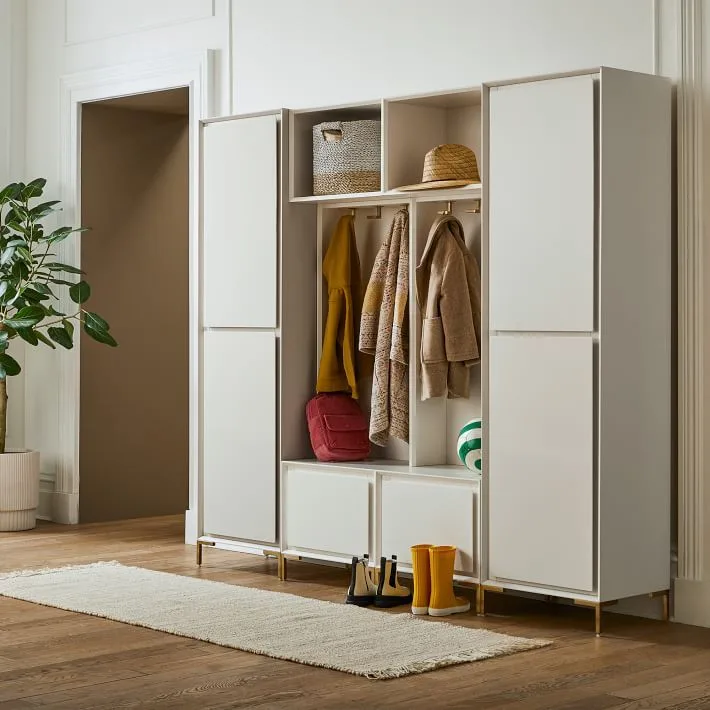
This pale freestanding unit combines a central hanging area with closed cupboards on both sides. Upper cubbies hold a basket and hat, while coats and a bag remain easy to see in the middle. Boots sit at floor level in front of the unit. The arrangement shows how separate everyday needs can share one piece of furniture without filling every wall with fitted cabinetry.
List the coats, bags and shoes you actually keep by this entrance before choosing a unit. Check its depth with the doors open, its stability and any manufacturer-required anchoring. Keep frequently worn items in the open center and use closed sections for dry overflow. Leave a clear route around the boots, and choose a nearby mat that stays flat when the entrance door moves over it.
IDEA 02 / 20
Combine a Small Shoe Bench With a Peg Shelf
 SaveSupport Non AI Creator
Image credit: Polly Eltes
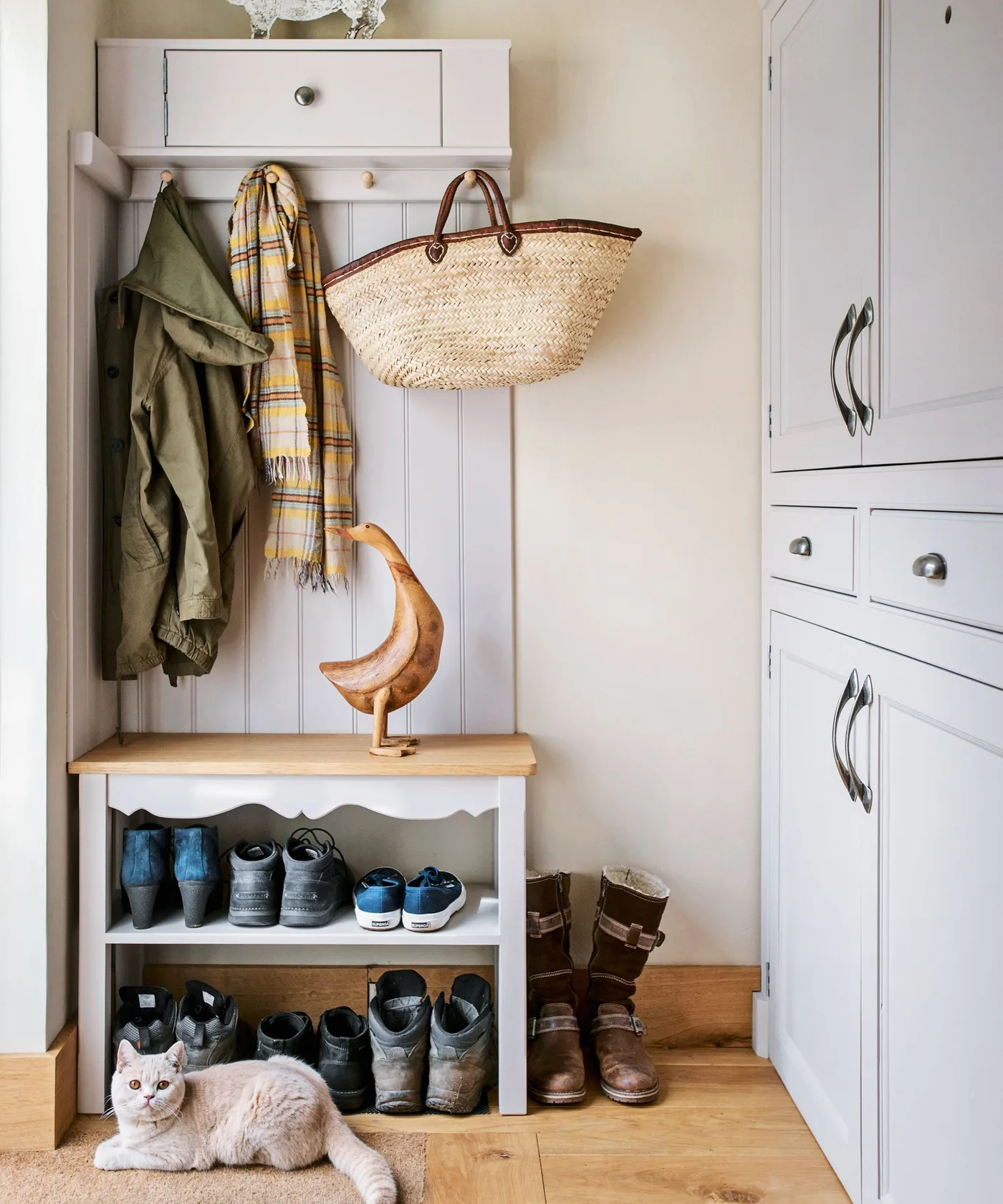
A compact pale bench holds two shelves of shoes beneath a wood seat. A peg shelf with an upper drawer keeps coats, a scarf and a woven bag close above it, while taller cupboards stand alongside. The essential mudroom functions fit into a narrow vertical arrangement, leaving the larger storage piece to handle items that do not need to hang in view every day.
Measure your largest regular shoes against the shelf openings before buying a bench. Leave the seat clear enough to use, moving decorative objects if necessary. Install the peg shelf with fixings appropriate to the wall and the expected load, following its instructions. Keep wet footwear on a suitable tray until dry, and check that hanging coats do not cover the bench or obstruct nearby cupboard handles.
IDEA 03 / 20
Put Shoes and Coats on Separate Wall Racks
 SaveSupport Non AI Creator
Image credit: Garage Living
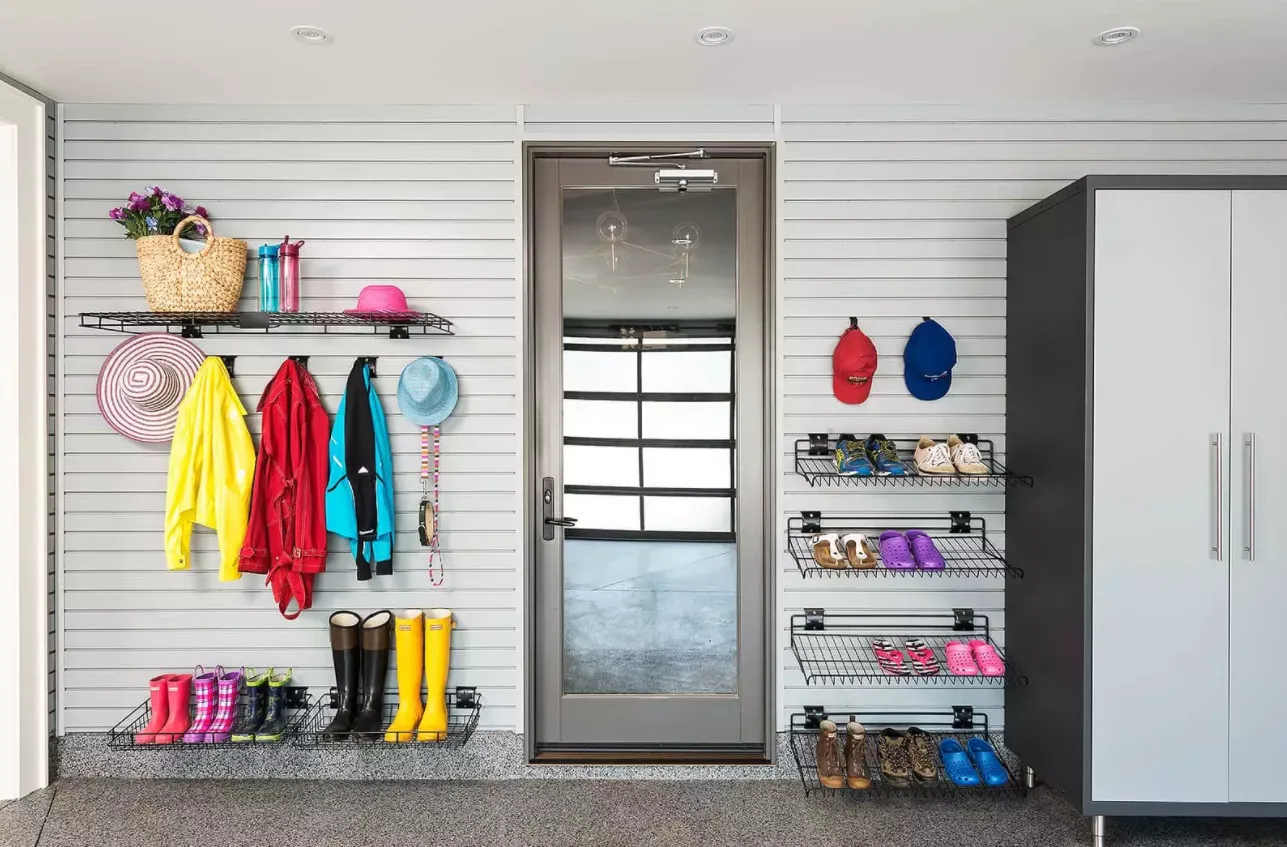
Coats hang from a rack on one side of this door, with boots on a lower wire shelf. Separate wire baskets hold shoes on the other side, and a tall closed cabinet stands at the edge. The arrangement keeps different items visible and gives footwear its own place, instead of asking one overloaded hook rail or floor pile to handle everything coming through the entrance.
Choose racks for the shoes and coats your household uses, checking the wall fixings and each product’s load limits. Keep the doorway and door hardware clear when the racks are full. Wire storage makes items easy to see, but small shoes may need a closer-spaced shelf or appropriate liner. Sweep beneath the lower rack regularly and avoid putting loose items where they can fall into the walking route.
IDEA 04 / 20
Give Boots a Defined Place Beneath the Hooks
 SaveSupport Non AI Creator
Image credit: Tim Lenz
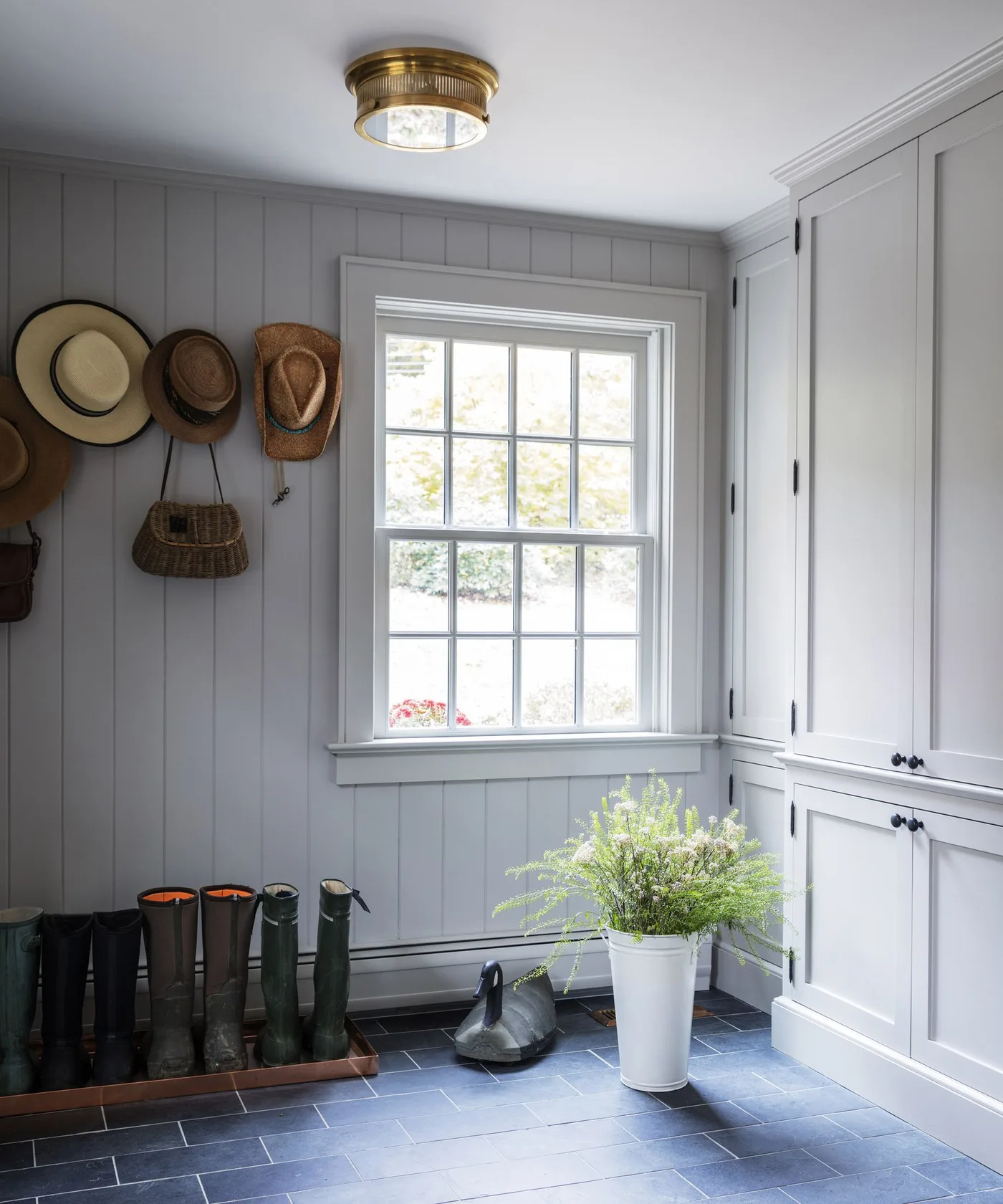
Hats hang along one wall of this light gray entry, while tall boots stand together on a low tray beneath them. Closed cupboards provide additional storage to the right of the window. The floor remains largely open between the boots and cabinet, showing that a clear drop-off place can be useful even when there is no bench beneath the hanging items.
Choose a boot tray for your actual footwear and check that it contains drips without becoming awkward to step around. Empty dirt and standing water promptly rather than letting the tray become another storage problem. Keep the hooks spaced for the hats or coats you use most often. If you need a seat, add one only where it leaves cupboard doors and the entrance route comfortably accessible.
IDEA 05 / 20
Use a Hat Display to Organize Small Accessories
 SaveSupport Non AI Creator
Image credit: Sims Hilditch
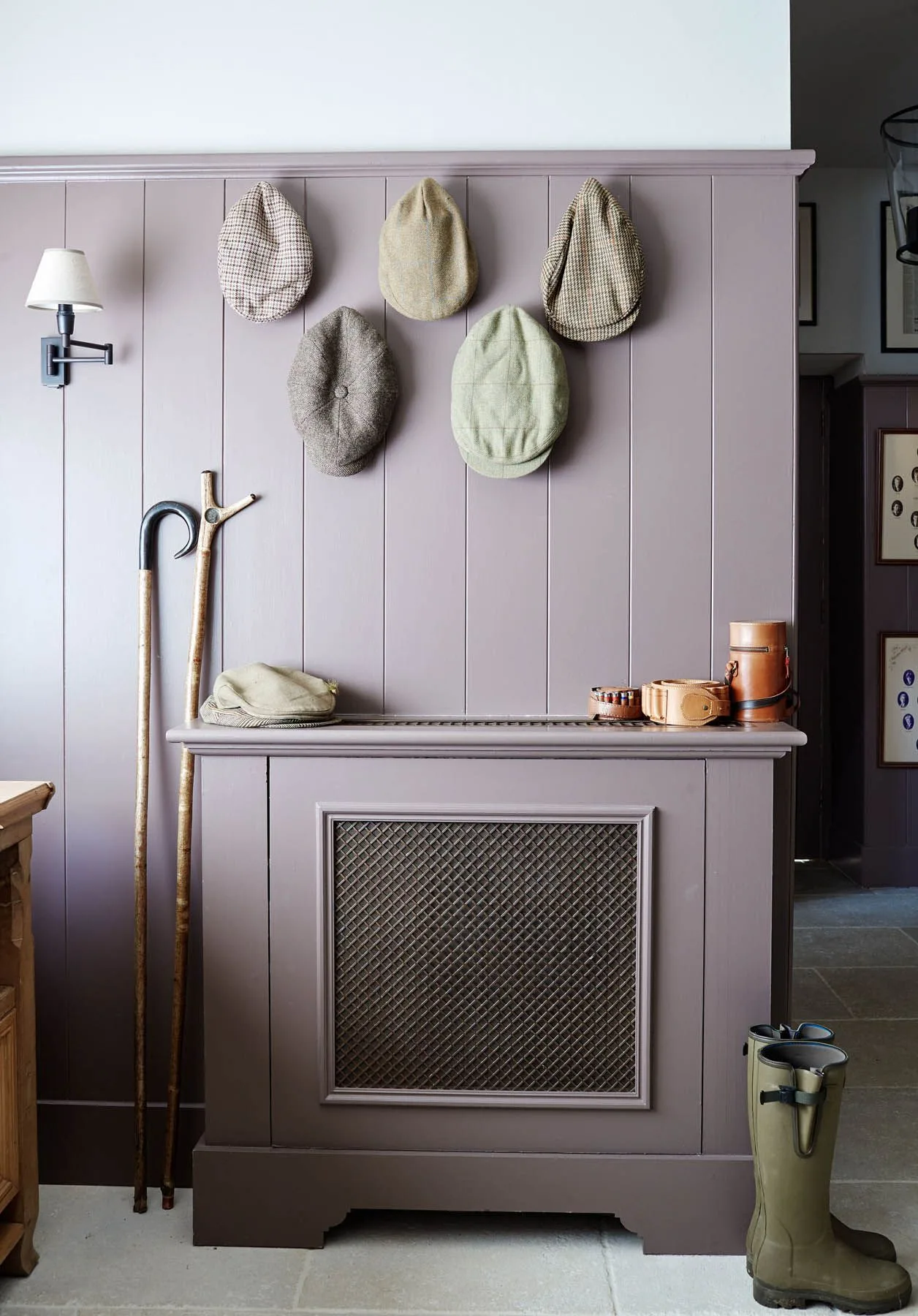
Five caps hang in a compact group on a muted purple paneled wall, making small accessories easy to see instead of burying them in a basket. Walking sticks stand alongside a vented-front cover, and boots sit at the edge. The repeated cap shapes give this practical corner a recognizable arrangement without requiring another large cabinet or a collection of decorative objects.
Place hooks where the intended users can reach them comfortably, allowing enough separation that hats can be removed without pulling down neighboring items. Give walking sticks a stable holder rather than leaving them where they might slide into the route. Keep any vented equipment cover unobstructed according to its requirements. Use a suitable tray for damp boots and clear the top of the cover if objects interfere with access.
PART 02
Make a Small Corner Work
IDEA 06 / 20
Add a Hook Shelf Above an Existing Bench
 SaveSupport Non AI Creator
Image credit: deVOL
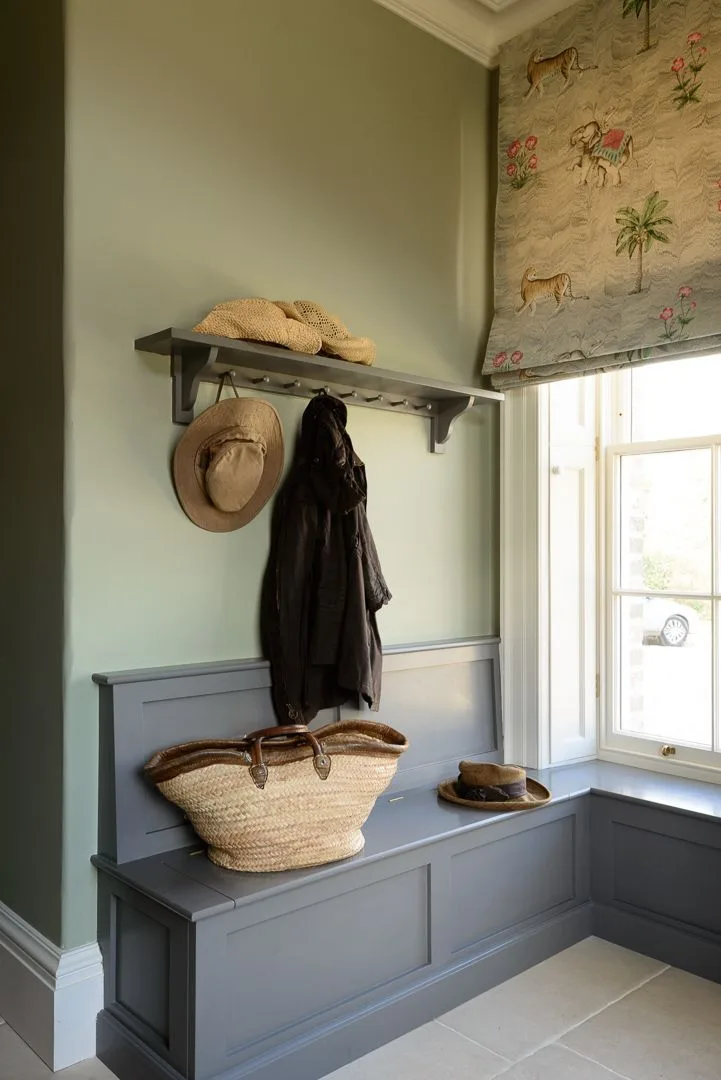
A gray corner bench sits beneath a short shelf and row of hooks beside the window. Hats use the shelf and a hook, while a dark coat hangs above the seat and a woven bag rests below it. The pattern stays on the window blind, leaving the storage arrangement simple. The useful idea is the relationship between a seat, a reachable hanging point and a small upper surface.
Check the coat length against the bench before deciding the hook height, and leave enough seat space to put on shoes. Use the shelf for light items you can reach safely, following its fixing and load guidance. Test the window and blind movement with the hanging items in place. Keep the bag elsewhere if it takes up the whole usable seat during your normal morning routine.
IDEA 07 / 20
Turn a Narrow Recess Into a Coat Drop-Off
 SaveSupport Non AI Creator
Image credit: Future/Mark Bolton
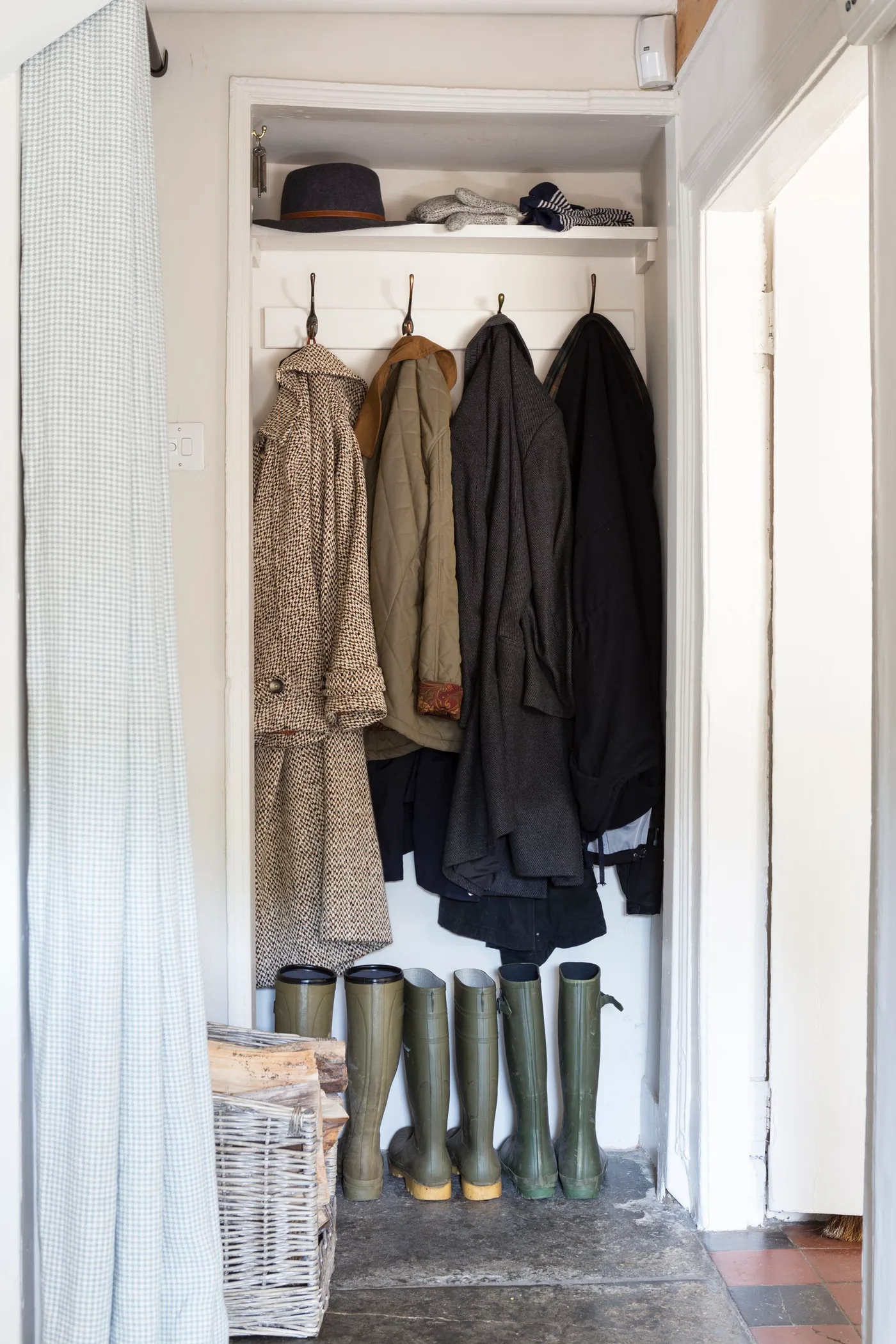
Four coats hang inside a narrow white recess, with hats on an upper shelf and tall boots below. A curtain sits at one side, offering a softer edge than another visible cabinet door. The arrangement uses the height of an existing-looking opening for hanging storage, showing how a small entrance can have a defined place for outdoor items without spreading them across the neighboring room.
Measure coat depth and length while the items are hanging, not folded, before planning a narrow recess. Keep the lower shelf or floor area accessible for your tallest boots. Let damp garments dry appropriately before enclosing them, and do not assume a curtain solves ventilation needs. Check its clearance around footwear and any nearby door, and limit the recess to the coats currently in regular use.
IDEA 08 / 20
Keep a Plain Bench Useful With a Mirror Above
 SaveSupport Non AI Creator
Image credit: Marco Ricca
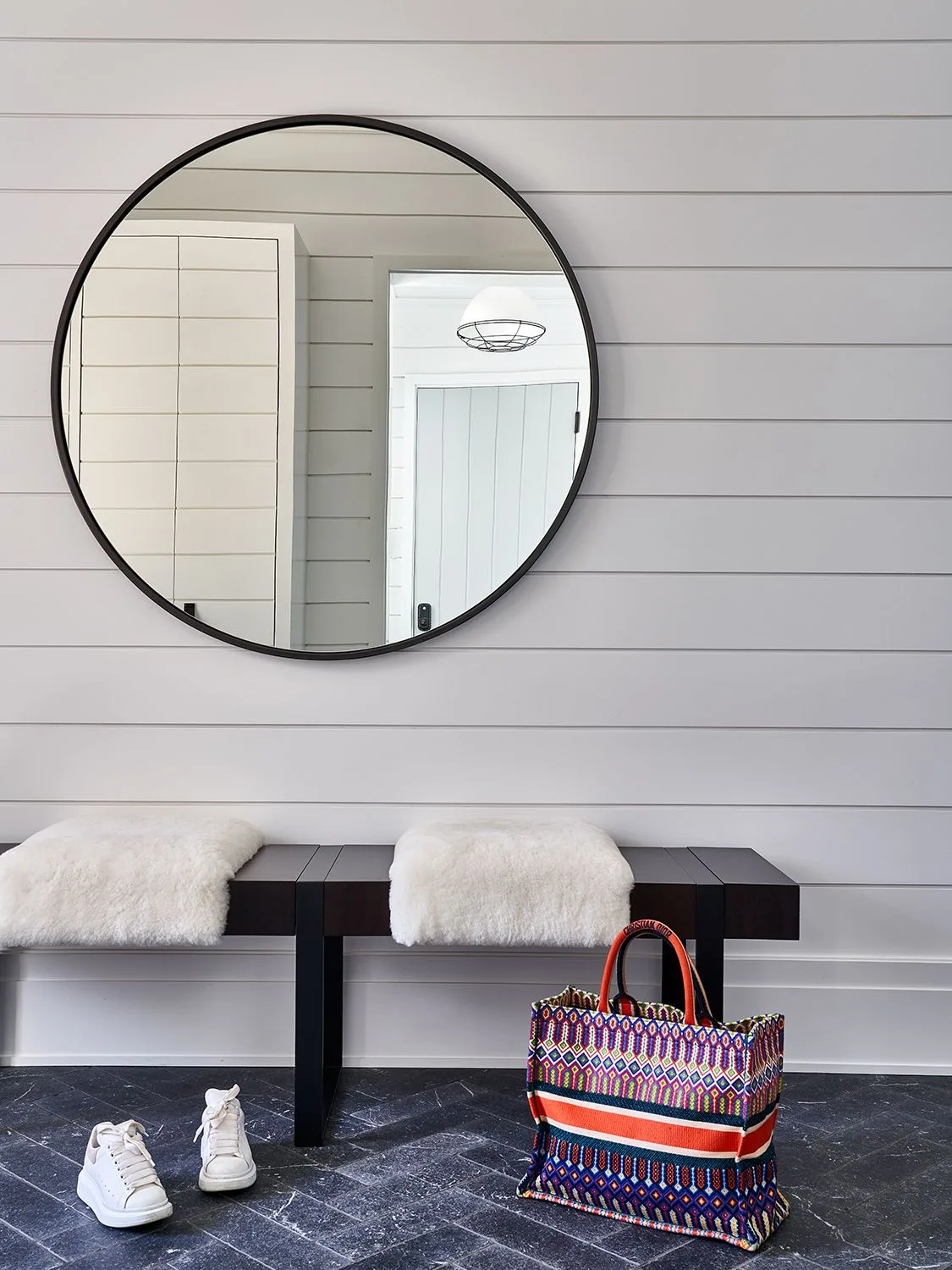
A dark bench provides a straightforward seat beneath a large round mirror on a pale horizontal-paneled wall. Two textured cushions soften its ends, leaving an open middle section. Shoes and a striped woven bag sit nearby rather than being hidden in furniture. The photograph shows a minimal starting point: a useful place to sit and a mirror for a final check before leaving.
Choose a bench that is stable and comfortable for putting on shoes, and hang the mirror securely at a useful height. Keep cushions to the support you need so they do not have to be moved every time. This arrangement still needs a deliberate place for footwear and coats; add a suitable tray and hooks where space permits rather than allowing the floor beside the seat to fill up.
IDEA 09 / 20
Separate Umbrellas From the Main Bench
 SaveSupport Non AI Creator
Image credit: Marco Ricca
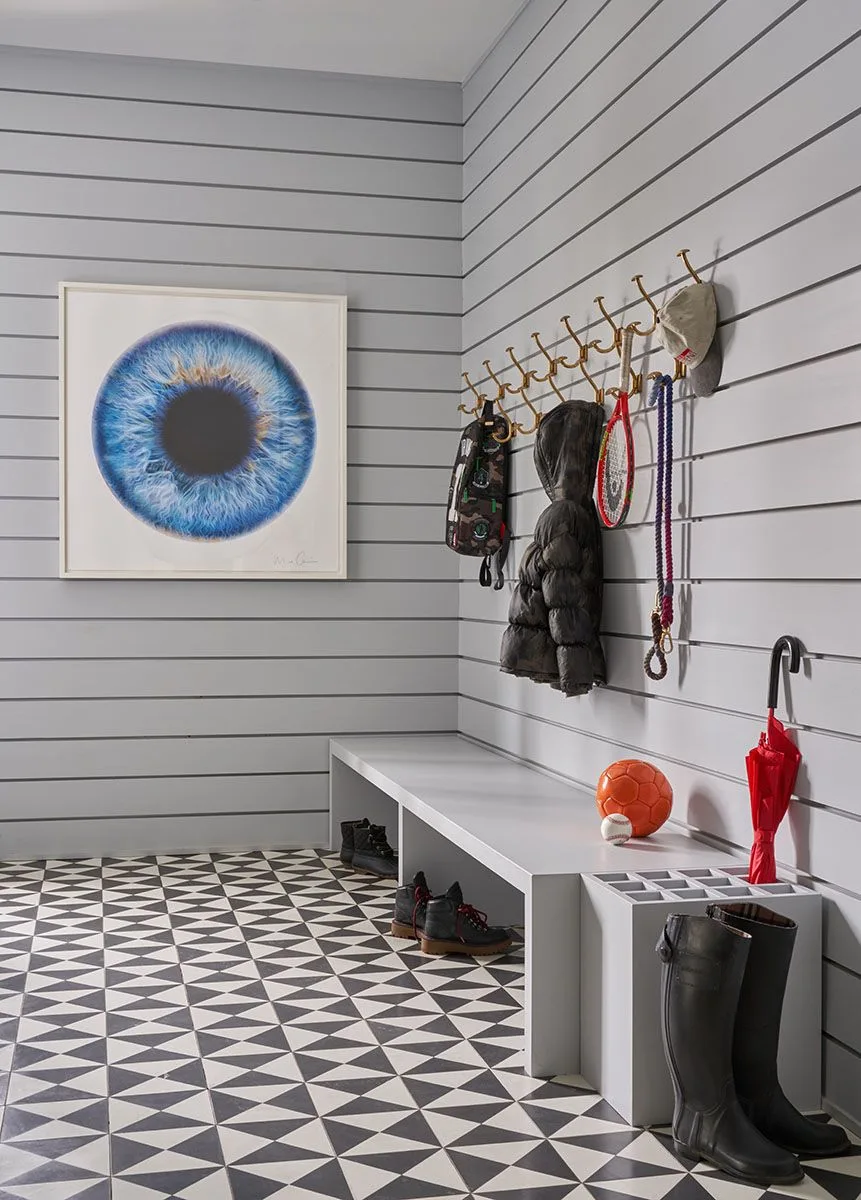
A long row of hooks handles coats, hats and sports items above a low bench in this gray entry. A divided upright holder stands at one end for umbrellas, while shoes sit beneath the bench. The geometric floor supplies most of the pattern. Separating long umbrellas from the coat hooks keeps their handles and lower ends out of the main seating area.
Choose an umbrella holder that can manage the drips from wet items and is stable when only one side is occupied. Empty collected water and let umbrellas dry before closing them for storage. Keep hooks spaced for bags as well as coats, and avoid placing heavy equipment over the part of the bench you use. Check that the patterned floor’s actual finish has a care routine suited to an entrance.
IDEA 10 / 20
Slide One Large Basket Beneath a Wood Bench
 SaveSupport Non AI Creator
Image credit: Dan Duchars (Oak Management)
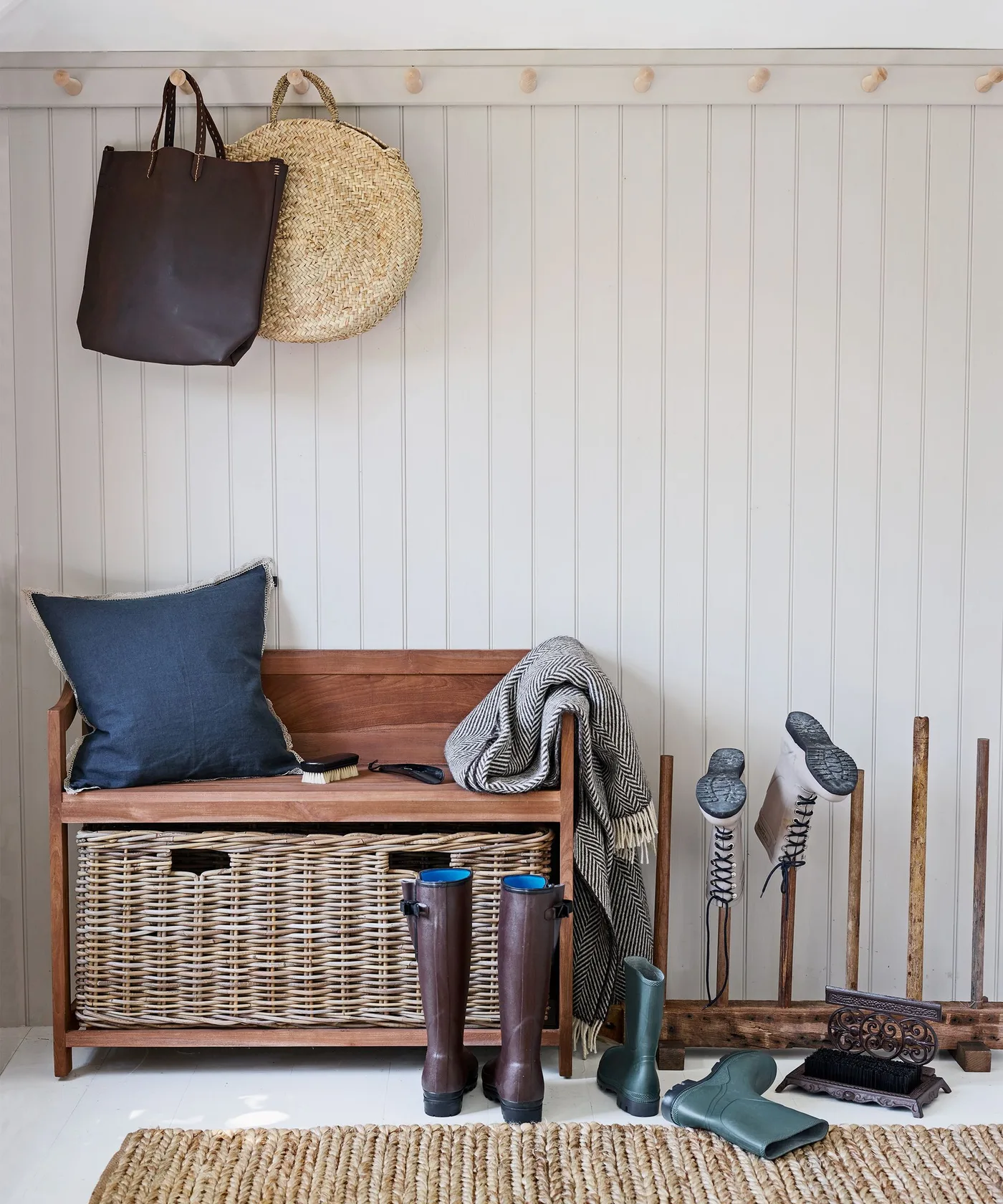
A deep woven basket fills the lower opening beneath a wood bench, giving loose items one visible container rather than several smaller piles. A blue cushion and folded throw sit above it, with bags on pegs behind. Boots and a separate boot rack remain outside the basket. The combination distinguishes small dry belongings from larger footwear that needs a more open storage position.
Measure the basket with its handles and check that you can pull it out without scraping the bench or lifting the seat contents. Use it for dry items and give each category a clear purpose so the basket does not become a mixed dumping place. Keep muddy boots on a suitable tray or rack. Remove excess cushions if they make the bench awkward to sit on when wearing outdoor clothes.
PART 03
Give Loose Items a Defined Place
IDEA 11 / 20
Keep a Small Entry White and Easy to Sort
 SaveSupport Non AI Creator
Image credit: Marlaina Teich Designs/Patrick Cline
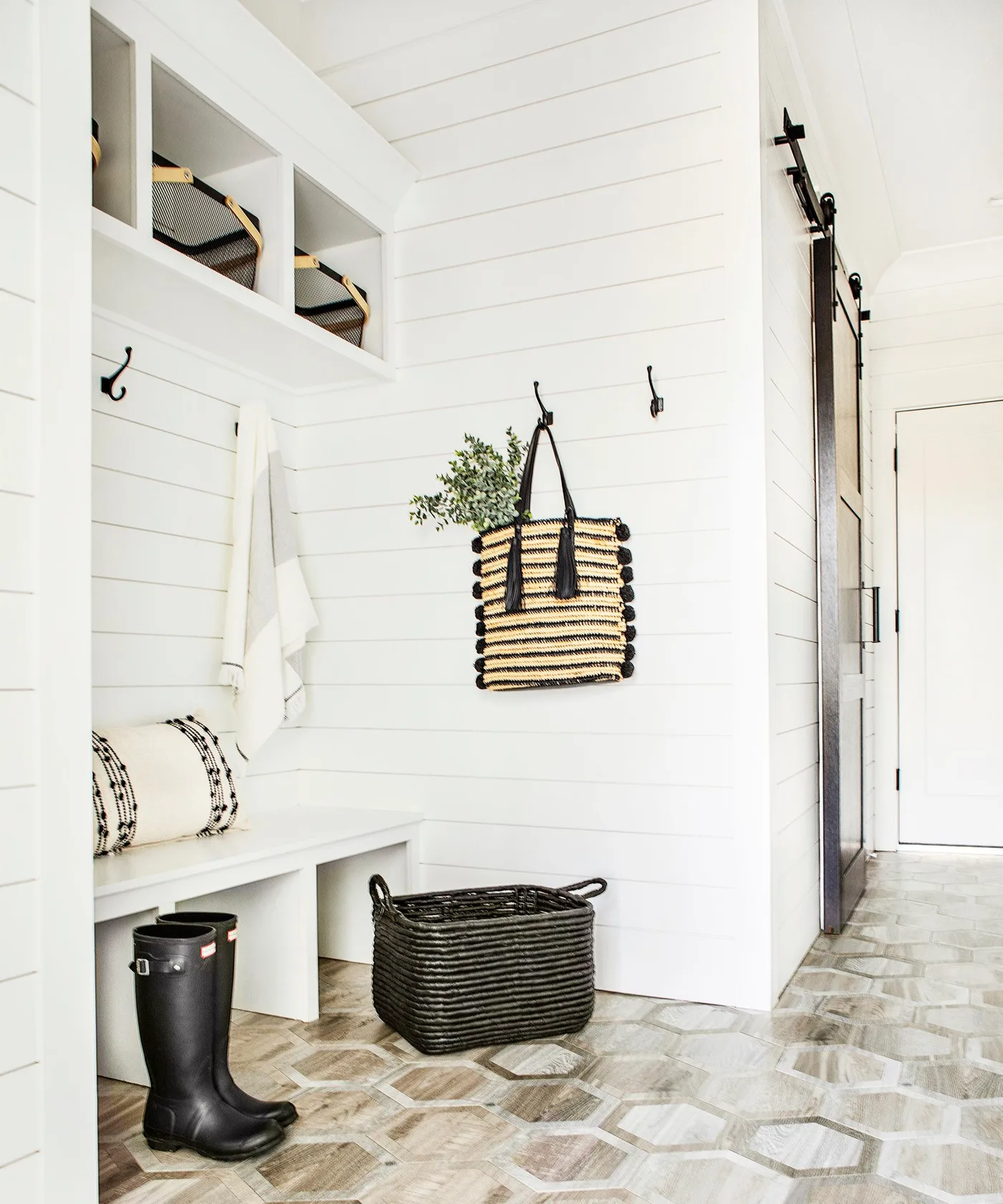
White paneling, a pale bench and upper cubbies create a clear background for the dark hooks, basket and boots in this small entry. A striped bag hangs separately near the center rather than resting across the seat. The basket offers a loose-item container below, while the cubbies keep smaller belongings above head level. Different storage positions make the everyday arrangement easy to understand at a glance.
Give the upper cubbies a limited role, such as dry hats or items used less often, and keep heavier belongings within easy reach. Check that the basket can slide out without blocking the doorway. A light bench may show marks from bags and outerwear, so choose its finish with the actual care guidance in mind. Keep tall wet boots on a suitable tray instead of against the paneling.
IDEA 12 / 20
Use a Hall Tree With a Built-In Mirror
 SaveSupport Non AI Creator
Image credit: Dan Duchars (Oak Management)
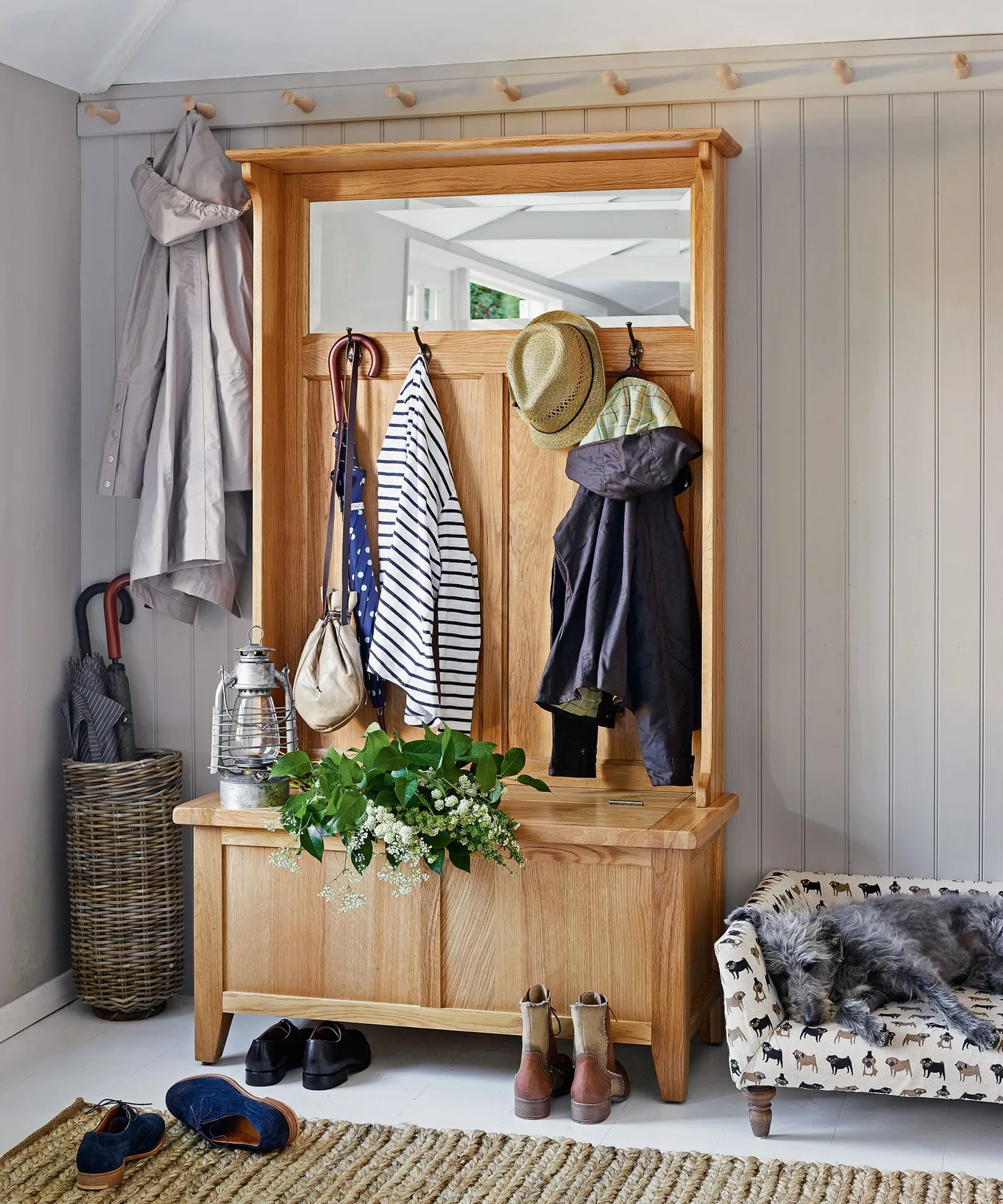
A wood hall tree combines a mirror, hooks and a lower chest in one substantial piece. Hats and coats hang beneath the mirror, while an umbrella basket sits alongside and a dog bed occupies the neighboring floor area. The arrangement shows how one freestanding piece can organize a corner, though the chest top needs to stay clear if it is also intended for sitting or opening.
Check the hall tree’s stability and follow its anchoring instructions before loading the hooks. Confirm how the chest opens and whether the top is suitable for sitting rather than assuming it is a bench. Keep the mirror and hook positions useful for the household. Leave the dog bed outside the walking route, and give damp umbrellas a holder that can contain drips without soaking nearby furniture.
IDEA 13 / 20
Put Small Everyday Items in Bench Drawers
 SaveSupport Non AI Creator
Image credit: House of Jade Interiors/Travis J. Photography
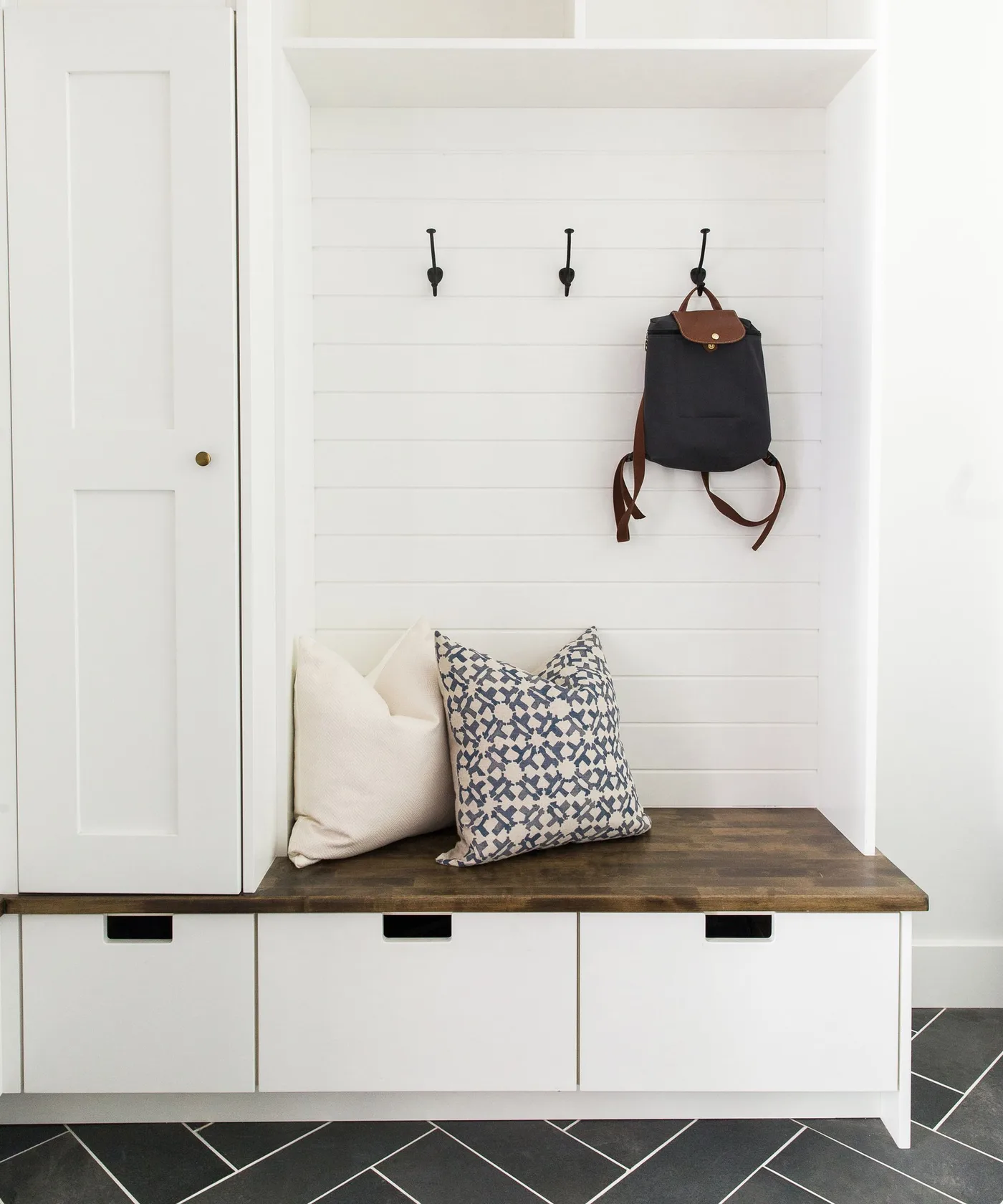
Three lower drawers sit beneath a dark wood seat in this white entry arrangement. A few black hooks above hold a backpack, and two cushions occupy one end of the bench. The closed lower storage keeps small belongings out of view while the hanging item stays easy to reach. The contrast between white fronts and the darker seat makes the storage arrangement readable without additional decoration.
Give each drawer a specific role, such as dry hats, gloves or bags, rather than mixing all outdoor items together. Check drawer depth and opening space before choosing a similar bench. Keep damp shoes elsewhere until dry unless the storage is expressly designed to handle them. Leave enough clear seat for everyday use, and position backpack hooks so straps do not catch on the drawers or nearby door.
IDEA 14 / 20
Divide Open Shelves by What You Reach for First
 SaveSupport Non AI Creator
Image credit: Douglas Sheppard/Unsplash
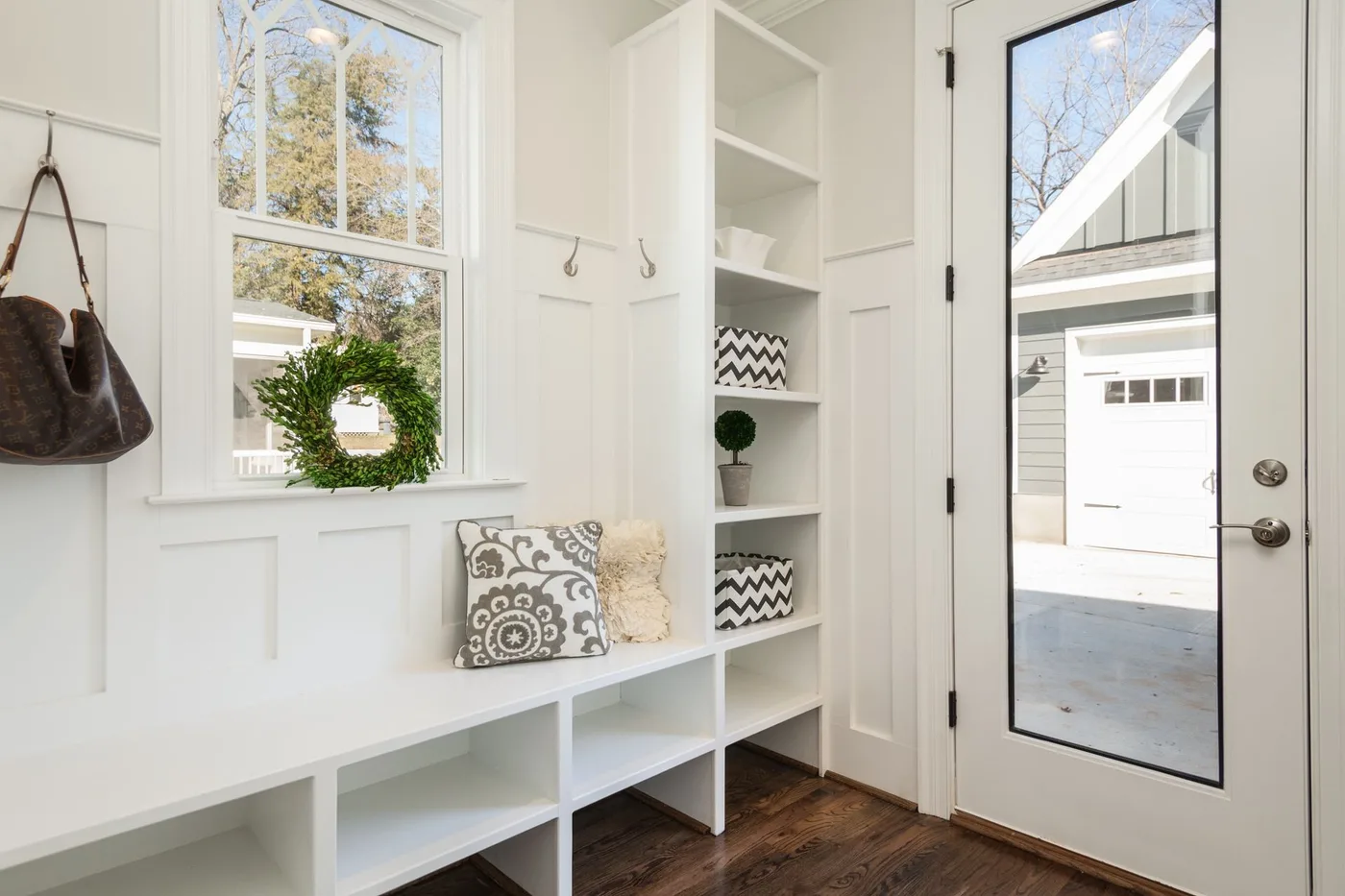
A long white bench has open cubbies underneath, with a taller shelf rising at one end near the glazed door. Hooks line the wall above the seat, and a few patterned containers appear on the shelves. The storage remains mostly open and easy to see. Rather than needing every opening filled, the arrangement offers separate places for shoes, bags and small belongings at different heights.
Place daily shoes and bags in the openings you can reach most easily, and reserve upper shelves for lighter or less frequent items. Choose containers only after measuring the shelves and deciding what belongs there. Keep the bench comfortable and check the door swing with coats on the hooks. Light-painted open shelves need regular wiping, particularly near footwear, so use a finish and cleaning method suited to the actual furniture.
IDEA 15 / 20
Organize a Bench Around Shoes, Bags and Baskets
 SaveSupport Non AI Creator
Image credit: Sims Hilditch
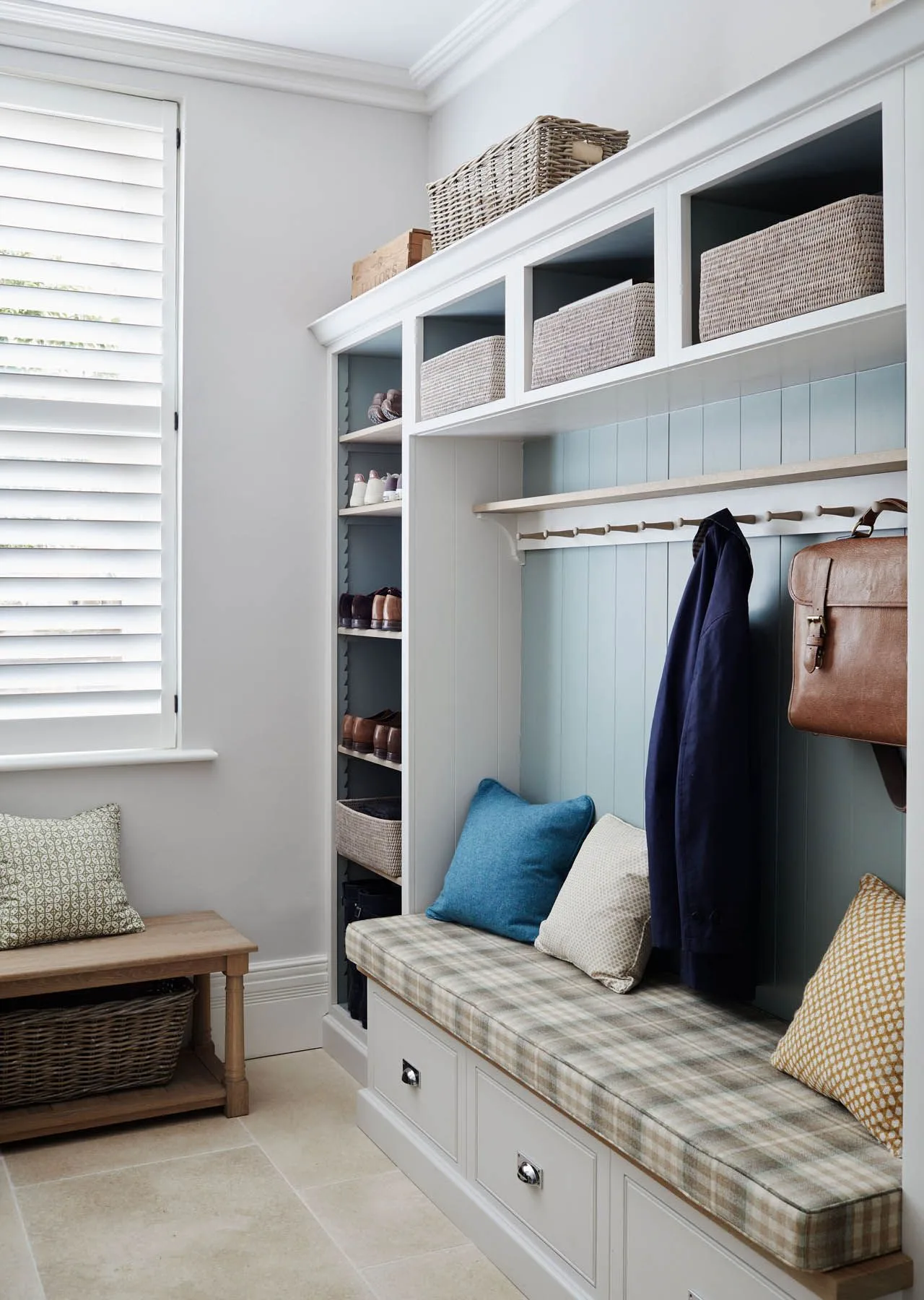
A checked cushion covers the bench in this pale blue entry, with baskets in the upper cubbies and shoes on narrow side shelves. A coat and bag hang above the seat, while lower drawers provide another storage position. The different compartments show a useful sorting principle: footwear, hanging items and smaller dry belongings do not need to share one crowded shelf.
Adapt the sorting principle to your existing furniture before planning an entire built-in unit. Keep daily shoes within easy reach and use upper baskets for light items that do not need constant access. Check the seat cushion’s cleaning instructions and whether its cover can be removed. Leave space beneath hanging bags for comfortable sitting, and avoid storing so many shoes that pairs become difficult to see or remove.
PART 04
Sort Storage Around Your Routine
IDEA 16 / 20
Keep Walking Sticks in Their Own Holder
 SaveSupport Non AI Creator
Image credit: Sims Hilditch
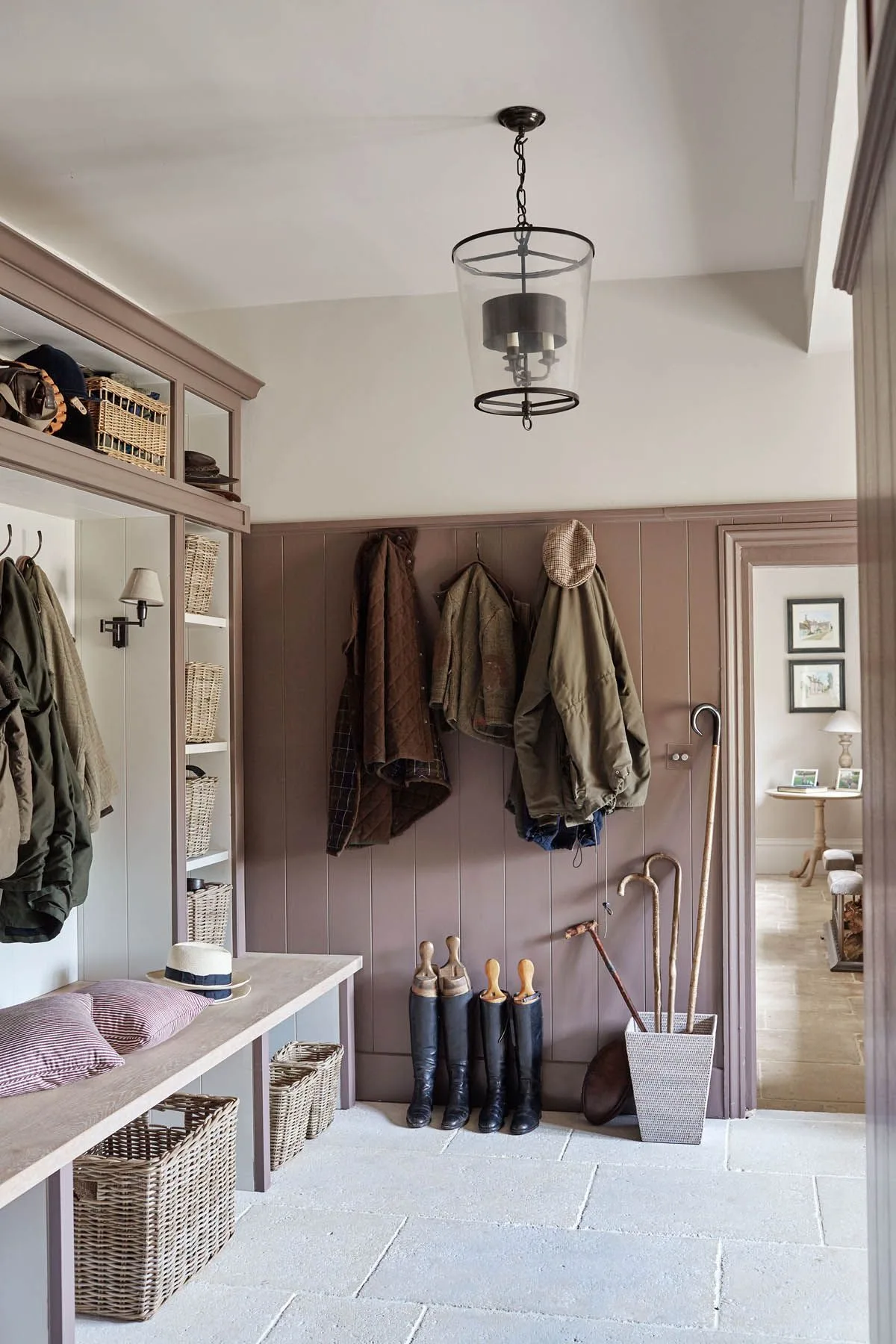
A muted purple wall carries hooks for coats beside a bench with baskets underneath. Tall boots stand together near a separate upright holder containing walking sticks, while the doorway remains open to the next room. The arrangement gives long outdoor items their own defined position instead of leaning them behind coats or across the seat where they would be harder to remove.
Choose a holder that remains stable with your actual sticks or umbrellas inside, and place it where handles do not project into the doorway. Keep damp items separate from baskets holding dry accessories. Leave coat hems clear of boot tops and the bench cushion. Check the baskets’ handles and slide-out space before using them for daily storage, and reduce the number of hanging coats when the wall starts feeling crowded.
IDEA 17 / 20
Use a Lower Drawer for Dry Bags and Accessories
 SaveSupport Non AI Creator
Image credit: Hush Kitchens
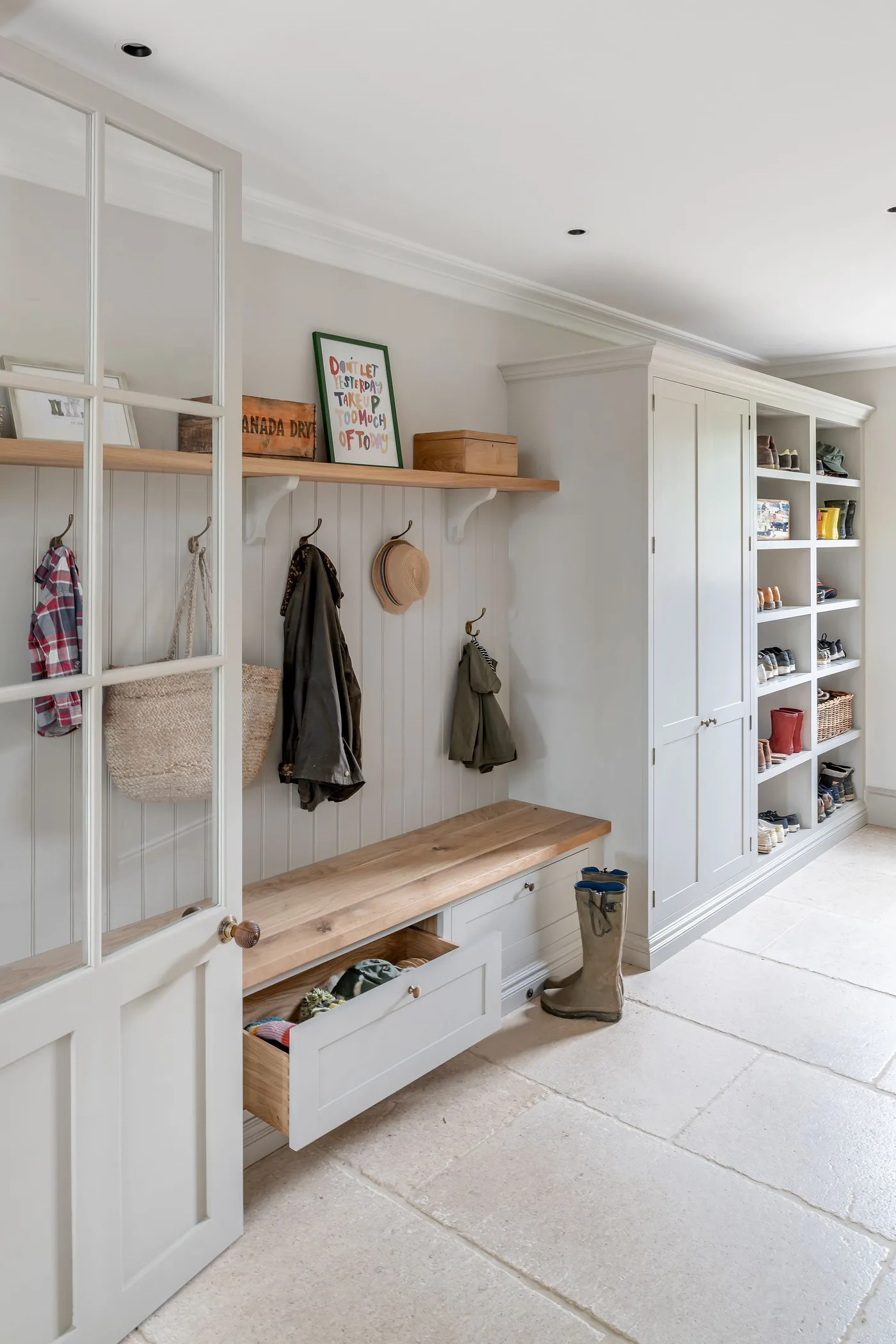
A wood bench sits above a pulled-out drawer in this pale entry, with hooks and a narrow shelf on the wall behind. A tall cupboard and open shoe shelves extend the storage along the same side. The open drawer makes the practical use clear: loose items can have a container close to the seat without taking over the surface where you put on shoes.
Check that the drawer can open fully while someone passes through the entrance, and close it after use. Sort its contents into a few useful categories instead of treating it as a catch-all. Keep wet footwear in an appropriate open place until dry. If you already have a bench, a measured under-seat box may provide a similar function, provided it moves easily and does not interfere with the bench’s stability.
IDEA 18 / 20
Give Each Person a Clear Hanging Section
 SaveSupport Non AI Creator
Image credit: Michael Hunter
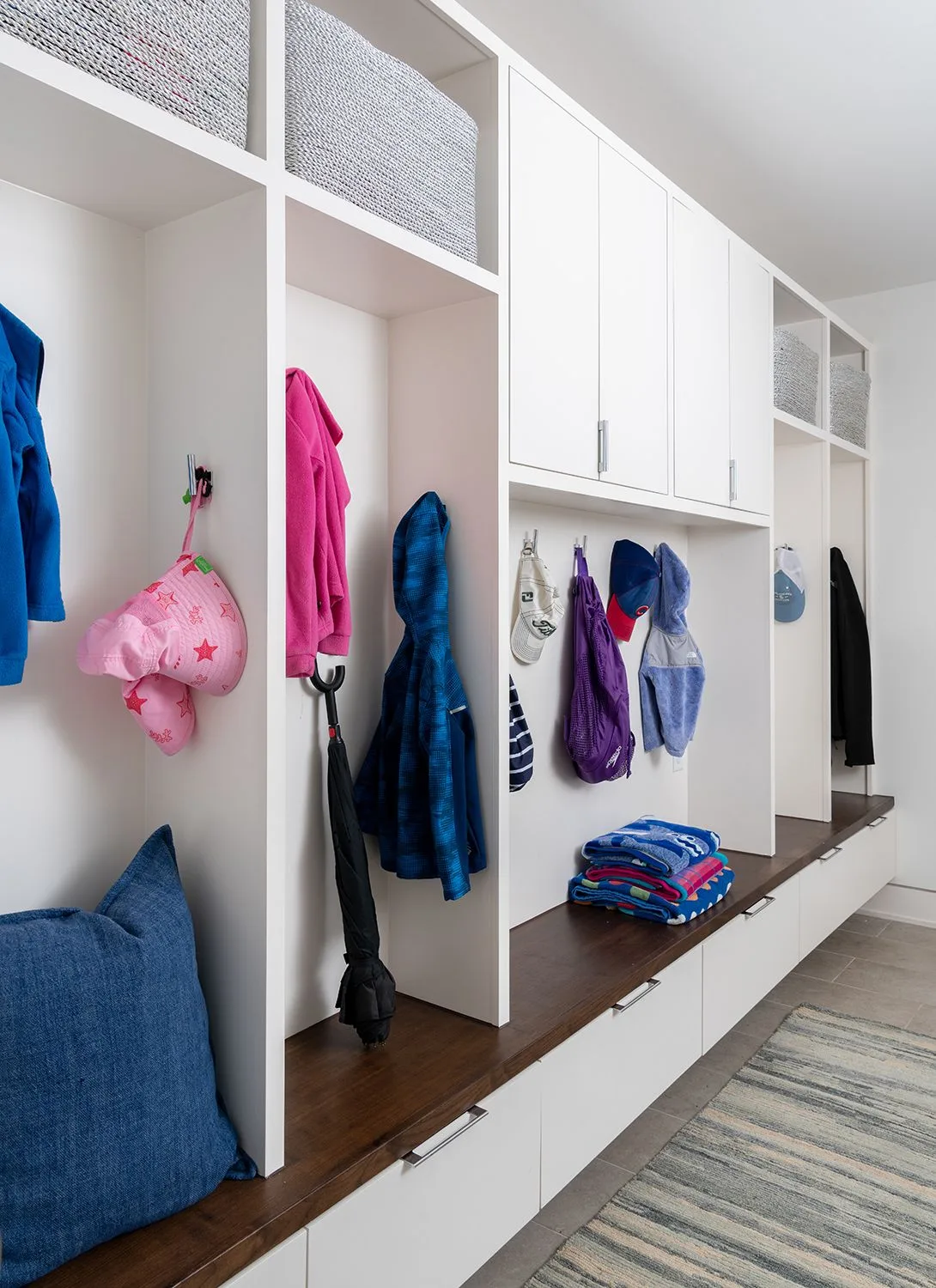
White dividers separate the hanging areas above a long wood bench, with baskets in upper cubbies and closed cupboards in the middle. Coats, hats and small sports belongings occupy distinct sections instead of one uninterrupted pile. The photograph shows a household sorting idea that can work beyond fitted furniture: assigning a clear place for each person makes it easier to notice when an area needs clearing.
Assign sections according to who uses the entrance and how much they carry, rather than insisting every person needs identical storage. Put hooks at reachable heights and leave enough room for winter coats and backpacks. Keep the bench available for sitting instead of filling every section with cushions. Review the baskets occasionally for outgrown or unused items, and move equipment elsewhere when it obstructs hanging garments or the walking route.
IDEA 19 / 20
Sort Open Shelves by Size Instead of Appearance
 SaveSupport Non AI Creator
Image credit: Polly Eltes
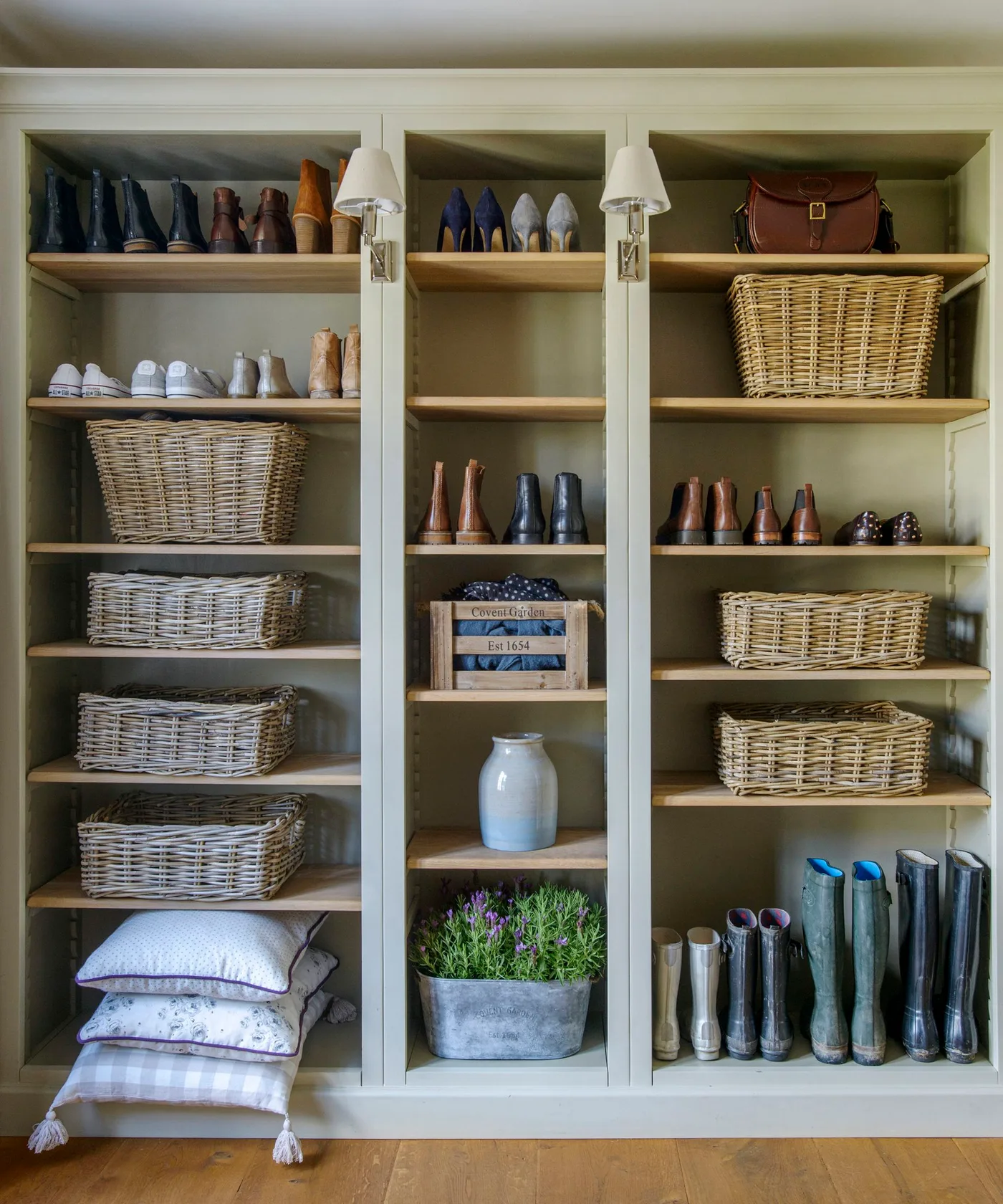
Green open shelving holds shoes, boots and woven baskets in openings of different heights. Taller footwear uses the lower sections, while smaller shoes and baskets occupy the narrower shelves above. Two small wall lights sit between the sections. The useful feature is the varied shelf space, which lets belongings fit according to their actual size rather than forcing every category into identical boxes.
Measure tall boots and your largest baskets before deciding shelf spacing. Keep heavy or frequently used belongings where you can reach them comfortably, and give each basket a single clear category. Open storage makes dust and dirt more visible, so remove items when cleaning rather than wiping around them. Store footwear only after appropriate drying, and avoid putting small accessories behind rows of shoes where they will disappear from view.
IDEA 20 / 20
Make Baskets and Hooks Do the Daily Work
 SaveSupport Non AI Creator
Image credit: Sims Hilditch
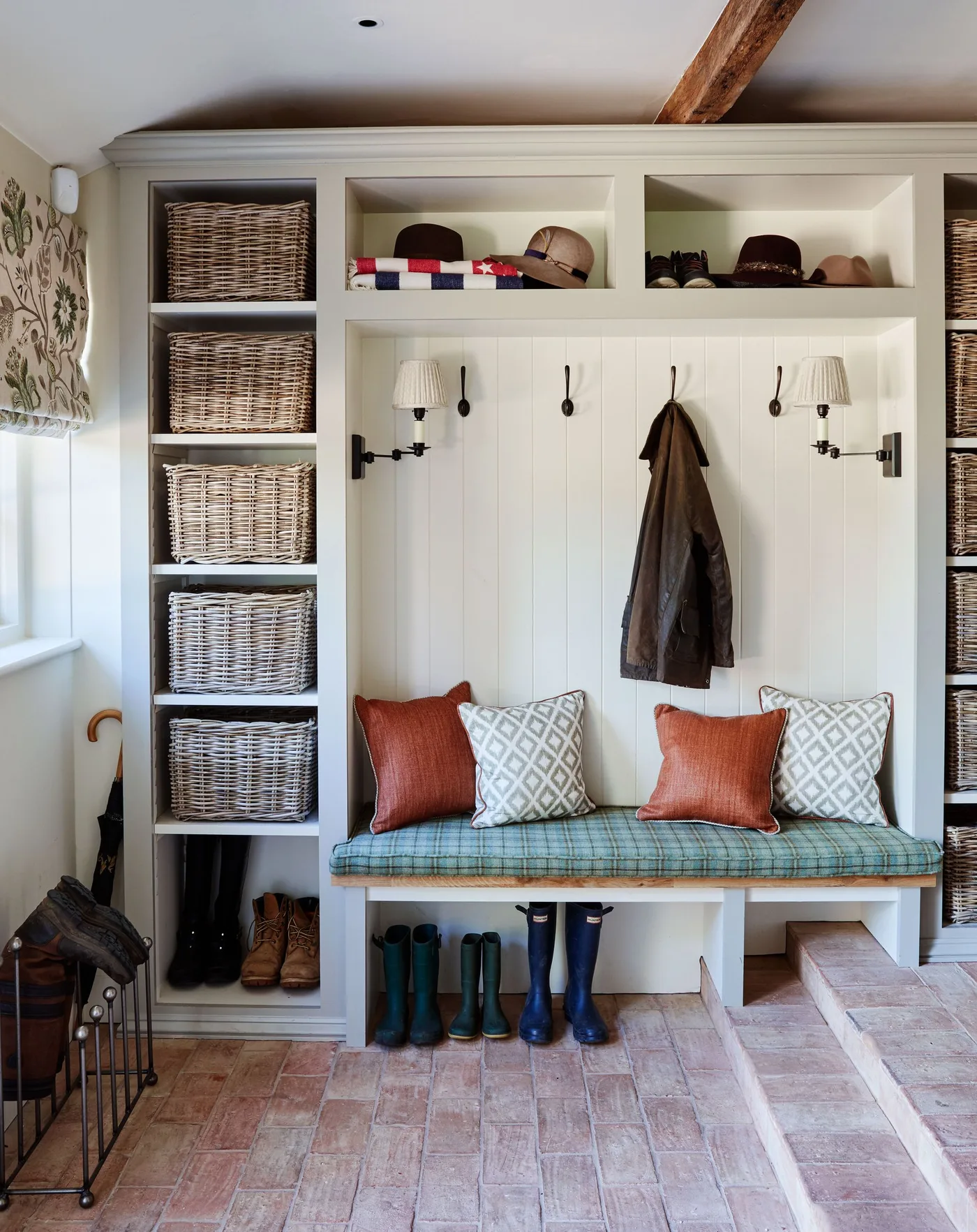
A checked bench sits between tall columns of woven baskets, with hooks above and boots underneath. Rust and pale patterned cushions introduce color near the seat, while the basket fronts give the surrounding storage a repeated texture. The room has substantial fitted furniture, but its everyday organization comes from simple elements that can be adapted separately: reachable hooks, a usable seat and containers with a clear purpose.
Choose the functions you need before copying the complete arrangement. A few measured baskets and a secure hook rail may improve an existing entrance without replacing its furniture. Keep the bench clear enough for sitting, and use lower baskets for items you retrieve often. Check basket strength and cleaning guidance, then give damp boots a suitable tray so moisture and dirt stay away from dry stored accessories.
BRING IT ALL TOGETHER
Start With the Items That Keep Landing on the Floor
Look at what accumulates by your entrance over a normal week. If shoes are the problem, begin with a suitable tray or measured shelf. If bags cover the seat, add a reachable hook with appropriate fixings. Choose one useful improvement and see how the household uses it before adding another storage piece.
Keep the walking route, door swing and sitting area clear as the arrangement grows. Dry wet belongings appropriately before putting them in enclosed storage, and use containers that are easy to remove and clean. A small system with a clear purpose for each part is often more manageable than several attractive baskets nobody knows how to use.