A farmhouse dining room works best when it welcomes daily meals as easily as larger gatherings. Comfortable chairs, useful storage and enough space to move around the table matter more than a perfectly matching country furniture set.
These rooms show different ways to combine timber, painted surfaces and natural texture. Borrow the details that fit your household, whether that means a compact breakfast corner or a generous table with benches.
PART 01
Color and contrast
IDEA 01 / 20
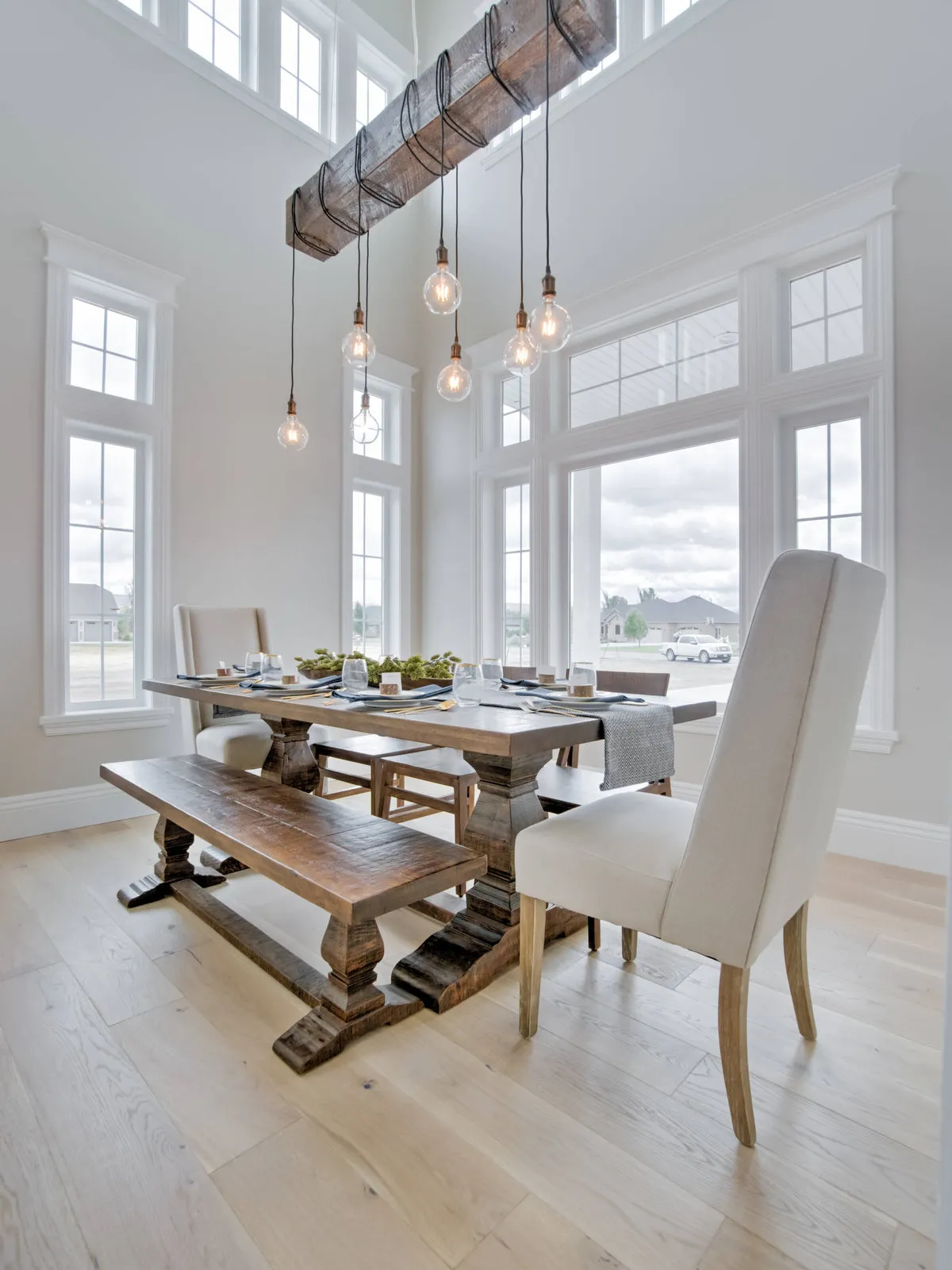
Use a substantial timber table in a pale room
 SaveSupport Non AI Creator
Source: Guardian Homes on Houzz.
A broad timber table stands beneath hanging bulbs beside pale upholstered chairs. The warm central piece gives the bright farmhouse room a comfortable focus. A bench on one side balances the taller upholstered chairs at the ends. The hanging bulbs extend along the table, drawing attention to its length while the high windows keep the background bright.
Check the table's base against chair positions before buying, and leave enough space for seated guests to get up comfortably. Try the bench with the table before committing to both pieces. Its legs should not collide with the table supports when diners move closer or get up.
IDEA 02 / 20
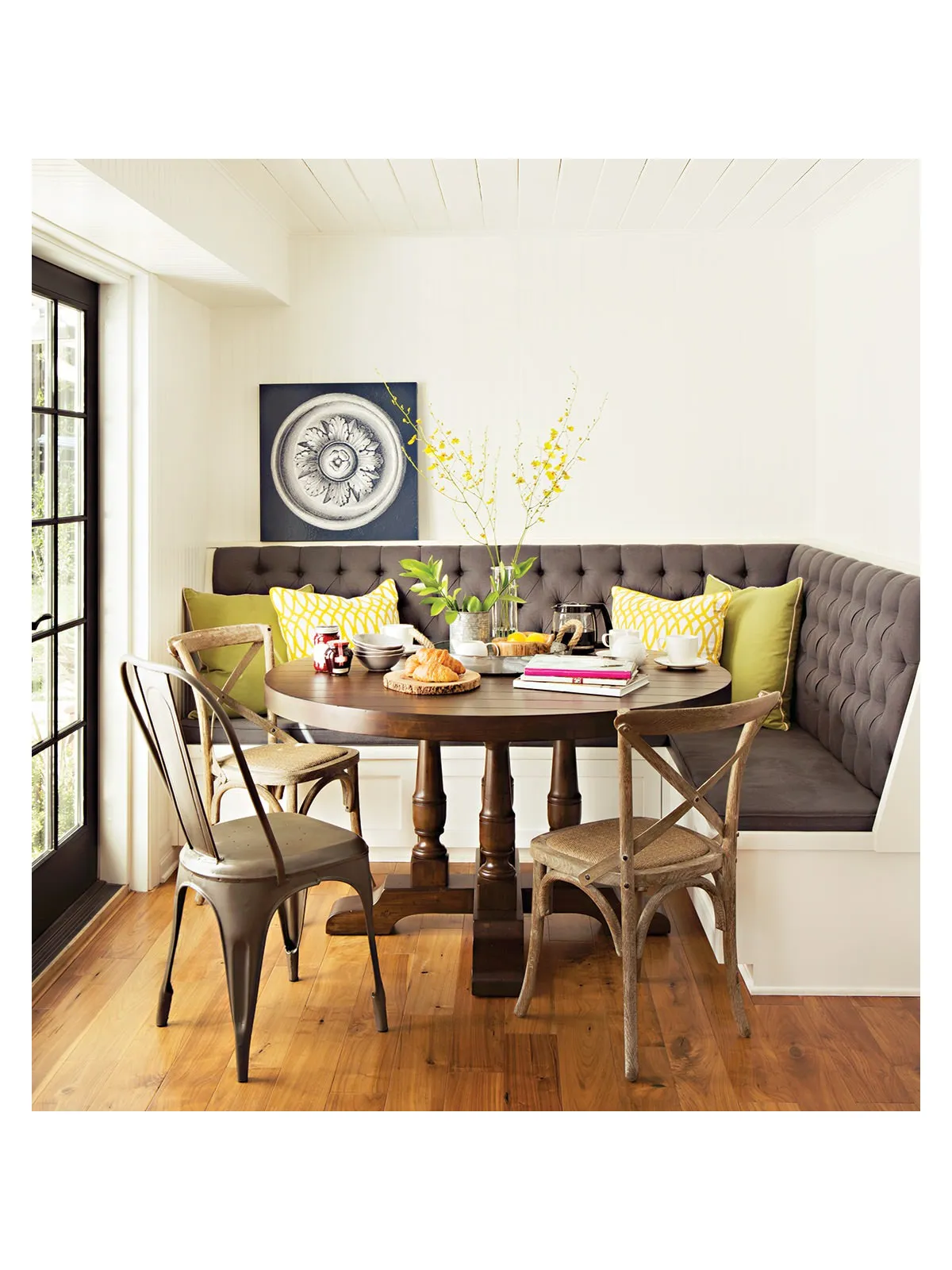
Make a farmhouse corner work with a banquette
 SaveSupport Non AI Creator
Source: User on Houzz.
A tufted corner bench sits behind a small timber dining table and cross-back chairs. The fitted seat makes good use of a compact corner. Yellow cushions enliven the gray tufted upholstery without changing the built-in seat. A round tabletop and mixed chairs keep the breakfast corner informal, with the window left largely unobstructed.
Measure seat depth and table access carefully, and provide a removable cushion cover if the bench will handle frequent family meals. Check how someone seated in the middle will leave during a meal. A smaller table or movable outside chair can make a fitted corner much easier to share.
IDEA 03 / 20
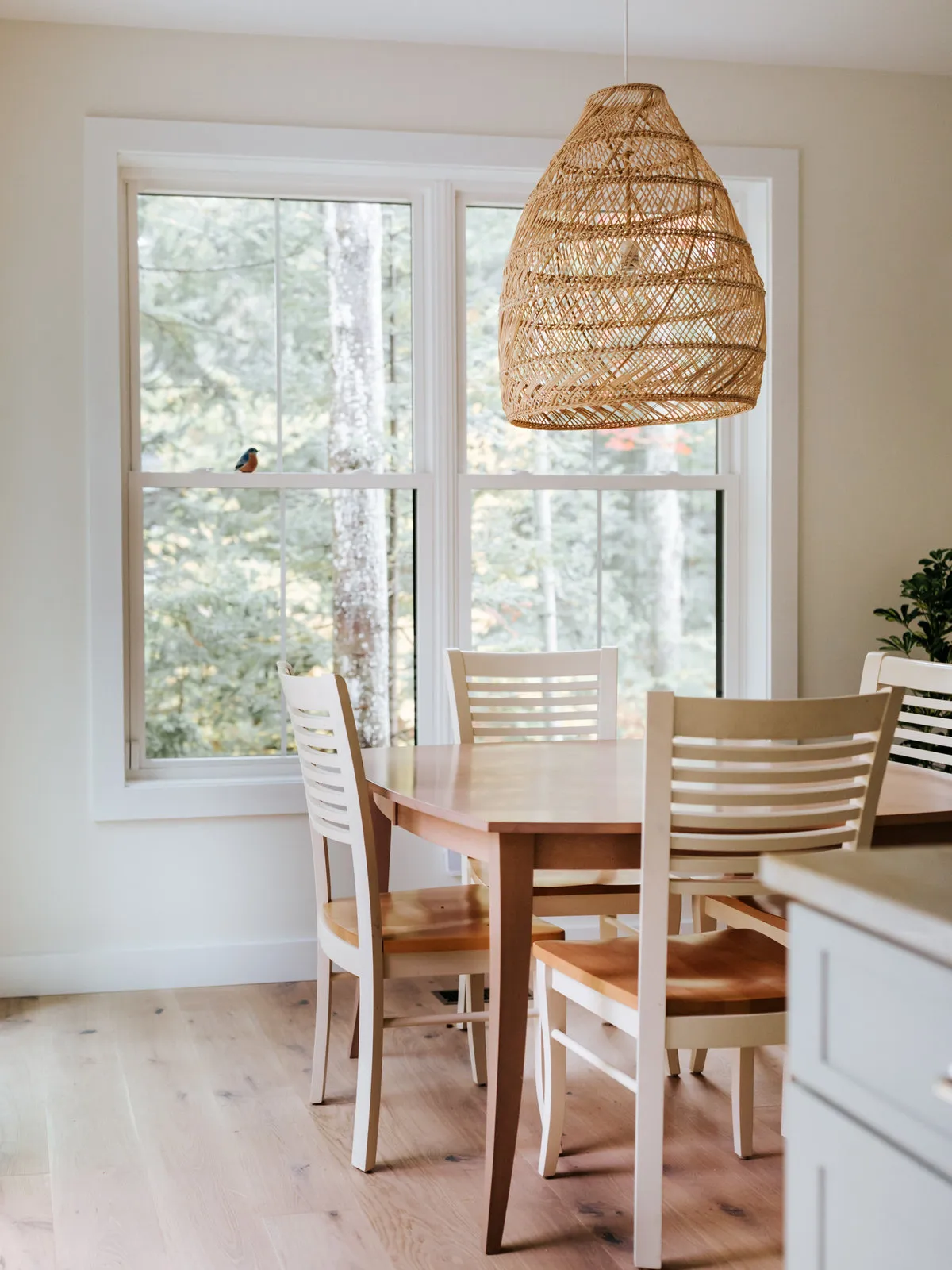
Add woven lighting above simple timber chairs
 SaveSupport Non AI Creator
Source: Brush and Hammer Builders on Houzz.
A woven pendant hangs above a small timber table beside a bright window. The natural shade adds country warmth without heavy furniture. The open weave lets the window remain visually prominent behind the shade. White chair frames and a small timber tabletop repeat the room's light-and-warm balance without needing additional decorative pieces.
Choose a pendant diameter that fits the table's scale, and keep its lower edge out of the seated diners' sightlines across the room. Dust an open woven shade regularly, especially near a cooking area. Check bulb visibility from every seat and choose a compatible bulb that does not create uncomfortable glare.
IDEA 04 / 20
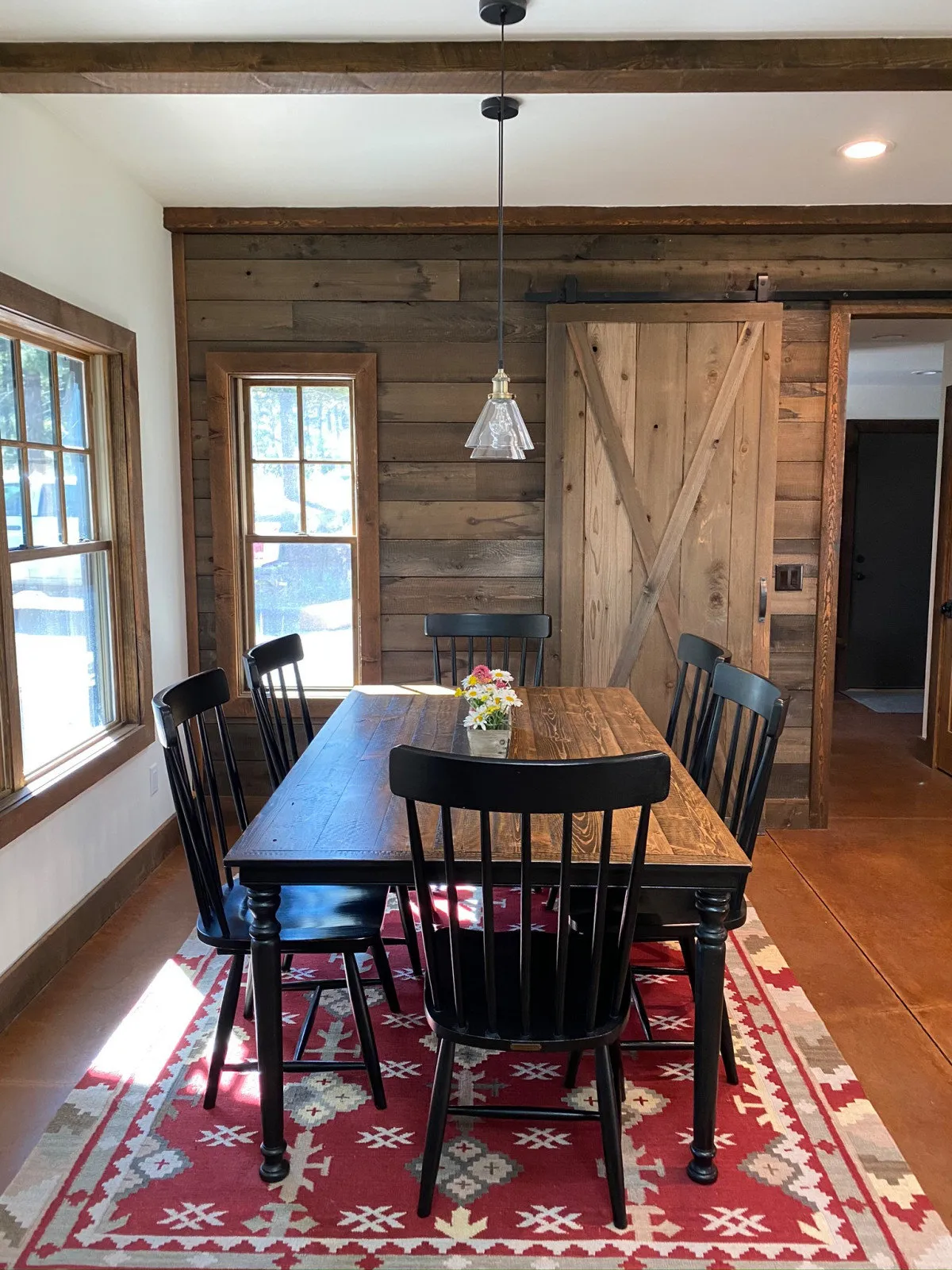
Give dark dining furniture a warm patterned rug
 SaveSupport Non AI Creator
Source: Nate Baudo on Houzz.
Black dining chairs surround a dark table over a red patterned rug. Timber walls and a sliding door soften the stronger painted furniture. The red rug introduces color below the dark chairs, while the sliding timber door repeats the table's warmth. Small glass pendants keep the overhead arrangement lighter than the substantial wall surfaces.
Use a rug large enough for pulled-out chairs and keep its edges secure, especially where the dining area connects to a busy kitchen. Allow the sliding door its complete travel path when arranging chairs. A rug that catches chair legs or sits in the doorway will quickly become inconvenient at mealtimes.
IDEA 05 / 20
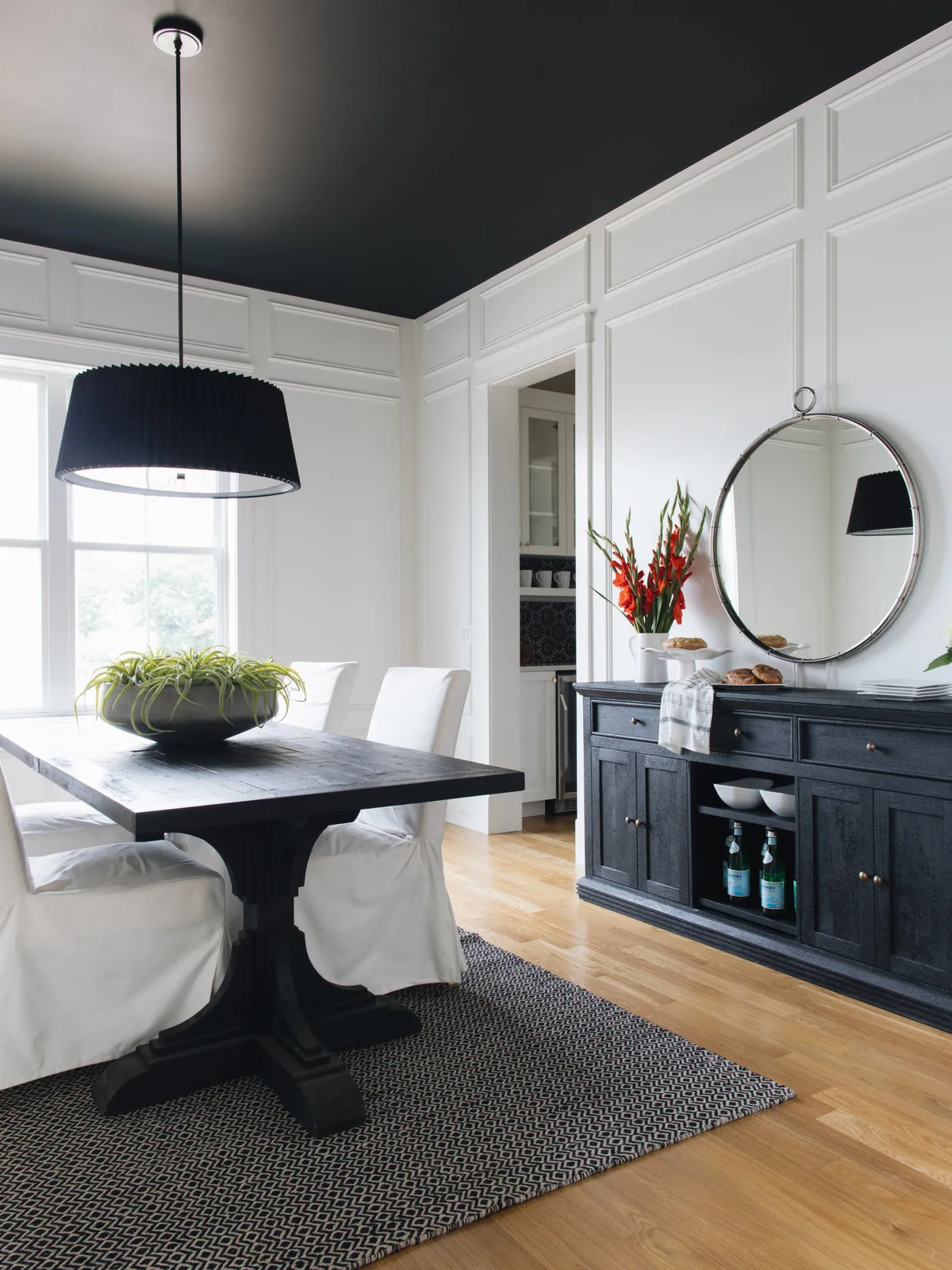
Try a dark ceiling above a pale farmhouse room
 SaveSupport Non AI Creator
Source: Timber Trails Development Company on Houzz.
A dark ceiling sits above white paneling, pale chairs and a black pedestal table. The contrasting surfaces give this farmhouse-inspired room a crisp outline. A round mirror breaks up the rectangular paneling and black sideboard. Repeating the dark color in the table and pendant connects the ceiling to everyday furniture instead of leaving it isolated overhead.
Test the ceiling color with the pendant switched on, and keep other large surfaces lighter if the room has limited natural light. Look at the ceiling sample from a seated position as well as the doorway. A pale rug and washable chair covers can soften the contrast without more wall decoration.
PART 02
Texture and materials
IDEA 06 / 20
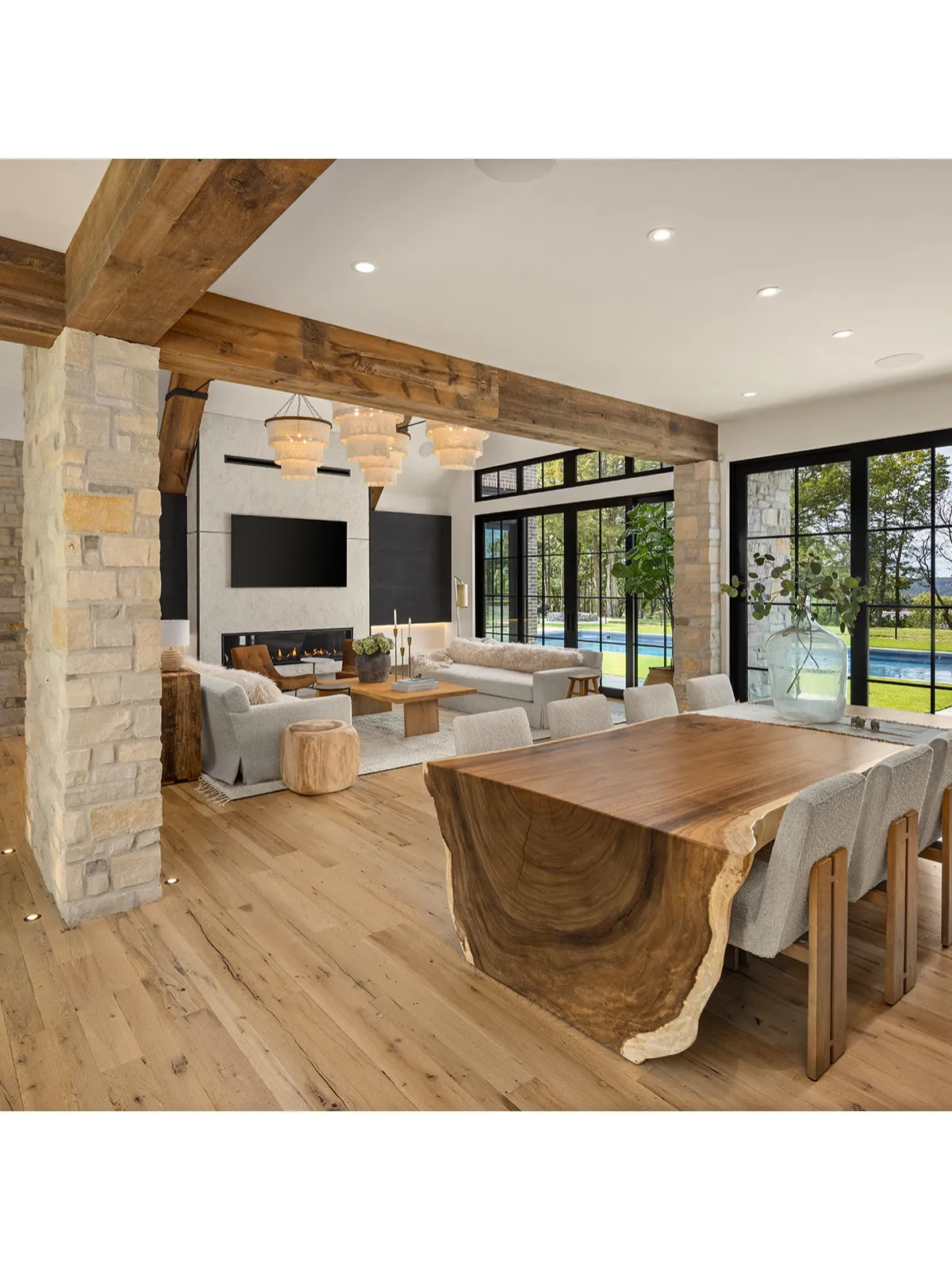
Let exposed timber frame a simple dining area
 SaveSupport Non AI Creator
Source: Manomin Resawn Timbers on Houzz.
A timber table stands beneath broad exposed beams beside pale seating. The straightforward furniture allows the room's wood structure to provide its country character. The table's thick timber sides echo the broad beams and contrast with the upholstered chairs. In the adjoining sitting area, pale seating carries the softer palette across the open room.
Keep the table surface simple when overhead timber is already prominent, and use comfortable chairs that do not obstruct the surrounding views. A sculptural table base can restrict knees even when the top is generous. Test the end seats in particular before choosing the number and width of dining chairs.
IDEA 07 / 20
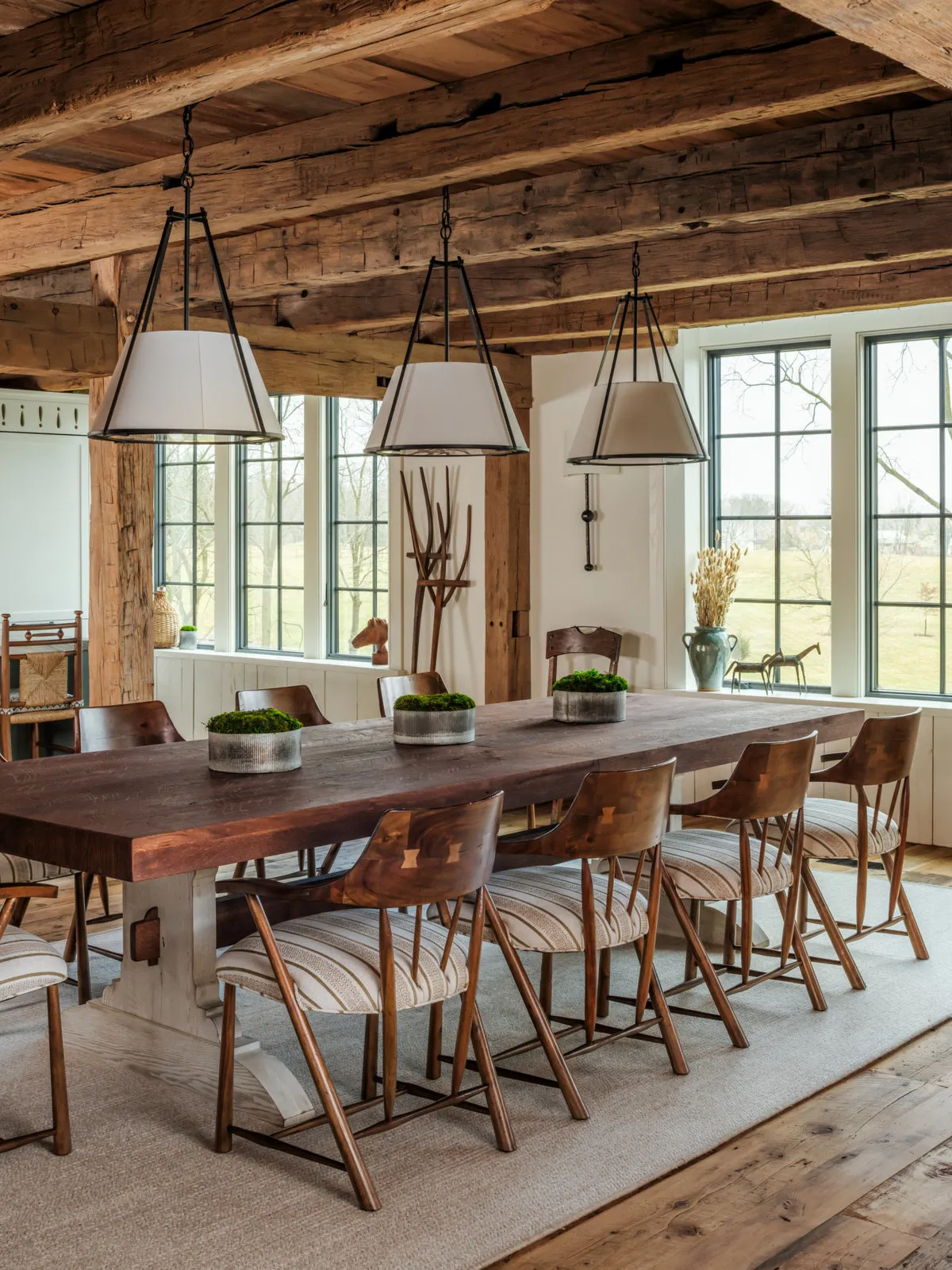
Mix everyday chairs with a rustic table
 SaveSupport Non AI Creator
Source: Janiczek Homes on Houzz.
A long timber dining table stands beneath exposed beams and modest pendants. Different chair finishes make the substantial farmhouse setting feel more relaxed. Striped upholstery and plain timber chairs sit comfortably together beneath three shaded pendants. The simple pale rug gives the group its own boundary against the darker overhead boards and beams.
Connect mixed chairs through similar seat heights and proportions, and check that each one fits beneath the table without catching an apron. Use matching seat heights to make an assorted set practical. Check that the lamps illuminate the whole table, especially if its ends are used for reading or homework.
IDEA 08 / 20
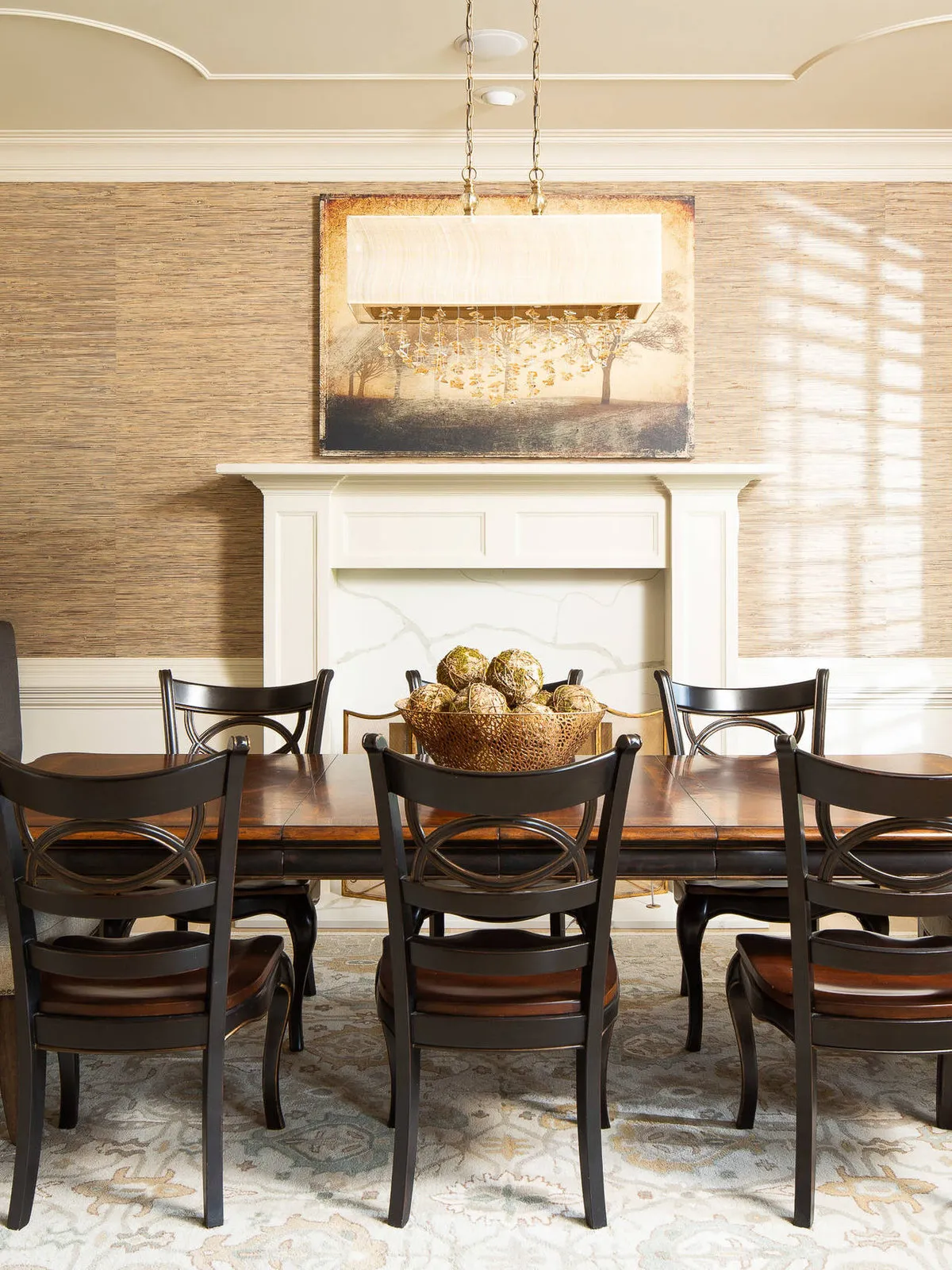
Warm a formal dining arrangement with texture
 SaveSupport Non AI Creator
Source: New River Building Co. on Houzz.
Dark cross-back chairs surround a table beneath a pale mantel and textured wall. The materials soften the otherwise orderly farmhouse dining arrangement. A pale fireplace surround stands out against the textured wall behind the table. The long rectangular light echoes the table's shape, while dark chair backs give the lighter background a repeating outline.
Keep place-setting space clear around the table and use a smaller centerpiece, so conversation remains easy across the more formal seating group. Leave enough space to walk between the chairs and fireplace. If the hearth is active, follow its required clearances before deciding where the rug and dining furniture should sit.
IDEA 09 / 20
Use pale cushions on timber cross-back chairs
 SaveSupport Non AI Creator
Source: M. Lahr Homes on Houzz.
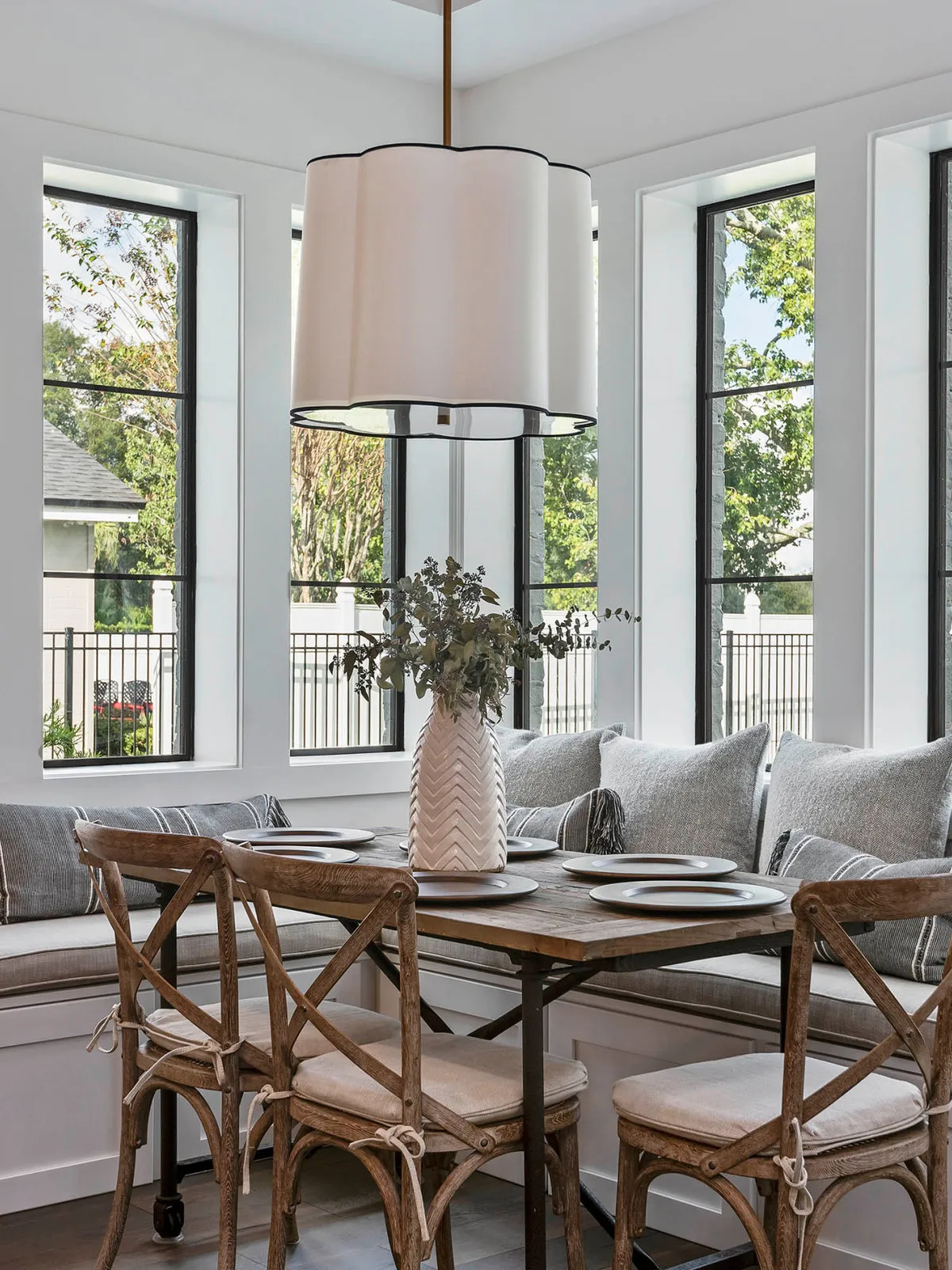
Timber chairs with pale cushions surround a table beside broad windows and a large shade. The soft seats make the country furniture more inviting. A cushioned window bench adds seating behind the cross-back chairs. The oversized pale shade draws the table and bench together, while dark window frames prevent the bright room from feeling undefined.
Choose cushions that attach securely and can be cleaned, and confirm the added thickness does not make the seat too high for comfortable dining. Try cushion ties with the actual chair backs so they do not slip during meals. Leave a reachable opening to the bench rather than relying on guests to move several chairs.
IDEA 10 / 20
Give the dining table a stone backdrop
 SaveSupport Non AI Creator
Source: Black Forest Design and Build on Houzz.
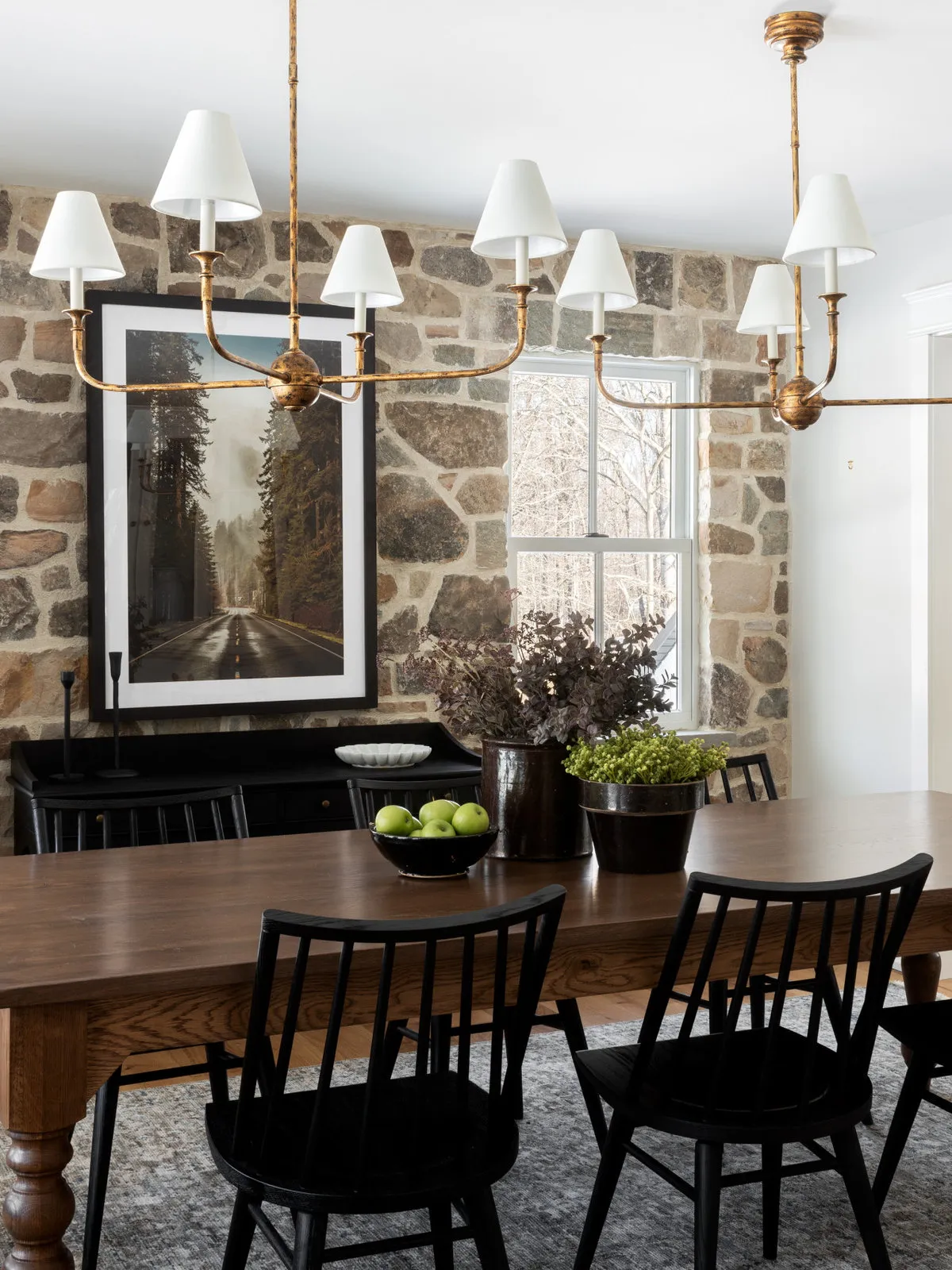
Dark chairs sit around a timber table beside a stone wall and warm chandelier. The masonry provides country texture behind the restrained furniture. Dark spindle chairs pick up the framed picture and sideboard against the stone wall. Pale lampshades soften the chandelier's many arms, adding brightness without covering the masonry's varied shapes.
Use the stone as the main textured feature and keep table linens quieter, so the room feels layered without several competing rustic surfaces. Keep wall art securely supported on the appropriate fixings for its surface. Choose an easily wiped table finish so the room's rustic appearance does not complicate everyday meals.
PART 03
Furniture and layout
IDEA 11 / 20
Connect dining and cooking through timber
 SaveSupport Non AI Creator
Source: Kirley Architects on Houzz.
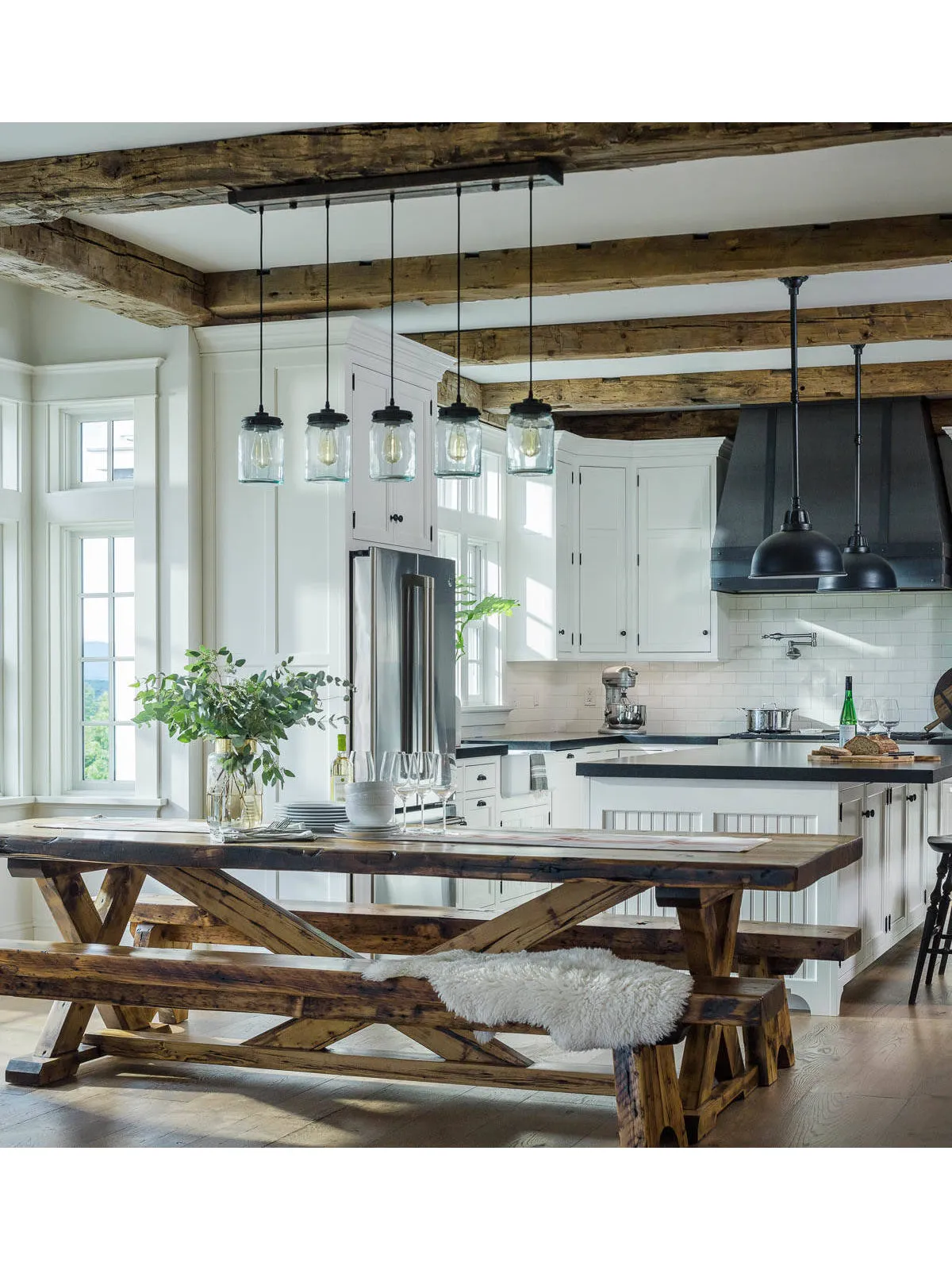
A timber table with benches sits beside a pale farmhouse kitchen under exposed beams. The shared natural material links the two everyday spaces. A row of suspended lights mirrors the long tabletop and benches. White kitchen cupboards keep the background light, allowing the older-looking overhead beams and dining furniture to share the attention.
Keep the bench seating clear of the kitchen's working aisle, and check that people can leave the table while someone opens an appliance. Walk around the occupied benches while opening nearby cupboards. Flexible seating is useful only when it still allows safe, comfortable movement between cooking and dining tasks.
IDEA 12 / 20
Put useful glass-front storage beside the table
 SaveSupport Non AI Creator
Source: Crisp Architects on Houzz.
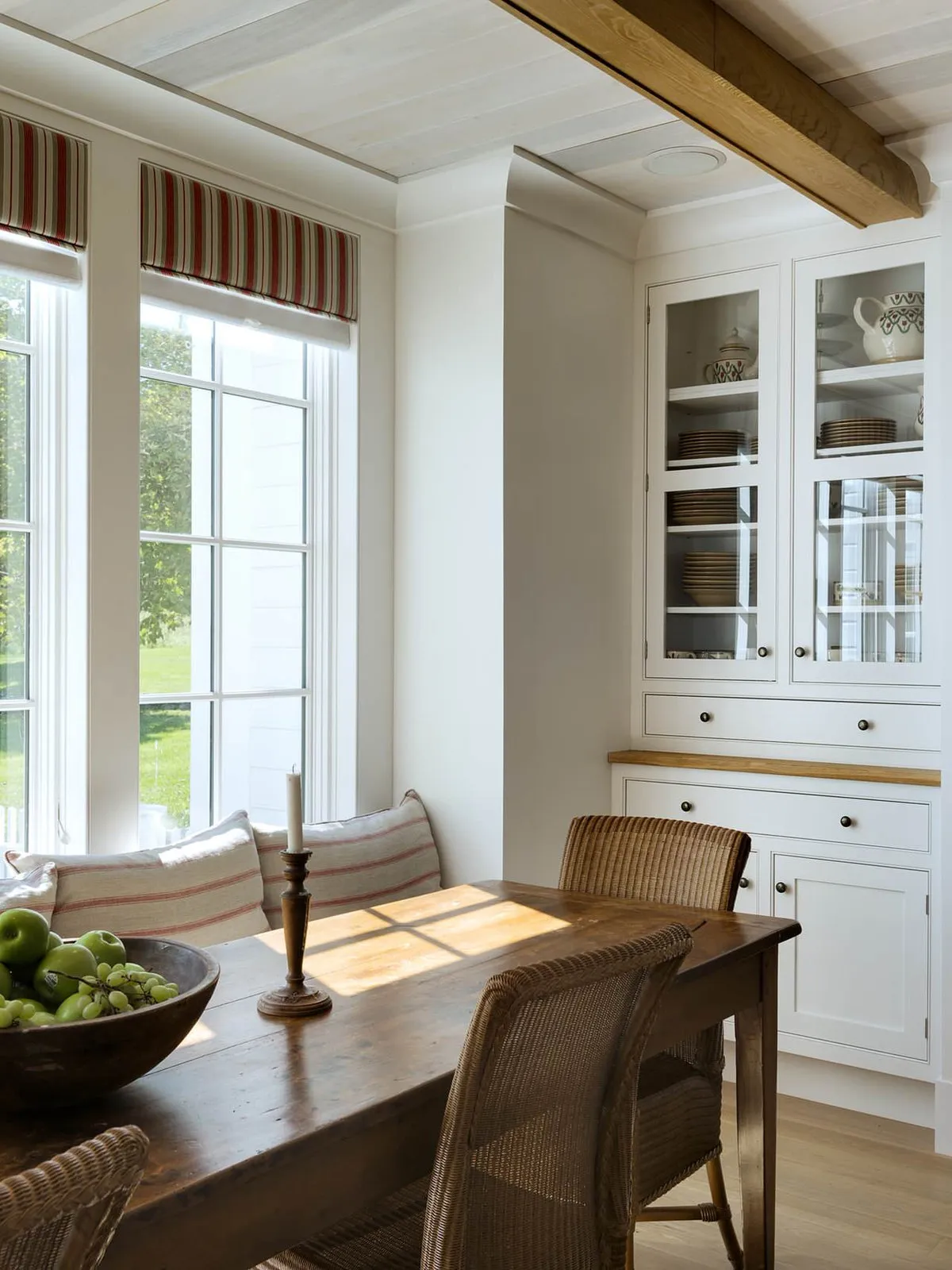
A timber dining table sits near pale glass-front cupboards and a bright window. The adjacent storage makes crockery accessible without extra freestanding furniture. Striped window blinds add a modest touch of color beside the displayed white crockery. Woven chair backs bring texture closer to the table, balancing the cupboard's orderly glazed doors.
Store frequently used pieces at an easy height and leave some shelf space open, rather than packing every visible compartment with decorative objects. Keep heavier dishes on lower, reachable shelves and group everyday plates together. Check that cupboard doors open fully when a chair is pulled out for someone seated nearby.
IDEA 13 / 20
Mix upholstered dining chairs in a pale room
 SaveSupport Non AI Creator
Source: Joseph Farrell Architecture on Houzz.
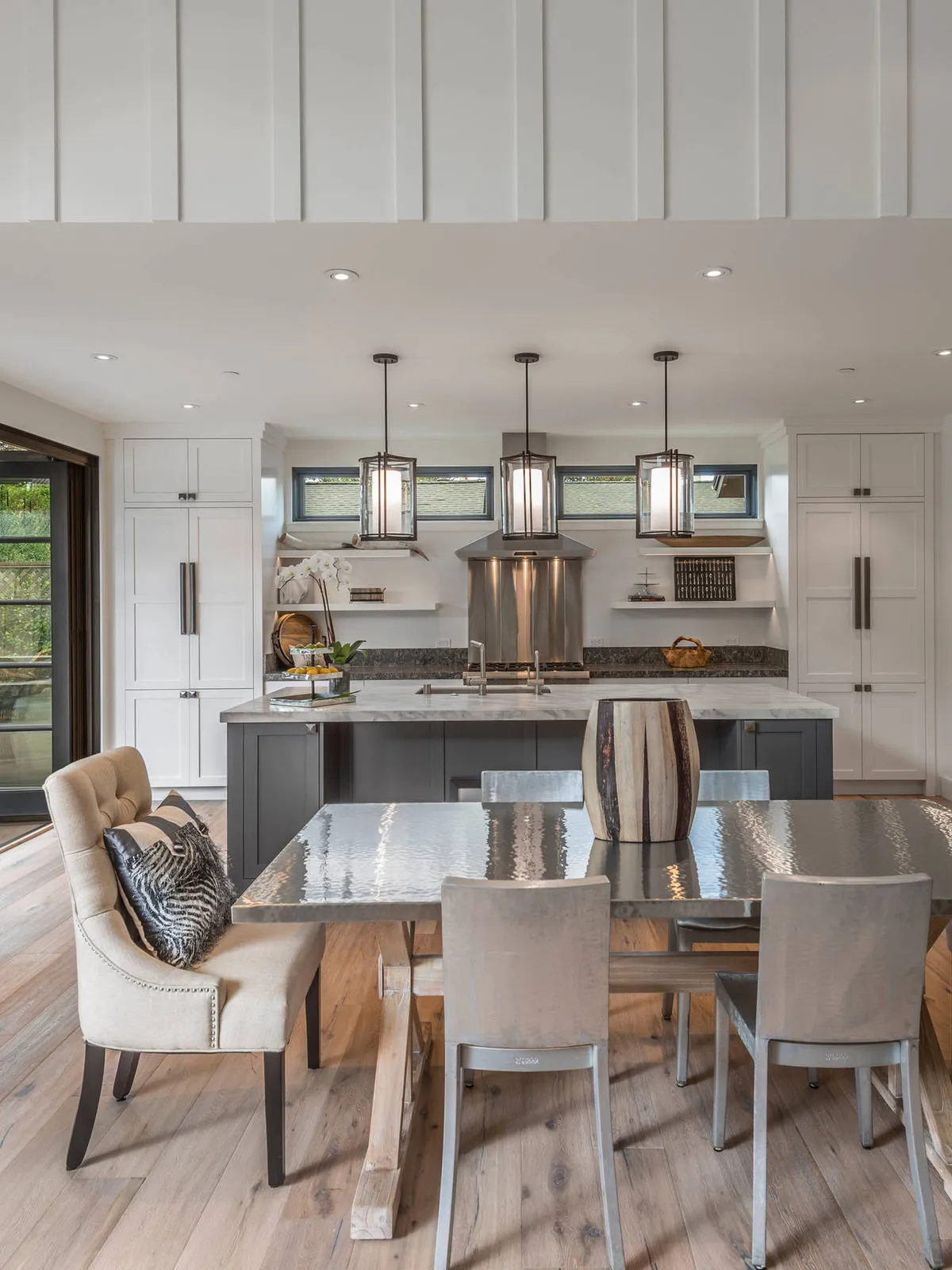
Pale upholstered chairs gather around a table with a reflective top and substantial timber supports. The softer end chairs add variety to the simpler side chairs, while white kitchen cabinetry and dark lantern pendants make the dining area feel part of the same room.
Choose dining upholstery around real cleaning habits and how long you usually sit at the table. Test the knee space beneath its supports, and check care instructions for a reflective tabletop before assuming it can be cleaned like the nearby kitchen counter.
IDEA 14 / 20
Use a simple trestle table near broad windows
 SaveSupport Non AI Creator
Source: Tays & Co. Design Studios on Houzz.
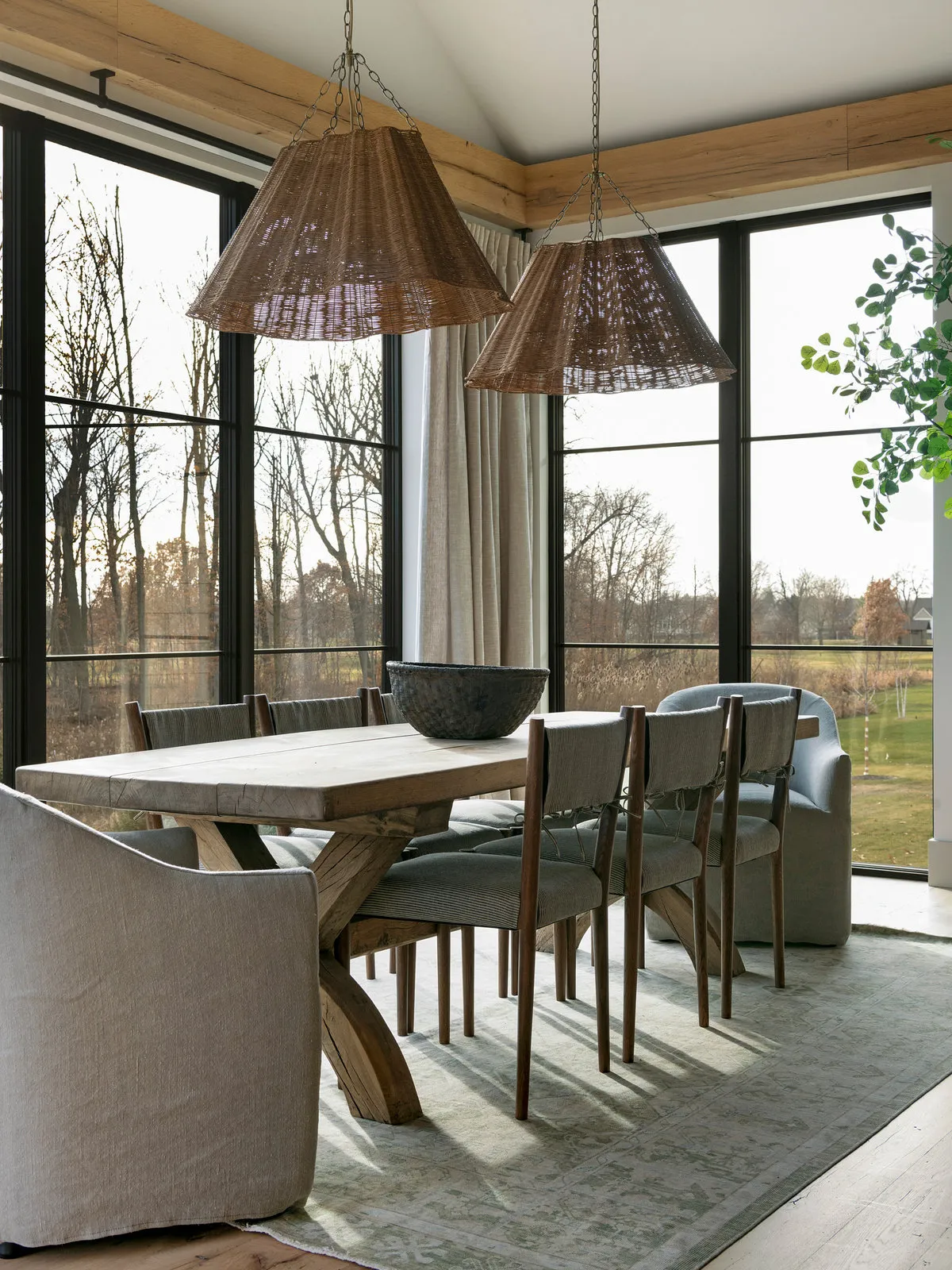
A pale trestle table stands beneath woven shades beside generous glazing. Its sturdy shape gives the light room a clear farmhouse dining focus. Two woven pendants follow the table's length, while upholstered end chairs balance slimmer side chairs. Black window frames give the pale tabletop and large rug a clear architectural backdrop.
Check where the trestle supports meet diners' knees and choose chairs that fit between them, instead of judging the table by length alone. Center the lights over the table's everyday position rather than the room alone. Leave curtain access available at the window corners so chairs do not become obstacles to closing them.
IDEA 15 / 20
Add a dedicated cupboard for dining essentials
 SaveSupport Non AI Creator
Source: Payne & Tompkins Design-Renovations on Houzz.
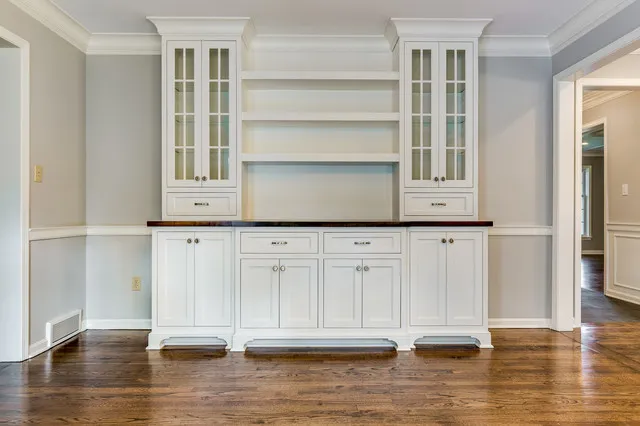
A pale built-in cupboard offers drawers, enclosed shelves and a central display section. The generous storage can keep farmhouse dining supplies close at hand. Tall glass-front sections flank open central shelves, giving display pieces their own place above enclosed storage. The pale finish relates to the wall trim, keeping a substantial cupboard from dominating the room.
Plan compartments around actual plates and serving pieces, and keep the most frequently handled items reachable without climbing or stretching over heavy objects. Measure tall serving jugs as well as stacked plates when planning shelves. Put seldom-used display pieces higher and reserve easy-to-reach drawers for napkins and frequently handled utensils.
PART 04
Finishing touches
IDEA 16 / 20
Fit a Curved Table Inside a Window Bench
 SaveSupport Non AI Creator
Source: Matrix Group on Houzz.
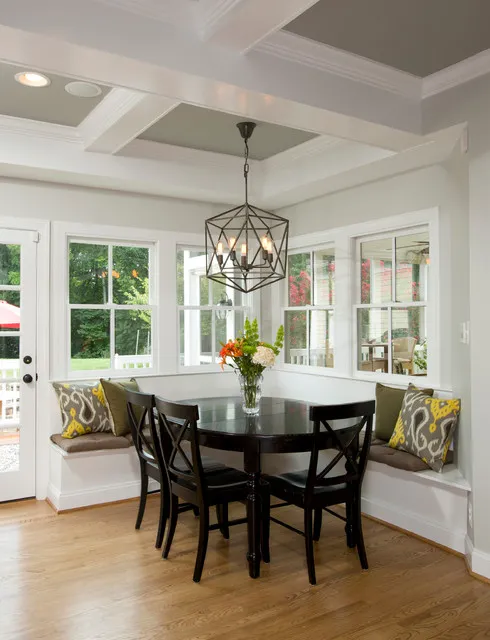
A dark table with rounded ends sits within the pale corner banquette, leaving the window bench visible around it. Patterned yellow cushions enliven the gray upholstery, and dark cross-back chairs relate to the angular hanging light above the breakfast area.
Check entry from both ends of a fitted bench rather than judging a table only by its shape. Leave enough room to slide onto the seat without squeezing past chair backs, and choose removable upholstery covers if this corner handles everyday family meals.
IDEA 17 / 20
Pair pale walls with dark dining chairs
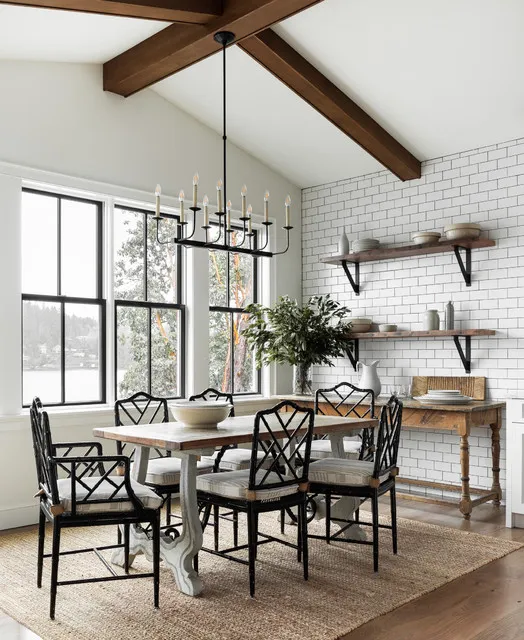 SaveSupport Non AI Creator
Source: Marianne Simon Design on Houzz.
Dark open-backed chairs sit around a timber table below a bright pitched ceiling. Their slender shapes introduce contrast without making the country room heavy. Timber ceiling beams and open shelves warm the white walls. The dark chair frames relate to the window and chandelier, creating several small accents instead of one oversized piece of dark furniture.
Leave enough room for the chair backs when pulled out, and keep wall shelving above dining height clear of objects that project awkwardly. Secure open shelves for the intended load and keep heavy serving pieces reachable. Leave their front edges free of objects that could be knocked while someone moves a chair nearby.
IDEA 18 / 20
Choose spindle chairs for everyday farmhouse meals
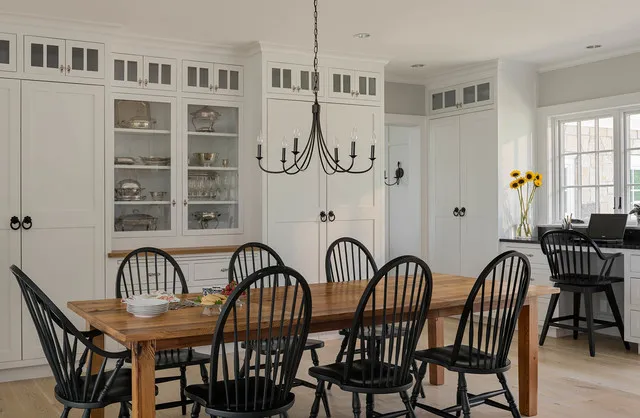 SaveSupport Non AI Creator
Source: Crisp Architects on Houzz.
Black spindle chairs surround a timber dining table beside pale cupboards. The repeated slender backs give the useful family dining area a simple rhythm. The black chairs repeat the chandelier's slender outline against a wall of white cupboards. Glass-front storage keeps crockery near the table, while the long timber surface supplies most of the warmth.
Sit in the chairs before ordering a full set and check back support, particularly if the table doubles as a work or homework space. Use protective pads that suit the floor beneath regularly moved chairs. Check the cabinet-door swing with the nearest seat occupied, particularly when setting the table for a larger group.
IDEA 19 / 20
Make a long table flexible with benches
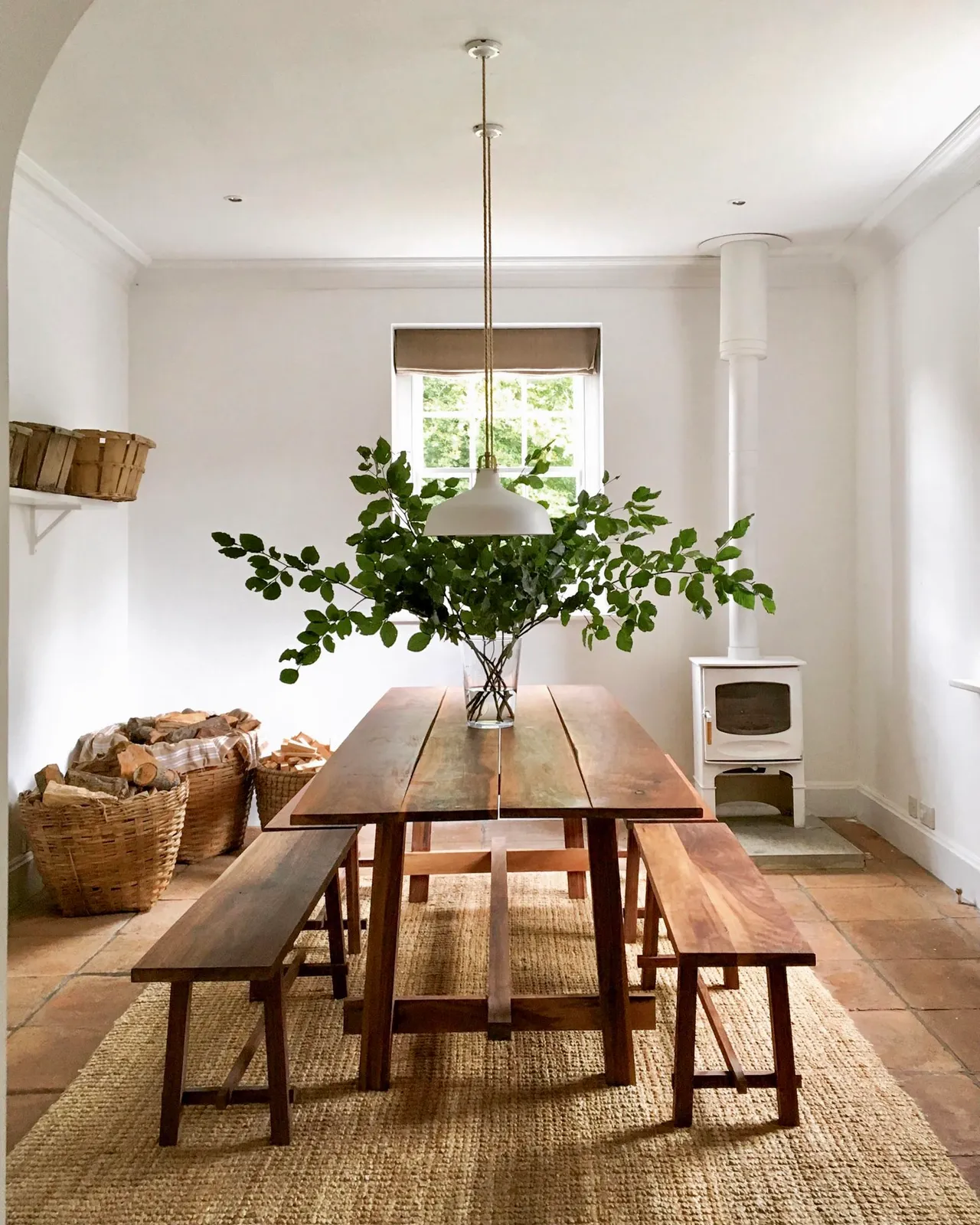 SaveSupport Non AI Creator
Source: livingetc.com.
A timber table and benches sit in a pale room beneath a simple pendant. The straightforward arrangement offers flexible seating without many separate pieces. A pale pendant keeps the narrow dining arrangement uncomplicated. Baskets beside the small stove and greenery on the table bring texture, with the rug giving the benches a distinct place in the room.
Allow space to step around the bench ends and keep a few backed chairs available, since not every guest finds bench seating comfortable. Keep baskets and furnishings outside the stove's specified clearances. Choose a centerpiece that can move easily for meals, rather than sacrificing useful serving space to a permanent display.
IDEA 20 / 20
Gather mixed seating near an old mantel
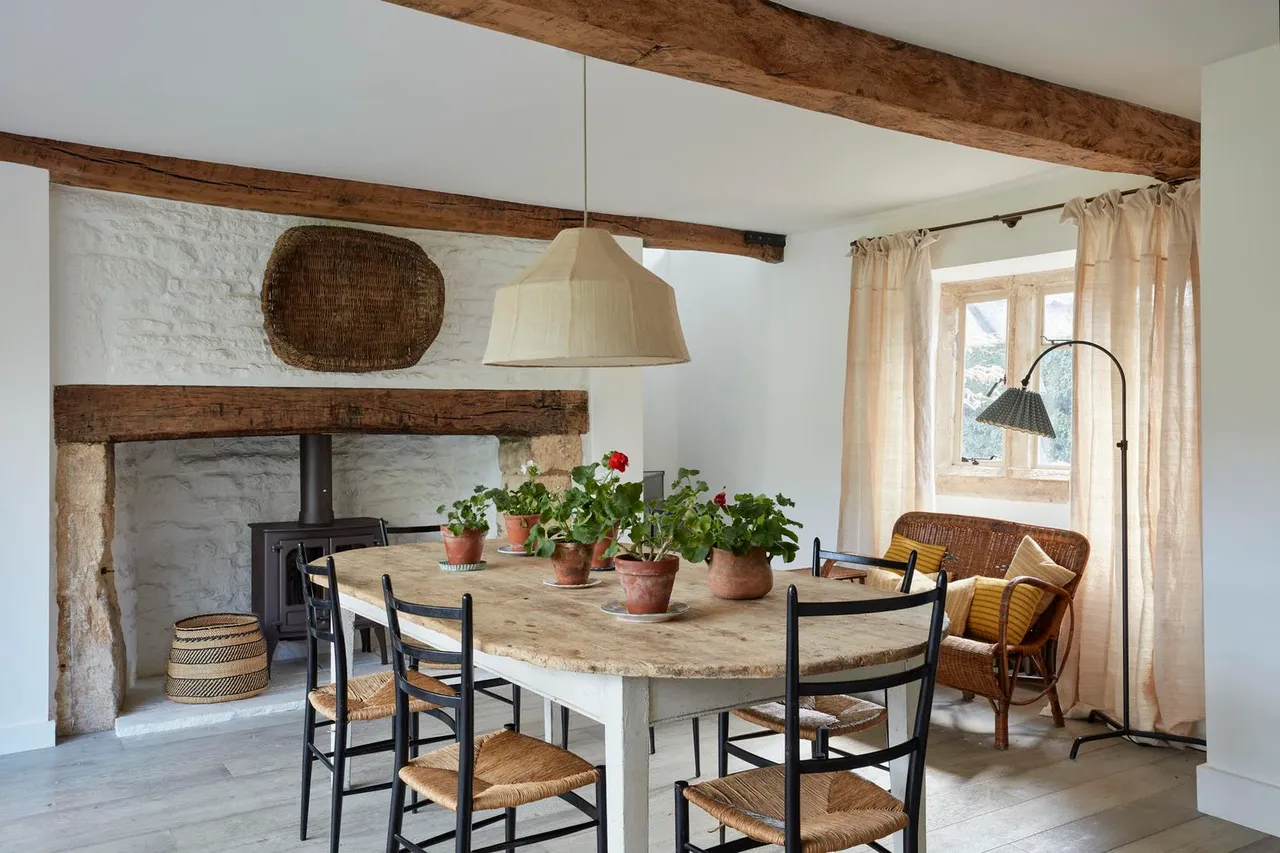 SaveSupport Non AI Creator
Source: livingetc.com.
Timber dining furniture sits beside a rustic mantel beneath exposed ceiling beams. The varied chairs make the architectural farmhouse setting feel lived in. Black chair frames, woven seats and an upholstered chair near the window create a relaxed mix. The pale table and simple pendant let the old-looking mantel and overhead beams remain prominent.
Keep the table clear of any active fireplace's required zone and arrange chairs for practical movement, rather than pushing the furniture tightly toward the hearth. Use similar seat heights around the dining table even when styles differ. Keep plant pots on protective trays and move taller foliage if it obstructs conversation across the table.
BRING IT ALL TOGETHER
Make it work in your home
Choose the table size around the room's usable circulation space. Chairs need room when occupied, and a nearby cabinet still needs to open during meals.
Add country character through materials you enjoy using. A simple timber table, a well-made chair and a quiet light fitting can be enough.