A farmhouse office should provide a useful place to work before adding country details. Start with a desk or table suited to your tasks, a comfortable chair and storage for the supplies you reach for each day. Wood furniture, painted cupboards and collected pictures can then give the room warmth without crowding its working surface.
These fifteen photographs include dedicated studies, smaller writing stations and country craft rooms. Compare their furniture and circulation with your own routines, distinguishing occasional writing or creative work from a full day at a computer. Check seating comfort, glare, shelf loads and storage access before borrowing an arrangement.
PART 01
Traditional Desks and Useful Daylight
IDEA 01 / 15
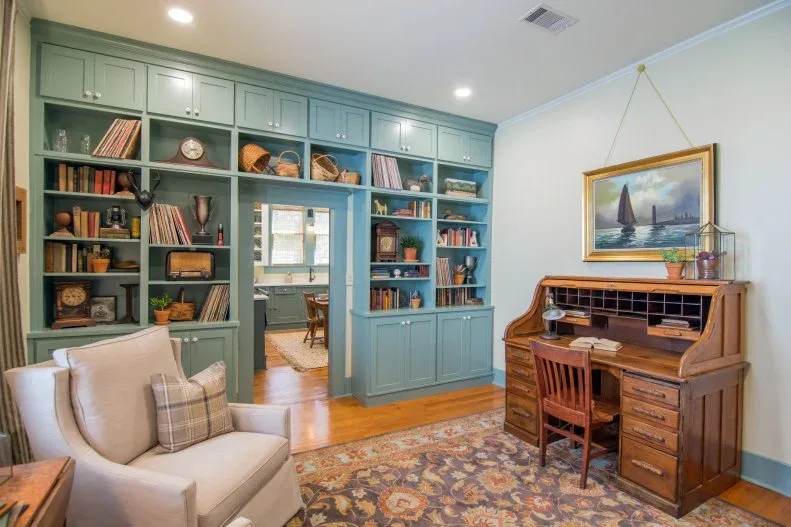
Give a Rolltop Desk Painted Book Storage
 SaveSupport Non AI Creator
Image credit: From: Home Town
A wood rolltop desk brings a traditional country shape into this study. Blue-green bookcases surround the doorway, combining open shelves with closed cupboards above and below. A pale armchair offers somewhere to read beside the patterned rug. The furniture does not match as one set, but the warm desk and quieter painted storage give the room a useful, collected farmhouse direction.
Inspect an older-looking desk for stability, smooth operation and a writing height that suits you. A rolltop should close safely without trapping cables or equipment. Check fitted shelves can support the actual book loads and keep the doorway clear. Choose a chair for the time spent working, rather than assuming a decorative wood chair will support a full day at a computer.
IDEA 02 / 15
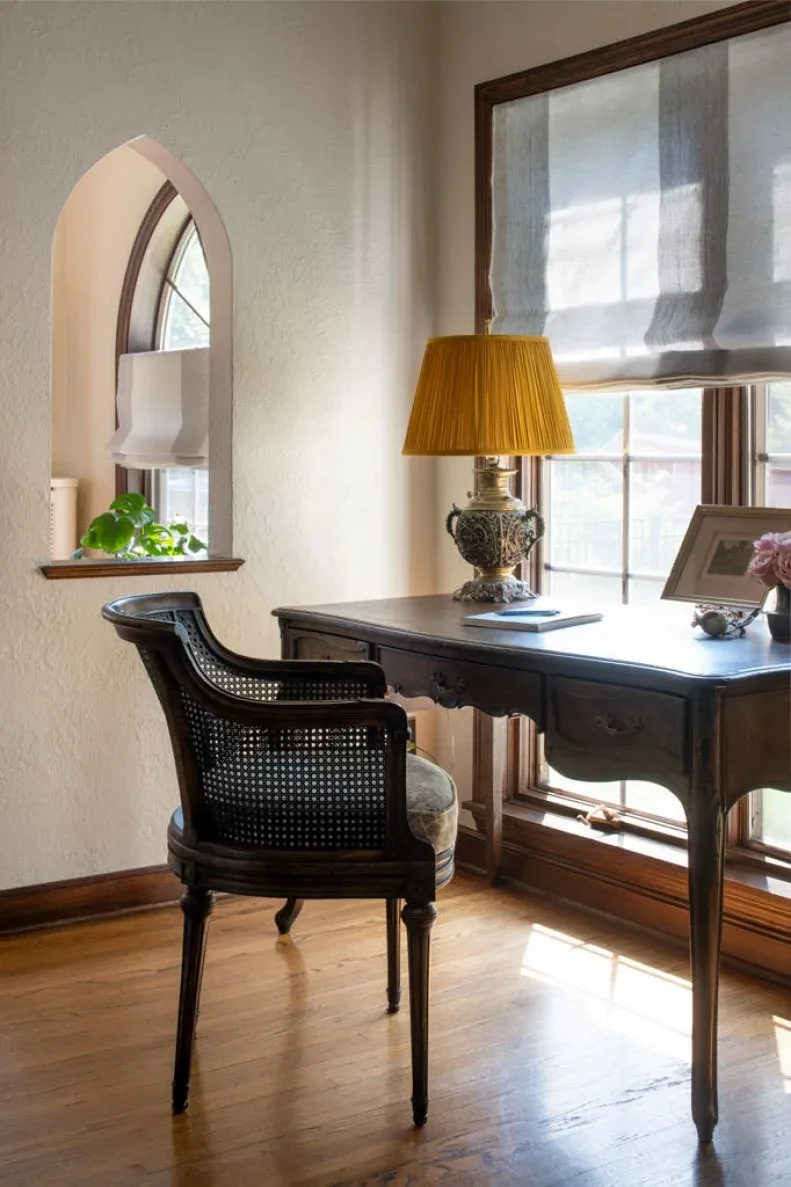
Put a Traditional Writing Desk Near Daylight
 SaveSupport Non AI Creator
Image credit: Photo: Scott Amundson, Tea2 Architects, Uber Build. From: Heather Peterson Design
A dark wood writing desk sits beside the window in this quiet country corner. The woven-back chair repeats its darker outline, while a yellow-shaded lamp adds a warmer accent above the work surface. An arched opening gives the pale wall another familiar shape. The photograph is useful for a modest writing station, where traditional furniture supplies character without requiring an entire room of fitted cabinetry.
Test the desk position with your actual tasks and equipment before copying the window arrangement. Adjust the shade to limit screen glare while preserving useful daylight. Keep the lamp cord outside the chair route and leave enough free surface for writing. Check the chair’s comfort and legroom; a smaller traditional desk may suit correspondence better than extended work with several devices.
IDEA 03 / 15
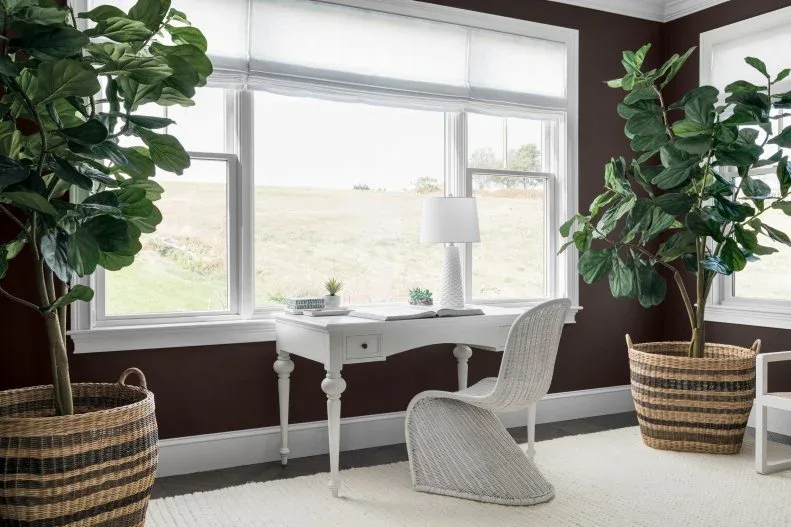
Frame a White Desk With Basket-Planted Greenery
 SaveSupport Non AI Creator
Image credit: Photo: Robert Peterson, Rustic White. From: Brian Patrick Flynn
A white writing desk stands beneath the broad window between two large plants in baskets. Dark brown walls make the pale desk and woven chair easy to distinguish. The basket texture gives this otherwise simple arrangement a country detail, with greenery softening the window edges. The photograph shows a workspace that can feel connected to a farmhouse palette without relying on painted boards or a heavy rustic desk.
Check plant care and daylight needs for the actual species rather than assuming the photograph’s placement will suit every plant. Protect the floor from moisture inside decorative baskets and keep leaves away from the work surface. Adjust the window covering for glare and leave access to its handles. Choose a chair that supports your work duration, with adequate knee space beneath the desk.
IDEA 04 / 15
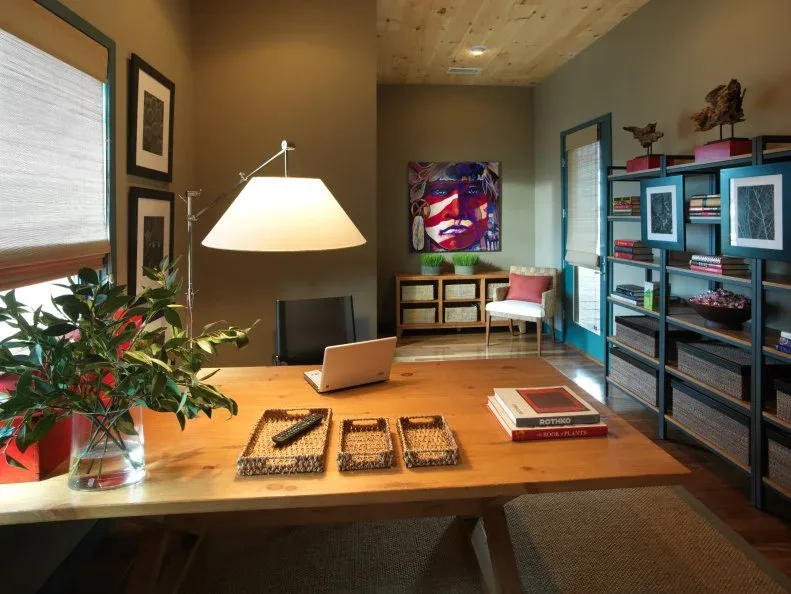
Use a Trestle Table With Organized Shelves
 SaveSupport Non AI Creator
Source: hgtv.com
A wood trestle table supplies the main work surface in this country-inspired office. Dark open shelving holds books and containers along the side wall, with basket storage at the far end. A colorful portrait and blue door trim give the warm wood a livelier setting. The arrangement shows how a practical farmhouse desk can share the room with contemporary artwork rather than depending on a completely rustic palette.
Check the trestle supports leave comfortable legroom and suit the intended desk loads. Keep a clear working area around the laptop rather than filling the table with decorative trays. Secure tall shelving and place frequently used supplies within reach. Give paperwork a specific container or drawer so open shelves remain manageable, and position task lighting to illuminate the work without glare on a screen.
PART 02
Collected Furniture and Country Pattern
IDEA 05 / 15
Try a Small Drawer Desk Against Soft Pink Walls
 SaveSupport Non AI Creator
Image credit: Graham & Green
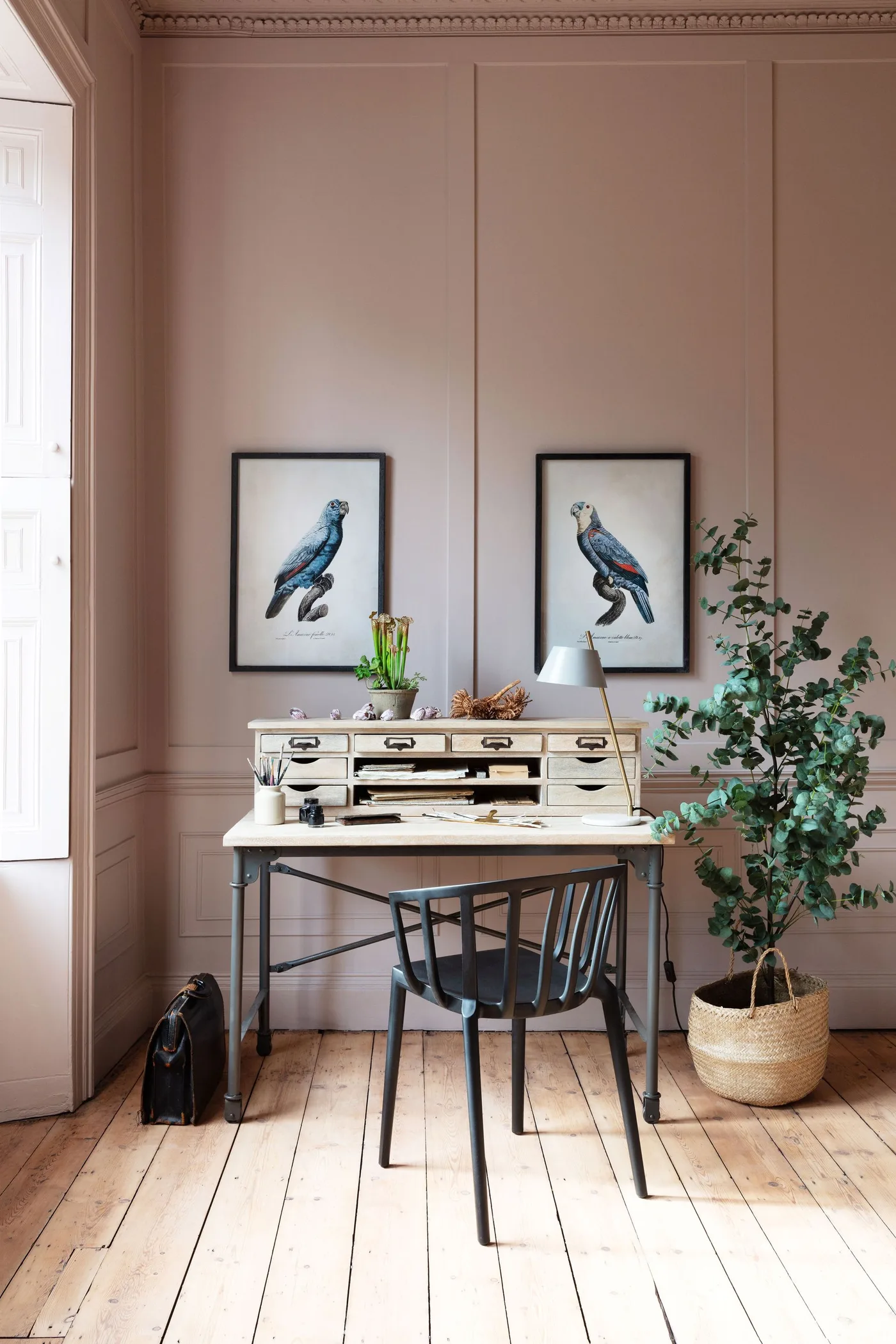
A small drawer desk sits against soft pink walls in this country writing corner. A dark chair gives the pale furniture a stronger outline, with two bird pictures forming a quiet group above. The plant’s woven basket repeats the room’s natural texture near the wood floor. The useful idea is a compact collected station, where a modest desk and a restrained display make an unused wall feel purposeful.
Check the small drawers hold the supplies you need without reducing the usable writing surface. Inspect the furniture’s condition before daily use and choose wall fixings suitable for the framed pictures. Keep the plant container from transferring moisture to the floor. Test chair comfort and desk height together, allowing room to pull the chair back without obstructing the adjoining doorway or household route.
IDEA 06 / 15
Light a Shared Wood Table Beneath Exposed Beams
 SaveSupport Non AI Creator
Image credit: Chaplins Furniture
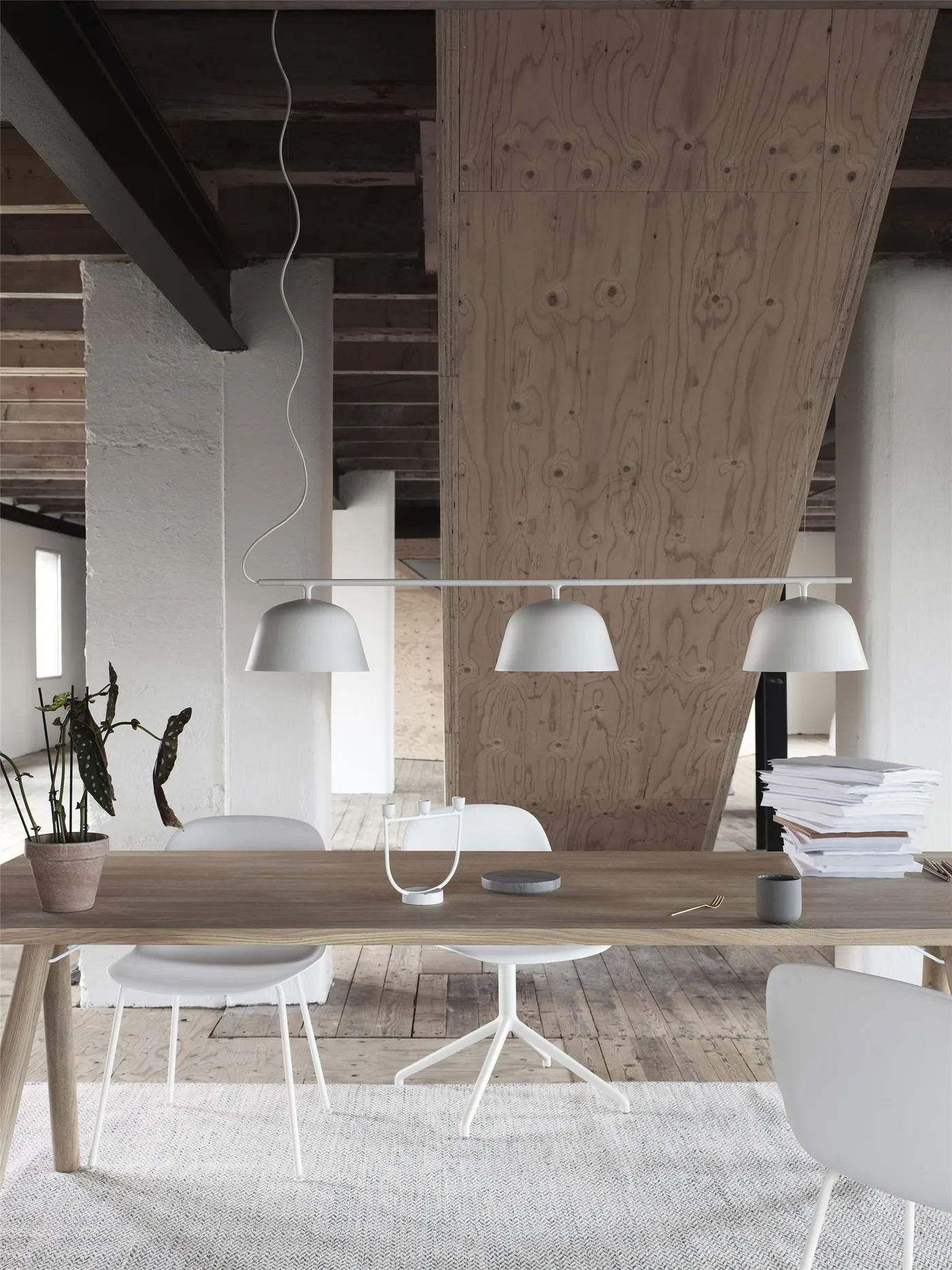
A long wood table gives this light workspace a shared center. Three pale pendant shades spread across it below exposed dark beams, with white chairs keeping the furniture visually quiet. The board floor and timber structure provide a country background around comparatively modern seating. The photograph is useful when planning a farmhouse worktable for several tasks, especially where the room must remain flexible instead of supporting one fixed desk position.
Check the table depth and seating positions for the actual work, leaving room for elbows, supplies and circulation. Plan pendant installation and light distribution around those positions rather than the table’s appearance alone. A shared table may need separate task lights and suitable chairs for longer sessions. Provide storage for papers and equipment so the surface can be cleared without moving supplies into the walking route.
IDEA 07 / 15
Connect Green Walls With Collected Wood Furniture
 SaveSupport Non AI Creator
Image credit: Davide Lovatti / Future
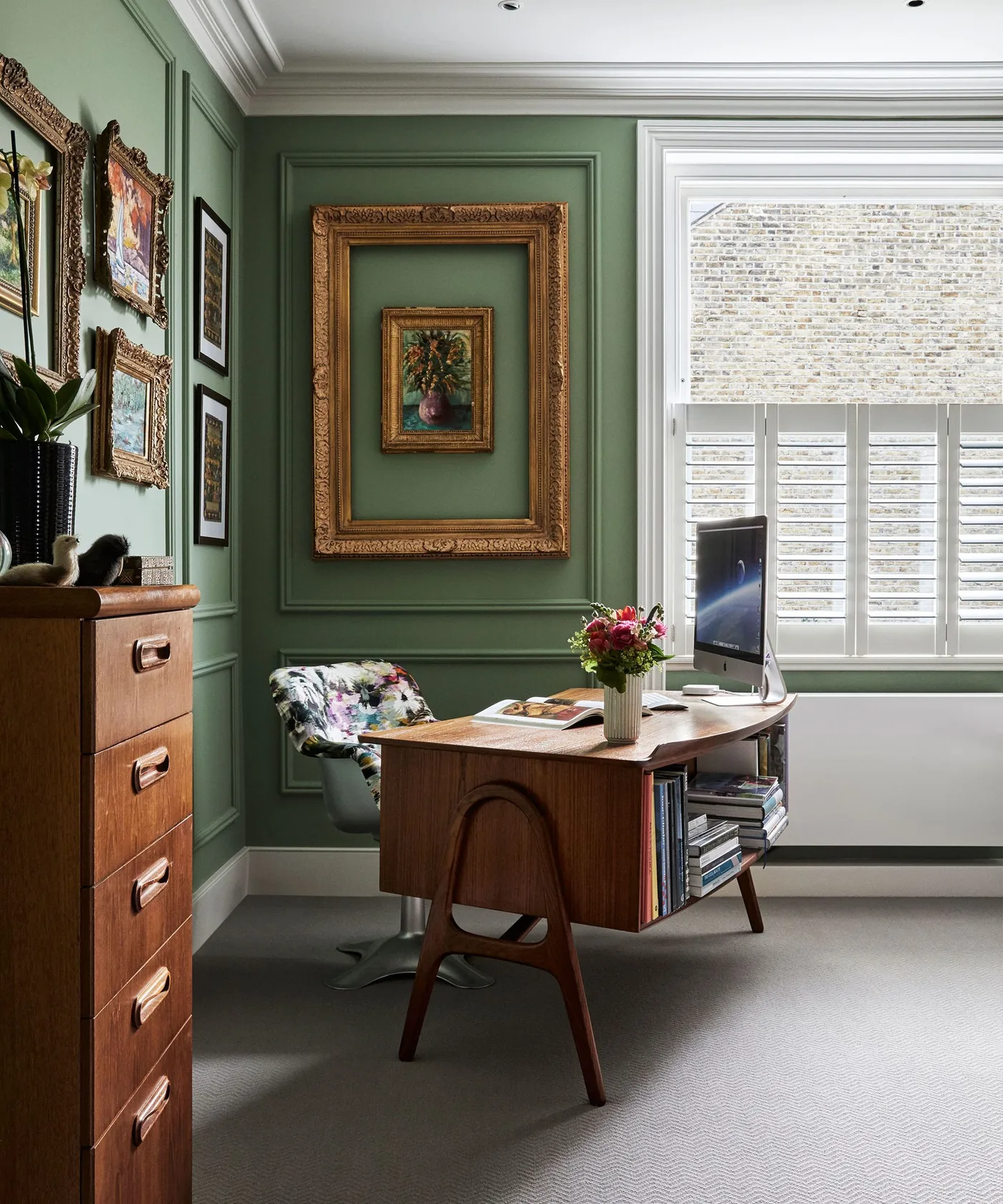
Green paneled walls connect a wood desk and a tall drawer unit in this collected office. A floral chair adds country pattern beside the quieter storage, with framed pictures giving the wall a personal display. White window shutters provide a lighter edge to the green. The combination can inform a farmhouse room in which useful older-looking furniture and a limited palette carry the character rather than matching all finishes.
Test green paint beside the existing wood under daylight and evening lighting. Keep the shutter controls accessible and adjust light to avoid screen glare. Inspect drawer operation and anchor tall furniture appropriately, reserving reachable storage for daily supplies. Check the desk’s legroom with the chair you will actually use. Secure artwork independently and keep the desk top available for work rather than adding more decorative objects.
IDEA 08 / 15
Make an Understairs Study Feel Like a Country Room
 SaveSupport Non AI Creator
Image credit: Dunning & Everard
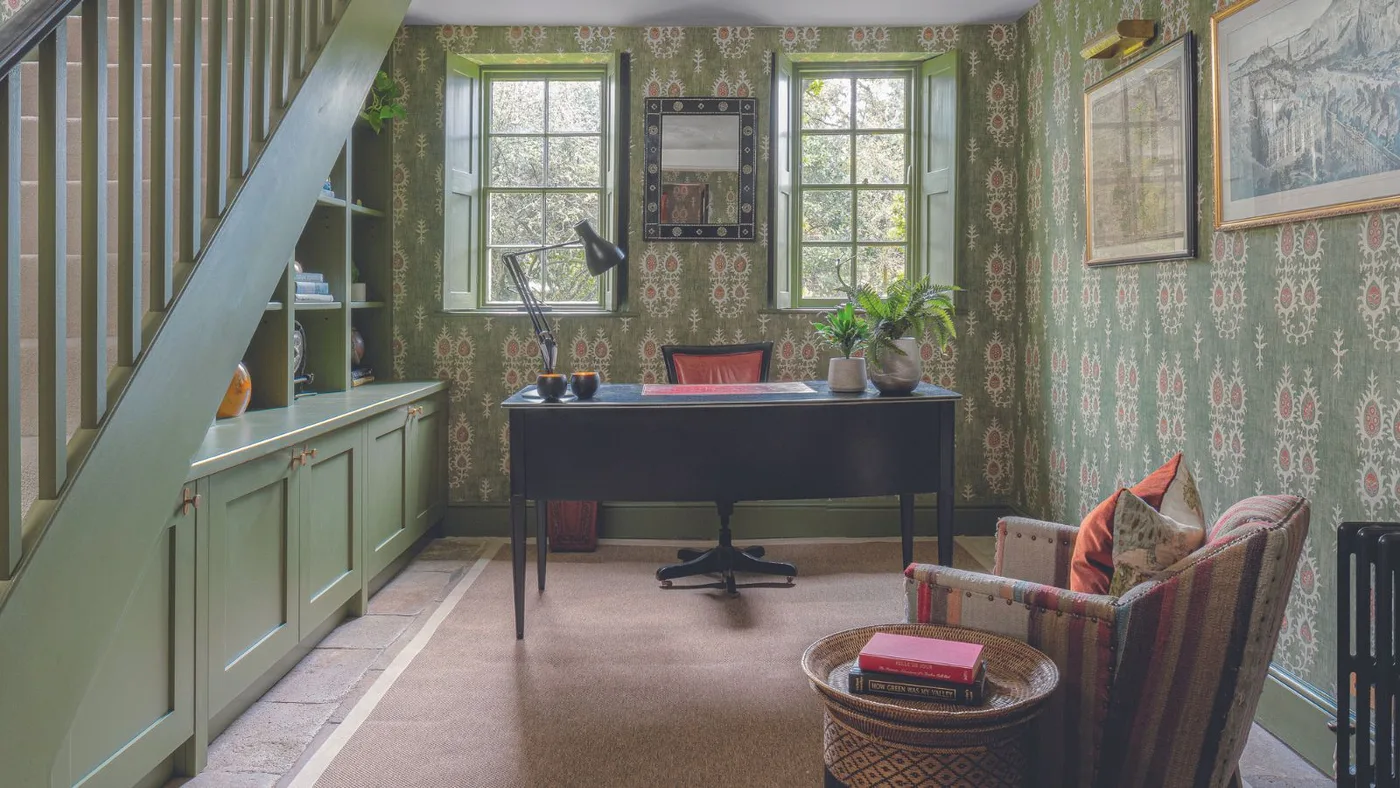
Green patterned walls give this understairs study a clear country atmosphere. Fitted storage follows the stair edge, with a desk placed between two windows at the far end. A striped armchair and basket-like table provide a separate reading spot beside the work area. The photograph shows how farmhouse inspiration can extend to a patterned, collected room while the main desk and storage still have distinct practical roles.
Measure the usable headroom and access around understairs storage before planning cabinetry. Keep the desk approach comfortable with the chair occupied, and check doors can open without hitting neighboring furniture. Compare wallpaper and chair patterns together at full sample size. Provide useful desk lighting after dark, and keep the basket table stable if it will support drinks or frequently handled books.
PART 03
Smaller Writing Stations and Shared Rooms
IDEA 09 / 15
Use Leaf Wallpaper in a Small Writing Room
 SaveSupport Non AI Creator
Image credit: Brent Darby
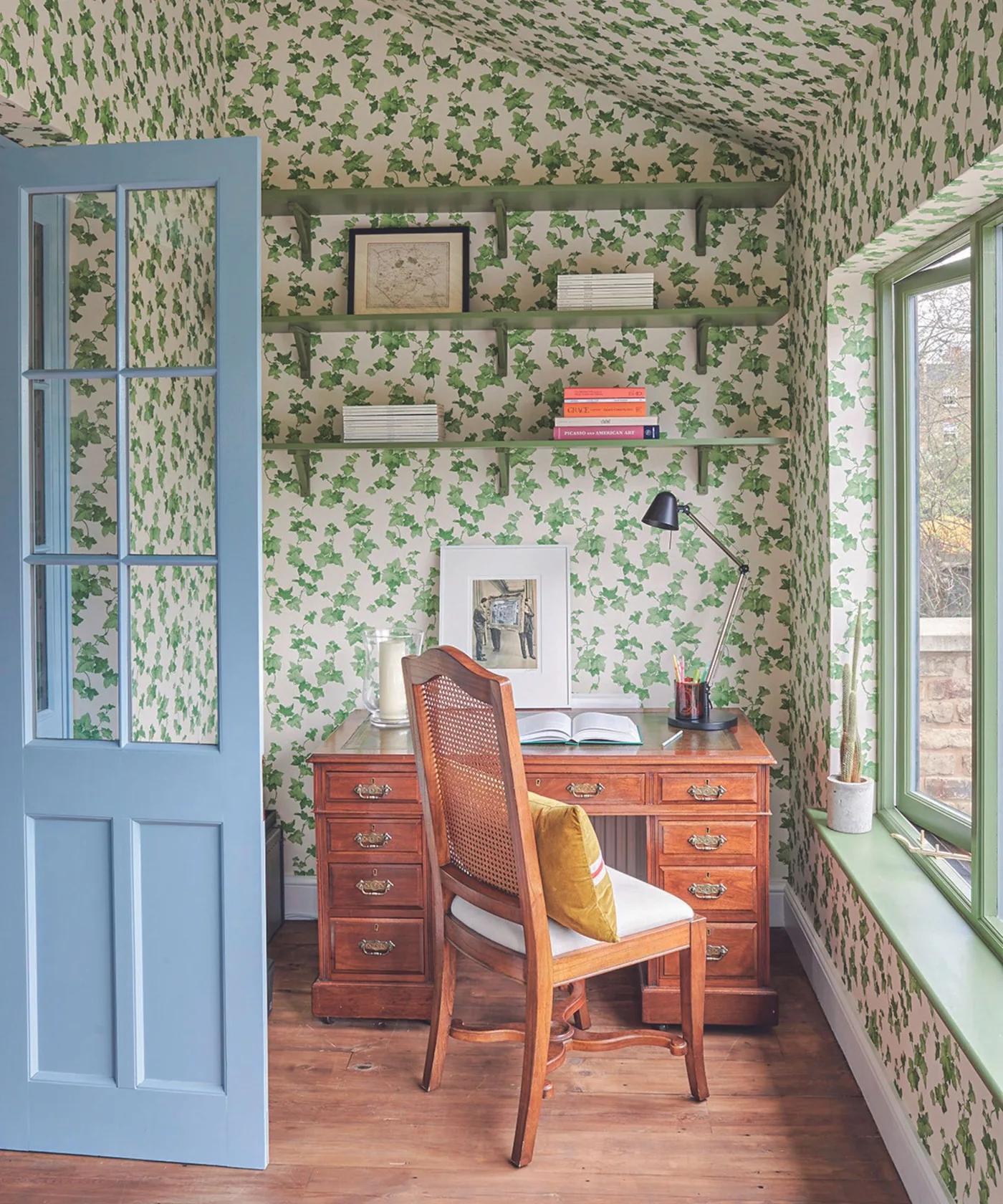
Green leaf wallpaper surrounds the wood desk in this small country writing room. A woven-back chair repeats the warmer furniture texture, while a blue glazed door gives the entrance a separate color. Slim shelves hold books above the work surface. The photograph shows a compact farmhouse-inspired room where pattern supplies the character and a traditional desk provides practical drawers without adding a second large storage piece.
Check the full door swing before selecting desk depth or chair position. Keep upper shelves securely fixed and suited to their actual loads, with enough space to remove books comfortably. Choose wallpaper care that matches the room’s use and compare its scale beside the furniture. Test the desk and chair together for legroom, and leave a clear work area around the task light and daily supplies.
IDEA 10 / 15
Give a Wood Desk a Collected Picture Wall
 SaveSupport Non AI Creator
Image credit: Photo: Jared Kuzia Photography. From: Kristina Crestin
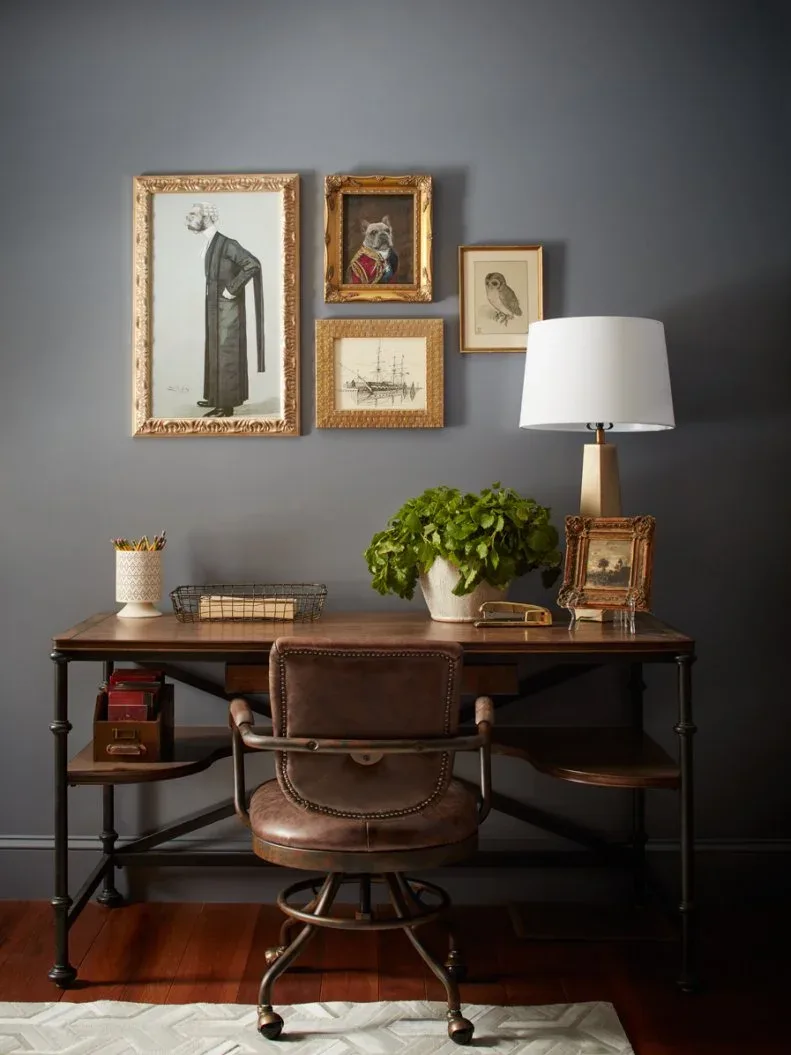
A wood writing desk stands against a dark gray wall below a collected group of pictures. Gold-toned frames bring warmth above the darker desk supports, while a pale lampshade provides a quieter light detail. The brown swivel chair gives the station a familiar country feel. The photograph offers a farmhouse-inspired arrangement that uses personal artwork and mixed furniture rather than an extensive built-in storage wall.
Lay out frame positions before fixing them, using appropriate hardware for the actual wall and object weights. Keep enough clear desk surface for the work you intend to do. Check the swivel chair’s stability and comfort rather than selecting it only for its aged appearance. Route the lamp cord safely, and use the lower shelves for organized supplies that will not interfere with your knees.
IDEA 11 / 15
Share a Sunroom Between Seating and Small Desks
 SaveSupport Non AI Creator
Image credit: Photo: Rachel Whyte. From: Fixer Upper
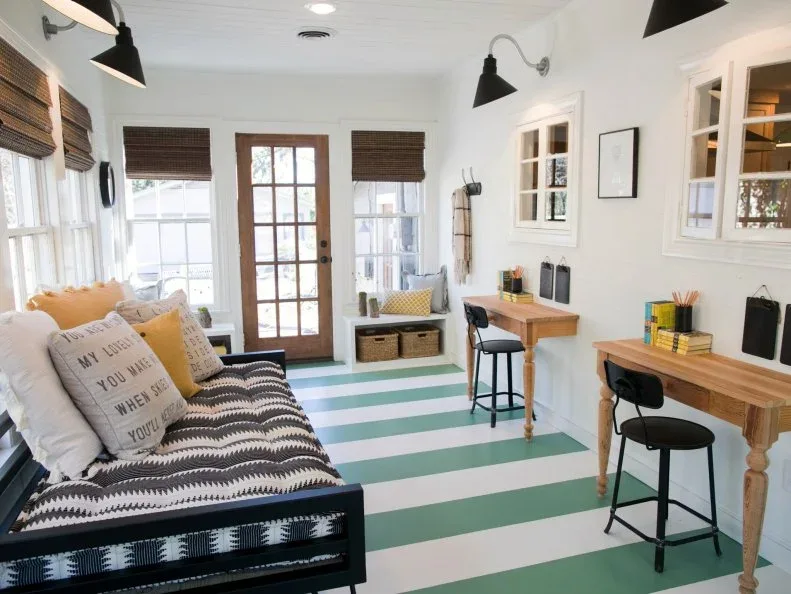
Two small wood desks line one side of this bright country sunroom. A patterned sofa sits opposite, with green-and-white floor stripes connecting the different activities. Dark chairs and wall lights give the pale room stronger outlines. The photograph shows a farmhouse workspace that shares its setting with household seating, offering separate writing spots without making the whole room look like a conventional office.
Check circulation with both desk chairs occupied and preserve the approach to the glazed door. Test sun exposure and glare before placing screens at the desks. Choose comfortable seating for the actual work duration, since small decorative chairs may be better for occasional use. Give each station a container for supplies, and check the floor finish’s care requirements before copying painted stripes in a busy room.
PART 04
Creative Tables and Organized Storage
IDEA 12 / 15
Put Creative Supplies on Pipe-Framed Shelves
 SaveSupport Non AI Creator
Image credit: Photo: Rachel Whyte. From: Fixer Upper
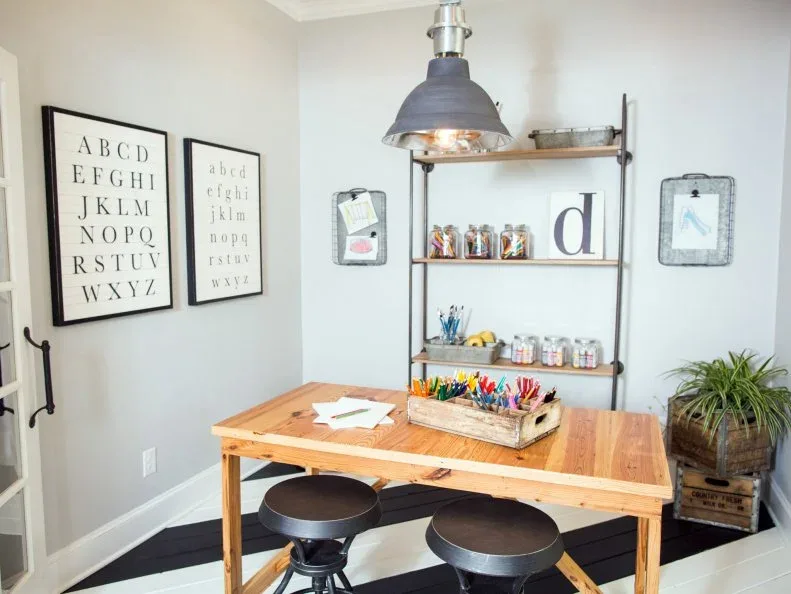
A wood worktable sits below pipe-framed shelves in this country craft room. Jars group smaller supplies across the shelves, while dark round stools leave the table edges comparatively open. A dome pendant brings a stronger industrial outline overhead. The farmhouse idea is the combination of useful warm wood and straightforward open storage, with the creative tools contributing detail instead of being hidden behind a decorative display.
Choose shelf fixings and supports for the actual jar and supply loads, keeping heavier items lower down. A craft table may need surface protection suited to paint, glue or cutting tasks; do not assume a rustic finish can tolerate them. Select stools or supportive chairs for the time spent working. Keep sharp tools and small supplies secure where children use the room, preserving clear routes around the table.
IDEA 13 / 15
Use a High White Table for Creative Work
 SaveSupport Non AI Creator
Image credit: Photo: Rachel Whyte
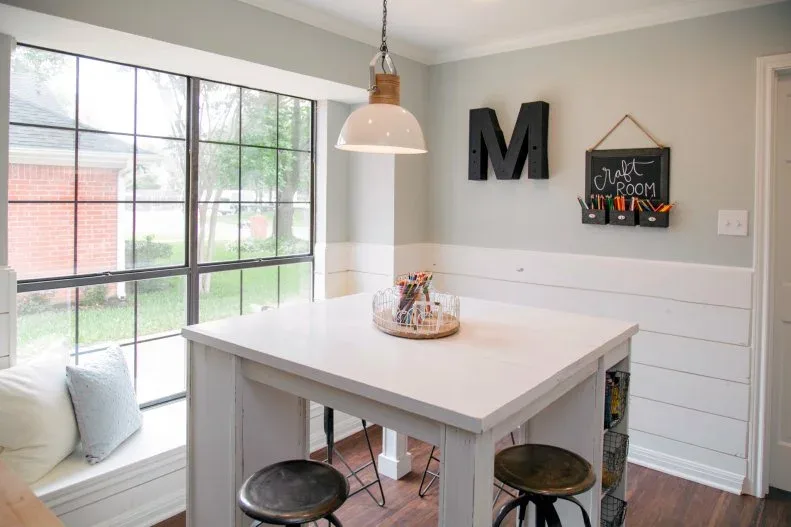
A high white table provides the center of this country craft room. Lower cubbies collect supplies below the work surface, with dark stools offering seats around its sides. White boards give the wall a familiar farmhouse background, and the broad window brings light into the work area. The arrangement is useful for comparing a shared creative table with a conventional sitting desk rather than assuming both support the same tasks.
Match the work height and seating to the activities and people using the room. Check stools allow stable foot support and leave enough space to stand or move around the table. Organize lower cubbies so supplies do not spill into foot space. Control window glare as needed and provide task lighting for detailed work, with surface protection compatible with the table’s actual finish.
IDEA 14 / 15
Pair Blue Storage With a Worn-Looking Worktable
 SaveSupport Non AI Creator
Image credit: Photo: Sarah Wilson/ Getty Images ©. From: Chip Gaines
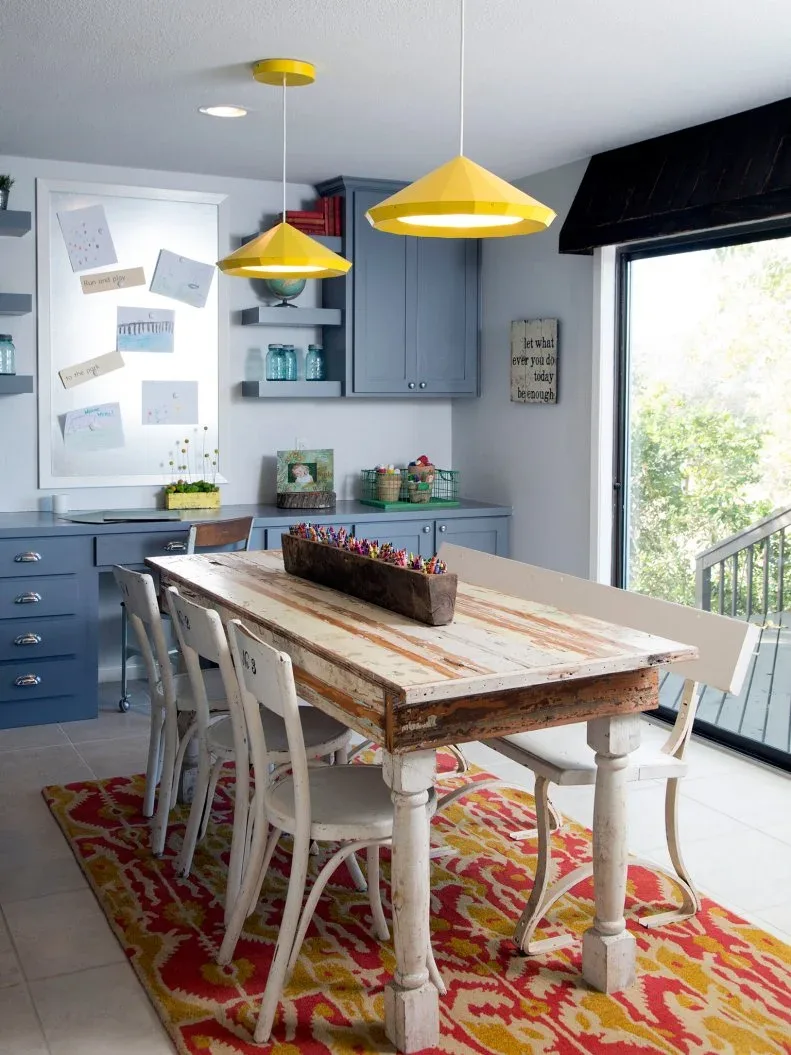
Blue cupboards give this country craft room a coherent storage wall. A worn-looking wood table and white chairs sit beneath yellow pendants, with a colorful rug connecting their positions. The cabinet color makes the varied furniture feel intentional without removing its collected appearance. The photograph offers farmhouse inspiration for a room used for creative projects, where closed supplies and a broad clear surface matter as much as the decorative details.
Inspect the table for stability and a surface suitable for your projects before choosing a distressed appearance. Keep useful supplies in reachable cupboards and reserve lighter items for upper storage. Secure the rug against movement when chairs are pulled out. Check pendant positions and suitable installation for working light. If using the room for computer work, select supportive seating and plan equipment access independently of the craft arrangement.
IDEA 15 / 15
Keep a Wood Desk Against Quiet Green Shelves
 SaveSupport Non AI Creator
Image credit: Gatewood Designs, photography Kris Kohl
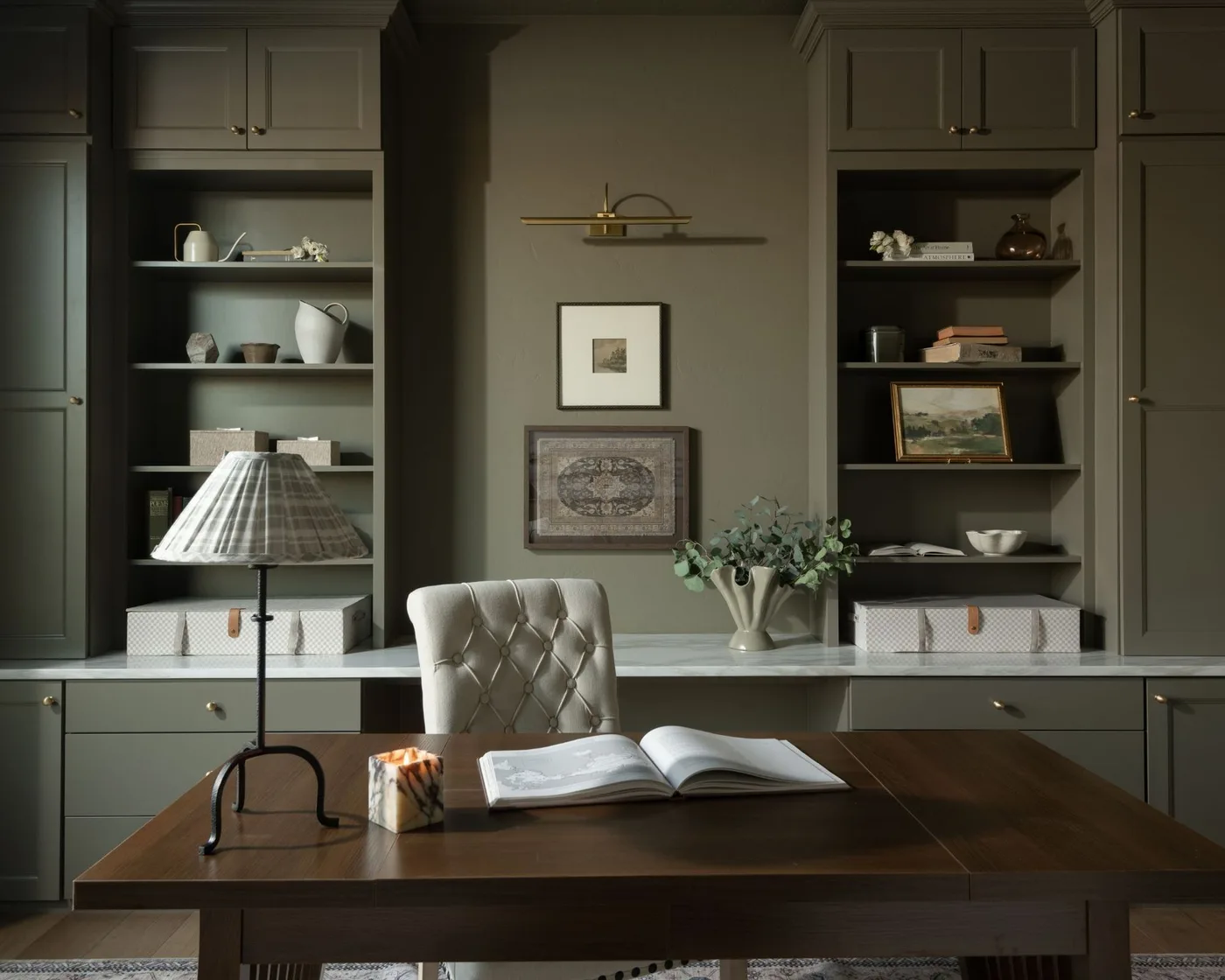
Quiet green paint connects the shelves and cupboards behind this wood desk. A pale tufted chair gives the darker work surface a lighter counterpoint, with a table lamp adding a smaller source of light. The cabinet arrangement combines selected display with closed storage below. This restrained country office can guide a farmhouse room that needs useful paperwork storage without filling every shelf with objects or introducing several unrelated accent colors.
Plan the cupboard interiors around the folders and equipment you actually use. Keep display objects spaced so they can be removed and dusted without disturbing the whole shelf. Test the desk and chair together for comfort and leave the main surface available for work. Compare green samples beside existing wood finishes, then add task lighting where required rather than relying on decorative cabinet lighting alone.
BRING IT ALL TOGETHER
Choose Country Details Around the Work You Do
Match the desk, chair and storage to your daily tasks. A traditional writing desk may be useful for correspondence while a creative table needs a different height and surface protection. Check the complete arrangement with the chair occupied and the supplies you actually use present.
Add farmhouse character through a limited group of finishes and useful pieces. Painted storage, a wood desk or collected artwork can provide warmth without taking over the room. Keep working surfaces clear, secure tall storage and review lighting after dark as well as beside a bright window.