A dining room office needs to support two different routines. Some homes can fit a separate desk beside the table; others need a laptop setup that disappears before dinner. Decide which arrangement matches your working hours before adding furniture.
These examples include visible shared offices, library tables and dining settings that can inspire occasional work. Each idea explains what the photograph shows and what to consider when adapting it, from chair comfort and daylight to paper storage and keeping meals free of equipment.
PART 01
Give Work a Separate Place
IDEA 01 / 19
Hide a Desk Behind Sliding Doors
 SaveSupport Non AI Creator
Source: houzz.com
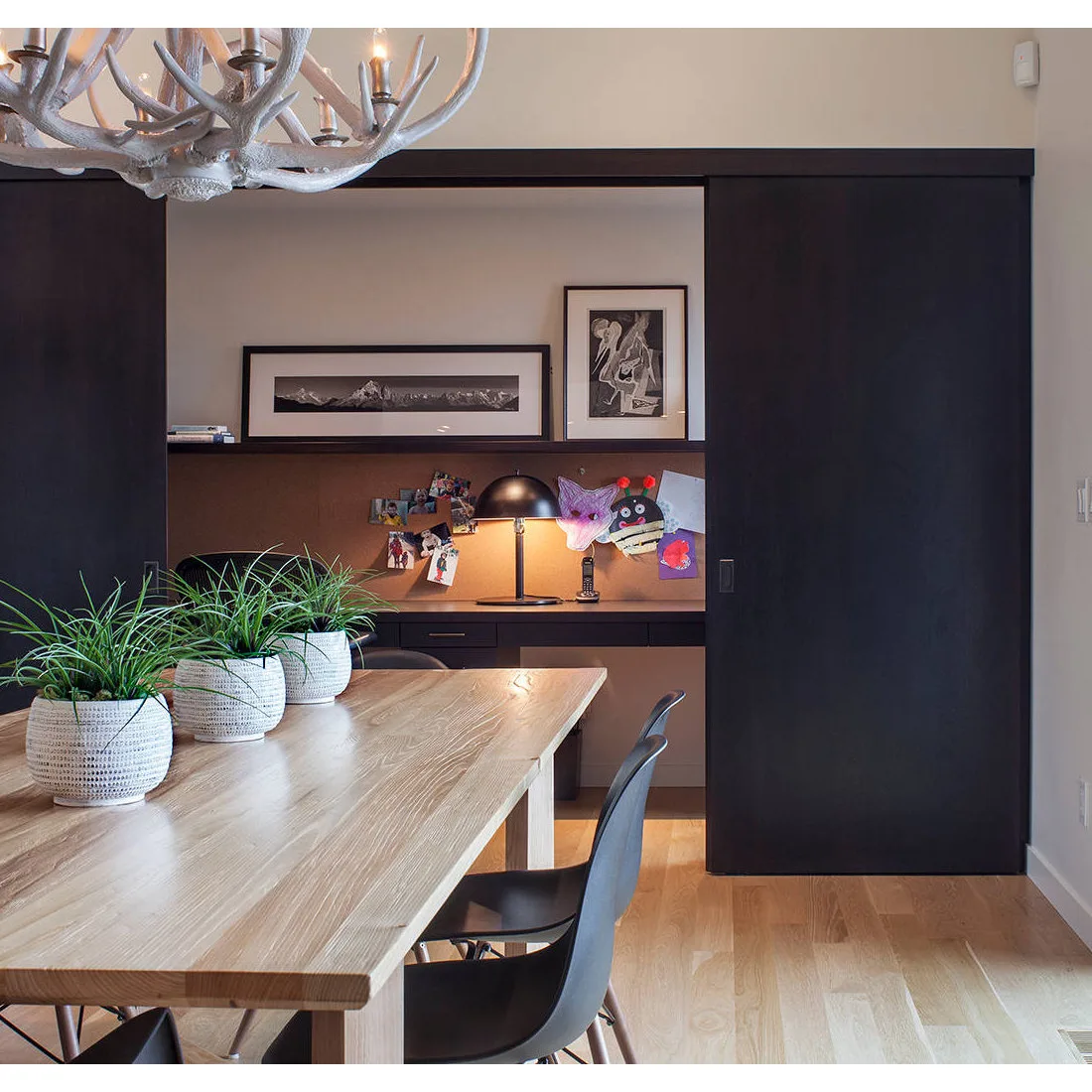
Dark sliding doors frame a recessed desk behind this dining table. A lamp and corkboard give the small work surface its own identity, while the wood table and black chairs remain in front. The arrangement separates paperwork from meals without building another enclosed room. The door panels also offer a way to soften the view of work equipment when the table is needed for guests.
Check the full travel of the doors before fitting shelves, lighting or a chair into the recess. The chair must tuck away far enough for the panels to close freely. Give the desk a usable power connection rather than trailing a cable across the dining route, and keep the corkboard contents below the point where they could catch on moving panels.
IDEA 02 / 19
Keep a Long Desk Beside the Dining Table
 SaveSupport Non AI Creator
Source: houzz.com
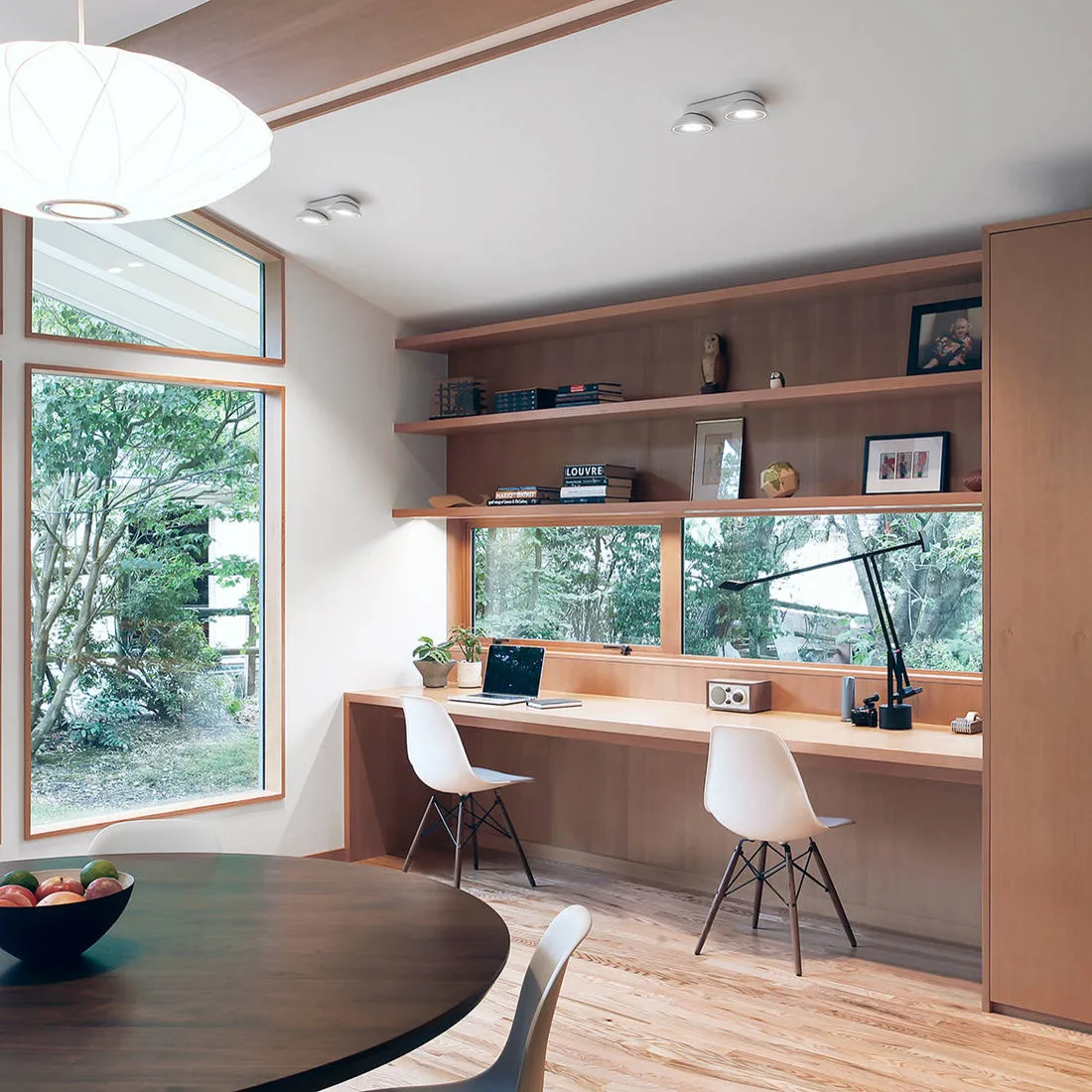
A long wood desk runs beneath windows and open shelves, with two white chairs facing the work surface. The round dark dining table sits separately in the foreground. Matching chair colors connect the two areas, but the different table shapes make their roles easy to understand. A laptop and adjustable lamp stay at the desk, leaving the dining surface available for food.
Plan the desk depth around the equipment you actually use and test both chairs pulled out at once. A shared room needs space for someone to pass while another person is working. Check screen reflections from the windows at different times of day; a pleasant garden view can still need a blind when sunlight falls directly onto the display.
IDEA 03 / 19
Use a Separate Work Corner in a Small Room
 SaveSupport Non AI Creator
Source: houzz.com
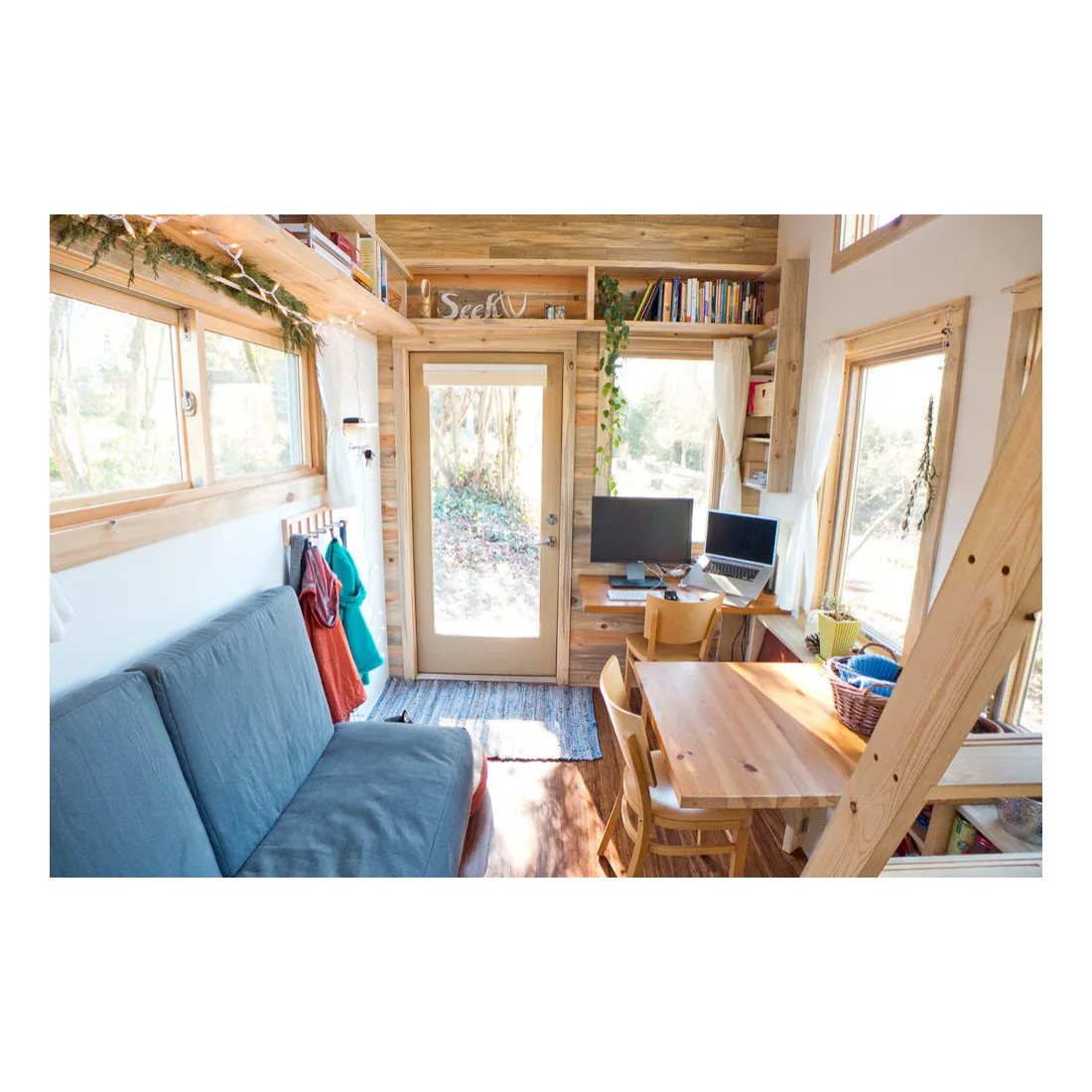
A small wood table sits beside blue bench seating, while a compact computer desk occupies the back window corner. Books sit above the doors and windows rather than on either working surface. The photograph shows distinct places for eating and screen work within a tightly arranged room, with light wood tying the table, wall structure and desk corner together.
Start with the movement between the entrance, dining seat and desk chair. A compact layout works only when those routes stay usable during the day. Keep the table free of permanent equipment if it is needed for meals, and store frequently used papers within easy reach of the desk rather than placing them on high shelves that require repeated climbing.
IDEA 04 / 19
Put an Office Beyond the Dining Room Door
 SaveSupport Non AI Creator
Source: houzz.com
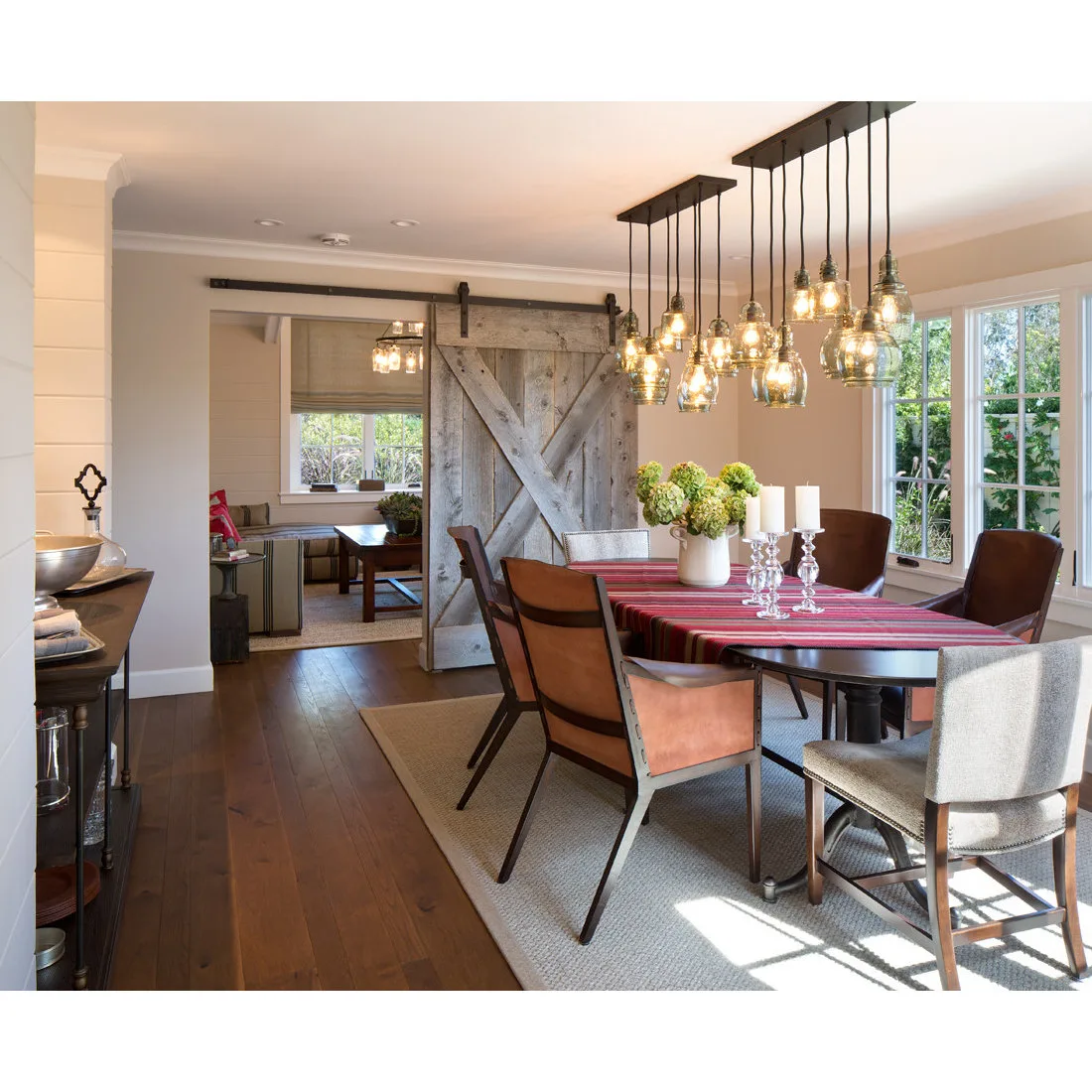
A sliding door beside the dining group opens toward a separate small work area with a desk, window and bench. Brown chairs and a red table runner distinguish the meal setting in front. This is a useful arrangement when a work nook can sit immediately beside the dining room, giving the two activities a connection while keeping their surfaces separate.
Consider how often the opening should be closed for calls, meals or concentration. A sliding panel changes the view, but its construction determines how much sound it reduces. Leave the doorway and door track clear of dining chairs. Choose desk lighting for the work nook itself so that working after dark does not require brightening the entire dining room.
IDEA 05 / 19
Connect Dining With a Library Work Table
 SaveSupport Non AI Creator
Source: houzz.com
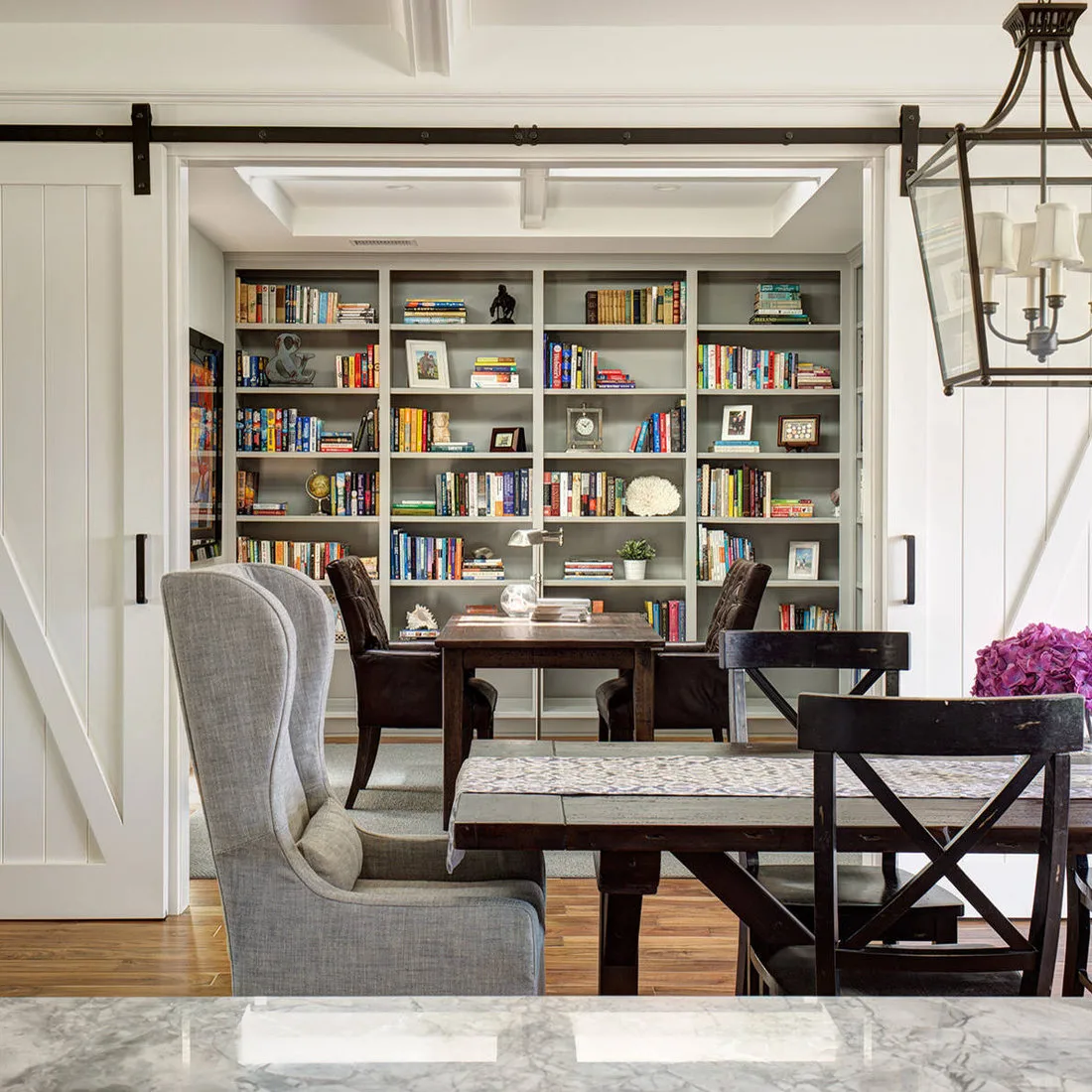
White sliding doors connect a dining table and cross-back chairs to a book-lined room with its own central table. No computer is visible in the library, but the second surface suggests an approach for reading or temporary paper work beside the dining room. Bookshelves form a shared backdrop, while the doors provide a clear boundary between the two seating arrangements.
If a library table will also serve as a workspace, decide where equipment goes when reading or entertaining takes priority. Keep a nearby closed compartment for chargers and papers rather than leaving them among the books. Test chair clearance on both sides of the doorway, and remember that leaving the doors open connects the rooms visually without making either table larger.
PART 02
Share Tables and Nearby Storage
IDEA 06 / 19
Make a Dining Library Ready for Paper Work
 SaveSupport Non AI Creator
Source: houzz.com
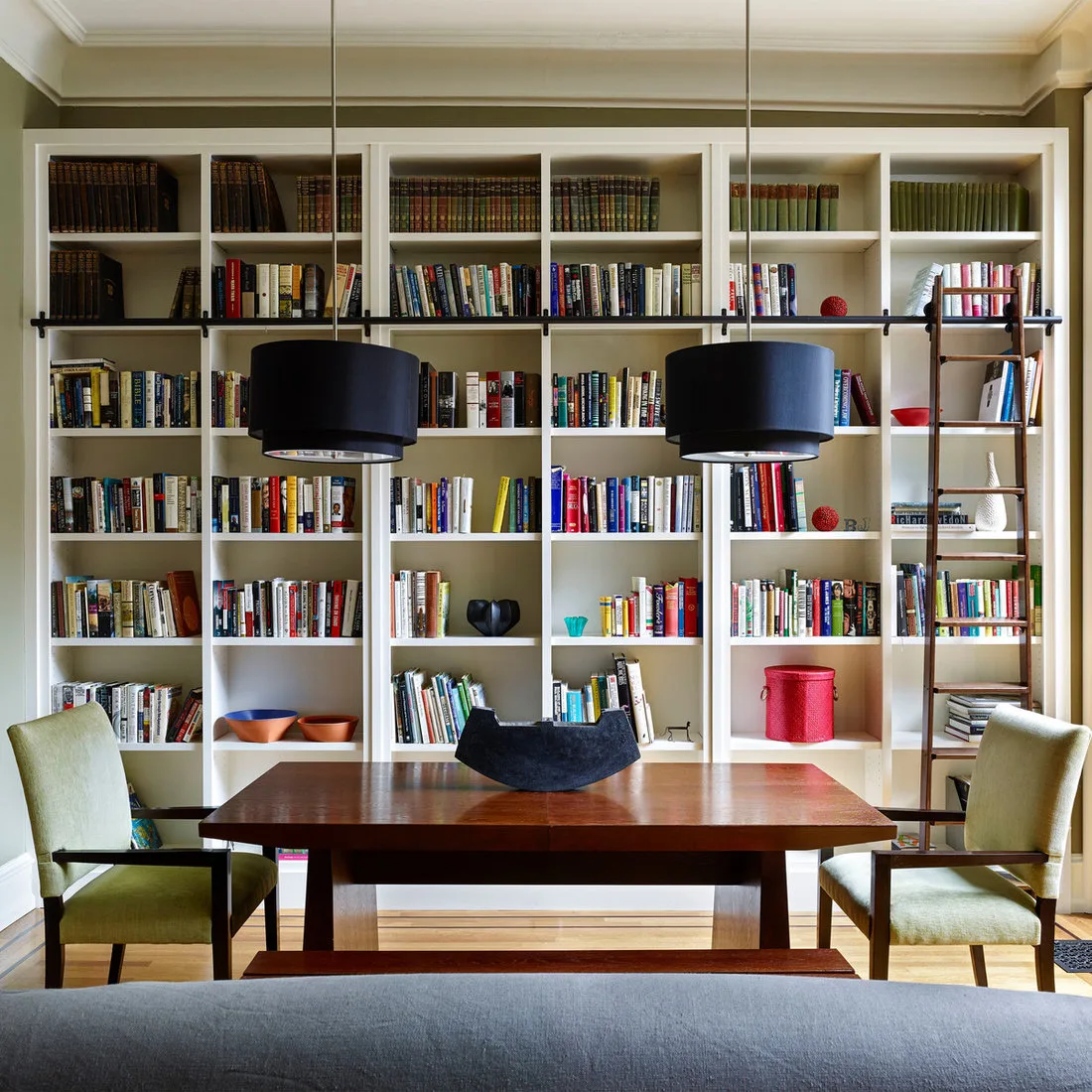
Tall white bookshelves give this dining table a library setting, with green armchairs and two black drum pendants completing the group. The table is dressed simply, and no office equipment is shown. For a household that works mainly with a laptop or papers, this arrangement offers a useful starting point: a dining surface close to books and storage, rather than a separate desk.
Reserve a reachable shelf or box for work essentials so the tabletop can return to dining quickly. Open shelves suit books, but loose papers need folders or covered storage to stay orderly. Try the chairs for a full working session before relying on them every day; attractive dining armchairs may still need changes in seat support or table position for prolonged use.
IDEA 07 / 19
Pair a Shared Table With a Book Wall
 SaveSupport Non AI Creator
Source: houzz.com
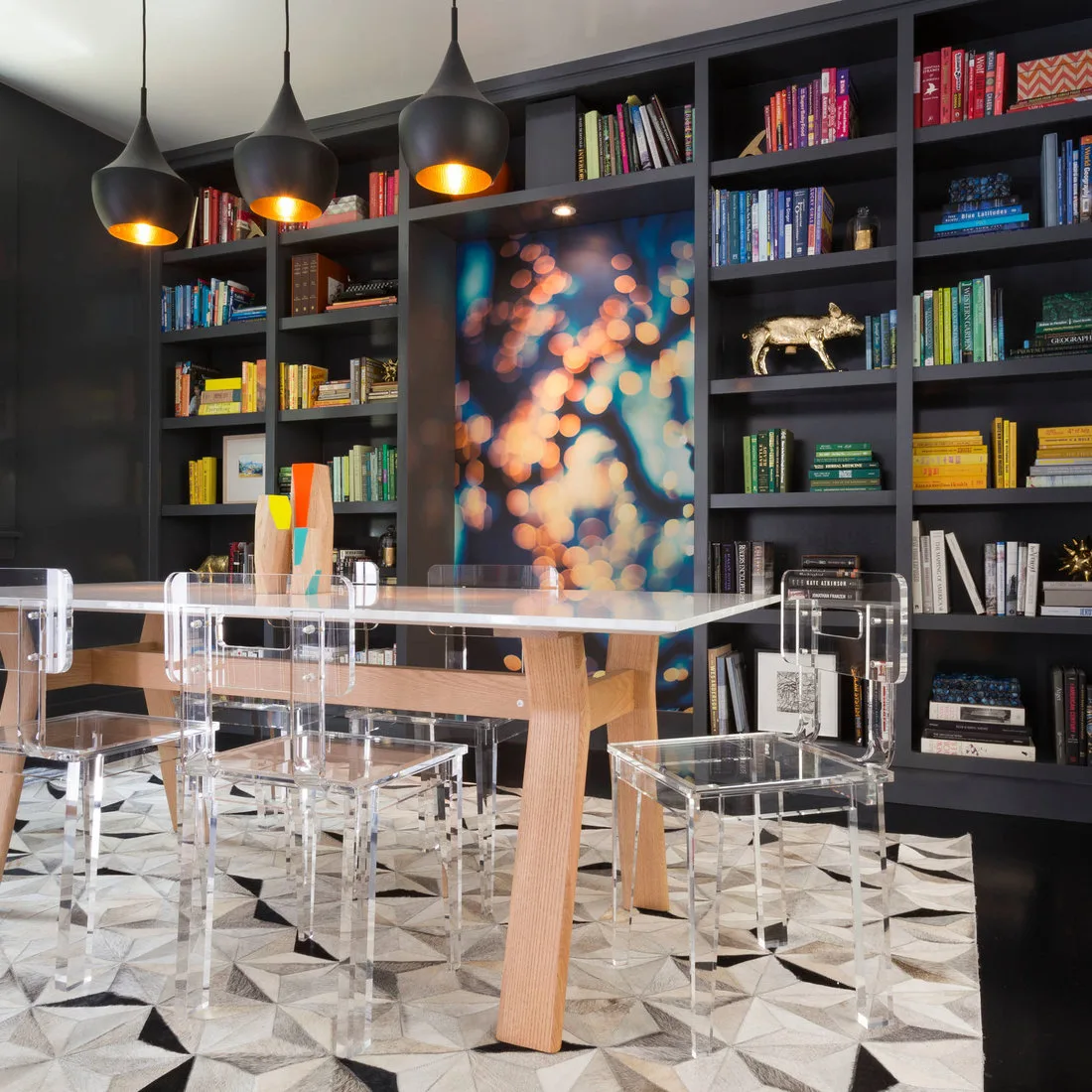
Black bookshelves surround a pale table and clear chairs, making the room feel part dining area and part reading space. Colorful books and a tall central artwork bring life to the dark storage wall. No working equipment is visible, but the library setting shows how a shared table can remain welcoming for meals while keeping reference material nearby.
Give work supplies their own section within the shelving rather than scattering them between decorative objects. Clear chairs keep the view open, but comfort matters more than their light appearance when the table becomes a desk. Test task lighting on an actual page or screen; the three decorative pendants establish the dining atmosphere without proving that every work position is evenly lit.
IDEA 08 / 19
Use a Table for Dining and Creative Projects
 SaveSupport Non AI Creator
Source: houzz.com
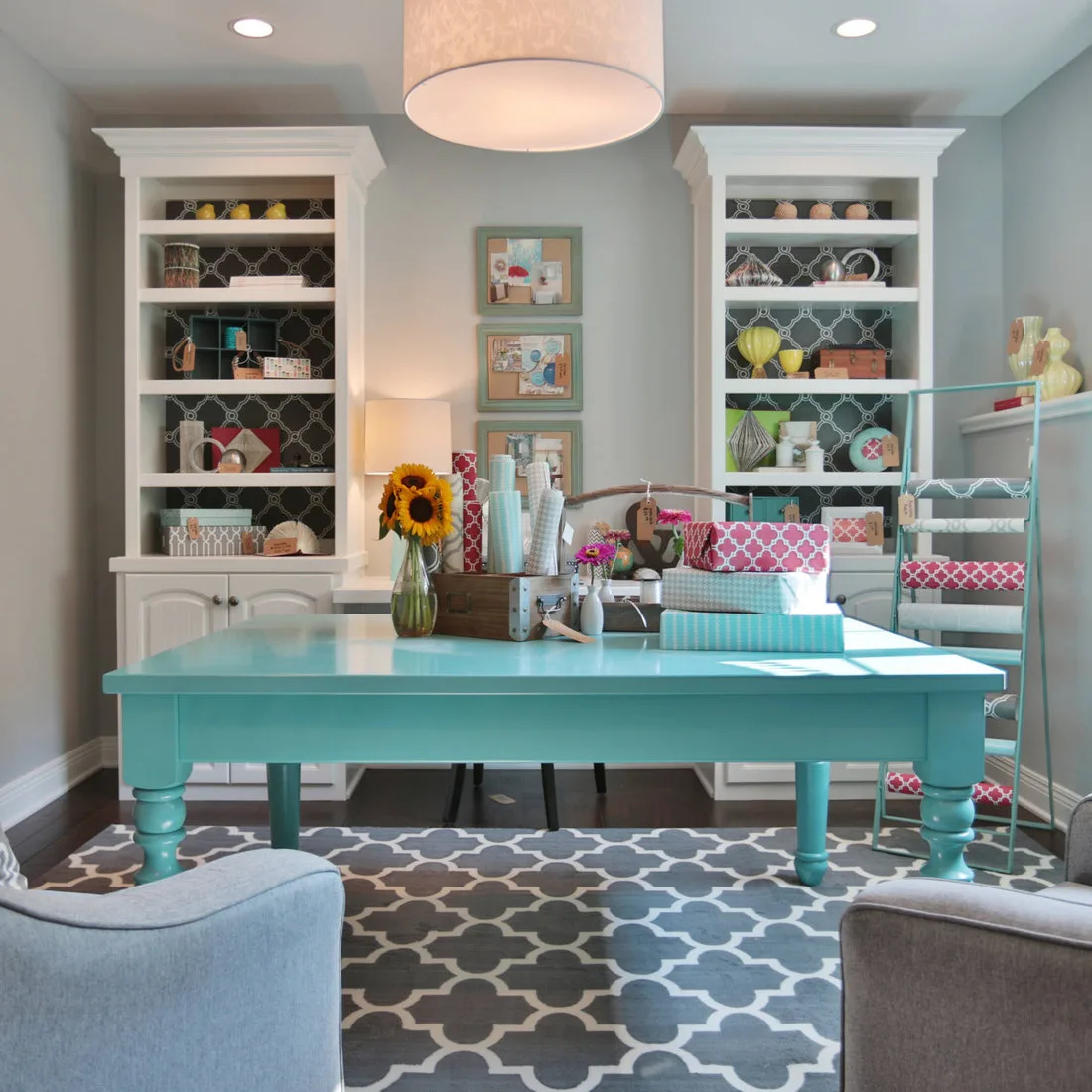
A turquoise table sits in front of white built-in shelves and a work counter filled with craft supplies. Ribbon rolls, colorful containers and patterned backing make the storage feel deliberately creative. The photograph shows a project space rather than a meal in progress, but its freestanding table illustrates a practical arrangement for a dining room that also accommodates occasional making or paper-based work.
Protect the tabletop for the activity you plan, then remove the protective covering before serving food. Keep cutting tools, adhesives and loose supplies in dedicated containers that can be cleared in one trip. Separate food storage from project materials, especially anything with strong fumes or residue. Leave enough room around the table to work without blocking access to the cabinets behind it.
IDEA 09 / 19
Bring Comfortable Seating to a Shared Table
 SaveSupport Non AI Creator
Image credit: Photo: Kristy Seibert Designs
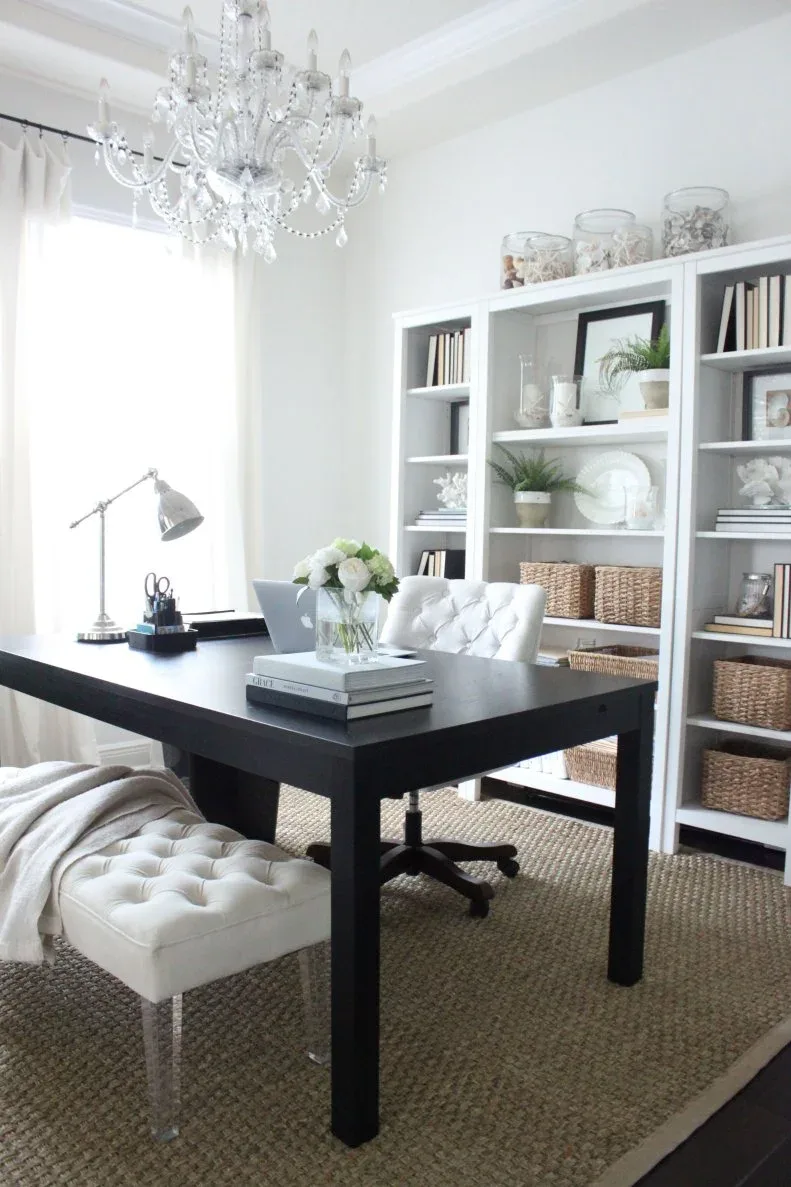
A dark rectangular table holds a laptop beneath a chandelier, with white tufted seating and tall shelves behind it. The room has the decorative character of a dining space while visibly functioning as an office. Books and baskets occupy the shelving, allowing the main surface to stay relatively clear. The photograph is useful for planning a table-centered room where work does not require an industrial-looking desk.
Choose seating according to how long you work, then check that it also fits the table when additional diners arrive. A rolling chair may need a floor protector suited to the floor finish. Keep the laptop and desk lamp on a removable tray or designated storage shelf when meals take over. Do not assume the chandelier replaces focused light for detailed reading.
IDEA 10 / 19
Store Work Supplies Alongside Dining Pieces
 SaveSupport Non AI Creator
Image credit: Photo: Courtesy of Tiffany Skilling Interiors
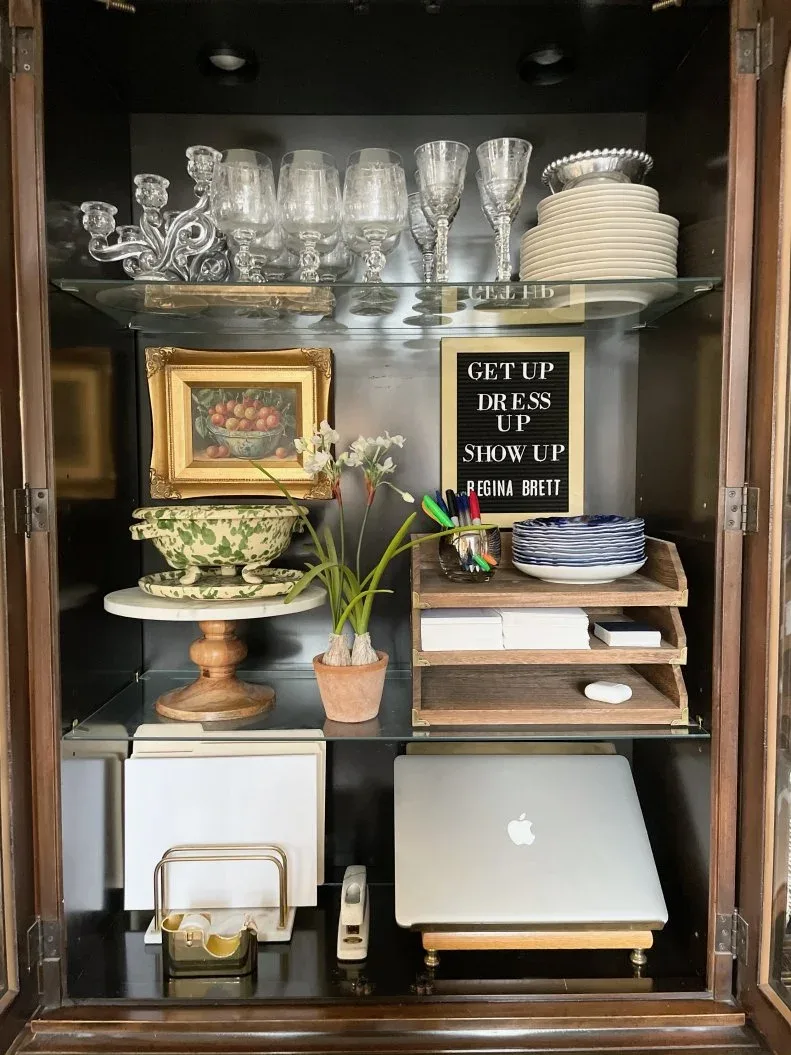
Glassware and plates share this dark cabinet with a closed laptop, paper organizers and small office supplies. The photograph shows storage rather than a working seat, making it a particularly clear example of how a dining room can support occasional work without a permanent desk. Different shelf levels give each group its own place within one piece of furniture.
Set aside a stable, dry shelf for the laptop and leave dishes in their own section. Avoid balancing electronics beneath items that could drip after washing, and keep charging equipment out of enclosed storage unless its instructions allow that use. A small tray for pens and paperwork makes changeover easier: take the tray to the table, then return the whole group after work.
PART 03
Make Dining Tables Adaptable
IDEA 11 / 19
Adapt a Dining Bench for Short Work Sessions
 SaveSupport Non AI Creator
Image credit: Photo: Designing Vibes
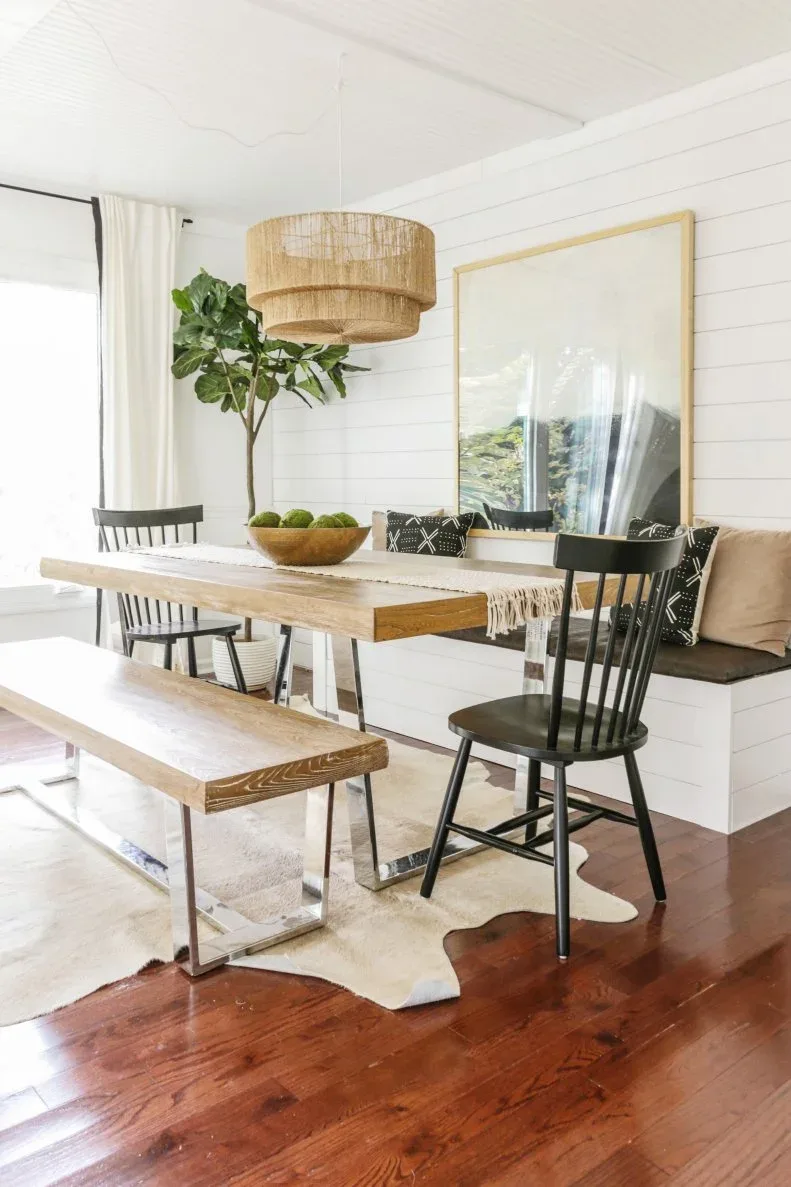
A wood table sits between black chairs, a freestanding bench and pale built-in seating against white paneling. The dining arrangement has no computer in view, but its open tabletop could accommodate a temporary laptop session. The surrounding seat options offer different positions, with the straight chairs providing a more defined place to sit than the long shared benches.
Choose a chair for screen work before assuming the banquette will be comfortable all afternoon. Check your posture at the actual table and keep cushions from pushing you too far forward. Store work equipment nearby so the table can be cleared for meals. Use a removable surface protector if writing tools or a laptop stand could mark the tabletop finish.
IDEA 12 / 19
Check Window Light Before Choosing a Work Seat
 SaveSupport Non AI Creator
Image credit: Photo: Matthew Williams
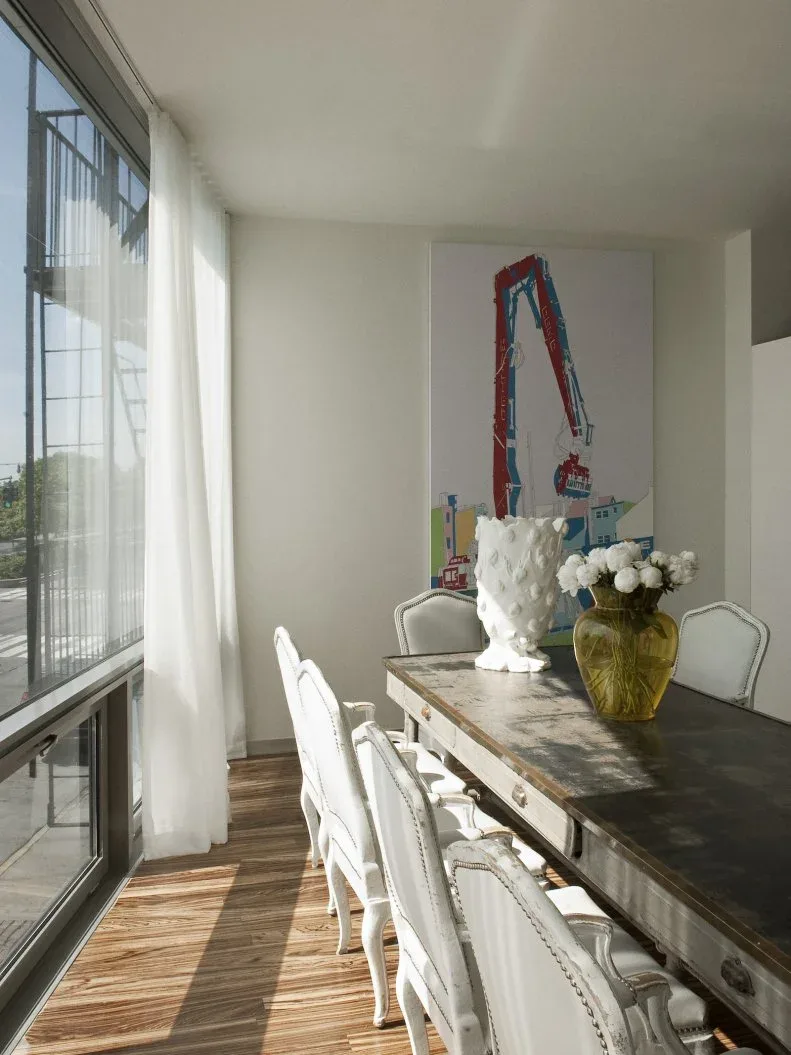
Tall glazing and sheer curtains run beside a long dark dining table with pale upholstered chairs. The table is arranged for dining, with decorative vessels rather than work equipment. This setting offers a useful lesson for a temporary workspace: a seat near daylight can feel pleasant, but the relationship between the window, chair and screen needs more attention than the room’s brightness alone.
Try a laptop in the proposed seat before deciding that the window side is the best position. Check reflections, changing sunlight and whether the curtain can soften the light without closing the room completely. Move the dining vessels when working so they do not crowd your hands or cables. Keep equipment away from the glass if condensation or direct heat is a concern.
IDEA 13 / 19
Keep a Round Dining Table Easy to Clear
 SaveSupport Non AI Creator
Image credit: Photo: Helynn Ospina
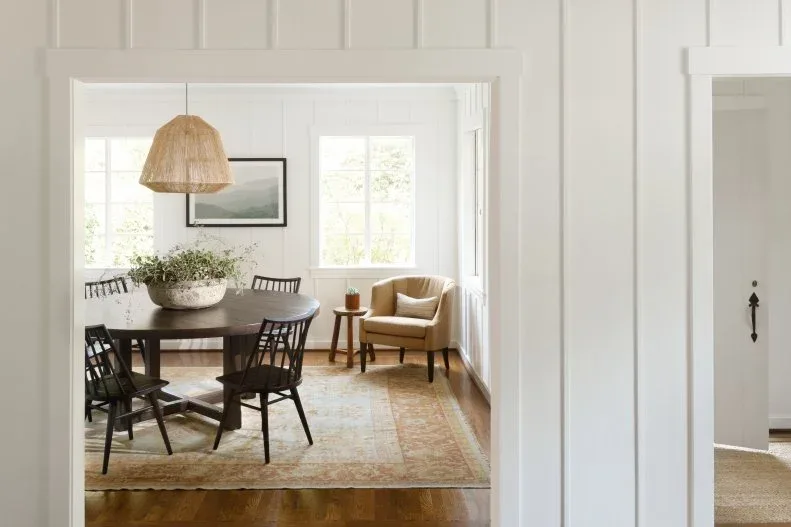
A round dark table and black chairs sit beneath a woven pendant, with a pale armchair near the windows. There is no office equipment in the photograph, so this is an adaptable dining arrangement rather than an existing workstation. The circular surface offers a place for occasional laptop work, while the separate armchair introduces a possible reading position without adding a second table.
Limit a temporary setup to equipment that fits comfortably on the curved surface. A laptop, notebook and drink still need room between them, especially if someone else uses the table. Keep work supplies in a nearby basket or cabinet so the centerpiece can return at mealtime. Test the table edge and chair position; a curved top may affect where your arms naturally rest.
IDEA 14 / 19
Give a Long Shared Room Two Working Surfaces
 SaveSupport Non AI Creator
Image credit: Photo: Werner Straube
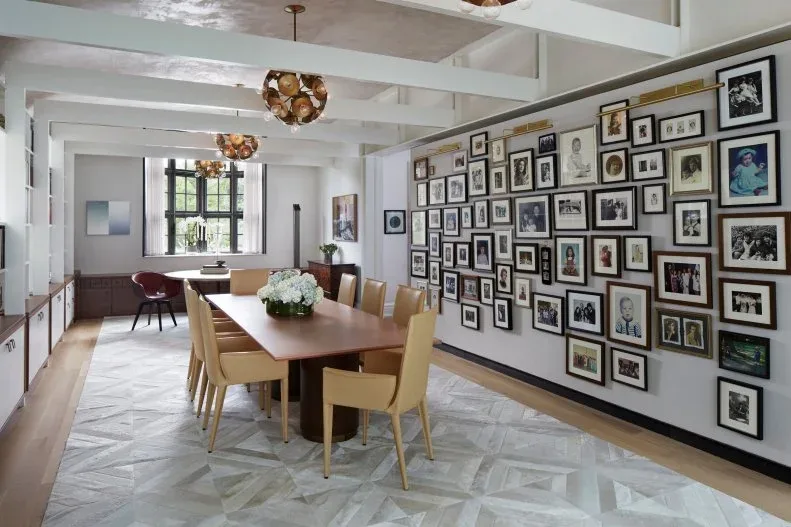
A long dining table occupies the center of this room, while a smaller table and red chair sit near the back window. A gallery wall and low storage connect the two ends visually. No computer is visible, but the second surface provides a model for separating a small reading or work position from the main table without enclosing another room.
Choose which surface is available for work every day and which must remain ready for meals. Keep office papers near the smaller table if that is the regular work spot. Check the route between both seating areas with chairs pulled out, and place additional task lighting where reading happens rather than expecting the decorative pendants along the room to serve every position.
IDEA 15 / 19
Set a Computer Desk Along the Dining Wall
 SaveSupport Non AI Creator
Image credit: Photo: Bethany Nauert
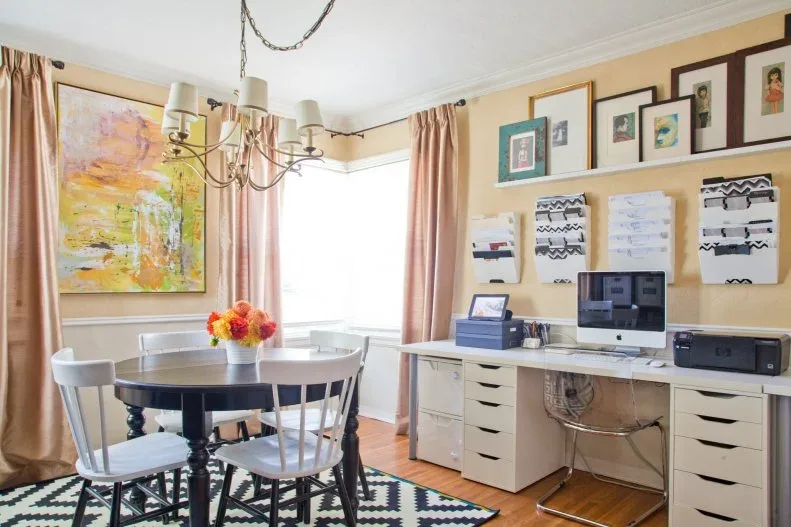
A long white desk runs along the wall beside a round dark dining table. A desktop computer, printer and paper holders clearly identify the work zone, while the table keeps its own chairs and centerpiece. White drawer units and pale dining seats link the two areas, showing a straightforward way to keep permanent office equipment out of the eating space.
Leave room for the office chair to move without colliding with a diner behind it. Check printer access before filling the desk with equipment; paper trays and maintenance panels may need extra clearance. Use the drawers for supplies and give cables a route along the wall. Keep the dining table available for meals instead of letting it become the desk’s overflow storage.
PART 04
Plan the Everyday Details
IDEA 16 / 19
Keep a Laptop Setup Small and Removable
 SaveSupport Non AI Creator
Image credit: Photo: Tina Rich
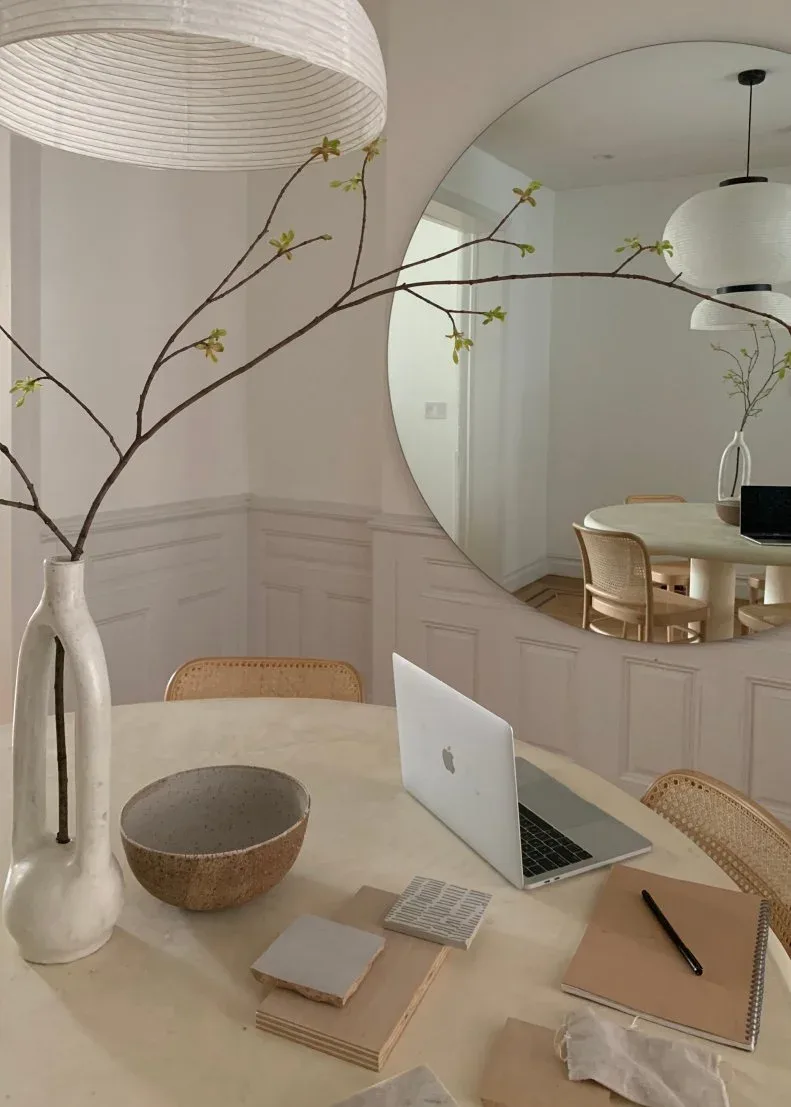
A laptop and a small stack of notebooks sit on a pale round table beside a tall vase of branches. Woven-seat chairs and a large round mirror keep the room recognizably a dining space rather than a dedicated office. The compact setup illustrates the simplest form of shared use: a portable work arrangement that can be lifted away when the table is needed.
Give the vase a different home while working if its branches obstruct the screen or your arms. Keep a tray or bag close by for the laptop and notebooks so clearing the table does not become a daily search for storage. Check reflected light in the mirror as well as the screen, and route any charging cable away from chair legs and walking paths.
IDEA 17 / 19
Use a Wall Board Instead of Loose Table Notes
 SaveSupport Non AI Creator
Image credit: Photo: © William Taylor/TaylorPhoto.com for Ashton Woods Homes
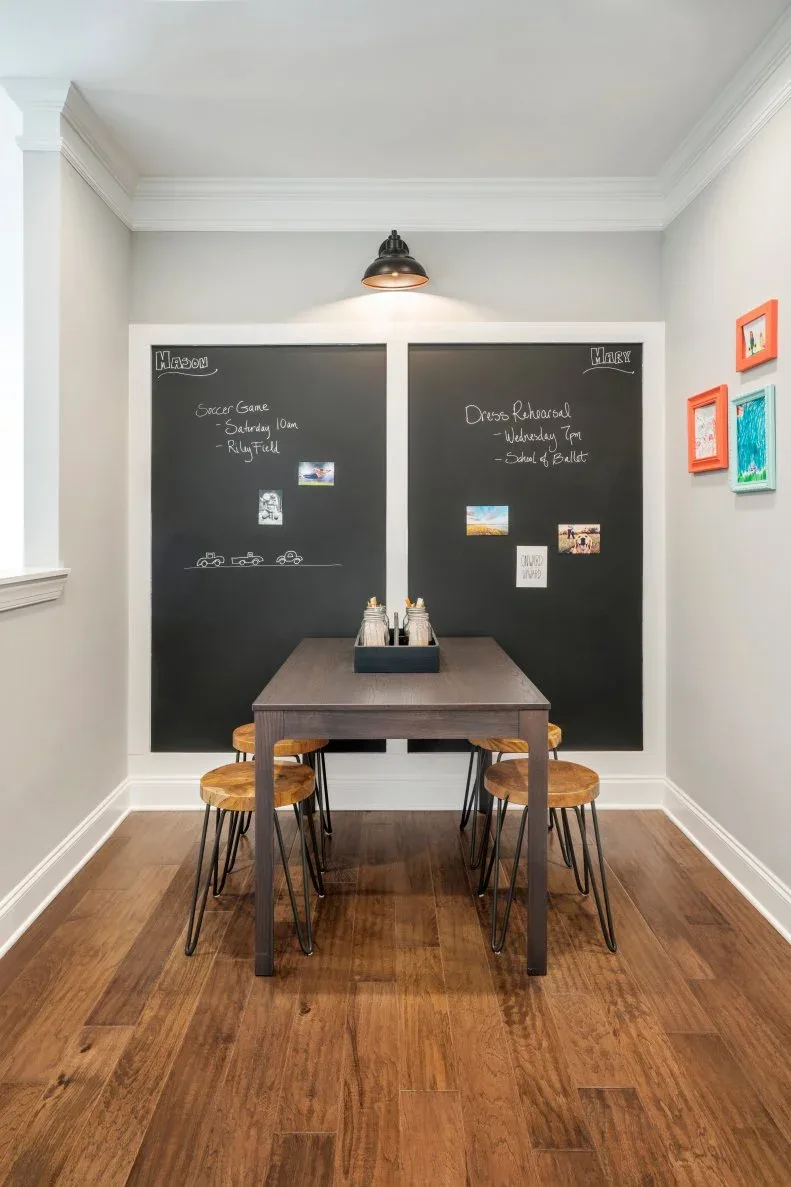
A large double chalkboard sits behind a small rectangular table and stools, with a wall light centered above it. The board displays dining-related notes, and no office equipment is visible. For a room used for both meals and occasional planning, this arrangement suggests a way to keep reminders on the wall rather than spreading loose sheets across the tabletop.
Keep shared household notes separate from private work information, especially when the room is used by guests. Consider dust and cleaning before choosing a chalk surface near food. Stools may suit a quick meal or brief planning session, but regular laptop work usually calls for more support. Keep the small tabletop clear enough for its eating role rather than turning every wall-board idea into another desk accessory.
IDEA 18 / 19
Give Creative Work Its Own Nearby Storage
 SaveSupport Non AI Creator
Image credit: Photo: @Inter IKEA Systems B.V. 2020
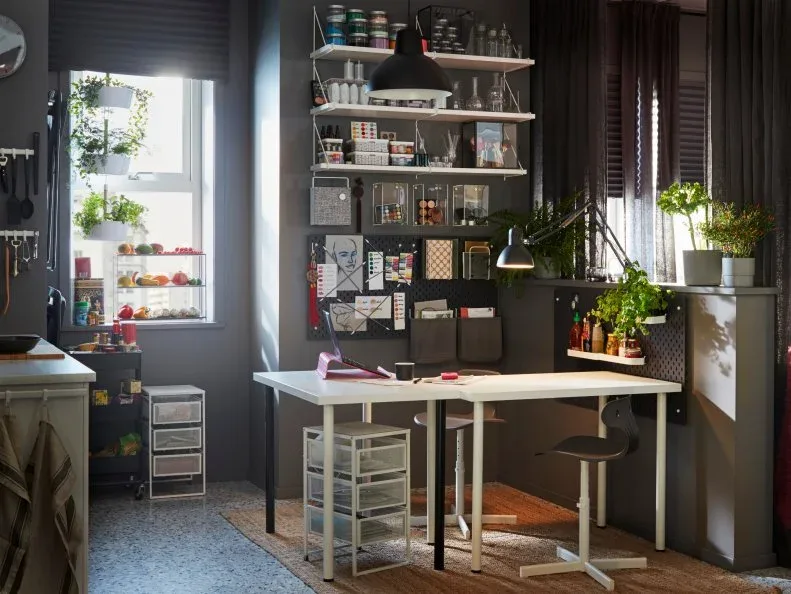
A white project table stands beside a kitchen counter, with wall-mounted containers, shelves and a task lamp organizing the work corner. The visible supplies suggest creative work rather than a conventional computer office. This is a useful storage model for a dining area that also hosts projects: tools stay beside the work surface instead of migrating into serving cupboards or covering the whole room.
Keep project materials away from food preparation and use separate containers for anything that could leave residue. Wall storage should be reachable from the work position without stretching over sharp tools. If this table also serves meals, clear the supplies and clean the surface before use. Provide a chair suited to the activity rather than choosing seating solely because it tucks beneath the tabletop.
IDEA 19 / 19
Use Supportive Chairs at a Shared Dining Table
 SaveSupport Non AI Creator
Image credit: Photo: Jessica Salomone, Owner of Lotus and Lilac Design Studio
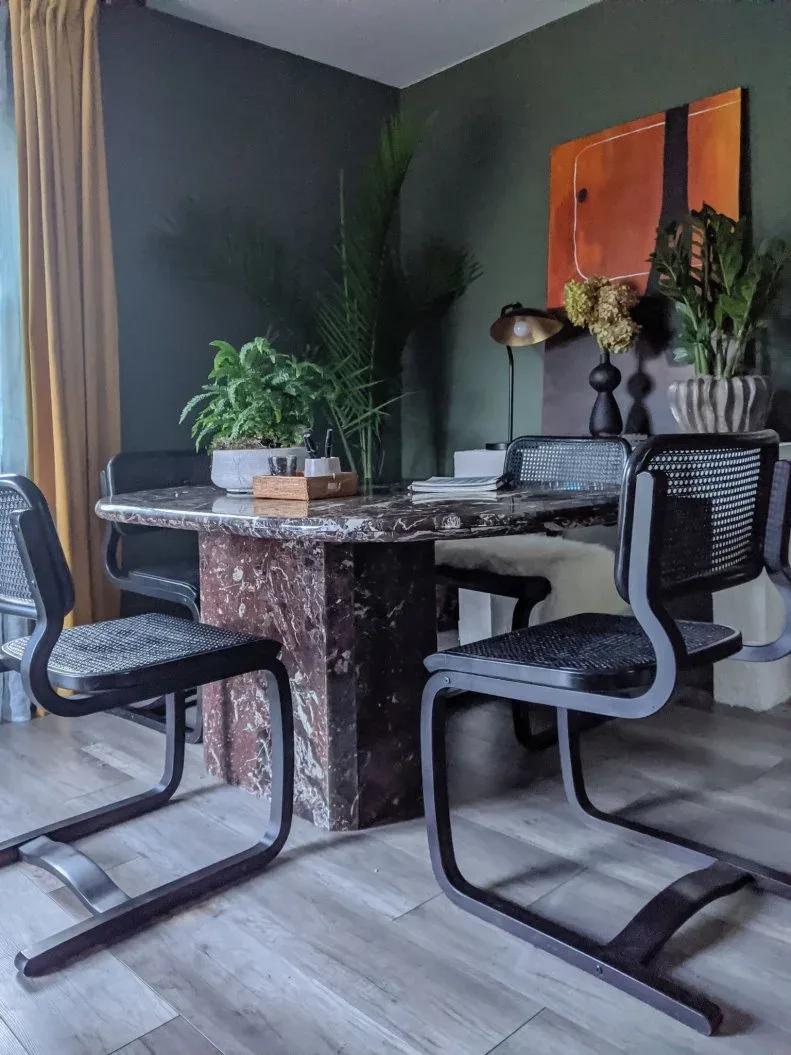
Black mesh-backed chairs surround a dark veined dining table, while a desk lamp and books sit toward the back of the room. Plants and artwork keep the setting decorative, but the chair style and task light make it useful inspiration for a table that also accommodates work. No computer is visible, so the photograph demonstrates furniture choices rather than a finished office setup.
Test the chair and table together before making this your everyday workstation. Check arm position, foot support and whether the chair base passes comfortably beneath the table edge. Move plants and decorative pieces away from your working area, and place the lamp so its light reaches the page without reflecting into your eyes. Follow the tabletop care guidance before adding a clamp lamp or laptop stand.
BRING IT ALL TOGETHER
Plan the Change From Work to Dinner
Walk through an ordinary day before buying furniture. Decide where the laptop, papers and chair go at mealtime, whether another person can use the dining space while you work, and which surface needs to stay available. A separate desk simplifies this changeover, but a portable setup can be enough for shorter sessions.
Try your existing chair and table for the time you expect to work. Check daylight, screen reflections and a safe cable route, then add storage for the items you use most. Keep permanent equipment off the dining table whenever it prevents the room from serving meals comfortably.