A small farmhouse entryway needs to welcome you in and give everyday belongings a sensible home. A wood seat, painted cupboard or simple hook rail can supply country character, but the arrangement has to leave room for the door, shoes and the people moving through it.
These twenty photographs show compact entrance corners, narrow hallways and useful storage details. Look at the jobs each arrangement handles, then borrow the parts that fit your own space. Choose a few durable, useful pieces before adding pattern, flowers or a decorative mirror.
PART 01
Seats and Cupboards With a Small Footprint
IDEA 01 / 20
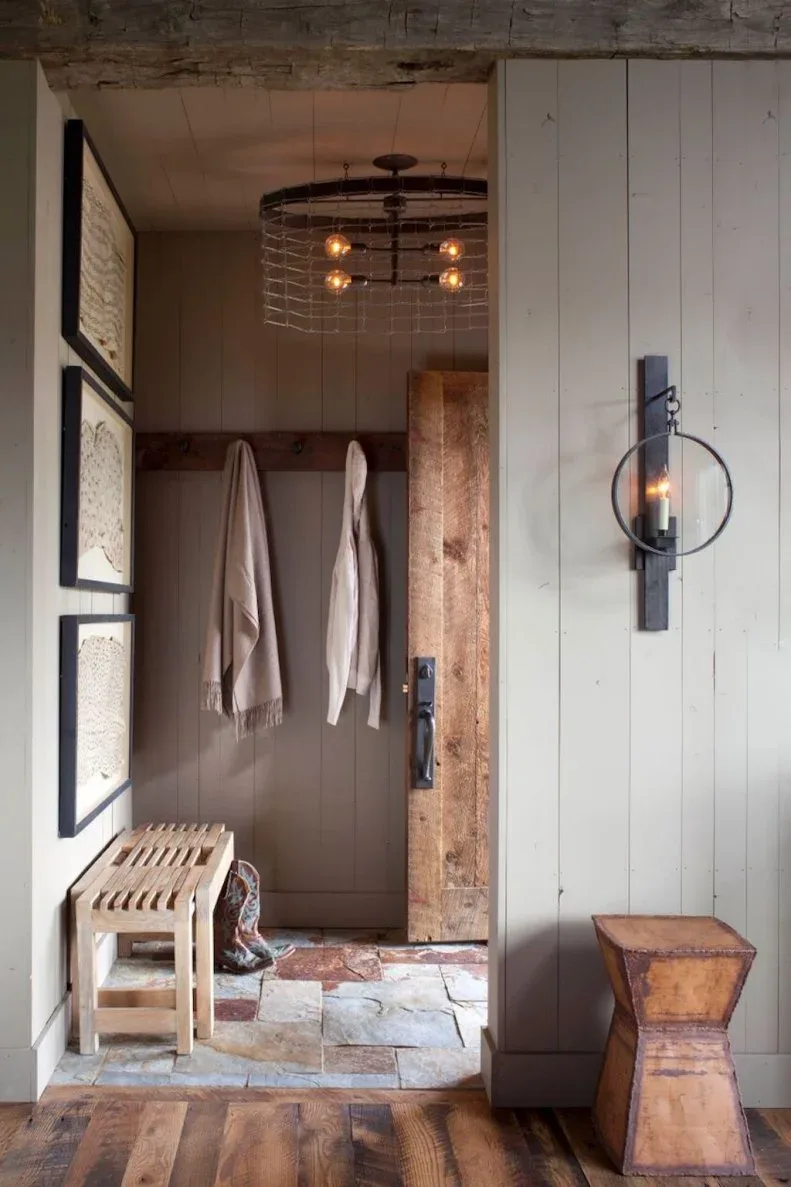
Keep a Rustic Vestibule Simple
 SaveSupport Non AI Creator
Image credit: Photo: Carter Kay. From: Carter Kay
Gray vertical boards frame this small vestibule, with a slatted bench tucked against one side and a wood sliding door at the back. A few coats hang from a rail rather than a separate stand. The dark lantern and circular wall light add definition to the pale boards. This is a useful farmhouse arrangement when the entrance needs a place to sit but has little room for extra furniture.
Check the sliding door’s travel and the bench depth before copying the layout. Keep the door track and handle reachable, including when coats are hanging. The little stool outside the vestibule should only stay if it leaves a comfortable passage. Identify the floor’s actual finish before choosing cleaners, and provide a suitable mat where wet shoes first enter rather than relying on the attractive floor alone.
IDEA 02 / 20
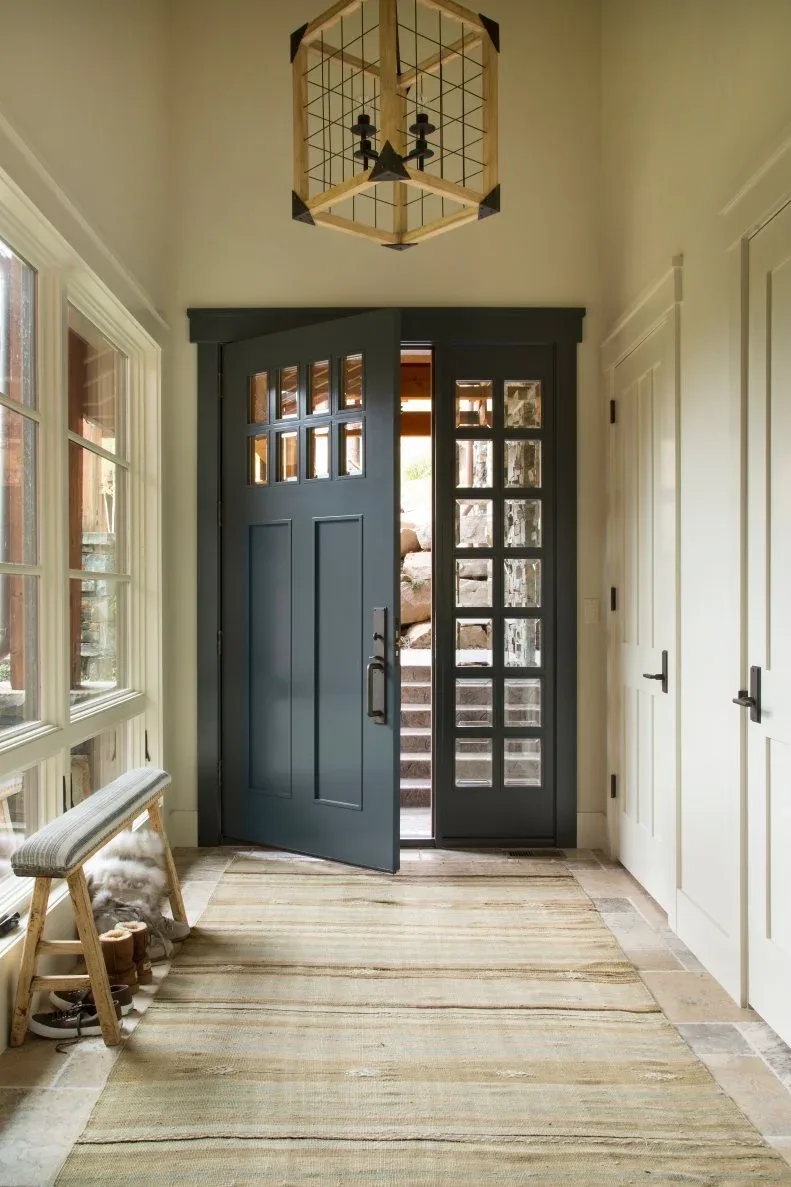
Use a Narrow Bench Beside the Door
 SaveSupport Non AI Creator
Image credit: Photo: Kimberly Gavin. From: Massucco Warner Interior Design
A slim bench sits along the light wall beside a gray glazed front door. The long striped runner links the threshold with the rest of the hall, while a box lantern supplies a clear overhead focal point. The simple seat is the useful part to borrow for a small farmhouse entrance: it provides somewhere to pause without adding the depth of a large upholstered chair or storage cupboard.
Measure the space with the front door fully open and someone seated on the bench. Keep any boots below the seat contained so they cannot creep into the walking route. Check the runner’s backing suits the floor and that its edges remain flat. Choose a seat covering you can clean after everyday shoe changes, leaving enough free space on the bench for someone to sit comfortably.
IDEA 03 / 20
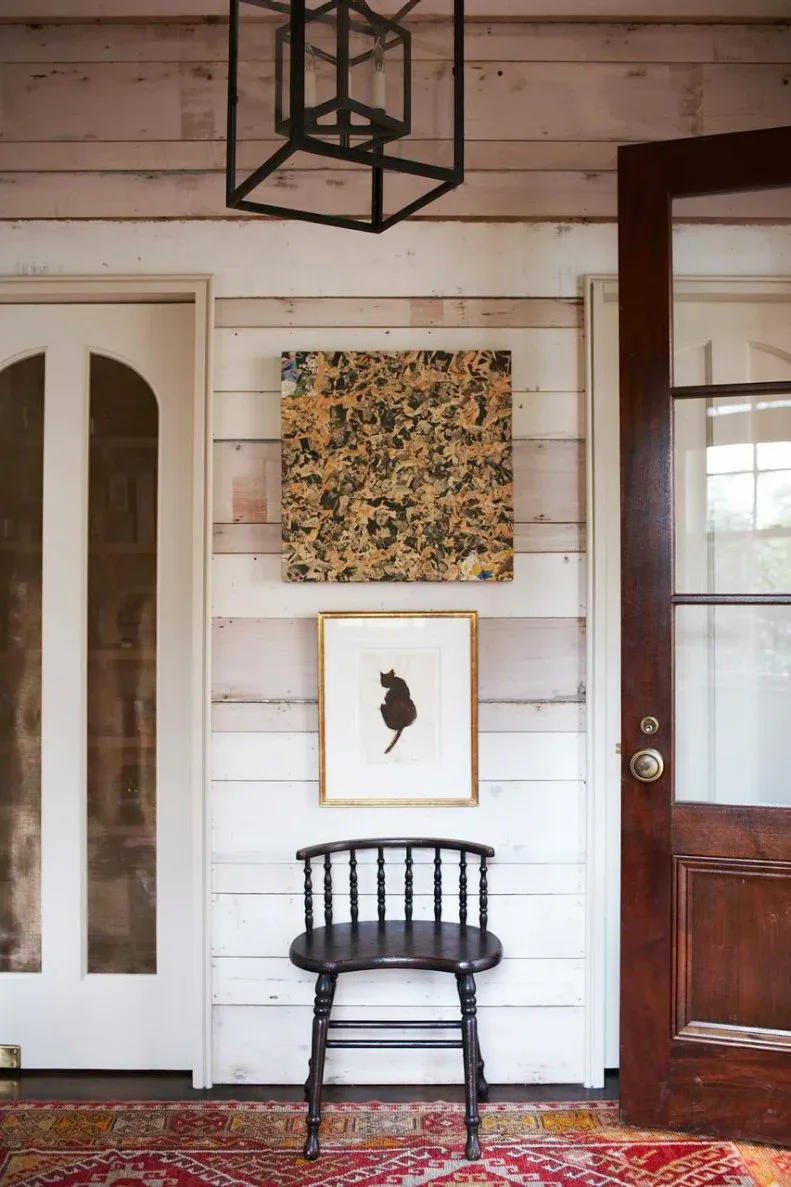
Choose One Country Chair Instead of a Bench
 SaveSupport Non AI Creator
Image credit: Photo: Carter Kay. From: Carter Kay
A black spindle chair gives this white boarded entrance a practical resting place with a small footprint. Two framed pictures use the wall above it, while a red patterned rug adds warmth near the wood front door. The open lantern repeats the chair’s dark outline. The photograph shows how a single country chair can provide character and a seat without requiring a long bench across the entrance wall.
Test a chair in the intended position before buying one, checking stability and the space needed to turn while putting on shoes. Keep the door swing clear and secure the pictures with fittings suited to the wall. Choose a rug that stays flat at the threshold. If you need shoe storage, place it elsewhere rather than surrounding the chair with baskets that cancel its useful small footprint.
IDEA 04 / 20
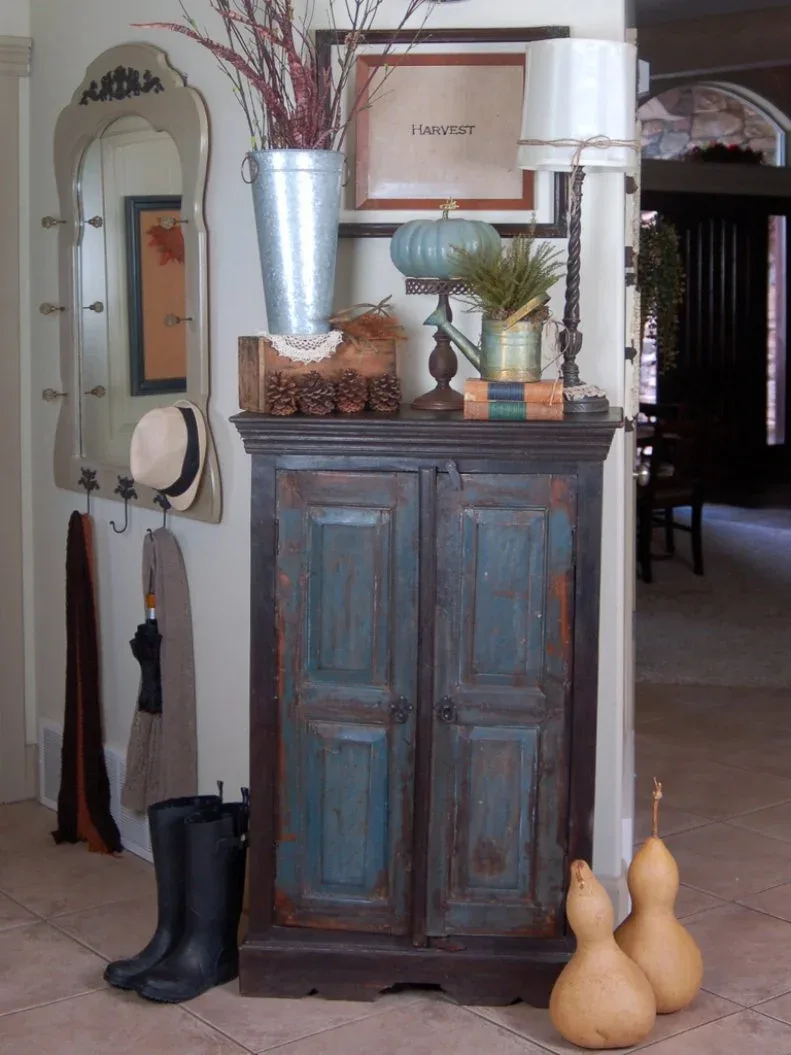
Hide Everyday Supplies in a Rustic Cupboard
 SaveSupport Non AI Creator
Source: hgtv.com
A weathered blue cupboard gives this entry corner enclosed storage and a strong farmhouse focal point. A shaped mirror beside it incorporates small hanging points for a hat and umbrella, while seasonal objects occupy the cupboard top. The useful idea is the cupboard’s vertical storage: a narrow piece can hold more than an open console, allowing the room to work without several loose baskets spread across the floor.
Check the doors can open fully without obstructing the entrance, and secure the cupboard according to its construction and the wall conditions. Keep the top display smaller than the photograph’s seasonal arrangement if your hall is tight. Tall branches and floor ornaments can snag passing bags or make cleaning awkward. Store dry household supplies inside, with wet boots on an appropriate tray rather than against the cupboard’s finish.
IDEA 05 / 20
Sort Small Items Into Bench Cubbies
 SaveSupport Non AI Creator
Image credit: Photo: Sam Henderson. From: Sam Henderson
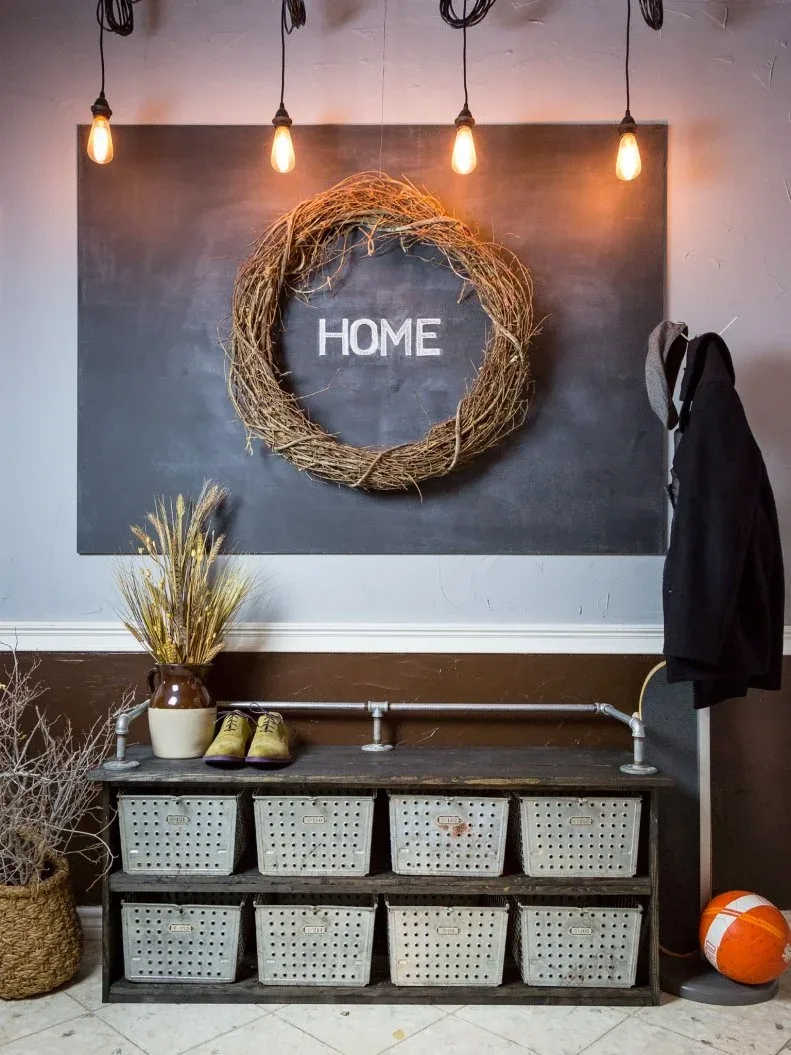
Pale storage bins fill the open cubbies of this low rustic unit, giving small belongings separate homes. A dark wall board and twig wreath supply a simple country backdrop, while a coat hangs to one side. The low storage keeps the wall arrangement grounded. It is a useful idea for a compact farmhouse entrance where gloves, scarves and everyday accessories otherwise accumulate in a pile by the door.
Choose bins that slide out easily and allocate them around what the household actually brings through the entrance. Do not assume a low storage unit is suitable for sitting unless its construction allows it. Keep loose shoes and decorative objects off any intended seating area. Have hanging electrical fittings installed appropriately and check their position cannot be disturbed by coats, bags or someone reaching for the upper wall.
PART 02
Simple Landing Places and Clear Routes
IDEA 06 / 20
Give a Shallow Console a Country Backdrop
 SaveSupport Non AI Creator
Image credit: Photo: Lisa Romerein. From: HGTV Magazine
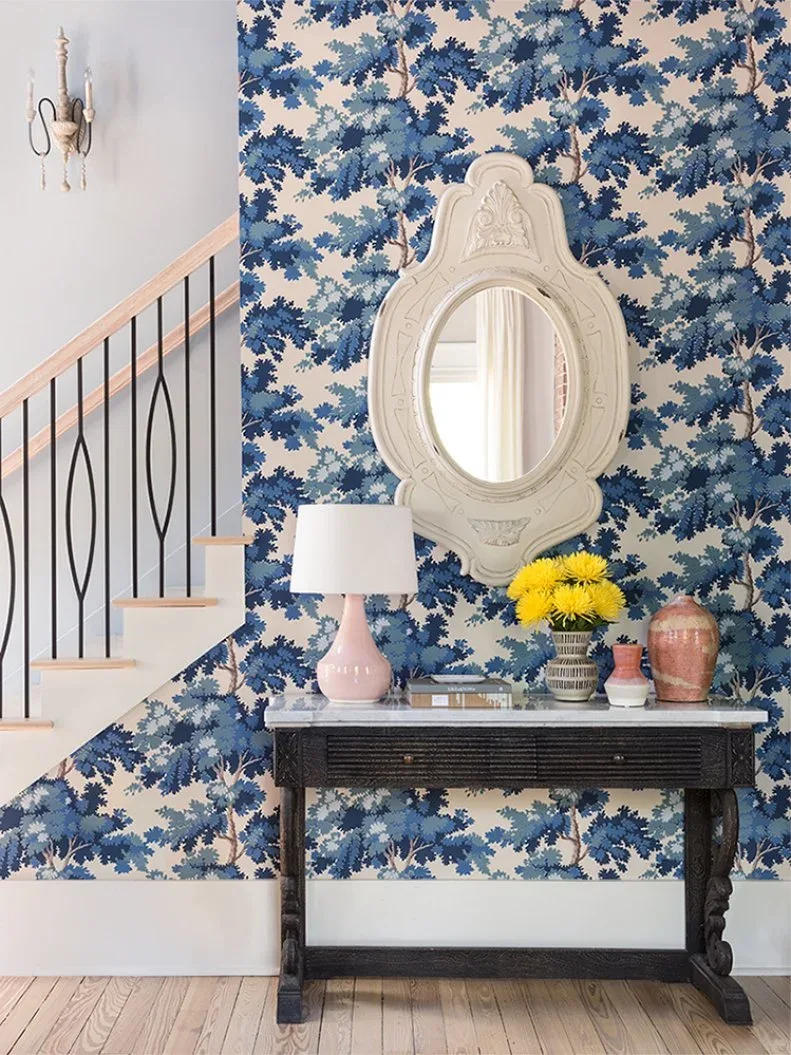
Blue leaf-pattern wallpaper gives this console corner a country feeling without requiring much furniture. A pale ornate mirror stands out against the paper, with the black table providing a darker base below. A small lamp and yellow flowers add a contained display beside the stairs. The arrangement offers a way to make a modest entry wall feel considered while the table’s open underside leaves the floor visually clear.
Choose the console depth around the actual passage, especially where people turn toward the stairs. Keep lamp cables secured away from feet and door movement. A strongly patterned wall already supplies plenty of detail, so limit the tabletop to a useful landing place and a few stable objects. Check the mirror’s hanging fittings and leave enough space to clean behind the table without shifting a crowded collection.
IDEA 07 / 20
Pair a Small Cupboard With a Hook Rail
 SaveSupport Non AI Creator
Image credit: Photo: Bri Moysa. From: Bri Moysa
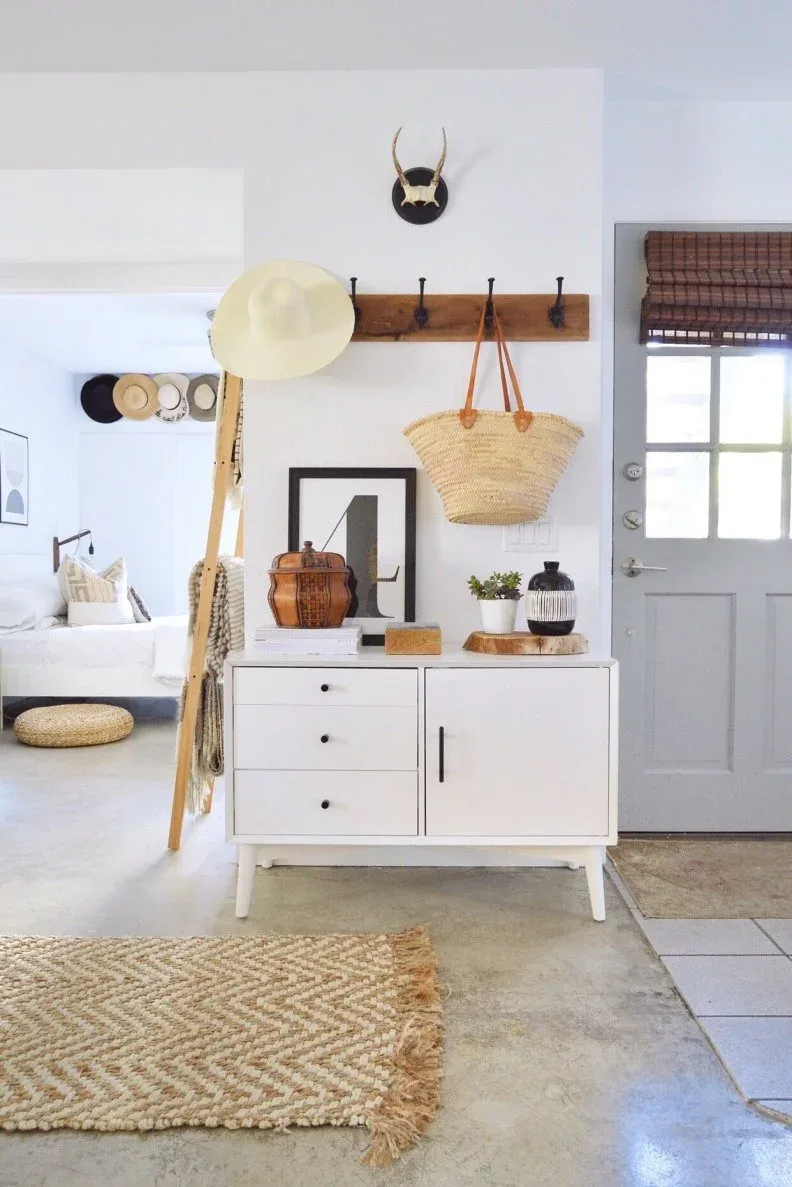
A small white cupboard sits under a wood hook rail beside the gray front door. Hats and a woven bag occupy the hooks, while framed art and a few containers rest on the cupboard top. The pairing brings farmhouse character through painted furniture and warm wood. It separates hanging storage from enclosed storage, making better use of a little wall than a single decorative table with no place for everyday supplies.
Check both the cupboard door and the front door can move freely. Mount the rail for the weight of loaded bags rather than empty decorative hats alone. Leave a clear part of the cupboard top for keys or mail, and keep loose frames stable. Avoid copying the nearby leaning ladder unless it has a useful purpose and a safe position outside the entrance’s normal walking route.
IDEA 08 / 20
Run a Slim Wood Bench Along a Narrow Hall
 SaveSupport Non AI Creator
Image credit: Photo: Valerie Vogt. From: sKout
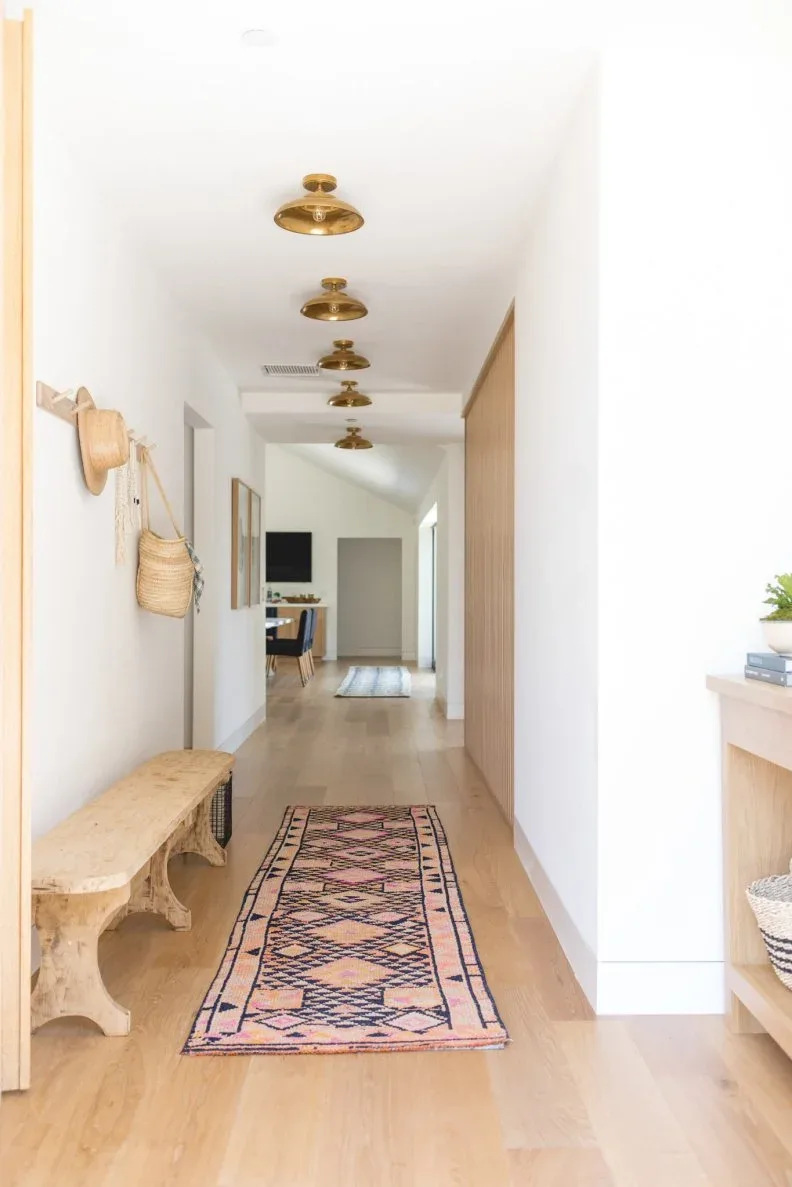
A slim wood bench follows one side of this narrow white hall, with a few hooks above holding a hat and bag. The patterned runner adds color along the passage instead of taking up wall space with more furniture. Simple warm-toned ceiling lights repeat toward the back. The farmhouse quality comes from the plain wood seat and woven accessories, keeping the long route into the house easy to understand.
Measure the remaining passage with a person seated and a bag hanging from the hooks. Choose only the bench length your wall can accommodate without interfering with doorways. Keep the runner secure and clear of changes in floor level. Hooks are most useful when they hold the current day’s belongings; move spare coats elsewhere so the narrow hall does not become a dense hanging-storage area.
IDEA 09 / 20
Use Baskets Beneath a Cottage Bench
 SaveSupport Non AI Creator
Image credit: Photo: Jared Kuzia Photography. From: Kristina Crestin
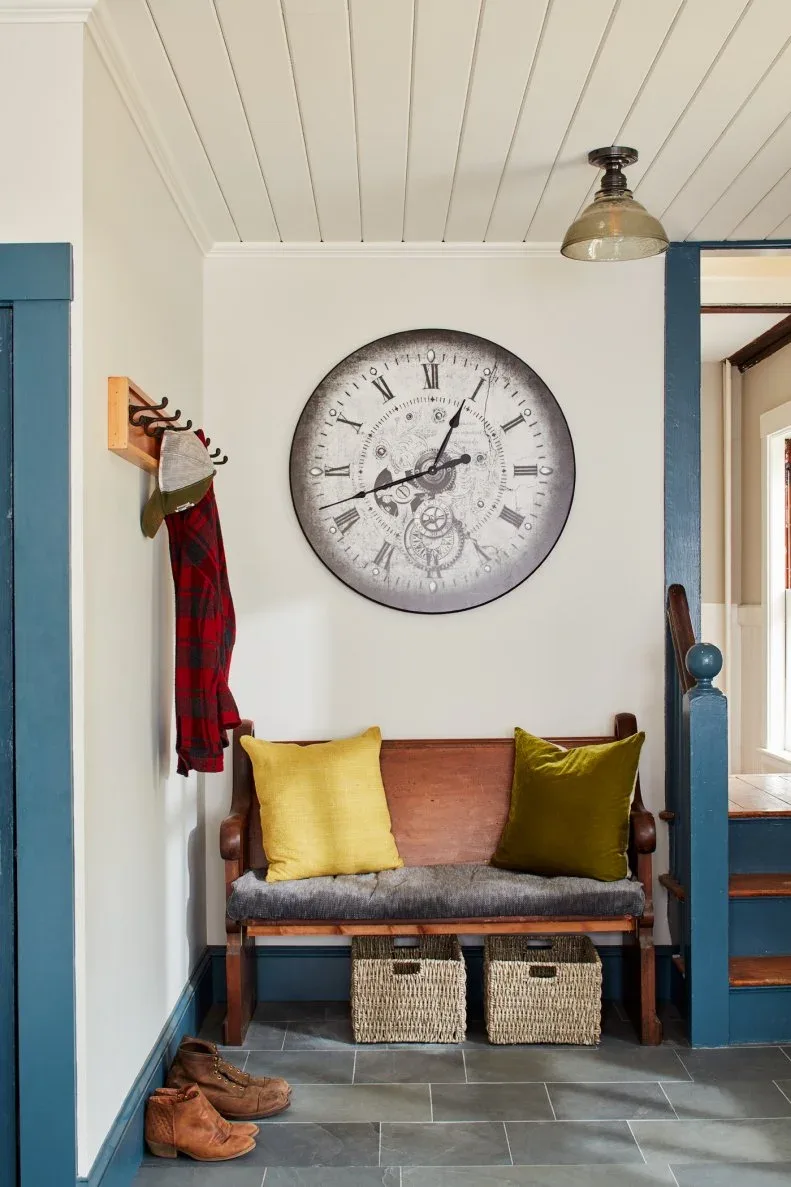
A wood bench sits neatly beneath a large round clock in this cottage entrance. Yellow cushions bring warmth to the white walls, while blue trim outlines the nearby stair and doorway. Two woven baskets occupy the open space below the seat. This compact arrangement is useful for a farmhouse entrance because the same footprint provides seating and hidden storage, leaving the wall above free for a single distinctive object.
Check the baskets can be pulled out without blocking a doorway or catching on the bench legs. Keep at least part of the seat clear for changing shoes rather than filling it entirely with cushions. Secure the clock with suitable fittings and choose washable cushion covers. Contain loose footwear in the intended storage area so the attractive tiled-looking floor remains accessible for routine cleaning.
IDEA 10 / 20
Let a Pale Table Keep the Entrance Open
 SaveSupport Non AI Creator
Image credit: Photo: Madeline Harper
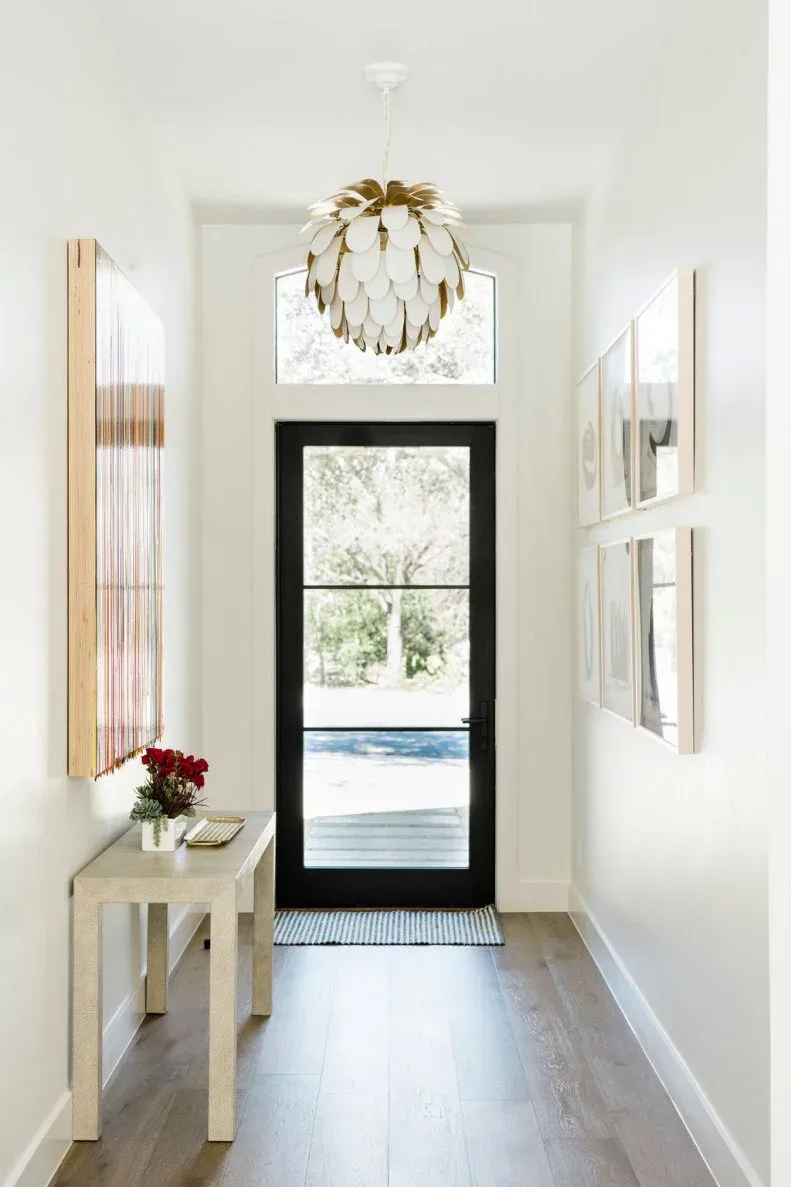
A small pale table stands against the white wall of this narrow entrance, with a framed picture above and flowers on top. The black glazed door gives the far end a strong outline, while the pale floor and walls keep the route light. The furniture idea suits a quieter modern farmhouse entrance: a straightforward table can provide a landing spot without the visual weight of a deep dark cabinet.
Choose a table that leaves a comfortable passage when someone carries a bag through the door. Keep the tabletop useful by reserving a clear area for everyday items. Check whether a drawer or a small container is needed for keys, since the photographed table offers little visible enclosed storage. Hang pictures securely and keep any flowers low enough that they do not make the narrow wall arrangement feel crowded.
PART 03
Make Hooks and Shelves Work Together
IDEA 11 / 20
Use a Small Console Beside a Soft Blue Door
 SaveSupport Non AI Creator
Image credit: Photo: Thomas Story. From: Lauren Nelson
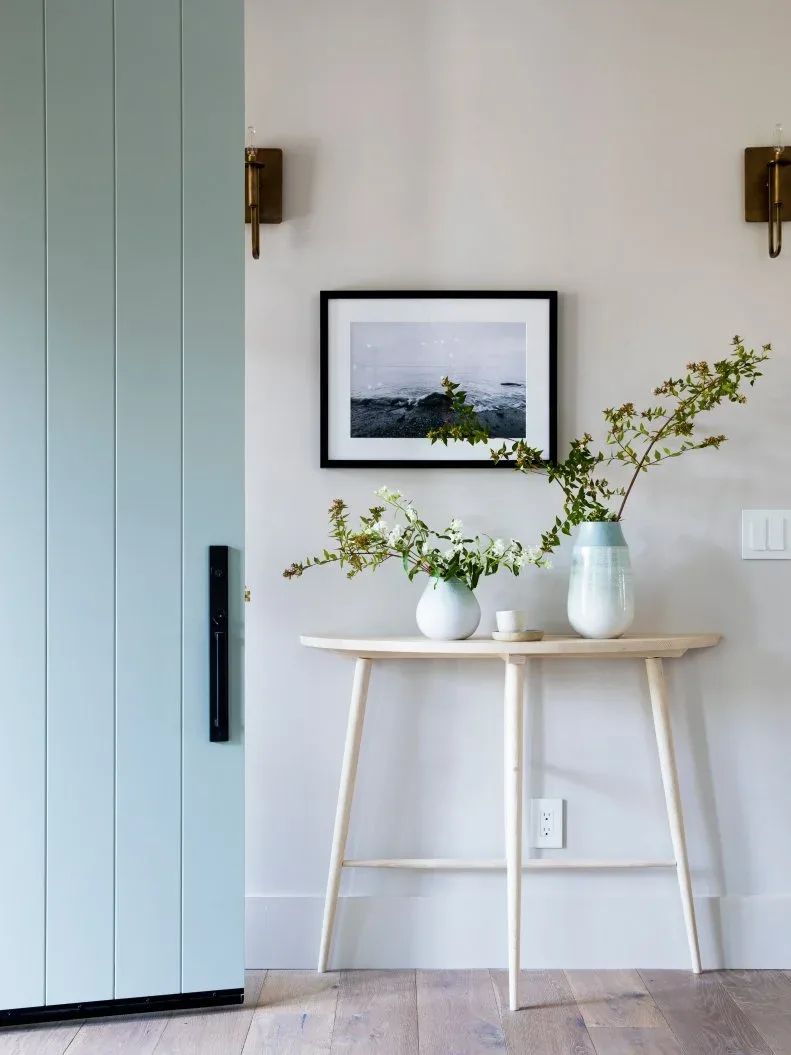
A pale wood console with slender legs sits beside a softly blue boarded front door. A framed landscape and two warm-toned wall lights give the white wall structure, while pale vases carry leafy stems on the table. The photograph offers a light farmhouse approach through simple wood, restrained color and country greenery. The console supplies a small landing surface while the open legs keep the entrance floor visible beneath it.
Check the splayed legs do not extend into the route more than the tabletop suggests. Use stable vases and trim branches so they cannot catch sleeves or bags. Plan wall lighting around the picture and usable surface rather than placing fittings only for symmetry. Keep the table’s limited landing area available for arriving belongings, moving purely decorative pieces elsewhere if everyday items begin to crowd it.
IDEA 12 / 20
Fit a Coat Corner Behind the Hall Door
 SaveSupport Non AI Creator
Image credit: Future PLC / Colin Poole
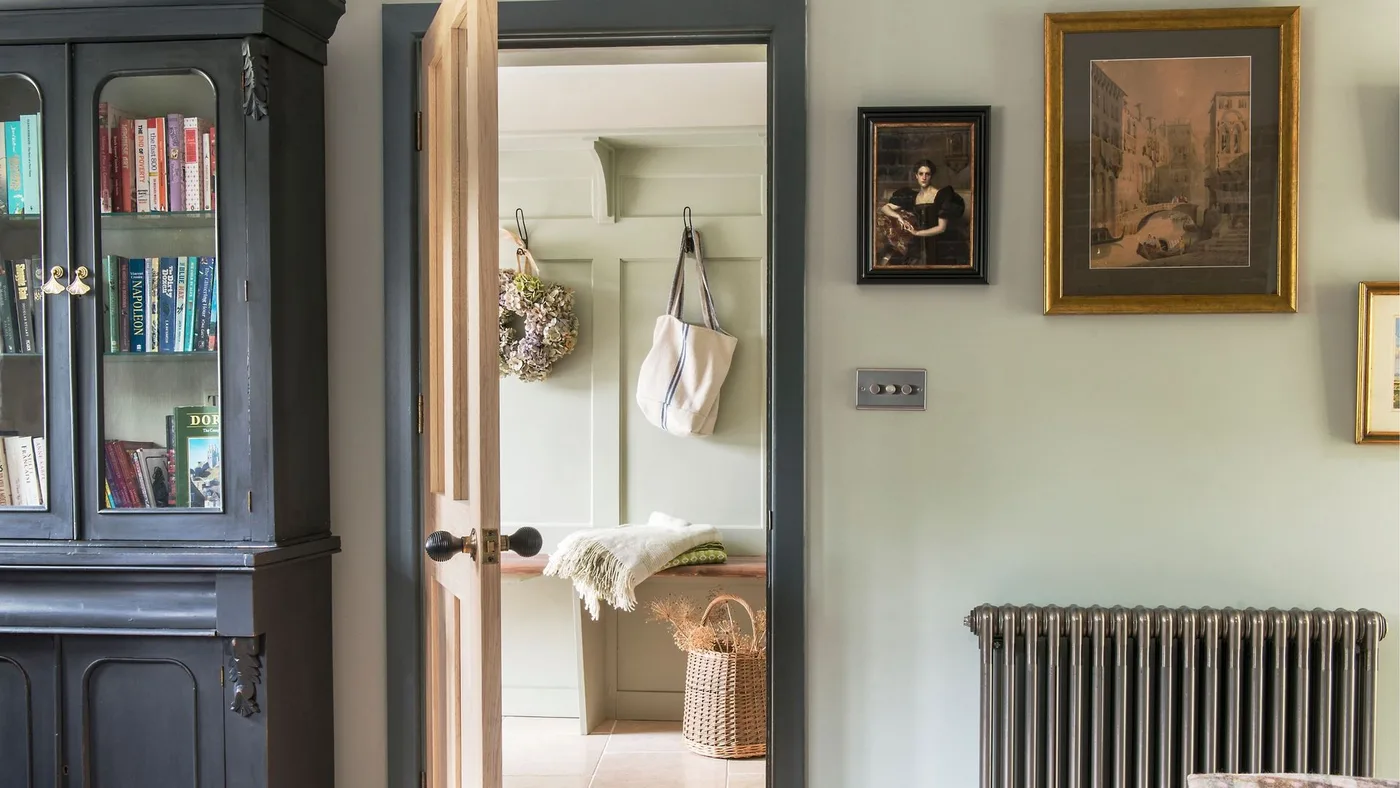
The open wood door reveals a little coat corner beyond this green country hallway. Pale green panels carry a hook rail, with a wood seat and woven basket below. The surrounding hall contains framed pictures, a dark glass-front cupboard and a radiator, but the entrance function stays concentrated in the alcove. This is a useful farmhouse idea when a small recess can handle outdoor belongings without spreading storage across the main hall.
Check the door can reach its normal open position when coats and bags are hanging. Keep the alcove’s seat usable and choose a basket that fits beneath or beside it without extending into the threshold. Maintain access to the hall radiator and cupboard. A separate coat corner works best when it holds current essentials, so move occasional-use belongings to deeper storage before the little recess becomes overcrowded.
IDEA 13 / 20
Combine a Top Shelf, Hooks and a Small Bench
 SaveSupport Non AI Creator
Image credit: Future PLC / Layla Al-Ani
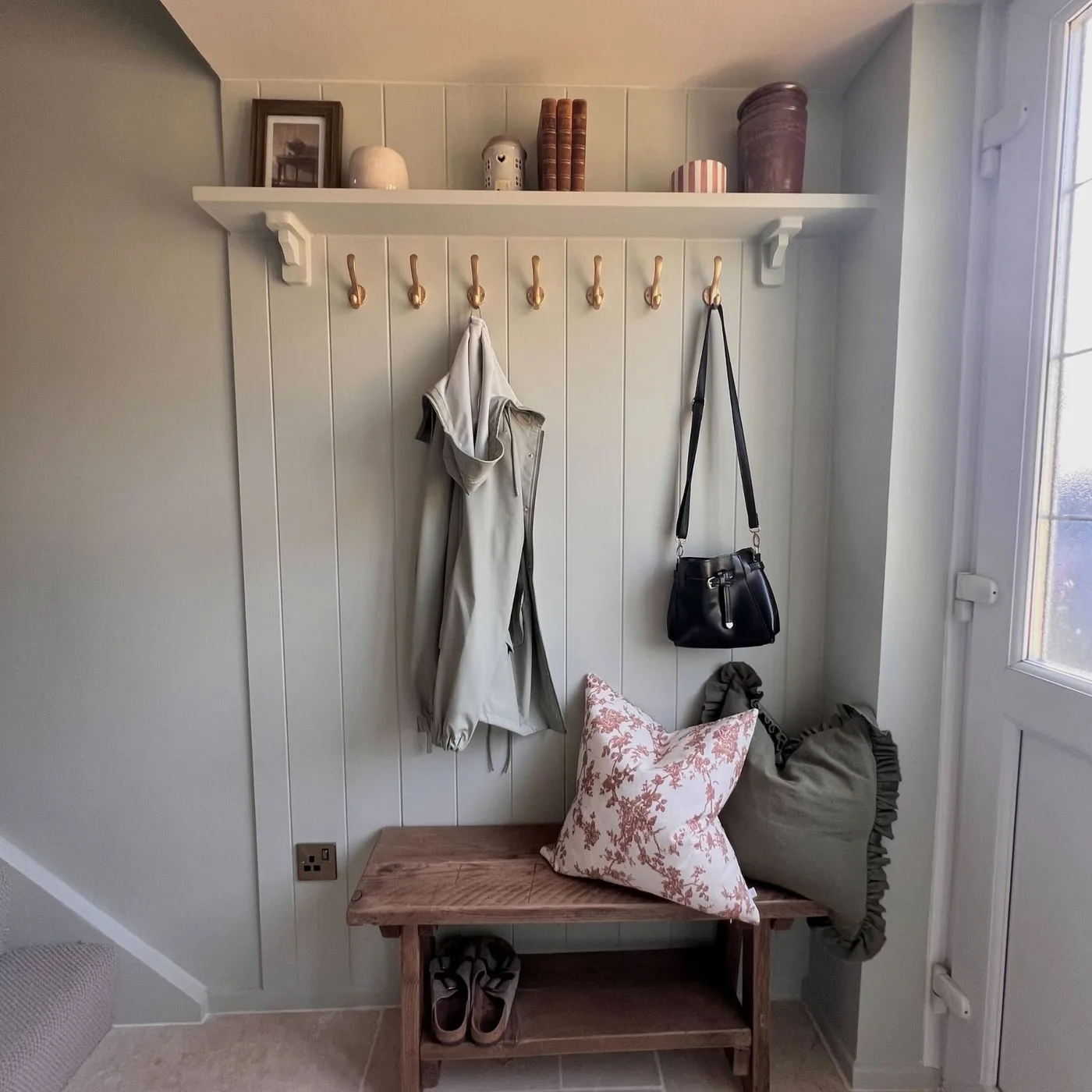
Gray vertical panels bring the shelf, hooks and bench together in this small entry corner. A white shelf holds a few books and ornaments above the hanging rail, while patterned cushions soften the wood seat below. Shoes fit on the bench’s lower shelf. The arrangement is useful for farmhouse styling because one compact wall handles several jobs, leaving the glazed front door and the adjoining passage clearly visible.
Place the hooks so hanging coats do not regularly cover the seat or drag across shoes. Secure the shelf for its intended load and avoid unstable heavy ornaments overhead. Keep the bench partly clear for sitting, with washable covers on any cushions. Check shoes fit fully on the lower shelf and remove wet footwear to a suitable tray so moisture does not collect against the wood.
IDEA 14 / 20
Put One Large Basket Under a Wood Seat
 SaveSupport Non AI Creator
Image credit: Future PLC
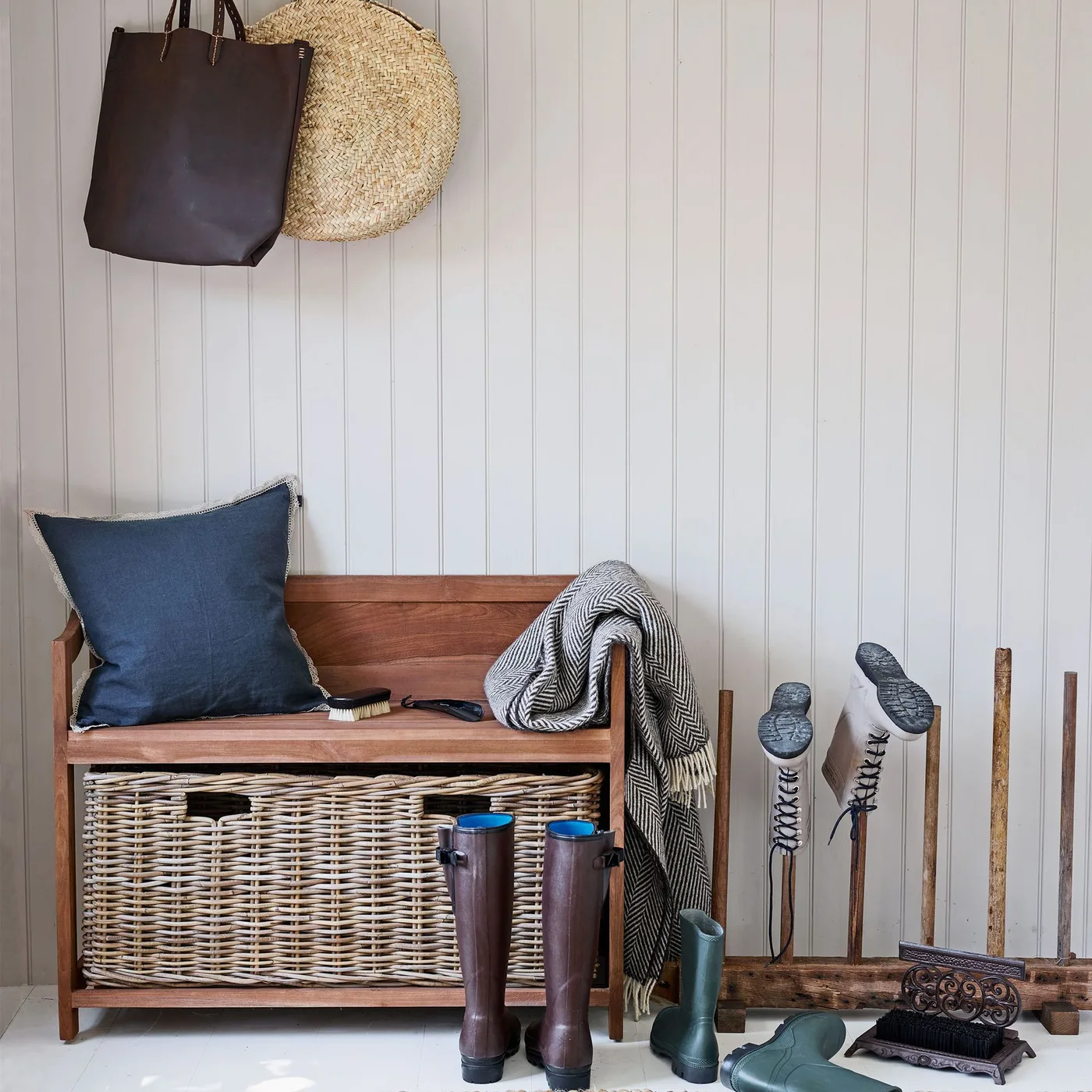
A large woven basket occupies the space under this wood bench, with a navy cushion and striped textile adding softness above. White vertical wall boards and a few hanging bags keep the country character straightforward. A boot rack sits nearby, showing how outdoor footwear may need its own place. The useful small-entry idea is the single large basket: it gathers loose accessories without requiring a line of separate floor containers.
Check you can lift or slide the loaded basket out comfortably. Reserve it for dry belongings and choose a separate easy-clean position for muddy shoes. A boot rack takes more floor space than its upright shape first suggests, so keep it outside the walking route. Reduce the number of loose shoes around the bench and retain a clear seat for the daily task of putting footwear on.
IDEA 15 / 20
Match a Hook Wall to Soft Green Paneling
 SaveSupport Non AI Creator
Image credit: Future PLC/Colin Poole
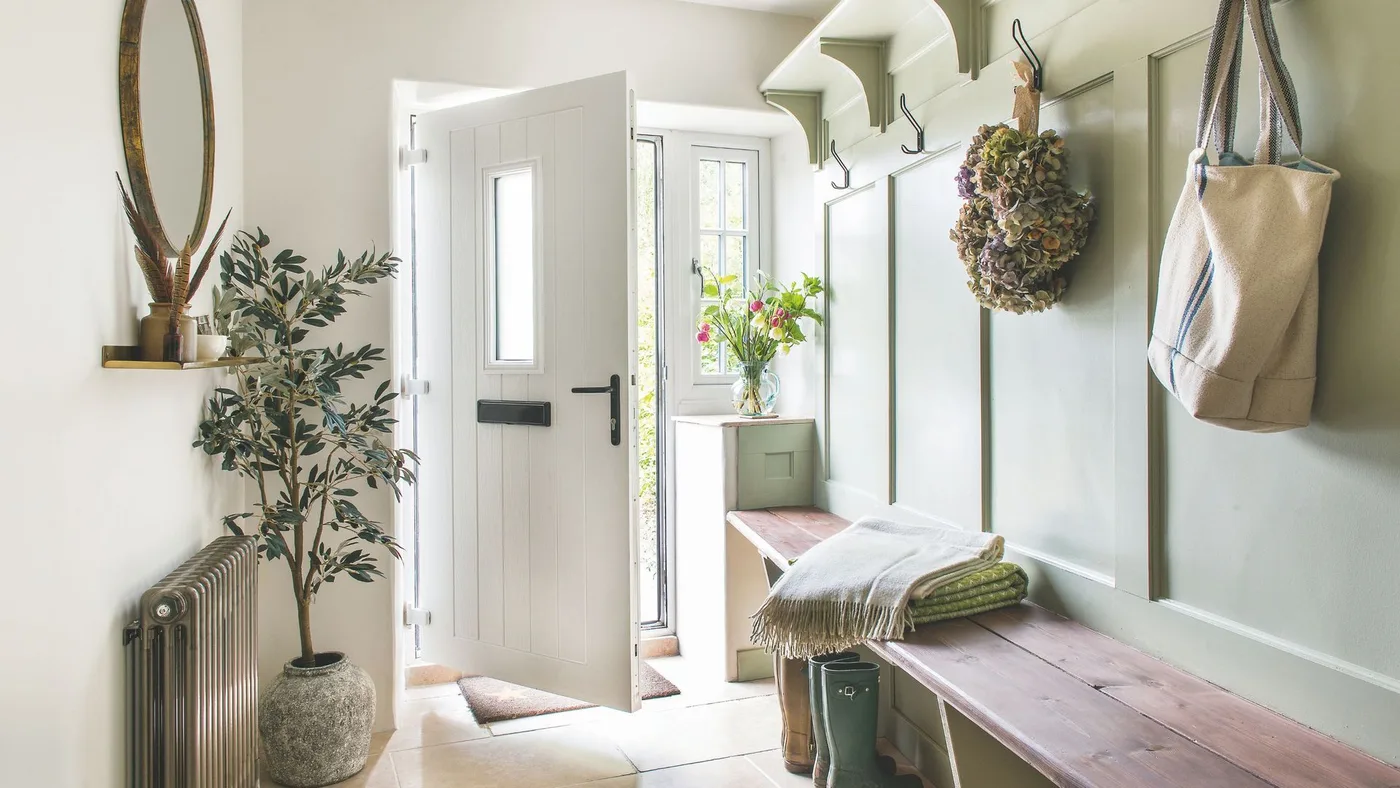
Soft green paneling joins the hook wall and bench in this country hallway. A bag and wreath hang above the long wood seat, while the white front door keeps the end of the passage light. A mirror and radiator occupy the opposite wall. The photograph is useful for adapting farmhouse character to a narrow entrance: repeated wall color makes practical hanging storage feel integrated instead of like a separate object added later.
Use only the length of bench that fits your own entrance, rather than copying the full photographed run. Check hanging bags and coats leave space for sitting and do not rub against the door. Keep the radiator’s required clearances and controls accessible. Choose a durable finish around hooks and bench edges, where repeated contact from zippers, bag straps and shoes can mark the painted surface.
PART 04
Practical Homes for Shoes and Accessories
IDEA 16 / 20
Give Shoes Their Own Low Cubbies
 SaveSupport Non AI Creator
Image credit: Cotswold Co.
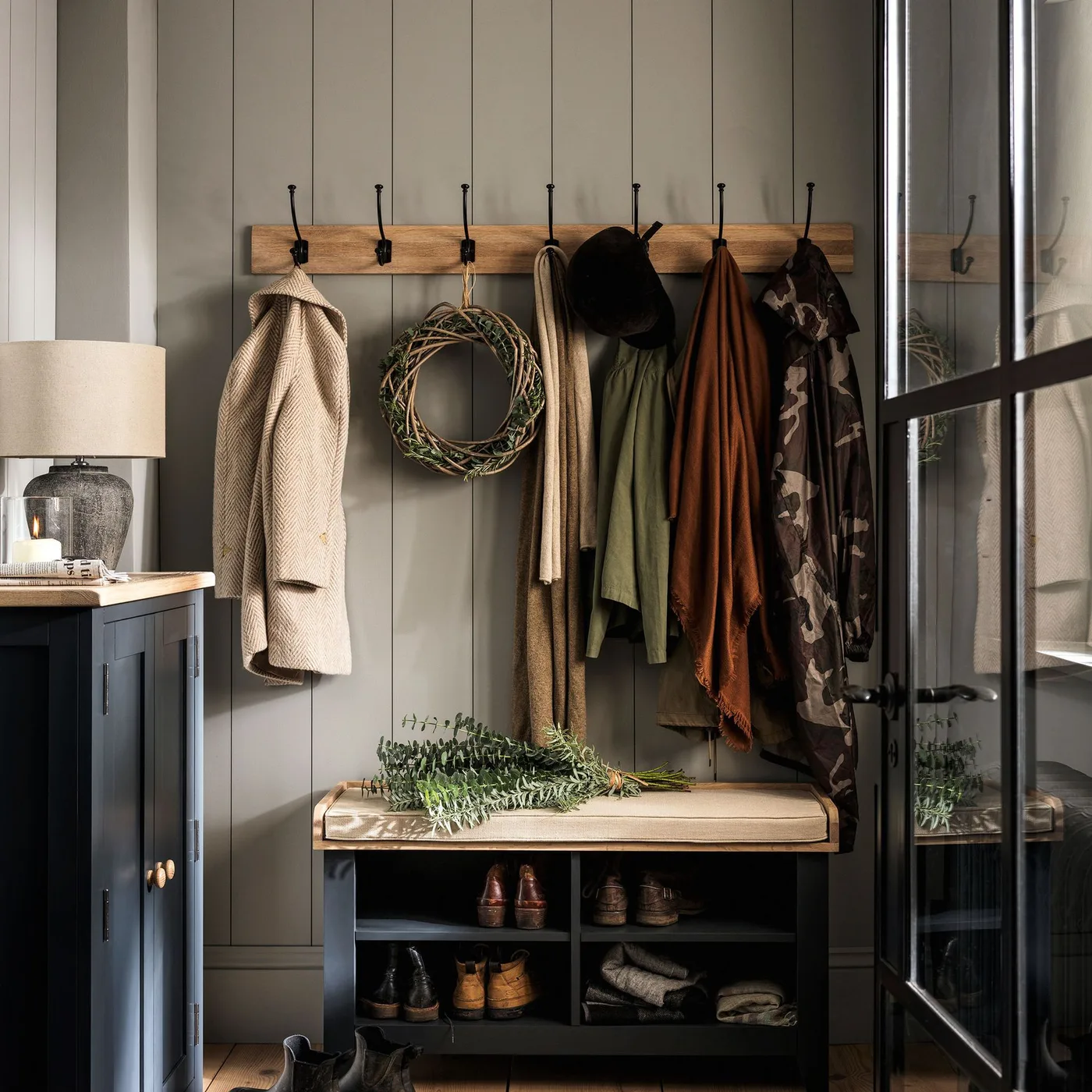
A dark blue bench provides separate low cubbies for shoes beneath a wood hook rail. Gray vertical boards make a calm backdrop for the coats, while a neighboring blue cupboard repeats the storage color. The black glazed door defines the edge of the corner. This farmhouse arrangement is useful when footwear needs to remain visible and easy to find, without being scattered across the floor beneath a general coat stand.
Size cubbies around the shoes actually used by the household, including taller boots if they need to stay here. Keep damp footwear out until it can dry appropriately, protecting the shelves from pooled moisture. Limit hooks to the coats that can hang without swallowing the seat. Confirm the bench is intended for sitting and keep decorative greenery or loose objects away from its everyday seating area.
IDEA 17 / 20
Choose a Very Shallow Landing Table
 SaveSupport Non AI Creator
Image credit: Baked Tiles
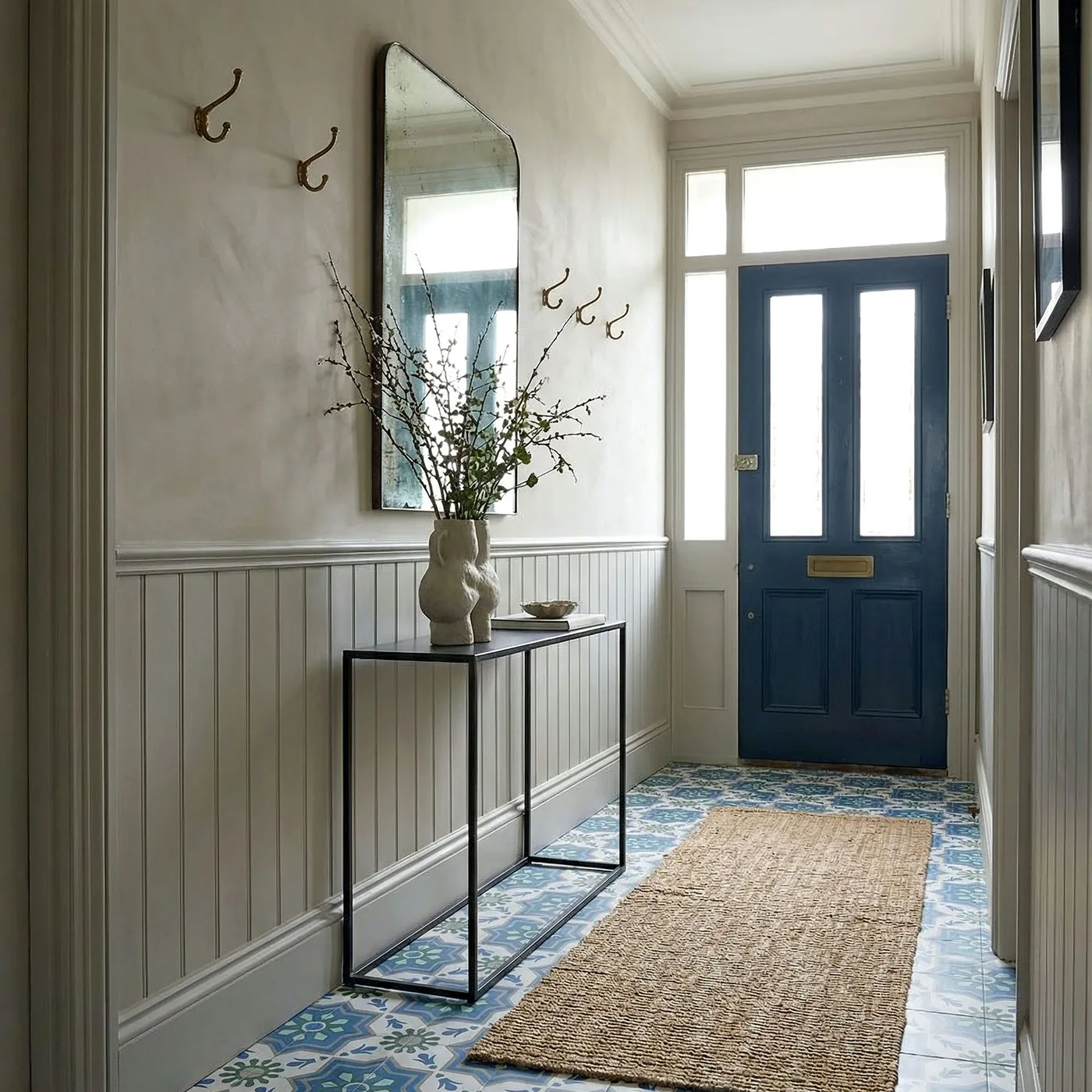
A very shallow black table sits below a tall mirror in this narrow country hall. Gray lower panels give the pale upper wall structure, while patterned blue flooring and a blue front door carry color along the passage. The table supplies a modest place for a bowl and branches without filling the walkway. The farmhouse lesson is to let wall treatments do most of the decorating when furniture depth is limited.
Measure the passage at its tightest point and include projecting handles, hanging coats and the table’s legs. Secure a lightweight console if its instructions call for it. Keep the vase stable and the branches away from passing shoulders. Choose a runner that lies flat on the existing floor and does not hide damage or slippery conditions, checking its backing is suitable for the floor’s finish.
IDEA 18 / 20
Turn a Window Recess Into a Little Seat
 SaveSupport Non AI Creator
Image credit: Liliane Hart
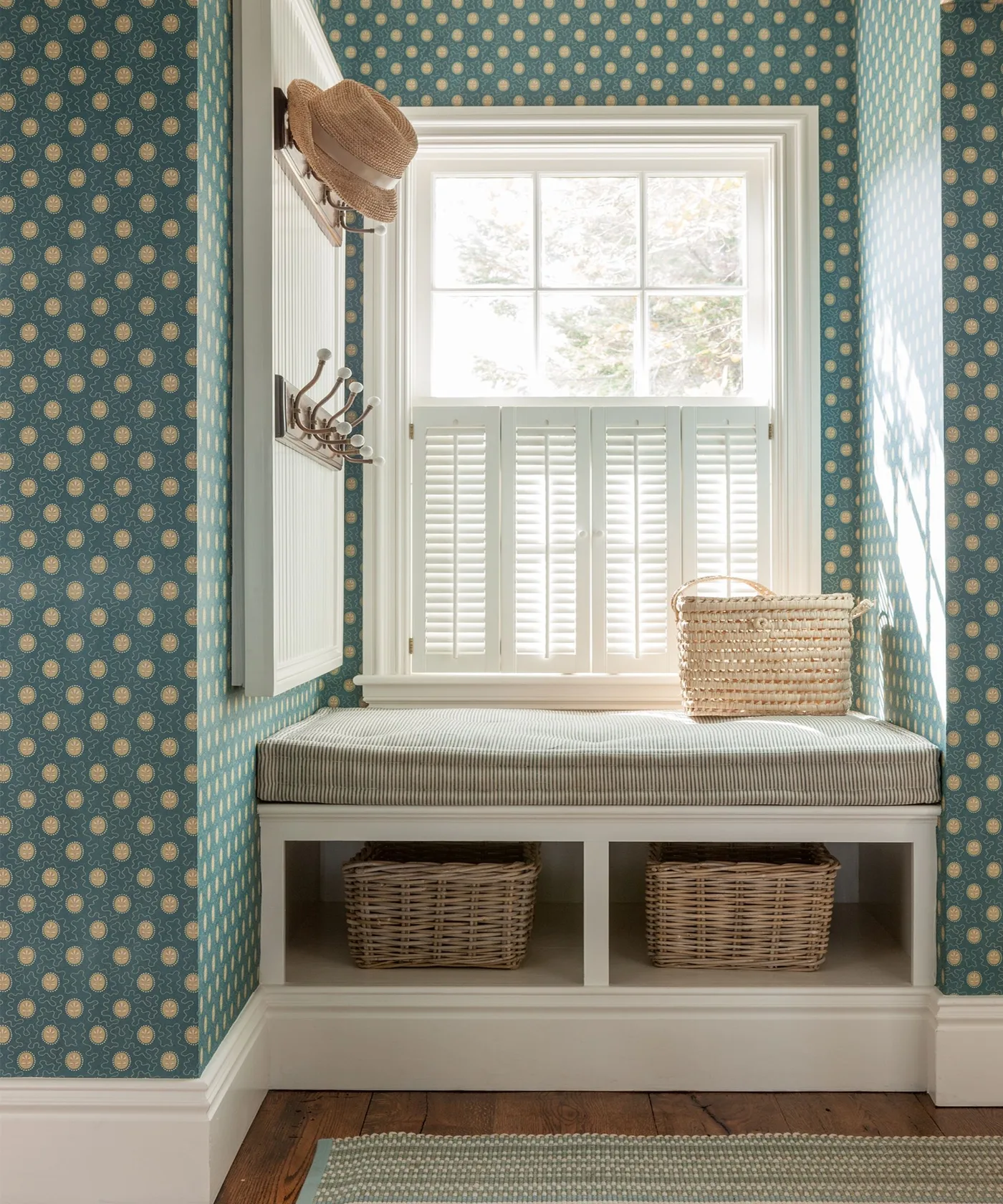
A fitted white bench fills this small window recess, with two woven baskets tucked into open cubbies below. The striped cushion adds a quiet pattern against the blue dotted wallpaper. Hooks on one side hold a hat, while lower shutters provide privacy at the window. The photograph offers a useful farmhouse solution for a little alcove, using otherwise awkward space for seating and storage without adding furniture to the central passage.
Check that a fitted bench leaves the window, shutters and surrounding trim accessible for cleaning and operation. Plan a removable cushion cover and leave enough room to pull baskets out. Secure hooks according to the wall construction and expected load. Do not fill the seat with a storage basket if you need it for changing shoes; keep the daily sitting area available and move spare containers below.
IDEA 19 / 20
Use One Painted Hall Tree for Several Jobs
 SaveSupport Non AI Creator
Image credit: Wayfair
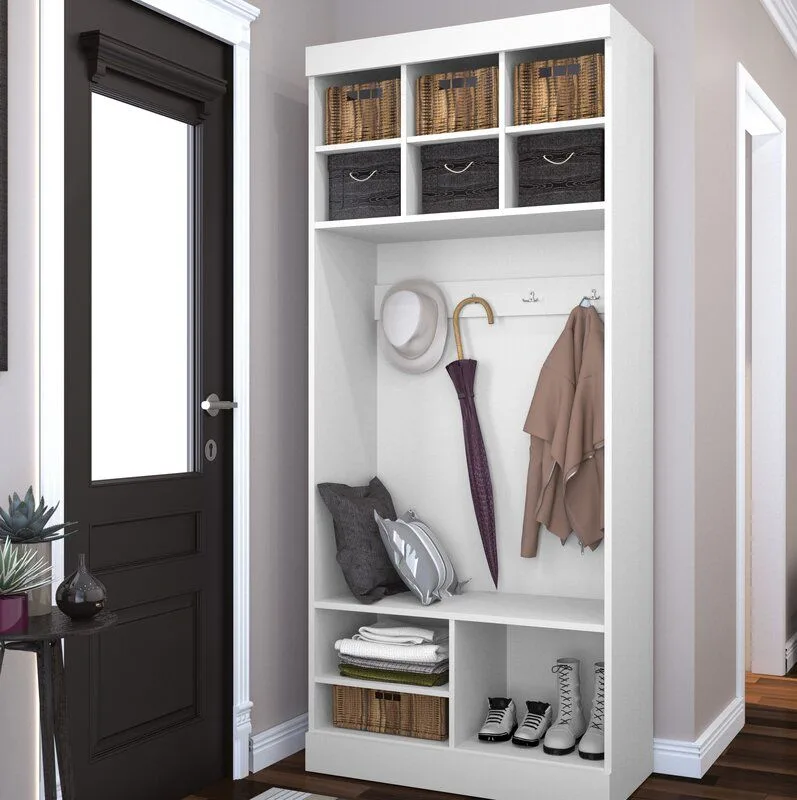
A white hall tree concentrates storage beside the black glazed front door. Upper cubbies contain woven baskets, hooks hold a coat, hat and umbrella, and the seat has more open storage underneath. The painted frame and baskets give this compact corner a farmhouse feeling. The photograph is useful when a single piece can replace several smaller items, keeping hanging storage, accessory storage and a place to sit within one defined footprint.
Check the piece’s depth, height and anchoring instructions before positioning it next to the door. Choose upper baskets that can be reached safely and keep heavy supplies lower down. Wet umbrellas need a suitable drying place rather than resting against painted boards. Limit the cushion count so the seat stays usable, and check that shoes fit fully within the lower openings instead of protruding into the passage.
IDEA 20 / 20
Contain Wet Boots Below the Stair Edge
 SaveSupport Non AI Creator
Image credit: Wayfair
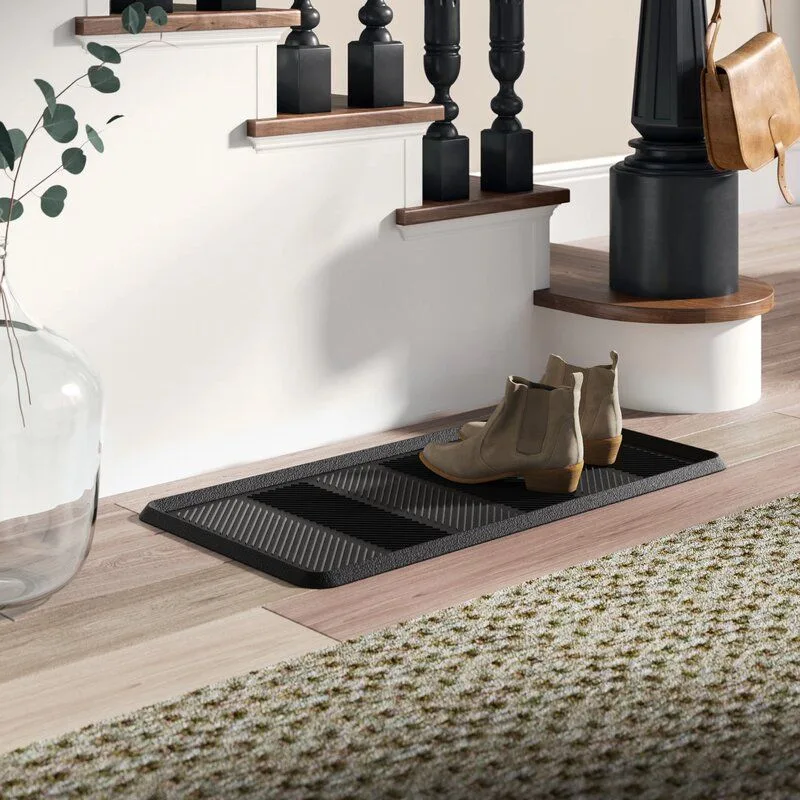
A black boot tray sits against the stair edge, giving a pair of ankle boots a contained resting place. White trim, wood stair treads and black spindles provide the familiar country contrast around it. This focused detail is useful for a small farmhouse entrance because it addresses incoming dirt without adding a cupboard or bench. The tray occupies a defined strip of floor beside the wall rather than letting footwear spread into the route.
Choose a tray large enough for everyday wet footwear but small enough to stay outside the walking path. Empty and clean it regularly, drying the floor underneath if moisture escapes. Check the base is appropriate for the floor’s finish and does not slide when shoes are removed. Keep the stair approach clear and move additional pairs into storage rather than allowing the tray to become an expanding shoe pile.
BRING IT ALL TOGETHER
Plan Around the Door and the Daily Routine
Begin with the door fully open and trace the route into the house. Choose a seat only if someone can use it without blocking that route. A shallow cupboard, a wall rail or a basket under a bench may provide enough storage; the most useful arrangement is the one that fits the belongings you bring home each day.
Keep wet shoes separate from dry accessories and choose finishes you can clean comfortably. Secure tall furniture, shelves and mirrors appropriately. Once those practical pieces work, add country character through painted boards, a wood frame, woven storage or one restrained pattern, leaving the seat and landing surface available for normal use.