An entryway bench is useful when it gives you a comfortable place to sit without making the route through the door harder to use. Farmhouse versions often bring wood, painted paneling, woven baskets or familiar furniture shapes into that practical task. The right arrangement depends on what arrives with you, from a small bag to coats, boots and outdoor gear.
These twenty photographs show freestanding benches, fitted seats and smaller nooks with country character. Look at what happens above and below each seat as well as its color. Check whether hooks leave room for sitting, whether lower storage can be reached and whether the entrance remains clear when the furniture is in everyday use.
PART 01
Bring Color to Useful Seating
IDEA 01 / 20
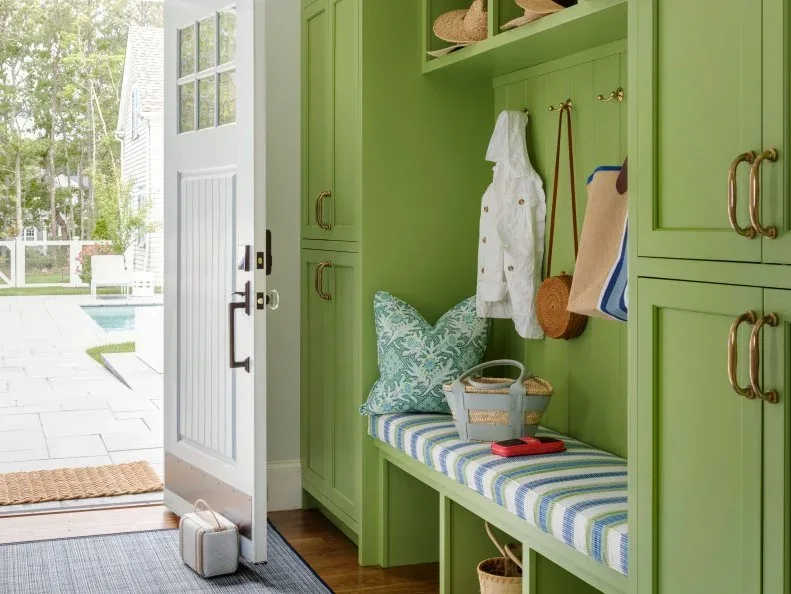
Brighten a Paneled Bench With Green Paint
 SaveSupport Non AI Creator
Image credit: Photo: Greg Premru. From: HGTV Magazine
Bright green cabinetry surrounds a striped bench cushion beside the glazed entrance door. Hooks sit on the paneled back, with open cubbies beneath the seat and taller cupboards at either side. The green gives the entire fitted arrangement a clear identity, while blue stripes provide a smaller accent. A leafy cushion softens one corner without obscuring all of the bench surface needed for changing shoes.
Sample a strong green alongside the door and floor before repainting a large fitted wall. Leave room for someone to sit between the cushions and hanging bags, especially when the hooks are fully loaded. Use the lower spaces for a limited number of everyday items. Furniture near an outdoor entrance needs an appropriate finish, and damp footwear should not be left on upholstery while you organize the rest of the storage.
IDEA 02 / 20
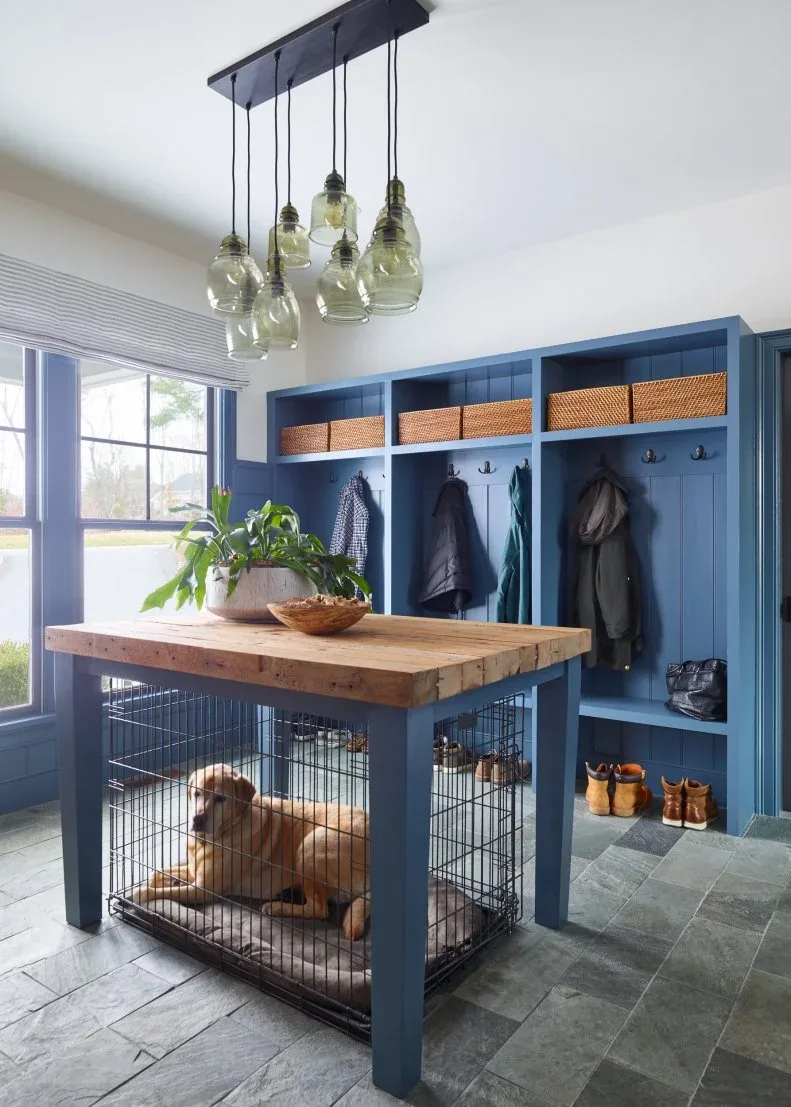
Connect a Blue Bench With Household Gear
 SaveSupport Non AI Creator
Image credit: Photo: Jared Kuzia Photography. From: Kristina Crestin
Blue divided bays hold hanging coats above a continuous seat, with woven baskets on the upper shelves and footwear underneath. A separate wood-topped pet enclosure stands in front of the fitted storage, showing how several household needs can share an arrival area. The blue paneling and warm wood introduce country-style details without relying on a display of decorative objects across the bench.
Check the working space between the bench and any freestanding unit before planning this combination. People need room to bend, sit and move with bags, and an animal’s enclosure requires its own assessment for space, comfort and ventilation. Keep pet equipment separate from dirty shoes and cleaning supplies. Allocate the upper baskets to lighter, less frequently used items so daily essentials do not require awkward reaching over the seat.
IDEA 03 / 20
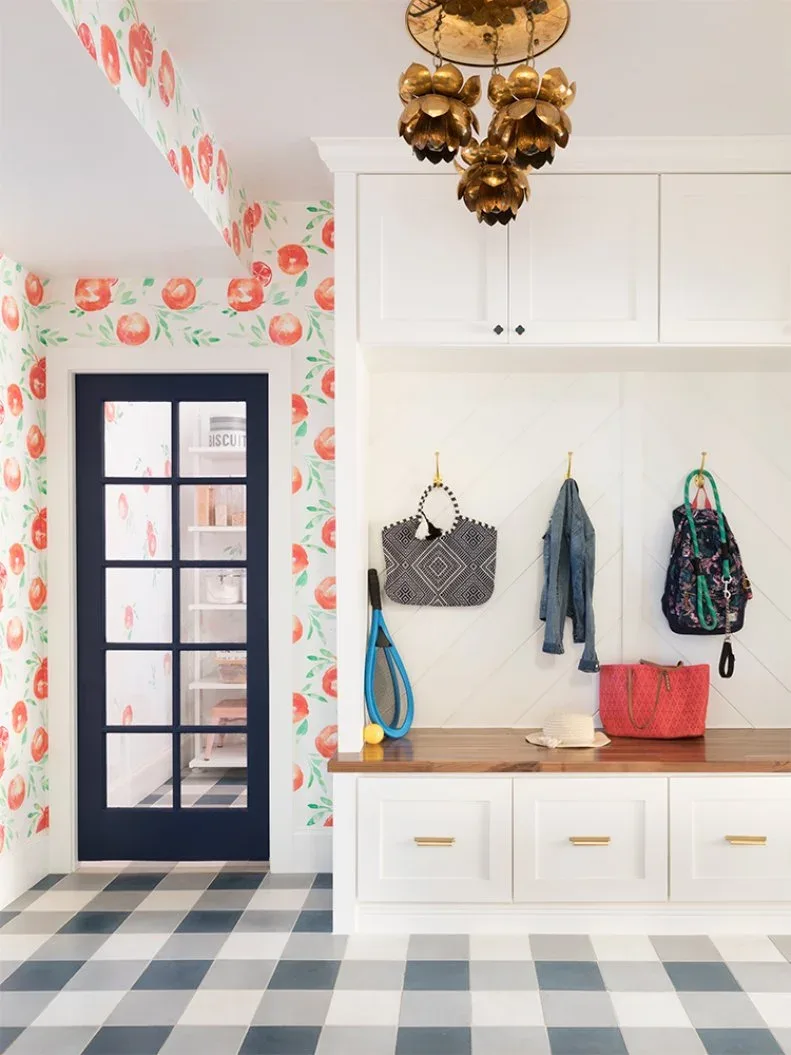
Pair a Wood Seat With Floral Wallpaper
 SaveSupport Non AI Creator
Image credit: Photo: Lisa Romerein. From: HGTV Magazine
A wood bench surface runs across white storage drawers beneath an open hanging area and closed upper cupboards. Floral wallpaper surrounds the dark glazed door, and a checked floor brings a larger repeating pattern below. The bench itself stays comparatively simple, allowing the flowers and floor to provide most of the country character. Hanging bags remain visible, while smaller items can be placed behind the drawer fronts.
Make sure the seat depth still allows a comfortable position when coats and bags are hanging behind it. Choose wallpaper for the traffic and cleaning conditions around the door, and protect its lower edges from scuffs. Drawers should open without blocking the main route. Combining a small floral pattern with larger checks can work well, but keep the seat reasonably clear so the practical purpose is not lost among accessories.
IDEA 04 / 20
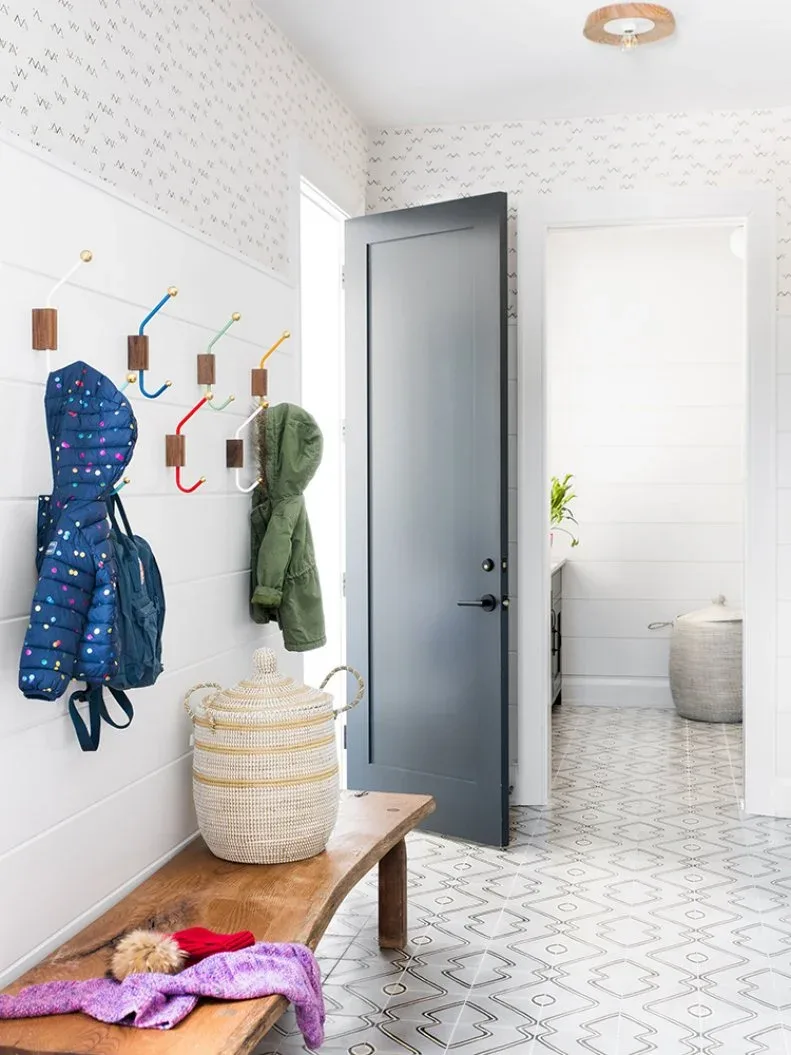
Keep a Rustic Bench Separate From the Hook Wall
 SaveSupport Non AI Creator
Image credit: Photo: Katie Fielder
A plain wood bench stands against white horizontal paneling, beneath colorful wall hooks and a fine patterned upper wall. The seat has no enclosing side cupboards, so its simple outline remains visible against the light background. A lidded woven basket rests near one end. The wood provides the farmhouse reference, while the small hook colors make the hanging wall feel more playful than a traditional matching peg rail.
Check the bench’s stability and load rating before treating a narrow rustic piece as everyday seating. Position hooks around the lengths of actual coats so sleeves do not cover the whole seat. A loose basket should be easy to move when someone sits down. Keep boots on an appropriate lower surface rather than the wood top, and leave the nearby door clear even when the hooks and floor storage are in use.
IDEA 05 / 20
Divide a Long Bench Into Household Bays
 SaveSupport Non AI Creator
Image credit: Photo: Dale Blumberg Interiors
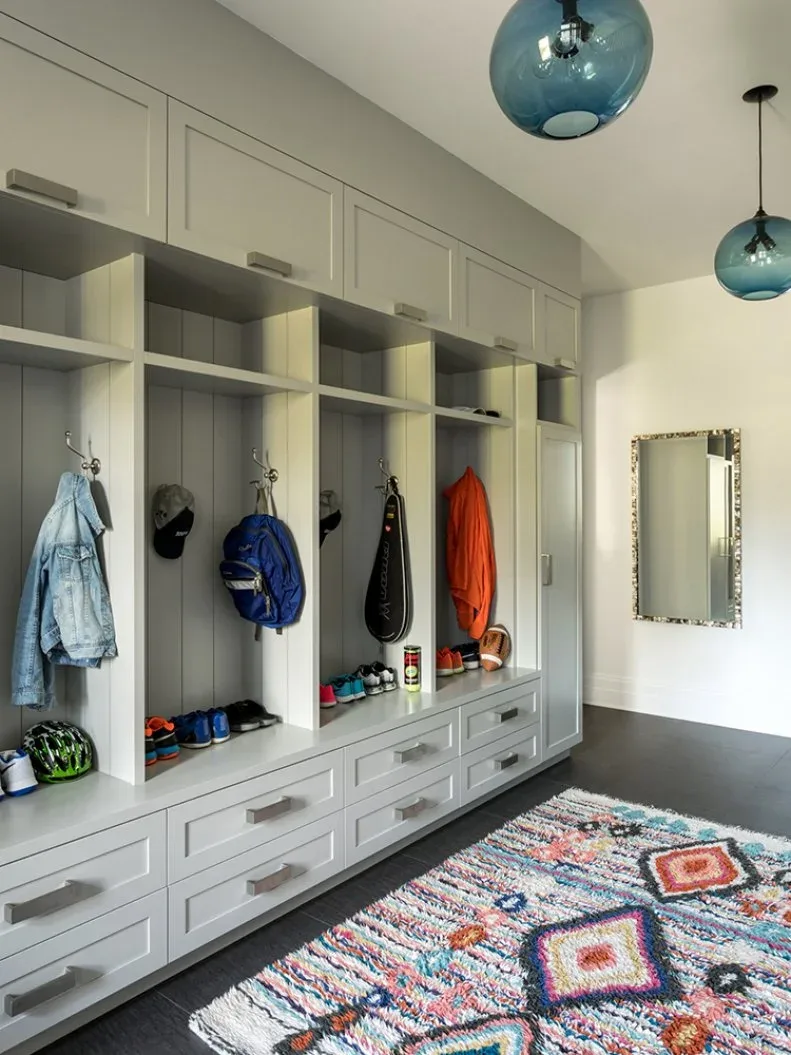
Pale gray cupboards frame individual hanging bays above a continuous bench, with drawers below and smaller open shelves overhead. Each bay has enough visual separation to suggest a place for one person’s belongings. Blue globe pendants and a colorful rug provide stronger accents around the restrained cabinetry. The fitted seat and paneled storage offer a farmhouse-friendly structure while the lighting gives the room a more current feel.
Plan each bay around the gear it needs to hold rather than giving everyone identical compartments by default. Long coats, backpacks and sports equipment have different requirements. Make sure handles and open drawers do not catch clothing or obstruct the passage. Keep enough seat space for taking shoes off, and choose a rug that lies securely and can be maintained through the dirt an entryway actually receives.
PART 02
Plan the Fitted Bench Wall
IDEA 06 / 20
Use Closed Drawers Beneath Open Hanging Storage
 SaveSupport Non AI Creator
Image credit: Photo: Sean Litchfield
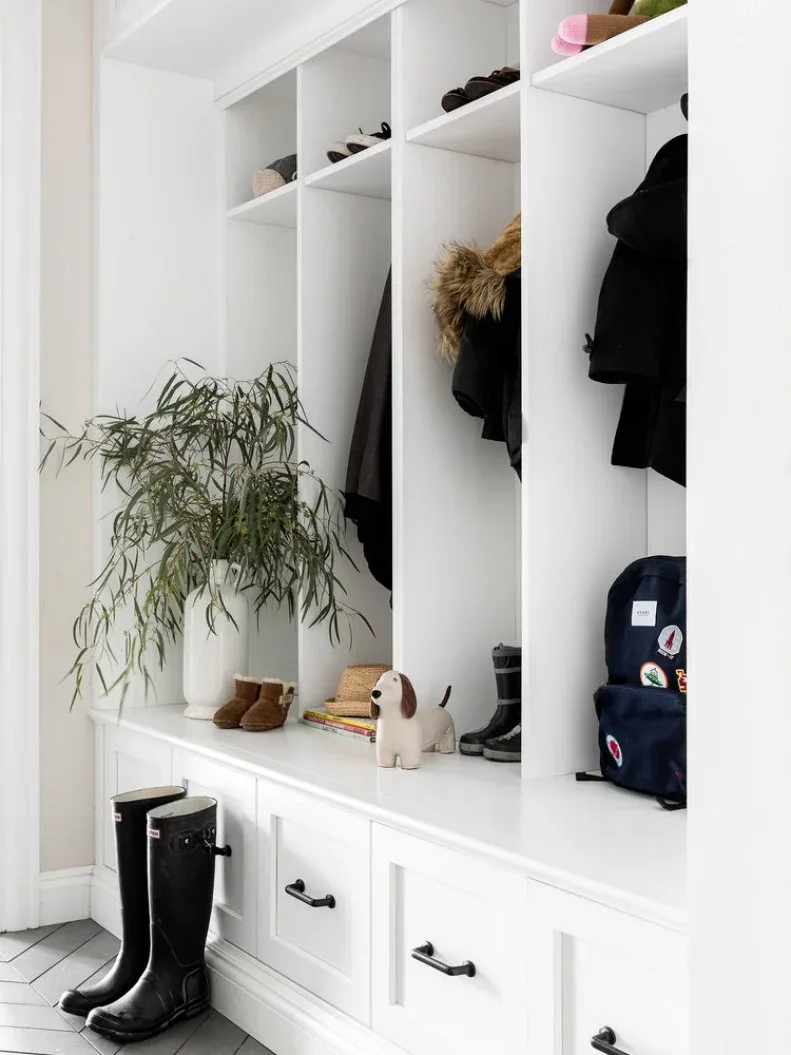
White partitions separate coats and bags above a long bench, with black handles outlining the drawers underneath. The arrangement leaves everyday hanging visible while putting smaller belongings behind closed fronts. A plant and a few objects occupy part of the seat, but the pale cabinetry keeps the overall wall straightforward. This combination suits a quieter farmhouse entrance where storage needs to do more work than decorative furnishings.
Leave an obvious sitting position instead of filling the entire seat with plants or supplies. Decide which items belong in the drawers and check whether their depth suits those contents. Open hanging needs enough space for damp coats to dry appropriately without touching clean accessories. Fit the unit securely, allow for door and drawer movement, and avoid putting large boots directly in front of the seat where feet need to land.
IDEA 07 / 20
Give a Narrow Bench Small Arched Shelves
 SaveSupport Non AI Creator
Image credit: Photo: Dustin Halleck. From: 2to5 Design
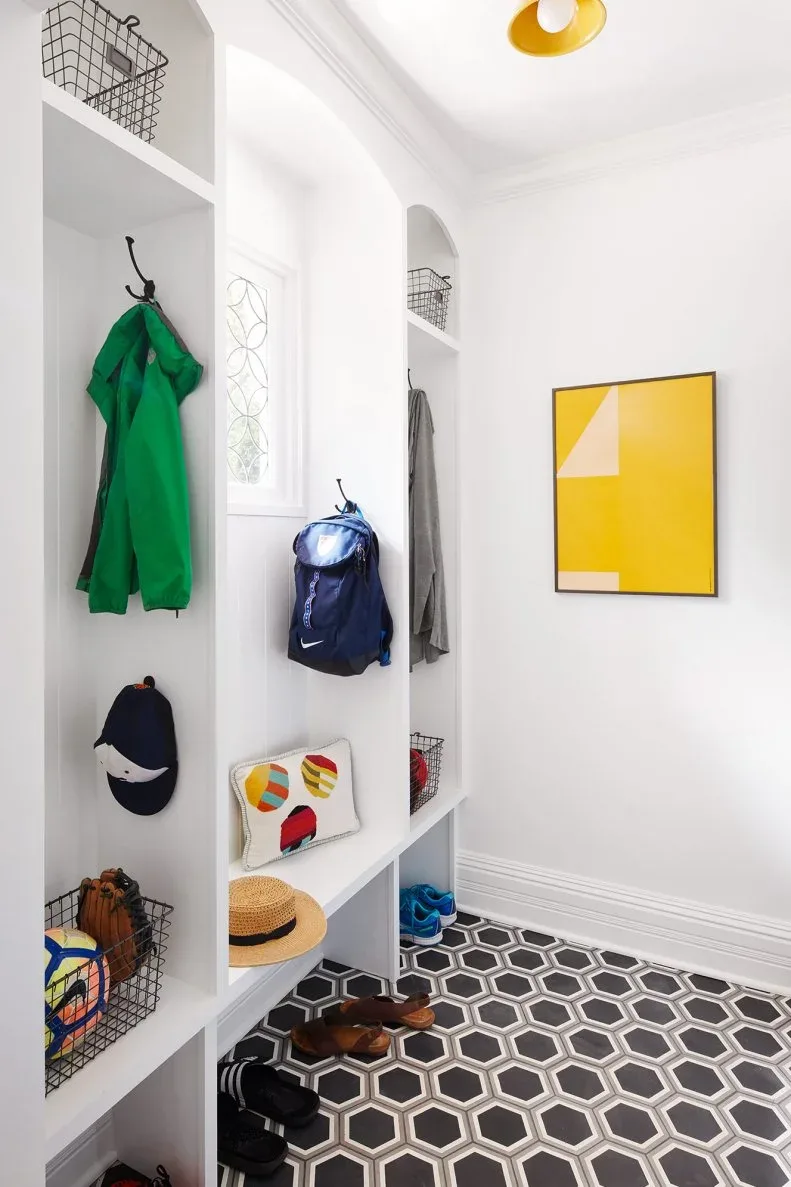
A slim white bench sits between divided hanging areas, with small arched recesses above providing space for wire baskets. The arches add a traditional detail to an otherwise simple fitted wall. Dark geometric flooring and a yellow ceiling accent give the entry clearer contrast, while the seat and storage remain pale. Keeping the bench narrow limits its projection into the room, although the photograph cannot establish its actual dimensions.
Test the intended seat depth with the people who will use it before choosing a shallow bench. A compact footprint is helpful only if sitting and changing shoes remain comfortable. Avoid loading baskets overhead with heavy objects, and keep hooks reachable. If the seat offers little lower storage, give everyday footwear another defined position. Check how the door and the hanging garments affect the usable passage through the entrance.
IDEA 08 / 20
Use a Padded Bench Below a Country Picture
 SaveSupport Non AI Creator
Image credit: Photo: Robert Peterson; Rustic White Photography. From: Tiffany Brooks
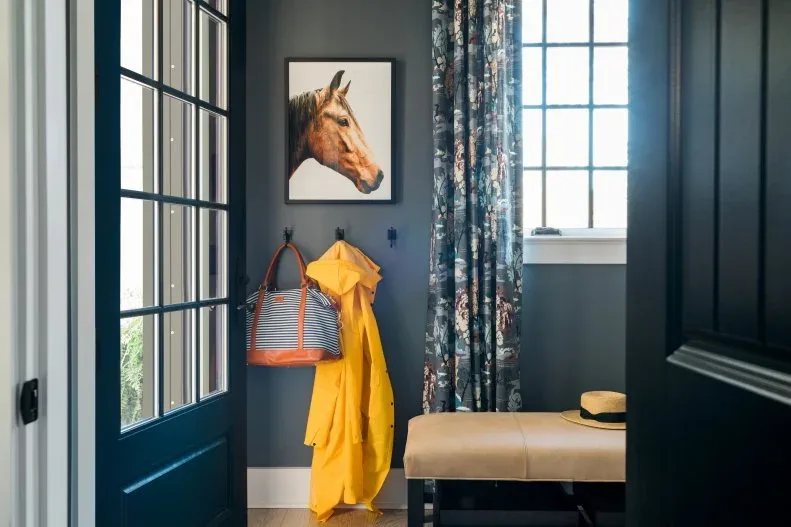
A tan padded bench occupies the corner beneath a horse portrait and a short row of hooks. Gray walls and a dark glazed door form the quieter background, while a yellow coat and floral curtain add smaller color notes. The bench has an open base, so it behaves like a separate piece of furniture rather than part of a tall storage wall. The artwork and fabric supply a recognizable country mood.
Choose upholstery and cushion care around actual entryway use, including dirty hands, wet coats and frequent sitting. Hooks above a padded seat should not allow dripping clothing to rest on the fabric. Keep the curtain clear of the bench and door hardware. With no concealed storage underneath, plan another place for shoes and spare accessories so the floor does not become the catch-all area the bench was meant to organize.
IDEA 09 / 20
Set a Bench at the End of a Storage Passage
 SaveSupport Non AI Creator
Image credit: Photo: LifeCreated, Weber Construction. From: Kirsten Holmstedt
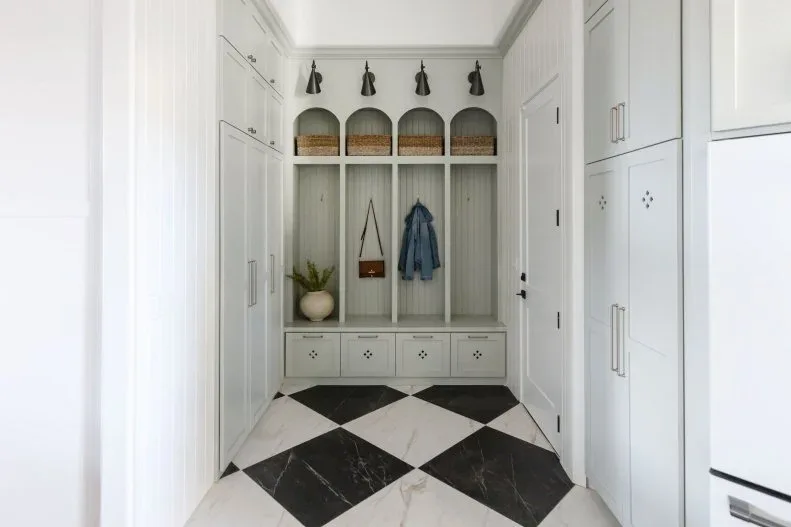
An end-wall bench sits beneath four arched storage openings, with baskets above and paneled drawers below. Tall white cupboards continue along both sides of the passage. The checked floor adds a strong traditional pattern while the repeated pale doors keep the surrounding storage consistent. Placing the seat at the end gives the arrangement a clear stopping point instead of projecting another piece of furniture into the side of the hall.
Check the passage width with side cupboard doors open, and leave room to approach the bench with coats or bags. A fitted end seat needs a comfortable position for feet as well as enough headroom beneath hanging items. Keep upper baskets light and reachable. If your hall is shorter, reduce the amount of side storage before shrinking the walking route; the pattern and arched details can still be used on a smaller scale.
IDEA 10 / 20
Keep One Bench Within a Tall Country Entry
 SaveSupport Non AI Creator
Image credit: Photo: Robert Peterson, Rustic White
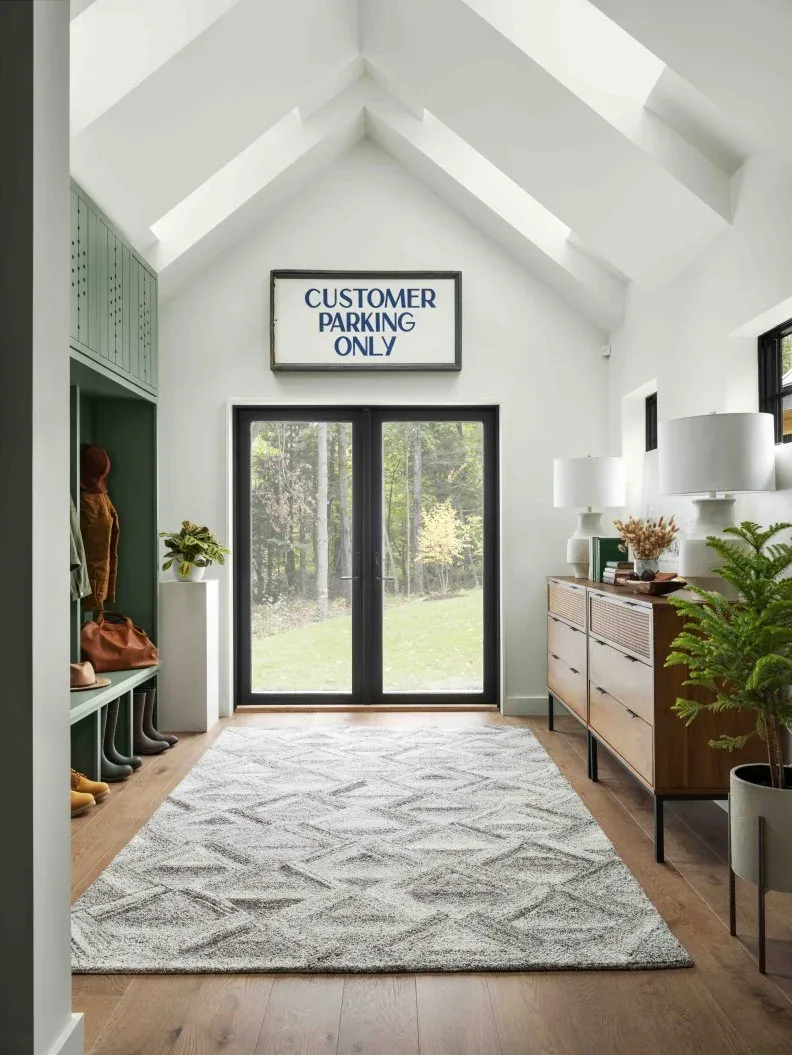
A green fitted storage wall includes a bench and lower shoe spaces along one side of this high-ceiling entry. A wood cabinet stands opposite, with a broad pale rug between the two. The glazed doors and visible overhead beams give the room a taller scale, but the seating remains connected to everyday coat and footwear storage. The separate cabinet provides another landing surface without filling the bench itself.
Borrow the separation of jobs rather than assuming a smaller entrance needs the same amount of furniture. Keep the bench for sitting and the cabinet top for items that need a brief landing place. Allow a clear route between them, including when drawers or doors are open. A large rug should remain secure and leave the entrance hardware free to move; assess any existing high-level structure before changing fitted storage around it.
PART 03
Choose Compact and Freestanding Options
IDEA 11 / 20
Add Color Through the Baskets Above a Wood Seat
 SaveSupport Non AI Creator
Image credit: Photo: Alex Lukey; Design by Lisa Lev Design. From: HGTV Magazine
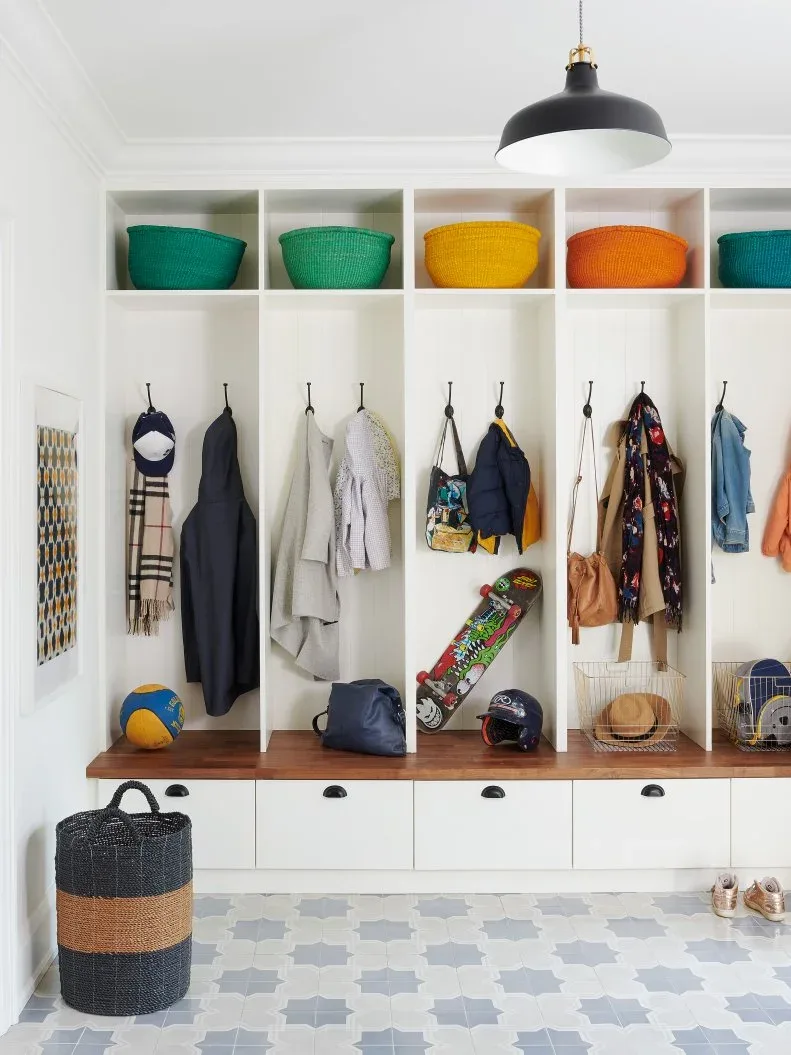
A wood seat stretches across white drawers beneath separate coat bays. Bright baskets fill the upper compartments, adding green, yellow and orange without painting the entire fitted unit. Black hooks and drawer pulls give the pale cabinetry clear small outlines. The wood introduces warmth at sitting height, while the basket colors help distinguish the storage overhead. The effect is a lively version of a straightforward farmhouse bench wall.
Give each upper basket a clear purpose so its color helps people find belongings instead of disguising miscellaneous clutter. Keep regularly used items within easy reach rather than requiring a stretch over hanging coats. Protect the seat finish from wet footwear and clear one part for sitting. Check the drawers’ contents and opening clearance, and keep sports equipment from spreading across the full bench when someone needs to change shoes.
IDEA 12 / 20
Fit a Small Seat Between Tall Cupboards
 SaveSupport Non AI Creator
Image credit: Photo: Julie Soefer Photography. From: Laura U Design Collective
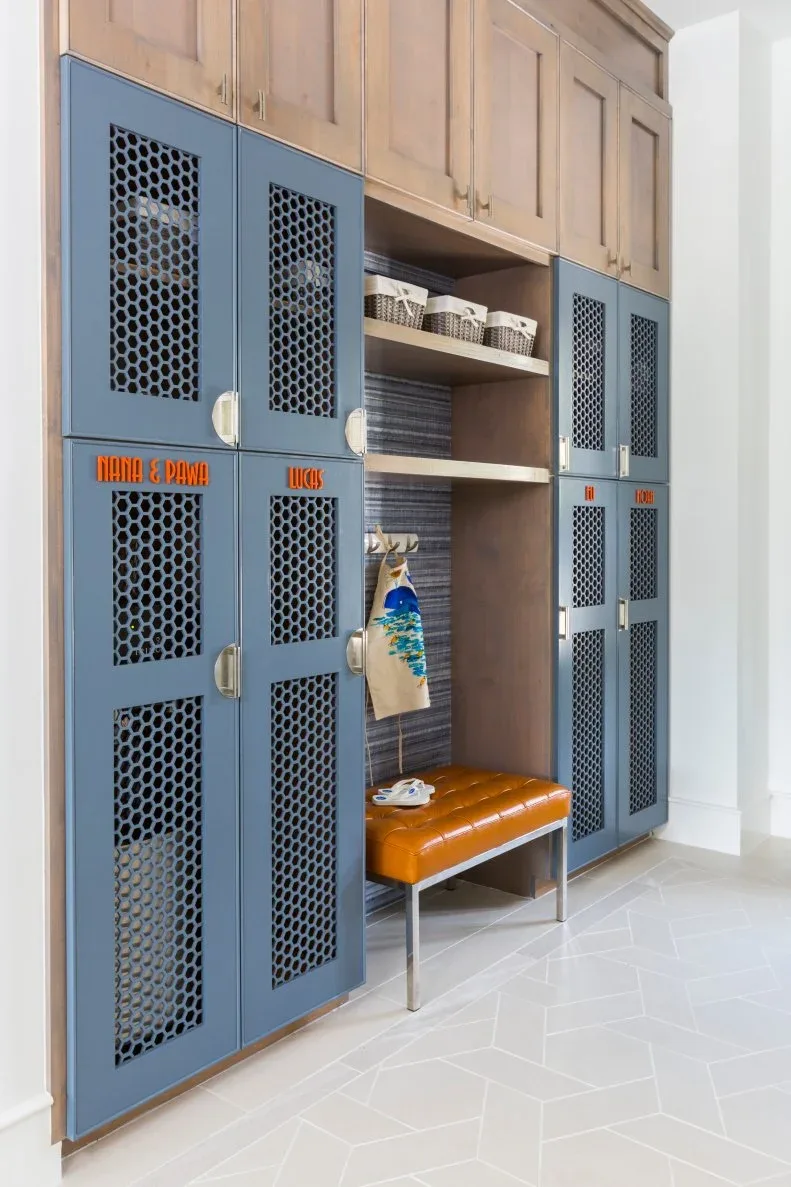
Blue mesh-front doors flank a small orange padded bench, with wood cupboards above and open shelving behind the seat. The central opening gives someone a place to sit within a larger storage wall. Labels and visible basket shelves emphasize organization, while the wood and paneled door shapes add warmth. This compact seating position provides a farmhouse-friendly alternative to a full-width bench when closed storage takes priority.
Confirm that the central opening is wide and deep enough for comfortable sitting before reducing the bench to a narrow gap. Side doors should open without trapping the seated person or blocking their feet. Mesh fronts offer a different appearance from solid cupboards, but the actual unit still needs an assessment for its contents and ventilation. Choose cushion care for entryway use, and keep shelves behind the seat free of objects that project forward.
IDEA 13 / 20
Use a Cushioned Nook Beside the Exterior Door
 SaveSupport Non AI Creator
Image credit: Photo: Laura Hull Photography. From: Tim Barber Ltd.
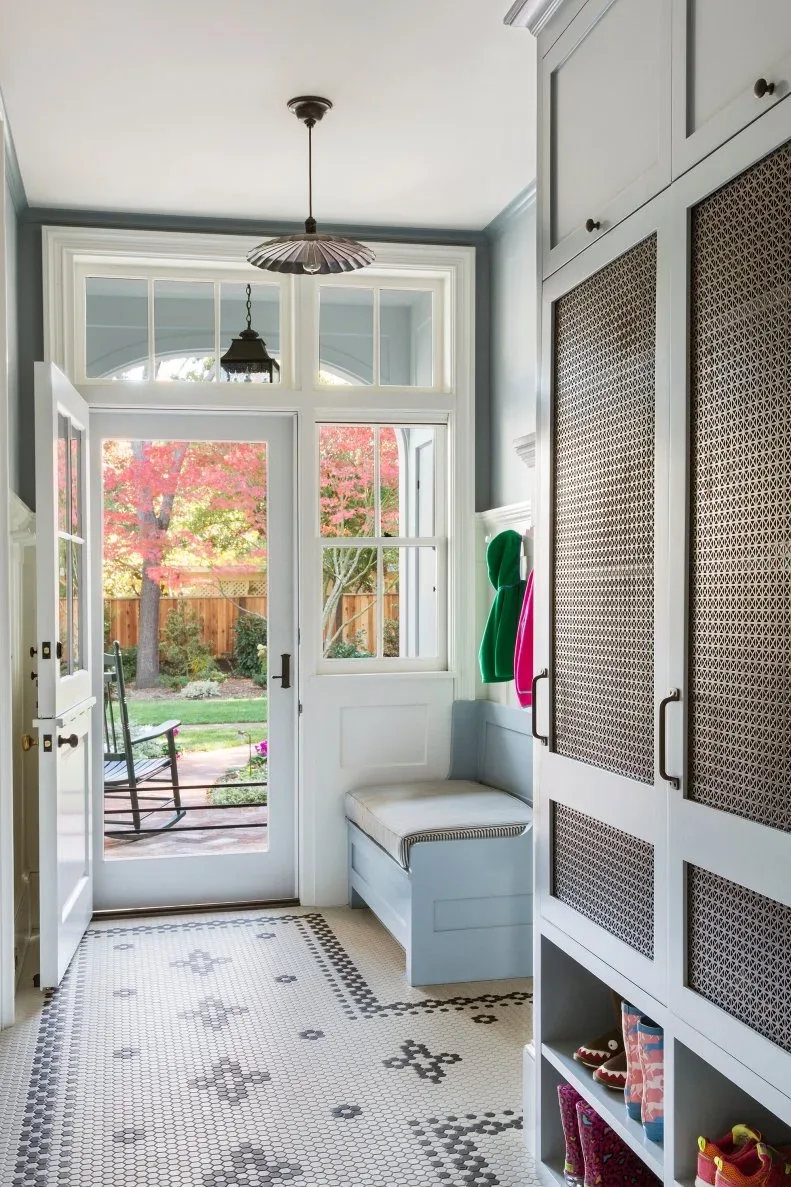
A small cushioned seat fits into a pale blue nook beside the glazed exterior door, opposite tall storage with textured fronts and open lower shoe shelves. The cushion gives the fitted corner a softer sitting surface, while the cupboard holds the heavier visual weight. A patterned pale floor continues through the entry. The compact seat and paneled cabinetry make a country-style arrangement without requiring a long bench across the whole wall.
Measure the nook for the actual user’s sitting position and leave enough room to stand without catching the door. Check cushion attachment and washing instructions if it will receive daily use. Put shoes in the lower shelves rather than across the nook’s foot space. Tall cupboards require secure installation, and their doors must operate comfortably beside the entrance. Keep hanging items within their intended area so the small seat stays available.
IDEA 14 / 20
Choose a Freestanding Bench With a Lower Basket
 SaveSupport Non AI Creator
Image credit: Future PLC
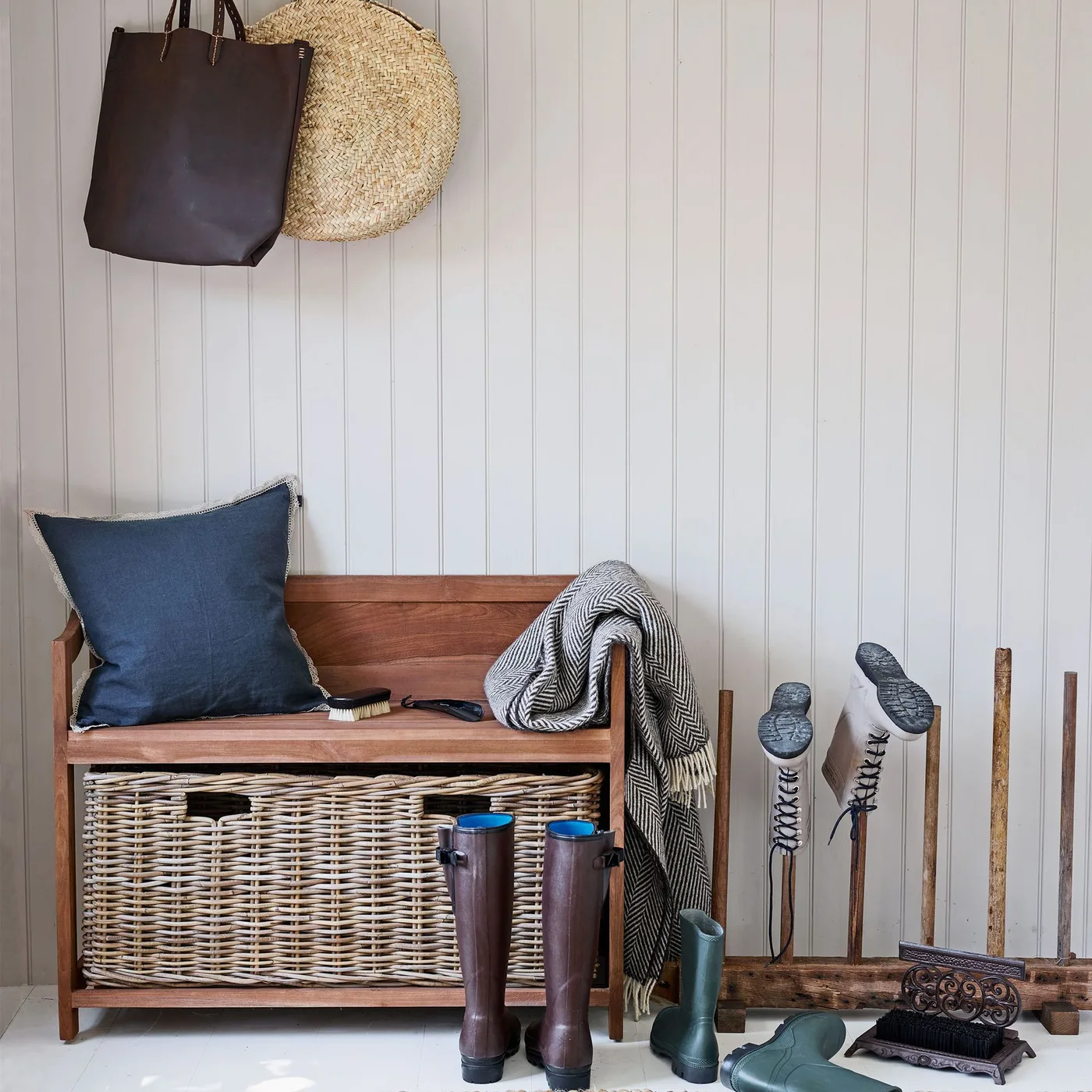
A wood bench with a backrest stands against pale vertical paneling, with a large woven basket filling the lower shelf. A blue cushion and folded throw soften the seat, while a bag and hat hang above. Boots and boot-removal aids occupy the floor at the side. The freestanding piece provides a recognizable country entry arrangement with a place to sit and one large concealed storage area underneath.
Check that the lower basket can be pulled out without moving the whole bench, and avoid packing it so heavily that lifting becomes awkward. Leave room for feet in front of the seat. Keep boot-removal equipment stable and out of the through route after use. A cushion should not slide while someone changes shoes, and damp footwear belongs on a suitable easy-to-clean surface rather than inside a woven basket with clean accessories.
IDEA 15 / 20
Run a Wood Seat Along a Paneled Hook Wall
 SaveSupport Non AI Creator
Image credit: Future PLC/Colin Poole
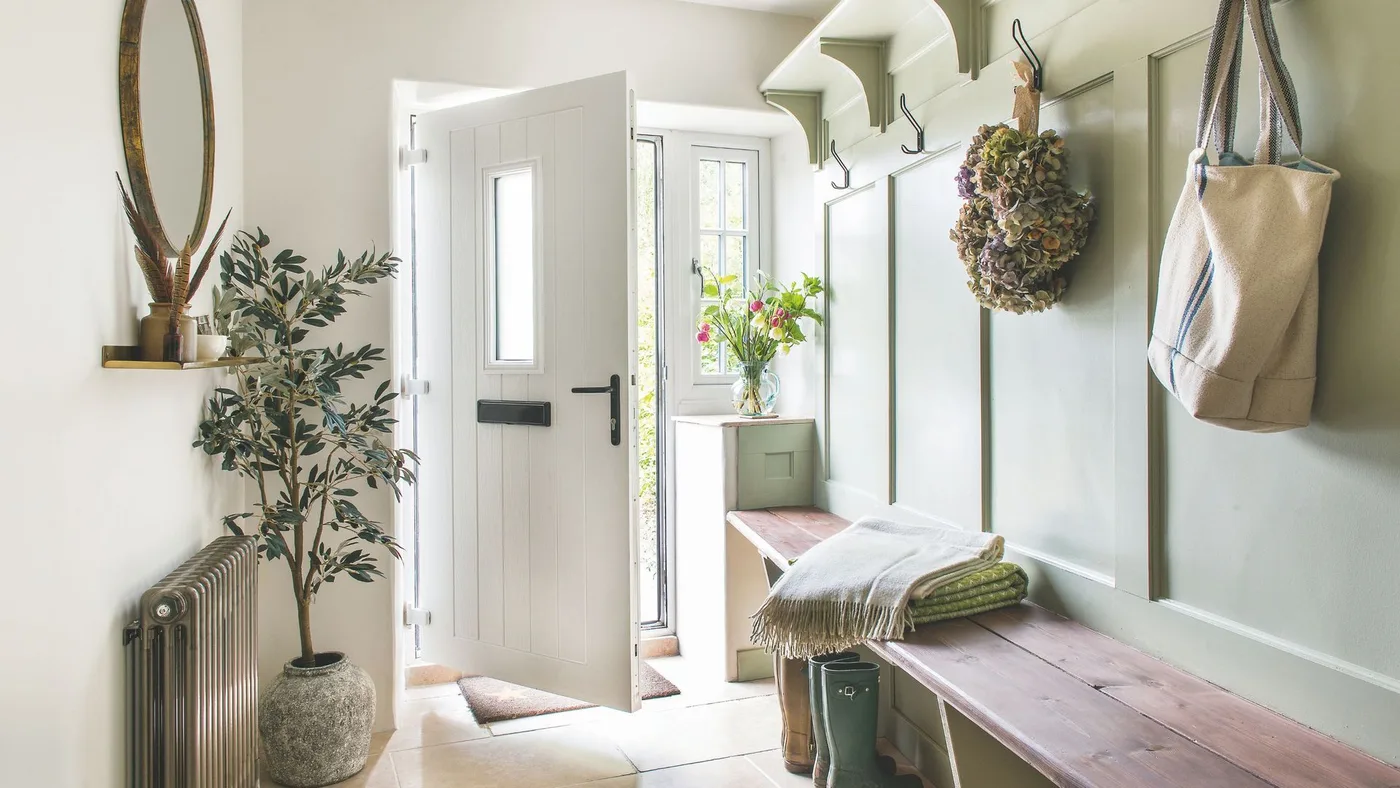
A long wood bench sits beneath pale green wall paneling and a shelf with hooks. Boots occupy the open lower compartments, leaving the seat available for cushions or sitting. A mirror and a small tree stand on the opposite side of the entry near the open white door. The restrained green and wood combination gives the wall country character while keeping hanging, footwear and seating in one connected arrangement.
Check the bench’s position against the entrance swing and the space needed to pass a seated person. Keep long coats from covering all of the cushion area, and reserve some hooks for smaller bags if full-length garments need another location. Allow boots to dry appropriately before placing them in cubbies. Keep the upper shelf’s load within its fittings’ limits, and avoid overfilling the lower openings until shoes extend into the walking route.
PART 04
Give Baskets and Outdoor Gear Clear Places
IDEA 16 / 20
Keep Shoes Below a Dark Painted Bench
 SaveSupport Non AI Creator
Image credit: Cotswold Co.
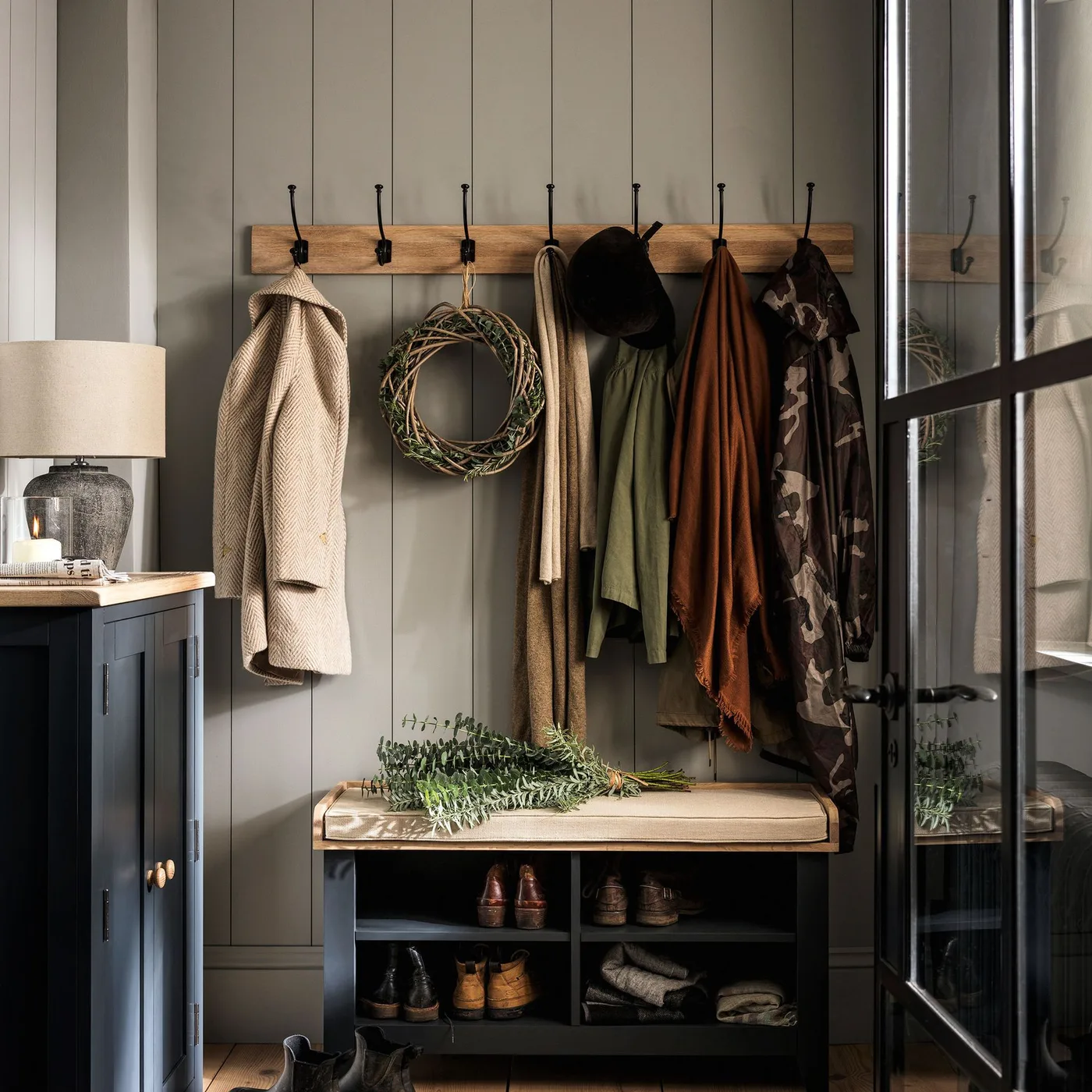
A dark painted bench holds a tan cushion above open shoe compartments, with a wood hook rail fixed to pale vertical paneling behind it. Coats, a hat and a wreath hang overhead. The dark bench provides a clear base for the lighter wall and warm wood rail, making this a compact farmhouse arrangement without tall fitted cupboards. The open lower spaces keep everyday shoes visible near the place where someone sits.
Choose the number and size of shoe compartments around the footwear you actually wear, including boots that may not fit low openings. Leave space above the cushion so hanging coats do not push the seated person forward. Fix the hook rail for loaded garments and bags, not only decorative items. Clean the lower shelves regularly, and use a separate suitable drying area for wet shoes before returning them to everyday storage.
IDEA 17 / 20
Use Woven Baskets in a Simple Storage Bench
 SaveSupport Non AI Creator
Image credit: Cox & Cox
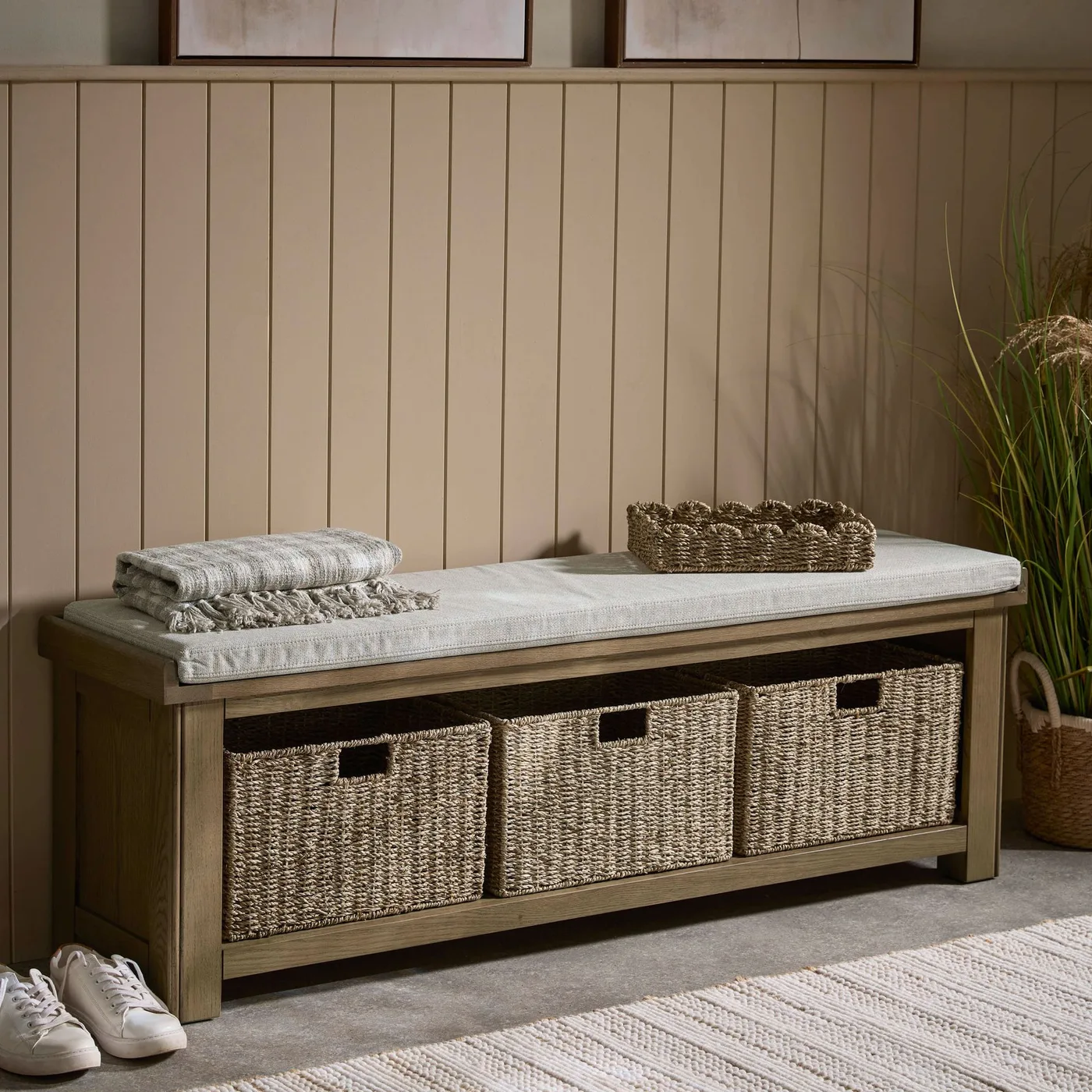
A wood storage bench combines a pale padded seat with three woven baskets underneath. Beige vertical paneling forms a quiet backdrop, with framed pictures above and a plant at the side. The basket fronts add texture while concealing their contents, and the seat has a straightforward rectangular outline. This arrangement gives a farmhouse entry useful low-level storage without making a large fitted hanging wall the main feature.
Check the basket handles and clearance so they are comfortable to use from the front of the bench. Assign contents deliberately, such as gloves or dry accessories, instead of letting all three become mixed overflow. The padded top needs care suited to daily sitting and the entrance conditions. Keep a clear seat section and enough floor space for changing shoes; place frequently worn coats on securely fitted hooks elsewhere if needed.
IDEA 18 / 20
Make a Small Red Bench the Color Accent
 SaveSupport Non AI Creator
Image credit: Benjamin Moore
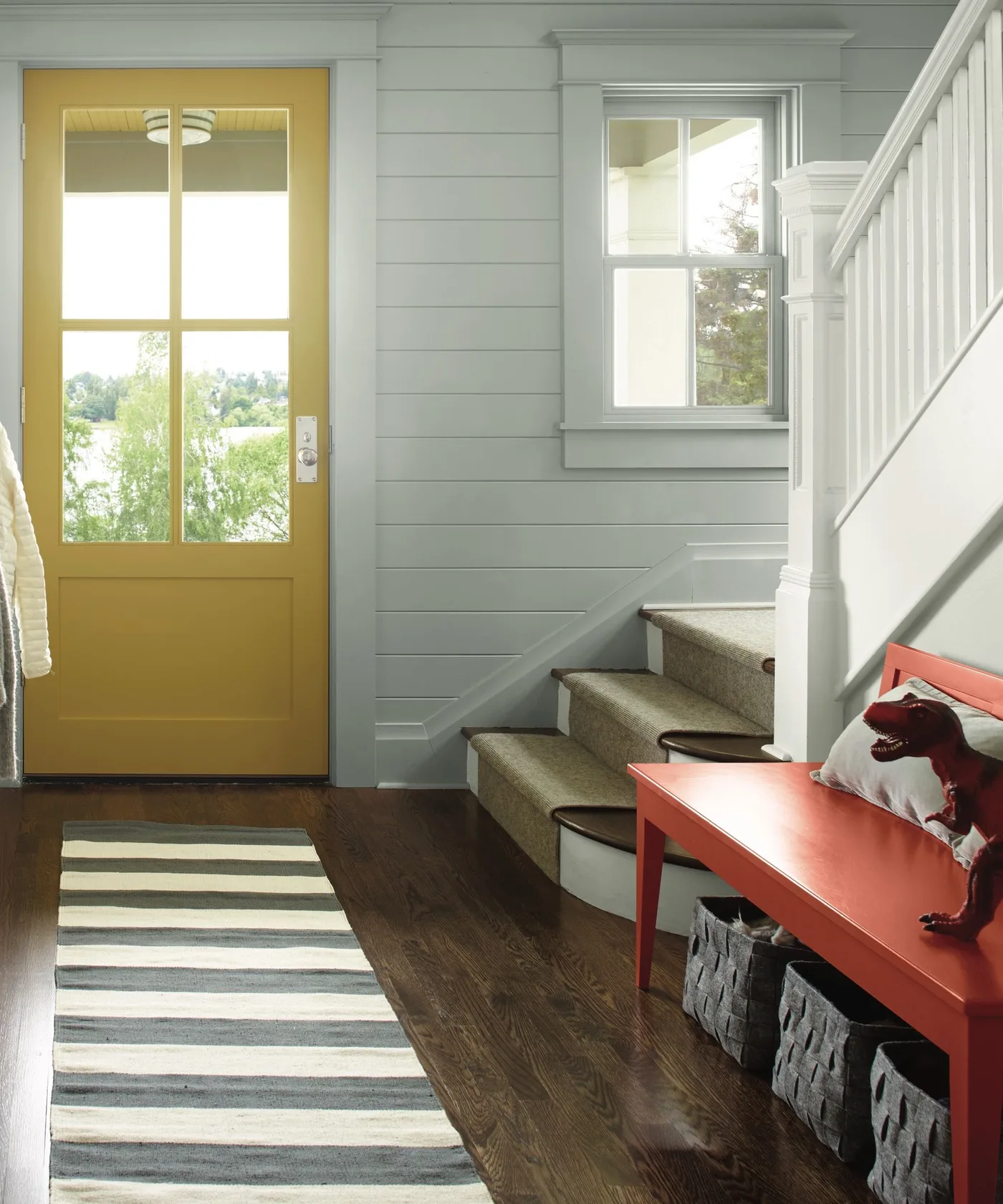
A small red bench stands beside the white staircase, with dark baskets beneath the seat. The yellow glazed door brings another clear color to the entrance, while pale horizontal paneling connects the surroundings. A striped runner marks the approach through the hall. The freestanding bench introduces country-style seating without surrounding the stair corner with a larger fitted unit that would change the whole passage.
Assess the bench position with the door fully open and the stair approach in use. People need enough space to sit without placing shoes across the bottom step. Keep the lower baskets easy to reach and the seat clear for its practical purpose. A runner should lie securely and let the entrance open freely. Choose painted furniture finishes for regular handling, and reserve wet footwear for an appropriate floor tray rather than the basket interiors.
IDEA 19 / 20
Match a Padded Wood Bench With Outdoor Gear
 SaveSupport Non AI Creator
Image credit: Hunter Carson
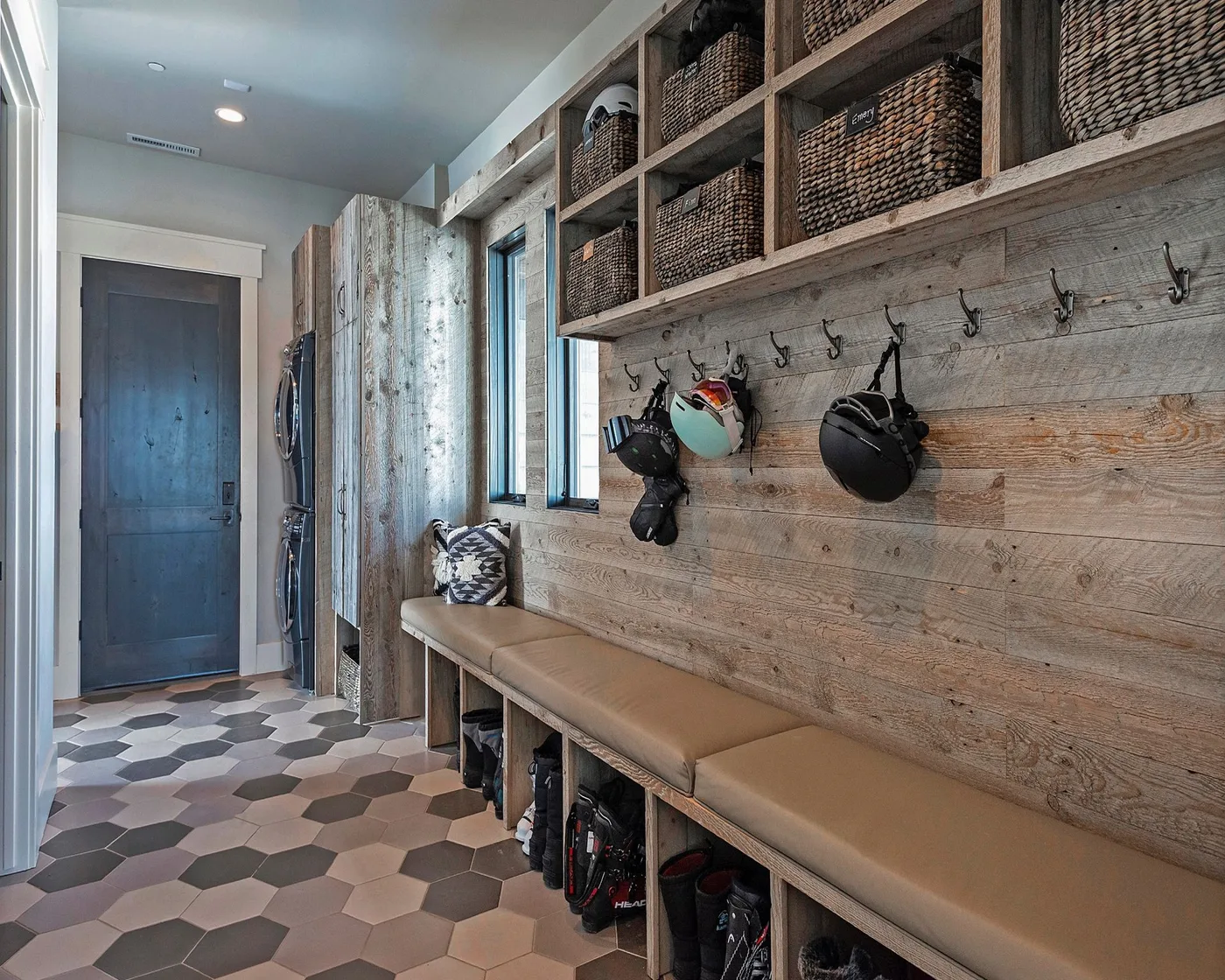
A tan padded bench runs beneath a wood-paneled wall with hooks holding outdoor helmets. Open cubbies below contain bags and equipment, while woven baskets fill the upper shelves. The warm wood stretches along the whole wall, giving the entry its rustic farmhouse character. Dividing storage above and below the seat makes the arrangement more useful than a bench that only provides a surface for temporarily piling gear.
Leave a sitting section clear rather than letting helmets and bags occupy every part of the cushion. Check that hooks support their loads and keep equipment straps away from the seated person. Store protective gear according to its own care instructions, including appropriate drying. Upper baskets should hold light items you can retrieve safely. Choose cushion care for the actual dirt and moisture the entrance receives, and keep the lower cubbies organized by use.
IDEA 20 / 20
Give a Long Bench Clearly Labeled Storage
 SaveSupport Non AI Creator
Image credit: Neat Little Nest
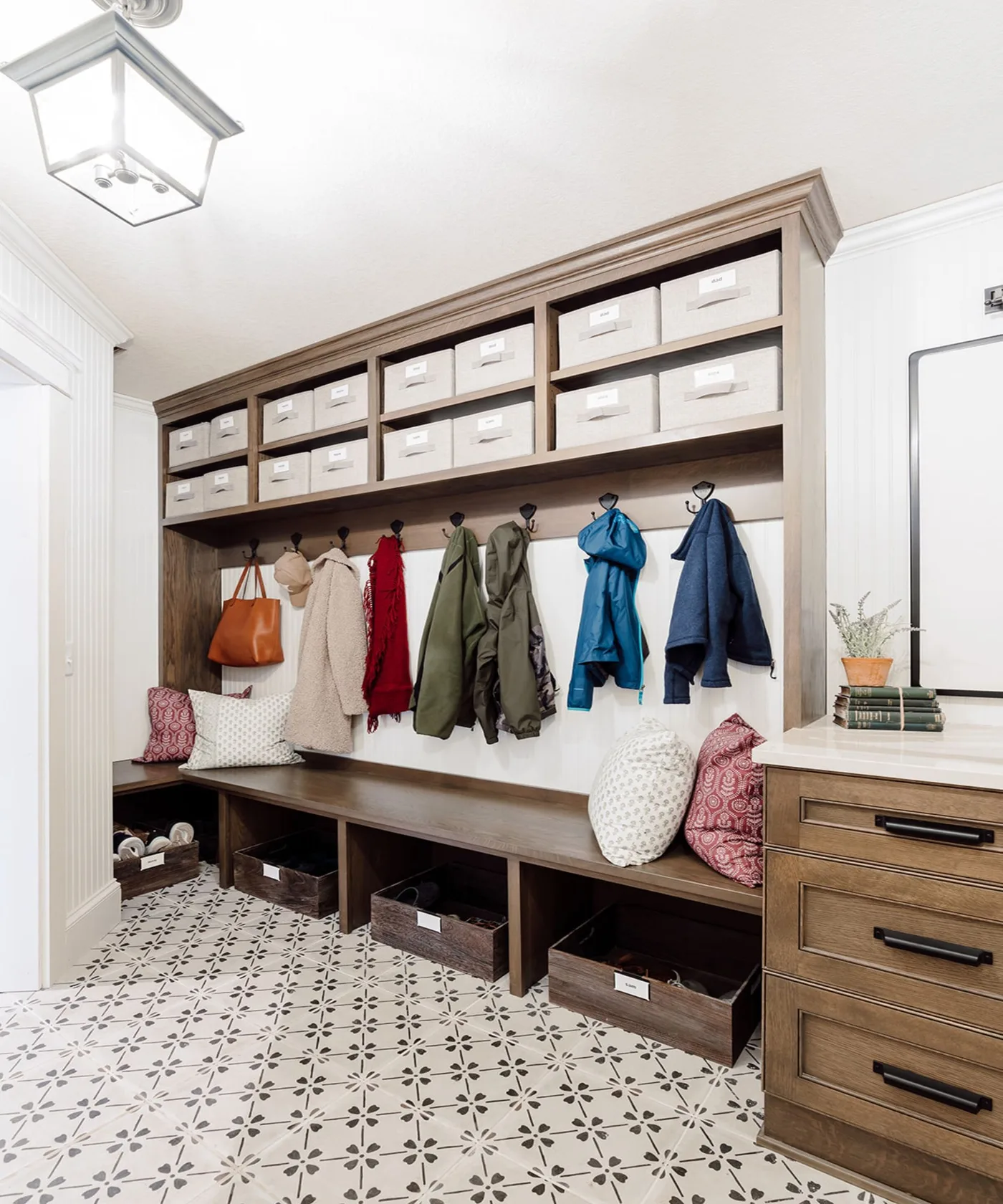
A long wood seat sits below a row of coat hooks and shelves filled with labeled boxes. Open lower cubbies contain smaller handled storage pieces, while patterned cushions soften the bench at the ends. The wood frame outlines the entire arrangement against pale walls and a floral-patterned floor. Labels help distinguish the upper compartments, leaving the middle hanging area open enough to see coats and bags at a glance.
Use labels that reflect the contents people actually look for, and revise them when seasonal gear changes. Keep frequently used belongings at comfortable heights instead of placing everything in the upper boxes. Make sure hanging coats leave enough usable seat depth. Lower containers should come out easily without scraping the floor, and loose cushions must stay stable while someone changes footwear. Leave part of the bench clear so its storage does not consume its seating function.
BRING IT ALL TOGETHER
Keep the Seat Available for Sitting
Choose the bench after checking the door swing, walking route and place where feet will land while someone changes shoes. A useful bench does not need to be the longest one that fits the wall. Comfortable seating, secure installation and accessible storage matter more than squeezing in an extra cupboard or display basket.
Assign the surrounding hooks and compartments specific jobs, then keep the arrangement simple enough to maintain. Dry damp clothing and footwear appropriately, clean lower shelves and remove seasonal overflow from the everyday spaces. Wood, paint and cushions can bring country character, but the bench earns its place by helping people enter and leave without moving a pile of belongings first.