A French country-inspired mudroom can combine muted painted storage, warm wood, baskets and traditional shapes without sacrificing its everyday purpose. Think first about where shoes, coats and bags arrive. Then use color, a comfortable bench and a few decorative details to connect the entrance with the rest of your home.
These twenty photographs show practical country-style arrangements and details you can adapt, from divided doors and painted cupboards to patterned cushions and comfortable benches. Compare finishes in your own light, plan wet and dry storage separately, and keep the routes through the room easy to use.
PART 01
Begin With Color and Useful Storage
IDEA 01 / 20
Pair Dusty Blue Storage With a Checkerboard Floor
 SaveSupport Non AI Creator
Source: maisondecinq.com
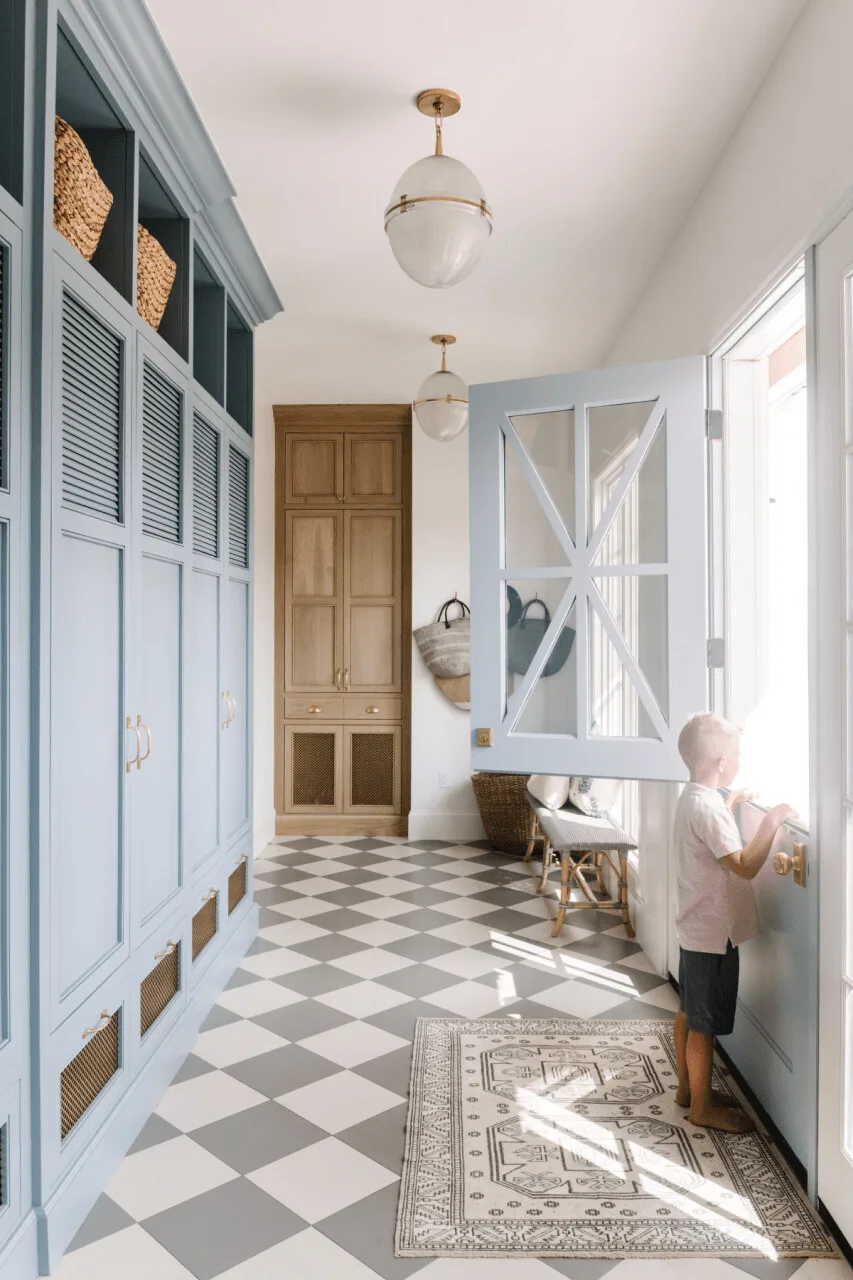
Dusty blue cabinets soften a mudroom with a gray-and-white checkerboard floor. Woven baskets occupy the upper openings, while a warmer wood-toned cabinet stands at the far end. The divided glazed door brings daylight into the passage. Repeated pale ceiling lights keep the room feeling orderly, with most everyday storage contained behind paneled doors rather than scattered across the floor.
Compare the blue paint with the floor sample before choosing either, since a cool gray can make the cabinet color feel sharper. Plan a place for wet footwear near the entrance instead of relying on woven baskets to contain moisture. Check the divided door’s hardware and clearance with your installer. Keep its operating area clear of chairs and bags, even when the upper section is open.
IDEA 02 / 20
Give Baskets Their Own High Shelf
 SaveSupport Non AI Creator
Source: maisondecinq.com
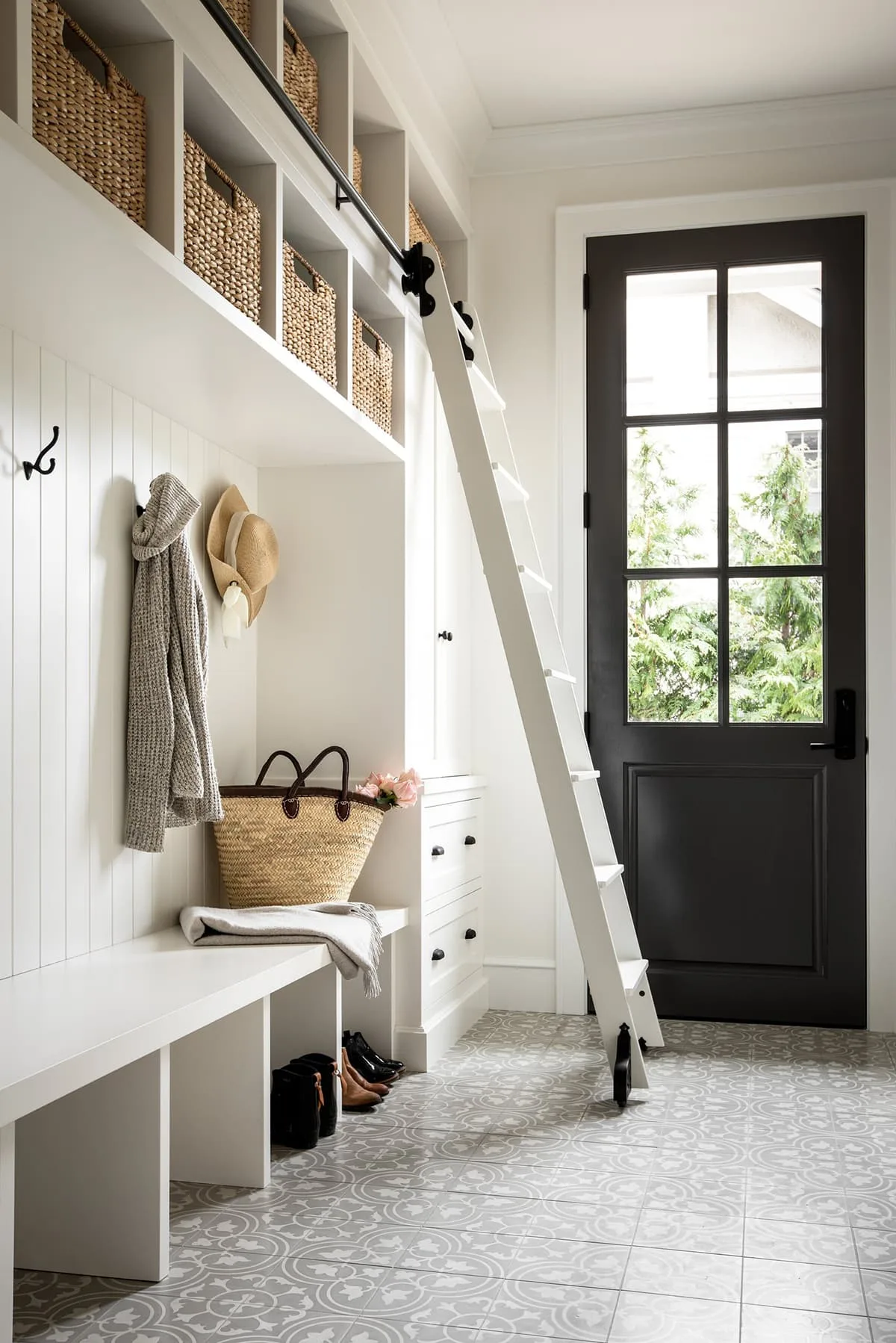
White paneling and a simple bench create a calm background for rows of woven baskets overhead. A ladder reaches the upper storage, while a black glazed door gives the narrow room a strong focal point. The pale patterned floor adds detail below without another bright color. Hooks and open spaces beneath the bench keep everyday coats and shoes closer to hand.
Use high baskets for lightweight items you do not need every time you enter. Daily essentials belong within comfortable reach, so avoid making a ladder part of the usual morning routine. If you include one, plan its safe movement and storage with the cabinet supplier. Measure baskets before building the shelf openings, and leave a clear floor area beside the bench for changing shoes.
IDEA 03 / 20
Warm White Built-Ins With a Brick-Toned Floor
 SaveSupport Non AI Creator
Source: maisondecinq.com
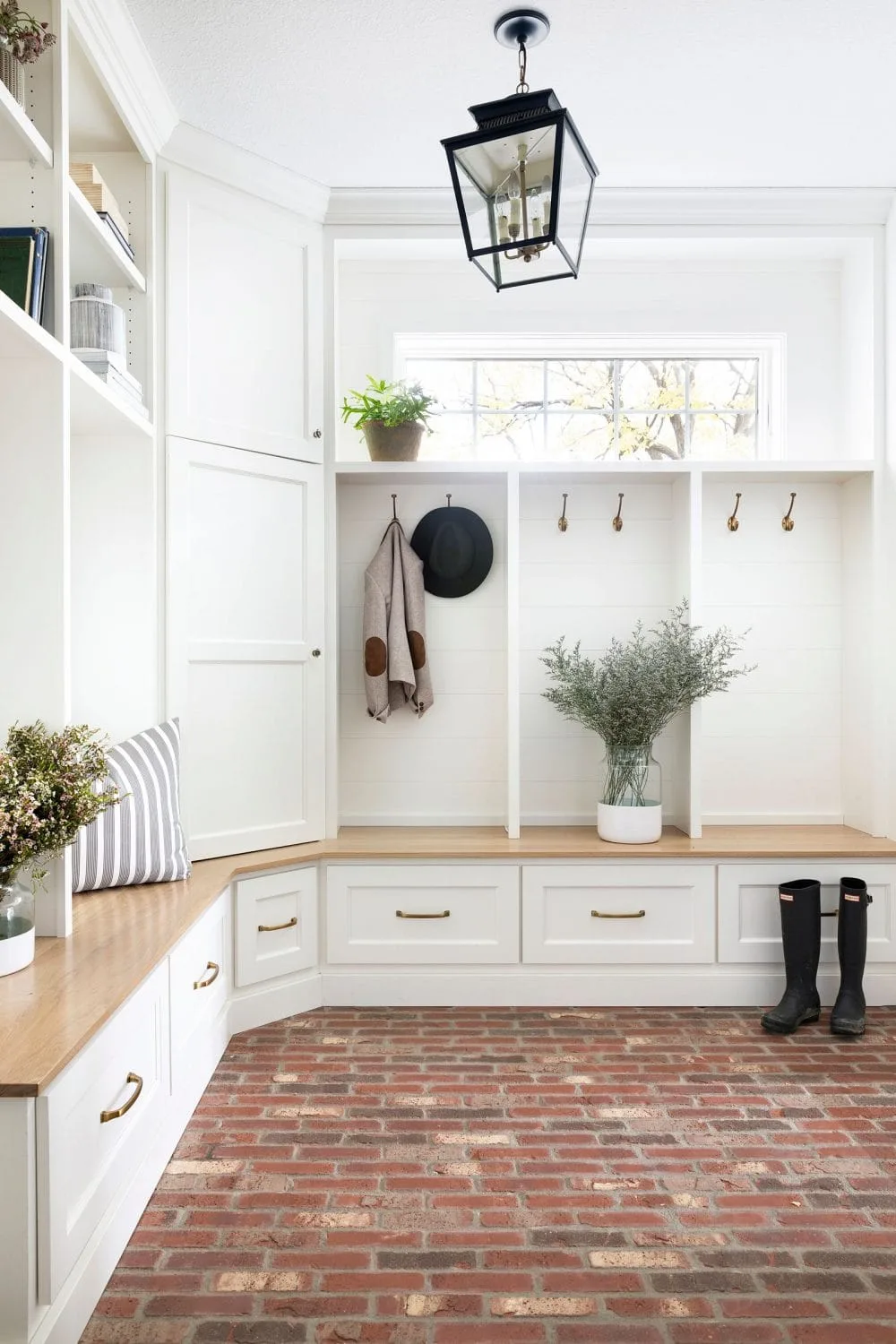
White built-ins wrap around a corner beneath a high window, creating an L-shaped bench with warm wooden seats. Red brick-toned flooring makes the mostly pale room feel warmer. A black lantern introduces a traditional outline overhead, while a striped cushion adds a restrained fabric detail. Drawers below the seats give small items a defined home, and the hooks remain visible against the paneled wall.
Before choosing a rough-looking floor, check an actual sample for cleaning, comfort and the finish recommended by its supplier. The photograph shows character, not how it feels under bare feet. Use drawers for dry accessories and provide a separate place for muddy boots. Keep cushions removable for washing, and avoid filling the entire corner seat with decoration if several people use the entrance together.
IDEA 04 / 20
Combine Laundry and Coat Storage in One Passage
 SaveSupport Non AI Creator
Source: maisondecinq.com
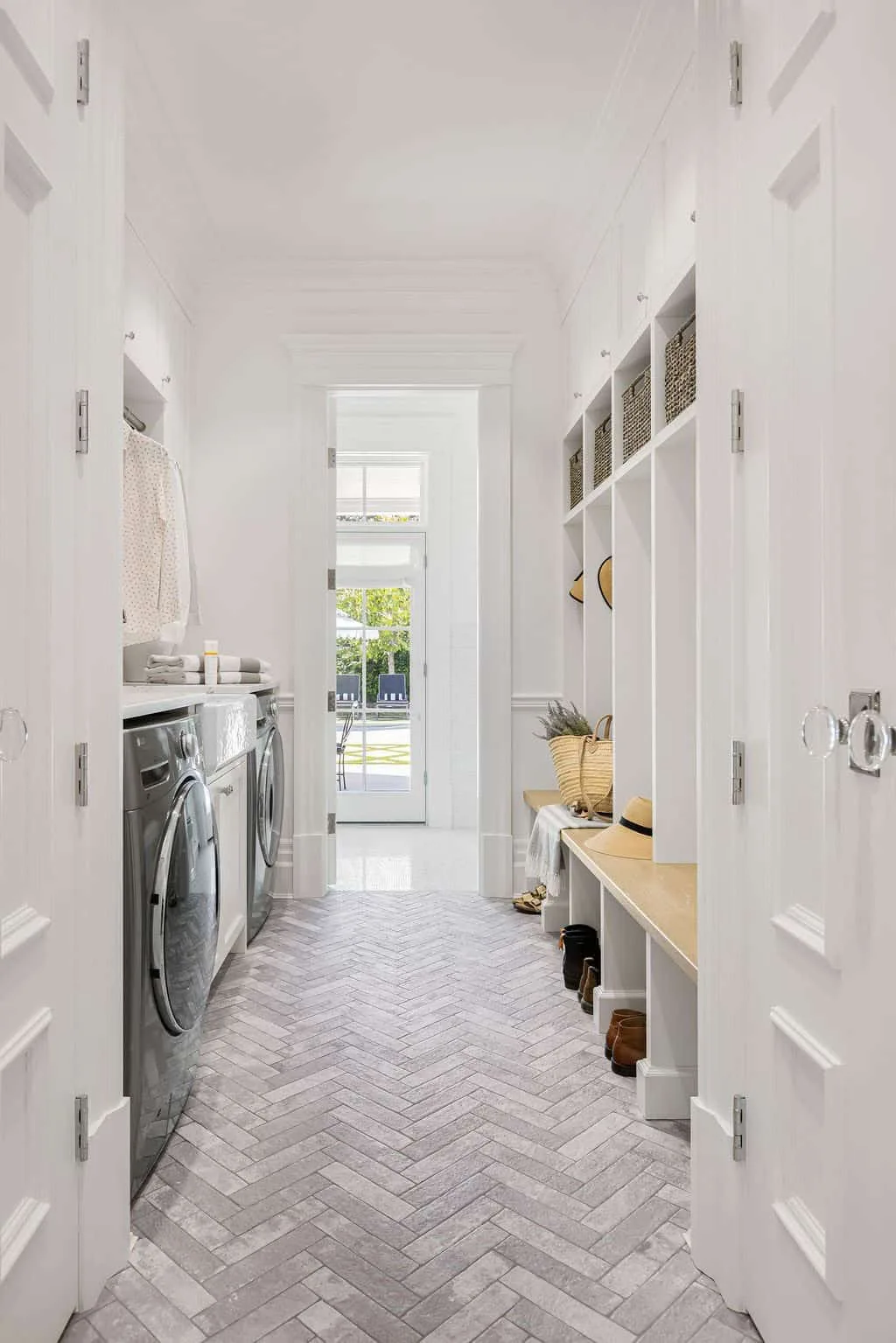
A narrow white passage combines laundry appliances on one side with bench seating and coat storage on the other. Pale herringbone flooring gives the long route a gentle rhythm, while high cupboards make use of the vertical space. A glazed door at the end brings in daylight. The restrained palette allows the practical work areas to feel connected rather than visually divided.
In a combined room, plan appliance-door clearance before committing to the bench depth. You need space to carry laundry past someone putting on shoes. Keep damp coats away from folded clothes and use clearly separated storage for detergents and outdoor accessories. Check the ventilation and appliance installation requirements with the relevant suppliers rather than assuming a narrow photographed layout will suit your machines.
IDEA 05 / 20
Use a Peg Rail Beside a Divided Door
 SaveSupport Non AI Creator
Source: maisondecinq.com
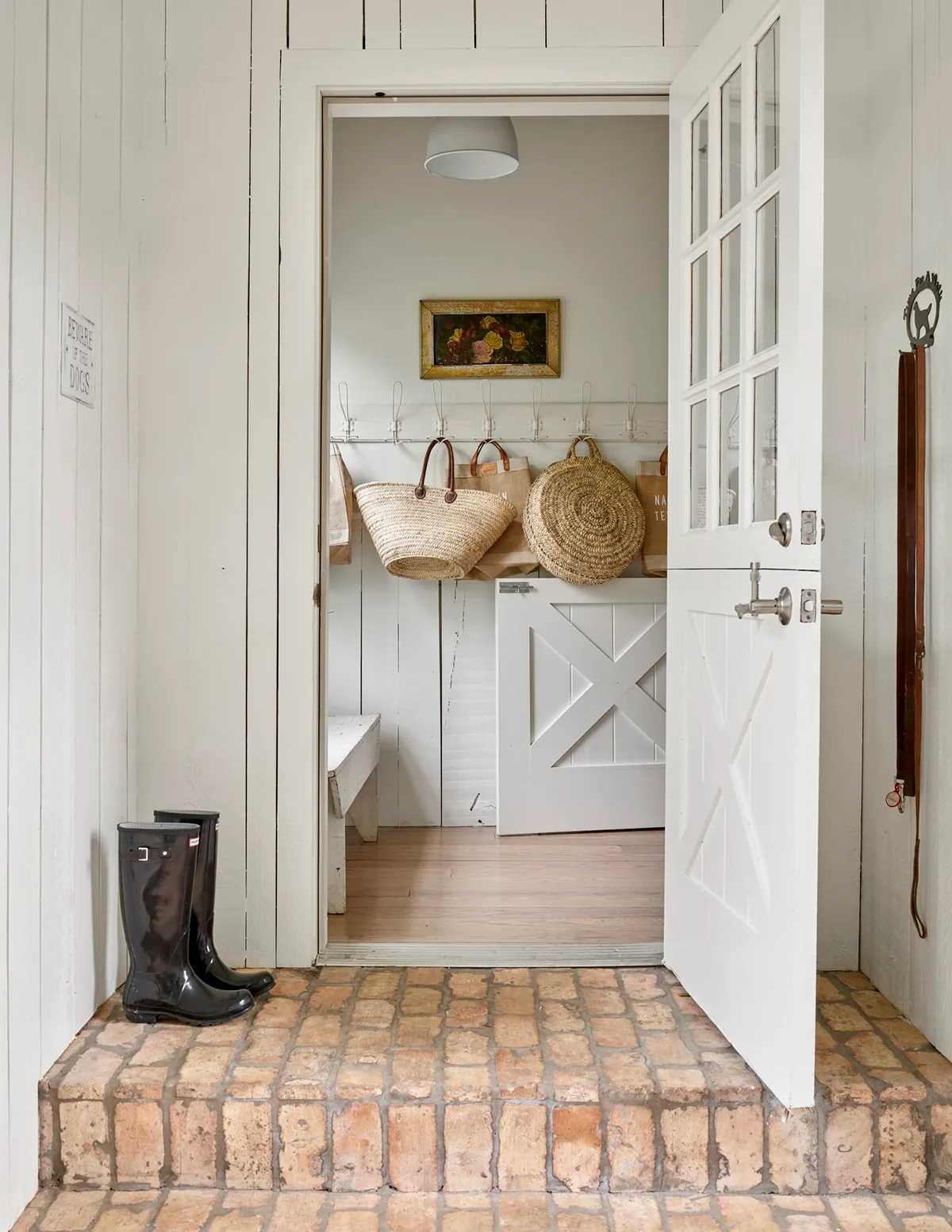
A white divided door opens across a brick-toned step into a simple paneled mudroom. Woven bags and a hat hang from a peg rail below a framed still-life picture. A pale bench keeps the room useful without extensive built-ins. The combination feels relaxed and country-inspired through a few familiar forms: painted boards, a traditional door, baskets and modest artwork.
A peg rail is an adaptable way to add storage without covering every wall in cabinetry. Fix it securely for the weight of the bags you actually carry. Keep artwork away from coats that could brush against it, and leave the doorway step free of stored shoes. Assess any divided door with an installer, including its locking arrangement, weather seals and the space needed to open each section.
PART 02
Make the Entrance Feel Welcoming
IDEA 06 / 20
Keep Pet Washing Close to the Entrance
 SaveSupport Non AI Creator
Source: maisondecinq.com
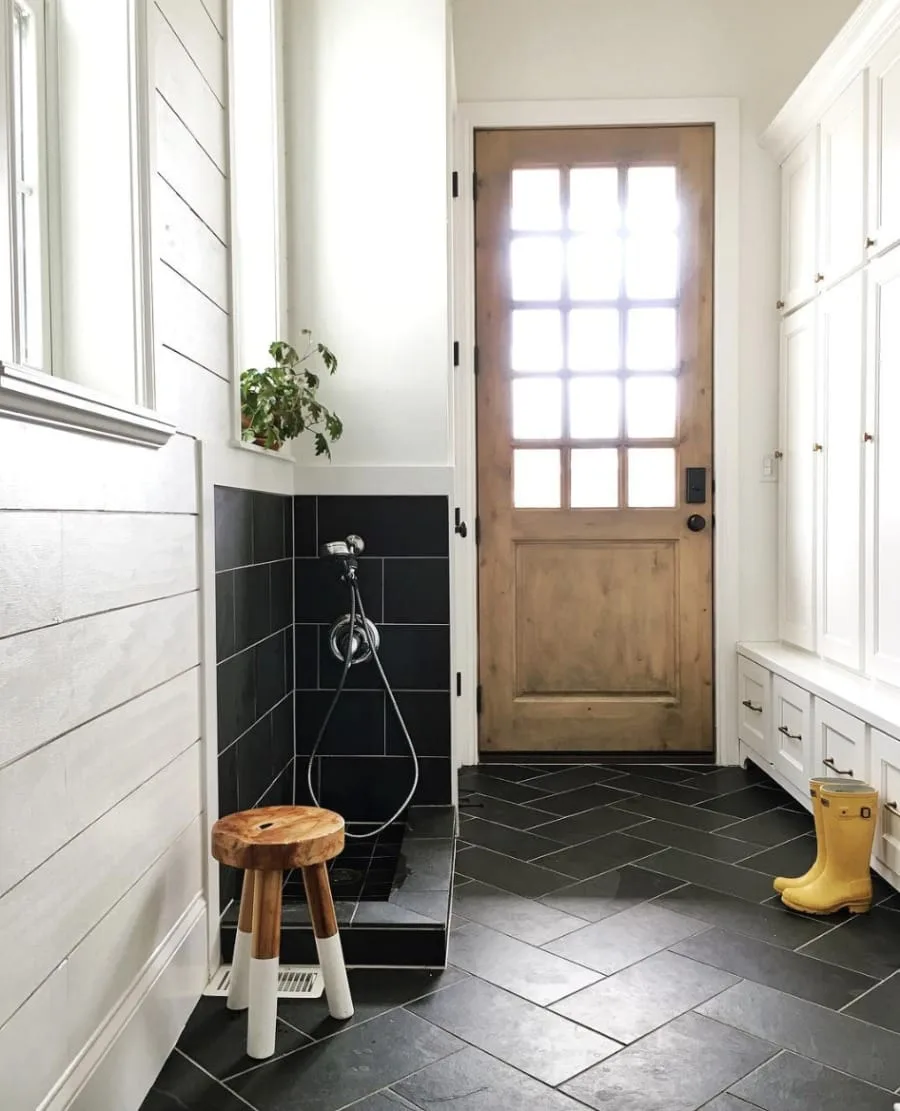
A dark tiled washing recess sits close to the glazed entrance door, with a small stool and handheld shower inside. White horizontal paneling and a pale storage bench keep the surrounding room lighter. The dark floor visually connects the washing area to the passage. A warm wooden door softens those darker surfaces and gives the practical room a more traditional character.
A pet-washing station needs proper drainage, waterproofing and plumbing, not just the right decorative tile. Plan those details with a qualified installer and check how easily you can help your own pet into the recess. Keep towels within reach but out of direct splash. Leave a dry route from the door to the bench, and choose the floor for its suitability when wet as well as its appearance.
IDEA 07 / 20
Make a Window Seat the Quiet Center
 SaveSupport Non AI Creator
Source: maisondecinq.com
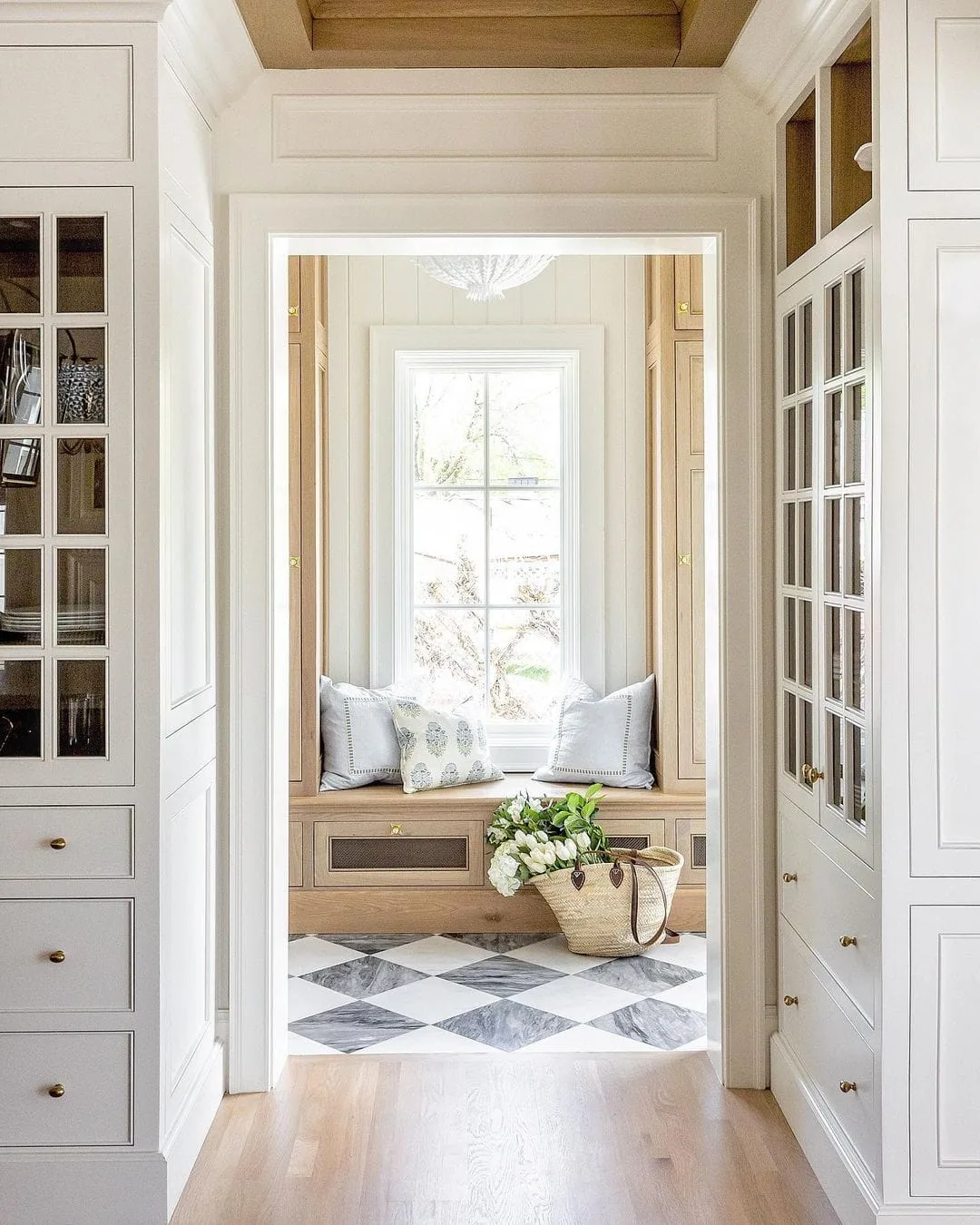
A cushioned window seat sits between pale glass-front cupboards, forming a quieter center within a storage-filled passage. A checkerboard floor marks the seating area, while a wooden ceiling detail brings warmth overhead. The glass cabinet fronts show carefully arranged contents rather than hiding everything. A woven bag and small flowers add country character without needing additional furniture in the narrow route.
Glass-front storage works best for items you are happy to see daily. Use solid-front sections for less orderly gear, and check that cupboard doors can open without blocking the seat. Choose washable cushion covers if this is where outdoor shoes are removed. Keep window handles accessible behind the cushions, and avoid placing breakable flowers where a bag or coat could knock them as someone passes.
IDEA 08 / 20
Bring Blue Florals Into a Small Mudroom
 SaveSupport Non AI Creator
Source: maisondecinq.com
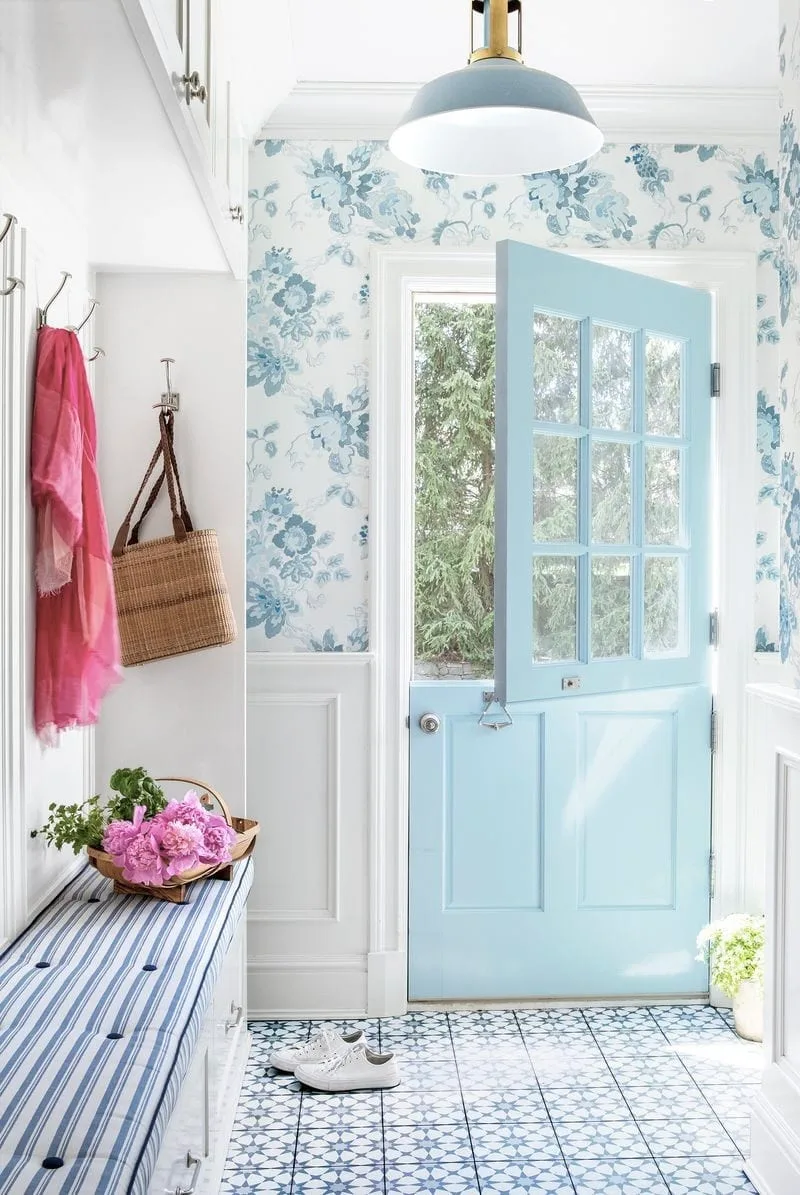
Blue floral wallpaper surrounds a pale blue divided door, with white paneling protecting the lower wall visually. A striped bench cushion repeats the blue at a different scale, and a patterned floor adds another layer. The white cupboards remain simple so the small room does not depend on decoration everywhere. A blue pendant ties the door and wallpaper colors together above the entrance.
If you combine floral paper, stripes and a patterned floor, compare their samples together before ordering. A shared color can connect them, but each repeat should remain distinguishable. Use wallpaper where wet coats are unlikely to rub against it, and follow the specific paper’s cleaning instructions. Keep the bench cushion removable, and plan a practical mat at the entrance rather than expecting decorative flooring to catch dirt.
IDEA 09 / 20
Line a Narrow Room With a Single Storage Wall
 SaveSupport Non AI Creator
Source: maisondecinq.com
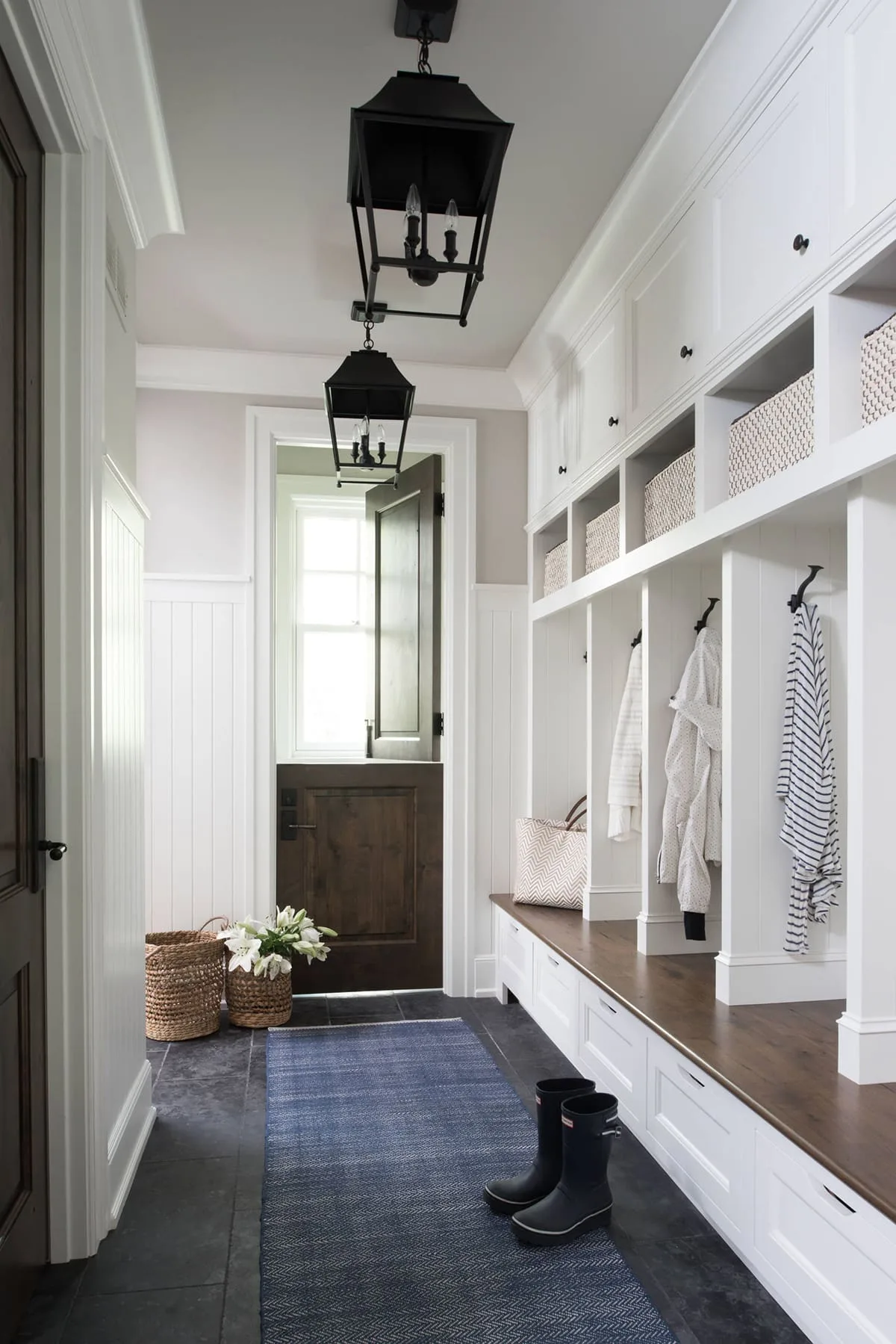
A long white storage wall holds baskets, hooks and drawers above and below a wooden bench. The opposite side stays comparatively clear, preserving the narrow passage. Two black lanterns lead the eye toward a dark divided door, and a blue runner softens the floor. The room gains traditional character through the lights and door while keeping everyday storage straightforward.
In a narrow room, storage depth matters as much as the number of compartments. Check the route with drawers open and someone seated before designing a continuous bench. Choose a runner that stays securely in place and clears the door swing. Use upper baskets for dry accessories, keep a dedicated area for wet boots and avoid letting coats hang so far out that they reduce the walkway.
IDEA 10 / 20
Choose Pale Green for a Furniture-Like Built-In
 SaveSupport Non AI Creator
Source: maisondecinq.com
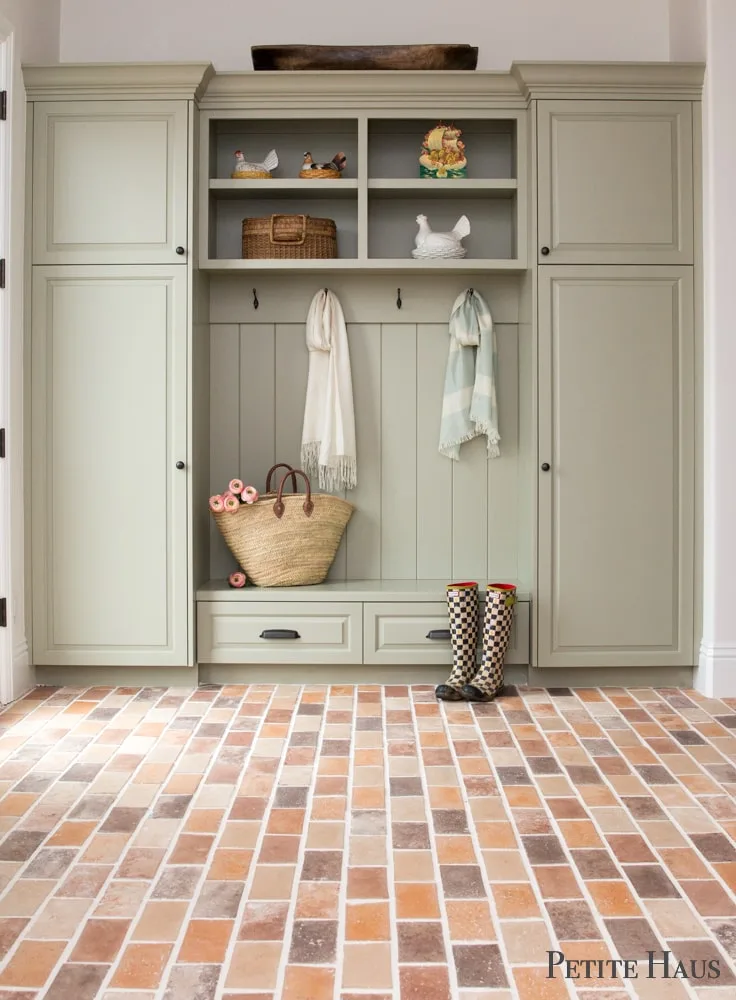
A pale green built-in is arranged like a large furniture piece, with tall cupboards at either side of a central bench. Small open shelves hold baskets and a few decorative objects above the coat hooks. Red brick-toned flooring makes the muted green feel warmer. The simple dark knobs and lower drawers keep the structure practical without introducing a shiny, highly decorative finish.
Test the green with the floor and nearby rooms before settling on the paint. A furniture-like arrangement can feel softer than many identical lockers, but its central opening still needs room for the coats you use. Keep display objects modest so storage does not become a styling exercise. Check cupboard depth for larger bags and leave wet footwear outside drawers until it has dried.
PART 03
Connect Benches, Floors and Utility Tasks
IDEA 11 / 20
Add a Freestanding Bench Between Tall Cupboards
 SaveSupport Non AI Creator
Source: maisondecinq.com
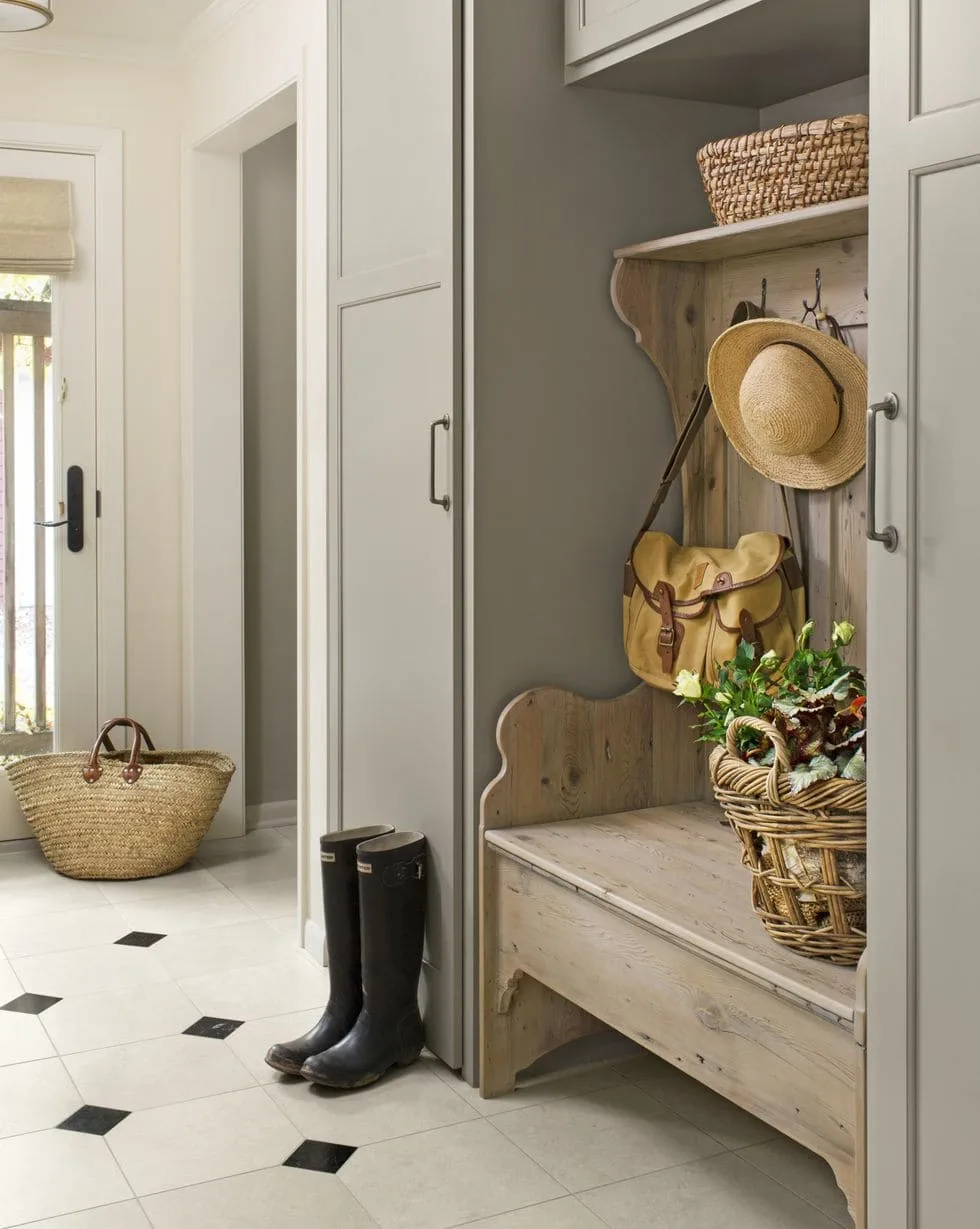
A rustic pale bench stands between taupe cupboards, adding an older-looking shape to otherwise simple storage. Hooks above the seat hold a bag and hat, while woven baskets bring softer texture. The pale floor has small dark accent squares that give the passage a traditional rhythm. The bench makes the room feel furnished rather than built entirely from matching cabinet modules.
Choose a freestanding bench for stability and comfort before its aged appearance. Check that the seat can withstand regular use and that projecting arms or feet do not obstruct the doorway. Leave part of it free for sitting instead of filling the surface with baskets. Tall cupboards can handle hidden storage, allowing the hooks to remain a small daily-use area rather than a crowded wall of coats.
IDEA 12 / 20
Turn a Corner Into a Continuous Bench
 SaveSupport Non AI Creator
Source: maisondecinq.com
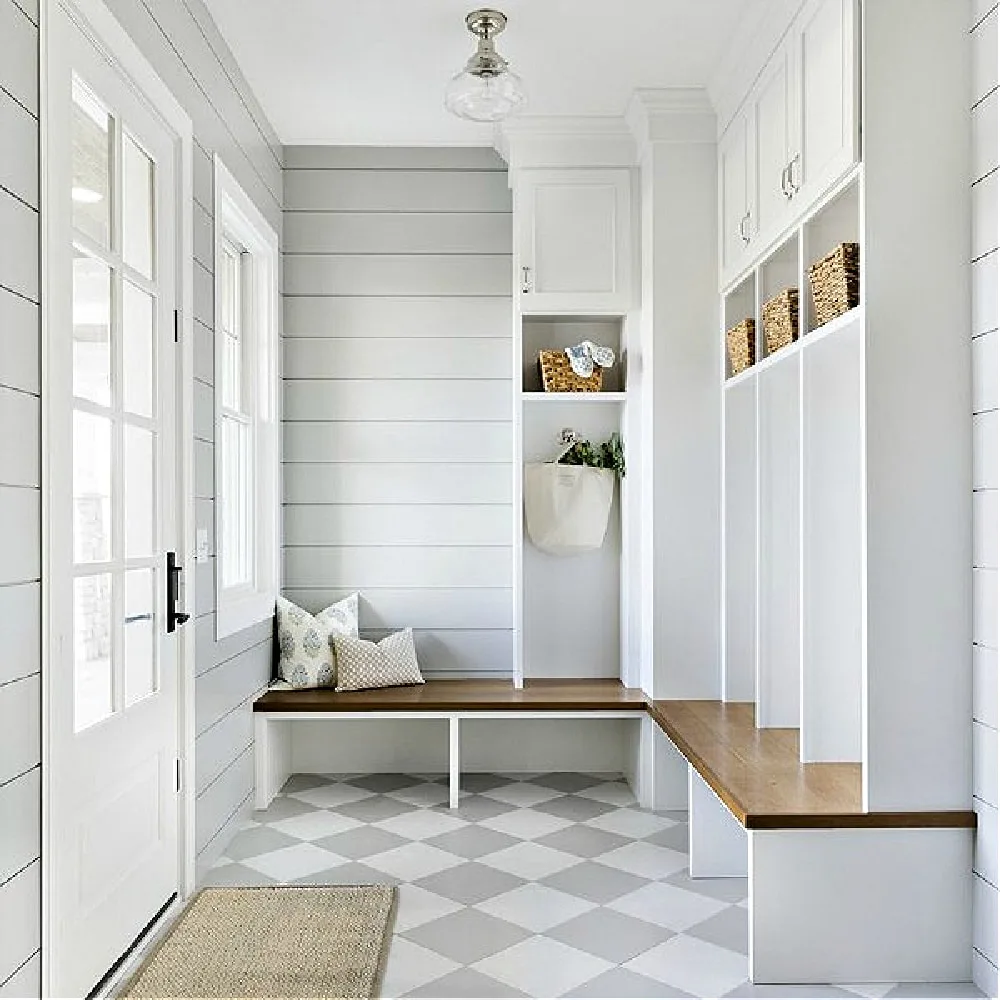
A wooden seat turns the corner beneath white cubbies, making use of two walls without adding a separate chair. Pale checkerboard flooring and white horizontal wall boards keep the small room bright. Woven baskets occupy the upper openings, and the spaces below the bench stay open. The glazed door and nearby windows provide much of the room’s light and give the storage a lighter setting.
A corner bench can provide flexible seating, but check which part is easiest to reach when the door is open. Keep the main sitting area free of cushions and bags during busy routines. Size lower openings around your tallest boots and allow them to dry before storing them closely together. If the floor is patterned, choose a simple entrance mat so the two surfaces do not compete.
IDEA 13 / 20
Keep the Middle Clear in a Double-Sided Mudroom
 SaveSupport Non AI Creator
Source: maisondecinq.com
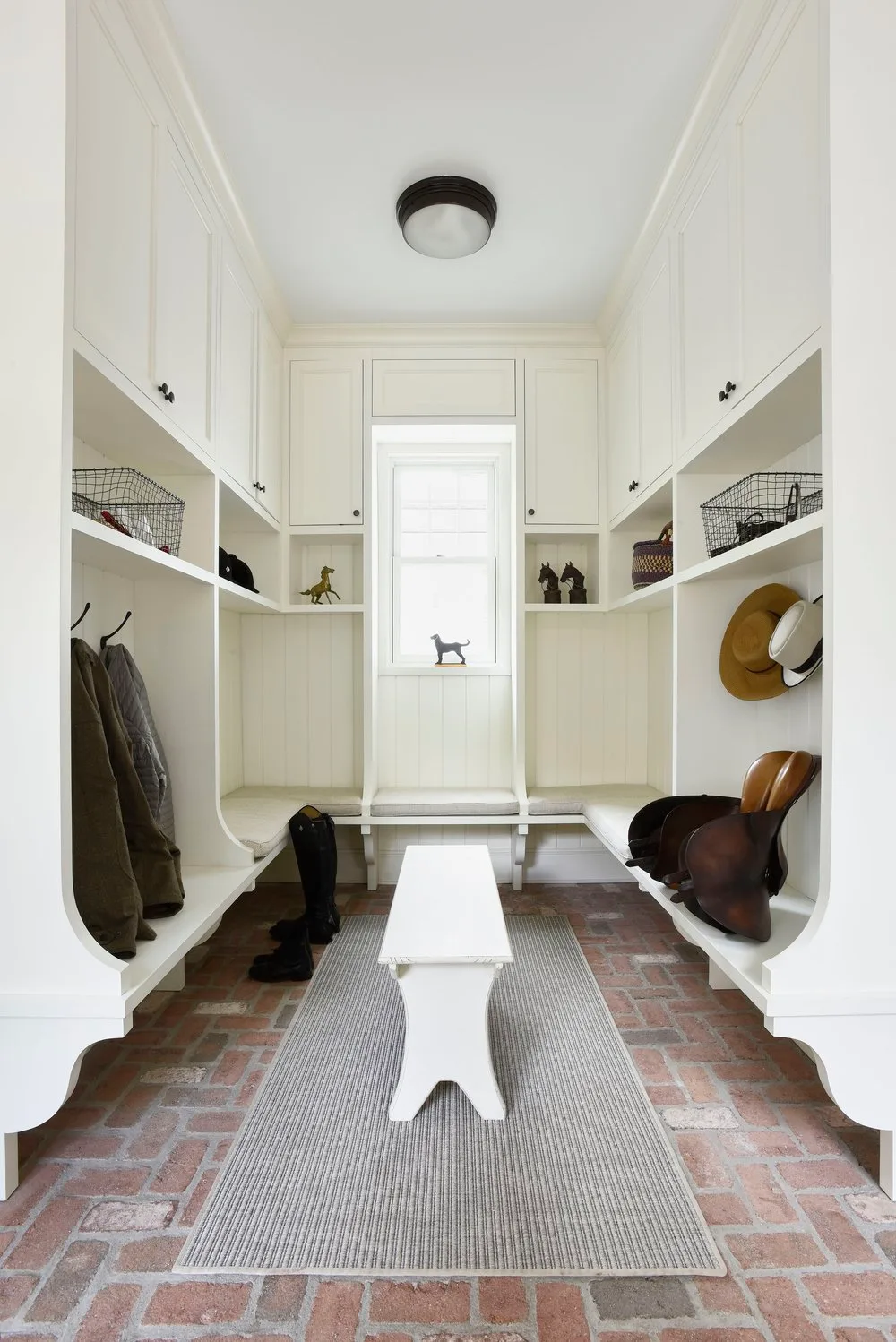
White benches and storage openings line both sides of this mudroom, with a window centered at the far end. Curved partitions soften the coat bays, while red brick-toned flooring adds warmth to the mostly pale room. Hats, boots and riding gear have visible places. A narrow freestanding bench occupies the center, but most storage remains against the walls.
Only add a central bench if the remaining routes work with people seated and bags in hand. A double-sided layout can become crowded quickly when coats project into the passage. Plan heavier equipment at a convenient height and keep the window accessible. The curved dividers add character, but cleaning access between compartments should remain straightforward. Treat the floor’s texture and maintenance as a separate practical decision.
IDEA 14 / 20
Soften White Paneling With a Striped Seat
 SaveSupport Non AI Creator
Image credit: Yelena Gerts House of Style and Design
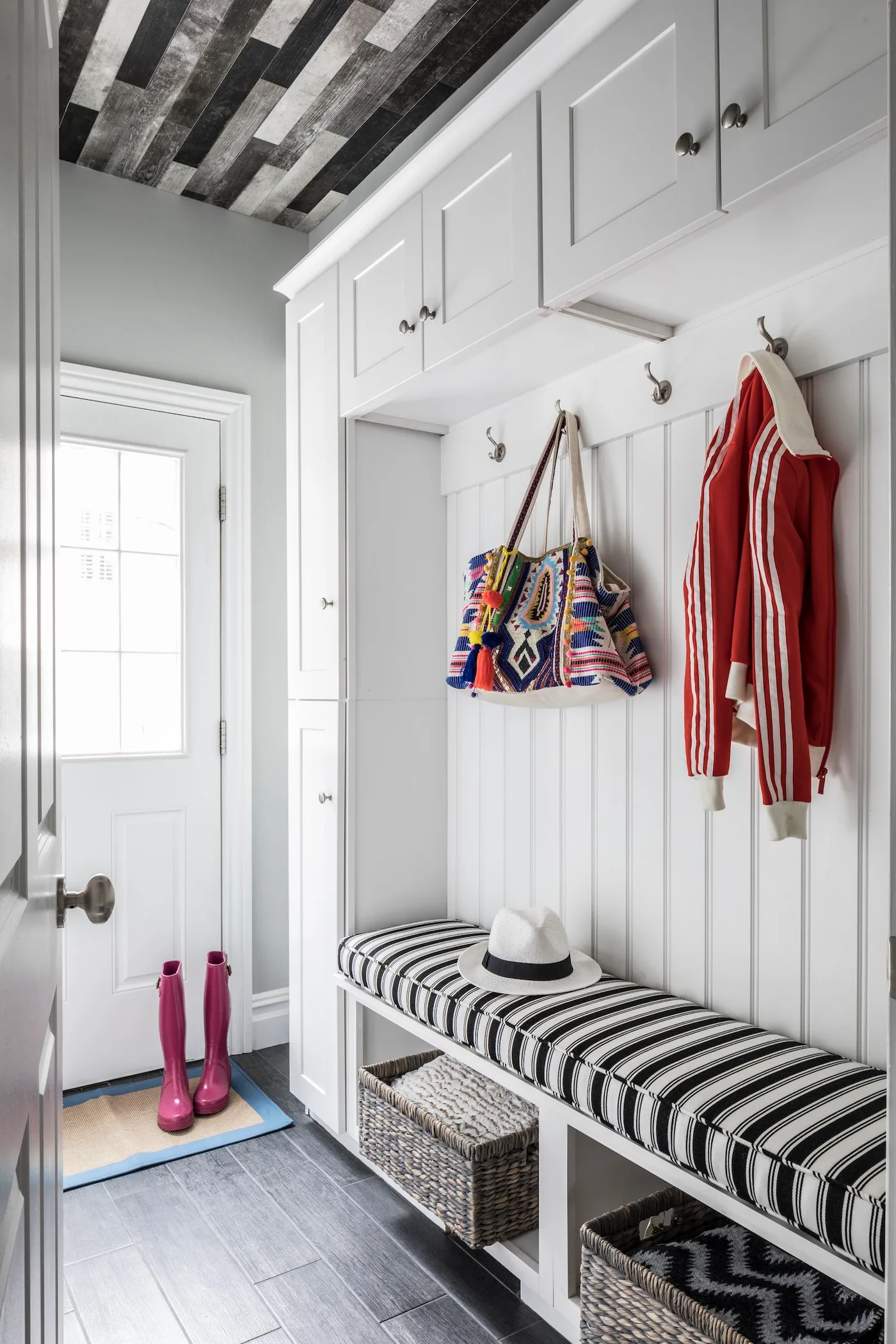
Black-and-white striped upholstery gives a white paneled bench a more furnished appearance. Overhead cupboards hide some storage, while hooks and woven baskets below the seat hold daily gear. The ceiling adds a darker striped effect of its own, making the simple palette feel more layered. Color comes mainly from the hanging bags and a pair of bright boots near the door.
Striped fabric can be a useful alternative to a floral when the room already has many cabinet lines. Choose a removable cover and check the care instructions before using it where damp clothing may land. Keep a small boot tray near the door rather than beneath a fabric cushion. Make sure upper doors can open comfortably without requiring anyone to stand on the bench.
IDEA 15 / 20
Use Warm Flooring in a Combined Utility Room
 SaveSupport Non AI Creator
Image credit: Nadia Watts Interior Design/Photograph Emily Minton-Redfield
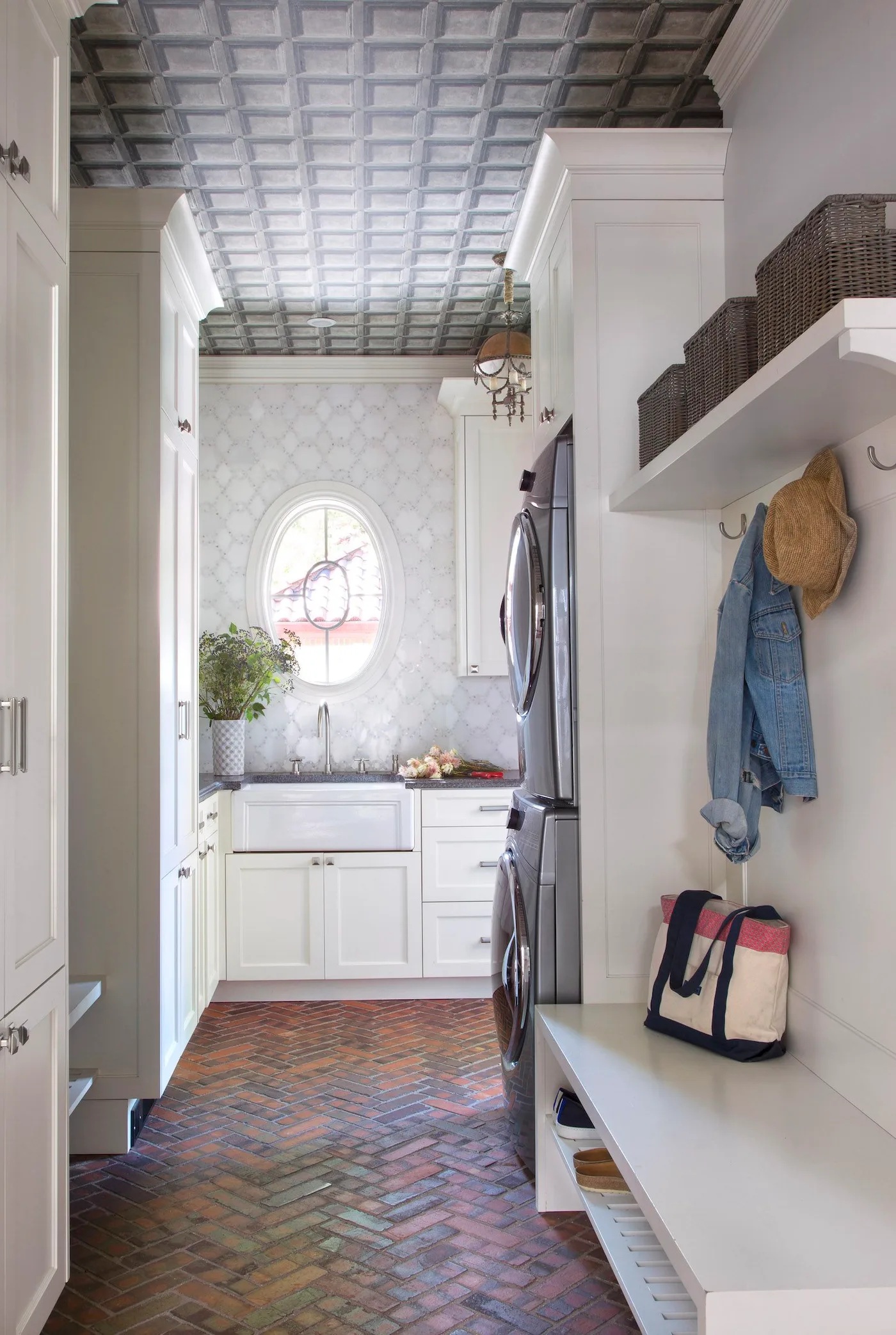
Warm herringbone flooring runs through a white combined laundry and mudroom. Coat hooks and a bench occupy one side, with laundry appliances opposite and a sink at the far end. The patterned ceiling brings unexpected detail above the practical fittings. Baskets and a dark-trimmed bag add texture without obscuring the mostly plain cabinet fronts.
A combined room works better when the shoe-changing area and laundry tasks have clear boundaries. Check appliance access and the route to the sink before choosing the bench depth. A decorative ceiling should not complicate access to lighting or other fittings. Keep laundry supplies stored appropriately for your household, and choose the flooring according to moisture, cleaning and installation requirements rather than inferring its performance from the pattern.
PART 04
Bring Character to Everyday Organization
IDEA 16 / 20
Pair Blue Built-Ins With a Carved Wooden Chest
 SaveSupport Non AI Creator
Image credit: Morgante Wilson Architects
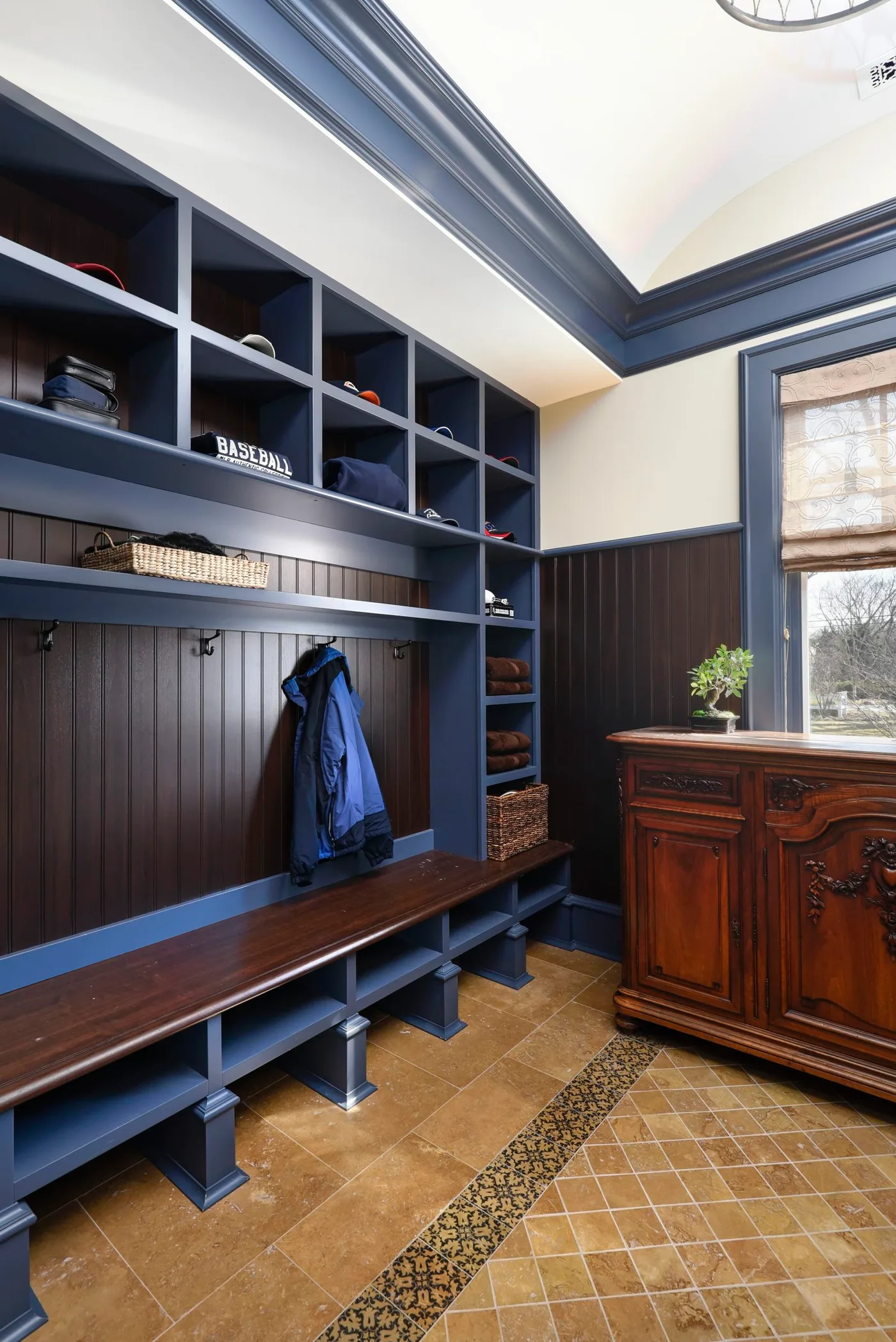
Blue shelves and coat bays form a structured storage wall beside a carved wooden chest. The bench seat and chest introduce warmer tones against the blue, while paneling gives the back wall a finer rhythm. A patterned strip in the floor adds another traditional detail. The room feels more collected because the chest differs from the built-in storage instead of repeating its style exactly.
A decorative chest can store scarves or other dry accessories while bringing character into a utility space. Check that its drawers remain reachable beside the bench and protect the surface from wet bags. Blue paint can help older wood furniture stand out, but compare samples to avoid a clash in undertones. Keep the open shelves organized by everyday use rather than trying to fill every compartment with objects.
IDEA 17 / 20
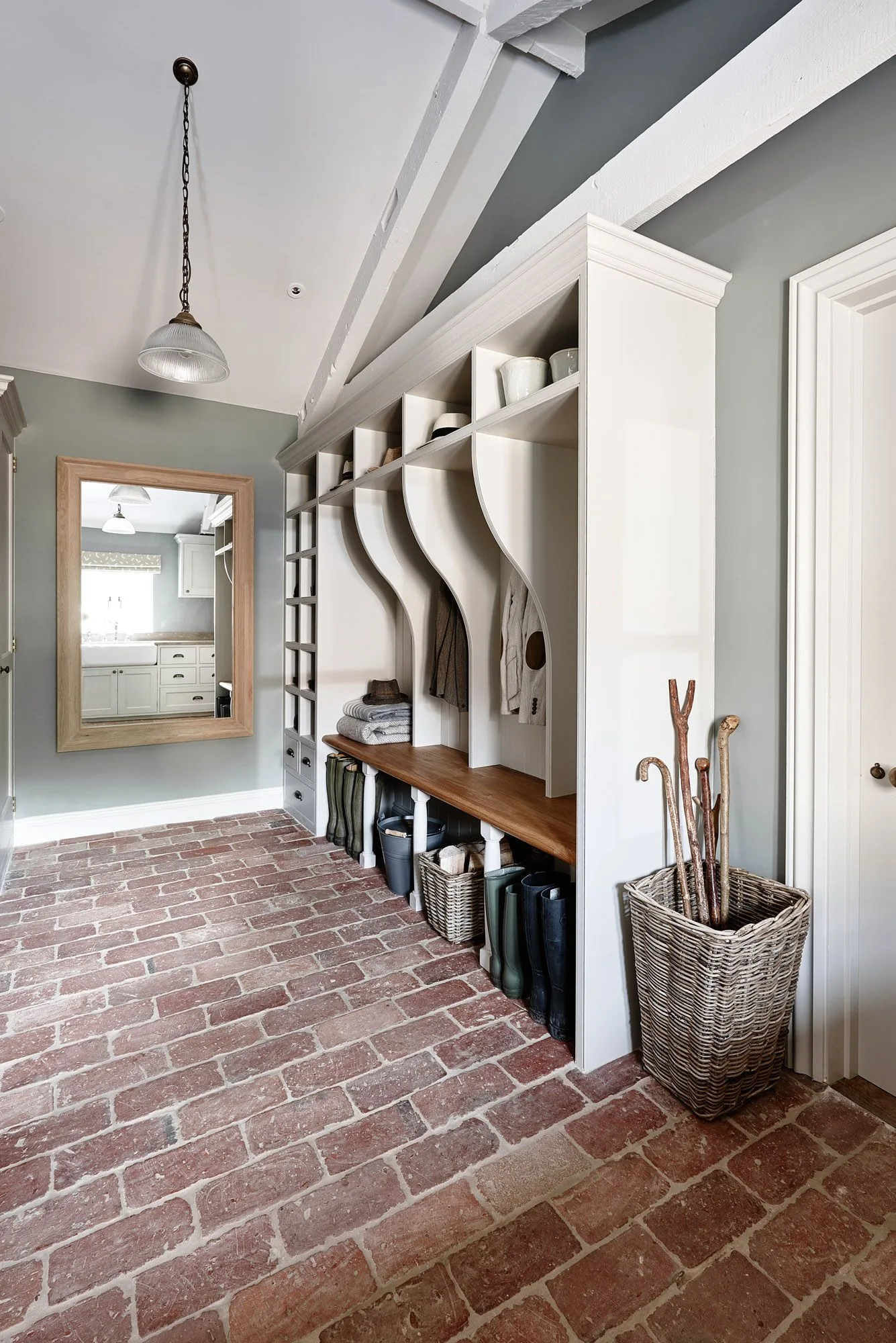
Use Curved Dividers to Soften Practical Storage
 SaveSupport Non AI Creator
Image credit: Sims Hilditch
Curved white dividers shape individual coat bays above a wooden bench. Gray walls and red brick-toned flooring create a restrained country palette, while baskets hold smaller items beside and beneath the seats. A tall mirror brings more light into the passage and offers a useful place to check outdoor clothing. The curved edges make the practical shelving feel less rigid.
Consider rounded or shaped dividers when you want a traditional feel without highly decorative cabinet doors. Their profile still needs to leave enough shoulder room for hanging coats and a comfortable seat below. Position the mirror where bags are unlikely to strike it. Keep basket handles easy to grasp, and assess the floor with a physical sample for cleaning and comfort before committing to its rustic appearance.
IDEA 18 / 20
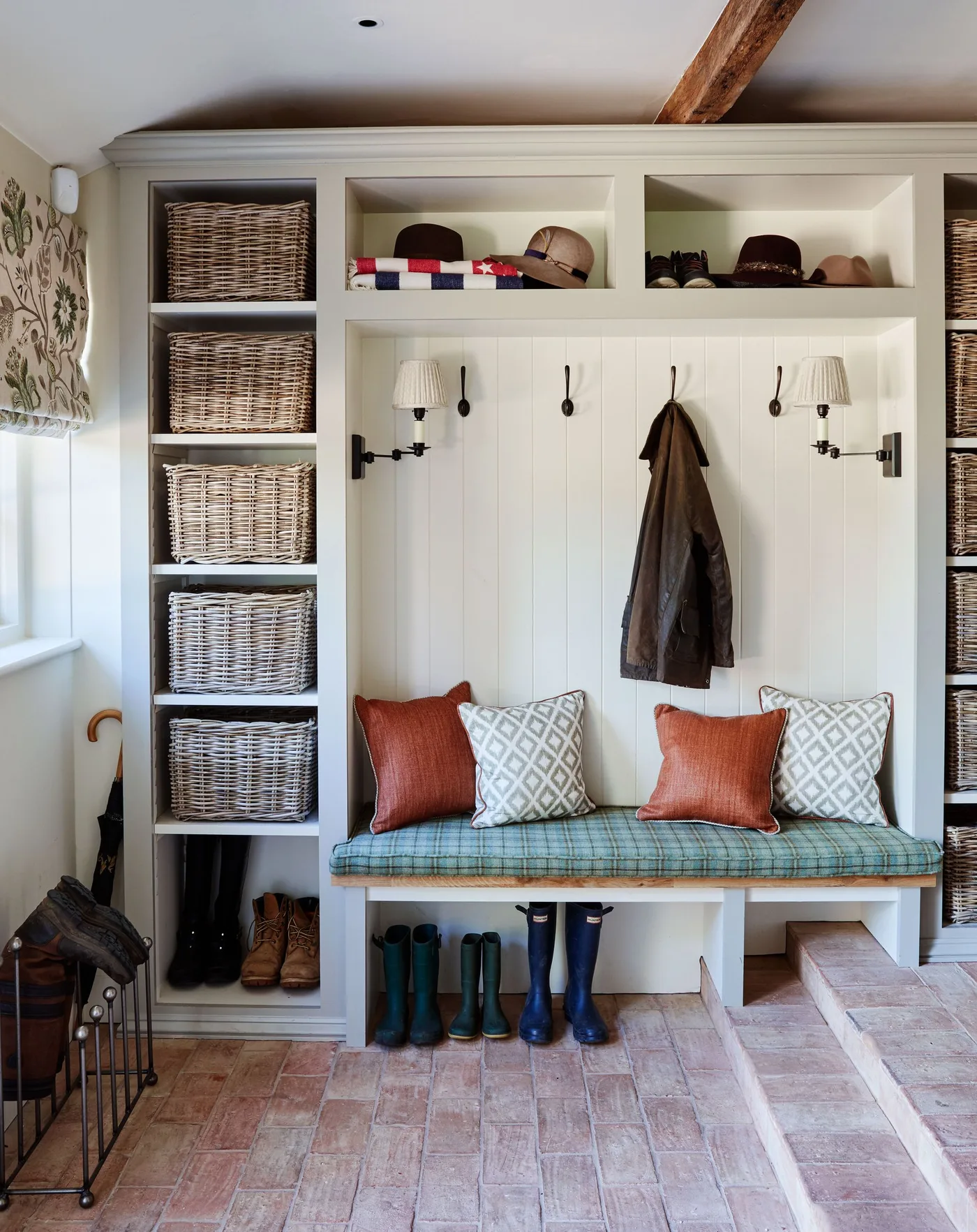
Make the Bench Comfortable Without Losing Storage
 SaveSupport Non AI Creator
Image credit: Sims Hilditch
A blue checked seat cushion and red pillows make a white storage bench feel inviting. Tall basket shelves flank the coat-hook wall, while boots remain visible in the open spaces below. Small shaded wall lights and an exposed ceiling beam add traditional character. The room balances a comfortable seat with practical storage, although the cushion group occupies much of the available sitting area.
Keep fewer pillows if several people need to use the bench at once. Washable covers are more practical than fabrics that require delicate treatment in a busy entrance. Leave a clear place for boots rather than pushing them into a crowded lower opening. Plan wall lights where hanging coats will not touch them, and organize the baskets around real storage needs so the decorative seat does not reduce functionality.
IDEA 19 / 20
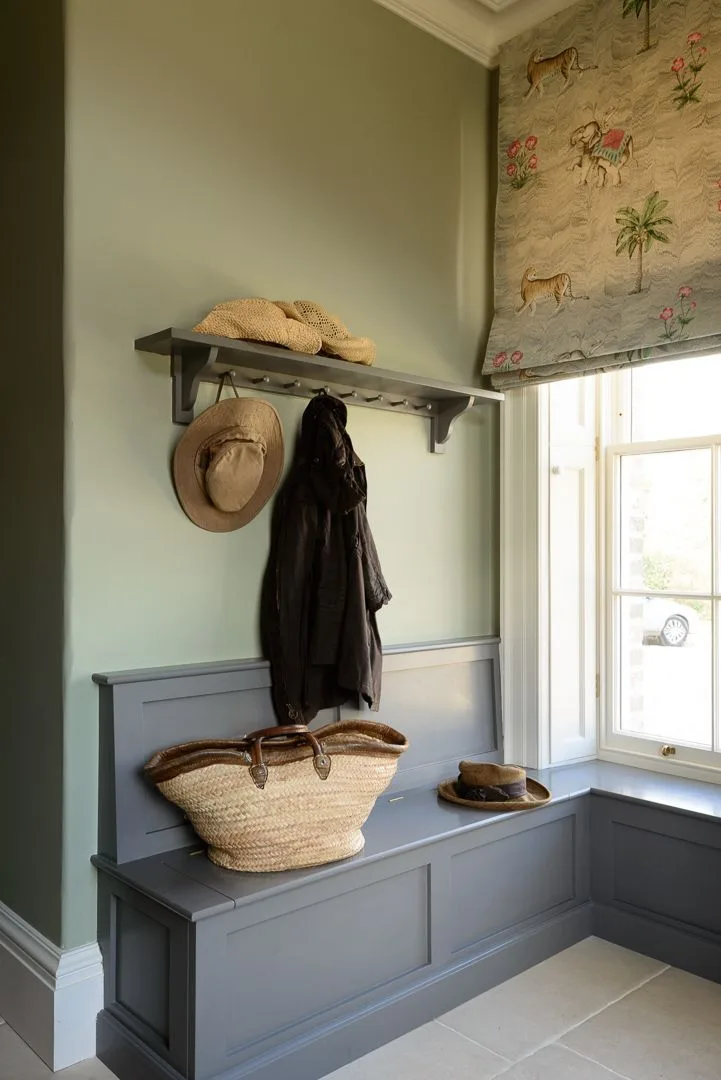
Choose a Simple Gray Bench Against Green Walls
 SaveSupport Non AI Creator
Image credit: deVOL
A gray paneled bench sits beneath a matching peg shelf against green walls. A woven bag and hanging coat show how little furniture is needed for a useful entrance corner. The patterned blind adds country detail around the window without covering the whole wall. Pale flooring and the clear area beneath the window keep the corner visually lighter than the painted bench.
This compact arrangement suits a smaller storage requirement, but decide where shoes and wetter items will go before relying on a single bench. Check the seat lid or access arrangement if you want hidden storage; the photograph alone does not establish how it opens. Keep the blind controls reachable. A modest number of hooks is easier to use when each has enough space for a coat to hang freely.
IDEA 20 / 20
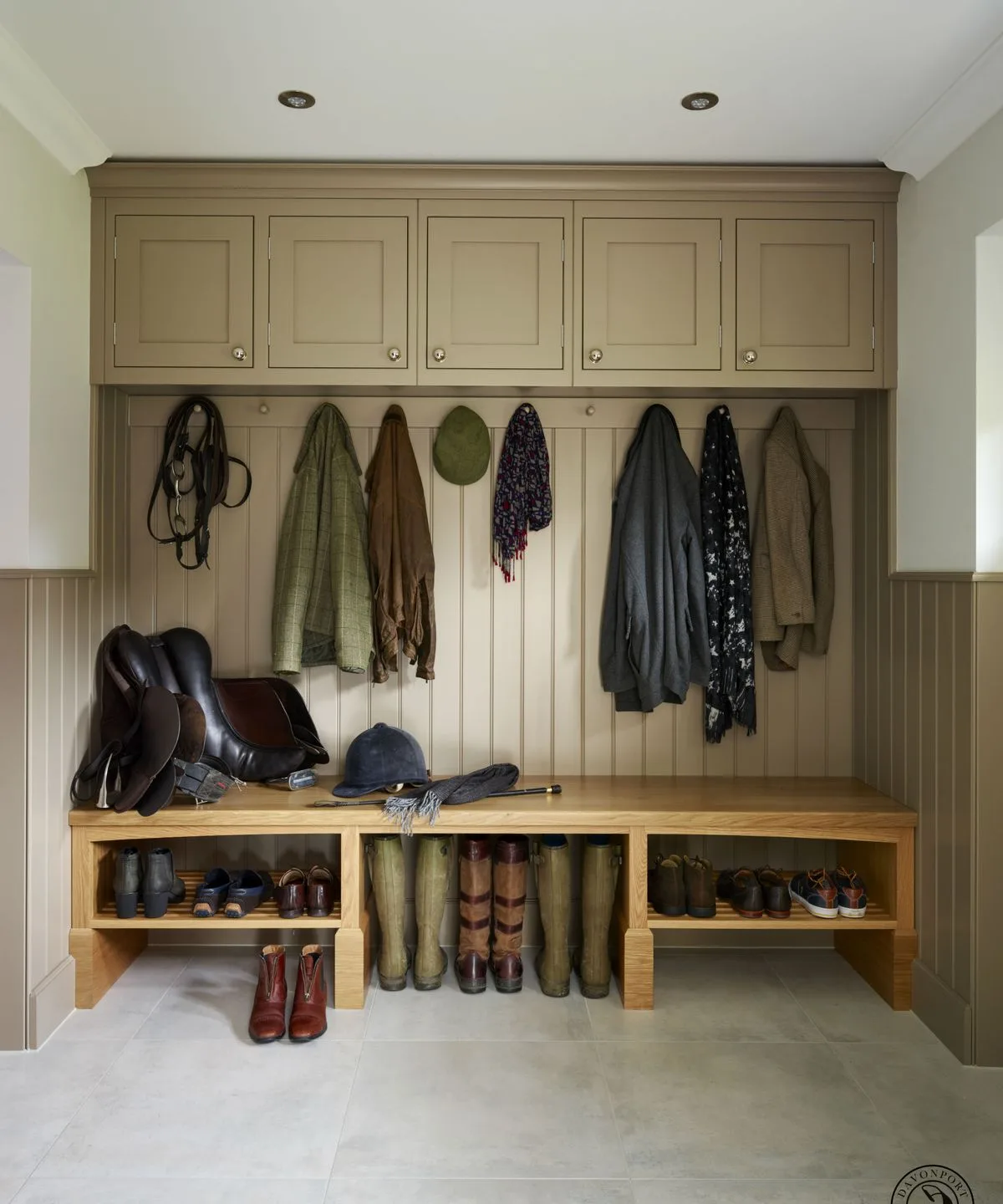
Give Boots Open Storage Below a Plain Seat
 SaveSupport Non AI Creator
Image credit: Davonport
Olive-toned cupboards sit above a paneled coat wall and a plain wooden seat. Open shelves below hold boots and smaller shoes, with a taller central space accommodating longer pairs. The muted paint and warm seat create a country-inspired palette without extra decorative objects. The arrangement keeps most gear visible, making it easy to see where something belongs when entering or leaving.
Measure your own boots before setting shelf heights, and leave space for damp footwear to dry rather than packing it tightly. Store dry seasonal items in the upper cupboards and keep the daily coat hooks within easy reach. A plain seat is easy to keep clear, but any saddle or bulky equipment shown here would need its own appropriate support and should not replace usable sitting space.
BRING IT ALL TOGETHER
Keep Country Character Comfortable to Use
Start with a clear sitting area, secure coat hooks and storage sized for the gear your household carries. Put wet footwear near the entrance and keep dry accessories separate. Check door swings, cupboard access and the route through the room before adding furniture or decorative baskets.
Build the softer details around that working arrangement. Muted paint, a modest pattern, traditional light shapes and warm wood can bring character without filling every surface. Check cleaning instructions for floors, upholstery and wallpaper, and leave enough flexibility for coats and shoes to change with the seasons.