A Japandi-inspired bedroom can combine simple furniture with warmer textures and softer bed layers. Start with the parts you use every day: a comfortable bed height, reachable bedside surfaces, enough storage and window coverings that suit your sleeping routine. A quieter room still needs convenient places for the belongings you keep close.
These photographs show wooden wall details, muted colors, woven accents and smaller reading or work corners. Compare how much pattern you enjoy rather than choosing every feature from one room. Keep furniture movement and light control practical, and use fabric care and installation guidance for the actual products you select.
PART 01
Connect warm wood with quieter bed layers
IDEA 01 / 20
Balance Wooden Walls with a Soft Curved Bed
 SaveSupport Non AI Creator
Image credit: Rae & Heath Architects, Peter Lyons Photography
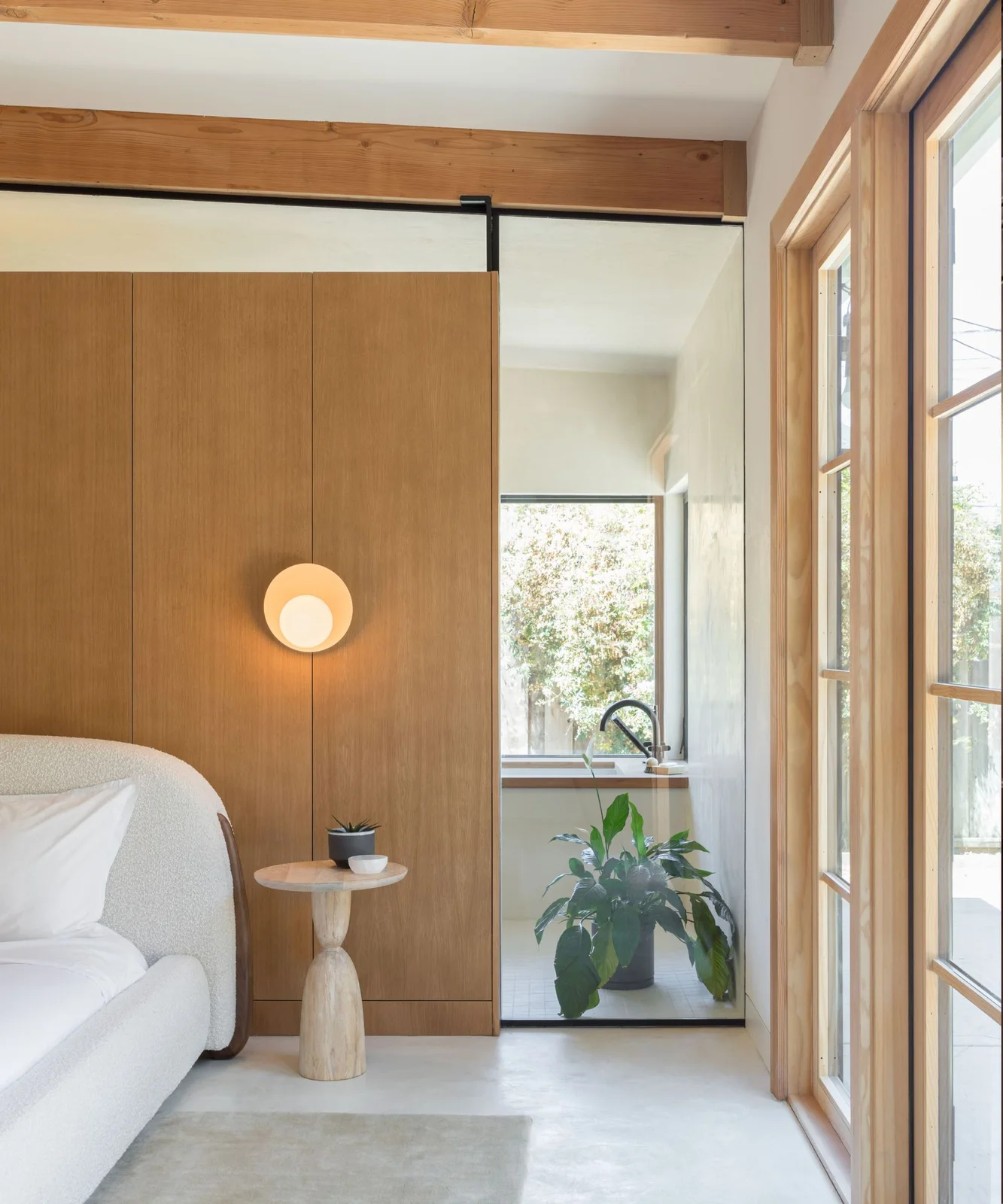
Wooden wall panels give the room a warm continuous backdrop, while the curved upholstered bed introduces a softer shape in front. A small round bedside table repeats the warmer finish without adding another long cabinet. The circular wall light keeps most of the table available for everyday belongings.
Choose the bedside table from the actual mattress height so it is easy to reach without leaning across the frame. Leave access to the glazed opening and its coverings clear. Bedrooms with paneling compare other ways to use a warm wall treatment while retaining a practical sleeping and storage arrangement.
IDEA 02 / 20
Layer Window Coverings Around a Pale Bed
 SaveSupport Non AI Creator
Image credit: Hillarys
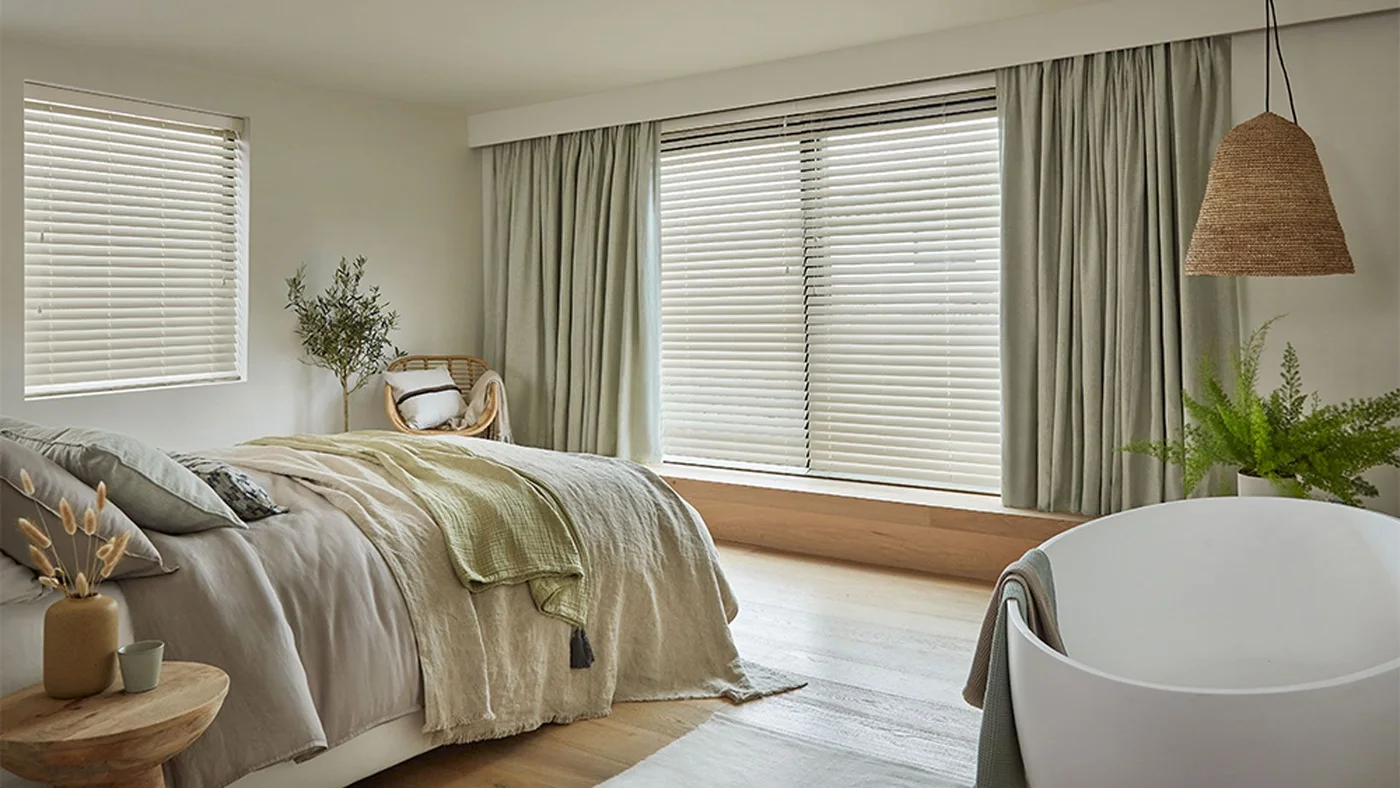
Pale bedding and green throws keep the bed related to the room’s quieter wall colors. Blinds and curtains provide two different window-covering layers around the broad glazed area. A woven pendant introduces a warmer texture overhead, while the round wooden bedside surface adds another smaller natural-looking outline.
Test nighttime privacy and morning light with the coverings fully closed before deciding whether both layers are needed. If bathing shares the room, plan moisture control and separation with appropriate advice rather than relying on the photo. Keep fabric and furniture positioned for comfortable window access and everyday cleaning.
IDEA 03 / 20
Keep Wooden Slats Within One Wall Area
 SaveSupport Non AI Creator
Image credit: Claude & Leighton
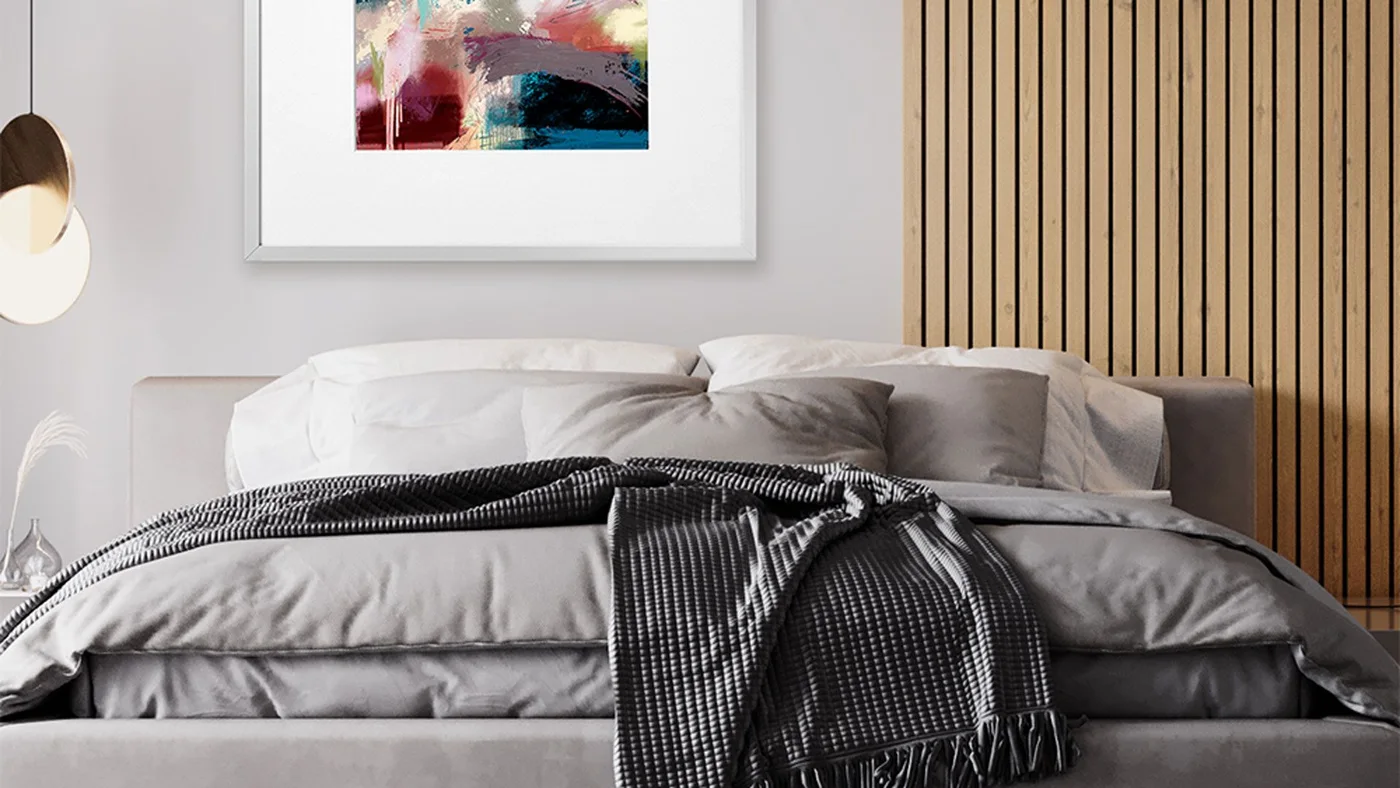
The wooden slats create a warm repeated pattern beside the paler bed wall. Gray bedding and a dark textured throw keep most fabric colors restrained, allowing the artwork to supply a smaller brighter accent. The rounded wall light introduces another soft shape against the straight slat edges.
Decide where the slatted area should stop before ordering panels, checking its position against the bed and any switches. Choose a suitable product and fixing method for your actual wall. Keep the remaining surfaces simpler if you want the slats to remain a detail rather than become the entire room’s pattern.
IDEA 04 / 20
Introduce Color Through Removable Bed Layers
 SaveSupport Non AI Creator
Image credit: Future PLC
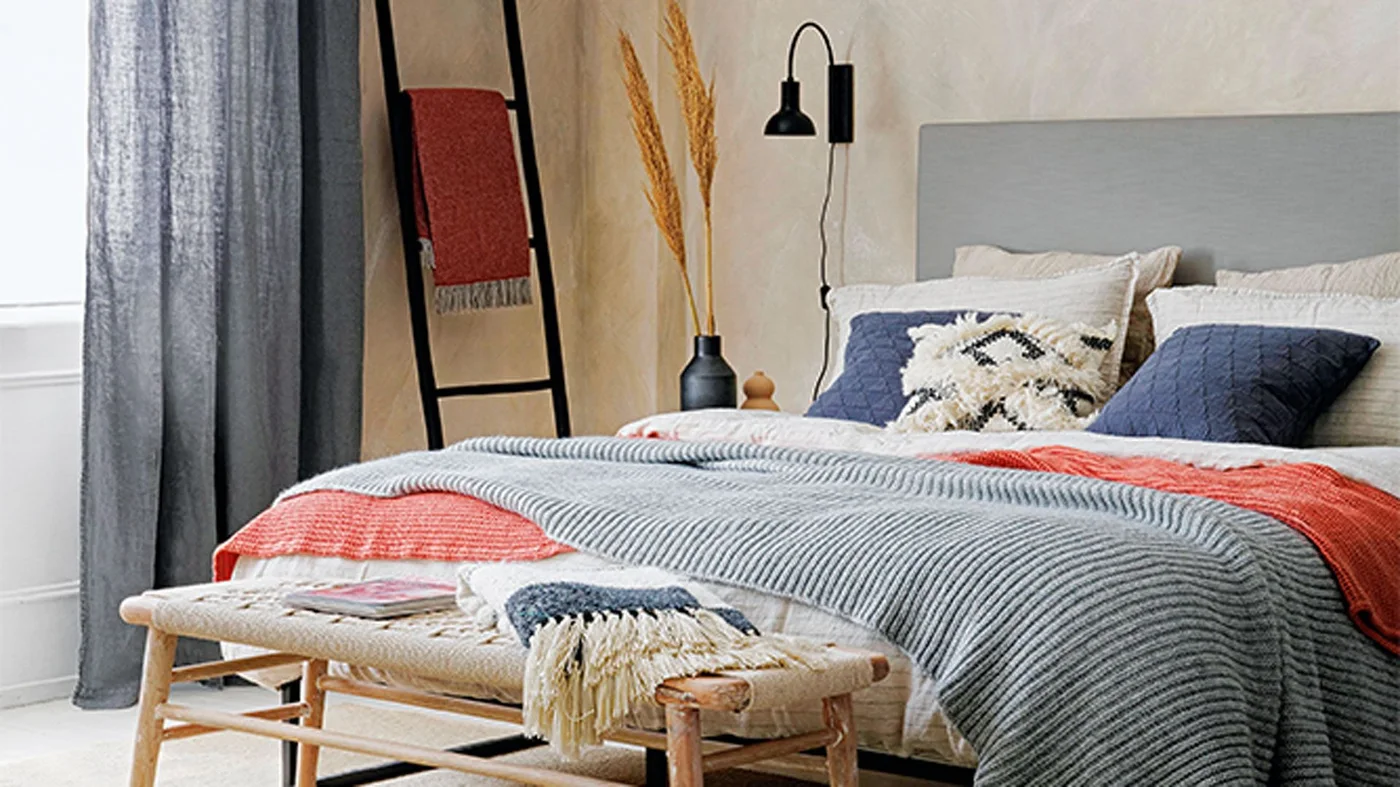
Coral and blue add smaller color areas across the bed without changing the pale wall or gray headboard. Textured throws supply most of the varied fabric detail. The wooden bench and dark ladder introduce different narrow outlines beside the bed, keeping those accents separate from the larger bedding surfaces.
Choose the number of decorative layers around how you make the bed each morning, leaving a practical place to put cushions at night. Keep a bench only if its size leaves clear movement around the frame. Follow the care instructions for each fabric rather than treating matching colors as matching washing needs.
IDEA 05 / 20
Use Muted Green Beside a Woven Bedside Table
 SaveSupport Non AI Creator
Image credit: Furniture and Choice
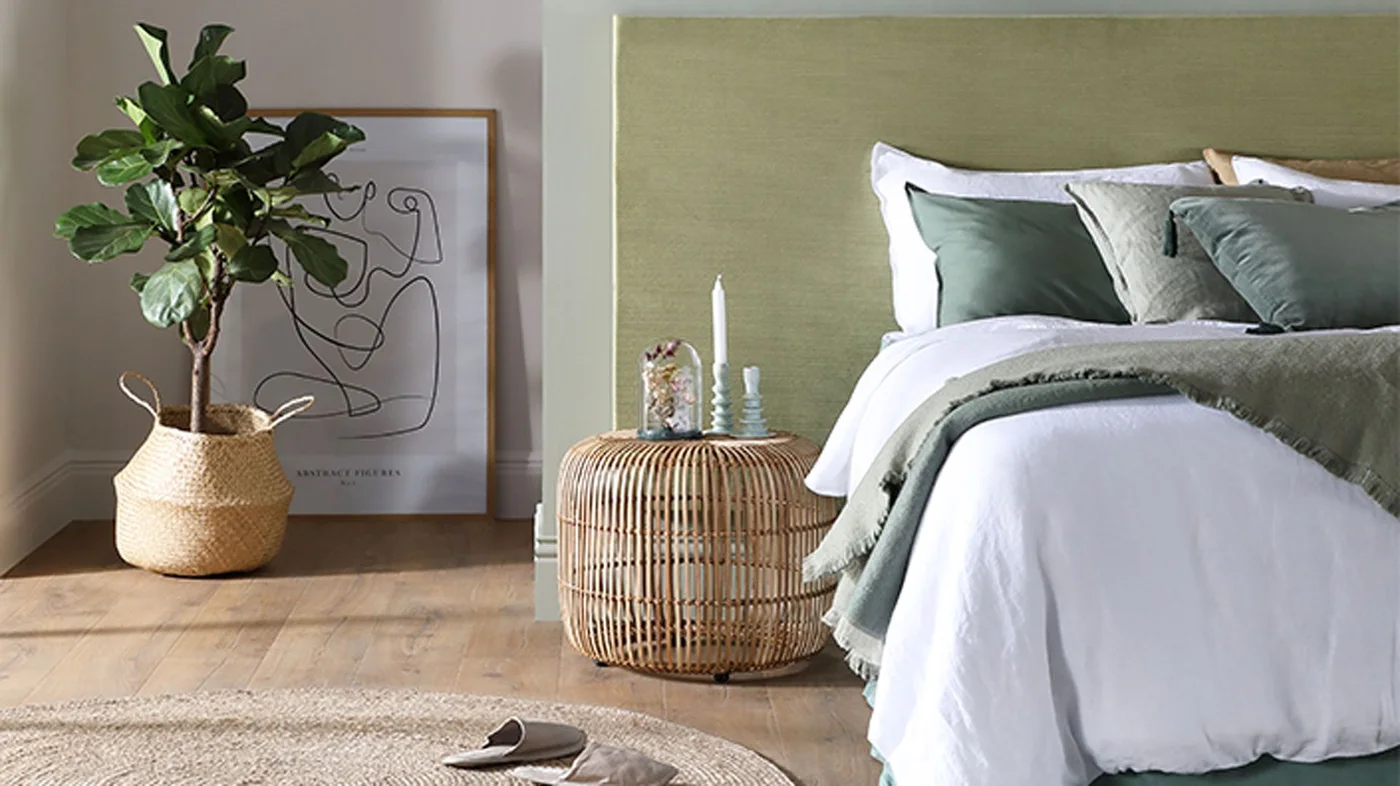
Muted green connects the bed wall to the smaller cushion and throw colors. The rounded woven table brings a different texture beside the mostly plain bedding, and the leafy plant repeats the green in another shape. The framed line drawing supplies a quieter alternative to a strongly colored artwork.
Try green samples beside the actual bedding under both daylight and evening lamps before choosing the full wall color. Check whether the bedside table provides a firm enough surface for your daily items. Green bedroom ideas compare more layouts when you want a similar palette with different storage or seating needs.
PART 02
Use patterned textiles and different bed backdrops
IDEA 06 / 20
Keep a Botanical Print Within the Bedding
 SaveSupport Non AI Creator
Image credit: FY!
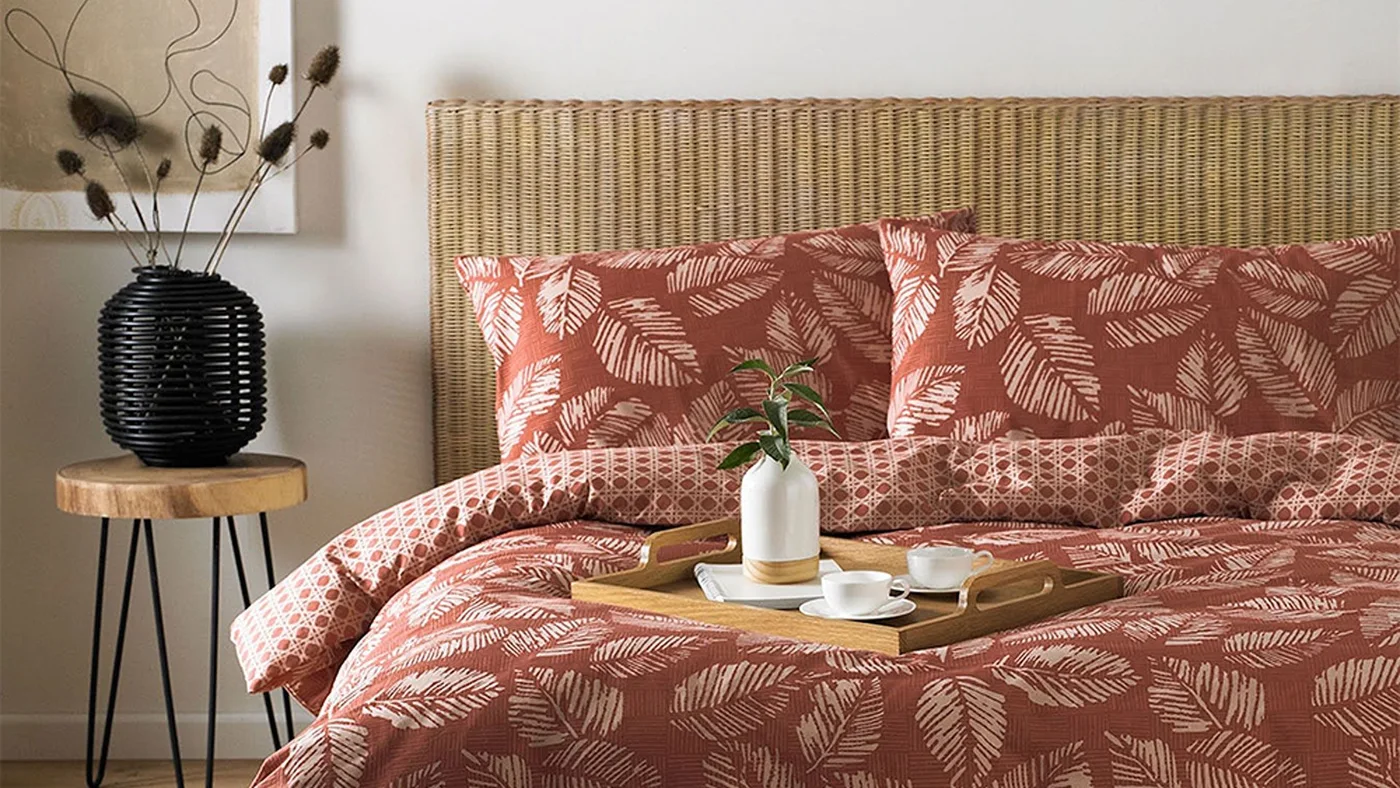
The red-brown botanical bedding gives this corner a warmer patterned focus. A woven headboard repeats a natural-looking texture without repeating the leaf design. The small table and black ribbed vase supply separate simpler shapes beside the bed, so the surrounding wall can remain relatively quiet.
Start with a patterned cover you enjoy, then compare it with plainer nearby surfaces before adding more prints. Keep a firm usable area on the bedside table rather than filling it with a large vase alone. Boho bedroom ideas show more woven furnishings and patterned textiles if you prefer a more layered variation.
IDEA 07 / 20
Connect Rust Bedding to a Wooden Backdrop
 SaveSupport Non AI Creator
Image credit: Getty Images | Victoriia Kovalchuk
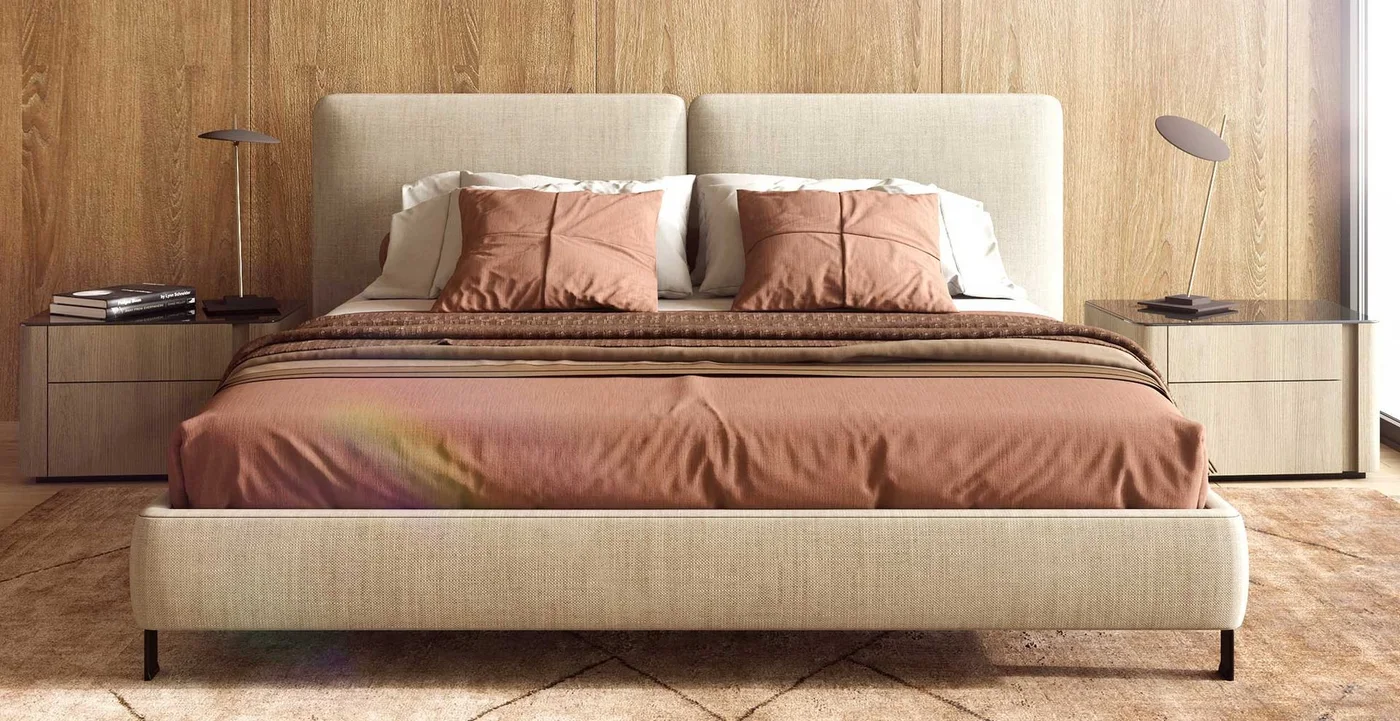
Rust-colored bedding stays close to the wall panels’ warmer tones, while the pale bed frame separates the lower furniture outline from that background. Two drawer cabinets provide closed bedside storage. Slim lamps add practical smaller shapes without covering much of the grain pattern behind them.
Choose bedside drawers around the items you need to put away, checking their movement with the bed in its final position. Compare warm bedding colors against wood samples so the combination does not become darker than you intended. Follow upholstery care guidance and leave access along the bed’s sides for changing linen.
IDEA 08 / 20
Try Darker Wood with Quiet Green Bedding
 SaveSupport Non AI Creator
Image credit: Yarn Collective
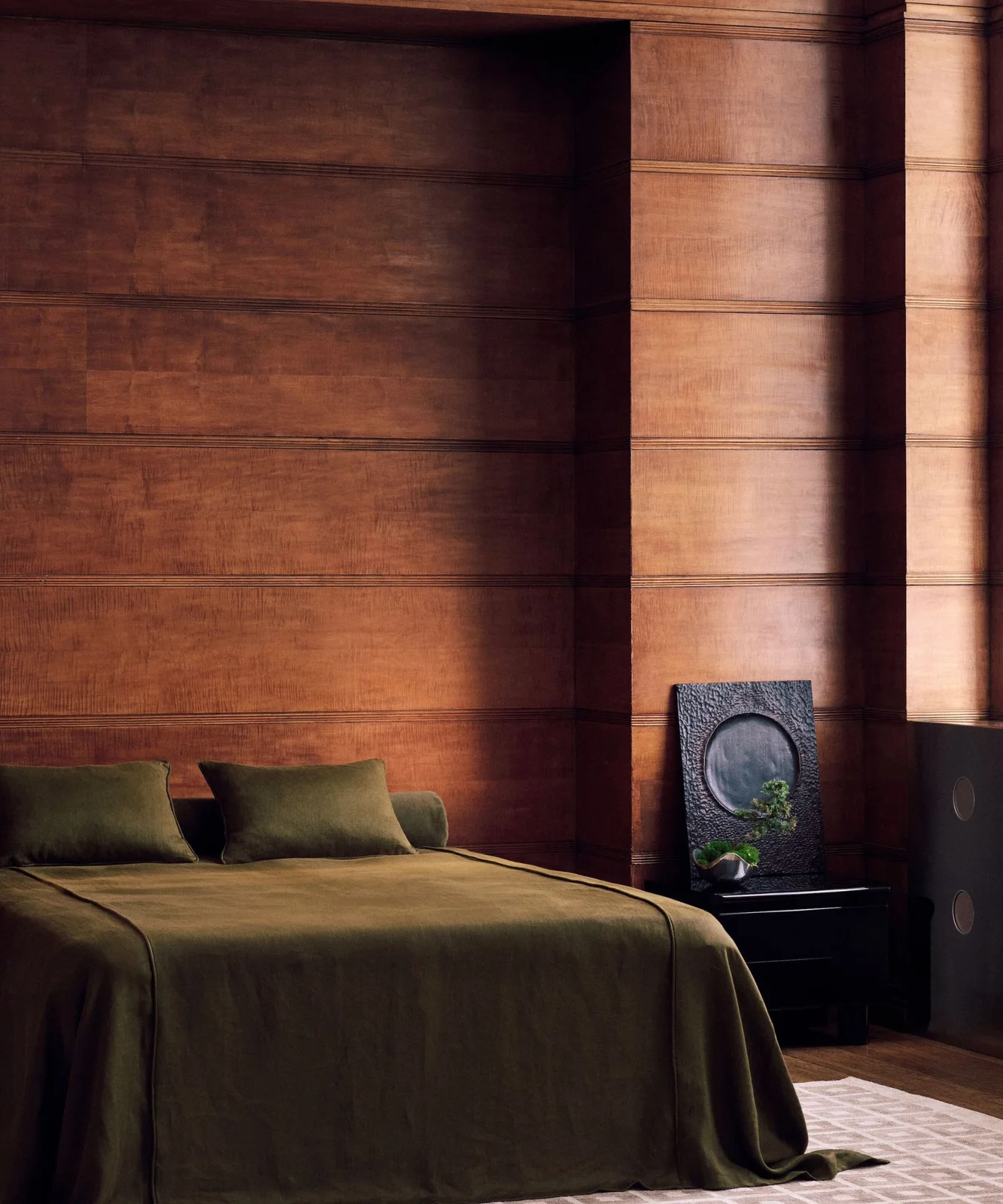
The deeper wooden panels make the bed wall a substantial warm surface, with olive-green bedding giving it a different quieter color beside the grain. A dark bedside cabinet stays close to the room’s deeper tones. The framed artwork and smaller plant introduce detail without filling the whole wall.
Test the darker combination under the lighting you will use in the evening, keeping enough contrast to find belongings easily. Choose a reachable bedside light and reserve storage for items you prefer out of sight. Dark green bedroom ideas compare other arrangements when you enjoy deeper colors with warmer furniture.
IDEA 09 / 20
Use a Light Partition Around the Sleeping Area
 SaveSupport Non AI Creator
Image credit: Holmes Bespoke x Naturalmat
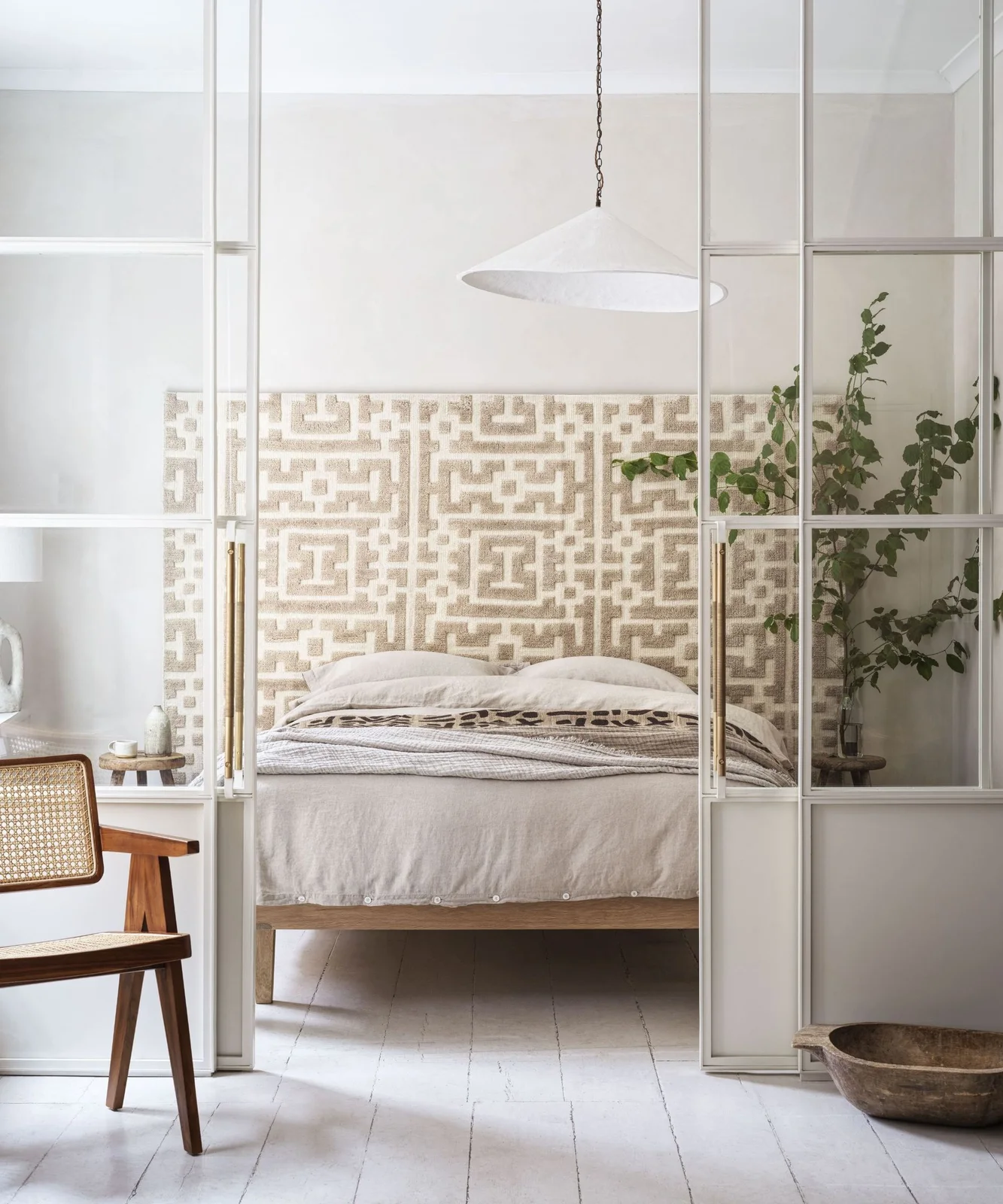
The light partition gives the bed a defined boundary while leaving it visible from the adjoining area. A pale patterned headboard supplies detail behind the simpler bedding, and a large white pendant repeats a quieter overhead shape. Wooden furniture adds warmer outlines outside the sleeping area.
Choose any partition around the privacy and sound separation you actually need, with appropriate installation guidance for its glazing and frame. Leave the opening and curtain options practical if the space is shared. A visually light division can suit an open room, but it should not be mistaken for a fully private bedroom wall.
IDEA 10 / 20
Keep a Canopy Frame Visually Light
 SaveSupport Non AI Creator
Image credit: Frampton Co, photograph Joshua McHugh
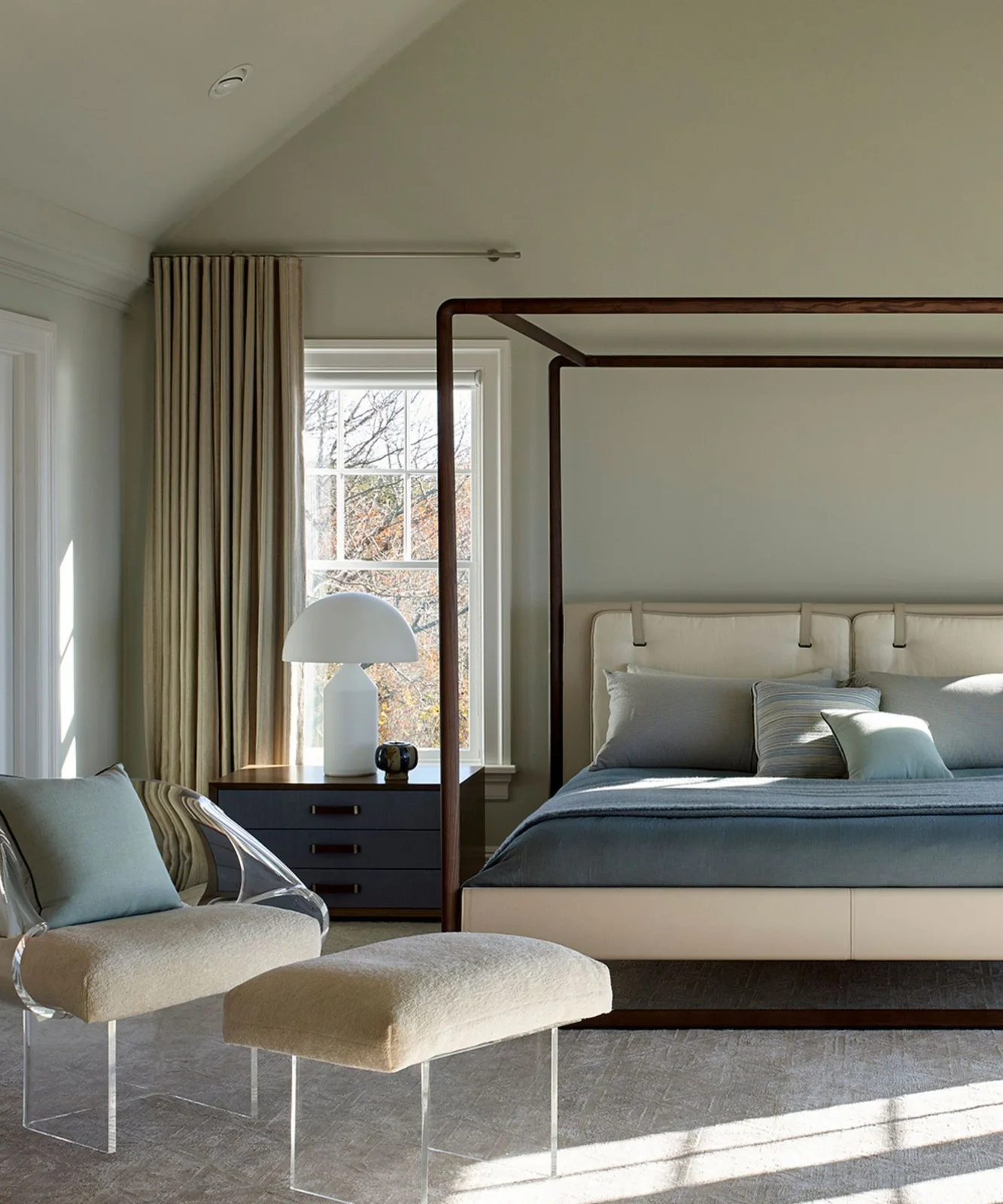
The slim canopy outline defines the bed without covering it in hanging fabric. Blue bedding gives the pale upholstery a cooler contrast, while a light chair and ottoman repeat softer shapes near the window. The taller curtains keep their pattern separate from the mostly plain bed layers.
Measure the canopy against ceiling height, lights and curtain movement before choosing the frame. Try the reading chair and ottoman together, keeping enough floor space to move beside the bed. A canopy can work in a quieter room when its outline stays simple and the surrounding furniture has a clear useful purpose.
PART 03
Plan benches, bedside drawers and softer wall colors
IDEA 11 / 20
Place One Useful Bench at the Foot of the Bed
 SaveSupport Non AI Creator
Image credit: Erik Munro
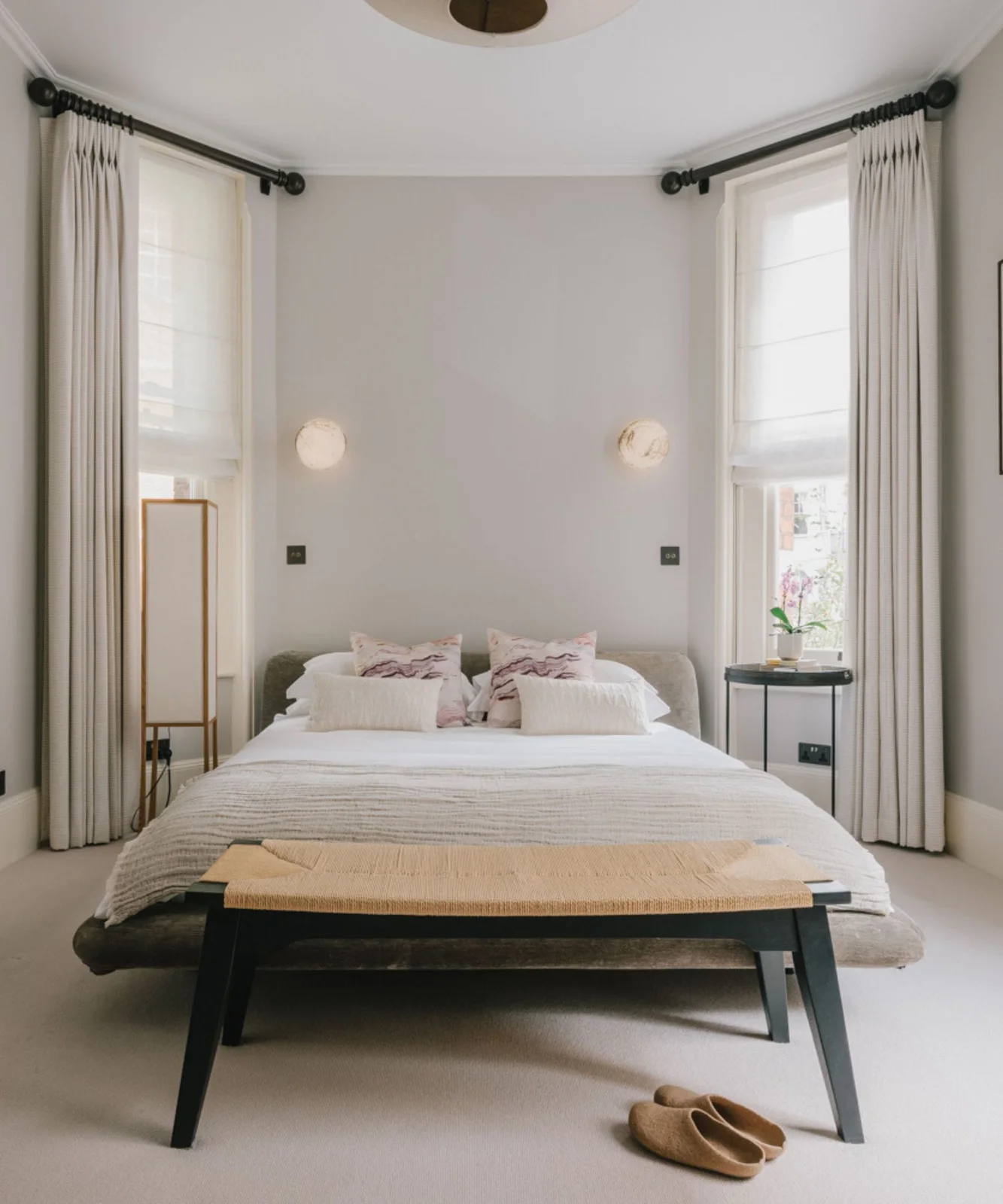
The room’s paired windows and lights create a balanced outline around the bed. Pale curtains and bedding keep the larger fabric areas related, while the woven bench adds a different lower texture. A small dark side table provides a separate firm surface without adding another large cabinet.
Decide whether the bench is needed for dressing or temporary seating, and choose its width around the space at the bed’s foot. Keep enough room to walk past without brushing its corners. Check the side table’s reach and available storage before adding more small objects to the quieter arrangement.
IDEA 12 / 20
Soften a Wooden Canopy with a Fabric Backdrop
 SaveSupport Non AI Creator
Image credit: Morris & Co.
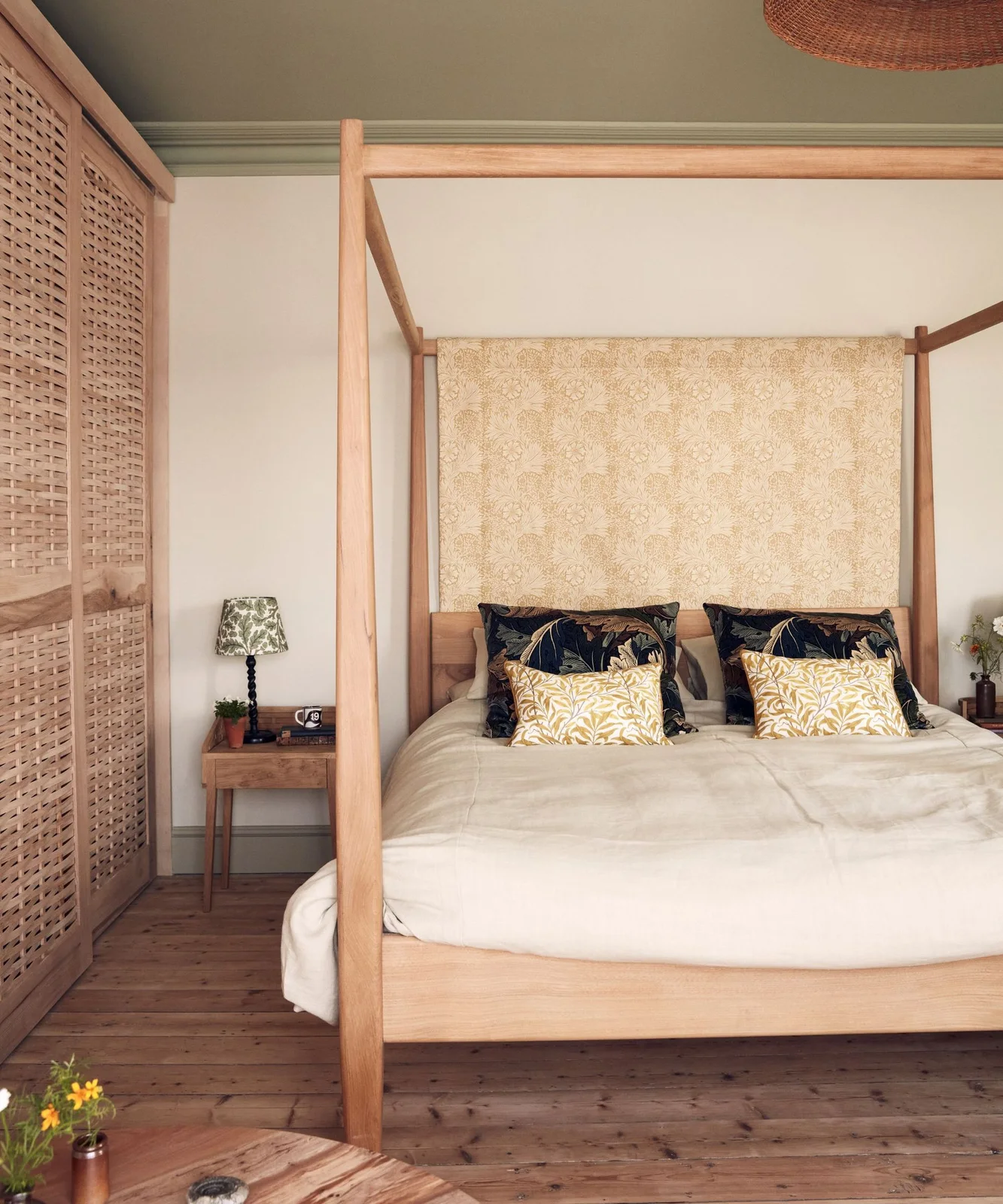
The canopy frame and woven-fronted storage repeat warmer wooden outlines across the room. A pale patterned backdrop supplies detail behind the pillows without requiring every wall to carry the same print. The darker botanical cushions concentrate the strongest pattern within smaller removable pieces.
Choose a fabric backdrop for its care needs and plan a secure fitting that leaves the bed comfortable to use. Check whether the surrounding storage opens without catching on the frame. Keep additional patterns limited if you want the combination to remain quieter, particularly when the room already has visible woven cabinet fronts.
IDEA 13 / 20
Keep Bedside Storage Integrated with a Quiet Wall
 SaveSupport Non AI Creator
Image credit: Escape from Sofa
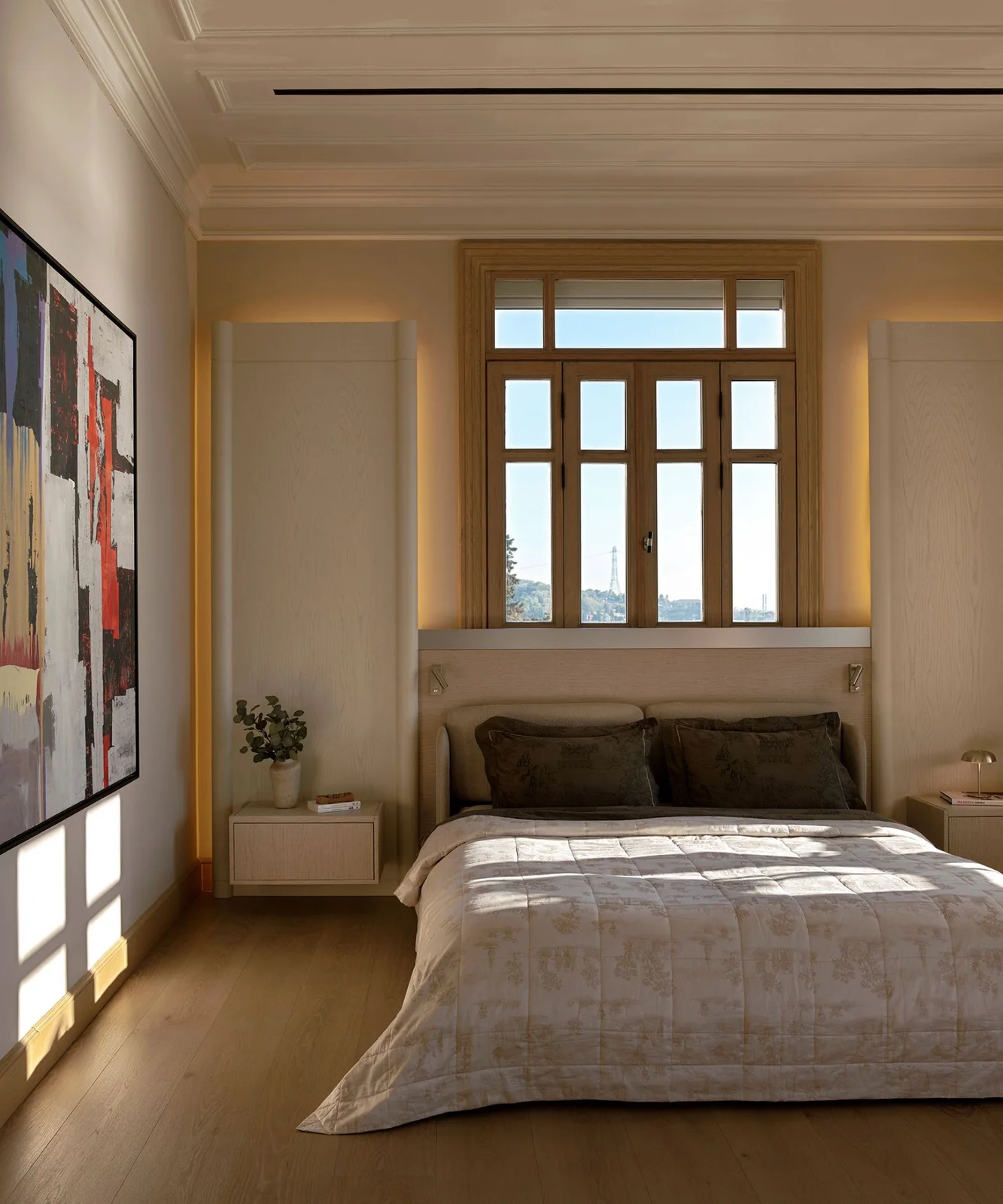
Wall panels and warm edge lighting give the bed area a defined vertical outline. The floating bedside cabinets keep their smaller storage volumes separate from the floor below. Mostly pale bedding and two darker pillows leave the room’s larger appearance restrained despite the colorful artwork on the side wall.
Plan bedside switches and useful reading light before choosing an integrated wall arrangement, so appearance does not replace convenient controls. Have electrical fittings installed appropriately and leave access for maintenance. Measure cabinet reach from the mattress, keeping enough counter space for daily belongings even when the room has no larger table lamps.
IDEA 14 / 20
Use a Blue Headboard with Smaller Wooden Drawers
 SaveSupport Non AI Creator
Image credit: Regan Baker Design, Suzanna Scott
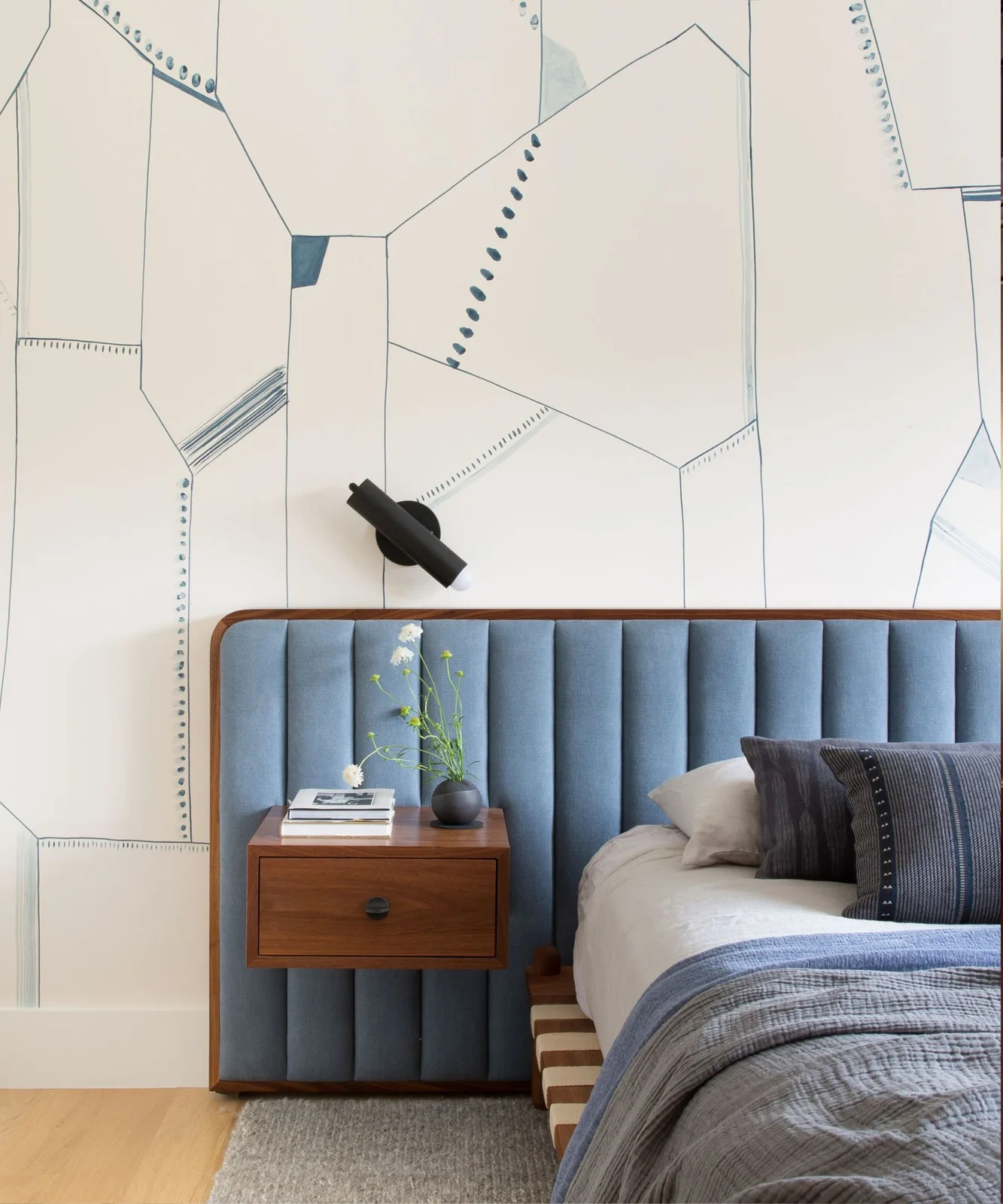
The blue upholstered headboard introduces a softer repeated vertical pattern below the pale wallpaper. A floating wooden drawer adds a warmer smaller shape at the bedside, while the dark light concentrates contrast above it. Blue bed layers keep the headboard connected to the rest of the sleeping area.
Choose the wallpaper and headboard together so their different patterns feel comfortable at the distance you see them from the doorway. Check drawer reach and the light’s position from the actual pillow. Keep only the useful daily items on the smaller surface, using other storage for bottles or belongings that crowd it.
IDEA 15 / 20
Keep a Warm Pink Wall Behind Pale Upholstery
 SaveSupport Non AI Creator
Image credit: Little Greene Split Pink
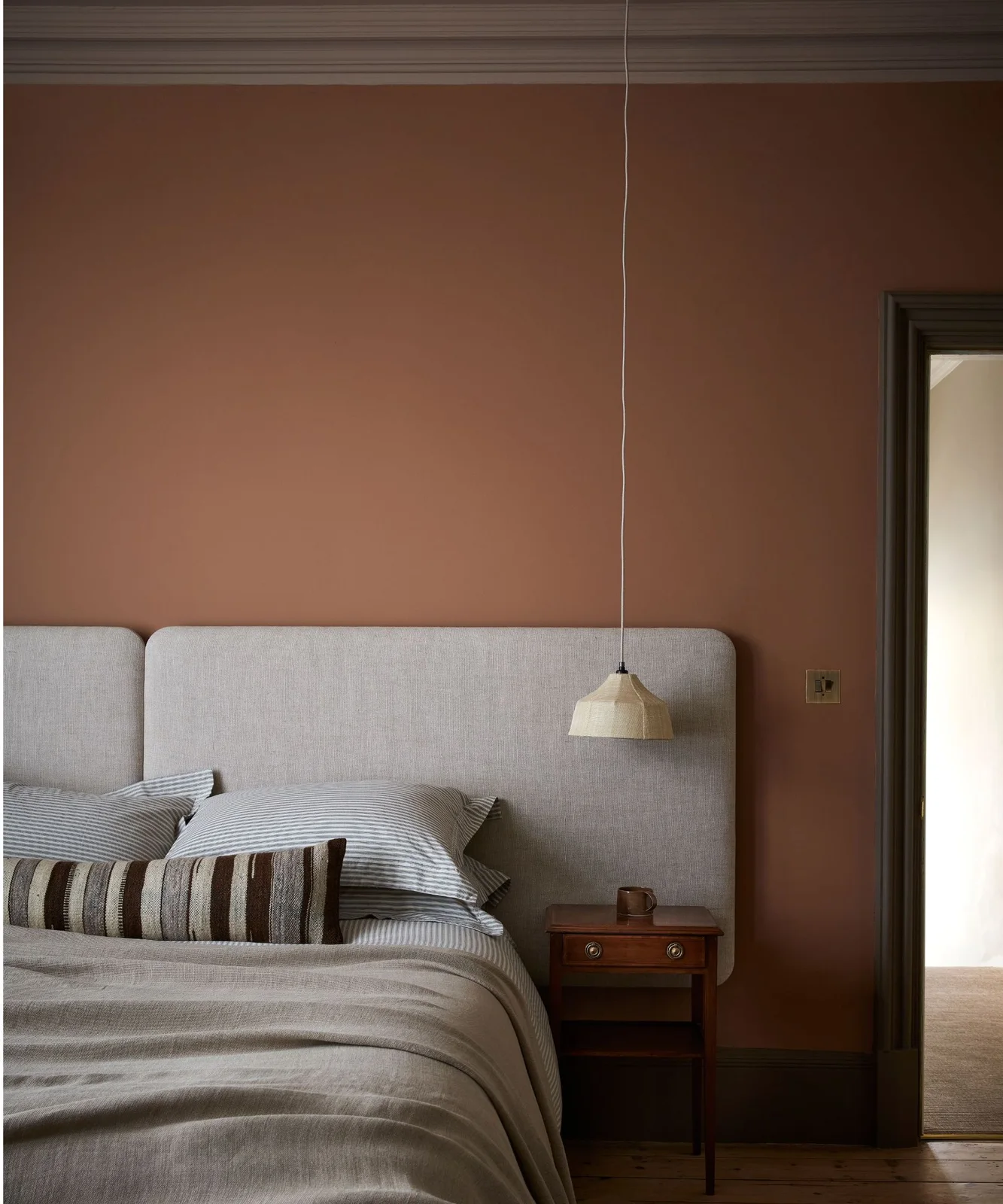
Warm pink gives the pale headboard a distinct backdrop without relying on a large wall pattern. Striped pillows provide most of the fabric detail, and the wooden cabinet introduces another warmer outline beside them. The small pendant leaves the cabinet’s top comparatively open for a cup or other everyday belongings.
Check the pink sample beside the upholstery in daylight and under the intended lamp, since both surfaces influence the overall warmth. Plan the hanging light for convenient use and safe movement around the bedside. Beige bedroom ideas offer other pale upholstered arrangements if you want a similar softness with a quieter wall color.
PART 04
Keep lighting, color and smaller corners useful
IDEA 16 / 20
Repeat Woven Texture in Paired Hanging Shades
 SaveSupport Non AI Creator
Image credit: Pottery Barn
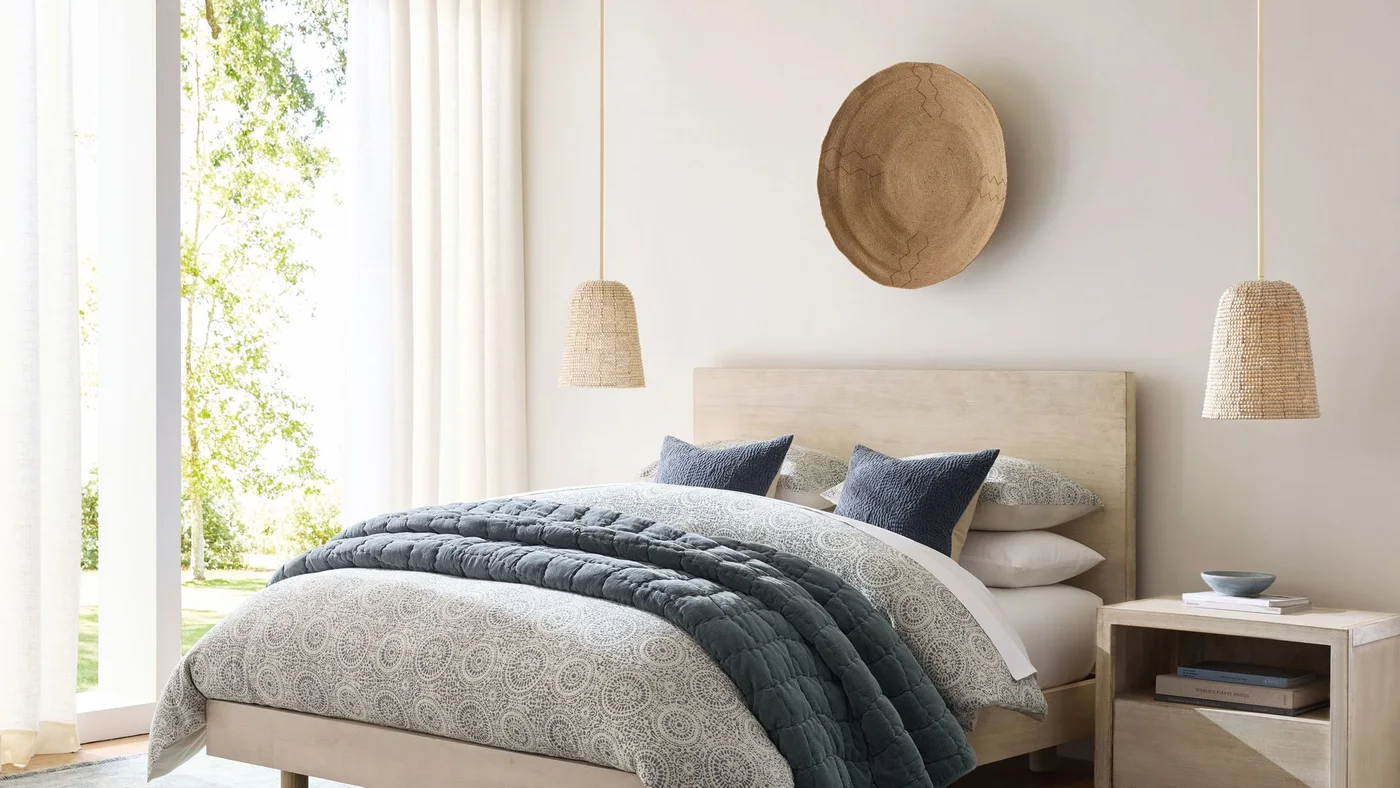
The paired woven shades give the bed two warmer overhead accents, with the round wall piece adding a separate central shape. Pale wooden furniture connects those textures to the lower part of the room. Blue cushions and a textured throw supply a cooler smaller contrast within the otherwise light bedding.
Choose the pendant heights from your actual bedside movement and reading position, checking their light output as well as the shade’s appearance. Keep controls reachable on each side of the bed. Leave the table’s open compartment useful for belongings rather than filling it solely to reproduce the pictured display.
IDEA 17 / 20
Let a Simple Headboard Carry a Green Accent
 SaveSupport Non AI Creator
Image credit: Naturalmat
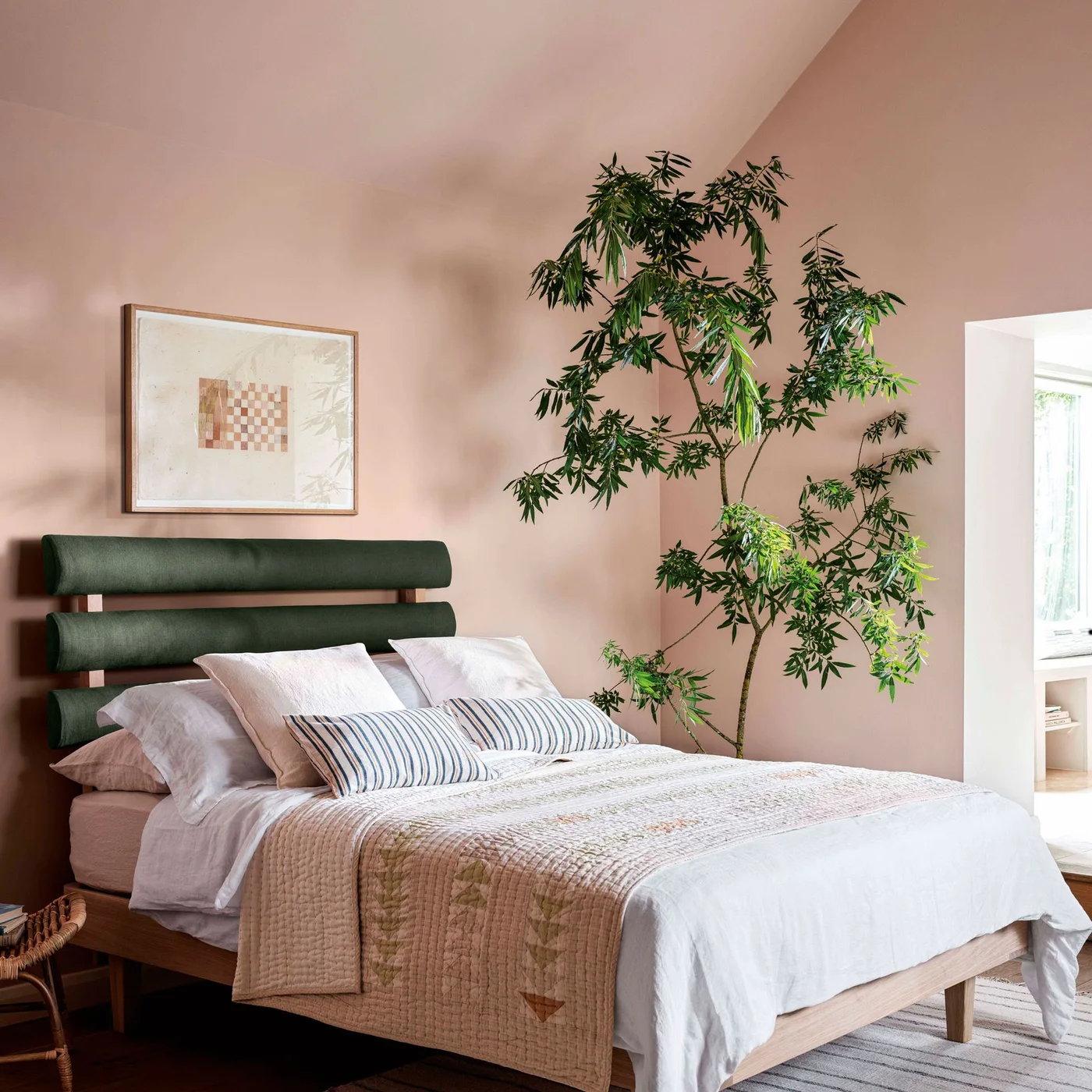
The two-part green headboard provides a stronger accent against the pale pink walls without covering the whole bed wall. Striped cushions introduce a smaller linear pattern across the light bedding. The tall plant repeats the green in an uneven softer outline beside the framed artwork.
Choose the headboard around comfortable support and its care requirements, comparing its green with the wall sample before committing. Keep enough room to tend the plant without moving the bedside furniture every time. Use simple bedding layers if you want the headboard’s shape and color to remain the room’s clearest detail.
IDEA 18 / 20
Use One Rounded Wall Pattern Above a Low Bed
 SaveSupport Non AI Creator
Image credit: Rebel Walls
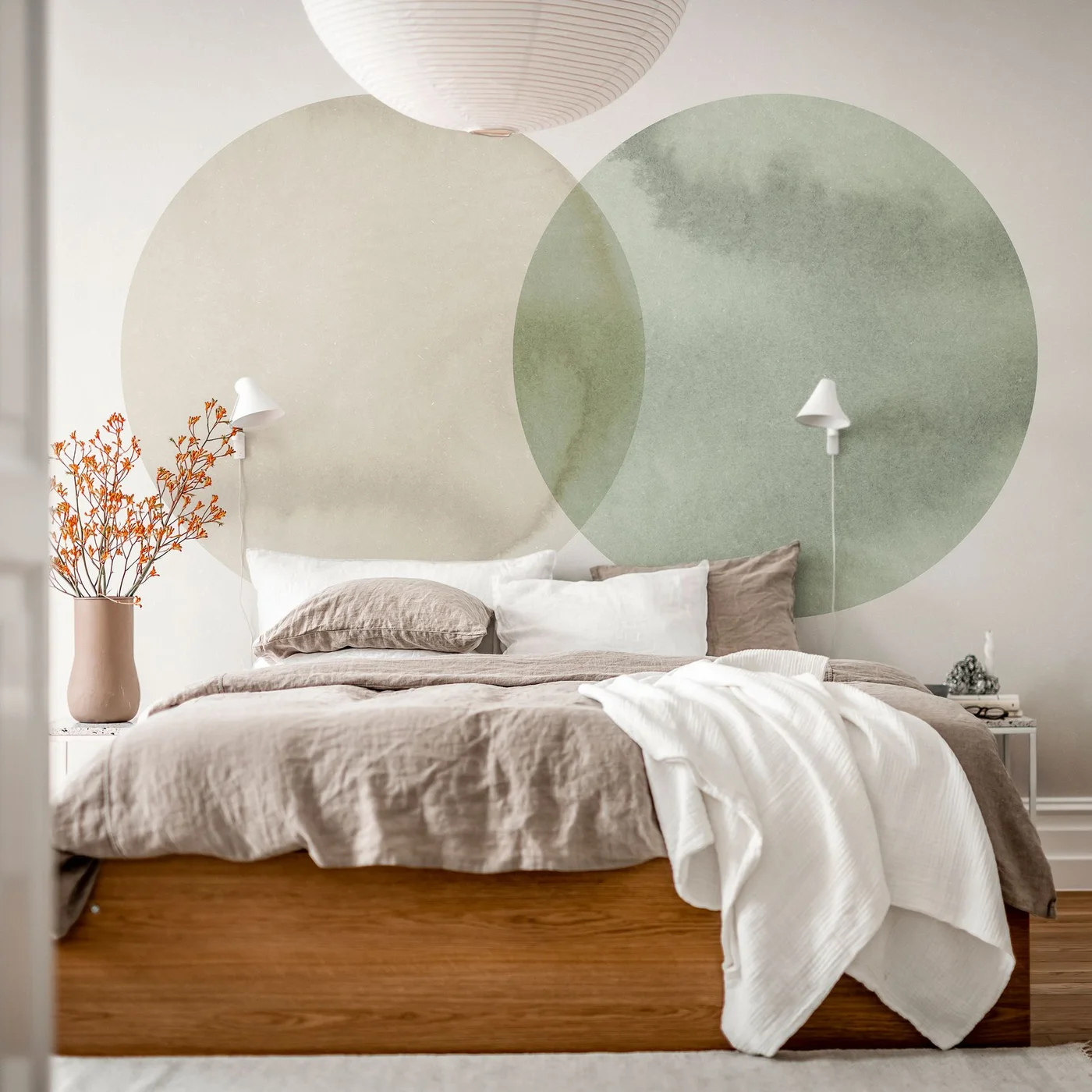
The overlapping circles create a single rounded pattern above the low wooden bed. Taupe and white bedding stays close to those muted wall tones, keeping the larger surfaces related. Smaller white bedside lights give the bed practical accents without adding another strong color around the central design.
Lay out the wall pattern against the bed’s actual position before choosing its final size or applying a mural. Try the frame height for getting in and out comfortably, keeping its edges clear of your walking route. Minimalist bedroom ideas compare more arrangements where one stronger detail sits within otherwise simpler surfaces.
IDEA 19 / 20
Keep a Reading Corner Beside Useful Window Coverings
 SaveSupport Non AI Creator
Image credit: Hillarys
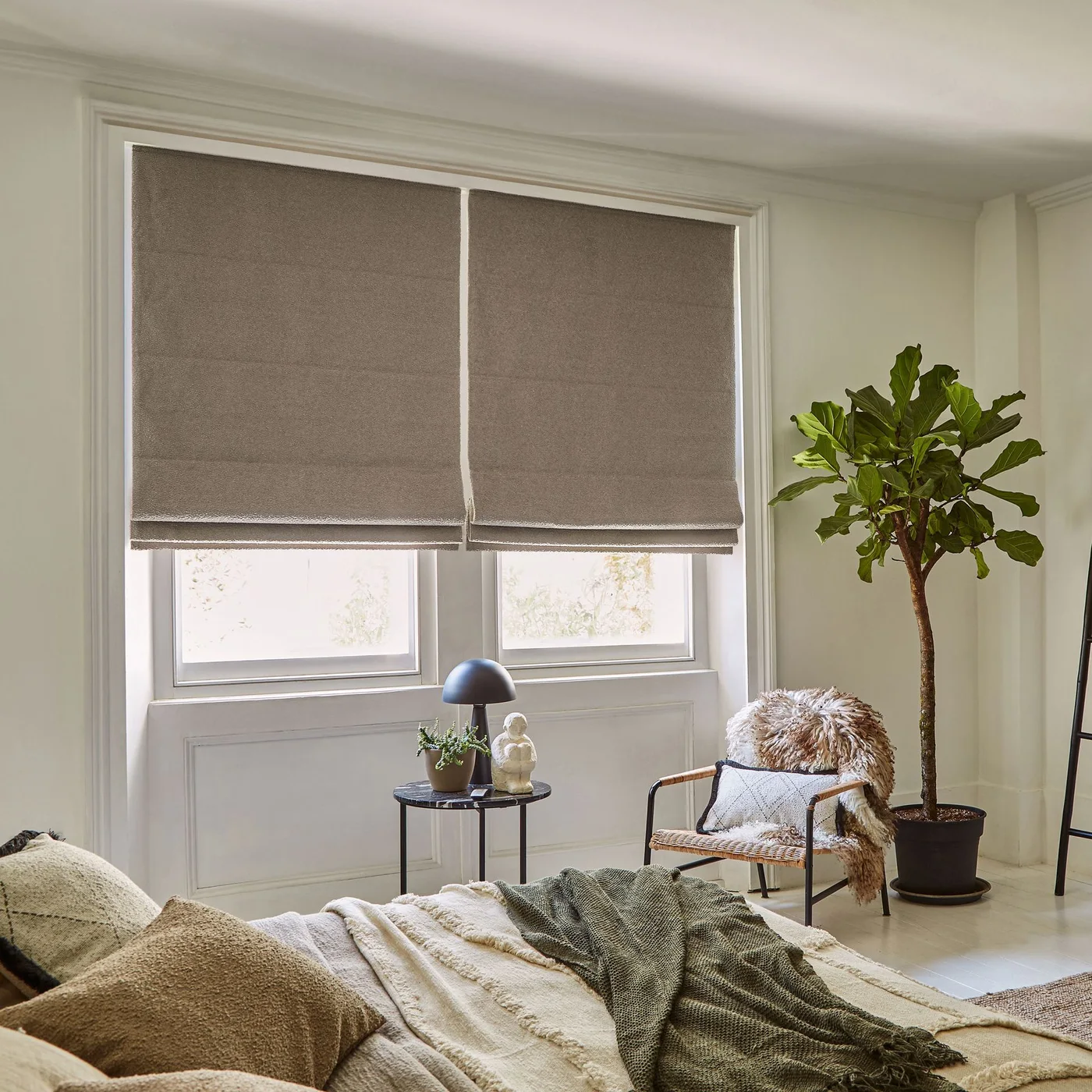
The taupe blinds give the window area a softer repeated fabric surface above the smaller reading corner. A textured chair and dark table introduce different outlines near the plant. Pale and green bed layers remain connected to the corner’s quieter tones without requiring identical furniture on both sides of the room.
Try the chair with its table and lamp in position, leaving enough room to operate the blinds and reach the window. Check how well the coverings control morning light and nighttime privacy before choosing them. Keep plants from blocking the seat or table, and choose their placement around the room’s actual daylight.
IDEA 20 / 20
Give a Small Desk a Clear Place Beside the Bed
 SaveSupport Non AI Creator
Image credit: Purlfrost
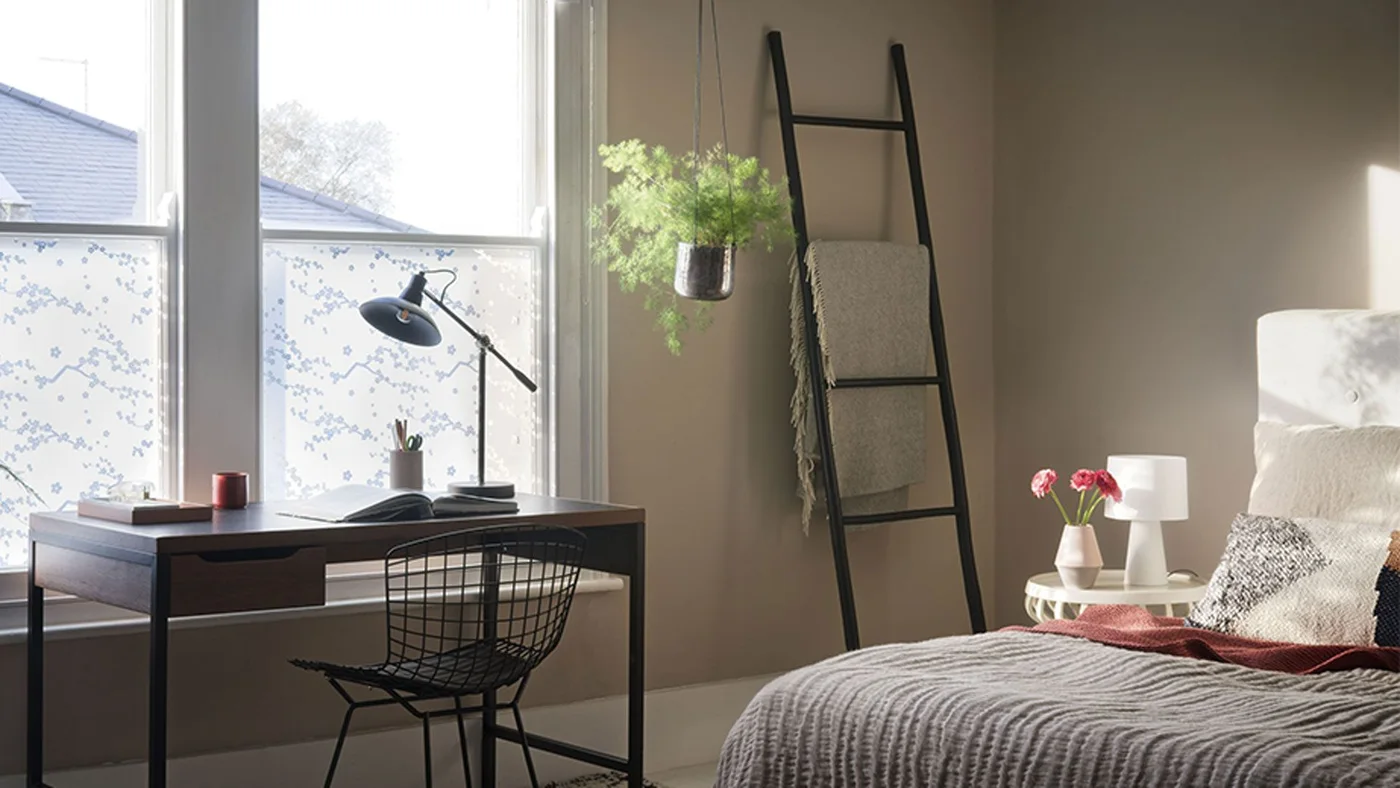
The dark desk creates a separate working surface beside the bed without adding a tall cupboard near the window. A small task lamp concentrates light over the table, while pale bedding and the warm wall keep the sleeping area softer. The ladder collects one textile rather than another group of decorative shelves.
Check chair movement and the walking route beside the bed before choosing a desk for a smaller bedroom. Keep work supplies in a defined place so the bedside surface remains available after work. Select page and screen lighting for the desk independently of softer bedroom lighting, and leave access to window coverings clear.
BRING IT ALL TOGETHER
Build a quieter bedroom around how you use it
Choose the bed height and useful storage first, then compare warmer finishes with the fabrics you enjoy. A room does not need wooden panels, a woven headboard and a large plant all at once. One stronger texture or color can give simpler surrounding pieces enough character.
Try bedside reach, chair movement and window operation before adding benches or other decorative furniture. Check light control at night as well as the daytime appearance of curtains and blinds. Keep cushions and throws manageable, choosing care instructions that fit the time you want to spend maintaining the room.