Scandinavian-inspired living rooms balance light, useful furniture and comfortable materials. Pale walls are a helpful backdrop, but warmth often comes from timber, textiles and lamps placed where people actually sit.
These rooms offer ideas for storage, seating and quieter color combinations. Adapt the practical details to your household rather than removing comfortable furniture simply to make the room look more minimal.
PART 01
Color and contrast
IDEA 01 / 20
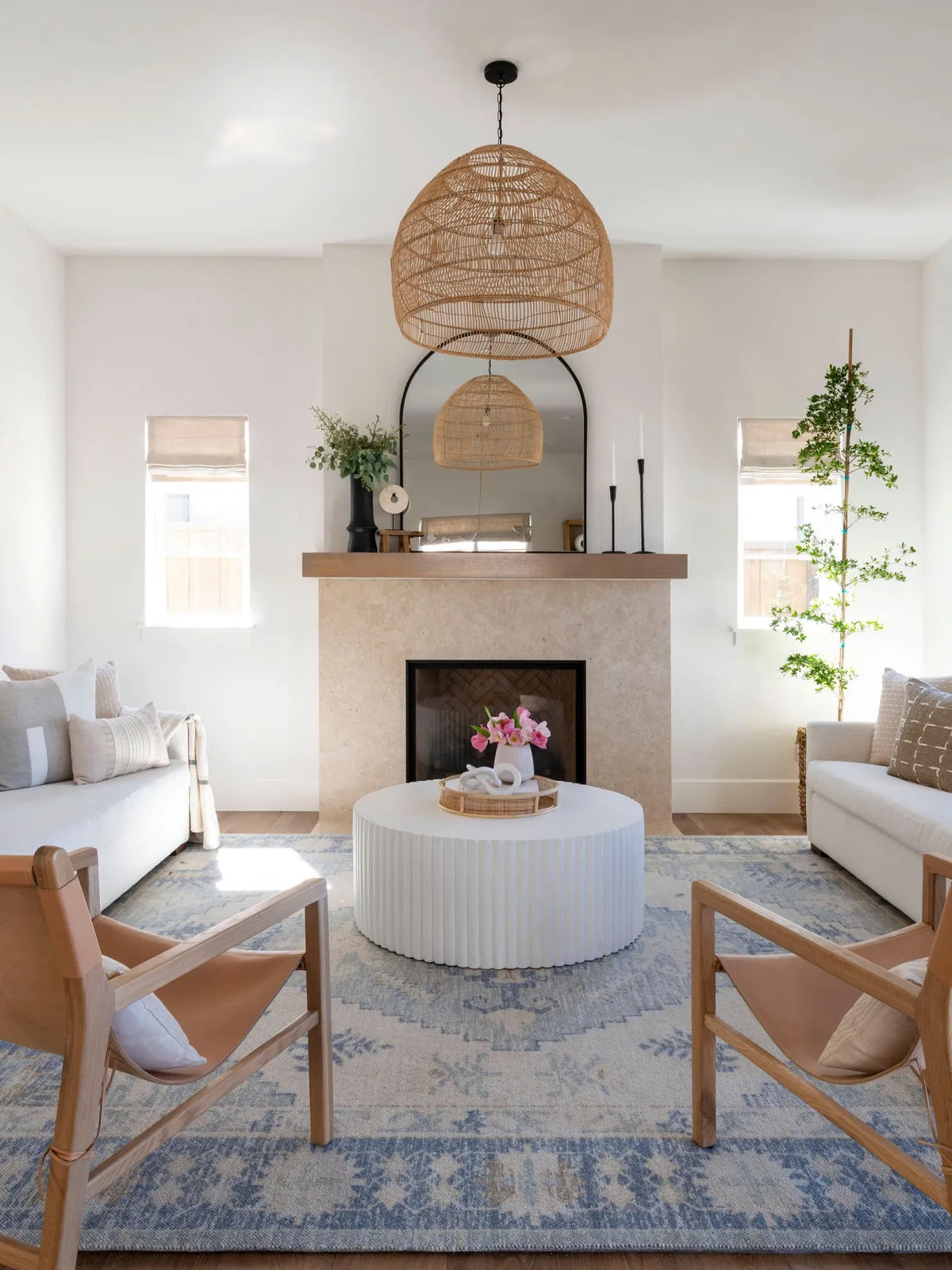
Mix pale seating with timber-framed chairs
 SaveSupport Non AI Creator
Source: Natalia Avalos Interiors LLC on Houzz.
Pale seating faces a quiet fireplace beside timber-framed chairs and a woven pendant. Natural materials make the bright room feel inviting rather than empty. Two pale sofas and timber-framed chairs form a conversation group around the round table. A patterned blue rug gives the light furniture a shared base, while the arched mirror repeats the pendant's softer outline.
Choose chairs with comfortable support and keep the central table within reach, so the light furniture arrangement remains useful for relaxed conversation. Check the table's reach from the chairs as well as the sofas. Keep any active fireplace's required clearances in mind before choosing the rug's position or moving seating inward.
IDEA 02 / 20
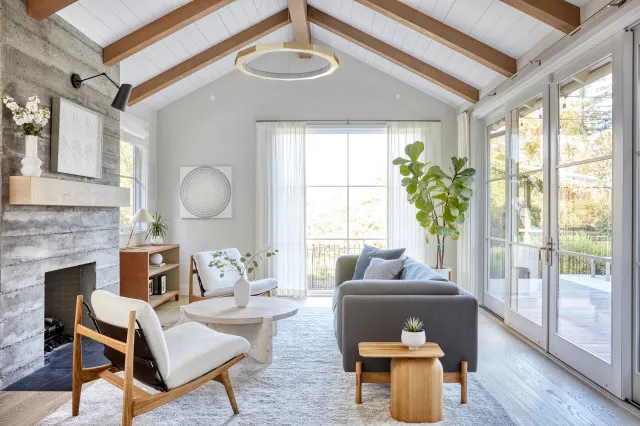
Let a timber ceiling warm pale walls
 SaveSupport Non AI Creator
Source: Coddington Design on Houzz.
Exposed timber beams cross a pale room above restrained seating and a broad window. The natural ceiling provides warmth without strong additional colors. The exposed beams follow the pitched ceiling above a gray sofa and pale chairs. A small timber side table adds warmth nearer the seats, connecting the overhead structure with useful everyday furniture.
Keep larger furniture below the main sightlines and let the timber remain visible, rather than competing with it through many tall decorative pieces. Use separate lamps for reading so a bright ceiling does not become the room's only source of light. Leave a route to the glazed doors outside the central seating group.
IDEA 03 / 20
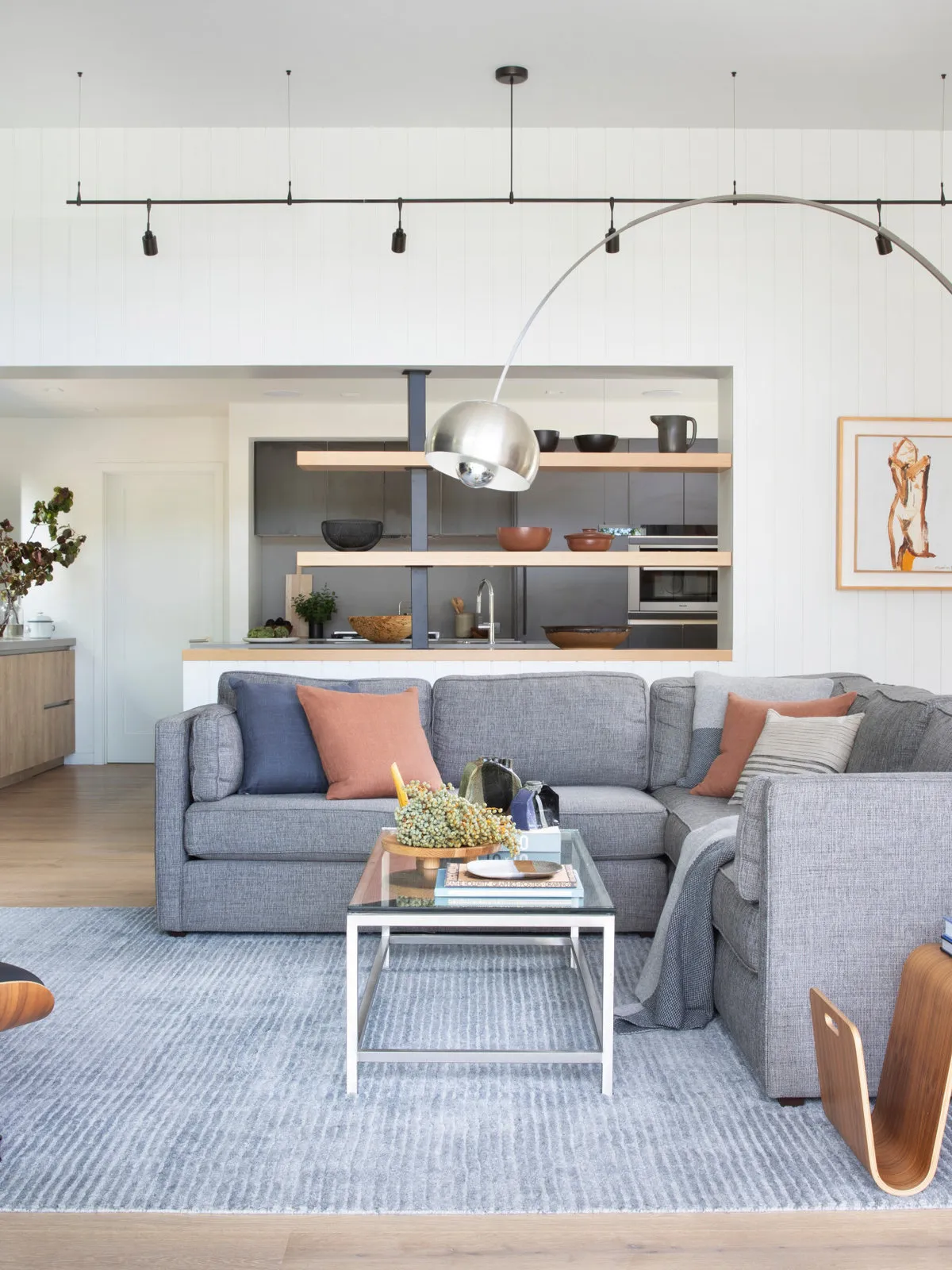
Add small warm accents to a gray sofa
 SaveSupport Non AI Creator
Source: Libby Raab Architecture on Houzz.
A gray sofa sits below light walls with soft warm-colored cushions and a pale table. The modest accents keep the spacious room from feeling cold. Soft orange cushions contrast with the gray upholstery and blue-gray rug. A large curved floor lamp supplies a strong shape above the seats, while open kitchen shelves repeat warm details in the background.
Try a limited cushion palette and choose textures you like touching, keeping enough clear seat space for the sofa's everyday use. Keep the floor lamp's base outside the walking route between kitchen and sofa. Choose cushion sizes that support sitting comfortably rather than occupying most of the usable seat depth.
IDEA 04 / 20
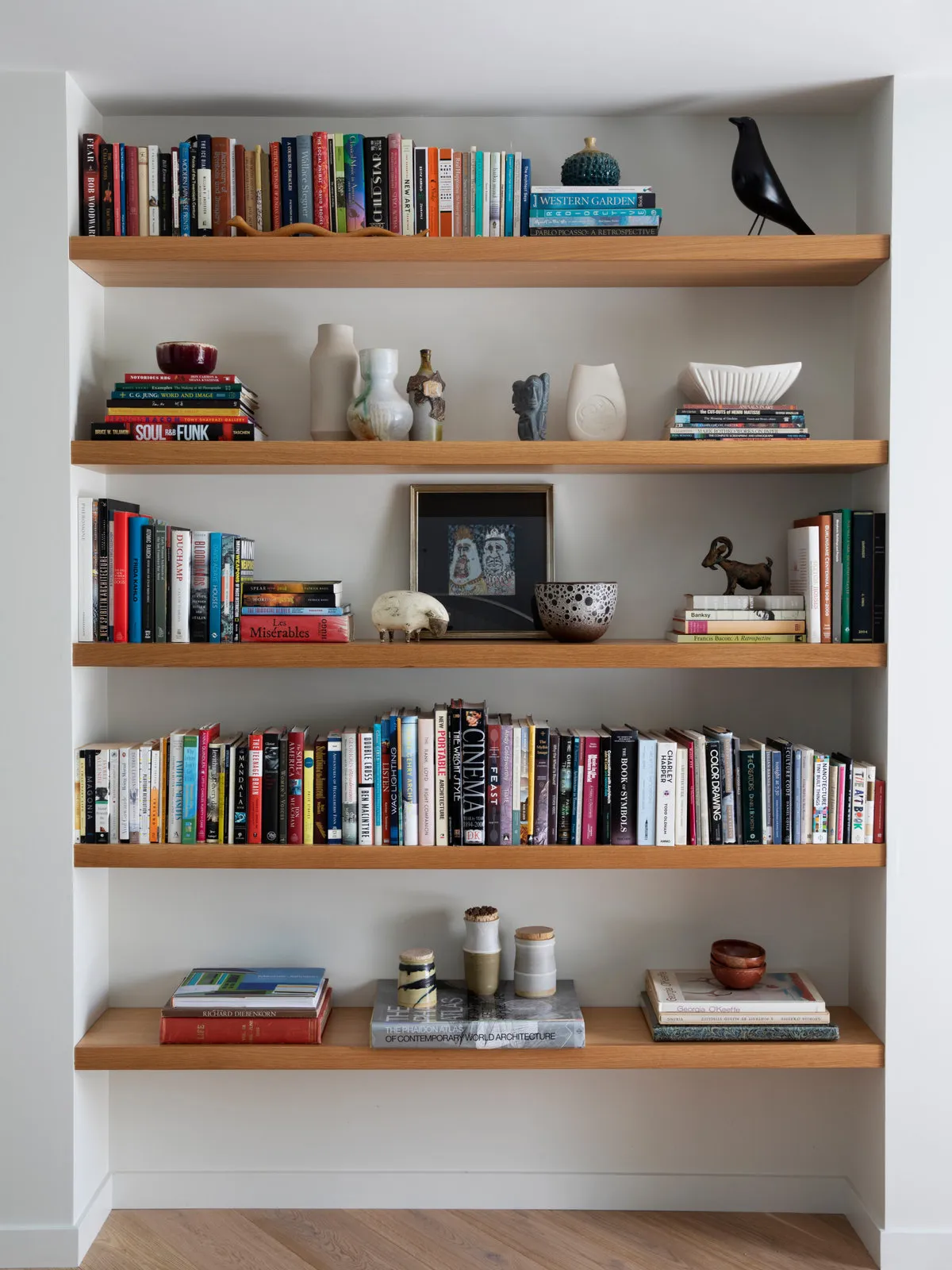
Use open timber shelves for a manageable book collection
 SaveSupport Non AI Creator
Source: Libby Raab Architecture on Houzz.
Simple timber shelves hold books and a few objects against a pale wall. The storage brings useful color into the otherwise restrained room. Books bring varied color to the simple timber shelves, with a few vessels and small sculptures between groups. The pale recess gives the collection a clear boundary without another large storage cabinet.
Group books where they remain easy to reach and leave small gaps, rather than adding decorative fillers simply to occupy every shelf. Check shelf load ratings before filling a long span with books. Keep the volumes you use most on reachable levels and dust around display pieces without packing every gap tightly.
IDEA 05 / 20
Make the space beneath stairs useful
 SaveSupport Non AI Creator
Source: NB Interiors UK on Houzz.
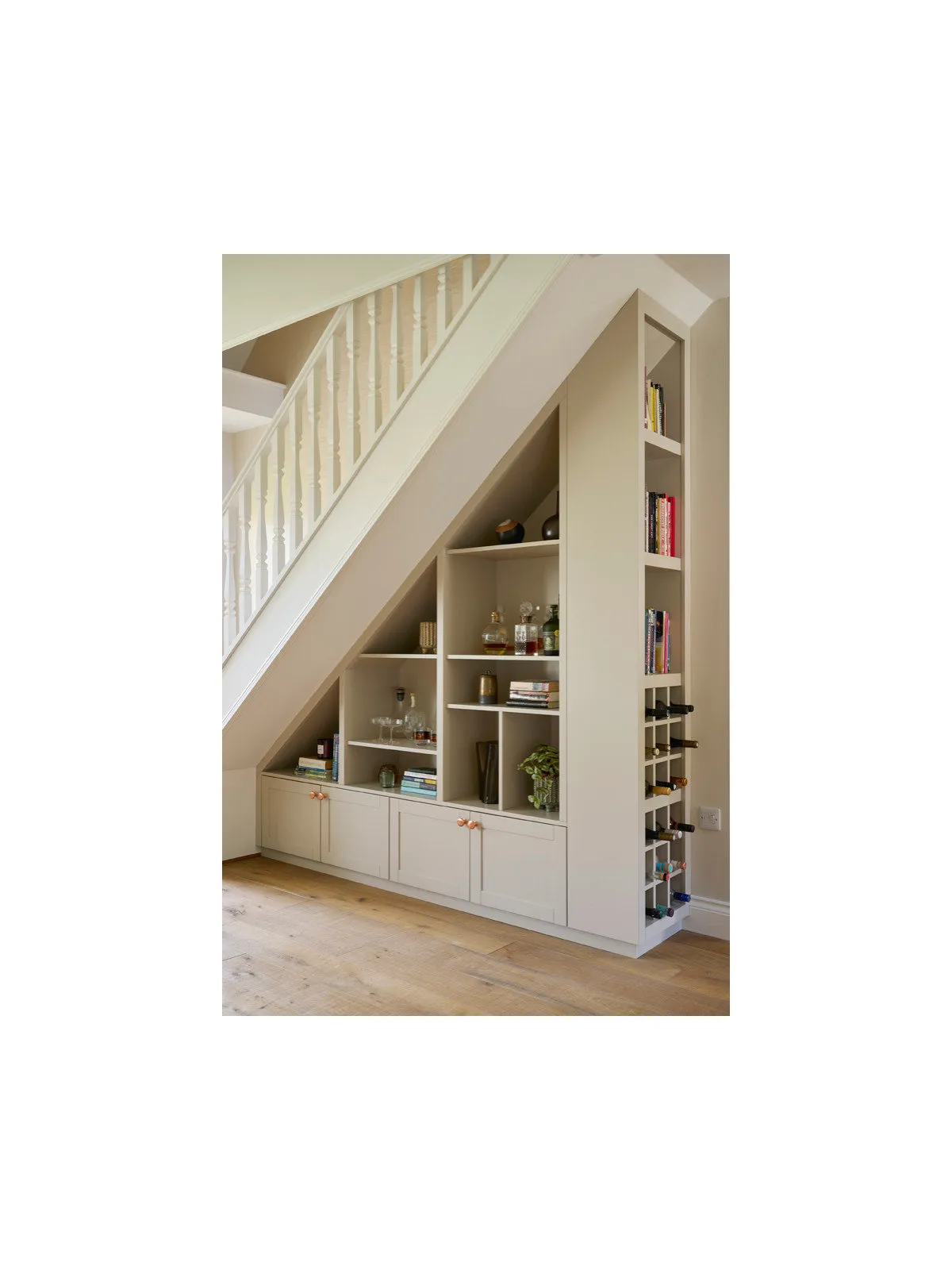
Pale storage fits beneath a staircase with open shelves beside lower cupboards. The arrangement turns an awkward area into practical living-room storage. Stepped shelves follow the stair's slope above enclosed lower cupboards. A narrow vertical section handles books and smaller compartments at the side, using the height that would otherwise be awkward to furnish.
Use closed compartments for less attractive essentials and secure tall shelving appropriately, especially where children can climb or heavy books are stored. Plan compartment sizes around the objects you actually store. Use suitable fixings and leave the staircase route clear, especially when cupboard doors are open or items are being taken down.
PART 02
Texture and materials
IDEA 06 / 20
Keep a timber-lined room comfortable with blue seating
 SaveSupport Non AI Creator
Source: Michele Interiors MD Design Group on Houzz.
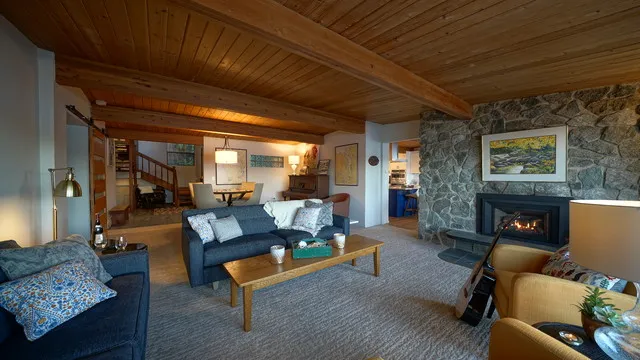
Blue seating sits beneath a broad timber ceiling beside a simple wood table. The cool upholstery balances the warm architecture without a busy palette. Blue sofas cool the broad timber ceiling, while a mustard chair adds a smaller warm accent. The long plain coffee table keeps the center useful and lets the stone fireplace remain a distinct feature.
Keep the rug generous enough to connect the chairs and sofa, and use lighter cushions if the room becomes too dark in evening light. Try the blue upholstery sample under evening lamps as well as daylight. Keep seating outside fireplace clearances and leave enough table space for everyday drinks rather than only decorative objects.
IDEA 07 / 20
Choose compact furniture for a tall bright room
 SaveSupport Non AI Creator
Source: Eugene Pintail LLC on Houzz.
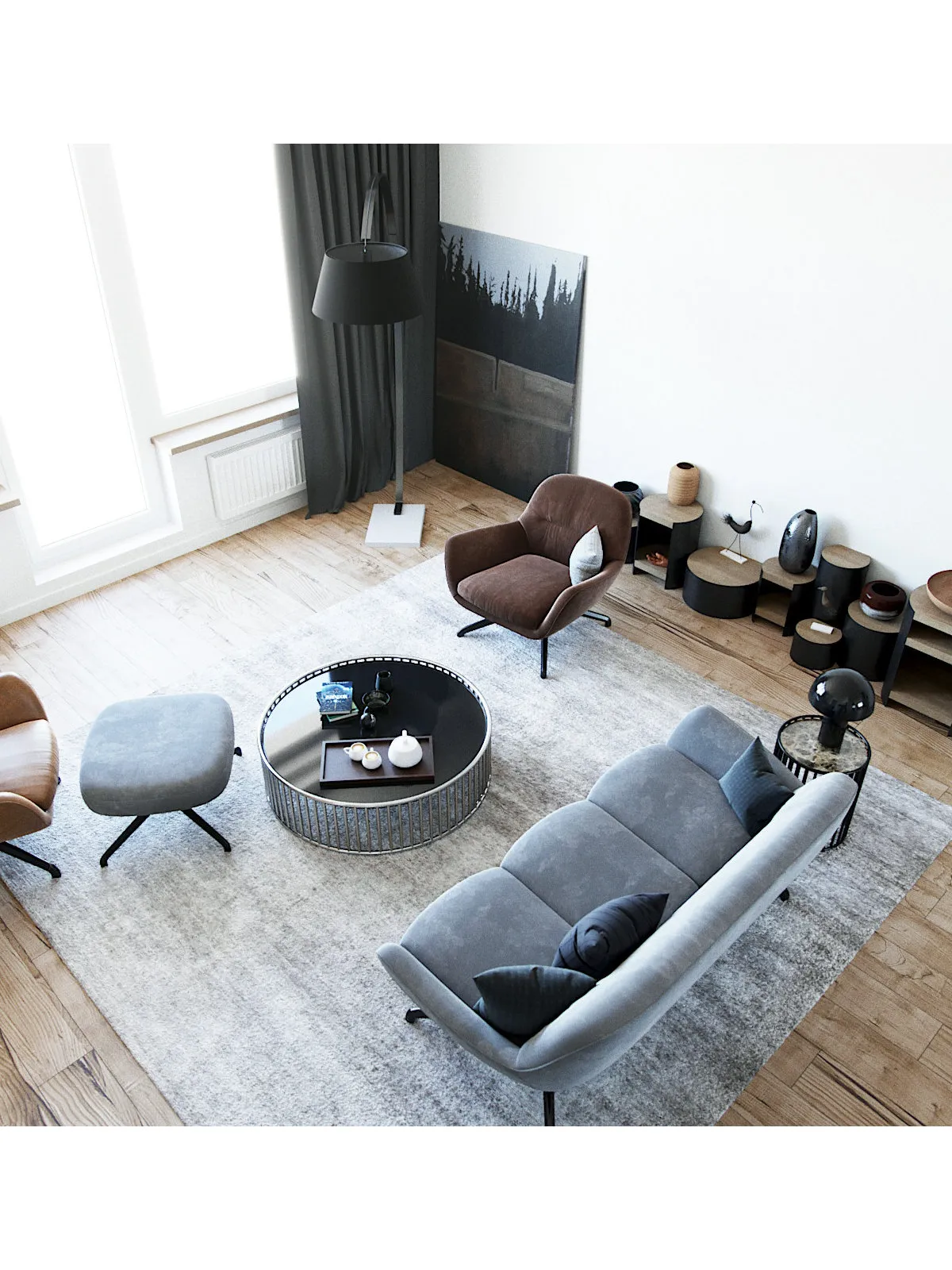
A gray sofa and small rounded tables sit beside a broad window. Their modest outlines keep the high-ceiling room's floor area visually open. A brown chair, gray sofa and matching footstool form a compact group on the pale rug. Dark curtains and a floor lamp provide definition at the edges, leaving the timber floor visible around the arrangement.
Measure useful table reach from the sofa and avoid selecting pieces so small that drinks or books have no stable place to rest. Measure the footstool's position with someone using it, since it changes the walking space. Choose small tables with stable surfaces and useful height rather than relying on their light appearance alone.
IDEA 08 / 20
Give a white sofa a small dark contrast
 SaveSupport Non AI Creator
Source: Studio McGee on Houzz.
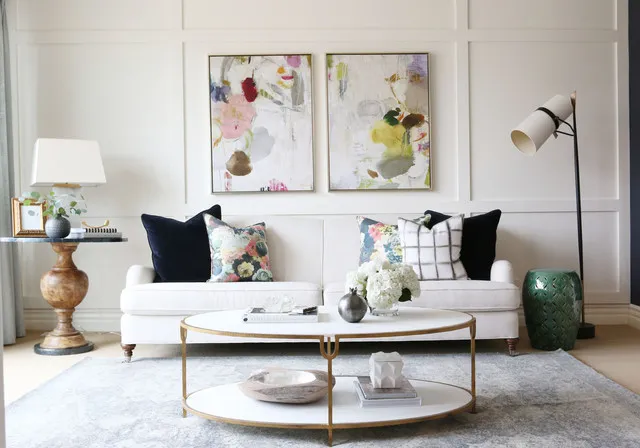
A white sofa stands beneath colorful artwork with darker cushions and a slim table. The concentrated contrast gives the pale room definition. Two floral pictures echo the patterned cushions, while plain dark pillows add contrast on the white sofa. A pale oval table with a slim frame leaves the rug visible below the seating group.
Choose cushion covers suitable for regular cleaning and keep the artwork grouping deliberate, leaving the surrounding wall with enough quiet space. Check the sofa's cleaning instructions before choosing a white cover for busy daily use. Repeat only a few artwork colors in the cushions so the room remains easy to update later.
IDEA 09 / 20
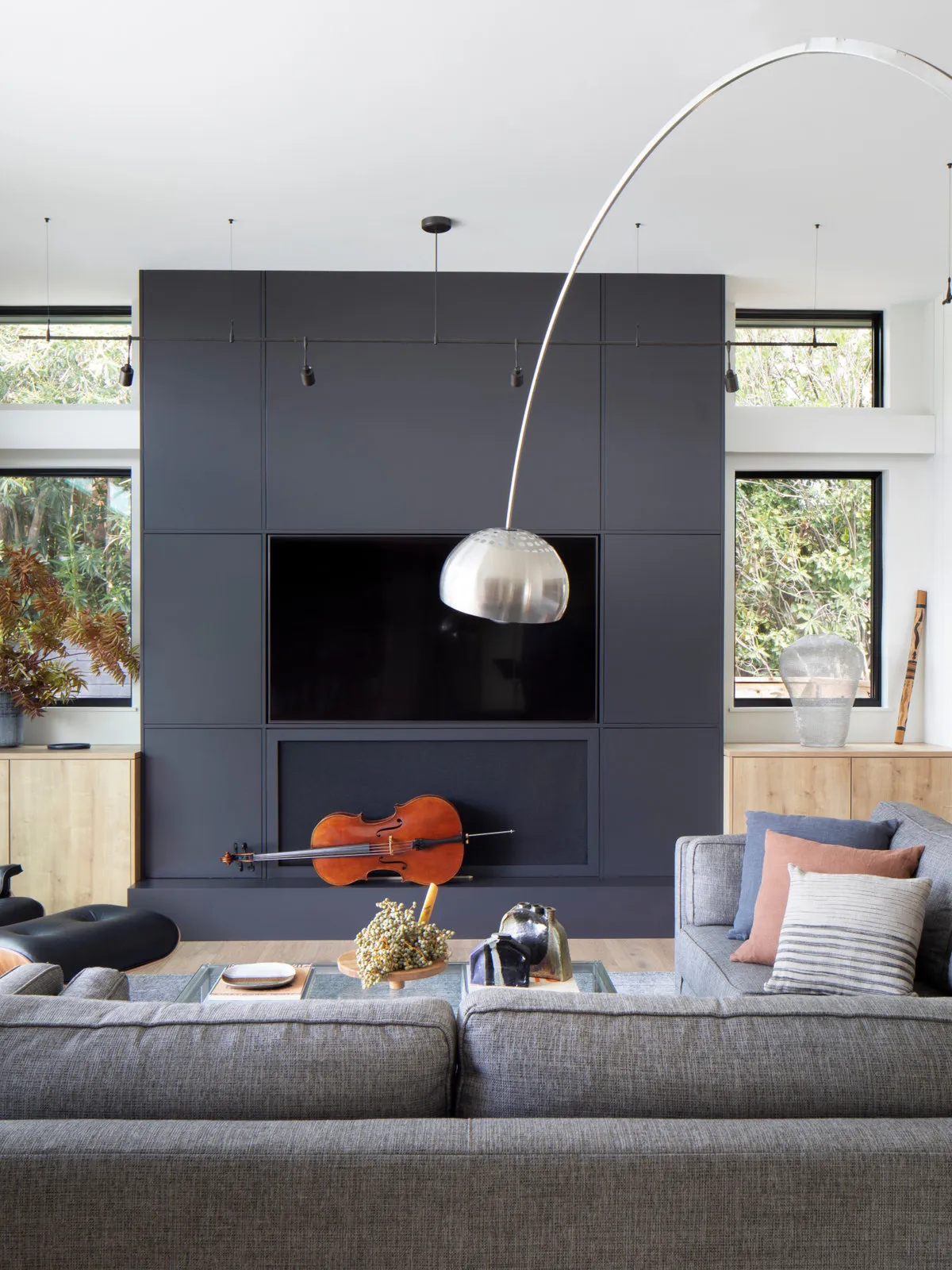
Use a Dark Media Wall as One Clear Accent
 SaveSupport Non AI Creator
Source: Libby Raab Architecture on Houzz.
A dark paneled media wall gives the gray seating a defined focal point beneath the pale ceiling. Timber storage at either side warms the darker surface, and small coral cushions add color without competing with the broad central rectangle or curved floor lamp.
Keep adjoining walls quieter if you want the media wall to remain the main contrast. Measure the floor lamp's base and full arched reach before placing it, and leave storage and equipment access available without needing to move the sofa for routine use.
IDEA 10 / 20
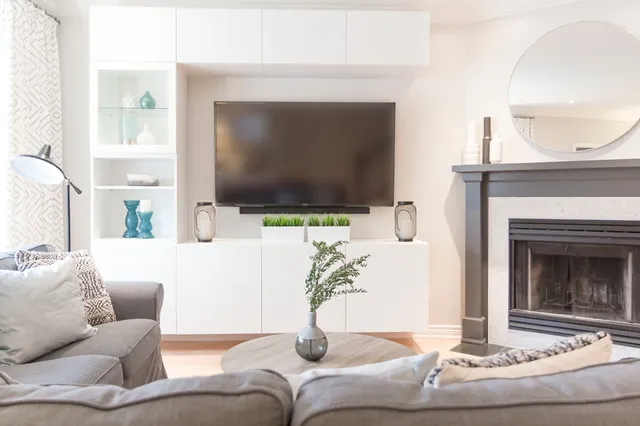
Make media storage part of a pale room
 SaveSupport Non AI Creator
Source: Ainsley Higgins Design on Houzz.
A television sits within pale storage beside a fireplace and light seating. The surrounding shelves keep everyday equipment connected to the restrained room. White cupboards surround the television and repeat the pale walls beside the darker fireplace surround. A few blue vessels add restrained color on the open shelves, while gray seating keeps the foreground quiet.
Keep equipment ventilated and controls accessible, and choose storage deep enough for cables without forcing the screen farther into the living area. Allow the equipment's specified ventilation space inside storage and plan cable access before installation. Keep frequently used remotes in an obvious drawer or tray instead of scattering them over the coffee table.
PART 03
Furniture and layout
IDEA 11 / 20
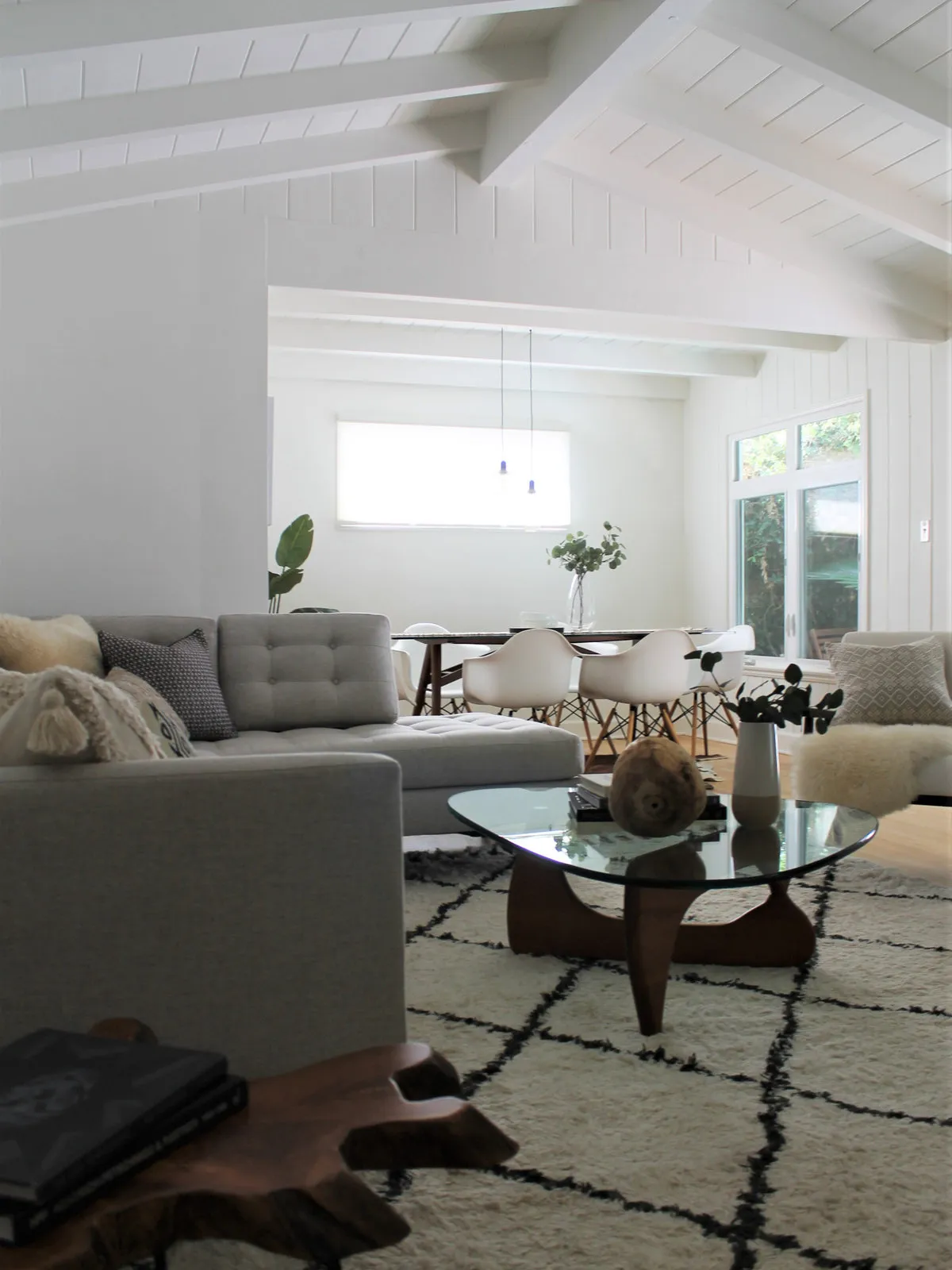
Let painted ceiling beams keep texture light
 SaveSupport Non AI Creator
Source: Mad Mod Home on Houzz.
Pale painted beams span a bright living room above gray seating and a lightly patterned rug. The architecture adds texture without a dark overhead layer. A pale painted ceiling lets the beam shapes remain visible above the gray sectional. White dining chairs continue the light palette beyond the living area, while the patterned rug marks the seating zone.
Use a few warmer timber accents at furniture height and check the room under evening lamps, so pale finishes do not feel flat after sunset. Keep the sofa's front feet connected to the rug if space allows. Use warm, separate lighting near the seats so the white ceiling and walls feel comfortable during evening use.
IDEA 12 / 20
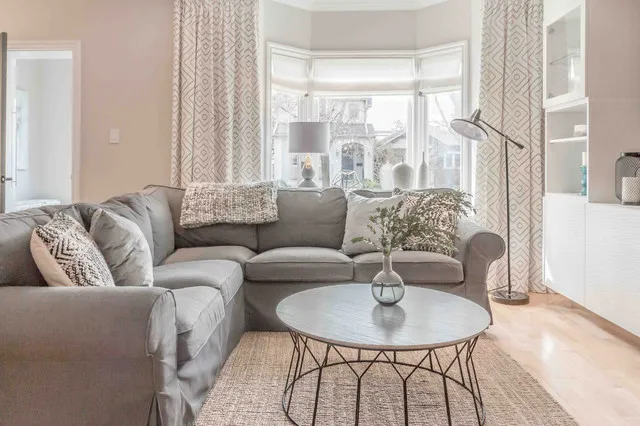
Give a bright corner sofa a modest round table
 SaveSupport Non AI Creator
Source: Ainsley Higgins Design on Houzz.
A light gray corner sofa sits beside the bay window around a round table with an open dark frame. Patterned curtains and pale cushions add soft detail, while the table's curved edge breaks up the sofa's larger right-angled shape without another bulky furniture piece.
Choose the table's size by reaching from the seats you use most, then check the route around it to the window. Keep curtain controls and any nearby cupboards accessible, and use a stable surface that suits everyday cups and books as well as decorative flowers.
IDEA 13 / 20
Bring warmth through a tan sofa and woven basket
 SaveSupport Non AI Creator
Source: Yanglin Cai Photography on Houzz.
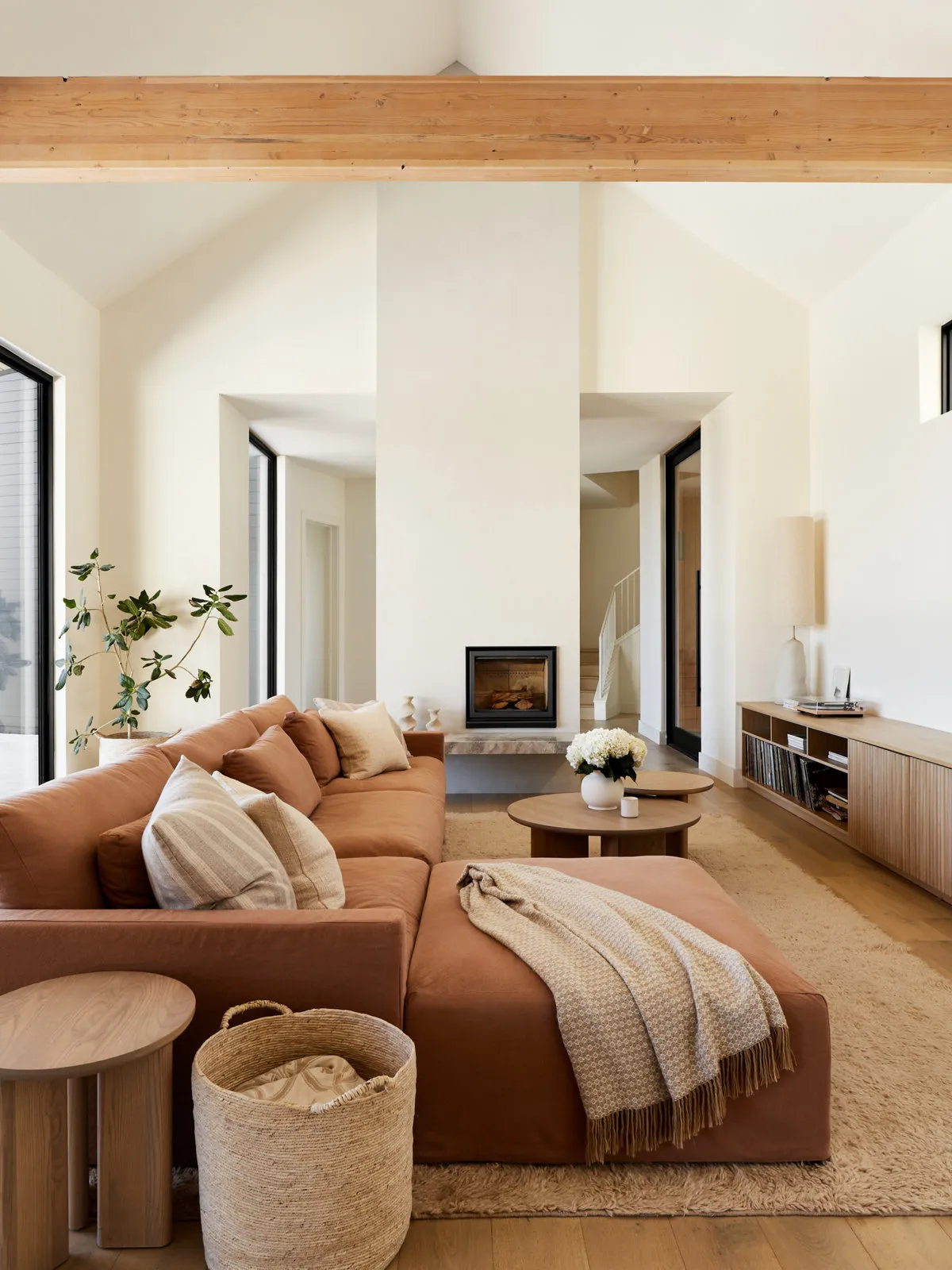
A tan sofa sits beneath pale walls beside a natural basket and light throw. The concentrated warm materials make the restrained room more comfortable. A timber beam and low cabinet repeat the sofa's warmth without adding more strong colors. The woven basket holds a folded textile beside the chaise, giving this quieter corner a practical purpose.
Use the basket for a blanket you actually handle and keep its position clear of the walkway, rather than adding storage only as decoration. Keep the basket easy to reach from the sofa and out of the main route. Choose a liner if its weave snags blankets, and avoid storing damp textiles in enclosed or poorly ventilated containers.
IDEA 14 / 20
Keep a Balanced Seating Group Simple
 SaveSupport Non AI Creator
Source: Texas Construction Company on Houzz.
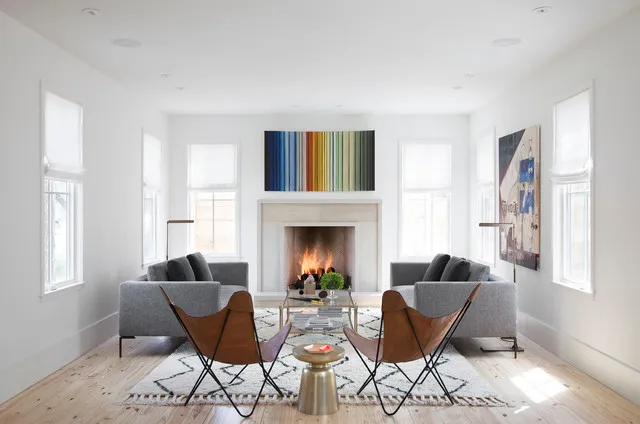
Gray sofas face one another across a central table, with two tan sling chairs completing the group near the foreground. The pale fireplace and walls keep the arrangement bright, while colorful artwork supplies a stronger accent above the otherwise restrained furniture.
Check the comfort and load rating of sling chairs before choosing them for everyday seating. Keep the central table reachable from both sofas and leave a route around the group's outer edge, so guests can move through without interrupting the main conversation space.
IDEA 15 / 20
Use timber furniture beside a pale hearth
 SaveSupport Non AI Creator
Source: The Mine on Houzz.
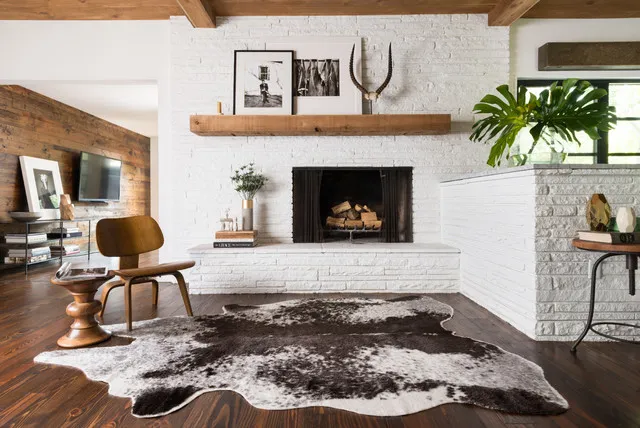
A timber chair and small table sit beside a pale brick fireplace and warm ceiling details. The visible grain gives the light room country warmth. A shaped timber chair and small rounded table sit beside the white brick hearth. The broad timber mantel echoes the ceiling details, making the pale masonry feel warmer without adding a large upholstered piece.
Keep the chair outside any required fireplace clearance and provide useful lighting nearby, so the corner supports reading as well as the room's overall appearance. Check that a small side table is stable on the actual floor surface. Keep it outside the fireplace's required clearances and add a reachable reading light if the chair will be used after dark.
PART 04
Finishing touches
IDEA 16 / 20
Add blue accents to a warm leather sofa
 SaveSupport Non AI Creator
Source: Houzz project gallery on Houzz.
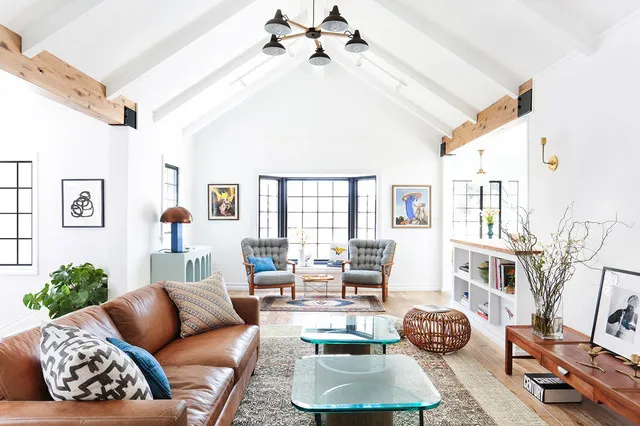
A warm leather sofa sits below a pale pitched ceiling beside blue accents and woven pieces. The contrasting textures give the bright room gentle variety. Blue cushions link the warm sofa to smaller colored pieces across the room. Two turquoise-edged tables and a woven footstool add playful shapes beneath the pale pitched ceiling without filling its height.
Choose one principal accent color and repeat it sparingly, letting the leather and timber do most of the work in warming the room. Choose one accent color to connect distant seats, then keep larger surfaces quieter. Test table heights against the sofa so their striking shapes remain practical for a cup or book.
IDEA 17 / 20
Create an easy conversation spot with two chairs
 SaveSupport Non AI Creator
Source: Cathie Hong Interiors on Houzz.
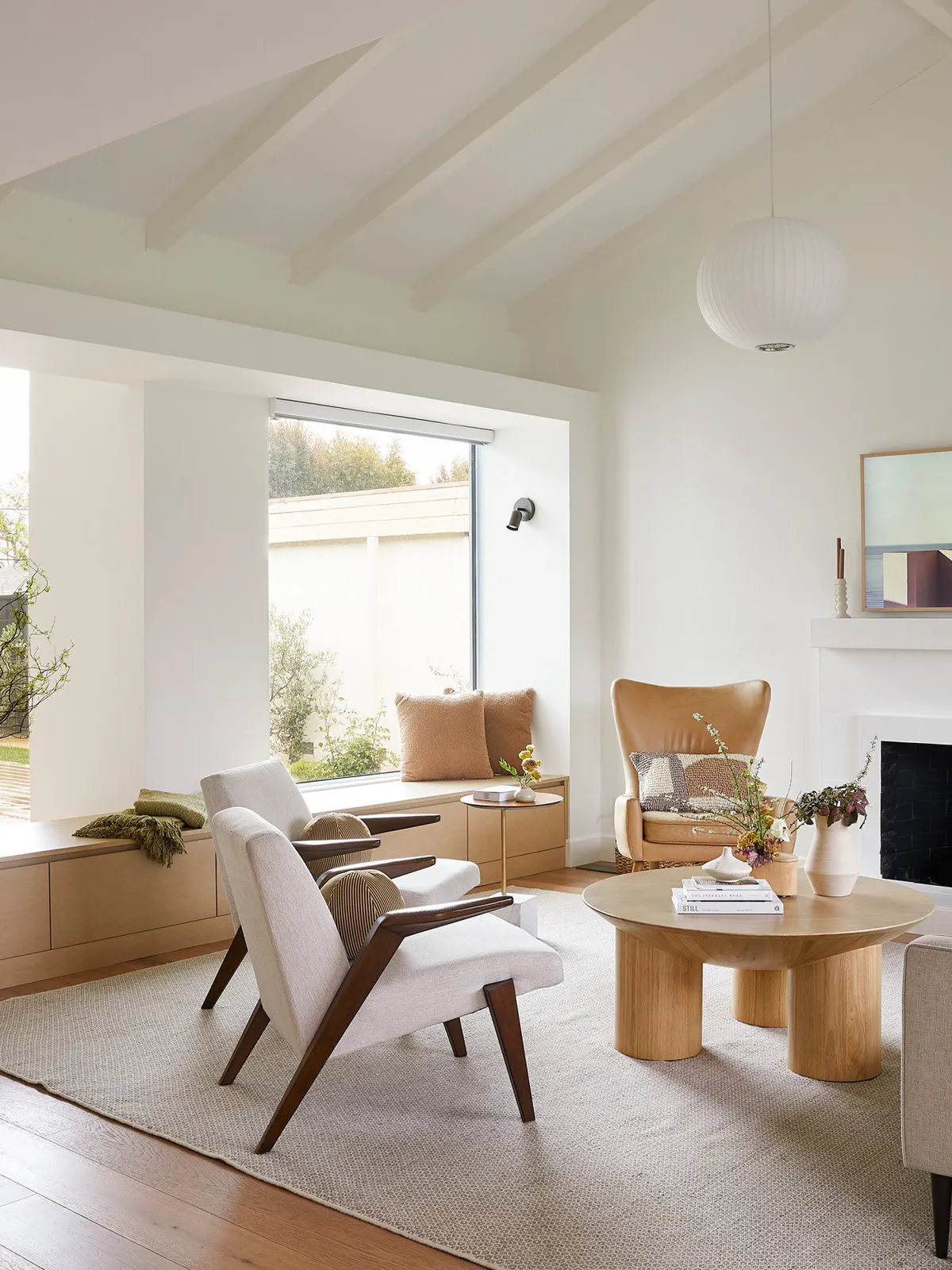
Two timber-framed chairs sit near a simple pale table beneath a bright ceiling. The compact arrangement offers useful seating without filling the room. A built-in window seat and timber chair share the room with a simple round table. The pale pitched ceiling and softly upholstered seats leave the compact group bright, while low storage uses the window wall.
Angle the chairs toward one another and check the table height, so the open-looking corner remains comfortable for a drink or conversation. Angle the chairs so reaching the table does not require leaning far forward. Keep access to any window-seat storage available and check the route to the hearth before adding another stool.
IDEA 18 / 20
Give a pale window corner a small storage piece
 SaveSupport Non AI Creator
Source: idealhome.co.uk.
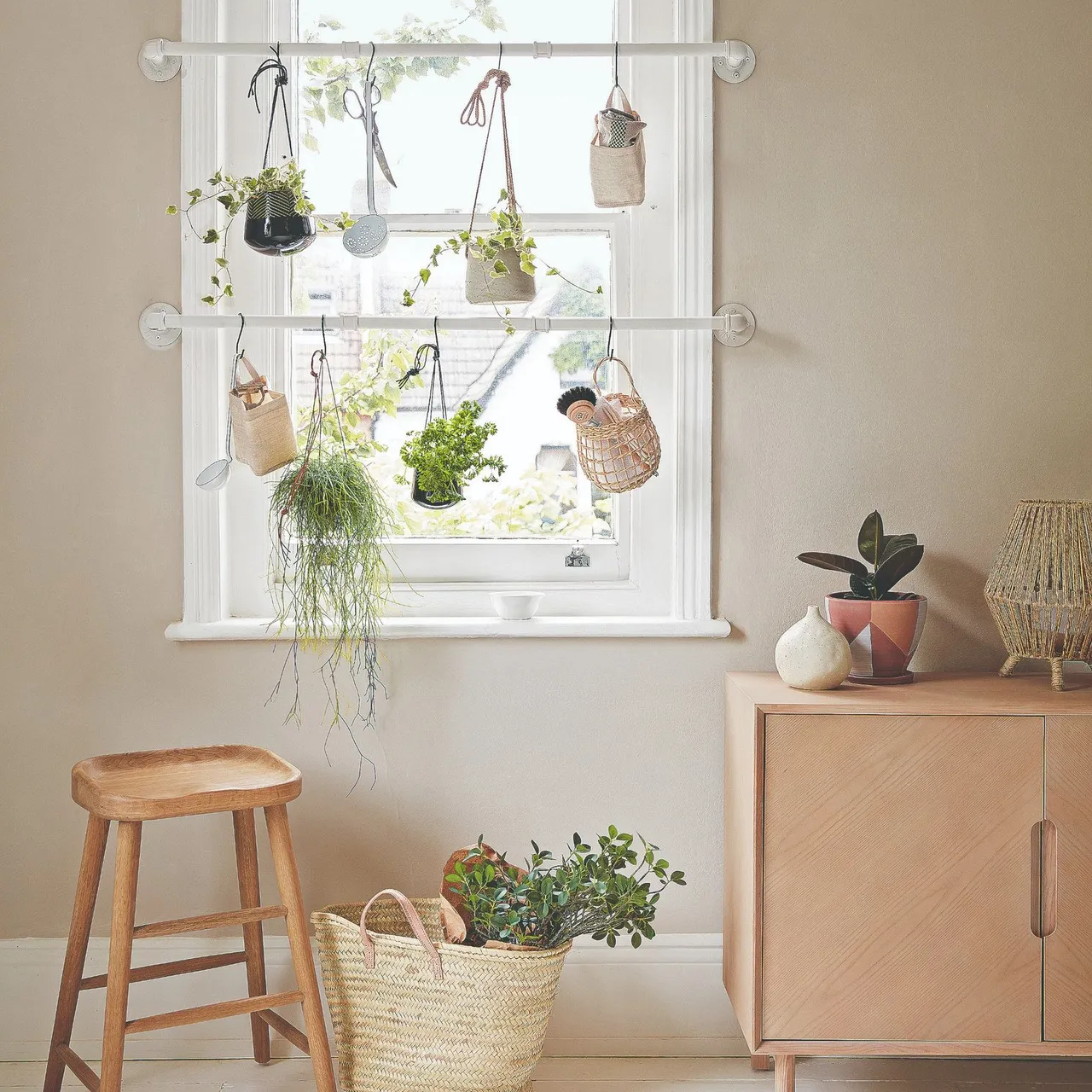
A pale timber cabinet sits beneath a bright window beside a stool and plants. The modest furniture makes the corner useful without blocking light. Hanging plants use the window's height while the small cabinet provides enclosed storage at one side. A timber stool and basket continue the warm texture without requiring a large shelving unit across the glazing.
Keep plant care accessible and protect the cabinet from water, while leaving enough free surface for the everyday objects the storage piece needs to hold. Choose secure supports rated for the plants' wet weight and use containers that do not drip onto furniture. Keep the window's opening mechanism reachable behind the hanging arrangement.
IDEA 19 / 20
Soften a timber chair with a removable layer
 SaveSupport Non AI Creator
Source: idealhome.co.uk.
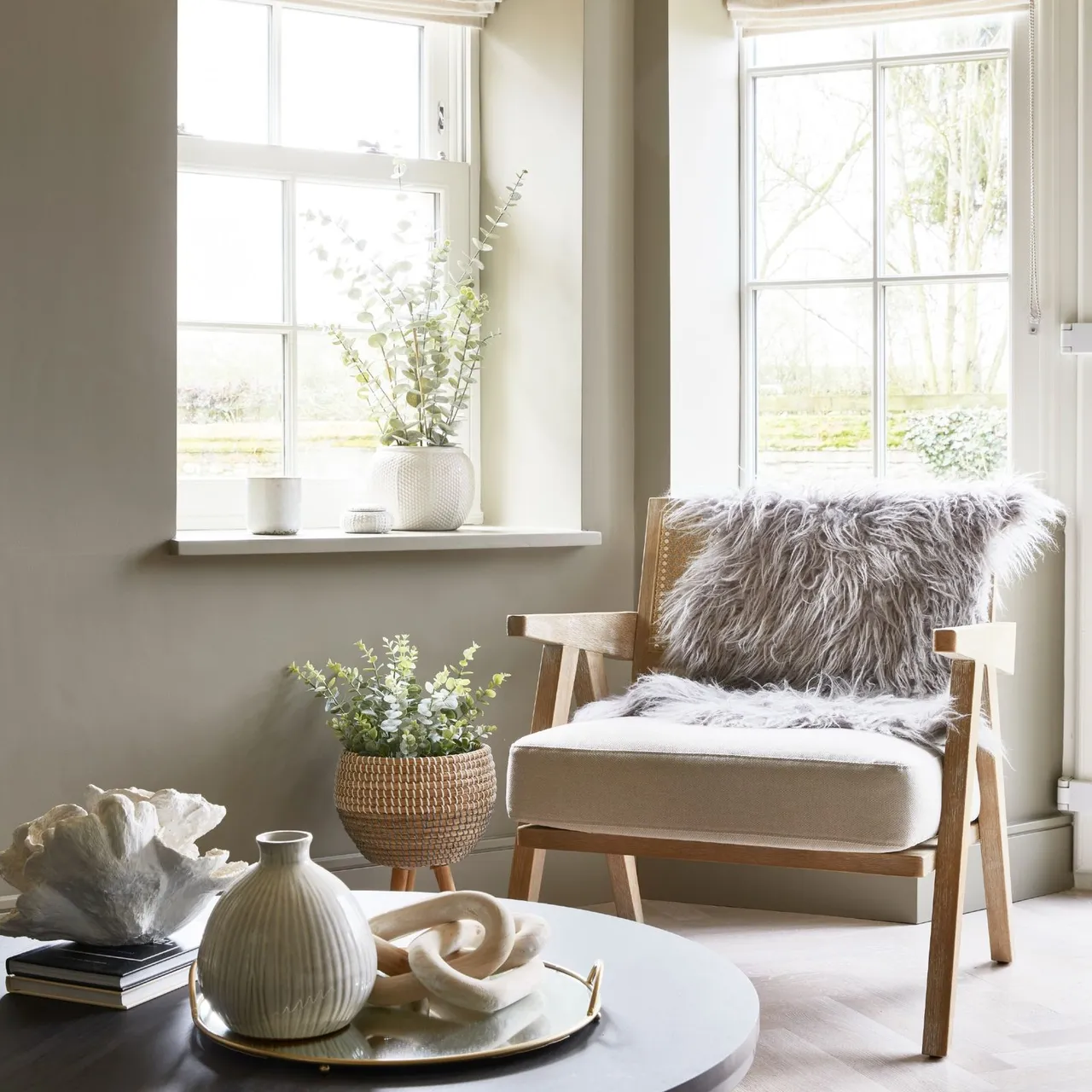
A pale timber armchair sits near a window with a soft textured throw across its back. The added layer makes the simple frame more welcoming. A long-textured gray layer softens the timber chair's back beside the bright window. Pale upholstery and simple vessels keep the corner quiet, while a small woven planter adds texture near the floor.
Choose a throw that can be cleaned easily and keep it clear of the floor, so the comfortable detail does not become a trip hazard. Check whether the layer sheds or slides during use before choosing it for daily seating. Keep its edges clear of the chair legs and make cleaning straightforward with a removable, washable option.
IDEA 20 / 20
Use pale curtains to frame the view
 SaveSupport Non AI Creator
Source: idealhome.co.uk.
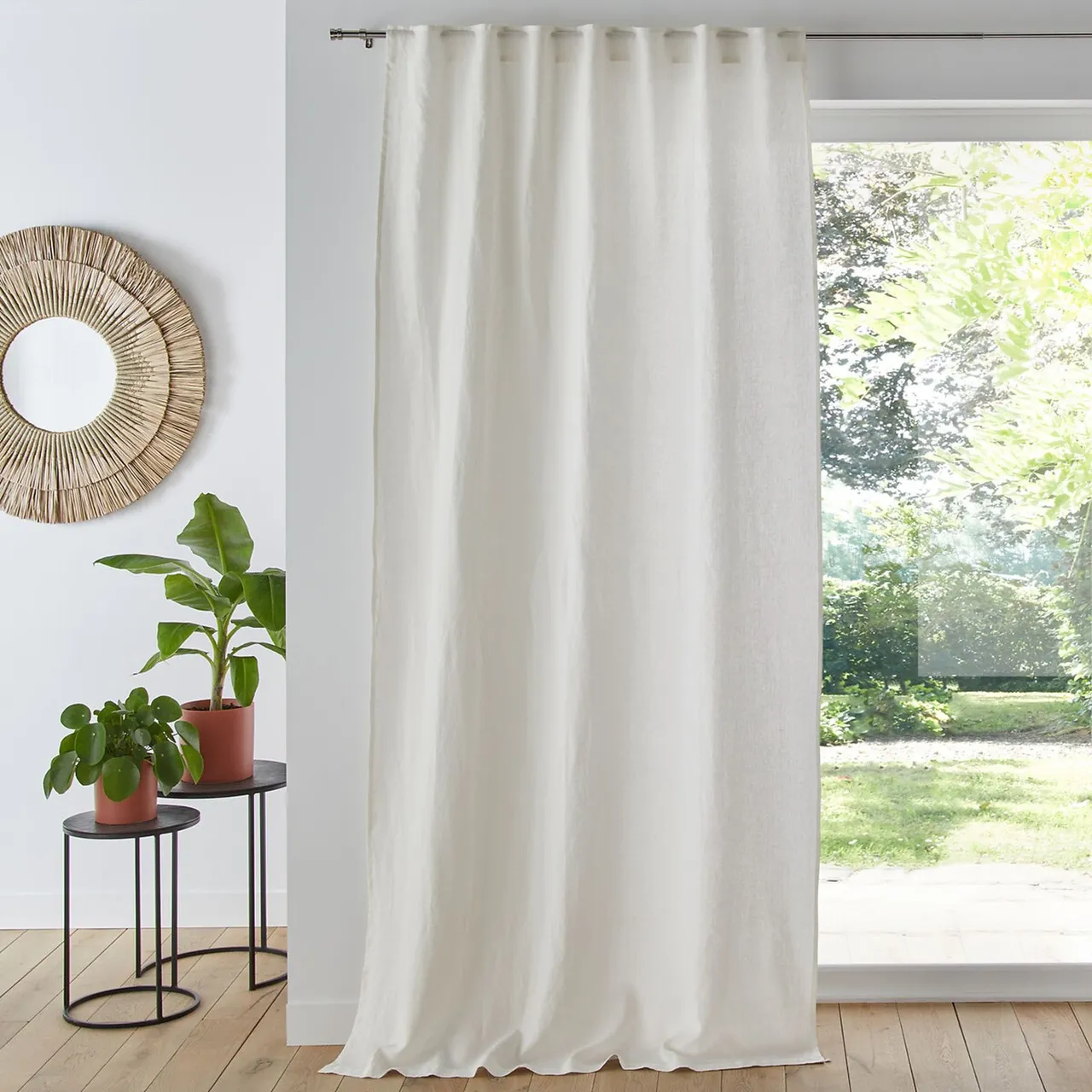
Light curtains hang beside a broad window, small plant and simple woven wall detail. The restrained treatment adds softness without hiding the daylight. Full-length pale curtains soften the broad window beside a round woven-framed mirror. Small plant stands keep greenery near daylight without adding a large cabinet to the window wall.
Choose curtain hardware that allows the fabric to draw clear of the glazing, and add a suitable privacy layer if the room is overlooked. Choose a curtain length that allows easy movement and cleaning around the floor. Keep plant stands stable and leave enough space for fabric to draw back without catching pots or trailing foliage.
BRING IT ALL TOGETHER
Make it work in your home
Choose a comfortable seating group and keep the main routes clear. A lighter room works best when its furniture is easy to use as well as simple to look at.
Add warmth through a few substantial materials and well-positioned lamps. Useful storage gives books and daily belongings somewhere to go without erasing the room's personality.