Black and white can look crisp and timeless in a bedroom, but the success of the scheme depends on what happens between those two extremes. Natural light, fabric texture, warm timber and the scale of patterns are what keep the space comfortable.
These examples range from a simple black bed in a white room to moody painted walls and graphic textiles. Choose an approach that suits your room size and daylight, then build enough softness around it to enjoy living there.
PART 01
Color and contrast
IDEA 01 / 20
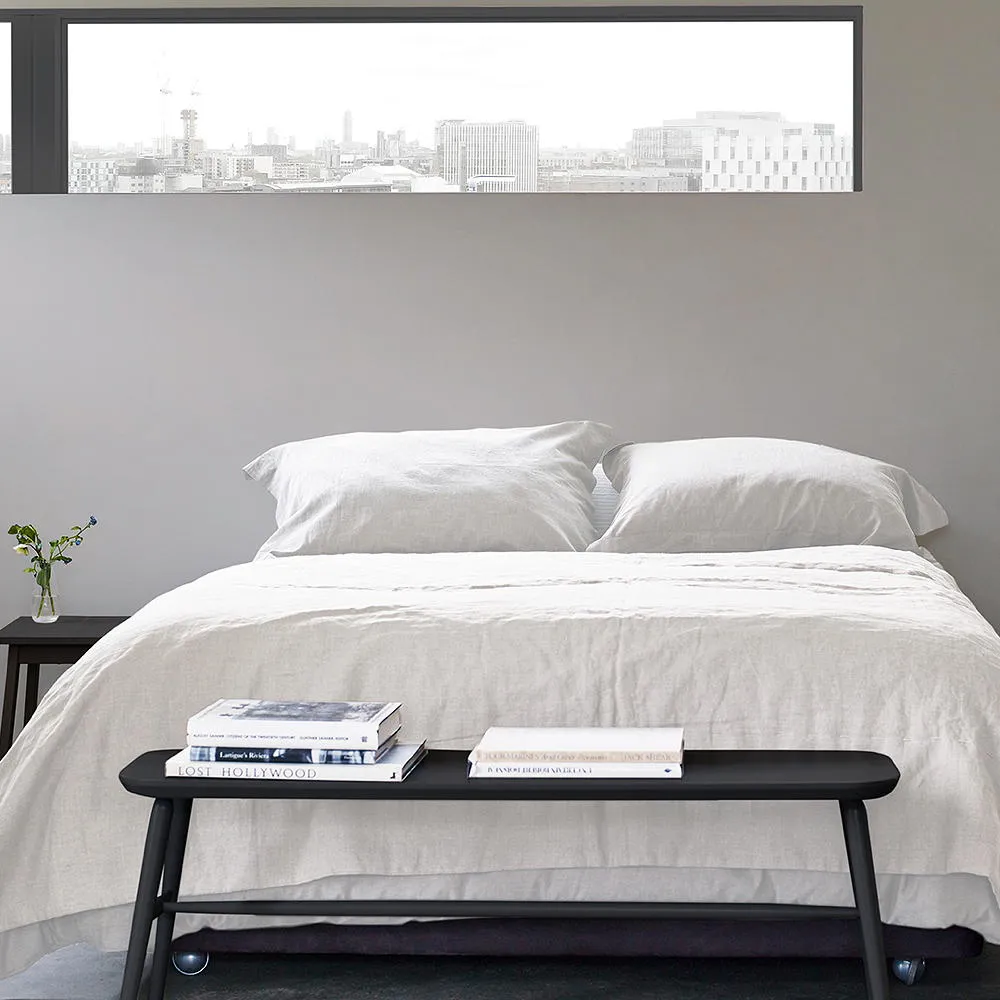
Use Black in a Slim Bench
 SaveSupport Non AI Creator
(Image credit: Dulux)
A white bed sits against pale walls with a narrow black bench at the foot. The small dark piece gives the light room definition. The slim bench repeats the window’s dark outline without adding a large upholstered block at the foot of the bed. Plain white bedding lets those few black details remain distinct.
Start with one black furniture detail if a fully dark wall feels too strong. Measure the walking route beyond the bench and keep the bed access comfortable. Tape out the bench depth with the bedding hanging normally, then walk past its corners. A narrower piece can provide a useful seat or surface without filling the whole end of the room.
IDEA 02 / 20
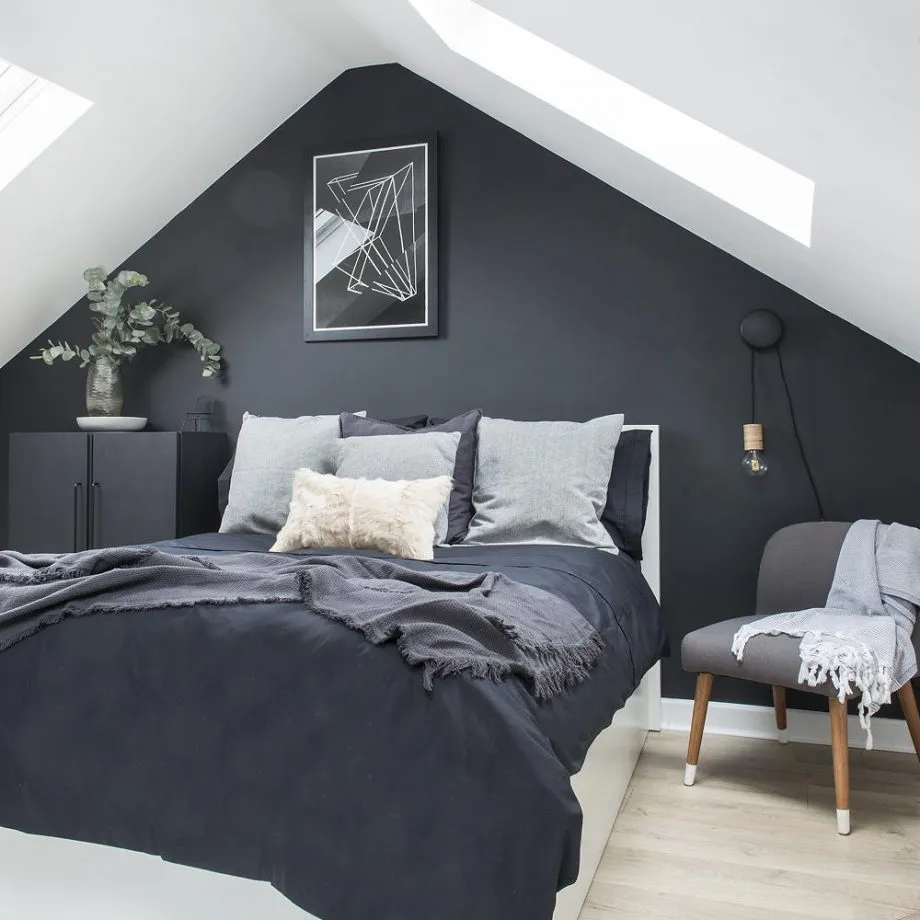
Soften Black With Charcoal
 SaveSupport Non AI Creator
(Image credit: Future PLC/Colin Poole)
A dark bed sits against a charcoal gable wall beneath bright roof windows. Pale pillows and the floor soften the deep backdrop. The dark gable draws the eye toward the bed, while the white roof slopes make its shape readable. A pale chair and textured cushion keep the charcoal scheme from feeling entirely hard-edged.
Test dark paint beside the bedding before committing. Use lighter textiles near the bed and plan bedside lighting separately from daylight through the roof windows. Try paint samples near the floor and higher on the gable, where roof light may change their appearance. Add a lamp suited to reading rather than relying on the decorative hanging bulb alone.
IDEA 03 / 20
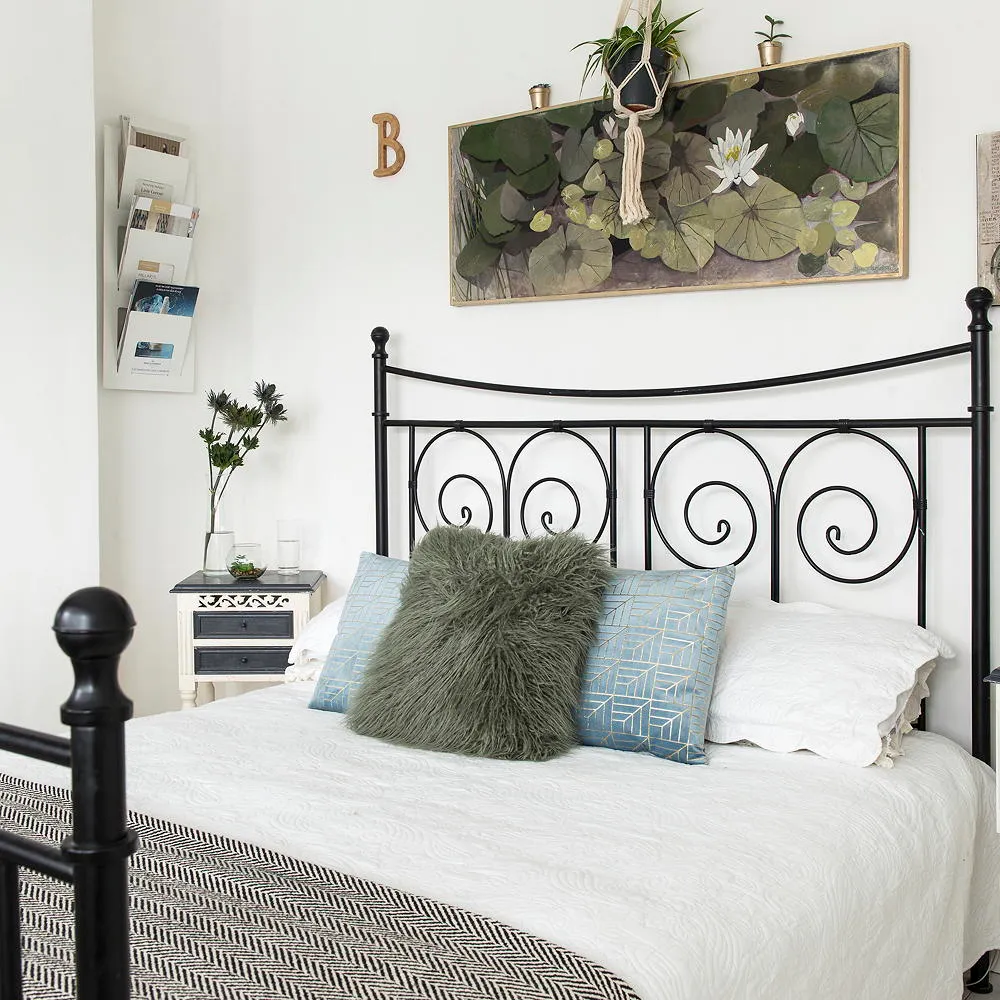
Use a Black Metal Bed Frame
 SaveSupport Non AI Creator
(Image credit: Future PLC/Colin Poole)
A black scrollwork bed stands against white walls with pale bedding and green cushions. The open frame adds dark lines without a solid dark headboard. The scrollwork keeps the wall visible through the headboard, making the black frame feel lighter. Green cushions and botanical artwork bring a gentle accent without changing the pale background.
Compare the frame proportions with the room size before buying. Keep surrounding patterns restrained and use one gentle accent color if you want to soften the monochrome palette. Leave a little plain wall around the frame so its curves are easy to see. Compare the mattress height with the decorative headboard before buying, because a tall mattress can conceal much of it.
IDEA 04 / 20
Let the Headboard Supply the Pattern
 SaveSupport Non AI Creator
(Image credit: Future PLC/James French)
A black-and-white zigzag headboard sits against a dark wall above pale bedding. Smaller colored cushions add a limited accent. The broad chevron headboard becomes the strongest pattern against the dark wall. White bedding gives it a clear edge, while smaller geometric cushions repeat the idea at a different scale.
Keep the largest bedding areas simple when the headboard has a strong motif. Test any accent color beside the patterned fabric rather than adding several unrelated bright shades. Choose the patterned headboard fabric before selecting accent cushions, and compare them together at the bed. Keeping the main cover plain makes it easier to change those smaller colors over time.
IDEA 05 / 20
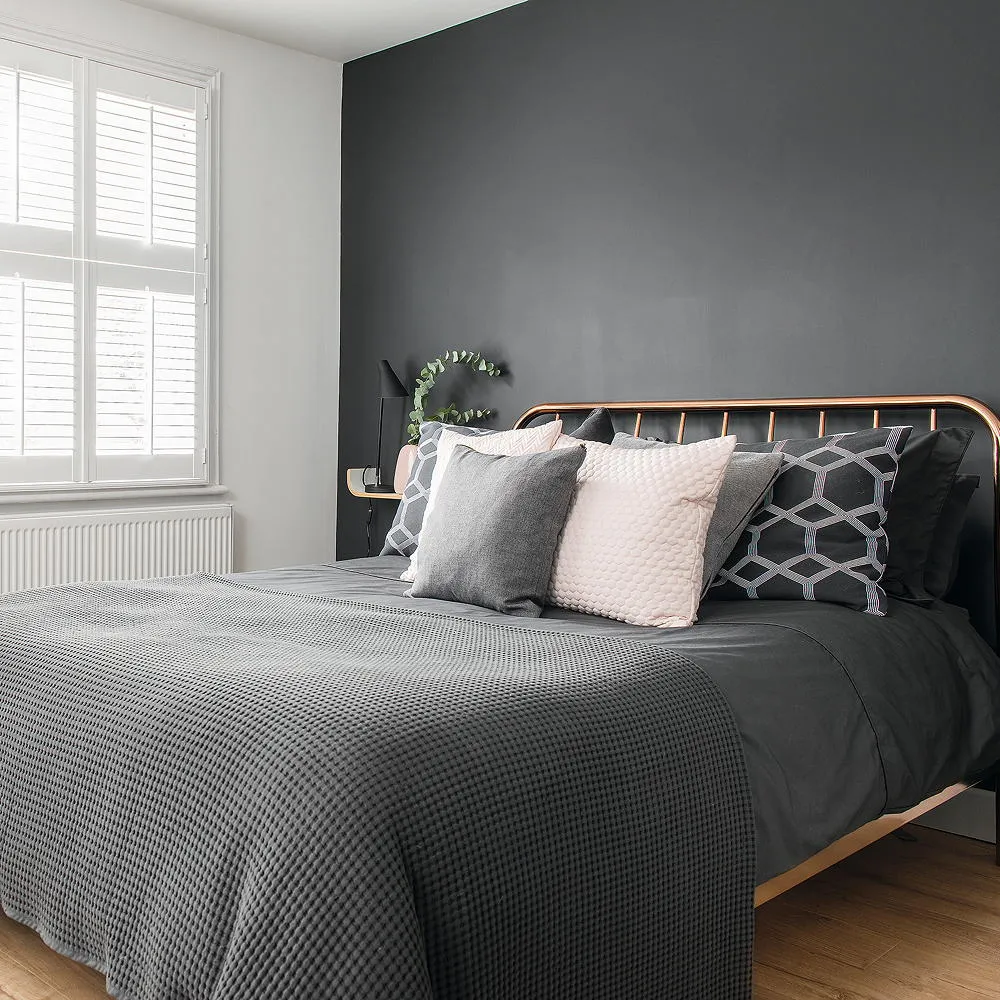
Use a Dark Wall With White Trim
 SaveSupport Non AI Creator
(Image credit: Future PLC/Colin Poole)
A dark gray wall stands behind a deep bedspread beside bright white shutters. The lighter window detail gives the darker surfaces a clear edge. The white shutters and radiator break up the deeper wall and bedding colors. A warm metal bed frame introduces another finish without adding a competing print to the restrained background.
Compare the dark paint with the fabric in daylight and lamplight. Use a lighter bedside surface where practical objects need to remain easy to find. Keep a plain light pillow or throw where you want the dark bedding to feel softer. Test your bedside lamp against the paint to check whether everyday items remain easy to see.
PART 02
Materials and texture
IDEA 06 / 20
Mix Geometric Bedding With White Walls
 SaveSupport Non AI Creator
(Image credit: Future PLC/Fiona Walker-Arnott)
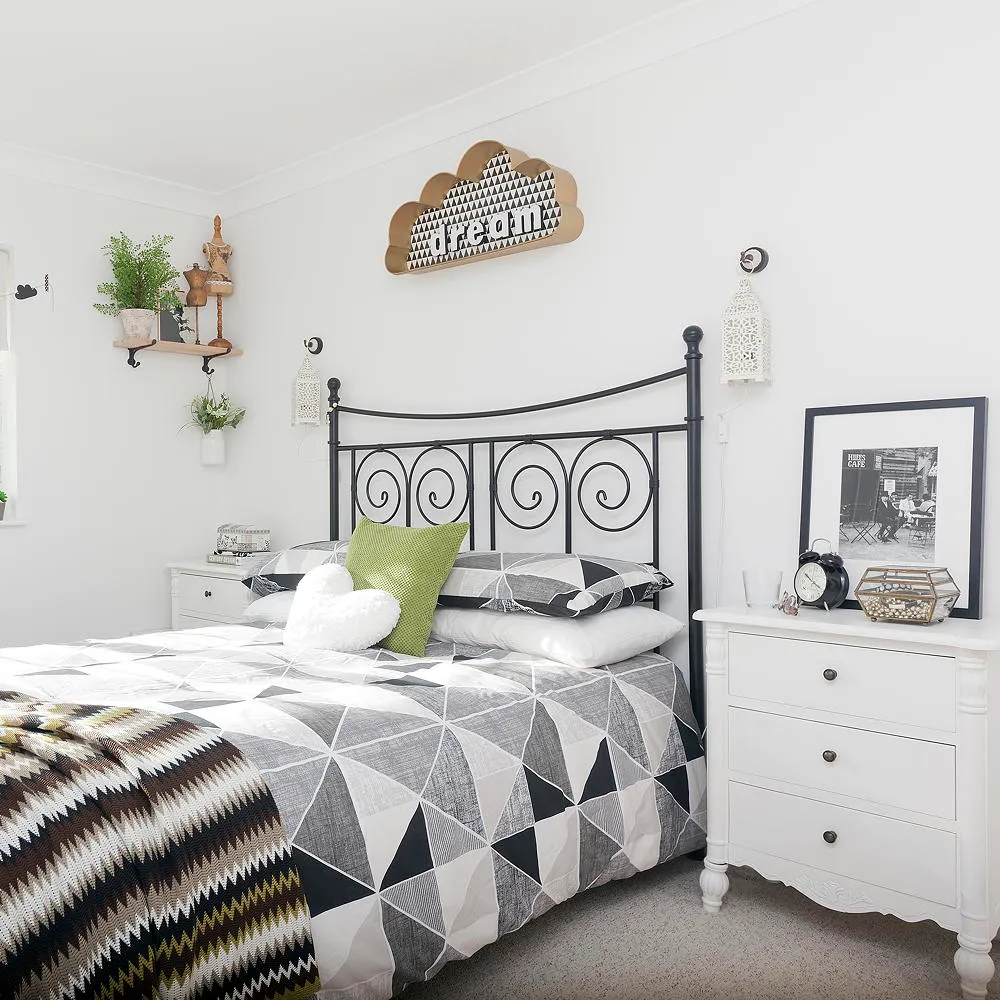
A black metal bed carries gray-and-white geometric bedding beside white walls. The repeated shapes provide detail within the restrained palette. The open black frame and white bedside drawers let the geometric cover remain the main feature. A small green cushion and plants soften the otherwise closely related black, gray and white tones.
Choose one main geometric pattern before adding smaller prints. Keep the wall behind it quieter and compare rug and bedding samples together. Try the cover without the additional throw first, then decide whether the second pattern adds enough variety. A plain rug can give the repeating shapes some breathing room below the bed.
IDEA 07 / 20
Add Botanical Pattern to Monochrome
 SaveSupport Non AI Creator
(Image credit: Future PLC/James French)
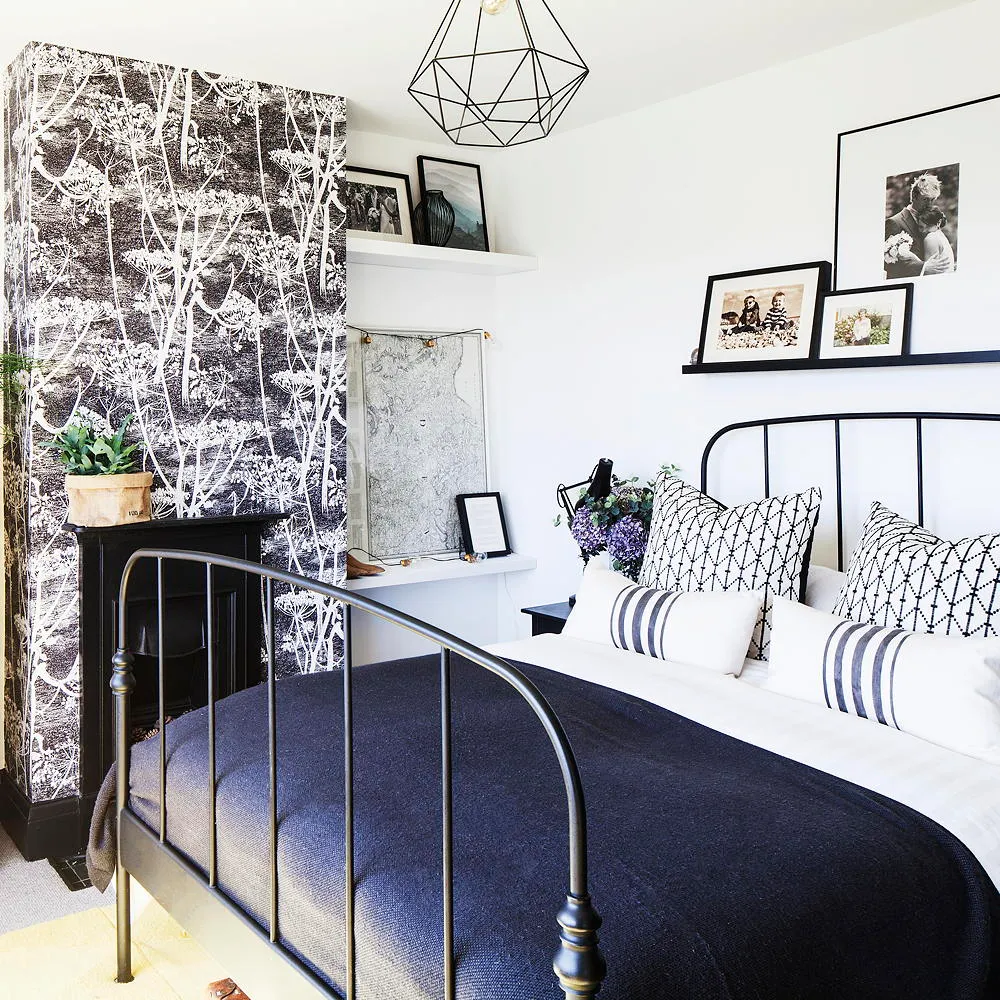
Black-and-white botanical wallpaper sits beside a dark metal bed and pale walls. The pattern supplies movement without another strong wall color. The botanical motif is concentrated around the projecting wall, leaving the bed against a quieter white background. Black picture ledges and the metal frame repeat the darker lines at a smaller scale.
View the wallpaper repeat from the doorway before ordering. Keep the largest bedding surface plain if the wall already contains dense detail. Decide which wall receives the paper before ordering its repeat, especially around returns and corners. Use simple bedding if the pattern will remain visible beside the bed from the doorway.
IDEA 08 / 20
Use a Fine Monochrome Wall Pattern
 SaveSupport Non AI Creator
(Image credit: Future PLC/Colin Poole)
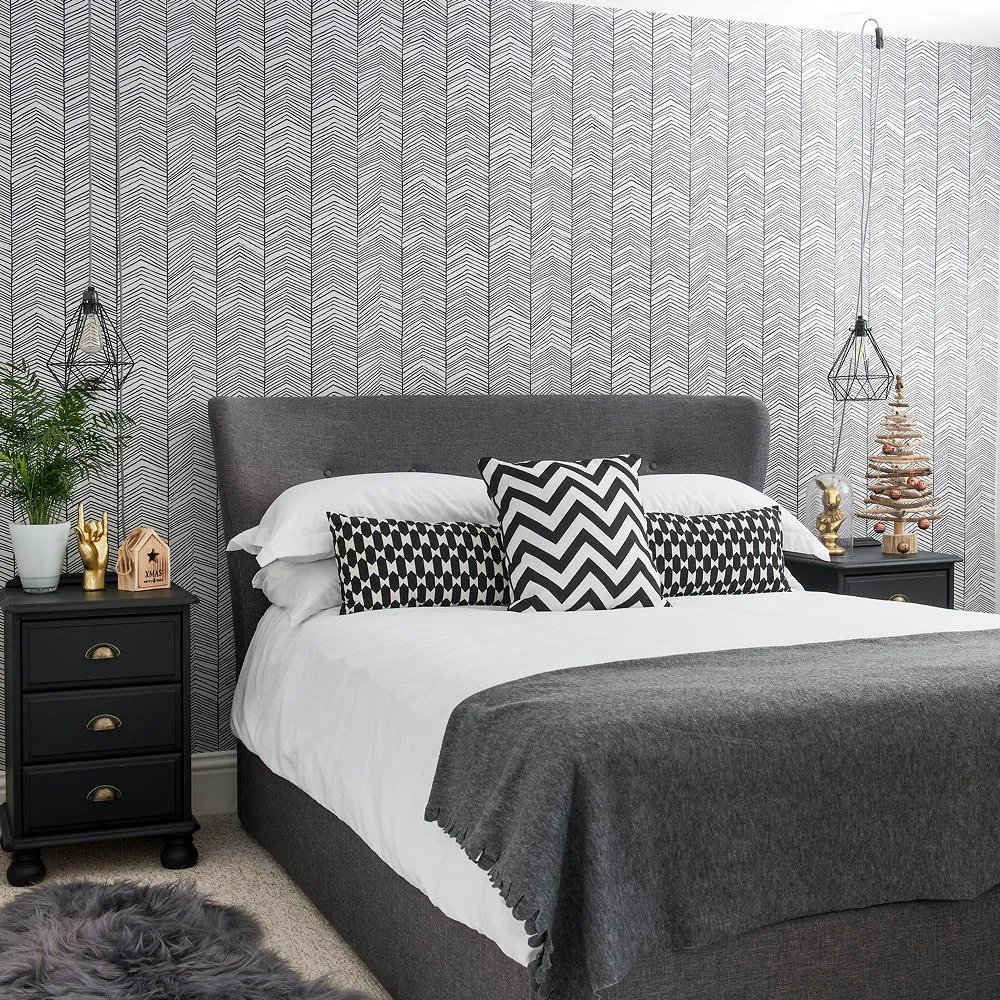
A small black-and-white wall pattern sits behind gray bedding and zigzag cushions. The close-scale wallpaper gives the simple bed a textured background. Fine repeated lines on the wall contrast with the much larger zigzags on the cushions. The plain gray headboard creates a useful pause between those two scales of black-and-white pattern.
Compare all patterns together at room scale. Use a quieter rug or plain cover if the wallpaper and cushions begin to compete. Lay the cushions beside a large wallpaper sample before ordering both. If the combination feels restless from across the room, remove one smaller print and keep the main cover white.
IDEA 09 / 20
Keep Black Lines on Pale Bedding
 SaveSupport Non AI Creator
(Image credit: Future PLC/James French)
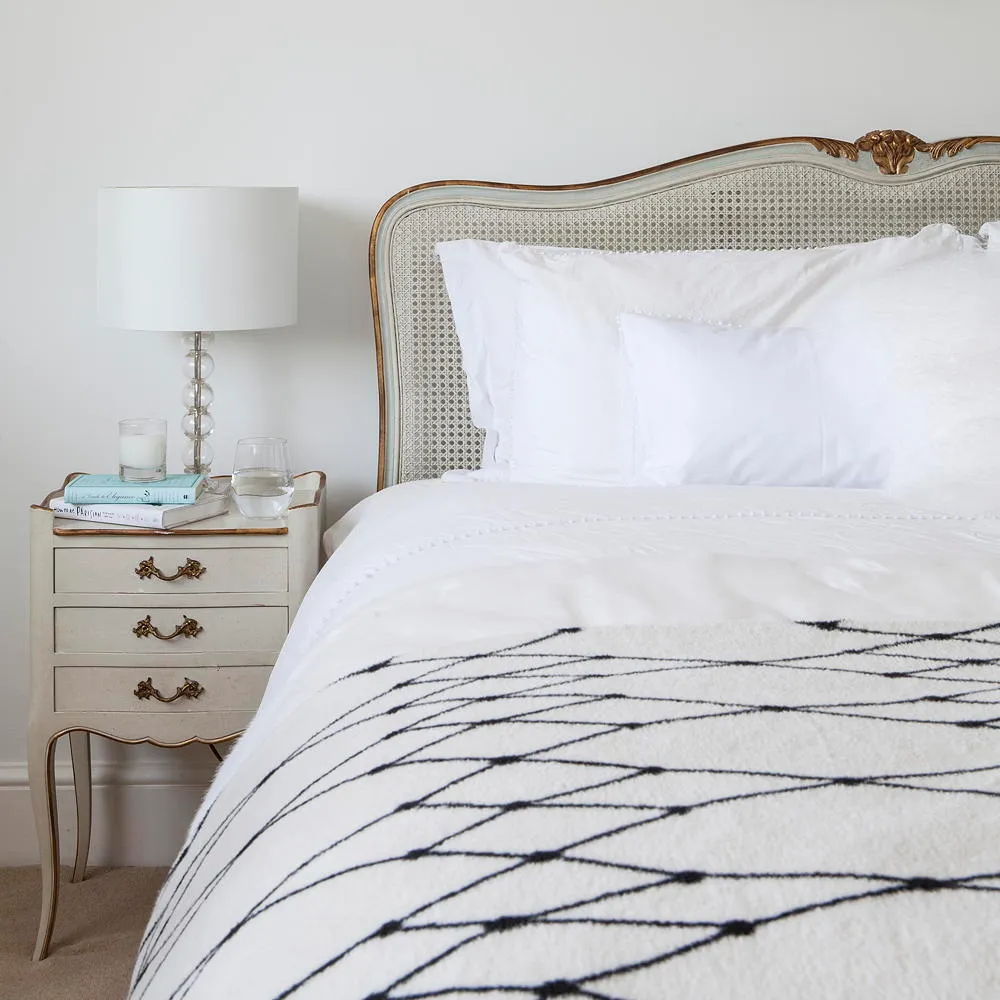
Thin dark lines cross a white bedcover beside a pale traditional headboard. The light background makes the small pattern easy to see. The thin crossing lines bring contrast without hiding the pale cover beneath them. A gently curved traditional headboard and light bedside cabinet keep the overall arrangement softer than a black painted wall.
Use this approach when you want a gentle monochrome scheme. Check the cover’s cleaning guidance and let the bed frame or bedside lamp provide a second dark detail. Try this level of pattern before buying several stronger monochrome accessories. Choose one small dark detail nearby, such as a frame, so the cover feels connected to the rest of the room.
IDEA 10 / 20
Pair a Black Wall With White Bedding
 SaveSupport Non AI Creator
Source: Rikki Snyder on Houzz.
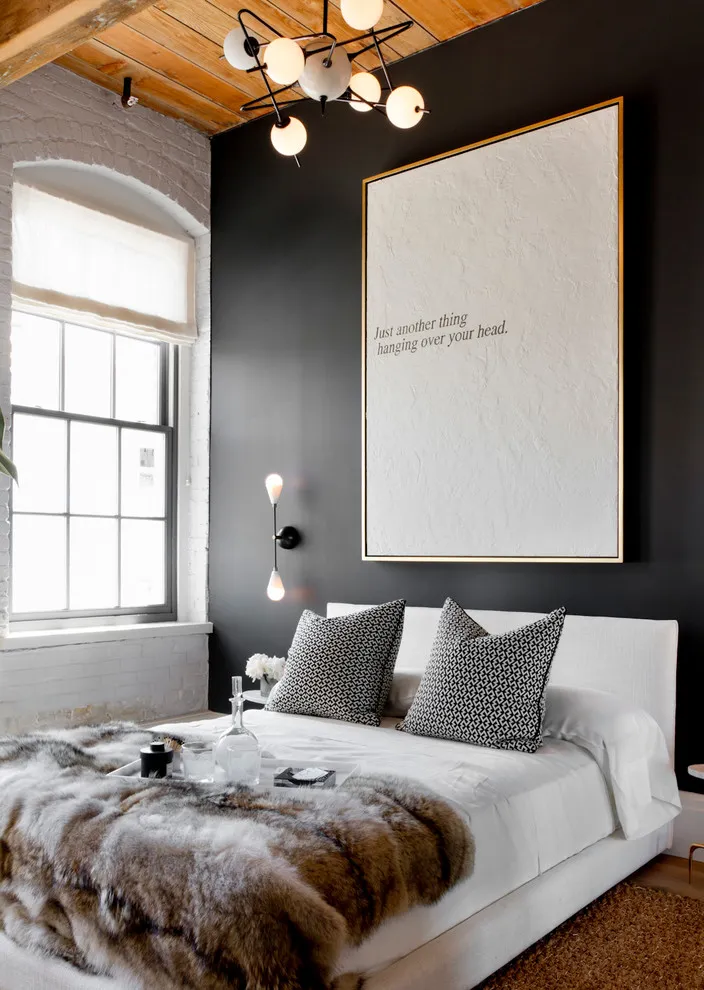
White bedding sits beneath a black wall and a large pale artwork. Warm wood and a textured throw soften the contrast. A broad pale artwork repeats the shape of the white headboard against the black wall. Timber above and a thick textured throw add warmth so the contrast does not depend only on painted surfaces.
Test black paint against the actual bedding and window light. Use comfortable bedside lighting and keep artwork scale connected to the bed width. Position the picture with the bed and pillows in place so its lower edge has room to breathe. Check the wall lamp from a reclined position for glare as well as useful reading light.
PART 03
Layout and everyday comfort
IDEA 11 / 20
Outline Black Panels With White
 SaveSupport Non AI Creator
Source: Legacy Construction Northeast LLC on Houzz.
White rectangular trim outlines a black wall behind a pale bed and rug. The wall becomes the main graphic feature. The white outlines make the dark wall a deliberate graphic background for the bed. Pale bedding and the broad rug repeat that contrast lower down without introducing another large wall motif.
Plan panel proportions around the headboard before fitting trim. Keep additional wall art restrained so the strong black-and-white outline remains readable. Sketch the center and side rectangles with the headboard and lamps included. Keep artwork within the main arrangement, leaving enough black wall visible around it for the trim to remain readable.
IDEA 12 / 20
Use Black Panels With a Checked Cover
 SaveSupport Non AI Creator
Source: BERNHARDT Mold Inspection Restoration, Inc. on Houzz.
A black paneled wall sits behind a white bedcover with fine dark lines. The repeated geometry links wall and bedding at different scales. The broad panel rectangles contrast with the smaller checks on the cover, while a plain gray headboard separates them. A white bedside table repeats the lighter bedding beneath the dark wall.
Choose one pattern as the main feature and keep the other quieter. Check paint sheen under side lighting so the dark panels do not create distracting glare. Check how many horizontal rails the headboard will hide before fitting trim. Keep the largest cover areas light if you want the black wall to remain the room’s main source of contrast.
IDEA 13 / 20
Keep the Accent on One Wall
 SaveSupport Non AI Creator
Source: Nest Design Studio on Houzz.
A dark wall frames pale bedding beside white side walls and a woven pendant. The light surroundings keep the room from feeling uniformly deep. White side walls and a pale woven pendant give the charcoal background a gentler edge. A picture ledge collects different frame sizes into one arrangement above the bed rather than scattering them widely.
Test the accent from the doorway as well as the bedside. Choose a useful reading lamp if the woven ceiling shade creates soft or patterned light. Set the ledge height against the headboard and pillows before drilling. Check that displayed frames are secure, and choose bedside lamps that give usable light when the pendant casts a softer glow.
IDEA 14 / 20
Mix Ornate White Furniture With Black Walls
 SaveSupport Non AI Creator
Source: Alyssa Lee Photography on Houzz.
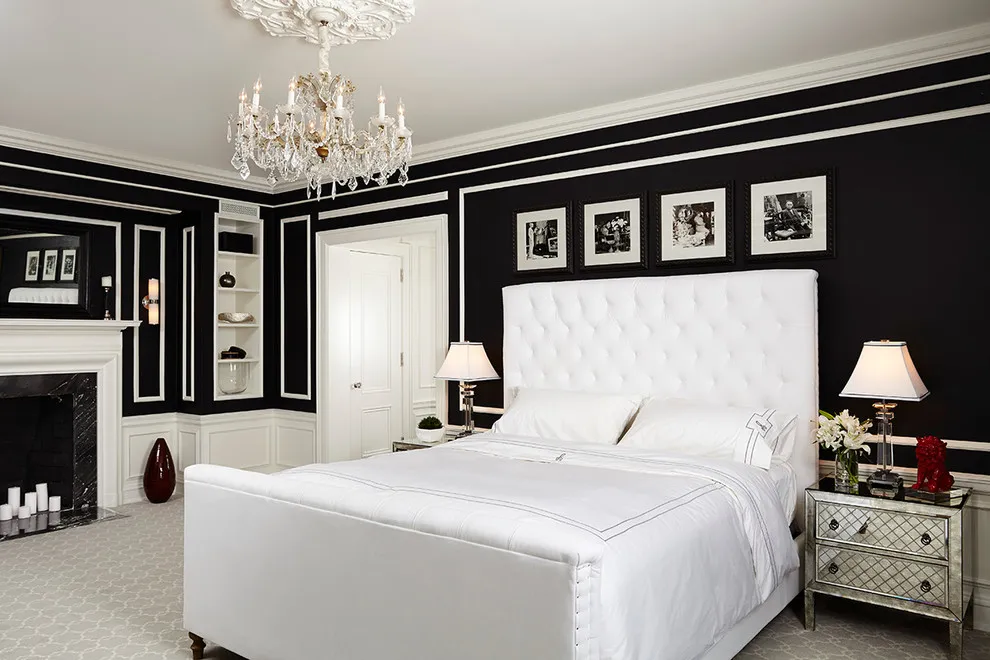
A white upholstered bed stands against black walls with white decorative trim. Mirrored furniture adds reflections within the strong contrast. White trim follows the room around the black walls, while the tall tufted bed provides a pale center. Small monochrome pictures repeat the contrast without adding another strong color above the headboard.
Limit reflective surfaces where windows create glare. Keep bedding quieter so the bed detail and wall trim can carry the decoration. Compare mirror positions with windows and lamps from your usual seat on the bed. Plain bedding allows the trim, headboard texture and reflective furniture to provide most of the detail.
IDEA 15 / 20
Add One Small Color Accent
 SaveSupport Non AI Creator
Source: Rejoy Interiors, Inc. on Houzz.
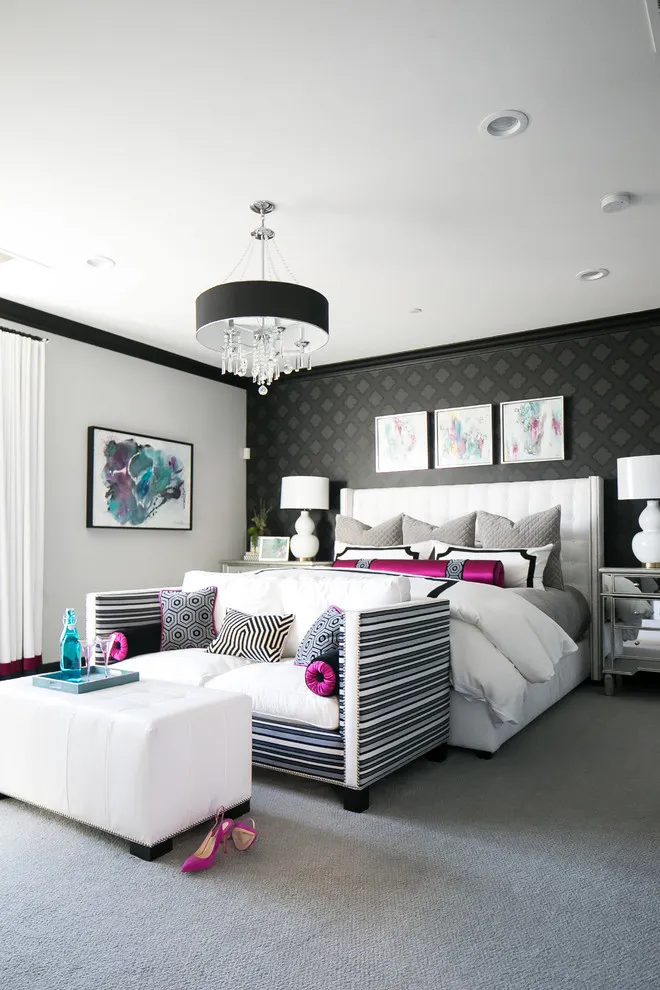
Pink accent cushions and small accessories bring color to the pale bed and nearby striped chairs. The dark patterned wall remains the broadest contrast, while white bedding and lamps give the busy monochrome prints a calmer place to meet.
Choose one bright accent and repeat it in a few small pieces before changing larger furniture. Compare the striped chairs with the wall pattern from the doorway, where both are visible together. Keep the main cover plain so the colored cushions remain easy to change without rebuilding the whole scheme.
PART 04
Finishing details
IDEA 16 / 20
Use a Star Pattern in a Child’s Room
 SaveSupport Non AI Creator
Source: SISSY+MARLEY on Houzz.
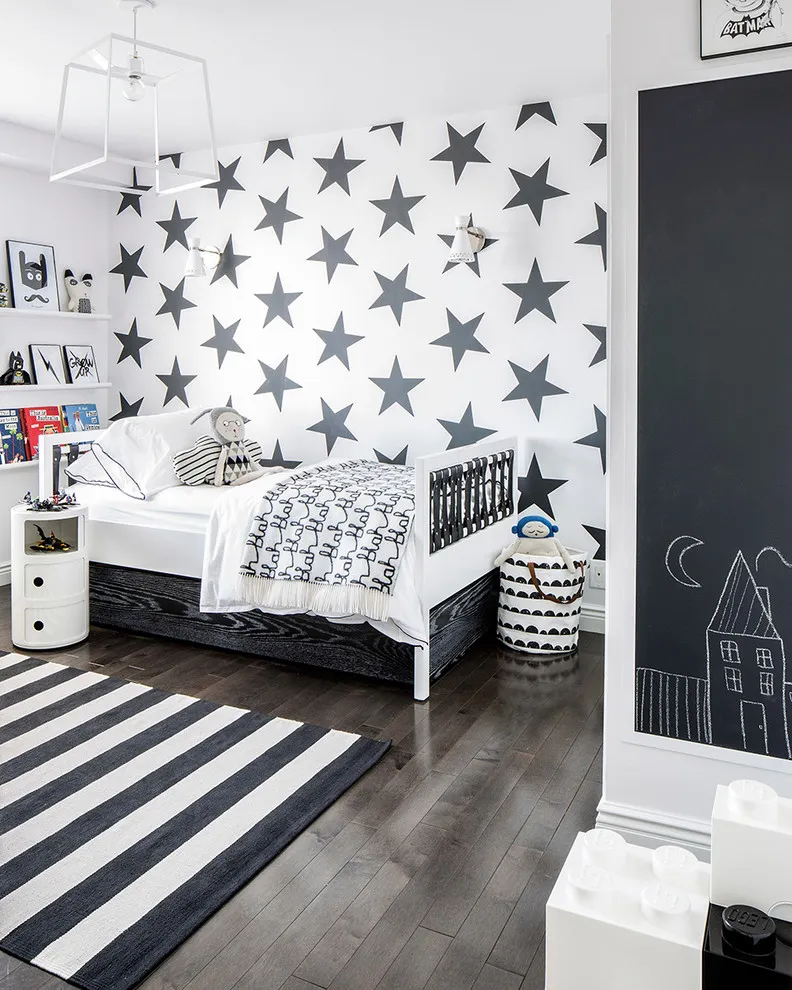
Black stars cover a white wall above pale bedding beside a striped rug. The simple shapes create a playful monochrome scheme. Large stars create a clear backdrop, while the striped rug uses a different scale beneath the bed. White furniture keeps both patterns readable and gives toys and books a quieter place to sit.
Keep pattern scale comfortable from the bed and doorway. Secure nearby storage and choose washable textiles suited to everyday use. Check the star spacing from across the room rather than placing individual shapes at random. Use accessible storage for daily items and keep the rug flat along the route around the bed.
IDEA 17 / 20
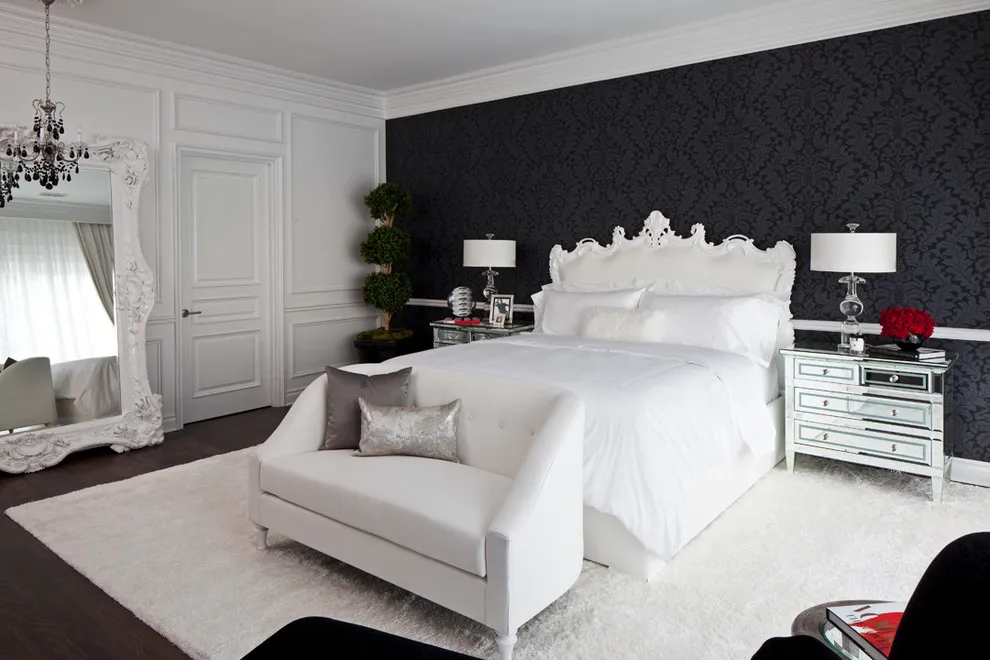
Balance a Dark Wall With Pale Upholstery
 SaveSupport Non AI Creator
Source: KES Studio on Houzz.
Pale upholstered seating and bedding sit beneath a dark textured bedroom wall. The light furniture keeps the broad accent from overwhelming the room. The dark patterned wall makes the white carved headboard and pale seat stand out clearly. A large light rug connects them, while the white paneled side wall gives the strong feature a calmer neighbor.
Compare the wall finish with upholstery samples before installation. Leave comfortable walking routes around additional seating and use bedside light at a useful height. Keep the seat narrow enough to preserve access around the foot of the bed. Compare a large wall sample with the headboard, because two detailed surfaces can feel busier together than they do separately.
IDEA 18 / 20
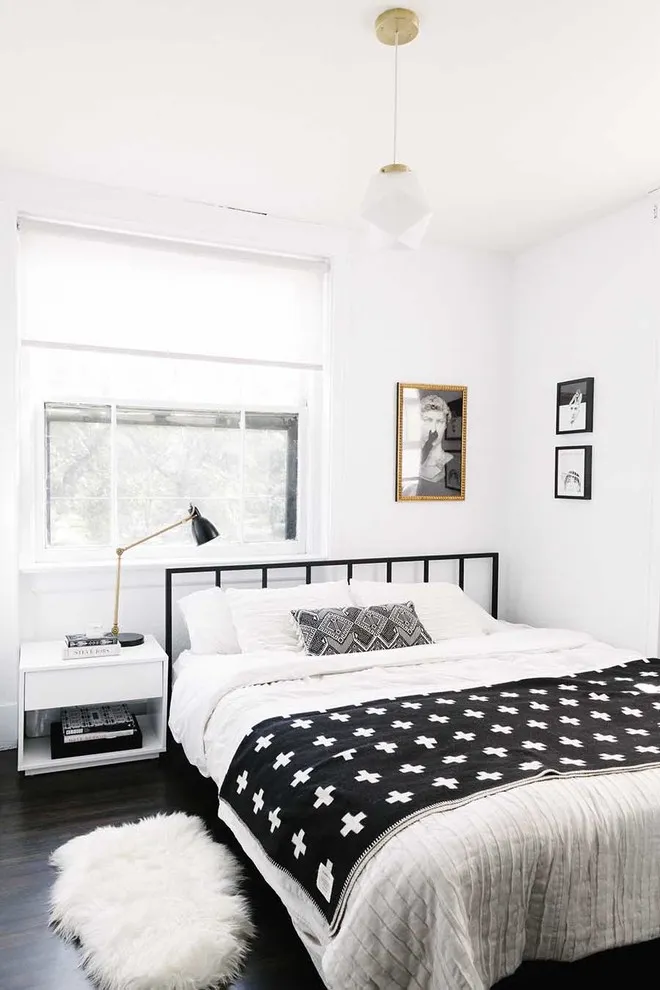
Put the Contrast in the Bedcover
 SaveSupport Non AI Creator
Source: Stafford Bensen on Houzz.
A black patterned cover sits on a white bed below a slim black metal frame. Pale walls keep the bedding as the main graphic detail. A black throw with repeated white crosses sits over mostly white bedding, concentrating pattern in one removable layer. The slim black frame and dark floor repeat its contrast without requiring a dark wall.
Use removable bedding to try a stronger contrast before repainting. Keep the surrounding rug and curtains quieter if the cover already carries a pronounced motif. Fold the throw to change how much pattern you see before replacing curtains or rugs. Plain pillows and a quiet window shade keep the graphic strip from competing with several other large motifs.
IDEA 19 / 20
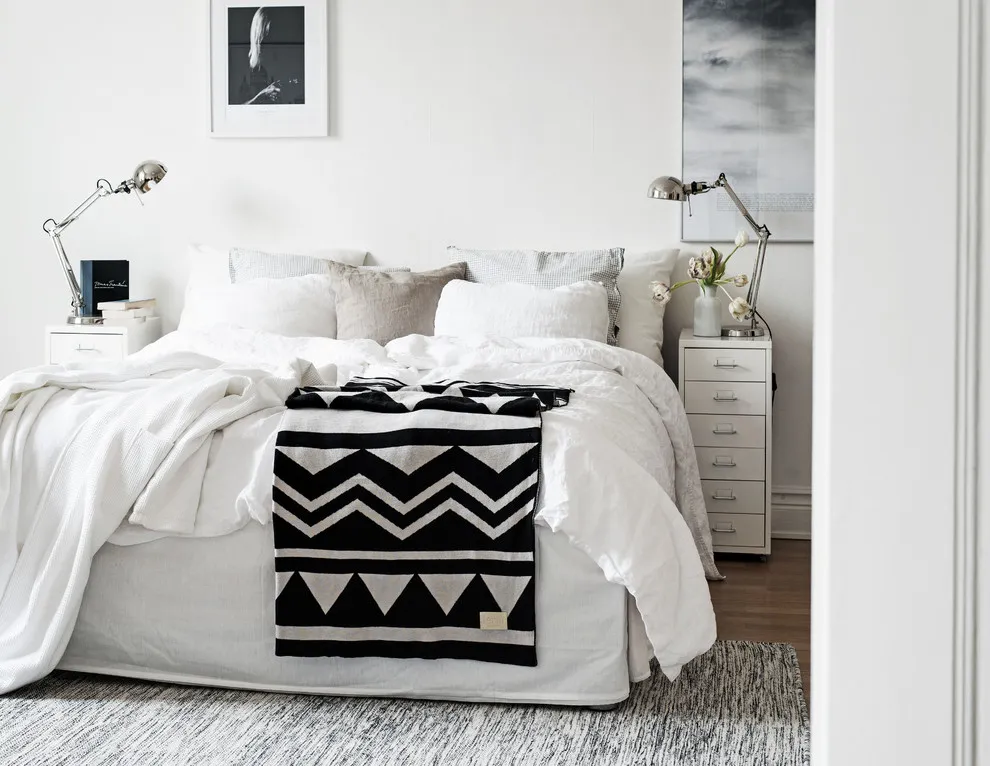
Use a Bold Chevron Throw
 SaveSupport Non AI Creator
Source: House of Beatniks on Houzz.
A black-and-white chevron textile lies over a pale bed in a bright room. The concentrated pattern adds contrast without a dark painted wall. The wide zigzag strip draws attention down the middle of the pale cover, while small dark artwork connects it to the wall. Adjustable lamps provide another repeated detail at each bedside.
Choose the textile size so it fits the bed rather than covering every surface. Repeat black in a small frame or lamp to connect the pattern to the rest of the room. Choose a throw width that leaves plenty of the plain bedding visible beside it. Try folding it at the foot of the bed if the full pattern feels too strong in a compact room.
IDEA 20 / 20
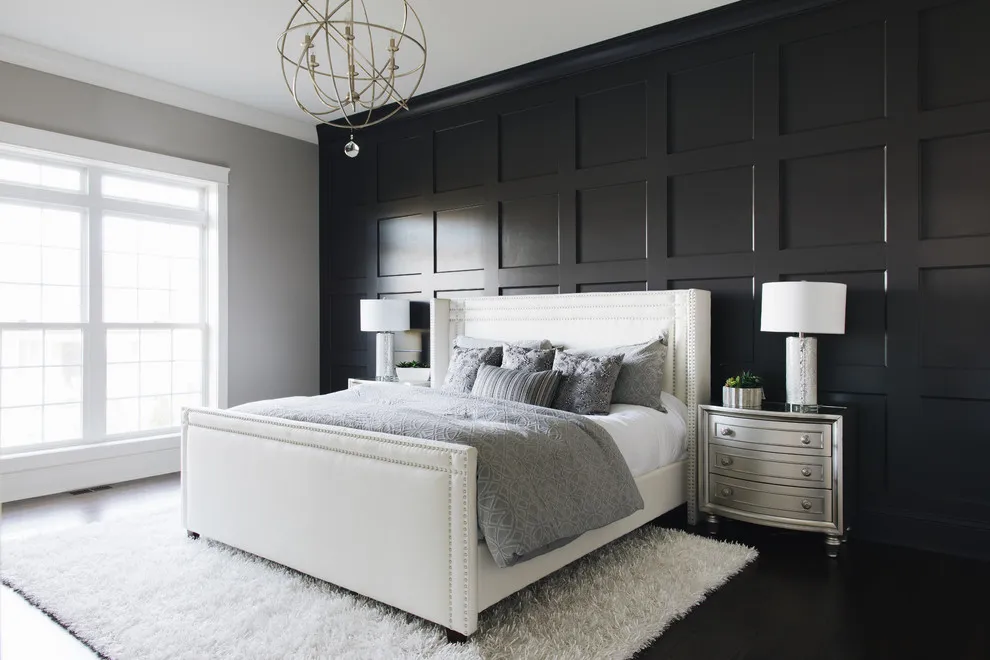
Keep White Against a Black Panel Wall
 SaveSupport Non AI Creator
Source: Timber Trails Development Company on Houzz.
A pale upholstered bed sits against a black paneled wall beside bright windows. The contrast makes the bed’s soft shape stand out. The pale upholstered headboard and footboard stand out against the black grid, with white lamp shades repeating their light tone. Dark flooring and a pale rug bring the same contrast beneath the bed.
Plan panel spacing and bedside furniture together. Test the black finish under evening lights and use window coverings that work for sleep as well as daylight. Include bedside cabinet widths when setting out the panel spacing, and check the painted sample after dark. Keep the headboard clear of the main horizontal rails where possible so neither detail looks accidentally interrupted.
BRING IT ALL TOGETHER
Make contrast comfortable
Choose one strong black element, such as a bed frame, paneled wall or dresser, and let lighter surfaces balance its presence. Different fabric textures create more comfort than endlessly repeating the same sharp black outline.
If the room feels severe, introduce warm wood, creamy white linen and softer lighting before adding a new color. The goal is a bedroom you enjoy waking up in, not merely a perfect monochrome photograph.