A boho dorm room needs to support studying, sleeping and storing the things you use every day. Woven furniture, soft color and personal artwork can add warmth, but they work best around the furniture and restrictions your accommodation already has. Decide what can move and what must stay before buying extra pieces.
These photographs explore individual details as well as complete arrangements. Some show student bedrooms or shared lounge space rather than a standard single dorm layout. Adapt the useful idea to your own room, check accommodation rules for wall fixings and fabrics, and agree on shared areas with your roommate.
PART 01
Give the sleeping area a personal character
IDEA 01 / 15
Build a soft palette around the supplied bed
 SaveSupport Non AI Creator
Image credit: Photo: Evin Photograhy
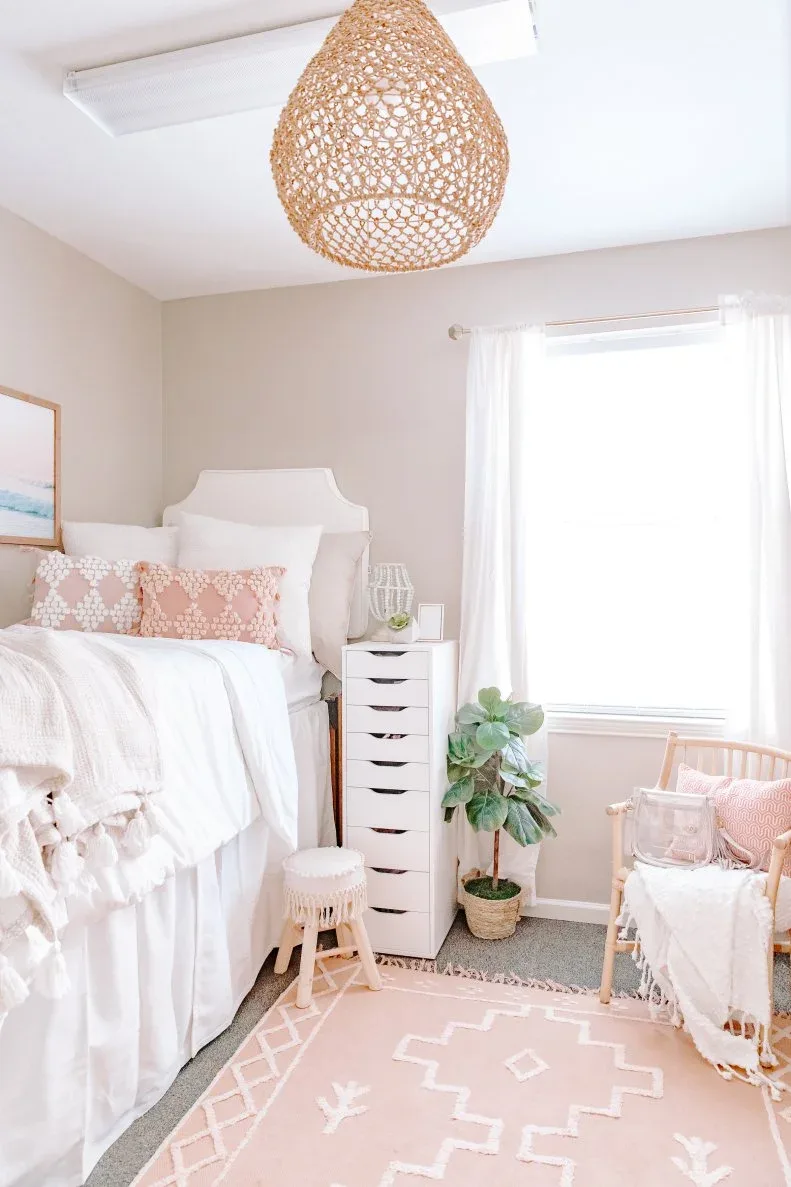
White bedding keeps this compact sleeping area light, with pink pillows and a patterned rug adding softer color. The narrow white drawers sit close to the bed, while a wooden chair occupies the window side. A woven hanging shade brings another texture above the room without introducing a second strong color across the larger furniture.
Begin with the bed size and storage provided by your accommodation. Choose washable bedding and a rug that leaves the door and drawers easy to use. Check rules before hanging a shade or changing any lighting, and keep the window, ventilation and required ceiling fittings clear rather than copying the photograph without checking your own room.
IDEA 02 / 15
Use one framed picture to connect the colors
 SaveSupport Non AI Creator
Image credit: Photo: Evin Photograhy
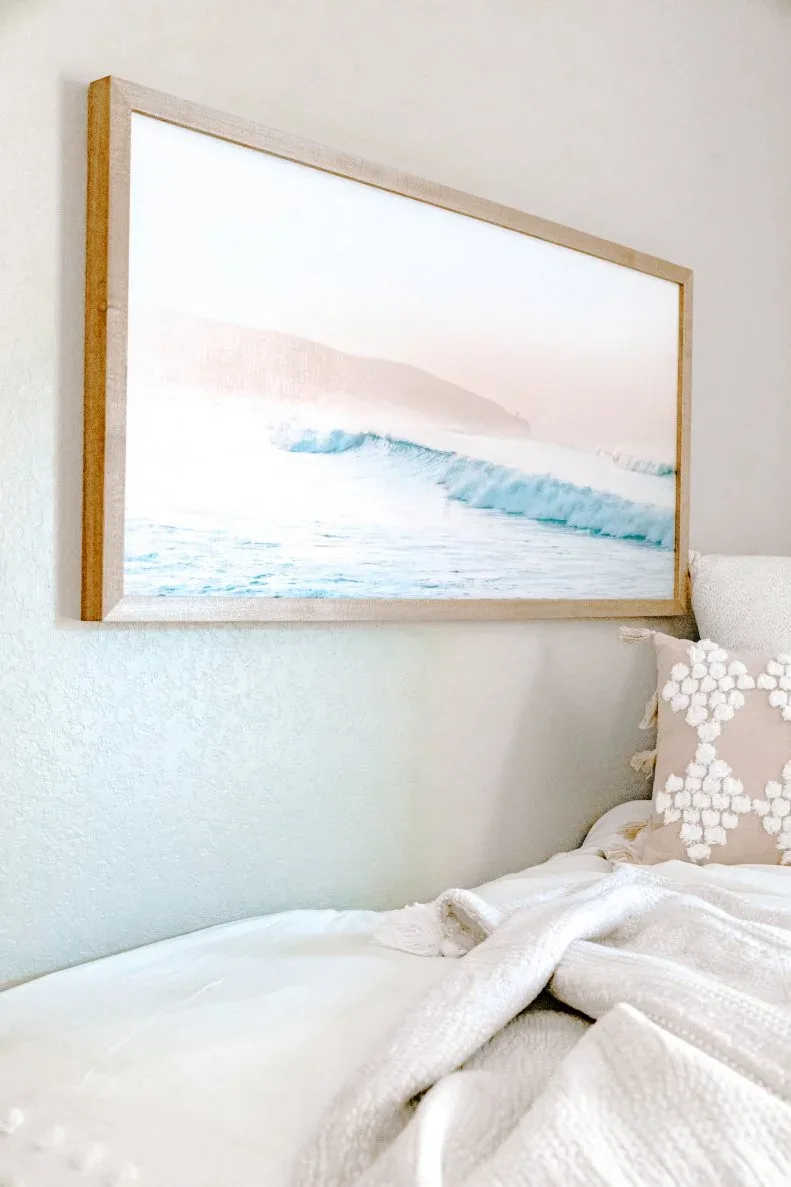
A wave picture introduces pale pink and blue beside the white bedding. Its warm frame connects the artwork with the softer furniture tones, while the surrounding wall gives the image room to stand out. This is a small personal detail rather than a wall filled with competing prints, making the sleeping corner feel quieter.
Choose artwork you want to see every day and compare its colors with the bedding before buying extra accessories. Use only wall fittings your accommodation permits, with suitable support for the frame. Avoid heavy objects over the sleeping position, and consider a lightweight print in an approved location if the room has limited fixing options.
IDEA 03 / 15
Soften a wooden bed with restrained fabric layers
 SaveSupport Non AI Creator
Source: thesorrygirls.com
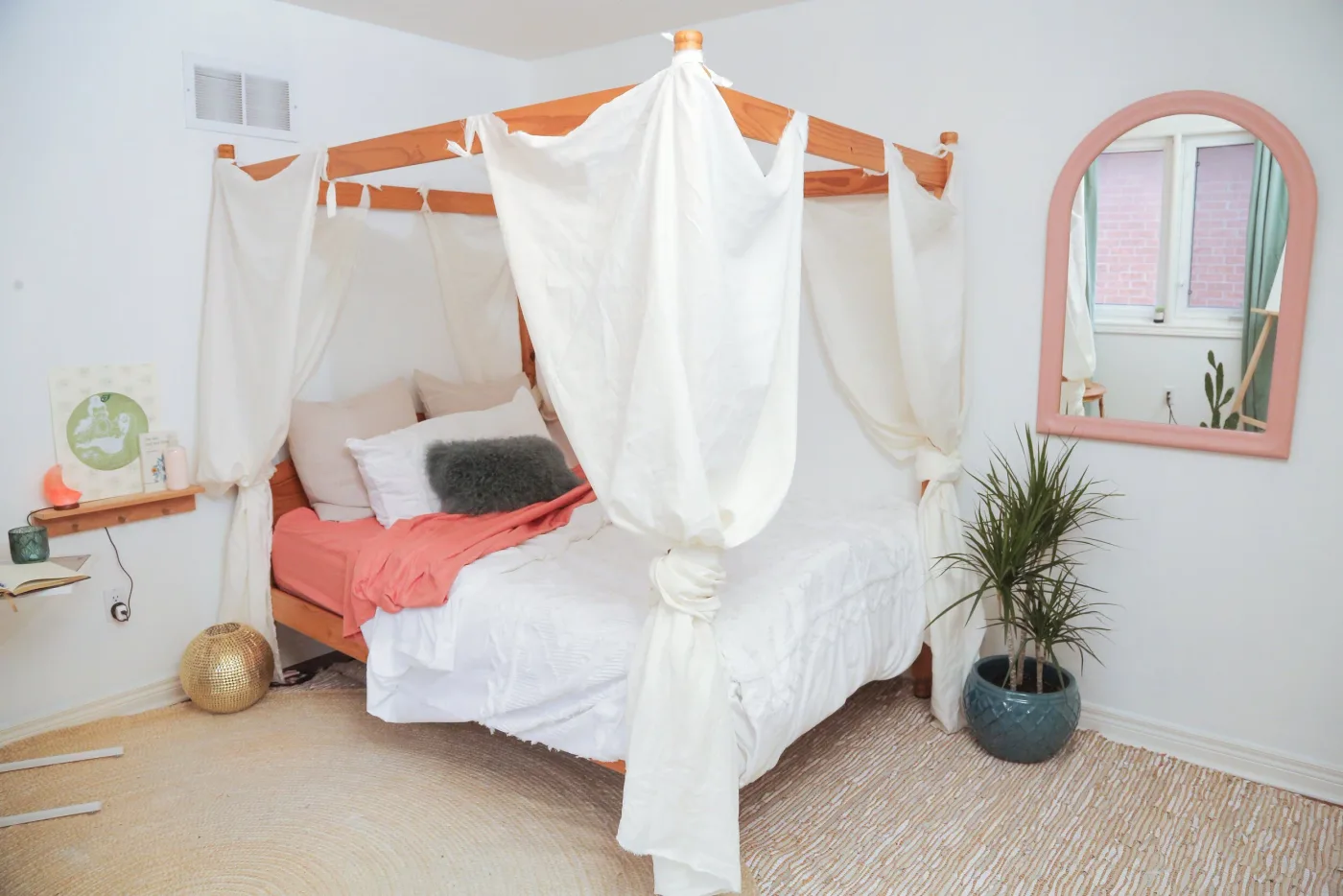
White fabric softens the outline of this wooden bed, while coral bedding creates a warmer band below the pale pillows. The pink mirror repeats that warmth on the wall, and the tall plant adds a contrasting green shape beside it. The room uses a few recognizable colors rather than giving every surface a different pattern.
Treat the fabric as inspiration only if your room allows it. Check accommodation restrictions, clearances and safe fixing requirements before hanging anything, and keep fabric away from lights, vents and other required fittings. You can create a similar soft color relationship through bedding alone when a canopy is unsuitable for the supplied bed or room.
PART 02
Make room for studying and creative interests
IDEA 04 / 15
Let a patterned rug define the study corner
 SaveSupport Non AI Creator
Image credit: Photo: Evin Photograhy
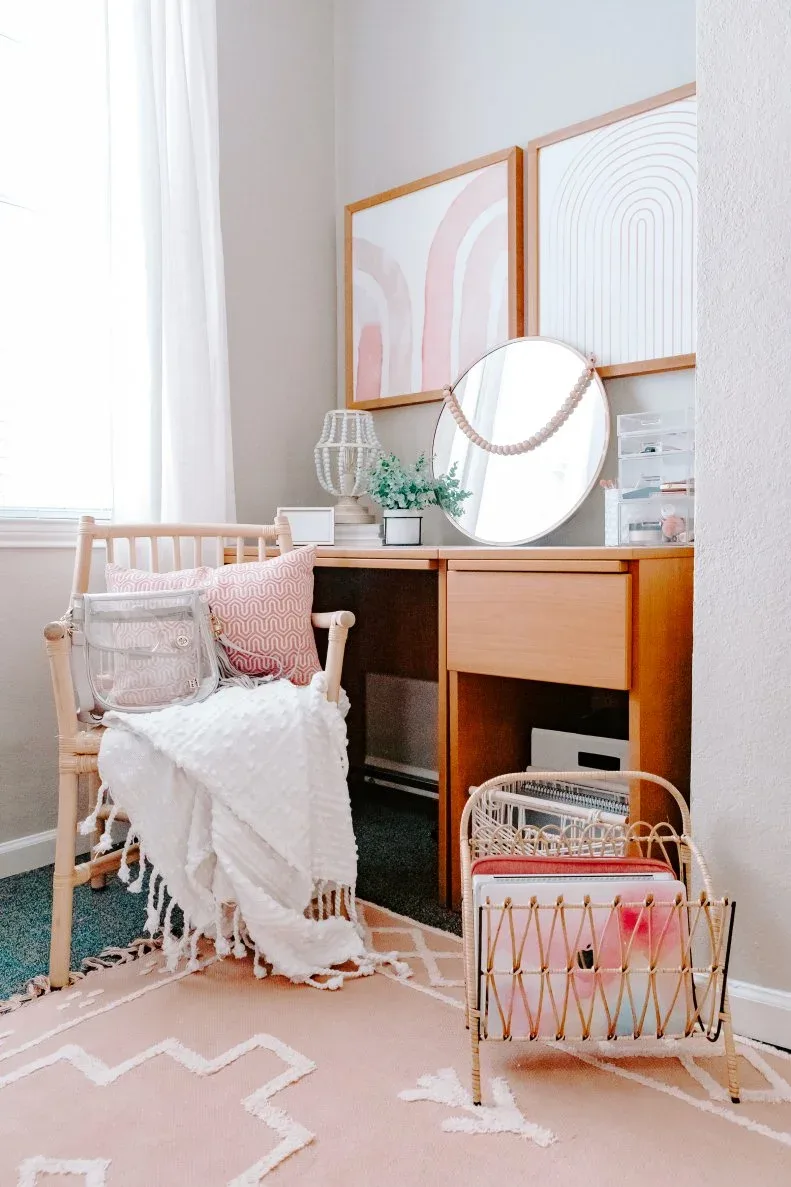
A pink rug marks the floor around this desk, connecting the cushions with the lighter artwork above it. The wooden chair and desk give the area a warmer structure, while the file holder collects reading material beside the furniture. The softer textiles make the corner feel personal without needing to change the supplied desk itself.
Check that the rug stays flat and allows the chair to move freely, especially over existing carpet. Choose seating for the time you spend studying, removing cushions or a throw when they make your posture uncomfortable. Keep the file holder within reach without narrowing the route, and retain a clear working surface for books and a laptop.
IDEA 05 / 15
Organize the small things on a shared desk surface
 SaveSupport Non AI Creator
Image credit: Photo: Evin Photograhy
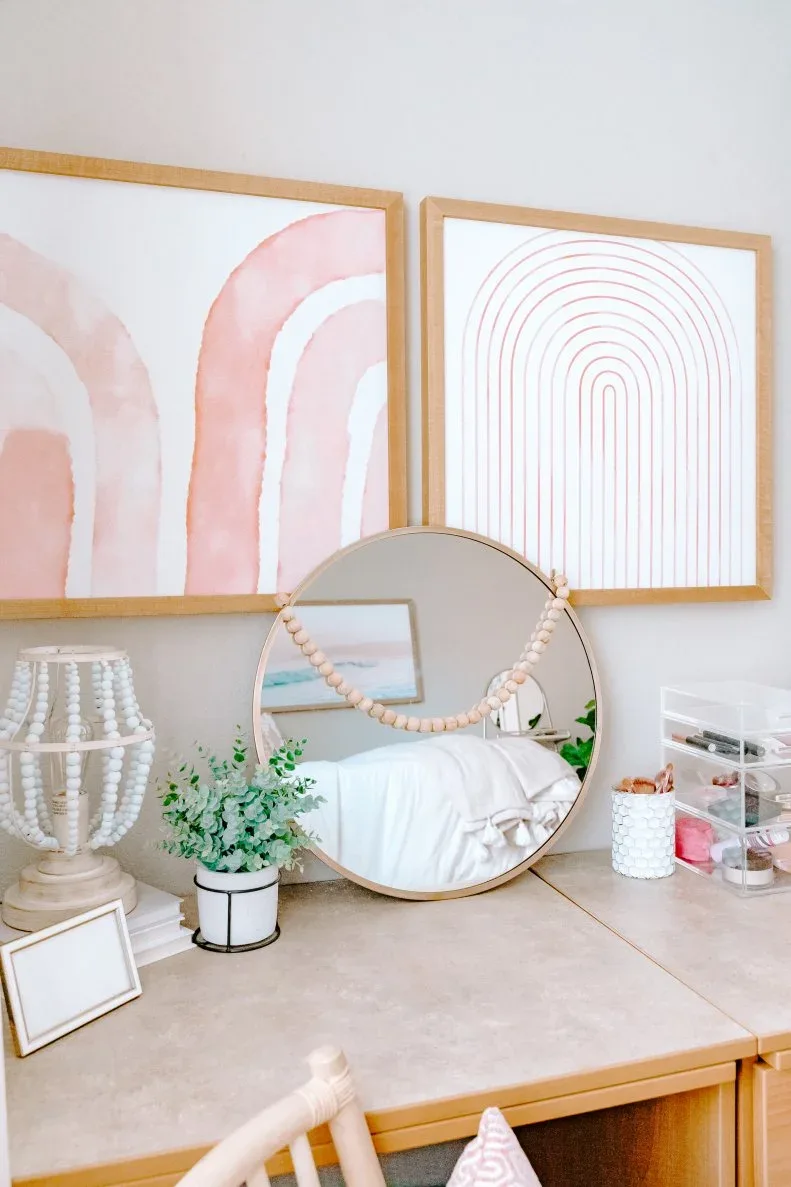
A round mirror sits between pale framed prints and small desktop organizers. The pen pot keeps narrow supplies upright, while the clear drawers collect smaller items that would otherwise spread across the surface. The little plant brings a softer shape among the frames and containers, with the wooden desktop keeping these pale details visually connected.
Decide whether your desk must also support getting ready in the morning, then give each activity a clear place. Keep cosmetics and stationery in separate containers and leave usable writing space. Secure or position mirrors safely according to their fittings, and move decorative items when they obstruct the screen, cables or lighting needed for study.
IDEA 06 / 15
Give creative work a useful corner by the window
 SaveSupport Non AI Creator
Source: thesorrygirls.com
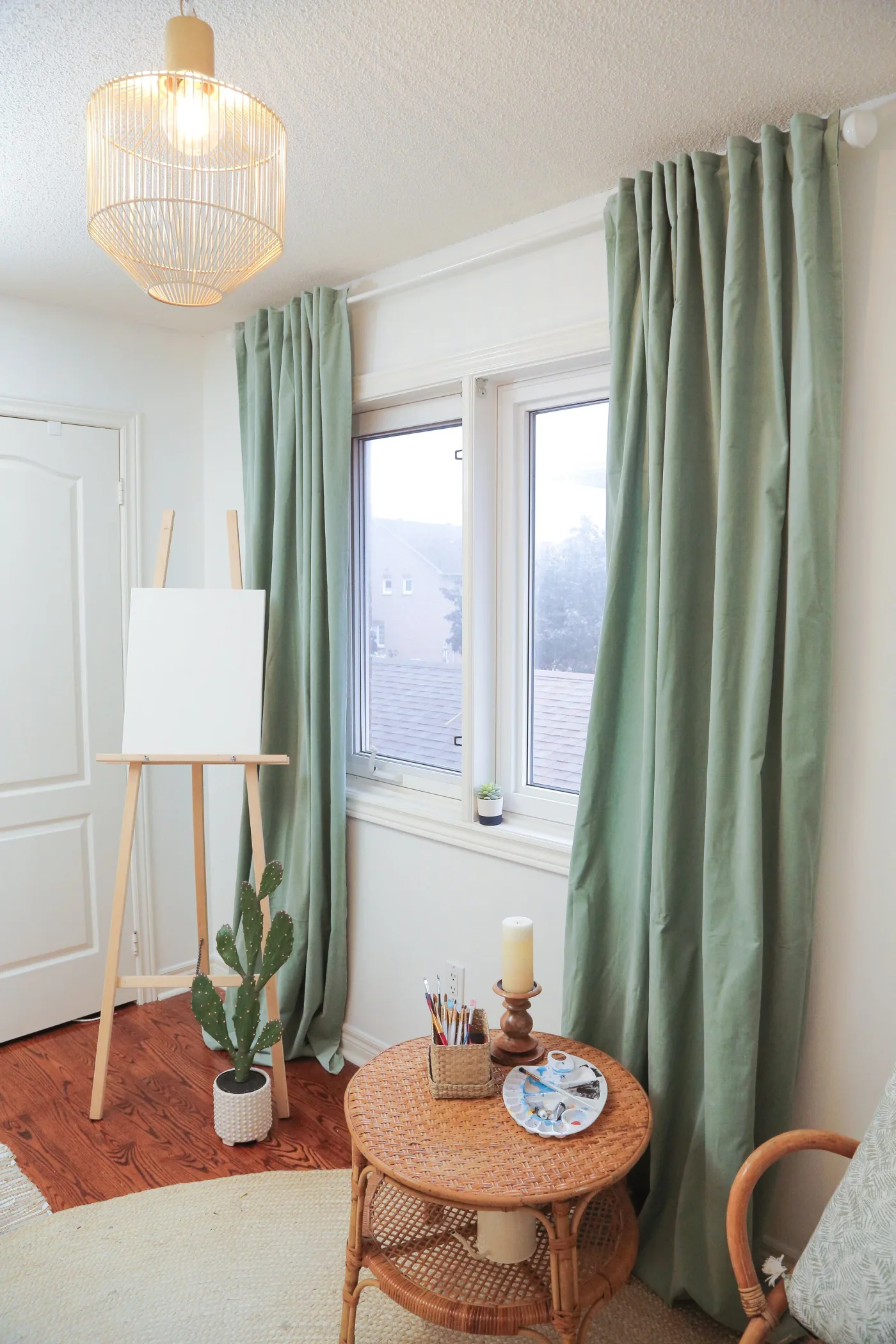
A wooden easel gives this corner a purpose beyond sleeping, with the window bringing light beside the work area. Pale green curtains connect the corner with the nearby plant, while the woven table provides a warm contrasting surface. The arrangement shows how a personal interest can shape the room rather than relying entirely on decorative objects.
Check the easel footprint and keep the route to the window usable. Protect the floor from the materials you actually work with, and store paints or tools according to their instructions and accommodation rules. Choose curtains only where permitted, keeping them clear of heaters and vents, and make sure plant pots cannot leak onto the floor.
PART 03
Keep everyday belongings easier to manage
IDEA 07 / 15
Use narrow drawers where floor space is limited
 SaveSupport Non AI Creator
Image credit: Photo: Evin Photograhy
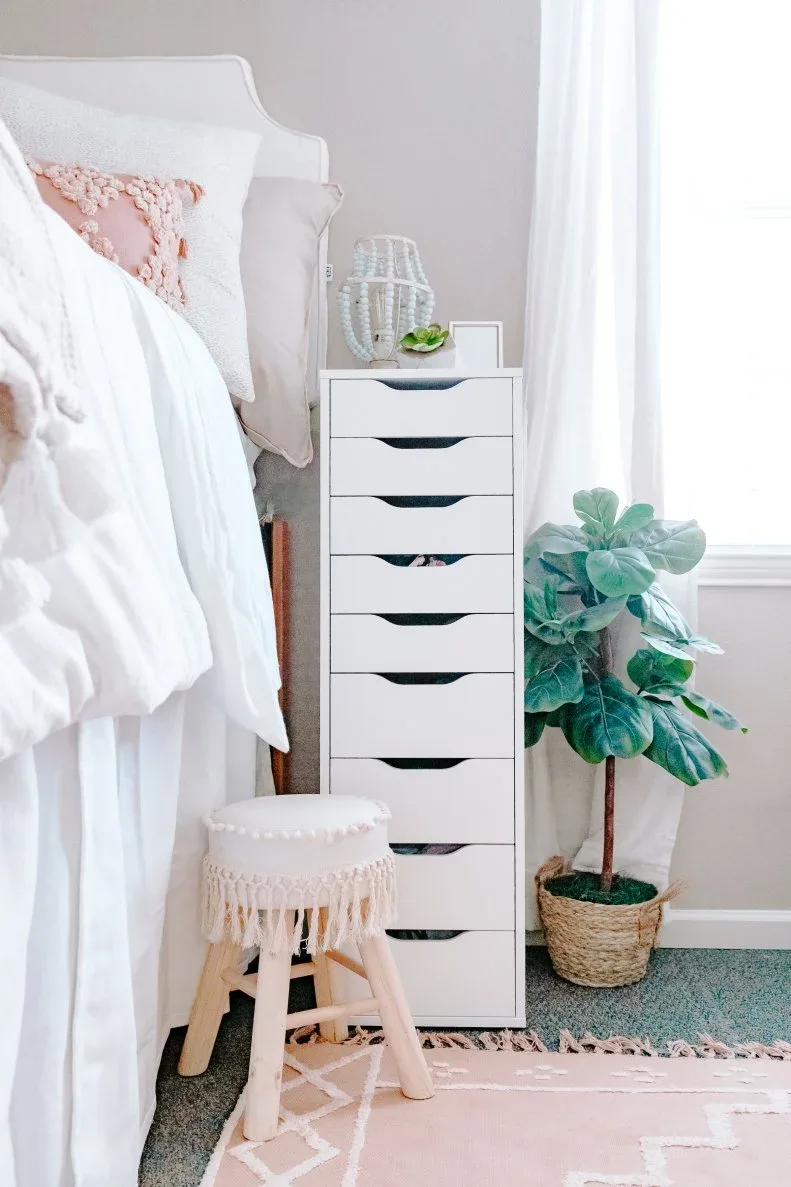
A narrow drawer unit fills the space beside this raised bed without spreading far into the room. Its white fronts connect with the bedding, while a small stool and woven plant basket provide warmer texture near the floor. The pink rug gives the lower part of the arrangement a softer boundary against the existing carpet.
Measure the gap and check every drawer can open without hitting the bed or furniture. Follow the unit supplier's stability and fixing instructions, using an arrangement your accommodation allows. Keep heavier contents low and retain a useful route beside the bed. A decorative stool should not be assumed suitable for climbing or reaching a raised sleeping surface.
IDEA 08 / 15
Plan a proper place for laundry
 SaveSupport Non AI Creator
Image credit: Photo: Evin Photograhy
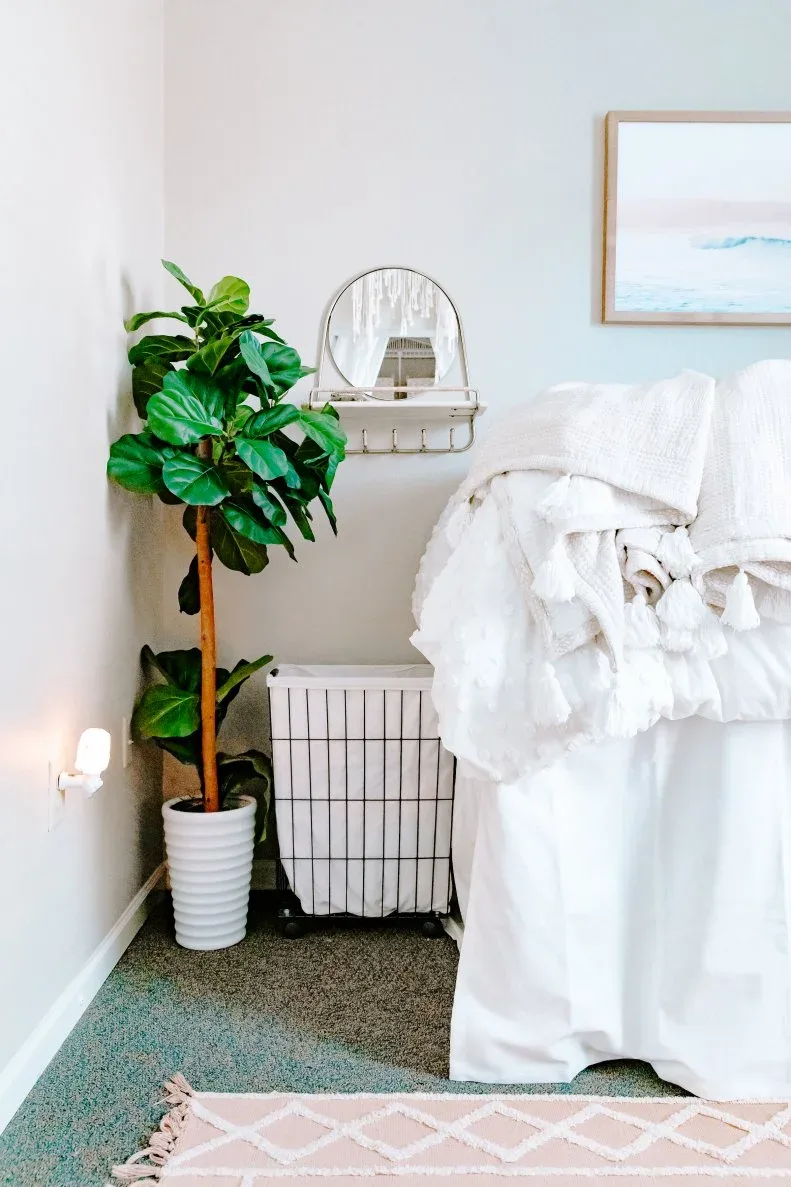
A lined basket gives laundry a defined place beside the bed, keeping it separate from the softer bedding and throw. A tall green plant occupies the neighboring corner, while the small wall mirror combines a reflective surface with a narrow shelf and hooks. The arrangement uses the wall and floor for different everyday storage tasks.
Choose a laundry container you can carry or empty easily and avoid trapping damp fabric in a sealed space. Keep the basket from blocking the bed, door or window access. Check whether the plant is real before planning care, and protect the floor beneath any pot that needs watering rather than placing it directly on vulnerable flooring.
IDEA 09 / 15
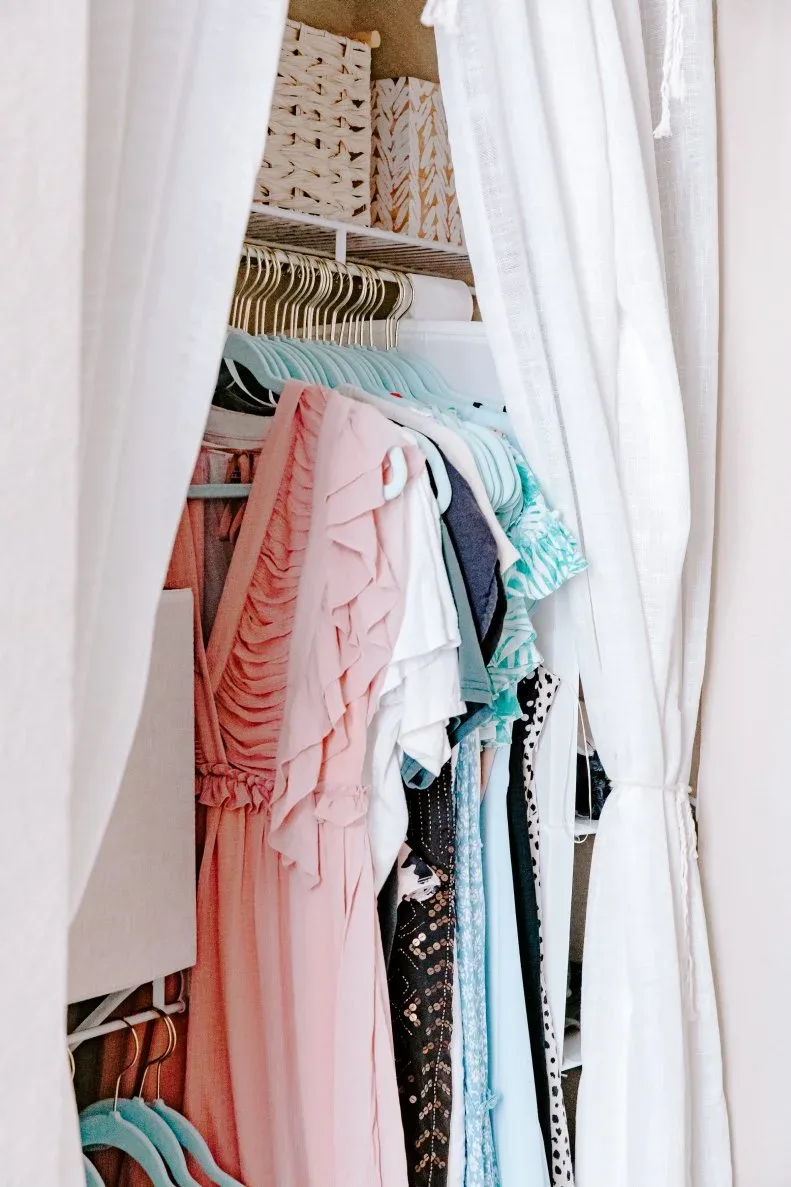
Keep the closet organized behind a simple curtain
 SaveSupport Non AI Creator
Image credit: Photo: Evin Photograhy
A pale curtain softens the edge of this clothing area, with pink and blue garments visible behind it. Similar hangers keep the clothes at a more consistent level, while patterned boxes use the upper shelf for smaller belongings. The arrangement separates daily hanging clothes from items that can be kept together in containers above them.
Check whether a curtain is permitted and whether it leaves ventilation and access practical. Use boxes that fit the shelf without projecting over the edge, and store regularly used items where you can reach them safely. Sort the clothing you actually need for the term before adding organizers, so storage does not become an excuse to overcrowd the closet.
IDEA 10 / 15
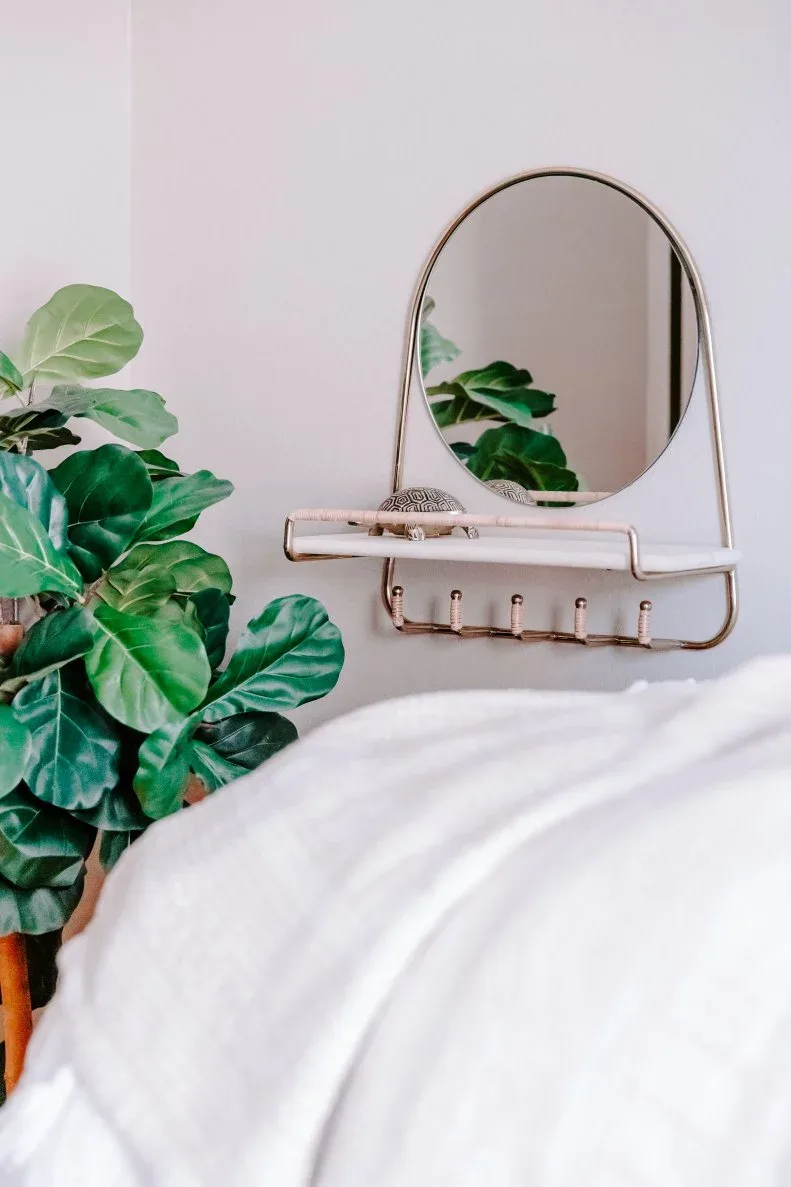
Combine a small mirror with everyday hooks
 SaveSupport Non AI Creator
Image credit: Photo: Evin Photograhy
A small rounded mirror combines three functions on one part of the wall: reflection, a narrow shelf and a row of hooks. The green foliage softens its outline beside the white bedding. Its compact shape avoids the heavier effect of a large dressing table, leaving the surrounding wall mostly clear around a useful everyday stopping point.
Choose hooks for the objects you genuinely need to hang, checking the complete fitting's load rating and the permitted attachment method. Keep the shelf lightly arranged and avoid dangling items near the sleeping area. If wall fixing is prohibited, use an approved freestanding organizer elsewhere rather than relying on an unsuitable adhesive to support a heavier mirror.
IDEA 11 / 15
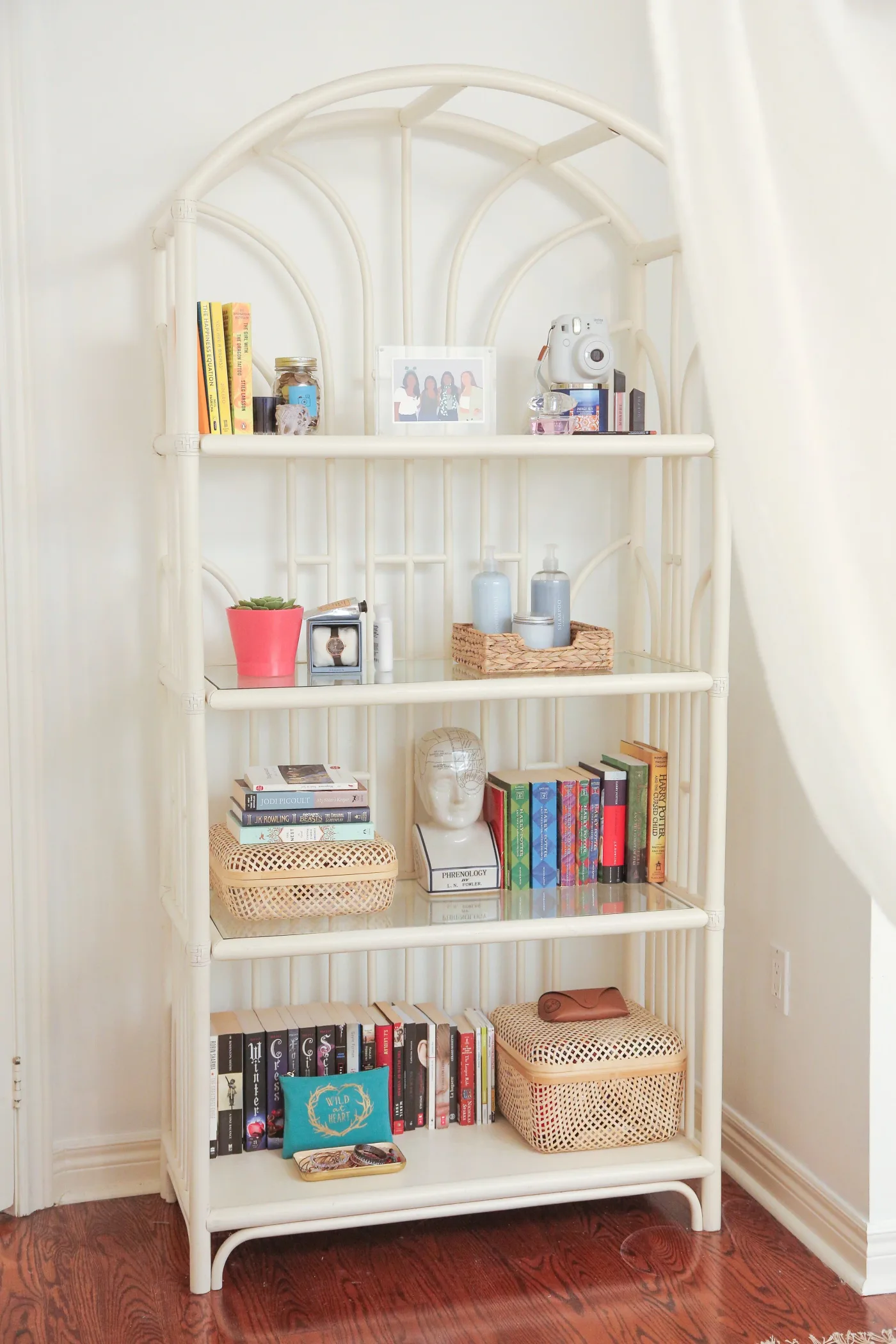
Make books and personal objects share one shelf
 SaveSupport Non AI Creator
Source: thesorrygirls.com
A pale arched bookcase groups books and personal objects in one vertical piece. Woven boxes contain smaller belongings, while the framed photograph and camera make the storage feel personal. The books remain visible and reachable instead of becoming a purely decorative backdrop, with different shelf levels giving the varied objects room to sit without a crowded tabletop.
Check the bookcase dimensions and follow its stability and fixing requirements before placing it in a dorm. Keep heavier books lower where practical and use boxes for loose items that would otherwise spill onto the floor. Leave enough clearance to open nearby doors, and avoid storing anything on an upper shelf that you cannot reach safely.
PART 04
Add comfortable details around shared space
IDEA 12 / 15
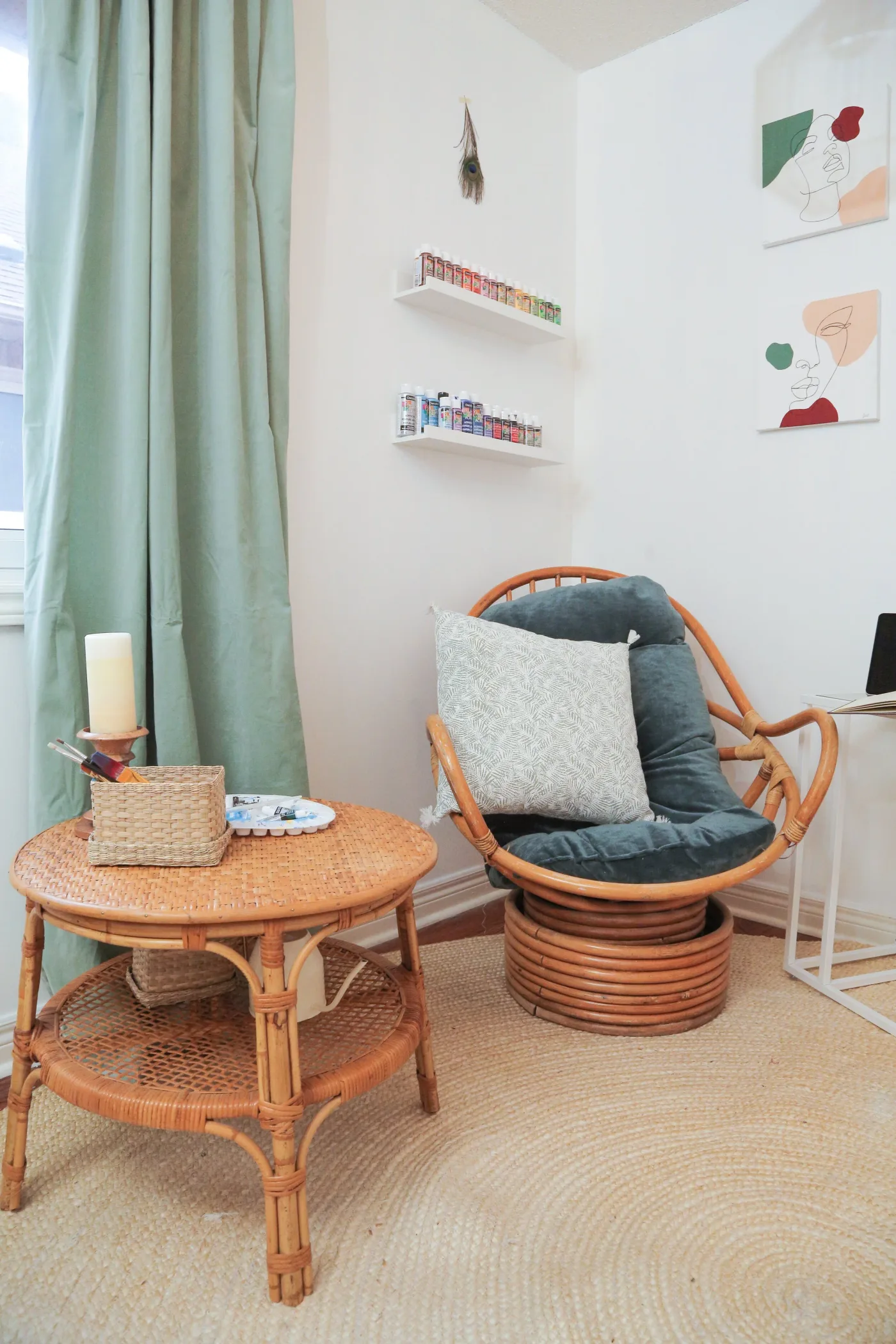
Choose a comfortable seat for a different daily task
 SaveSupport Non AI Creator
Source: thesorrygirls.com
A rounded wooden chair creates a softer sitting area beside the woven table. Its dark green cushion connects with the pale green curtain, while the narrow shelves keep small art supplies visible above. The different seat and table shapes give this corner a relaxed character, separate from the straight edges of a conventional desk and storage unit.
Consider whether the seat is for reading, resting or working, because the same chair may not suit every task. Measure the complete footprint, including where your legs and the table sit. Choose cushions that stay in place and can be cleaned, and keep art supplies organized where they will not spill onto bedding or the main study surface.
IDEA 13 / 15
Repeat one accent color around a mirror and plant
 SaveSupport Non AI Creator
Source: thesorrygirls.com
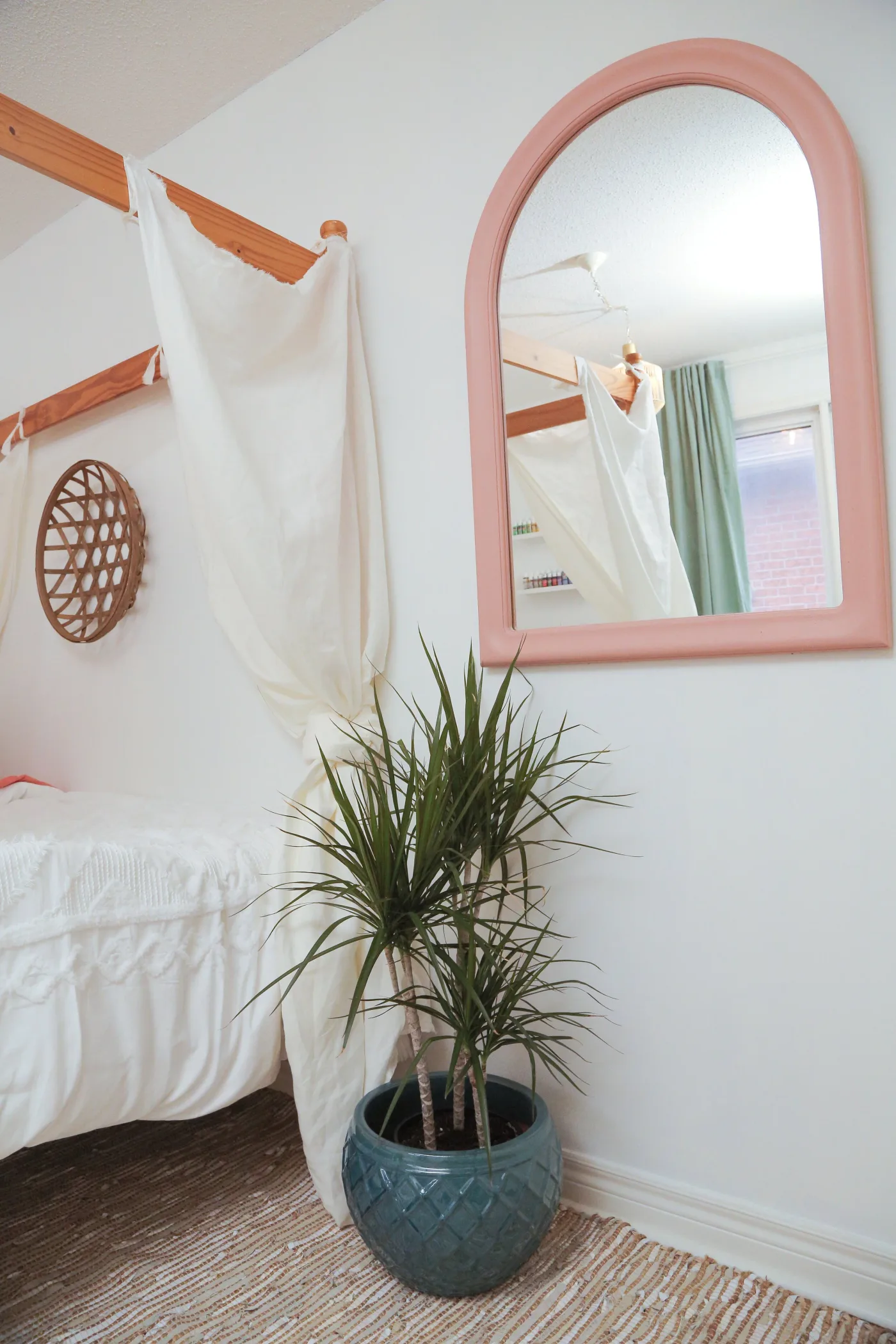
The pink mirror gives this pale wall a warmer outline, with the green plant providing a taller contrasting shape below it. A blue pot introduces a darker base near the floor, while the white fabric keeps the neighboring bed lighter. The combination creates a distinct corner using shape and a few repeated colors rather than many small accessories.
Check the mirror's size and approved fixing method before choosing its position. Keep plant foliage and pots out of routes and away from fabric that could catch water or soil. Match a real plant to the available light and care you can provide, or choose another decorative object if term breaks make consistent plant care difficult.
IDEA 14 / 15
Agree on a comfortable shared seating area
 SaveSupport Non AI Creator
Image credit: Photo: Evin Photograhy
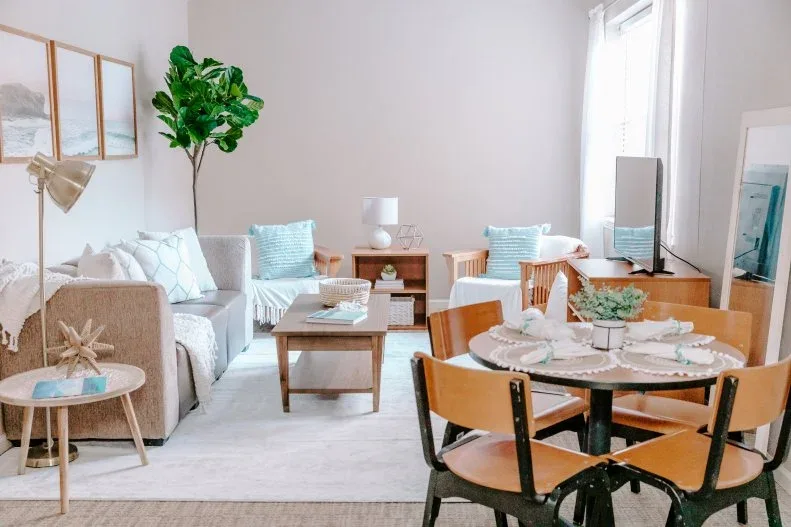
A gray sofa and wooden armchairs face a low table in this shared lounge, with pale blue cushions linking the seats. The dining table occupies a separate foreground area, so the room supports more than one daily activity. Framed wave pictures and a tall plant add softer detail without covering the furniture routes with extra decorative pieces.
Discuss shared furniture and storage before buying accessories, including who will clean and keep them at the end of term. Check movement around occupied chairs and keep the route between eating and sitting areas clear. Choose washable cushion covers and practical surfaces, and leave enough table space for the studying or meals the room regularly needs to support.
IDEA 15 / 15
Let greenery bring character beside useful storage
 SaveSupport Non AI Creator
Image credit: Bailey Wynne Rehkopf
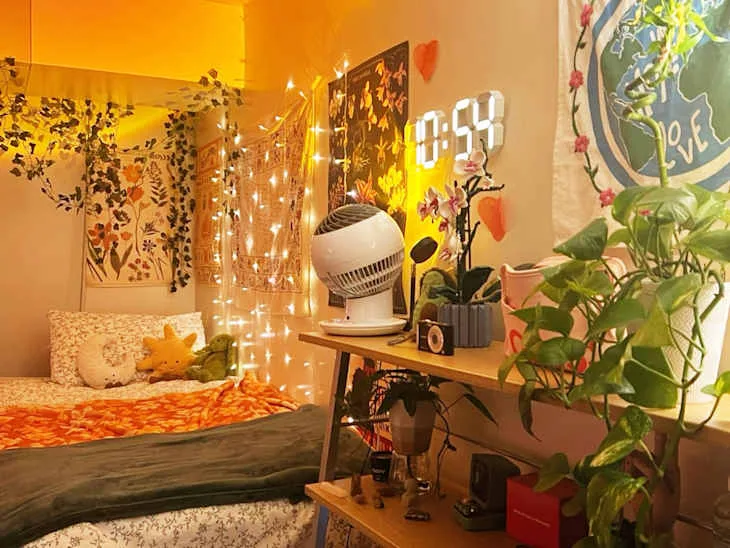
Trailing greenery creates a lively outline around this dorm room, with warm lights adding a softer glow beside the bed. Floral bedding continues the personal character below, while open shelving holds everyday belongings along the neighboring wall. The photograph shows a richer arrangement than the pale rooms, with plants and pattern taking a more prominent role.
Adapt the idea to the available space rather than copying every object. Keep shelves usable and stable, protect surfaces from watering, and leave ventilation and exits clear. Use lights your accommodation permits according to their instructions, keeping cables and electrical fittings clear of fabric and plants. Reduce the display when cleaning or reaching everyday belongings becomes awkward.
BRING IT ALL TOGETHER
Start with the parts of the room you use most
Arrange the bed, desk and storage first, then bring in the colors and textures you want to live with. Keep desk space usable, leave access to doors and drawers, and check the space taken by chairs when someone is sitting in them. A smaller set of useful additions is easier to manage at the end of term.
Check accommodation rules before attaching shelves, hanging fabric or adding lights. Use permitted fittings, keep ventilation and exits clear, and choose textiles you can wash without difficulty. Discuss shared storage and seating with your roommate so the room remains comfortable for both of you.