A cozy minimalist living room has room for the things you use and enjoy without filling every surface. Comfortable seating, useful light and a few textures can do more for everyday comfort than a large collection of small decorations.
These rooms show different levels of simplicity, from pale seating groups to warm wood surrounds. Borrow the choices that make the room easier to use: storage for real belongings, a table within reach and clear routes around the chairs. You can keep color, books and favorite artwork without making the whole room feel crowded.
PART 01
Make the seating comfortable and clear
IDEA 01 / 17
Use closed storage to keep a seating group calm
 SaveSupport Non AI Creator
Image credit: Future
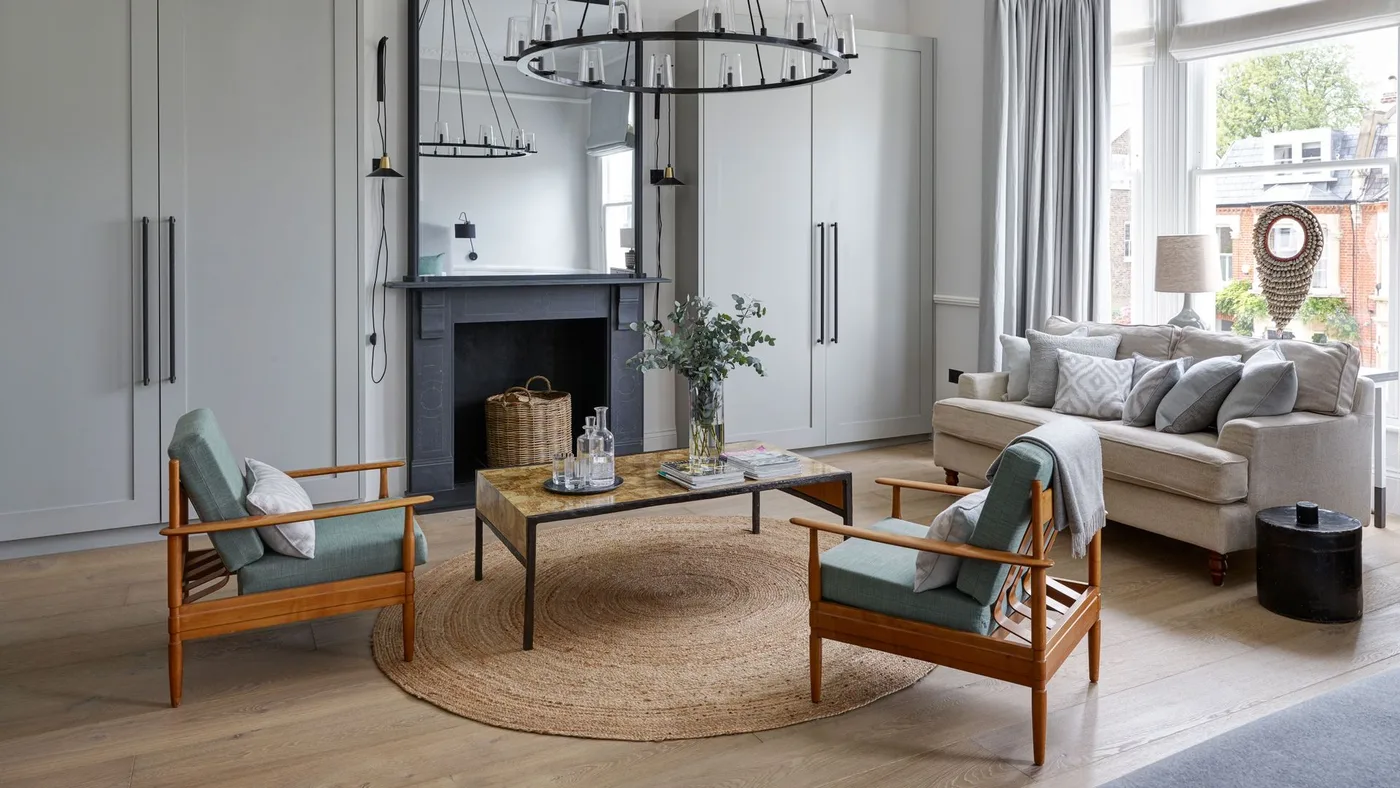
Full-height pale cupboards form a quiet wall around the fireplace, keeping storage within a simple repeated outline. A light sofa and two wooden-framed chairs create a small conversation group on the round rug. The chairs' warm frames and softer seat color give the room character without needing crowded shelves or several side tables.
Plan closed storage for the items that otherwise collect beside the sofa, including chargers, games and spare throws. A tidy front is useful only when its interior is easy to access. Check the chair angles for conversation and preserve a clear route around the rug and table rather than packing in another seat.
IDEA 02 / 17
Soften a bright corner with an L-shaped sofa
 SaveSupport Non AI Creator
Image credit: JDP Interiors / Bess Friday
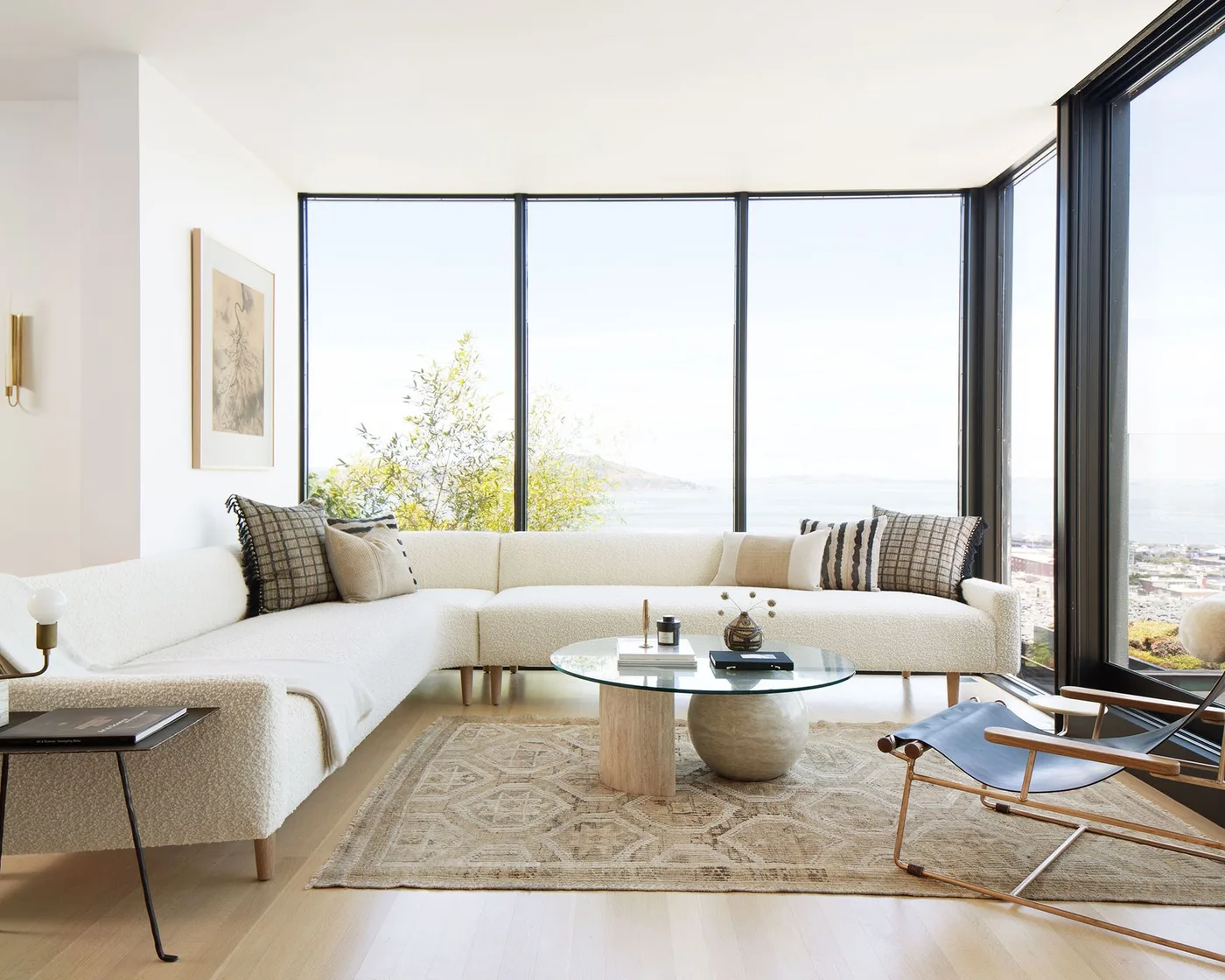
An L-shaped pale sofa follows the bright corner windows, with a few patterned cushions adding contrast within the restrained palette. The round glass-topped table leaves the rug visible beneath it. A low chair and a small side table provide different sitting and resting positions without blocking the broad view through the dark window frames.
An L-shaped sofa needs to suit both the room and the routes through it. Check the chaise or corner depth before ordering, not just its overall length. Choose washable cushion covers where practical, and keep the glass table easy to wipe; an uncluttered surface still needs to hold a drink or book comfortably.
IDEA 03 / 17
Give pale seating a few dark outlines
 SaveSupport Non AI Creator
Image credit: Arteriors
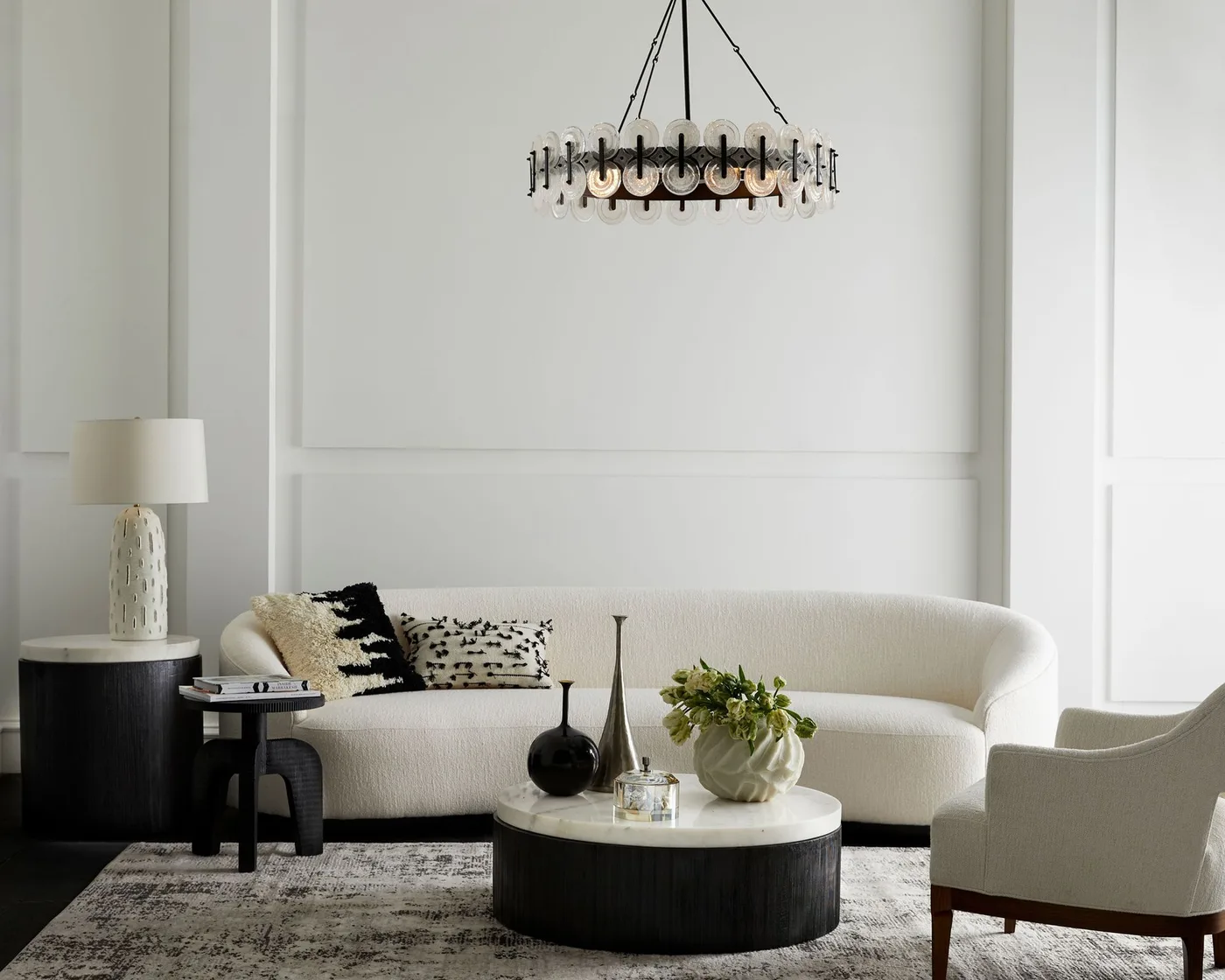
The curved pale sofa and armchair supply soft shapes against the white paneled wall. Dark round tables and the chandelier give the quiet palette a few defined outlines, with only a small number of objects on the central surface. A textured rug and cushions add warmth without introducing several unrelated colors into the room.
Use contrast where it makes furniture easier to read rather than outlining every feature in black. Try the sofa's curve against the usable floor area before buying it. Leave the tables within comfortable reach and avoid crowding their tops, so the simpler arrangement remains useful when people sit down with drinks or books.
IDEA 04 / 17
Let one generous sofa do most of the seating
 SaveSupport Non AI Creator
Image credit: Adam Carter
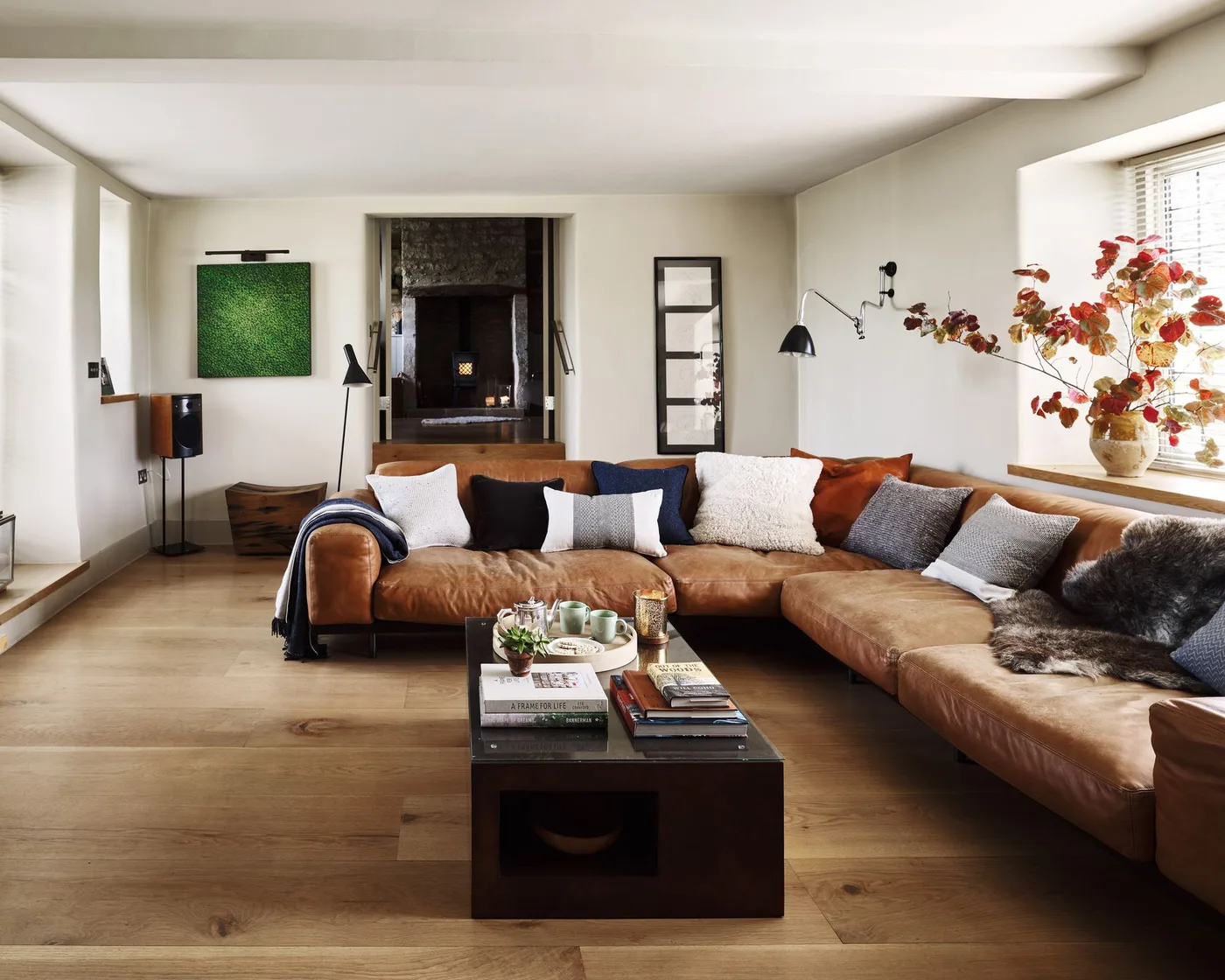
A generous brown corner sofa provides most of the room's seating, reducing the need for several separate chairs. Neutral cushions add soft layers, while the small dark table leaves more open floor around the group. The wall-mounted light reaches toward the sofa without requiring another floor lamp beside its broad corner.
A large sofa can simplify the furniture count while still overwhelming the room if its depth is wrong. Measure access around it and consider which seats will actually be used. Follow the upholstery's cleaning guidance, and leave a useful landing place for each main seat rather than relying on one distant table.
PART 02
Bring warmth through a few textures
IDEA 05 / 17
Use existing beams as the warmest detail
 SaveSupport Non AI Creator
Image credit: Brent Darby / Future
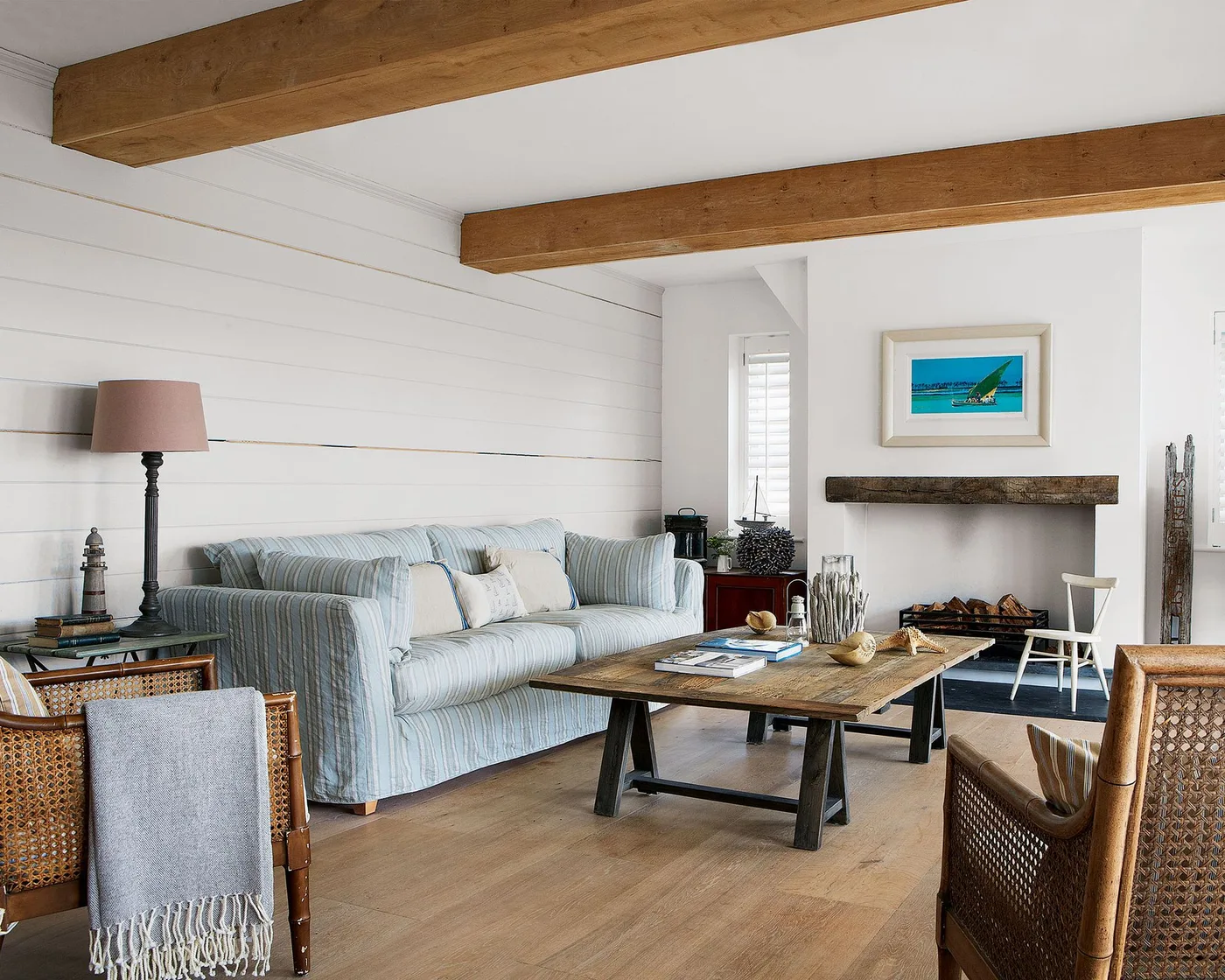
Exposed wooden beams and a warm floor provide the strongest natural tones in this pale room. The light striped sofa and woven-back chairs add quieter texture around a straightforward coffee table. A single framed picture above the fireplace keeps the main wall restrained, showing that existing character can reduce the need for extra decorative objects.
If the room already has visible beams or textured walls, let those features carry some of its warmth. Add textiles for actual comfort rather than covering every chair with another layer. Keep the table useful and follow fireplace clearance requirements if the fire is active, especially where seating or loose throws sit nearby.
IDEA 06 / 17
Balance a dark wall with soft seating and woven chairs
 SaveSupport Non AI Creator
Image credit: Photo: Shade Degges
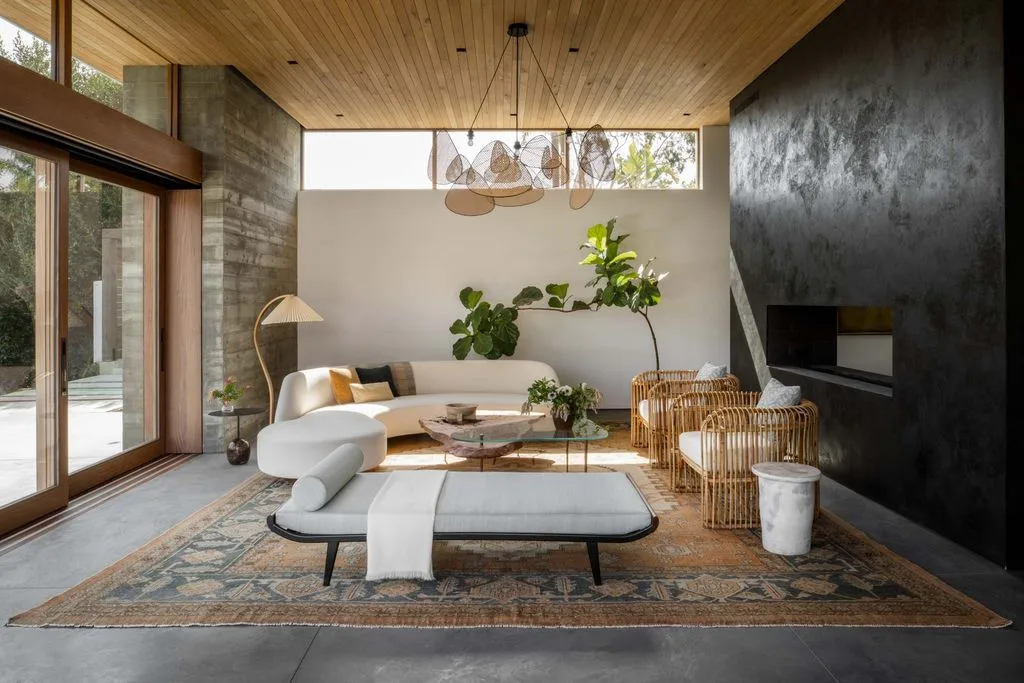
The wooden ceiling gives this room a warm overhead surface, while the dark fireplace wall creates a clear focal point. Pale curved seating and woven chairs soften the contrast below. A patterned rug brings the furniture together, with plants and a few small tables adding useful variation without filling the room with cabinets or collections.
Warm minimalism can include pattern when the larger furniture and wall surfaces remain considered. Compare the rug with the actual sofa and chair fabrics before choosing it. Keep plants where their light and watering needs can be met, and leave all required clearances around a working fireplace rather than copying the photograph's distances.
IDEA 07 / 17
Keep window-side furniture low and comfortable
 SaveSupport Non AI Creator
Image credit: Photo: John Merkl Photography
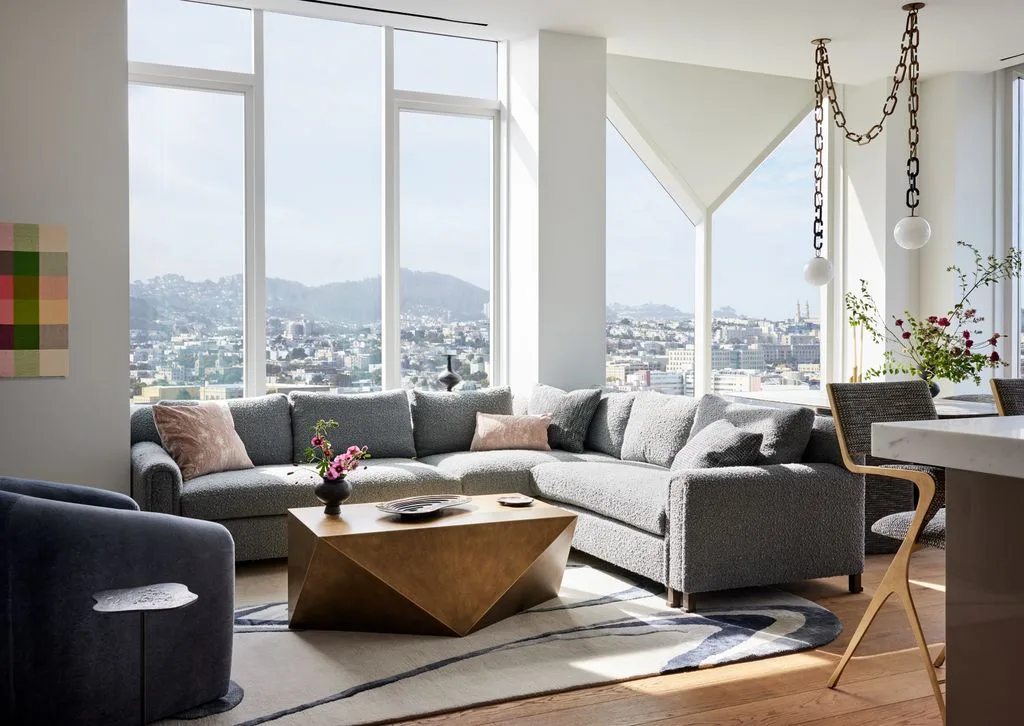
The gray corner sofa stays low beneath the tall windows, keeping daylight and the view prominent. Pale pink cushions soften its darker fabric, while a faceted wooden table brings a warm sculptural shape into the center. The rug links the seating without needing several smaller objects across the floor or window edges.
Low furniture can keep a view open, but comfort depends on seat height and depth rather than appearance alone. Try sitting in the sofa before choosing it. Leave curtains or blinds operable, and check the table's corners against the main walking route so a distinctive shape does not become a daily nuisance.
IDEA 08 / 17
Let one wood-paneled wall warm pale furniture
 SaveSupport Non AI Creator
Image credit: Photo: Spacecrafting
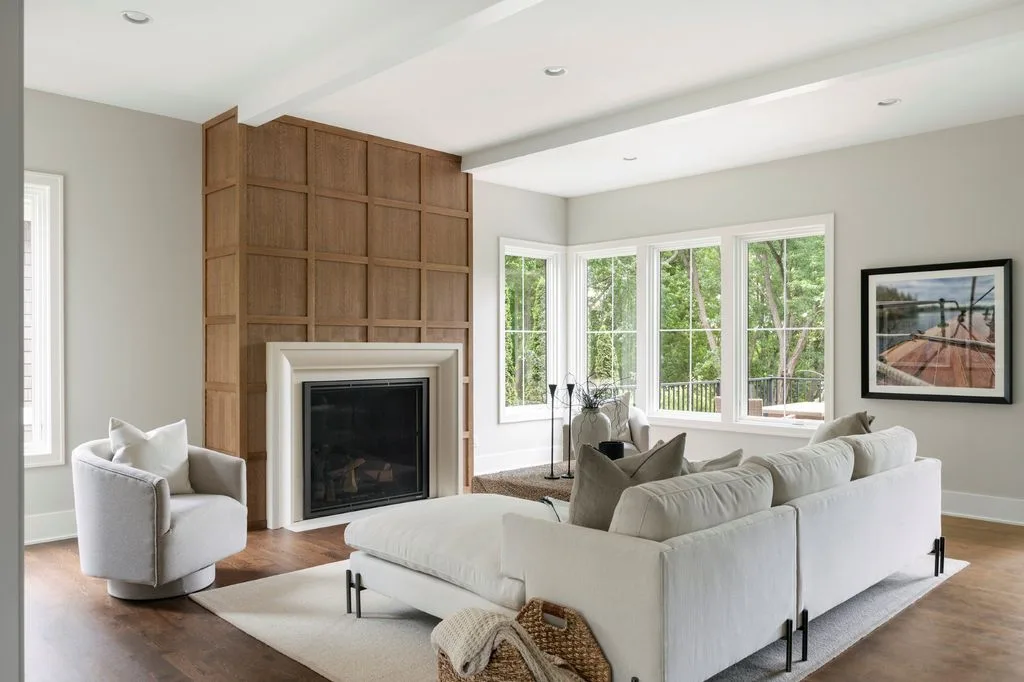
The wood-paneled fireplace wall adds warmth to a room otherwise built around pale upholstery and walls. A rounded armchair softens the sectional sofa's straight outline, while the large window gives the seating a view of greenery. One framed picture and a few baskets provide smaller details without competing with the paneled feature.
A single textured wall can be enough when the rest of the room has comfortable fabrics and useful light. Choose baskets for items you actually need nearby rather than using them as empty decoration. Preserve the route around the sectional and keep furniture or stored blankets outside the fireplace's required clearance area.
PART 03
Use contrast without filling the room
IDEA 09 / 17
Make a dark reading chair the main contrast
 SaveSupport Non AI Creator
Image credit: Photo: Lisa Vollmer Photography
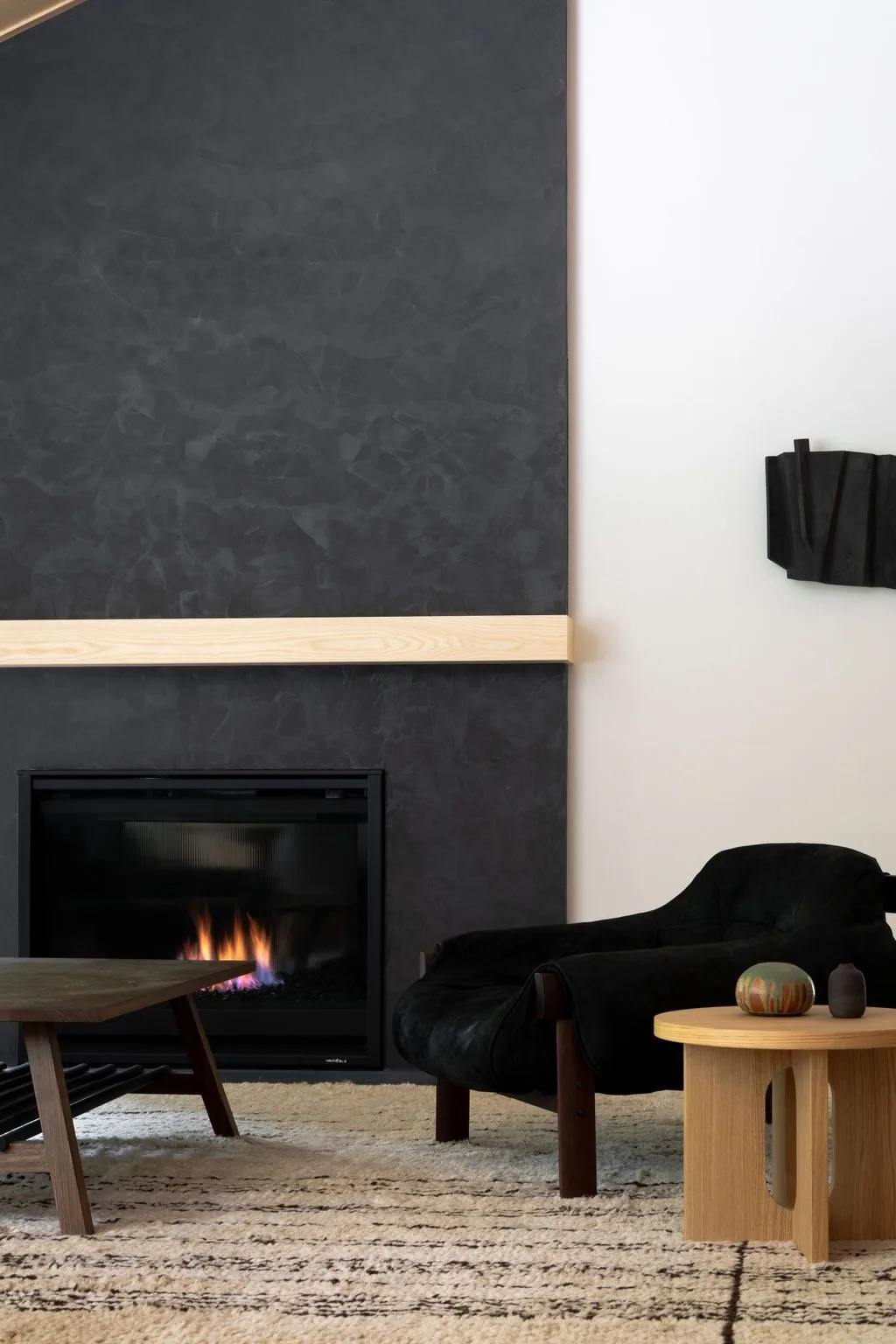
The black lounge chair repeats the dark fireplace surround, creating a defined reading corner within pale walls and flooring. A low wooden table brings a warmer tone beside the seat, with the textured rug softening the space below. The small arrangement keeps the chair's curved outline visible rather than surrounding it with several accessories.
Plan a reading corner around a comfortable seat and the light needed at the page, not simply around a matching color. Check whether the low table suits your reach. Leave sufficient fireplace clearances and an easy route past the chair, particularly if the corner also sits beside the room's main passage.
IDEA 10 / 17
Use a large artwork instead of many small ornaments
 SaveSupport Non AI Creator
Image credit: Rachael Smith / Future
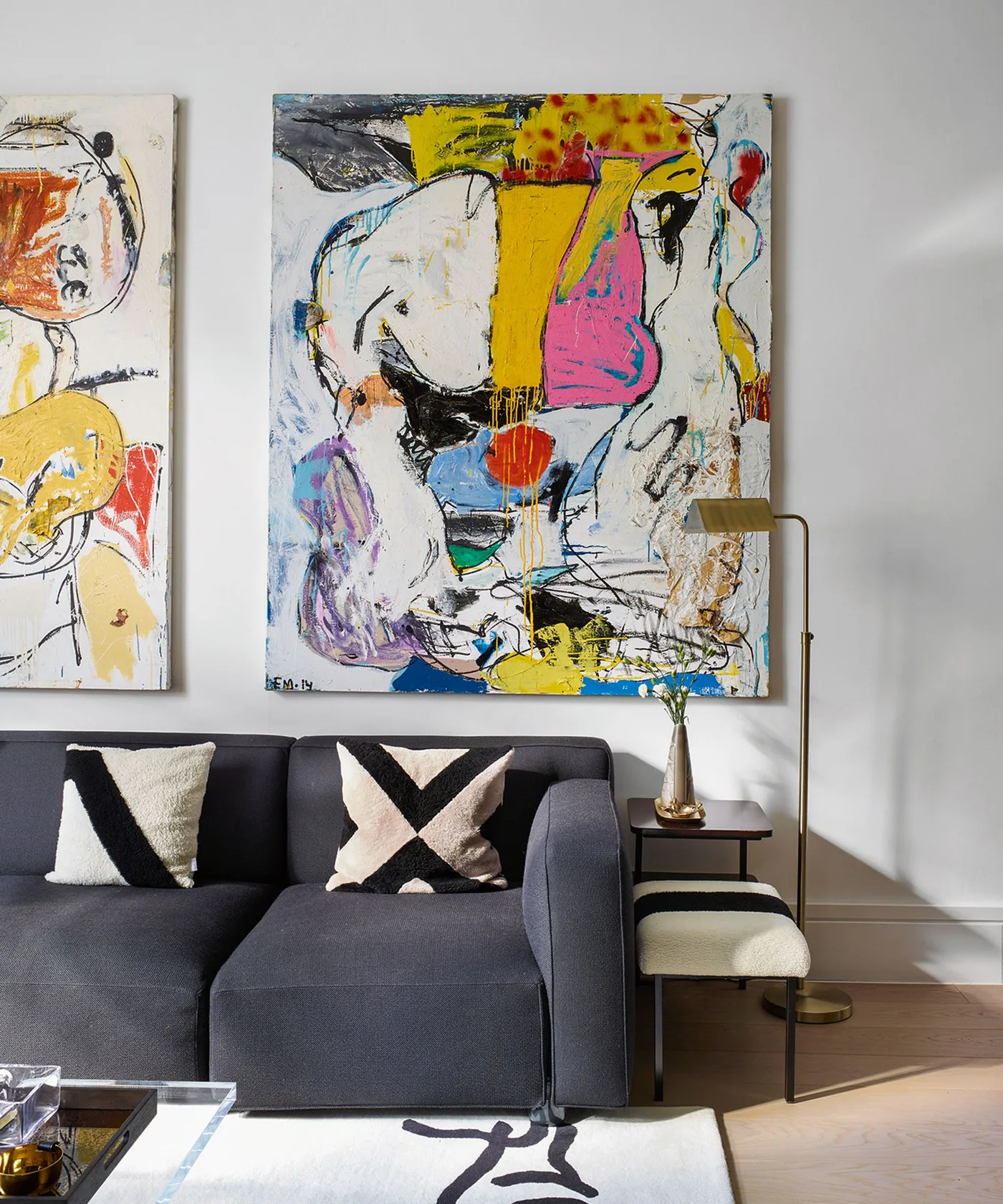
Large colorful artwork gives the pale wall most of its decoration above the dark gray sofa. The black-and-white cushions repeat a simpler pattern at seat level, while a slim floor lamp and side table add practical details without a bulky footprint. The broad artwork introduces personality while leaving the surrounding wall comparatively clear.
Minimal decoration can still include bold color if you choose a few pieces you enjoy looking at. Check the artwork's size against the sofa and wall before hanging it securely. Keep the side table usable and choose a lamp position that lights reading or conversation without reflecting harshly on a glossy picture surface.
IDEA 11 / 17
Use warm paneling behind a simple curved sofa
 SaveSupport Non AI Creator
Image credit: Photo: Tamara Flanagan
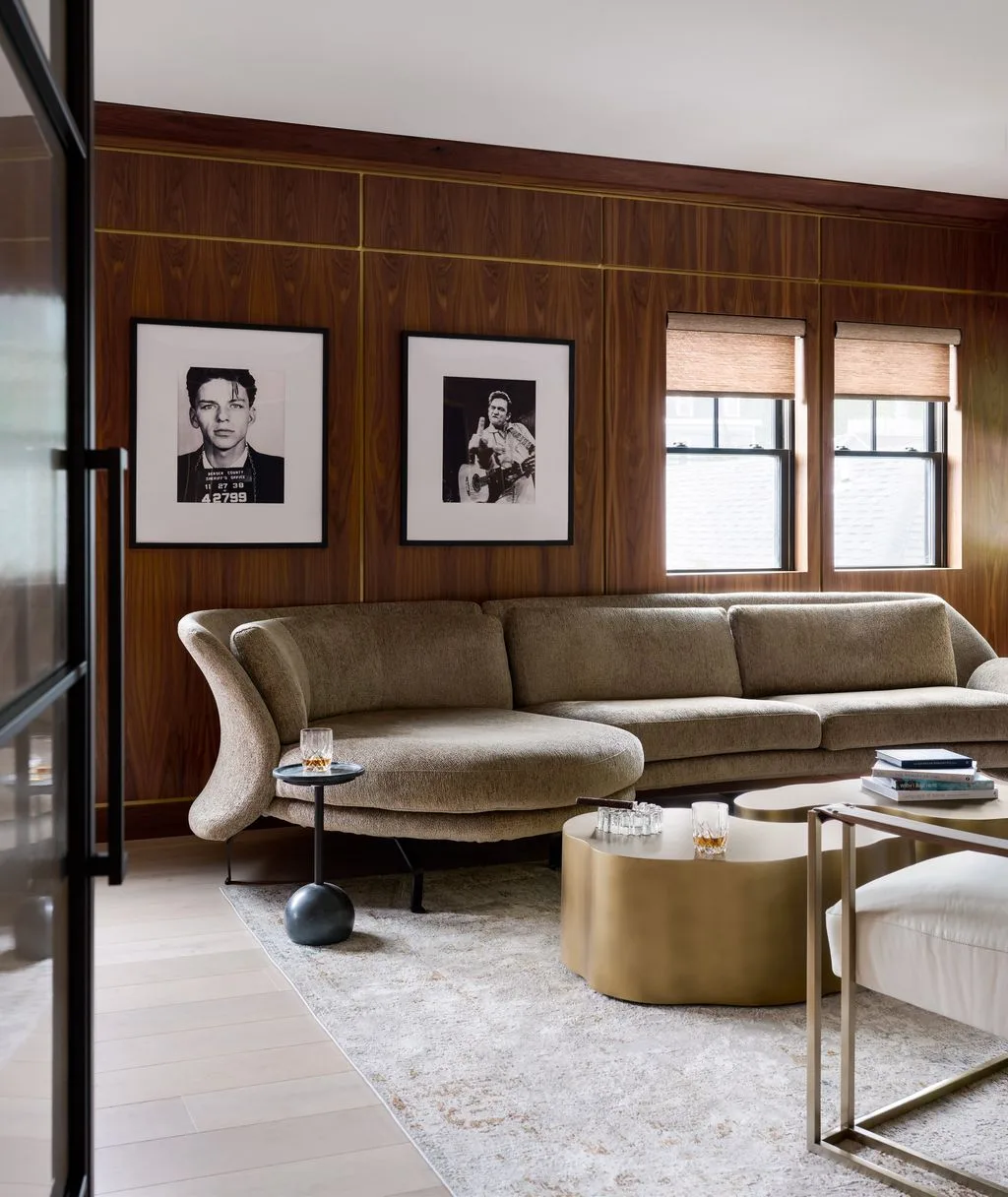
Warm wooden paneling gives the room a surrounding texture that needs little additional decoration. The curved taupe sofa introduces a soft continuous shape below two framed photographs, while pale flooring and a rug keep the lower area lighter. Small gold-colored tables provide another warm detail without forming a large solid block in front of the sofa.
A richly textured wall allows the furniture arrangement to stay relatively simple. Test a curved sofa for both comfort and access around its ends. Use tables in positions where seated people can reach them, and resist filling every tabletop with decorative pieces if that leaves no space for the things used each evening.
IDEA 12 / 17
Keep a pale palette interesting with rounded forms
 SaveSupport Non AI Creator
Image credit: Photo: Tamara Flanagan
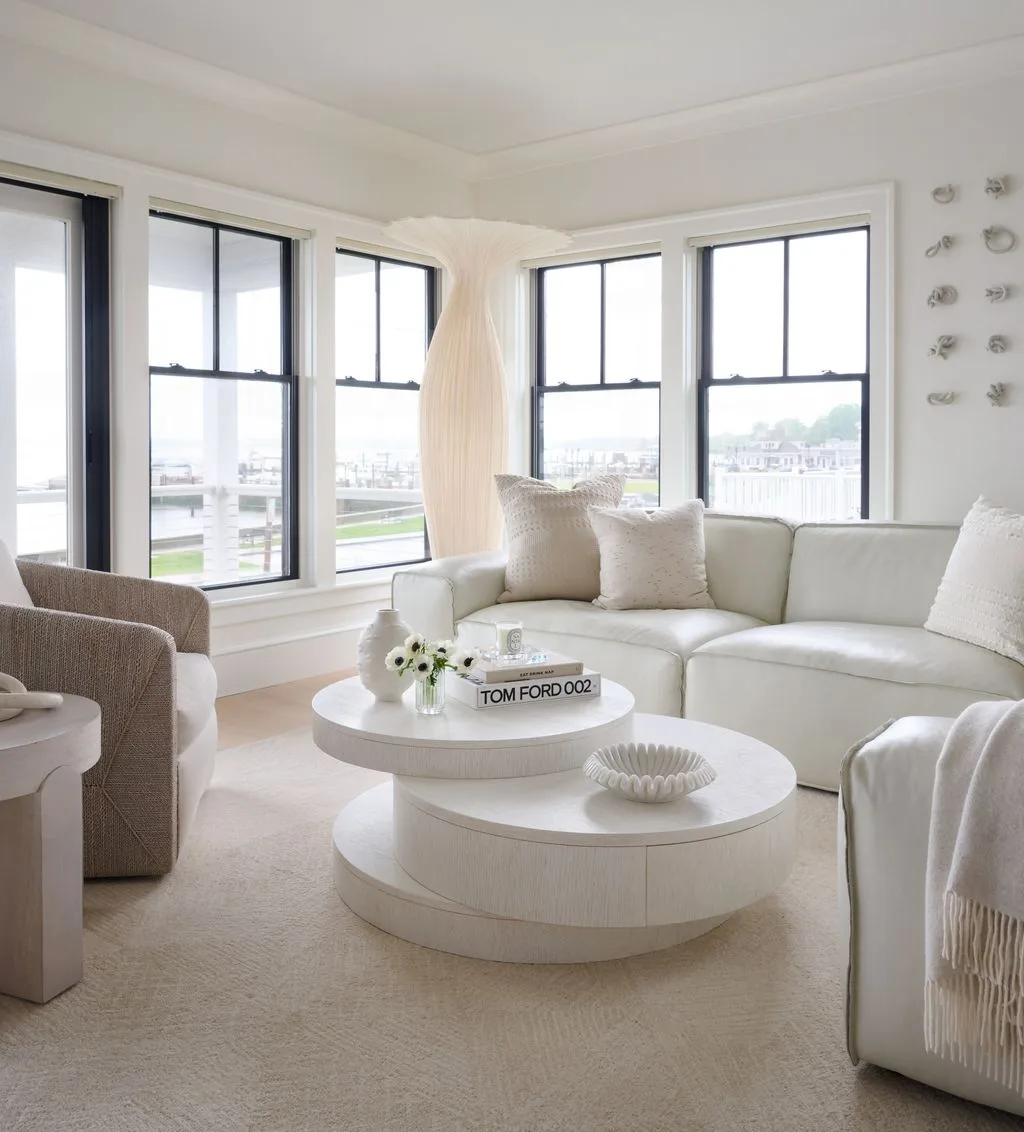
A curved sofa and two rounded tables give this pale room variety through shape rather than several strong colors. Soft cushions and the rug add subtle texture, while the dark window frames create a clear outline around the daylight. The tables remain largely open, allowing the seating arrangement to feel quiet without becoming completely empty.
Several pale surfaces can look different once placed together, so compare fabrics, paint and the rug in the room's actual light. Consider washable covers and the cleaning needs of textured upholstery. Keep at least one table area available for daily use, and check that moving a nesting table does not narrow the walking route.
PART 04
Keep the room useful every day
IDEA 13 / 17
Use a few warm accents within a pale seating group
 SaveSupport Non AI Creator
Image credit: Photo: Mike Schwartz
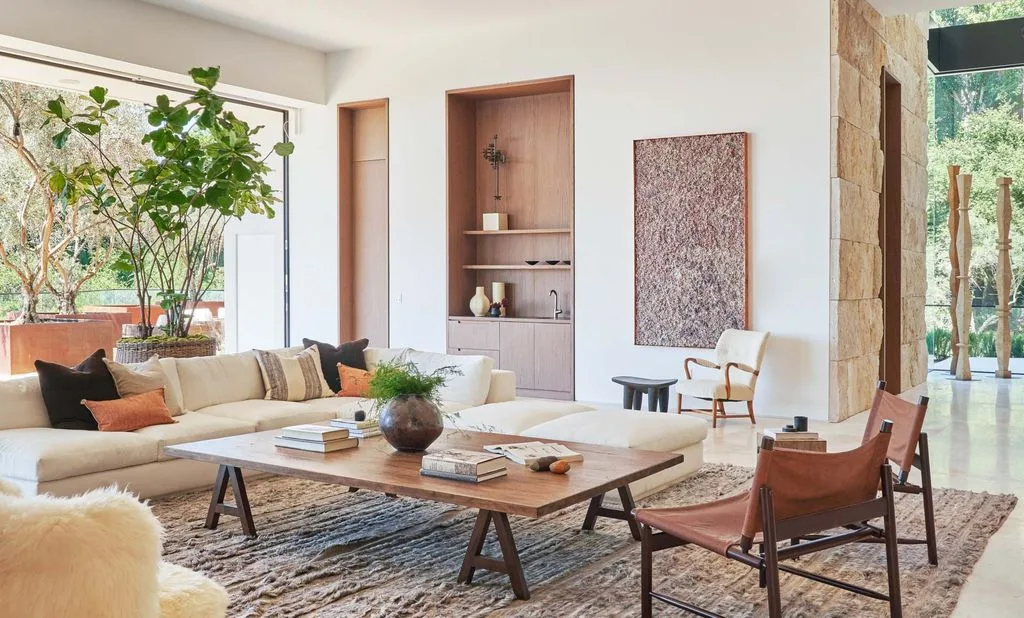
The low pale sectional forms a quiet base for the room, with warm-colored chairs and a wooden coffee table adding contrast. Recessed shelves keep a few objects within the wall's outline rather than extending storage into the floor area. A textured rug and selected cushions bring softer layers around the straightforward seating group.
Choose accent chairs for comfortable use as well as their color against the sofa. A larger coffee table needs accessible space around every edge, especially with additional chairs opposite the sectional. Keep recessed shelves lightly arranged and use concealed storage elsewhere for the mixed belongings that would crowd a visible display.
IDEA 14 / 17
Give books one useful home beside the sofa
 SaveSupport Non AI Creator
Image credit: Photo: Arris Photography
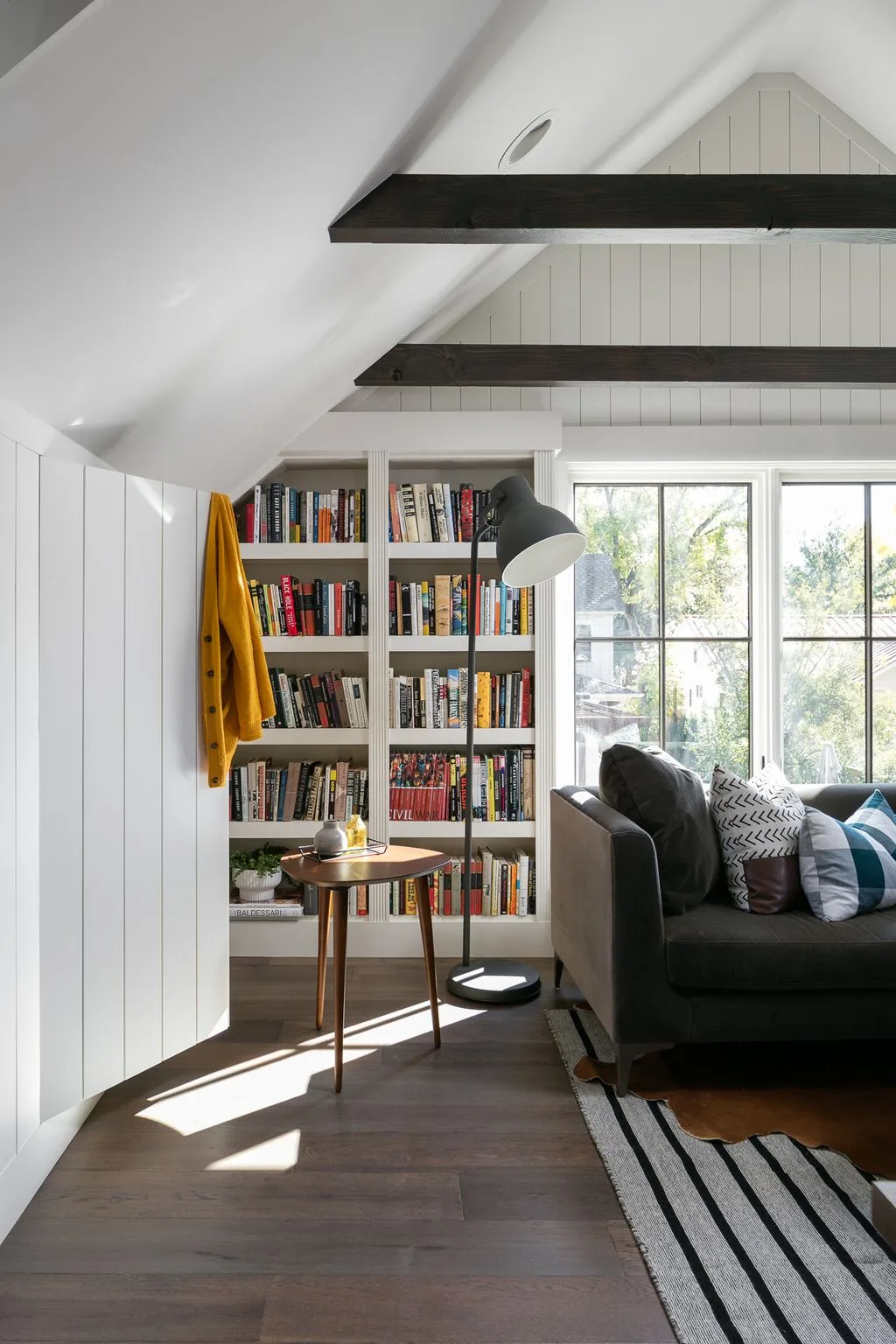
A tall bookcase gives the books a defined home beside the sofa rather than scattering them across several tables. White paneling keeps the surrounding wall quiet, with dark ceiling beams and a striped rug adding clear lines. A reading lamp and small table make the corner useful without requiring a large collection of accessories.
Minimalism does not require removing books you use or enjoy. Choose one reachable storage area and organize it so finding a title remains easy. Secure tall shelving appropriately and keep the reading lamp's lead clear of the walkway. Leave enough tabletop space for a current book and drink rather than using it for permanent stacks.
IDEA 15 / 17
Let two facing sofas create a clear conversation area
 SaveSupport Non AI Creator
Image credit: Photo: Jessica Klewicki Glynn
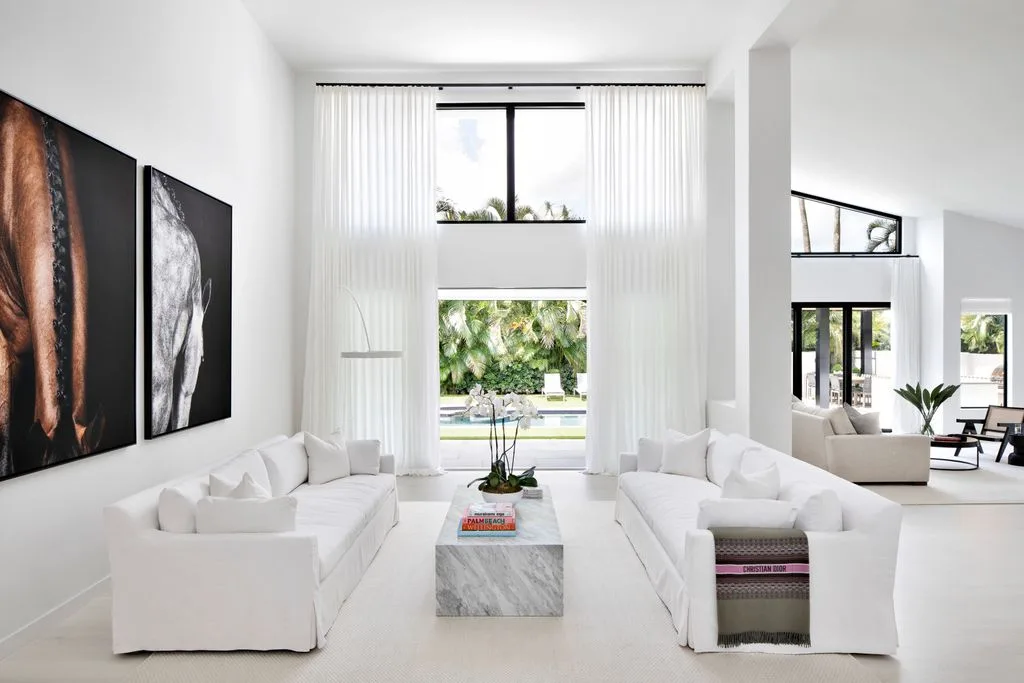
Two pale sofas face each other across a rectangular table, giving the double-height room a clear conversation area. Large wall photographs provide most of the decoration, while tall curtains soften the surrounding windows. The repeated seating shapes keep the arrangement readable within the generous space, with smaller tables tucked alongside the sofa ends.
Facing sofas work best when the distance between them allows easy conversation and a table remains within reach. Check that the room still has a comfortable route around the whole group. Pale covers need a realistic cleaning plan, and large curtains should be chosen and installed so their upkeep remains manageable.
IDEA 16 / 17
Soften a spare architectural room with upholstery
 SaveSupport Non AI Creator
Image credit: Photo: Mike Schwartz
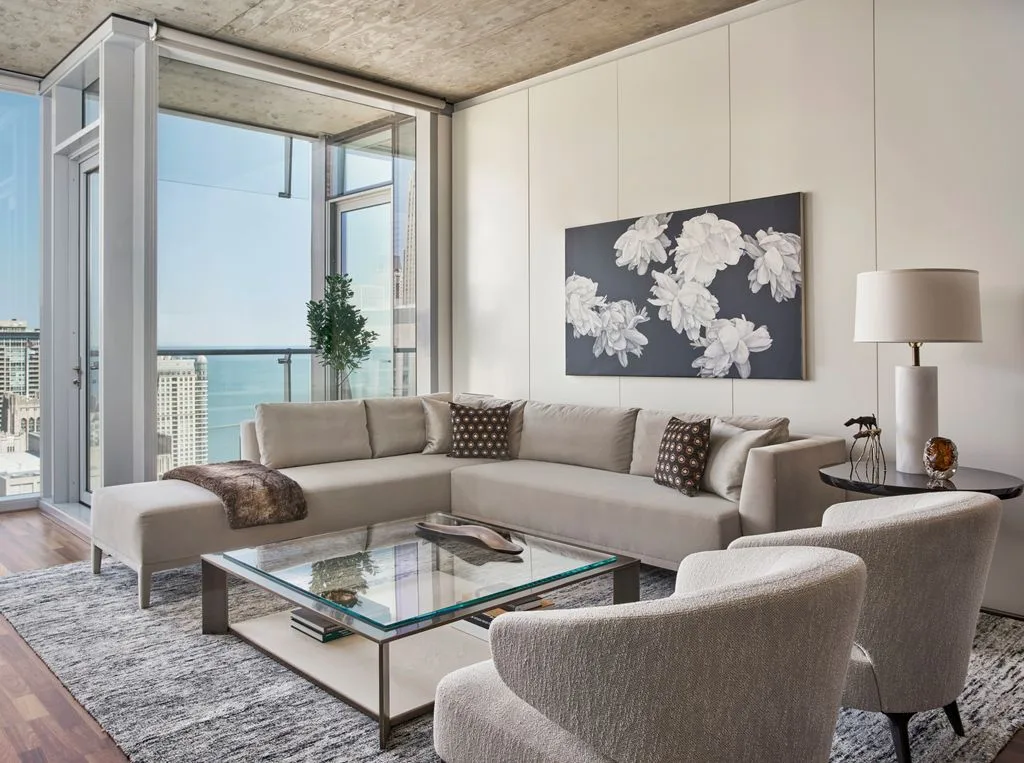
Pale wall panels and a concrete ceiling give the room a restrained architectural backdrop. The taupe sectional and rounded armchairs add a softer layer beneath it, while a textured rug links the seating. A single broad artwork supplies decoration above the sofa, with the glass table leaving more of the rug visible through the center.
Where fixed surfaces feel hard or cool, use upholstery and a practical rug before adding many smaller decorations. Compare chair depth with the sectional's position so the group does not crowd the table. Keep the glass surface available for daily use and check that lamps provide useful evening light beyond the window's daylight.
IDEA 17 / 17
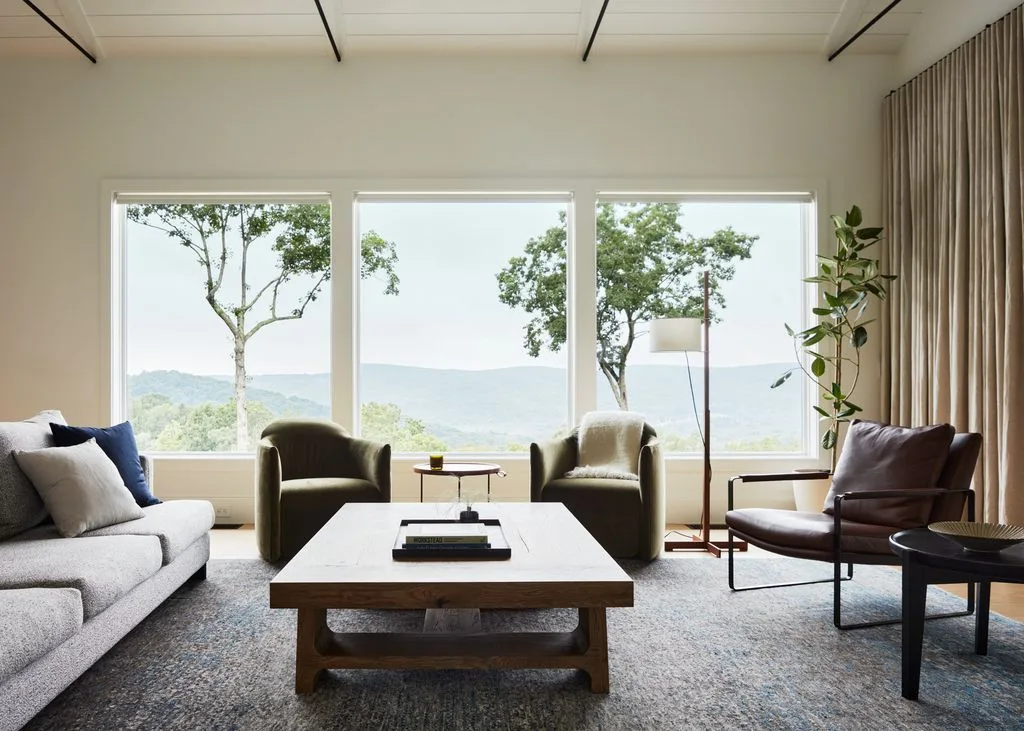
Make a quiet view part of the room's comfort
 SaveSupport Non AI Creator
Image credit: Photo: Jared Kuzia
The broad window gives this room a quiet natural backdrop, with the sofa and muted green chairs arranged around a straightforward wooden table. Long curtains and a textured rug soften the larger surfaces. A few smaller tables and a tall plant add variation, while the main seating remains easy to distinguish from the surrounding open floor.
Arrange seating for the way you spend time, allowing conversation and a view without forcing every chair to face the same direction. Keep curtains easy to open and choose a plant suited to the actual light level. Preserve a usable route around the coffee table rather than adding furniture merely to fill the remaining space.
BRING IT ALL TOGETHER
Keep the things that make the room comfortable
Choose comfortable seating, a useful table and lighting for what you do in the room. Warmth can come from upholstery, wood tones or one well-chosen rug without covering every surface with decorations.
Give everyday belongings a clear place to return to. The room becomes easier to enjoy when books, throws and chargers are accessible, the tables stay useful and the walking routes remain open.