A boho jungle bedroom brings leafy shapes together with relaxed fabrics, woven furniture and personal details. You can make that connection through living plants, a botanical wall or a smaller collection beside the window. The best starting point is the light and floor space you actually have, rather than trying to fit a greenhouse around the bed.
These rooms range from bold tropical patterns to quieter bedrooms with a few plants and warmer textures. Look at the scale of the leaves, the furniture surrounding them and the space left for sleeping, dressing and cleaning. Printed foliage can provide a stronger jungle feel when the room cannot support the living plants you would otherwise choose.
PART 01
Give leafy walls a clear role
IDEA 01 / 15
Pair a dense leaf wall with simpler bedding
 SaveSupport Non AI Creator
Image credit: Photo: Travis J Photography. From: Mollie Openshaw
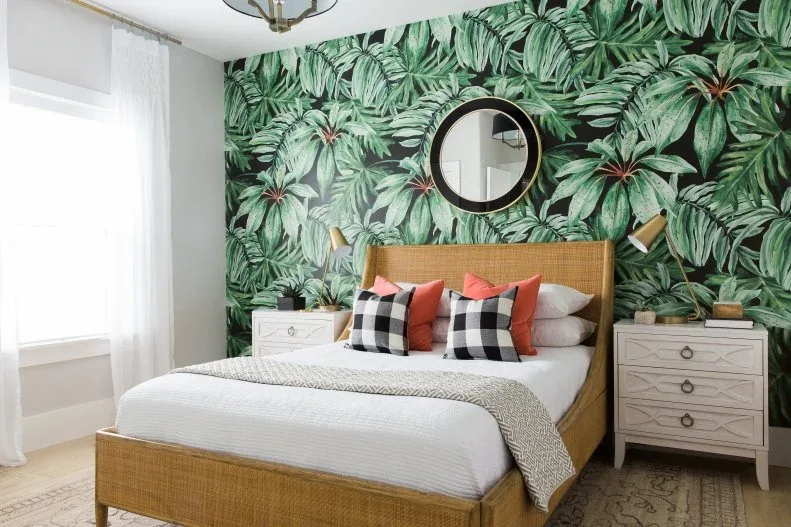
Dense green leaves cover the wall behind this woven bed, giving the room its strongest jungle feature. White bedding provides a calmer area below, while red pillows and black-and-white checks introduce smaller contrasting blocks. The pale bedside chests keep the lower furniture lighter, with a round mirror interrupting the foliage pattern above the headboard rather than adding another leafy surface.
Compare the repeat size with your actual wall before choosing a similarly dense paper. Keep bedding simple enough for the leaves to remain readable, and test the red or darker accents in your room’s light. Allow useful space on both bedside surfaces, choosing lamps that can be reached comfortably without relying on the wall mirror to provide practical lighting.
IDEA 02 / 15
Bring blue foliage together with warm pink layers
 SaveSupport Non AI Creator
Image credit: Photo: Faith Blakeney. From: Faith Blakeney
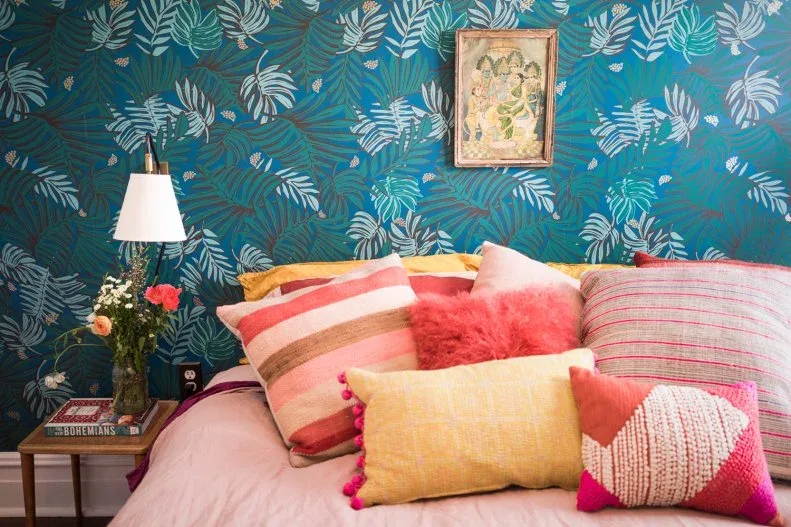
Blue and green foliage creates a cooler background behind the warm pink bedding. Yellow and striped pillows break up the soft fabric colors, while a wooden bedside table gives the layered bed a simpler neighboring surface. The white lampshade stands clearly against the pattern, showing how a leaf wall can coexist with colorful textiles when their individual shapes remain easy to distinguish.
Choose one main bedding color before adding smaller cushions, checking how it looks beside a wallpaper sample. Retain enough space for sleeping comfortably and give extra pillows a place overnight. Check reach to the bedside table and lamp switch, leaving a clear surface for everyday items rather than filling the entire table with another collection of colorful decorations.
IDEA 03 / 15
Use a tree mural as the room’s larger picture
 SaveSupport Non AI Creator
Image credit: Future / Jake Curtis
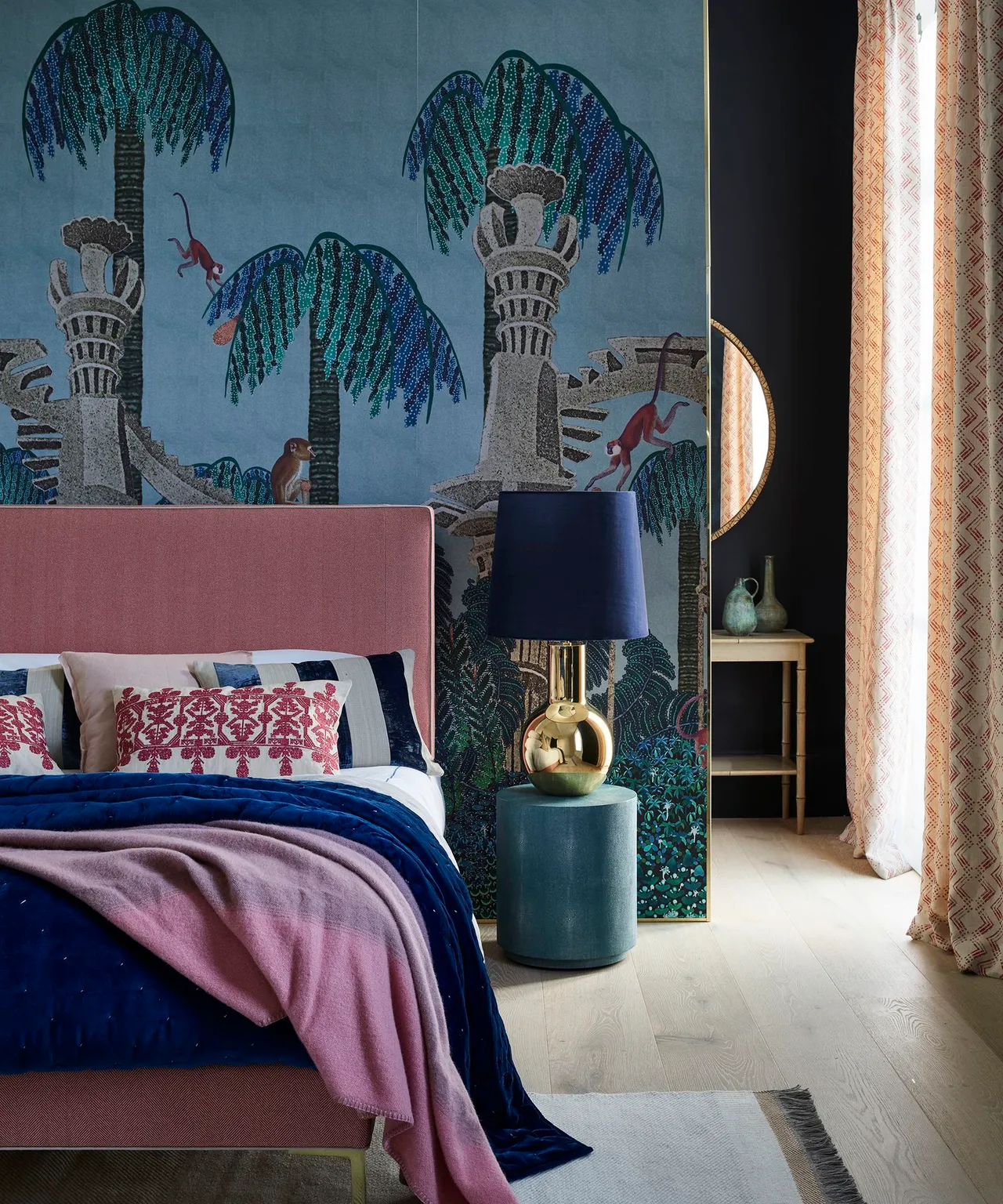
A blue mural carries oversized trees and small animal figures behind the pink headboard. Darker blue bedding repeats its background color at a lower level, while the teal bedside table adds another related tone. The patterned curtain brings a finer repeat alongside the larger wall picture, with the simpler headboard providing a clear boundary between the mural and the bed’s fabric layers.
Check where the mural’s main trees will fall around the headboard, door and corners before ordering. Compare the picture with your curtain pattern so neither loses its shape at a distance. Keep a useful bedside surface and enough light for reading, and sample the darker blues under your actual evening lamps before committing to several matching fabric and wall elements.
IDEA 04 / 15
Try a bright yellow leaf pattern beside warm furniture
 SaveSupport Non AI Creator
Image credit: From: Bells & Whistles
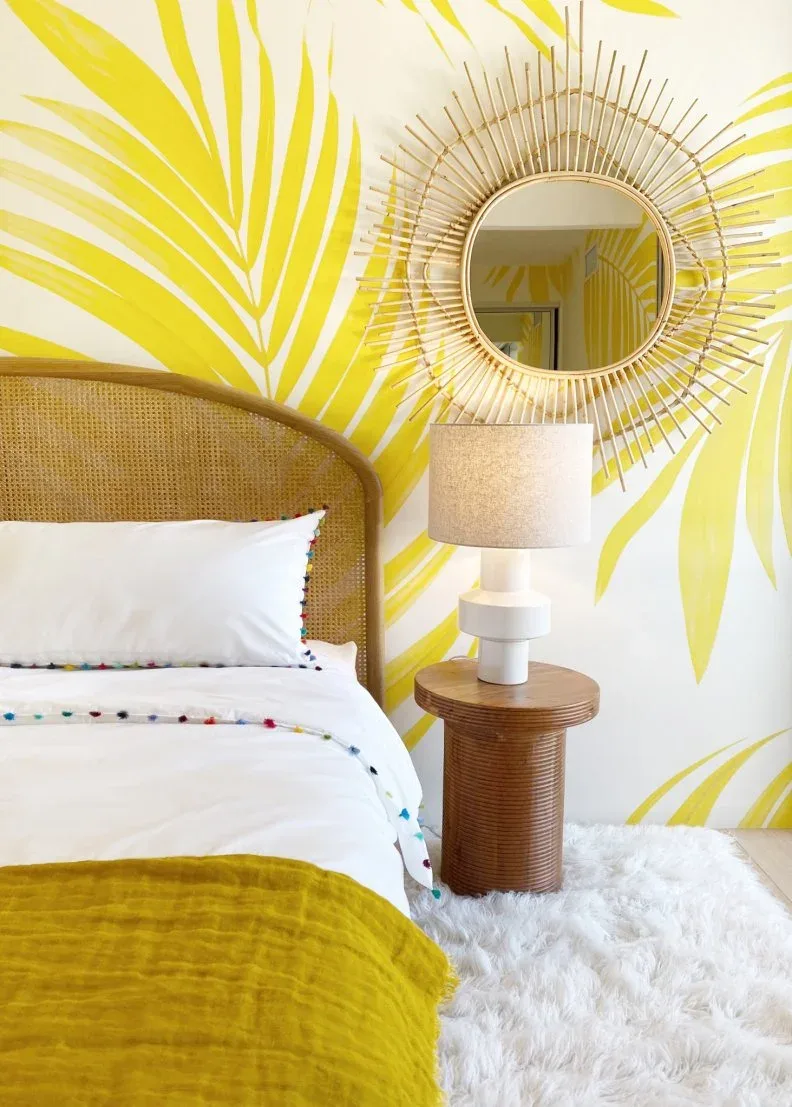
Yellow leaves give this bedside wall a bright tropical pattern without using a green background. The woven headboard and wooden table add warmer texture beside the white bedding, while a yellow throw repeats the wall color nearer the floor. A sunburst mirror extends the rounded lines above the lamp, giving this smaller bedroom view several connected shapes around one clear color.
Test a large sample before choosing a vivid yellow for the bed wall, checking it in daylight and under the bedside lamp. Keep surrounding fabrics quieter if you want the leaf shapes to remain the main feature. Mount a mirror with suitable support, and check the table’s height and usable surface rather than choosing it only for its circular outline.
IDEA 05 / 15
Give a smaller bed a bold botanical backdrop
 SaveSupport Non AI Creator
Image credit: Jessica Isaac
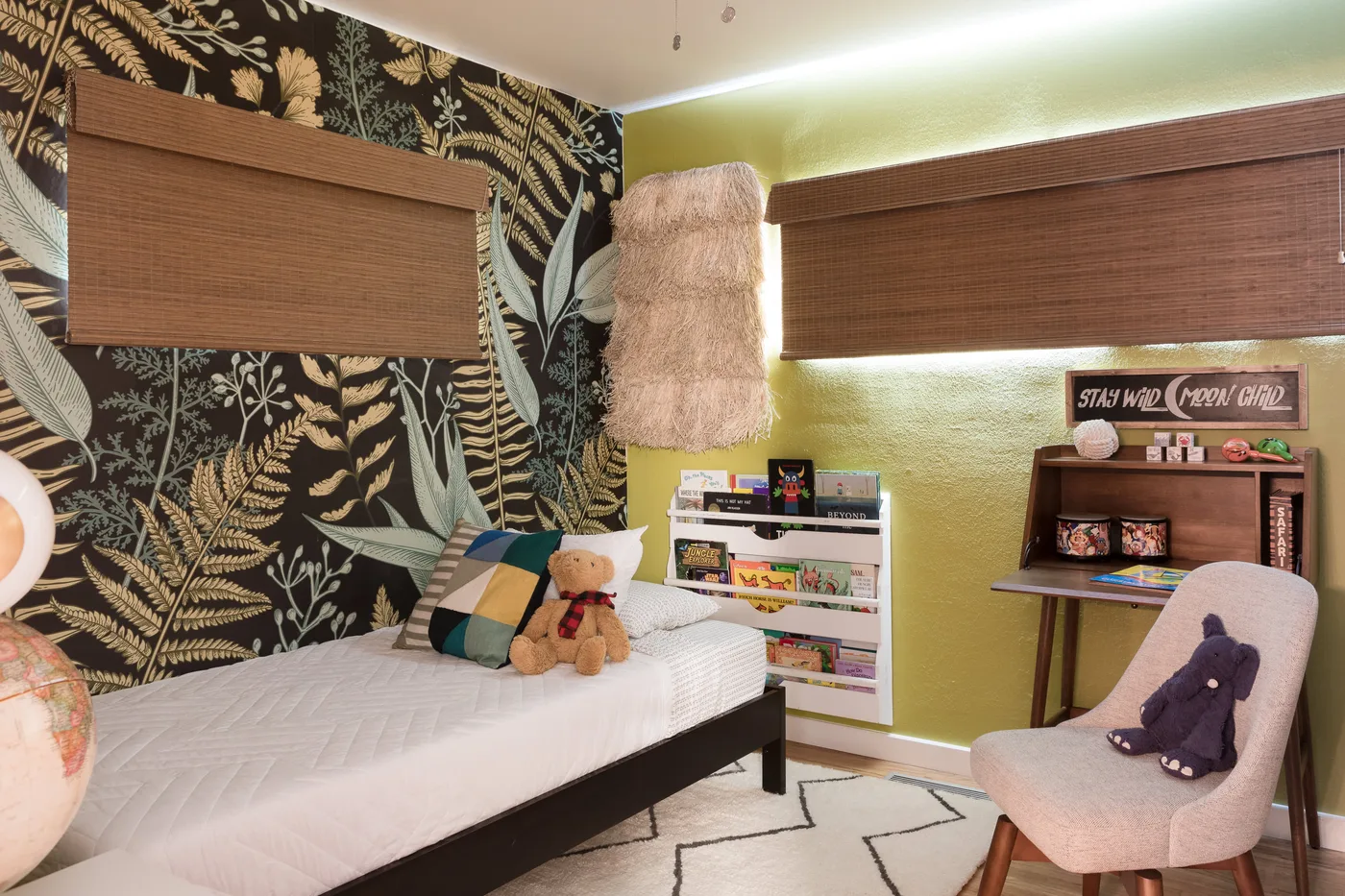
Large botanical shapes fill the dark wall behind this smaller bed, while the neighboring green wall connects with the printed leaves. Woven blinds introduce warmer horizontal texture above the simple white bedding. Book storage and a pale chair give the room functions beyond sleeping, showing how a strong leaf wall can sit around familiar furniture rather than requiring a larger or more elaborate bed.
Plan the bed, book storage and chair footprint before deciding how much wall pattern to add. Keep the window covering easy to operate and choose cordless options where children use the room. If adapting the colors for a child’s bedroom, keep heavy decorations and hanging items away from the sleeping area and retain a clear route between the bed and doorway.
PART 02
Make space for plants around the bed
IDEA 06 / 15
Let plants soften a pink and yellow bedroom
 SaveSupport Non AI Creator
Image credit: Jessica Isaac
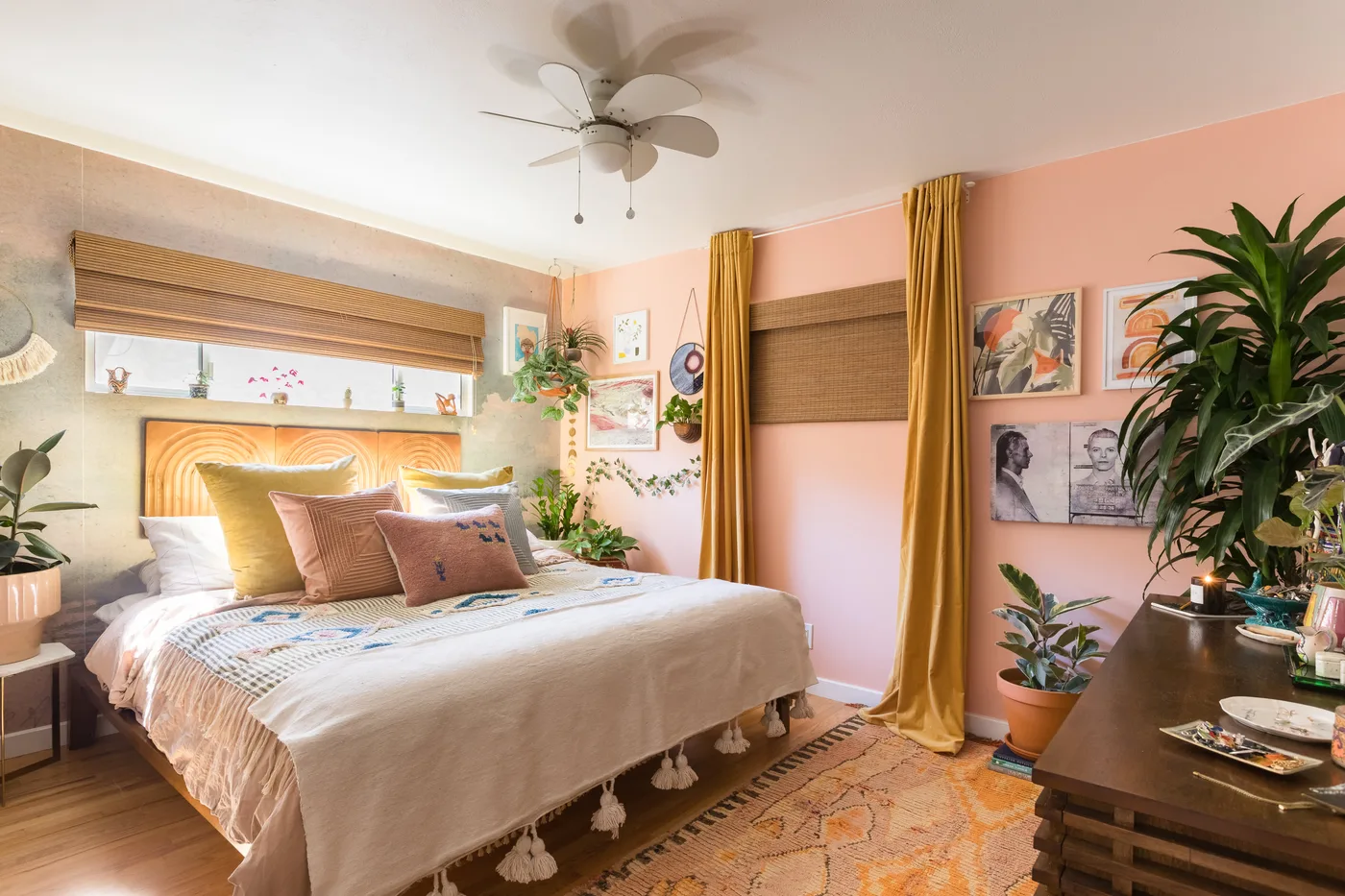
Pink walls and mustard curtains make a warm background for the plants surrounding this bed. Several leaf shapes appear at different heights, from the taller plant beside the dresser to the smaller greenery near the headboard. Pale bedding leaves those colors visible, while the wooden furniture and woven blind connect the leafy arrangement with the room’s softer boho textures.
Check the light available at each proposed plant position instead of assuming every corner will support the same greenery. Leave curtains free to move and protect wooden surfaces from watering. Use properly supported hanging pots away from the sleeping position, and keep enough space beside the dresser to open its drawers and remove containers for care without disturbing the entire arrangement.
IDEA 07 / 15
Make a green bed wall part of a wider plant arrangement
 SaveSupport Non AI Creator
Image credit: Photo: Arnelle Lozada. From: HGTV Handmade
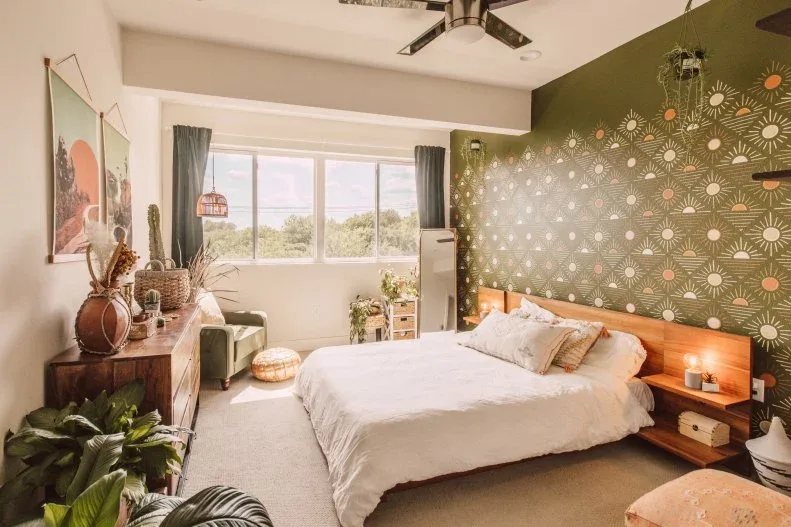
A green patterned wall connects the bed with the greenery around the wider room. The wooden headboard provides a warm horizontal line against the busier background, while white bedding leaves the wall’s lighter motifs visible. Plants appear near the window, beside the dresser and higher on the wall, making the leafy character depend on several positions rather than a single oversized floor pot.
Assess each plant’s light needs before spreading a collection around the bedroom. Keep window access clear and choose stable pots with protection beneath them for watering. Avoid hanging heavy containers above the sleeping position, and leave room to clean around the dresser and bed so the green wall remains a backdrop for a usable arrangement rather than a reason to crowd it.
IDEA 08 / 15
Use a pale room to show hanging greenery clearly
 SaveSupport Non AI Creator
Image credit: A Taste of Koko
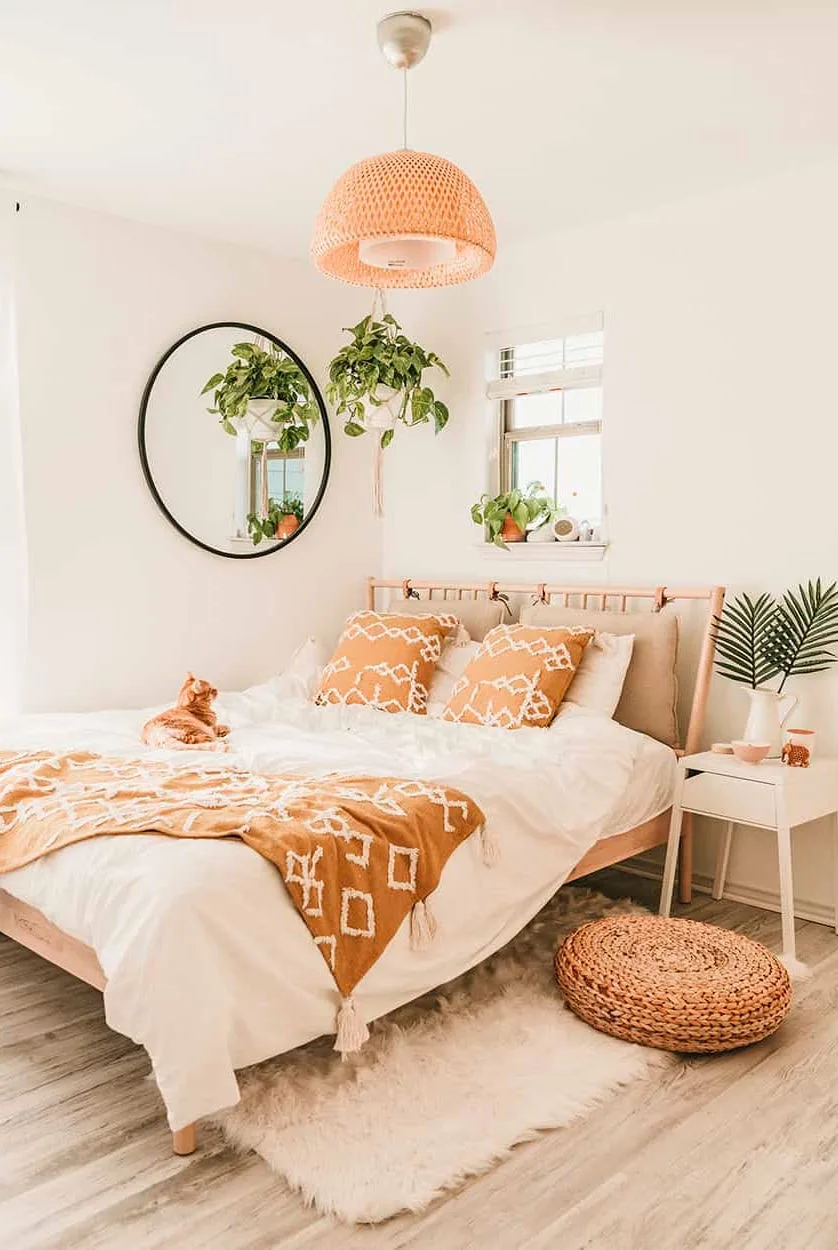
Hanging greenery stands clearly against this pale bedroom wall, with a round mirror repeating the curved shapes around the woven bed. Orange patterned fabrics provide a warmer accent below, while the ceiling shade and floor pouf repeat open texture at different heights. The light background gives the leaves room to show without requiring a dark wall or several large furniture colors.
Use suitable supports for hanging containers, placing them where a fall or watering spill cannot affect someone in bed. Check the plants’ light needs and keep the mirror accessible for cleaning. Give the pouf a defined position outside the regular route, and choose removable fabric layers so the brighter bedding can be cleaned without making the entire room difficult to maintain.
IDEA 09 / 15
Keep broad leaves beside a light woven bed
 SaveSupport Non AI Creator
Image credit: Charlotte Lea
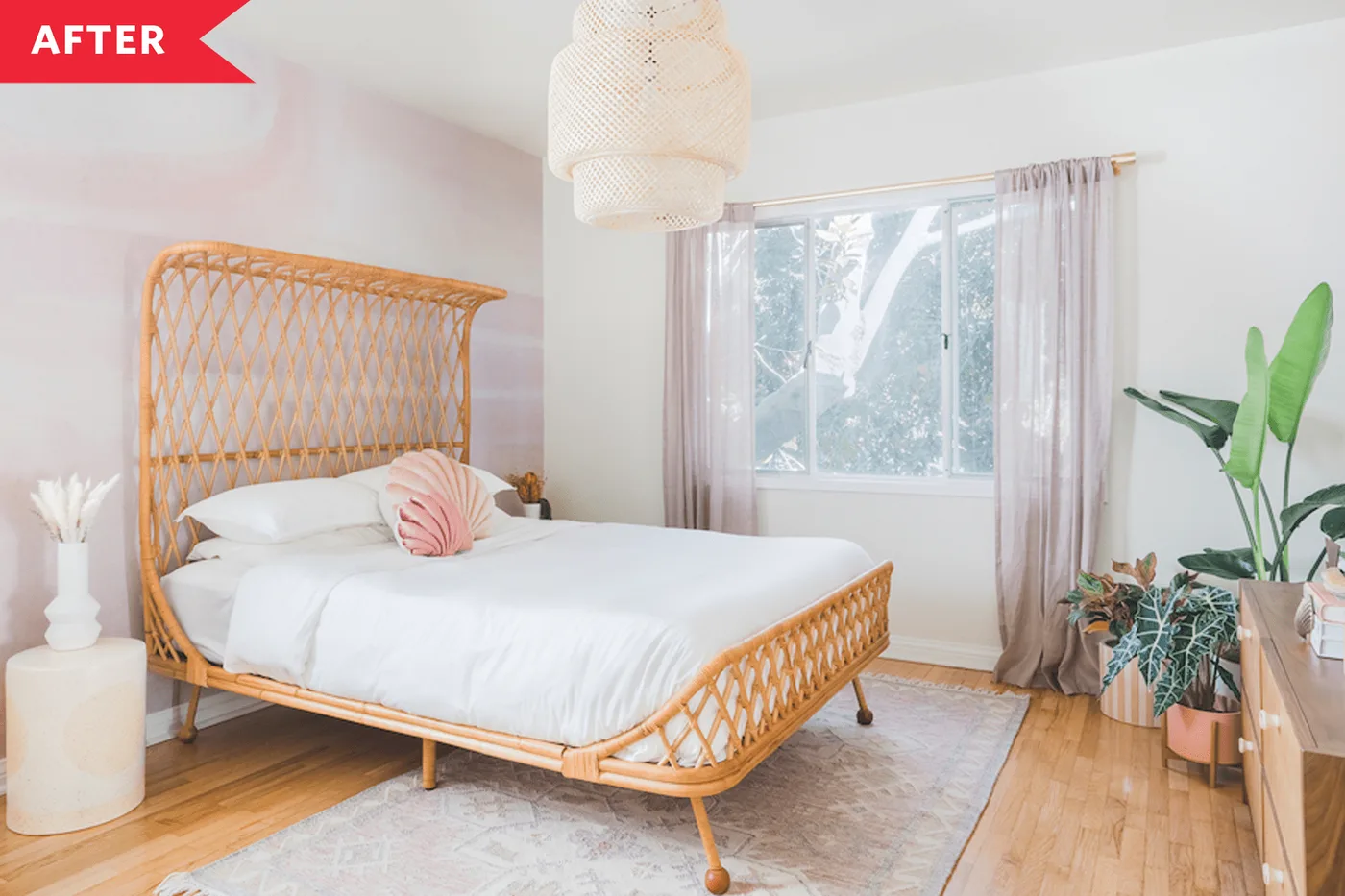
Broad leaves beside the window give this light bedroom a tropical shape without covering the walls in foliage. The open woven bed frame repeats a warmer texture in front of the white bedding, with a small pink pillow adding a restrained color accent. Pale curtains and the overhead shade keep the surrounding room soft, letting the plants and bed outline remain the larger visual features.
Check whether the window position gives a chosen plant appropriate light, then leave space for the curtain and plant’s expected growth. Keep the bed accessible on the sides you use and protect the floor beneath pots. Compare the bed frame’s cleaning needs with your routine, as open woven details need attention as well as the bedding placed within them.
PART 03
Connect greenery with warmer textures
IDEA 10 / 15
Connect framed leaves with a pale bed and warm floor textures
 SaveSupport Non AI Creator
Image credit: Photo: Jeff Herr ©. From: Terracotta Design Build
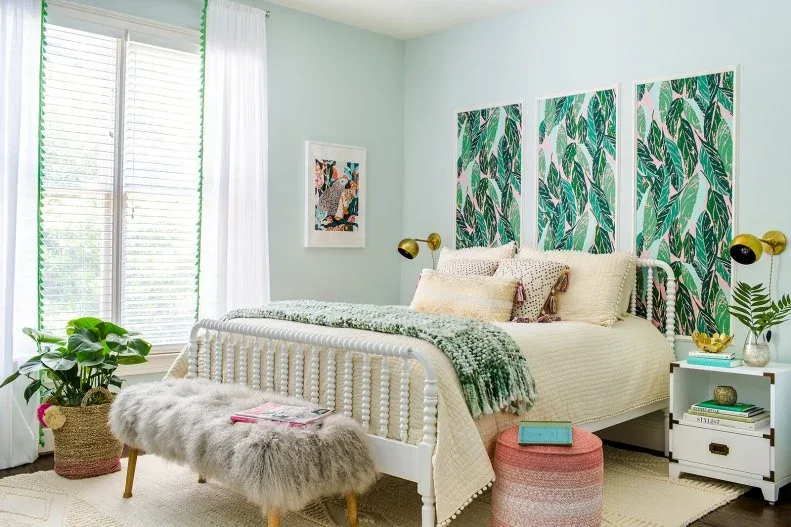
Three leafy panels create a botanical feature above this pale spindle bed, with green edging on the curtains carrying the color toward the window. A patterned green throw and nearby plants continue that connection below. The basket, bench and softer floor layers add warmer texture, making the greenery part of a mixed arrangement rather than a single picture placed on an otherwise unrelated wall.
Measure the combined panel width against the bed and use suitable wall fittings, keeping the display secure. Check curtain operation and leave access to plants for watering and inspection. Give the bench enough clearance to sit down comfortably, and reduce loose bedding or baskets if they make the route around the foot of the bed difficult to use.
IDEA 11 / 15
Warm a small plant collection with wooden furniture
 SaveSupport Non AI Creator
Image credit: Arighi Bianchi
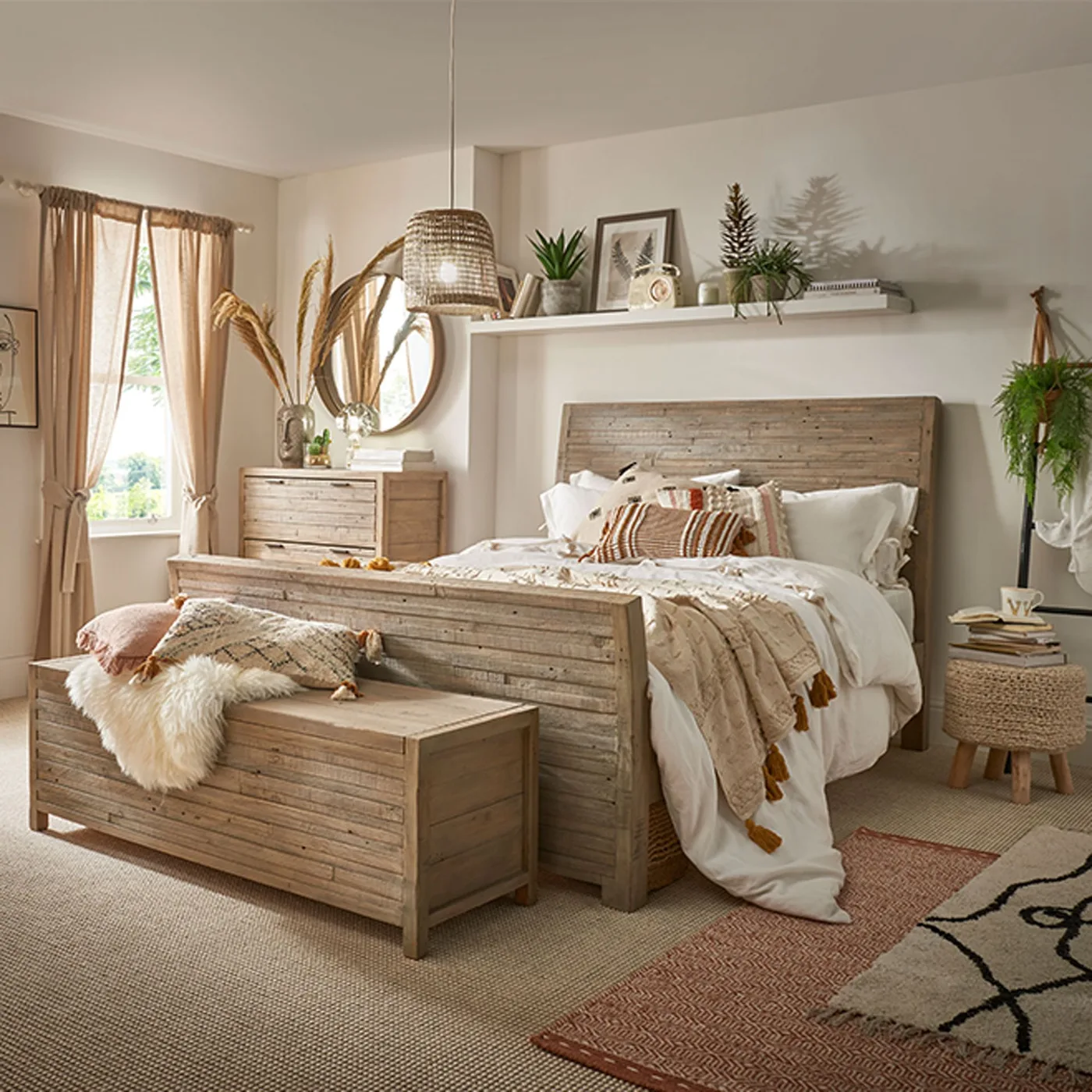
Wooden furniture supplies most of the warmth in this quieter bedroom, while greenery is gathered along a shelf and in a hanging planter beside the bed. White bedding keeps the plant shapes and wood grain visible, with a woven shade connecting the upper and lower textures. This is a gentler version of the leafy look, suited to someone who prefers smaller collections to dense wallpaper.
Check shelf support for the actual weight of watered pots and keep heavy containers away from the sleeping area. Leave room to inspect individual plants instead of squeezing them between ornaments. Measure the blanket box with its lid open and check access around it, choosing storage and furniture finishes you can maintain alongside the extra care a plant collection requires.
IDEA 12 / 15
Start with a few hanging plants and a textured bed wall
 SaveSupport Non AI Creator
Image credit: Photo: Sesha Smith, Convey Studios. From: Urbanology Designs
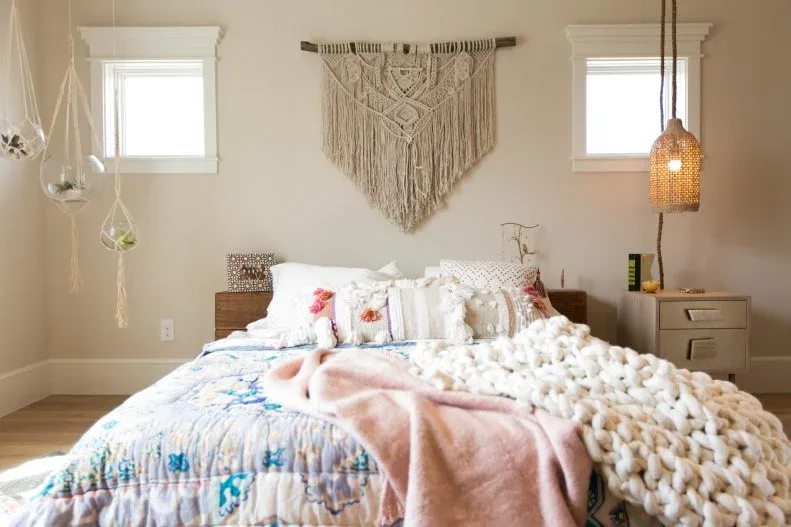
Small hanging planters introduce greenery beside the window while the larger woven wall hanging supplies the bed wall’s main texture. A woven pendant repeats the warmer tone on the opposite side, with white, blue and pink bedding adding softer layers below. The leafy element is deliberately smaller here, offering a starting point for a bedroom that cannot accommodate a dense collection of floor plants.
Choose plants for the light available beside the window and use supports appropriate to the filled containers. Keep hanging objects outside the sleeping position and check that windows can still open as needed. Select fabric layers that can be removed easily for washing, and leave enough space on the bedside chest for a useful lamp and the items you reach for nightly.
PART 04
Keep plant-filled corners useful
IDEA 13 / 15
Set a woven bedroom chair beside accessible greenery
 SaveSupport Non AI Creator
Image credit: Future PLC / David Giles
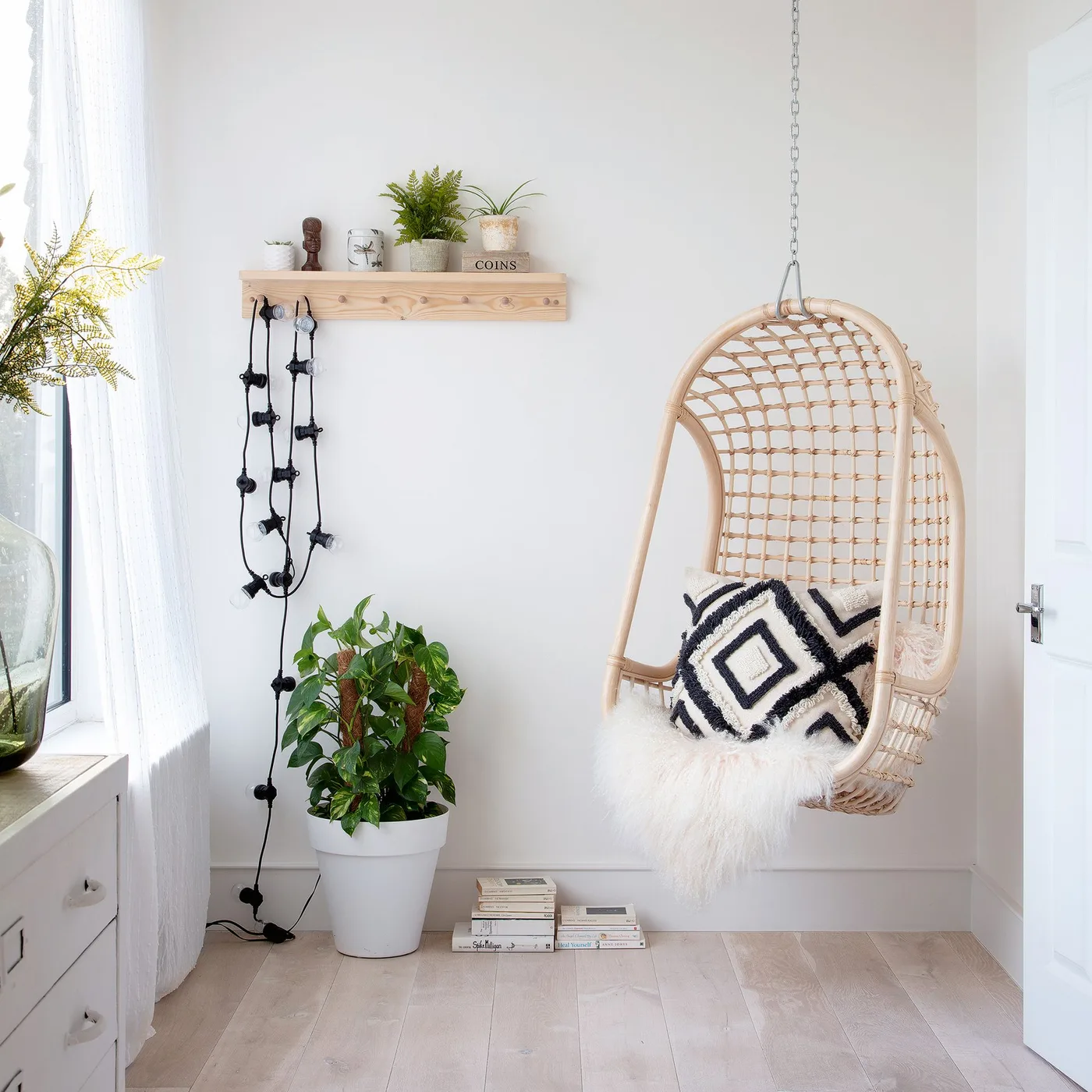
A woven hanging chair gives this white bedroom corner a warmer outline, with a floor plant bringing greenery to the same sitting area. Smaller plants on the shelf continue the leaf shapes higher up, while the black-and-white pillow provides a clearer pattern within the chair. Pale drawers leave the corner useful for storage rather than turning every available surface into another plant display.
Use a hanging chair only where appropriate structural support and professional installation can be provided. Allow its required movement clearance and keep plants outside that space. Check drawer access and choose pots you can lift safely for care, considering a stable freestanding chair when overhead support or room for movement is unavailable beside the window.
IDEA 14 / 15
Leave a clear resting corner around a taller plant
 SaveSupport Non AI Creator
Image credit: Stacy Zarin Goldberg
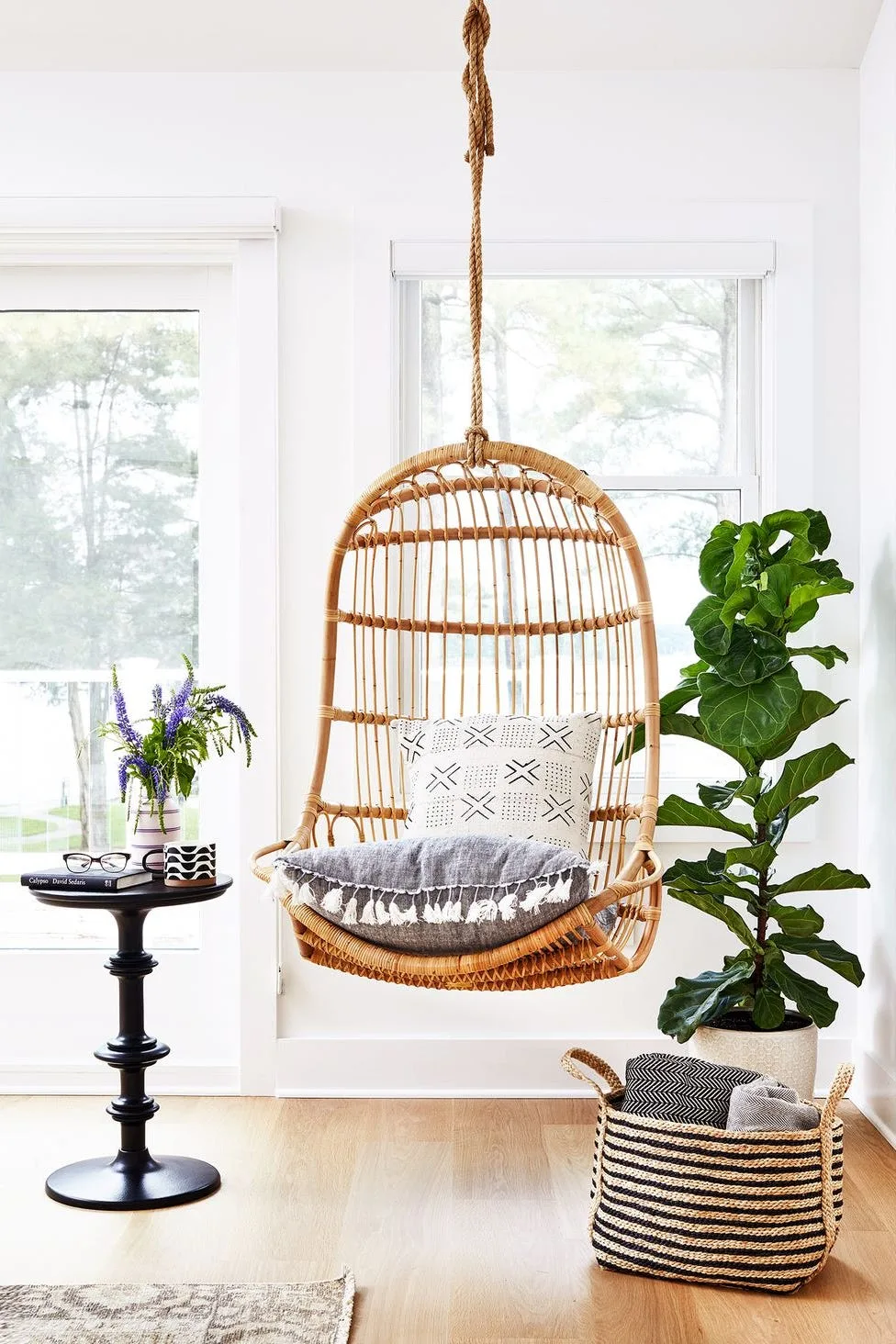
A tall broad-leaved plant gives this bright sitting corner a stronger green shape beside the open woven chair. The small dark table creates a reachable surface without occupying much of the view between the windows. A basket keeps folded blankets together at floor level, making the corner feel layered while the surrounding walls and window coverings remain comparatively quiet.
Check the plant’s light needs before using the window corner and leave access for cleaning and opening the windows. Have a hanging chair’s support professionally assessed and retain the movement clearance its installation requires. Place the basket and table outside that movement space, with any loose cords secured and watering kept away from fabrics and floor surfaces.
IDEA 15 / 15
Give a leafy bedroom dresser room to function
 SaveSupport Non AI Creator
Image credit: Jessica Isaac
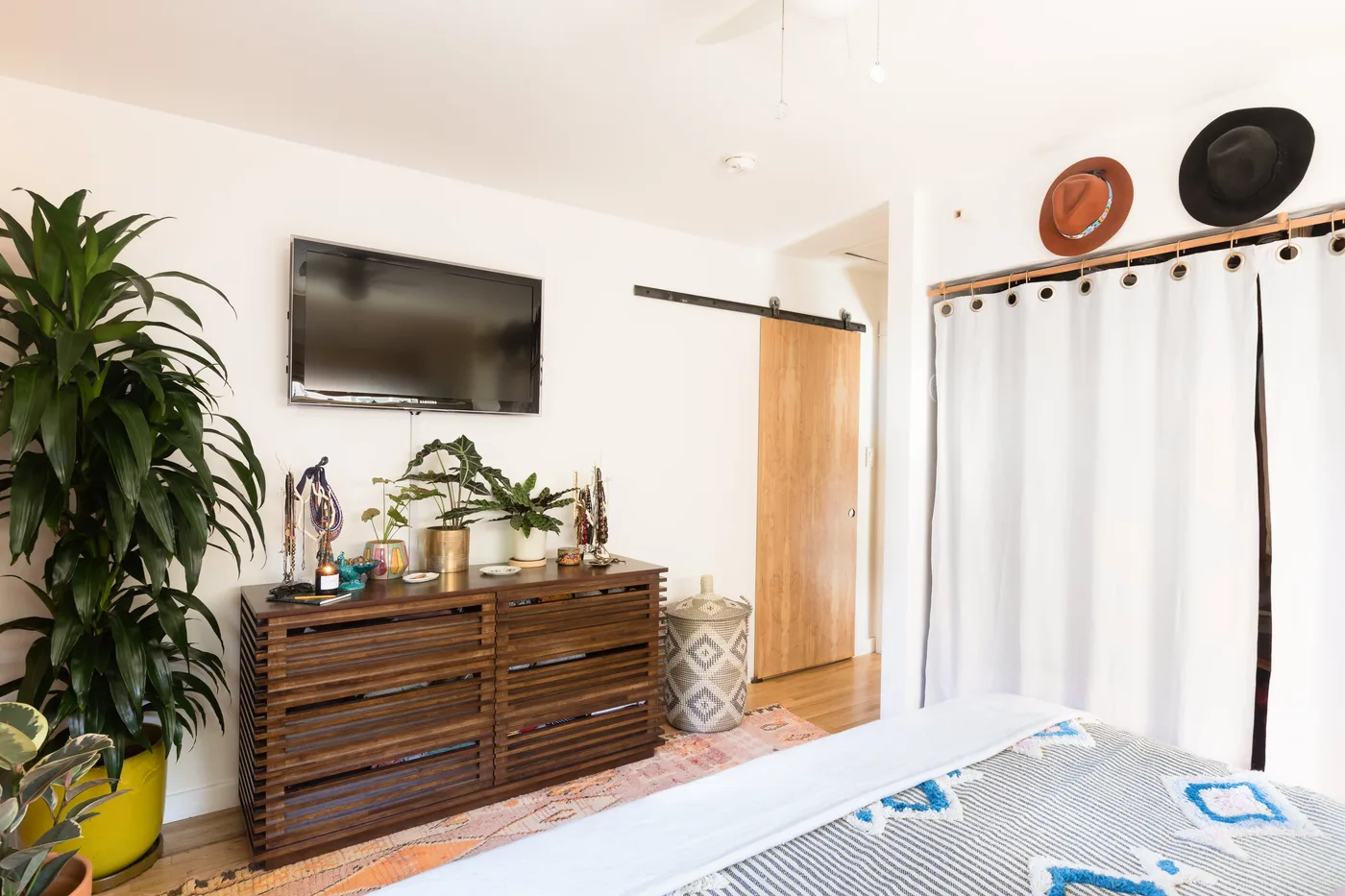
A tall floor plant and several smaller pots soften the dark wooden dresser in this bedroom. The slatted drawer fronts supply horizontal texture beneath the leaf shapes, while white curtains keep the neighboring storage area lighter. The bed remains visible in the foreground, showing that the plant arrangement belongs to a dressing and storage zone within the room rather than another layer across the sleeping surface.
Keep enough dresser space for daily belongings and leave its drawers free to open fully. Protect the top and floor from water, checking that pots do not drip behind the furniture. Give the taller plant space to grow without pressing into curtains, and use a manageable number of smaller containers so plant care does not displace the storage you need.
BRING IT ALL TOGETHER
Build the leafy room around your daily routine
Decide whether the strongest leafy feature will be the wall or a living plant arrangement, then choose the bedding and furniture around it. Compare a wallpaper sample in the actual room before covering a large area. Keep access to the bed, drawers and window practical, even when the finished room feels richly layered.
Start with plants whose light and care needs you can meet, protecting surfaces from watering and leaving room to inspect each pot. A few healthy plants can work better than a crowded collection you cannot maintain. Use printed foliage for the stronger visual effect when suitable light, safe placement or time for plant care is limited.