A cozy guest bedroom should help visitors settle in without having to ask where every everyday item belongs. Comfortable bedding, a reachable light and somewhere to put a bag can matter more than a large collection of accessories. Start with a clean, usable sleeping area and leave space for the person staying there.
These rooms illustrate different ways to create that welcome, including quieter bedrooms, patterned country rooms and useful dressing corners. They are inspiration for a guest arrangement rather than proof that each photographed room was built for visitors. Adapt the furniture to your available space and the comfort and access needs of the guests you expect.
PART 01
Make the bed comfortable and easy to settle into
IDEA 01 / 20
Use bedding layers guests can adjust
 SaveSupport Non AI Creator
Image credit: McGee & Co.
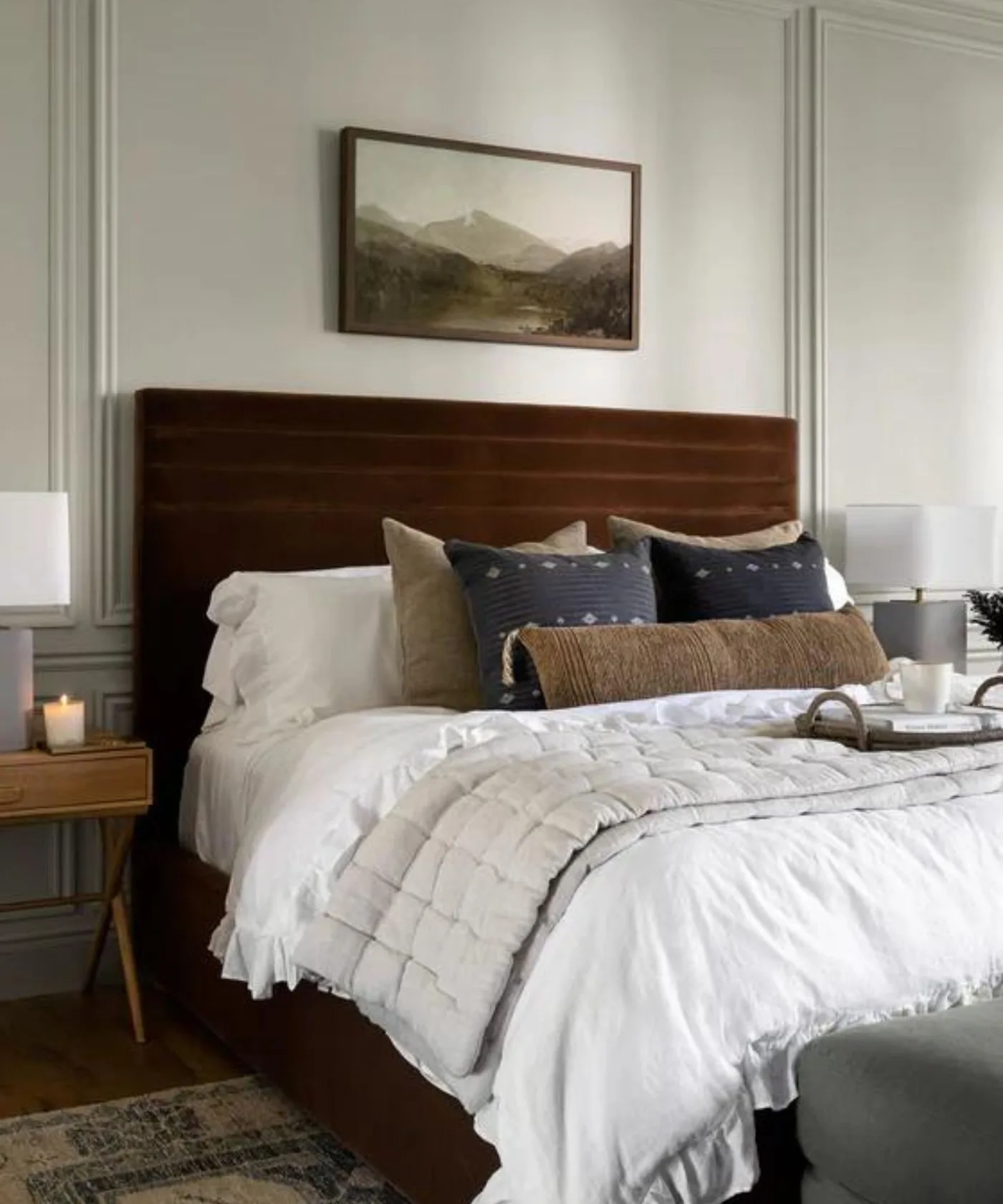
A pale checked blanket adds another layer over the white bedding, while dark blue cushions connect the sleeping area with the deeper brown headboard. Warm bedside tables prevent the pale fabrics from becoming the only visible furniture tone. The arrangement creates contrast through a few larger pieces instead of relying on many smaller objects around the bed.
Choose freshly cleaned layers that can be added or removed easily, with an extra blanket in an obvious place. Avoid assuming every visitor wants the same weight of bedding. Keep spare pillows available where practical, and make sure the bedside surfaces remain usable after the decorative cushions are moved rather than styling the room only for arrival.
IDEA 02 / 20
Keep a sitting area separate from the bed
 SaveSupport Non AI Creator
Image credit: The Refined Group
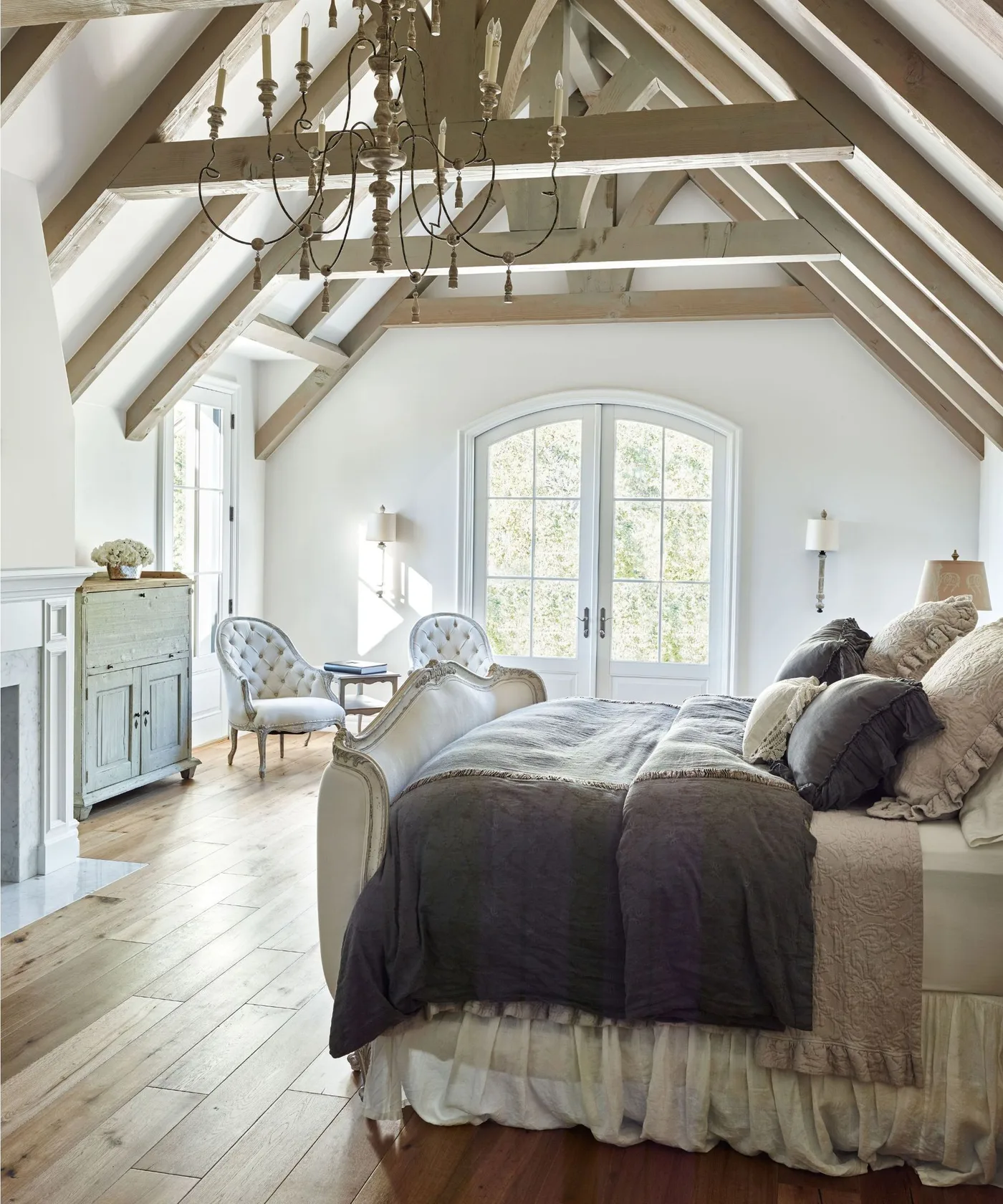
Two pale chairs and a small table create a sitting area beyond the bed in this high-roof room. The pale shaped bed and layered gray coverlet remain distinct below the beams, while glazed doors bring light behind the chairs. The arrangement lets someone pause away from the bedding without turning every available corner into another storage space.
Only add the chairs when they leave a comfortable route around the bed and doors. Guests may appreciate a separate seat for reading or putting on shoes, but useful luggage space can matter more in a smaller room. Keep the small table stable and clear, and check the room layout against the mobility needs of the visitors you expect.
IDEA 03 / 20
Give a blue bed a comfortable place to sit
 SaveSupport Non AI Creator
Image credit: Naturalmat for Homes & Gardens
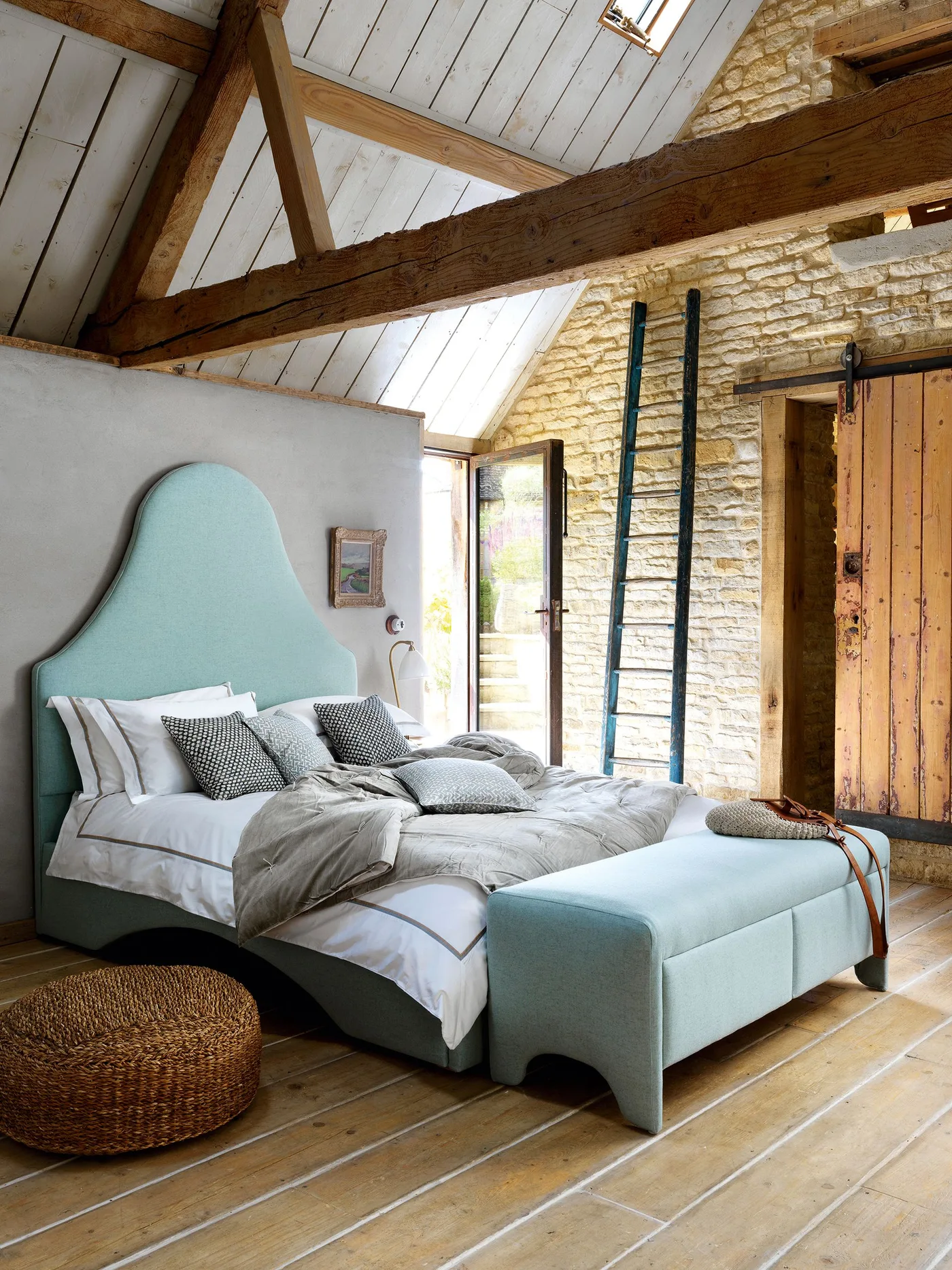
A tall pale blue headboard and matching bench bring softer color against the exposed stone wall in this room. Warmer beams and a sliding wooden door supply stronger surrounding textures. The bench connects with the bed without introducing another large pattern, while the pale bedding keeps the sleeping surface more restrained than the architecture around it.
Measure the route around the bench and check whether it is useful for sitting or placing a bag. Do not assume an upholstered piece will tolerate luggage wheels or sharp fittings without protection. Keep the sliding door easy to operate, explain its controls where needed, and leave enough headroom and access around the bed for the guests staying.
IDEA 04 / 20
Let a patterned headboard supply the main character
 SaveSupport Non AI Creator
Image credit: Lucas Eilers
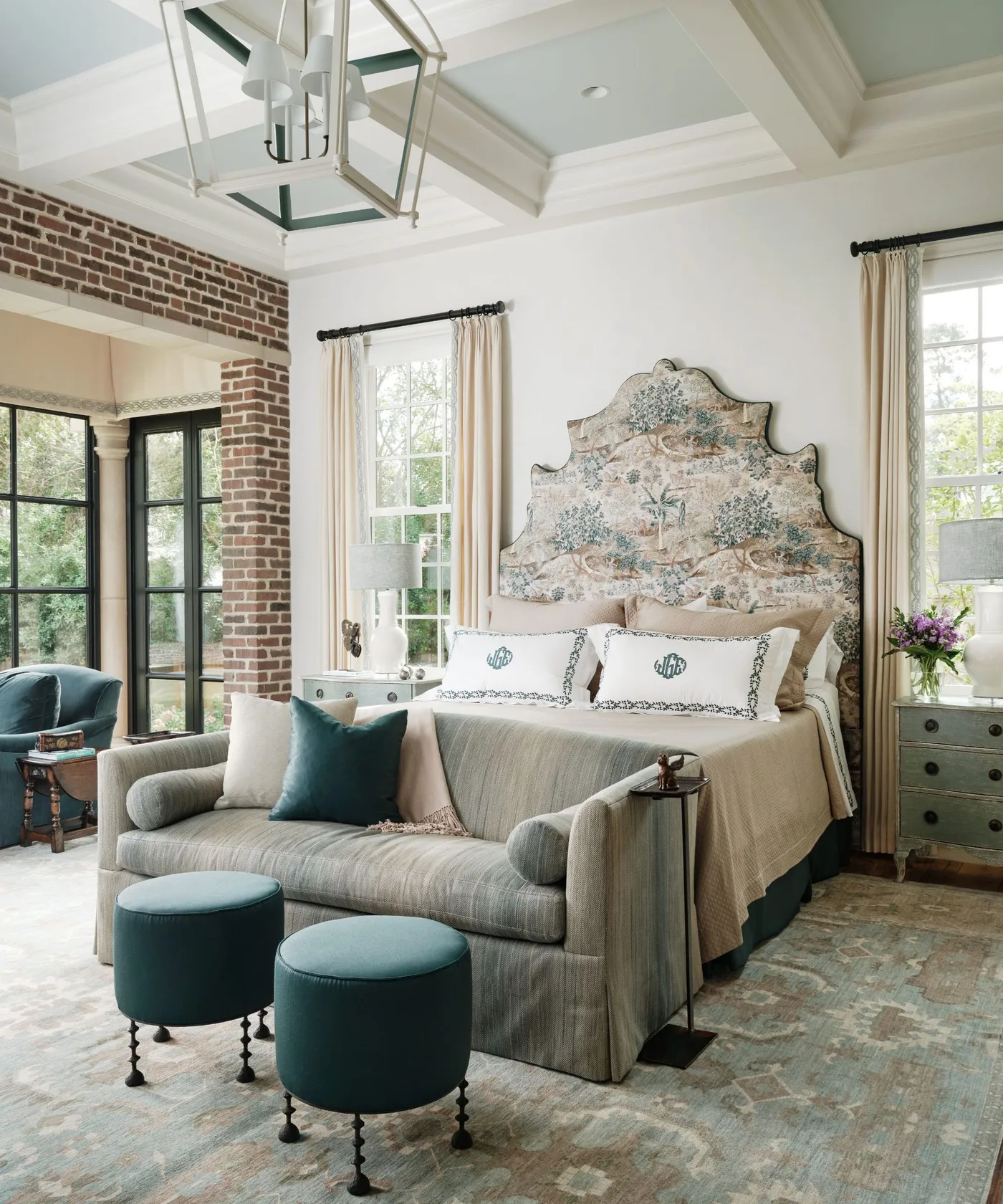
The shaped patterned headboard gives this bedroom a distinct focal point behind the pale bedding. A striped settee and darker green stools create separate seating shapes in front, while long cream curtains soften the window area. The arrangement combines several fabrics, with the quieter bed covering providing a break between the larger printed headboard and the furniture below.
For a guest room, choose the seating pieces that will actually help someone settle in and remove extras that narrow the route. Keep decorative pillows easy to put aside and retain space for a bag. Check curtain privacy and furniture stability, and make the sleeping area comfortable before adding more patterned pieces simply to fill the room.
IDEA 05 / 20
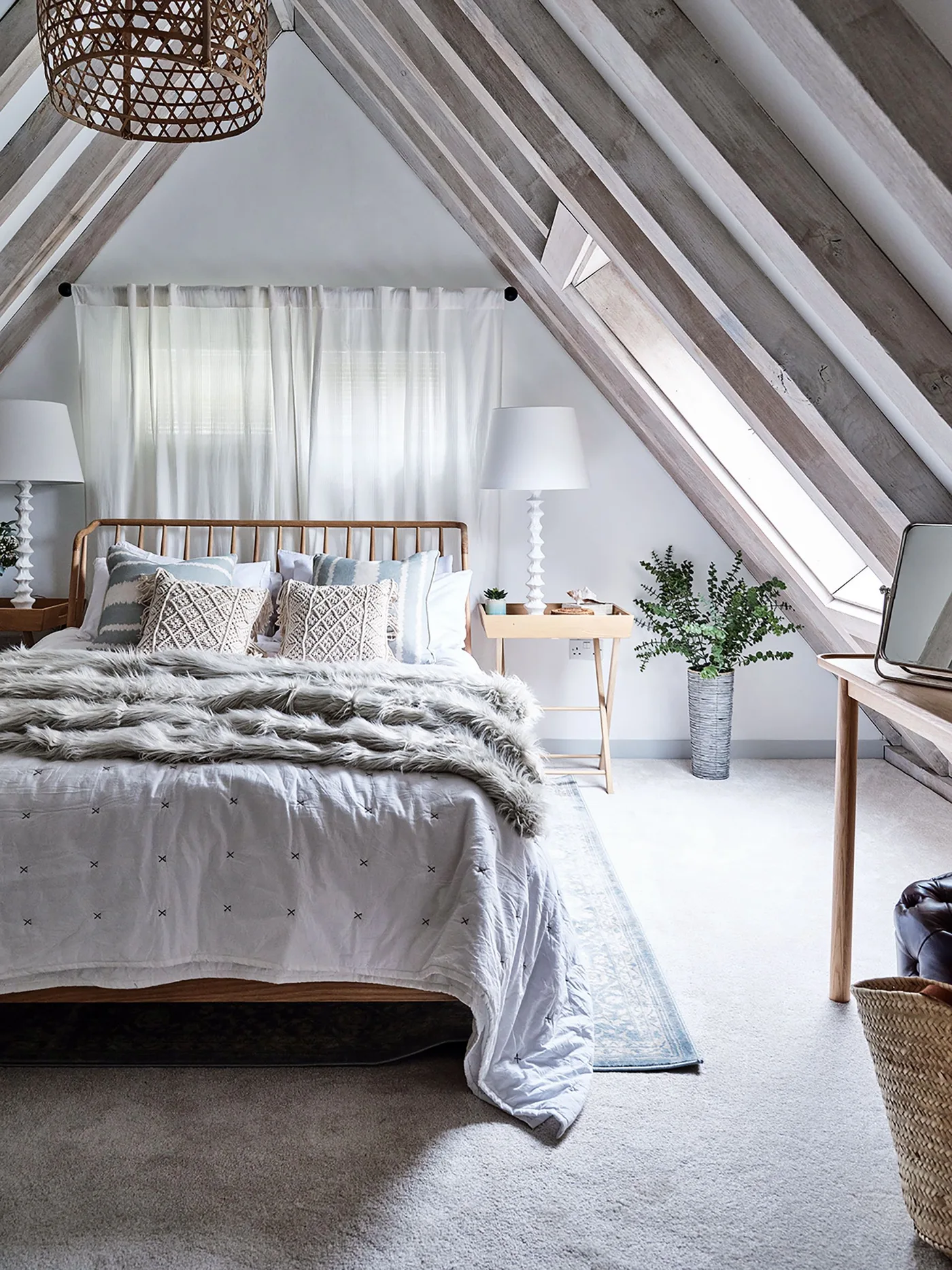
Arrange an attic bed around the available headroom
 SaveSupport Non AI Creator
Image credit: Dan Duchars
Gray roof timbers give this attic bedroom a stronger overhead outline, while the wooden bed and pale layers keep the sleeping area lighter. Two white lamps make the bedside positions easy to identify, with a narrow skylight adding another source of daylight along the slope. The arrangement uses the room's shape without requiring darker bedding to repeat every beam.
Check headroom beside the bed and on the route from the entrance, especially for taller visitors. Explain skylight controls and privacy arrangements, and provide useful light for movement after dark. Keep rugs and loose bedding clear of walking routes, and consider whether access stairs and the sloping ceiling make another room a better choice for some guests.
PART 02
Keep bedside details useful after dark
IDEA 06 / 20
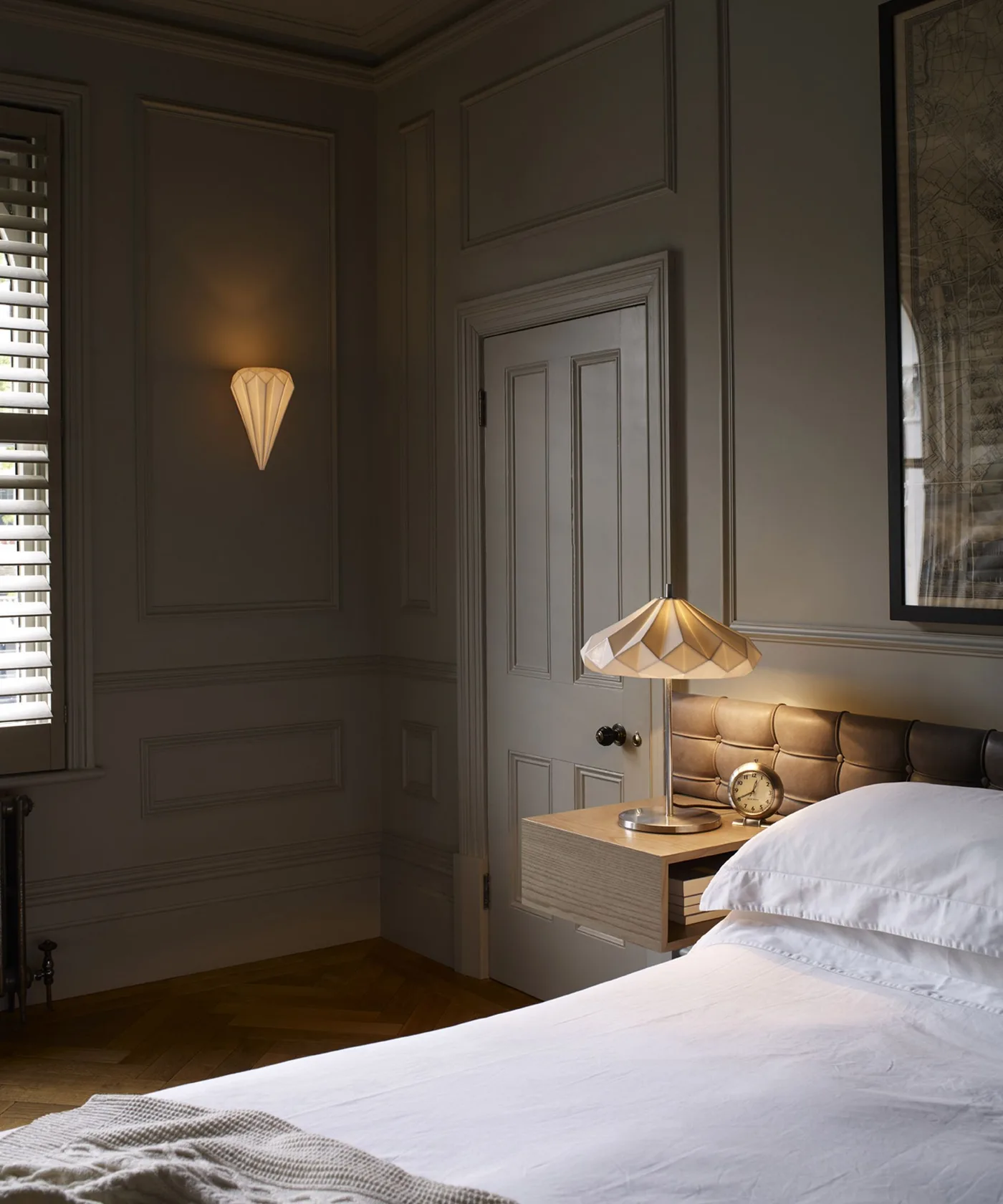
Make a darker bedroom easy to use at night
 SaveSupport Non AI Creator
Image credit: Original BTC
Dark paneled walls give this bedroom a quieter background for the pale bedding and warmer lights. A bedside cabinet keeps the table lamp close to the sleeping position, while a smaller wall light adds another illuminated point. The arrangement shows how a darker room can still make the bed and everyday fittings easy to recognize.
Check that visitors can reach the bedside switch comfortably and explain any unfamiliar controls. Leave the cabinet surface clear for glasses or a phone, keeping cables away from the walking route. Consider a simple light for the route to the door, and test the room after dark rather than judging its usefulness only in daylight.
IDEA 07 / 20
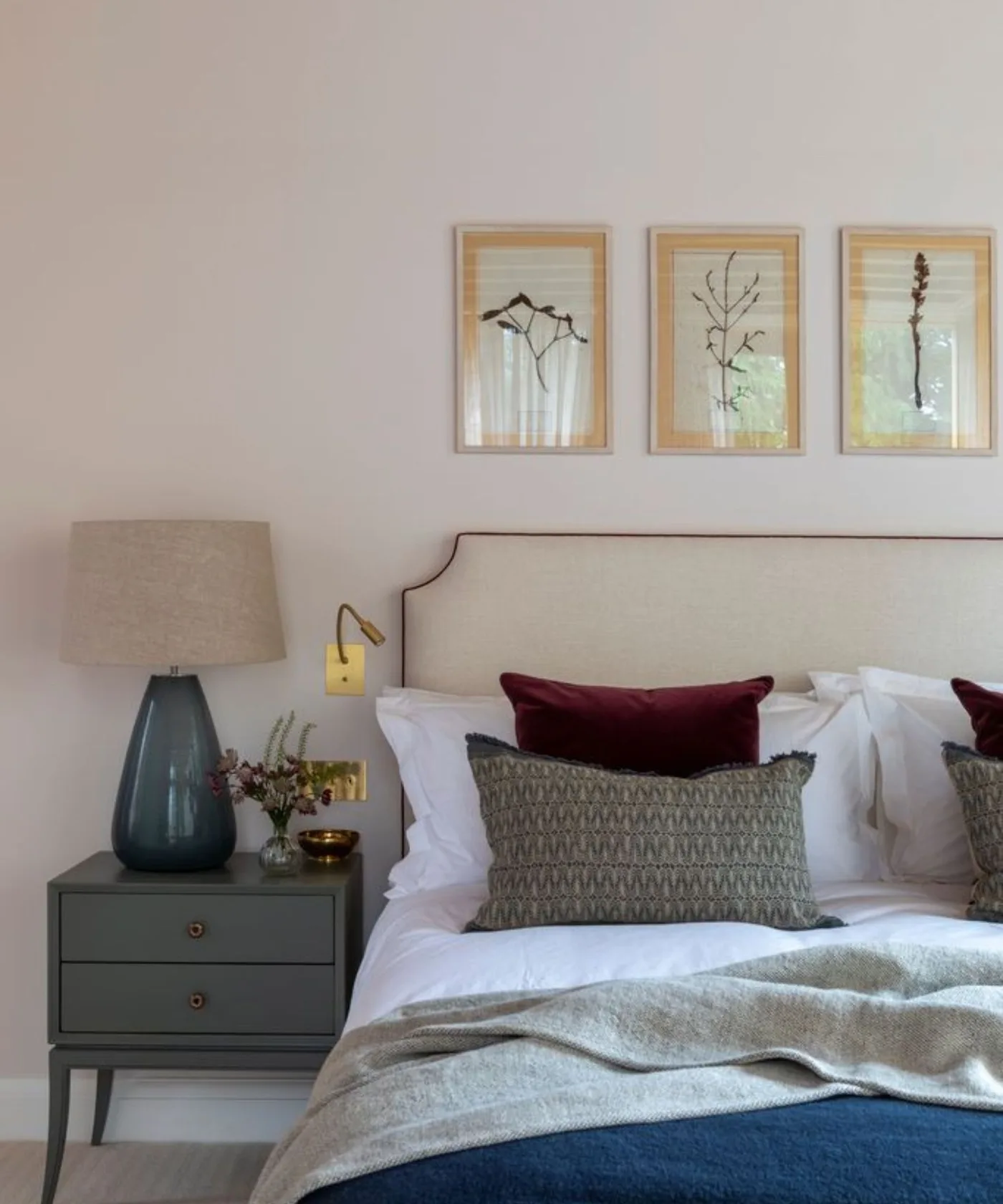
Offer separate light for reading and settling in
 SaveSupport Non AI Creator
Image credit: Kitesgrove
A larger shaded lamp and a small wall reading light serve different positions beside this bed. White bedding keeps the sleeping area lighter, while darker pillows and a teal lamp add warmer depth around the pale headboard. The botanical pictures remain above the main furniture, leaving the bedside drawer and tabletop available for more practical use.
Check each switch from the bed and choose lighting that suits reading without shining directly into someone's eyes. Leave space for a guest's water and glasses beside the lamp. Keep extra decorative cushions easy to move, and provide a sensible place to put them at night so they do not end up blocking the route to the door.
IDEA 08 / 20
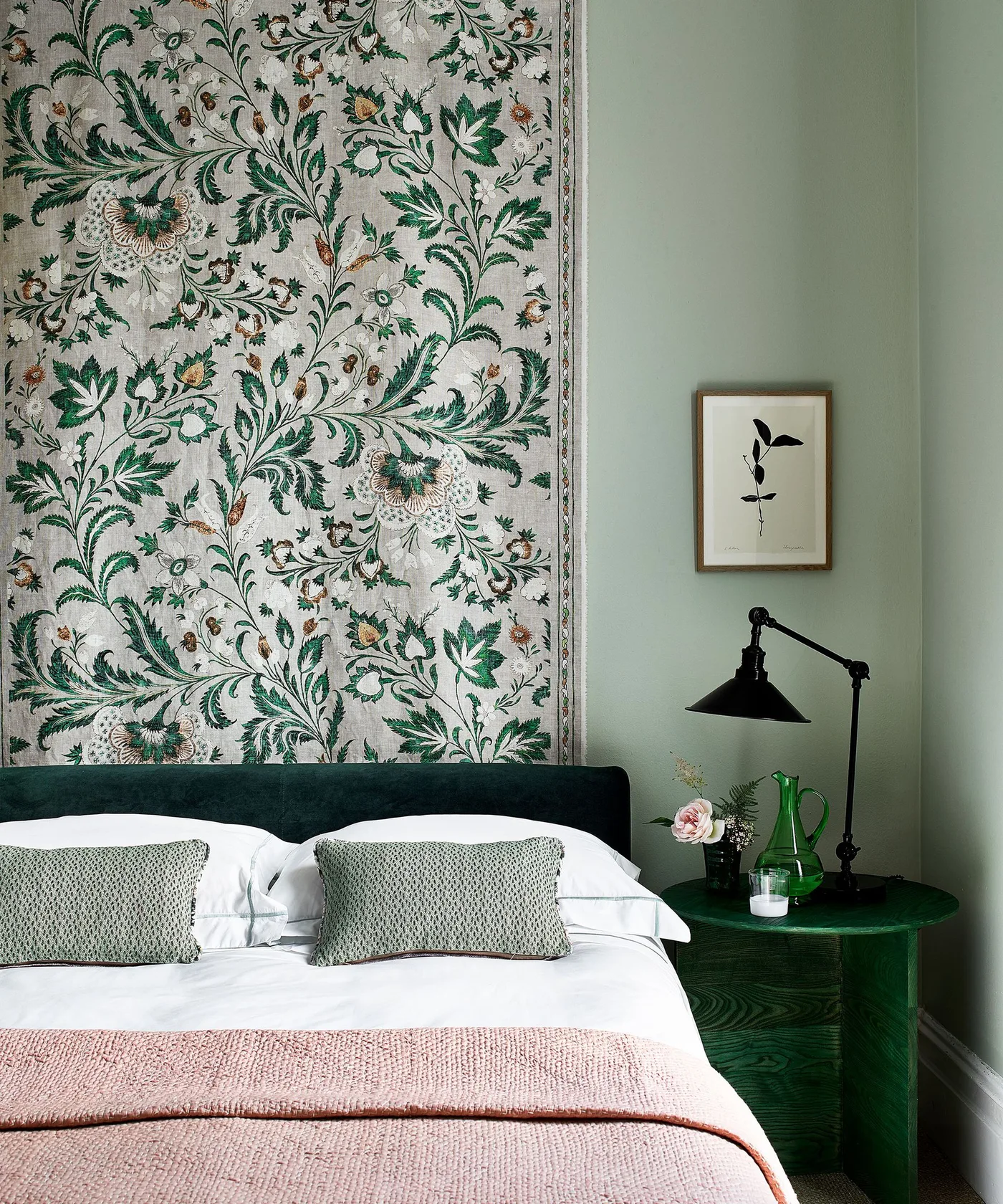
Let one wall carry the stronger pattern
 SaveSupport Non AI Creator
Image credit: Future
A green floral wall hanging gives this bed a stronger patterned background, while the surrounding pale green wall keeps the corner connected. The dark headboard and round table repeat deeper green at furniture level. Pale bedding provides a quieter sleeping surface, with a pink throw introducing warmer contrast across the lower part of the bed.
Keep the fabric or artwork securely fitted and choose washable bedding for regular visits. Check whether the round table leaves enough stable surface for water and personal items, and position the lamp for useful reading. If the guest room also stores household belongings, keep the immediate bed area clear so the pattern feels welcoming rather than crowded.
IDEA 09 / 20
Use a softer pink accent beside practical storage
 SaveSupport Non AI Creator
Image credit: TROVE by Studio Duggan
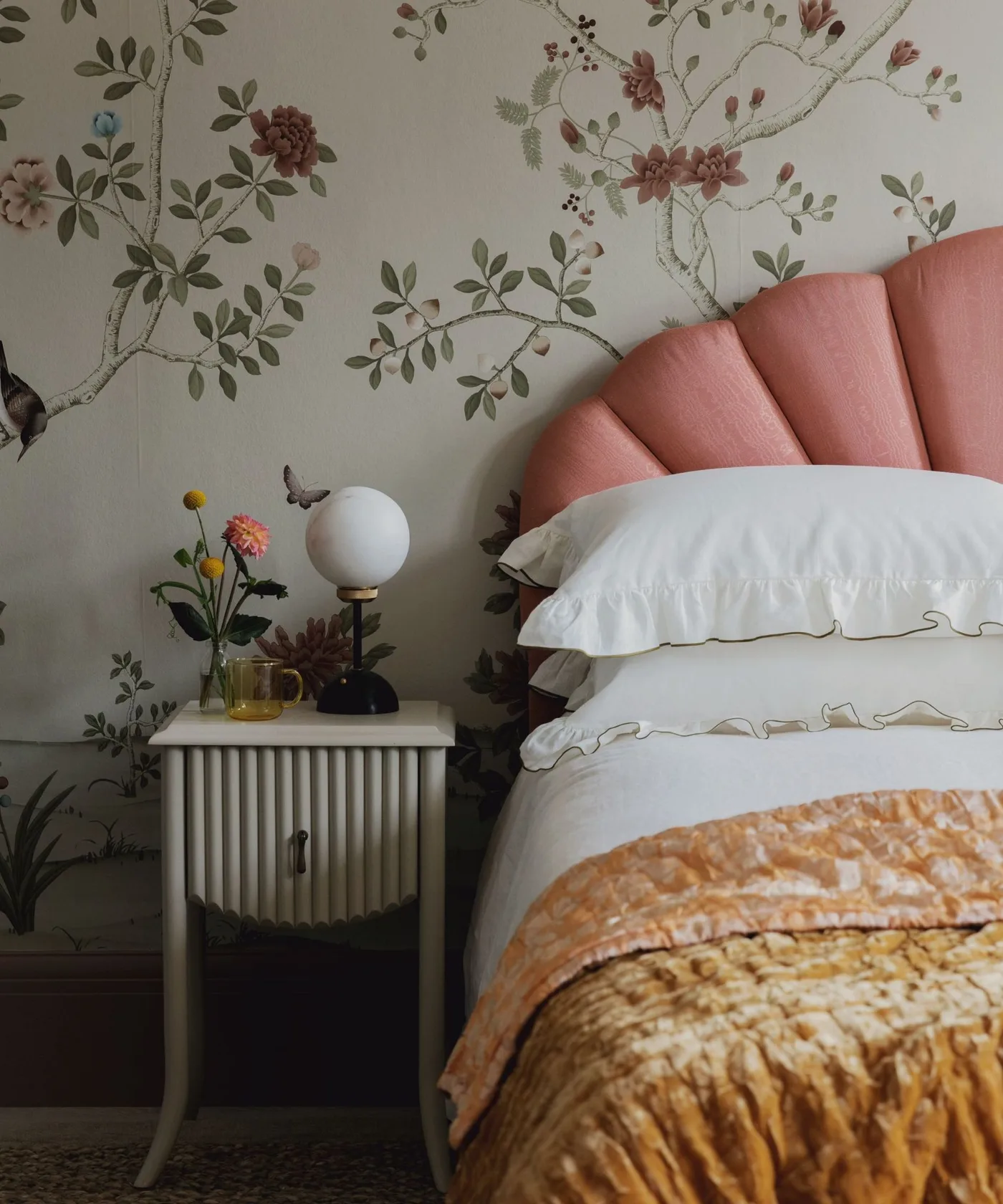
A curved pink headboard introduces warmer color beside the branching floral wall pattern. Pale bedding keeps the immediate sleeping area lighter, while a small fluted cabinet provides a distinct bedside surface. The globe lamp adds a simpler shape among the more detailed fabrics and furniture, giving the corner a personal character without a large collection of small ornaments.
Check that the lamp can be reached and that the cabinet top has room for water or glasses. Keep flowers in a stable container where spills are unlikely to affect personal belongings. Choose bedding that can be cleaned between visits, and provide a place to move any decorative cushions before sleep so the floor beside the bed stays clear.
IDEA 10 / 20
Check window privacy as carefully as the pale bedding
 SaveSupport Non AI Creator
Image credit: The White Company
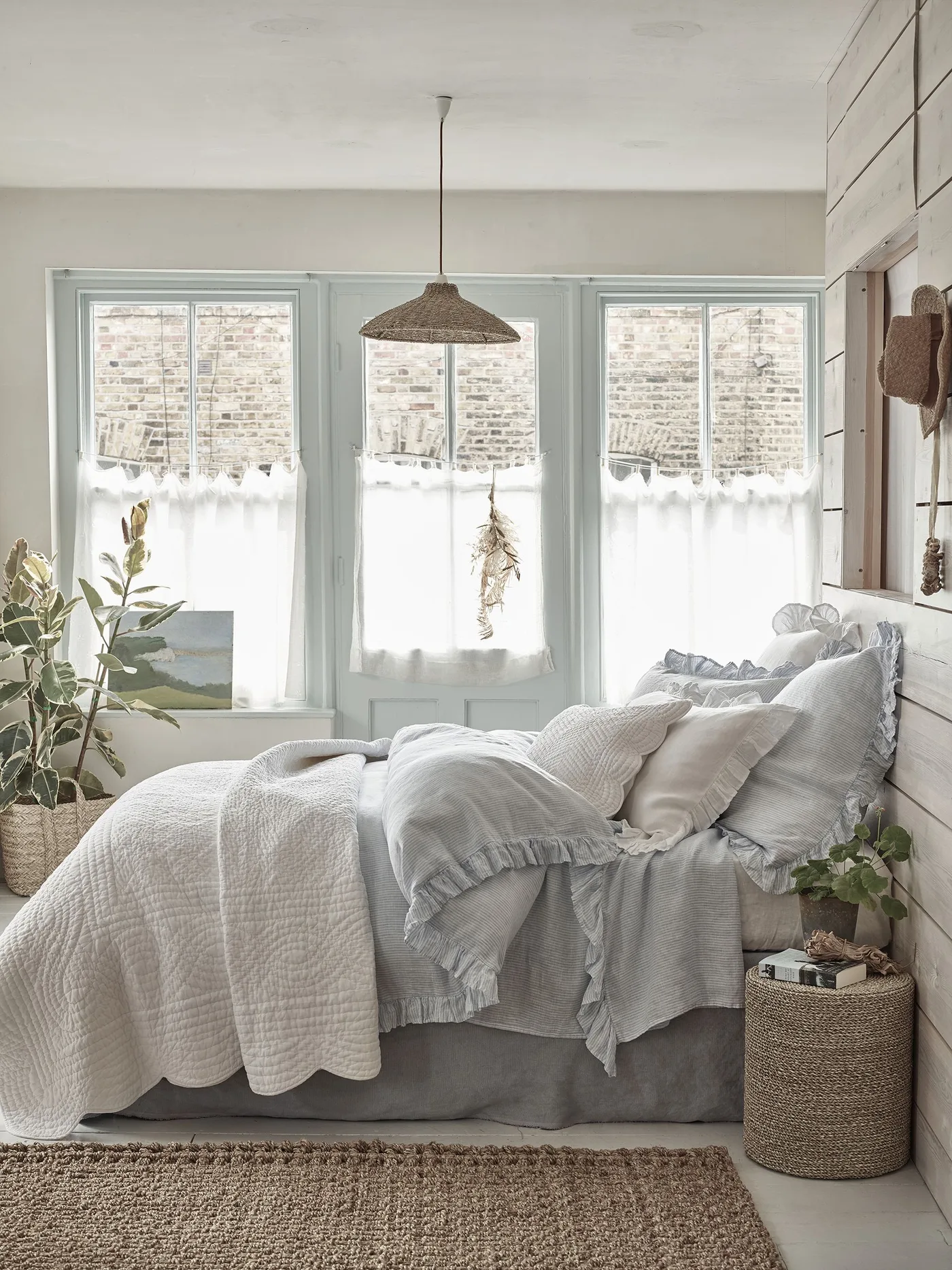
Layered pale bedding gives this room a softer sleeping area beside several windows. Lower curtains leave light entering above them, while a woven pendant and round bedside surface add warmer texture. The arrangement keeps its colors restrained, but the open upper glazing means the practical privacy of the room needs attention before it is used for visitors.
Check sightlines from outside during both daylight and darkness rather than assuming lower curtains provide enough privacy. Offer suitable permitted window coverings where needed. Keep the bedside surface stable and useful, and choose only as many bedding layers as can be cleaned and adjusted easily, with spare covers stored where a guest can find them without searching.
PART 03
Leave room for luggage and personal belongings
IDEA 11 / 20
Keep wardrobe space ready for a visitor
 SaveSupport Non AI Creator
Image credit: Michael Sinclair
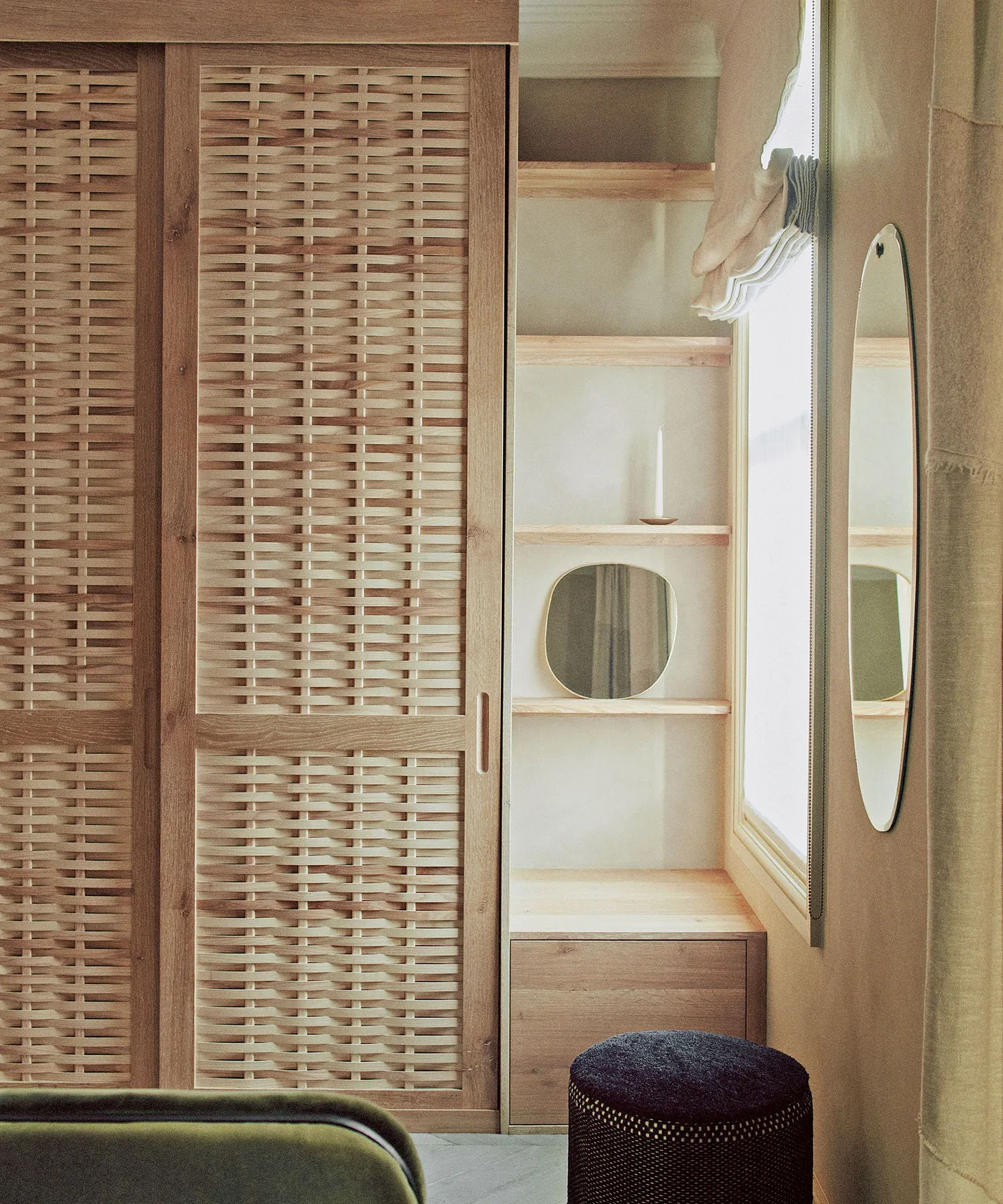
Woven-panel wardrobe doors bring texture to this storage corner, while open side shelves give a few smaller objects their own positions. The tall oval mirror adds a useful full-length view beside the furniture. A compact upholstered stool occupies the lower part of the corner, leaving the wardrobe itself as the stronger storage element rather than another large decorative piece.
Leave suitable hanging space or a shelf empty before a visitor arrives and make it clear that the space is available. Check the doors can open with a bag or stool nearby. Secure mirrors and tall furniture according to their fittings, and avoid placing essential belongings so high that guests must climb or search through your stored items.
IDEA 12 / 20
Give curtains and a chest practical jobs
 SaveSupport Non AI Creator
Image credit: Luke White
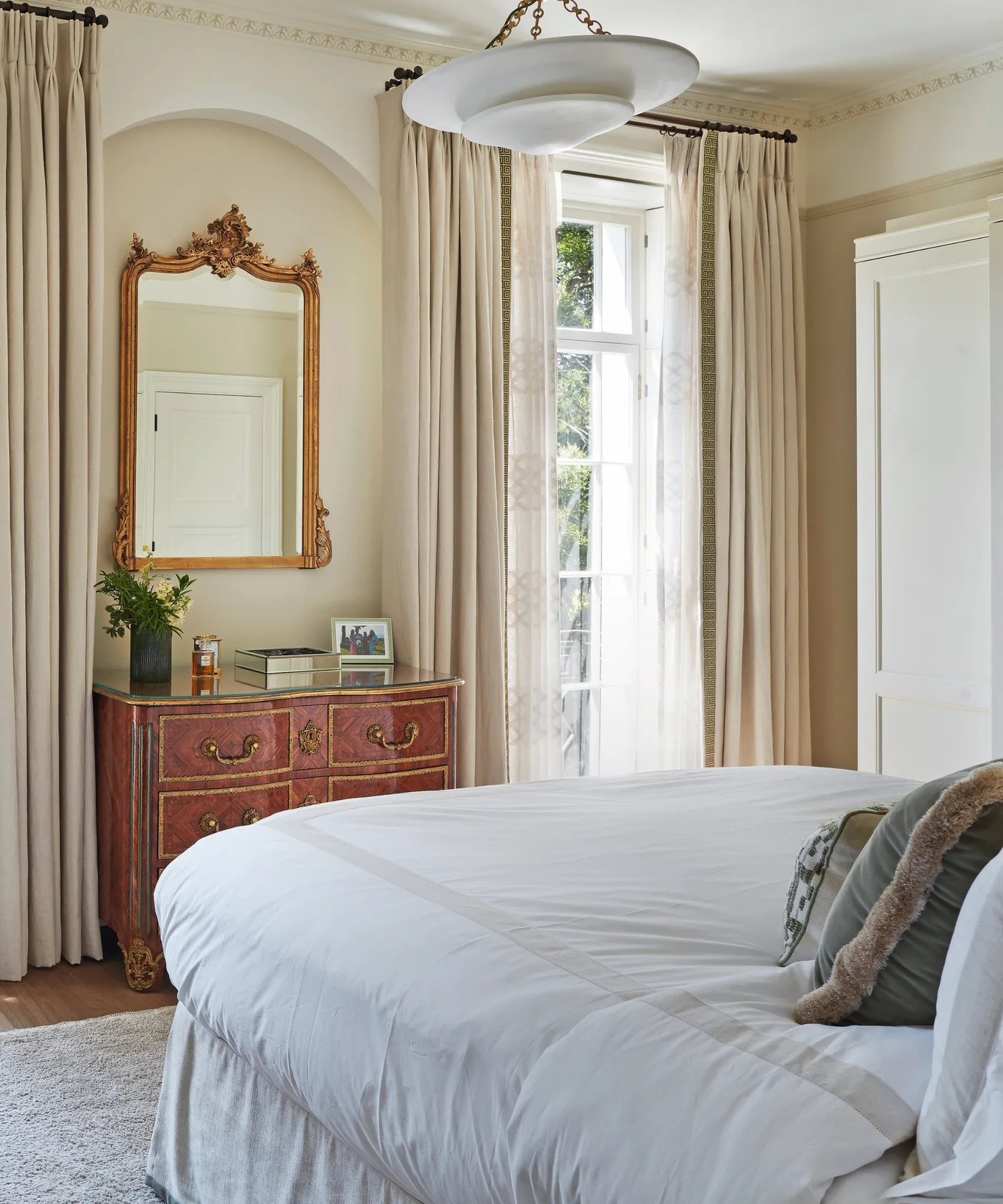
Long cream curtains soften the window area beside this pale bed, while the warmer chest and ornate mirror create a useful dressing side of the room. The chest provides a stronger furniture accent without changing the whole wall color. Its surface and drawers can support a visitor's belongings if they are left available rather than used only for display.
Check how the curtains open and whether they provide the privacy your guest needs. Leave a drawer empty or make another storage option clear, and keep the chest top useful for small belongings. Secure the mirror and furniture appropriately, and make sure opening drawers does not block the route between the bed, window and door.
IDEA 13 / 20
Leave bedside drawers useful beneath a quiet bed
 SaveSupport Non AI Creator
Image credit: Kara Childress
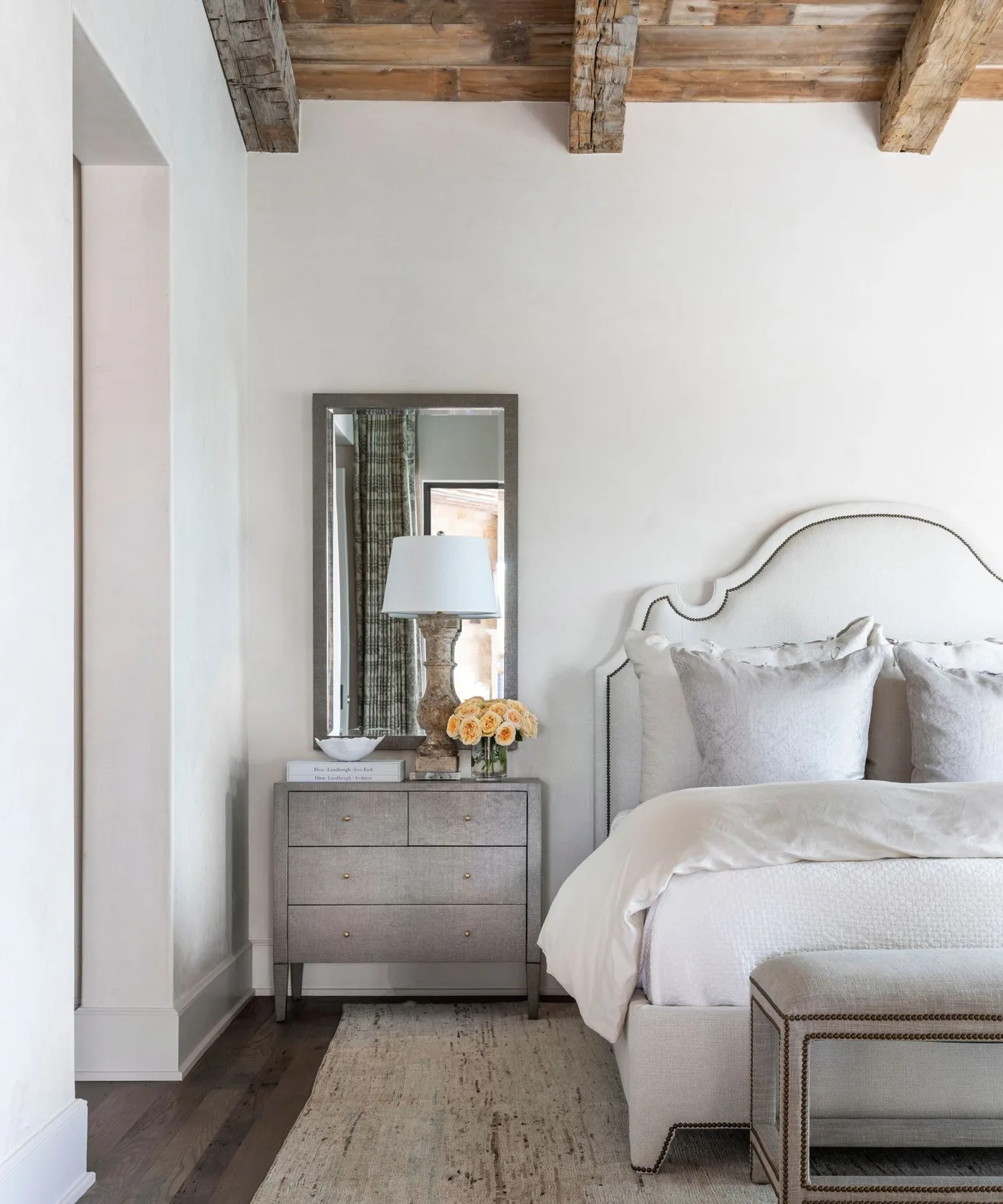
A pale shaped headboard gives this bed a softer outline below the exposed ceiling beams. Gray bedside drawers provide more enclosed storage than a small stool, with a lamp and mirror extending the useful corner upward. The light bench adds another place to sit near the bed, while the quieter bedding keeps the furniture shapes easy to distinguish.
Leave a drawer or another defined area available for the guest rather than filling every compartment with household storage. Check the lamp switch and clear enough tabletop for personal items. Place the bench where it does not narrow the nighttime route, and use freshly cleaned bedding that can be adjusted without moving several decorative cushions first.
IDEA 14 / 20
Use baskets beneath a single bed for a smaller room
 SaveSupport Non AI Creator
Image credit: Brent Darby
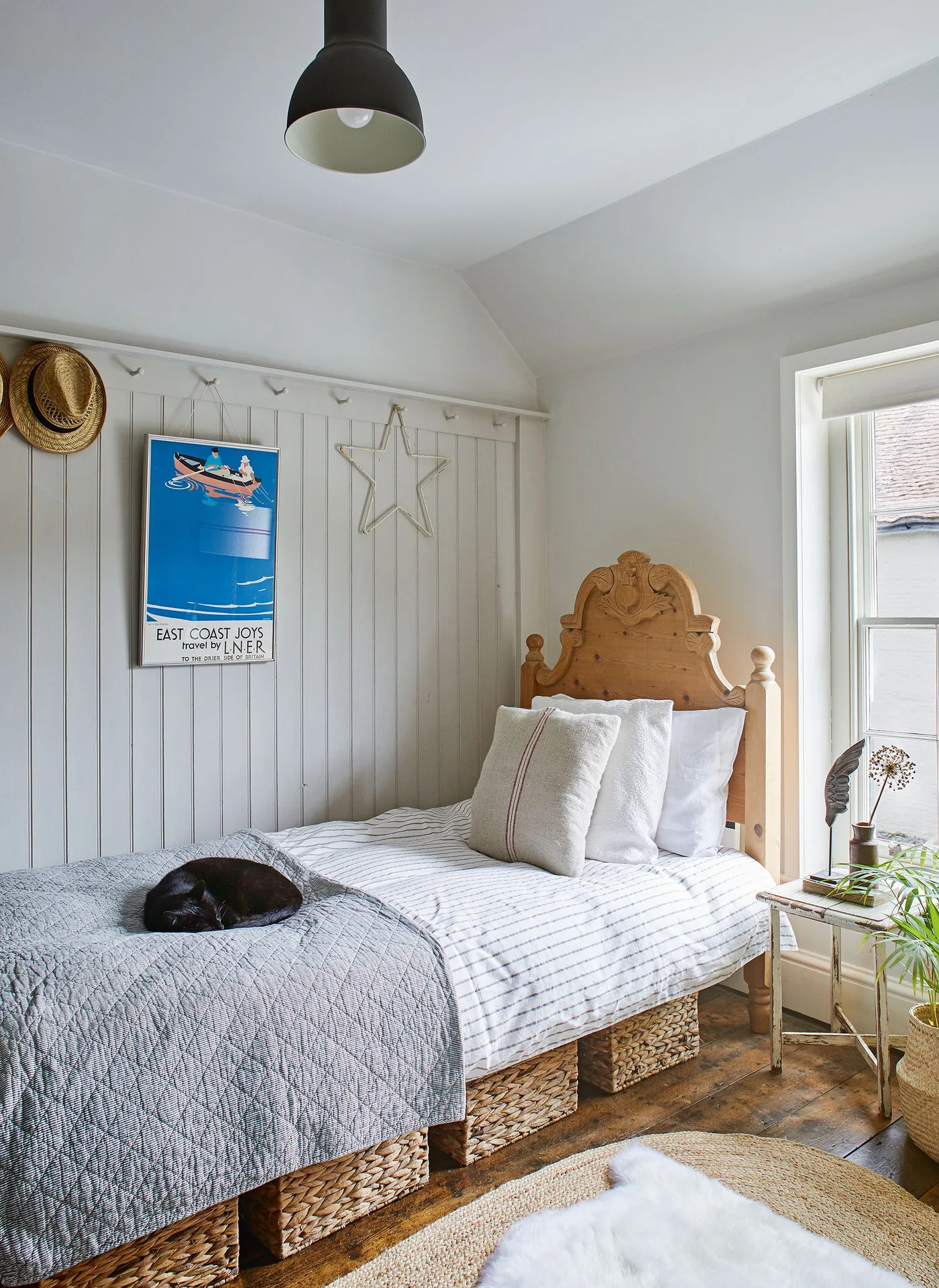
Woven baskets use the space below this carved wooden single bed, giving the small room an extra storage option. Pale striped bedding and wall boards keep the arrangement lighter, while a blue framed picture adds a restrained accent. The narrow bedside table provides another useful surface without requiring a larger chest alongside the sleeping area.
Check the bed dimensions against the guest's comfort needs and keep the baskets easy to pull out. Leave some storage available rather than filling it entirely with household belongings. Make the bedside light and surface practical to reach, and clean beneath the bed between visits so the storage area does not collect dust alongside spare bedding or personal items.
IDEA 15 / 20
Leave fitted cupboards available for longer visits
 SaveSupport Non AI Creator
Image credit: Future / Jody Stewart
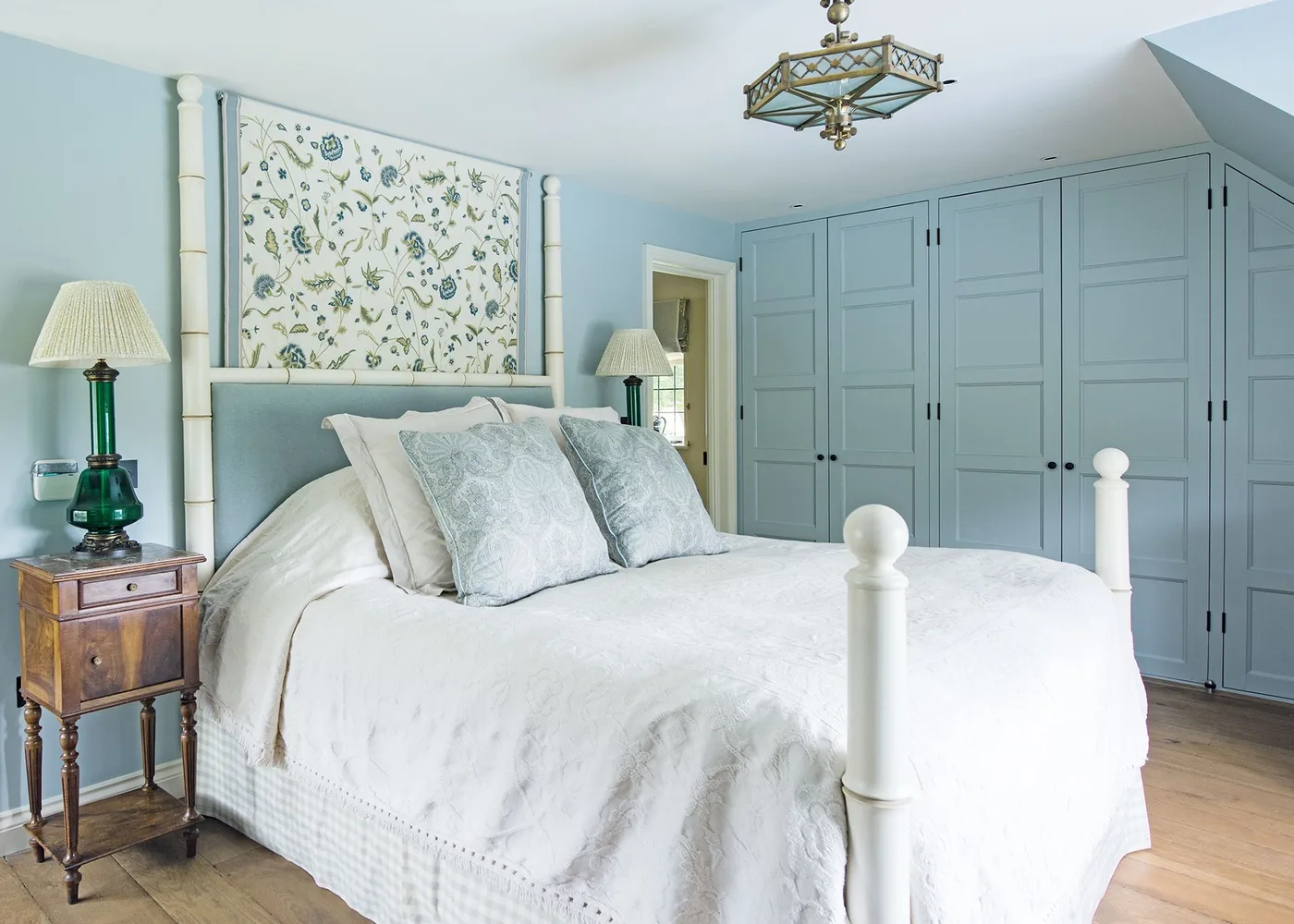
Pale blue fitted cupboards provide a substantial storage wall beside this white bed. Floral fabric behind the headboard and a small wooden bedside cabinet give the room warmer detail without making the cupboard fronts busy. The quieter bedding keeps the sleeping area connected with the storage, while the green lamps add smaller points of deeper color beside it.
Clear useful shelf or hanging space before longer visits and show guests what they can use. Check cupboard doors with luggage placed in the room, keeping the route to the bed clear. Leave the bedside cabinet top practical, and provide spare bedding in a known location rather than expecting visitors to sort through several cupboards of private household storage.
PART 04
Add a comfortable place to sit or get ready
IDEA 16 / 20
Give guests a place to get ready
 SaveSupport Non AI Creator
Image credit: Boz Gagovski
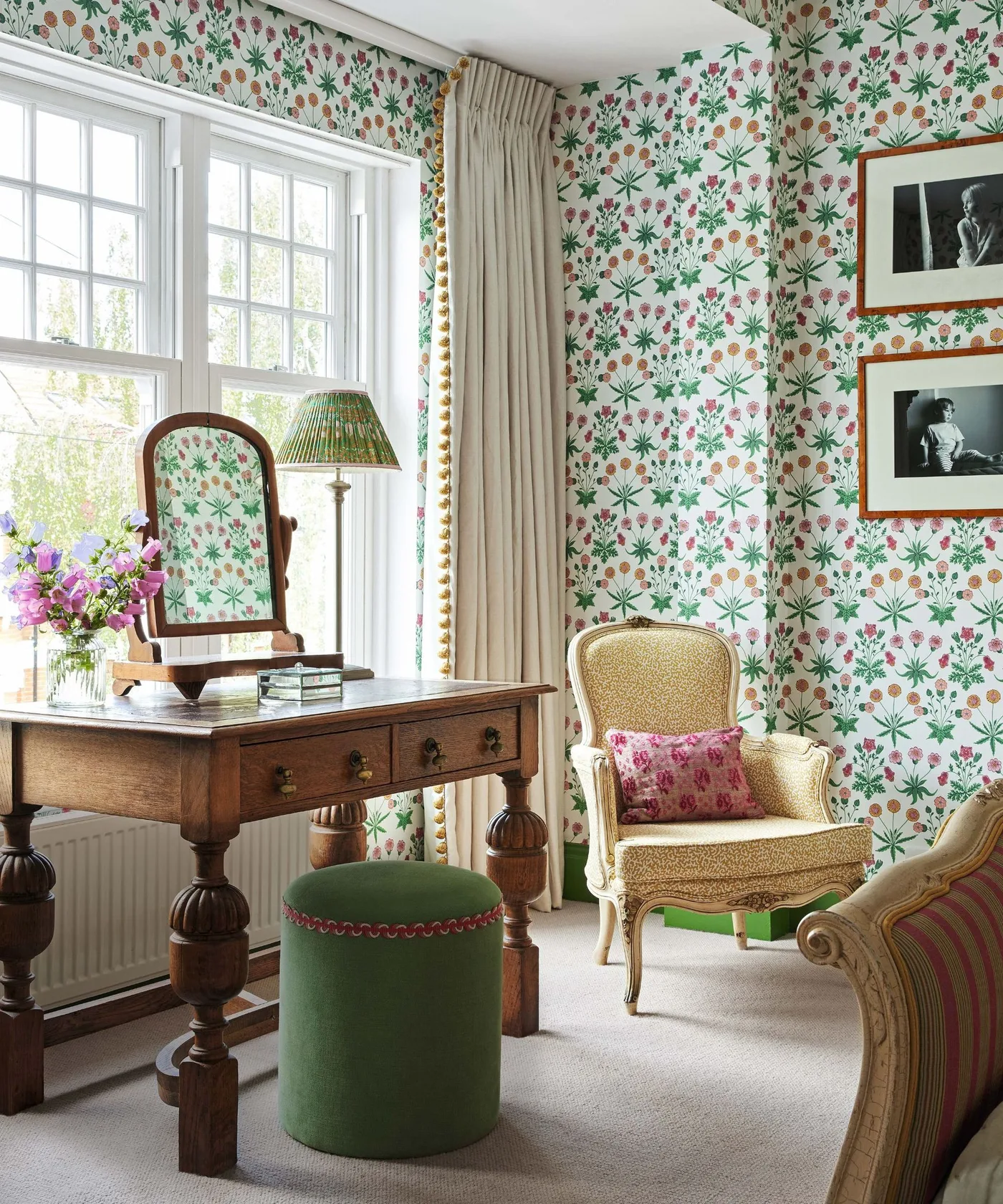
A wooden dressing table gives this patterned corner a useful surface beneath the window. Its small mirror and green stool create a place to get ready, while the upholstered chair offers a separate seat. Floral wallpaper brings character to the room without requiring the tabletop itself to be crowded with personal objects that a visitor cannot use.
Clear enough surface for a guest's toiletries or small belongings and check that the mirror works from the seated position. Keep any lamp cables tidy and leave curtains accessible. Choose a stool or chair that suits the visitors you expect, and explain where additional supplies belong instead of leaving guests to open several unfamiliar drawers.
IDEA 17 / 20
Keep a small desk useful for a short stay
 SaveSupport Non AI Creator
Image credit: Stephan Kent Johnson/Otto
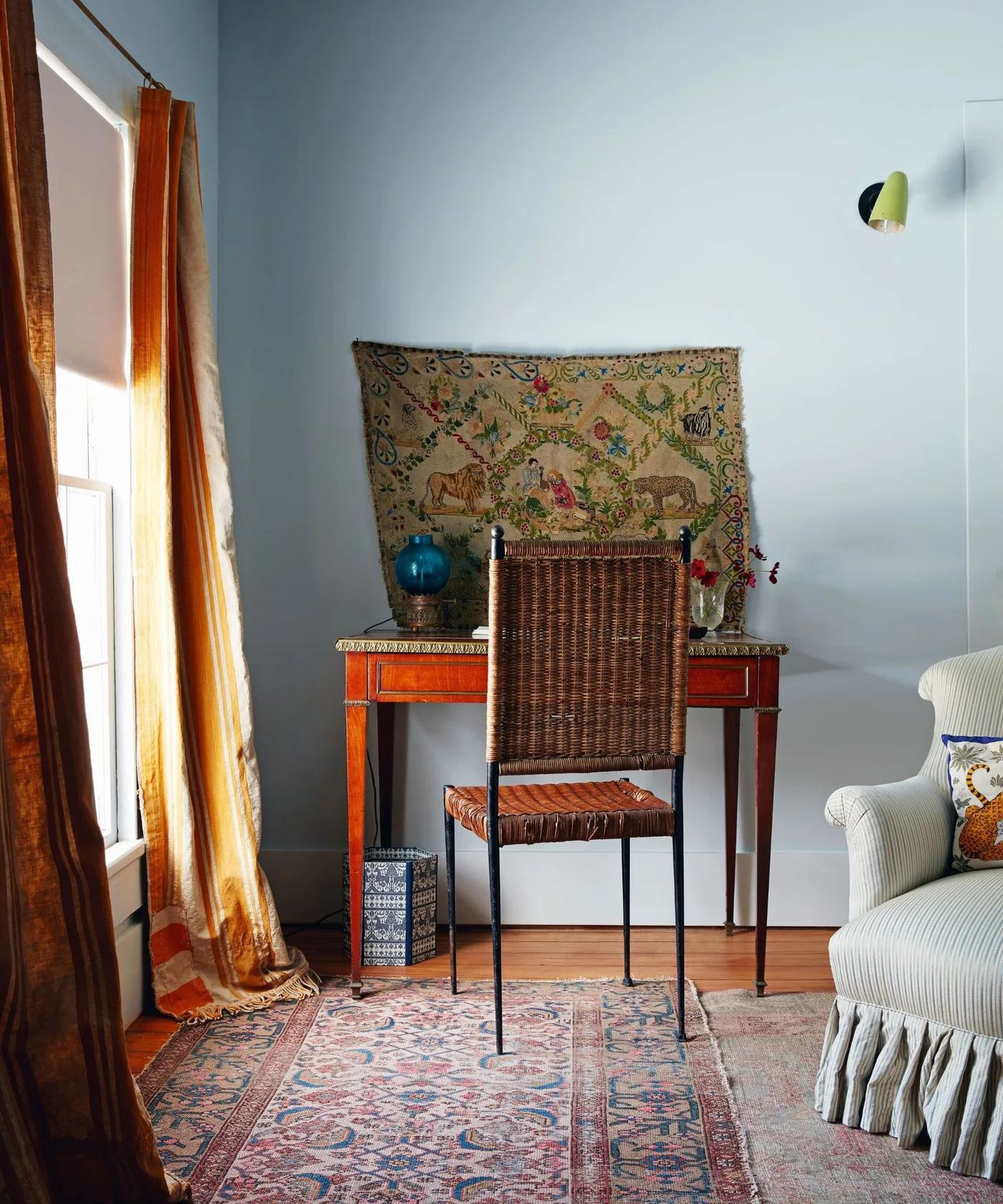
A small desk gives this corner a specific purpose beside the window, with a woven chair bringing warmer texture in front. Orange curtains contrast with the pale blue wall, while the patterned rug connects the furniture at floor level. The arrangement offers a place for writing or using a laptop without needing a separate office in the guest room.
Clear the desk for the tasks visitors are likely to do and explain where they can charge a device. Check the chair's comfort and keep its occupied position out of the main route. Retain access to curtains and the window, and avoid filling the available working surface with fragile objects that a guest must move before sitting down.
IDEA 18 / 20
Make a patterned chair useful for getting ready
 SaveSupport Non AI Creator
Image credit: Benji Lewis Design
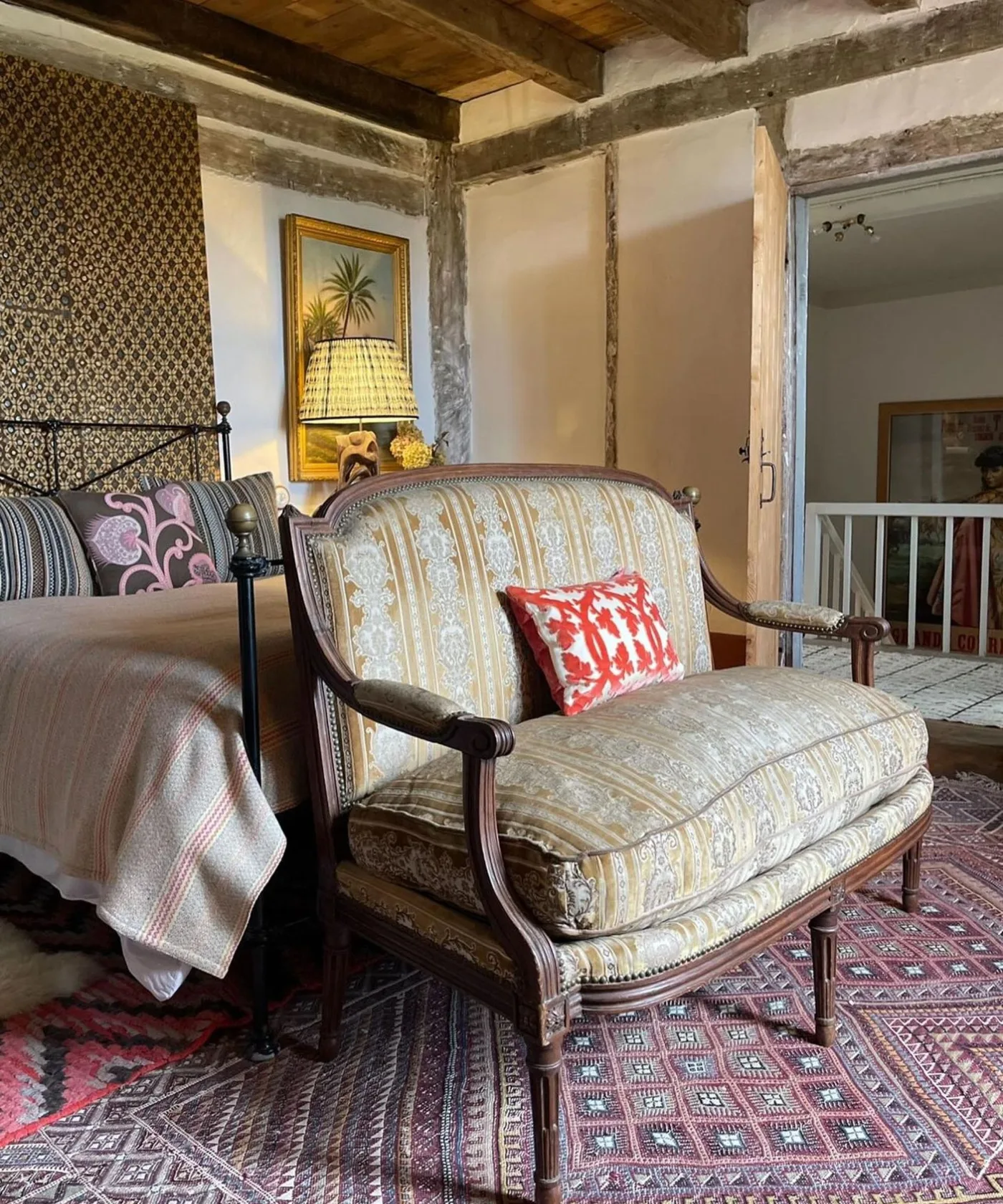
A patterned upholstered chair provides a distinct seat beside the darker metal bed frame. Exposed wall timbers give the room a stronger structure, while striped pillows and a small bedside lamp add softer details around the sleeping area. The chair is a practical extra piece when the surrounding route remains usable, rather than simply another fabric to match.
Check the seat height and support for the visitors you expect, and leave the chair free of stored clothing. Keep enough room to stand up and move toward the bed without catching the frame. Choose upholstery care you can manage between stays, and retain a bedside surface so the chair does not become the only place for a guest's belongings.
IDEA 19 / 20
Connect a reading chair with a soft wall color
 SaveSupport Non AI Creator
Image credit: Gray Walker Interiors
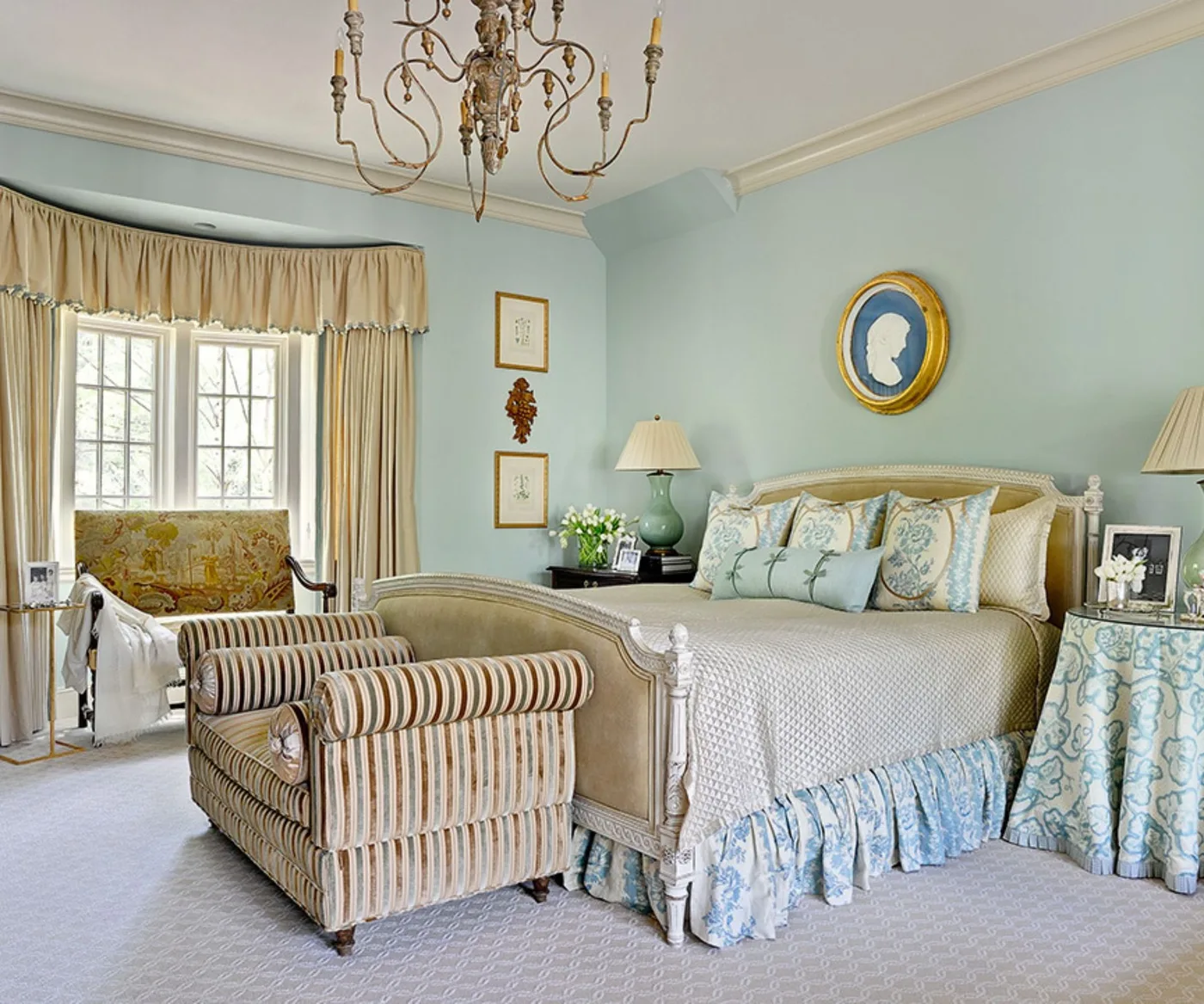
Pale blue walls connect the different fabrics in this bedroom, from the patterned bed skirt to the striped armchair. Cream curtains give the window a quieter edge, while the curved bed frame adds another familiar furniture shape. The chair supplies a separate place to sit without needing the same print as the bedding or bedside covering.
Leave the chair available for reading or getting ready, with a useful light nearby if the room allows it. Keep the skirt clear of the floor where it would trap dust or interfere with movement. Check that the curtain arrangement provides suitable privacy, and leave a practical surface for personal belongings rather than expecting guests to use a fabric-covered display area.
IDEA 20 / 20
Keep a small chair close to useful bedside furniture
 SaveSupport Non AI Creator
Image credit: Joshua Smith Interior Design
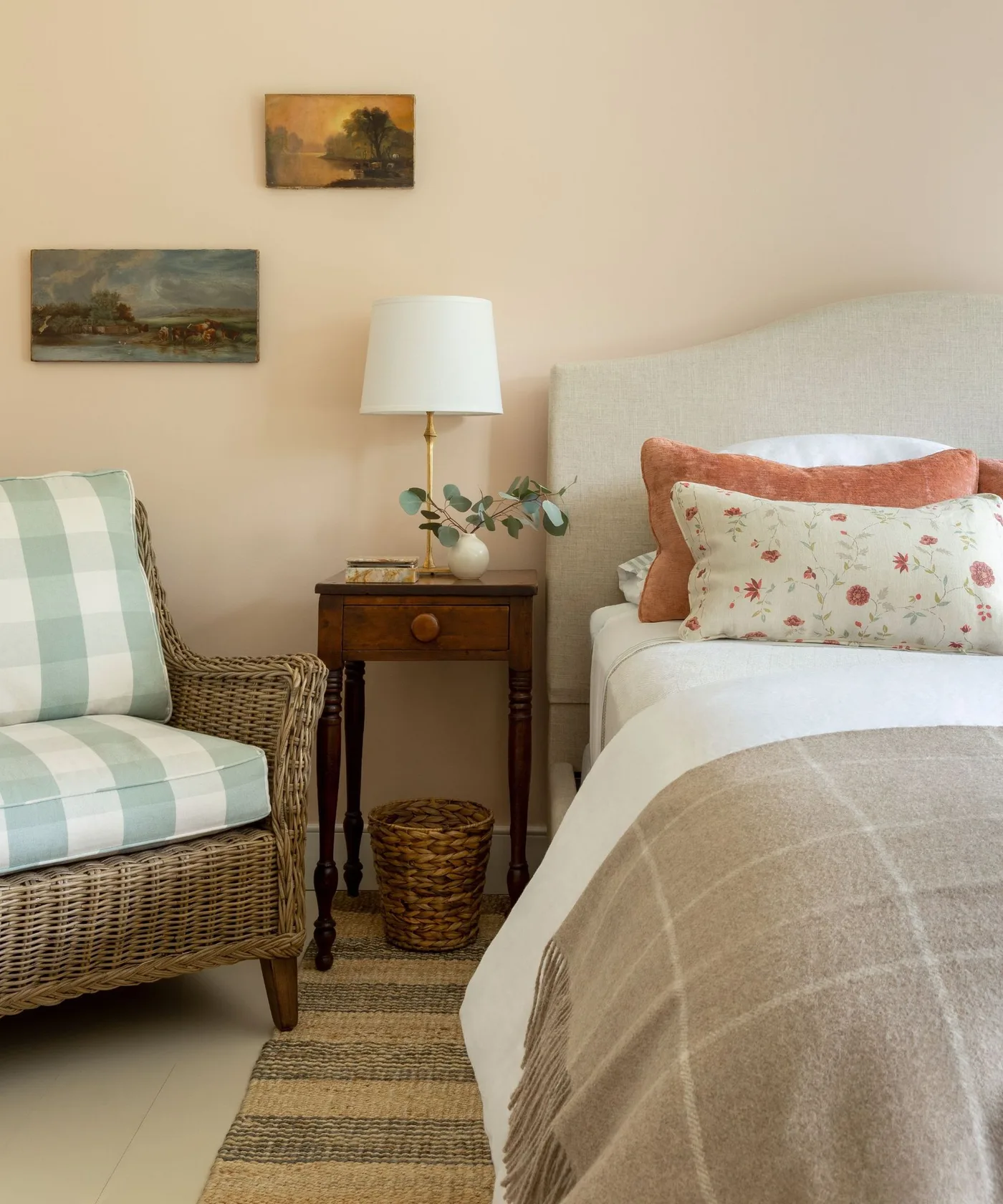
A green checked cushion softens the woven chair beside this pale bed. The wooden bedside table provides a warmer link between the chair and sleeping area, while small landscape pictures add personal detail above. The lamp and quieter bedding keep the arrangement practical, with the checked fabric creating a restrained accent instead of covering every surface.
Leave the chair clear and check its comfort for sitting while getting ready. Keep the table close enough for use from the bed, retaining space for a phone and water. A basket can collect a few suitable extras, but label or explain them when needed so guests can distinguish available supplies from private belongings kept in the room.
BRING IT ALL TOGETHER
Check the room as though you were arriving to stay
Leave useful storage empty, make the bed with freshly cleaned bedding and check that the nearest light can be reached comfortably. Consider where a guest will put a bag, charge a device and keep water or glasses. A room can feel personal without making visitors work around your stored belongings or delicate display pieces.
Walk the route from the door to the bed after dark and remove loose obstacles. Explain any unfamiliar window, heating or lighting controls, and provide extra bedding where it is easy to find. Adjust the furniture for the people staying, especially when a low bed, high shelf or tight route would make the room harder to use.