A neutral boho living room can feel warm through woven furniture, textured fabrics and pieces that have different shapes. White, cream, gray, brown and black give those details a quieter background. You can keep a few smaller color accents without making bright walls or a strongly colored sofa the room's main feature.
These photographs focus on quieter furniture and room backgrounds, with some showing restrained accents in rugs, cushions or artwork. Look at how the seating, surfaces and walking routes work together as well as the texture. Choose pieces you can keep clean and use comfortably, rather than adding every boho detail to the same room.
PART 01
Give neutral seating a warmer arrangement
IDEA 01 / 15
Combine a darker sofa with a light patterned rug
 SaveSupport Non AI Creator
Image credit: Photo: Amy Bartlam. From: Genna Margolis
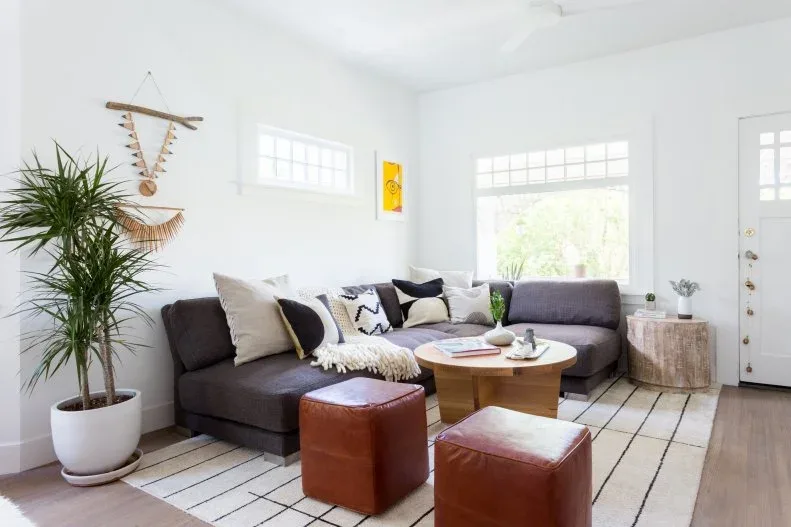
A dark gray sectional gives this bright room a clear seating outline against the white walls. The pale grid rug connects the furniture without adding a busy colored pattern, while the round wooden table and brown poufs bring warmth closer to the floor. A tall plant introduces a softer shape beside the more regular sofa and rug lines.
Check the furniture arrangement with people seated and the poufs in use, leaving a practical route through the room. Choose a rug that lies securely on the existing floor and can be cleaned as recommended. Keep enough table surface for daily use, and place the plant where it receives suitable light without narrowing access beside the sofa.
IDEA 02 / 15
Let a warm brown sofa carry the stronger tone
 SaveSupport Non AI Creator
Image credit: Photo: Amy Bartlam. From: Natalie Myers
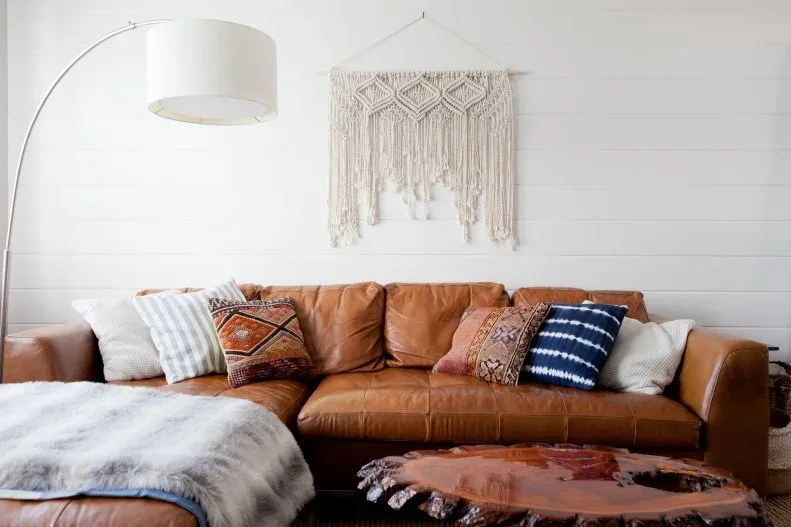
A warm brown sectional creates the strongest furniture tone beneath the white wall. The pale cushions and throw soften its outline, while a fringed wall hanging adds texture above rather than another large color. An irregular wooden table repeats the warmth at a lower level, with the broad floor lamp giving the seating area a simpler surrounding shape.
Check the actual upholstery care before choosing a brown surface for frequent use. Compare the table height and reach with the sofa, and leave the irregular edge outside the main walking route. Use removable cushion covers where practical, keeping enough space on the sofa for sitting comfortably rather than filling every seat with decorative layers and throws.
IDEA 03 / 15
Make gray seating softer with a woven chair
 SaveSupport Non AI Creator
Image credit: Photo: Matthew Williams. From: LABLstudio
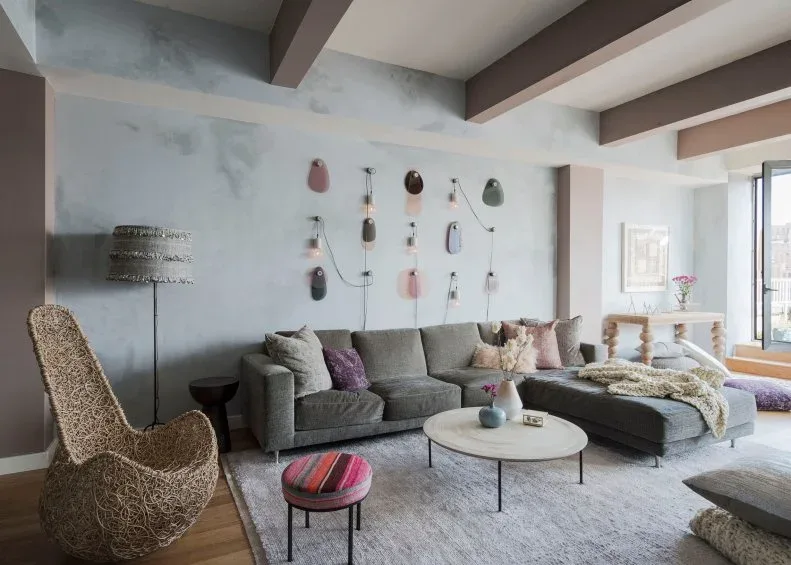
Gray walls and seating keep this room's main palette quiet, while a sculptural woven chair introduces warmer texture beside the sectional. The pale round table provides a simpler central shape against the long sofa. Smaller pink and muted accents add personal detail without replacing the gray background, leaving the chair's open weave as a more noticeable contrasting feature.
Choose the chair for comfort as well as its outline, checking the seat support and cleaning guidance. Measure its complete footprint beside the sofa and leave a practical gap around the table. Keep smaller accents deliberate if you want the room to remain mainly neutral, and avoid adding another strong pattern to every cushion or surrounding wall.
IDEA 04 / 15
Keep sculpted wall shapes around restrained furniture
 SaveSupport Non AI Creator
Source: hgtv.com
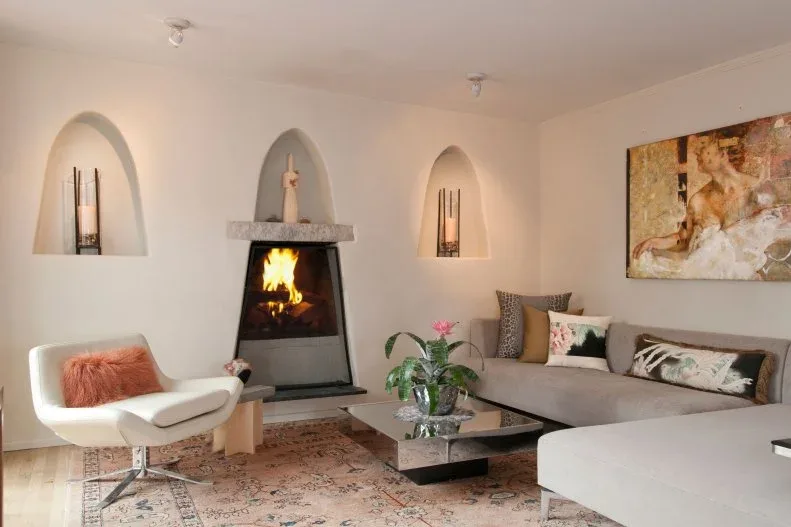
Pale arched niches give this sitting room a softer surrounding shape, while the gray sectional and white chair keep the furniture quieter. A dark fireplace provides a stronger vertical outline between the wall details. The patterned rug and a few small warm accents add texture below, with the largely pale room letting the architectural curves remain visible above the seating.
Check seating routes and the actual fireplace requirements before bringing furniture close to it. Keep the room's clearer surfaces useful rather than filling each niche with objects. Choose a rug and chair upholstery you can maintain, and consider the table's shape and placement around occupied seats so the sculpted wall details do not distract from an awkward daily arrangement.
IDEA 05 / 15
Warm a light room with a continuous tan seating group
 SaveSupport Non AI Creator
Image credit: Future / Armelle Habib
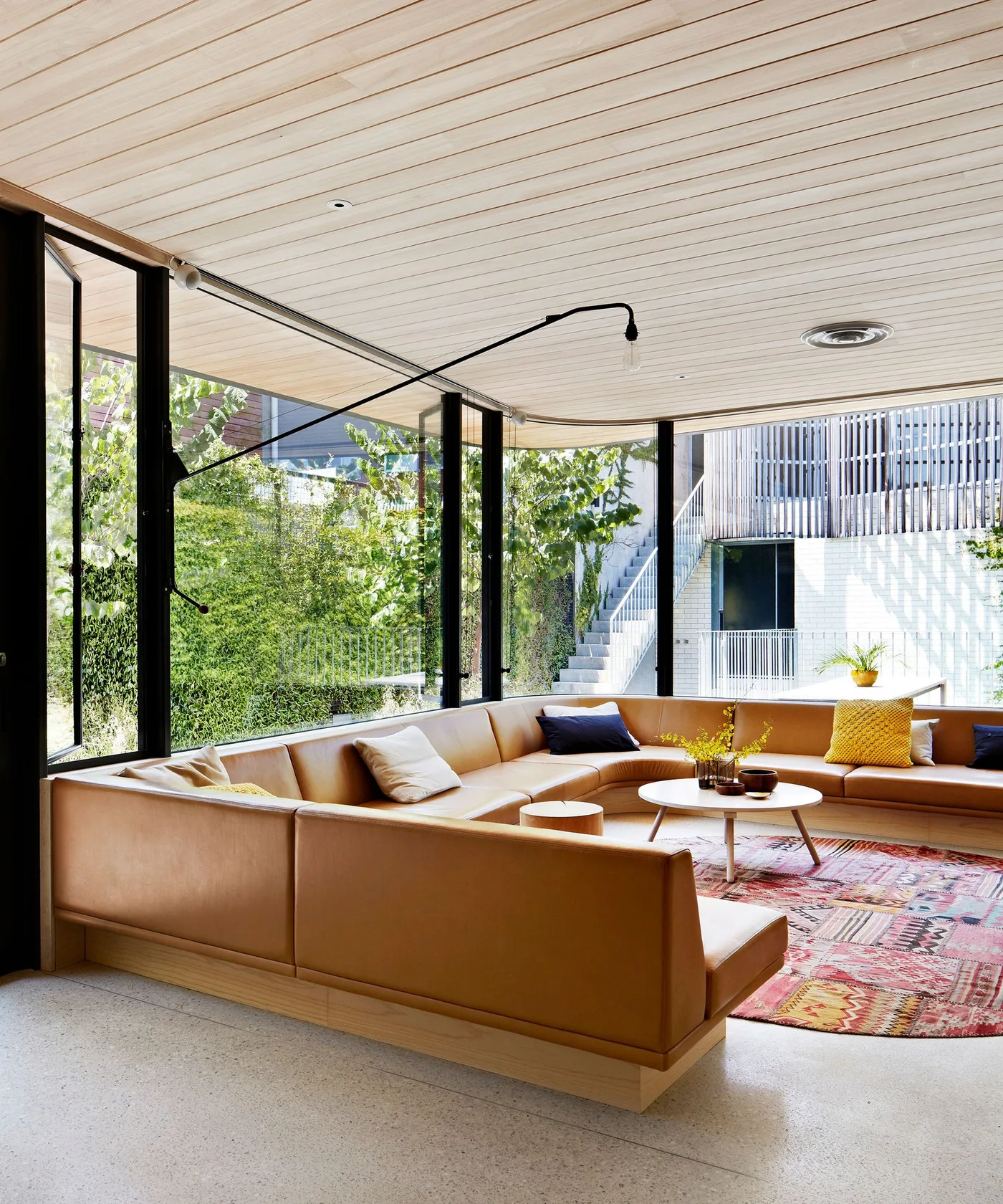
A tan sectional forms a continuous warm seating group beneath the pale ceiling. Large windows keep the surrounding room lighter, while the small round table introduces a softer central shape. The patterned rug adds a localized color accent below, so most of the room still reads through the tan upholstery, pale floor and simpler overhead surfaces rather than several competing furniture colors.
Measure the full sectional against the room's routes and check reach to the table from the seats you use most. Consider whether the rug should connect more of the seating group, checking its size and stability. Compare the actual upholstery cleaning needs before buying, and keep smaller color accents limited when the quieter tan palette is your priority.
PART 02
Layer texture without filling every surface
IDEA 06 / 15
Use black floor details beneath pale fabric layers
 SaveSupport Non AI Creator
Image credit: Photo: codyulrich.com. From: Paige Morse
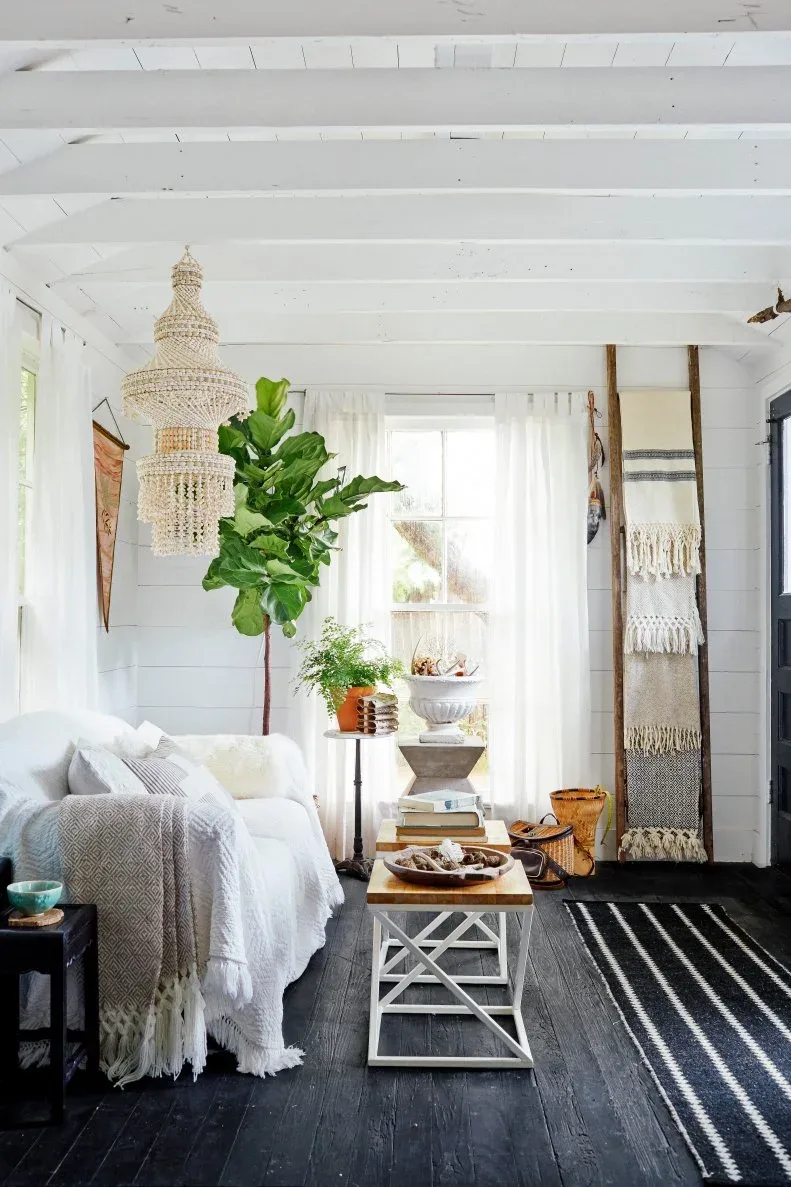
White fabric layers soften this small seating area against the darker floor. A striped rug repeats the darker lines below, while a wooden ladder collects folded fabrics on the wall side. The tall plant and tiered hanging decoration add softer vertical shapes, making the room feel textured without introducing a large colored sofa or wall pattern.
Choose fabric layers that can be removed and cleaned, keeping them from dragging into the walking route. Use a decorative ladder only according to its intended purpose and stable fitting requirements. Keep the rug flat, retain a useful reachable table, and check that plants and hanging objects leave the window, door and nearby seating easy to use.
IDEA 07 / 15
Keep small color accents on a pale woven bench
 SaveSupport Non AI Creator
Image credit: Photo: D2 Interieurs. From: D2 Interieurs
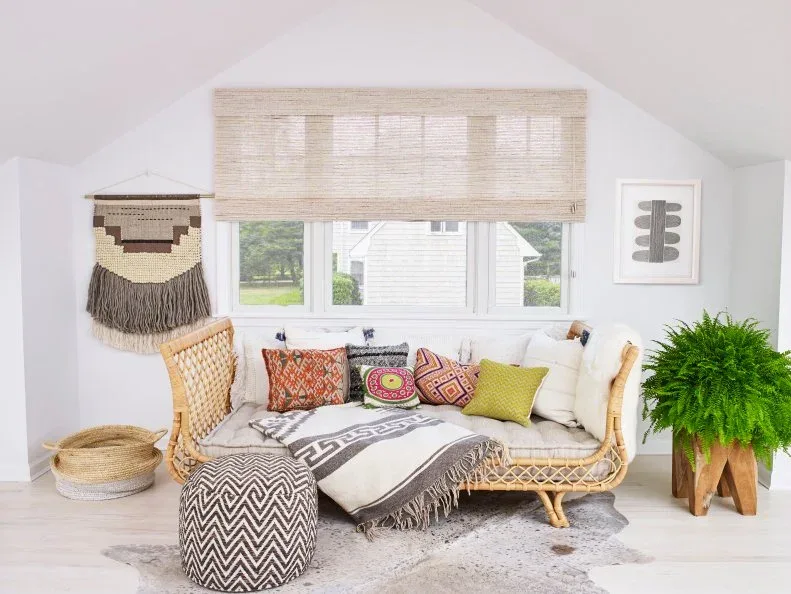
A woven bench gives this pale corner its main furniture texture, with white cushions keeping the seat lighter. The pouf and throw introduce black and white pattern nearer the floor, while smaller colored pillows provide limited accents across the back. A woven blind and wall hanging repeat softer texture above, leaving the larger walls and surrounding floor quiet.
Choose the cushions around the bench's actual comfort and support rather than adding pillows until the seat becomes narrow. Check pouf stability and its intended use before treating it as a seat or footrest. Keep the fern from projecting into the route, and leave the blind easy to operate and clean so the layered texture remains practical.
IDEA 08 / 15
Let monochrome artwork connect mixed furniture
 SaveSupport Non AI Creator
Image credit: Photo: Amy Bartlam. From: Natalie Myers
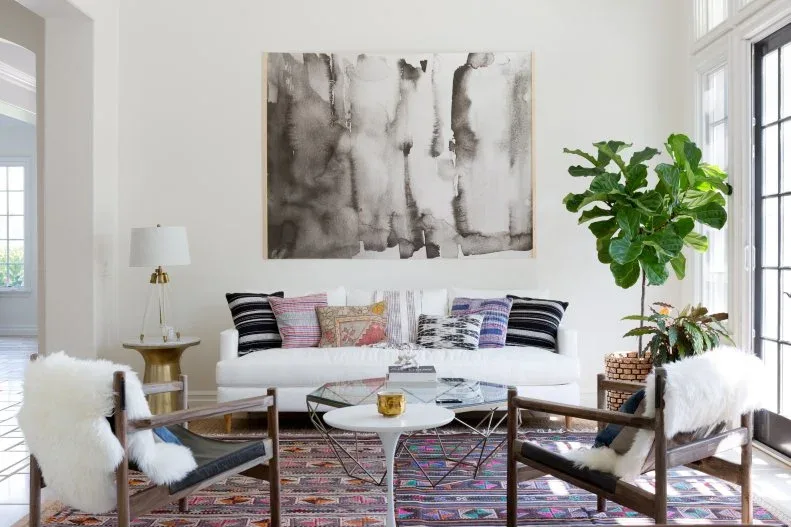
A large gray abstract picture connects this white sofa with the darker chair frames in front. Pale throws soften the chairs, while the round table keeps the center lighter against the patterned rug. Smaller cushion accents add detail without becoming the room's main color, with the tall plant providing a different shape beside the mostly straight furniture and window lines.
Hang the artwork with suitable support and compare its scale with the actual sofa width. Keep the chairs comfortable without relying on loose throws to hide unsuitable seats. Check the rug and table placement around the full seating group, and retain useful surfaces so the mixture of frames, fabrics and cushions remains easy to use every day.
IDEA 09 / 15
Use a textured gray rug as the main fabric feature
 SaveSupport Non AI Creator
Image credit: Photo: Lauren Logan Photography. From: Maureen Stevens
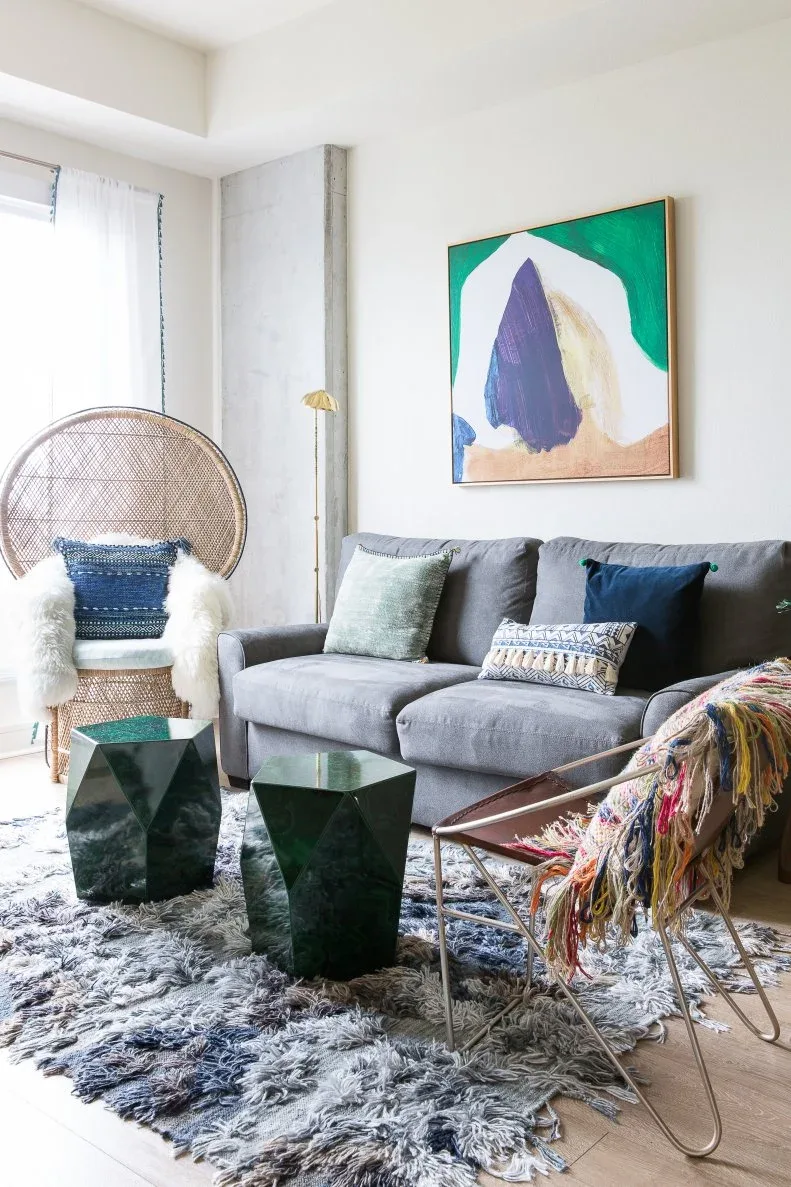
A thick gray rug creates the strongest fabric texture beneath the matching sofa. The woven high-backed chair adds a warmer outline, while dark green tables give the center smaller contrasting shapes. The artwork carries a localized green and purple accent above, with the gray seating, rug and pale walls remaining the larger quieter elements in the room.
Check the rug's cleaning routine before choosing a deeper pile for everyday use, including how furniture rests on it. Keep table surfaces stable and reachable from the seats. Choose the woven chair for usable support and comfort, and keep additional colors smaller if you want the gray furniture and pale room background to remain the main impression.
PART 03
Keep plants and personal details useful
IDEA 10 / 15
Bring open woven texture into a pale seating corner
 SaveSupport Non AI Creator
Image credit: Photo: Tessa Neustadt . From: Blackband Design
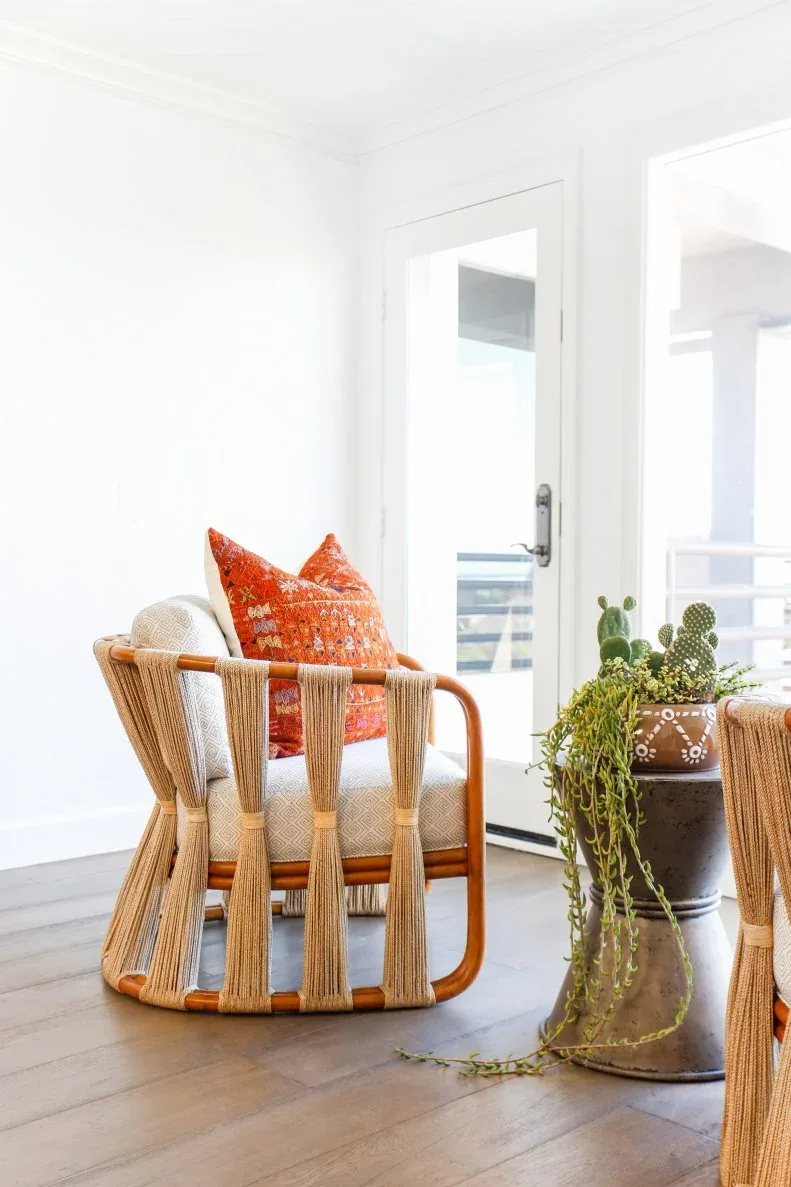
A sculptural woven chair provides warmer texture against this pale wall and floor. Its light seat cushion keeps the main furniture quiet, while an orange pillow creates one smaller accent. Several plant shapes soften the area beside the glazed door, giving the corner a more personal character without needing another large fabric pattern or colored wall around the seating.
Check the chair's comfort and overall footprint before choosing its shape for a small corner. Keep the glazed door route clear and position plants where watering will not damage the floor. Use an accent pillow only when it improves the seat or the color relationship you want, and choose a cover that can be removed and cleaned easily.
IDEA 11 / 15
Give plants clear places beside simple storage
 SaveSupport Non AI Creator
Image credit: Photo: Kyle Born. From: Michelle Gage Interiors
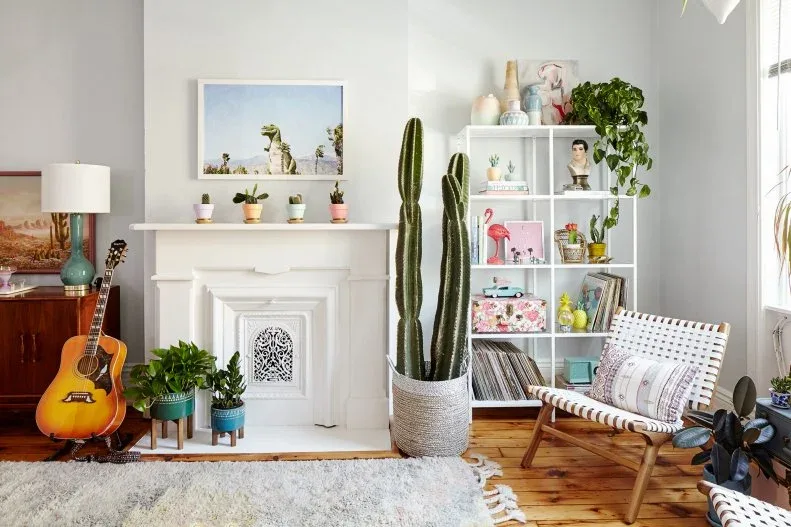
White shelving and a pale fireplace surround keep this room's larger background quiet. The tall cactus adds a stronger vertical shape, while smaller plants occupy several lower positions around the furniture. A wooden-framed woven chair and textured rug supply warmth near the floor, with the open shelves giving books and personal objects a defined place rather than spreading them across every surface.
Choose real plants according to the available light and care you can provide, keeping pots stable and surfaces protected from water. Check shelf support and keep heavier objects at practical levels. Leave access to the fireplace fittings and furniture clear, and reduce the display when necessary so the room remains easy to clean around the plants and rug.
IDEA 12 / 15
Connect mixed seating with a darker floor
 SaveSupport Non AI Creator
Image credit: Photo: Miha Matei
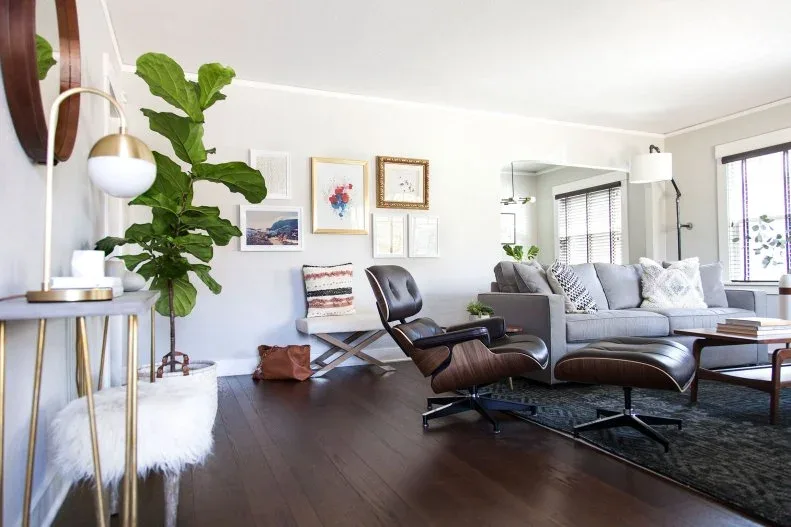
A darker floor connects the gray sofa with the lounge chair and matching footrest, giving the pale room a clearer base. Smaller framed pictures make the wall personal without covering it completely, while a tall plant adds a softer shape near the side furniture. The mixed seats create different places to rest within a largely gray, brown and white arrangement.
Check the lounge chair in its usual position with the footrest in place, leaving the route past it usable. Compare how the floor and upholstery will be cleaned, especially around plant pots. Keep side surfaces reachable from the seats, and choose the wall display according to the pictures you enjoy rather than adding frames simply to fill remaining gaps.
PART 04
Make quieter sitting corners comfortable
IDEA 13 / 15
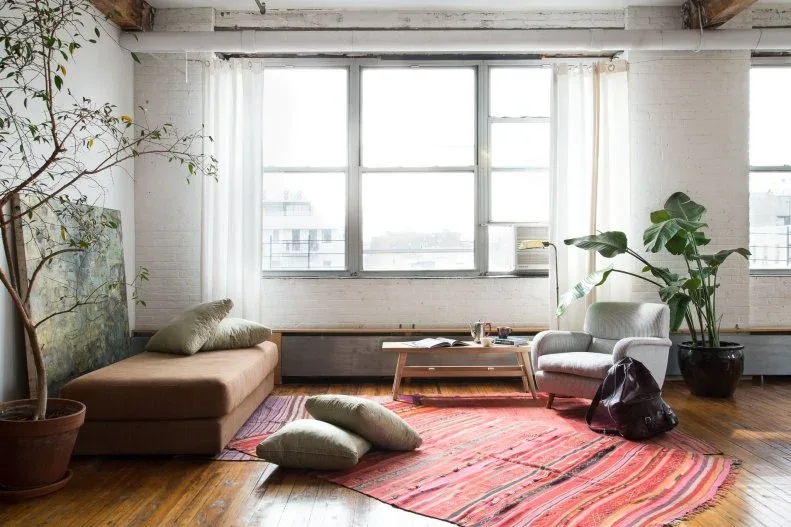
Let a warm brown seat anchor a lighter room
 SaveSupport Non AI Creator
Image credit: Photo: Claire Esparros for Homepolish. From: Justin DiPiero
A low brown seat gives this bright sitting room a warmer anchor beside the pale armchair. The wooden table connects the two furniture tones, while the large windows and light walls keep the background quiet. A pink patterned rug supplies a localized accent below, with the tree providing a softer vertical shape than another tall storage piece or lamp.
Consider whether lower seating is comfortable for the people using the room, including getting up from it. Check reach to the table and keep the rug edges out of regular routes. Keep a real tree matched to the available light and care, and choose smaller accents deliberately so the warm brown furniture remains the room's central quieter tone.
IDEA 14 / 15
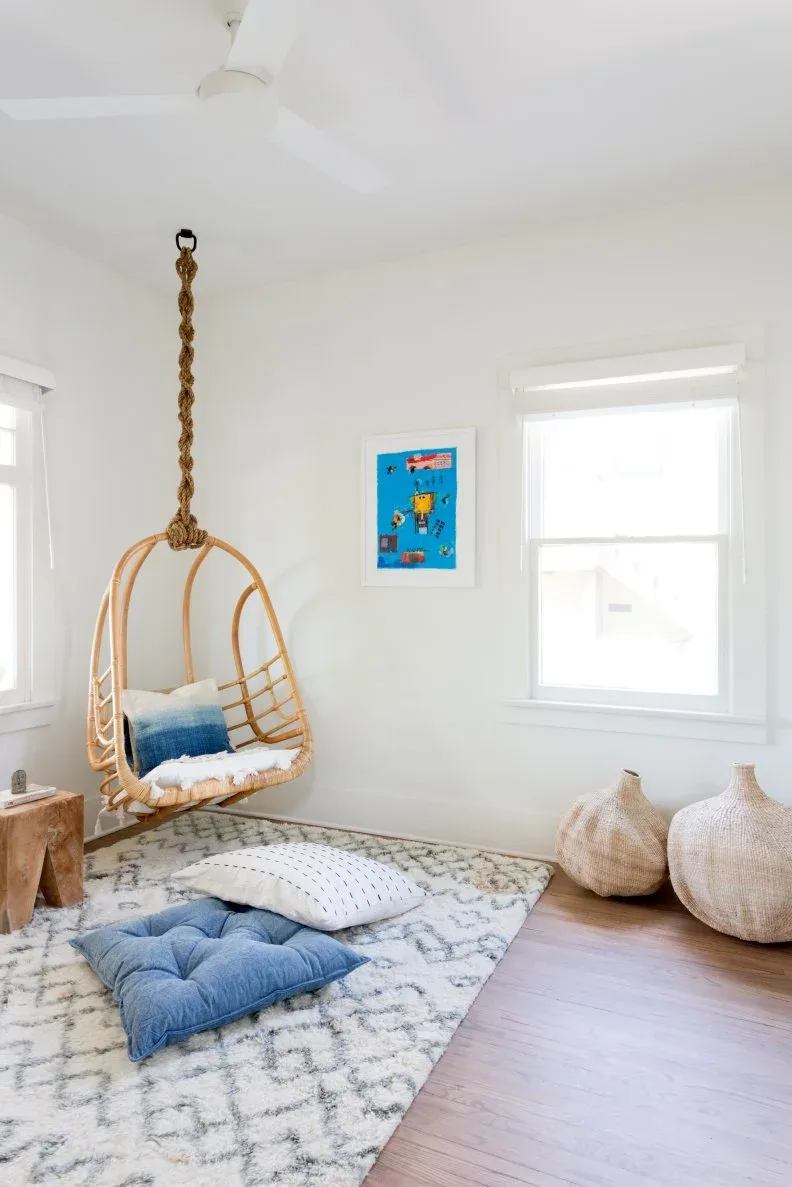
Leave breathing space around a hanging seat
 SaveSupport Non AI Creator
Image credit: Photo: Amy Bartlam. From: Genna Margolis
A hanging woven chair creates a distinct outline in this pale corner, with the patterned rug giving the floor a quieter texture below. Light cushions connect the seat with the white walls, while a blue floor cushion supplies a smaller accent. Two large pale woven vessels occupy the side of the room without introducing another strong furniture color.
Use a hanging seat only with professionally assessed support and installation appropriate to the chair and building. Allow the required movement and clearance rather than treating it like a fixed armchair. Keep floor cushions and decorative vessels outside the main route, and consider a stable freestanding seat when suitable overhead support or enough open space is unavailable.
IDEA 15 / 15
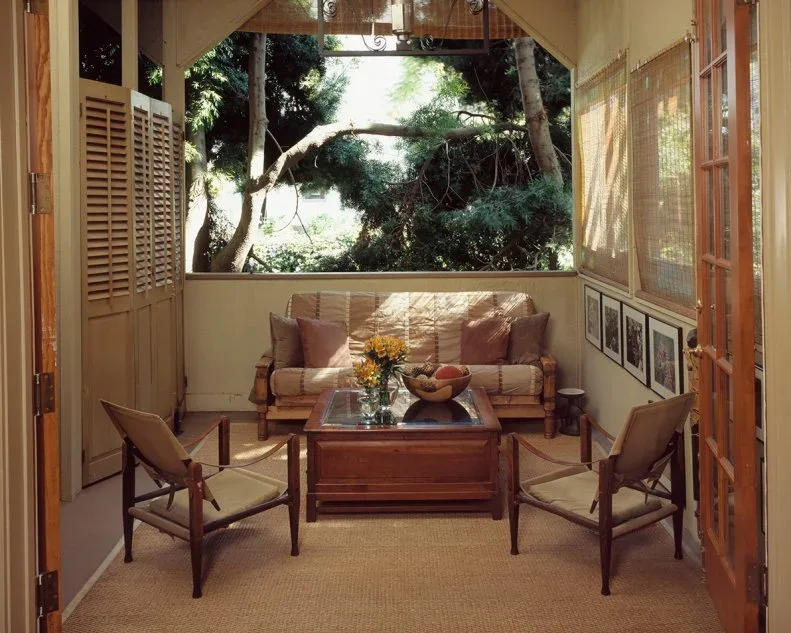
Extend quieter textures into a sheltered sitting space
 SaveSupport Non AI Creator
Image credit: Photo: Drew Kelly. From: Antonio Martins
Warm wooden furniture and pale woven seating give this sheltered parlor a quieter palette against the garden beyond. The chairs face the central table, with lighter cushions connecting their different frames. The open view supplies much of the visual detail, allowing the furniture and floor covering to bring texture without needing a bright wall pattern around the seating group.
Treat this as inspiration for a sheltered sitting space connected with the home, checking weather exposure before choosing furniture or fabrics. Use materials suited to the actual conditions and follow their care guidance. Keep access between the seats and doorway practical, and avoid assuming an open room will protect cushions from moisture simply because it has a roof.
BRING IT ALL TOGETHER
Let texture support a comfortable living room
Choose the seating and routes first, then add the textures you enjoy using. Compare fabrics, floor coverings and wooden tones in the actual room light, and keep a few surfaces quiet so the more detailed pieces remain visible. A neutral palette still benefits from darker outlines and warmer furniture, rather than making every item the same pale color.
Check how rugs, woven seating and plant arrangements will be cleaned and maintained. Retain useful tables, stable shelves and enough space to move between seats. Introduce smaller accents only where you want them, keeping the main walls and larger furniture within the quieter palette that drew you to a neutral room in the first place.