A classic kitchen earns its place through everyday use: drawers that suit your cookware, a surface beside the sink and enough room to move while someone else opens the oven. Framed cabinet doors, familiar handles and traditional lighting can bring character to that useful arrangement.
These photographs range from pale fitted kitchens to stronger colors and furniture-like islands. Look closely at the storage and working surfaces before copying the decoration, and adapt each idea to the appliances, daylight and cleaning routine in your own home.
PART 01
Give the kitchen a familiar framework
IDEA 01 / 20
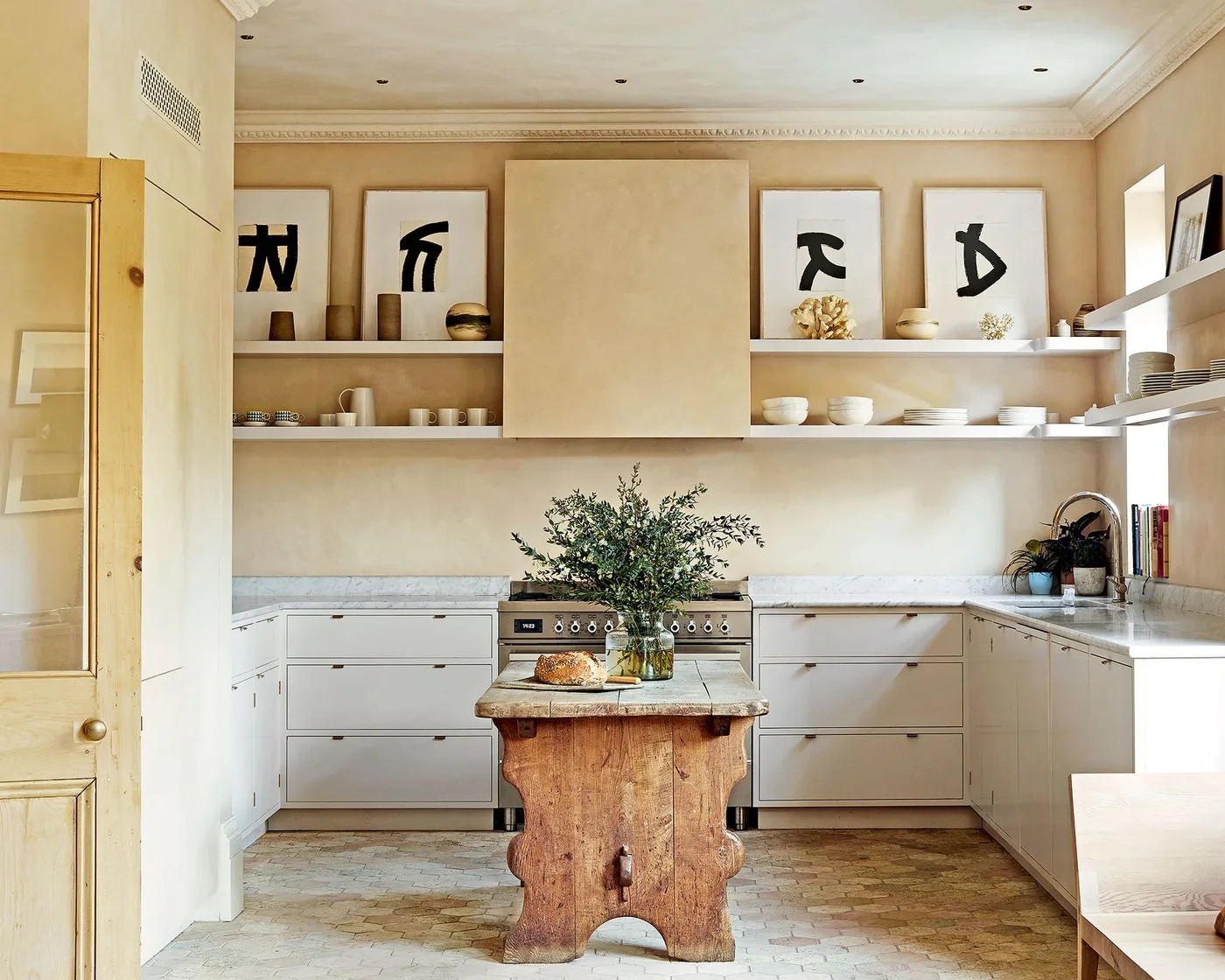
Center a small wooden island beneath a simple hood
 SaveSupport Non AI Creator
Image credit: Jessica Summer
Pale framed cabinets run around the room beneath open shelves and a broad simple hood. The small wooden island adds a furniture-like shape at the center instead of repeating the fitted units. Framed pictures and pale crockery bring decoration to the upper shelves, while the central surface remains a separate place for preparation.
Choose an island for the movement space it leaves, not just the storage it adds. Check the paths to the cooker, sink and cupboards with doors open. Keep decorative items on shelves that are safely away from cooking heat, and leave enough counter space to set down ingredients beside the appliances.
IDEA 02 / 20
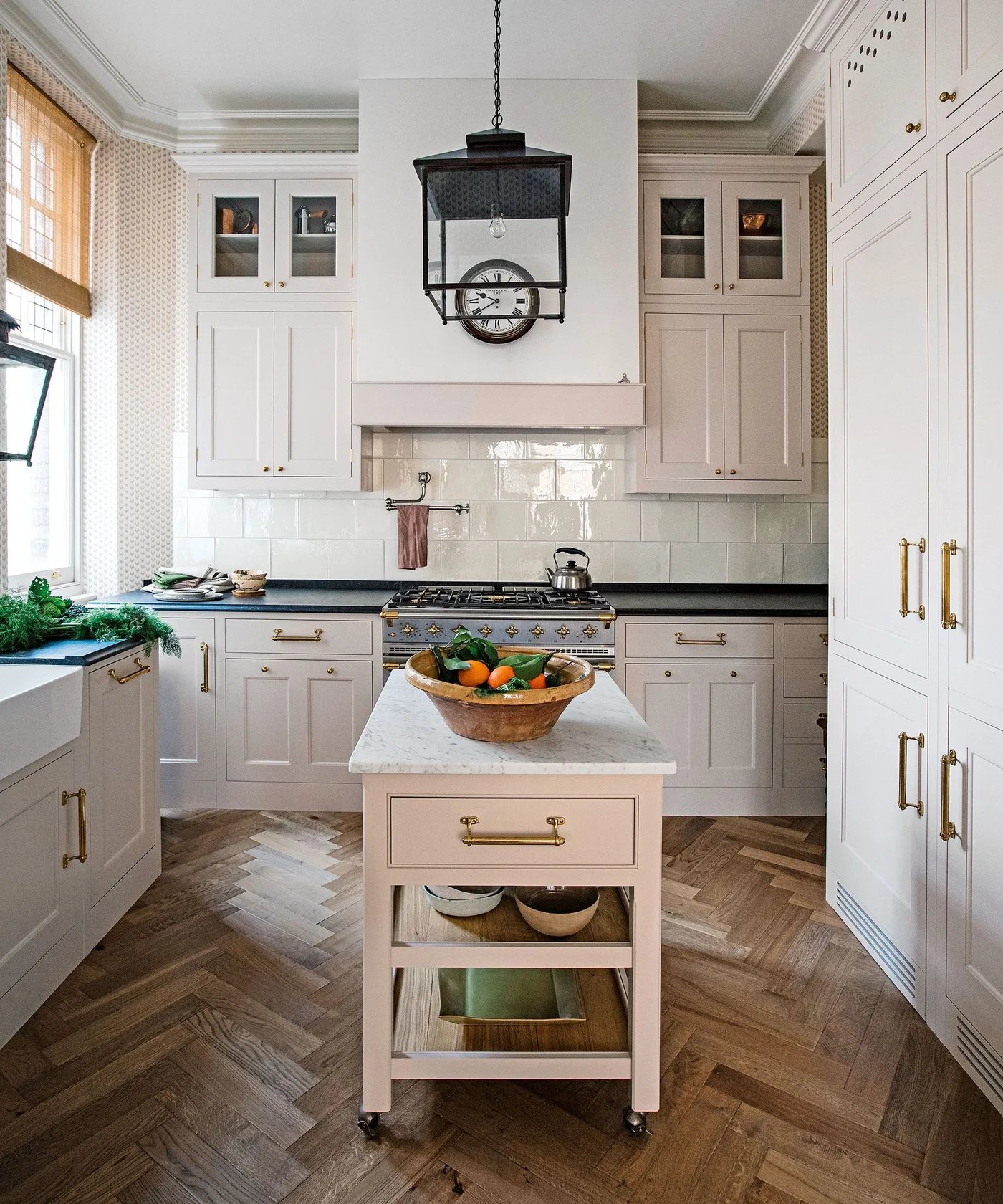
Use pale paneled cabinetry with a compact trolley
 SaveSupport Non AI Creator
Image credit: Plain English
Pale paneled doors, ceiling trim and small glazed upper cupboards give this compact kitchen a formal traditional outline. The black lantern pendant echoes the dark cooker, while a wheeled island introduces drawers and open shelves in the center. Its lighter frame leaves the patterned wooden floor visible beneath the extra work surface.
A trolley can offer flexibility, but confirm that its wheels lock securely before using it for preparation. Check whether it obstructs the oven or tall cupboards when placed centrally. Store heavier items low on open shelves, and avoid assuming a movable unit can replace the stable space needed beside a hot appliance.
IDEA 03 / 20
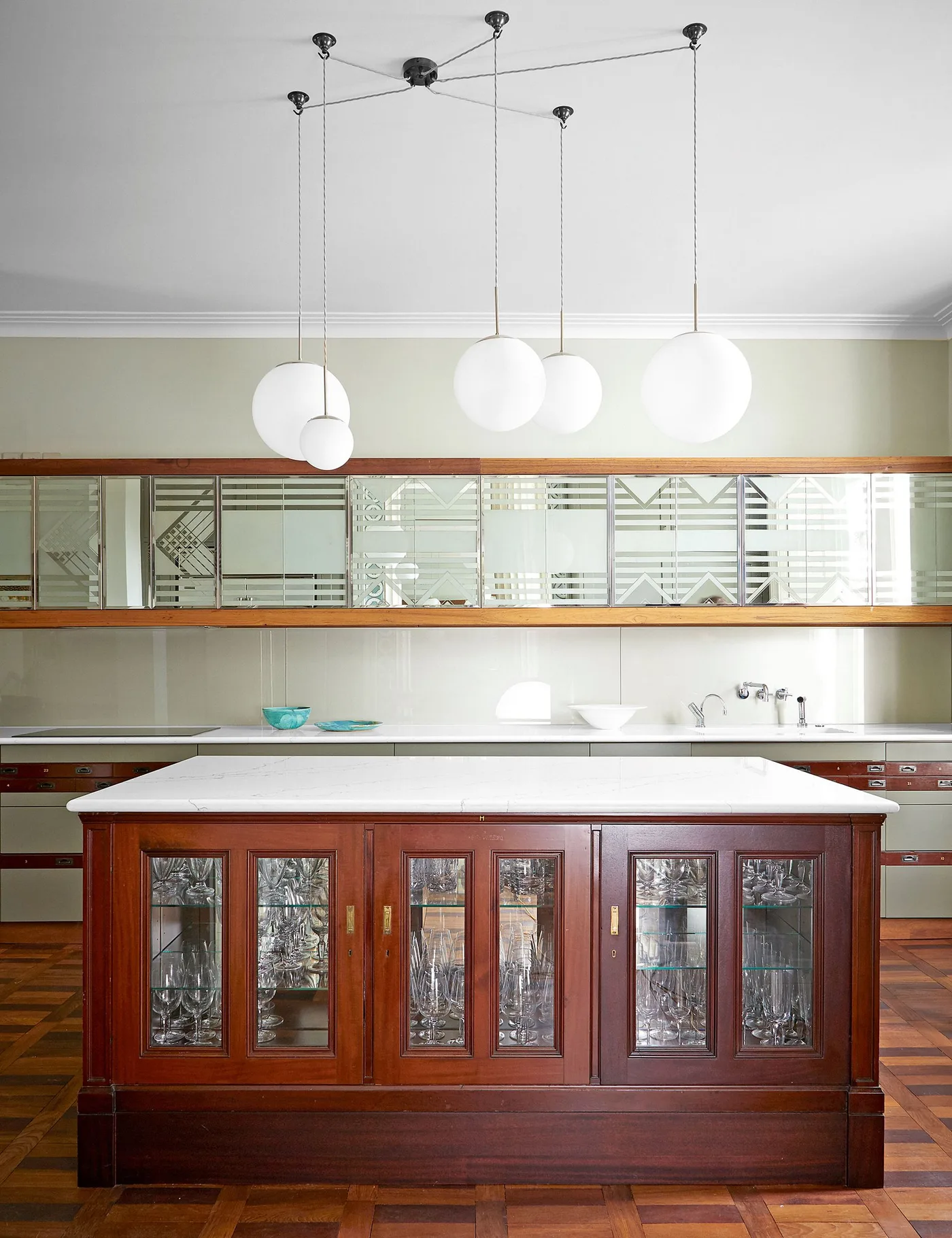
Treat the island as a glazed furniture piece
 SaveSupport Non AI Creator
Image credit: Retrouvius
The reddish wooden island has glazed doors that display the glassware inside, giving it the appearance of a freestanding cabinet. Pale worktops keep the main surfaces bright, while the patterned mirror strip adds another decorative layer along the wall. Round pendant shades soften the stronger rectangular lines of the island and storage.
Glazed storage is useful for pieces you can arrange without overfilling the shelves. Allow room to wipe both sides of the doors and check shelf supports for heavier glassware. A reflective wall will show splashes and fingerprints, so consider its cleaning needs and avoid placing decorative mirrors where heat protection is required.
IDEA 04 / 20
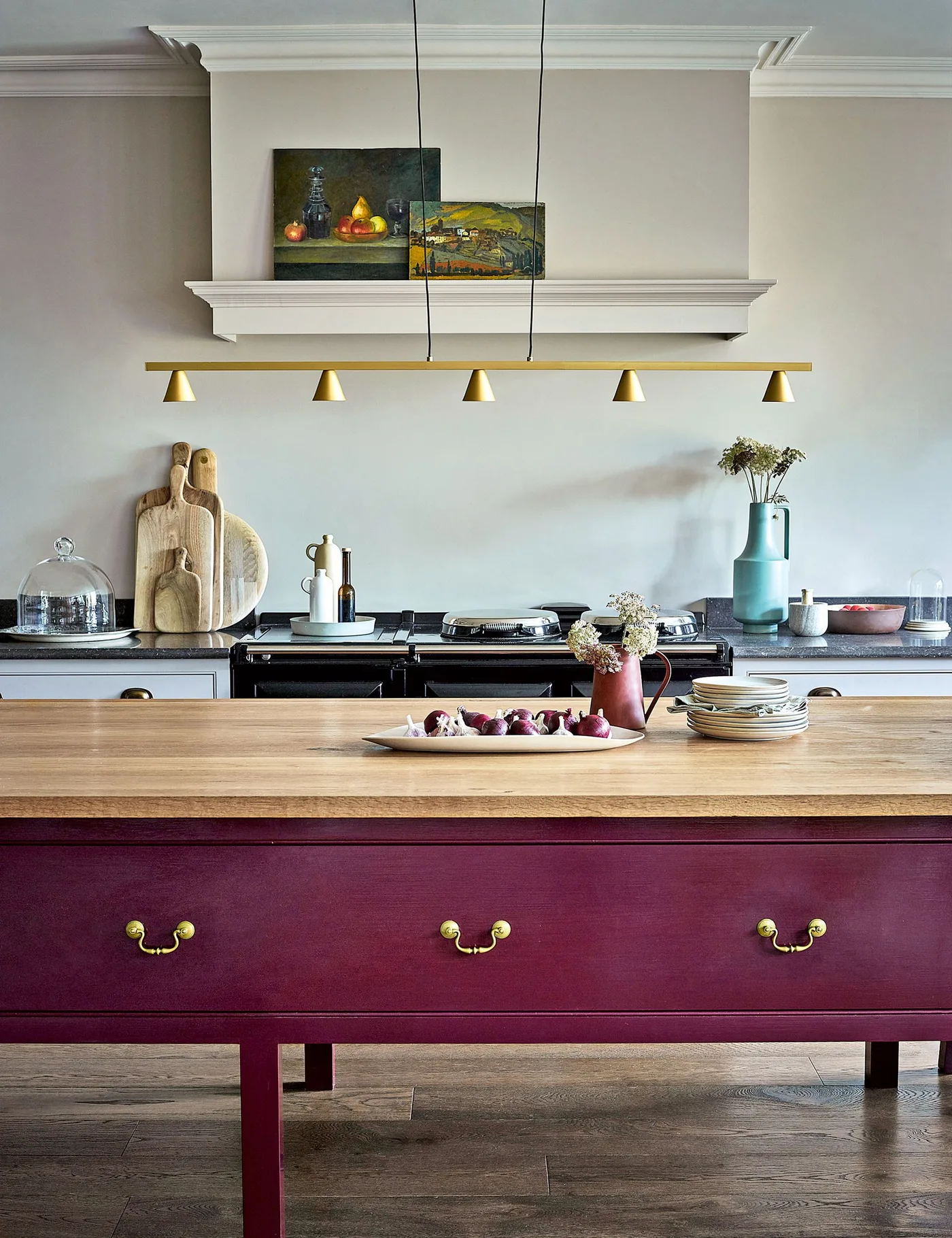
Give a furniture-style island a rich painted color
 SaveSupport Non AI Creator
Image credit: Plain English
The plum-painted island brings a rich color to the front of the kitchen, with curved gold-colored handles reinforcing its furniture-like appearance. A wooden top warms the pale blue wall and broad hood behind it. The long suspended light adds a clean horizontal line without competing with the island's drawers and traditional hardware.
A contrasting island is a manageable place to introduce a stronger color, provided it suits the fixed cabinets and floor. Test samples against the worktop before painting. Confirm the care requirements of a wooden preparation surface, use suitable boards for cutting, and keep water from standing around joints or the edge.
IDEA 05 / 20
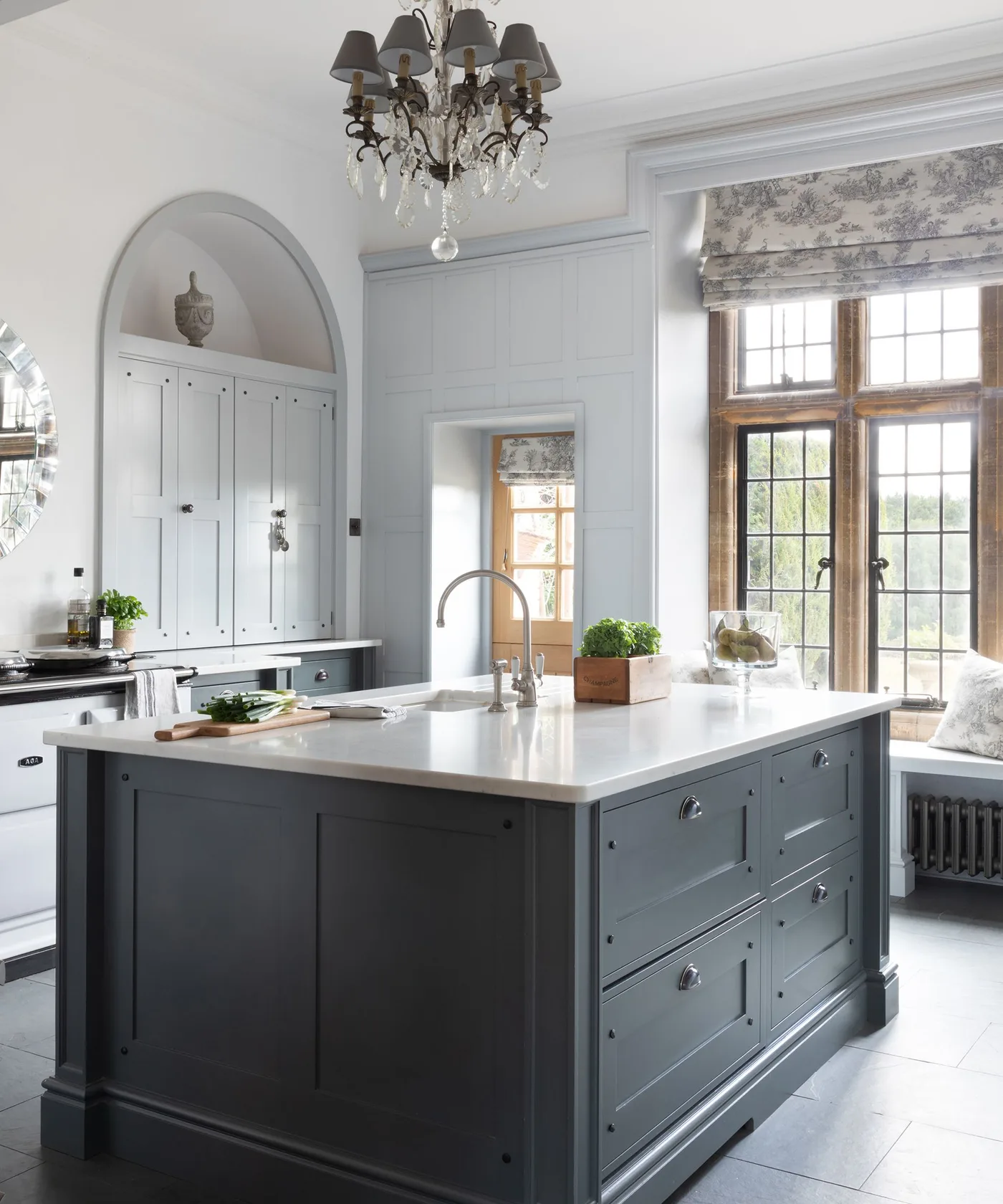
Combine a dark island with pale traditional trim
 SaveSupport Non AI Creator
Image credit: Drew Forsyth
A dark paneled island stands against pale walls and tall traditional storage. The arched top of the cupboard and shaded chandelier bring curved details above the straight cabinet fronts. Daylight from the large window highlights the pale island surface, while a patterned blind adds a softer layer without covering the window's full height.
A sink in the island makes it important to preserve preparation space on either side. Check tap reach, splash areas and dishwasher access together rather than choosing them separately. Keep the decorative light clear of the working zone, and use window coverings that can be cleaned appropriately in a kitchen.
PART 02
Make traditional storage earn its space
IDEA 06 / 20
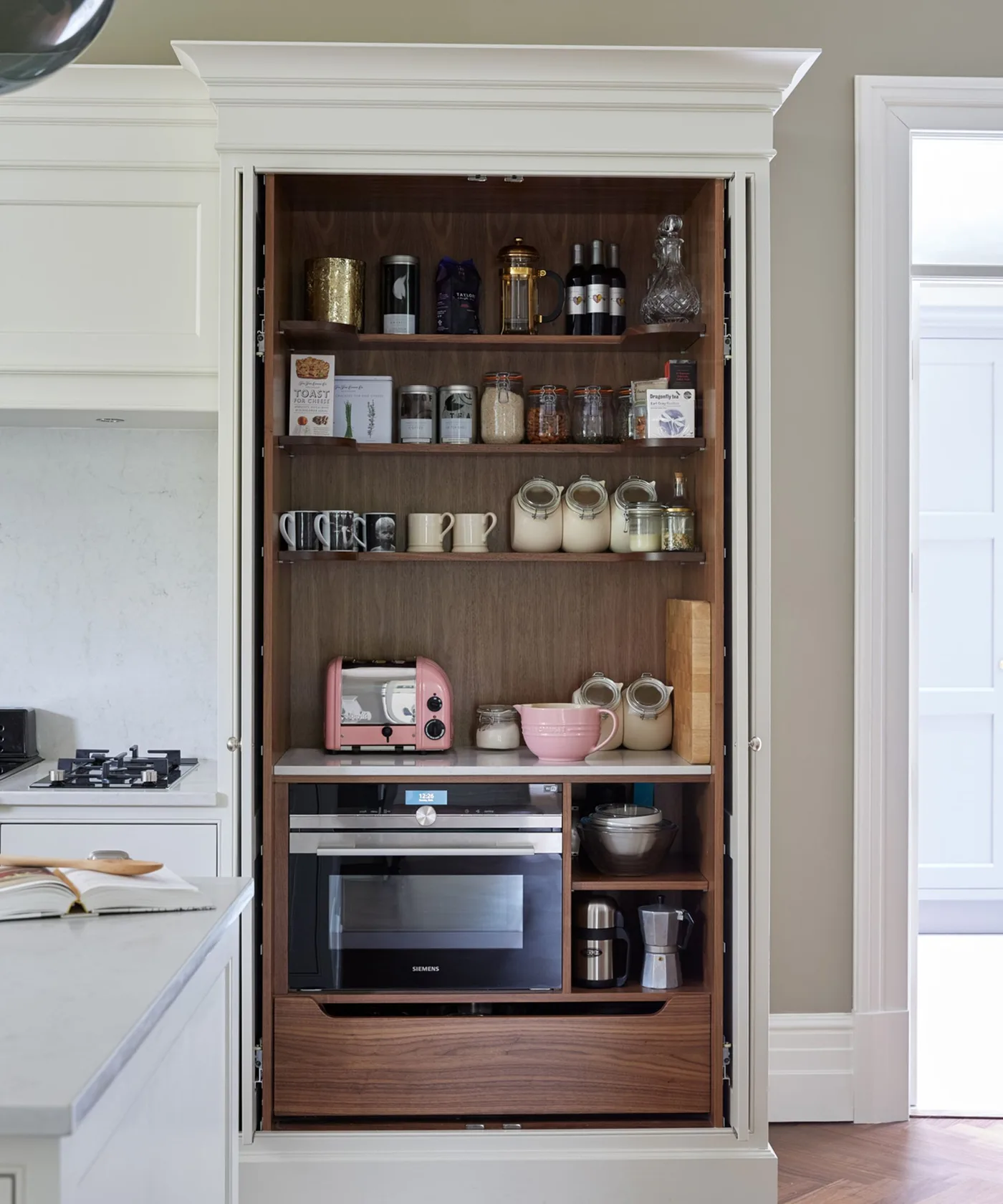
Organize a tall pantry behind traditional doors
 SaveSupport Non AI Creator
Image credit: Mowlem & Co
The tall paneled doors conceal a wooden-lined storage area with several shelf heights. Food jars and mugs occupy the upper shelves, while the lower section holds appliances and larger items. The traditional exterior keeps the kitchen visually ordered when closed, while the interior puts several daily tasks and supplies within one cupboard.
Measure the actual jars, dishes and appliances before deciding shelf spacing. Keep heavy items at an accessible height and leave electrical equipment the ventilation and operating clearances its manufacturer requires. A photograph of a toaster inside a cupboard does not mean it can be used there; move or install appliances as their instructions specify.
IDEA 07 / 20
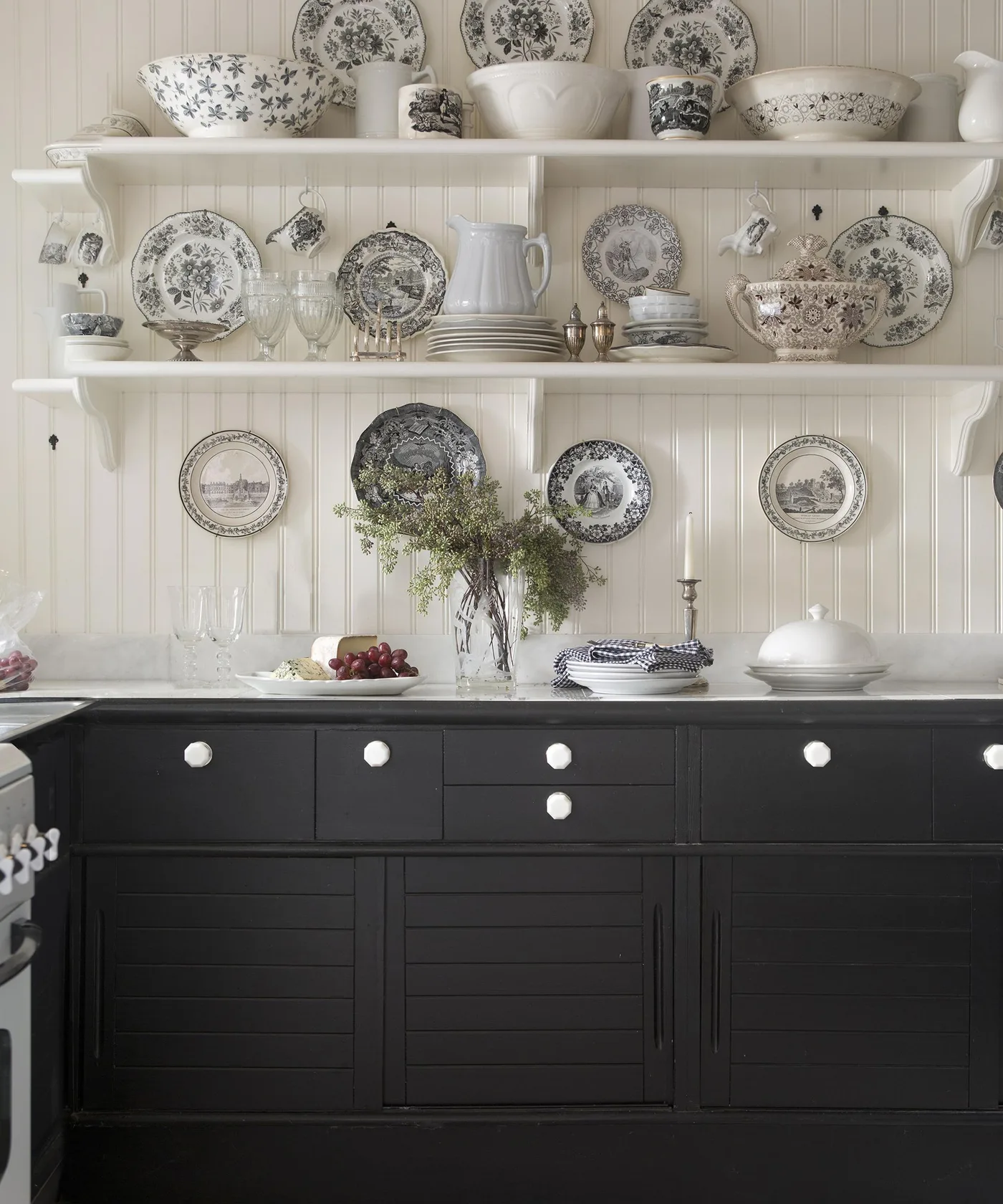
Display pale patterned dishes over dark drawers
 SaveSupport Non AI Creator
Image credit: Benjamin Moore
Dark lower drawers create a strong base below the pale paneled wall. White shelves and small hooks display patterned plates, bowls and cups in a coordinated light palette. The dishes add the traditional decoration themselves, while the dark countertop and drawer fronts stop the pale upper arrangement from feeling visually weightless.
Reserve open display for pieces you can clean regularly, because kitchen shelves collect dust as well as cooking residue. Check fixings and shelf capacity before stacking bowls. Keep valuable or fragile dishes away from busy preparation edges, and use closed drawers for less attractive everyday tools that would crowd the display.
IDEA 08 / 20
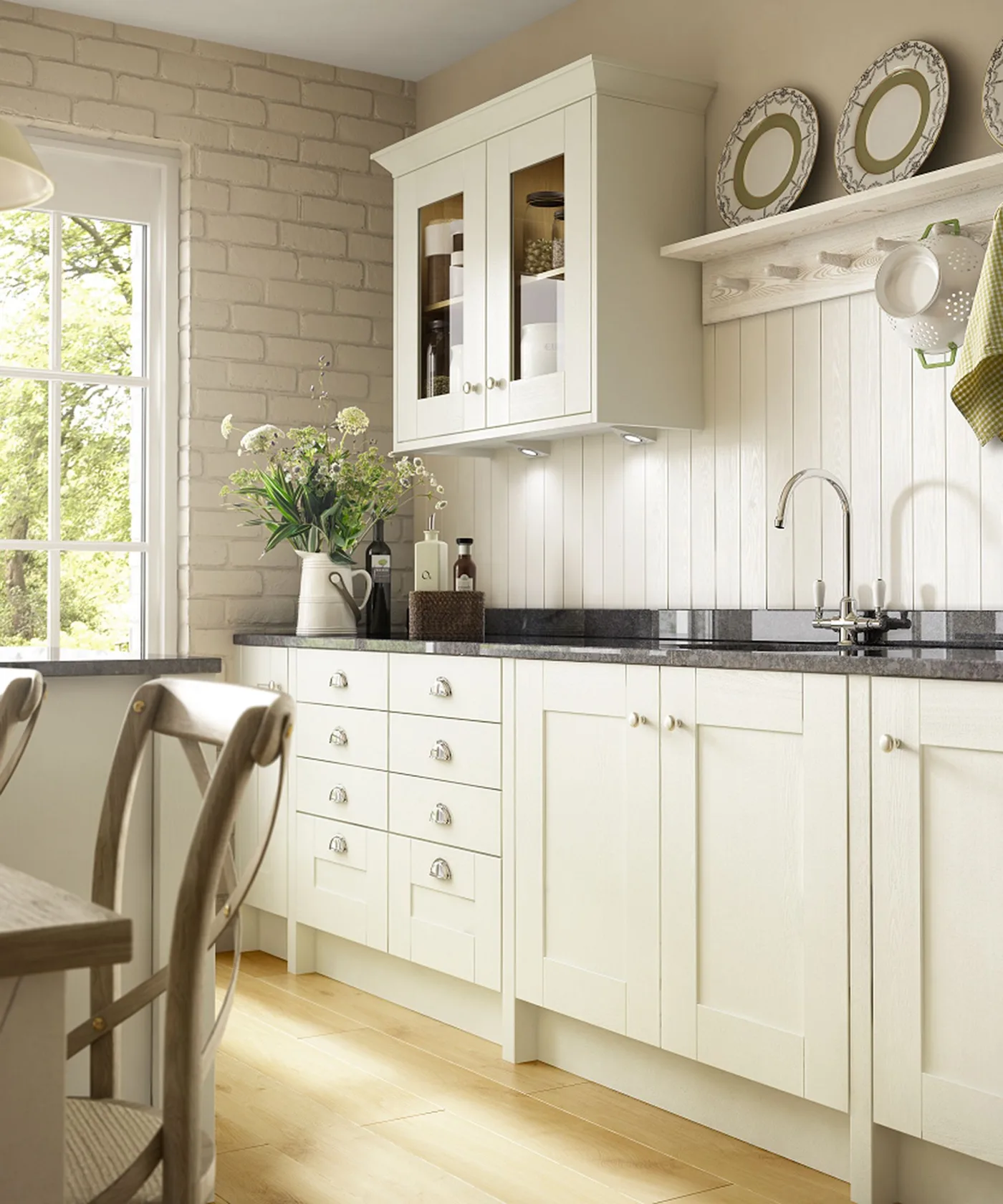
Use a small glazed cupboard above the sink run
 SaveSupport Non AI Creator
Image credit: Benchmarx
The small glazed wall cupboard breaks up the pale paneled wall without filling it with a continuous bank of units. A dark worktop defines the sink run beneath it, while a narrow plate shelf and hooks add traditional details farther along the wall. Daylight from the nearby window keeps the compact arrangement bright.
A small wall cupboard needs enough depth for the pieces it will hold, but should not crowd the sink user's head space. Check installation and weight capacity carefully. Keep the plate shelf easy to wipe, and leave the counter beneath useful for dishes and preparation rather than covering it entirely with display items.
IDEA 09 / 20
Give glassware its own textured-glass cupboard
 SaveSupport Non AI Creator
Image credit: Herringbone
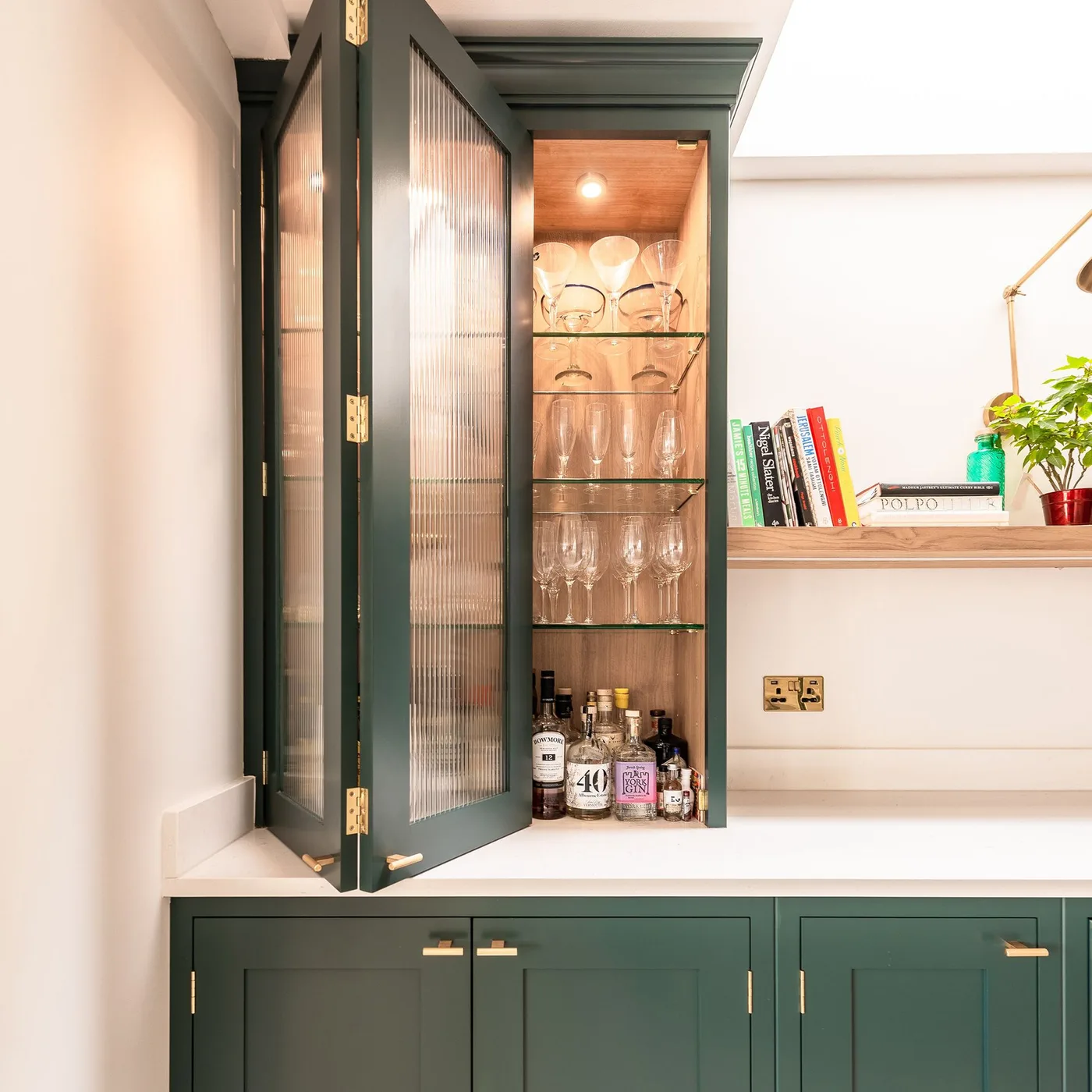
Green framed doors surround a textured-glass cupboard that opens to a lit glassware display. The warm interior provides contrast with the pale counter and wall, while bottles occupy the lower section. This focused storage arrangement introduces a traditional glazed-cabinet detail without needing every cupboard in the kitchen to expose its contents.
Check shelf loading and usable glass height before arranging a display cupboard. Leave space to remove a glass without lifting several other pieces first. Textured glass softens the view when closed, but still needs cleaning; have any internal lighting fitted appropriately rather than running loose electrical leads among bottles and glassware.
IDEA 10 / 20
Put a tall pantry beside a traditional sink
 SaveSupport Non AI Creator
Image credit: Lauren Gilbethorpe Interiors/Alexander J Collins
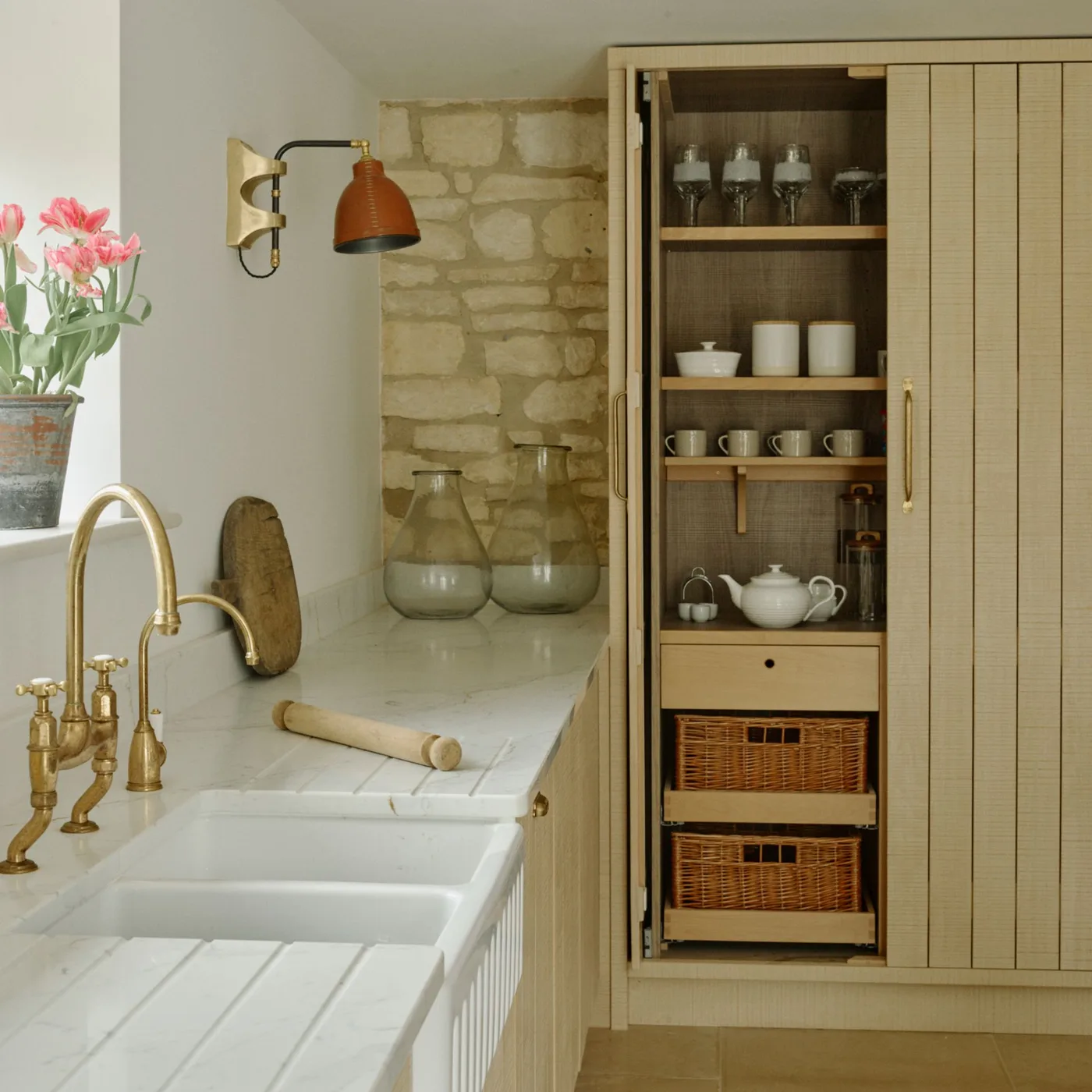
A tall paneled pantry stands beside the white apron-front sink, providing shelves for glassware, bowls and cups above two baskets. A pale textured wall and simple colored wall shade give the storage area a softer backdrop. The arrangement shows how useful pantry space can sit alongside familiar sink and cabinet shapes.
Check that the pantry door has a clear opening route even while someone uses the sink. Baskets should slide out without scraping adjacent furniture or blocking the floor. Follow the worktop's care instructions around the draining grooves and tap, and keep the shelves organized around frequently used items rather than display alone.
PART 03
Bring personality through color and detail
IDEA 11 / 20
Bring warm yellow to a traditional cooker surround
 SaveSupport Non AI Creator
Image credit: Future PLC/ Paul Massey
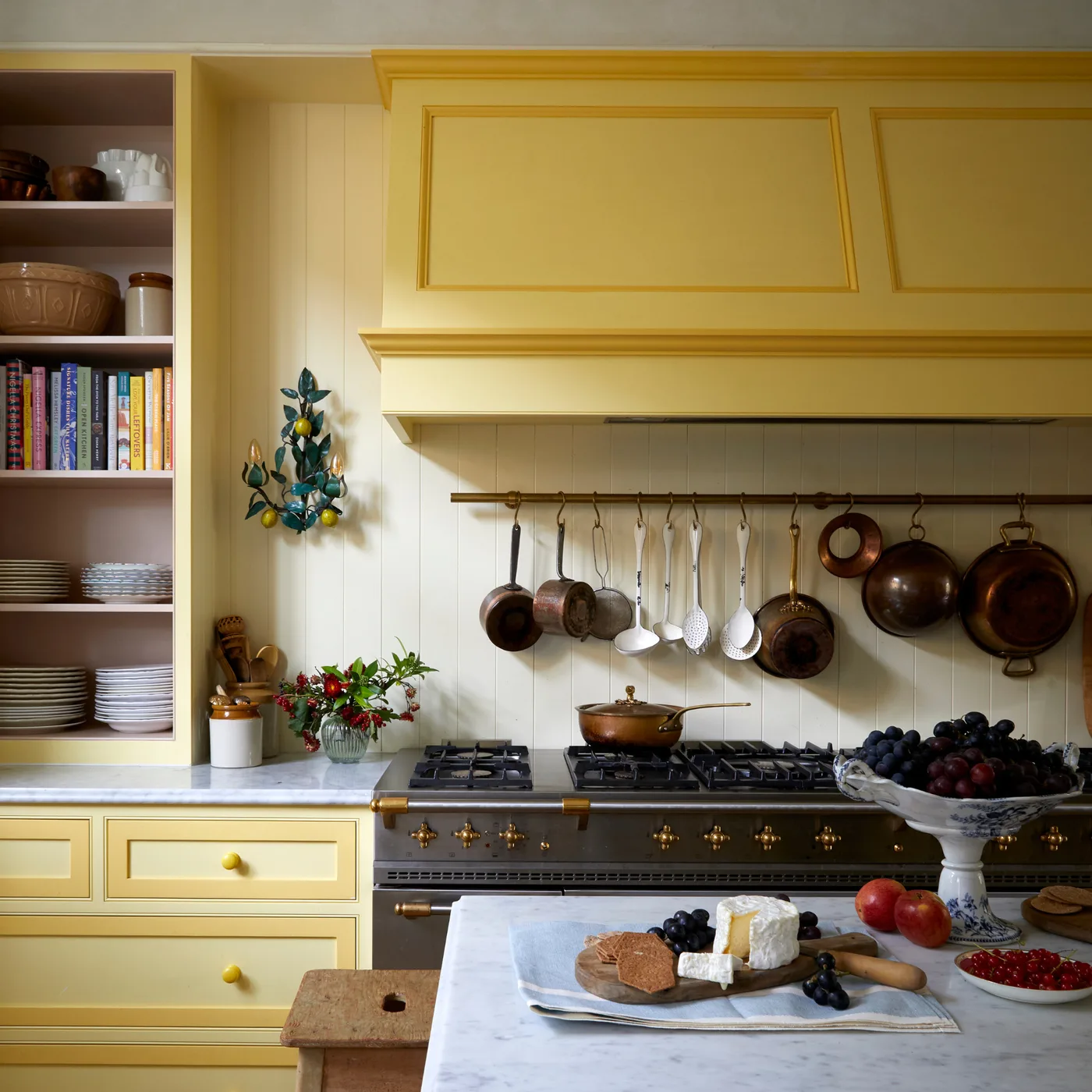
Yellow painted cabinetry and a matching hood bring warmth to the traditional cooker wall. The dark range creates a stronger center, while the side shelf holds plates and books. Hanging pans introduce another warm-toned layer against the pale backsplash, with framed doors and cup handles keeping the cabinetry's familiar outline visible.
Test yellow beside the existing worktop and under evening lights before painting a large hood or cabinet run. Choose a kitchen-suitable finish that can tolerate cleaning. Treat pan storage near a cooker as a clearance and access question: follow appliance requirements and keep combustible objects or awkward hanging pieces away from active heat.
IDEA 12 / 20
Pair dark cabinets with a green lower wall
 SaveSupport Non AI Creator
Image credit: Fenwick & Tilbrook
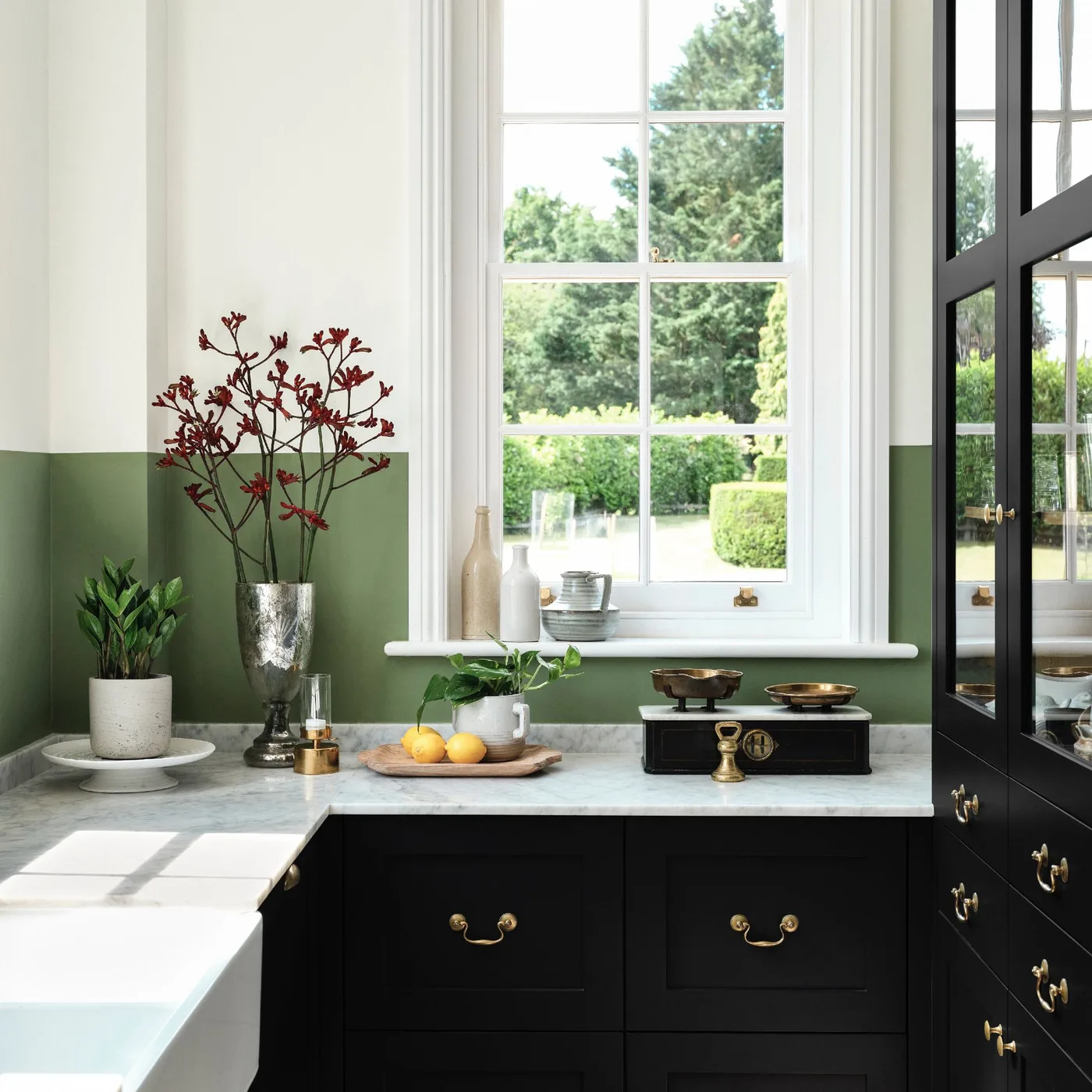
Dark framed doors and gold-colored handles establish a traditional base beneath the pale worktops. Green paint covers the lower part of the wall, connecting the cabinets to the large bright window without making the whole room dark. The restrained color arrangement leaves the window's trim and the cupboard shapes easy to see.
Use daylight and evening samples to judge dark cabinetry, especially in a small kitchen. Select a wall finish appropriate to splashes where it meets the worktop, and use the protection needed behind cooking appliances. Keep window handles accessible and reserve enough clear counter space for the tasks the compact room must handle.
IDEA 13 / 20
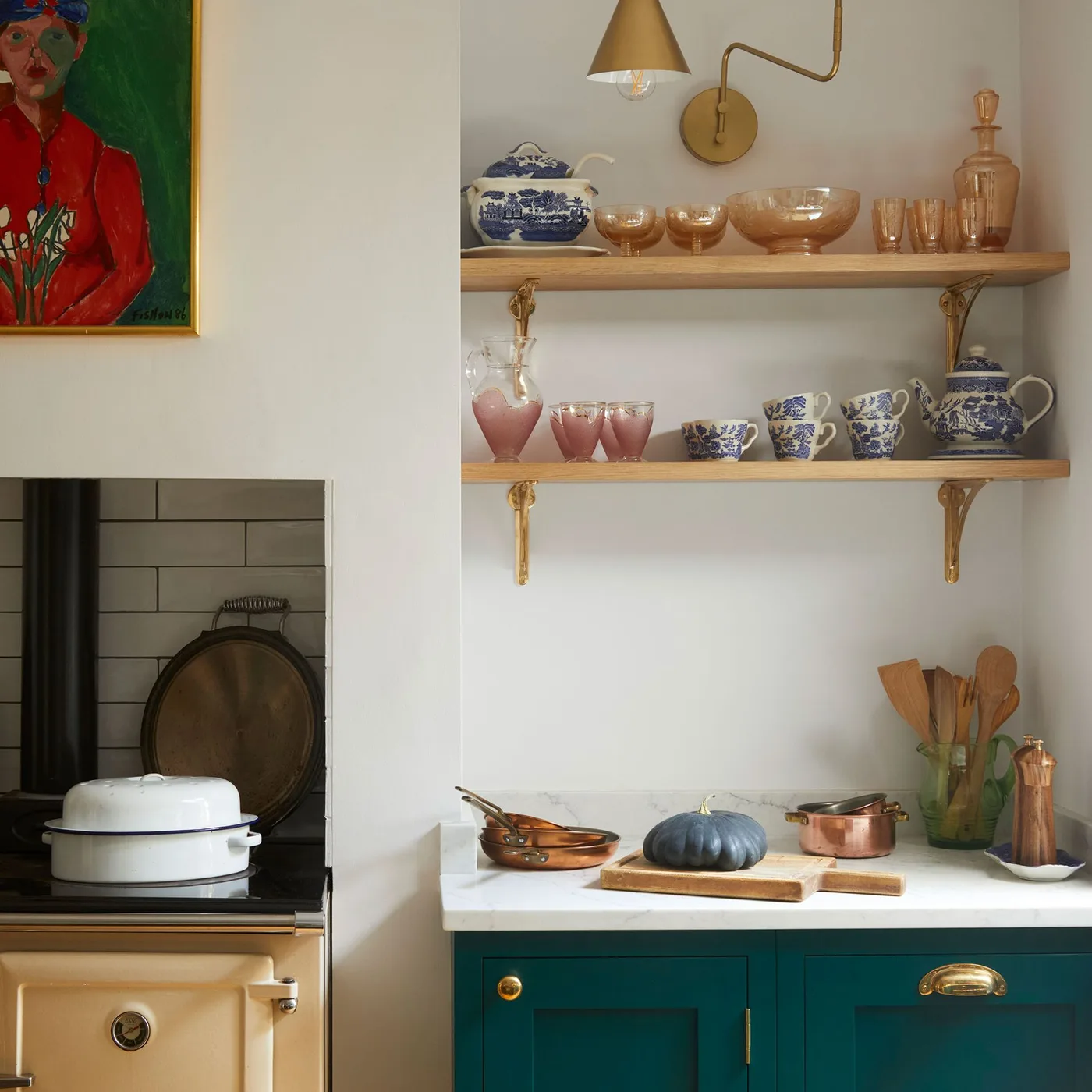
Use open shelves to soften a green cabinet run
 SaveSupport Non AI Creator
Image credit: Olive & Barr
Green paneled cupboards and a cream-colored range give the kitchen a familiar traditional combination. Wooden shelves hold patterned cups, pale glasses and a blue-and-white pot against the light wall. A small gold-colored wall light repeats the cabinet hardware, while the open arrangement gives the upper wall a lighter feel than fitted cupboards would.
Open shelves work best when the displayed pieces suit regular washing and dusting. Avoid storing delicate glassware where it may be knocked during preparation. Check wall-light suitability and installation for its kitchen position, and keep the work surface below useful rather than extending the shelf display into every available corner.
IDEA 14 / 20
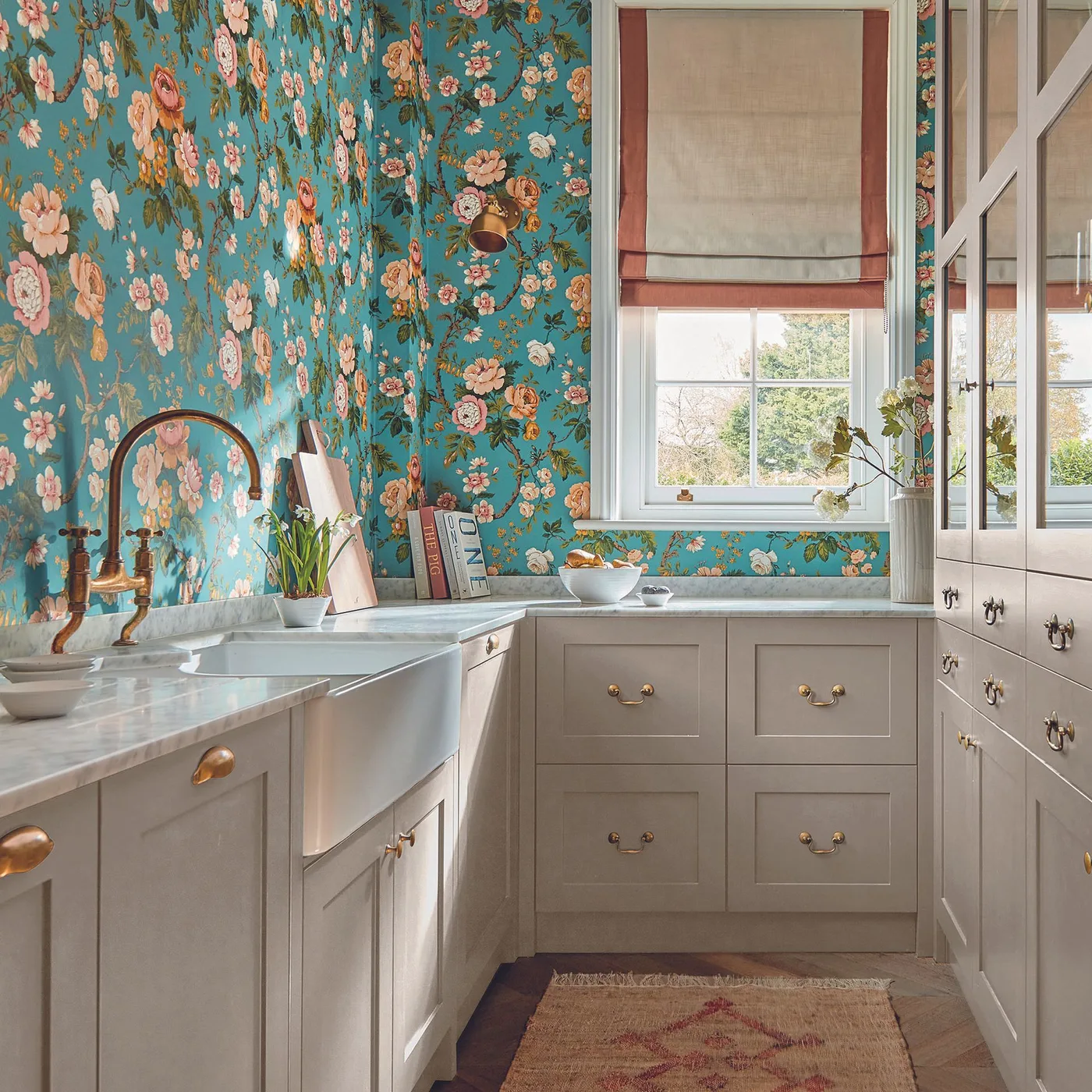
Bring a floral wall into a pale framed kitchen
 SaveSupport Non AI Creator
Image credit: Sanderson Design Group
Turquoise floral wallpaper adds a broad patterned background to the pale framed cupboards. Gold-colored handles and the curved tap pick up the warmer tones in the flowers, while the quieter window blind gives the pattern a pause. The cabinetry's simple familiar shape keeps the room from feeling like several unrelated decorative features.
Wallpaper near a sink needs a suitable finish and an appropriate protected splash area. Check the manufacturer's guidance before using it where water or grease will reach it. Match a sample with the blind and cabinet paint together, and keep the small work surfaces clear enough that pattern does not replace practical preparation space.
IDEA 15 / 20
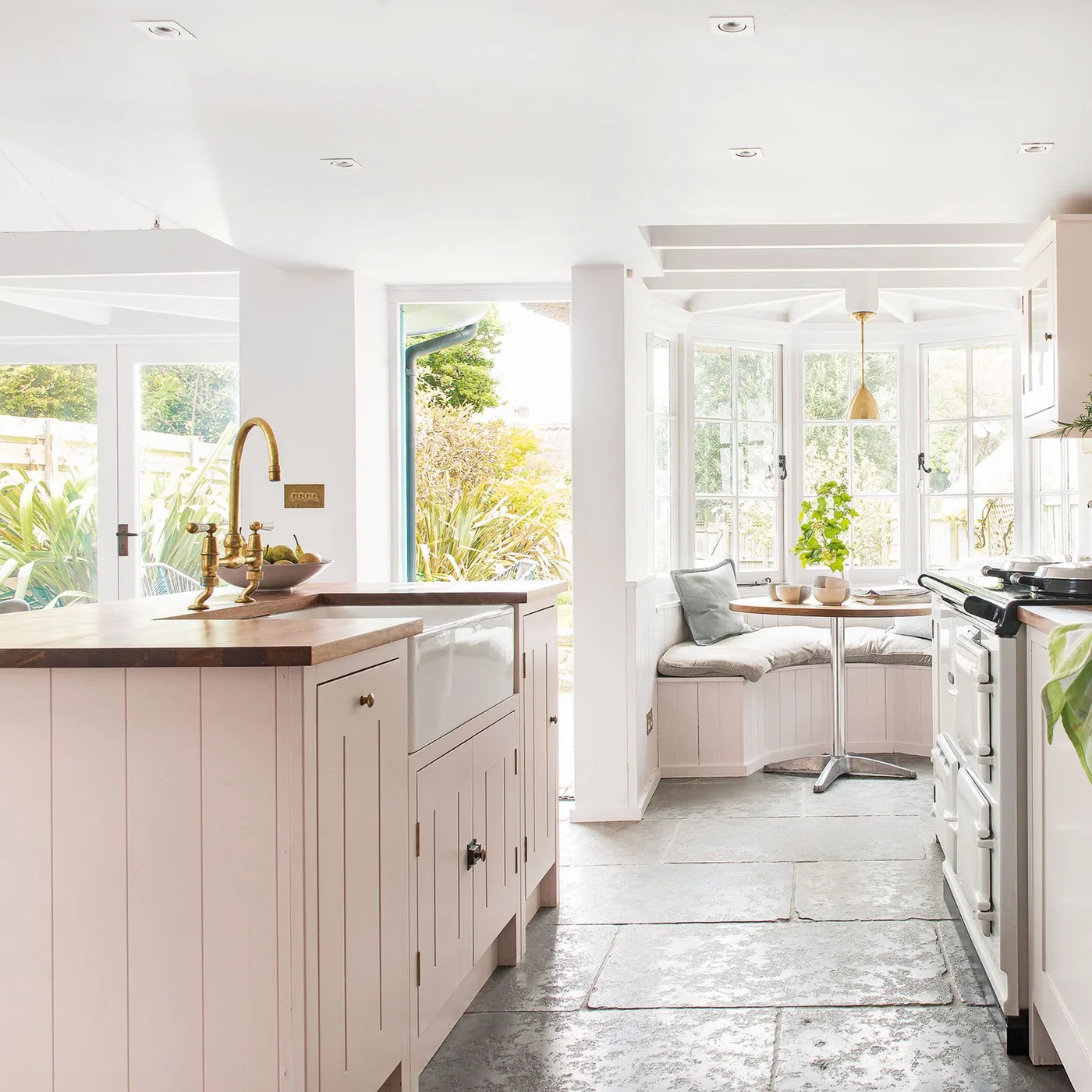
Use soft pink around a bright kitchen window
 SaveSupport Non AI Creator
Image credit: Future PLC/Chris Snook
Soft pink paneling gives the island a gentle color within the bright white room. The dark worktop outlines the white sink, while a cushioned dining nook sits beneath the windows beyond. Traditional cupboard shapes remain visible, but the pale color and daylight make the arrangement feel relaxed rather than formal or heavily decorated.
Choose an island color with the nearby seating fabrics in mind so the two areas feel connected. Keep the sink's wet zone separate from any upholstered dining cushions. Check the width of the working aisle with appliance doors open, and use nook cushions with a cleaning routine suited to eating in the kitchen.
PART 04
Keep daily work comfortable
IDEA 16 / 20
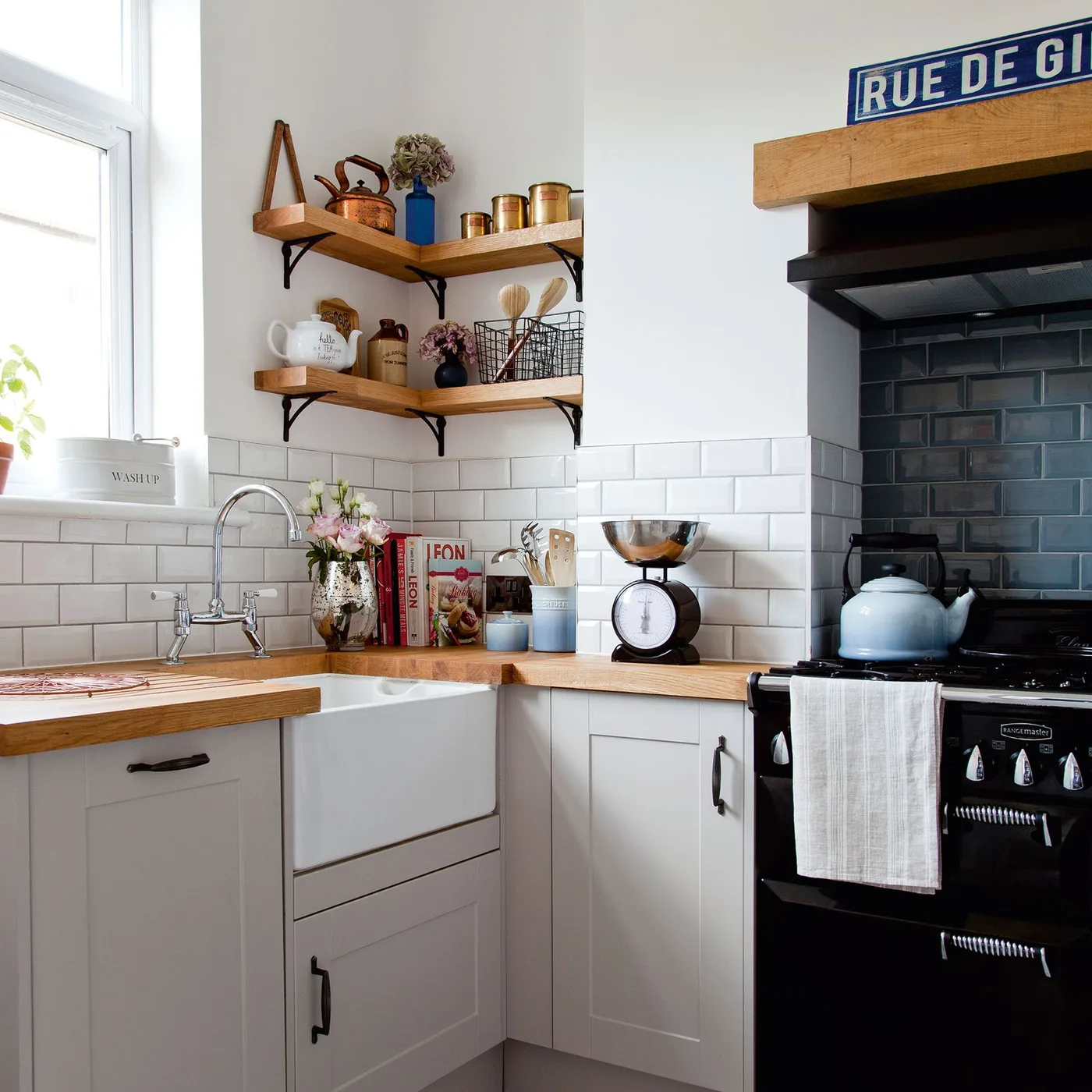
Keep a compact corner useful with simple shelves
 SaveSupport Non AI Creator
Image credit: Future PLC
White framed cabinets wrap around the compact corner beneath wooden worktops. Open shelves make use of the wall beside the window, while the dark tiled alcove gives the cooker a clear visual place. The apron-front sink and simple hardware add traditional details without requiring bulky upper cupboards across every section of the wall.
Corner shelves need reachable depth; items pushed far back can become difficult to use and clean. Leave the sink surround available for wet dishes and follow the wooden surface's care guidance. Check cooker and extraction requirements for an alcove installation, rather than assuming the decorative beam and surround suit every appliance.
IDEA 17 / 20
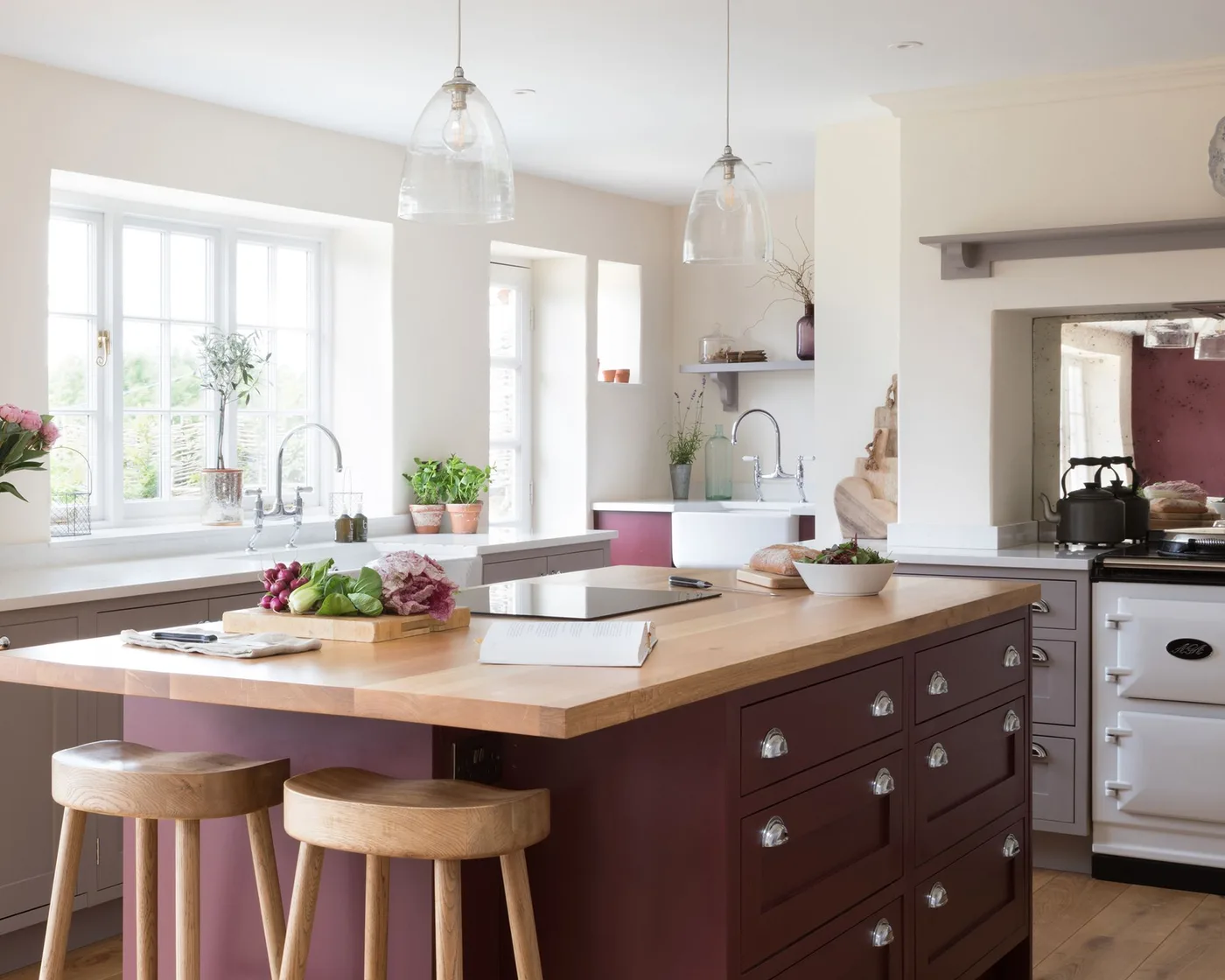
Put deep drawers in a contrasting island
 SaveSupport Non AI Creator
Image credit: CRL Stone
The burgundy island gives the pale kitchen a stronger central color, with several drawers built into its side. A wooden top and round wooden stools add warmer surfaces, while clear pendants keep the view across the room open. Framed cabinet fronts and cup handles provide the familiar details that connect the island to the traditional style.
Plan drawers around the cookware they will hold, including the height of large pots and the weight of stacked dishes. Check the stool position against access to those drawers. Follow the worktop's care instructions and leave enough usable preparation space beside any appliance fitted into the island rather than treating the whole top as seating.
IDEA 18 / 20
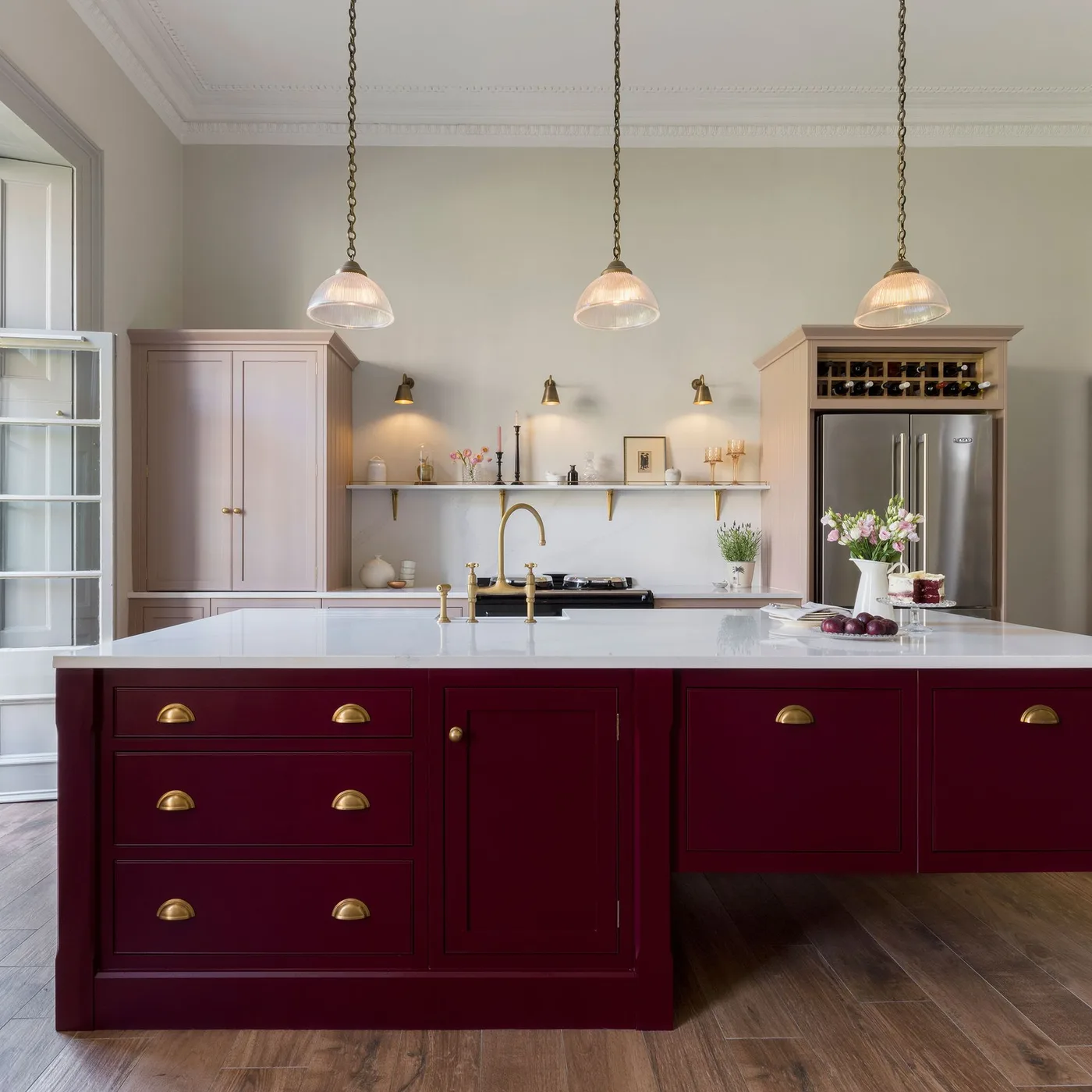
Make a rich island color the main accent
 SaveSupport Non AI Creator
Image credit: Harvey Jones
A rich burgundy island forms the strongest color in the room, with pale surrounding cupboards and a bright worktop keeping the rest quieter. Gold-colored handles repeat the warm metal tone of the tap and fittings. Three pendants mark the island's length while the simple cabinet frames maintain a traditional, orderly appearance.
A large island must suit the room's circulation before its color or lighting is considered. Check door swings, dishwasher loading and access around both ends. Plan several usable working areas on the top, and position pendants to light those tasks without becoming an obstacle or reflecting unpleasantly in a glossy surface.
IDEA 19 / 20
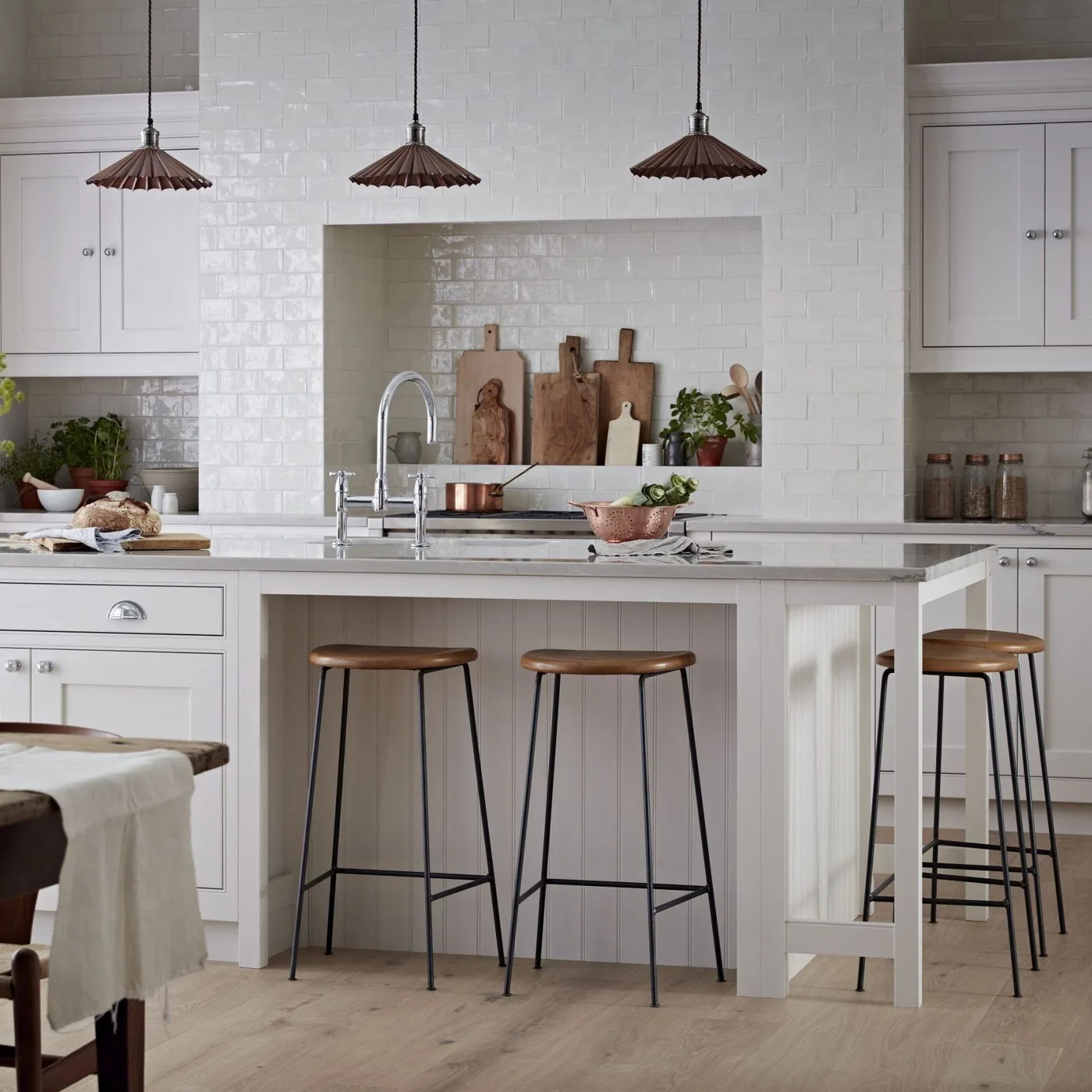
Repeat pale paneling around a seating island
 SaveSupport Non AI Creator
Image credit: Future PLC/Jon Day
White framed cupboards and pale tiles keep the kitchen's main wall quiet around the cooker alcove. The island repeats the paneling below its seating overhang, while dark-framed stools give the pale arrangement a clear outline. Three small shaped pendant shades add traditional-looking detail without filling the space above the island with a large fixture.
Seat spacing and knee room matter more than the number of stools shown in a photograph. Check the overhang against the chosen stools and leave a route behind occupied seats. Keep the island's sink area separate from place settings where possible, and choose backsplash surfaces and grout with everyday cleaning in mind.
IDEA 20 / 20
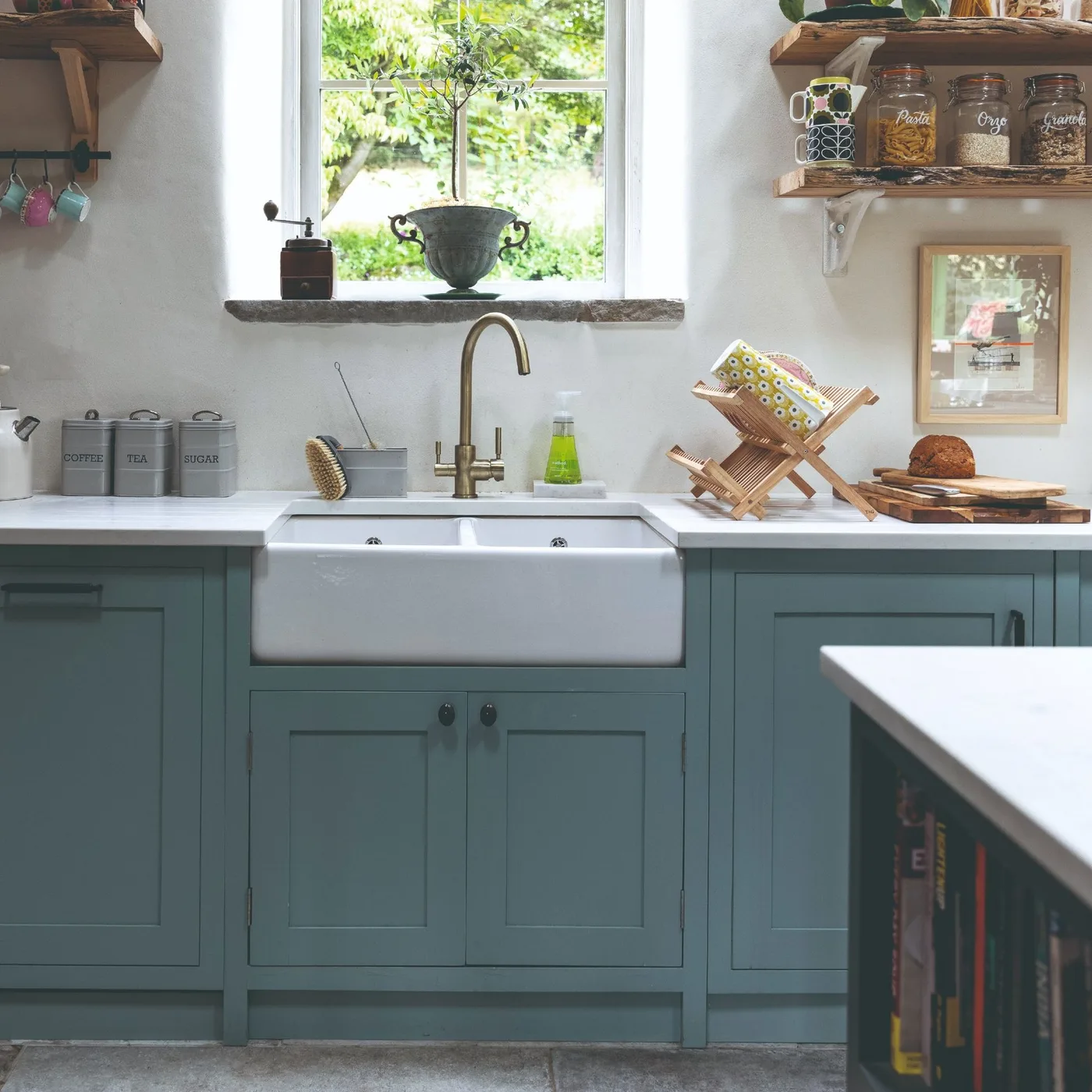
Give an apron-front sink a calm blue-green base
 SaveSupport Non AI Creator
Image credit: Future PLC
Blue-green framed cabinets create a calm base beneath the white apron-front sink. Open wooden shelves hold jars and cups on either side of the window, with the gold-colored tap providing a warmer central detail. The pale work surface leaves the traditional cabinet shapes visible and connects the storage runs on both sides of the basin.
Choose the sink for its daily use as well as its appearance, checking its depth, support and cabinet fit together. Keep a practical place for wet dishes and follow the surface's care instructions around the tap. Secure shelves for their load and place frequently handled jars where they can be reached without leaning across the basin.
BRING IT ALL TOGETHER
Build familiar character around the working kitchen
Choose the cabinet layout, work surfaces and appliance positions first. Traditional frames, painted color and useful display shelves can then add character to an arrangement that already handles the way you cook and clean.
Borrow the details that suit your room rather than trying to reproduce a whole photograph. A classic kitchen feels comfortable when the cupboards open easily, the counters stay useful and the finishes can be cared for without an awkward routine.