A classic dining room can feel welcoming on an ordinary evening as well as when guests arrive. Comfortable chairs, useful tableware storage and room to move around the table give traditional furniture and decoration a purpose beyond looking formal.
These rooms offer several ways to combine familiar details with everyday needs. Look at the seating arrangements and the space around them before borrowing a color, chandelier or wallpaper, and choose finishes that suit the meals you actually serve.
PART 01
Give traditional furniture a considered backdrop
IDEA 01 / 20
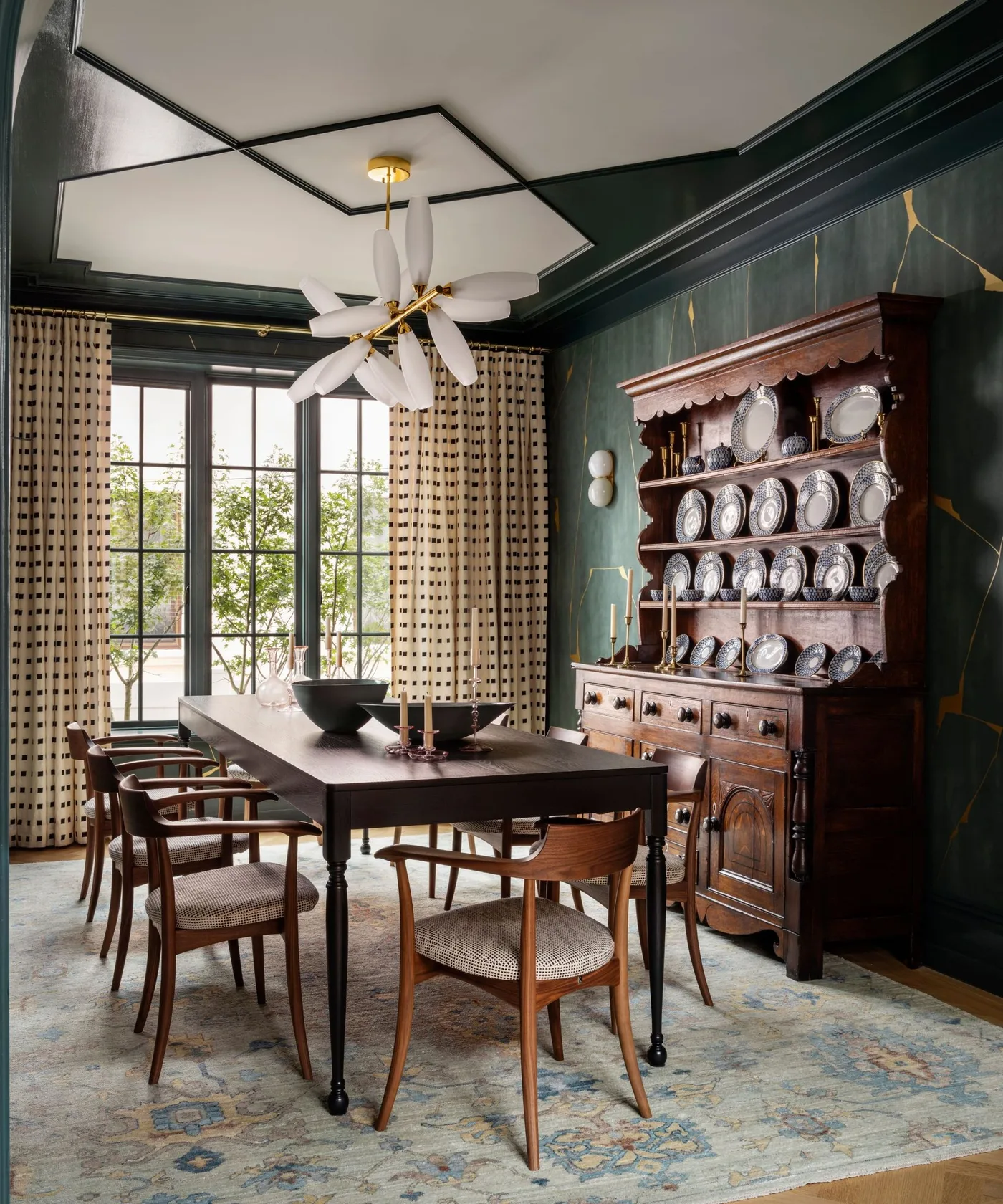
Show a plate collection against deep green walls
 SaveSupport Non AI Creator
Image credit: JH Interior Design
Deep green walls provide a strong background for the pale plates arranged on the wooden dresser. Curved wooden chairs share the dresser's warm tones, while patterned curtains and a rug add softer layers around the dark rectangular table. The display makes everyday tableware part of the room's traditional character.
Keep frequently used pieces on shelves you can reach without moving the dining furniture. Check that plate supports are secure and allow space to dust the dresser. If you introduce several patterns, compare their colors together rather than buying each one separately and hoping they will suit the wall.
IDEA 02 / 20
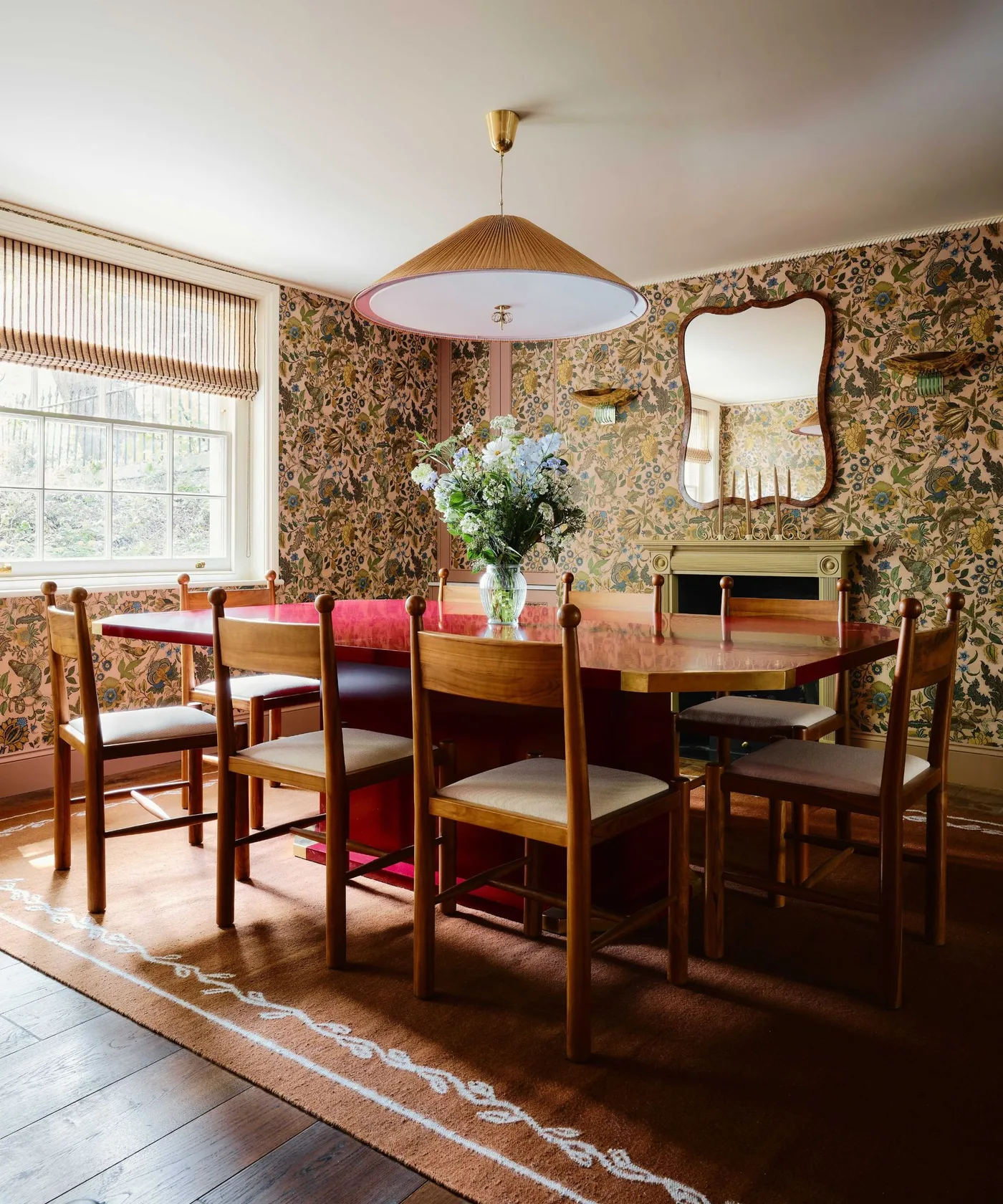
Let floral wallpaper surround a simple wooden set
 SaveSupport Non AI Creator
Image credit: Dining room designed by Tiffany Duggan, Founder of Studio Duggan and Trove by Studio Duggan
Floral wallpaper covers the walls around a red-topped table and straightforward wooden chairs. A curved mirror above the fireplace adds a more decorative outline, while the large pendant gives the table a clear center. The furniture's relatively simple shapes leave the wallpaper's leaves and flowers easy to see.
A busy wall pattern is easier to live with when the table and chair silhouettes remain uncomplicated. Test the wallpaper beside the existing furniture finish and in evening light. Leave enough space to pull the chairs onto the rug comfortably, and keep flowers below seated sightlines when the table is in use.
IDEA 03 / 20
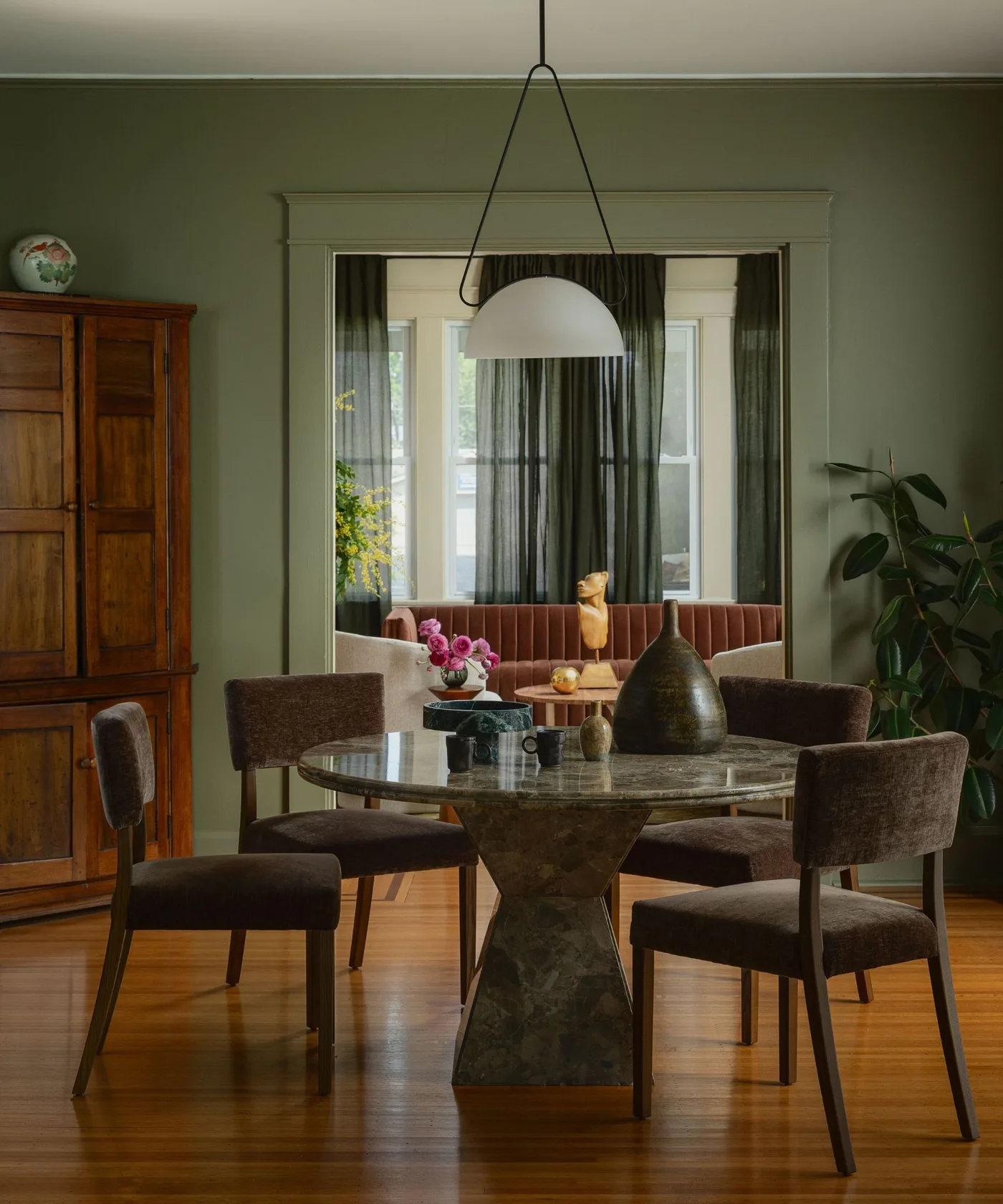
Balance a traditional cabinet with a round table
 SaveSupport Non AI Creator
Image credit: Bethany Adams Interiors/JL Jordan Photography
The tall wooden cabinet supplies a traditional anchor against the green wall. A round pedestal table and upholstered chairs soften the arrangement below a simple pale pendant. The large mirror brings another view of the room into the composition without needing more furniture along the wall behind the dining set.
Compare chair width with the usable circumference of a round table before deciding how many seats it holds. Upholstery can make longer meals comfortable, but check its cleaning requirements first. Position a large mirror for useful reflections and secure it properly rather than treating a heavy piece as a casual accessory.
IDEA 04 / 20
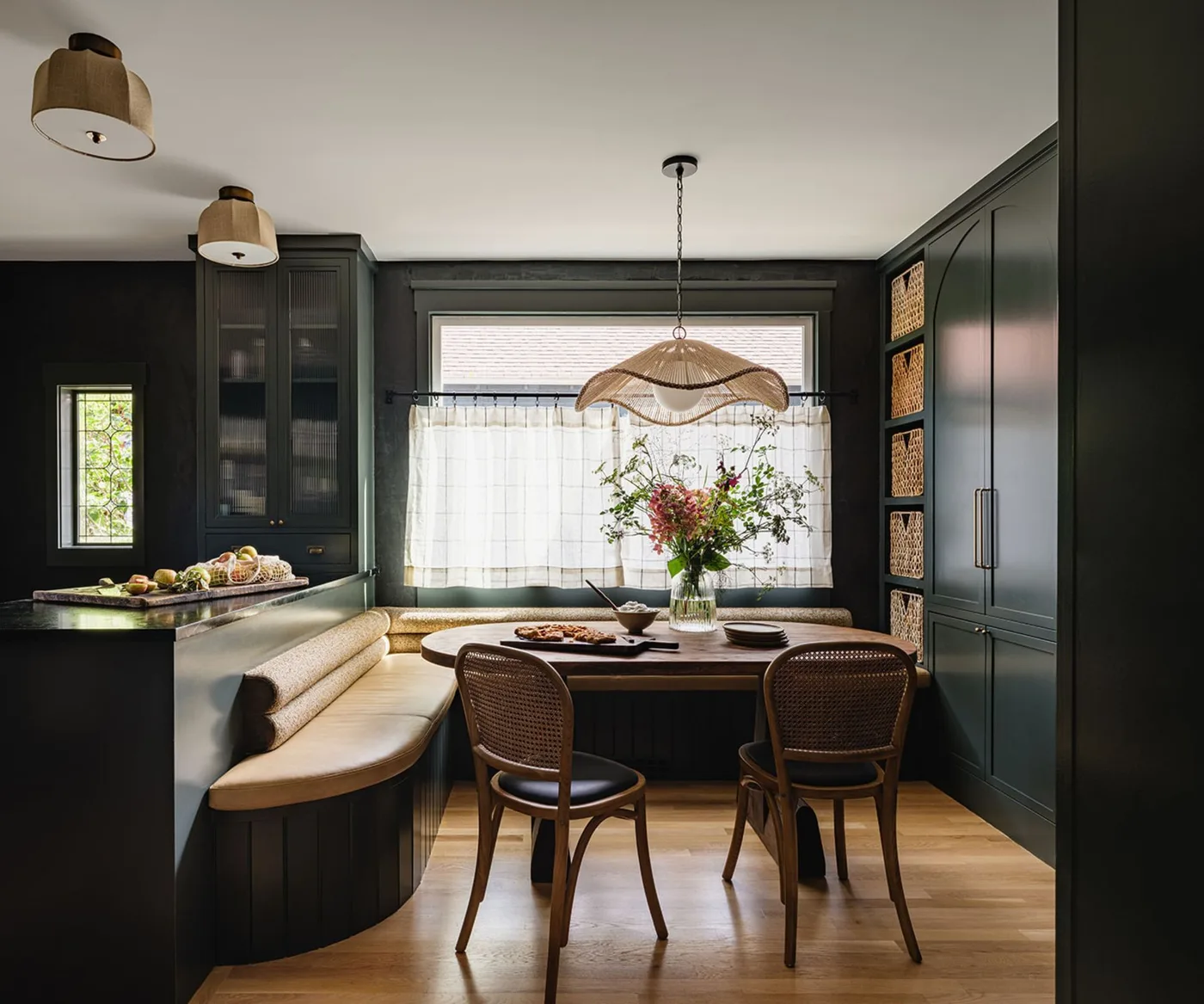
Tuck a dining nook into paneled cabinetry
 SaveSupport Non AI Creator
Image credit: Allison Lind Interiors/Kara Mercer Photography/Teressa Johnson Styling/Square1 Builder
Dark green paneled cabinetry surrounds the small dining nook, giving it a traditional enclosed feeling. The pale banquette wraps around the table beneath the window, with two wooden chairs completing the seating. A shaped pendant and softly filtered daylight stop the dark storage wall from dominating the compact arrangement.
A banquette works best when people can slide into it without awkwardly moving the table. Check the table base against knee space and leave the loose chairs room to pull out. Choose seating covers that suit food spills, and make sure any nearby cupboard doors still open easily when the table is occupied.
IDEA 05 / 20
Mix collected furniture within a warm wall color
 SaveSupport Non AI Creator
Image credit: Hendricks Churchill
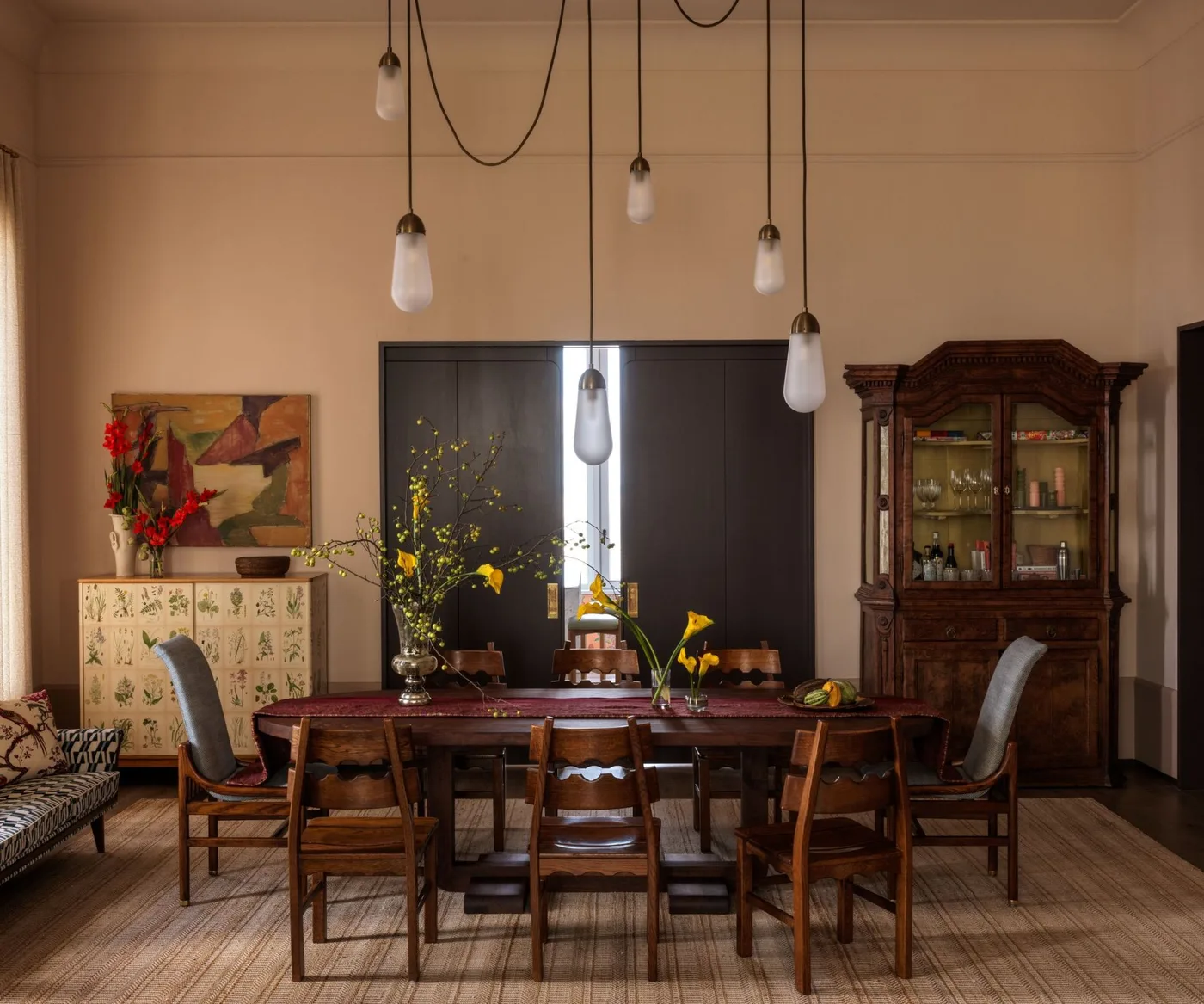
Warm beige walls bring the mixed furniture into one quiet background. A traditional glass-front cabinet holds tableware beside a long wooden table, while differently shaped chairs and a patterned seat keep the arrangement collected rather than uniform. The hanging bulbs add a lighter outline above these substantial wooden pieces.
Mixed chairs need compatible seat heights even when their shapes differ. Try them at the table before committing to a set assembled from separate sources. Keep useful tableware within reach, and ask a qualified installer to position a multi-drop light so its cables and lamps do not interfere with seated views.
PART 02
Make seating and storage work together
IDEA 06 / 20
Soften a traditional room with skirted chairs
 SaveSupport Non AI Creator
Image credit: Katie Harbison Design
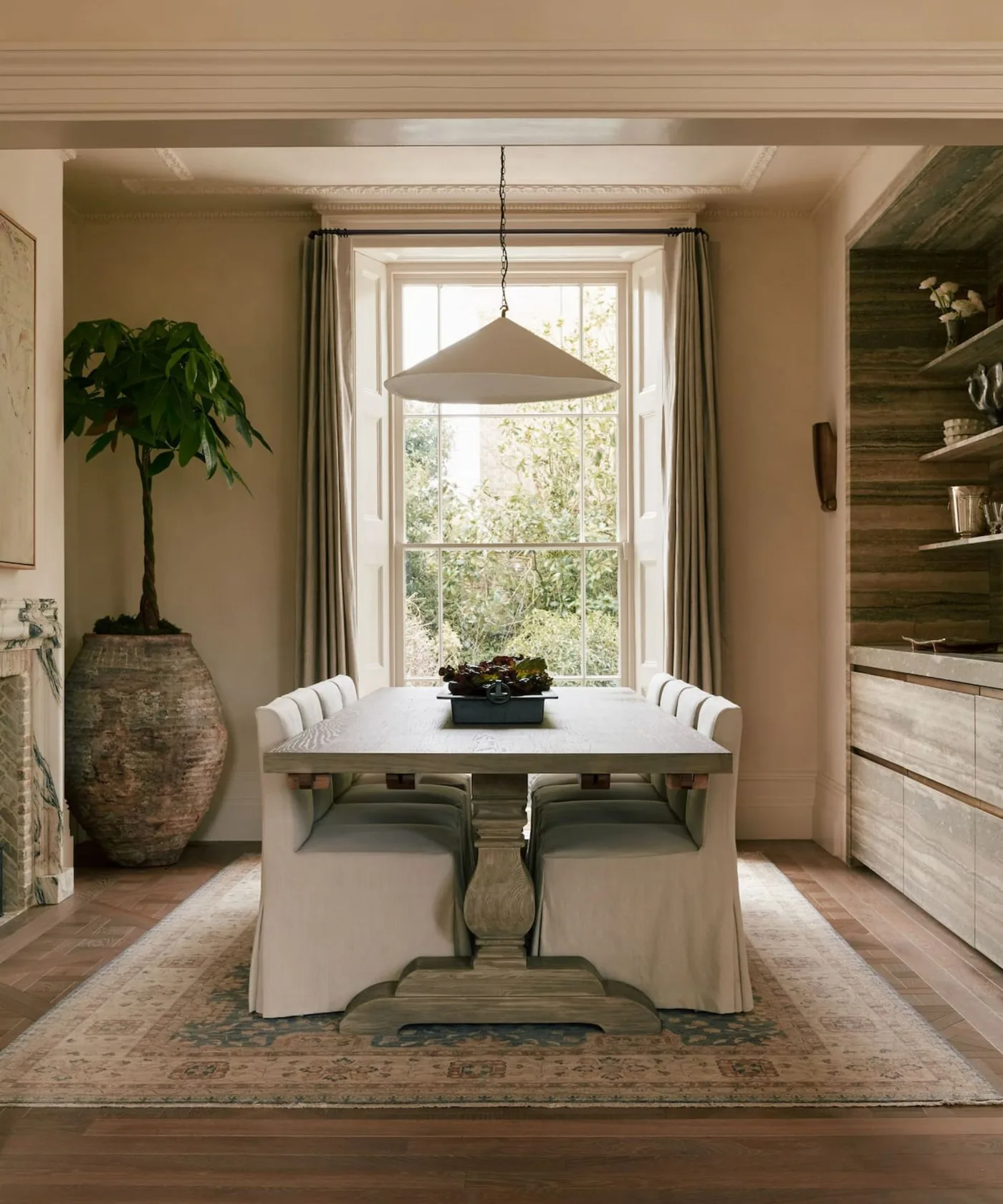
Pale skirted chairs soften the substantial pedestal table and the room's traditional ceiling trim. Recessed wooden shelves provide storage along one side without placing another freestanding cabinet in the route around the table. Long curtains and a patterned rug connect the dining furniture to the large bright window.
Skirted seating brings more fabric close to shoes and food spills, so consider removable covers and practical cleaning access. Check how far the chairs move beyond the table during a meal. A recessed cupboard is useful only if its shelves accommodate real serving dishes without forcing them into unstable stacks.
IDEA 07 / 20
Pair an oval table with a generous sideboard
 SaveSupport Non AI Creator
Image credit: Ash Wilson Design/Ben Anders
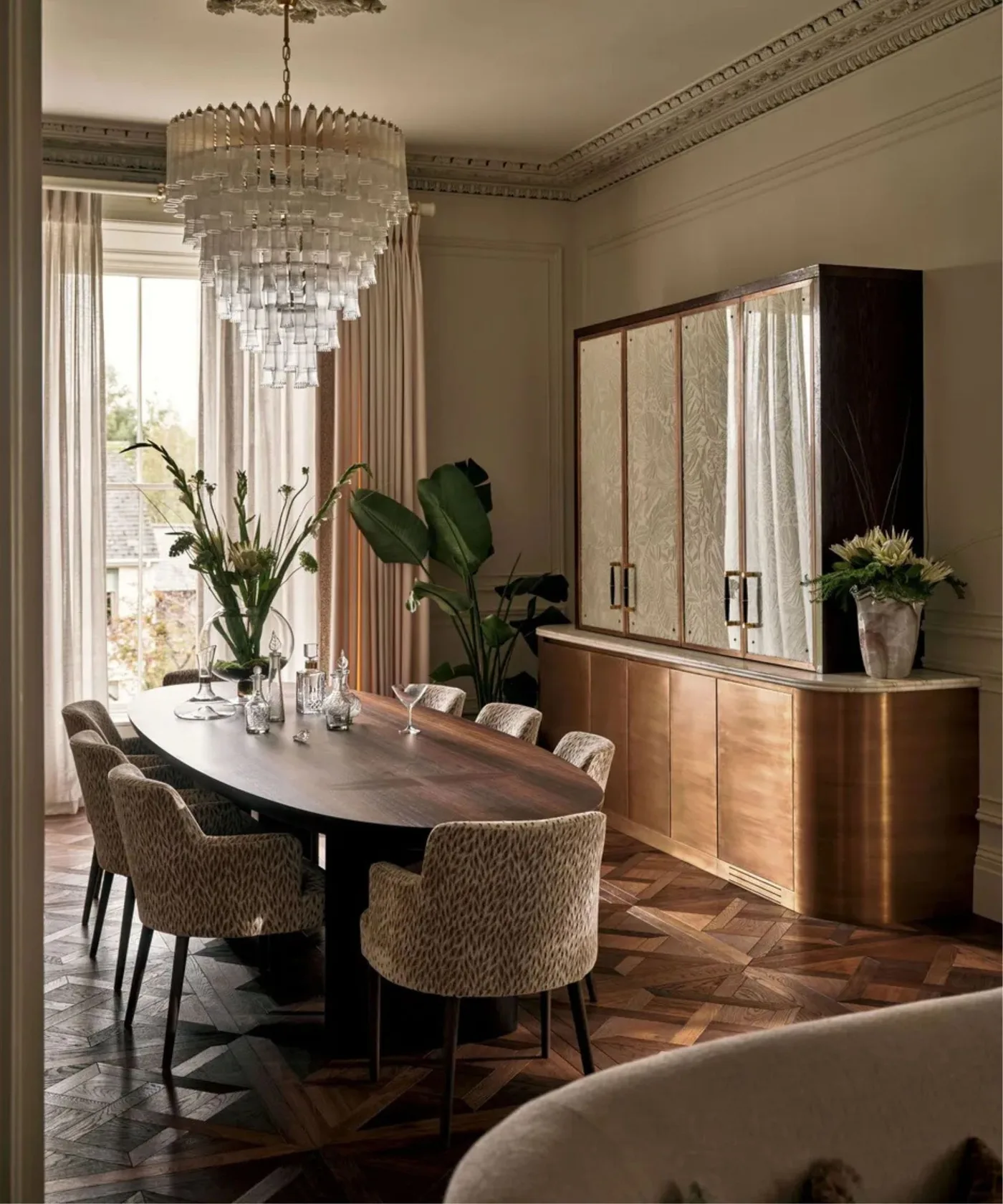
An oval wooden table sits beneath a tiered chandelier, with patterned upholstered chairs giving the pale room texture. The long sideboard supplies a serving surface and storage, while its mirrored upper doors reflect the window and curtains. Decorative ceiling trim gives the larger pieces a traditional setting without needing a busy wall color.
An oval table can ease movement around its ends, but it still needs room for occupied chairs. Check the sideboard depth and the route to its doors before buying it. Keep the serving surface usable during meals, and choose upholstery that can tolerate the level of use the dining room receives.
IDEA 08 / 20
Combine a dining room with a traditional library wall
 SaveSupport Non AI Creator
Image credit: Shannon Claire Interiors
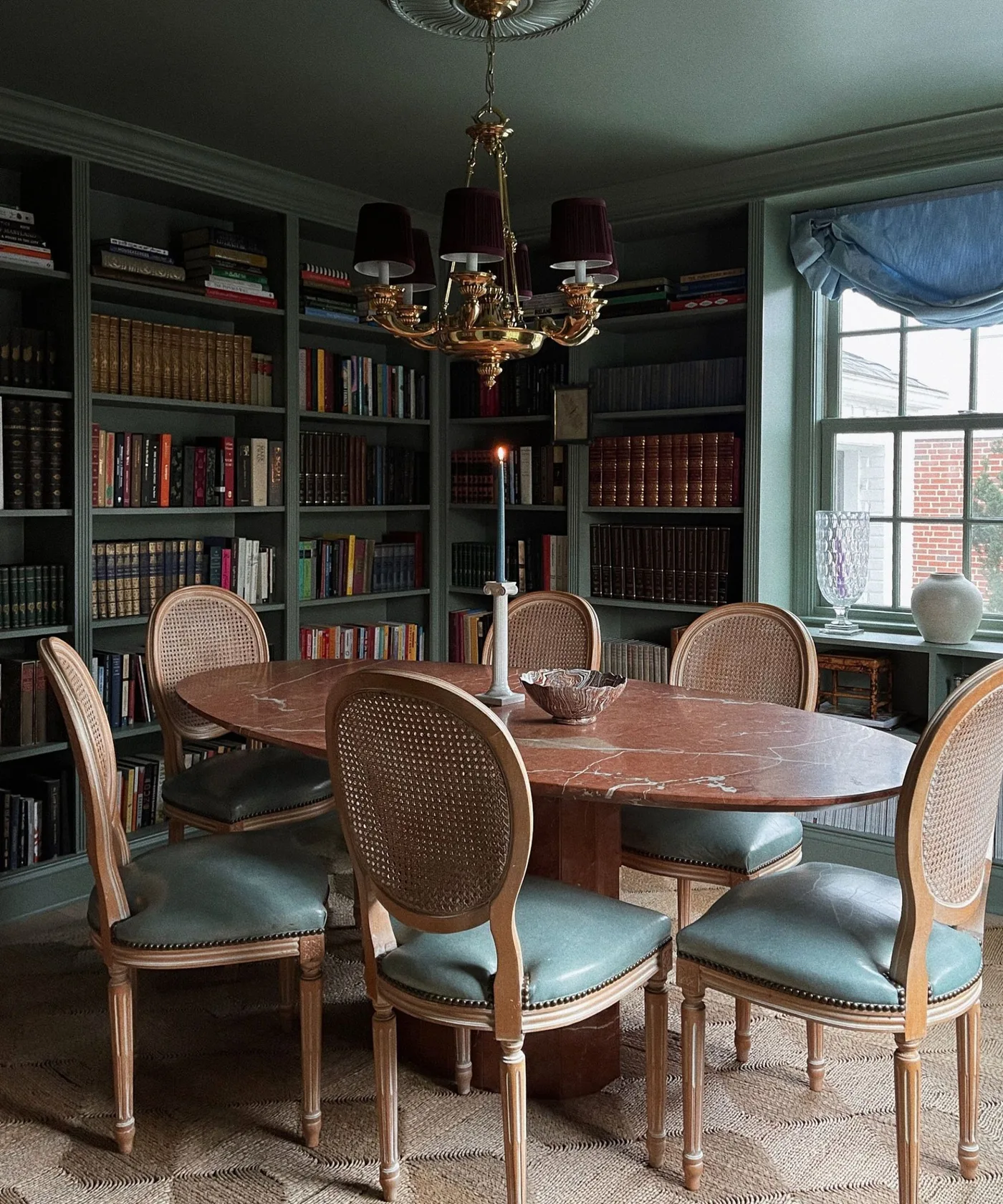
Bookshelves wrap around the deep green room, making the dining table part of a library-like setting. Cane-backed chairs with green seats repeat the wall color while their wooden frames remain distinct. An oval patterned tabletop and a shaded chandelier provide lighter details within the dark surround, with daylight entering from the side window.
Leave space behind the chairs to reach the shelves instead of treating that area as permanently occupied seating. Dust books and open shelves regularly where meals are served. Check the chandelier's position from a seated view, and keep the tabletop arrangement modest enough for plates, glasses and conversation across the table.
IDEA 09 / 20
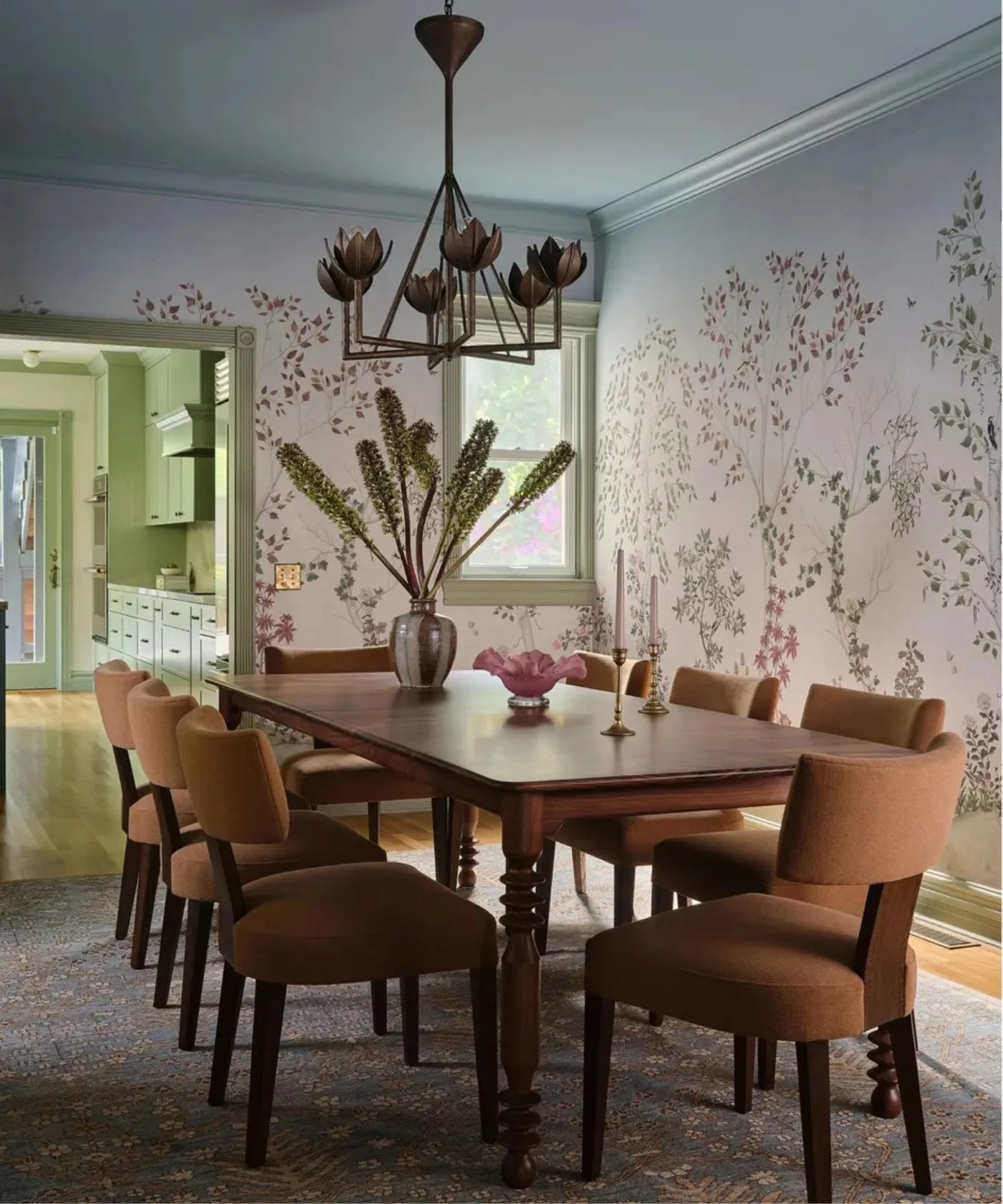
Use a floral backdrop behind warm upholstered chairs
 SaveSupport Non AI Creator
Image credit: Love and Interiors/Vivian Johnson
Fine branches and flowers spread across the pale walls behind the turned-leg table. Warm brown upholstered chairs make the seating feel softer than an all-wood arrangement, while the flower-shaped light repeats the wallpaper's botanical theme in a larger outline. Pale trim and the adjoining green room introduce gentle changes in color.
Repeat a motif in different scales so the wallpaper and light do not compete detail for detail. Check wallpaper samples in the doorway beside the neighboring room's paint. Before buying thickly upholstered chairs, compare their overall width with the table legs and the space available for each person to sit comfortably.
IDEA 10 / 20
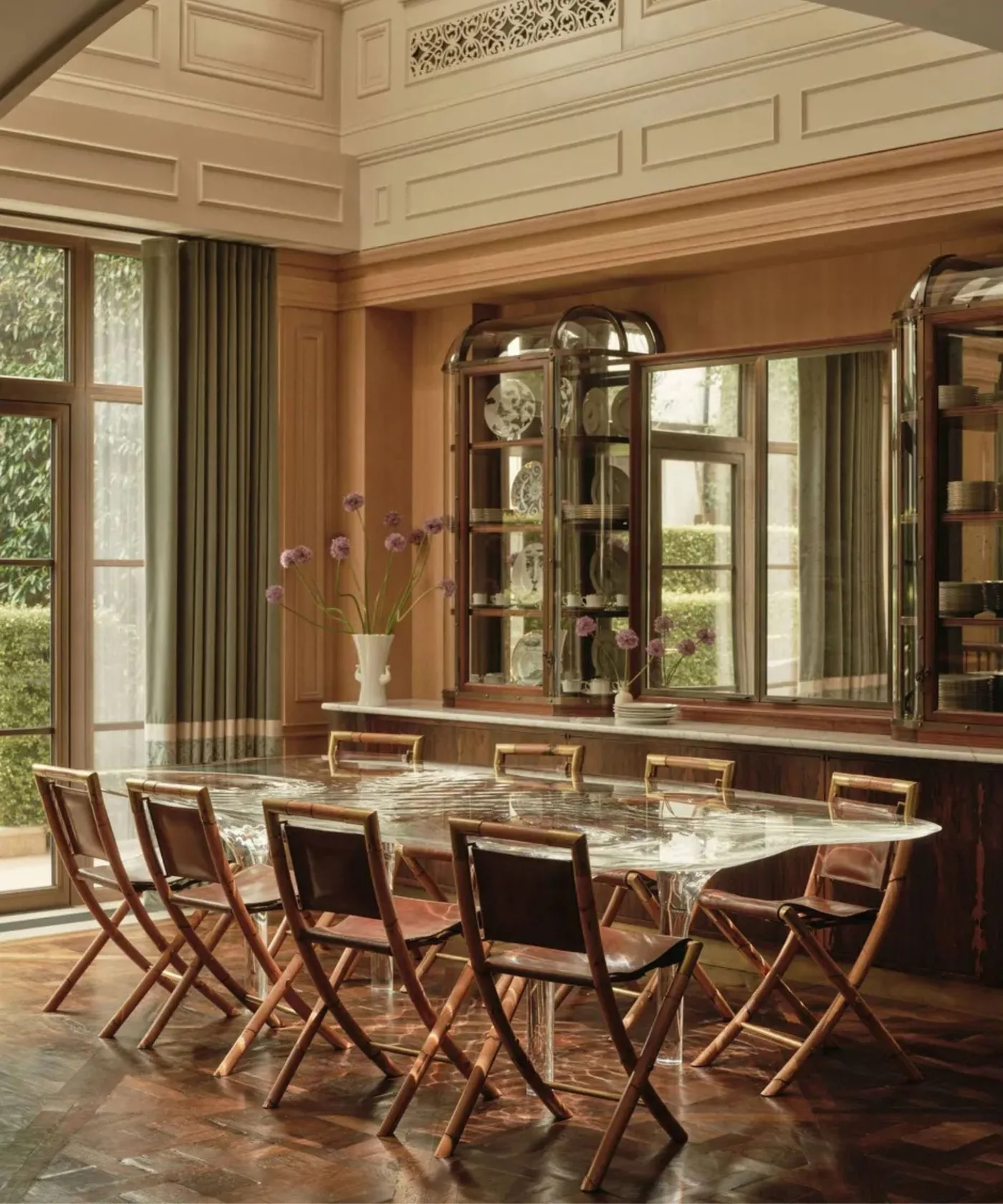
Let paneled walls support a lighter dining table
 SaveSupport Non AI Creator
Image credit: Spinocchia Freund/Felix Speller
Tall paneling and glazed display cupboards establish the room's traditional structure. The transparent tabletop keeps that cabinetry visible through the dining arrangement, while wooden chairs connect the lighter table to the warm lower walls. Large windows and reflective cupboard panels bring brightness into a room with substantial architectural detail.
A transparent tabletop shows fingerprints, streaks and objects beneath it, so consider the cleaning routine as well as its appearance. Check the table's weight, edge treatment and care instructions before choosing it for daily use. Keep display cupboards orderly and leave their doors accessible behind the pulled-out chairs.
PART 03
Use pattern and familiar details
IDEA 11 / 20
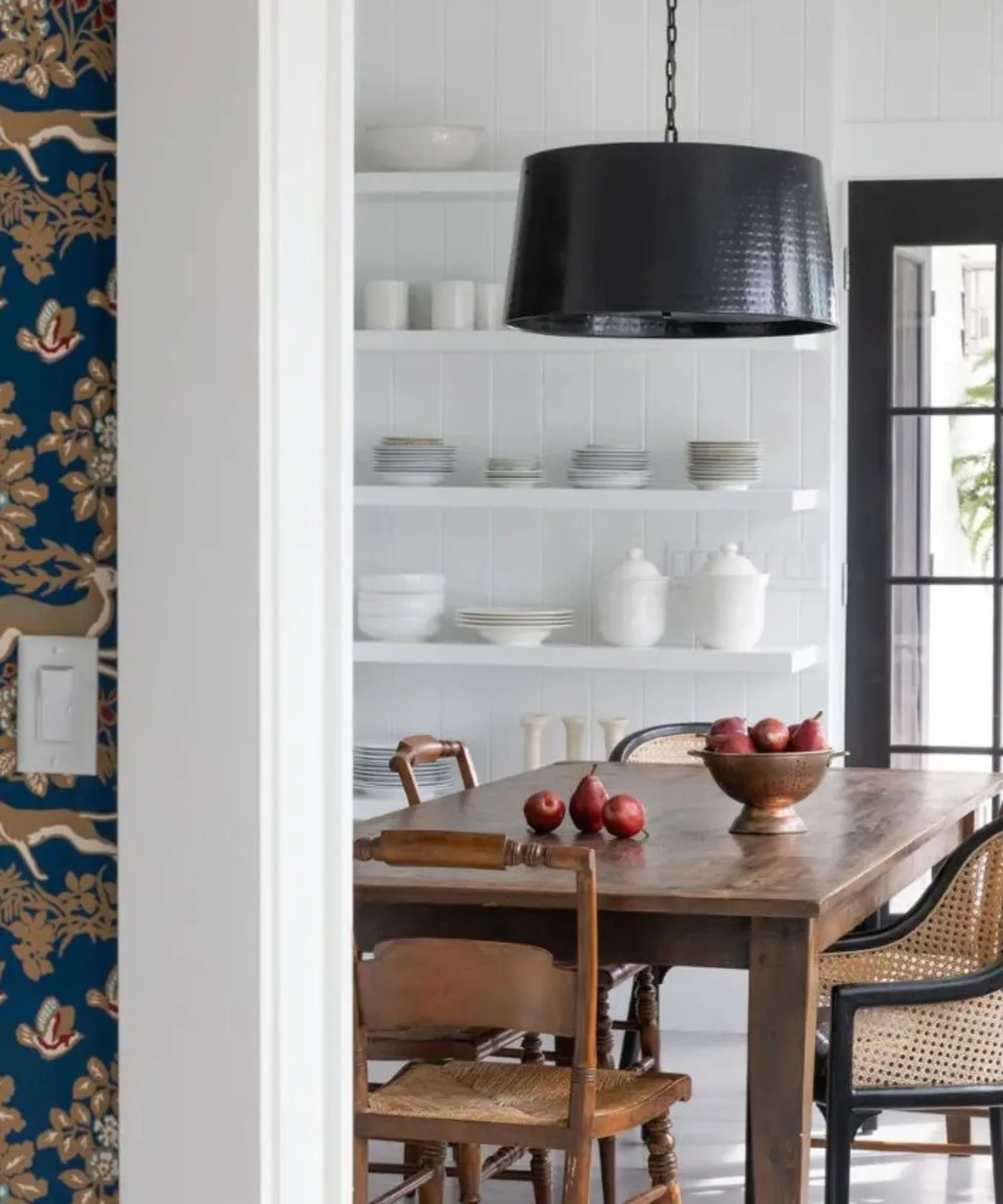
Keep everyday plates on open shelves beside the table
 SaveSupport Non AI Creator
Image credit: Lisa Vollmer/Design by Jess Cooney Interiors
White open shelves hold rows of pale plates and serving pieces beside the wooden dining table. Turned chair details bring a traditional note to the otherwise straightforward arrangement, while the dark pendant creates contrast above. A glimpse of patterned wallpaper adds decoration without surrounding the small space with several competing displays.
Use open shelves for pieces that are used and washed regularly, since dining-room displays still collect dust. Confirm shelf depth and load capacity for stacked dishes. Keep heavier serving pieces low, and allow enough room between the table and shelving for someone to retrieve a plate without interrupting seated diners.
IDEA 12 / 20
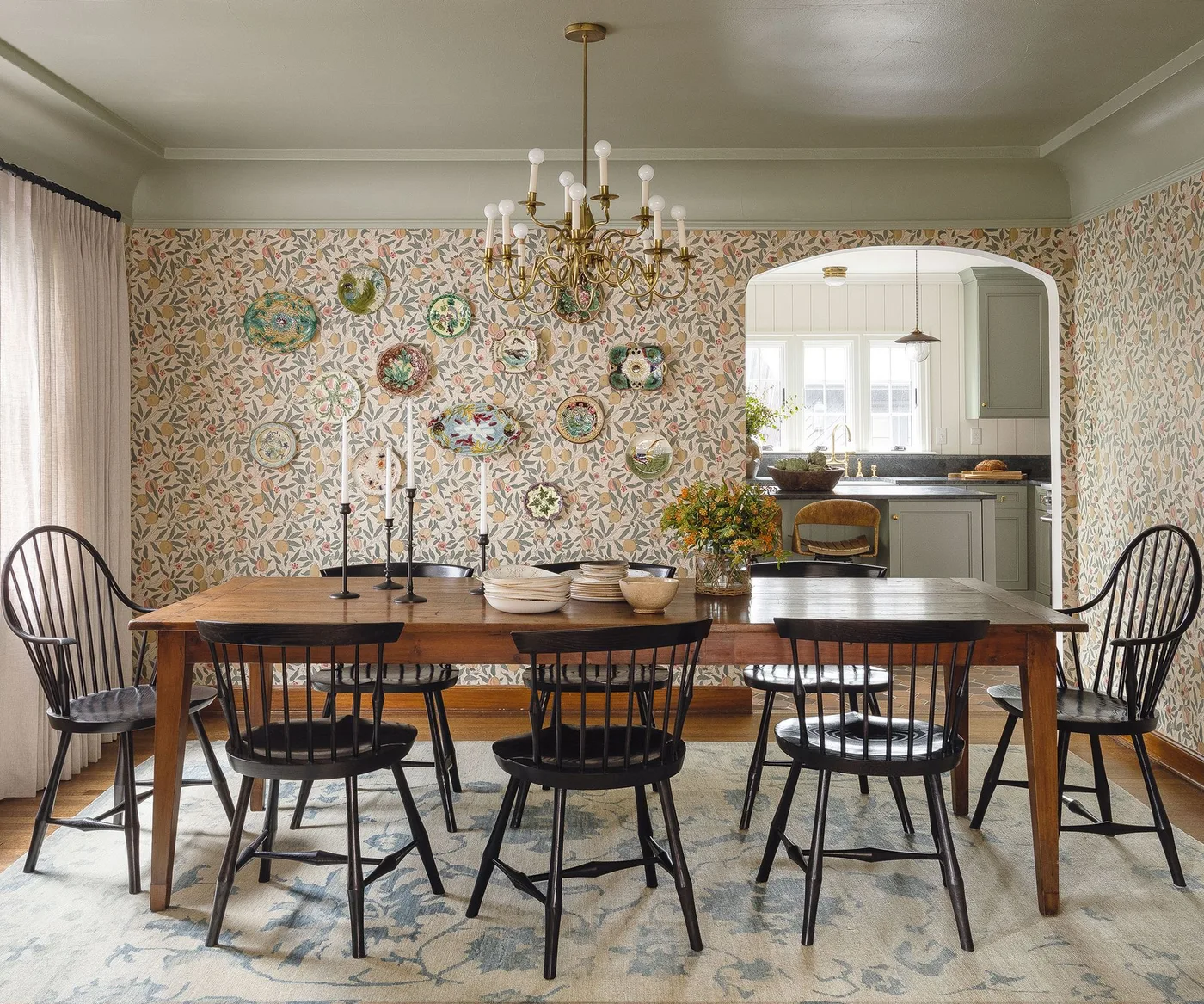
Combine spindle chairs with botanical wallpaper
 SaveSupport Non AI Creator
Image credit: Heidi Caillier/Haris Kenjar
Botanical wallpaper supplies a lively background for the table and black spindle chairs. Decorative plates form a second collection on the wall, with their round shapes contrasting the chairs' slim vertical lines. A gold-colored chandelier and pale curtains give the darker furniture a lighter surrounding frame, keeping the traditional room from feeling overly heavy.
If wallpaper and wall plates share a wall, leave clear gaps around the collection so individual pieces remain visible. Fit plate hangers securely and avoid placing fragile displays where chair backs may hit them. Choose a rug that allows the chairs to remain supported as they are pulled away from the table.
IDEA 13 / 20
Use a round table within a traditional sitting room
 SaveSupport Non AI Creator
Image credit: Mel Yates
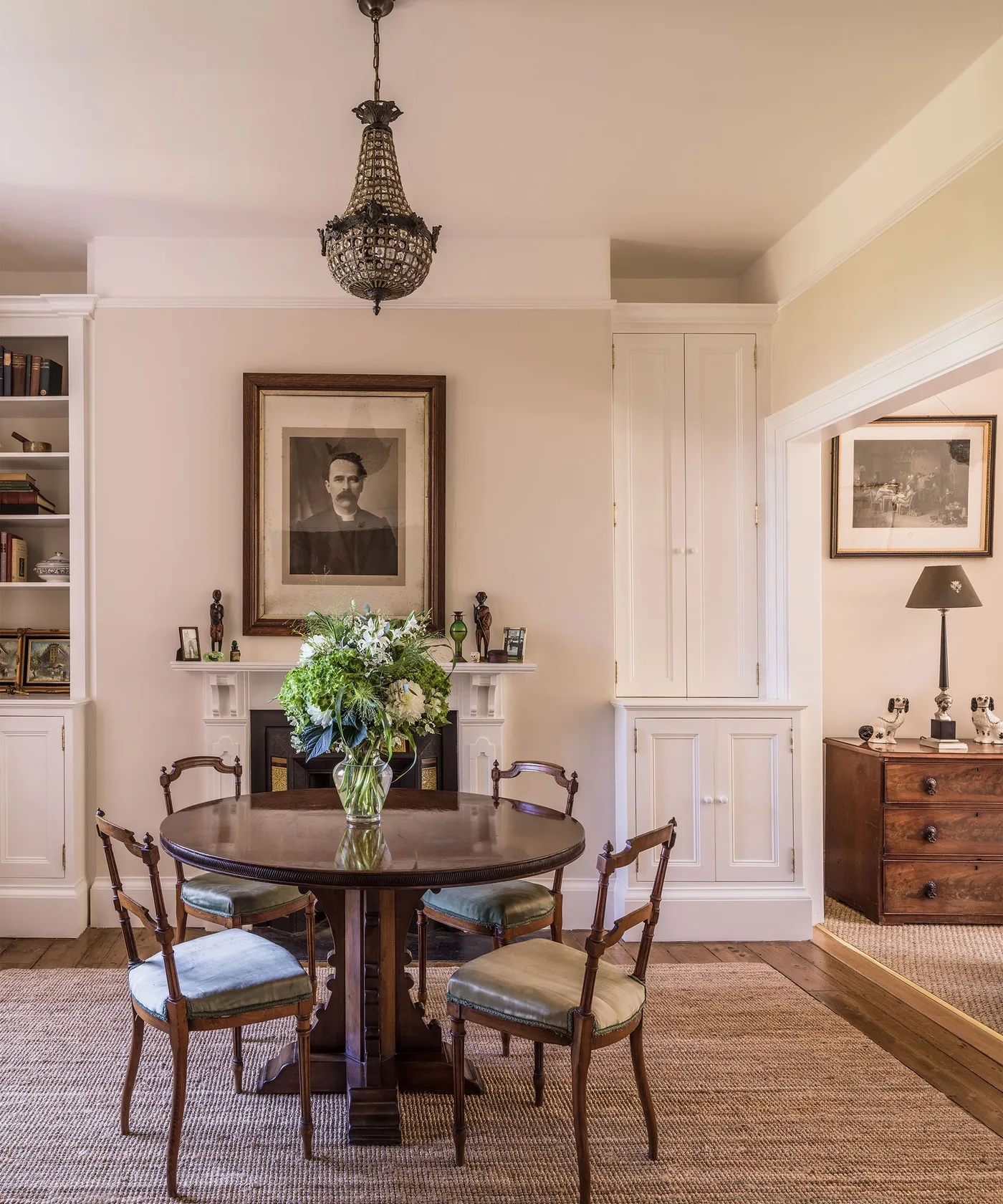
A round wooden table fits into the traditional room between the fireplace and the adjacent passage. Curved wooden chairs and framed portraits keep the arrangement familiar, while pale walls and built-in cupboards make the darker furniture stand out. The dining area shares the room's decorative details without needing a separate wall around it.
Mark out the table and occupied chairs before adding dining space to a shared room. Keep access to the fireplace and adjoining passage comfortable, and follow required clearances if the fire is used. A smaller centerpiece makes a round table more practical for serving food and talking across the room.
IDEA 14 / 20
Bring blue-painted furniture into a pale room
 SaveSupport Non AI Creator
Image credit: Neptune
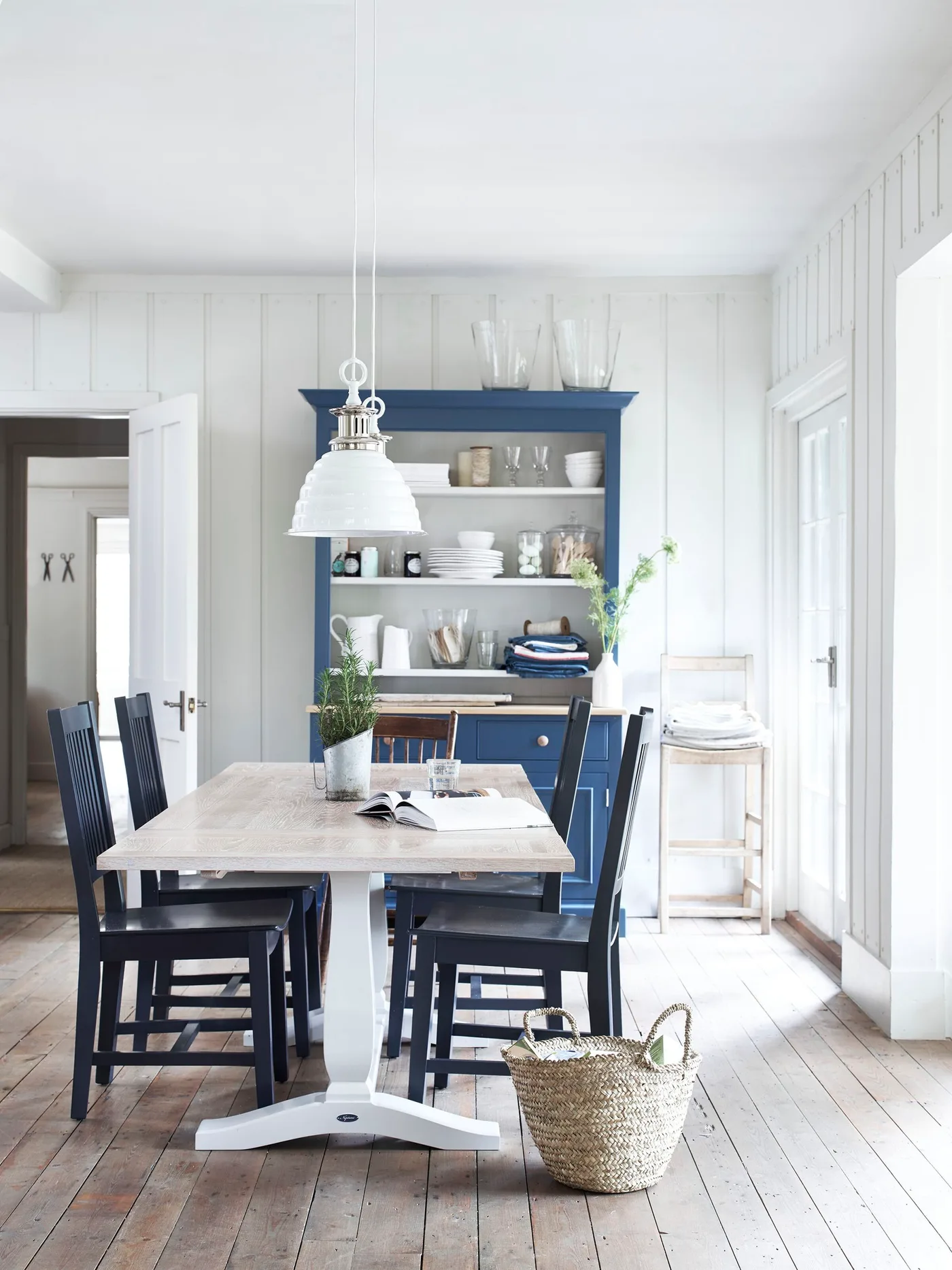
Blue-painted chairs and a matching dresser add a clear color to the pale paneled room. The light tabletop and white pendant keep the central arrangement bright, with open dresser shelves holding everyday crockery. The furniture provides a traditional painted look while the largely white walls give its stronger color plenty of space.
Painted chairs receive repeated contact from hands, clothing and cleaning, so choose a finish intended for furniture use. Check that the dresser's upper shelves suit the dishes you keep there. Keep the floor around the table clear of baskets during meals so the attractive storage does not become an obstacle.
IDEA 15 / 20
Gather traditional chairs around a round pedestal table
 SaveSupport Non AI Creator
Image credit: Future / Davide Lovatti
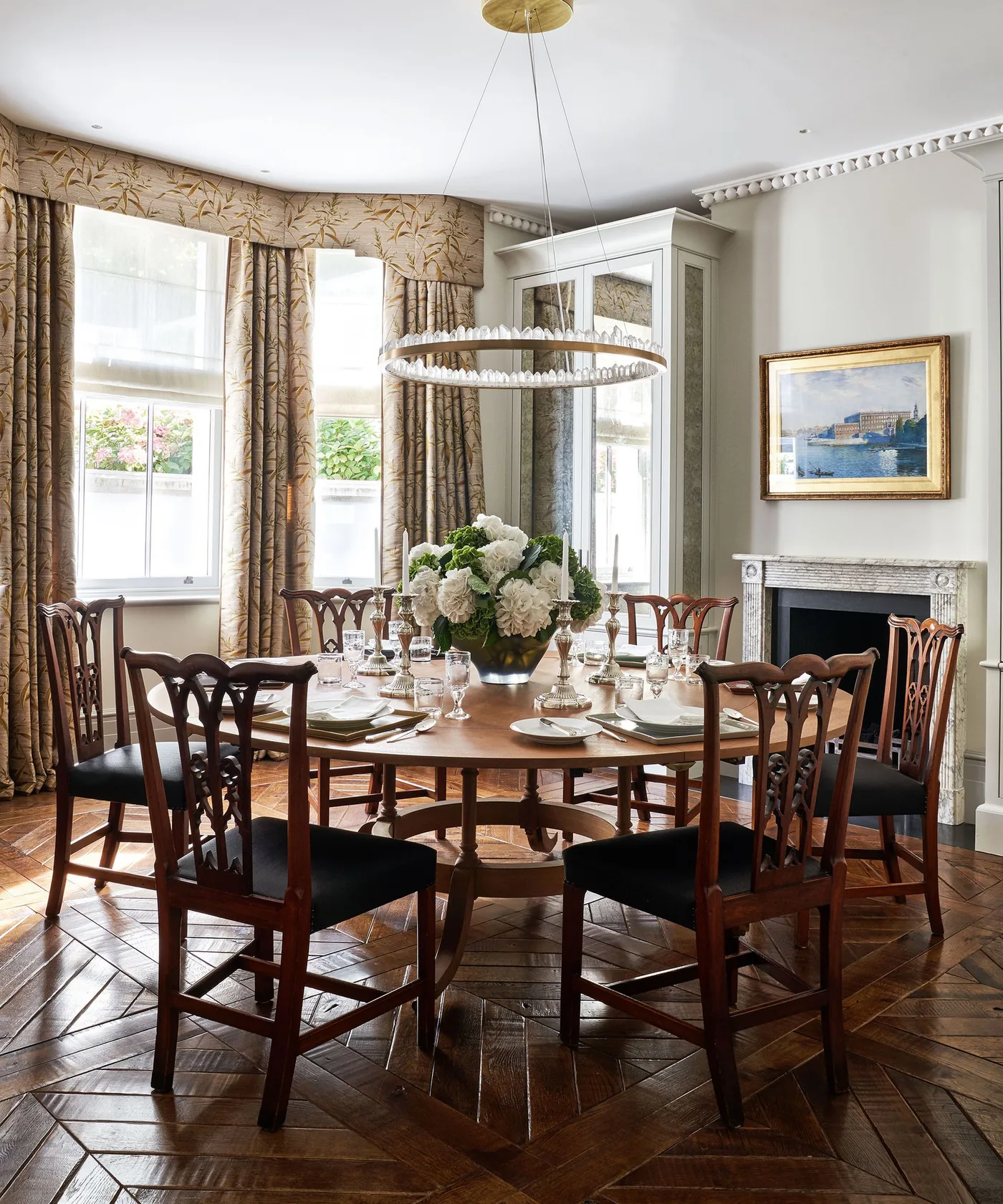
Carved wooden chair backs circle the round pedestal table, emphasizing the room's traditional furniture shapes. Patterned curtains soften the tall windows, and the pale fireplace surround offers a quieter backdrop on the far wall. A ring-shaped light echoes the table without adding another ornate fixture beside the detailed chairs and ceiling trim.
A round table makes conversation easy, but its middle becomes harder to reach as the diameter grows. Consider how you serve shared dishes before choosing a large version. Check arm and chair-back spacing, and keep a tall flower arrangement for display rather than leaving it between guests throughout the meal.
PART 04
Plan the room around gathering comfortably
IDEA 16 / 20
Let a checkerboard floor give the room structure
 SaveSupport Non AI Creator
Image credit: Future / Emma Lee / Sally Denning
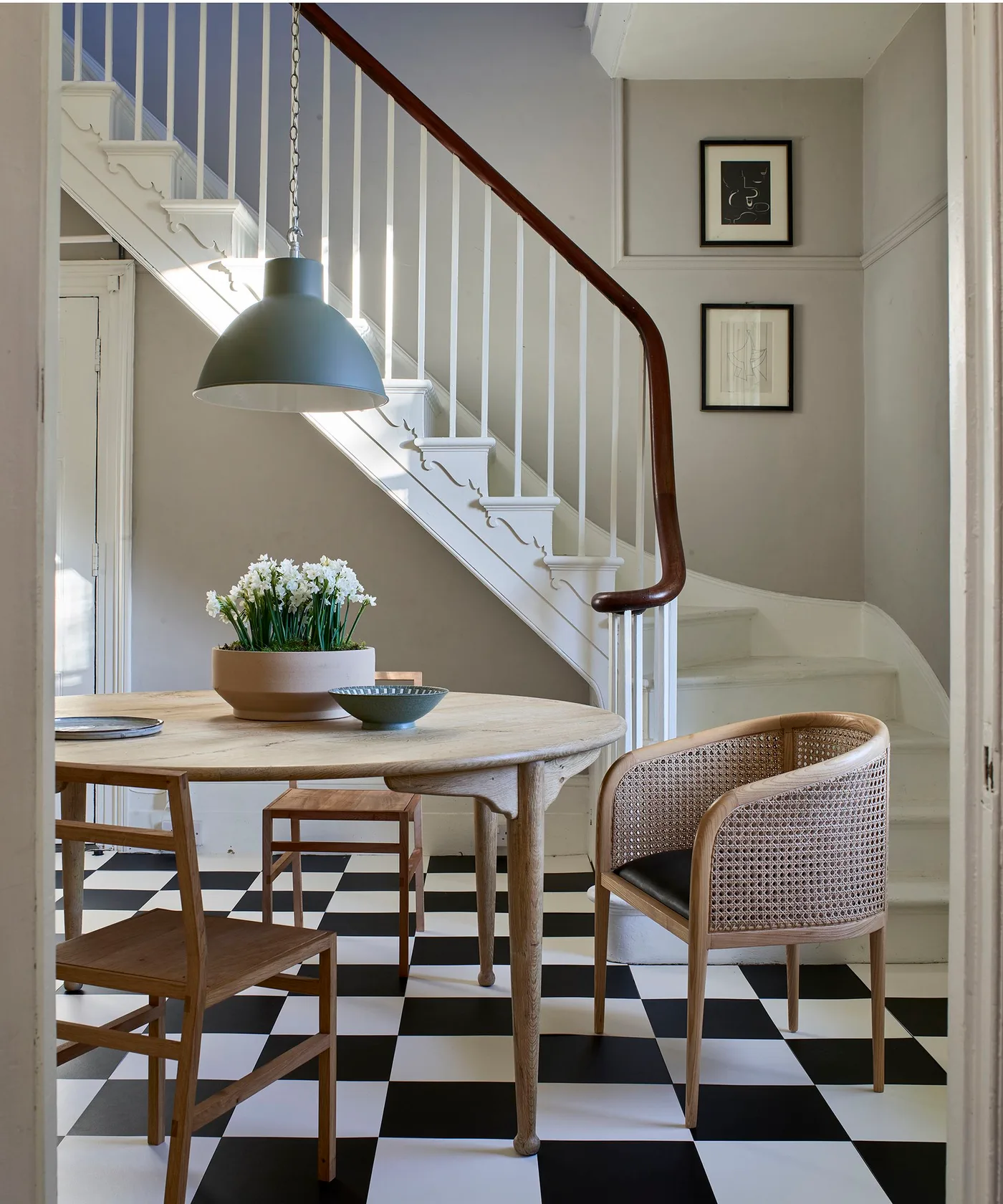
The black-and-white checkerboard floor provides a strong base beneath the simple round wooden table. A traditional white staircase and dark wooden handrail give the surrounding space its classic framework. The woven chair back and muted green pendant soften the contrast, showing how familiar architectural details can work with a pared-back dining arrangement.
A bold floor can carry the decoration, leaving furniture and walls relatively quiet. Assess how your chosen surface handles spills and chair movement rather than selecting it only for pattern. In a shared stair or hall space, preserve a clear route past the occupied table and keep the stair landing unobstructed.
IDEA 17 / 20
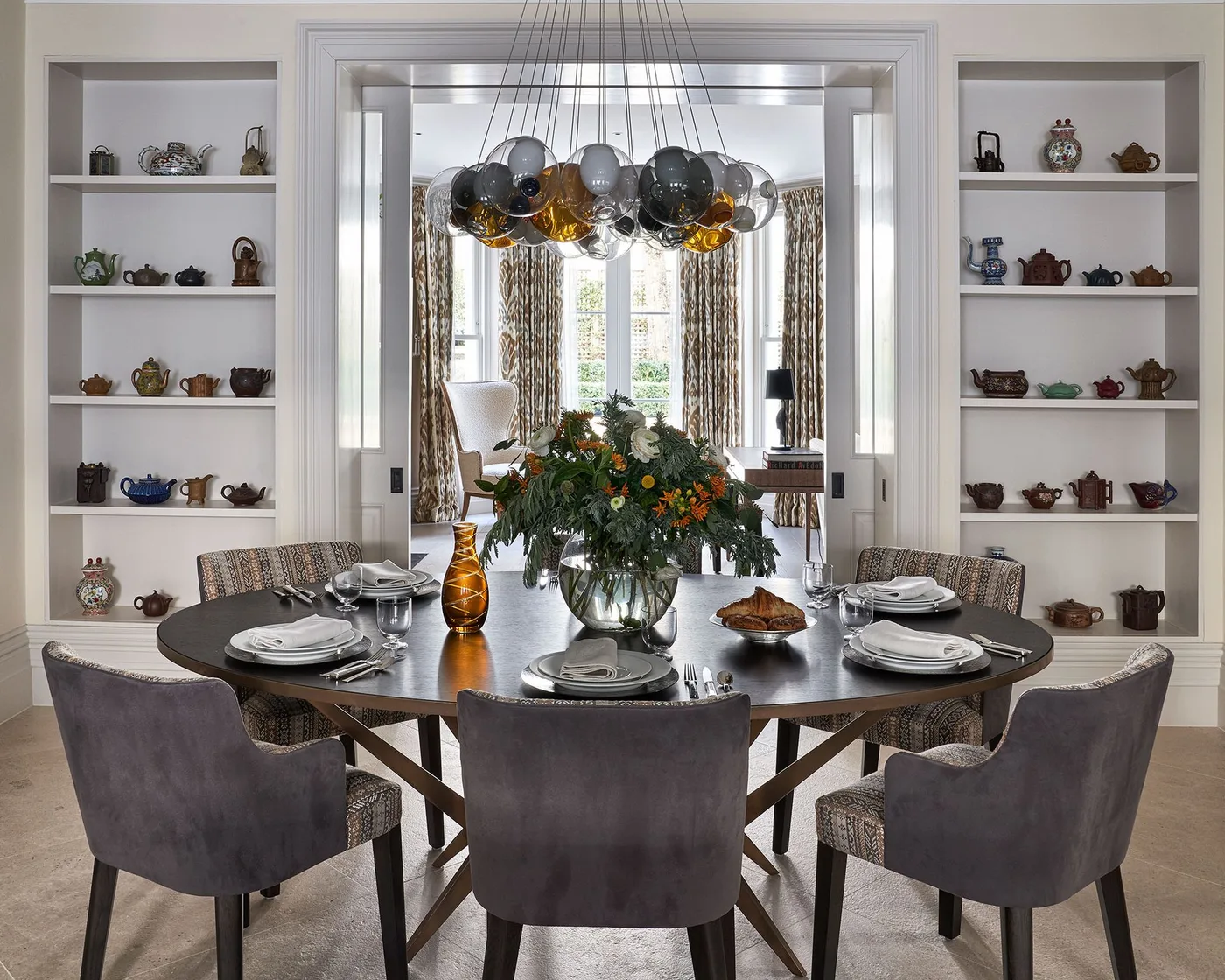
Frame a round table with symmetrical display shelves
 SaveSupport Non AI Creator
Image credit: Future / Davide Lovatti
White display shelves flank the opening behind the dining table, giving the room a balanced framework. Small ceramics are spaced across the shelves instead of filling every gap. A dark round tabletop and upholstered chairs add weight below the clustered pendant, while the symmetry and pale trim retain a traditional sense of order.
Symmetry works best when the shelves remain useful rather than becoming packed display cases. Group a few objects with room to dust around them, and keep fragile pieces away from busy chair backs. Check reflections and glare from the pendant at dinner time, especially if the table has a glossy surface.
IDEA 18 / 20
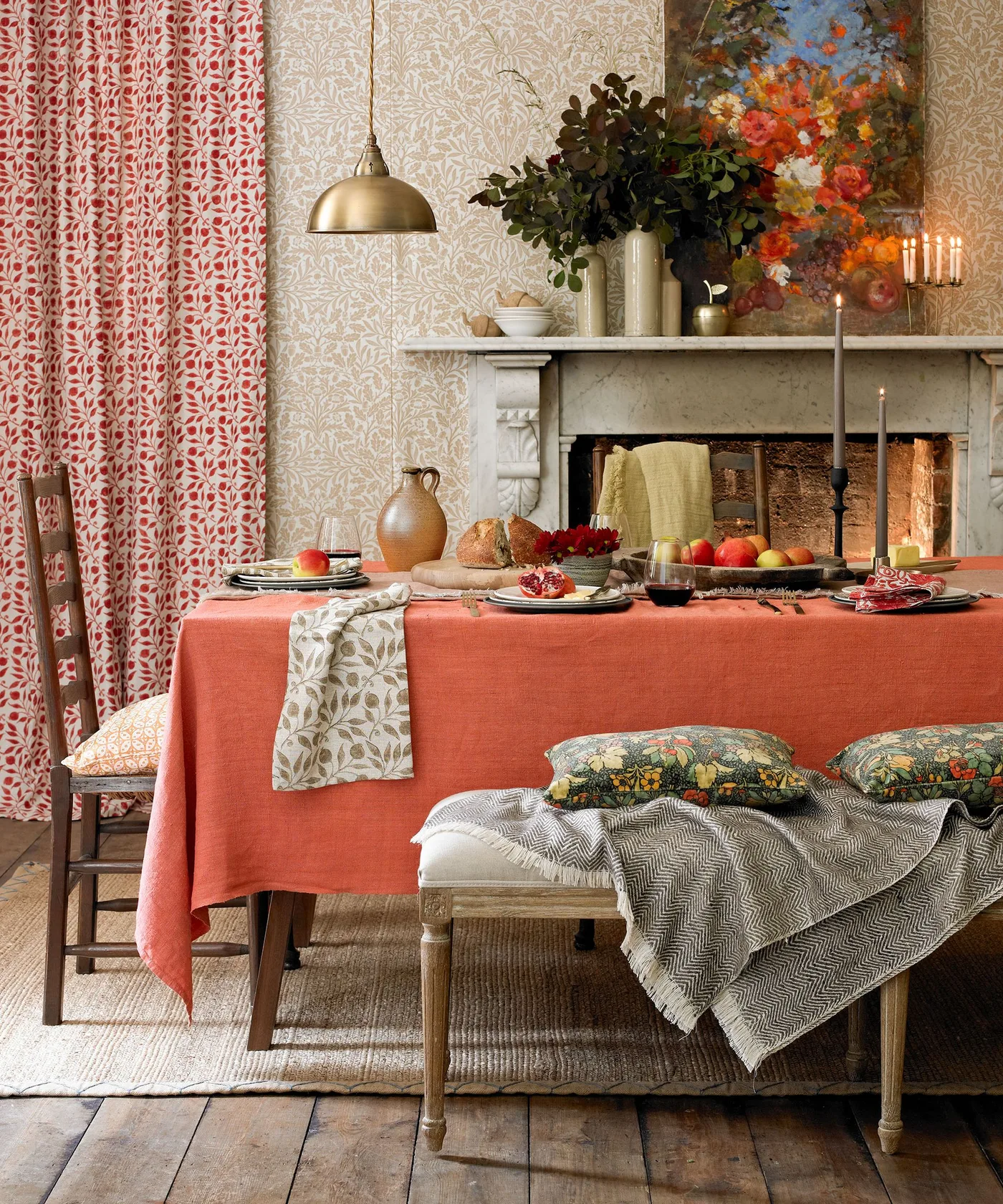
Add warmth with a generous colored tablecloth
 SaveSupport Non AI Creator
Image credit: Future / David Brittain
An orange tablecloth brings a broad warm color across the dining table. Patterned curtains, a decorated fireplace wall and a cushioned bench give the room a collected traditional feeling, while a hanging gold-colored shade adds a simpler shape above. The cloth provides a softer layer without requiring the wooden furniture to be changed.
A tablecloth is an easy way to vary the room, but choose a washable fabric and a drop that does not tangle with knees or chair arms. Use a heat-safe support beneath hot serving dishes. If the nearby fireplace is active, keep table linens and furnishings outside its required clearance area.
IDEA 19 / 20
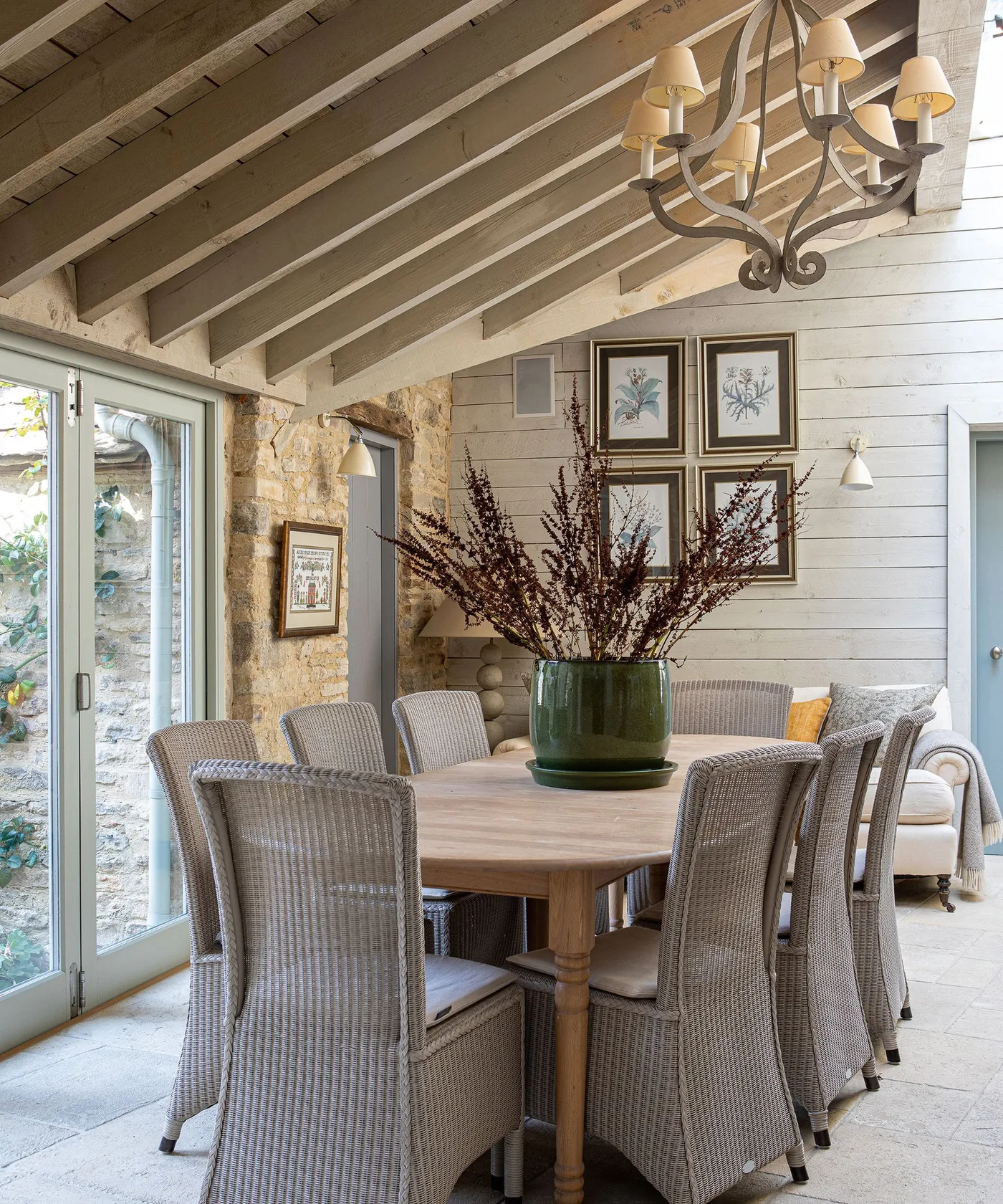
Set woven chairs beneath a traditional chandelier
 SaveSupport Non AI Creator
Image credit: Sims Hilditch
Woven chairs surround the wooden table beneath exposed ceiling beams and a traditional chandelier with small shades. Pale wall boards and framed botanical pictures keep the room bright, with a rough-textured wall adding another layer beside the glazed doors. The familiar table and light shapes give the airy setting a classic connection.
Woven seating can hold crumbs in its texture, so check the care instructions and leave access for regular cleaning. Compare chair backs with the room's view before choosing very tall versions. Keep the route to the glazed doors open and reduce oversized centerpiece branches when they would block conversation during a meal.
IDEA 20 / 20
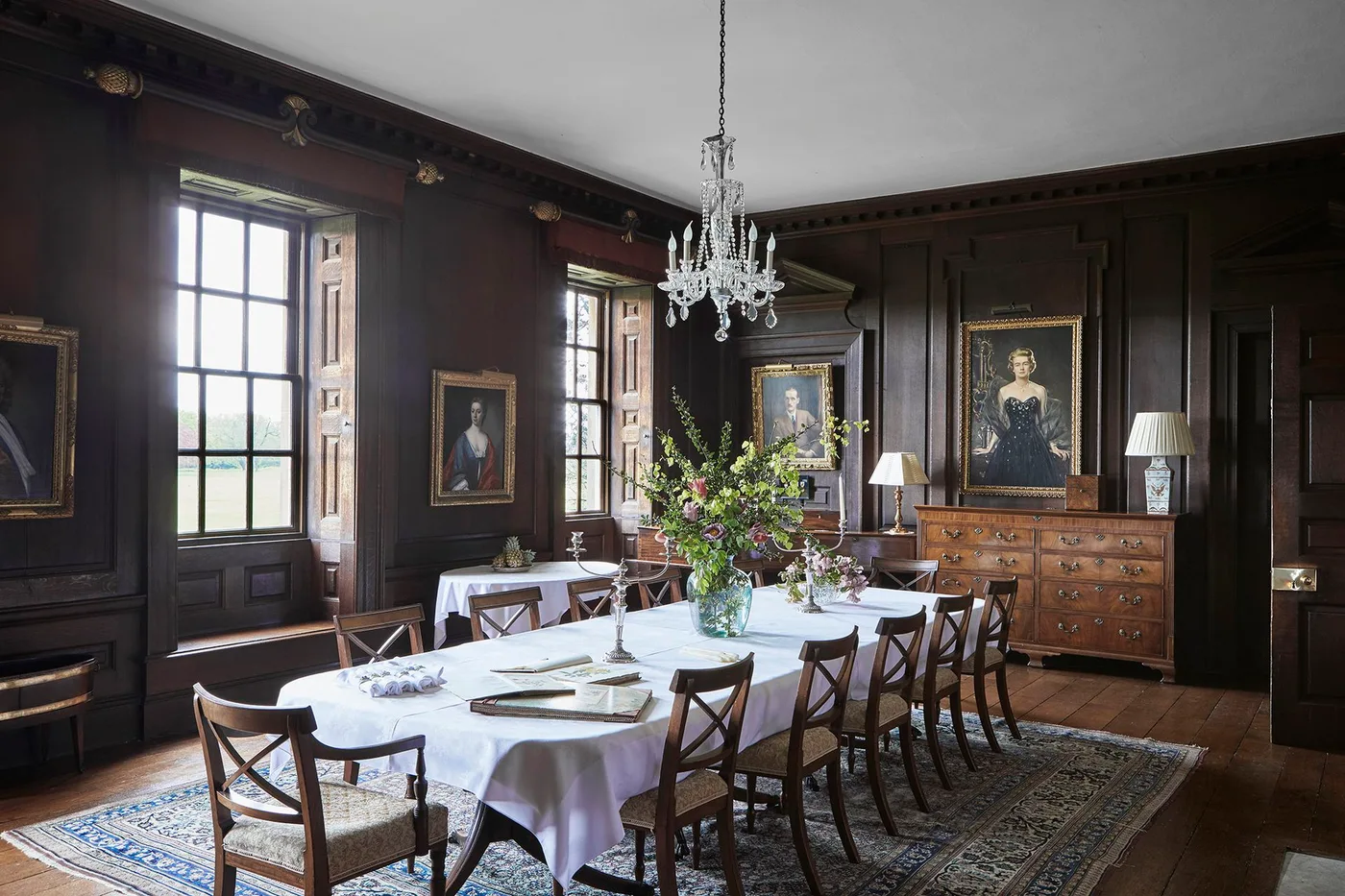
Brighten dark paneling with a pale table setting
 SaveSupport Non AI Creator
Image credit: Brent Darby
Dark wooden paneling and framed portraits give this dining room a formal traditional setting. A pale tablecloth creates a bright center, with wooden chairs and a patterned rug linking it to the surrounding furniture. The glass chandelier and window light supply smaller highlights, while the sideboard offers another useful surface beyond the table.
A dark room benefits from several usable light sources rather than one bright fixture over the center. Check the table setting under evening lighting and leave sideboard space for serving. Use a washable tablecloth where practical, and keep the full length of the table accessible without pushing chairs into storage furniture.
BRING IT ALL TOGETHER
Let everyday meals guide the traditional details
Start with comfortable seats, enough room around the table and storage that makes setting a meal easier. Traditional furniture, patterned walls and a considered light can build character around that practical arrangement.
Choose one strong decorative feature first, then judge the others together. A classic dining room feels welcoming when its details leave room for the people, plates and conversations it is meant to hold.