A coastal dining room can feel relaxed through lighter backgrounds, warmer furniture and a few well-chosen blue or green accents. It does not need a collection of seaside ornaments. Start with a table and seating that suit your meals, then use lighting, textiles and storage to make the room comfortable beyond the photograph.
These dining rooms and eat-in corners show different approaches, including neutral rooms, patterned walls and brighter upholstered seating. Compare the arrangement with the space you actually have, allowing for occupied chairs, opening storage and nearby kitchen activity. Choose finishes and fabrics by their care requirements rather than assuming a coastal appearance makes them resistant to spills.
PART 01
Start with lighter backgrounds and warmer seating
IDEA 01 / 18
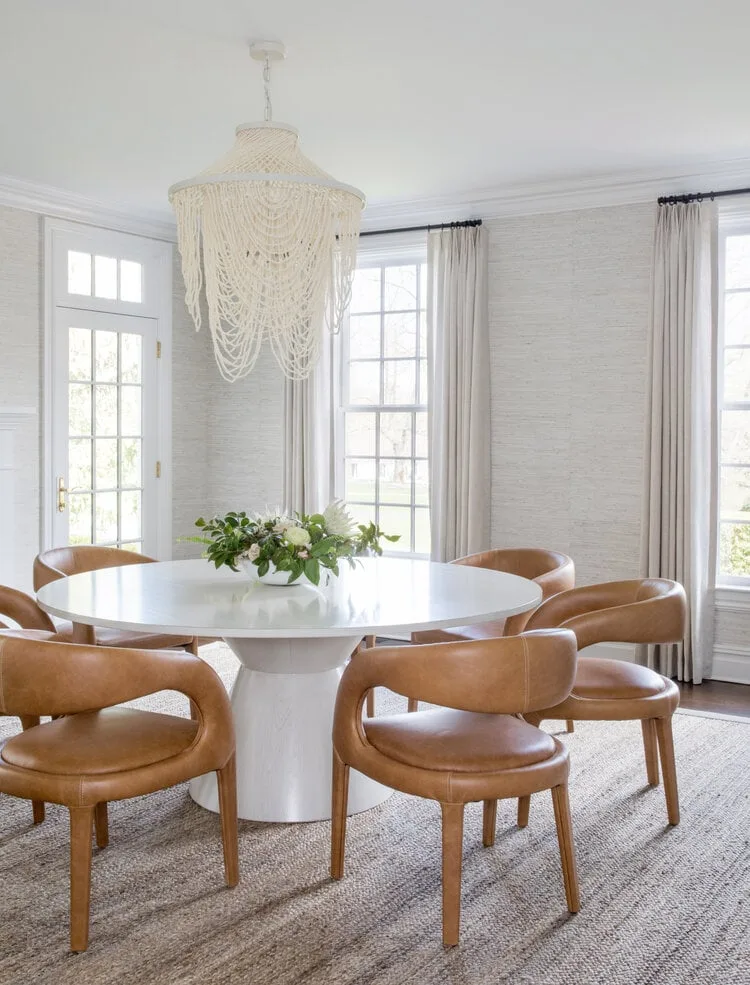
Warm a pale round table with curved chairs
 SaveSupport Non AI Creator
Source: jane-athome.com
A round white table keeps the center of this dining room light, while tan curved chairs introduce a warmer furniture tone. Pale curtains and a textured wall provide a quieter background around the windows. The fringed chandelier adds movement above the table, giving the neutral room a softer decorative feature without needing blue on every surface.
Check the round table with chairs occupied and the route around them clear. Consider whether the curved chair arms fit beneath the actual tabletop, and follow the upholstery care guidance for daily meals. Choose a hanging light that illuminates the table comfortably, with a practical position that does not obstruct conversation or make maintenance difficult in the space above it.
IDEA 02 / 18
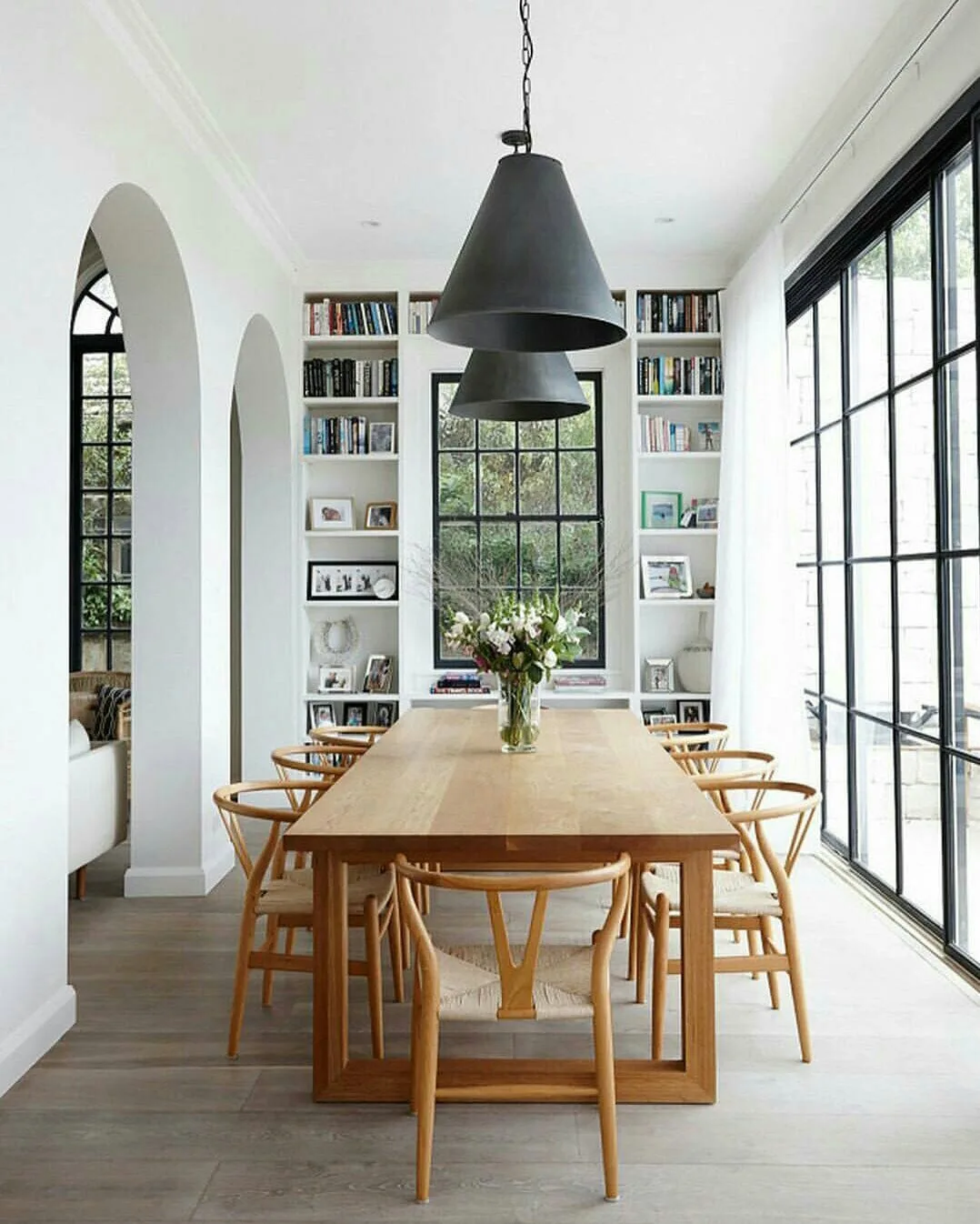
Balance warm dining furniture with darker outlines
 SaveSupport Non AI Creator
Source: jane-athome.com
A wooden table and curved chairs give this room a warmer center, with black pendants and window frames providing stronger outlines around it. White shelving keeps the far wall lighter while books and pictures add familiar detail. The room shows how a relaxed coastal direction can work with a restrained modern contrast rather than decorative shells or repeated nautical objects.
Check the route along the glazed side with chairs pulled out, especially if the doors are used regularly. Keep the table proportions comfortable for serving as well as seating. Select pendant placement around the real table length, and leave useful access to the shelves so displayed books and dishes can be reached without needing to move the entire dining arrangement.
IDEA 03 / 18
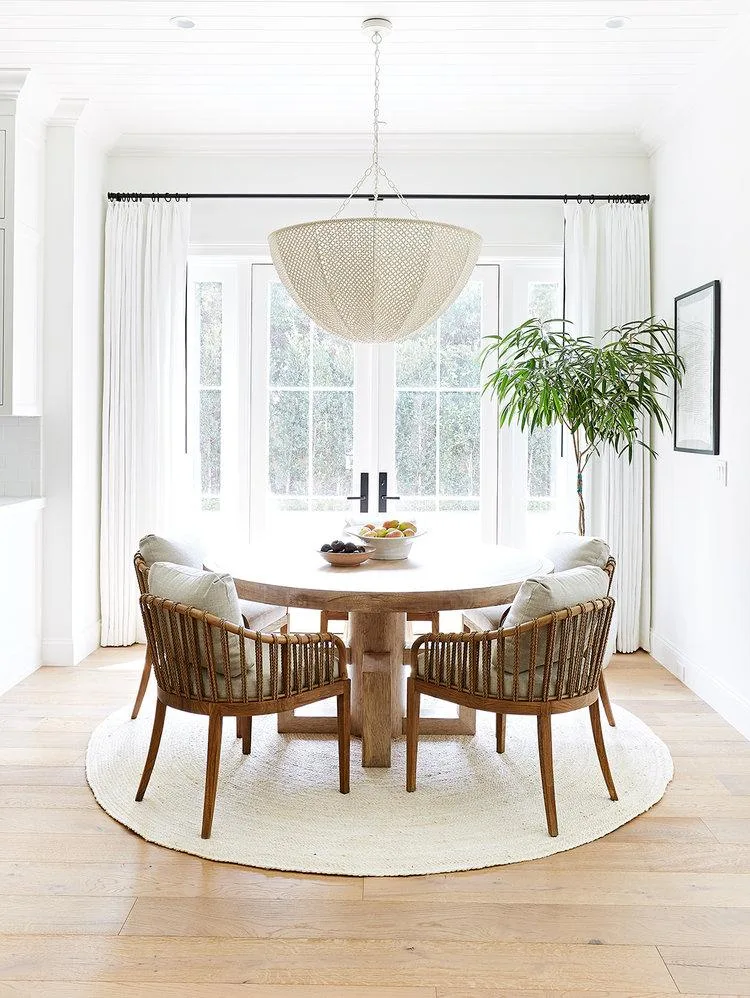
Repeat woven texture around a smaller round table
 SaveSupport Non AI Creator
Source: jane-athome.com
Woven chair backs and a woven pendant connect the furniture with the light above this round table. White walls and a pale rug keep the small dining corner quiet, while the wooden tabletop gives it a warmer central surface. The repeated texture is concentrated around the meal setting rather than scattered across several unrelated objects throughout the room.
Check woven seating for comfort and appropriate care, including how easily food can be removed from textured surfaces. Allow the chairs to move without catching at the rug edge, and use an underlay suited to the floor where needed. Keep the tabletop useful for meals and choose a pendant that provides adequate light rather than relying on its decorative texture alone.
IDEA 04 / 18
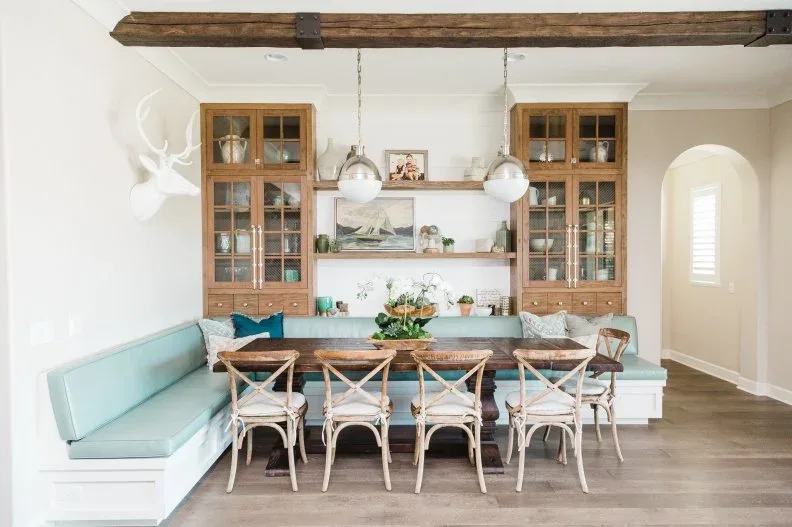
Give a wall bench a softer aqua cushion
 SaveSupport Non AI Creator
Image credit: Photo: Amber Thrane. From: Design 4 Corners
An aqua cushion brings a soft coastal color to the wall bench in this dining room. The wooden table and glazed cabinets repeat a warmer furniture tone, while pale cross-back chairs keep the opposite side lighter. Clear pendants add light without another large opaque shape beneath the beam, and the storage wall gives the eating area a practical backdrop.
Check the bench with the table in place so people can enter and leave the inner seats comfortably. Choose cushion covers suited to regular meals and allow useful space for cabinet doors behind the table. Keep heavier dishes at a safe reachable level, and avoid making display storage so full that taking out a daily plate becomes awkward.
IDEA 05 / 18
Keep a pale dining corner comfortable around the window
 SaveSupport Non AI Creator
Image credit: Photo: Kristada. From: Casabella Interiors
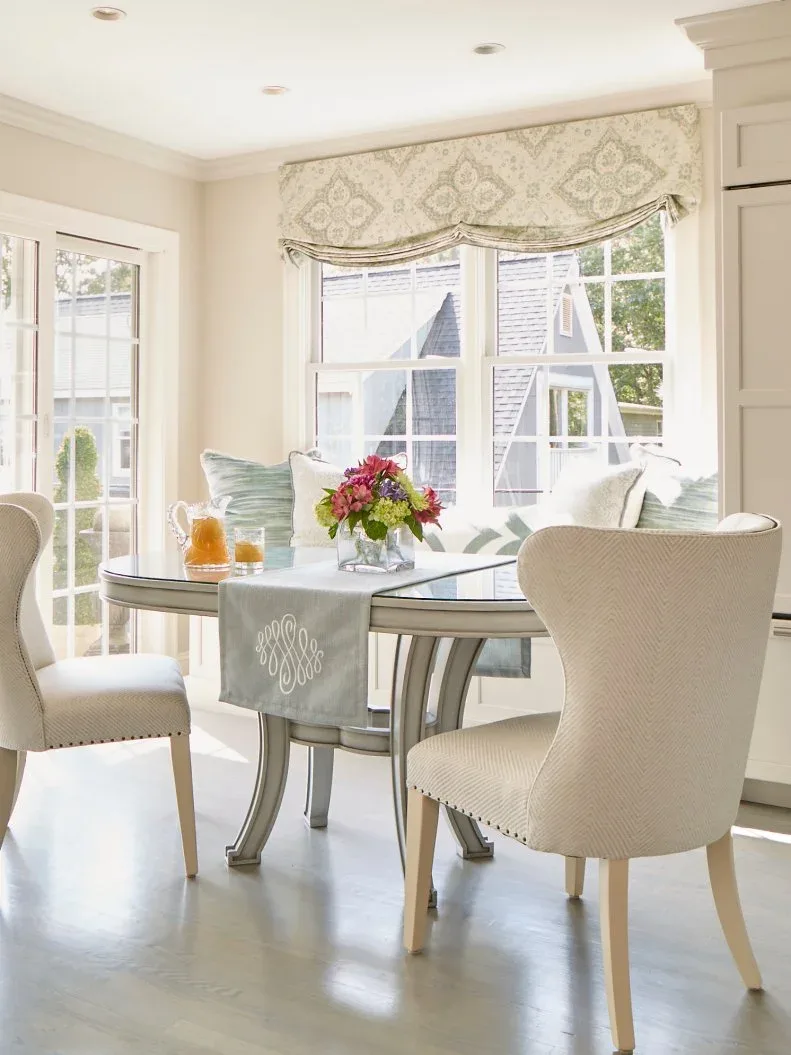
Pale upholstered chairs make this dining corner feel softer around the rounded table. A patterned window shade adds a modest decorative layer above, with cushions bringing another comfortable detail to the window seat behind. The lighter furniture palette keeps the room connected with the daylight, while the different seating shapes make it feel furnished rather than uniformly matched.
Check the table position against the window seat and the space needed to pull chairs out. Choose upholstery and shade care instructions that suit the way the room is used, especially if meals happen here daily. Keep window controls accessible, and make sure any additional seat behind the table can be reached without squeezing between occupied dining chairs.
PART 02
Use blue and green where they help the room feel connected
IDEA 06 / 18
Connect aqua storage with brighter dining textiles
 SaveSupport Non AI Creator
Image credit: Photo: Jenna Buck Gross. From: Jenna Buck Gross
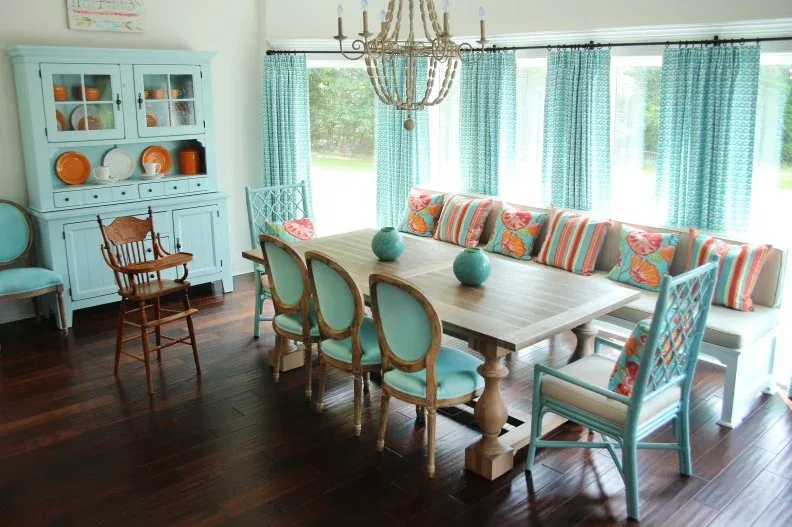
Aqua furniture and turquoise curtains carry color across this dining room, with a pale table keeping the middle quieter. Bright cushions introduce warmer accents along the window bench rather than leaving the room entirely blue-green. The hutch provides a distinct storage piece beside the dining setting, allowing everyday dishes and decorative belongings to contribute to the color arrangement.
Compare the curtain and cushion fabrics together before combining several strong patterns. Keep bench cushions easy to remove and clean, and check that the hutch doors open comfortably with the nearby chair in use. Leave the table clear enough for serving rather than treating its decorative objects as permanent fixtures that reduce the useful space for a meal.
IDEA 07 / 18
Use patterned blue walls with simpler dining chairs
 SaveSupport Non AI Creator
Image credit: Photo: Ball & Albanese. From: Chango and Co.
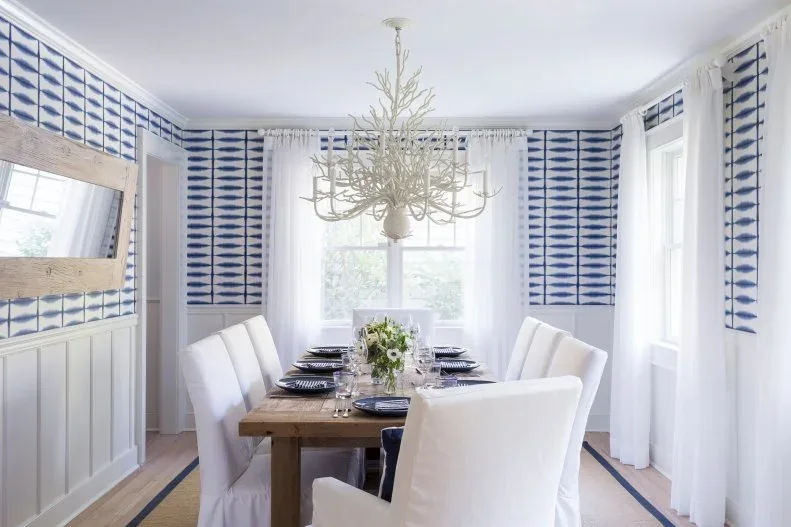
Blue and white patterned walls give this dining room its strongest decorative feature. Pale lower panels and white chair covers reduce the amount of competing detail around the table. The wooden tabletop brings warmth between those lighter surfaces, with a branch-like chandelier adding a different shape overhead rather than repeating the wall pattern in another large textile.
Test a wall pattern at the scale it will appear around the whole table before committing. Choose chair covers with suitable cleaning instructions and check that they do not interfere with stable seating or movement. Keep the hanging fitting positioned for comfortable dining, and compare the patterned walls with any rug or curtains so the smaller room does not become visually crowded.
IDEA 08 / 18
Use brighter chairs beside a quieter window bench
 SaveSupport Non AI Creator
Image credit: Photo: Jared Kuzia Photography. From: Kristina Crestin
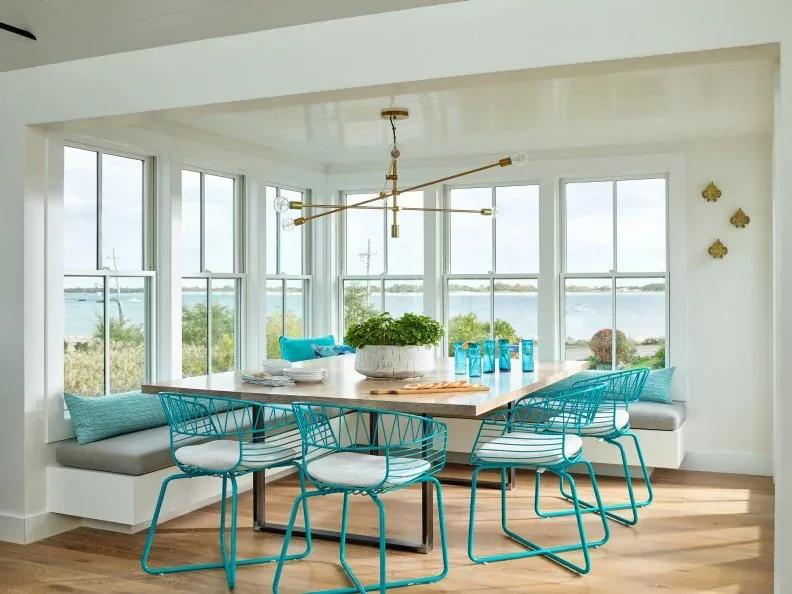
Turquoise chairs give this windowed dining nook a brighter accent against the white bench and walls. The wooden tabletop connects the seating with the warmer floor, while the open chair frames keep the view less enclosed. A branching light stretches over the table, adding a slimmer overhead shape than a large shaded fitting in front of the windows.
Check the chair and bench heights against the real table, with comfortable reach to the eating surface. Choose removable seat cushions that remain secure and can be maintained after daily use. Keep the window route and controls accessible, and position any large centerpiece so it can be moved easily when it interferes with conversation or serving across the table.
IDEA 09 / 18
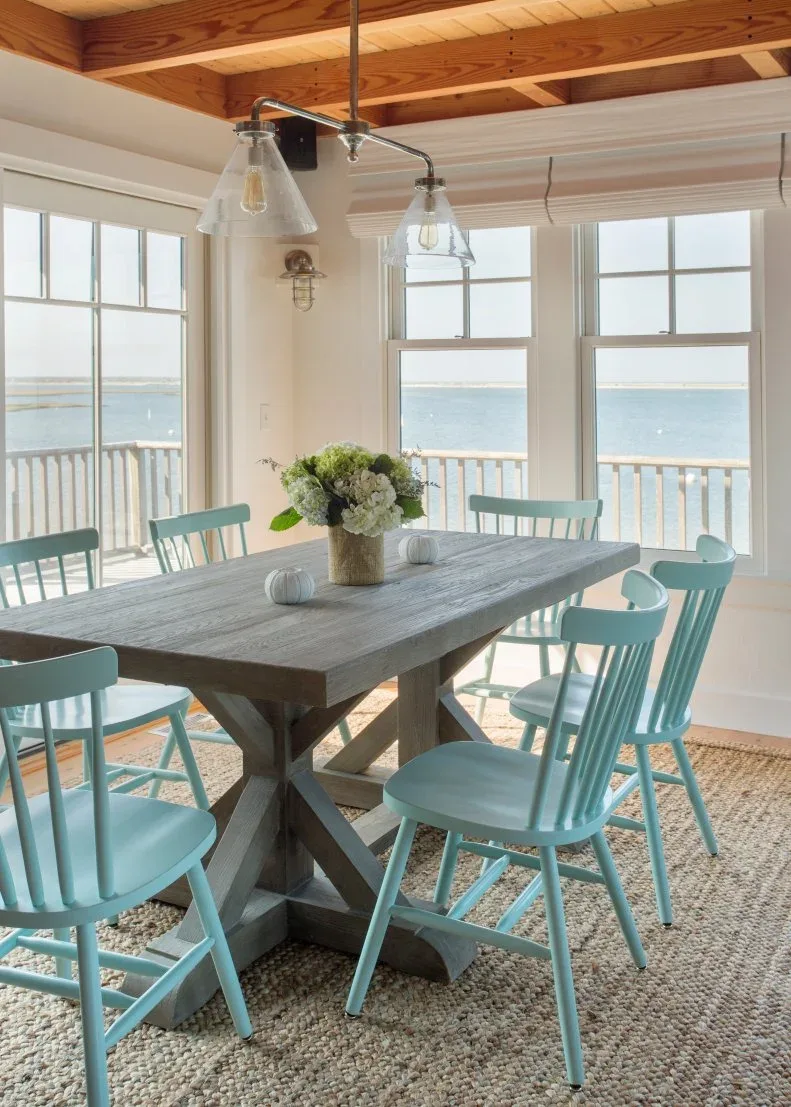
Pair a gray wooden table with pale blue chairs
 SaveSupport Non AI Creator
Image credit: Photo: Eric Roth Photography. From: Martha's Vineyard Interior Design
A gray wooden table gives this dining area a calmer center beneath the warmer wooden ceiling. Pale blue chairs bring color around it, with a woven rug adding a different texture at floor level. The clear hanging lights leave the window view less interrupted, while the table and surrounding furniture create an informal place to gather beside the glazing.
Check the table base against legroom before choosing chairs, especially where the trestle supports meet the ends. Select a rug that allows stable chair movement and suits the floor beneath it. Follow the tabletop finish instructions for spills and cleaning, and consider whether the blue chair finish will be comfortable to maintain with the way your household uses the room.
IDEA 10 / 18
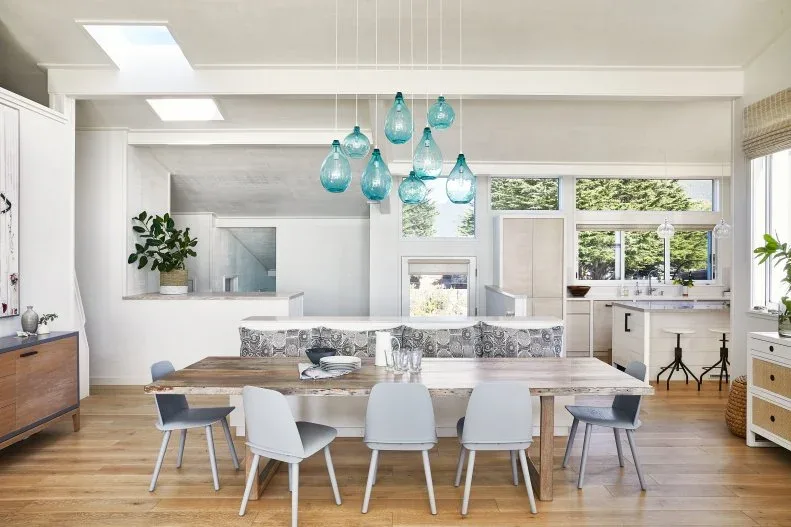
Bring coastal color into a cluster of pendants
 SaveSupport Non AI Creator
Image credit: Photo: Aubrey Pick. From: Lauren Nelson
Blue glass pendants concentrate the coastal color above this long dining table. Gray and white chairs keep the surrounding furniture quieter, with a patterned bench introducing a different seating texture along the far side. The room remains mostly pale around the table, so the clustered lights become a clear decorative feature without requiring matching blue furniture beneath them.
Choose a clustered fitting around the actual table and available ceiling conditions, with appropriate installation and useful light across the eating surface. Check the bench and individual chairs for access and comfort rather than selecting them only by appearance. Keep the surrounding route open, and allow enough room to serve and clear dishes when the table is fully occupied.
PART 03
Make dining furniture comfortable for daily gathering
IDEA 11 / 18
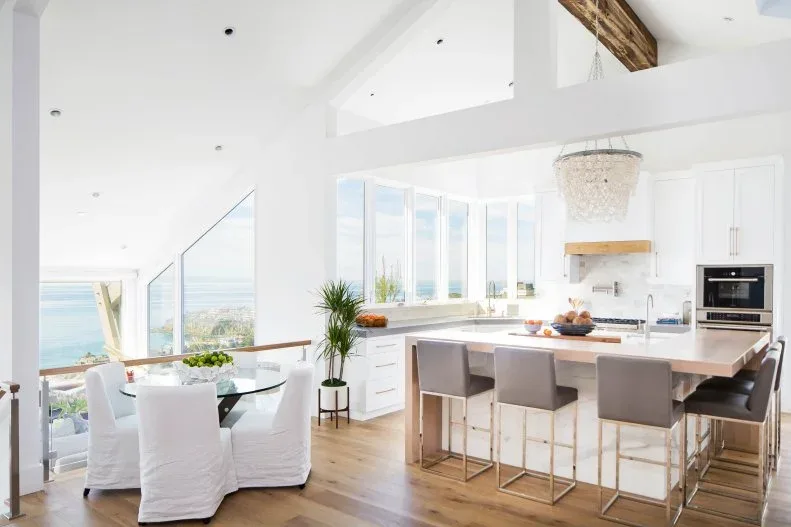
Keep a separate meal table beside the open kitchen
 SaveSupport Non AI Creator
Image credit: Photo: Ryan Garvin. From: Blackband Design
A separate round dining table provides a lower, more furnished place to eat beside this open kitchen. White covered chairs keep that meal setting light, while taller stools belong to the island behind. The two seating areas serve different positions in the room, with the windows connecting the dining corner to the view rather than making every meal depend on the kitchen counter.
Check whether your room genuinely needs both types of seating before copying the arrangement. Allow useful movement between occupied dining chairs, the island and the windows. Choose covers with practical care guidance for meals, and keep the lower table clear enough for serving so the extra furniture provides a comfortable benefit rather than simply reducing the kitchen route.
IDEA 12 / 18
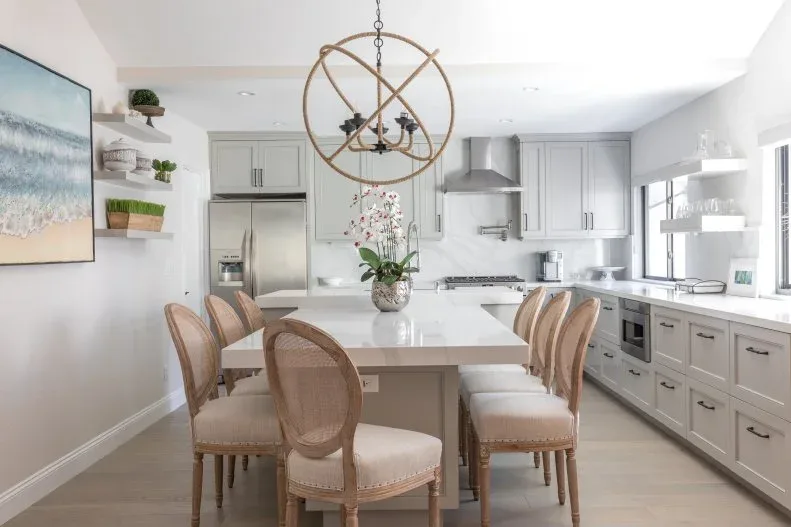
Give an eat-in kitchen a proper dining setting
 SaveSupport Non AI Creator
Image credit: Photo: Kyle Ortiz. From: 27 Diamonds Interior Design
A white dining table gives this eat-in kitchen a distinct meal setting in front of the fitted cabinets. Wooden woven-back chairs add warmer texture, with a broad coastal picture providing color on the wall. The open-frame chandelier marks the eating area overhead without introducing a heavy block above the table, keeping the dining furniture visually separate from the working surfaces.
Check the kitchen route with all chairs occupied, including access to drawers and appliances behind them. Choose a table finish that can be maintained after regular meals, and assess woven backs for cleaning and comfort. Position the light around the table you will actually use, and keep wall art securely installed where it will not interfere with chair movement.
IDEA 13 / 18
Mix blue end chairs with lighter woven seating
 SaveSupport Non AI Creator
Image credit: Photo: Chad Mellon. From: Lindye Galloway
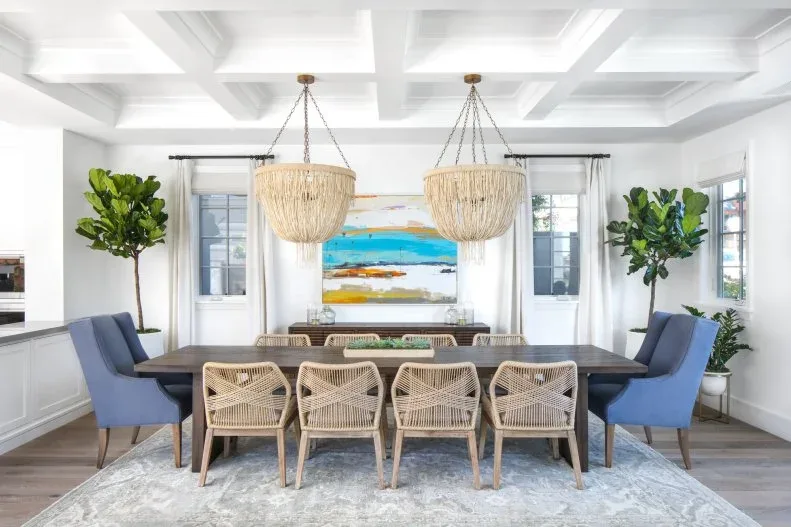
Blue upholstered chairs define the ends of this long dark table, while lighter woven chairs soften the sides. Two fringed lights repeat the textured details of the room above the dining setting. A broad coastal picture carries the color onto the rear wall, with white surfaces keeping the stronger table and blue chairs from becoming the only large tones in view.
Check that different chair types still provide comfortable seat heights and suitable table reach. Compare their arm positions with the tabletop and allow movement at the end seats. Choose upholstery care suited to regular meals, and place the two lights so the full table receives useful illumination without creating an awkward bright spot directly in a dining view.
IDEA 14 / 18
Balance a strong blue wall pattern with a pale table
 SaveSupport Non AI Creator
Image credit: Photo: D2 Interieurs. From: D2 Interieurs
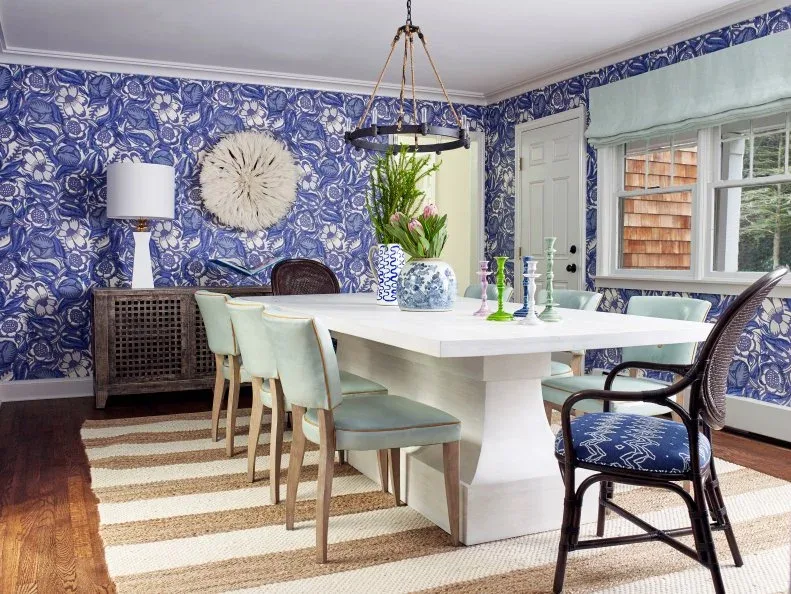
A strong blue wall pattern gives this dining room a more expressive coastal character. The white table provides a calmer surface in the center, with pale aqua chairs connecting to the lighter parts of the walls. Dark woven end chairs add another texture, while a striped rug introduces a simpler pattern beneath the more detailed decorative layer above.
Compare wall and rug samples together rather than choosing two patterns independently. Check the table base for legroom at each chair position and allow stable movement across the rug. Keep decorative objects on the tabletop easy to remove for meals, and select chair finishes and fabrics according to the actual cleaning needs of the people using the room.
PART 04
Connect light, texture and storage around the table
IDEA 15 / 18
Ground softer seating with a darker dining table
 SaveSupport Non AI Creator
Image credit: Photo: Tessa Neustadt. From: Blackband Design
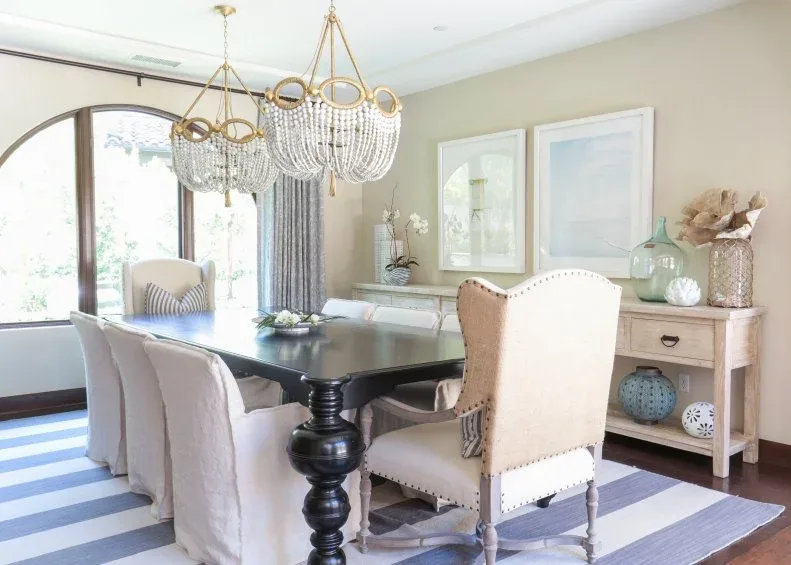
A dark turned-leg table grounds this dining room among cream chairs and a pale console. The blue striped rug introduces a coastal accent at floor level, with lighter framed pictures keeping the wall comparatively quiet. The beaded chandelier adds a softer decorative shape overhead, connecting with the upholstered seating while the darker table remains the main furniture contrast.
Check chair movement across the rug with the table fully occupied. Choose upholstery that you can clean according to its guidance, and leave useful space to reach the console behind the dining setting. Keep the light suitable for the actual ceiling and tabletop position, and avoid letting tall table arrangements obscure the view between people during regular meals.
IDEA 16 / 18
Give dining its own place within an open coastal room
 SaveSupport Non AI Creator
Image credit: Photo: Jared Kuzia Photography. From: Kristina Crestin
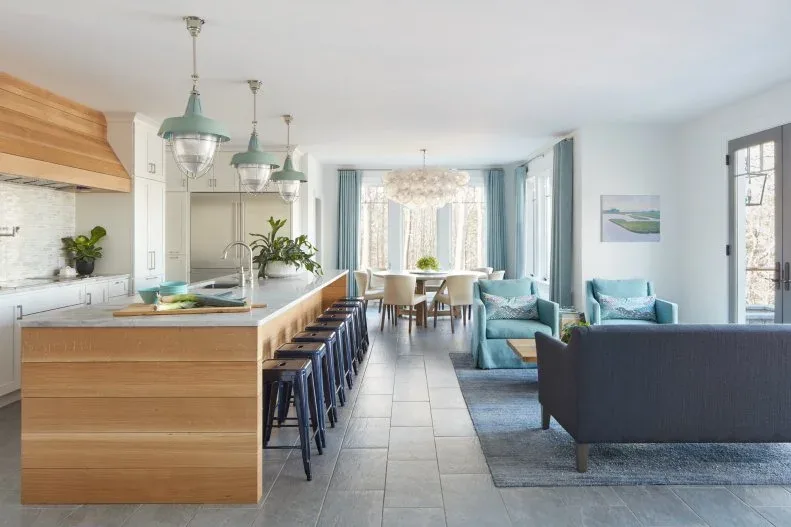
The dining table sits toward the windowed end of this open room, distinct from the kitchen stools and nearby living chairs. Pale blue curtains connect it with the cooler seating colors, while warmer wood appears along the kitchen island. The photograph shows how a shared room can carry a related palette without making every gathering place part of the same piece of furniture.
Plan the route between kitchen, dining and living areas with each type of seating occupied. Keep the meal table reachable for serving and clearing, rather than positioning it only around the window view. Repeat a limited group of colors across textiles and furniture, and use separate useful lighting where the dining position needs illumination beyond the kitchen pendants.
IDEA 17 / 18
Soften a simple table with woven chairs and light
 SaveSupport Non AI Creator
Image credit: From: Lisa Sherry
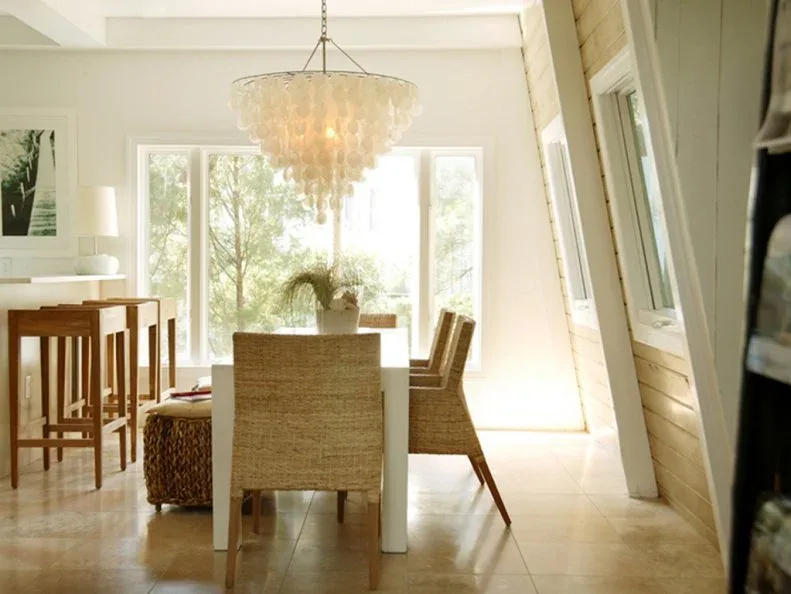
Woven chairs add texture around this simple pale table, with a layered translucent chandelier creating a softer feature above. The lighter walls and glazed doors keep the background quiet, allowing the chair texture to do more of the decorative work. A darker woven seat near the table adds a modest contrast without changing the whole room into several competing furniture colors.
Check woven chairs for stable support and comfortable sitting during a full meal. Follow their care instructions, particularly around food that can collect in textured surfaces. Keep the glazed doors usable with chairs pulled out, and choose a light whose size, installation and brightness suit the actual table rather than assuming the photographed fitting will work in a smaller room.
IDEA 18 / 18
Use a deeper coastal palette around dark furniture
 SaveSupport Non AI Creator
Source: hgtv.com
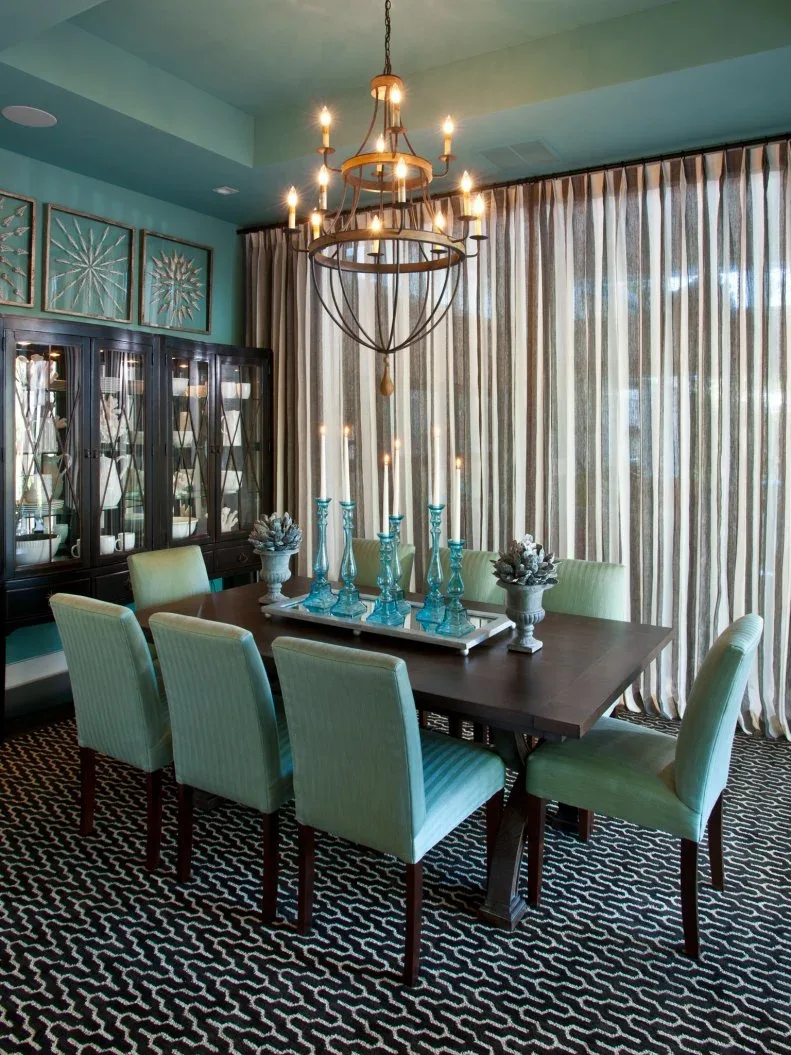
Blue covers the walls and ceiling in this dining room, making the coastal color more immersive than a few small accessories. Aqua chairs lighten the dark wooden table and glazed cabinet, while striped curtains add another patterned surface beside the setting. The stronger palette creates a more enclosed atmosphere, showing a different direction from the mostly white rooms in this collection.
Test deeper colors in your own daylight and evening lighting before painting the whole room. Choose curtains and upholstery that you can maintain after regular use, and keep the storage cabinet accessible around occupied chairs. Leave serving space clear on the table; if using candles, choose stable holders and keep them well away from curtains and other combustible belongings.
BRING IT ALL TOGETHER
Make the coastal details serve a comfortable dining room
Choose seating and table proportions around the people who use the room, checking the arrangement with chairs pulled out. Keep serving space and nearby storage easy to reach. Window seats and mixed chairs can bring character, but their comfort and access deserve as much attention as their color or texture.
Use a restrained group of colors to connect the larger pieces, then introduce stronger pattern where you can live with it every day. Check fabric care, rug stability and useful lighting before committing to the decorative layer. The room will feel more relaxed when eating, clearing and moving around it remain straightforward.