A coastal living room works best when it feels comfortable before it feels themed. Light, relaxed textiles and a few colors borrowed from water or sand can create the mood without filling every shelf with seaside ornaments.
You can use these ideas far from the shore. Concentrate on the parts that fit your home: a better seating arrangement, softer window dressing or a palette that connects the furniture you already own.
PART 01
Make the most of light and views
IDEA 01 / 20
Face a comfortable seating group toward the windows
 SaveSupport Non AI Creator
Source: hgtv.com
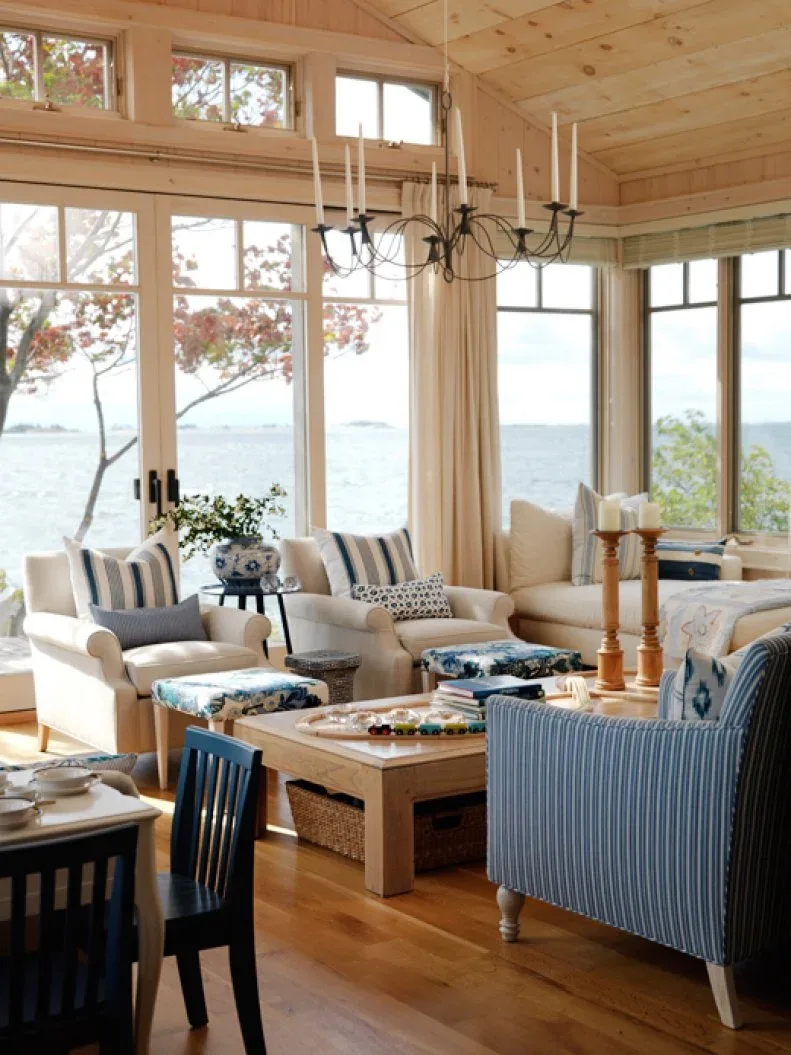
Pale seating and blue stripes sit beneath a warm wood-toned ceiling, with broad windows providing the strongest coastal element. The square wooden table gives the group a useful center. Several different chair patterns work together because blue and white repeat across the cushions and upholstery.
Arrange furniture so people can enjoy the view without turning every chair away from the conversation. Keep access to glazed doors clear and check how sunlight falls on the seats. If your room lacks a view, borrow the restrained fabric palette rather than adding a wall of nautical decorations.
IDEA 02 / 20
Display a collected wall above a dark sofa
 SaveSupport Non AI Creator
Image credit: Photo: Lisa Romerein (Styled by Elizabeth Demos). From: HGTV Magazine
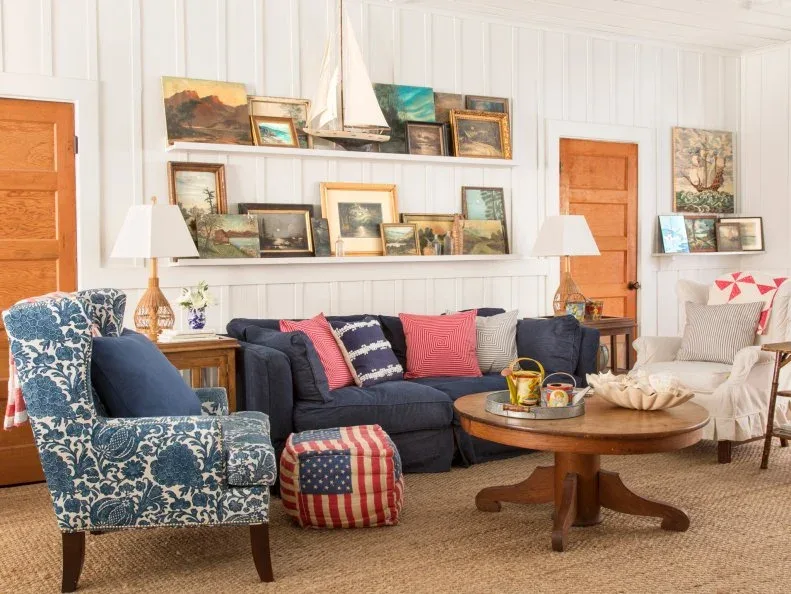
Picture shelves turn the wall above the navy sofa into a collected display, mixing different frame sizes with a model sailboat. A blue floral chair connects to the sofa without matching it exactly. The round wooden table and woven-looking rug make the room feel informal despite the many framed pieces.
Limit a picture shelf to items that fit securely within its depth, and fix it for the intended load. Mixing frame sizes is easier when their edges share a few consistent lines. Keep a few personal pieces in the arrangement instead of buying everything to follow a seaside theme.
IDEA 03 / 20
Use small warm accents beside blue patterns
 SaveSupport Non AI Creator
Source: hgtv.com
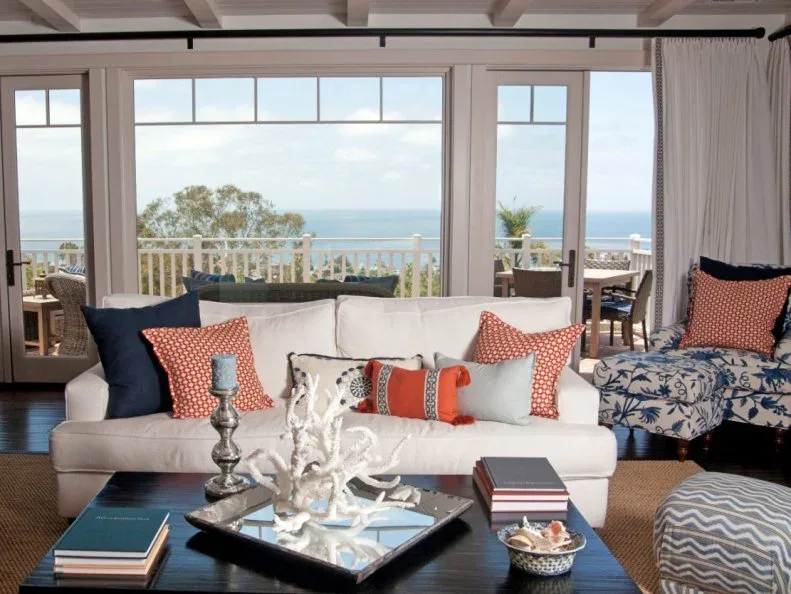
Red patterned cushions give the pale sofa a warm contrast beside the blue-and-white chair. The darker coffee table anchors the light upholstery, while broad glass doors leave the sea visible behind the group. The room uses coastal colors without making blue the only accent available.
A small amount of red or terracotta can warm a mostly blue room without changing its overall mood. Try removable cushion covers before investing in another chair. Keep large table displays low enough for conversation and leave the door route free when the outdoor area is in use.
IDEA 04 / 20
Leave the center clear between window benches
 SaveSupport Non AI Creator
Image credit: Photo: Alexandra Rowley. From: HGTV Magazine
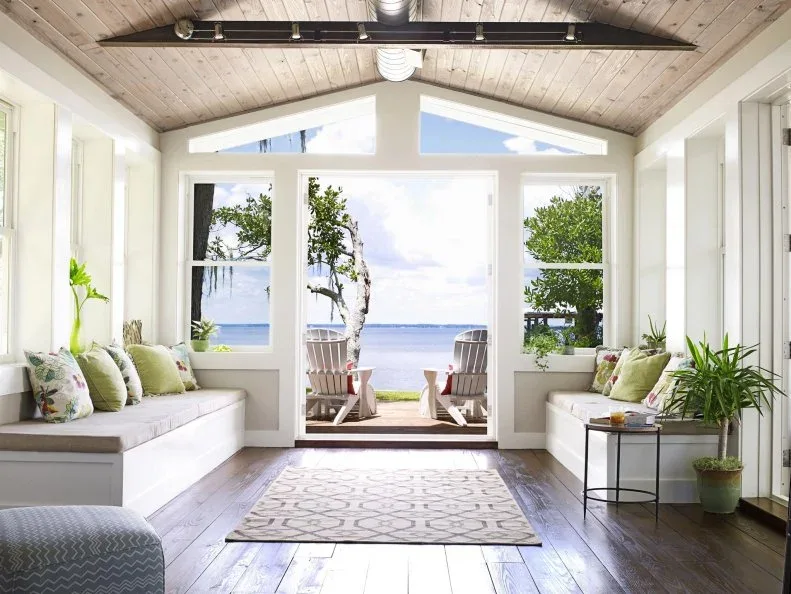
Benches along both window walls leave the center of this sunroom open toward the outdoor doors. Pale cushions and small green accents keep the arrangement quieter than the view. A patterned runner marks the route through the room, while the wood-toned ceiling adds warmth overhead.
Use built-in seating where its depth will still leave a comfortable passage. Removable covers are helpful for a room that connects directly outdoors. Check door swings and window access before fixing a bench in place, and choose a runner that lies flat rather than catching at the threshold.
IDEA 05 / 20
Give a white room useful open storage
 SaveSupport Non AI Creator
Image credit: Photo: Alexandra Rowley. From: HGTV Magazine
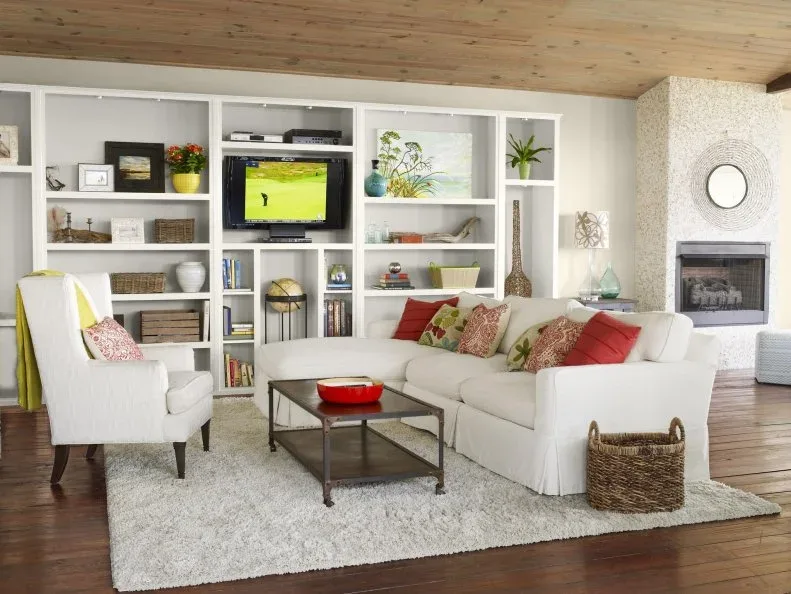
The white sofa and armchair keep the seating area light beneath a warm wooden ceiling. Open shelves hold books, baskets and a television, giving everyday storage a place in the room. Red and green cushion accents bring color without covering the main furniture in a bold pattern.
Plan storage around what the room actually needs to hold, including electronics and their cables. Baskets can conceal smaller objects, but check that they are easy to lift out. For pale seating used every day, prioritize cleaning guidance and removable covers over a delicate fabric finish.
PART 02
Bring the coastal palette indoors
IDEA 06 / 20
Use a narrow wooden surface beside the sofa
 SaveSupport Non AI Creator
Source: hgtv.com
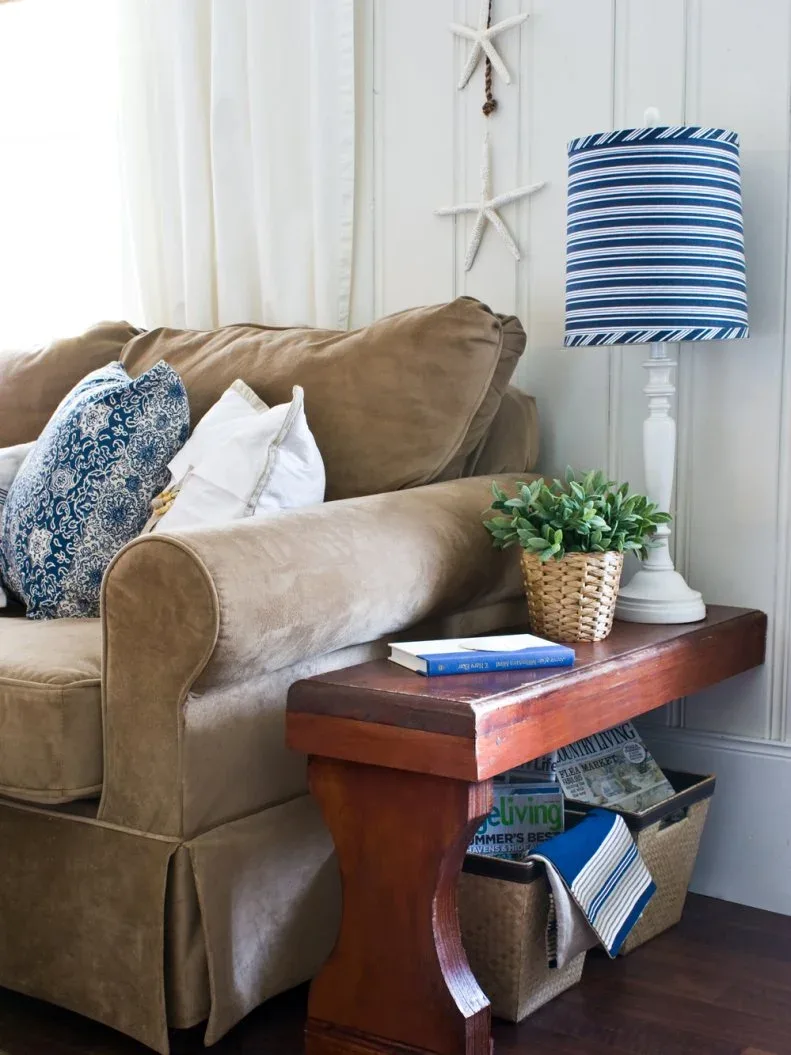
A narrow wooden surface fits beside the tan sofa, offering a place for a lamp without the bulk of a wide end table. Its darker finish contrasts with the pale paneled wall. The blue striped shade adds the coastal color, while storage baskets tuck beneath the surface.
Measure the space beside the sofa arm before choosing an alternative table. The top should remain stable and useful for the lamp or drinks you plan to place there. Keep the electrical lead out of the walkway, and protect the wood from water beneath the plant pot.
IDEA 07 / 20
Try soft green instead of a blue wall
 SaveSupport Non AI Creator
Image credit: Photo: Alexandra Rowley. From: HGTV Magazine
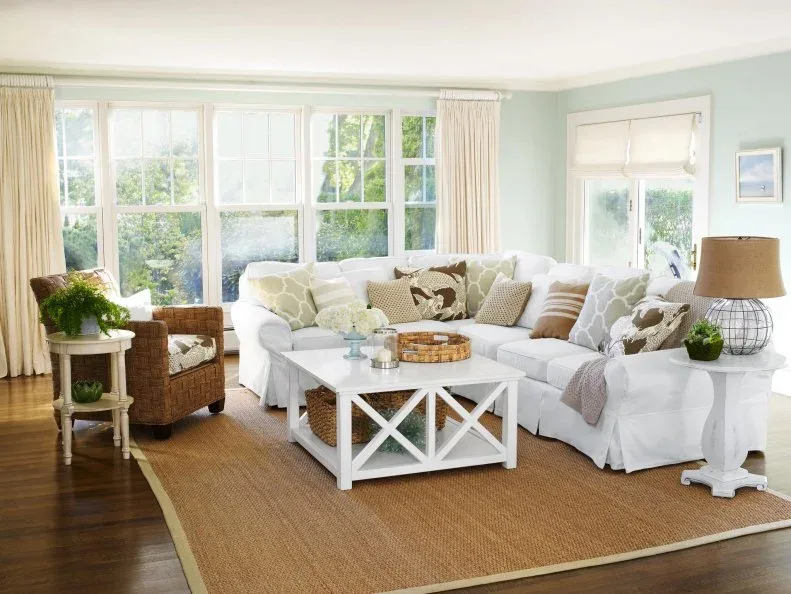
Soft green walls surround the white sectional, borrowing their mood from the garden visible through the windows. Patterned cushions repeat the green at a smaller scale. A woven chair and tan rug add texture, while the white table keeps the middle of the seating group light.
Green is a useful alternative when blue feels too cool beside your existing floor or furniture. Test the wall color near the window and in the shaded part of the room. Keep sectional cushions manageable and choose a rug texture that suits your cleaning routine and comfort underfoot.
IDEA 08 / 20
Mix pale blue seating with warm architectural details
 SaveSupport Non AI Creator
Source: hgtv.com
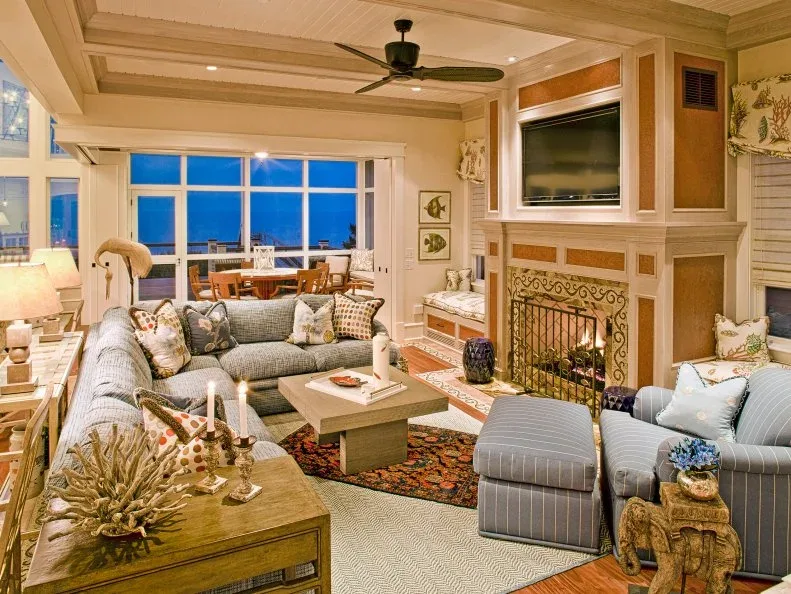
Pale blue upholstery softens the warm ceiling and detailed fireplace wall in this room. A small central table leaves the patterned rug visible around it. The combination feels coastal through its lighter seating colors and visible water beyond the windows, while retaining the room's more traditional architectural details.
Work with existing trim and ceiling tones instead of treating a coastal refresh as a complete replacement project. A cooler fabric can balance warm wood, but compare samples together before ordering. Keep furniture outside a working fireplace's required clearances and preserve a comfortable route through the seating group.
IDEA 09 / 20
Add fresh green accents to pale seating
 SaveSupport Non AI Creator
Image credit: From: HGTV Design Star and HGTV Design Star
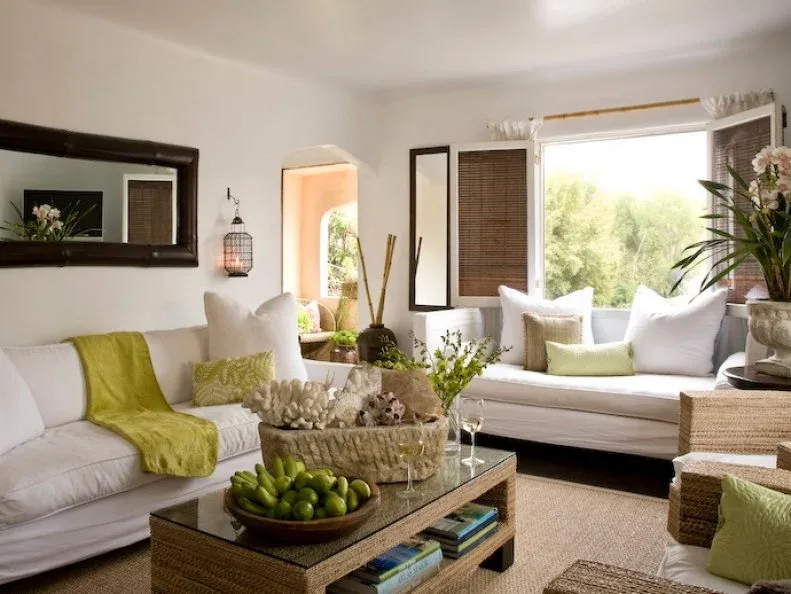
White sofas form a light base for fresh green cushions and a matching throw. The textured coffee table adds warmth beneath a dark-framed mirror, which gives the pale wall a stronger outline. The room suggests a relaxed coastal mood through its open window treatment and light furnishings rather than blue accessories.
Use one clear accent color if you want a pale room to feel fresh without becoming busy. Check whether the sofa covers are removable and how they should be cleaned. Leave useful space on the table and use a smaller display if it makes reaching drinks awkward.
IDEA 10 / 20
Frame blue walls with broad white trim
 SaveSupport Non AI Creator
Image credit: From: HGTV Magazine
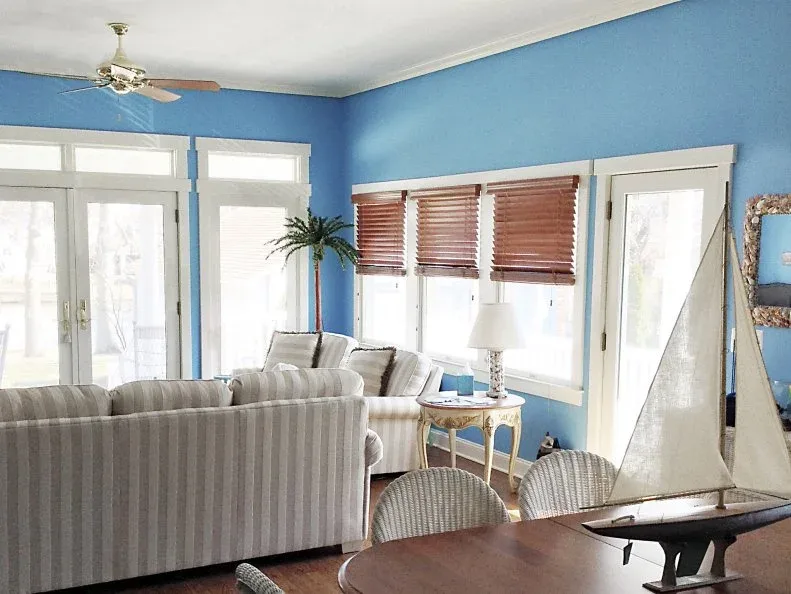
Broad white window trim makes a crisp frame against the blue walls. Gray-and-white striped seating keeps the fabric palette quieter than the wall color, while the model sailboat adds a single clear coastal reference. Warm brown blinds prevent the room from relying only on cool shades.
Choose a blue that works with your room's actual daylight rather than copying its appearance in a photograph. A stronger wall color can carry the theme with fewer ornaments. Keep blinds and window handles accessible behind the seating, and leave enough room to clean the glass.
PART 03
Use pattern without overwhelming the room
IDEA 11 / 20
Connect a picture group with blue accessories
 SaveSupport Non AI Creator
Source: hgtv.com
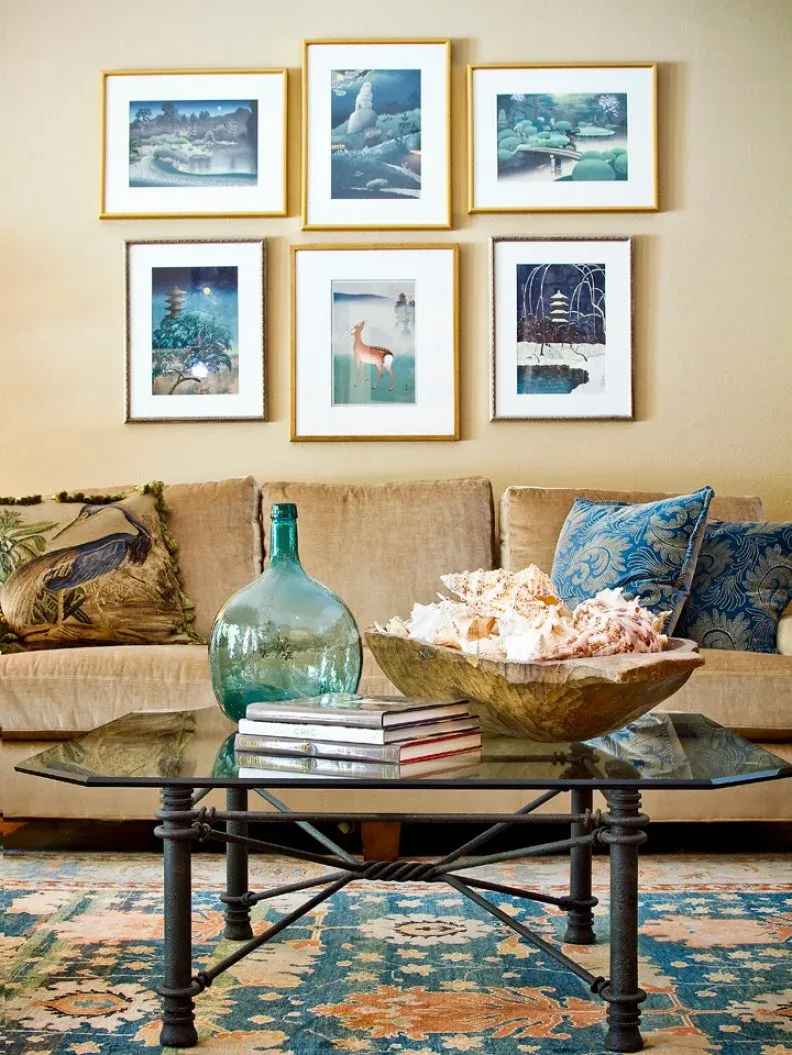
Six gold-colored frames make an orderly picture group above the tan sofa. Blue tones in the pictures continue through a patterned cushion and the rug, while a green glass vessel brings another watery shade to the table. The warm sofa and frames keep the room from feeling entirely cool.
Use a consistent arrangement when several small pictures need to read as one feature. Lay the group out first and keep spacing even. A few color connections are enough; avoid matching every accessory, and leave part of the coffee table available for the objects used daily.
IDEA 12 / 20
Keep a striped sofa within a soft palette
 SaveSupport Non AI Creator
Image credit: Photo: Designed by Kathryn Greeley
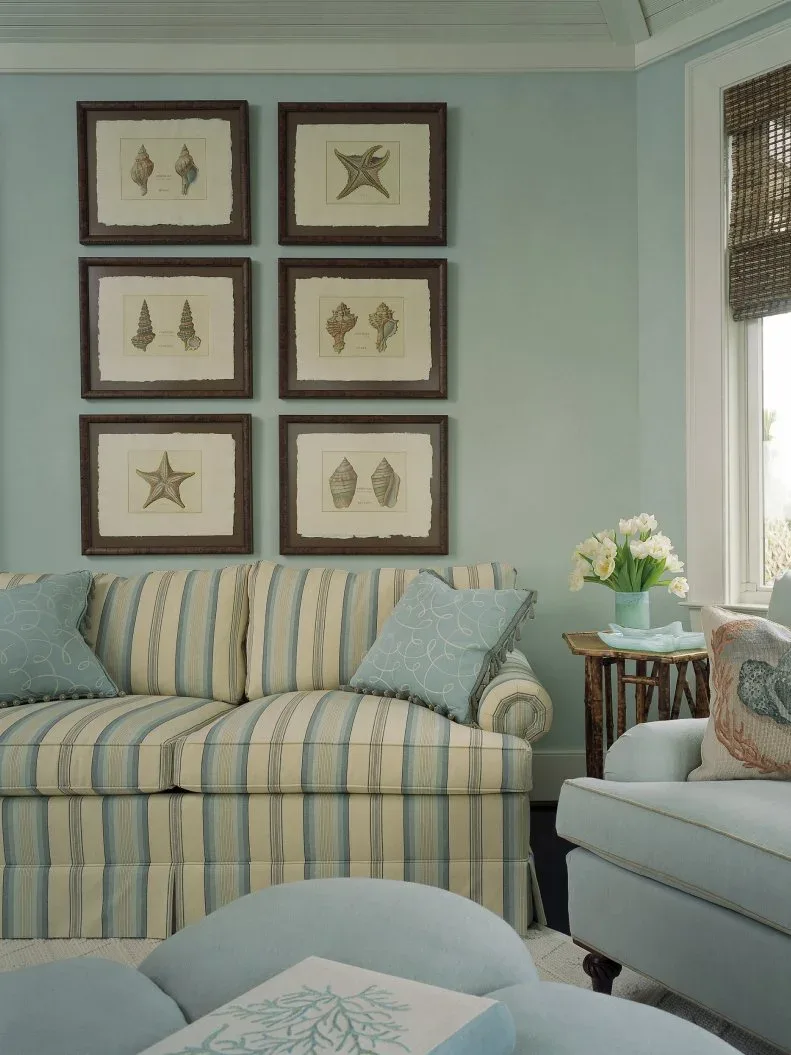
The sofa's fine stripes repeat the room's blue-green wall color without creating a harsh contrast. Six framed shell illustrations provide a clear coastal detail above it. Plain cushions and a quieter neighboring chair soften the patterned upholstery, keeping the arrangement gentle rather than crowded with competing prints.
Fine stripes are easier to combine with other patterns when their colors remain restrained. Compare the upholstery sample beside the wall before committing to both. If you use a shell picture group, let it carry the theme and keep nearby accessories simple enough to clean and rearrange.
IDEA 13 / 20
Use one graphic rug beneath quieter furniture
 SaveSupport Non AI Creator
Image credit: Photo: Somerset Bay. From: Beachfront Bargain Hunt
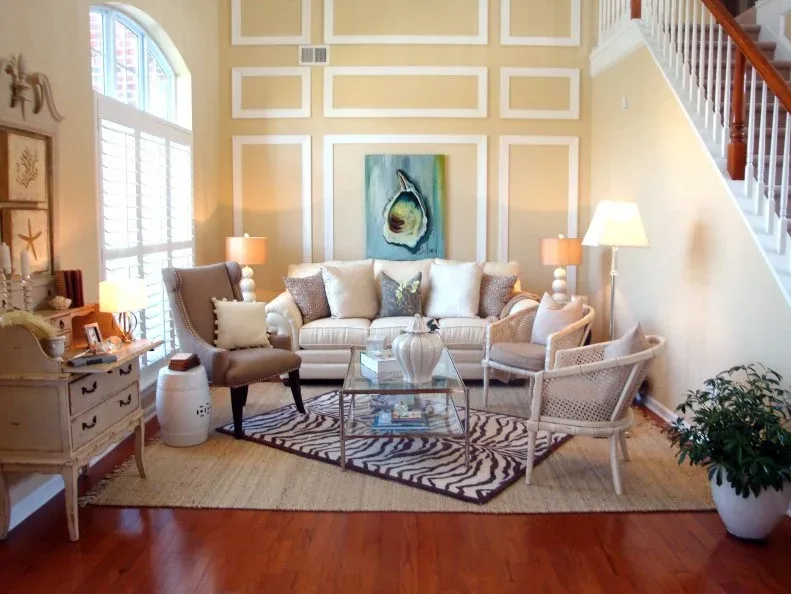
A shell picture supplies the coastal reference at the center of this tall sitting room. The pale sofa and chairs keep the furniture quiet, allowing the zebra-patterned rug to introduce a stronger graphic layer below. Warm wall panels and wood flooring balance the cooler colors in the central artwork.
A coastal room can include a contrasting pattern if the surrounding pieces are restrained. Test a bold rug in the furniture layout before adding patterned cushions as well. Secure layered rugs against movement and avoid placing an overlapping edge where chairs slide back or people regularly walk.
IDEA 14 / 20
Connect an open kitchen through a small blue detail
 SaveSupport Non AI Creator
Image credit: From: Cindy Aplanalp
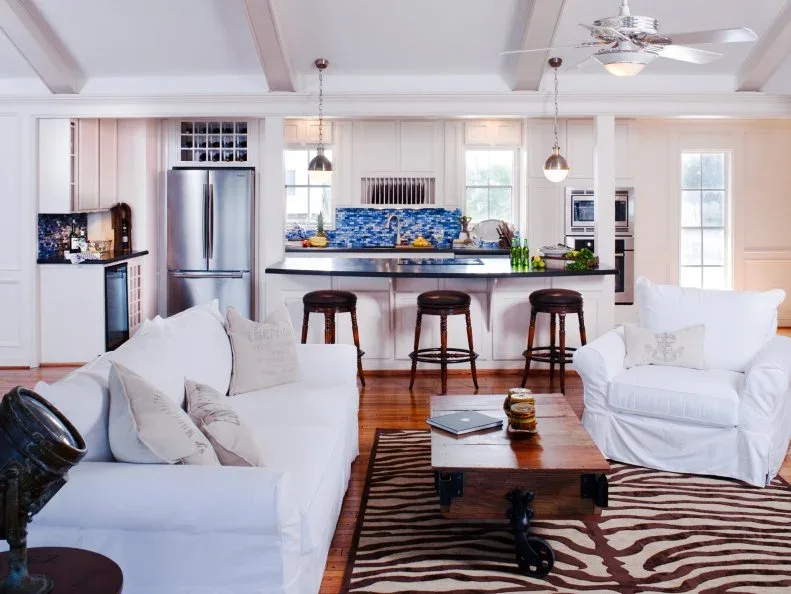
White sofas establish a light sitting area in front of the open kitchen. A blue patterned backsplash gives the adjoining work area a small coastal color connection without covering the living-room furniture in blue. The wooden table and dark-striped rug add warmth and contrast close to the floor.
In an open room, carry one color between areas rather than repeating every finish. Check that sofa backs leave enough room for the route to the kitchen and its stools. Choose washable living-room textiles if meals and everyday kitchen activity frequently spill into this shared space.
IDEA 15 / 20
Let broad stripes sit beside practical built-ins
 SaveSupport Non AI Creator
Image credit: From: Beachfront Bargain Hunt
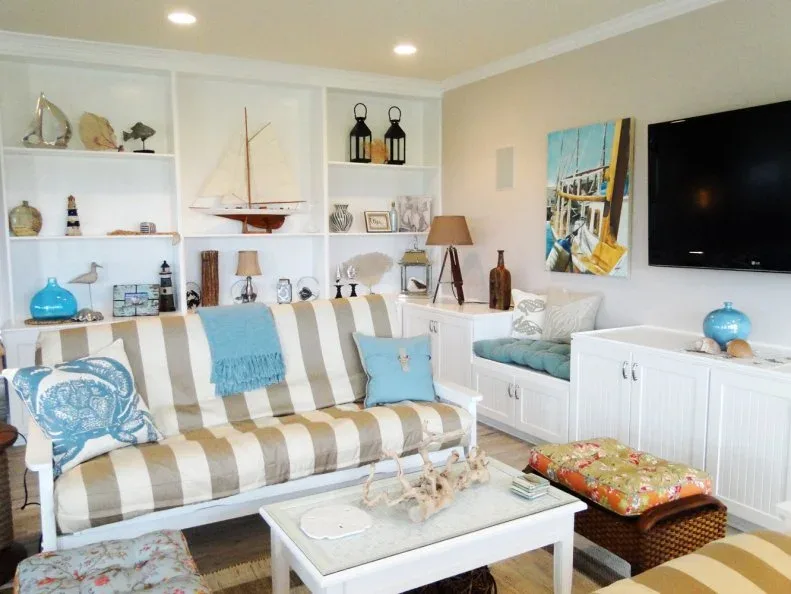
Broad tan-and-white stripes give the sofa a relaxed graphic presence against the white built-in shelves. Blue accessories and a model sailboat add smaller coastal cues around the room. The low white table continues the shelving color, leaving the sofa pattern as the main feature at seating height.
Broad stripes have more visual weight than fine ones, so pair them with quieter curtains or walls. Use lower cupboards for items you do not want displayed and keep open shelves lightly grouped. Leave comfortable access to the cabinet doors instead of filling every gap with a stool or basket.
PART 04
Keep the finished room comfortable
IDEA 16 / 20
Keep a wide view above low furniture
 SaveSupport Non AI Creator
Image credit: Photo: Aubrey Pick. From: Lauren Nelson
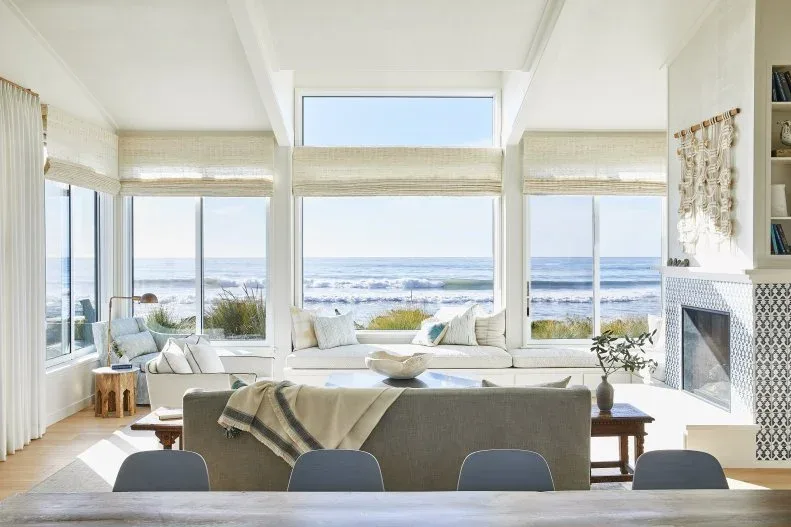
Low seating allows the broad sea view to remain visible above the furniture. Pale upholstery and light blinds keep the room's colors close to the sand and sky outside. A patterned edge around the fireplace adds a small contrasting detail without spreading a busy print across the window wall.
If your room has a view, test furniture height from both seated and standing positions before buying. Window shades can help with glare while keeping the view available when open. If you live inland, use the same low, relaxed arrangement around your own garden or brightest window.
IDEA 17 / 20
Bring muted blue into a traditional seating group
 SaveSupport Non AI Creator
Source: hgtv.com
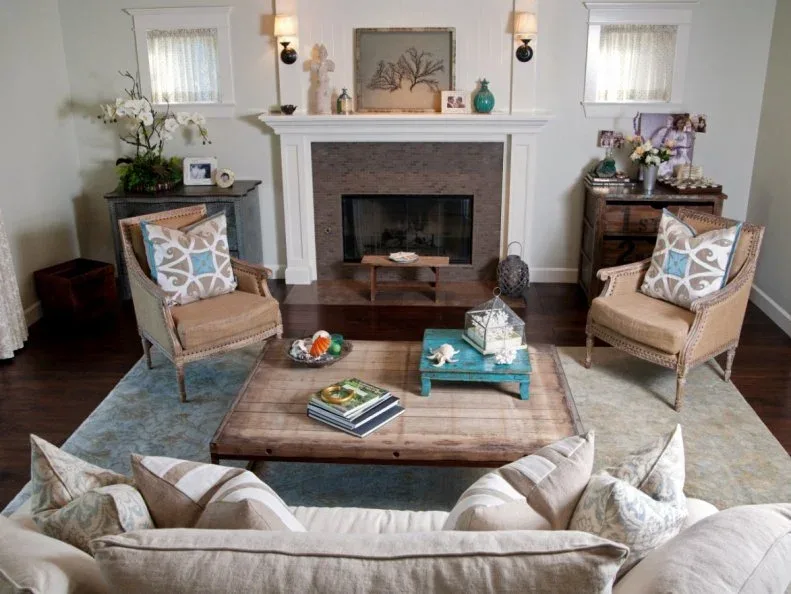
A muted blue rug and turquoise tray add coastal color to this otherwise traditional seating group. The tan chairs face the pale sofa across a broad wooden table, with patterned cushions repeating the lighter tones. The fireplace and small shaded windows remain part of the arrangement rather than being disguised.
Use a rug or tray to introduce a new color when you want to retain comfortable existing furniture. Check that the table leaves enough space to get in and out of each chair. Keep the mantel display modest and arrange furnishings appropriately around any working fireplace.
IDEA 18 / 20
Use glass color against a restrained background
 SaveSupport Non AI Creator
Source: hgtv.com
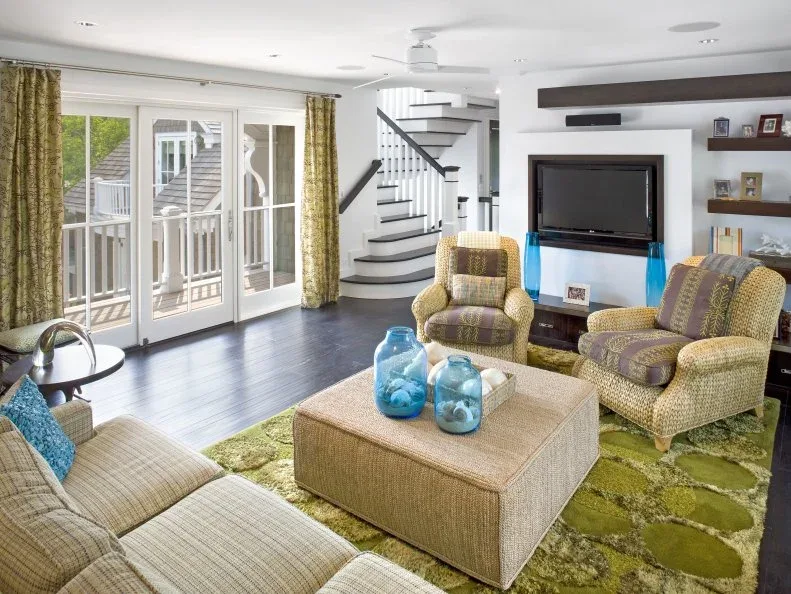
Blue glass vessels add a concentrated coastal color above a pale ottoman, while green patterned chairs repeat the rug's warmer shade. White walls and dark flooring provide a restrained background for these accents. Broad French doors connect the seating group with the adjoining outdoor area.
Try a small group of colored objects before changing large pieces of furniture. A soft ottoman needs a stable tray if it will hold drinks, and fragile vessels may suit a separate shelf better. Leave the French-door approach clear even when extra guests pull the chairs closer.
IDEA 19 / 20
Layer a soft curtain over a textured blind
 SaveSupport Non AI Creator
Source: hgtv.com
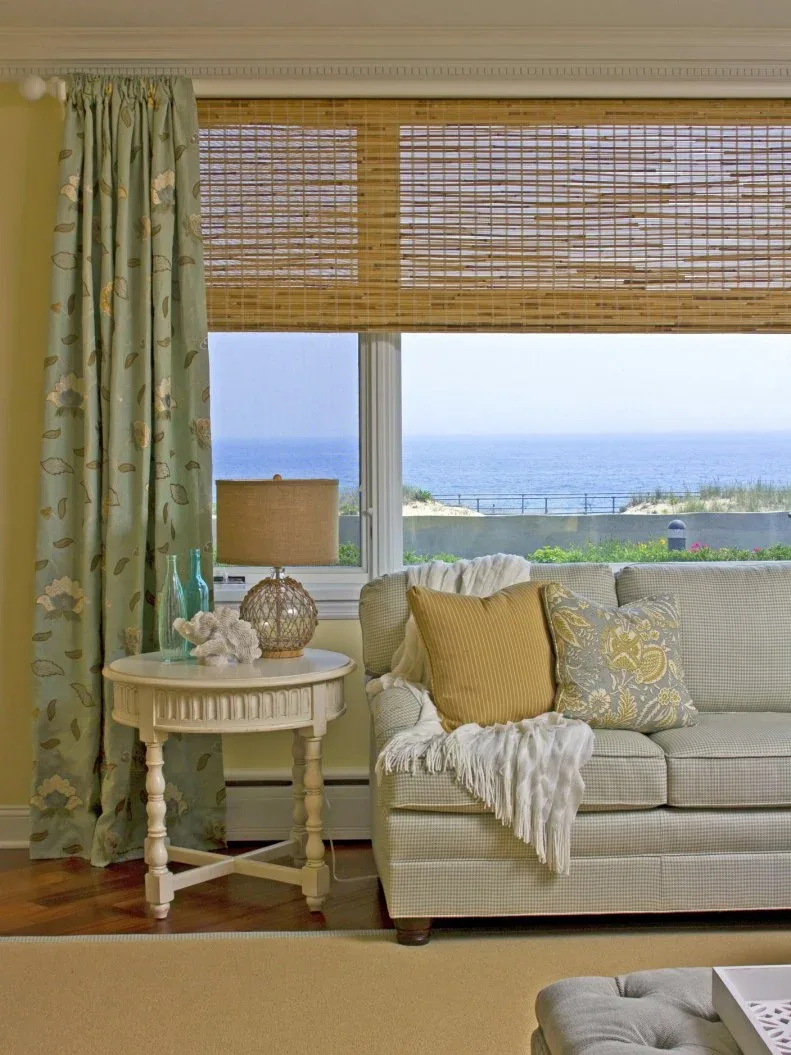
A textured blind covers the upper part of the broad window, with a softly patterned curtain at its side. Yellow cushions warm the pale sofa beneath it, creating a coastal palette that feels sunnier than blue and white alone. A small round table keeps a useful surface close to the seat.
Use two window layers when you need flexible control over light and privacy, but confirm how each will operate before installation. Choose curtain fabric that clears furniture and does not drag into a busy route. Test yellow accents against the floor and wall color to avoid an unintended clash.
IDEA 20 / 20
Let sheer curtains soften a quiet seating corner
 SaveSupport Non AI Creator
Source: hgtv.com
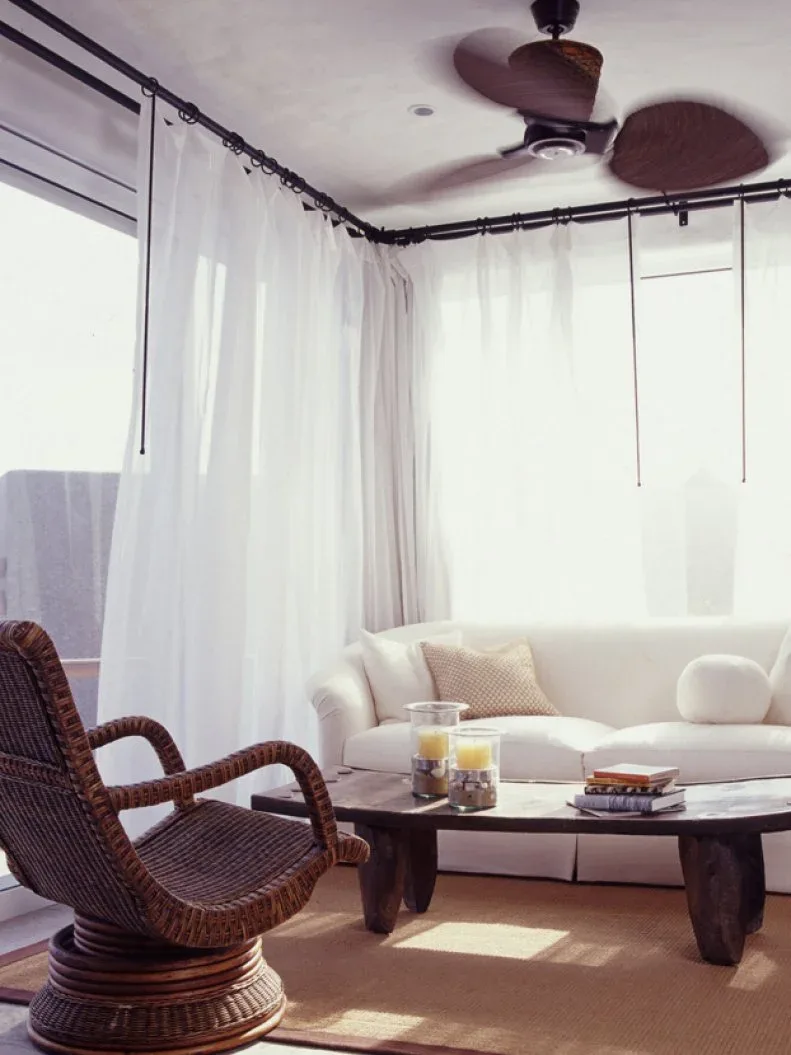
Sheer curtains soften the light around a pale sofa, with a dark woven chair providing contrast in the foreground. The low wooden table adds a solid shape between the lighter textiles. A dark ceiling fan repeats the chair's tone, so the room feels balanced without brightly colored accessories.
Sheers soften daylight but may not provide the privacy you need after dark; check the view from outside before choosing them alone. Make sure the chair is comfortable with its intended cushion and sitting height. Keep the table accessible without placing it so close that knees have little room.
BRING IT ALL TOGETHER
Borrow the relaxed feeling, then fit it to your home
Choose a comfortable arrangement and a few colors you enjoy rather than trying to reproduce an entire beach house. Stripes, soft green, warm wood or pale textiles can each supply enough coastal character.
Let everyday use guide the final details. Easy window access, washable fabrics and storage for the things your household uses will make the room feel more relaxed than another shelf of decorations.