Country dining rooms often bring together furniture with different histories, useful tableware and warmer textures. The result can be simple or richly patterned, but it needs a table and seats that work comfortably for the people who use them.
These photographs range from smaller kitchen nooks to larger timber-lined rooms. Compare storage access, chair support and lighting as well as the colors. Choose the details that help your meals feel relaxed, keeping enough space for serving dishes and the route between the table and kitchen.
PART 01
Make warm furniture the starting point
IDEA 01 / 20
Keep warm furniture against a paler paneled wall
 SaveSupport Non AI Creator
Image credit: Future PLC/Jason Ingram
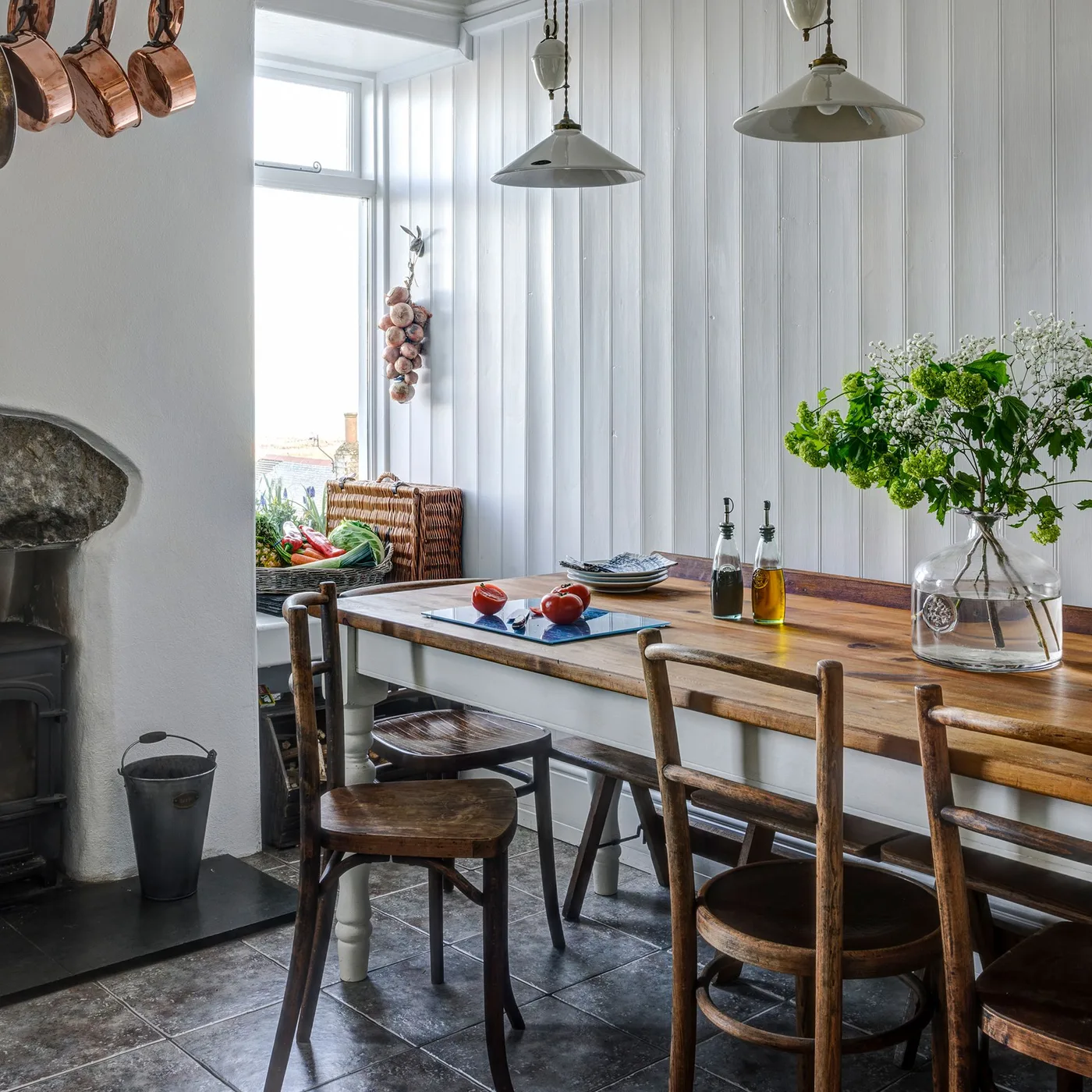
The warmer tabletop and darker chair frames provide most of the color in this pale paneled corner. Two pendant lights define the dining position above, while the narrow window supplies daylight at the side. The simple vertical wall treatment gives the different wooden surfaces a quiet background rather than adding another strong decorative pattern.
Look at the table finish and chair tones together before deciding whether any piece needs painting. Different woods can work when the seating feels comfortable and the outlines are connected. Test legroom under the table, and keep the nearby route clear so the quieter arrangement remains useful during meals as well as between them.
IDEA 02 / 20
Repeat dark chairs in a useful side table
 SaveSupport Non AI Creator
Image credit: Future PLC/Dominic Blackmore
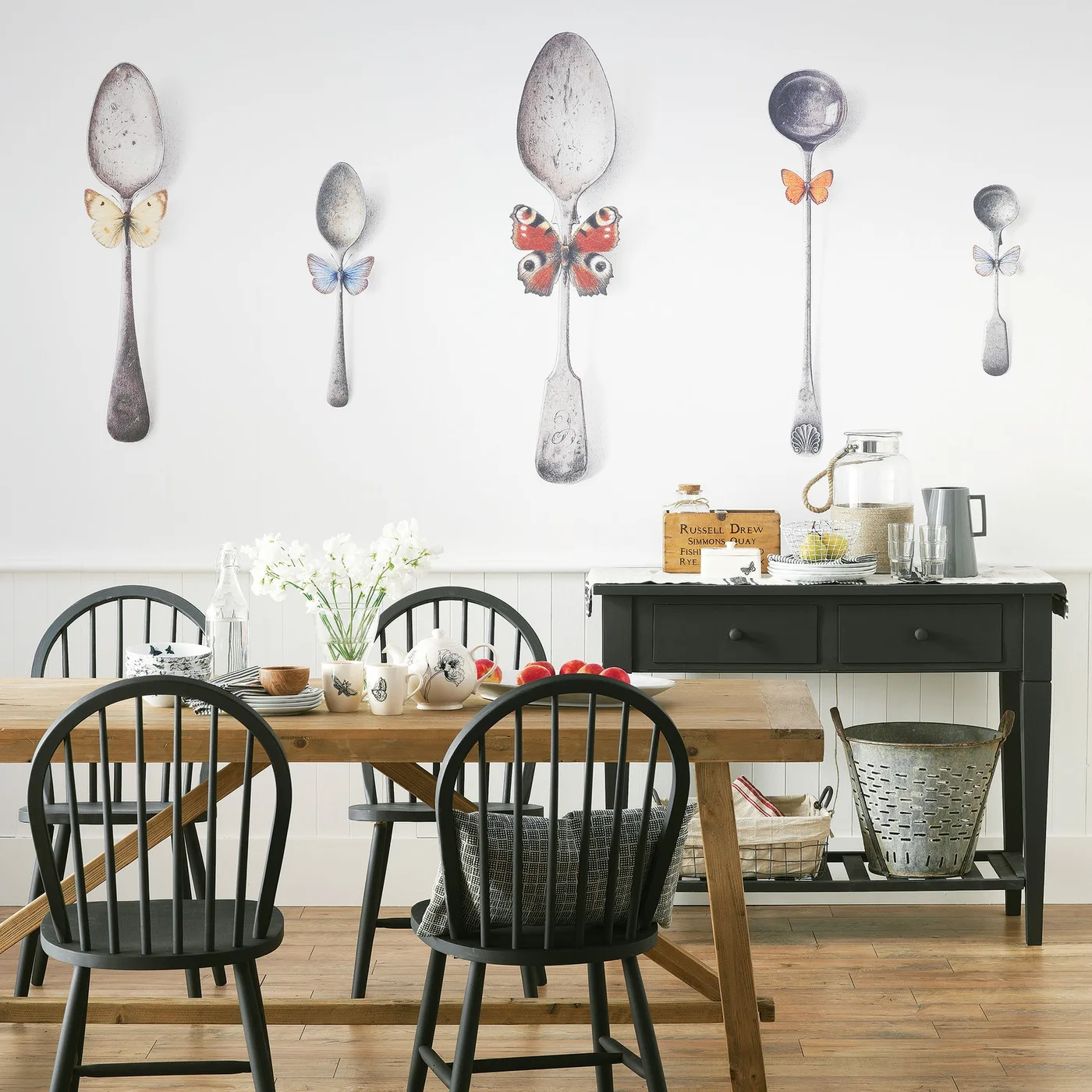
Black chairs and a dark side table repeat the same stronger outline around the wooden dining surface. A bench introduces a different seating shape without changing the warmer tabletop as the center. The spoon and butterfly wall decoration adds a playful note above, while pale walls keep the contrast between dark and wood finishes clear.
A side table can hold serving items during a meal, but it needs an accessible position beside occupied chairs. Test the bench and individual seats together rather than choosing them only for visual contrast. Use an appropriate finish if repainting furniture, and check its care instructions before placing hot dishes or wet glasses directly on the surface.
IDEA 03 / 20
Let timber-lined walls frame a round dining table
 SaveSupport Non AI Creator
Image credit: Allison Lind Interiors/Regan Wood
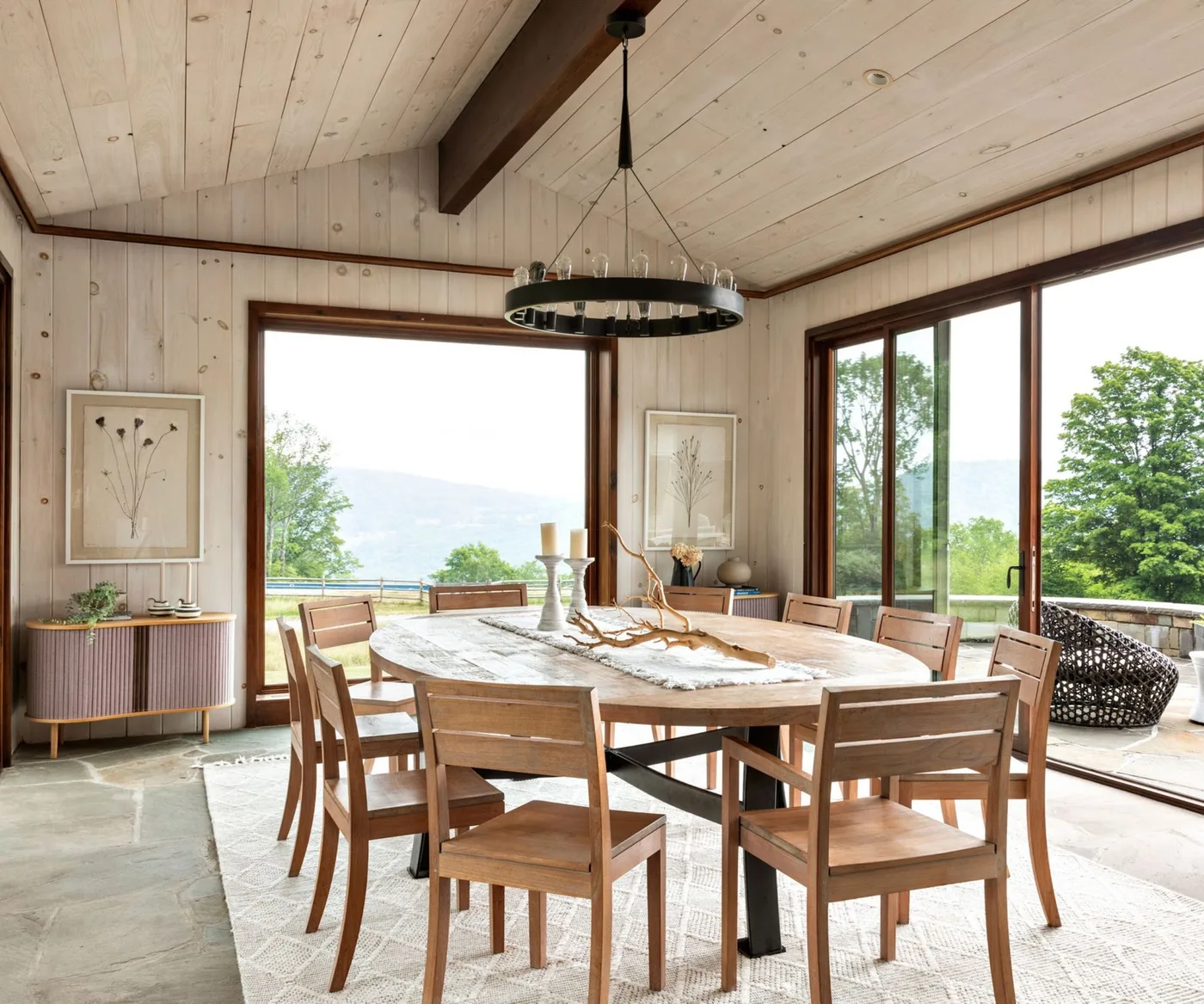
Pale wooden boards cover the walls and sloping ceiling, with a darker beam providing a clear overhead line. The round table and wooden chairs repeat warmer tones lower in the room, while broad windows leave the surrounding view open. A pale rug gives the dining group a softer boundary beneath the relatively simple furniture.
Check that the circular table leaves enough room to pull out every chair and pass toward the windows. A larger rug should suit chair movement and likely food spills. Where the room already has extensive timber texture, compare simpler fabrics and tableware first so the space does not need extra pattern on every surface.
IDEA 04 / 20
Soften a strong wooden table with covered chairs
 SaveSupport Non AI Creator
Image credit: Marie Flanigan Interiors/Julie Soefer Photography
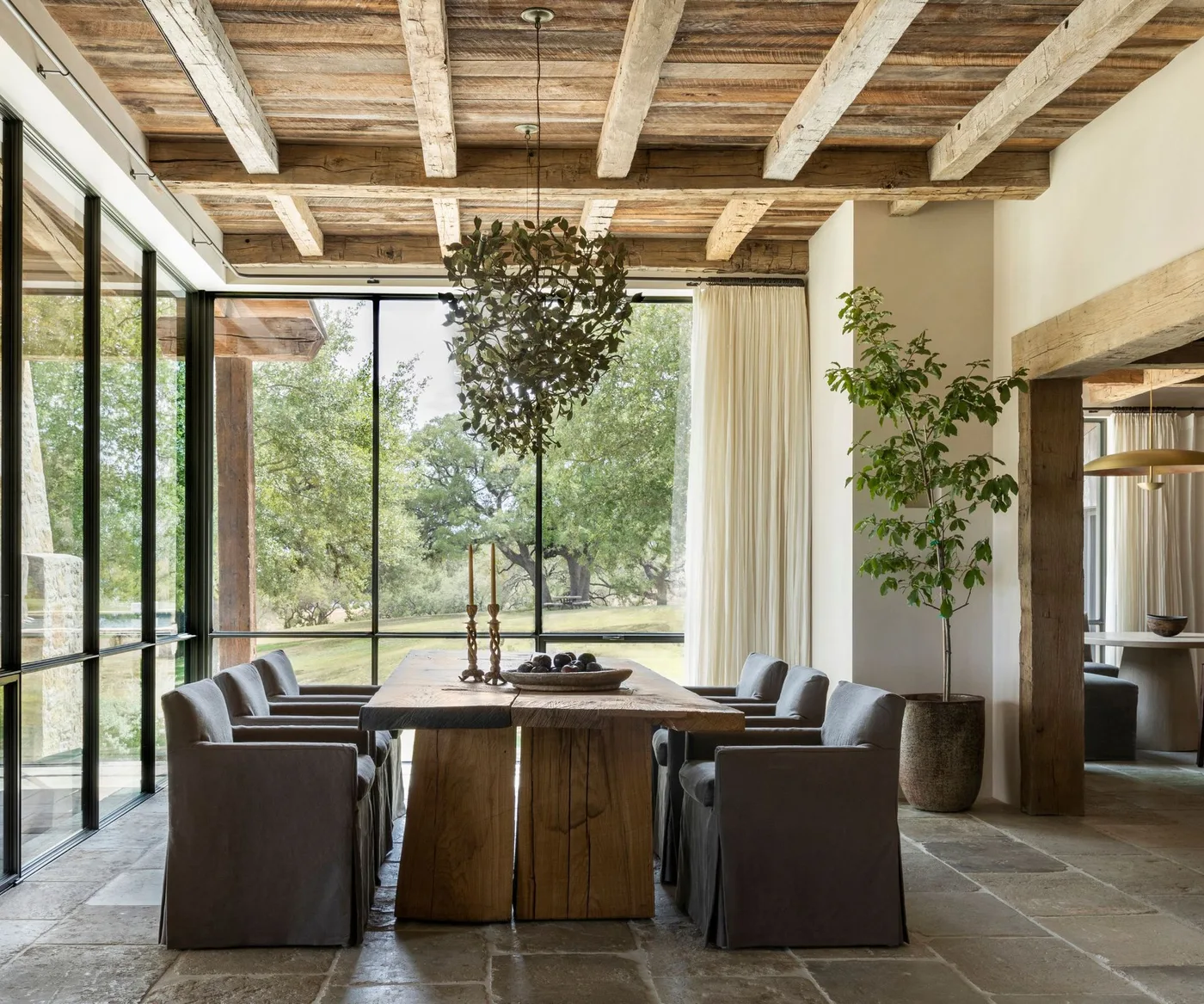
The substantial wooden table repeats the warmth of the ceiling beams in this bright dining room. Gray covered armchairs soften its stronger sides, while broad glazing leaves the surroundings visible beyond the dining group. The leafy ceiling light adds another texture above, with the mostly pale walls giving the wood and fabric enough space to stand out.
A substantial table can take up more useful floor area than its dimensions suggest once larger armchairs are included. Test the complete group with people seated and allow access behind them. Check whether chair covers are removable and how they are cleaned, and choose a practical tabletop care routine for the meals you normally serve.
IDEA 05 / 20
Keep a round table within the room's existing routes
 SaveSupport Non AI Creator
Image credit: Mel Yates
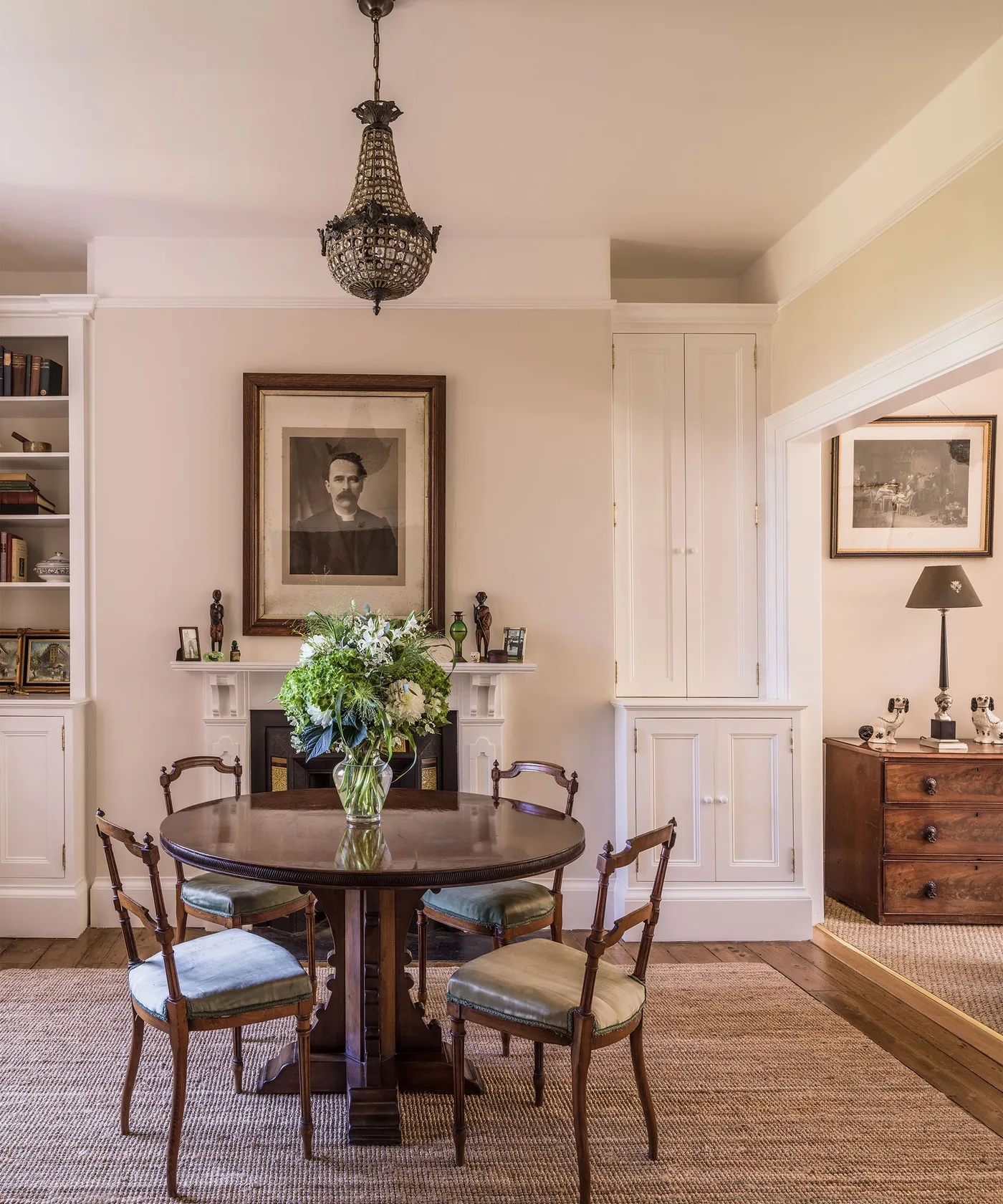
A round wooden table sits within the pale cupboards and familiar architectural outlines of this room. The curved chairs leave more visible space around the table than a heavier upholstered group would. Framed artwork and the fireplace give the wall detail, while the opening at the side makes the connection with the next room apparent.
Use the room's doors and cupboard fronts to plan the dining position before choosing a table size. A circular shape does not automatically solve a tight route, especially with chairs occupied. Check the table base for legroom, and leave a clear path toward the adjoining room instead of filling the remaining corner with another piece of furniture.
PART 02
Choose seating for relaxed everyday meals
IDEA 06 / 20
Make a built-in bench part of the storage wall
 SaveSupport Non AI Creator
Image credit: Future PLC
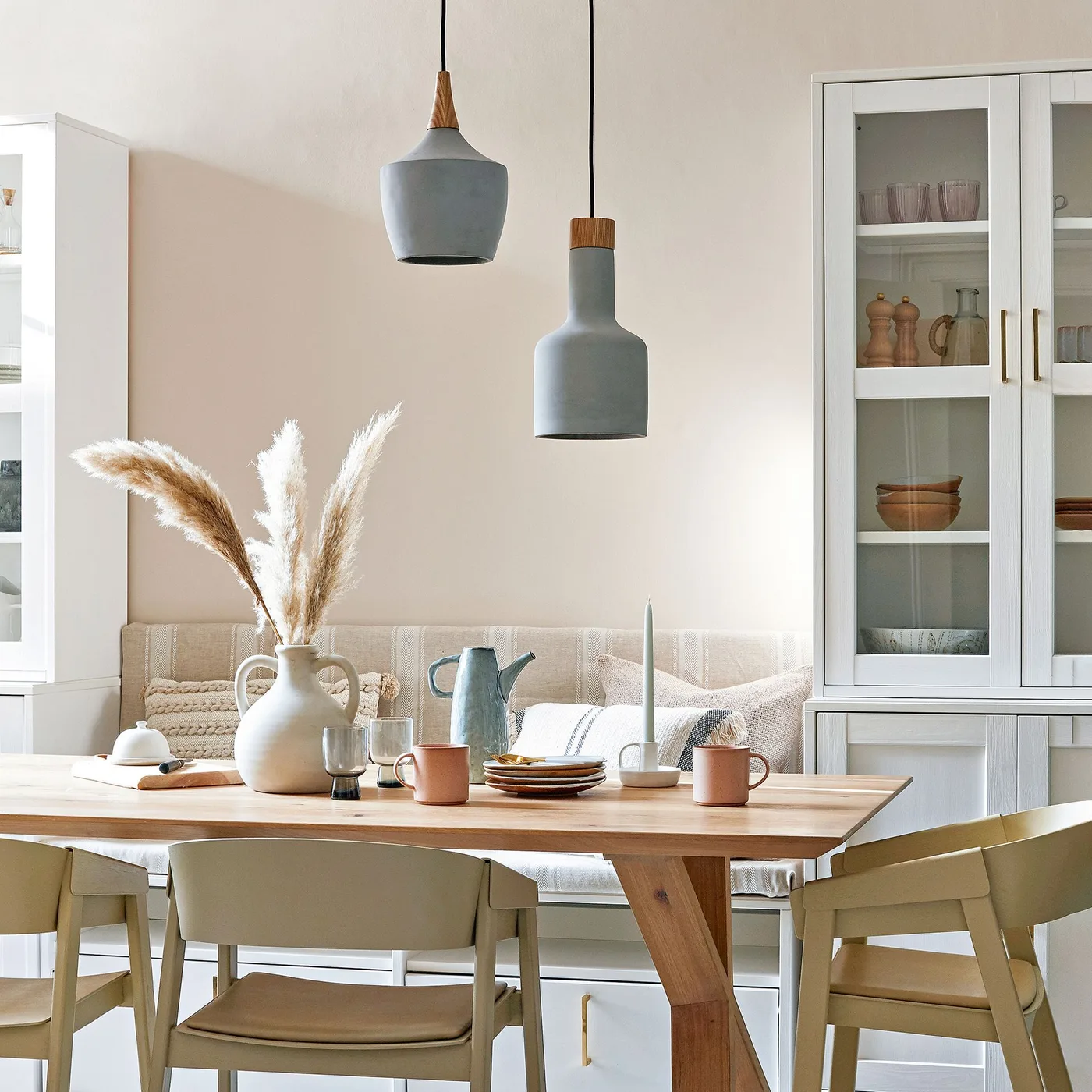
A cushioned bench shares the wall with tall cupboards, giving this country dining area seating and storage in one defined position. The wooden table brings warmth between the pale fitted pieces, while painted chairs supply individual seats opposite. Two hanging lights continue the arrangement above the tabletop without introducing a busy decorative ceiling feature.
Check the bench depth and back support before settling its position against the table. People need to reach their plates comfortably rather than leaning from a deep lounging seat. Allow the cupboard doors to open when dining is underway, and consider washable cushion covers where the bench will handle everyday meals and frequent spills.
IDEA 07 / 20
Keep a compact dining bench beside useful daylight
 SaveSupport Non AI Creator
Image credit: Future PLC/Lizzie Orme
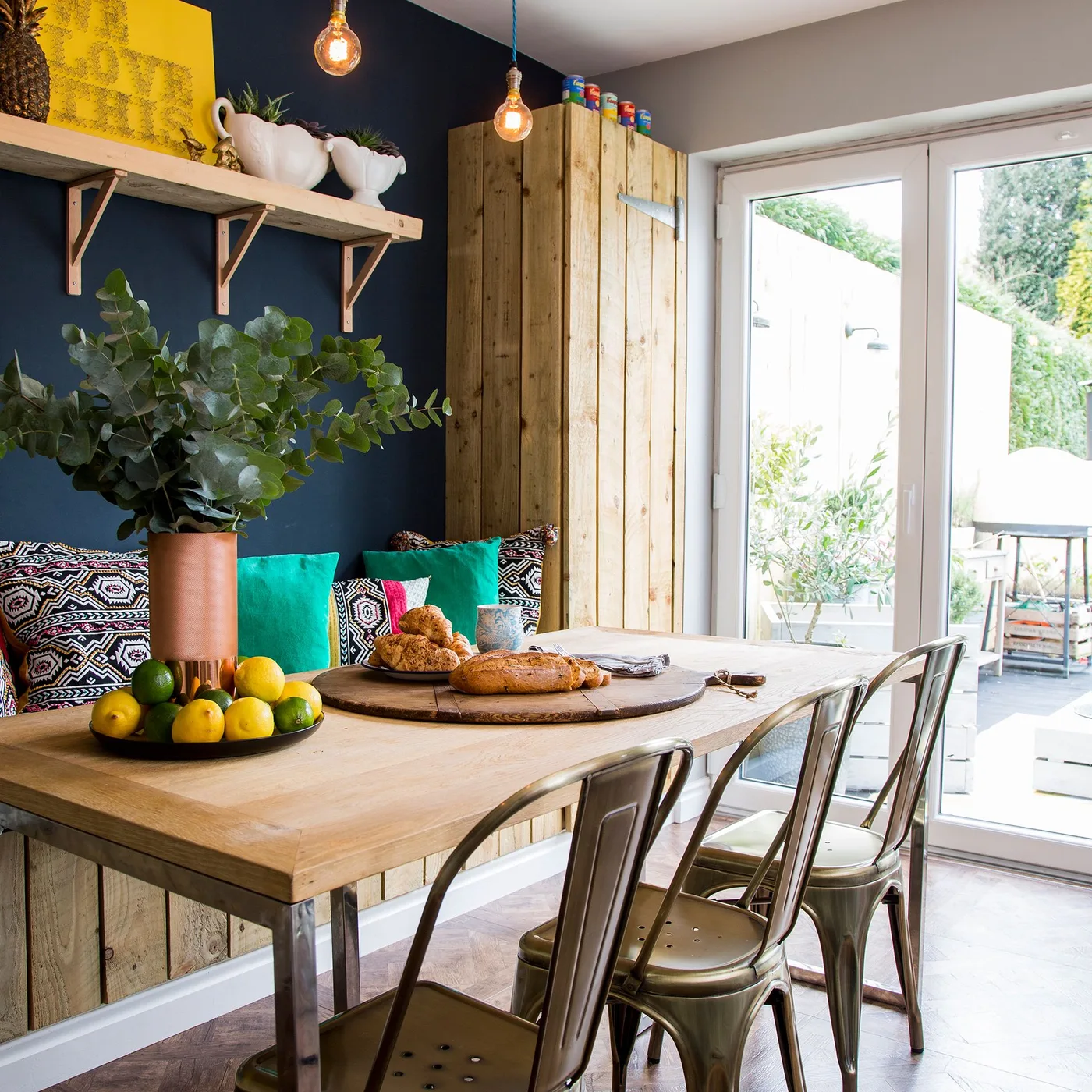
A cushioned bench sits against the dark blue wall beside the glazed doors. The wooden table and taller wooden cupboard bring warmer tones into the nook, while metal chairs give the open side a lighter outline. Bright cushions concentrate the color around the seat, leaving the route toward the doors easy to identify in the photograph.
Test the table position with chairs pulled back and the doors in use. Bench cushions need enough support for eating as well as comfort, so avoid making the seat too deep with extra pillows. Choose fabric that can be cleaned after meals, and keep the surface beside the door free enough for daily movement between indoors and outdoors.
IDEA 08 / 20
Use a window corner for a cushioned eating area
 SaveSupport Non AI Creator
Image credit: Bess Friday Photography
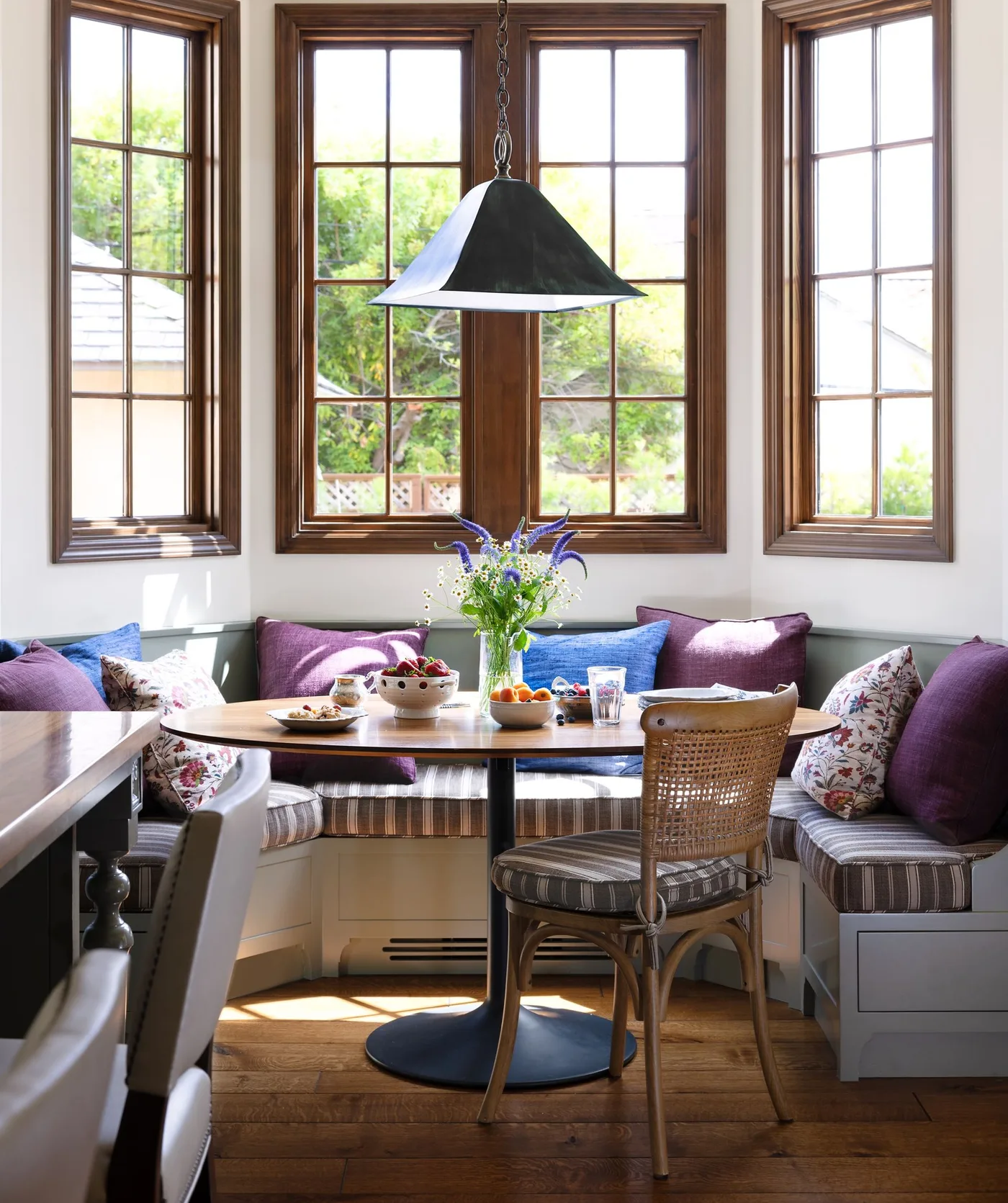
Striped cushions wrap the window corner behind an oval wooden table. Purple and floral pillows give the nook more color, while the dark window trim and pendant make clearer outlines above. A woven-back chair adds an individual seat at the open side, keeping the arrangement connected with warm furniture rather than a fully matching upholstered set.
Check the reach to the table from the deepest part of the corner bench. Limit loose pillows to what supports comfortable dining, and allow access for cleaning beneath and behind the seat. Choose suitable washable covers where possible, and make sure nearby window controls can be reached without standing awkwardly on the bench.
IDEA 09 / 20
Give softer dining seats a practical fabric choice
 SaveSupport Non AI Creator
Image credit: Katie Harbison Design
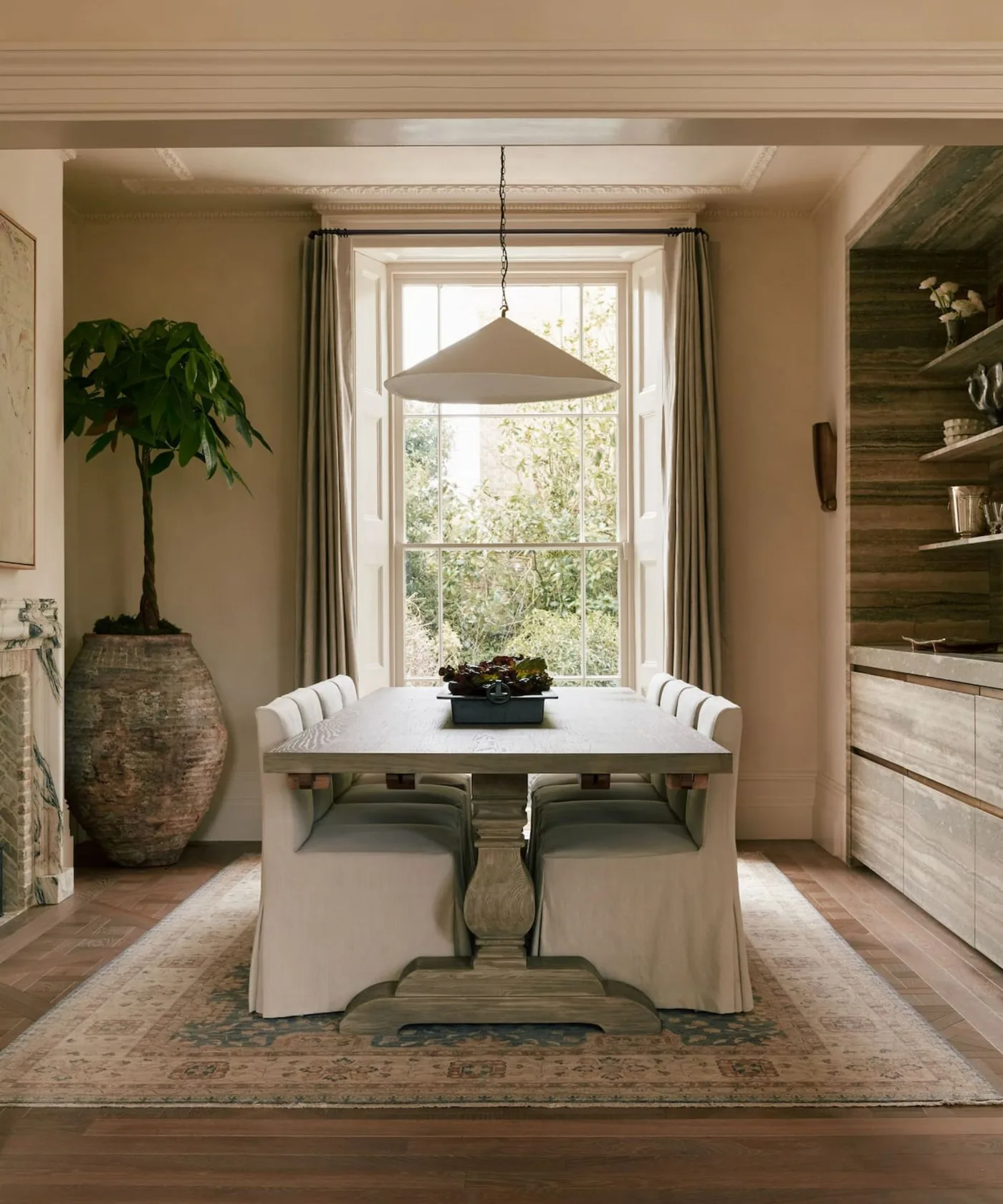
Pale skirted chairs give this wooden table a softer perimeter. Their quiet fabric connects with the wall color, while the recessed wooden storage brings warmer texture beside the dining group. A large plant container adds another substantial shape near the window, balancing the room's softer seating without turning the tabletop into a crowded display.
Before choosing skirted dining chairs, check how the covers are cleaned and whether they can be removed. Their fabric should suit the meals and contact they will receive. Test legroom around the pedestal base, keep the plant container outside the chair route, and retain access to the storage when diners are seated.
IDEA 10 / 20
Use familiar wooden chairs around a larger round table
 SaveSupport Non AI Creator
Image credit: Future / Davide Lovatti
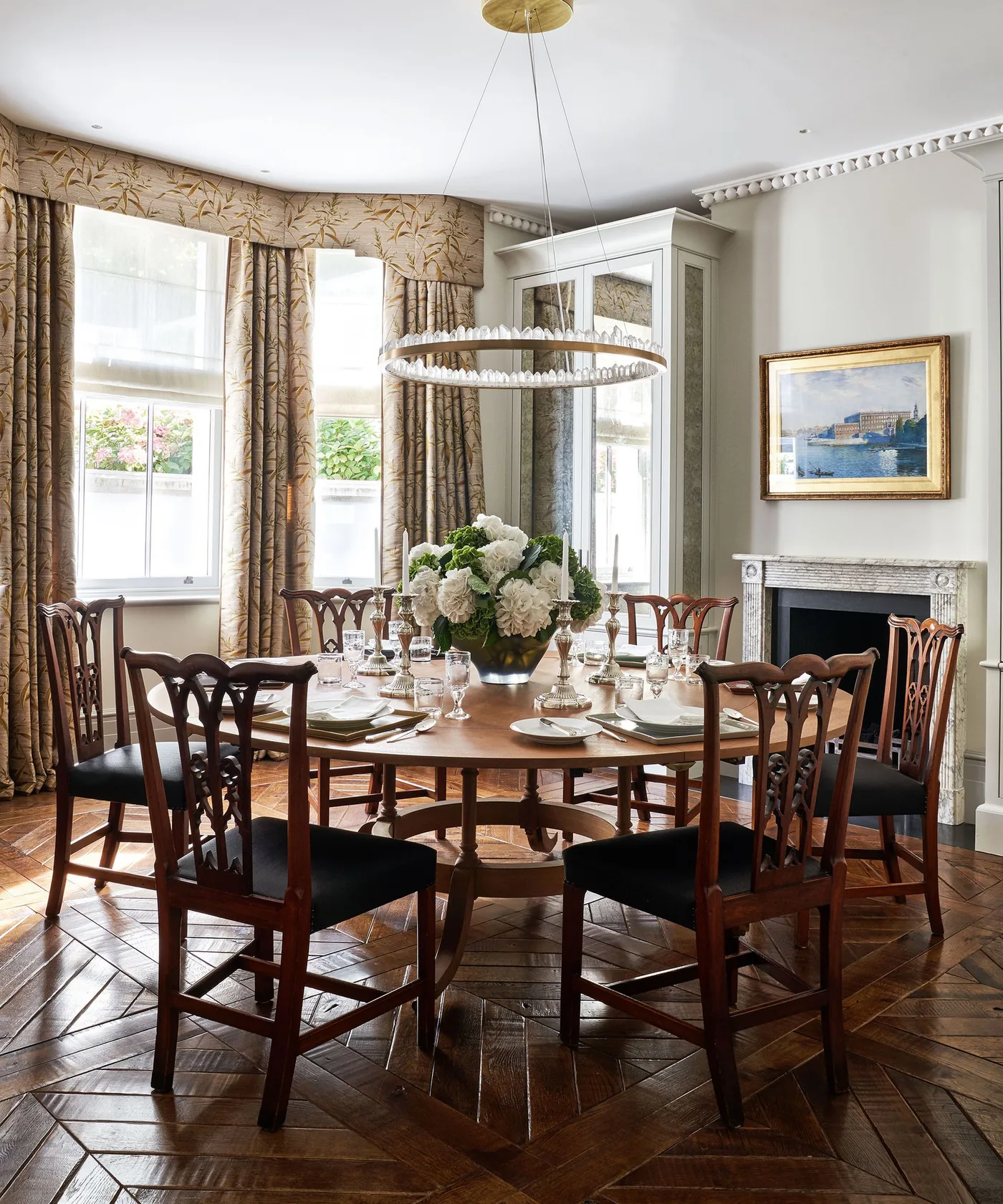
Shaped wooden chairs repeat around the larger round table, giving the dining group a familiar outline. Patterned curtains soften the windows above, while the circular light relates to the tabletop below it. The pale walls and cabinet provide quieter surrounding surfaces, allowing the wood furniture and curtain fabric to carry the main decorative detail.
Try the chairs around the actual table size before relying on a seating count. Each person needs usable elbow space and comfortable legroom near the base. Check how the darker seat material is cleaned, and choose a centerpiece that can be moved easily so serving dishes do not compete with a permanent decorative arrangement.
PART 03
Bring useful storage into the room
IDEA 11 / 20
Keep frequently used dishes beside the dining table
 SaveSupport Non AI Creator
Image credit: Future PLC/Dominic Blackmore
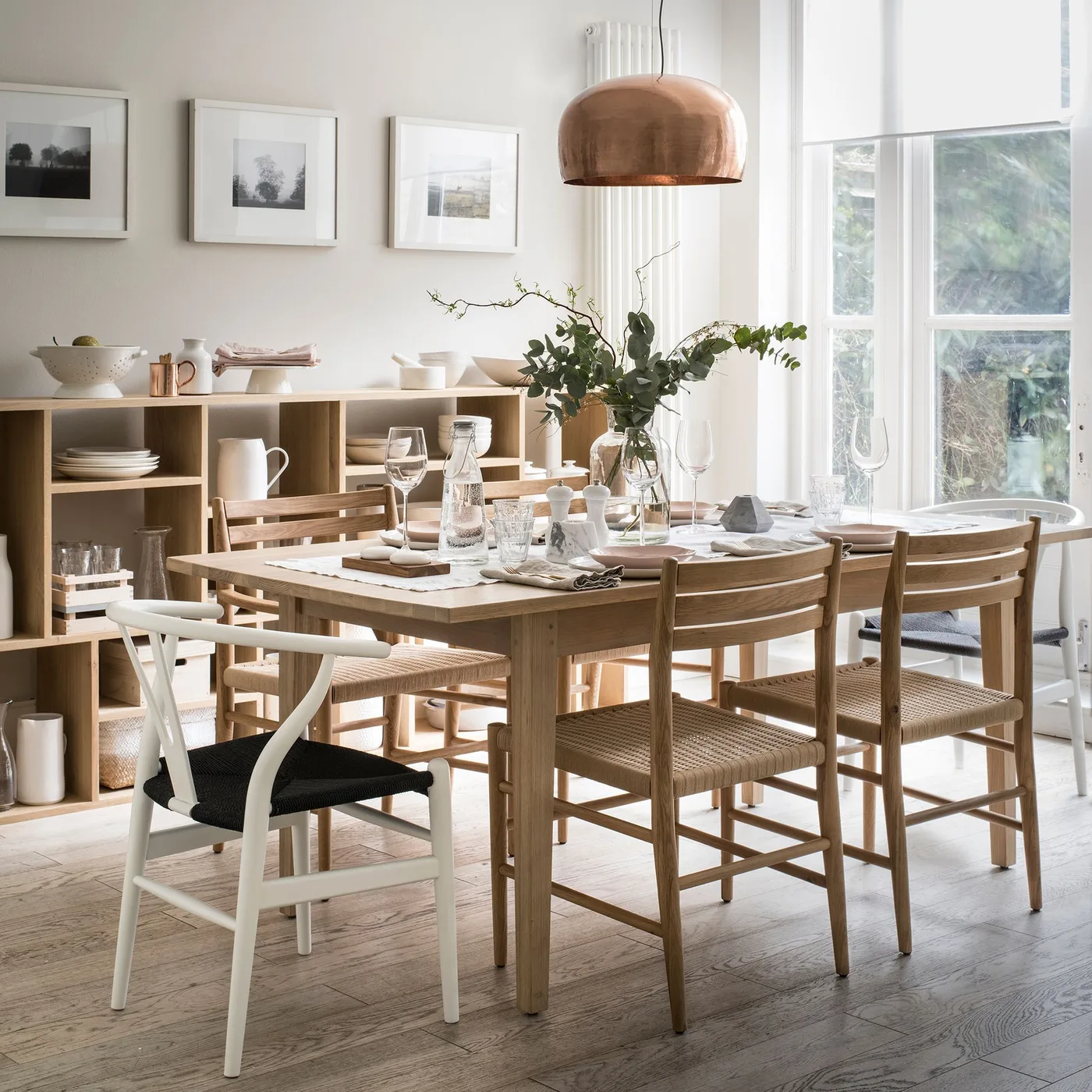
Low wooden cubbies put dishes close to the table and make them part of the room's everyday view. The furniture repeats warmer tones below pale walls, while small framed pictures keep the upper wall organized. The metallic pendant gives the dining group a different reflection, adding detail without introducing another large patterned surface around the storage.
Choose open storage according to the dishes you use rather than the containers that look best on a shelf. Keep stacks at a manageable height and heavier items easy to lift. Check the route between storage and occupied chairs, and limit display pieces so the useful cups and plates remain straightforward to reach and clean.
IDEA 12 / 20
Use a darker cupboard to contain dining supplies
 SaveSupport Non AI Creator
Image credit: Future PLC/Dominic Blackmore
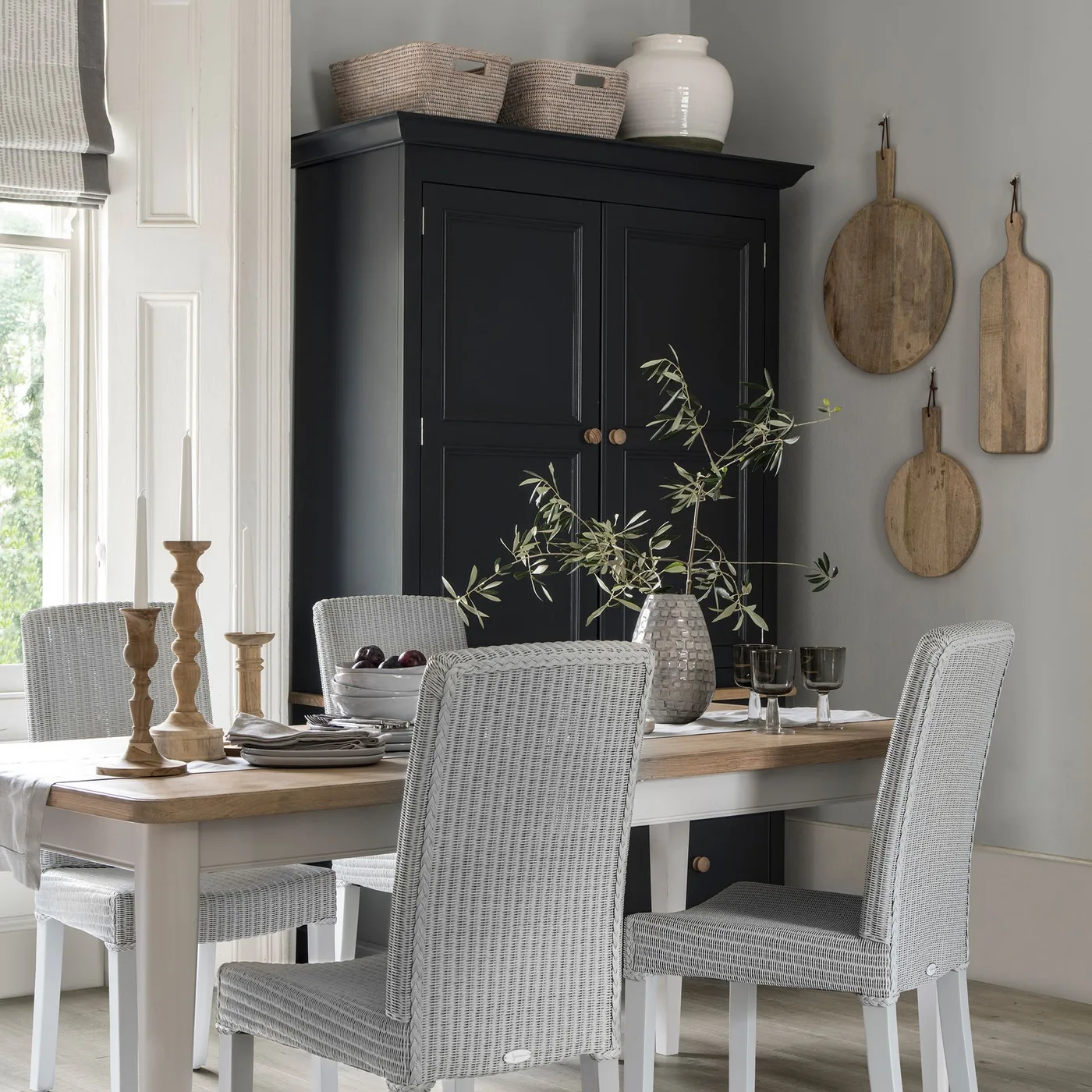
A black paneled cupboard gives this dining room a strong storage feature behind the paler furniture. Woven chair surfaces introduce softer texture around the table, while baskets and cutting boards add warmer details above and beside the cabinet. Keeping the surrounding wall pale makes the larger dark piece feel deliberate without darkening every visible surface.
Measure the cupboard for the dishes and linens it will hold, and check its doors with the table in position. Secure taller furniture as appropriate and keep upper baskets light enough to retrieve safely. Choose chair surfaces with suitable care instructions, and leave the table available for meals rather than using it to store whatever the cupboard cannot accommodate.
IDEA 13 / 20
Keep a plate dresser useful within a darker room
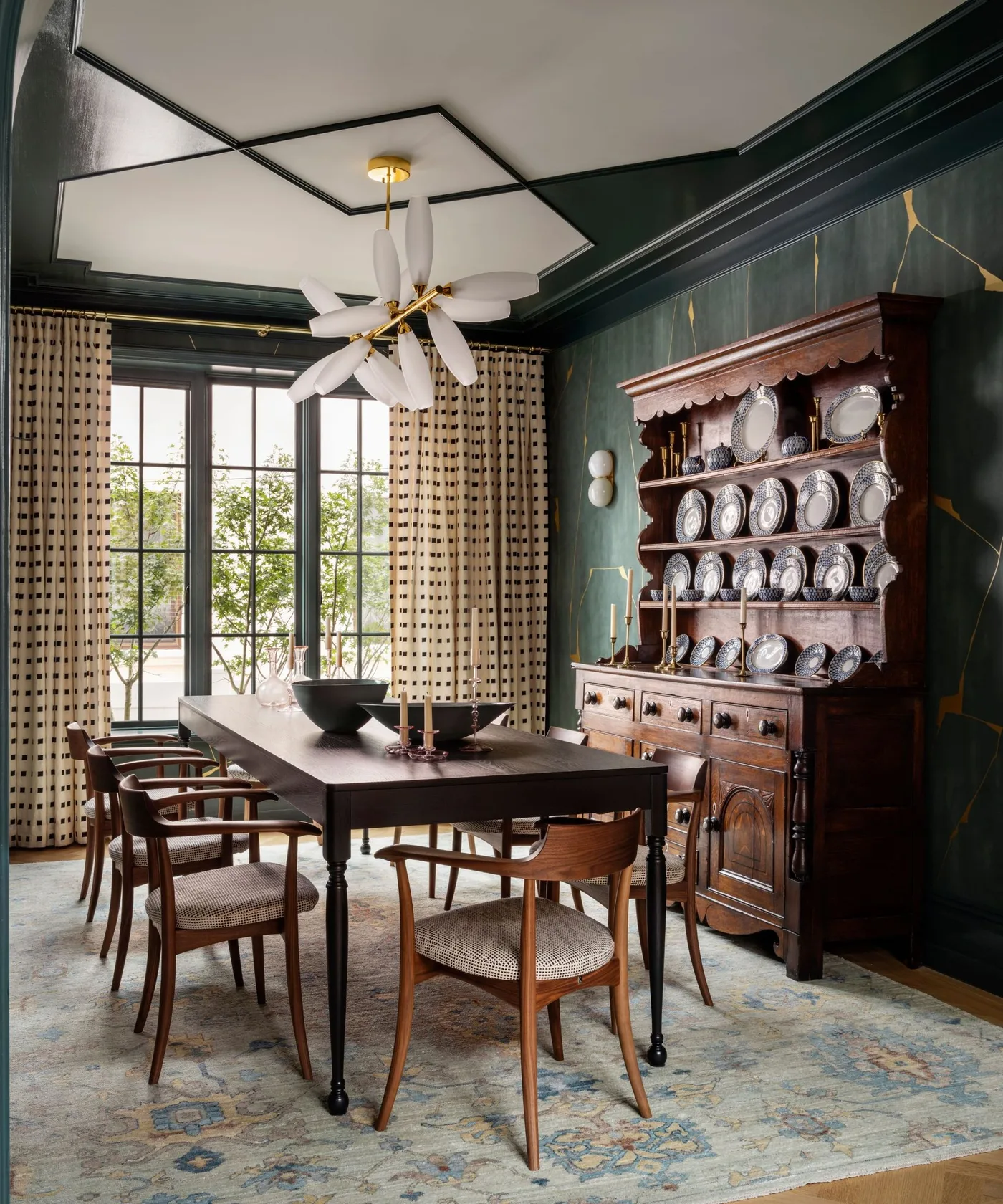 SaveSupport Non AI Creator
Image credit: JH Interior Design
The wooden plate dresser stands out against the dark green wall, adding a familiar storage outline beside the table. Its pale dishes create a repeated lighter detail above the drawers. Curved wooden chairs keep the furniture connected below, while the pale patterned rug introduces another softer area beneath the otherwise darker dining group.
Plan which plates will be displayed and which need more protected everyday storage. Secure the dresser and dishes appropriately, keeping frequently used items within comfortable reach. Test the rug with chairs moving across it, and compare its cleaning requirements with regular meals so the softer floor layer does not become difficult to maintain.
IDEA 14 / 20
Let dining share a warm bookcase-lined room
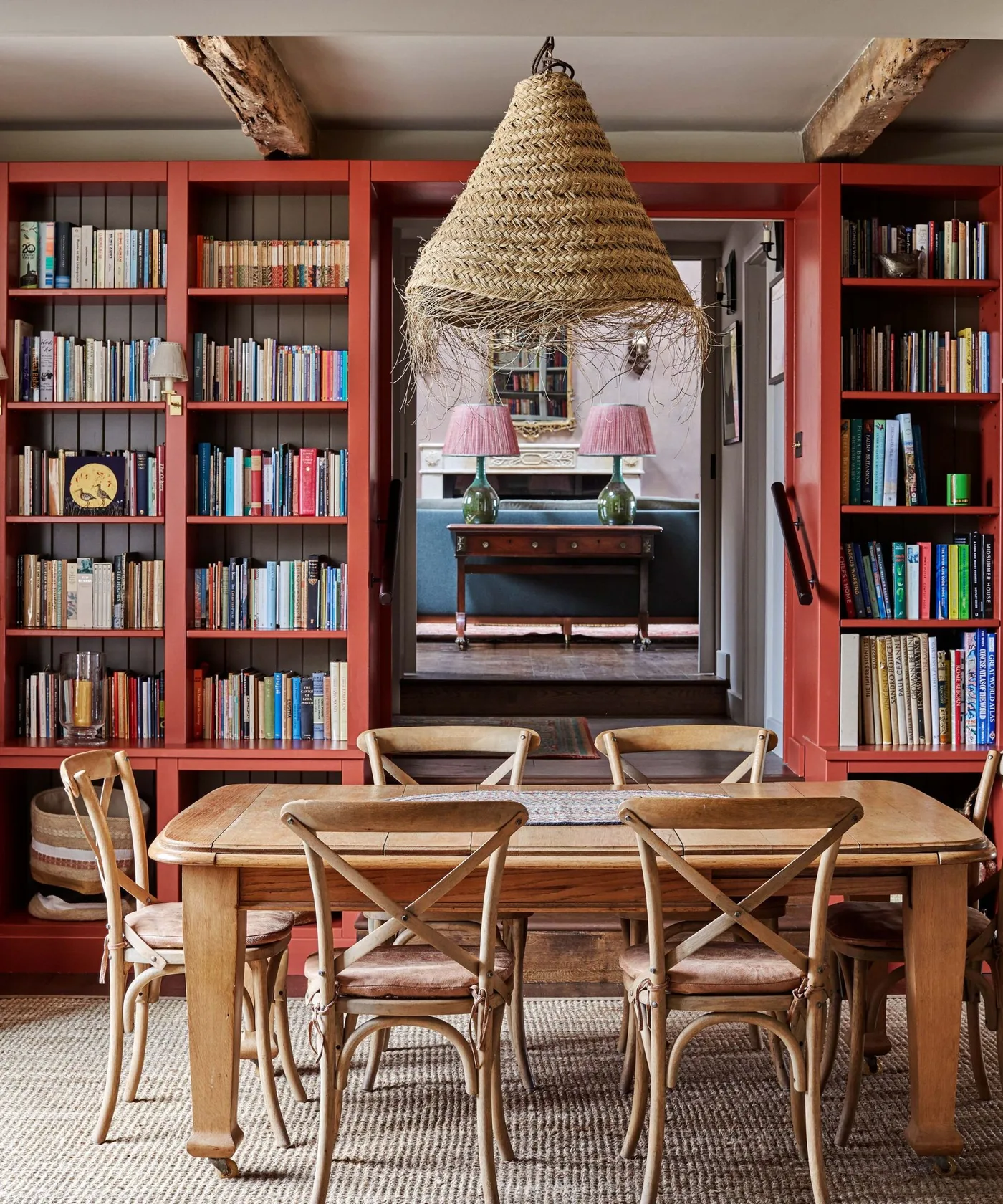 SaveSupport Non AI Creator
Image credit: Future
Red bookcases make a warm backdrop behind the wooden table and cross-back chairs. Exposed beams introduce stronger horizontal lines above, while the large woven pendant adds a different texture between the ceiling and dining group. The open doorway through the shelves keeps the room connected with the rest of the house rather than feeling entirely enclosed by storage.
If dining shares a room with books, keep enough space to reach the shelves with the chairs in use. Place food and drinks away from exposed volumes, and check the pendant's light from a seated position. Secure larger shelving appropriately and choose a dining layout that preserves the route through the doorway during a busy meal.
IDEA 15 / 20
Give an open dresser a connected painted color
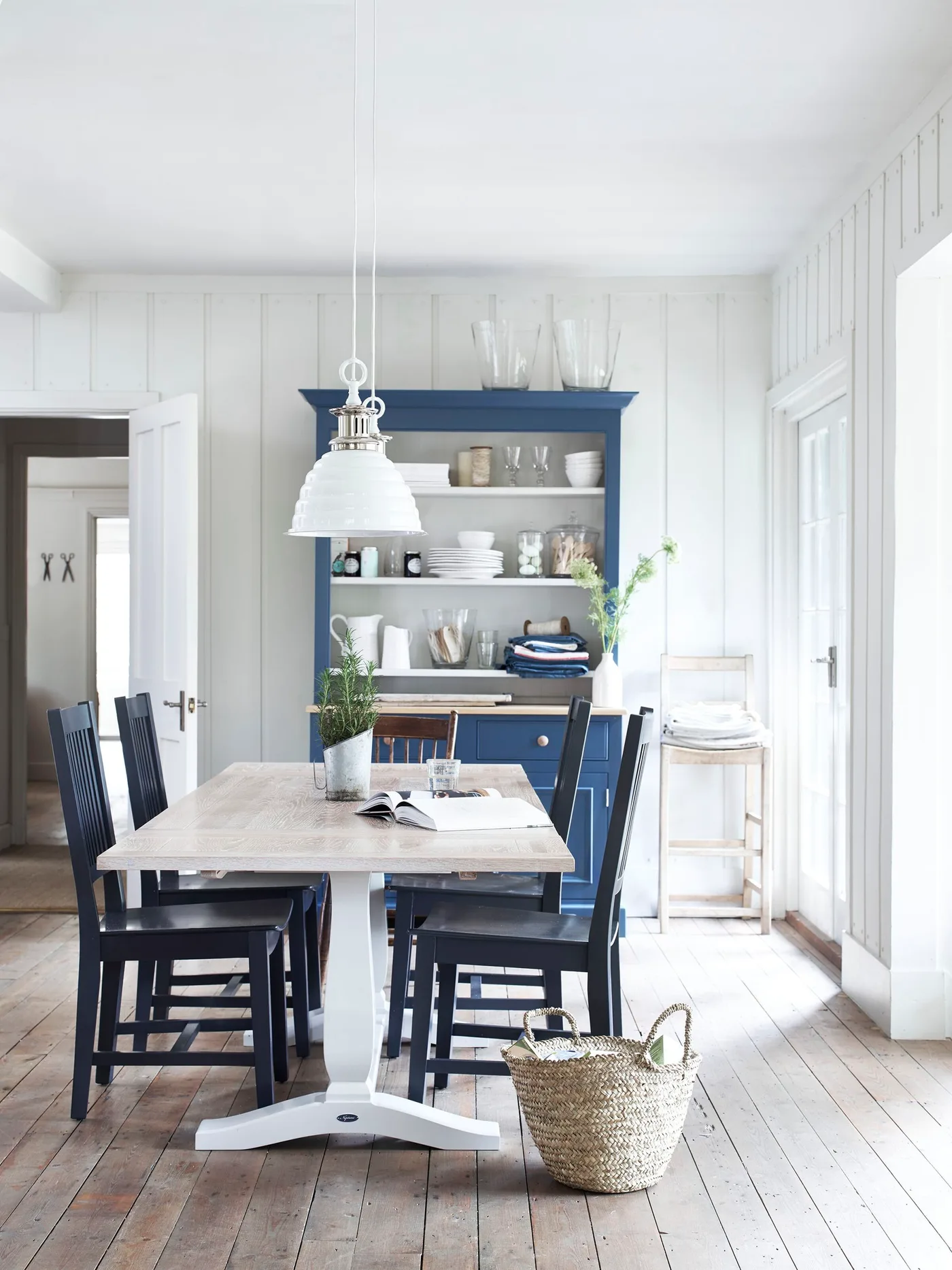 SaveSupport Non AI Creator
Image credit: Neptune
The blue dresser and chairs repeat a clear painted accent against pale paneling. White dishes on the shelves connect with the pendant and lighter table base, while the wooden tabletop provides a warmer central surface. A woven basket adds another texture near the floor, keeping the blue and white furniture from becoming the room's only visible finish.
Choose the painted accent beside the actual tabletop finish and wall color. Open dresser shelves need a cleaning routine, so reserve them for items you use or enjoy maintaining. Check that the cabinet remains accessible with chairs pulled out, and give any floor basket a useful location away from the passage between the table and door.
PART 04
Connect color and pattern with the dining group
IDEA 16 / 20
Keep a leafy blue wall behind warmer furniture
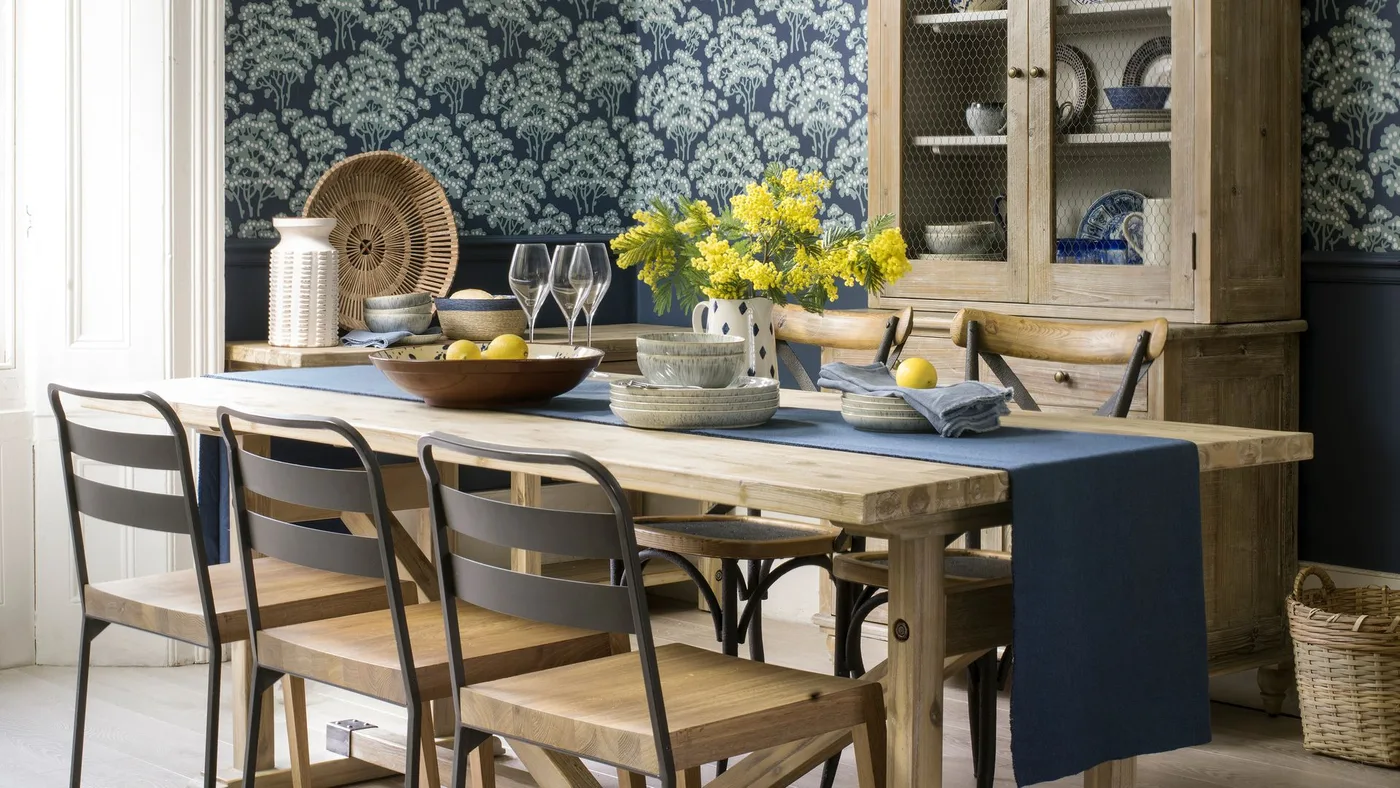 SaveSupport Non AI Creator
Image credit: Future PLC/Dominic Blackmore
Dark blue leafy wallpaper gives this room a stronger background behind the warmer wooden table and cupboard. A blue runner carries a related color onto the tabletop, while the chairs introduce smaller dark outlines around it. The pale floor leaves a quieter lower area, allowing the wall print to stay the main decorative pattern around the dining group.
Compare the print with a larger area of the chosen cabinet and table finish before buying. A richer wall works best when the dining surface still has room for everyday dishes. Test the chair arrangement for comfort, keep cupboard access clear, and choose a runner with washing instructions that fit how often the table is used.
IDEA 17 / 20
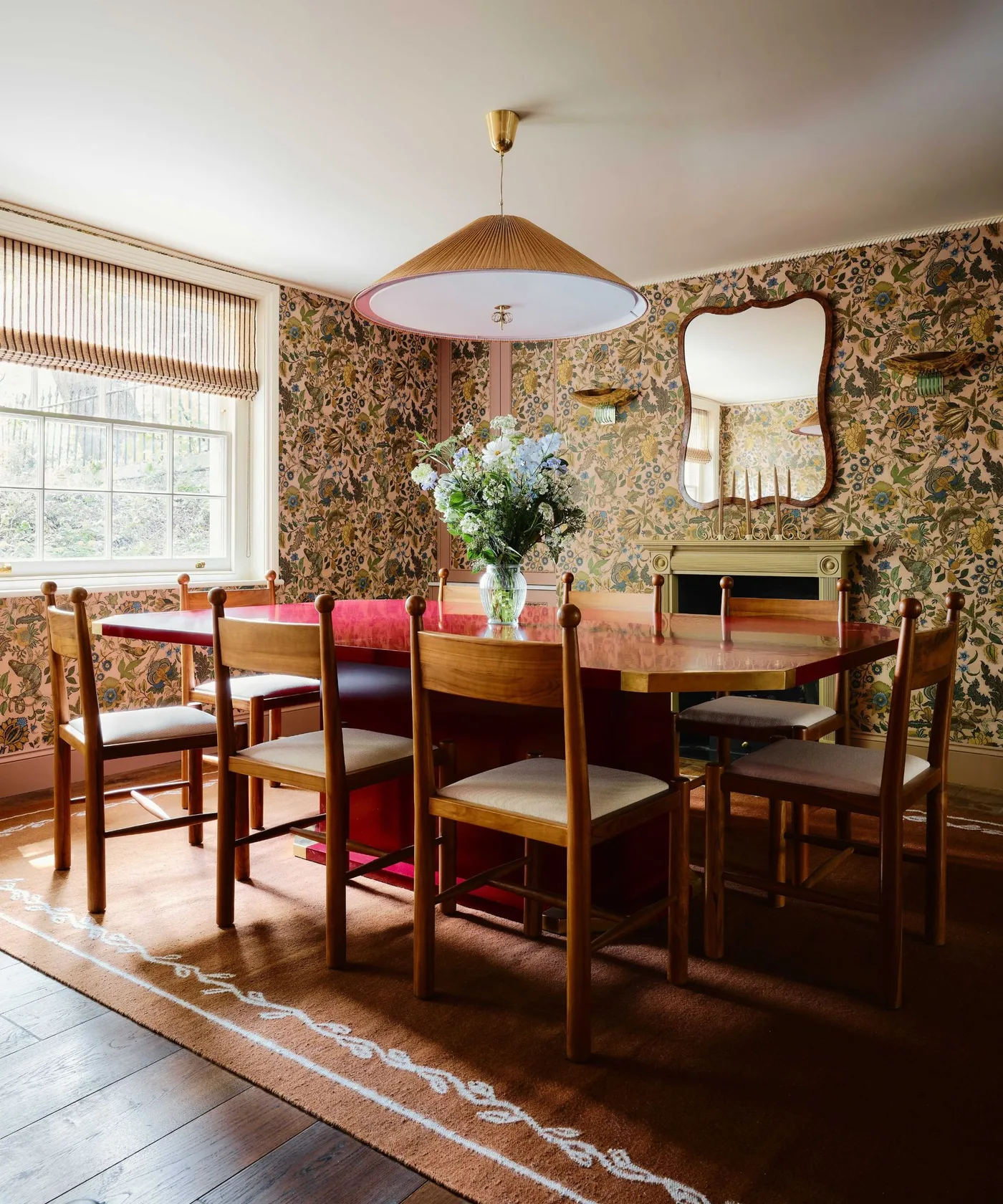
Connect a warmer table with a floral wall
 SaveSupport Non AI Creator
Image credit: Dining room designed by Tiffany Duggan, Founder of Studio Duggan and Trove by Studio Duggan
The red table gives the room a warm central surface beneath floral wallpaper. Wooden chairs and pale seats bring quieter shapes around it, while the curved mirror repeats a softer outline on the wall. The broad pendant and lighter ceiling help separate the upper space from the more detailed pattern surrounding the dining group.
Check the wall print and table color under the lighting used for evening meals. Stronger colors can change noticeably between daylight and artificial light. Choose chair seats that are comfortable and practical to clean, and keep the table's decorative pieces easy to move so the more colorful room remains straightforward to serve and eat in.
IDEA 18 / 20
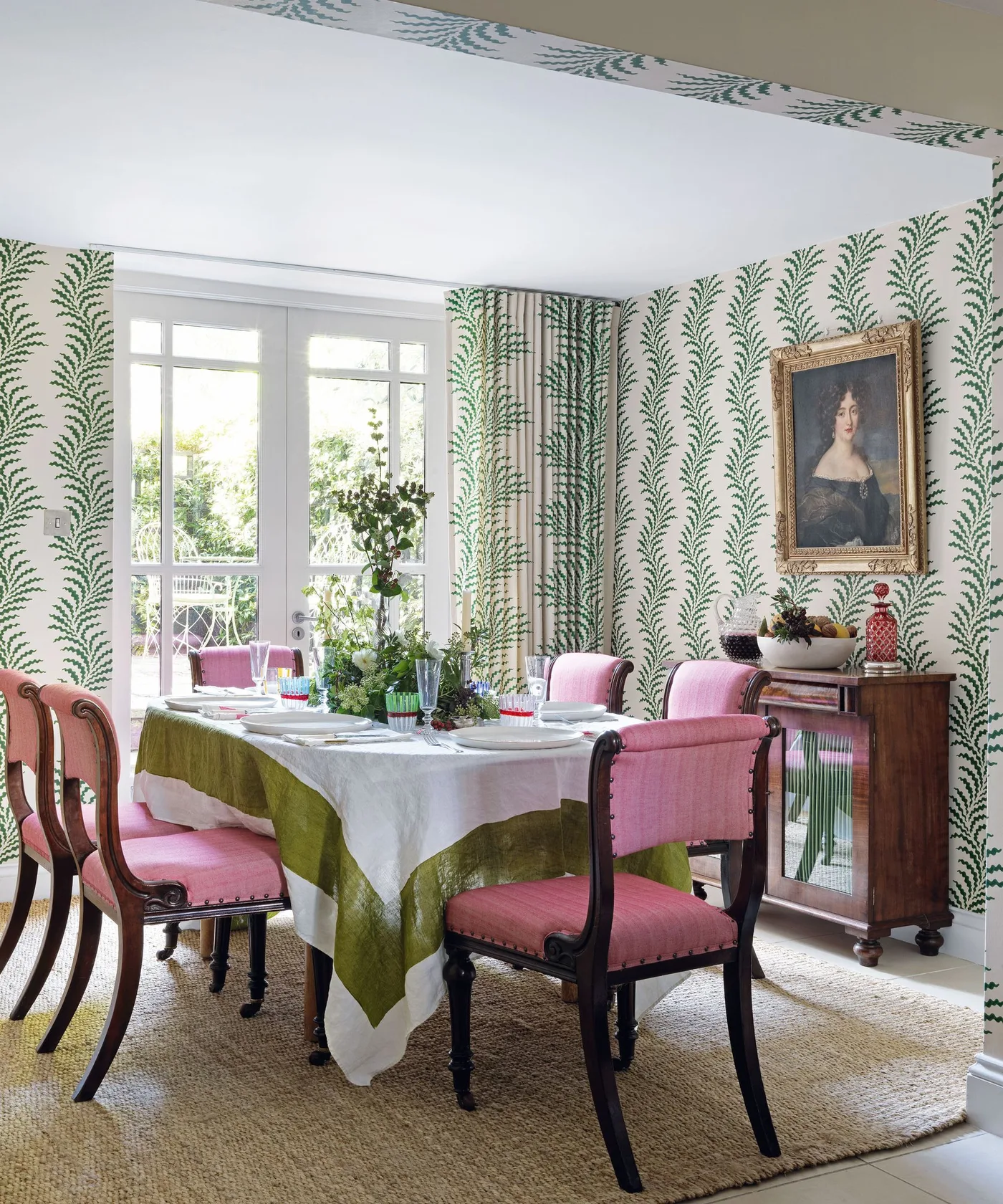
Balance green leaf prints with softer pink seats
 SaveSupport Non AI Creator
Image credit: Future
Green leaf prints repeat across the walls and curtains, giving this dining room a strongly connected pattern. Pink upholstered chairs add a warmer contrast around the table, while layered cloths bring the wall colors into the meal setting. The wooden sideboard supplies a familiar storage piece beside the printed surfaces without needing the same fabric or paint finish.
Matching wall and curtain patterns can become visually strong, so try larger samples together before committing. Choose tablecloths and chair fabrics for their actual cleaning requirements, and check that cloth edges do not catch diners or chair arms. Leave enough working space on the sideboard for serving rather than filling it entirely with decorative objects.
IDEA 19 / 20
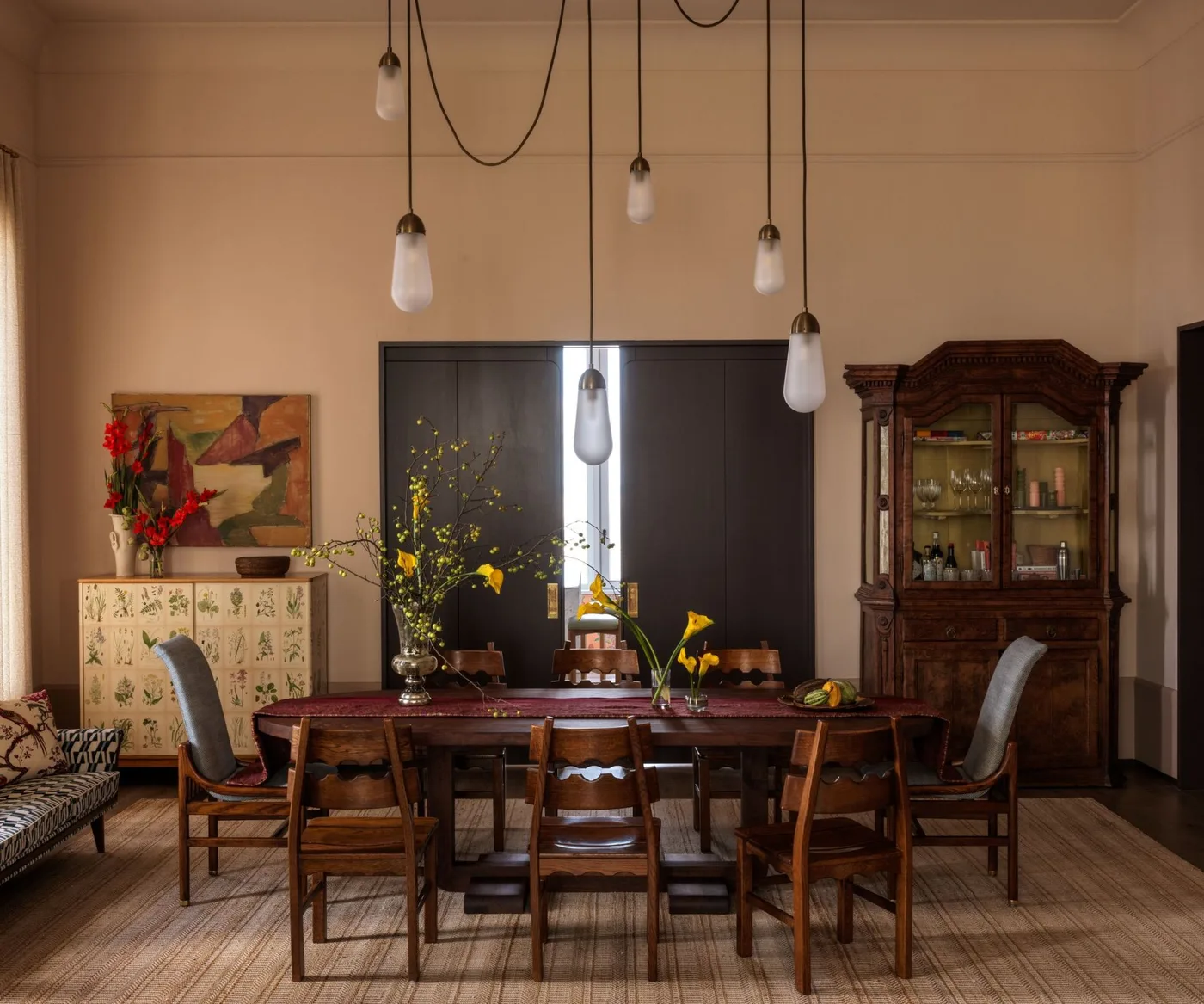
Use a warm wall color around collected furniture
 SaveSupport Non AI Creator
Image credit: Hendricks Churchill
Pale peach walls connect the different pieces of furniture around this dining table. The dark glass-front cupboard gives the room a stronger storage outline, while the wooden table and chairs repeat warmer tones lower down. Several hanging lights create another layer above, making the room feel collected without requiring one matching furniture set throughout.
When gathering different furniture pieces, check each seat against the table before considering the finished appearance. The cupboard needs useful access and enough capacity for the dishes you keep. Plan lighting around the settled table position and seated views, and leave some tabletop clear so the collected details do not interfere with the meal.
IDEA 20 / 20
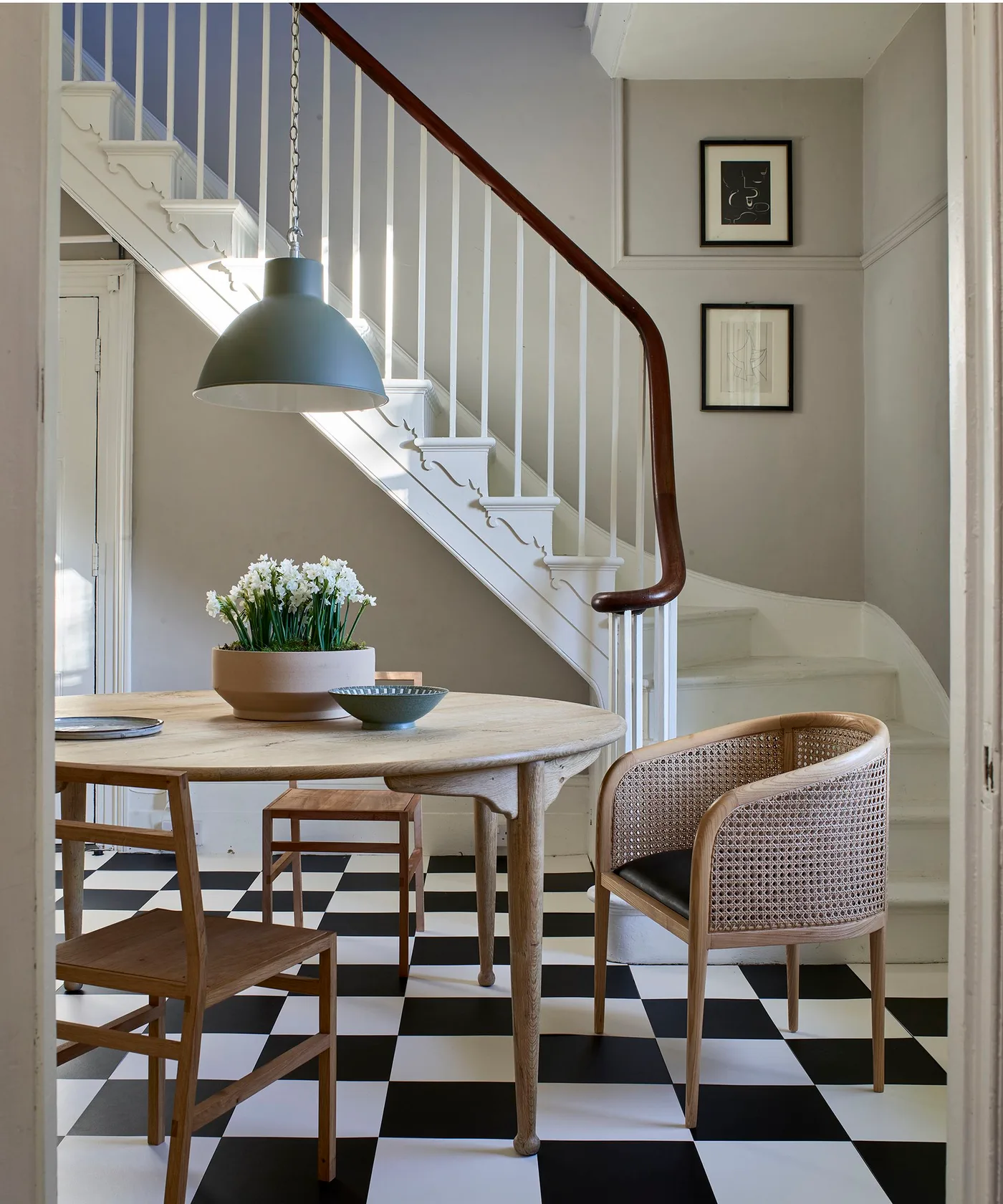
Let a checked floor support a simple dining corner
 SaveSupport Non AI Creator
Image credit: Future / Emma Lee / Sally Denning
Black-and-white flooring gives this small dining corner its strongest pattern. The pale round table and wooden chairs keep the furniture quieter above it, while the green pendant adds a single colored accent. The nearby staircase makes the room's shared route clear, with the lighter walls leaving the dining area distinct without a separate enclosed room.
Check the route toward the stairs with diners seated and chairs pulled back. A corner arrangement needs enough room to stand and turn, even when the table is small. Choose flooring for its actual suitability and care requirements rather than the checked appearance alone, and position the pendant for useful light without obstructing the shared passage.
BRING IT ALL TOGETHER
Make the country dining room fit your household
Choose the table and seats around the number of people who usually eat together, then allow for chair movement and storage access. Mix finishes if you enjoy a collected look, but check that every seat has comfortable support and enough room beneath the table.
Add pattern through a wall, curtain or washable table layer, leaving some quieter surfaces nearby. Keep the lighting useful after dark and store frequently used dishes where they are easy to reach. The most welcoming details are those that remain practical when the room is being used.