An earthy minimalist living room starts with useful furniture and a few warmer surfaces. A wood table, brown chair or muted green cushion can bring character without filling every shelf or corner. Choose the pieces that support how you sit, read, gather and put things away, then leave enough space around them for the room to remain comfortable.
These twenty photographs range from broad pale rooms to smaller textured seating corners. Compare each visible arrangement with your own needs rather than trying to copy every accessory. Look for useful storage, approachable table surfaces and light where you sit. Keep the warmth that comes from color and texture while reducing the objects that make ordinary cleaning or movement more difficult.
PART 01
Begin With Useful Seating and Warm Wood
IDEA 01 / 20
Choose a Few Rounded Pieces in Warm Neutrals
 SaveSupport Non AI Creator
Image credit: Timothy Kaye. Design: SR&O
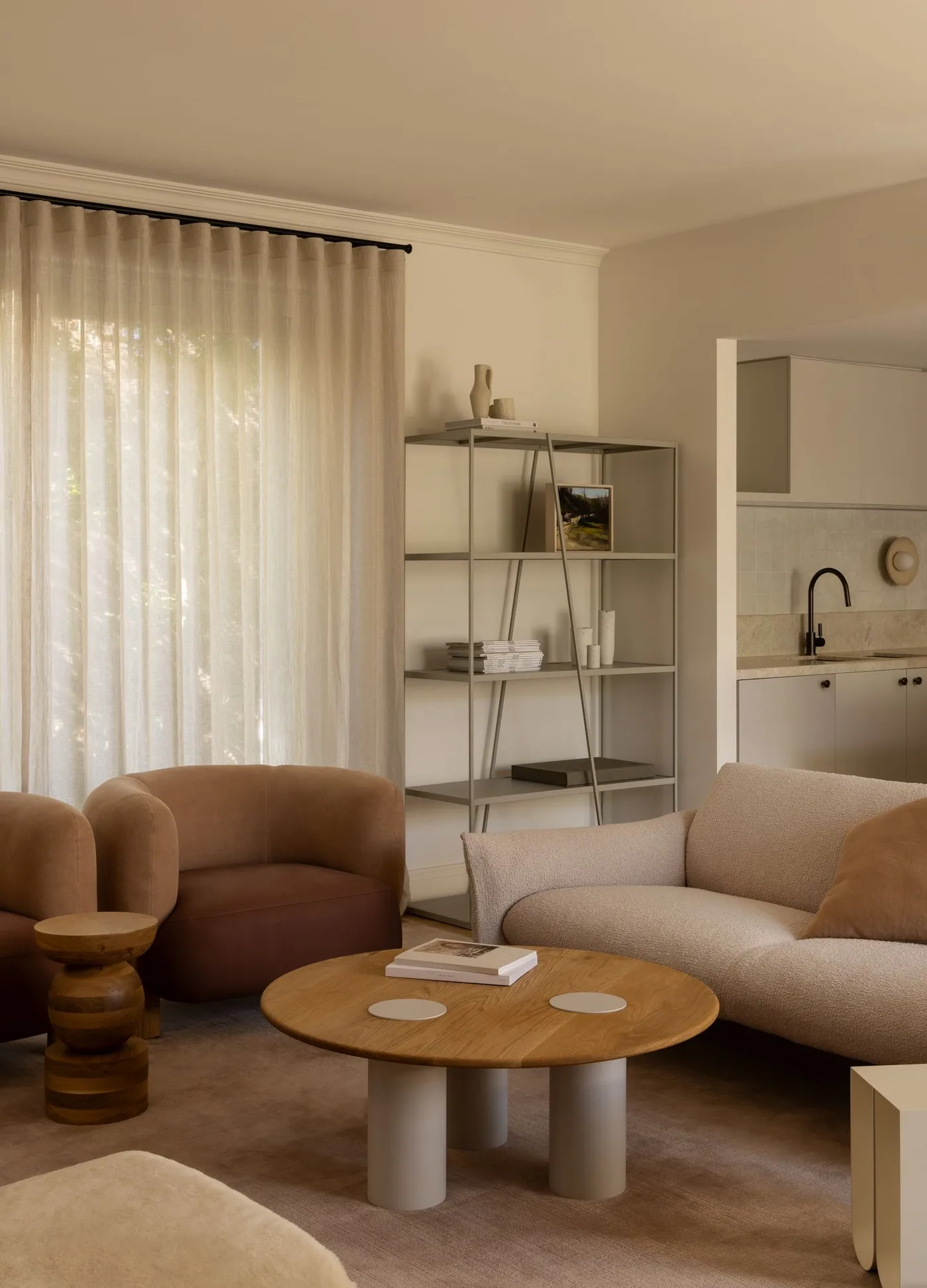
Rounded brown chairs and a pale sofa form a compact group around a wood-topped coffee table. The curtains, rug and walls stay within quieter warm neutrals, while the shelving behind holds only a few pieces. The room gets its earthy character from the chair color and table rather than a collection of small natural-looking ornaments across every surface.
List the seats you need before choosing another chair, and keep the route to the neighboring kitchen open. Select a table that gives everyone a useful place for a cup without taking over the floor. Reserve shelf space for objects you use or enjoy seeing, leaving gaps between them. Check the sofa and chair fabrics for care needs that fit your household.
IDEA 02 / 20
Keep Warm Wood Along One Side of the Room
 SaveSupport Non AI Creator
Image credit: Alyne Media. Design: Comma Projects And Jayson Pate Design
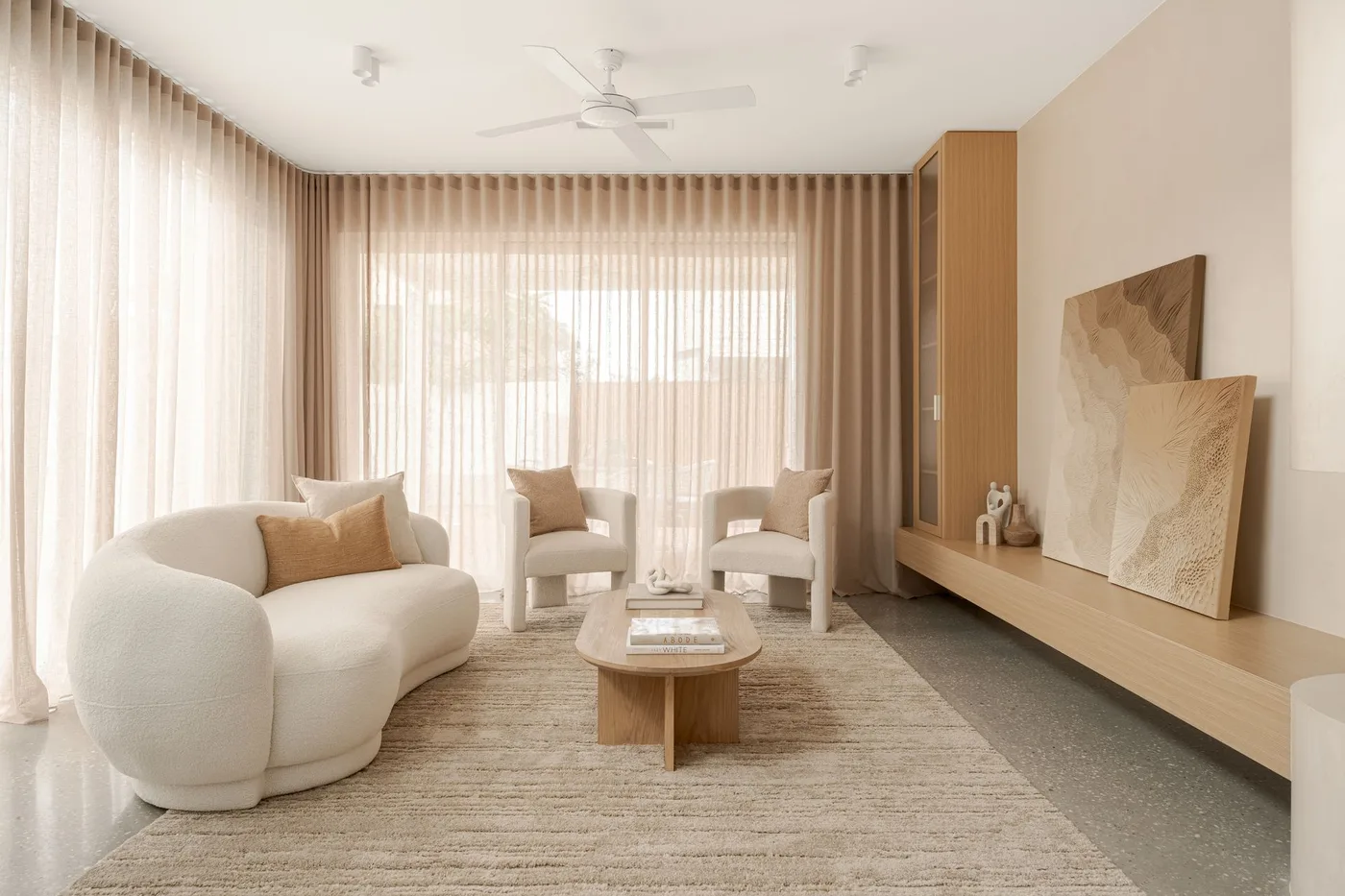
A low wood ledge follows one wall and meets a taller storage unit beside long light curtains. Pale curved seating and a small wood table keep the middle relatively simple, with the rug adding a broader textured surface underneath. The continuous wood line gives the room warmth while the large pale fabric areas make the different furniture outlines easy to distinguish.
Decide which items need closed storage and which deserve a place on the ledge before choosing its arrangement. Secure larger artwork even if you prefer a leaning appearance. Leave curtain and cupboard movement clear, and avoid turning the ledge into a line of unrelated displays. Check that the curved sofa offers enough usable sitting space rather than taking its overall width as a seating count.
IDEA 03 / 20
Use a Wood Table to Warm a Gray Sofa
 SaveSupport Non AI Creator
Image credit: Future PLC/Anna Stathaki
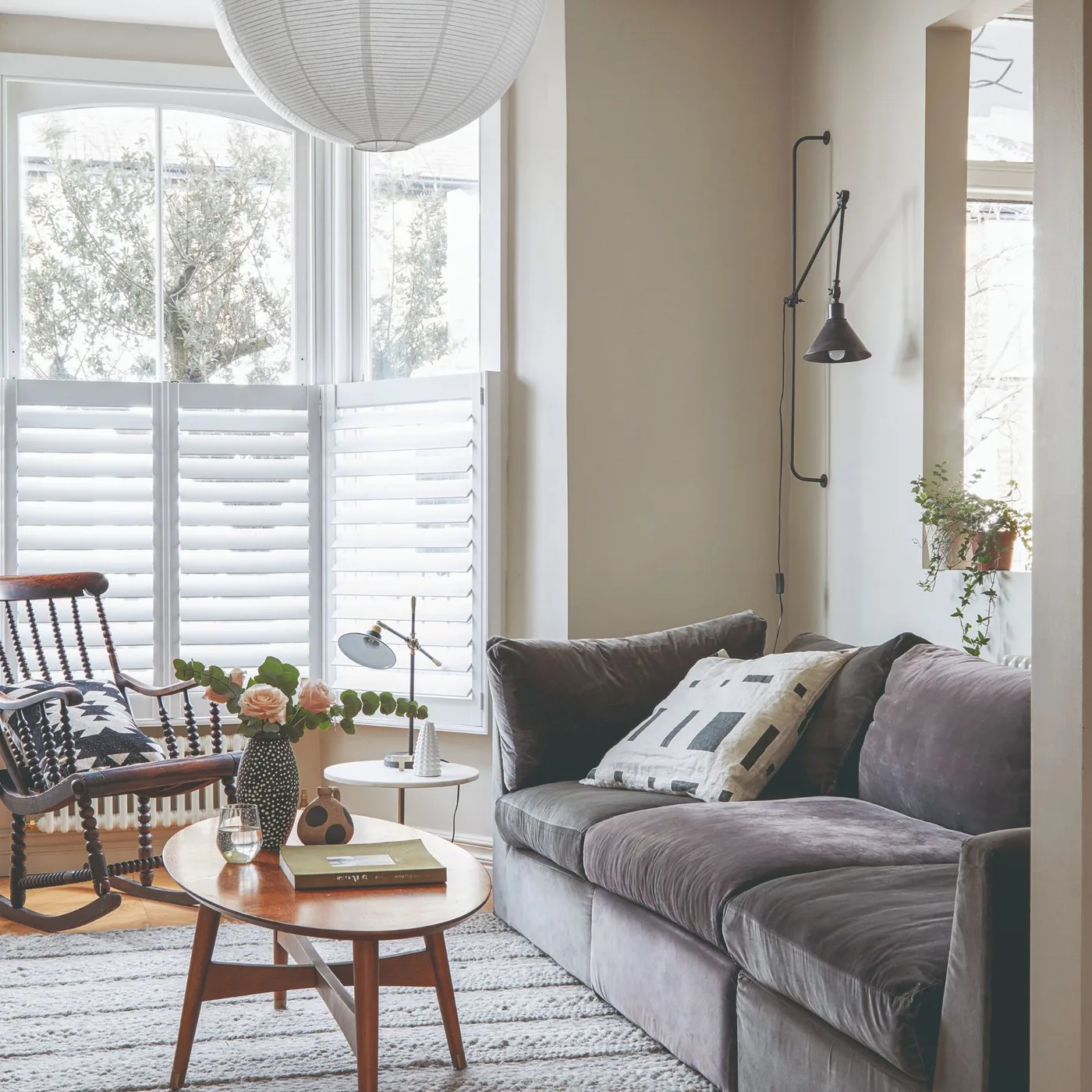
A round wood coffee table adds warmer color beside a gray sofa and pale shutters. A wood rocking chair repeats the warmth near the window, while an adjustable dark wall lamp provides a thin contrasting outline above the cushions. The large pale pendant keeps the upper part of the room simple, leaving the furniture and a few small plants to supply most of the detail.
Check the rocking chair’s complete movement area before placing a table or fragile object beside it. Choose the coffee table for the items you use daily and leave part of its top clear. Test the wall lamp’s reach and glare from the sofa. A few cushion patterns can work here, but keep their quantity manageable so the seating remains comfortable without moving a pile of accessories first.
IDEA 04 / 20
Let a Window Bench Replace Extra Loose Seating
 SaveSupport Non AI Creator
Image credit: Future PLC/Siobhan Doran
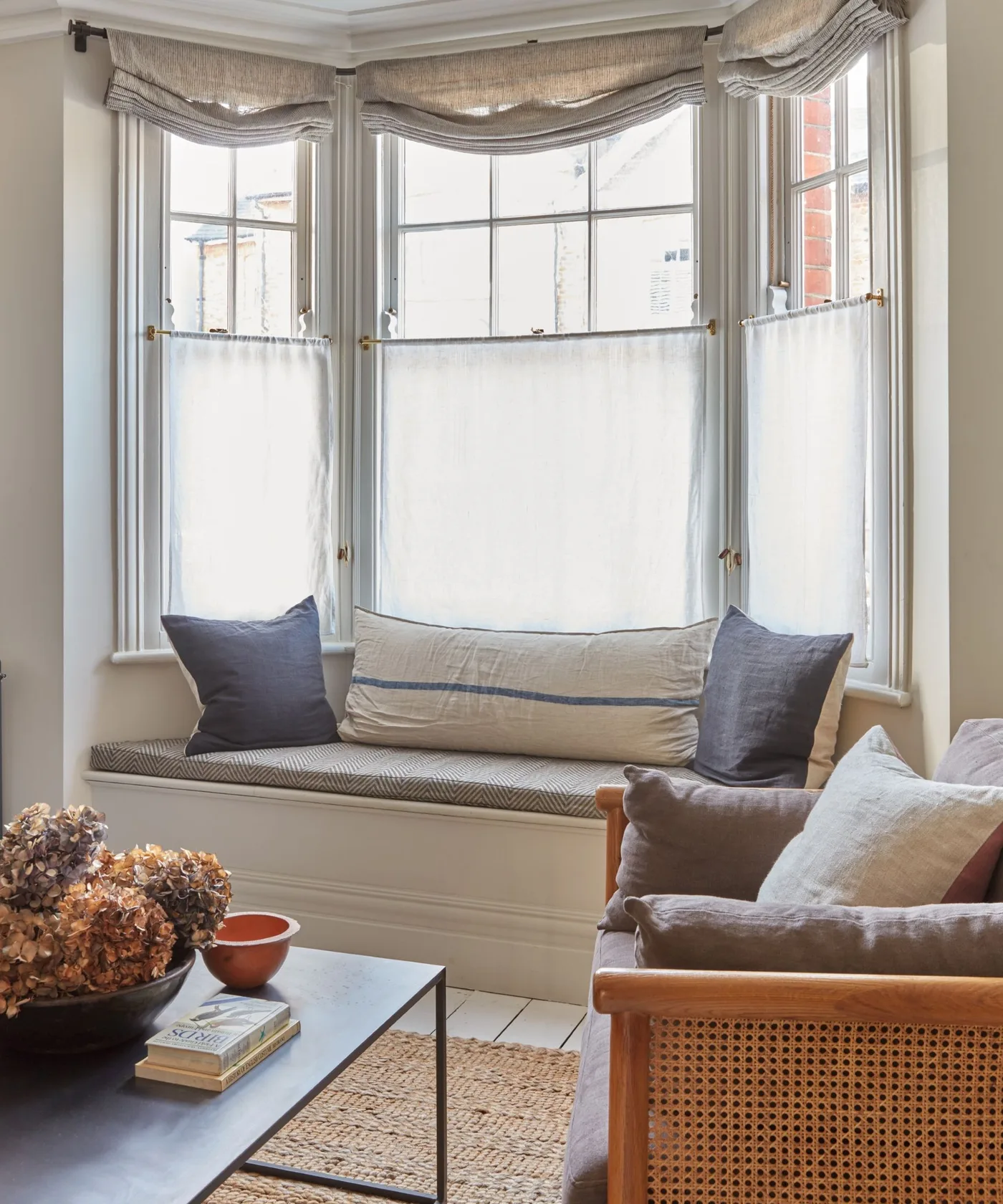
A pale window bench follows the bay beneath light lower curtains and softly gathered upper shades. A wood chair with an open woven back sits beside it, while a simple dark table provides a quieter shape in the foreground. The bench cushion, rug and chair texture give this corner warmth without adding several separate seats across the window area.
Check bench comfort and the window fittings behind it before treating the space as everyday seating. Keep cushions limited to the support you need, and confirm nighttime privacy through the actual fabric. A chair with an open woven back needs a cleaning method suited to its construction. Keep flower displays low enough for conversation and make the nearby table easy to reach from both seating positions.
IDEA 05 / 20
Make a Wood Side Table Earn Its Place
 SaveSupport Non AI Creator
Image credit: Future PLC/David Giles
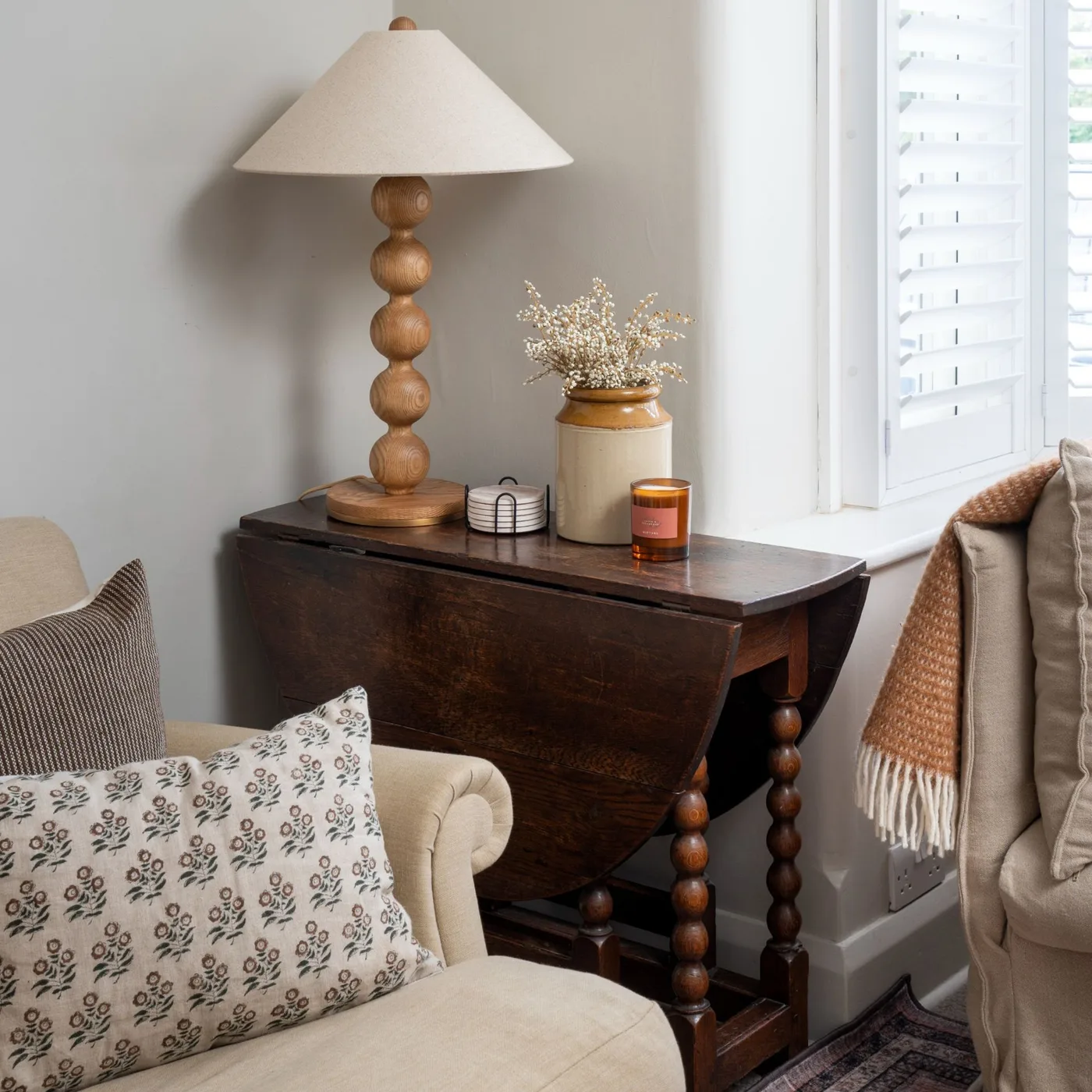
A dark wood drop-leaf table sits between pale seats with a rounded wood lamp base above it. A warm-toned vessel and a small stack of dishes add limited detail beside the broad pale shade. The table brings earthy color into an otherwise light corner, while its hinged side gives the furniture a visible practical feature rather than another purely decorative outline.
Choose the table for the surface area you need when its leaves are open and closed. Check hinges, stability and clearance beside the seats before relying on the folding part. Keep the lamp switch accessible and allow enough space for a drink or book. Use a maintenance method suited to the actual wood finish, and remove extra objects if they make the small top awkward to use.
PART 02
Keep Fabric and Storage Simple
IDEA 06 / 20
Repeat Warm Neutrals Across Sofa and Ottoman
 SaveSupport Non AI Creator
Image credit: Future PLC/Darren Chung
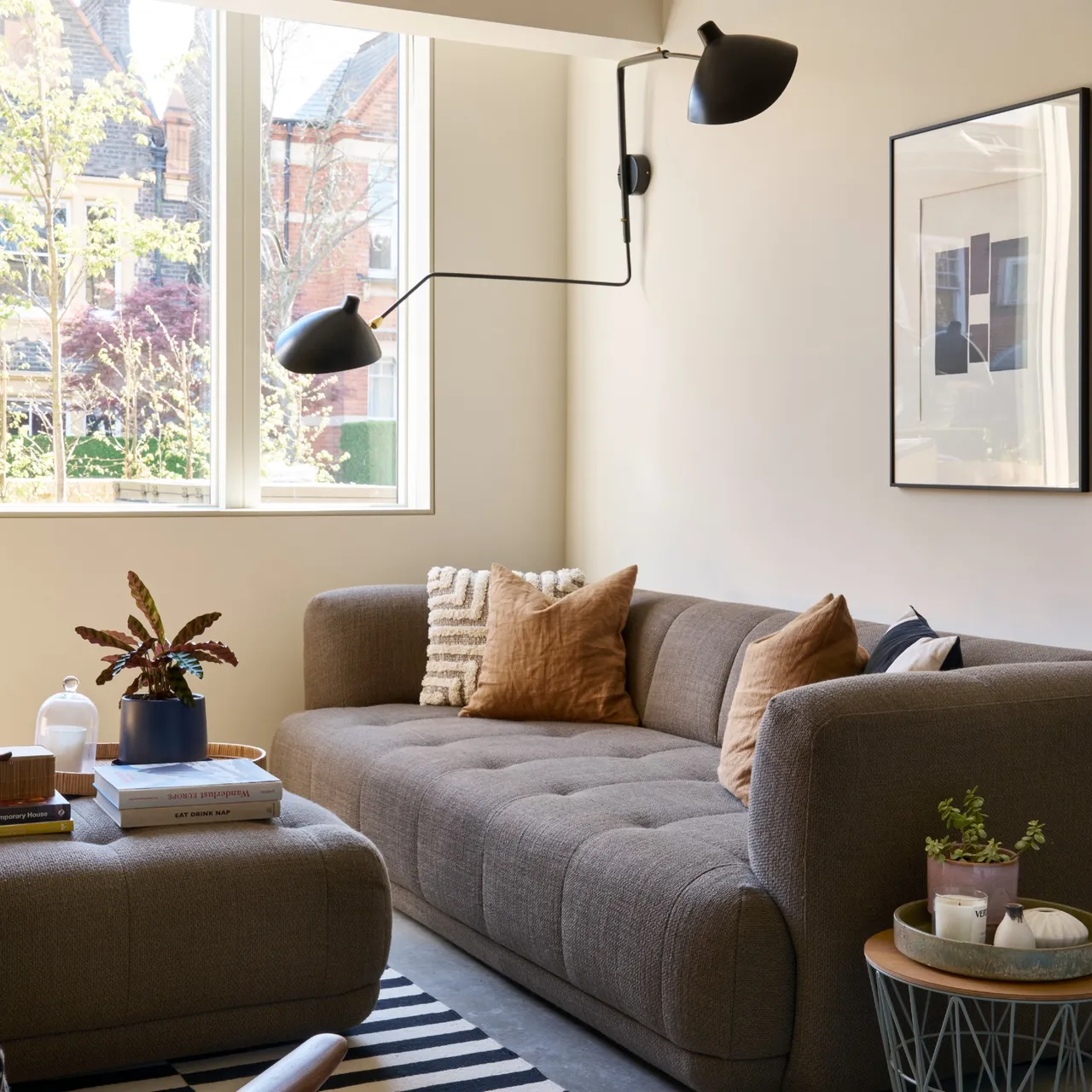
A warm gray sofa and matching ottoman sit beneath dark adjustable wall lights in a warm cream room. Rust-colored cushions add a smaller warm accent, while the large window keeps the seating area visually open. The ottoman repeats the sofa’s upholstery, reducing the number of different large furniture finishes, with small wood-topped side surfaces providing places for everyday items around the edges.
Choose whether the ottoman will mainly support feet, hold a tray or provide occasional seating, then check its suitability for that job. Keep the top accessible instead of permanently covering it with books. Adjust lights from the actual sitting positions and leave their fittings and switches reachable. Compare cushion care requirements with the sofa fabric before adding covers that make routine cleaning more complicated.
IDEA 07 / 20
Repeat Pale Warm Fabric Across Sofa and Footstool
 SaveSupport Non AI Creator
Image credit: Future PLC/Caroline Mardon
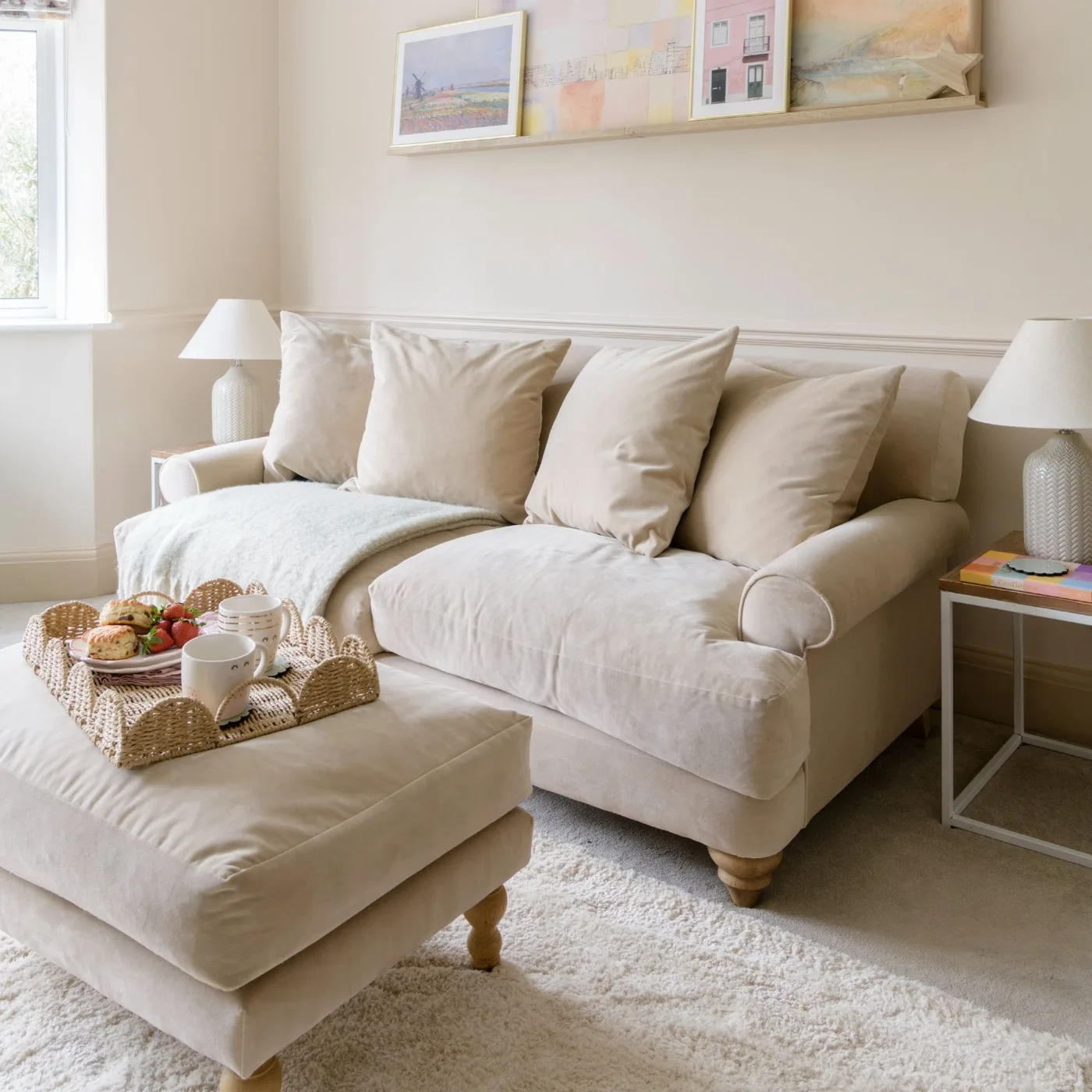
A pale warm-neutral sofa and matching footstool give this seating corner a continuous fabric surface. Small wood feet and a woven tray introduce warmer details below and above the upholstery, while simple lamps keep the side tables useful. A narrow picture ledge adds a limited line of color on the wall rather than a dense group of frames spread around the room.
Check that the footstool leaves a comfortable route to the sofa and can be moved for cleaning. Use a stable tray suited to the items you place on it, especially drinks. Confirm care instructions for the light upholstery before choosing a similar set. Keep the picture ledge secure and lightly filled so it contributes personal detail without making the already small room feel crowded.
IDEA 08 / 20
Leave Space Around a Textured Pale Armchair
 SaveSupport Non AI Creator
Image credit: Future PLC
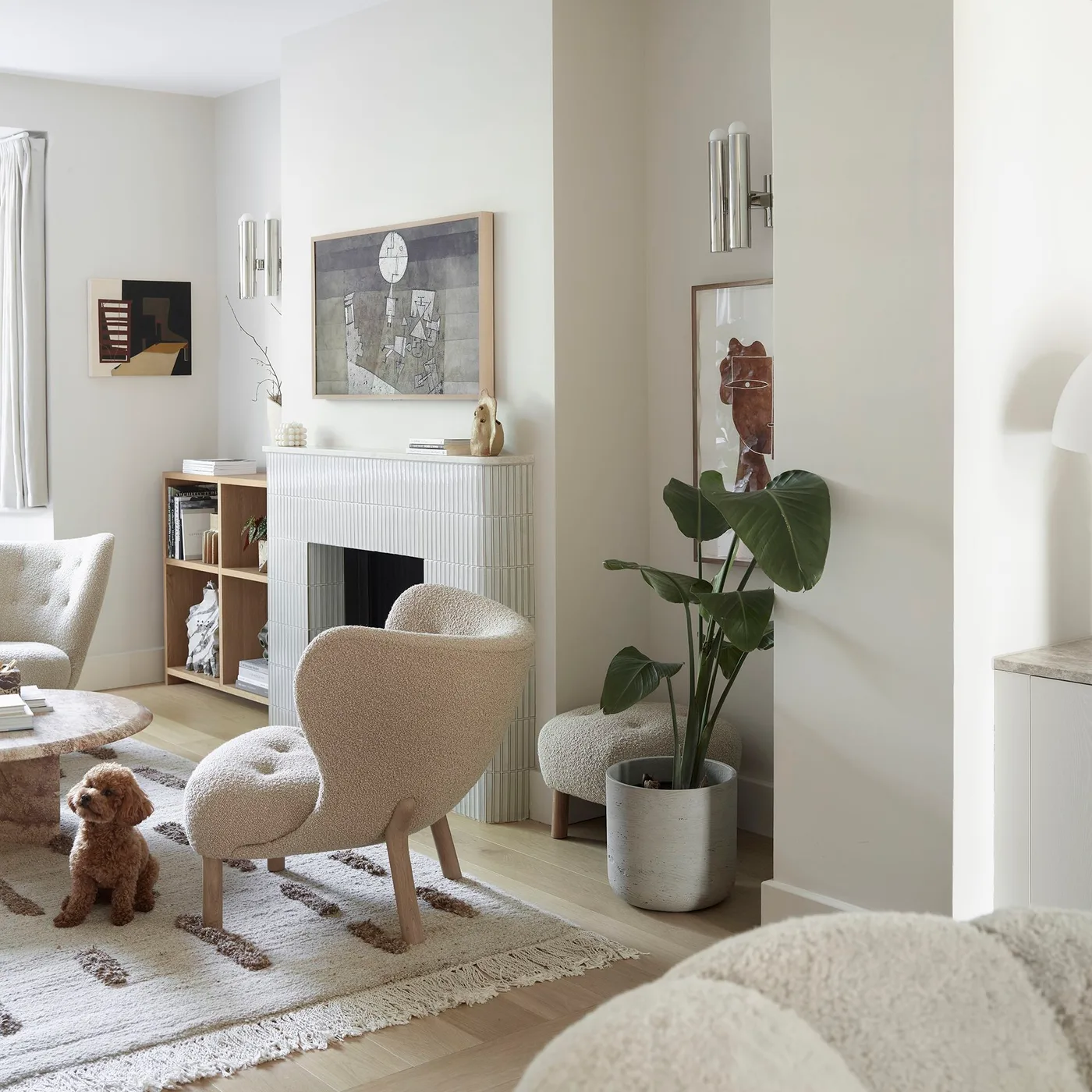
A textured pale armchair sits beside a light fireplace with wood storage on the other side. The pale patterned rug gives the chair a softer neighboring surface, while a large leafy plant supplies a single green shape beside the mantel area. Framed art and a few objects add detail above, leaving the larger wall and floor areas relatively quiet.
Position the chair for comfortable sitting and useful conversation, keeping the fireplace’s required clearances and maintenance access. Choose the plant for the room’s actual light and protect the floor beneath its container. A textured chair cover needs care guidance you can follow, especially where pets also use the room. Keep the nearby shelves purposeful and leave enough clear floor to move around the chair without stepping over accessories.
IDEA 09 / 20
Put Everyday Objects Behind Simple Wood Doors
 SaveSupport Non AI Creator
Image credit: Future PLC/Anna Stathaki
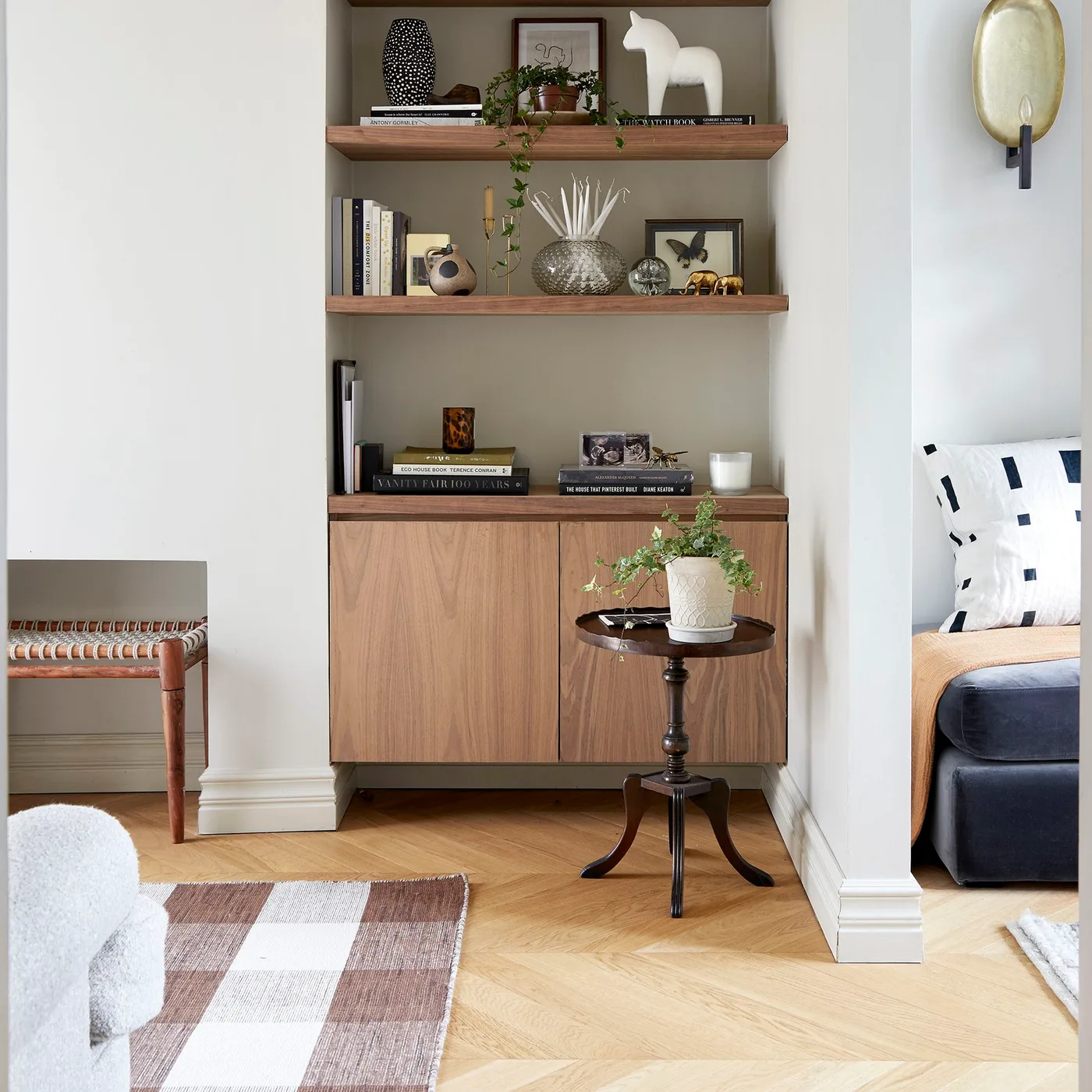
Wood shelves sit above a plain lower cupboard within a pale wall recess. Books, a few framed pieces and small objects occupy the open levels, while the doors provide a larger uninterrupted warm surface below. A small dark side table and a checked rug add contrasting shapes nearby, showing how wood storage can bring earthy color without another substantial piece across the middle of the room.
Choose closed storage for the loose items you regularly put away, then leave the shelves for a smaller visible collection. Confirm shelf loads and cupboard-door movement before arranging books and heavier objects. Keep trailing plants clear of stored items and protect the cabinet from watering spills. A small side table can serve one seat well, but avoid treating it as another display if a cup or reading material needs that space.
IDEA 10 / 20
Let a Sculptural Brown Sofa Stay Mostly Uncovered
 SaveSupport Non AI Creator
Image credit: Future PLC/Sara Hesikova
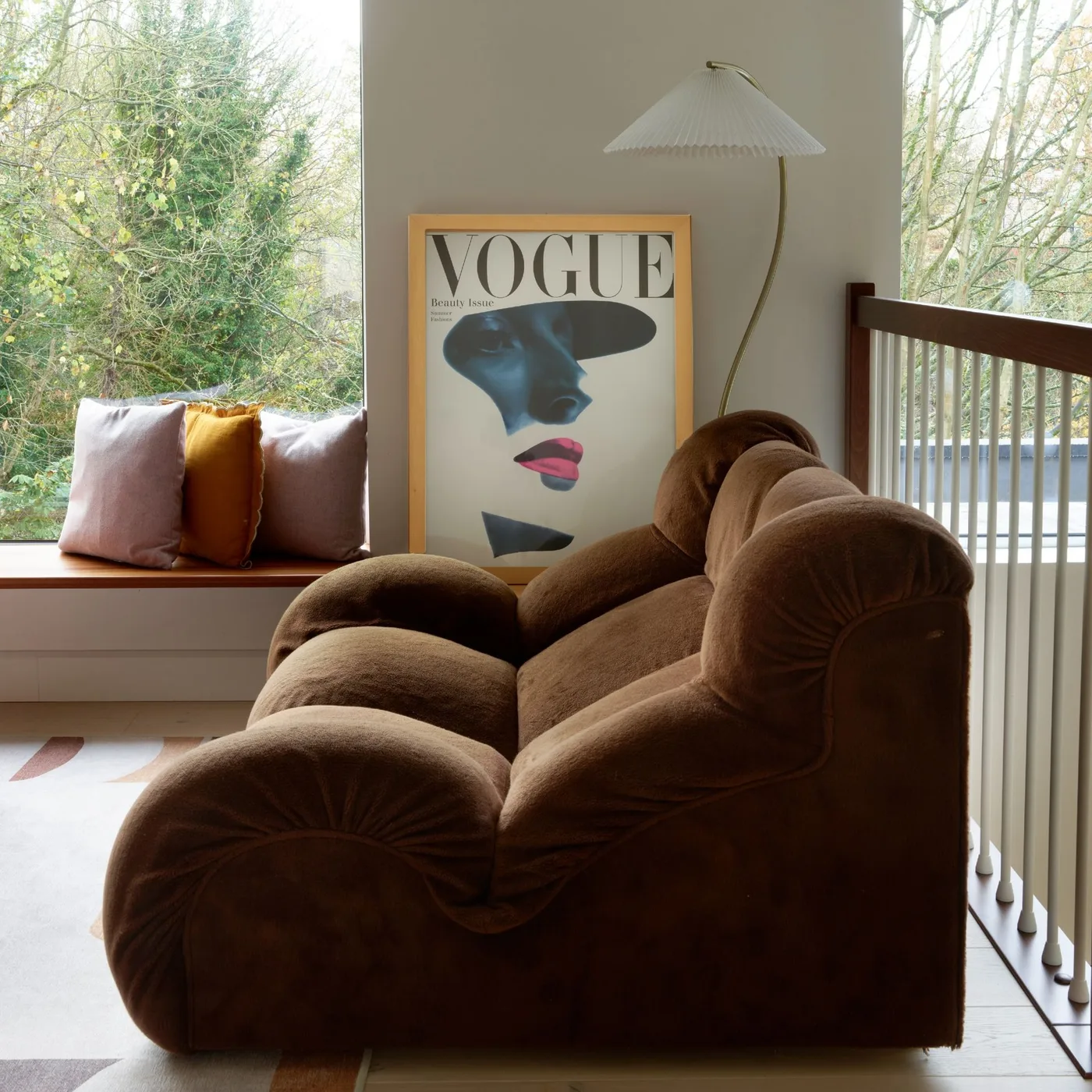
A sculptural brown sofa forms the main warm shape beside large windows and a simple window bench. The upholstery’s deep folds and rounded arms provide their own texture, so the seat does not need a dense layer of cushions. A curved floor lamp adds a lighter outline behind it, while a few small cushions stay on the bench rather than covering the sofa’s profile.
Sit in a similarly shaped sofa before choosing it, checking support and how easily you can get up from the lower seat. Preserve the route beside the railing and access to the windows. Position the lamp so its base is stable and its shade gives useful light without obstructing movement. Use appropriate fixing for nearby large artwork and maintain the upholstery according to its actual fabric guidance.
PART 03
Give Strong Textures Some Clear Space
IDEA 11 / 20
Pair a Warm Stone Wall With Quiet Lower Panels
 SaveSupport Non AI Creator
Image credit: Future PLC/Brent Darby
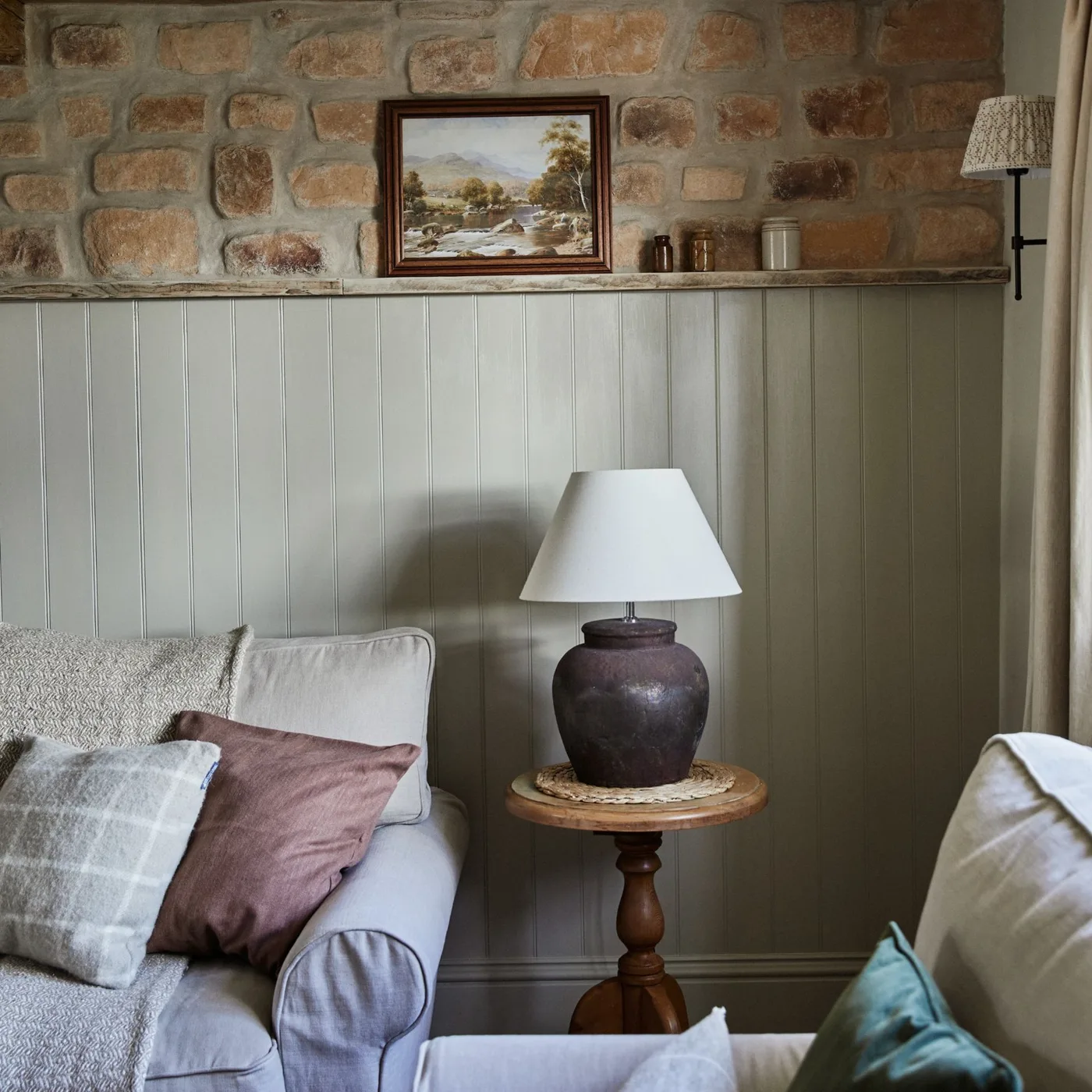
Warm irregular stone sits above muted lower wall panels behind pale seating. A small wood side table and dark rounded lamp base continue the warmer tones in simpler shapes below. The stone supplies enough variation to give this corner an earthy character, while the larger cushions and paneling keep its lower surfaces quieter and easier to read.
Assess an existing exposed wall’s condition before choosing how to clean or protect it, using guidance for the actual surface. Keep small objects on the narrow ledge limited and secure where necessary. Test panel color beside a larger section of stone instead of matching one isolated piece. Choose cushion quantities for comfort, and keep the side table practical for a drink or book beside the lamp.
IDEA 12 / 20
Use Woven Details With a Simple Pale Sofa
 SaveSupport Non AI Creator
Image credit: Future PLC/ Lizzie Orme
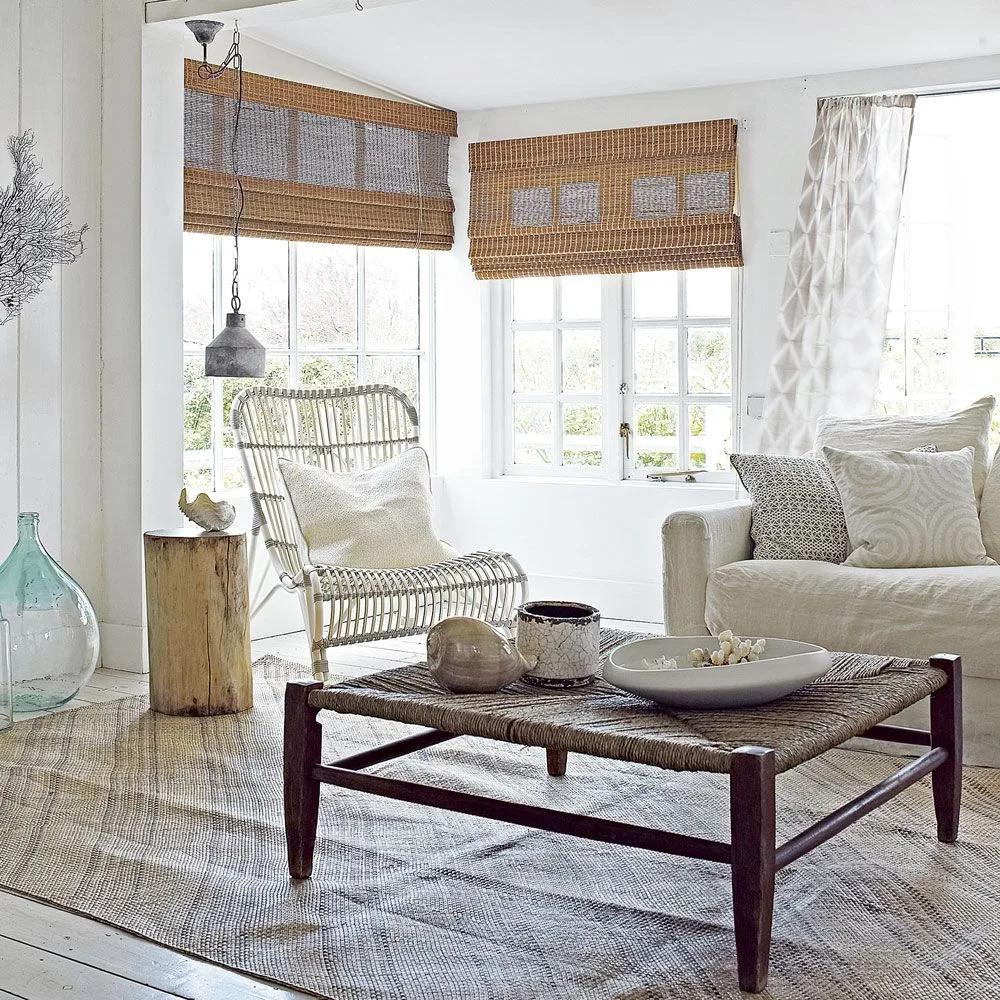
Warm woven shades, an open woven chair and a woven-top coffee table bring related textures into a pale room. The sofa and surrounding walls stay light, while the darker table frame gives the center a clearer outline. The room concentrates its earthy details in useful furniture and window coverings rather than adding a separate collection of baskets and decorative pieces around every seat.
Check how the window shades perform for privacy and light control rather than judging only their weave. Choose a chair that is comfortable with the amount of cushioning you want to maintain. A woven table top may need a stable tray for cups and small objects, depending on its surface. Keep the floor route clear and use cleaning methods appropriate to each woven construction.
IDEA 13 / 20
Choose Pale Wood Beneath a Quiet Seating Group
 SaveSupport Non AI Creator
Image credit: JDP Interiors / Bess Friday
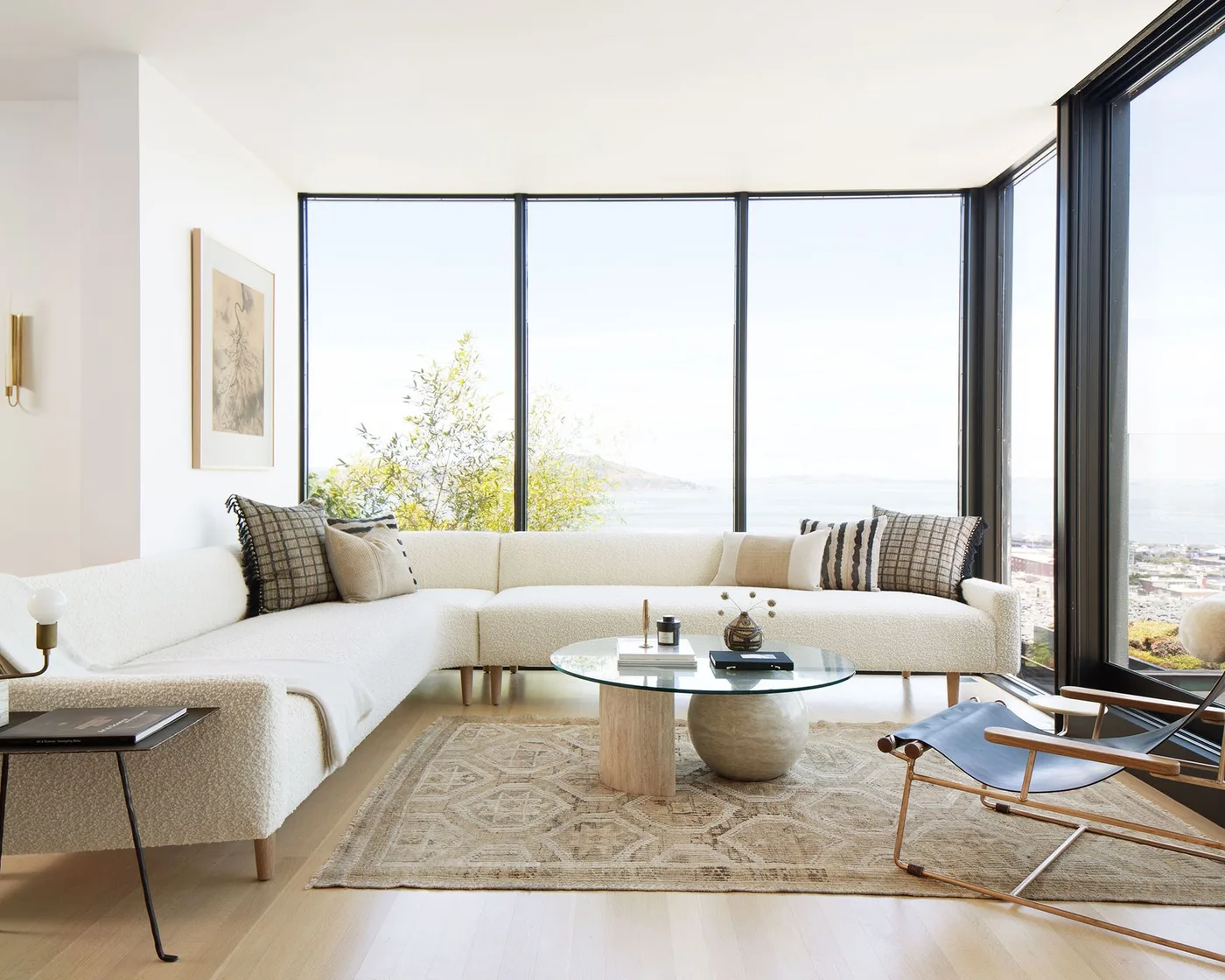
A pale curved sectional and wood-framed lounge chairs gather around a round glass table beside broad windows. The light wood floor and table supports give the room warmer surfaces, while a pale patterned rug adds restrained detail underneath. Dark window frames and thin side-table legs form clearer outlines, allowing the larger fabric areas to remain light without making every furniture piece identical.
Plan the sectional’s full shape and the lounge chairs’ sitting positions before placing the central table. Check glass care, stability and suitability for your household, and leave a clear route to the windows. Choose a rug that works with the seats rather than requiring extra furniture to fill its corners. Keep cushion patterns limited if the rug already carries enough detail for the room.
IDEA 14 / 20
Keep Warm Beams Above Soft Pale Upholstery
 SaveSupport Non AI Creator
Image credit: Jake Curtis / Claudia Bryant
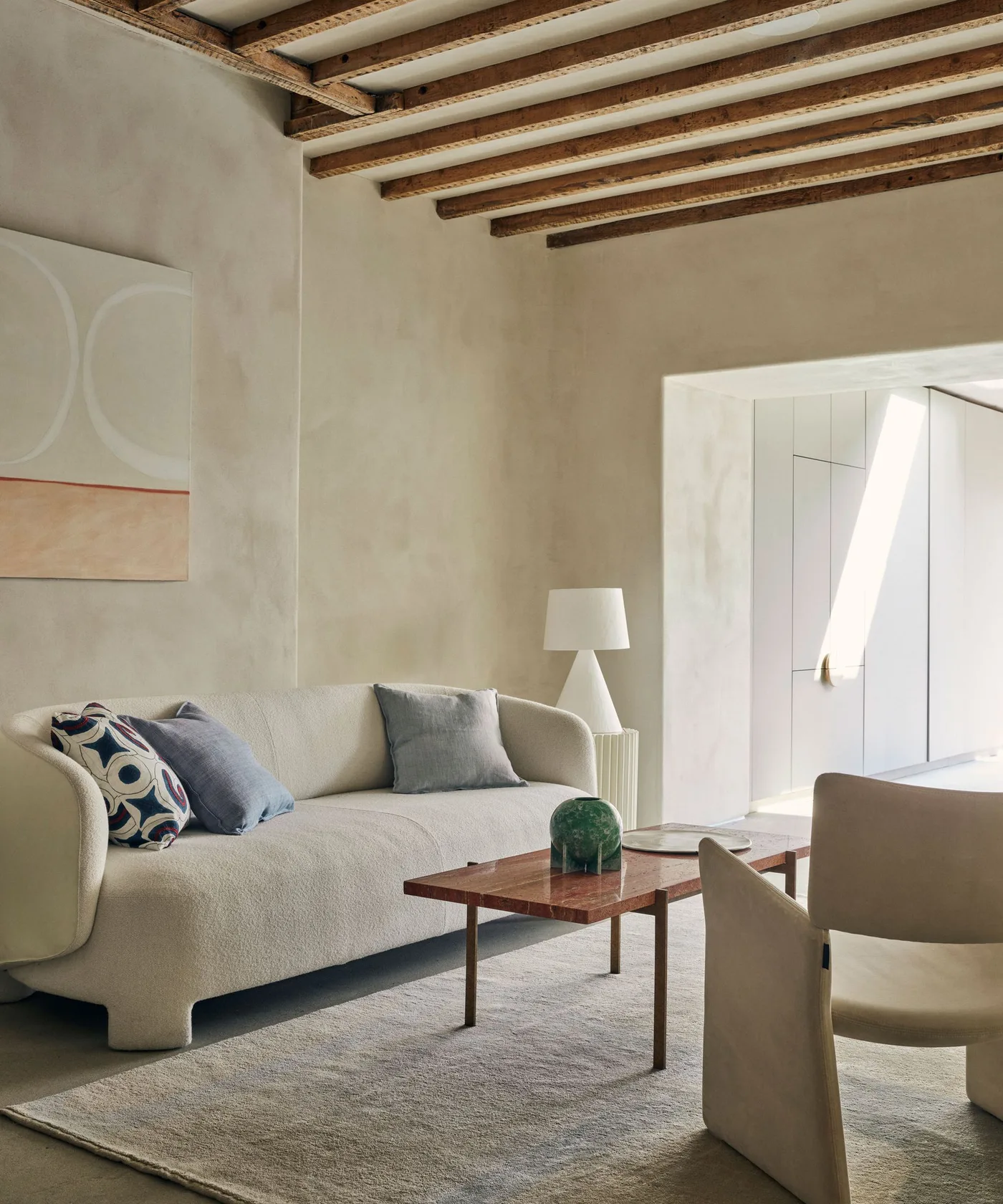
Warm exposed wood beams span a room with a pale curved sofa and a muted rug. A reddish rectangular table adds another warmer surface below, while simple artwork and a pale lamp keep the wall details limited. The ceiling and table provide the earthy color, with the sofa’s broad light fabric and the surrounding pale walls leaving room for those stronger textures to stand out.
Check the condition and maintenance needs of existing beams before highlighting them, preserving access to fittings overhead. Compare table and floor finishes beside the sofa rather than choosing each piece separately. Keep the table positioned for easy reach with a comfortable walking gap. Select cushion fabrics for useful support, and leave wall space around the artwork instead of adding smaller frames merely to fill it.
IDEA 15 / 20
Balance a Dark Textured Wall With Pale Seating
 SaveSupport Non AI Creator
Image credit: Mark Alexander / Romo Group
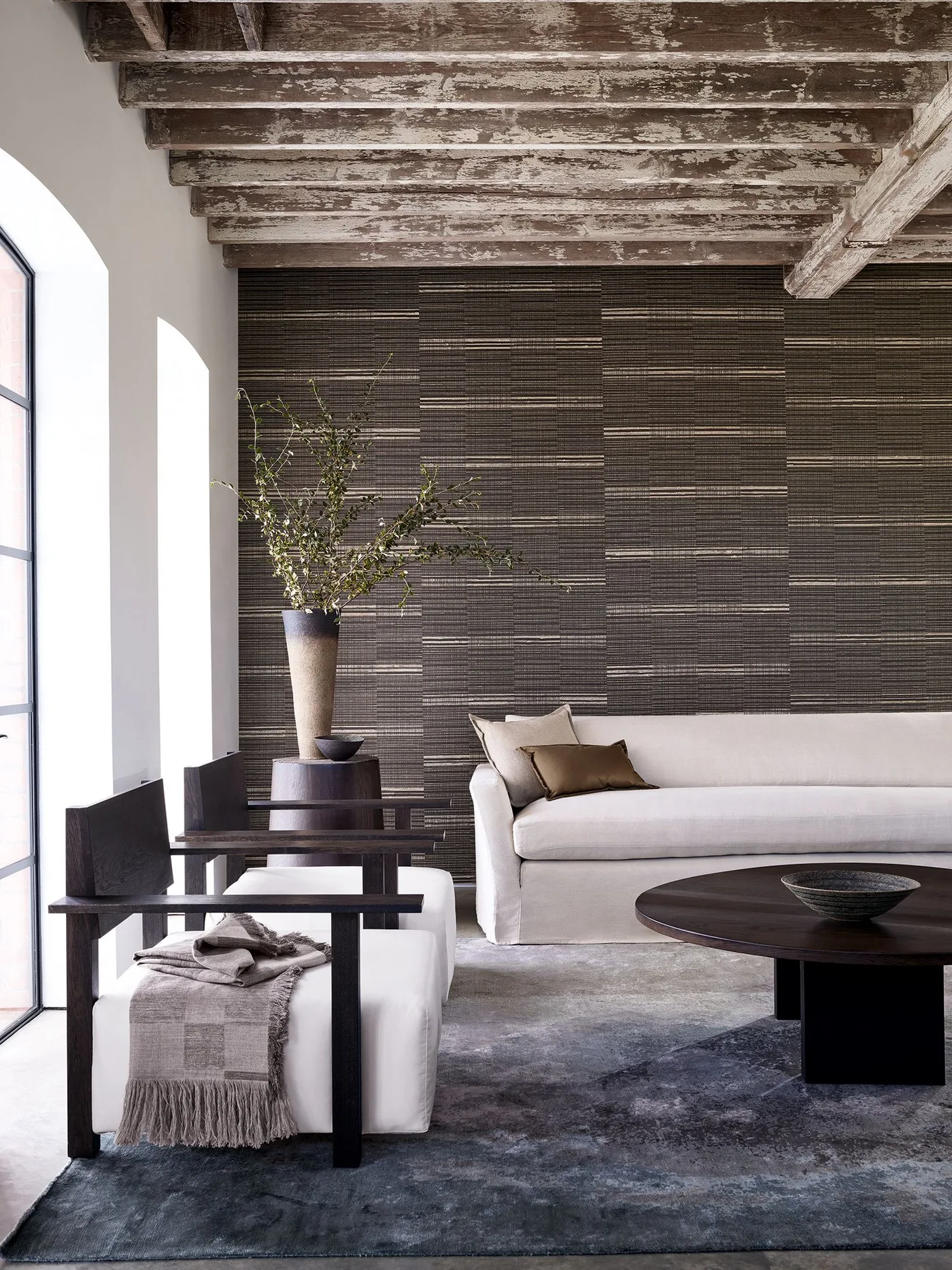
A dark horizontally patterned wall meets a textured wood ceiling above pale seating. Dark wood armchairs and a round table repeat the wall’s deeper color at a smaller scale, while a tall vessel with branches provides one upright accent near the window. The contrast gives the room earthy texture without a large number of cushions, pictures or tabletop displays.
View the wall treatment at full scale beside your ceiling and seating before committing to both strong textures. Inspect existing overhead finishes and maintain them appropriately rather than assuming a weathered appearance describes their condition. Check chair comfort and table reach, leaving a clear passage by the window. Keep a branch arrangement stable and out of the walking route, especially when the vessel is tall.
PART 04
Choose a Few Details You Will Use
IDEA 16 / 20
Warm Angular Pale Seating With a Wood Floor
 SaveSupport Non AI Creator
Image credit: Kelly Wearstler / Trevor Tondro
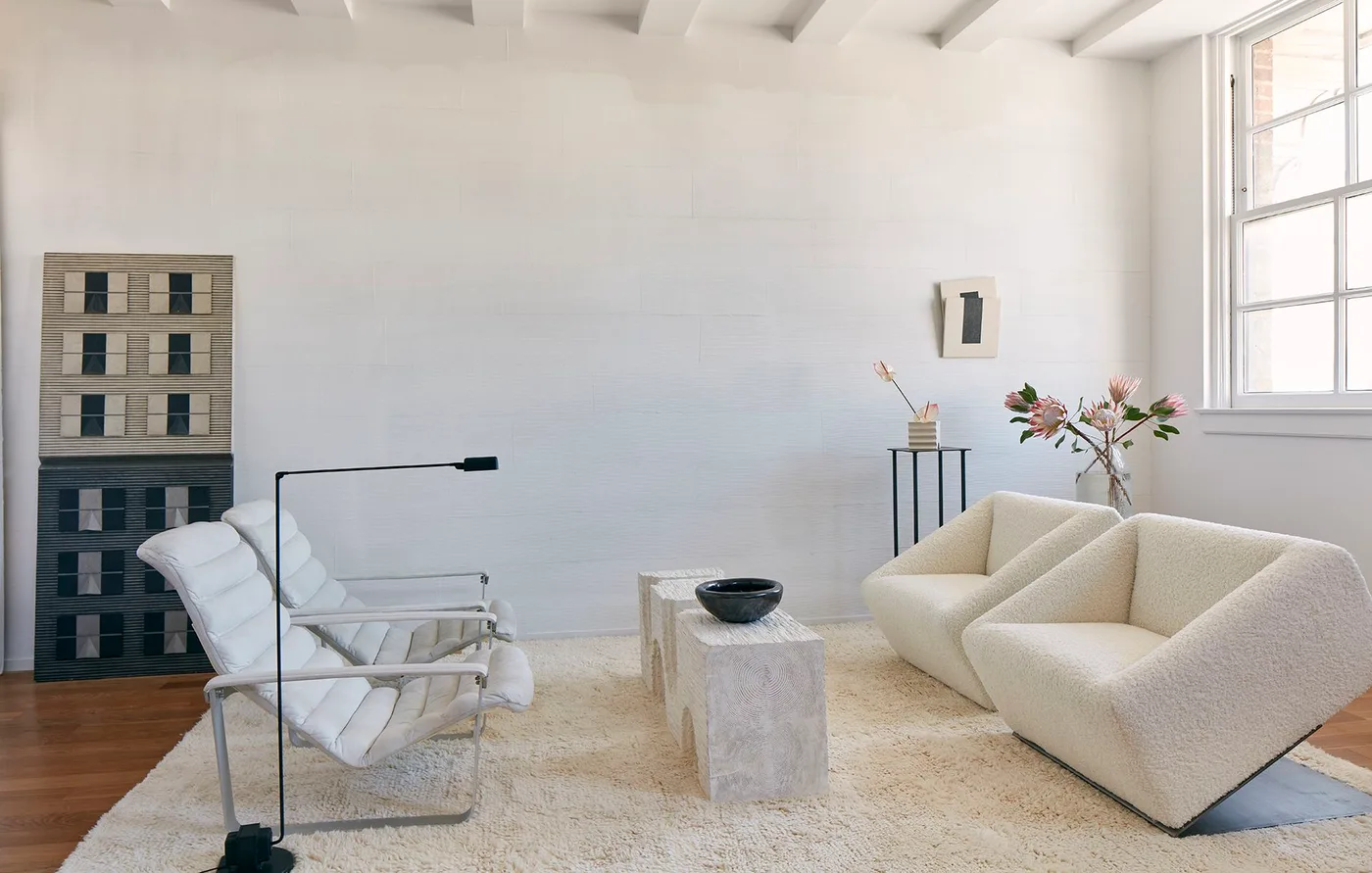
Pale angular armchairs face two light framed lounge chairs across a narrow textured table. A warm wood floor remains visible around the large pale rug, giving the otherwise quiet room an earthy edge. Thin dark lamp and stand outlines add contrast, while a tall geometric cabinet and a few small artworks contribute detail without filling the upper wall with many frames.
Try the differently shaped chairs for comfort before mixing them, and check that the narrow table offers enough space for the people using it. Keep the lamp base and cable clear of the route around the rug. A pale textured rug needs a care routine suited to its construction. Use secure support for the tall cabinet and leave its doors and storage accessible.
IDEA 17 / 20
Let a Carved Wood Piece Be the Main Accent
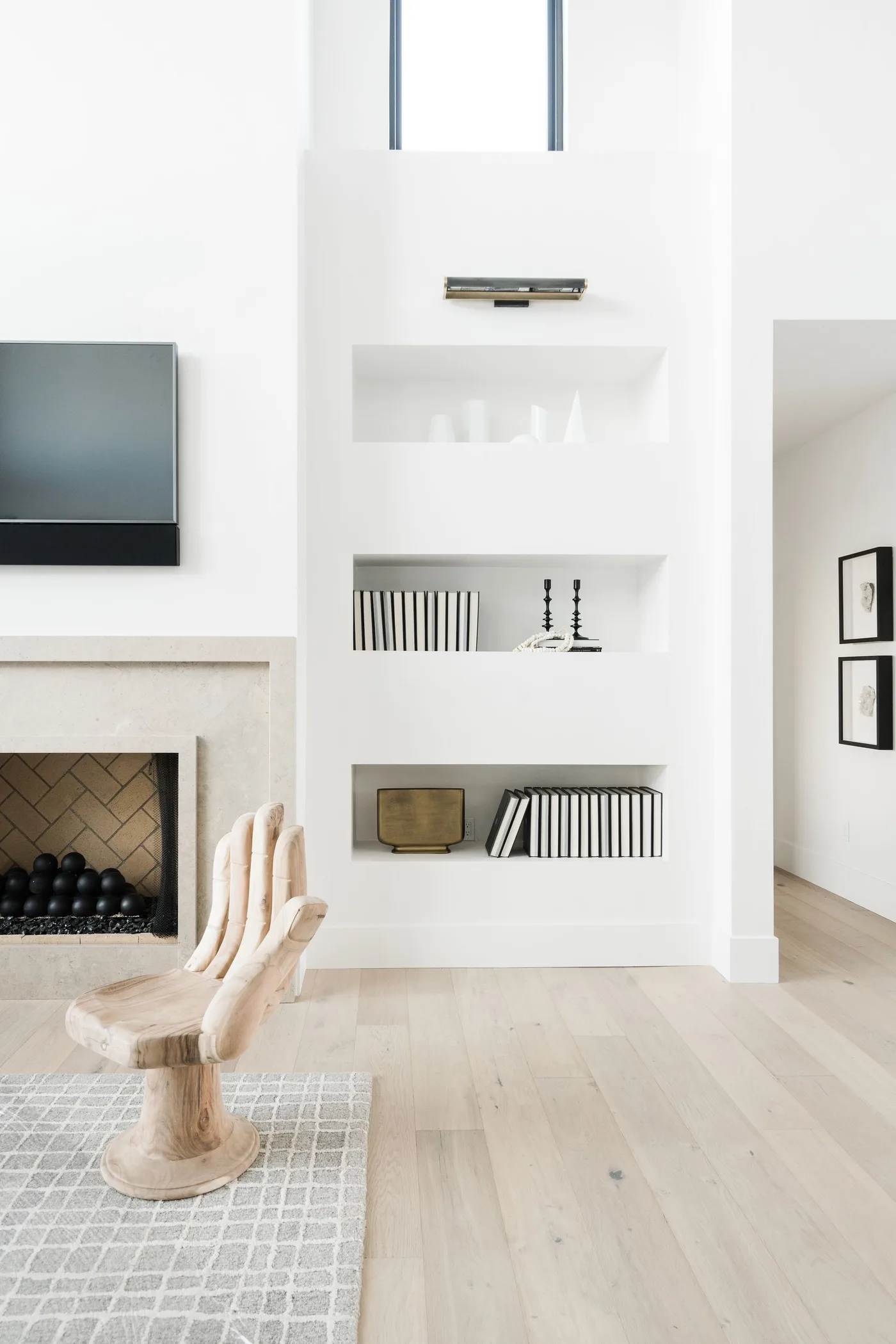 SaveSupport Non AI Creator
Image credit: House of Jade Interiors Photograph: Travis J Photography
A carved hand-shaped wood chair stands beside a pale fireplace wall and light wood floor. Built-in shelves hold a small group of books and objects with visible gaps between them, while the fireplace surround stays simple. The chair provides a distinct earthy shape at floor level, showing how one unusual wood piece can supply character without another layer of patterned furniture.
Decide whether a sculptural piece will be used as seating or primarily enjoyed as an object, and confirm its capacity and stability for that role. Preserve the fireplace’s required clearances and access rather than copying the photograph’s placement. Keep shelf contents within suitable loads and leave room for items you use. Avoid adding other equally strong ornaments nearby if you want the carved shape to remain distinct.
IDEA 18 / 20
Add Warm Color Through One Useful Side Unit
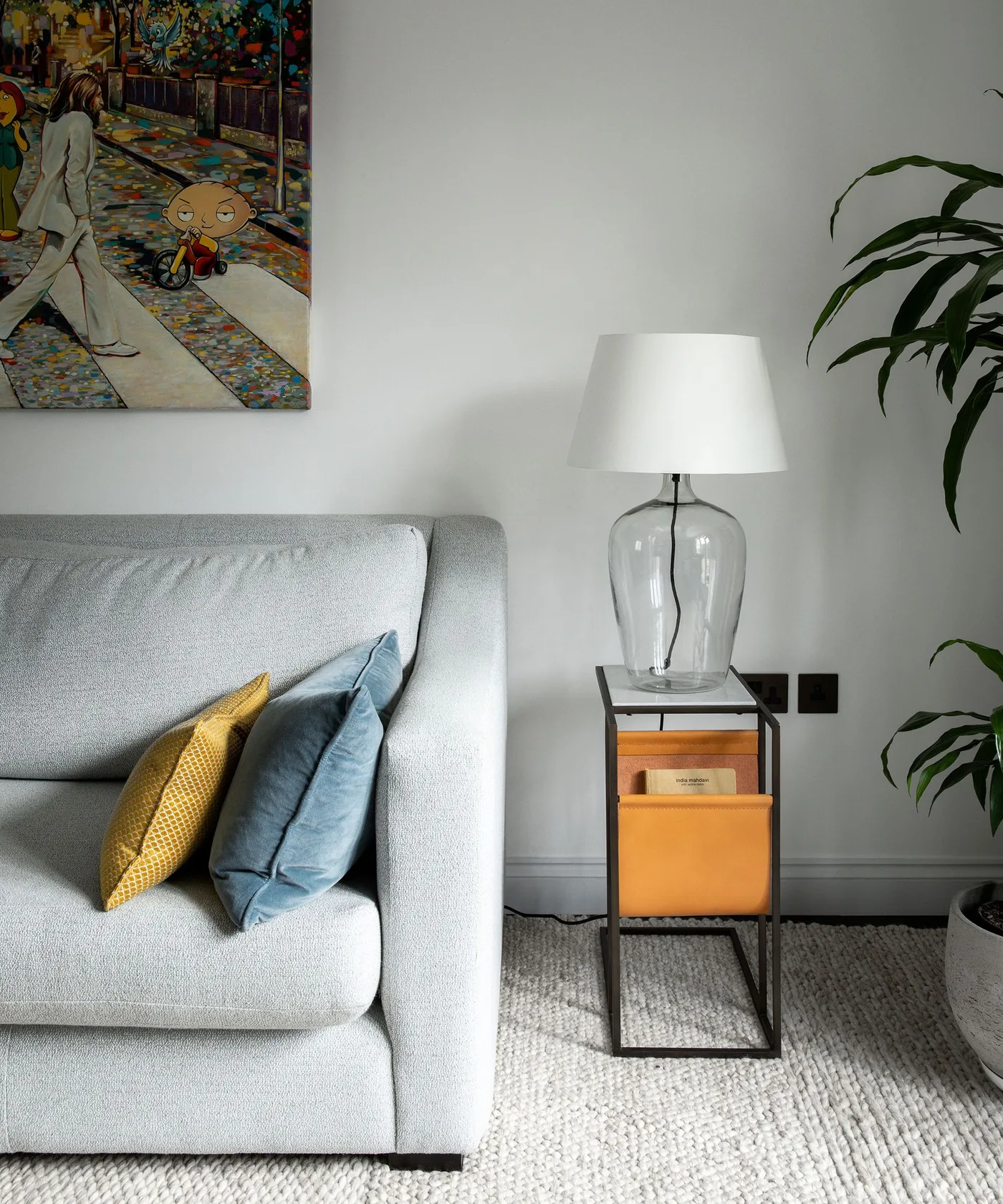 SaveSupport Non AI Creator
Image credit: Paul Raeside / Future
An ochre cushion and warm-colored storage pockets add earthy accents beside a pale gray sofa. The narrow dark stand supports a clear lamp with a white shade, providing a practical vertical outline without a larger cabinet. A pale textured rug and plain wall keep the corner quiet, while a leafy plant adds another shape near the edge of the seating area.
Choose storage pockets for the magazines or daily items you actually need close to the sofa, checking their capacity and accessibility. Keep the lamp base stable on the small top and route its cable safely behind the furniture. Limit cushion layers to comfortable support so the sofa remains ready to use. A living plant needs protected drainage and enough room for care without moving the stand each time.
IDEA 19 / 20
Give One Wood Chair a Comfortable Reading Role
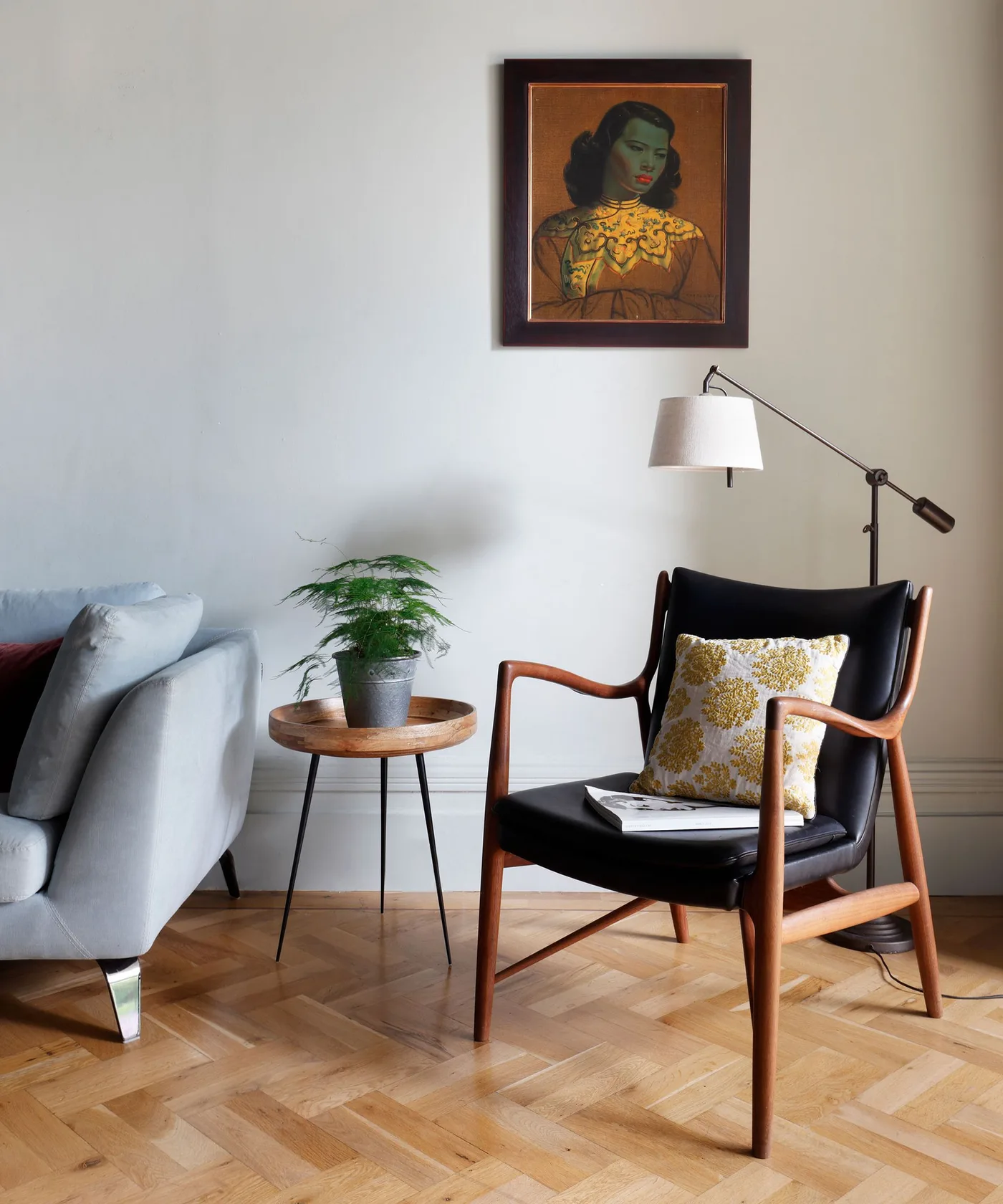 SaveSupport Non AI Creator
Image credit: Future / Alexander James
A wood-framed dark chair sits beside a small round wood table on a warm patterned floor. A simple adjustable reading lamp and one framed portrait complete the corner, with a small plant adding green on the table. The arrangement uses a few clear furniture shapes, letting the wood frames and floor carry the earthy texture rather than surrounding the chair with several accessories.
Check the chair’s support and arm height for how you read or sit, then place the table within easy reach. Adjust the lamp from the actual seated position to avoid glare on a page. Keep the plant container protected and leave surface space for a cup or book. Care for the floor according to its finish, and avoid introducing another strong patterned rug if the existing wood layout already supplies detail.
IDEA 20 / 20
Keep Green Accents Around a Quiet Neutral Sofa
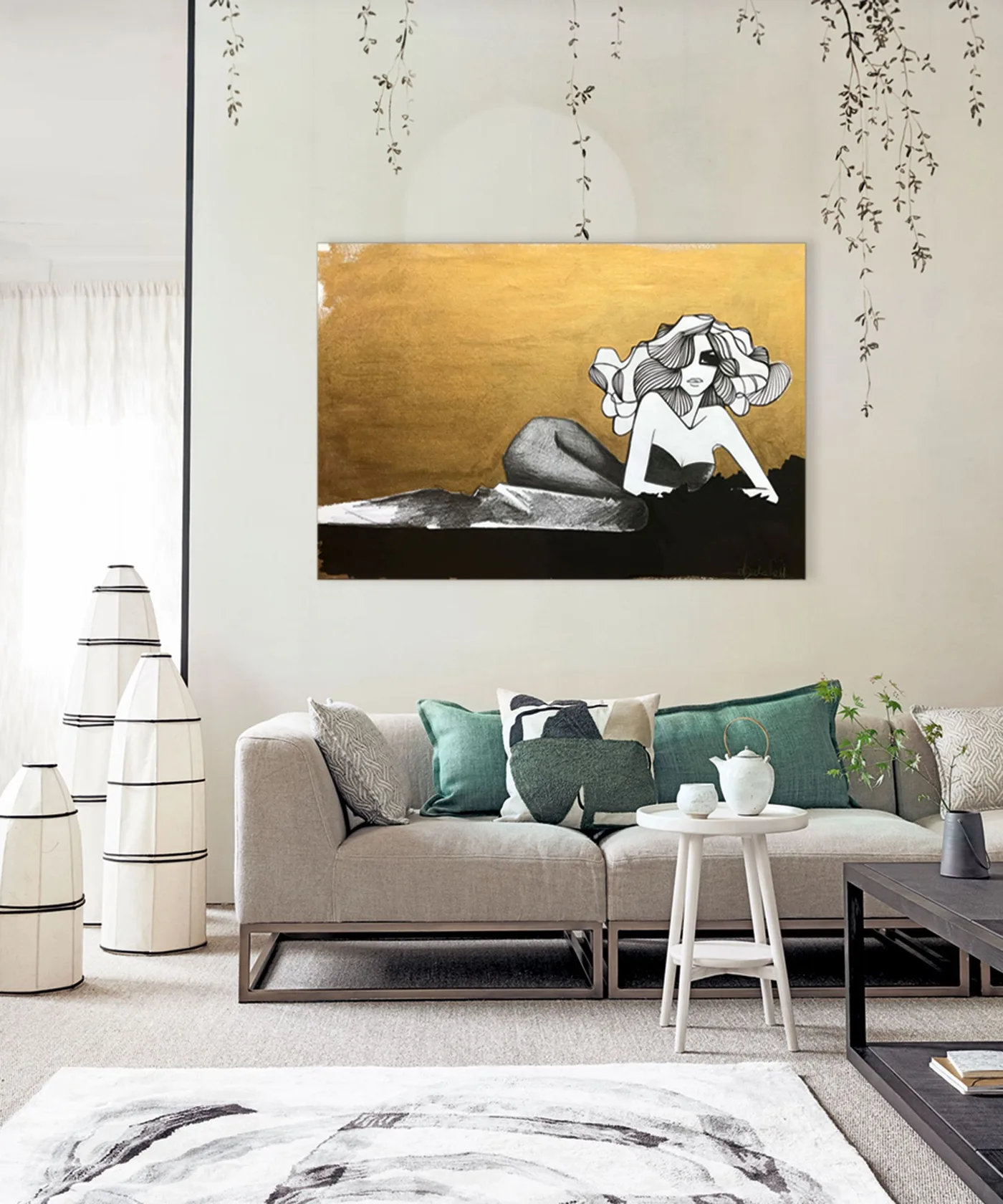 SaveSupport Non AI Creator
Image credit: Damian Russell / Future
Green cushions provide the main colored fabric on a neutral sofa beneath a large gold-toned artwork. Pale sculptural floor lights form a small group beside it, while a dark wood table gives the foreground a simple horizontal shape. A few leafy stems and the finer hanging wall pattern connect with the green, concentrating the room’s earthy accents around the seating rather than spreading them across every surface.
Choose a larger artwork you want to live with and secure it appropriately before arranging smaller pieces nearby. Keep floor lights stable with cables clear of the seating route, following guidance for the actual fittings. Limit cushions to those you use and preserve a practical table surface. If the wall already has a delicate pattern, test additional fabric patterns against it before adding another repeated motif.
BRING IT ALL TOGETHER
Keep the Pieces That Make the Room Easier to Use
Choose enough seating for the people who use the room, then check table reach and the route to windows and doors. Use closed storage for loose items and leave open shelves for a smaller collection. Warm color can come from one chair or a useful wood surface without requiring another decorative object in every corner.
Compare finishes in daylight and under your evening lamps, and check the actual care requirements of fabrics, rugs and wood. Keep controls, cupboards and lighting fittings accessible. When a larger surface already has strong grain, pattern or texture, let neighboring pieces stay simpler so the room remains easy to enjoy and maintain.