A dark boho bedroom brings deep color together with texture, pattern, and pieces that feel collected over time. Black walls are one option, but rich blue, purple, red, or dark wood can create a similar sense of depth. The character comes from how those surfaces meet the bedding, lighting, and objects you choose.
These rooms range from densely patterned spaces to simpler bedrooms with a few strong accents. Borrow the arrangement that fits your habits rather than copying every object. Leave room to move, keep bedside lighting useful, and choose bedding and display pieces that you can maintain without turning the bedroom into a daily chore.
PART 01
Build a Rich Background
IDEA 01 / 17
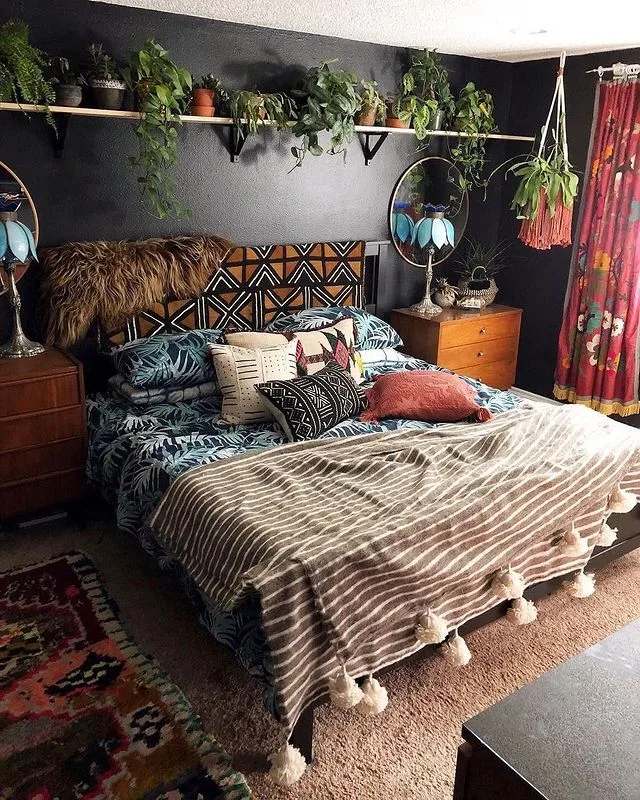
Let Black Walls Hold Several Patterns
 SaveSupport Non AI Creator
Image credit: @bohohipgypsies
Black walls give this bedroom a steady background for several different patterns. The geometric headboard, leafy bedding, striped throw, and red printed curtains vary in scale rather than repeating the same motif. Wooden bedside furniture and the long plant shelf add warmer lines, while the pale throw prevents the sleeping surface from disappearing into the wall.
Build a layered scheme gradually, starting with the largest pattern you already own. Add a smaller print or stripe only after checking how the two work together across the bed. Keep plant pots securely supported and protected against leaks, and leave everyday bedside space free rather than filling it with objects merely to match the opposite side.
IDEA 02 / 17
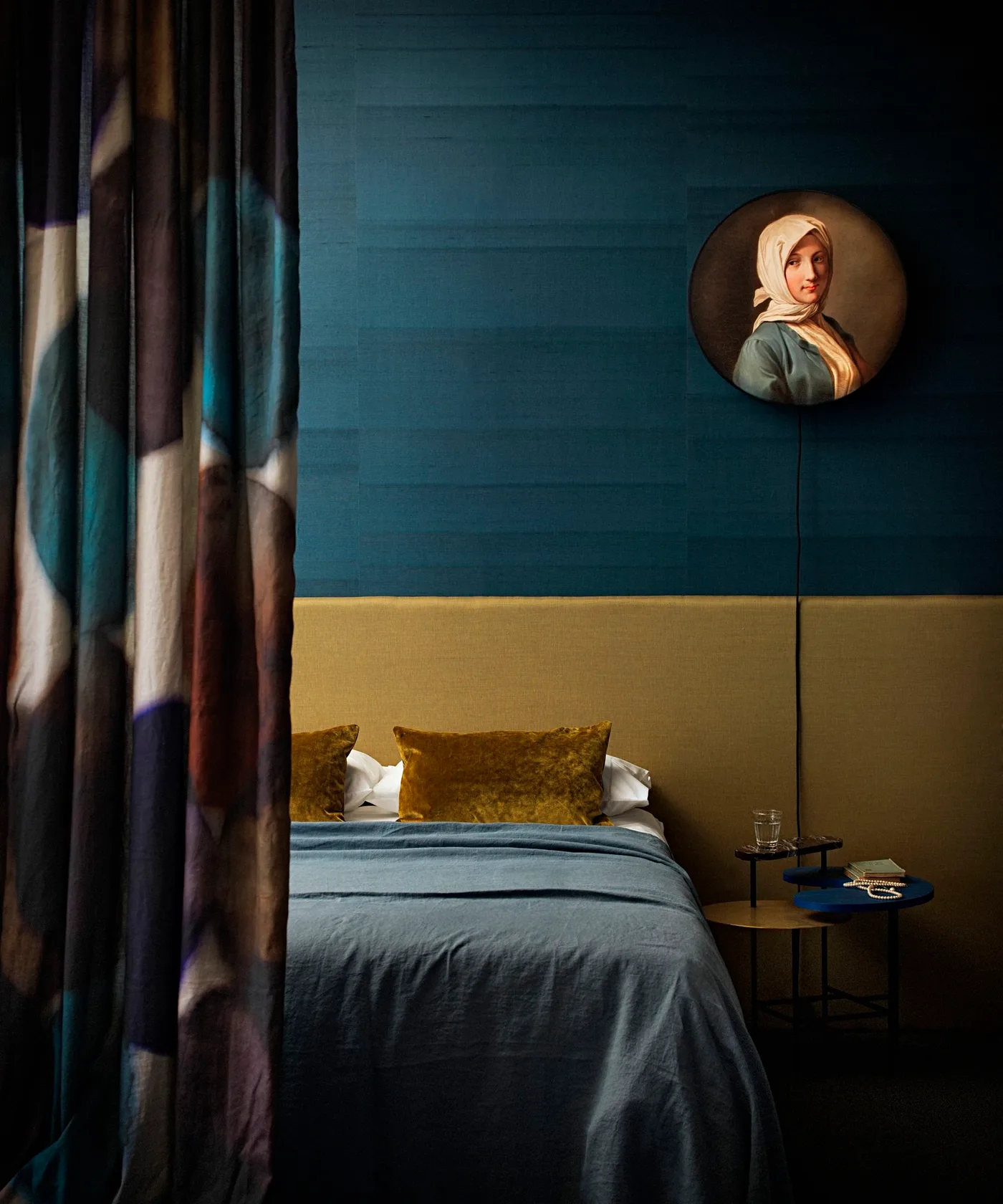
Bring Ochre Against a Deep Teal Wall
 SaveSupport Non AI Creator
Image credit: Future/Damian Russell
An ochre headboard creates a warm horizontal band against this deep teal wall. The round portrait breaks up the straight lines, while a dark patterned curtain adds another soft surface at the edge of the bed. Blue-gray bedding keeps the main sleeping area restrained so the headboard and curtain supply most of the contrast.
Take an upholstery sample with you when comparing deep teal paints, since the wall can shift toward green or blue under different lighting. Check the curtain pattern at its full hanging length rather than as a small folded piece. Keep any bedside table large enough for your normal routine, even when a compact shape suits the room visually.
IDEA 03 / 17
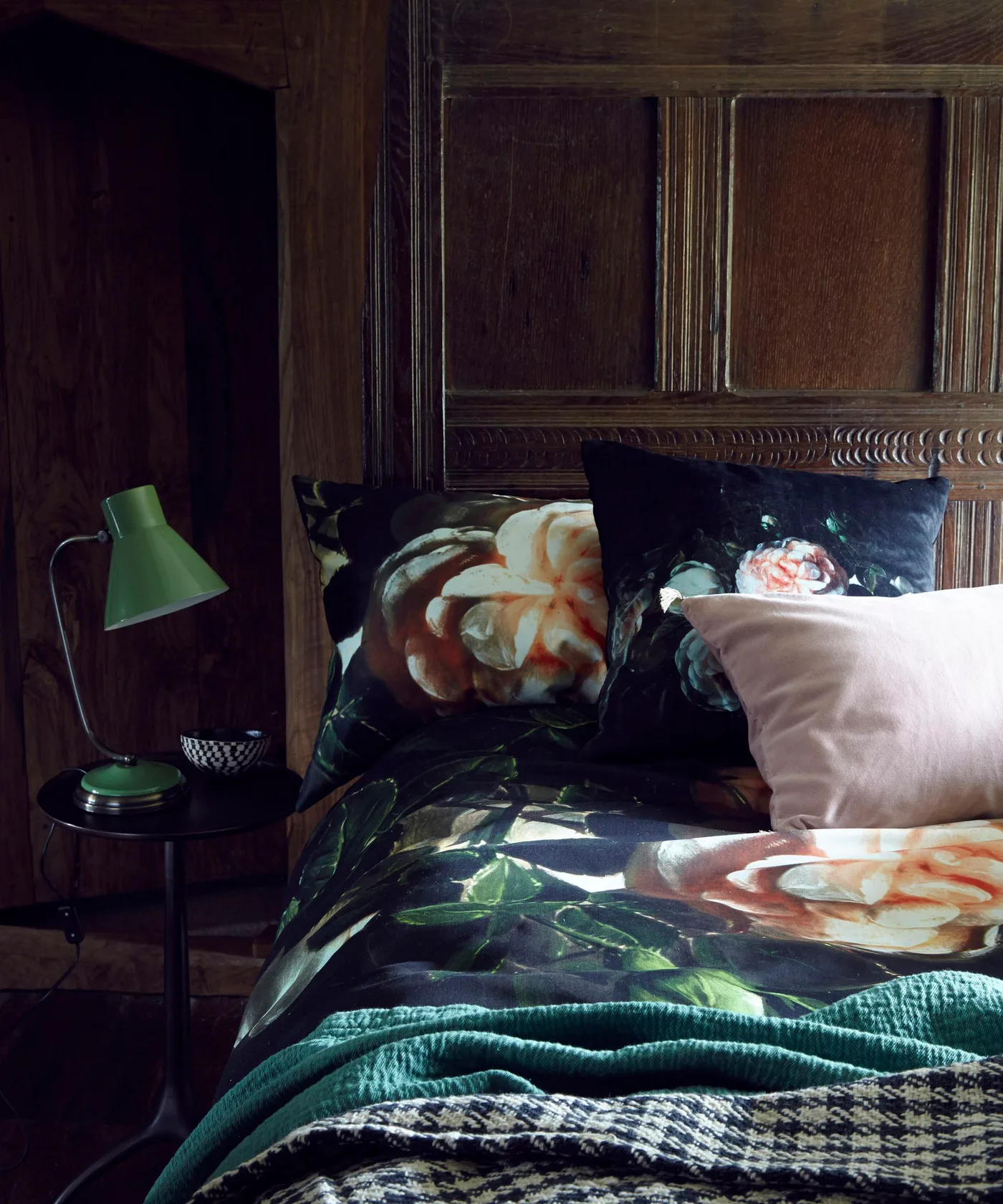
Use Large Flowers Beside Dark Wood
 SaveSupport Non AI Creator
Image credit: Future/Katya de Grunwald
Large flowers on the dark bedding sit comfortably against the carved wood panels behind this bed. A plain pink cushion and teal knitted throw introduce lighter patches between the floral shapes. The small green lamp repeats the leaves in the print, keeping the bedside corner connected without covering the woodwork with another busy decorative surface.
Let existing wood detailing remain visible when choosing a large bedding print. Fold a sample against the paneling to see whether the flowers stand apart from the background. Check washing requirements before buying several layered textiles, and use fewer pillows if you do not have convenient space to store them while the bed is in use.
PART 02
Layer Pattern with Purpose
IDEA 04 / 17
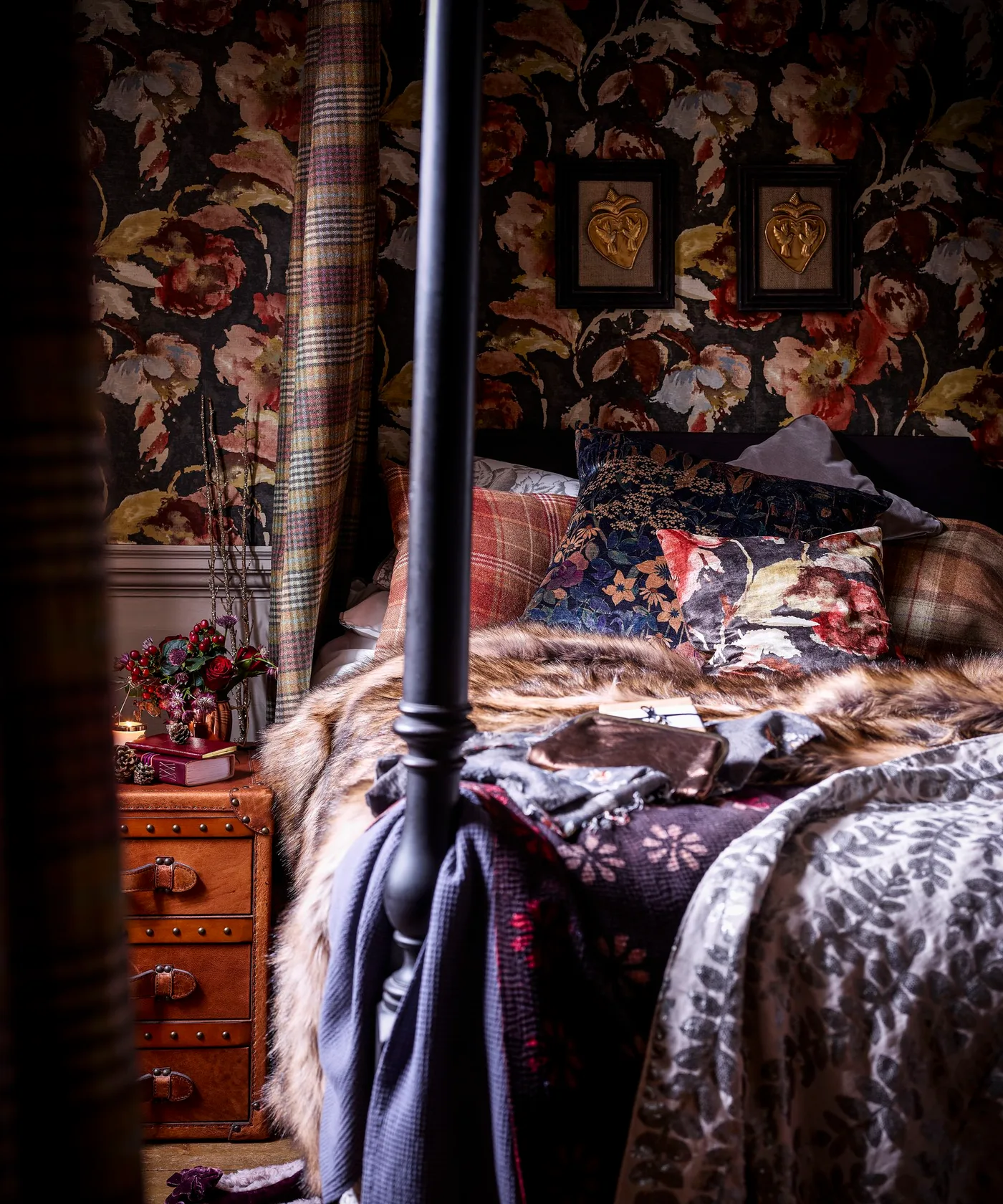
Layer Florals, Checks, and a Shaggy Throw
 SaveSupport Non AI Creator
Image credit: Future
The dark floral wallpaper sets a rich background for checked pillows, floral cushions, and a shaggy throw in this bedroom. The dark four-poster frame adds a clear outline through the layers, while the trunk-style bedside furniture brings another texture beside the bed. Shared warm colors help the different prints sit together rather than looking entirely unrelated.
Keep at least one connection between competing patterns, such as a recurring warm brown or muted red. Build the layers on the bed before buying additional curtains or rugs. A trunk used at the bedside needs a stable top and convenient access, while bulky throws should have a storage place so they do not become a permanent obstacle.
IDEA 05 / 17
Add Woven Wall Pieces to a Rich Red Room
 SaveSupport Non AI Creator
Image credit: Future / Alecia Neo
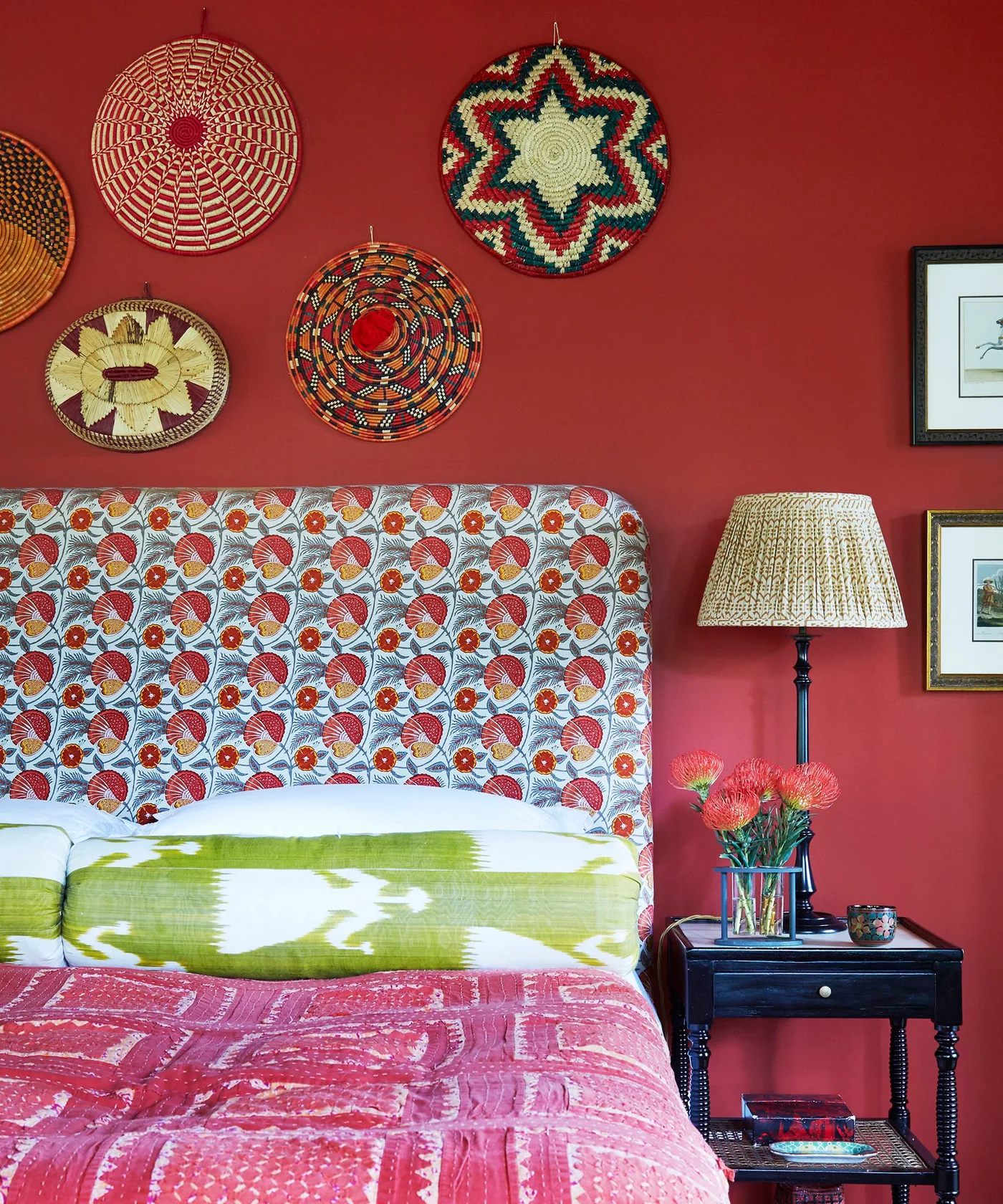
A rich red wall gives the woven plates a clear background above this floral headboard. Different circular shapes keep the display loose, while the patterned bedding and woven lampshade continue the mix of print and texture below. The pale headboard background prevents the bed from merging with the wall even though several warm colors repeat throughout.
Arrange a wall collection on the floor first and check the spacing from the doorway before making holes. Use fittings suited to each piece rather than assuming a lightweight-looking object needs only a small pin. Keep the bedside lamp useful for reading, and avoid adding more patterns until the largest wall and bedding areas feel comfortably balanced.
IDEA 06 / 17
Use Orange Tables Against a Black Backdrop
 SaveSupport Non AI Creator
Image credit: Future/Adrian Briscoe
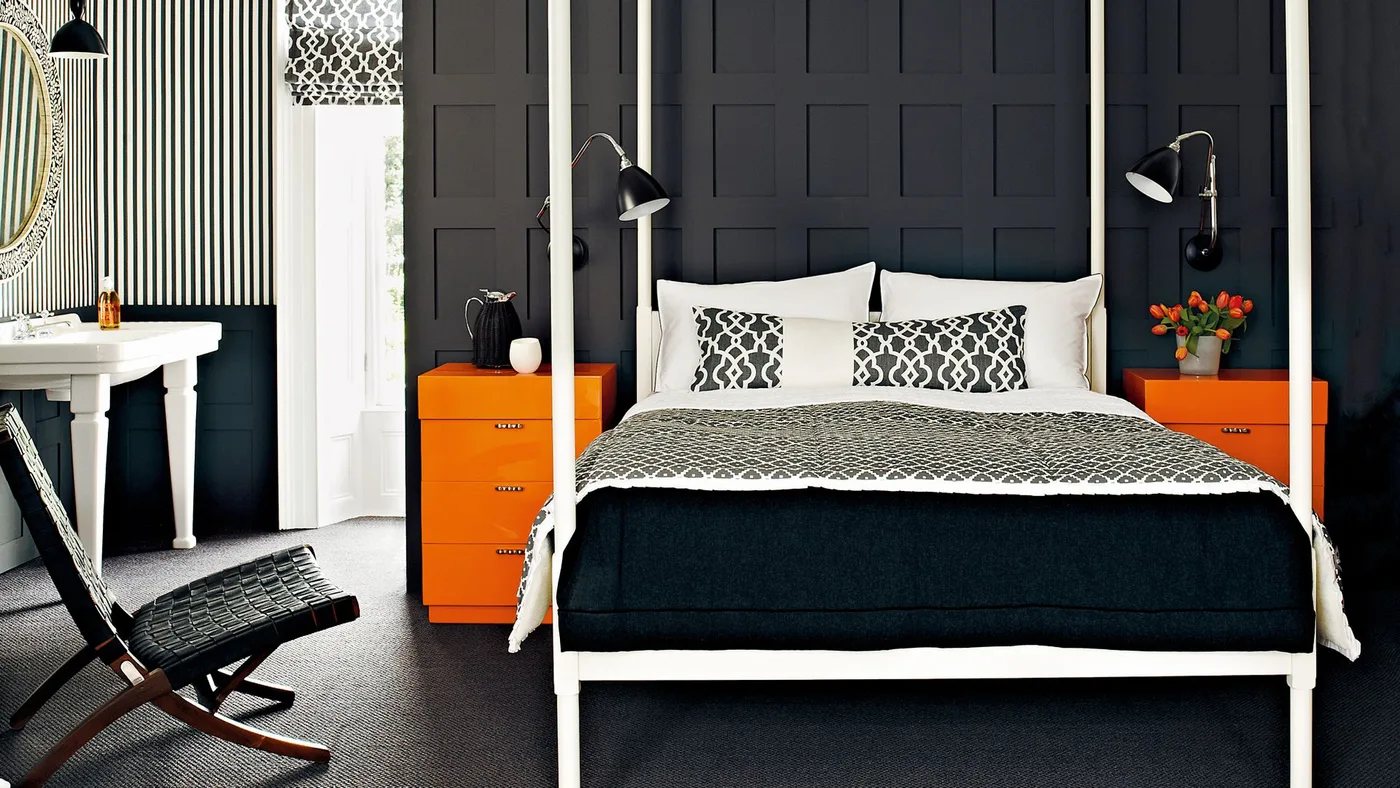
Black paneling gives the white four-poster a crisp outline, while orange bedside tables create two strong warm accents. Graphic bedding and the woven folding chair add pattern and texture without requiring a whole wall of objects. The matching tables bring order to the mix, leaving the bed frame and contrasting colors as the main points of interest.
If you prefer a more restrained layered room, repeat one accent color instead of introducing several. Check four-poster dimensions against ceiling lights and the space around the mattress. A folding chair can provide occasional seating, but keep it out of door swings and ensure the bedside drawers open freely with the bed in its final position.
IDEA 07 / 17
Hang Simple Floral Art Above Dark Bedding
 SaveSupport Non AI Creator
Image credit: @northwoodsupply
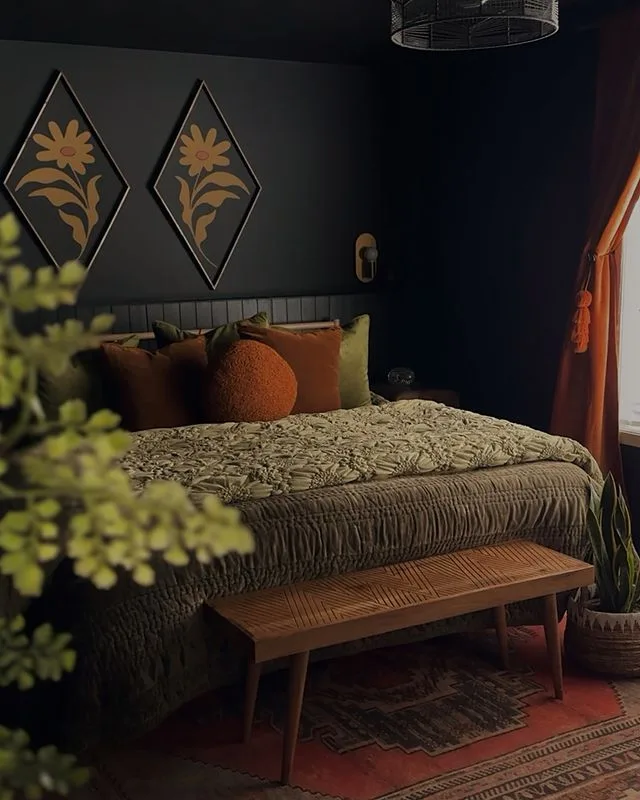
Two diamond-shaped floral pictures give this dark wall a simple focal point above the bed. Green bedding and warm-colored cushions pick up the artwork without repeating its shape, while a wooden bench and patterned rugs add detail closer to the floor. The pale leaves in the bedcover provide texture without demanding another large color change across the room.
Hang paired pictures around the actual center of the bed, not just the center of an empty wall. Keep the bench only if you have comfortable walking room beyond it. When layering rugs, check that their edges sit flat and remain easy to clean, especially near a route you use in low light at night.
PART 03
Mix Wood and Softer Textures
IDEA 08 / 17
Mix Dark Paint with Uneven Wood Texture
 SaveSupport Non AI Creator
Image credit: Future / Micky Hoyle
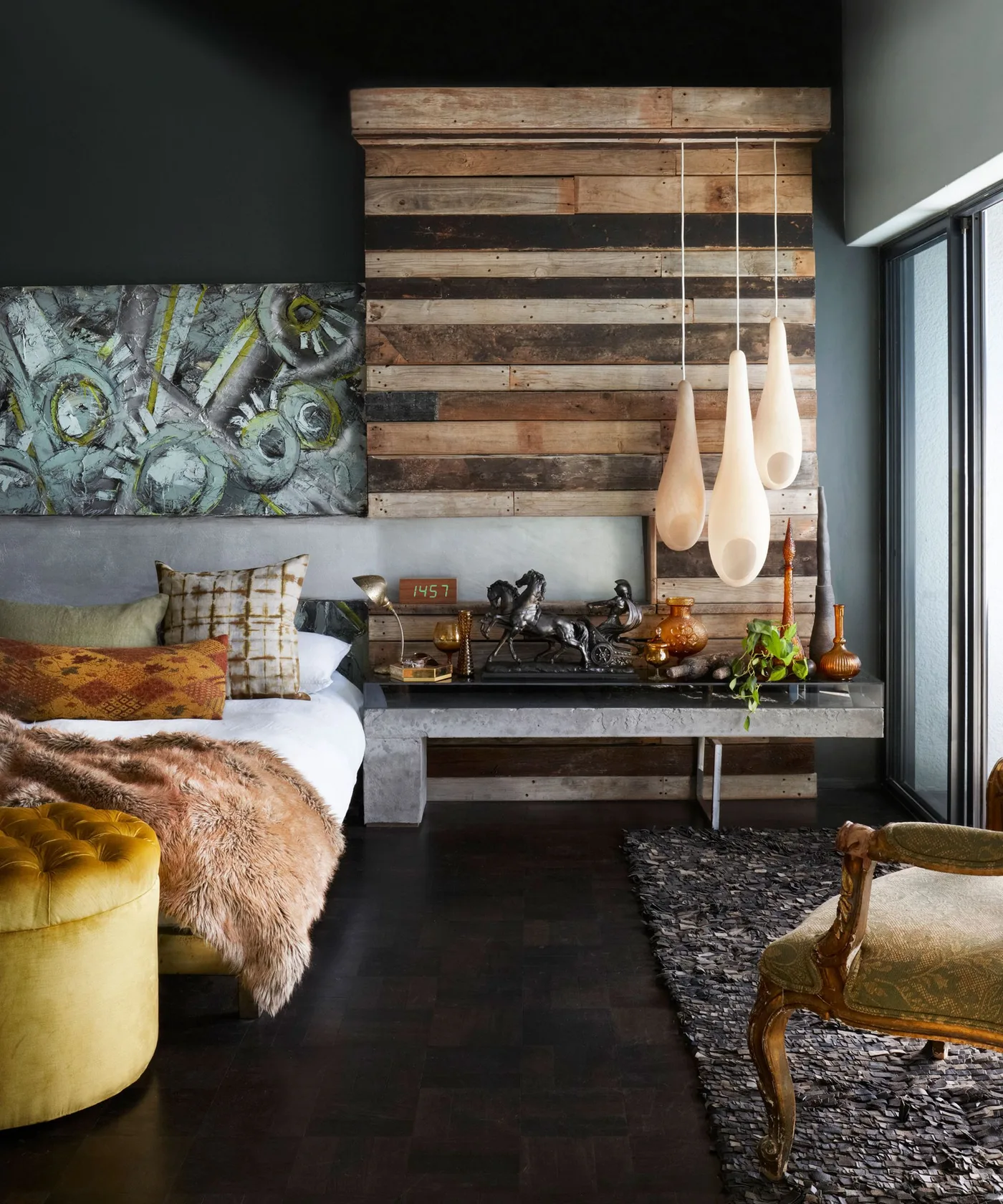
A tall section of wood planks introduces irregular texture against the dark surrounding walls. Pale hanging lights and the lighter bedding prevent the corner from becoming completely heavy, while patterned cushions and artwork add smaller points of color. The shaggy throw and rug make the lower half of the room softer beside the strong vertical wood feature.
Inspect salvaged or textured wood for sound fixing and a finish suitable for an indoor sleeping space before using it on a wall. Keep electrical fittings and hanging lights clear of decorative objects. Choose layered textiles with cleaning requirements you can manage, and retain some plain bedding so the wood, art, and pillows each remain distinct.
IDEA 09 / 17
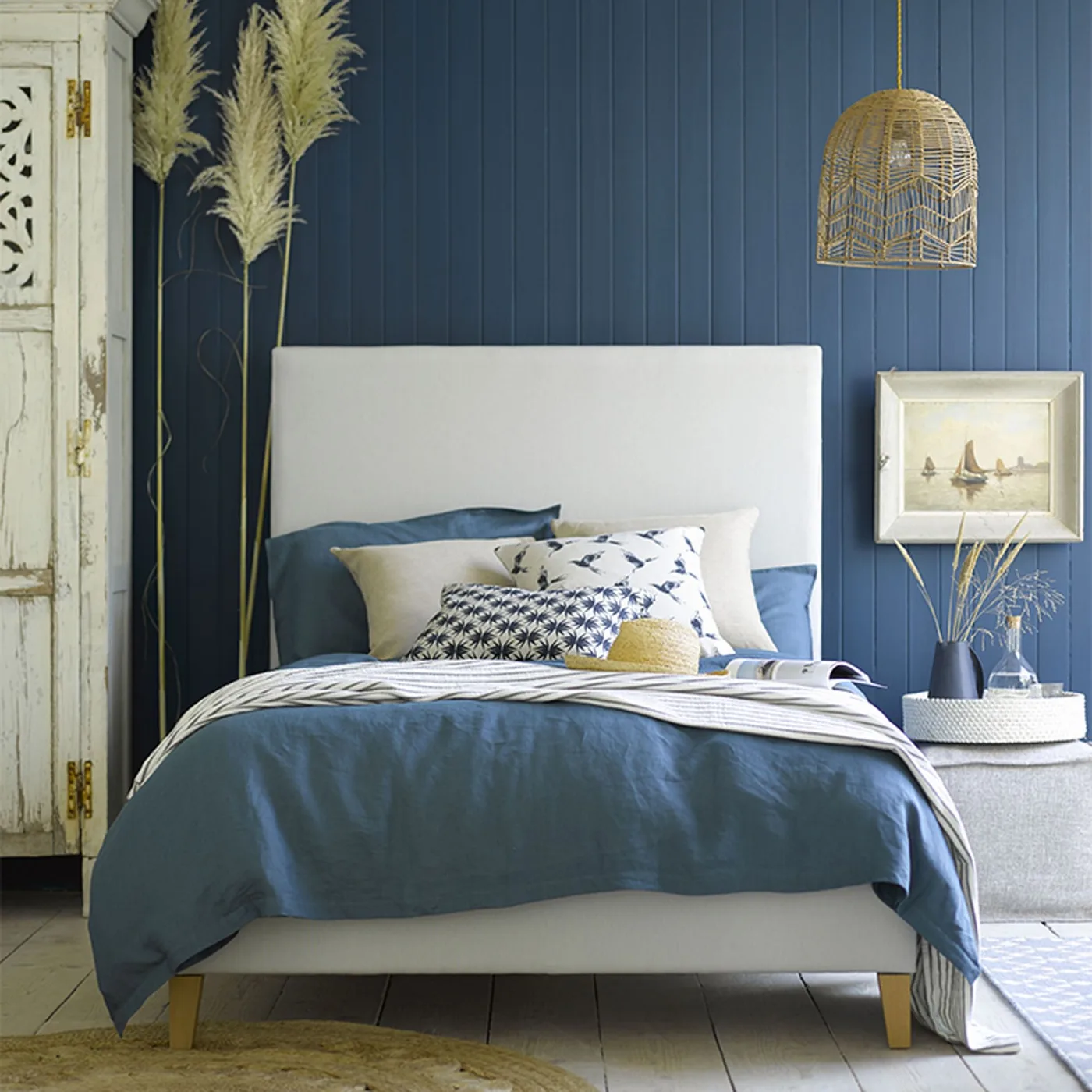
Use a Woven Pendant to Loosen Blue Paneling
 SaveSupport Non AI Creator
Image credit: Sofa.com
The blue paneled wall and bedding provide a close color connection, while the pale headboard makes the bed stand apart. A woven pendant and the worn-looking cabinet add less formal textures beside the straight panel lines. Small patterned pillows bring detail to the bed without covering the whole room in competing prints or additional framed pictures.
A woven shade can soften the appearance of a dark room, but check whether its light pattern suits the position above your bed. Inspect secondhand furniture for stability, smooth drawer operation, and surfaces that can be cleaned. Keep tall stems and bedside objects away from the pillow area so the arrangement remains comfortable once the room is occupied.
IDEA 10 / 17
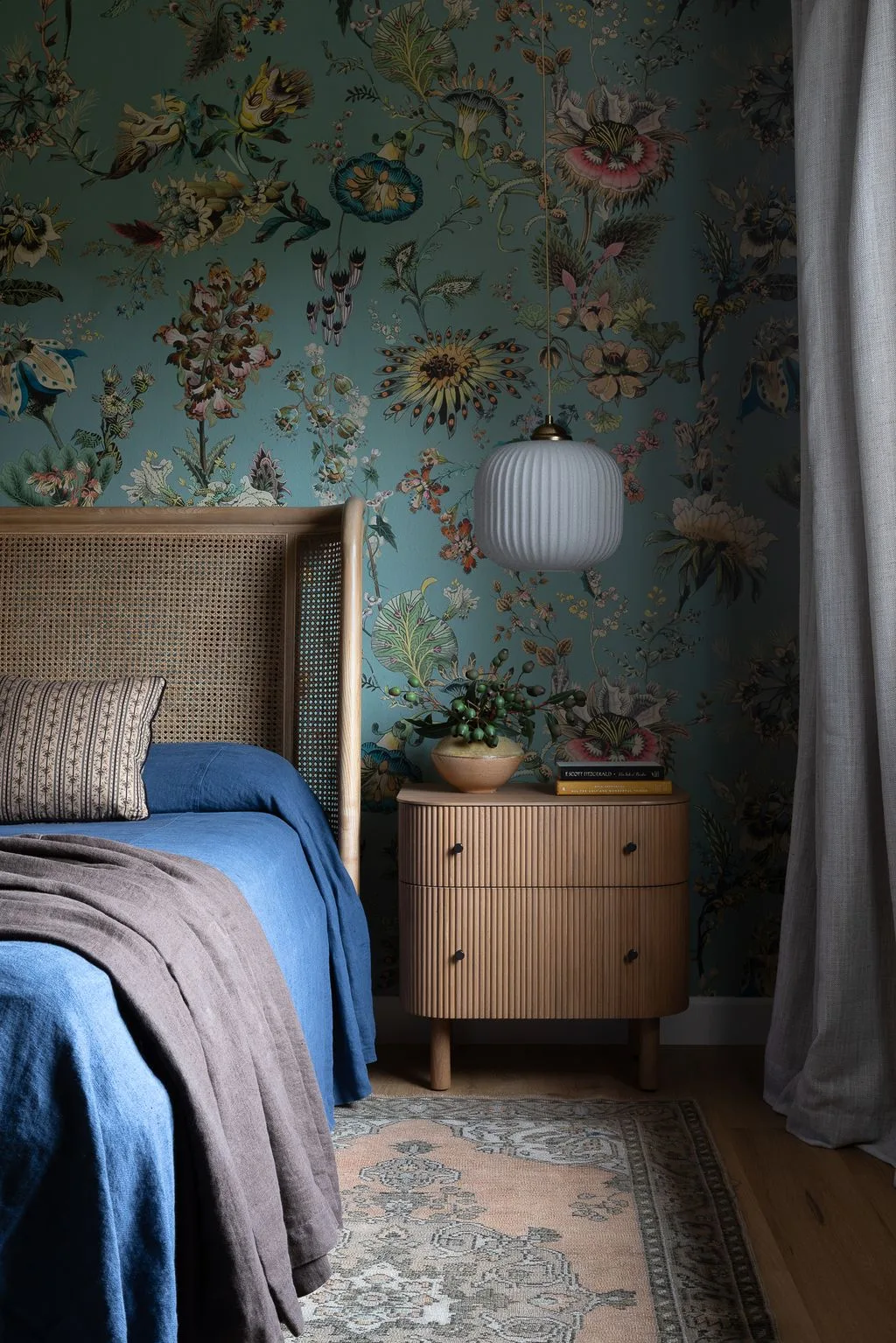
Give Floral Wallpaper a Cane and Wood Companion
 SaveSupport Non AI Creator
Image credit: Photo: Jess Isaac
The deep green floral wallpaper brings detailed color around this cane headboard and ribbed wooden bedside cabinet. Plain blue bedding and a gray throw give the print room to stand out, while the white hanging light supplies a bright rounded shape beside the bed. The repeated wood tones connect the furniture without matching every surface exactly.
Compare the wallpaper beside both the headboard and cabinet before choosing its background color. A textured bedside piece already adds detail, so leave enough clear space on top for daily use. Check the lamp position from the pillow and choose bedding that you can wash routinely, especially when a dark print makes dust or pet hair more noticeable.
IDEA 11 / 17
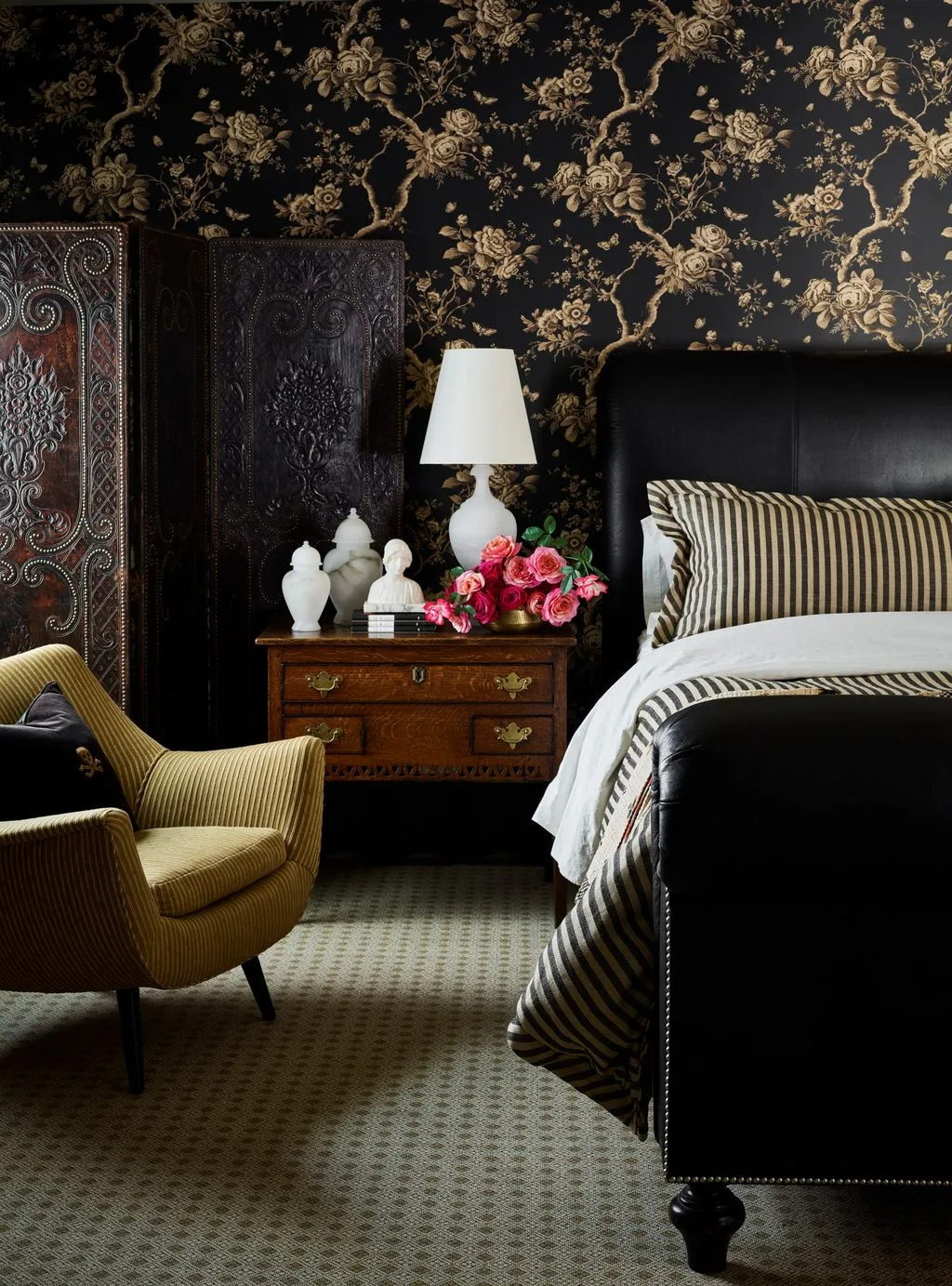
Let a Carved Screen Add Collected Character
 SaveSupport Non AI Creator
Image credit: Photo: Douglas Friedman
A carved folding screen adds another layer of detail beside the dark floral wallpaper in this bedroom. Striped bedding offers a more regular pattern, and the wooden bedside chest holds a white lamp and a small grouping of objects. The ochre chair supplies a warm patch away from the bed, connecting the room without matching the wallpaper exactly.
Use a screen where it stands securely and does not interrupt the route around the bed. Check hinges and stability carefully on an older piece, especially if children or pets use the room. Keep the bedside collection small enough to dust easily, and preserve a clear patch for a book or drink so the furniture still serves its purpose.
IDEA 12 / 17
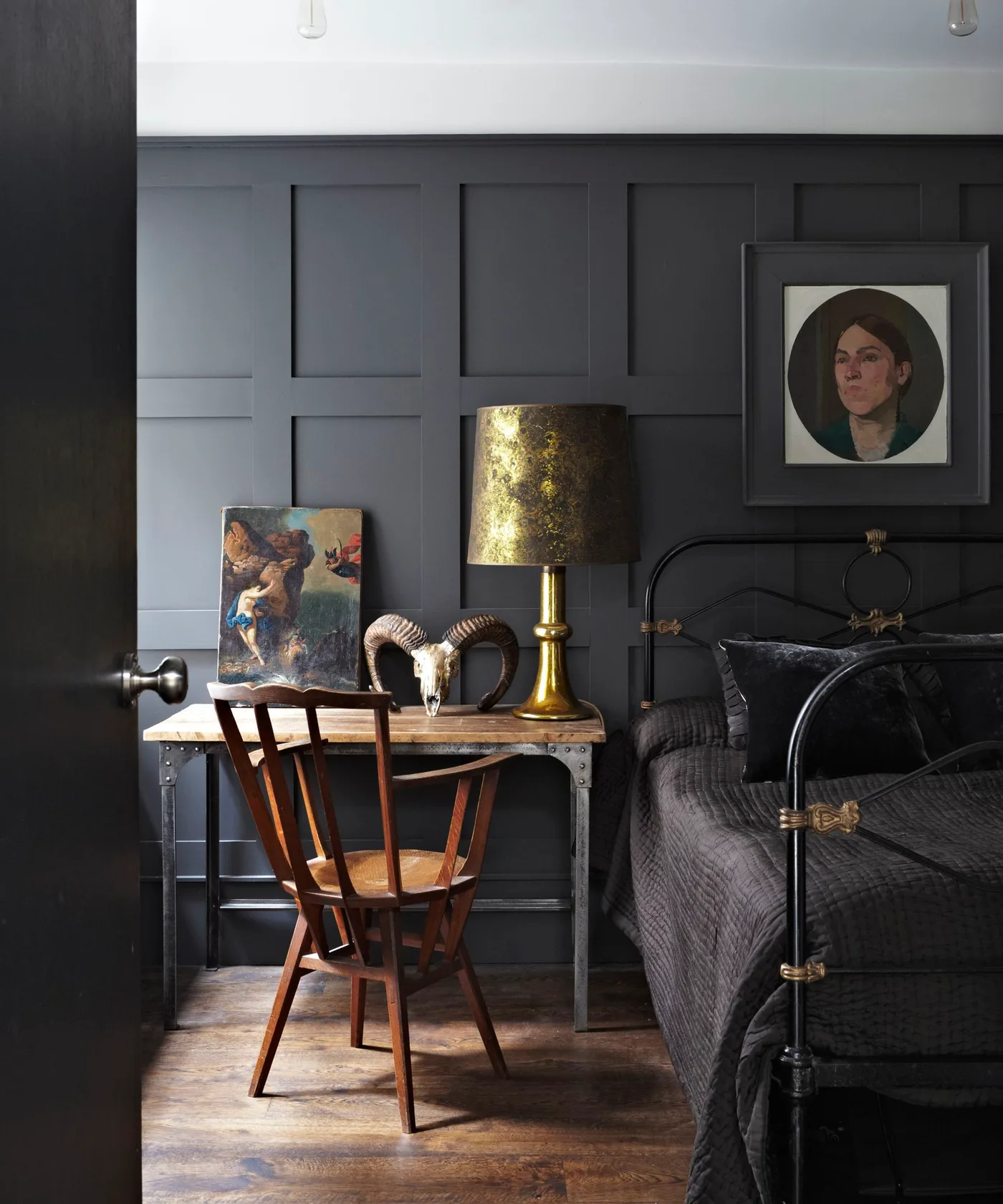
Keep a Collected Bedside Corner Functional
 SaveSupport Non AI Creator
Image credit: Farrow & Ball
Charcoal paneling unites the dark metal bed and the collected objects in this bedside corner. A wooden chair adds warmth beside the desk-style surface, while the portrait and gold-colored lamp give the arrangement a personal focus. The pale ceiling and wood floor keep the dark wall from feeling like the only visible surface around the bed.
A desk beside the bed can work if its height suits both sitting and reaching from the pillow. Try those two positions before choosing it as your main bedside furniture. Keep objects within easy reach and leave enough space to pull out the chair, rather than filling the top with pieces that make daily use awkward.
PART 04
Keep the Details Useful
IDEA 13 / 17
Use Moon Mirrors Above a Layered Bed
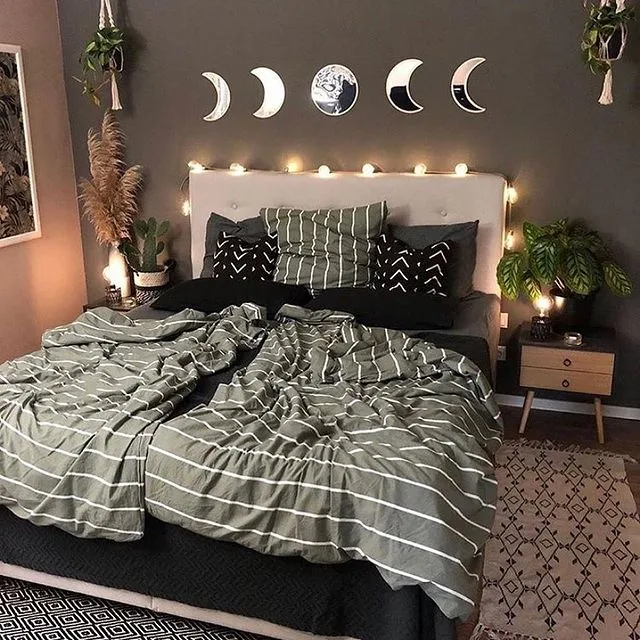 SaveSupport Non AI Creator
Image credit: @thatorganizedhome
Moon-shaped mirrors sit above a pale headboard against the dark wall, with green checked bedding and black patterned cushions filling the bed below. Plants and a few small lights soften the edges of the arrangement. The light headboard acts as a break between the wall and darker pillows, keeping the shapes of the mirror display easy to see.
Fix each mirror securely and check its reflection from the bed so it does not direct an unwanted light toward your pillow. Use decorative lights according to their instructions, keep cables clear of bedding and walkways, and provide separate useful reading light. A few healthy plants are easier to maintain than a dense display in a dim corner.
IDEA 14 / 17
Hang a Light Canopy Against Black Walls
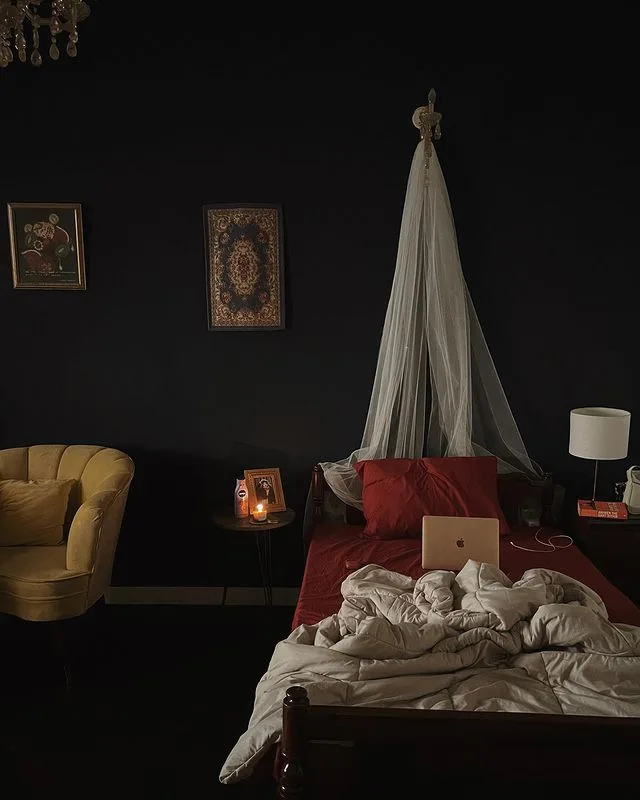 SaveSupport Non AI Creator
Image credit: @noor_unnahar
A light canopy falls behind the red pillows and stands out clearly against the black wall in this bedroom. Framed pictures and a yellow chair add warm details without filling every section of the dark background. The small bedside tables keep the main floor area visible, leaving the canopy and deep bedding as the strongest features around the bed.
Secure a canopy to an appropriate support and keep loose fabric clear of lamps, heaters, and electrical fittings. Decide where it will sit when you sleep so it does not drape across your face or catch behind the pillow. Choose a washable fabric and a simple hanging arrangement that you can remove for cleaning without dismantling the room.
IDEA 15 / 17
Combine a Dark Bed Frame with Exposed Brick
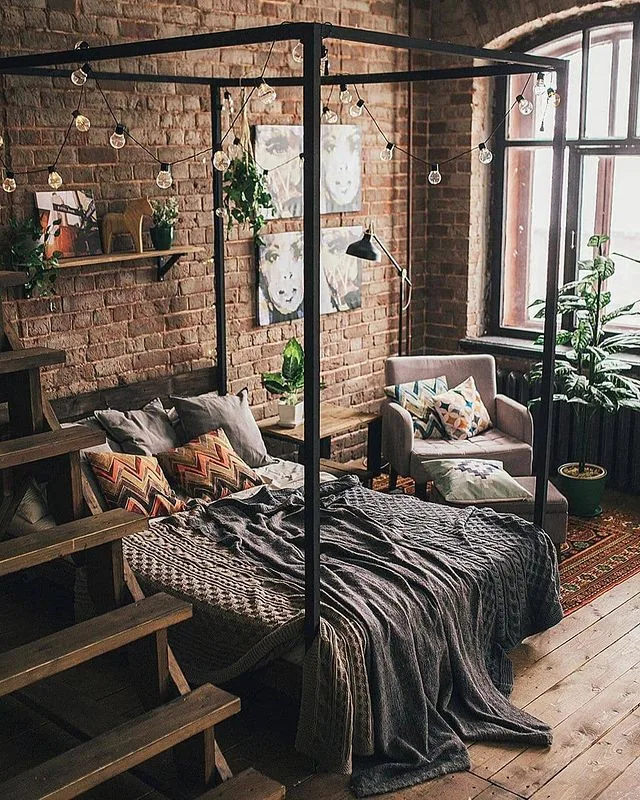 SaveSupport Non AI Creator
Image credit: @thebuildit_
The dark four-poster creates an outline in front of the exposed brick, while gray bedding and small patterned cushions keep the bed layered rather than polished and uniform. Plants soften the corner beside the window, and small lights follow the upper frame. The wooden bedside pieces and floor add warmth below the dark bed and textured wall.
Keep the bed frame clear of the window opening and check that curtains or blinds can still operate fully. Decorative lights need secure routing and should not take the place of practical reading light. Leave brick finishes to suit their condition and construction, and choose a manageable number of textiles so the textured room remains easy to keep clean.
IDEA 16 / 17
Group Different Mirrors Beside the Bed
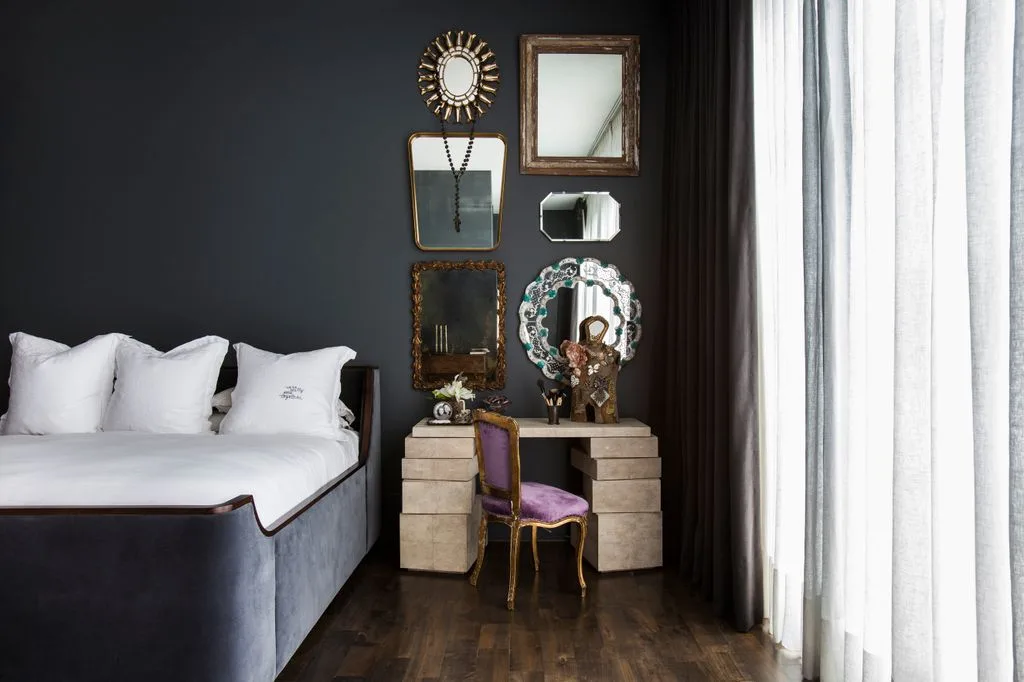 SaveSupport Non AI Creator
Image credit: Photo: Julia Soefer
Different mirror shapes form a collected display beside the pale bed in this dark bedroom. The purple chair adds a small warm accent at the dressing table, while the long light curtains separate the window from the deeper wall color. Keeping the bedding simple gives the mirrors a clear role rather than making every part of the room equally busy.
Arrange the mirrors by spacing and reflection as well as frame style. Check each fitting and avoid placing heavy pieces where a chair or door may strike them. A dressing table still needs usable light at face level, and the chair should tuck away comfortably so the collection does not make the route beside the bed feel cramped.
IDEA 17 / 17
Make a Dark Reading Corner Feel Collected
 SaveSupport Non AI Creator
Image credit: Photo: Paige Rumore
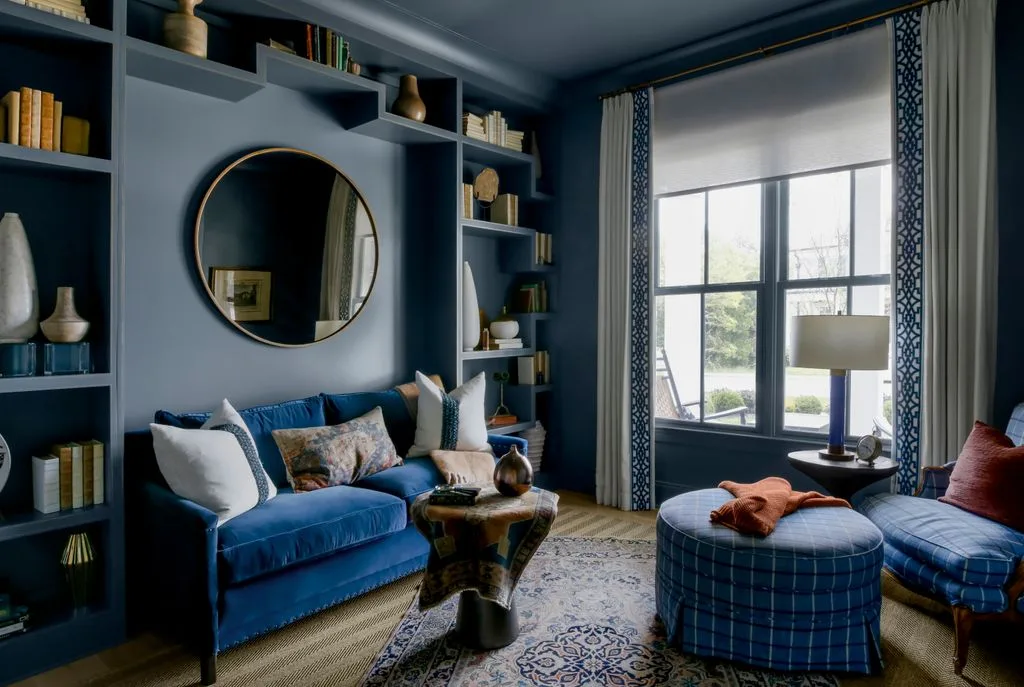
Dark blue shelves frame a small seating area with patterned cushions, a plaid ottoman, and a rug below. The round mirror interrupts the straight storage lines, while books and objects spread through the shelves give the corner a collected feel. Repeating blue in the upholstery connects the seating to the wall without making every textile plain.
Plan a reading corner only after allowing enough space for the bed and storage to work comfortably. A movable ottoman is useful if the area also forms a route to the window. Keep a lamp positioned for the seat you actually use, and leave gaps on the shelves so cleaning and finding books remain straightforward rather than becoming a display exercise.
BRING IT ALL TOGETHER
Keep the Layers Comfortable
Begin with one rich background and one textile you love. Build around their colors, then add wood, woven texture, or a small collection of pictures where the room needs character. You do not need a new object on every surface to create a layered bedroom.
Before finishing, move through the room as you would at night. Check drawer access, switches, the route to the door, and where extra pillows or blankets will go. Secure anything above the bed and choose care routines you can maintain, so the room feels personal without becoming difficult to use.