An accent wall gives the dining area a clear backdrop, whether it is a painted end wall, a patterned recess, or a surface with more texture than its surroundings. The strongest choice usually comes from the room itself: the wall behind a bench, an existing brick opening, or an uninterrupted area visible from the doorway.
Before choosing a finish, look at what the table, chairs, windows, and lighting already contribute. A bold wall works differently beside a busy rug than beside plain upholstery. These examples focus on visible wall treatments and explain how to adapt their color, scale, and practical details without filling every surface with decoration.
PART 01
Use Color and Shape to Define the Dining Area
IDEA 01 / 20
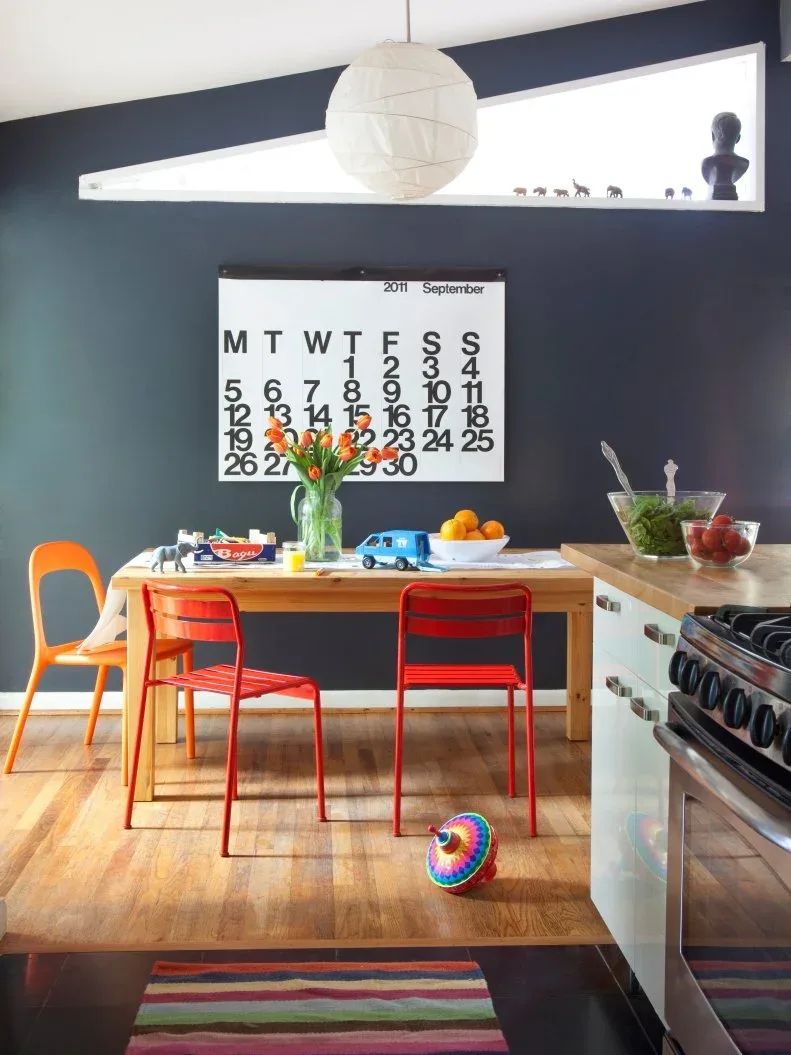
Frame an Unusual Window with Dark Paint
 SaveSupport Non AI Creator
Image credit: Photo: Design by Brian Patrick Flynn
A dark blue-gray wall emphasizes the long triangular window above this dining nook. White framing makes the unusual opening easy to read, while a large calendar fills the space below it. Orange and red chairs bring warmer color around the wooden table. The pale pendant and neighboring surfaces stop the darker wall from becoming the only strong shape in the room.
Use an existing architectural feature as the starting point for a painted wall rather than placing color arbitrarily. Test the shade beside the window trim and in evening light. If the wall also holds a calendar or message board, leave enough clear space to read it from the table without layering several competing displays around it.
IDEA 02 / 20
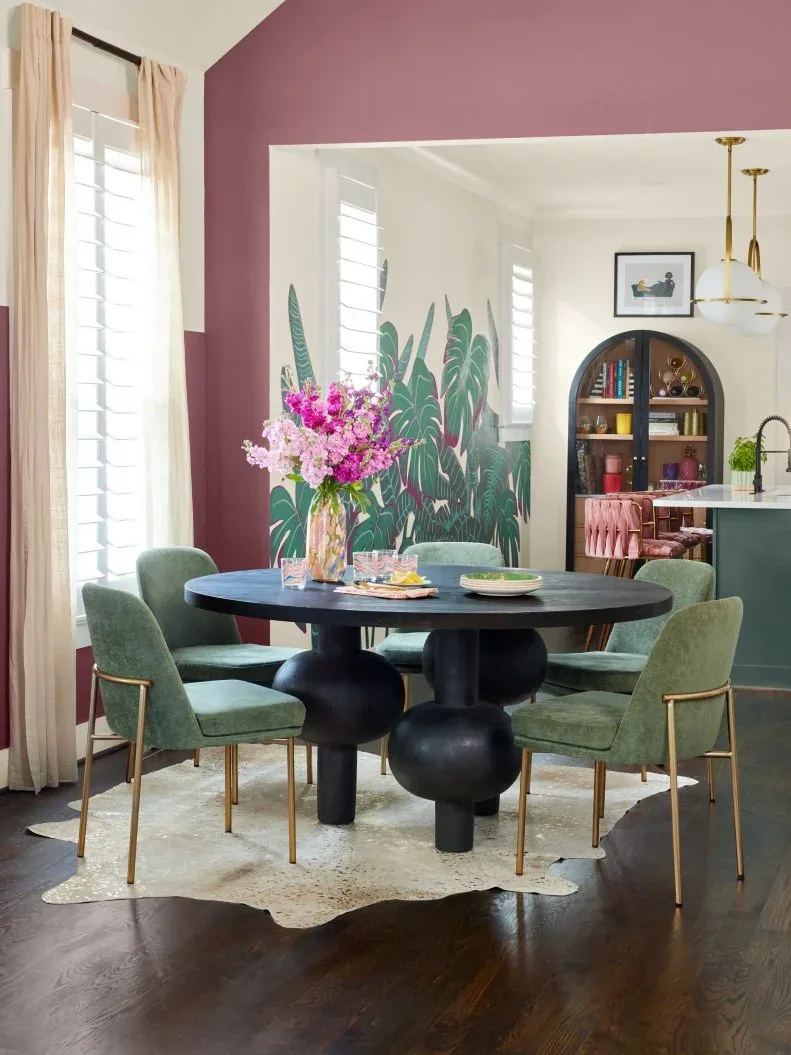
Color the Wall Around an Open Doorway
 SaveSupport Non AI Creator
Image credit: Photo: Adam Albright. From: HGTV Magazine
Mauve paint surrounds a broad opening, giving the dining area a distinct edge while the adjoining room remains visible. The black round table and green chairs stand clearly in front of that colored frame. Pale curtains soften the window side, and the botanical imagery beyond the opening adds a separate layer of pattern rather than covering the mauve surface itself.
A doorway wall can define a dining zone without closing off its connection to another room. Compare the paint with colors visible through the opening, especially large furniture and permanent finishes. Keep the edge treatment deliberate, and check the result from both directions so the accent feels considered when you enter as well as when you sit down.
IDEA 03 / 20
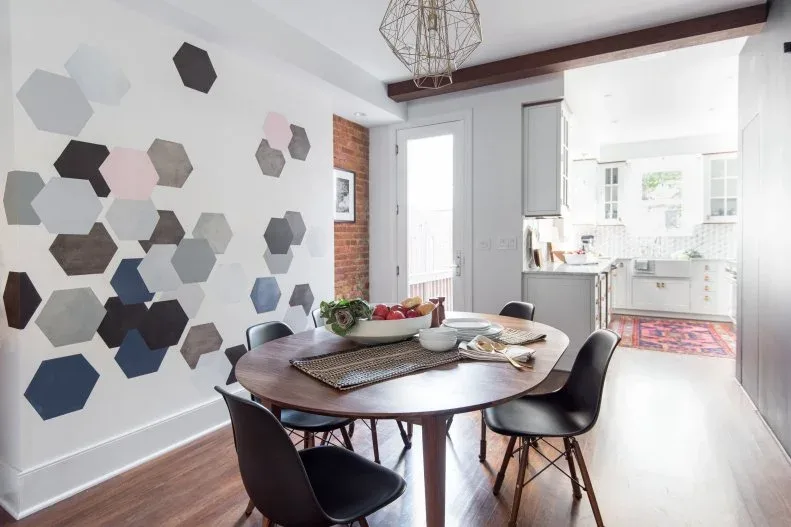
Scatter Geometric Shapes Across a Pale Wall
 SaveSupport Non AI Creator
Image credit: Photo: Laura Metzler. From: Kerra Michele Huerta
Scattered hexagons bring movement to the pale wall beside this oval dining table. Gray, black, pink, and blue shapes vary in size and spacing, leaving some background visible rather than forming a solid repeating pattern. Black chairs connect to the darker shapes, while the simple wooden tabletop allows the wall to remain the more detailed element beside the seating.
Lay out a proposed arrangement on paper or with removable templates before painting or applying shapes. Check it from the doorway and from a seated position, where the table may hide the lowest pieces. If you choose adhesive decorations, follow the product’s surface guidance and test a discreet area; removability depends on both the product and the existing wall finish.
IDEA 04 / 20
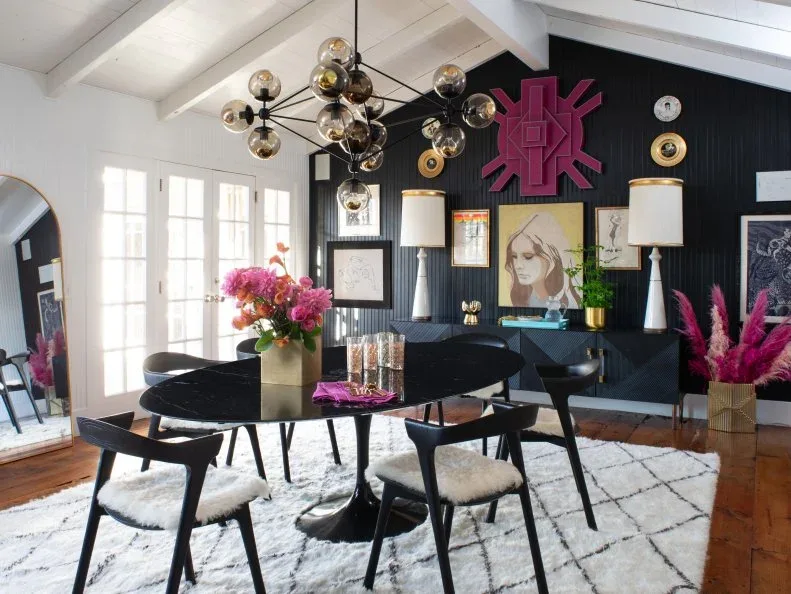
Use a Black Wall to Unite Mixed Objects
 SaveSupport Non AI Creator
Image credit: Photo: Meghan Beierle O'Brien. From: HGTV Magazine
Black paneling gives the collection of frames and objects a consistent background behind this dining table. A magenta geometric piece and lighter portraits stand out, while pale lamps repeat the contrast at either end of the sideboard. White beams and window walls surround the darker surface. The arrangement shows how a painted backdrop can connect objects that differ in shape and size.
Choose the wall color after laying out the objects you want to display. Dark backgrounds can make pale pieces more noticeable, but small dark frames may disappear unless they have enough contrast. Leave room for the sideboard’s practical use, and check that taller lamps or flowers do not obscure the objects you most want to see.
IDEA 05 / 20
Give a Narrow Wall a Chevron Framework
 SaveSupport Non AI Creator
Image credit: Photo: Lisa Romerein. From: HGTV Magazine
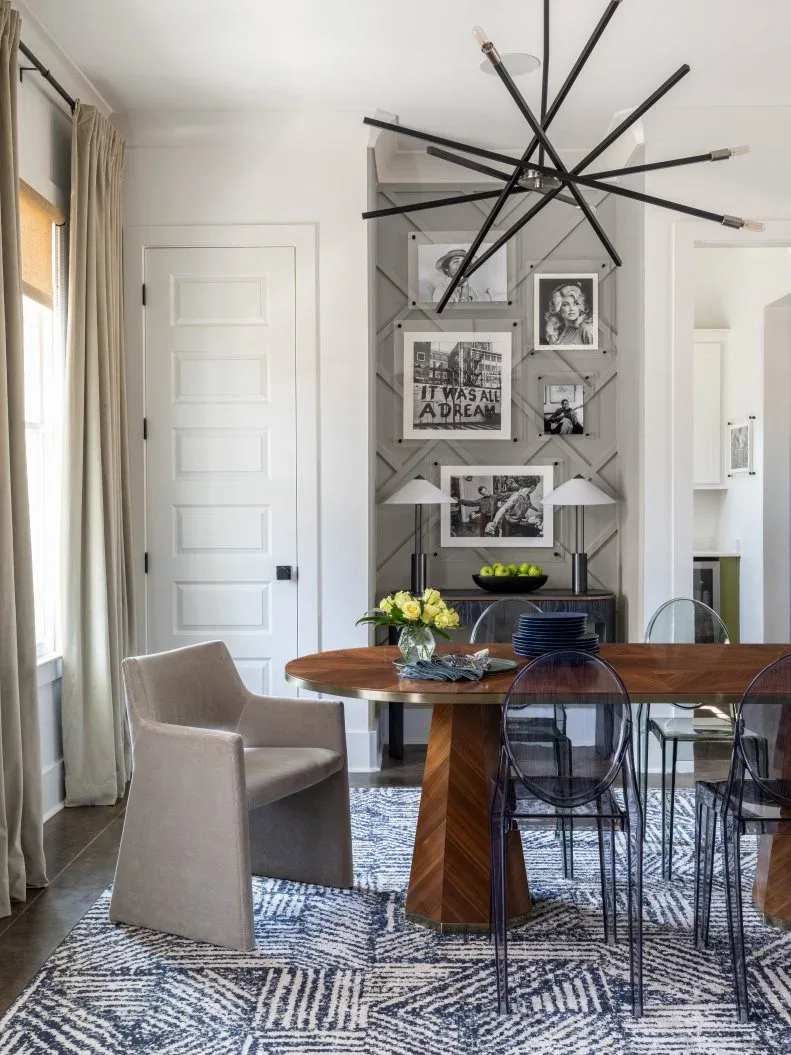
Diagonal trim creates a chevron framework across the narrow gray wall behind the console. Black-and-white pictures sit within that structured background, adding a more personal layer without changing the restrained palette. The wooden table introduces warmth, and transparent chairs keep the foreground comparatively open. A branching black chandelier repeats the darker lines above the patterned rug.
A narrow wall can support a strong pattern when the surrounding walls remain quieter. Draw the trim arrangement around existing outlets and the furniture below before installing it. Avoid awkward partial shapes at the edges, and check the thickness against picture hooks and frames. Leave clearance behind dining chairs so the decorative surface is not repeatedly knocked by their backs.
PART 02
Choose a Pattern That Suits the Wall
IDEA 06 / 20
Keep Blue Pattern Behind the Bench
 SaveSupport Non AI Creator
Image credit: Photo: David Tsay. From: HGTV Magazine
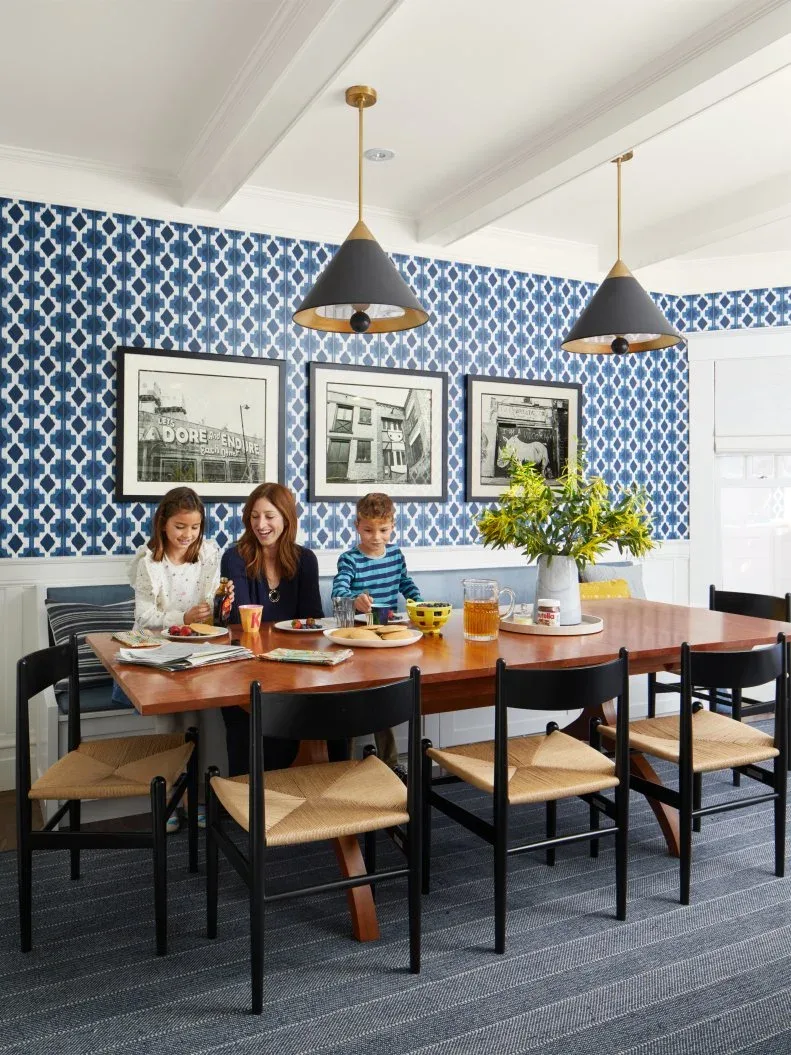
Blue-and-white geometric wallpaper gives the bench wall a distinct identity, while the surrounding ceiling and cabinetry remain pale. Three framed photographs create a simple horizontal grouping against the repeated pattern. A wooden table and black chairs keep the furniture comparatively straightforward. Two dark pendants mark the dining area overhead without adding another large color beside the wall.
Choose a pattern repeat that remains readable around the frames and above the bench. A sample strip is more useful than a small swatch when checking the scale from across the room. Follow the wallcovering’s cleaning guidance, and consider how chair backs or children using the bench may touch the lower edge of the decorated area.
IDEA 07 / 20
Bring Coral Chevron to an End Wall
 SaveSupport Non AI Creator
Image credit: Photo: Kevin J. Miyazaki. From: HGTV Magazine
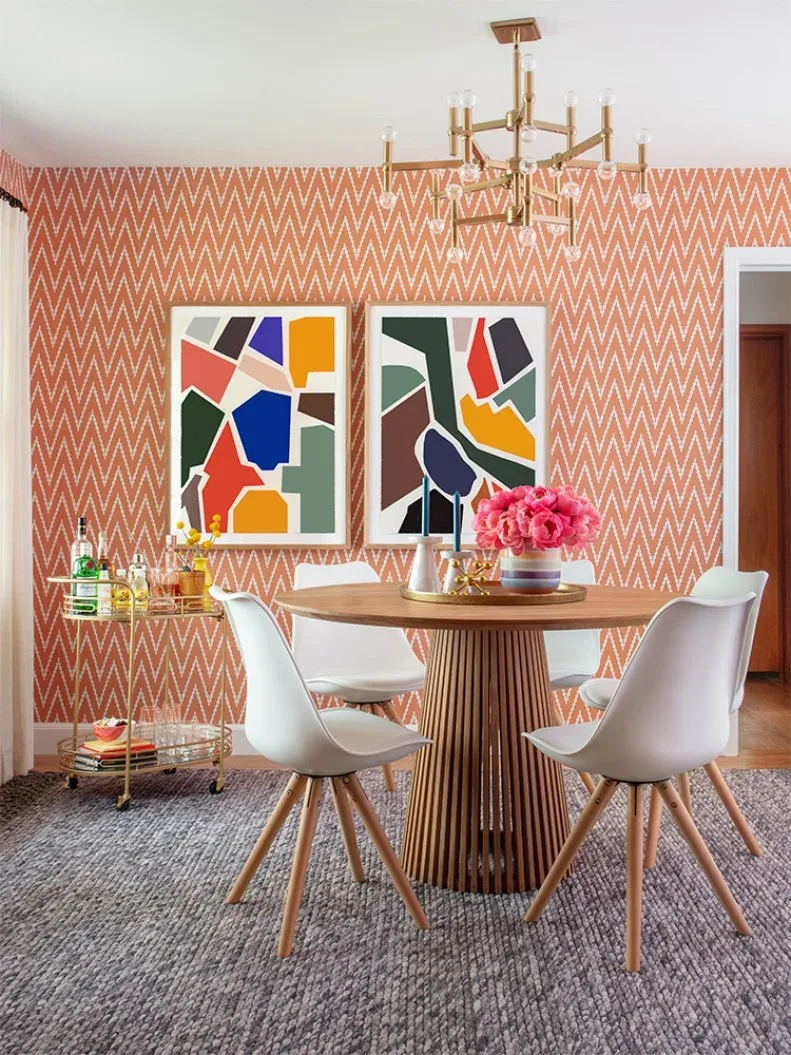
Coral-and-white chevron gives the end wall a lively rhythm behind two colorful pictures. Their larger abstract shapes stand apart from the smaller repeated zigzags. A round wooden table and pale chairs keep the center simpler, while the gold-tone chandelier and drinks cart connect the room’s warmer details. The wall carries most of the pattern without requiring matching upholstery around the table.
Compare the wallcovering and artwork together before hanging either. Similar-sized patterns can compete, whereas a larger image may be easier to distinguish from a fine repeat. Work out where the wallpaper seams will fall around the frames, and leave the drinks cart clear of chair movement so the room’s decorative backdrop does not reduce its everyday usefulness.
IDEA 08 / 20
Contrast a Dark Floral Wall with White Paneling
 SaveSupport Non AI Creator
Image credit: Photo: Carrie Patterson. From: Jennifer Visosky
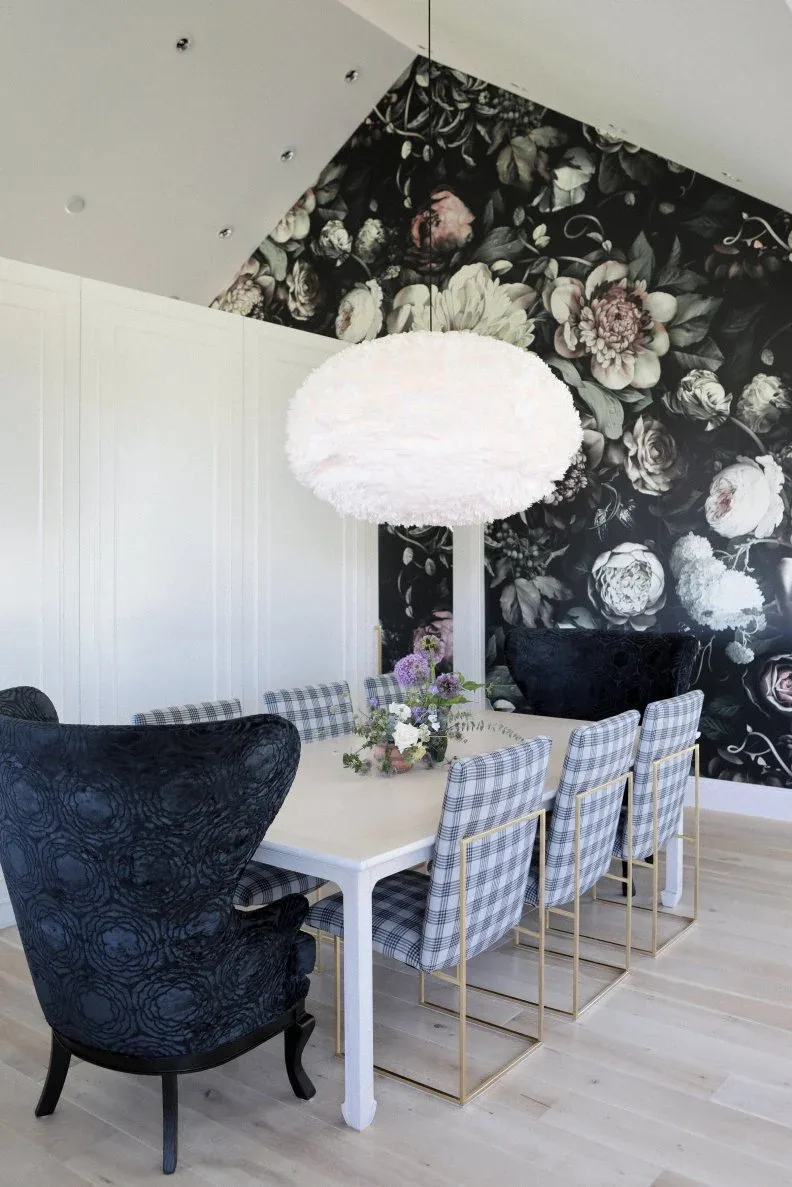
Large pale flowers stand out against the black wall at the end of this dining room. White paneling on the neighboring wall provides a quieter contrast, so the floral treatment stays clearly defined. A white table brightens the center, while checked side chairs and darker end chairs introduce smaller patterns below. The pale pendant adds another soft shape in front of the bold backdrop.
Look at a generous wallpaper sample before choosing an oversized floral. A few large blooms may dominate a small wall differently from the pattern shown on a screen. Check how the repeat meets the ceiling slope and adjoining paneling, and keep additional wall decorations restrained unless they have enough visual separation from the flowers behind them.
IDEA 09 / 20
Let a Botanical Mural Fill One Wall
 SaveSupport Non AI Creator
Image credit: Photo: Tim Souza Photography. From: Lotus + Lilac Design Studio
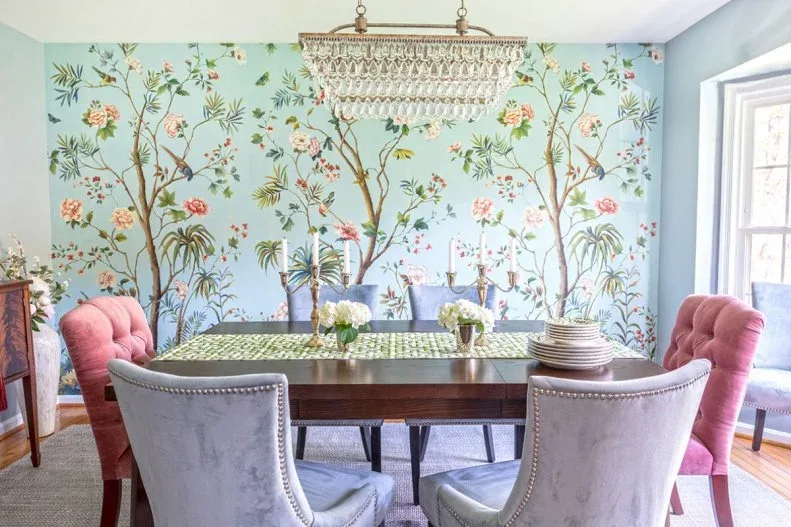
A pale blue-green botanical mural stretches across the end wall, placing branches and flowers behind the dining table. Pink chairs pick up warmer notes from the mural, while gray chairs keep the foreground more subdued. The bright window wall stays plain, giving the illustrated surface a clear boundary. A pale chandelier adds texture above without interrupting the scene with another strong color.
Measure the wall and note where furniture, outlets, and ceiling fittings will interrupt the mural before ordering it. Ask how the supplied panels scale to your dimensions rather than assuming the sample image will fit unchanged. Keep the table position in mind: the most recognizable part of the scene should remain visible above the backs of the chairs.
IDEA 10 / 20
Use Horizontal Color Behind a Banquette
 SaveSupport Non AI Creator
Image credit: Photo: Dror Baldinger. From: Marcus Mohon Interiors
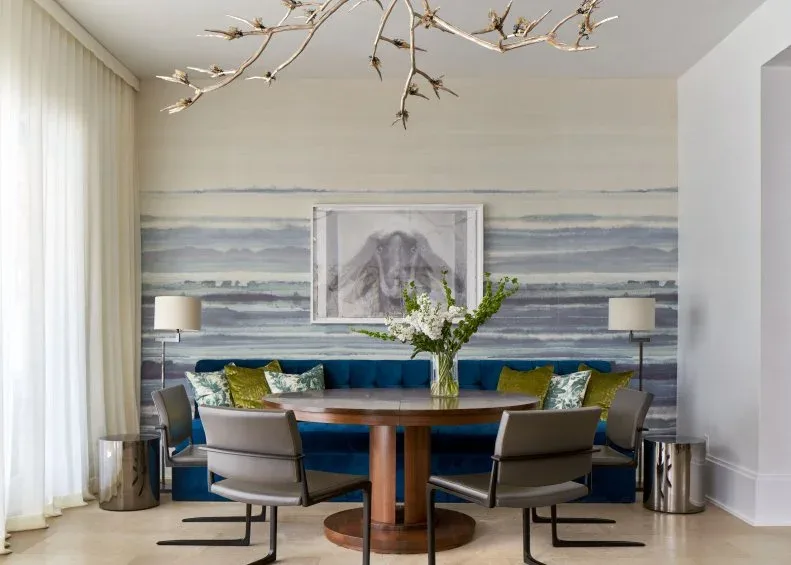
Bands of blue-gray color stretch horizontally across the wall behind the banquette, giving this dining nook a broad backdrop. The blue seat connects to the darker bands, while pale walls remain visible around the edges. A framed picture adds a more defined image over the softer treatment. The round table and gray chairs keep the center useful without adding another repeated pattern.
Consider where the strongest horizontal band will sit once the bench and table are in place. A sample viewed at sitting height can help you judge whether the wall feels calm or busy during meals. Keep any lamps clear of the bench access, and check that their shades and the framed picture do not crowd the same small area.
PART 03
Add Texture with Brick, Tile, and Wood
IDEA 11 / 20
Give the Bench Wall a Glossy Tile Surface
 SaveSupport Non AI Creator
Image credit: Photo: Annie Schlechter. From: HGTV Magazine
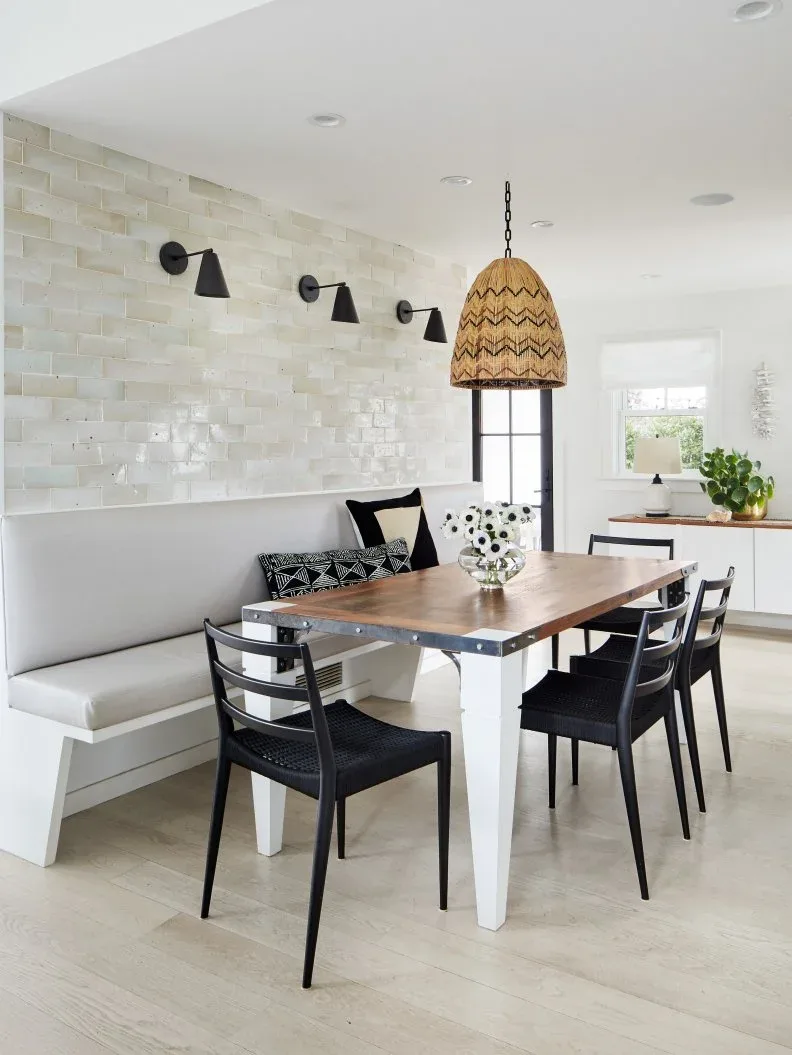
Glossy pale tiles create a textured backdrop above the white bench, with staggered edges catching the light across the long wall. Three black wall lights add a repeated darker detail at the upper edge. The wooden table and woven pendant bring warmer surfaces into the nook. Black chairs connect the lighting to the seating without making the tiled area feel visually heavy.
Choose the tile and grout together, and ask about cleaning both surfaces before installing them near seating. Irregular edges can be attractive but may collect dust differently from a smooth painted wall. Plan the wall lights before tiling so their positions suit the bench and table, and have the electrical work completed by a qualified professional.
IDEA 12 / 20
Keep an Existing Brick Opening Visible
 SaveSupport Non AI Creator
Image credit: Photo: David A. Land (styled by Charlotte Safavi). From: HGTV Magazine
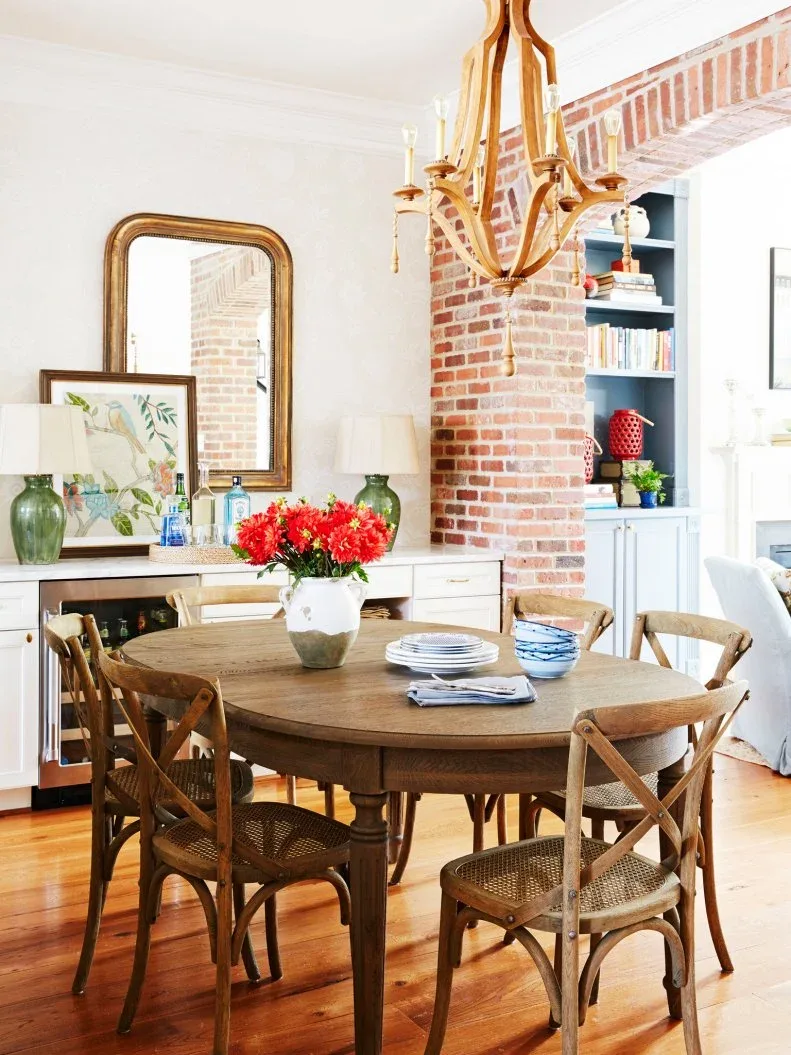
Exposed red brick outlines the opening beside this round dining table, creating a textured accent without covering an entire wall. The pale neighboring surface gives the brick edges room to stand out. Wooden chairs and a sculptural wood chandelier repeat warmer tones, while the gold-tone mirror above the white sideboard adds reflection on the quieter side of the room.
Treat existing brick as a feature only after checking its condition and identifying an appropriate cleaning method. Avoid applying a generic coating without understanding what the masonry needs. When arranging furniture beside an opening, leave a clear walking route and enough space to pull out chairs. A narrow textured feature can be effective without adding more brick elsewhere.
IDEA 13 / 20
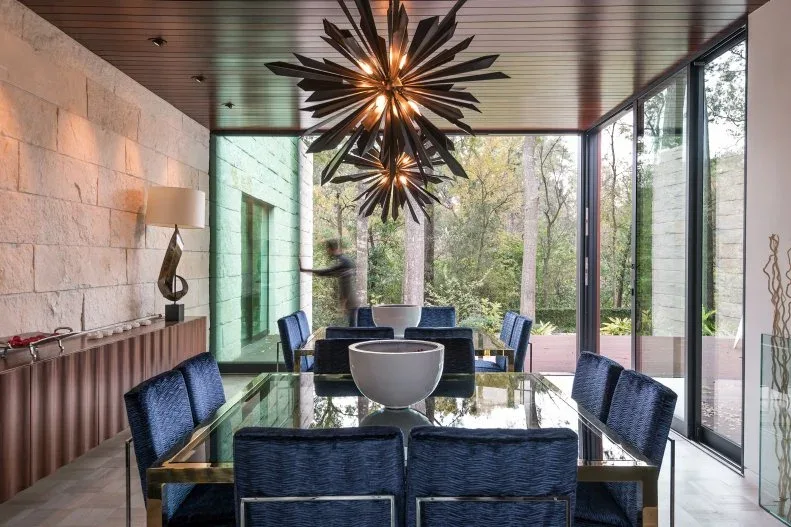
Balance a Block-Pattern Wall with Glazing
 SaveSupport Non AI Creator
Image credit: Photo: CONTENT Architecture. From: CONTENT Architecture
A pale wall with large rectangular blocks gives this dining room a solid textured edge opposite the full-height glazing. The long brown sideboard follows the wall, while blue chairs add deeper color around the glass table. Dark ceiling boards and starburst lights bring another strong element above. The wall’s broad shapes keep its texture distinct from the finer outdoor view.
If you want a similar block-pattern finish, compare samples in side light as well as directly facing them. Depth and joint lines can become much more noticeable when the sun moves. Check the wall’s construction before choosing a heavy finish, and keep the sideboard far enough from the table for people to pass behind occupied chairs comfortably.
IDEA 14 / 20
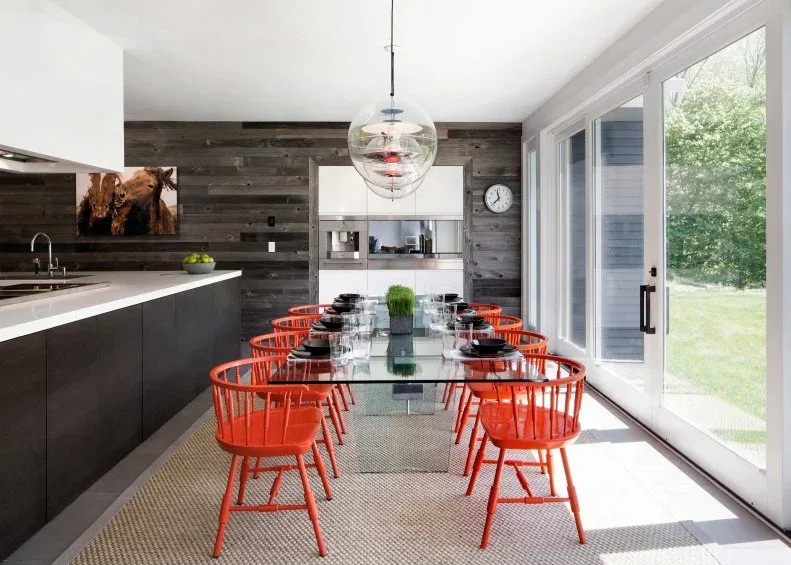
Use Weathered Wood Behind the Dining Zone
 SaveSupport Non AI Creator
Image credit: Photo: Decor Aid. From: Decor Aid
Horizontal gray-brown wood boards give the far wall a textured finish behind this dining area and adjoining kitchen. A glass table keeps the surface below the pendants visually light, while orange chairs provide a strong warmer contrast. The pale ceiling and large sliding doors balance the darker boards. The wall links the dining zone to the neighboring working space without changing the floor.
Check that a wood wall finish is suitable for its distance from cooking and washing areas, following the supplier’s installation and care guidance. Consider how joints and board edges will be cleaned. Keep the table clear of the sliding-door route, and use the wall’s color as a reference when choosing nearby cabinet finishes rather than matching every surface exactly.
IDEA 15 / 20
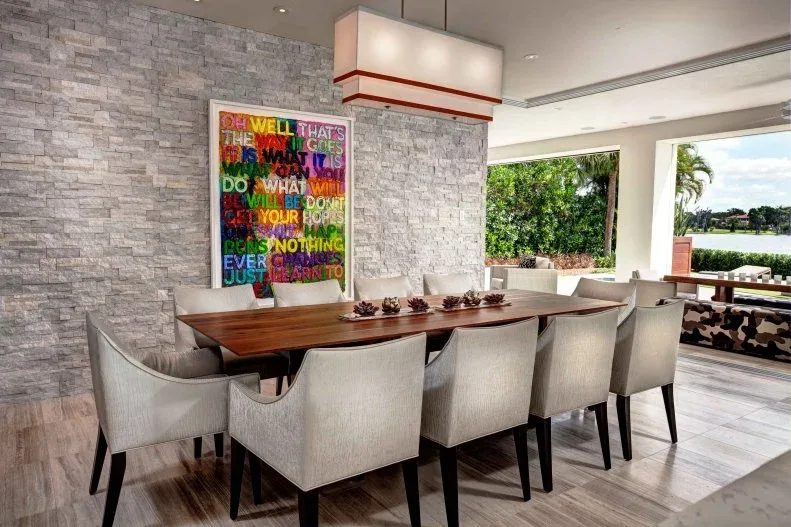
Let a Fine Stone Texture Carry the Backdrop
 SaveSupport Non AI Creator
Image credit: Photo: Michael Lowry Photography and Harvey Smith Photography. From: Phil Kean Design Group
Fine gray stone-like pieces create a layered wall behind the wooden dining table. A colorful framed print supplies a clear focal point over that texture, while gray upholstered chairs repeat the wall’s quieter color. The broad garden-facing glazing brightens the side of the room. A rectangular pendant echoes the table’s longer shape without introducing another complicated surface pattern.
Before choosing a textured wall covering, confirm its weight, fixing requirements, and cleaning instructions. Fine ledges can catch dust, so the surface should suit the care you are willing to give it. Plan the picture fixing independently of the decorative finish, and view the wall under your intended lighting to judge the shadows between the small pieces.
PART 04
Make the Wall Reflect Light or Hold Useful Things
IDEA 16 / 20
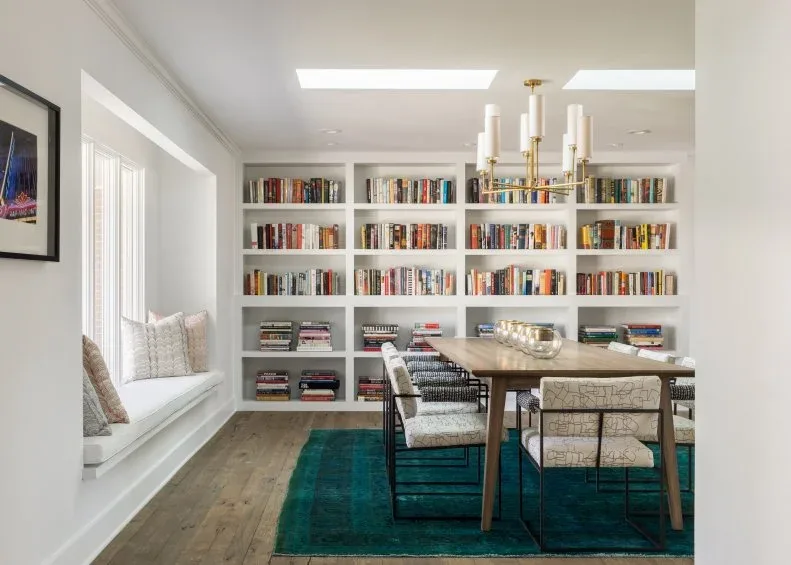
Make a Book Wall the Dining Room Feature
 SaveSupport Non AI Creator
Image credit: Photo: David Lauer. From: Duet Design Group
A full wall of white shelves turns books into the main backdrop of this dining room. The repeated compartments organize their varied colors without needing a separate wallpaper pattern. A wooden table sits on a teal rug, while the window bench adds another place to sit. Pale shelves and walls connect the storage to the brighter room rather than making it a solid dark block.
Plan shelf depths and support for the books you actually own, and follow the shelving system’s load limits. Keep dining chairs far enough from the lowest shelves to avoid repeated knocks when people stand up. If the table also handles homework or paperwork, reserve a small compartment for those supplies so they can be put away before meals.
IDEA 17 / 20
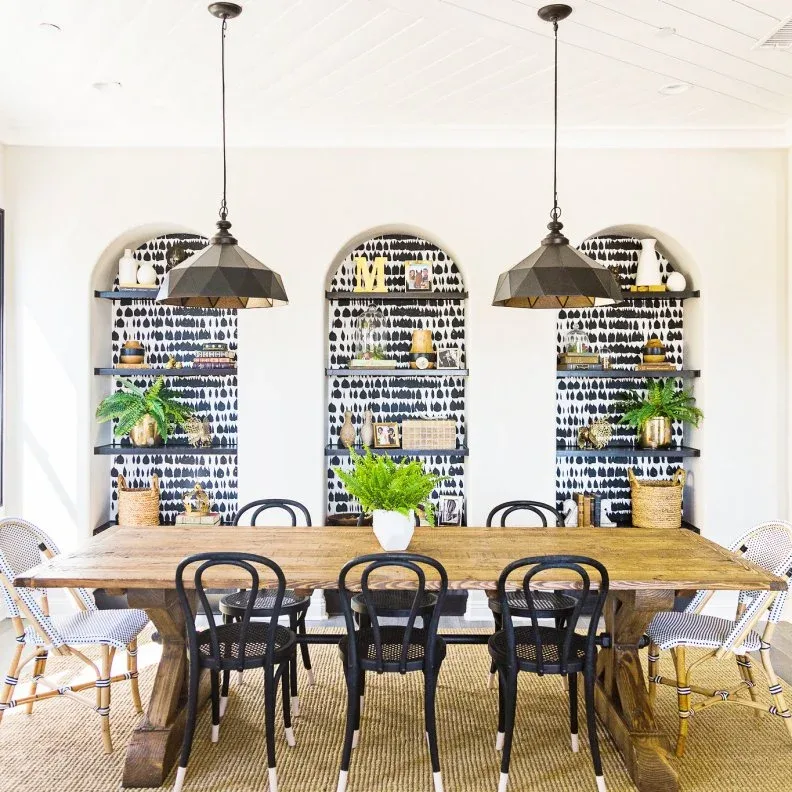
Put Pattern Inside Arched Recesses
 SaveSupport Non AI Creator
Image credit: Photo: Kelly Fondots. From: Design 4 Corners
Three arched recesses concentrate the black-and-white pattern within clear boundaries on the pale wall. Dark shelves hold a small mix of plants, framed pieces, and vessels, while the arches keep the display organized. The wooden table introduces warmth in front of the repeated wall shapes. Black chairs and pendant shades connect the foreground to the darker shelf details.
Use the recess shape to set the limits of the pattern rather than extending it automatically across the surrounding wall. Measure each opening separately, since older alcoves may differ slightly. Keep shelf contents within their support limits and leave gaps around plants or taller vessels. A repeated arrangement works best when the objects are easy to remove for cleaning.
IDEA 18 / 20
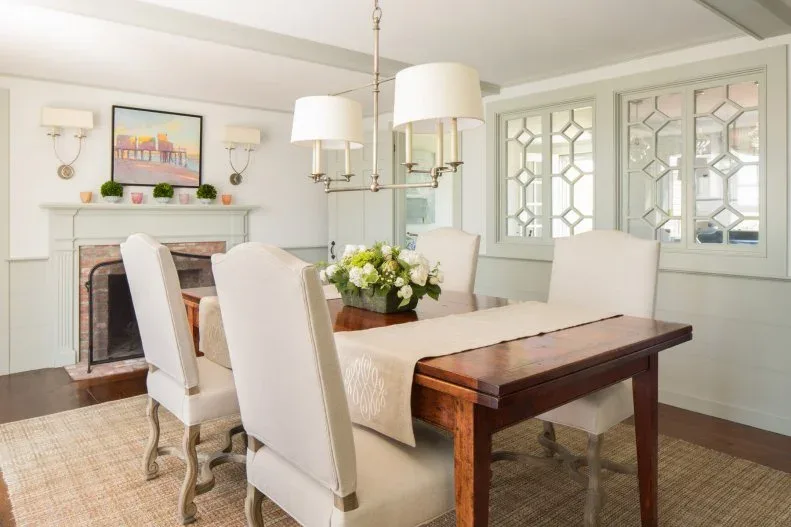
Brighten a Side Wall with Framed Mirrors
 SaveSupport Non AI Creator
Image credit: Photo: Richard Gayle. From: Casabella Interiors
Three framed mirrors create a repeated feature along the side wall beside this dining table. Their geometric divisions add detail while reflecting parts of the room. Pale wall color and cream chairs keep the arrangement restrained, and the wooden table gives it a warmer center. The fireplace and shaded lights add separate focal points without changing the mirror wall into a busier display.
Check the reflection from both standing and seated positions before deciding where mirrors should go. A reflected doorway or bright bulb may be less pleasant than the view you expect from a photograph. Use fixings appropriate to each mirror’s weight and the wall construction. Leave enough space behind chairs so their backs do not strike the glass or frames.
IDEA 19 / 20
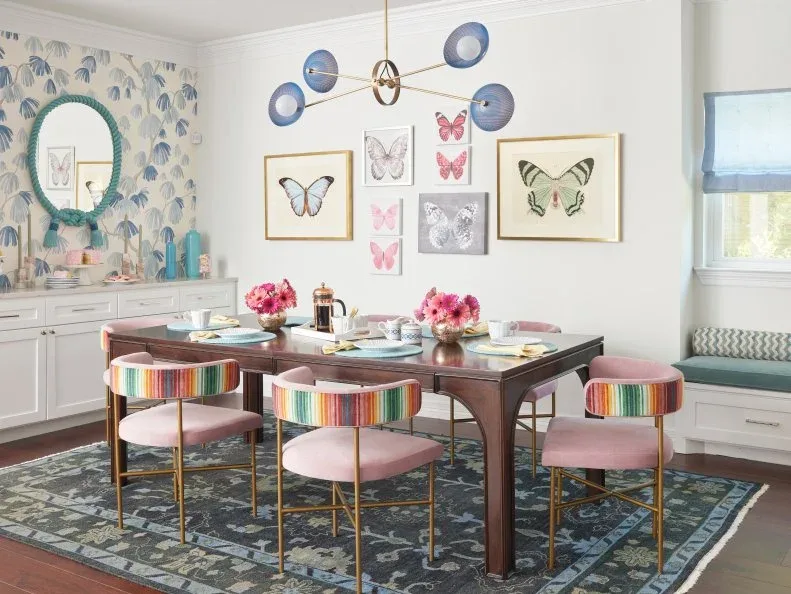
Confine Botanical Pattern to a Sideboard Wall
 SaveSupport Non AI Creator
Image credit: Photo: David Tsay. From: HGTV Magazine
Blue botanical wallpaper marks the wall above the sideboard, while the neighboring white wall carries a separate group of butterfly pictures. A green round mirror gives the patterned section a clear central shape. Pink chairs and a dark wooden table bring other colors into the seating area. The contrast between patterned and plain surfaces keeps the room from having the same level of detail everywhere.
A shorter sideboard wall can be a useful place to try pattern without decorating the whole room. Compare the wallpaper with the mirror frame and nearby artwork, then decide which surface should draw attention first. Keep useful serving space on the sideboard, and check that reflected lights or objects do not make the mirror compete with the pattern behind it.
IDEA 20 / 20
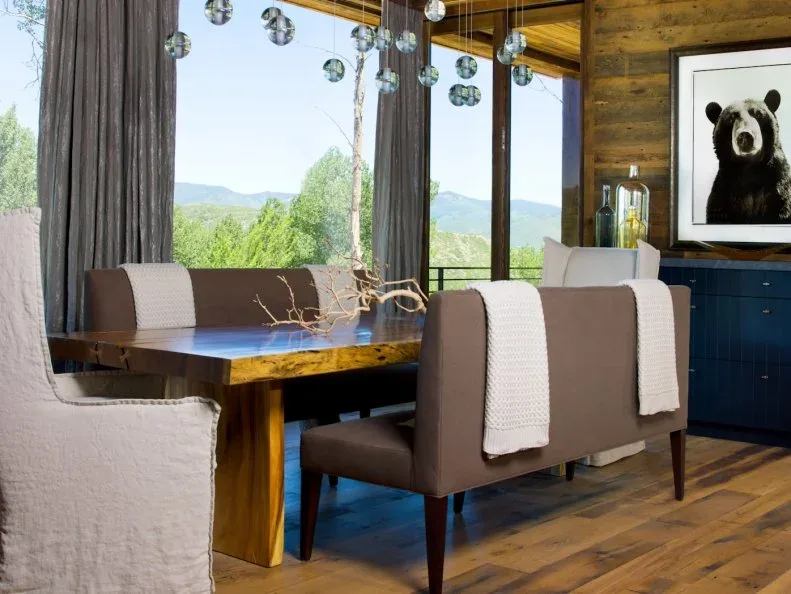
Add Warm Wood Beside Broad Windows
 SaveSupport Non AI Creator
Image credit: Photo: Slifer Designs. From: Slifer Design
Horizontal brown boards add a warmer feature beside the broad windows in this dining room. A framed bear image sits above dark blue cabinetry, keeping the wall’s main objects together. The wooden table repeats the warmer finish below, while upholstered seating softens the foreground. Glass globe lights leave the outdoor view comparatively open and add smaller reflections above the dining surface.
Consider how much wood is already visible in the floor and table before adding it to a wall. Similar tones can connect the room, while different finishes need to be compared together in the actual light. Keep the window coverings accessible beside the feature, and follow the wall finish’s care guidance so cleaning does not alter its color or sheen.
BRING IT ALL TOGETHER
Choose the Wall Before the Finish
Start with the surface that naturally frames the table or bench, then consider how much pattern and texture the room already contains. A painted doorway wall, a mural at the end of the table, or patterned recesses can each define the dining area. You do not need to repeat the finish on every wall for the room to feel connected.
Compare generous samples with the chairs, rug, and lighting you intend to keep. Check the view from the entrance and while seated, and allow for cleaning, furniture movement, and safe fixings. A clear, useful dining layout will make the accent more enjoyable than a dramatic wall that crowds the chairs or hides the room’s daylight.